• About Me
  • Other Writings
  • Interview Clips
  • All About Me: American Racism, American Narcissism, and the Conversation America Can’t Have
  • Video Clips
  • Boy @ The Window Pictures
  • Boy @ The Window Theme Music

Notes from a Boy @ The Window

~

Notes from a Boy @ The Window

Category Archives: Work

The Things I Can’t Say

28 Monday Oct 2013

Posted by decollins1969 in 1, Boy @ The Window, Carnegie Mellon University, Christianity, culture, Hebrew-Israelite, Marriage, Mount Vernon New York, Pop Culture, race, Religion, University of Pittsburgh, Work, Youth

≈ Leave a comment

Tags

616, 616 East Lincoln Avenue, Competition, Happy Birthday, Intervention, Jealousy, Life, Mom, Mother-Son Relationship, Sharing, Silence, Trust


U.S. Route 66 shield, made to the specifications of the 2004 edition of Standard Highway Sign, January 27, 2006. (SPUI via Wikipedia). Released to public domain.

U.S. Route 66 shield, made to the specifications of the 2004 edition of Standard Highway Sign, January 27, 2006. (SPUI via Wikipedia). Released to public domain.

Today was my Mom’s sixty-sixth birthday. I’m just beginning to come to grips with the fact that Mom’s a senior citizen, considering that she was only twenty-two when she had me in ’69. It’s been a roller coaster ride through hell, with many downs and only a handful of ups over those years. The one casualty in those years that we haven’t overcome has been the ability to share everything that has been my life with her, especially in the last decade.

I learned the hard way sixteen years ago that the lack of distance in age between me and Mom resulted in a sort-of competition. It was one of which I hadn’t been aware until ’97. It involved higher education, finding work and finding full-time work. It involved friendships and relationships, God and church, and finding a passion for a calling. Week after week, and year after year, from ’87 to ’02, I talked on the phone or at 616 with my Mom about these situations and issues. Only to find that my triumphs and failures were only a point of comparison for her, and not a conversation involving life and lessons.

When I finally realized this in ’97, and did an intervention involving my family on this and other issues in ’02, it was the third most emotionally painful thing I’d ever been through. I had to decide how I should talk to my Mom moving forward. I made the choice to not share significant parts of my life with Mom. From that point on, I chose to not discuss any victories or struggles in my jobs, in finding work, in consulting or teaching with her. Nor have I talked about my marriage’s ups and occasional downs, my writings, my publications, my projects, my hopes, my dreams, my fears, or my struggles. Mostly, I’ve only talked about my son and his glacial journey toward adulthood, the weather, my siblings, or something in the news that may be funny or relevant.

Ginsu 9-Inch Japanese Stainless Steel Slicer, October 28, 2013. (http://www.amazon.com).

Ginsu 9-Inch Japanese Stainless Steel Slicer, October 28, 2013. (http://www.amazon.com).

This has been the case since the summer of ’02. Uncomfortable silences and frequent struggles to think about what to actually discuss that could have real meaning, have been what this has meant for the two of us. Given her response to the intervention I conducted in January ’02, I can only imagine what Mom’s response would be to Boy @ The Window. On the one hand, she would act unimpressed, as if I’d written a book about organic chemistry and nanotechnology. On the other hand, my Mom would likely be seething behind her ho-hum mask, ready to rip my throat out for airing family secrets and dirty laundry. (I actually dreamt as much the other night, being at a book talk with Mom coming over the table, slashing at me with a Ginsu knife).

I haven’t been angry with my Mom for years, and I forgave Mom for any mistakes she made regarding me growing up years ago. But I know my Mom well enough to know that our relationship could never be an adult mother-son one, where I get to be an adult and her son at the same time. Part of that means me remaining silent about a significant part of my life, including a memoir in which she’s a main character. It’s too bad, yet it’s also the way it must be. For my emotional sanity, as well as for hers.

The Week The Lights Went Out In America

08 Tuesday Oct 2013

Posted by decollins1969 in 1, Boy @ The Window, culture, Eclectic, Mount Vernon New York, New York City, Politics, Pop Culture, race, Work, Youth

≈ Leave a comment

Tags

American Dominance, American Economy, Arab-Israeli War 1973, Best Days, Brighter Future, Economic Inequality, Gas Lines, Inflation, Job Discrimination, Low-Wage Jobs, OPEC Oil Crisis, OPEC Oil Embargo, Political Will, Politicians, Poverty, Prosperity, social mobility, Stagflation, Superpower, unemployment, Yom Kippur War


Gas station displayed a sign that explained the flag policy during the first OPEC oil embargo and crisis (Oregon), May 1974. March 26, 2013. (NARA via Wikipedia). In public domain.

Gas station displayed a sign that explained the flag policy during the first OPEC oil embargo and crisis (Oregon), May 1974. March 26, 2013. (NARA via Wikipedia). In public domain.

It wasn’t the middle of September of ’08, either. It was the beginning of October ’73, forty Yom Kippur holy days ago. There had been signs for any American who had cared to look at the cracks in the US dominance of the world economy ceiling. Rising unemployment, higher inflation, new monetary control measure, competition from a mostly rebuilt West Germany and Japan. The twenty-eight year-long run America had as the undisputed and undefeated leader of the capitalist world was on its way to a close, and ninety-nine percent of all Americans didn’t know or didn’t care enough to know.

No, the Yom Kippur War between Syria, Egypt and Israel didn’t cause the US to become more dependent on the rest of the world. But our support of Israel against countries from which we imported oil did lead to OPEC’s decision to deny us oil. Up to that point, our government had pretty much done whatever it wanted geopolitically, on behalf of containing Communism and American corporations. It was this week forty years ago, though, that truly began to teach ordinary Americans that there would be consequences for our foreign policy actions without regard for folks who lived at the blunt end of them.

Egyptian forces cross on one of the bridges laid across the Suez Canal, October 7, 1973.   (CIA/Soerfm via Wikipedia). In public domain.

Egyptian forces cross on one of the bridges laid across the Suez Canal, October 7, 1973. (CIA/Soerfm via Wikipedia). In public domain.

I was just a couple of months away from turning four, but I do have vague memories of the week and month from four decades ago. Within a block of where my Mom worked, Mount Vernon Hospital, was a gas station, one that by the end of October had lines wrapped around the block as motorists in their six-miles-to-the-gallon guzzlers desperately waited for some petrol. It was loud and chaotic, from the little bit that I do remember. Fast forward to about a year later, when my Mom took me and my other brother Darren to the old Met grocery store on South Fulton in Mount Vernon. There, she complained about the $2.69 she had to spend on a five-pound bag of Domino’s Sugar ($14.53 in 2013 dollars). I remember her sighing about the high prices and the fact that her paycheck wouldn’t be able to keep up.

It would be years later still before I realized that the last of America’s easiest days as an economic and geopolitical superpower were during my years as a toddler. I did feel secure back then, not knowing about my father’s alcoholism, my mother’s insecurities about being a Black Southern girl living in and around New York City. I had yet to witness the violence embedded in my family, or in my neighborhoods, for that matter. I knew nothing of drug addiction or authentic Blackness, of racism and systemic job discrimination. I had yet to learn that the economic and educational opportunities that had been available to millions of Americans — almost regardless of race and gender — were about to become that much harder to attain and retain as I grew older.

Now, forty years later, as memories of the Reagan and Clinton years have faded, I think of America’s heady days, ones that now seem of lore. I realize that America could have even better days ahead. If we were to acknowledge human involvement in climate change and invest heavily in a green economy. If quality, well-funded universal pre-K to higher education became our reality, without creating one system for elites and another for everyone else. If we as a people finally said it was time to repair $3 trillion worth of infrastructural damage to our bridges and roads, to our sewer and water systems, and to our electrical grid. If we somehow decided to end our expensive wars on drugs and on Black men, on anyone whom we think (but do not know) may do our nation’s interests (if not our people) harm.

Collage of workers placing an F-Series bed onto frame at  Louisville Assembly Plant (Kentucky), 1973. (http://media.ford.com)and a woman carrying a sign past a McDonald's on East 125th Street during a protest by fast food workers and supporters, New York, NY, April 4, 2013. (Stan Honda/AFP/Getty Images via http//:financialpost.com).

Collage of workers placing an F-Series bed onto frame at Louisville Assembly Plant (Kentucky), 1973. (http://media.ford.com); a woman carrying a sign past a McDonald’s on East 125th Street during a protest by fast food workers and supporters, New York, NY, April 4, 2013. (Stan Honda/AFP/Getty Images via http://financialpost.com).

But I know that we won’t have those better days, at least not yet. Not with narcissistic politicians either lining their pockets with money or lining their minds with sugarplum hopes for the Rapture and Armageddon. Not with a media more interested in the political horserace and petty optics than in giving us the full story. And not with an American public more interested in Miley Cyrus than in funding for more psychologists in public schools.

It’s truly depressing to know how far our nation hasn’t come in four decades, virtually my entire lifetime. At least I know, though. For so many born after me — not to mention lacking self-reflection — they may never know what should’ve been.

On Academic Entourages & Standing Apart From Them

11 Wednesday Sep 2013

Posted by decollins1969 in 1, Academia, Carnegie Mellon University, culture, Eclectic, Pittsburgh, Politics, Pop Culture, race, Religion, University of Pittsburgh, Work, Youth

≈ Leave a comment

Tags

Academia, African American Studies, Afrocentricity, Authenticity, Black Issues in Higher Education, Blackness, Entourage, Fear of a "Black" America, Followers, Loner, Marc, Molefi Asante, Multiculturalism, Politics of Academia, Publishing, Sycophants, Writing


Lil Wayne entourage, Hartford, CT, July 2011. (http://4umf.com/).

Lil Wayne entourage, Hartford, CT, July 2011. (http://4umf.com/).

This week for many is about anniversary number twelve of the 9/11 attacks, which if I hadn’t lived through them, would sound like something out of a Kurt Vonnegut novel. But because I’ve been counting my days for years, this week also represents two decades since I realized that radical “Islamic” terrorists, pro athletes and popular music artists aren’t the only ones with followers. I learned for the first time that even in the world of academia, paragons and those who allege themselves as such also have their entourages of true believers and sycophants. It was a realization that bothered the loner and the aspiring academic historian in me.

Letters to the Editor, Black Issues in Higher Education, September 9, 1993. (Donald Earl Collins)

Letters to the Editor, Black Issues in Higher Education, September 9, 1993. (Donald Earl Collins).

It all occurred in the aftermath of my first major publication, co-written with my friend Marc and published in Black Issues In Higher Education in August ’93. “Afrocentricity: The Fight for Control of African-American Thought” was our 1,200 word contribution to the debate over multicultural education and Afrocentricity in both higher education and in Black culture more generally. It was a publication that came as a surprise, because the editors at Black Issues In Higher Education (the same folks who ran Emerge Magazine, by the way) hadn’t contacted us about receiving our pitch and article, about accepting it for publication, or about when they intended to publish. And even though our article was literally in the centerfold of their August 12, ’93 issue, the folks at Black Issues in Higher Education never paid us for the publication of our work.

The reason why because clearer in their September 9 and September 23 issues. In the “Letters to the Editor” section, the editors published a dozen letters, ten of which were critical of our work. These weren’t scholarly or even logical critiques — we were wrong because we weren’t members of the Church of Afrocentric Babble, plain and simple. These were “How dare you!” or “Shame on you!” letters, not ones based on what we’d actually written.

What became obvious  to me was that Molefi Asante’s former and current students had written most of the letters. Not exactly an unbiased set of sources, as in the circle of Afrocentricity in the early ’90s, there were few people more prominent than Asante (he was the Father of Afrocentricity, after all). Once I realized this, I found myself disappointed. With Black Issues in Higher Education, with Black folks in academia — particularly at Temple University — and with academia itself. Me and Marc weren’t being challenged on our ideas, but on the idea that two alleged neophytes had the balls to challenge the orthodoxy of the early ’90s in African American studies and in high-brow Black cultural circles.

Marc pushed for a response from one of the editors about their unprofessionalism (and to find out why we weren’t being paid for our piece), which led to a conversation with one of the big-wigs. He apparently said to Marc, “We published it [the “Afrocentricity” piece] to teach you a lesson.” When Marc told me, I said, “Well, I guess we’re not gonna get paid.” (Turned out this was standard practice for the likes of Black Issues in Higher Education, Emerge, and for freelancers at BET as well). Marc, pissed and disillusioned, said, “We were just trying to help.”

Letters to the Editor, Black Issues in Higher Education, September 23, 1993. (Donald Earl Collins).

Letters to the Editor, Black Issues in Higher Education, September 23, 1993. (Donald Earl Collins).

It was the last one of many factors that pushed me to write my dissertation and my first book Fear of a “Black” America (2004) on the relationship between education, multiculturalism, and Black identity. I wanted to show that Afrocentricity wasn’t the only strain of thought that ran through the heads of Black scholars and found its way into small “c” curriculum and cultural events in Black communities. In doing so, I certainly stood apart, but I also stood alone a lot, too.

In recent years, I’ve seen numerous entourages eviscerate lone wolfs. On Twitter, in our 24/7 media coverage of the mundane and insignificant yet insane, and at academic conferences. As recently as a couple of months ago, I saw a version of this on Facebook in response to a post I wrote about Mark Anthony Neal’s Looking for Leroy (2013). The entourage makes it difficult for an up-and-comer to get off to an honest start, for conformity with only subatomic levels of independent thought seems to be the norm.

Somewhere between now and when my son (knock on wood) reaches my age of forty-three, maybe some of what I’ve written over the past twenty years will break through the ice of entourages, mad-dog and otherwise. Still, it is a damnable thing when groups get together to stomp out different voices (literally and figuratively), because that’s seems to be the only way to keep the band together.

Grad School & My Most Special Summer Reading List

31 Saturday Aug 2013

Posted by decollins1969 in 1, Academia, Boy @ The Window, culture, Eclectic, Pittsburgh, Politics, Pop Culture, race, University of Pittsburgh, Work, Youth

≈ Leave a comment

Tags

"I Have A Dream" speech, Afrocentricity, Black Culture, Black History, Blackness, Books, Carter G. Woodson, Department of HIstory, Elaine, Graduate School, Higher Education, Joe White, K-12 Education, Malcolm X, March on Washington, Multicultural Education, Pitt, Readings, Self-Discovery, Toni Morrison, W. E. B. Du Bois, Western Psych, Western Psychiatric Institute & Clinic


Just a small sample of the books I read/re-read summer before grad school in 1991, August 31, 2013. (Donald Earl Collins).

Just a small sample of the books I read/re-read summer before grad school in 1991, August 31, 2013. (Donald Earl Collins).

For me, August 28 this week was significant for any number of reasons. It wasn’t just that it was fifty years to the exact day and date that the March on Washington occurred and MLK gave his “I Have A Dream” speech. Or that is was fifty-eight years to the date that White supremacists lynched Emmett Till for allegedly whistling at some flat-butt White girl. This past Wednesday was also twenty-two years to the day and date that I began my first day of graduate school as a master’s student in the University of Pittsburgh’s Department of History.

Of course, I didn’t discuss this earlier this week (it would’ve been incredibly arrogant on my part to bring this up three days ago). My big steps for myself were infinitesimal when in measured comparison to the beginning of the two-year height of the official Civil Rights Movement. But even on an afternoon in which I attended my first course and meeting about teaching/advising assignments for the semester, it did feel like a bit of a triumph. Especially when considering what I had to do that spring and summer to get into the program with funding in the first place.

I didn’t learn that much that day. Except the low contempt Joe White and some of the other professors held toward pedagogy and teaching. “You already know more than your students,” White said as advice to us who’d be TAs that semester. I was lucky to not be among them for my first year. I was a GSA assisting in the advising of history majors, some of whom were my fellow undergrads just a few months before. But even then, I thought two minutes’ worth of advice on viewing students as empty vessels was insufficient training for learning how to lecture and facilitate conversations with upwards of 100 students spread out over several discussion sections each week.

I had other things on my mind at that moment, though, including the relief that I’d survived a summer making $5.20 per hour as a full-time employee with a Western Psychiatric Institute & Clinic project in which the project investigators were far more psychotic than the patients. Aside from that, I thought about how the previous four months had served as my preparation for the White world of grad school.

I’d done a lot of reading that late spring and summer, spurned on by boredom, disappointment in my weirdly evolving friendship with Elaine, and a sense that I needed to read to fortify myself against the neo-Marxists in my eventual field. So I read. I started off with Alex Haley’s The Autobiography of Malcolm X (1965), believe it or not, the first time I’d ever read it. Like so many before me, it made my views of the man less black and white than it had been before. I then picked up W. E. B. Du Bois’ Souls of Black Folk (1903), the first time I’d read that book since I wrote a book report on it for Mrs. O’Daniel’s class in fifth grade. Unsurprisingly, I got much more out of it in May ’91 than I did in May ’80.

I didn’t stop there, as my reading took me on three different tracks in June, July and August. One was the “I didn’t get to read this before” track, as I read Toni Morrison’s Tar Baby, Song of Solomon and Beloved (didn’t understand it then, and still don’t get the big deal about it now). Along with Alice Walker’s The Color Purple, Maya Angelou’s I Know Why The Caged Bird Sings (1969), bell hooks and several others on Black Women’s literature. Then, I decided to go back and reread some James Baldwin and Richard Wright that I’d first read for high school, and added Ralph Ellison’s Invisible Man (1952) to the mix. On the non-literature track, I ended up reading Franz Fanon, Du Bois’ Black Reconstruction (1935) — at least, I put a significant dent in it — Derrick Bell’s And We Are Not Saved (1987), and other writings on Black history and culture (broadly speaking).

But the third track would end up taking me on a path toward my dissertation topic and my first book, Fear of a “Black” America (2004). It started with articles on multicultural education that took me to James Banks’ theoretic constructions of what multicultural education ought to have been, but wasn’t. I also found myself reading books like Jonathan Kozol’s Savage Inequalities (1991), Molefi Asante’s The Afrocentric Idea (1987), Dinesh D’Souza’s Illiberal Education (completely indecipherable in a circular firing squad of a thesis kind of way) and Carter G. Woodson’s The Mis-education of the Negro (1933). I was reading anything that could inform my thinking about K-12 and higher education and how it played the role as both equalizer and oppressor for so many Black folks over the years.

Books, Grad School & Blackness

Books, Grad School & Blackness

It was easily the most reading I’d done on my own since the year before I’d gone into seventh grade, middle school and the Humanities Program. I wanted to read all I wanted to read before spending the next few years drowning my brain in hundreds of books and articles that I’d absolutely need to read as a historian. In the process, I may’ve radicalized myself a bit for the otherwise hum-drum experience of reading mind-numbing accounts of history in which the authors didn’t seem to see their own sense of high-brow White maleness.

And with all of it, I surprised myself. I realized once again that my Black classmates and 616 neighbors were wrong about me not being Black enough. Their “Black” wasn’t my “Black,” of course. But all those books confirmed for me that there were many ways to be Black that folks who didn’t read could barely understand.

Terri and Mr. Asexual

07 Wednesday Aug 2013

Posted by decollins1969 in 1, Boy @ The Window, culture, Eclectic, High Rise Buildings, Pittsburgh, Pop Culture, race, University of Pittsburgh, Work, Youth

≈ Leave a comment

Tags

Apartment Hunting, Asexuality, Bipolar Disorder, Biracial, Clubbing, Clubs, Dallas, Friendship, Friendships, Mother-Daughter Relationships, Night Life, Terri, Westchester County Department of Community Mental Health


Asexual pride flag, September 18, 2010. (Wikipedia). In public domain.

Asexual pride flag, September 18, 2010. (Wikipedia). In public domain.

One of my inner circle of friends during my undergraduate years at the University of Pittsburgh was Terri. She was one of the more interesting folks I met during all my years at Pitt and in Pittsburgh. She was so smart, so intriguing, so whimsical, so troubled, so much in fear of success and so flawed. I learned so much from Terri without ever really trying, because she herself was in search of something during all the years I knew her.

I first met Terri in January ’89 at Pitt’s William Pitt Student Union, in the TV room where a bunch of us were watching Dallas (the original series on CBS that Friday night).

William Pitt Union (as viewed from Cathedral of Learning), University of Pittsburgh, July 28, 2012. (Mackensen via Wikipedia).

William Pitt Union (as viewed from Cathedral of Learning), University of Pittsburgh, July 28, 2012. (Mackensen via Wikipedia).

(From Boy @ The Window) “At five-two, she had short dark-brown hair and also wore glasses. There was something about Terri that I knew was different, that she wasn’t just “Black,” whatever that meant. She was one of the first biracial women I’d come to know. It seemed like those were the first words out of her mouth. Maybe not. But Terri did tell us she was “half-Black and half-White” before the night was over….She immediately jumped into our growing conversation once they sat down and criticized Dallas as one of many examples of lily-Whiteness on TV. That launched a whole new discussion, with everything from The Cosby Show to 227.

“After about an hour of debates, jokes and wonderful conversation, we all went out into Oakland. We started at The O, the nickname for Original’s. It had already been a mainstay for students and steelworkers in need of cheap food and beer since ’60. The Pitt football team often drank and caroused there, often getting into fights with Pitt Police. This Friday it was overcrowded and dirty, and we wanted to talk. Terri had become the leader of our pack, and took us over to Hemingway’s as an alternative. The bar and restaurant was The O’s opposite, very quiet, very reserved, with a very much older and Whiter crowd. It was also the first time I’d been carded, so I couldn’t have a drink even if I wanted to.”

Terri was the one who could truly bring out my adventurous side, as she introduced me to Pittsburgh’s night life — Black and White. She didn’t seem to care that I was still only nineteen or twenty years old. Terri could talk herself — and me — into a private over-twenty-five club in Homewood or Penn Hills, or out of trouble with police like no one I knew back then. I met all kinds of Pittsburghers as a result. Gay and straight, older and younger, college educated and working-class stiff. Hanging out with her was a constant balance between a real social life and one when being out too late may have put her or us in danger.

Apartment building at corner of North Aiken & Centre Avenue in Shadyside, Pittsburgh, PA, August 7, 2013. (http://pittsburgh.olx.com).

Apartment building at corner of North Aiken & Centre Avenue in Shadyside, Pittsburgh, PA, August 7, 2013. (http://pittsburgh.olx.com).

My shift to a more regulated schedule with Terri began during the summer of ’90. I came back to the ‘Burgh the first week of August after nearly two months working at Westchester County Department of Community Mental Health. I wanted to find my first real apartment, not just a room in which I shared a kitchen and bathroom with six others in South Oakland (which I’d done in the two previous years). I stayed with Terri and her mother at their new place in Shadyside for a week, fairly close to all the neighborhoods in which I hoped to find a place.

At first, the late nights of talking and hanging out were fun. But by the third day, I was knee-deep in apartment listings and phone calls to landlords in Oakland, Shadyside, Squirrel Hill, Wilkinsburg, Bloomfield, Point Breeze, Homewood and East Liberty. Terri wasn’t exactly a happy camper, with me, her mother or her various suitors for that particular week. Terri and her mother had several arguments that week, about money, dating, even over her treatment of me. The most remarkable thing what hearing Terri call her mother a “bitch” over and over again one night, as if it was a period at the end of a sentence.

My problem, of course, was that I was “asexual” according to Terri. It wasn’t the first time someone had described me as such, and it certainly wasn’t the first time Terri had called me “asexual.” This time and week was different somehow. I guess that Terri thought that I’d look at a couple of places and then spend the rest of the week partying. But given my finances, I couldn’t just plop down money on a $400 a month one-bedroom with bay windows. I don’t think that she understood this, though, not the way Terri spent money back then.

I assumed, right or wrong, that she felt spurned by my lack of interest that week in spending my late nights out on the town with her.  For that week at least, I wasn’t into the Terri Show. As up and charming as she could be, Terri had a dark side, one in which her mother obviously faced much more than anyone else. I still considered her a friend, even a good friend. I just couldn’t be the kind of friend that could be what she wanted me to be on whim and demand. And over the next six years, I gradually also stopped being the friend that would listen to all of Terri’s gripes about life and race, identity and bad boyfriends.

The Myth of the Earnest Adult Learner

15 Monday Jul 2013

Posted by decollins1969 in 1, Academia, culture, Eclectic, Politics, Pop Culture, race, Work, Youth

≈ Leave a comment

Tags

Adult Learners, Higher Education, K-16 Reform, MOOCs, Myth, Reality, Teacher-Student Relationship, University of Phoenix


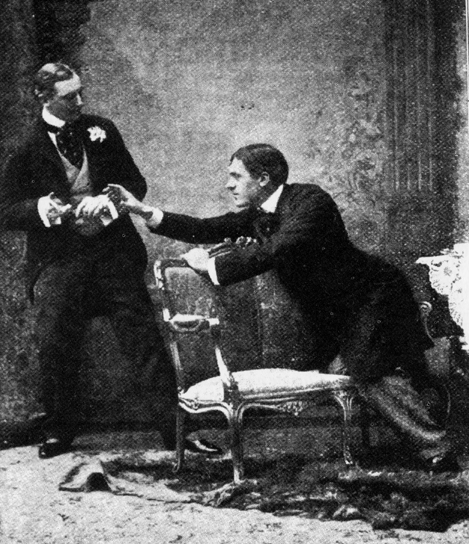
Oscar Wilde's The Importance of Being Earnest, with Allan Aynesworth as Algernon (left) and George Alexander as John (right), St. James Theatre, London, UK, February 14, 1895. (Ramac via Wikipedia). In public domain.

Oscar Wilde’s The Importance of Being Earnest, with Allan Aynesworth as Algernon (left) and George Alexander as John (right), St. James Theatre, London, UK, February 14, 1895. (Ramac via Wikipedia). In public domain.

One of the great myths in higher education is that of the adult learner as earnest student. Aside from the fairly obvious differences in lifestyle between a high-achieving, straight-to-college seventeen-year-old and a 34-year-old mother of two who works as a paralegal, the fact is that most adult learners act in the classroom like many traditional college students. Except that they are often academically and socially unprepared for college, not likely to attend a traditional college — with the resources necessary to help them become successful students — and are much more susceptible to dropping out of college because of the challenges they face in the classroom and in their own lives.

Myth vs. Reality:

This myth of the earnest adult learner has become a big one over the past thirty years, especially in light of the rise of for-profit postsecondary institutions like University of Phoenix and DeVry Institute. Anyone who has seen an ad on TV, in a newspaper or online can describe the mythical adult learner. Someone who’s 24 years old or older, often a paraprofessional or attempting to rise in a white-collar occupation like nursing, accounting, or information technology. A person who may be married or a parent or in the military. A potential student that has somehow been let down by traditional two-year colleges and four-year institutions, because the 10-week quarter-system and 16-week semester-system didn’t fit their real-world schedule.

The myth doesn’t fit at all with my own experience. As someone who has taught hundreds of adult learners off and on over the past 15 years – especially the past five – the behavior of older students in the classroom is really no different that than of traditional college-age students. Like 17 to 24-year-olds, the over-24 crowd is typically disorganized and lack the reading, note-taking and study skills needed to keep up with the pace of a college course. Like students who attend more traditional college settings such as Princeton, the University of Pittsburgh or Howard University, the adult learners I have taught miss deadlines, plagiarize their papers and cheat on final exams.

One of multitude of "I Am A Phoenix" ads, July 15, 2013. (University of Phoenix).

One of multitude of “I Am A Phoenix” ads, July 15, 2013. (University of Phoenix).

This shouldn’t be a surprise to anyone in higher education. Ad after ad sells college to adult learners as a service or a product that will lead them to a higher paying job. Period. College for them is hardly about forming new friendships or discovering themselves or their calling in life. The mythical adult learner is way too busy for such trifling pursuits. No, it is all about a piece of paper that they can wave around to get a promotion from junior accountant to accountant or from nurse’s aide to nurse.

Yet this too is a myth. Most adult learners are not really paraprofessionals or in low-level white-collar careers, poised for career advancement. They work at Walmart or Dunkin Donuts, as tellers at Wachovia Bank or as security guards with G4S. Some are active military or ex-Armed Forces, but many more are underemployed or even unemployed. Most are part of America’s rising welfare and working poor, or struggling to stay working-class or lower-middle class. At best, finishing a four-year degree would make them more employable than they would be otherwise, but not to the point that they should expect to become a doctor or an architect.

This background leaves most adult learners socially unprepared for college, but not because they cannot relate to college students between the ages of 17 and 24. They simply do not see school as a personal journey or even as an opportunity for educational advancement. It is a means to a new career and a higher income. Relationship-building to find a potential employer would not make any sense to most adult learners, as they are often segregated in virtual or physical classrooms with other adult learners, and not in classes with the sons and daughters of potential employers. Forming a bond with a professor would seem ridiculous, because they tend to see their often part-time instructors as customer-service representatives.

Adult Learners vs. Traditional College-Age Students:

This isn’t much different than the mindset of most traditional college students. I have taught a couple thousand of them over the past two decades, and in my experience, most of them view college as the means to the start of a great career making good money. The difference, really, is that there remains a wider diversity of thought about the higher education experience among younger college students than among those over 24. The quality of their education, the bonds of friendship or relationship they form with each other and with their professors, what they are able to take away from their college experience beyond their degree. All matter much more to so-called traditional students than they do to adult learners.

Student debt cartoon (although this is hardly the only stressor adult learners and other nontraditional-traditional students face), May 2, 2012. (Phil Hands/Wisconsin State Journal).

Student debt cartoon (although this is hardly the only stressor adult learners and other nontraditional-traditional students face), May 2, 2012. (Phil Hands/Wisconsin State Journal).

What is also similar is the idea that college is 13th, 14th, 15th and 16th grade for both groups of students. Both are just as apt to come up with myriad excuses for missing a paper submission deadline or for failing an exam. They had a big project at work that took up all of their spare time. They had a bad cold or the flu or strep throat or mononucleosis. Their computer crashed at the last minute, or they lost electricity or their Internet access went down. What I don’t often hear from traditional higher education students — but do expect to hear from adult learners — are excuses about children in emergency rooms, bad marriages, sick spouses and older parents, foreclosures on homes and cars breaking down on highways. For some, sometimes more than once in the same semester. Adult learners are as good at whining as traditional students.

The biggest myth on this end, though, is that younger college students face fewer obstacles to a degree than adult learners because 17-to-24 year-olds don’t have real-world problems. That’s completely false. Nearly two-thirds of traditional college students work part-time or full-time to cover everything from beer costs to their student loans and college tuition. Less advantaged students have pressures from parents and family around income loss, poverty and healthcare. Though most younger college students aren’t married, don’t have kids or work at the bottom rung of a career ladder, they do confront many of the same real-world financial and familial pressures.

Ending the Myth of the Traditional:

Are there any new innovations, such as Massive Open Online Courses (MOOCs), that would help adult learners achieve their degree — if not educational or academic — aspirations? It is really too early to tell with MOOCs. What is safe to say, though, is that adult learners as a group need to break out of mindset that higher education owes them flexibility without them taking responsibility for their own education. Higher education institutions, meanwhile, do need to recognize that adult learners have never been traditional, and traditional college students aren’t traditional anymore. Myth-busting on both the student side and instructor side would be a good place to start to make college aspirations and success a reality for adult learners.

38.990666 -77.026088

Get Rich, Or Whine Trying

08 Monday Jul 2013

Posted by decollins1969 in 1, Boy @ The Window, culture, Eclectic, eclectic music, Hebrew-Israelite, Marriage, Mount Vernon New York, Pop Culture, race, Religion, Work, Youth

≈ Leave a comment

Tags

Afrocentric, Business Ideas, Communications Business, Get-Rich-Quick Schemes, Half-Baked Ideas, Limo Business, Ponzi Scheme, Poverty, Pyramid Scheme, Sun-Lion Communications, Underemployment, unemployment, Whining


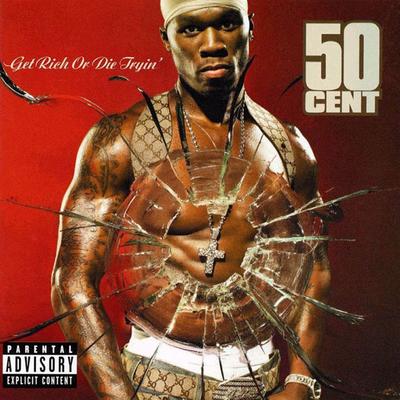
50 Cent, Get Rich or Die Tryin' album cover art (2003), June 27, 2007. (Hundredalexander via Wikipedia). Qualifies as fair use because of picture's low resolution.

50 Cent, Get Rich Or Die Tryin’ album cover art (2003), June 27, 2007. (Hundredalexander via Wikipedia). Qualifies as fair use because of picture’s low resolution.

When people grow up impoverished, there’s a strong impulse to come up with all kinds of scenarios for becoming rich. Some of these ideas require hard work, some require the fulfillment of dreams through tapping into one’s individual potential. Many ideas, though, remain half-baked shortcuts, ones that never reach fruition. Ideas like winning the lottery or Powerball, becoming a professional athlete or a singer or a rap artist. Others involve get-rich-quick schemes, ones that often take advantage of desperate wish of those in poverty to no longer be poor.

I’ve had plenty of experience observing examples of this last point. Especially in growing up at 616. My late idiot ex-stepfather Maurice Washington was susceptible to all kinds of ideas for making money, particularly schemes that required others to invest. I guess I can understand. As the fledgling writer and author I am, I can certainly see the appeal of finding shortcuts to, say, selling 100,000 copies of Boy @ The Window in a month. If only I could somehow get Oprah to endorse my book on her website and on the air!

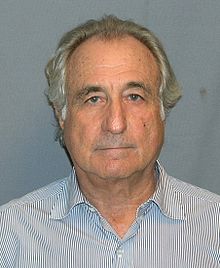
Bernie Madoff (mugshot), the ultimate get-rich-quick scam artist, March 16, 2009. (US Department of Justice via Wikipedia). In public domain.

Bernie Madoff (mugshot), the ultimate get-rich-quick scam artist, March 16, 2009. (US Department of Justice via Wikipedia). In public domain.

But I digress, as my scheme at least has a least a puncher’s chance at working (I have written a book, after all). My then stepfather, having held the jobs of Air Force MP, hospital orderly and taxicab driver, spent most of the ’80s trying to find ways to make easy money without putting forth any effort at all. In ’82, his grand scheme was Sun-Lion Corporation, which later turned into Sun-Lion Communications, the latter his attempt to do the equivalent of Bob Johnson’s Black Entertainment Television. My idiot ex-stepfather intended both the overall corporation and the communications arm to have what we would now call an Afrocentric slant. His vision was to be an emphasis on Hebrew-Israelite or similar foods, clothing, and other products and services meant for Black folks in the New York City area.

Maurice did everything he could to get my Mom involved in these schemes. My Mom went so far as to buy a corporation’s license for $2,500 in March ’82 for Sun-Lion. In the meantime, they argued and fought, and my ex-stepfather beat my mother up once in part over her lukewarm support for his grandiose schemes. At one point, they argued because Maurice wanted to raise $100 million in capital to put Sun-Lion Communications together! God, that man was an idiot!

After getting back on his feet after three years and three months of unemployment as a part-time security guard of an empty Vicks building in August ’82, Maurice came up with more schemes. He went to trucking school for four months between October ’86 and February ’87 outside of Scranton, Pennsylvania, but never spent a day as a truck driver. Then Maurice was a car salesman for a few months in ’87, actually making commissions while selling Cadillacs. But of course he couldn’t hold on to a job he was tailor-made for, a gift-of-gab con man!

Finally, in the spring and summer of ’88, Maurice tried to talk his way into the limo business by attempting to get a fellow 616 resident to give him access to a limo or capital. They laughed. My Mom laughed. I laughed. Maurice cried and whined about how no one ever supported his get-rich-quick efforts, not realizing that most of his so-called effort came in the form of getting others to give him something he either already.

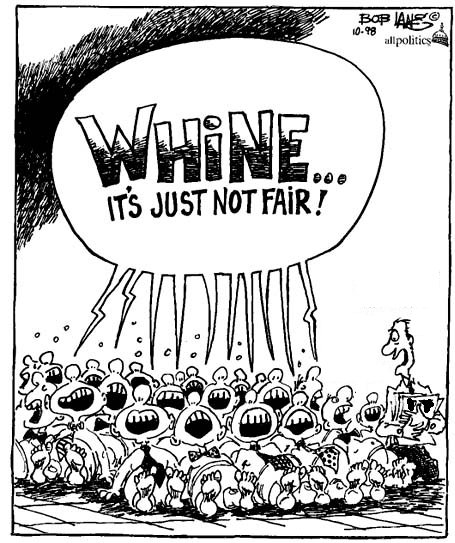
"Whine...it's just not fair!" cartoon, October 1998. (http://allpolitics.com).

“Whine…it’s just not fair!” cartoon, October 1998. (http://allpolitics.com).

When Maurice finally left 616 in June ’89, I thought all those days of ludicrous schemes and bullshit ideas for making lots of money were over. But when you’re poor, you’re vulnerable, and others looking to take advantage sense that vulnerability. In the two periods of my adult life in which I’ve been unemployed or significantly underemployed, people have approached me about selling Amway products. My younger siblings have proven themselves to be susceptible to alleged golden opportunities that were much closer to rust than gold.

This is not a screed in which I’m crapping on pursuing dreams or long shots. What I’m saying, though, is that dreams and long shots need to be tethered to serious plans, hard work, maximized gifts and talents, prayer and even some good luck. Yes, reaching out for help will help, but not in a spirit of draining others in order to help yourself first and only. That’s what my deceased ex-stepfather never learned.

← Older posts
Newer posts →

Boy @ The Window: A Memoir

Boy @ The Window: A Memoir

Places to Buy/Download Boy @ The Window

There's a few ways in which you can read excerpts of, borrow and/or purchase and download Boy @ The Window. There's the trade paperback edition of Boy @ The Window, available for purchase via Amazon.com at http://www.amazon.com/Boy-Window-Donald-Earl-Collins/dp/0989256138/

There's also a Kindle edition on Amazon.com. The enhanced edition can be read only with Kindle Fire, an iPad or a full-color tablet. The links to the enhanced edition through Apple's iBookstore and the Barnes & Noble NOOK edition are below. The link to the Amazon Kindle version is also immediately below:

scr2555-proj697-a-kindle-logo-rgb-lg

Boy @ The Window on Amazon.com: http://www.amazon.com/Boy-The-Window-Memoir-ebook/dp/B00CD95FBU/

iBookstore-logo-300x100

Boy @ The Window on Apple's iBookstore: https://itunes.apple.com/us/book/boy-the-window/id643768275?ls=1

Barnes & Noble (bn.com) logo, June 26, 2013. (http://www.logotypes101.com).

Boy @ The Window on Barnes & Noble: http://www.barnesandnoble.com/w/boy-the-window-donald-earl-collins/1115182183?ean=2940016741567

You can also add, read and review Boy @ The Window on Goodreads.com. Just click on the button below:

Boy @ The Window

Twitter Updates

Tweets by decollins1969
  • RSS - Posts
  • RSS - Comments

Archives

  • June 2025
  • April 2023
  • September 2022
  • August 2022
  • July 2022
  • June 2022
  • May 2022
  • April 2022
  • March 2022
  • January 2022
  • December 2021
  • November 2021
  • October 2021
  • September 2021
  • August 2021
  • July 2021
  • June 2021
  • April 2021
  • March 2021
  • February 2021
  • January 2021
  • December 2020
  • November 2020
  • October 2020
  • September 2020
  • August 2020
  • July 2020
  • May 2020
  • April 2020
  • March 2020
  • January 2020
  • December 2019
  • November 2019
  • August 2019
  • July 2019
  • June 2019
  • May 2019
  • April 2019
  • March 2019
  • February 2019
  • January 2019
  • December 2018
  • November 2018
  • October 2018
  • September 2018
  • August 2018
  • July 2018
  • June 2018
  • May 2018
  • March 2018
  • February 2018
  • January 2018
  • December 2017
  • November 2017
  • October 2017
  • September 2017
  • August 2017
  • July 2017
  • June 2017
  • May 2017
  • April 2017
  • March 2017
  • February 2017
  • January 2017
  • December 2016
  • November 2016
  • October 2016
  • September 2016
  • August 2016
  • July 2016
  • June 2016
  • May 2016
  • April 2016
  • March 2016
  • February 2016
  • January 2016
  • December 2015
  • November 2015
  • October 2015
  • September 2015
  • August 2015
  • July 2015
  • June 2015
  • May 2015
  • April 2015
  • March 2015
  • February 2015
  • January 2015
  • December 2014
  • November 2014
  • October 2014
  • September 2014
  • August 2014
  • July 2014
  • June 2014
  • May 2014
  • April 2014
  • March 2014
  • February 2014
  • January 2014
  • December 2013
  • November 2013
  • October 2013
  • September 2013
  • August 2013
  • July 2013
  • June 2013
  • May 2013
  • April 2013
  • March 2013
  • February 2013
  • January 2013
  • December 2012
  • November 2012
  • October 2012
  • September 2012
  • August 2012
  • July 2012
  • June 2012
  • May 2012
  • April 2012
  • March 2012
  • February 2012
  • January 2012
  • December 2011
  • November 2011
  • October 2011
  • September 2011
  • August 2011
  • July 2011
  • June 2011
  • May 2011
  • April 2011
  • March 2011
  • February 2011
  • January 2011
  • December 2010
  • November 2010
  • October 2010
  • September 2010
  • August 2010
  • July 2010
  • June 2010
  • May 2010
  • April 2010
  • March 2010
  • February 2010
  • January 2010
  • December 2009
  • November 2009
  • October 2009
  • September 2009
  • August 2009
  • July 2009
  • June 2009
  • May 2009
  • April 2009
  • March 2009
  • February 2009
  • January 2009
  • December 2008
  • November 2008
  • October 2008
  • September 2008
  • August 2008
  • July 2008
  • June 2008
  • May 2008
  • April 2008
  • March 2008
  • February 2008
  • January 2008
  • December 2007
  • November 2007
  • October 2007
  • September 2007
  • August 2007
  • July 2007
  • June 2007

Recent Comments

MaryPena's avatarMaryPena on My Day of Atonement/Bitter Hat…
decollins1969's avatardecollins1969 on No Good Teaching Deed Goes…
Mary Rose O’Connell's avatarMary Rose O’Connell on No Good Teaching Deed Goes…

NetworkedBlogs on Facebook

NetworkedBlogs
Blog:
Notes From a Boy @ The Window
Topics:
My Life, Culture & Education, Politics & Goofyness
 
Follow my blog

616 616 East Lincoln Avenue A.B. Davis Middle School Abuse Academia Academy for Educational Development AED Afrocentricity American Narcissism Authenticity Bigotry Blackness Boy @ The Window Carnegie Mellon University Child Abuse Class of 1987 CMU Coping Strategies Crush #1 Crush #2 Death Disillusionment Diversity Domestic Violence Economic Inequality Education Family Friendship Friendships Graduate School Hebrew-Israelites High-Stakes Testing Higher Education History Homelessness Humanities Humanities Program Hypocrisy Internalized Racism Jealousy Joe Trotter Joe William Trotter Jr. K-12 Education Love Manhood Maurice Eugene Washington Maurice Washington Misogyny Mother-Son Relationship Mount Vernon High School Mount Vernon New York Mount Vernon public schools Multiculturalism MVHS Narcissism NFL Pitt Pittsburgh Politics of Education Poverty President Barack Obama Race Racial Stereotypes Racism Relationships Self-Awareness Self-Discovery Self-Reflection Sexism Social Justice Teaching and Learning University of Pittsburgh Violence Whiteness Writing

Top Rated

Blog at WordPress.com.

  • Subscribe Subscribed
    • Notes from a Boy @ The Window
    • Join 103 other subscribers
    • Already have a WordPress.com account? Log in now.
    • Notes from a Boy @ The Window
    • Subscribe Subscribed
    • Sign up
    • Log in
    • Report this content
    • View site in Reader
    • Manage subscriptions
    • Collapse this bar
 

Loading Comments...