• About Me
  • Other Writings
  • Interview Clips
  • All About Me: American Racism, American Narcissism, and the Conversation America Can’t Have
  • Video Clips
  • Boy @ The Window Pictures
  • Boy @ The Window Theme Music

Notes from a Boy @ The Window

~

Notes from a Boy @ The Window

Category Archives: race

Holiday Traditions (really, not having any)

12 Saturday Dec 2015

Posted by decollins1969 in 1, Boy @ The Window, Christianity, culture, Hebrew-Israelite, Marriage, Mount Vernon New York, My Father, Pittsburgh, Pop Culture, race, Religion, Work, Youth

≈ Leave a comment

Tags

616, 616 East Lincoln Avenue, Abuse, Chanukah, Chiropractor, Christmas, Domestic Violence, Family, Giving, Haves and Have-Nots, Holiday Traditions, Maurice Eugene Washington, Mom, Mother-Son Relationship, Poverty, Receiving, Suicide, Womanizing


Christmas Holiday and Traditions Around The World ornament bulb, December 12, 2015. (http://johnseville.benchmark.us).

Christmas Holiday and Traditions Around The World ornament bulb, December 12, 2015. (http://johnseville.benchmark.us).

At my chiropractic appointment yesterday morning, my bone-cracking doctor of fourteen years and I got into a discussion of our holiday plans over the next couple of weeks. Her and her family will visit with extended kin in Virginia, while we’re heading to Pittsburgh to see my in-laws. During our conversation, my chiropractor brought up some of the family traditions she’s preserved with her handful of Christmases with her young daughter and two sons. Traditions like Danish pork roast for dinner, ornaments and other hand-me-downs from her grandparents and other ancestors as part of trimming the tree.

“I wouldn’t know anything about traditions. Matter of fact, there were eight years growing up where we didn’t even celebrate Christmas,” I said, with no forethought about what her reaction might be.

“Oh, I’m so sorry,” my chiropractor said in a quiet yet somewhat shocked tone, as if I’d ruined the Christmas spirit for her kids.

“That’s what happens when you go up in poverty,” I said apologetically, realizing that I might have cost my chiropractor some peace of mind this holiday season.

Even at nearly forty-six, I can still say things without thinking, causing others to have to think more than they normally would. Sometimes, it’s without intent or malice, sometimes it’s because I don’t give a crap what people may think. Regardless, it’s certainly not because I want people to feel sorry for me or to give me a hug.

The truth is, the only holiday traditions I have come either from my wife or her family or were born out of my circumstances. Like making super-sweet, two-packs of Fruit Punch Kool-Aid and mixing it with either ginger ale or Sierra Mist for either Thanksgiving or Christmas. Or getting our son’s Christmas presents ready for him without him knowing the night before. Or me making some holiday/birthday cake for me and us (since my birthday is two days after Christmas). And often going to a soup kitchen, homeless shelter or other venue to give away clothes, toys, money, my time in knowing that no matter how I might feel about my life, plenty others have it much worse.

The truth is also more complicated than simple poverty. Up until my eighth birthday in ’77, my Mom and me and Darren (with either my father or my idiot stepfather) celebrated Darren’s birthday, Christmas and my birthday as separate or nearly separate events. Some of my best times growing up were those days. Then, when the hyperinflation of the late-1970s kicked in — along with a second marriage and two more mouths to feed — Christmases ’78 and ’79 consisted of a fake two-foot table tree, a new shirt or sweater and a new pair of slacks. There were no birthday celebrations for me.

A contemporary Candelabrum in the style of a traditional Menorah. United Kingdom, Chanukah service, December 2014. (Gil Dekel; http://www.poeticmind.co.uk; via 39james via Wikipedia). Released to public domain via CC-SA-4.0.

A contemporary Candelabrum in the style of a traditional Menorah. United Kingdom, Chanukah service, December 2014. (Gil Dekel; http://www.poeticmind.co.uk; via 39james via Wikipedia). Released to public domain via CC-SA-4.0.

Between Christmas ’80 and Christmas ’88, we didn’t even have the fake dwarf tree. Of course, four of those years we were Hebrew-Israelites. But there is this holiday known as Chanukah that also occurs in December, in which Torah believers celebrate the Festival of Lights with eight days of gifts and giving. But these were also the worst of our poverty-stricken years, and we could barely afford one candle for the menorah, much less eight or nine. The best gift I got those years was my idiot stepfather being out the apartment at 616 and on the prowl for other victims for his fast-talking nonsense about making money and living a godly way-of-life. I also attempted suicide on my fourteen birthday, not exactly a tradition worth repeating.

Finally, in December ’89, we had our first Christmas at 616 with my Mom having divorced my now idiot ex-stepfather. She bought a fake full-sized tree. I bought my four younger siblings gifts big and small for the holiday. My mom even made me a Duncan Hines chocolate cake with vanilla icing for my twentieth birthday that year. We didn’t have much, but what we did that year meant so much as we moved into the 1990s.

In all of my adult Christmases, I’ve actually only done one in Pittsburgh prior to our trip coming up in eleven days. It was Christmas ’98. That week, perhaps the only important tradition I’ve ever been a part of began. I moved in with my then girlfriend Angelia, mostly as a cost-cutting measure, partly out of love and concern for our respective futures. We’ve been living together and celebrating the holidays ever since!

Fisher v. University of Texas: Supreme Court Takes Up Affirmative Action (Again!)

09 Wednesday Dec 2015

Posted by decollins1969 in 1, Academia, Boy @ The Window, culture, Eclectic, Mount Vernon High School, Politics, Pop Culture, race, University of Pittsburgh, Youth

≈ Leave a comment

Tags

Affirmative Action, Bakke v. University of California at Davis (1978), Delusions of Grandeur, Fisher v. University of Texas (2015; 2012), Gratz v. Bollinger (2003), Grutter v. Bollinger (2003), Justice Antonin Scalia, Justice Clarence Thomas, Narcissism, Plessy v. Ferguson (1896), Racism, Social Darwinism, Stereotype Threat, Supreme Court, Supreme Court decisions


Abigail Fisher, second from right, listens as her lawyer Bert Rein, center, speaks with reporters, Supreme Court, Washington, DC, December 9, 2015. (J. Scott Applewhite/AP; http://msnbc.com).

Abigail Fisher, second from right, listens as her lawyer Bert Rein, center, speaks with reporters, Supreme Court, Washington, DC, December 9, 2015. (J. Scott Applewhite/AP; http://msnbc.com).

I wrote this a bit more than three years ago, when the Supreme Court first heard the case of one Abigail Fisher against the University of Texas admissions policy in October 2012:

Abigail Fisher has joined Allan Bakke, Jennifer Gratz/Patrick Hamacher and Barbara Grutter as part of a list of Whites who have used race as an excuse because they faced a road block for maybe the only time in their lives. The idea that we should have race-neutral college and graduate school admissions policies in a country that’s far from race-neutral shows an enormous sense of unacknowledged entitlement and privilege.

Here’s why. Using myself as an example, I graduated Mount Vernon HS (NY) in 1987, 14th out of 545 students (the top 3% of my class), with a 3.83 GPA on a 4.0 scale, with an 1120 SAT (a 1220 on today’s SAT). I didn’t get into Yale, but was accepted at Columbia and the University of Pittsburgh. Money was an issue, as I ended up going to Pitt because they offered me an academic scholarship, while Columbia offered a private investigator into my father’s finances. Still, my grades would’ve easily knocked Fisher out of contention at UT-Austin, as well as Gratz and Hamacher.

I also think about the two decades I’ve spent teaching high school, college and graduate students. The most consistently obstinate students I’ve taught have been White students who thought they knew more than me. They didn’t get that context always matters when interpreting history, especially something like affirmative action. For those students, for Fisher, et al., and for the Supreme Court, entitlement matters more than context. Facts, circumstances be damned.
Read the Article at HuffingtonPost

I was wrong about one thing in my earlier post. I based my comparison of my SAT score from 1986 on revisions to the standardized test in the 1990s, not in the 2000s, when they added a third section. Based on that, my educated guess for a score in that period would’ve been between a 1850 and 2000 (between the 60th and 70th percentile).

Today, the Supreme Court heard from Fisher’s and the University of Texas’ lawyers — again, about the efficacy of using race as part of a larger formula for achieving demographic diversity in the state higher education system. During today’s oral arguments, the ever-brilliantly racist Justice Antonin Scalia pressed the University of Texas on why they needed to account for race (and apparently, for class as well) in their admissions plan at all, considering the academic issues many Black student face.

Scalia said, “it does not benefit African-Americans to — to get them into the University of Texas where they do not do well, as opposed to having them go to a less-advanced school, a less — a slower-track school where they do well.” He added that “most of the black scientists in this country don’t come from schools like the University of Texas. They come from lesser schools where they do not feel that they’re — that they’re being pushed ahead in — in classes that are too — too fast for them.”

It is fairly obvious that Scalia and at least three other justices (including his intellectual puppet Justice Clarence Thomas) would do away with affirmative action sooner than Scalia and Thomas could suck down two one-gallon tubs of rocky road ice cream. But the veneer of racism, the assumption that Blacks are “too slow” for elite public universities, the Social Darwinist interpretation of higher education? Or assuming that Blacks who go to lesser known institutions, particularly HBCUs are getting a lesser and slower education as a result? Scalia doesn’t know his history, and doesn’t care to know the history of Blacks in higher education at all.

Given the direction the Supreme Court is leaning, it may take a burgeoning Black Lives Matter movement of the scope of the Civil Rights Movement of fifty years ago to reverse this court’s attempt at a twenty-first century version of Plessy v. Ferguson (1896). Let’s not forget, though. There are millions of Scalias and Thomases out there who firmly believe that African Americans — even those with excellent grades, high test scores, and lots of passion and intellectual drive — deserve nothing more than a jail cell, a janitor job, or a bullet to the brain.

But what makes their perspective worse is that Scalia, et. al, are cutting off their collective noses to spite the country’s face. It won’t be just high-achieving African American students losing out if the court curtails or renders race-based admissions policies unconstitutional. A decision like that will hurt millions of White students as well. Not just because segregated higher education could eliminate a diversity of ideas and thinking and will poison the wealth of knowledge and efforts toward a better American society through the benefits of the college experience. It will also mean that Whites like Abigail Fisher will no longer have an easy and vulnerable scapegoat for their educational failures. The Abigail Fishers will be experiencing their own form of stereotype threat. Oh, how will they hold on to their narcissism, their intellectual delusions of grandeur then?

My One Drunk Moment, An Un-Sober Mind

21 Saturday Nov 2015

Posted by decollins1969 in 1, Academia, Boy @ The Window, culture, Eclectic, High Rise Buildings, Jimme, Mount Vernon High School, Mount Vernon New York, My Father, Pittsburgh, Politics, Pop Culture, race, University of Pittsburgh, Youth

≈ Leave a comment

Tags

Antisocial Behavior, Authentic Blackness, Black Masculinity, Blackness, Busch Beer, Coping Strategies, Crush #2, Disidentification Hypothesis, Drunk, Internalized Racism, Invisibility, Jealousy, Lothrop Hall, Misogyny, MVHS, Phyllis, Pitt, Self-Discovery, Self-Loathing, Self-Reflection, Sexism, Underage Drinking


16-ounce "Pounder" can of Busch Beer, November 19, 2012. (http://price2watch.com)

16-ounce “Pounder” can of Busch Beer, November 19, 2012. (http://price2watch.com)

As the son of an alcoholic father (the latter who’s been on the wagon for more than seventeen years now), I have almost always maintained control over my own alcohol intake. I’m always the designated driver, and rarely will I have three beers in one year, much less in one evening. My favorite drink is cranapple juice mixed with Disaronno, followed by Angry Orchard hard apple cider.

I have also always believed that I should be the same person, sober, buzzed, drunk and otherwise. If I’m generally a feminist on my best behavior in the classroom or at work, then I should be the same way at a dive bar on my second screwdriver. My low tolerance for bullshit — including and especially my own — should always be on display.

Both of these strands of how I’ve lived my life met a weekend of contradictions on this day/date twenty-eight years ago. In the wake of my Phyllis (Crush#2) crash-and-burn obsession and subsequent depression, I began hanging out with dorm mates at Lothrop Hall who were already dropping out of college socially by Week 11 of the Fall ’87 semester. That was a mistake of epic proportions.

Lothrop Hall (we lived on the fourth floor in 1987-88), University of Pittsburgh, June 8, 2008. (TheZachMorrisExperience via Wikipedia). Released to the public domain via CC-SA-3.0.

Lothrop Hall (we lived on the fourth floor in 1987-88), University of Pittsburgh, June 8, 2008. (TheZachMorrisExperience via Wikipedia). Released to the public domain via CC-SA-3.0.

My downward spiral was made worse a week earlier with a burglary on a Monday night at the end of October. While I took a bathroom break at the computer lab, someone stole my Calculus textbook. I felt violated, especially since it happened at work. It made me more distrustful of the people I worked with and of Pitt students in general. And after Phyllis’ wonderful response, I all but stopped going to class. I missed most of my classes the month of November, only showing up for exams or if my mood had let up long enough to allow me to function like normal. The weekend before Thanksgiving, I allowed my dorm mates to cheer me up by getting a couple of cases of Busch Beer. These were the Pounder type, sixteen-ounce cans. After getting Mike to get us the cases, we went back to Aaron’s room and started drinking. I downed four cans in fifteen minutes, and was drunk within a half hour. I started throwing around the word “bitch.” Anytime anyone mentioned Phyllis’ name — or any woman’s name for that matter — one of us said the B-word and we’d guzzle down some beer. I was drunk, but not so drunk I didn’t know what was going on around me. That night, my geeky acquaintances started calling me “Don” and “Don Ho,” since I was the life of that illegal party. I would’ve been better off smoking some cheap herb with Todd and Ollie. I recovered from my bender in time to go home for Thanksgiving, but I was in a fog for the rest of the semester.

This was how the end of my 2.63 first semester at Pitt unfolded. But that was hardly the only thing that came out of last weeks of ’87. For a long time, I was angry with myself. About Phyllis. About allowing Phyllis, my dorm mates — anyone, really — affect my emotions, my thinking, and actions over any significant period of time. So for about three months, I put everyone in my life into two categories. Men were “assholes, women were “bitches,” and I was done with humanity. And all by my eighteenth birthday.

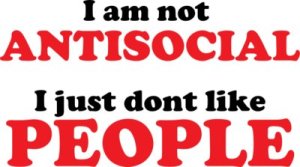
I wasn’t just being sexist. I was being downright antisocial. I had internalized issues, about where I fit in this new world of college. I would never be man enough, Black enough, “White” enough, smart enough, athletic enough, or cool enough. At least that’s what I thought in late-November ’87.

Antisocial bumper sticker, November 21, 2015. (http://www.quotationof.com/).

Antisocial bumper sticker, November 21, 2015. (http://www.quotationof.com/).

I look back at that time and realize how stupid I was twenty-eight years ago. To think that I could go out in the world, attend a four-year institution, and not have my assumptions about the world, about people, and about myself challenged. That’s like going overseas to visit some ruins, but never meeting the people who live there (Or, in this case, like rich White Americans doing Sandals and other brown-skinned service-based vacations).

Phyllis and my dorm mates at Lothrop Hall weren’t even the first step of that process. They were the last step of a process of controlling and protecting myself from my years of living in the shadows in Mount Vernon, New York. The coping strategies I had honed for five years to survive 616 and Humanities and MVHS had barely worked. By the end of my first semester, they were completely useless. I came to realize that a strategy to seal myself up from all criticism and praise, to keep humanity out of my life, was doomed to fail. There was no way to keep the world from forming a first impression of me, no matter how many layers of invisibility I attempted to wear. But there was a way to reshape how I saw myself and the world.

American Racism: “Same As It Ever Was”

14 Saturday Nov 2015

Posted by decollins1969 in 1, culture, Eclectic, eclectic music, music, New York City, Politics, Pop Culture, race

≈ Leave a comment

Tags

"Once In A Lifetime" (1983), Beatings, Ben Fields, Booker T. Washington, Central Park, Death, Ida B. Wells, Institutional Racism, James Blake, James Frascatore, Morning Oregon, NYPD, Police Brutality, Racial Harassment, Racial Incidents, Racism, Spring Valley High School, Talking Heads, University of Missouri, White Vigilantism, Yale University


Ida B. Wells-Barnett, age 32, photographed by Mary Garrity, c. 1893, cropped and restored, September 8, 2013. (Adam Cuerden via Wikipedia). In public domain.

Ida B. Wells-Barnett, age 32, photographed by Mary Garrity, c. 1893, cropped and restored, September 8, 2013. (Adam Cuerden via Wikipedia). In public domain.

A young African American woman refuses to leave her seat. Authority figures arrive to demand that she leaves. She refuses again. One authority charged with “upholding the law” then picks the young woman up and drags her from her seat. But this isn’t Spring Valley High School near Columbia, South Carolina. Nor is it 2015. This incident involved the anti-lynching journalist Ida B. Wells, who sat in a first-class ladies car on the segregated Memphis and Charleston Railroad train rolling through Tennessee. It occurred on May 4, 1884. Except it was three White men, who dragged and threw the then not-quite-twenty-two year-old off the train for refusing to give up a seat she paid for.

Just like with the Black teenager whom Ben Fields assaulted in the name of the law, I’m sure one of the things Wells might have thought was, “This is 1884. Why is this still happening?” The circumstances that led to both incidents were obviously different, but the racism that led to these violent responses was not.

With all that has occurred to break the illusion that Americans live in a twenty-first-century, post-racial utopia, Americans still bring up the times in which we live whenever racism rears its ugly head. Whether it’s the NYPD tackling ex-tennis star James Blake in September, the Black teenager at Spring Valley HS in October, or the responses to Black students at the University of Missouri or Yale in the past week, the need for temporal incredulousness is often present in the midst of these racist incidents. “You would think at some point they would get the memo that this isn’t okay, but it seems that there’s no stopping it,” Blake said after the incident with Officer James Frascatore.

At what point or time? As if saying “Why is this happening in 2015?” has anything to do with bringing systemic, institutional, individual, and internalized racism to an end. If there had been truth and reconciliation commissions at the end of Jim Crow in the South in the 1960s and 1970s, maybe then Americans can quote the year as evidence of irrational racial dissonance. If the federal government had provided reparations after Emancipation in 1865 or after Congress passed the Civil Rights Act of 1964, perhaps then what year this is would matter. Racism and racists have never cared about the year or the supposedly multicultural, progressive times in which Americans lived.

Harris & Ewing photo of Booker T. Washington, circa 1905-1915, Library of Congress, Washington, DC, January 18, 2010. (Cantheasswonder via Wikipedia). In public domain.

Harris & Ewing photo of Booker T. Washington, circa 1905-1915, Library of Congress, Washington, DC, January 18, 2010. (Cantheasswonder via Wikipedia). In public domain.

Before his death in 1915, Tuskegee Institute founder Booker T. Washington experienced something all too many Americans of color face year after year. Washington delivered two speeches at churches in Manhattan on Sunday, March 19, 1911. That same evening, Washington went to an apartment building on West 63rd Street near Central Park, allegedly to meet up with a friend of his accountant on business. After attempting to find this mystery person at the building twice, Henry Ulrich, a 40-year-old White male, confronted Washington and punched him in the head. A White bystander handed Ulrich a walking stick and together, the two men chased Washington toward Central Park, hitting him with the stick on his head and face at least a dozen times. It wasn’t until Washington fell into the arms of NYPD Officer Chester Hagan, at a southwest entrance to Central Park, that the attack came to an end. After his initial arrest, Washington produced his identification papers. Only then was he released, allowed to press charges against Ulrich, and taken to a hospital to get 16 stitches and recover from his head bashing.

Morning Oregon headline on Booker T. Washington trial, November 7, 1911.

Morning Oregon headline on Booker T. Washington trial, November 7, 1911.

Despite having the support of Andrew Carnegie, former New York City mayor Seth Low and President William Taft, Washington’s assault charge was destined to fail. The New York and national press — yellow journalism at its best in 1911 — tried Washington on their front pages from March 20 on. Laura Alverez did a wonderful job in misrepresenting herself as “Mrs. Ulrich” in defense of her paramour at the trial. Alverez accused Washington of saying, “Hello, Sweetheart” to her — a dog whistle back then for the ultimate taboo of interracial sex — when Washington was outside the apartment building. Two of the three judges voted on Monday, November 6, 1911, to acquit Ulrich of the assault charge, news the national press gleefully reported. Among them was the Morning Oregonian, which had “‘Beating Up’ Darky Brings No Punishment to Man” as part of its headline.

All this took its toll on an already sick 55-year-old Washington, a man already suffering from hypertension and high-blood pressure. The result was a physically and emotionally diminished Washington after 1911. Booker T. Washington died on November 16, 1915. The power Washington had exercised as an advisor to Presidents Theodore Roosevelt and Taft and as a racial accommodationist (some would say, an apologist) who befriended White philanthropists, it didn’t matter. His poor health may have been the symptom, but racism in all its forms was the ultimate cause.

It does not matter what year it is. Racists don’t care. It doesn’t matter if African Americans and White progressives hold die-ins in Ferguson, Cleveland and New York. Blacks and other people of color don’t have the same right to breathe without a racist’s say-so. It doesn’t matter if respectable Blacks wear nice suits and ties, attend Harvard, establish a university, or serve as President of the United States. Americans of color are all criminals and playthings in the eyes of racists, and the power structures for which they work have been set up to preserve racial inequality for centuries. And it doesn’t matter if liberals Black, White and Brown call for healing. Racists don’t want healing, and calling for it without acknowledging a flesh-eating, bacterial-infested wound like racism doesn’t do Americans any good. Booker T. Washington learned that lesson in 1911, and Ida B. Wells learned it in 1884. Millions of other Americans of color have learned that lesson all too well today.

This Is NOT Sparta!

11 Wednesday Nov 2015

Posted by decollins1969 in 1, culture, Eclectic, Movies, Patriotism, Politics, Pop Culture, race, Religion, Sports

≈ Leave a comment

Tags

Black Americans, Black Migration, Blind Patriotism, Civil Rights Movement, Civilians, Erasure, Freedom, History Lessons, Honoring, Hyper-Patriotism, Invisibility, Jim Crow, Meaning, Native Americans, Patriotism for Profit, Sacrifice, Service, Slavery, Veterans Day


"If you live in a free country, thank a veteran" poster slogan, November 10, 2015. (http://facebook.com).

“If you live in a free country, thank a veteran” poster slogan, November 10, 2015. (http://facebook.com).

Just like with Memorial Day and with Independence Day, I often find myself conflicted about Veterans Day. Not because I think individual members of the military deserve praise or scorn. As usual, the vast majority of Americans think too simplistically about their country, its people, its intentions and history, even its holidays. Too many of us go along to get along. It’s as if we expect the contradictions and tensions that make up our times and days like today to simply melt away in some high-pitched display of blind patriotism. I have not — and likely will never be — that American, pumped up with pride and affection, shouting slogans as gospel truth, thanking every member of the military for every single breath of American air that I breathe. And that is because the narrative for days like today has never worked for me.

In some respects, the blind march of Veterans Day is with Americans every single day. The media covers the military and individual military members as if all of them have spent weeks on the front lines, as if all of them are patriots above reproach. Almost all of us have known someone who’s served, and we know that service for most was never as simple as wrapping the American flag around themselves in defense of American freedoms halfway around the world (or at a base a few miles from home). In recent months, we’ve learned that much of the constant drumbeat of military-fueled patriotism the military itself has bought and paid for, at NFL and college football and baseball games. Reinforcing one of America’s main values — profit.

Army National Guardsmen about to run on field with American flags with the New England Patriots, Super Bowl XLIX, University of Phoenix Stadium, Glendale, AZ, February 1, 2015. (http://latimes.com; Getty Images).

Army National Guardsmen about to run on field with American flags with the New England Patriots, Super Bowl XLIX, University of Phoenix Stadium, Glendale, AZ, February 1, 2015. (http://latimes.com; Getty Images).

Today is Veterans Day, created seventy-seven years ago in the aftermath of the Great War, the “War to End All Wars,” World War I. It was a terrible war, after all. Ten million soldiers and sailors on all sides died, twenty million found themselves ripped and torn apart, and eight million civilians died. But not for or in the US, where 120,000 soldiers and sailors died, a few hundred thousand were wounded, and few hundred civilians died. The US didn’t enter the war until April 1917, nearly three years into the raging Eurasian conflict. American weapons manufacturers and merchants profited greatly from the war even before the US declared war on Germany, selling arms and food to both sides.

War is never simple. Neither should be what we think of those who served or are serving. Veterans Day is about respecting those who have served or are serving. Like my youngest brother Eri, or my Uncle Felton, or my sister-in-law or my late uncle-in-laws. Thanking or respecting them, though, shouldn’t be tied directly to the idea that I “live in a free country.” I don’t believe that the US is a free country, not for me and for millions of others like me. Nor do I believe that the US military has played a role in preserving my individual freedoms and liberties historically. I am a Black man living in a society built in part on systemic racism, often maintained or reinforced by the US military. Except for some elements of the Union Army during the Civil War, the US military has played a very small role in making sure that I or anyone who looks like me — male, female or transgender — lives in a free country.

Not to mention, the US hasn’t been invaded in over 200 years (I don’t want to hear about Pancho Villa — that wasn’t an invasion). Since when does fighting North Koreans, the Viet Cong, or even Nazis equate to me and others and our “freedoms?” Seriously, every time someone says this, it’s as if you’re attempting to erase long civilian fights for civil rights, for the most basic of freedoms that the US purports to grant to every citizen. Folks who say that we should be grateful to the military for living in a free country completely make invisible Native Americans. The US military was what guaranteed their near annihilation, deculturalization and unyielding poverty, especially from 1865 on.

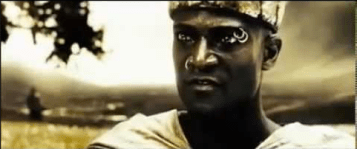
"This is madness!" with actor Peter Mensah, screen shot from 300 (2007), November 11, 2015. (http://youtube.com).

“This is madness!” with actor Peter Mensah, screen shot from 300 (2007), November 11, 2015. (http://youtube.com).

Yes, some of you will note that I can write my post without fear of retribution from the government. Then I will say in response, “How does serving overseas guarantee my rights?” It doesn’t. A lot went into putting me in a better position in my life. Black migration, the Civil Rights Movement (flaws and all), the sacrifices of Black and White civilian leadership (including their deaths). I am one generation removed from sharecropping and tenant farming in Georgia and Arkansas, one generation removed from the last years of the Jim Crow era. But somehow, the US military is responsible for me living “in a free country.” Sorry, but that’s a narrative I cannot get behind.

So, we should all thank individual veterans for their service. We should honor the dead and the broken among them. For whether they came to serve out of a deep sense of patriotism, because of the draft (prior to 1973), because there weren’t any jobs in their communities, or because they wanted a chance at today’s version of the GI bill, some of them have paid dearly in their service. But since we do not live in a military junta or in a totalitarian society, I dare say that I don’t have to go along with the narrative that without the military, I would be a slave. History contradicts every aspect of this false narrative.

This isn’t Sparta (Sparta wasn’t even Sparta). Nor should the US ever be Sparta.

The Academic Conference: Likes and Dislikes

31 Saturday Oct 2015

Posted by decollins1969 in 1, Academia, Carnegie Mellon University, culture, Eclectic, Patriotism, Pittsburgh, Politics, Pop Culture, race, University of Pittsburgh

≈ Leave a comment

Tags

American Narcissism, Andrew Hartman, Christopher Lasch, Conference Presentations, Diagnostic and Statistical Manual for Mental Disorders, Diversity of Thought, DSM, Elisabeth Lasch-Quinn, Hamilton Crowne Plaza, Jackson Lears, Jonathan Holloway, No-Shows, Psychiatry, Psychology, Public Speaking, Randal Maurice Jelks, S-USIH 2015 Conference, Society of U.S. Intellectual Historians, US Imperialism, Washington DC


Summer Breeze, July 2014 (they served these at the hotel where the S-USIH Conference was held). (http://sommerbuffet.dk/).

Summer Breeze, July 2014 (they served these at the hotel where the S-USIH Conference was held). (http://sommerbuffet.dk/).

This will not be a post in which I list every possible takeaway I’ve ever had from any conference or set of conferences. Instead, I have a few notable impressions to discuss, things of which the Society of U.S. Intellectual Historians 2015 Conference reminded me two weeks ago.

For one, October 17 was my first academic conference presentation in eight and a half years, my longest stretch without going in front of an academically trained crowd since before my first day of grad school in August 1991. It was a good presentation, not my best, but far from my worst. I presented as part of my panel on American Imperialism, American Narcissism, with my paper, titled “‘We’re #1:’ How US Imperialism and American Narcissism Reinforce Each Other.” My main points in the paper and in the presentation:

2 Cheers for American Exceptionalism, March 2010. (http://www.aei.org).

2 Cheers for American Exceptionalism, March 2010. (http://www.aei.org).

1. That historians and other scholars (really, other writers, other intellectuals, educators, psychologists, and social scientists) should take a closer look at the Diagnostic and Statistical Manuel for Mental Disorders (a.k.a., the DSM) and maybe use it as a means for evaluating American culture and society as narcissistic (301.81, the code for narcissistic personality disorder as of DSM-IV-TR), rather than merely assuming that it is so based on simplistic observations. (I knew from my previous experience in grad school and through working for Western Psych in Pittsburgh and Westchester County Department of Community Mental Health that some historians would have trouble with the soft evidence of psychology).

2. That even though my paper concentrated on the period after 1945, my argument was far more comprehensive. My larger argument is that narcissism has always been a fundamental default position of American culture and society, rooted in part in imperialism, but part of the basic character of the nation from its outset as a group of English colonies.

It was kind of fun to present, but would have been even more fun if folks on my panel or in the audience challenged some of my ideas and evidence. That’s often the way to make a paper or a presentation even better. (For those who have an interest, a copy of the paper is here to download, but I do expect some feedback).

It was good to meet some folks I either hadn’t seen in years or had never met before, like Elisabeth Lasch-Quinn, Jonathan Holloway, and Jackson Lears. It was good to see my friend and one-time student Andrew Hartman as he facilitated the conference (flaws and all). Mostly, it was good to be able to get out of my own head and own writing, to hear others talk about some of the issue I care about from a perspective different from my own.

A bored audience, April 2012. (https://ispeakcomics.files.wordpress.com/).

A bored audience, April 2012. (https://ispeakcomics.files.wordpress.com/).

But it wasn’t exactly like going to do the boogie-down at a Sade concert. Two things really stood out. One, academicians need serious public speaking training. The older I get, the more quickly I tire of watching presenters read their papers verbatim, as if the audience couldn’t download it and read it at their leisure. Even a mediocre presentation delivered as a speech is generally better than the best-read papers. Of course, even in the extemporaneous category, many academicians could still use lots of training and deliberate focus.

Two, where is the common courtesy when someone cannot make a conference to serve as a chair or present their work? The chair for my panel bagged out without so much as a tweet, much less an email or a telephone call. As the senior person on the panel, I became the chair the same afternoon I delivered my talk by default. Not a new thing, but a heads-up even that Saturday morning would’ve helped. I followed up with the derelict chair after the conference. He still has yet to respond to my message.

All I know is, I need to do more of this, especially if this idea of mine is to evolve into a larger project. But it can’t be me speaking only at academic conferences. Other settings, with other thinkers, old and young, disagreeable and full-fledged advocates, I’m in need of them all. If or when I do come through, though, please, please show up.

Spring Valley HS, A Damn Shame

27 Tuesday Oct 2015

Posted by decollins1969 in 1, culture, Eclectic, Politics, race, Youth

≈ Leave a comment

Tags

Columbia South Carolina, Incident, Individual Racism, Institutional Racism, Internalized Racism, Misogyny, Narcissism, Police Brutality, Racism, Richland County School District Two, Spring Valley High School, Teacher Autonomy, Voyeurism


Ben Fields in midst of dragging student out of desk and throwing her across room, North Columbia, SC, October 26, 2015. (http://nydailynews.com).

Ben Fields in midst of dragging student out of desk and throwing her across room, North Columbia, SC, October 26, 2015. (http://nydailynews.com).

We all have in the past twenty-four hours either heard about the incident, read the details, or watched the video. Ben Fields, a White police officer (called a “resource officer” in the benignly dangerous language of public schools), brutally attacked a teenage Black girl in her classroom. The asshole with a badge flipped her over her desk and then threw her across the room like a piece of garbage. Arresting her for using a phone and refusing to get up, and threatening any other kid who came to her defense? This isn’t acceptable behavior. Period.

But this is more than the issue of an individual’s racism or even institutional racism in the case of this Richland County School District Two outside of Columbia, South Carolina. Yesterday’s incident speaks to, among other issues:

1. Lack of teacher autonomy. We now live in a place where a whole generation of teachers are risk averse, partly because of school shootings, but primarily because of corporate education reform. Many, if not most teachers are ill-equipped to deal with disciplinary issues in their own classrooms, and are too quick to turn to the violent hand of police and security because they have no idea how to do this aspect of their job.

2. Black misogyny. How could that teacher stand there, watch and condone that action? Aside from this Black teacher’s lack of autonomy, there may be a lack of empathy on his part as well. For all of the complaints about the police officer, this guy masquerading as a teacher was a coward, and implicit has condoned violence against a woman in an obviously nonviolent situation.

3. Voyeurism as racism. Even though a student recorded this incident and literally millions of people are now aware of what occurred, many respectable Negroes and a cacophony of Whites support the primal brutality captured in it. So much so that one could conclude that they embrace the idea that the police have the right to kill and brutalize kids without fear of reprisals. These narcissists may even love the idea of hurting kids of color, because that’s exactly what they would if they thought they could get away with it, too.

It hurts to watch the video or read about the incident, because if someone laid their hands on my kid with that level of brutality…

← Older posts
Newer posts →

Boy @ The Window: A Memoir

Boy @ The Window: A Memoir

Places to Buy/Download Boy @ The Window

There's a few ways in which you can read excerpts of, borrow and/or purchase and download Boy @ The Window. There's the trade paperback edition of Boy @ The Window, available for purchase via Amazon.com at http://www.amazon.com/Boy-Window-Donald-Earl-Collins/dp/0989256138/

There's also a Kindle edition on Amazon.com. The enhanced edition can be read only with Kindle Fire, an iPad or a full-color tablet. The links to the enhanced edition through Apple's iBookstore and the Barnes & Noble NOOK edition are below. The link to the Amazon Kindle version is also immediately below:

scr2555-proj697-a-kindle-logo-rgb-lg

Boy @ The Window on Amazon.com: http://www.amazon.com/Boy-The-Window-Memoir-ebook/dp/B00CD95FBU/

iBookstore-logo-300x100

Boy @ The Window on Apple's iBookstore: https://itunes.apple.com/us/book/boy-the-window/id643768275?ls=1

Barnes & Noble (bn.com) logo, June 26, 2013. (http://www.logotypes101.com).

Boy @ The Window on Barnes & Noble: http://www.barnesandnoble.com/w/boy-the-window-donald-earl-collins/1115182183?ean=2940016741567

You can also add, read and review Boy @ The Window on Goodreads.com. Just click on the button below:

Boy @ The Window

Twitter Updates

Tweets by decollins1969
  • RSS - Posts
  • RSS - Comments

Archives

  • June 2025
  • April 2023
  • September 2022
  • August 2022
  • July 2022
  • June 2022
  • May 2022
  • April 2022
  • March 2022
  • January 2022
  • December 2021
  • November 2021
  • October 2021
  • September 2021
  • August 2021
  • July 2021
  • June 2021
  • April 2021
  • March 2021
  • February 2021
  • January 2021
  • December 2020
  • November 2020
  • October 2020
  • September 2020
  • August 2020
  • July 2020
  • May 2020
  • April 2020
  • March 2020
  • January 2020
  • December 2019
  • November 2019
  • August 2019
  • July 2019
  • June 2019
  • May 2019
  • April 2019
  • March 2019
  • February 2019
  • January 2019
  • December 2018
  • November 2018
  • October 2018
  • September 2018
  • August 2018
  • July 2018
  • June 2018
  • May 2018
  • March 2018
  • February 2018
  • January 2018
  • December 2017
  • November 2017
  • October 2017
  • September 2017
  • August 2017
  • July 2017
  • June 2017
  • May 2017
  • April 2017
  • March 2017
  • February 2017
  • January 2017
  • December 2016
  • November 2016
  • October 2016
  • September 2016
  • August 2016
  • July 2016
  • June 2016
  • May 2016
  • April 2016
  • March 2016
  • February 2016
  • January 2016
  • December 2015
  • November 2015
  • October 2015
  • September 2015
  • August 2015
  • July 2015
  • June 2015
  • May 2015
  • April 2015
  • March 2015
  • February 2015
  • January 2015
  • December 2014
  • November 2014
  • October 2014
  • September 2014
  • August 2014
  • July 2014
  • June 2014
  • May 2014
  • April 2014
  • March 2014
  • February 2014
  • January 2014
  • December 2013
  • November 2013
  • October 2013
  • September 2013
  • August 2013
  • July 2013
  • June 2013
  • May 2013
  • April 2013
  • March 2013
  • February 2013
  • January 2013
  • December 2012
  • November 2012
  • October 2012
  • September 2012
  • August 2012
  • July 2012
  • June 2012
  • May 2012
  • April 2012
  • March 2012
  • February 2012
  • January 2012
  • December 2011
  • November 2011
  • October 2011
  • September 2011
  • August 2011
  • July 2011
  • June 2011
  • May 2011
  • April 2011
  • March 2011
  • February 2011
  • January 2011
  • December 2010
  • November 2010
  • October 2010
  • September 2010
  • August 2010
  • July 2010
  • June 2010
  • May 2010
  • April 2010
  • March 2010
  • February 2010
  • January 2010
  • December 2009
  • November 2009
  • October 2009
  • September 2009
  • August 2009
  • July 2009
  • June 2009
  • May 2009
  • April 2009
  • March 2009
  • February 2009
  • January 2009
  • December 2008
  • November 2008
  • October 2008
  • September 2008
  • August 2008
  • July 2008
  • June 2008
  • May 2008
  • April 2008
  • March 2008
  • February 2008
  • January 2008
  • December 2007
  • November 2007
  • October 2007
  • September 2007
  • August 2007
  • July 2007
  • June 2007

Recent Comments

MaryPena's avatarMaryPena on My Day of Atonement/Bitter Hat…
decollins1969's avatardecollins1969 on No Good Teaching Deed Goes…
Mary Rose O’Connell's avatarMary Rose O’Connell on No Good Teaching Deed Goes…

NetworkedBlogs on Facebook

NetworkedBlogs
Blog:
Notes From a Boy @ The Window
Topics:
My Life, Culture & Education, Politics & Goofyness
 
Follow my blog

616 616 East Lincoln Avenue A.B. Davis Middle School Abuse Academia Academy for Educational Development AED Afrocentricity American Narcissism Authenticity Bigotry Blackness Boy @ The Window Carnegie Mellon University Child Abuse Class of 1987 CMU Coping Strategies Crush #1 Crush #2 Death Disillusionment Diversity Domestic Violence Economic Inequality Education Family Friendship Friendships Graduate School Hebrew-Israelites High-Stakes Testing Higher Education History Homelessness Humanities Humanities Program Hypocrisy Internalized Racism Jealousy Joe Trotter Joe William Trotter Jr. K-12 Education Love Manhood Maurice Eugene Washington Maurice Washington Misogyny Mother-Son Relationship Mount Vernon High School Mount Vernon New York Mount Vernon public schools Multiculturalism MVHS Narcissism NFL Pitt Pittsburgh Politics of Education Poverty President Barack Obama Race Racial Stereotypes Racism Relationships Self-Awareness Self-Discovery Self-Reflection Sexism Social Justice Teaching and Learning University of Pittsburgh Violence Whiteness Writing

Top Rated

Blog at WordPress.com.

  • Subscribe Subscribed
    • Notes from a Boy @ The Window
    • Join 103 other subscribers
    • Already have a WordPress.com account? Log in now.
    • Notes from a Boy @ The Window
    • Subscribe Subscribed
    • Sign up
    • Log in
    • Report this content
    • View site in Reader
    • Manage subscriptions
    • Collapse this bar
 

Loading Comments...