• About Me
  • Other Writings
  • Interview Clips
  • All About Me: American Racism, American Narcissism, and the Conversation America Can’t Have
  • Video Clips
  • Boy @ The Window Pictures
  • Boy @ The Window Theme Music

Notes from a Boy @ The Window

~

Notes from a Boy @ The Window

Category Archives: Pop Culture

If Eri’s Now 30, What Does That Mean For Me/Us?

22 Thursday May 2014

Posted by decollins1969 in 1, Boy @ The Window, Christianity, culture, Eclectic, Hebrew-Israelite, Marriage, Mount Vernon New York, Pop Culture, race, Religion, Youth

≈ Leave a comment

Tags

30th Birthdays, 616, 616 East Lincoln Avenue, Birth, Birthdays, Cooking, Dreams, Eri Washington, Family, Rebirth, Self-Discovery, Writing


Eri’s 30th

Eri’s 30th

Really, I’ve written about this before, five years ago, right after Eri turned twenty-five. Everything I wrote about Eri in “The Meaning of Eri’s 25th” is still applicable today. I only have a few things to add to that earlier post. First, Happy Birthday, Bro!!! Welcome to the second tier of youth, the one for folks over thirty, but not yet middle-aged! For the first time ever, we’re in the same general age category, until I turn forty-six, a year and seven months from now – yay!

Second, the fact that you’re thirty today is a reminder of how long I’ve been doing certain things. Like the fact that I’ve been cooking for myself, for family and for other people for thirty years. And that I’ve been at least six feet tall for a bit more than thirty years. And that I’d turned to Christianity a couple of months before Eri’s birth, a bit more than thirty years ago. All of it serves as a reminder that Donald 1.0 had been in the midst of evolution right around your birth.

Third and maybe just as important, the fact that it’s never too late in life to achieve your dreams. That I’m able to writer about my experiences — and our family — these days with commitment was something I couldn’t even conceive as a dream thirty years ago. By May ’84, I’d buried that knowledge of myself as a writer deep within my spirit and soul, so much so that I rarely thought about writing anything again until I was nearly twenty. Imagine a situation so deep that an aspiring writer can’t articulate the words necessary in which to write. I didn’t have to imagine it, though.

I hope that you Eri — in fact, our other brothers Maurice, Yiscoc and Darren, too — will find the strength and energy to do your dreams, to harness what remains of our dwindling youth before our hair is completely gray. I will do the same.

Whiteness, Symbols and Racial Context

21 Wednesday May 2014

Posted by decollins1969 in 1, culture, Eclectic, Politics, Pop Culture, race, Youth

≈ 2 Comments

Tags

Affirmative Action, Class Privilege, Colorblind Racism, Colorblindness, Entitlement, Individual Racism, Individualism, Institutional Racism, Privilege, Racial Assumptions, Racial Context, Racial Stereotypes, Racism, Structural Racism, Symbolism, Symbols, Whiteness


The Matrix (1999) meme (only, the "What if I told you" part is incorrect) featuring Laurence Fishburne as Morpheus, May 21, 2014. (http://imgflip.com).

The Matrix (1999) meme (only, the “What if I told you” part is incorrect) featuring Laurence Fishburne as Morpheus, May 21, 2014. (http://imgflip.com).

For most Whites, racism’s an individual thing. For most Whites, Racism must be obvious. For most Whites, racial bias can only be a deliberate choice. For most Whites, racism’s not infused in the fabric of American culture, or baked into America’s institutions, or infused in its very political and economic structure. Of course, these “most Whites” are just plain wrong. What scares them on this issue — maybe even more than actually using the words “race” or “racism” — is the possibility that though racism is learned, that it also isn’t a decision. It’s an assumption, or really, many layers of assumptions. Of “rights.” Of entitlement. Of privilege. Of being special. Of being colorblind. Of folks knowing their place, and they as Whites knowing where to place these folks.

As I wrote in another social media context last week, part of the insidious nature of Whiteness — aside from its ability to morph over time — are the issues of symbolism and context. Racism for most is obvious and relies heavily on the most obvious of symbols, like in the case of hooded KKK members burning crosses, or in Donald Sterling‘s case, an elderly rich White guy whose Archie Bunker paternalism can be seen from space.

These incidents are the tip of the proverbial iceberg of race and racism in the US because most people of color exist outside the context that comes with Whiteness. For walking in Whiteness without any acknowledgement of one’s privilege — but with tons of assumptions of privilege — is the psychological and social equivalent of breathing and walking at the same time — one only thinks about it when forced to. If those Black and Brown are on TV in orange jump suits, it fits the narrative and context of Whiteness. If someone like me is a college professor in a predominantly White classroom, however, the context doesn’t fit the Whiteness playbook, and with that systems error, many of my White students manifest so many racial assumptions.

Writer, educator and NBA Hall of Famer Kareem Abdul-Jabbar on ABC's This Week discussing NBA's response to Donald Sterling's racist statements, May 4, 2014. (http://www.politifact.com).

Writer, educator and NBA Hall of Famer Kareem Abdul-Jabbar on ABC’s This Week discussing NBA’s response to Donald Sterling’s racist statements, May 4, 2014. (http://www.politifact.com).

These out-of-context scenarios occur on individual and institutional scales. Like having White co-workers only recognize me in the context of being at work and at a desk, but being scared upon seeing me board an elevator with them five minutes after the end of a work day. Or in spotting me searching for something at a store, only to ask me to help them find something for them, assuming that I work there. Or in assuming that in the context of sports and entertainment, anyone Black or Brown with an IQ higher than 100 with verbal skills is “angry,” or is “too cerebral” to be successful, or has “an attitude problem.”

Then there’s the assumption that no matter one’s grades, test scores or degrees, that wee folk of color achieved all we have because of affirmative action, the symbol of so-called reverse racism in the US (talk about the narcissism and master-race assumptions of intelligence embedded in this line of reasoning!). For most of the history of Whiteness and racism in American history, this was an infrequent prospect. These days, these microaggressions and racist behaviors occur almost every moment of every day. Precisely because there are so many successful Black and Brown folks, at least in the semi-conscious mind of Whites in the midst of their own Whiteness. This despite the reality that these successful Black and Brown folks are only symbols of  the very success that has eluded a broad majority of those of color.

Agent Mr. Smith (played by Hugo Weaving) about to explode, The Matrix (1999), May 21, 2014. (http://www.oocities.org/)

Agent Mr. Smith (played by Hugo Weaving) about to explode, The Matrix (1999), May 21, 2014. (http://www.oocities.org/)

But the context here will rarely be obvious to those awash in Whiteness. Structural inequality and racism, institutional racism, even internalized racism — all confirm the world that most operating in Whiteness can see, precisely because this world is the one in which they are comfortable and virtually unchallenged. Challenging the very structures and institutions upon which Whiteness has been built is like trying to metaphorically deconstruct The Matrix. Most living in Whiteness don’t want to wake up, For waking up would obliterate their world, their very understanding of their existence. And that’s too high a price for recognizing racism and inequality, and their own inadvertent hand in both.

Mothers’ Meeting Day, 1997

17 Saturday May 2014

Posted by decollins1969 in 1, Academia, Boy @ The Window, Carnegie Mellon University, Cleaning, culture, Eclectic, Jimme, Marriage, Mount Vernon High School, Mount Vernon New York, My Father, Pittsburgh, Pop Culture, race, University of Pittsburgh, Youth

≈ Leave a comment

Tags

Abuse, Alcoholism, Baggage, Betrayal, CMU, Insomnia, LaGuardia Airport, Laurell, Misogyny, Mother's Day, Mother-in-Law, Mother-Son Relationship, PhD Graduation, Pitt, US Air, US Airways


A Mother’s Revisions

A Mother’s Revisions

Normally I do a post every May 18th on a topic related to my PhD graduation ceremony at Carnegie Mellon. They usually revolve around two subjects: Joe Trotter and my Mom, betrayal and burnout. For once, I have no intention of doing a post on the seventeenth anniversary of officially becoming “Dr. Collins” and all of the baggage that I brought/came with that. Instead, today’s post is about the day before, Saturday, May 17 ’97. It was the day that my Mom and my future mother-in-law would meet each other for the first time, during my Mom’s one-and-only visit to Pittsburgh during my twelve years there.

I covered the cost of my Mom’s round-trip flight on US Air from LaGuardia to Pittsburgh, knowing that she wouldn’t have been able — or, as it turned out, willing — to see me graduate otherwise. That Friday evening, May 16th, was my Mom’s first time on an airplane since she was pregnant with me, the summer of ’69, when she visited her family in Arkansas. She’d already missed my ceremonies at Pitt for my bachelor’s and master’s in ’91 and ’92 respectively, and, as a result, I hadn’t gone to my graduations those years either.

So I made it easy for her this time around. Or rather, me and my then girlfriend Angelia made it easy for her. I gave up my studio apartment that weekend, because my Mom wasn’t comfortable with me putting her up in a hotel. Angelia cleaned my apartment from top to bottom — including the moulding at the bottom of my apartment’s walls. The place wasn’t this clean the day I’d moved in back in ’90!

But with so many other things that week, my Mom showed little appreciation for the significance of this trip, or for what we were doing to make this trip as convenient for her as possible. I went through Friday night and Saturday at Angelia’s apartment on the edge of East Liberty, about a twelve-minute walk away, where I hadn’t done an overnight before. I spent the first half of the next day going back and forth between my Mom, Angelia, my high school friend Laurell and her sister Naomi and unofficial surrogate (who were all staying at the Downtown Marriott).  I took my Mom to both Pitt and CMU, to show her the place of my ten years’ working toward something much more important than a second high school diploma. I might as well have been taking my son to both campuses when he was a newborn!

Around 2:30 pm, I realized we needed to get to Angelia’s mother’s place in Homewood for a mid-afternoon meal. That was next on the schedule. I think we took the bus, the 71D from a block off CMU to Homewood, and walked the three blocks up a steep hill to Monticello Street. There, Angelia’s mom extended a long greeting, a hug for which my Mom hardly seemed prepared. Angelia was also there, and had bought a KFC bucket meal for the four of us to share.

After a few pleasantries, it started. How my mother and eventual mother-in-law, in their first-ever meeting, spent three hours discussing their failed marriages and the horrible nature of Black men the day before my graduation, I really don’t know. I was in a fog, worn out from a week’s worth of insomnia and from the growing realization that my Mom didn’t really care about my journey or accomplishments.

I stayed and respected my elders, maybe too much. Three hours listening to stories I already knew, between my first-hand knowledge of my father Jimme and my idiot ex-stepfather Maurice, not to mention the stories Angelia had told me about her mother’s trials (luckily, Angelia never witnessed these, because her mother’s marriage was over by the time she’d turned two). A concussion here, a bruised lip there. A broken jaw, a fractured arm. Alcoholism and abuse, and men, working or unemployed, not paying any bills. “Men are no good,” my Mom said over and over again.

Of course, I didn’t count, for as far as my Mom was concerned, I wasn’t a man, because I’d spent the previous decade as a student. But that wasn’t the worst part. My Mom did a bunch of revisionist history in telling the story of “raisin’ six kids” and her doomed two marriages, somehow writing me and Darren and the decisions she had some degree of control over out of this story.

I’d never been part of a conversation like this as an adult. As a six or ten-year-old kid on The Avenue in Mount Vernon with my Mom and her hospital friends, yes, but not since those times. I felt as if I might as well found some stoop outside, sat down with a 40, and fallen into a deep sleep.

Even Angelia’s mom wanted to change the subject by the middle of hour number three. Instead, she used her elderly-ness as a excuse to beg off more conversation on the topic of misogyny, told me that she was proud of me, said that she was excited about going to the CMU ceremony, and retired for the evening. I wish I could’ve gone upstairs with her and done the same. I instead had the distinction of dropping my Mom off at my apartment, picking up Angelia and going down to Station Square to eat dinner with Laurell, Naomi and Archie. And that was all the day before the graduation ceremony!

Where 1 PhD = A Second High School Diploma

14 Wednesday May 2014

Posted by decollins1969 in 1, Academia, Boy @ The Window, Carnegie Mellon University, culture, Eclectic, Mount Vernon High School, Mount Vernon New York, New York City, Pittsburgh, Pop Culture, race, University of Pittsburgh, Youth

≈ Leave a comment

Tags

Associate's Degree, CMU, High School Diploma, Homelessness, Jealousy, job search, Lame Jokes, Mother-Son Relationship, PhD Graduation, Pitt, Subway, Teachers College, Westchester Business Institute, White Plains New York, Yonkers


Absurditty (or an Absurd Ditty, deliberately misspelled), where $100 = 2 quarters, May 14, 2014. (Donald Earl Collins).

Absurditty (or an Absurd Ditty, deliberately misspelled), where $100 = 2 quarters, May 14, 2014. (Donald Earl Collins).

I could’ve just as easily titled this post, “Road to Boy @ The Window, Part 5: My Mother and My Doctoral Graduation.” Precisely because any chance I had of immediately getting over the psychological and emotional hump of finishing a doctorate while dealing with the betrayals of an advisor and dissertation committee was gone by the end of my graduation day, the third Sunday in ’97 (anniversary number seventeen, just four days away). That process opened me up to looking at my past, to figuring out how someone like me could go on to do a PhD, to teach, to write, to learn, all well beyond the expectations of my parents and my classmates.

The process of feeling uneasy about my relationship with my Mom, though, had begun the day after my interview at Teachers College. That Tuesday, May 13th, I left the Hotel Beacon, made my way down to the 66th Street stop, and caught the 1 train to The Bronx and Van Cortlandt Park. I then caught a Westchester Bee-Line Bus up Broadway and crossed the Yonkers-Bronx border, where I got off to walk up a one-block-long hill.

I arrived at my Mom’s temporary place on Bruce Avenue. This was where she and my younger siblings had been living since the end of ’95, as a result of an electrical fire that swept through two floors of 616. Not to mention, an incompetent Mount Vernon Fire Department that did more damage by flooding two of the three buildings on the property in the process of putting the fire out. It was a sparse place that made 616 look like a luxury high-rise by comparison. There were holes in the walls because my younger siblings Yiscoc and especially Eri had punched through the cheap plaster and nonexistent sheet rock in their teenage anger and rage.

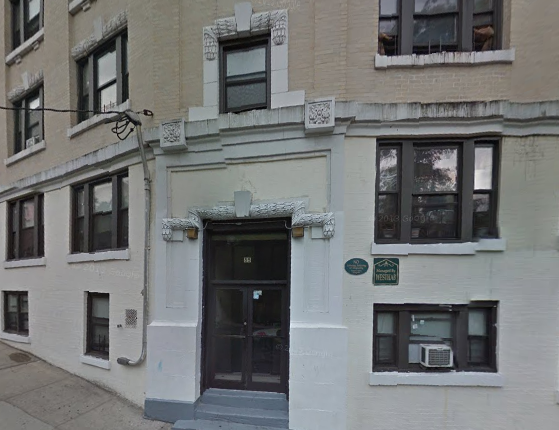
Front door of 85 Bruce Avenue, Yonkers, NY (screen shot), taken in October 2007. (Google Maps).

Front door of 85 Bruce Avenue, Yonkers, NY (screen shot), taken in October 2007. (Google Maps).

It was in the midst of all of this that my Mom was finally graduating from Westchester Business Institute with her associate’s. I was happy for her. The only thing that concerned me was the kind of work she could find with the degree. I was willing to help her in any way I could, including coming up and spending a few days in Yonkers to attend her ceremony in White Plains that Tuesday evening. I wanted to continue to provide my Mom the emotional support that I thought she wanted.

That began to change the morning after her graduation ceremony. We were sitting down at this cafeteria bench that served as the kitchen table, with her drinking cream-infused tea from a chipped white flower mug and eating a piece of toast while I contemplated walking down the hill for some yogurt. We’d been talking about looking for work, about her moving out and finding a place in White Plains, or even moving back to a fully renovated 616. I brought up the real possibility that if I got the Teachers College job, I would move back to the New York area (though not Mount Vernon — out of the question).

This was when my Mom said, “You know, you were in school so long, you could’ve had another high school diploma.” It was out of the blue, and caught me completely off guard. It was quiet for a moment, with me in a deep frown, and my Mom sitting there for a few seconds. Then she forced a laugh. “It’s a joke,” she said, as if I was supposed to be oblivious to the nonverbal displays of disdain for nearly a decade’s worth of my work. And, what was the joke? My degree, or the amount of time and energy I spent in earning it?

I sort of ignored what my Mom had said at first. But really, how could I? Mom had told the lamest of jokes over the years — like about how diarrhea “was like ‘dying in the rear’,”  she’d say as if she heard the joke from someone else. But no matter how I looked at it, comparing everything I went through from August ’87 up to that point to a diploma that I earned while living in two hells — 616 and Mount Vernon High School — wasn’t a joke. Not for either of us.

My Mother's Associate's Degree Photo, Westchester Business Institute, May 12, 1997.

My Mother’s Associate’s Degree Photo, Westchester Business Institute, May 12, 1997.

My Mom disappointed me a day later, as she said, “I don’t have to tell you that I’m proud of you. I tell other folks, just not you.” It was in response to me saying that I thought her joke wasn’t one at all. But she hadn’t sealed our fates as a mother and son in a long-term strained relationship, at least not yet. That would occur a few days later.

Even under the strictest of measures, comparing a PhD to a high school diploma is ridiculous. It’s like comparing the buying power of Oprah to an ant colony. But I figured out a long time ago, long before starting my master’s program in history at Pitt, that a degree is only worth anything if you use it to enhance your life, advance your career, or pursue your calling. Even with all my qualms. About academia, about the publish-or-perish model, about the not-for-profit profit world, even about myself as a writer. It was all worth it.

One thing I did learn, though, about my Mom, maybe for the first time. I’d always wondered about the saying, “I love you, but I don’t like you.” I hadn’t really understood what that meant until the week of my doctoral graduation.

AP US History Exam Day & Harold Meltzer

13 Tuesday May 2014

Posted by decollins1969 in 1, Boy @ The Window, culture, Eclectic, eclectic music, Mount Vernon High School, Mount Vernon New York, music, Politics, Pop Culture, race, Youth

≈ Leave a comment

Tags

AP, AP American History, AP US History, AP US History Exam, Appreciation, College Board, Coping Strategies, ETS, Exam Day, Harold Meltzer, Kaplan, Mentoring, Photographic Memory, Princeton Review, Privilege, Self-Discovery, Teaching and Learning


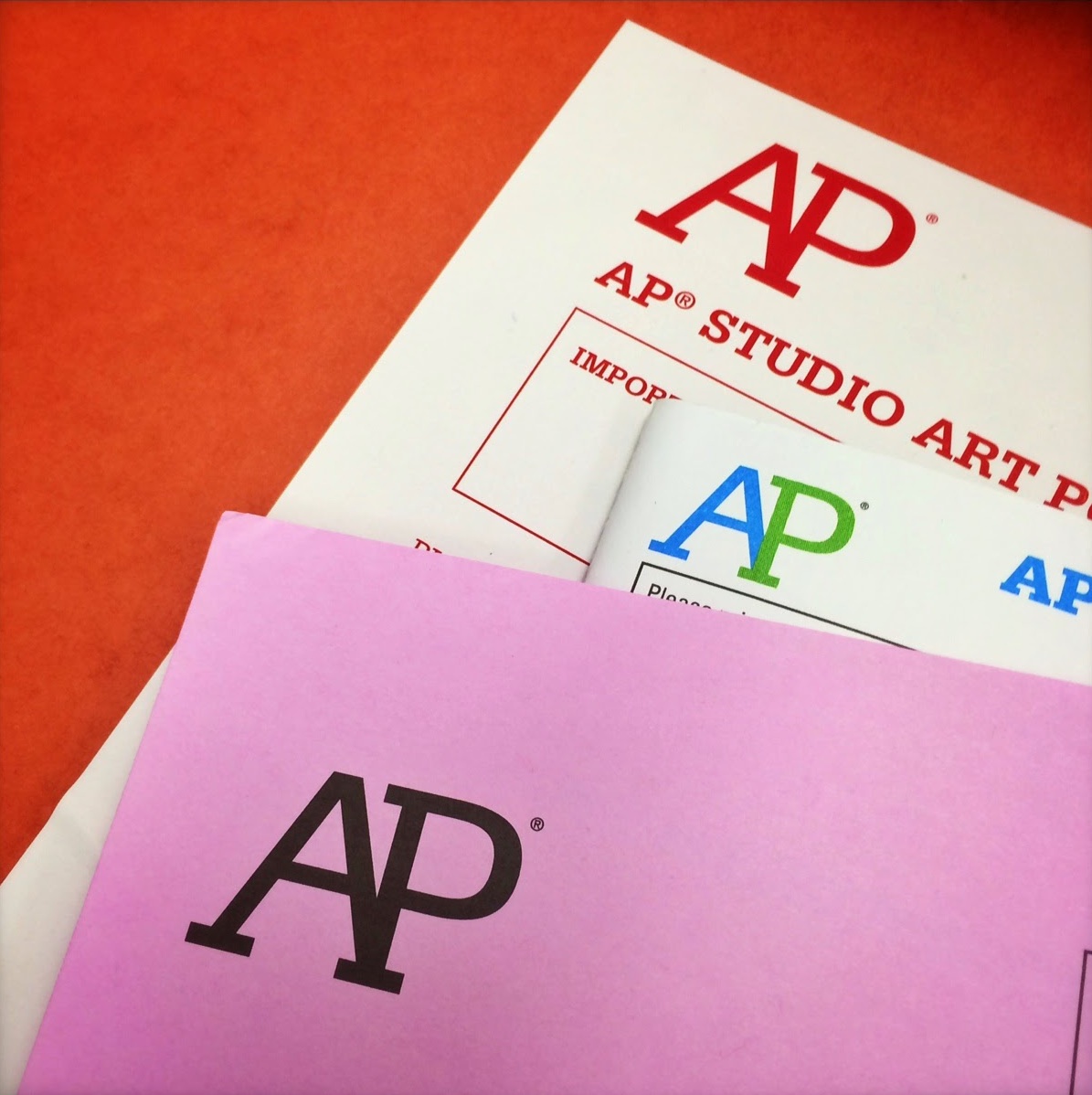
AP Day (cropped), May 9, 2014. (Tim Needles/http://artroom161.blogspot.com/).

AP Day (cropped), May 9, 2014. (Tim Needles/http://artroom161.blogspot.com/).

Twenty-eight years ago on this day/date, I was on my way to Mount Vernon High School, listening to Mr. Mister, Simple Minds, Sting and Whitney along the way. I was a few minutes away from a three-hour exam that could change my future. It wasn’t exactly the sunniest or warmest of days, though. That second Tuesday in May ’86 was brisk and heavy with clouds, a high of only 52°F. Still, with the way I felt that morning, May 13th might as well have been sunny with a high of seventy-two. 

I’ve written about my AP US History exam experience and Harold Meltzer ad nauseum here in this blog, as well as in Boy @ The Window. How I felt in the months and weeks before the exam. My expectations for a “5” and what that meant in comparison to taking something much less representative of the college experience, like the SAT. My perspective on my AP classmates and the general sense of obnoxious whining that permeated our classroom in throughout March and April ’86, and in whispers the following year. The keys to my academic success, and me being conscious of those keys, for the very first time. And, of course, the mentoring and tutelage of the late Harold Meltzer, the only teacher after elementary school who took a genuine interest in my development as a human being, not just in my grades or in my intellectual abilities.

I was a high school junior whom, at sixteen years old, had more wisdom about what would leave me well prepared for college than most parents, teachers and so-called education reformers possessed in ’86 or in 2014. Taking Algebra in eighth grade, AP courses in eleventh and twelfth grade, accelerated math and science classes all through high school. I knew even then that the APUSH exam was far more representative of my academic preparation than any SAT score would indicate, no matter how high.

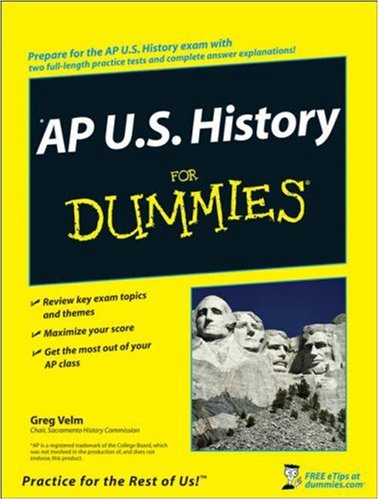
AP US History For Dummies cover (2008), May 13, 2014. (http://bookoutlet.com/).

AP US History For Dummies cover (2008), May 13, 2014. (http://bookoutlet.com/).

Yet I’ve found myself in debates with folks in recent months over an issue that’s been well settled in the education world for more than a decade. Over a single four-digit score that many thought should be the difference between going to an elite school and attending a no-name local technical institute. These folks refused to recognize what even the College Board and ETS recognize. That social class and racial privilege have been infused in the SAT process for years, with so many students taking SAT-prep courses at Princeton Review and Kaplan being all the prima facie evidence I need.

Now, this doesn’t mean that Advanced Placement (or International Baccalaureate, for that matter) is much better. But in terms of the actual amount of time spent in direct preparation, with the right teacher, even an impoverished Black kid like I was could attend a public school with a magnet program and earn a “5” — without spending $1,500 on Kaplan or Princeton Review. 

Enough on that. Today, I can truly say that AP US History Exam ’86 Day was a fundamentally important milestone for me. It sealed the deal I made for myself in the midst of the summer of abuse, to get out of 616, out of Mount Vernon, and into college. Thanks Humanities. Thanks, Mr. Meltzer. Thanks, classmates. And, thank God!

My First Adult Job Interview, Teachers College

12 Monday May 2014

Posted by decollins1969 in 1, Academia, Boy @ The Window, Carnegie Mellon University, culture, Eclectic, eclectic music, Mount Vernon New York, New York City, Pittsburgh, Politics, Pop Culture, race, Upper West Side, Work, Youth

≈ Leave a comment

Tags

Barnes & Noble, Beacon Theater, Calling, CMU, Disillusionment, Finishing Second, Hotel Beacon, job interview, Job Talk, Joe William Trotter Jr., PTSD, Racial Harassment, Rage, Steven Schlossman, Teachers College, Walking While Black, Writer, Writing


Teachers College today, West 120th (between Broadway and Amsterdam), New York, NY, April 15, 2014. (http://ccnmtl.columbia.edu/).

Teachers College today, West 120th (between Broadway and Amsterdam), New York, NY, April 15, 2014. (http://ccnmtl.columbia.edu/).

Seventeen years ago this week (check the calendar – the days and dates coincide with the week of May 12-18, ’97) was perhaps one of the most euphoric and bitterly disappointing weeks in my entire adult life. It was such a strange week that it forced me into second guessing myself and my path in life for many years afterward.

But it didn’t start out that way. On Monday, May 12th, I did my very first post-doctoral interview, for an assistant professor position at Teachers College (Columbia’s school of education) in Morningside Heights (West Harlem, really). I’d flown in from Pittsburgh the evening before, and stayed at the Hotel Beacon at Teachers College’s expense, because Monday was going to be a very long day. It was loud that Sunday night, as there was some event at the Beacon Theater. But somehow, I had just enough discipline and memories of New York’s smells and sounds to fall asleep comfortably.

My day started at 8:30 am, so of course, I was up before seven. I put on my one and only suit — at least, the only suit I owned that fit my six-three, 215-pound frame — went over my job talk on multiculturalism, and went on my pensive way to the 72nd Street Subway entrance on Broadway. It was a meat-packed ride to 125th Street, where I had to get off (I had forgotten to walk down to 66th Street to catch the local 1 instead of the express 2 train) and walk the six or so blocks to Teachers College.

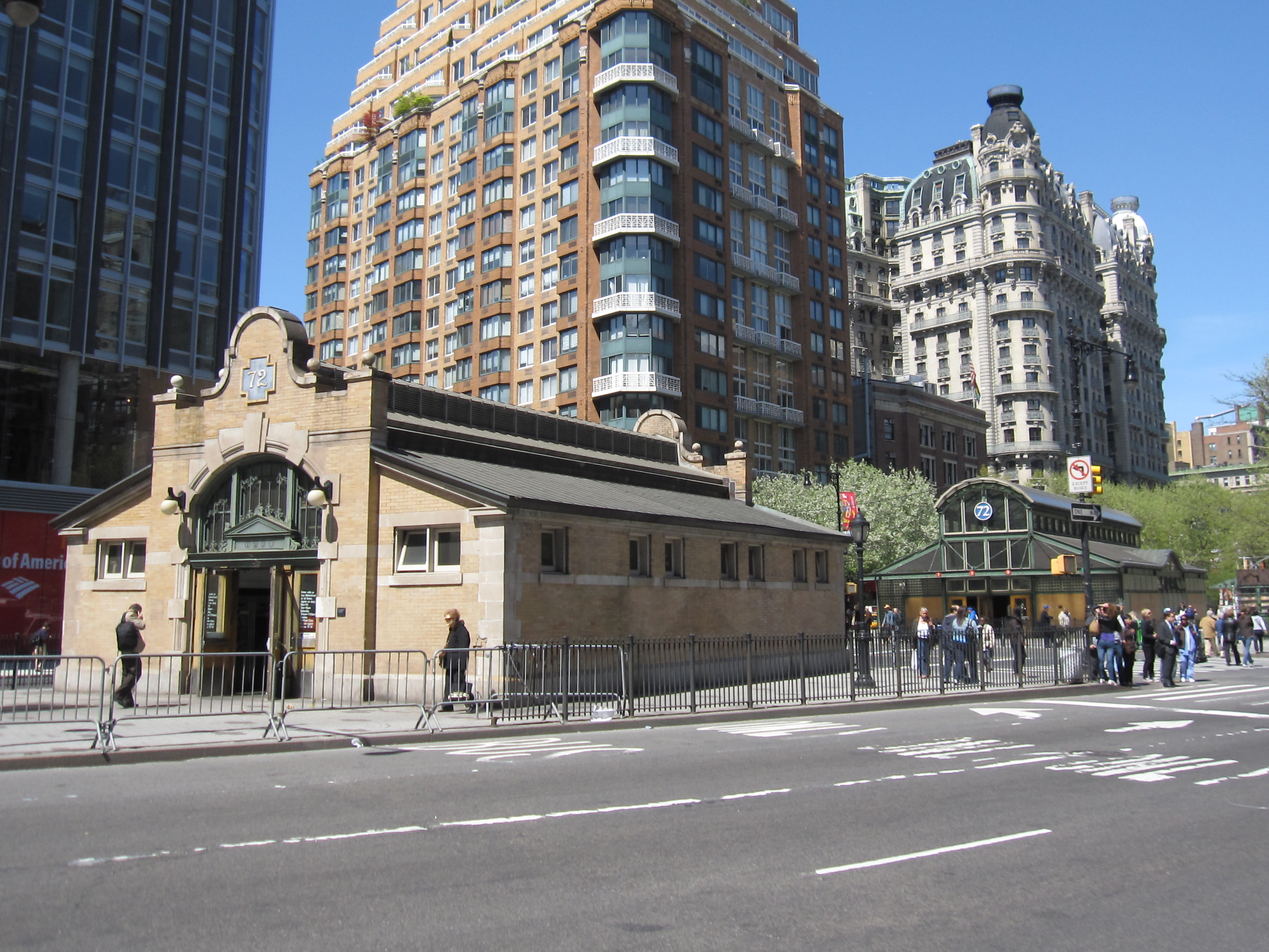
Original control house (left) and newer control house, on opposite sides of 72nd Street  (IRT Broadway – Seventh Avenue Line), New York, NY, April 13, 2010. (Gryffindor via Wikipedia). Released to public domain via CC-SA-3.0.

Original control house (left) and newer control house, on opposite sides of 72nd Street (IRT Broadway – Seventh Avenue Line), New York, NY, April 13, 2010. (Gryffindor via Wikipedia). Released to public domain via CC-SA-3.0.

After that, my day was an eight-hour blur, meeting with faculty, grad students and deans. Making sure not to eat too much while being grilled with questions over lunch. Giving my job talk and making sure to tell jokes, to bring up facts relevant to this history of education job, and, of course, to smile. Talking with grad students about how I finished my 505-page dissertation in twenty-seven months, about my teaching style and about growing up in Mount Vernon. It was as intense a process as I had expected it to be, but I felt at the end that I’d done everything possible to get the job.

I knew that I was one out of only five candidates invited to interview, out of over 500 applicants. I even had the chair of the History Department, Steve Schlossman, lobby on my behalf for the job, prior to my interview. And, despite my former advisor in Joe Trotter, I’d managed to put together a group of letters from folks that should’ve passed muster. All I could do after the interview was wait.

But life didn’t wait to intervene. After leaving the interview for the hotel, I changed into my more casual clothing, jeans and a long-sleeve t-shirt, and went off to Tower Records and Barnes & Noble on 66th and Broadway, and later, Haagan Dazs (that last one was a big gastrointestinal mistake!).  

From the moment I walked in the door at Barnes & Noble until I left a half-hour later, a Latino security guard tailed me as I perused books in the African American nonfiction, Cultural Studies and Music sections of the store, across three floors. As I walked out, I walked up to the guard and said

“While you were stalking me, you probably let half a dozen White folks slip out of here with books and CDs. Did you learn anything while you were watching me?”

“I was just doing my job,” the dumb-ass security guard said in response.

“Well, if following a Black guy around for thirty minutes is part of your job, you deserve to lose your job,” I said to him as I walked out.

It was a bit of a harbinger of things to come. I was more pissed off about these everyday slights — or, rather, microaggressions — than I’d been before Trotter and my doctorate. And I was less patient about waiting for what I wanted than I’d been as a grad student.

What your second-place prize often looks like, May 12, 2014. (http://www.wmciu.org.uk/).

What your second-place prize often looks like, May 12, 2014. (http://www.wmciu.org.uk/).

Three weeks later, I received a reimbursement check for my travel and other expenses, and within twenty-four hours, a call from the search committee chair. I’d finished second for the job. Second! To whom, I still don’t know. The chair kept telling me, “you didn’t do anything wrong…you did a very good set of interviews,” as if those compliments would pay my rent next month. I was disappointed, hopeful, but disappointed. It was my first shot, my best shot, and I’d given my best effort. “What now?,” I thought.

It’s a question that I still must ask seventeen years, two books and two careers later. I’ve long since realized that the question of what my life would’ve been like if I’d gotten the Teachers College job was moot, because my issues were about more than finding work. I still would’ve been unhappy, with a New York-esque rage to go with it.

So I counted my blessings, and I count them still. Not getting this particular job bought me the time and energy I needed. I needed that time, to see myself as the writer I also wanted to be, not just the educator and thinker I already knew I was. A better, more personable, more revealing and feeling writer than the cold and metallic one that grad school and Trotter helped turn me into by the end of ’96.

Last Dance, The Last Class

09 Friday May 2014

Posted by decollins1969 in 1, Academia, Carnegie Mellon University, culture, Eclectic, Pittsburgh, Politics, Pop Culture, University of Pittsburgh, Work, Youth

≈ Leave a comment

Tags

"Last Dance" (1979), Boredom, CMU, Coming-of-Age, Coursework, Department of HIstory, Donna Summer, Grad School, Growing Up, Loneliness, Pitt, Single-Minded, Student Life


The late Donna Summer, album cover, circa 1979, May 9, 2014. (http://digboston.com/).

The late Donna Summer, album cover, circa 1979, May 9, 2014. (http://digboston.com/).

Twenty years ago on this date was my last formal class as a formal student, a grad course at Carnegie Mellon with Kate Lynch on Comparative Urban History. I spent that evening of my last day of classes polishing up a twenty-five page research essay that compared the development of public housing practices in Toronto, Berlin and Chicago. It was too ambitious a paper, especially given that I did all the research for it in the final four weeks of that semester, after spending a week at AERA (American Educational Research Association) in New Orleans presenting on a panel and networking, and two days meeting the Gill side of my extended family for the first time. I just wanted to get it done, though.

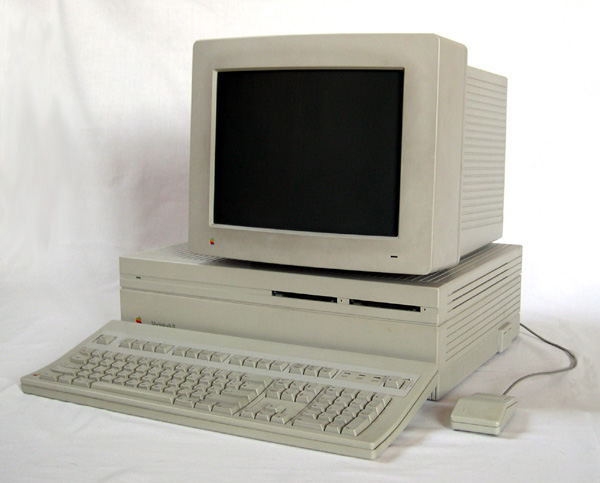
I made my final edits to my introduction and argument and to a few of my citations and references just before 9:30 pm that second Monday in May ’94. I was working in a computer lab in Wean Hall, using one of the rare PCs on campus. Rare because Carnegie Mellon had made a ridiculous deal with Apple back in ’83 to be a Macintosh campus — a terrible move if you were using Macs in the 1990s.

Apple Macintosh II Computer, April 15, 2004. (Alexander Schaelss via Wikipedia). Released via GNU FDL/CC-SA-3.0.

Apple Macintosh II Computer, April 15, 2004. (Alexander Schaelss via Wikipedia). Released via GNU FDL/CC-SA-3.0.

Normally I wrote my papers on the University of Pittsburgh’s campus, as my alumnus status gave me access to computers and Hillman Library. Plus, it took Pitt almost a year to shut down my grad school accounts, allowing me to make thousands of copies of materials that I would’ve needed a month’s worth of my stipend to make at Carnegie Mellon’s Hunt Library. And, even after a year of torture and courses, nearly all of my friends and interests remained across the bridge connecting Oakland and Pitt with Schenley Park and the southern end of Carnegie Mellon’s campus.

Once I completed my paper, I walked over to Baker Hall, went up to the second floor, and dropped it off for Lynch to review and grade. It was all over but the dissertation overview defense and the dissertation itself. I was happy, but I was more relieved than happy. The last year of transferring to and doing coursework at Carnegie Mellon had taken a toll on me. For the first time ever, I found myself actually hating classes and school in general. Sure, there were individual teachers and professors I despised. Dr. Demontravel. David Wolf. Estelle Abel. Dick Ostreicher. But not the formal process of classroom learning itself. It took a year of redundant courses at CMU at the insistence of the powers that were to steal that immutable joy of learning from me. At least, temporarily.

I thought about it the next day. My first day of kindergarten was September 8, ’74, which meant that I had experienced twenty school years between the ages of four and twenty-four. For virtually all of my life, I’d been a student, from kindergarten to PhD, between Presidents Nixon and Ford and Bill Clinton. I had done several thousand assignments, hundreds of exams, and dozens of papers and essays. Combining undergrad and grad school, I’d taken fifty-eight (58) courses. It’s a wonder I hadn’t tired of listening to mercurial professors any sooner.

Keep Calm and Hate School poster, May 9, 2014. (http://keepcalmstudios.com).

Keep Calm and Hate School poster, May 9, 2014. (http://keepcalmstudio.com).

I spent the next few days doing something I normally didn’t have time for. I slept in late, took lots of naps, and watched my Knicks play and struggle with the Jordan-less Bulls in the NBA’s second round of playoffs. It would be the most rest I’d have for the rest of ’94.

Two decades later, and I’ve taught nearly as many courses as I took to earn my bachelors, masters and doctorate. I do like the view of a classroom — in-person or virtual — from the instructor’s perspective. But I learned so much about being a teacher, too, from what to do and what not to do, long before my final semesters at Carnegie Mellon. Ms. Griffin, Mrs. Shannon, Mrs. O’Daniel, Mrs. Bryant, Harold Meltzer were great counterbalances to the teachers/professors who were as inspiring as watching paint dry in a desert.

← Older posts
Newer posts →

Boy @ The Window: A Memoir

Boy @ The Window: A Memoir

Places to Buy/Download Boy @ The Window

There's a few ways in which you can read excerpts of, borrow and/or purchase and download Boy @ The Window. There's the trade paperback edition of Boy @ The Window, available for purchase via Amazon.com at http://www.amazon.com/Boy-Window-Donald-Earl-Collins/dp/0989256138/

There's also a Kindle edition on Amazon.com. The enhanced edition can be read only with Kindle Fire, an iPad or a full-color tablet. The links to the enhanced edition through Apple's iBookstore and the Barnes & Noble NOOK edition are below. The link to the Amazon Kindle version is also immediately below:

scr2555-proj697-a-kindle-logo-rgb-lg

Boy @ The Window on Amazon.com: http://www.amazon.com/Boy-The-Window-Memoir-ebook/dp/B00CD95FBU/

iBookstore-logo-300x100

Boy @ The Window on Apple's iBookstore: https://itunes.apple.com/us/book/boy-the-window/id643768275?ls=1

Barnes & Noble (bn.com) logo, June 26, 2013. (http://www.logotypes101.com).

Boy @ The Window on Barnes & Noble: http://www.barnesandnoble.com/w/boy-the-window-donald-earl-collins/1115182183?ean=2940016741567

You can also add, read and review Boy @ The Window on Goodreads.com. Just click on the button below:

Boy @ The Window

Twitter Updates

Tweets by decollins1969
  • RSS - Posts
  • RSS - Comments

Archives

  • June 2025
  • April 2023
  • September 2022
  • August 2022
  • July 2022
  • June 2022
  • May 2022
  • April 2022
  • March 2022
  • January 2022
  • December 2021
  • November 2021
  • October 2021
  • September 2021
  • August 2021
  • July 2021
  • June 2021
  • April 2021
  • March 2021
  • February 2021
  • January 2021
  • December 2020
  • November 2020
  • October 2020
  • September 2020
  • August 2020
  • July 2020
  • May 2020
  • April 2020
  • March 2020
  • January 2020
  • December 2019
  • November 2019
  • August 2019
  • July 2019
  • June 2019
  • May 2019
  • April 2019
  • March 2019
  • February 2019
  • January 2019
  • December 2018
  • November 2018
  • October 2018
  • September 2018
  • August 2018
  • July 2018
  • June 2018
  • May 2018
  • March 2018
  • February 2018
  • January 2018
  • December 2017
  • November 2017
  • October 2017
  • September 2017
  • August 2017
  • July 2017
  • June 2017
  • May 2017
  • April 2017
  • March 2017
  • February 2017
  • January 2017
  • December 2016
  • November 2016
  • October 2016
  • September 2016
  • August 2016
  • July 2016
  • June 2016
  • May 2016
  • April 2016
  • March 2016
  • February 2016
  • January 2016
  • December 2015
  • November 2015
  • October 2015
  • September 2015
  • August 2015
  • July 2015
  • June 2015
  • May 2015
  • April 2015
  • March 2015
  • February 2015
  • January 2015
  • December 2014
  • November 2014
  • October 2014
  • September 2014
  • August 2014
  • July 2014
  • June 2014
  • May 2014
  • April 2014
  • March 2014
  • February 2014
  • January 2014
  • December 2013
  • November 2013
  • October 2013
  • September 2013
  • August 2013
  • July 2013
  • June 2013
  • May 2013
  • April 2013
  • March 2013
  • February 2013
  • January 2013
  • December 2012
  • November 2012
  • October 2012
  • September 2012
  • August 2012
  • July 2012
  • June 2012
  • May 2012
  • April 2012
  • March 2012
  • February 2012
  • January 2012
  • December 2011
  • November 2011
  • October 2011
  • September 2011
  • August 2011
  • July 2011
  • June 2011
  • May 2011
  • April 2011
  • March 2011
  • February 2011
  • January 2011
  • December 2010
  • November 2010
  • October 2010
  • September 2010
  • August 2010
  • July 2010
  • June 2010
  • May 2010
  • April 2010
  • March 2010
  • February 2010
  • January 2010
  • December 2009
  • November 2009
  • October 2009
  • September 2009
  • August 2009
  • July 2009
  • June 2009
  • May 2009
  • April 2009
  • March 2009
  • February 2009
  • January 2009
  • December 2008
  • November 2008
  • October 2008
  • September 2008
  • August 2008
  • July 2008
  • June 2008
  • May 2008
  • April 2008
  • March 2008
  • February 2008
  • January 2008
  • December 2007
  • November 2007
  • October 2007
  • September 2007
  • August 2007
  • July 2007
  • June 2007

Recent Comments

MaryPena's avatarMaryPena on My Day of Atonement/Bitter Hat…
decollins1969's avatardecollins1969 on No Good Teaching Deed Goes…
Mary Rose O’Connell's avatarMary Rose O’Connell on No Good Teaching Deed Goes…

NetworkedBlogs on Facebook

NetworkedBlogs
Blog:
Notes From a Boy @ The Window
Topics:
My Life, Culture & Education, Politics & Goofyness
 
Follow my blog

616 616 East Lincoln Avenue A.B. Davis Middle School Abuse Academia Academy for Educational Development AED Afrocentricity American Narcissism Authenticity Bigotry Blackness Boy @ The Window Carnegie Mellon University Child Abuse Class of 1987 CMU Coping Strategies Crush #1 Crush #2 Death Disillusionment Diversity Domestic Violence Economic Inequality Education Family Friendship Friendships Graduate School Hebrew-Israelites High-Stakes Testing Higher Education History Homelessness Humanities Humanities Program Hypocrisy Internalized Racism Jealousy Joe Trotter Joe William Trotter Jr. K-12 Education Love Manhood Maurice Eugene Washington Maurice Washington Misogyny Mother-Son Relationship Mount Vernon High School Mount Vernon New York Mount Vernon public schools Multiculturalism MVHS Narcissism NFL Pitt Pittsburgh Politics of Education Poverty President Barack Obama Race Racial Stereotypes Racism Relationships Self-Awareness Self-Discovery Self-Reflection Sexism Social Justice Teaching and Learning University of Pittsburgh Violence Whiteness Writing

Top Rated

Blog at WordPress.com.

  • Subscribe Subscribed
    • Notes from a Boy @ The Window
    • Join 103 other subscribers
    • Already have a WordPress.com account? Log in now.
    • Notes from a Boy @ The Window
    • Subscribe Subscribed
    • Sign up
    • Log in
    • Report this content
    • View site in Reader
    • Manage subscriptions
    • Collapse this bar
 

Loading Comments...