• About Me
  • Other Writings
  • Interview Clips
  • All About Me: American Racism, American Narcissism, and the Conversation America Can’t Have
  • Video Clips
  • Boy @ The Window Pictures
  • Boy @ The Window Theme Music

Notes from a Boy @ The Window

~

Notes from a Boy @ The Window

Category Archives: Politics

My Olivia of Our Future

11 Saturday Feb 2017

Posted by decollins1969 in 1, Academia, culture, Eclectic, High Rise Buildings, New York City, Politics, Pop Culture

≈ Leave a comment

Tags

Allegory, Climate Change, Dystopia, End of Western Civilization, Fringe (2008-13), Future, Jasika Nicole, Narcissism, Olivia, Olivia Pope, Racism


Cropped front cover of Olivia Saves the Circus (1994), by Ian Falconer, February 11, 2017. (http://amazon.com).

Cropped front cover of Olivia Saves the Circus (1994), by Ian Falconer, February 11, 2017. (http://amazon.com).

I’m imagining that the year is 2347. My great-great-great-great granddaughter is Olivia Levy-Collins. She’s in her mid-thirties. After reading my only moderately successful manuscript on the history of American narcissism as a preteen, she becomes interested in the social sciences. A resident of Africa’s southern cone, Olivia does her undergrad at the University of Botswana, double majoring in Archaeology and Ecology. She goes off to the world-renown Universidade de São Paulo (University of São Paulo) in the Brazilian zone, where she earns her master’s degree in Western Civilization (with a focus on 20th and 21st-century American history), and a doctorate in cultural anthropology, with a focus on historical social psychology.

Olivia does her dissertation on the causes of the collapse of the Western world. This is not a new topic in the 24th-century world. Every one of the six billion people on the planet knows the broad story. How, after centuries of dominance, the economic and political structures of Western Europe and the United States underwent long-term decline in the midst of growing economic inequality, continued oppression of already vulnerable groups, undue influence of corporations on governance, and climate change beyond their abilities to comprehend. The proxy wars with terrorism and quasi-nation-states that later led to right-wing revolutions within Europe and the US. The full-blown civil wars and climate degradation that followed.

The US destroyed itself, as anarchists launched a cyberattack that took out the one-time superpower’s entire electrical grid. The groups once known as White supremacists retaliated, and used stolen nuclear weapons on six US cities, including the capital, Washington, DC, to take out the cyberterrorists, most of whom had been rumored to be Arab Muslim and Latina. The riots, famine, starvation, and consequences of climate change ensued, and ensured that the US would not be ever again. Europe also went through many of these convolutions. If it were not for the collective work of scientists in Brazil, India, China, Canada, and Southern Africa to remove the buildup of carbon dioxide and methane gases from the atmosphere and oceans, full-blown nuclear war may have occurred.

Kerry Washington as Olivia Pope from Scandal, a show about damage control, controlling the narrative, September 15, 2011. (http://scandal.wikia.com).

Kerry Washington as Olivia Pope from Scandal, a show about damage control, controlling the narrative, September 15, 2011. (http://scandal.wikia.com).

Olivia, though, like a new generation of her colleagues, wanted to understand what would cause people from the most powerful nations on the planet to collectively lose their minds. Why would they, after overwhelming success to subdue the earth, then turn on each other to kill the very things that gave them enormous power in the first place? My book from so many generations ago gave Olivia one possible clue. She found my book on the shelf of an ancient library in Walvis Bay, in the country that used to be Namibia. It was part of a school trip that Olivia was a part of while in primary school, to give students an appreciation for ancient attempts to preserve knowledge in depositories for books made of wood pulp, glue, and toner ink. She’d heard about the book from her great-grandmother, who had heard about it from her grandmother. The latter whom had read the book numerous times, as my son had moved his family from the US to South Africa as the occasional American unrests turned deadlier in the mid-21st century.

But, even after that field trip, even after getting her mother to get her a rare electronic copy of my book from the United Nations’ central archives in Aleppo, even after reading it, Olivia didn’t fully believe it. She couldn’t comprehend a culture that would waste vast quantities of natural resources, including human ones. She’s didn’t understand how a society in which everyone thought that becoming wealthy was their birthright could possibly function. She didn’t get how a nation as powerful as the US was always so fragile as an idea, not to mention in actuality.

Olivia’s dissertation work took her to the abandoned city of New York in 2347. With the exception of its crumbling skyscrapers, most of the city was covered by tens of meters of dirt (some of which remained radioactive). Other parts, like the area once known as Wall Street and Battery Park in Manhattan, or Park Slope in Brooklyn, were also partly underwater. She and her fellow group of two-dozen anthropologists, archaeologists, and other scientists, descended on the abandoned city, along with military commandos, all trained to expect the unexpected. In the case of the military, their training included scenarios for exploring exoplanets, which many saw as less dangerous than the exploration of a relatively recently dead civilization.

They went to two sites to conduct their studies. One, the New York Public Library on West 42nd Street and 5th Avenue. The other, two hundred meters away, was this recently excavated place in the old city, something the world once called Times Square. Olivia’s team explored the unearthed library, or at least, what was left of it. Fighting, flooding, dirt, and earth had left the main branch of one of the largest libraries in the Western world a shell of itself. It did have books and other collections still. Mostly self-help books, political memoirs, and recordings of one of the last US presidents, Donald J. Trump.

A partially buried car on Governor's Island, NY, September 13, 2009. (http://scoutingny.com).

A partially buried car on Governor’s Island, NY, September 13, 2009. (http://scoutingny.com).

Olivia, though, unlike her younger counterparts, knew that as self-centered as the remaining collection appeared, it wasn’t the whole story. She knew from my book and from the other books of the 20th and 21st centuries that there were numerous intellectuals and writers who tried to warn the world that the facade of narcissism would lead billions to their deaths. That cannibalizing selfishness could even possibly destroy the world, certainly the Western world.

But she did find it interesting that after the fall of the West, in one of its greatest cities, only the most narcissistic of preserved materials remained. It told her one thing. The narcissism was real, that millions had fallen prey to it. That in an age in which the world didn’t have the technology to use energy-matter converters to replicate food, clothing, shelter, and medicine for 7.3 billion people, millions once lived as if there was no tomorrow, like life was one big party. To the point where these Westerners made significantly more copies of their homages to themselves than they did of anything else.

So Olivia took this knowledge, and the knowledge gained from the Times Square dig. She titled her dissertation, “How Western Civilization Cannibalized Itself: Reproduction, Capitalism, and Narcissism, 1750-2100.” That same year, Olivia turned it into a book, an interplanetary must-read, Runaway Narcissism and How the Sun Set on the Western World. It raised lots of questions about how humanity overcame its own narcissism, but at great cost. It would be one of the great books of the 24th century. That’s my Olivia!

We’ve Got 45 Problems and…

01 Wednesday Feb 2017

Posted by decollins1969 in 1, culture, Eclectic, Patriotism, Politics, Pop Culture, race, Religion

≈ Leave a comment

Tags

"99 Problems" (2004), "Extreme Vetting", #Muslim Ban, 45, Alexandre Bissonnette, Donald Trump, Executive Order, Human Rights, Immigration, Institutionalized Terrorism, Jay-Z, Laurence Fishburne, Terrorism, White Males, White Man's Country


President Donald Trump prior to his 2016 presidential run, holding up a replica flintlock rifle awarded by cadets at the Republican Society Patriot Dinner, The Citadel, Charleston, SC, February 22, 2015. (Richard Ellis/Getty Images).

President Donald Trump prior to his 2016 presidential run, holding up a replica flintlock rifle awarded by cadets at the Republican Society Patriot Dinner, The Citadel, Charleston, SC, February 22, 2015. (Richard Ellis/Getty Images).

To quote from Jay-Z is hard for me. The only song I like with him rappin’ is Foxy Brown’s “I’ll Be” (1996), which should tell any Jay-Z fan that I’ve never gotten him or his hold on the rap world. Still, here I am, sort-of-quoting from a Jay-Z production from 2004, “99 Problems.” Except, the real problem number is 45, and the millions of other 45s he represents (hat tip to Laurence Fishburne via The Daily Show for what to call the orange turd-ball). Donald J. Trump and his followers are the epitome of all that ails the US.

Trump’s recent executive order to ban Arab Muslims and Africans with Iranian, Iraqi, Syrian, Sudanese, Yemeni, Somali, and Libyan citizenship is one of the worst attempts to roll back human rights in the US in recent years. But there were complementary responses as well. The burning down of the Islamic Center of Victoria in Texas a day after Trump issued his unconstitutional order. The French-Canadian Alexandre Bissonnette’s terrorist attack on praying Muslims, killing six and wounding eight at their mosque in Quebec City within 72 hours of Trump’s ill-conceived, remorseless, unlawful Muslim ban.

All prove one of the truisms of American (and Canadian) society. The terrorists Americans should worry about the most historically, indirectly through policy, and directly through bullying trolls and violent actions are heterosexual White males. No border wall, no Muslim Ban, no immigration quotas, no guest worker policy, no War on Terror, no War on Drugs, no stop and frisk, no abortion ban, no gerrymandering, no EPA gag order, no TPP withdrawal, no NAFTA renegotiation, will protect us from this mob of not-so-random terror. Their leader is 45. And like a man with a Colt .45, Trump is intent on asserting his and their superiority, through institutional policies and our deaths, if necessary.

If someone reading is a heterosexual White male, please note that if you are offended, you should be. Not because of my words. You should only be offended if you recognize the lethal privilege that many White males enjoy. That as police officers, they (and, with greater frequency, officers of color) get to arrest, beat, maim, and murder, and with few or no consequences to face. As vigilantes, often with lesser charges and less jail time. It helps these White males that the media attempts to give a full retrospective on the life of a Dylann Roof, a Michael Dunn, a George Zimmerman, a James Holmes, a Jared Lee Loughner, and so many others. Their terrorism becomes an issue of their alleged mental illness, or a “young man” somehow “losing his way.” Americans are always supposed to understand why the archetype of the master race glitches, as if their psychological and racial privilege isn’t the real culprit. As rapists, White males can expect the media to treat them with kid gloves, to the point of calling a rapist like Brock Turner the “ex-Stanford swimmer.” His rape act was “very objectionable,” but of course, the Brock Turners of America are also completely redeemable. At least, that’s what White males (and many White females) would say.

Racist jugate ribbon promoting the 1868 Democratic ticket of Horatio Seymour and Francis Blair (losers to Gen. Ulysses Grant), under the motto, "This is a White Man's Country." (http://oldpoliticals.com).

Racist jugate ribbon promoting the 1868 Democratic ticket of Horatio Seymour and Francis Blair (losers to Gen. Ulysses Grant), under the motto, “This is a White Man’s Country.” (http://oldpoliticals.com).

Please recognize that for Native American tribes from coastal Virginia to Athabascan central Alaska, White males have been the ultimate terrorists. White males led the charge to spill Native American blood on every acre that is the US. Black African sweat and blood runs deep in the red clay soils of Georgia and the deep brown dirt of Mississippi. The crimes within slavery are too numerous to list here, but the reduction of Native American numbers from at least 10 million in 1600 to about 250,000 by 1900 is evidence by itself. White men reduced wild buffalo populations from 30 million to 300 in 30 years to starve American Indians, end their ways of life, and force them onto the marginal lands that are for many their reservations today.

Policies to provide oligarchic power to White males is all part of this history. Andrew Jackson’s “Age” did more than give non-propertied adult White males the right to vote. It gave ordinary, non-slave-owning White males the right to oppress others, legally. The Hayes-Tilden compromise of 1876 allowed treasonous Confederate White males back into power, despite their anti-Black equality and lynching ways. All in the name of unifying the country. Woodrow Wilson segregated the federal civil service in 1913, to all but exclude Blacks from serving as no more than street sweepers, domestic servants, and doormen. White men led race riots to burn down Black homes and businesses in Memphis, East St. Louis, Houston, Harlem, Washington, DC, Chicago, Detroit, Tulsa, Rosewood, Florida, and so many other places between 1866 and 1943. Congress passed the 1917, 1921, and 1924 immigration laws to set up quotes to exclude all but White Anglo-Saxon Protestants (WASPs) from large-scale immigration to the US.

In more recent times, the mass shootings and bombings also belong to White males. Charles Whitman, the Texas Tower Shooter, killed 16 (14 during his University of Texas at Austin rampage) and wounded 31 (one of whom died from his injuries in 2001) before police killed him in August 1966. Need I even go into detail about Timothy McVeigh and the Oklahoma City bombing in 1995? Or about Columbine? What about the movie theater in Aurora, Colorado, or Sandy Hook Elementary in Newtown, Connecticut in 2012?

But hey, 45 wants to protect Americans from potential terrorist threats, no? If 45 and his White male supporters and like-minded sycophants want to protect all Americans, they need to look in the mirror. They should consider doing “extreme vetting” on any White male whose Twitter avatar is a trolling egg, or whose Facebook page includes swastikas, or any White male whom voted for Trump. This is a “White man’s country,” after all. At least, that’s what these people keep saying.

Lit on Moonlight

16 Monday Jan 2017

Posted by decollins1969 in 1, Boy @ The Window, culture, Eclectic, Hebrew-Israelite, Jimme, Marriage, Mount Vernon High School, Mount Vernon New York, Movies, My Father, New York City, Politics, Pop Culture, race, Religion, Sports, Youth

≈ Leave a comment

Tags

A.B. Davis Middle School, Barry Jenkins, Black Males, Black Masculinity, Bullying, Chiron, Coming-of-Age, Faggot, Hypermasculinity, Italian Club, Mahershala Ali, Manhood, Moonlight (2016), Mount Vernon High School, MVHS, Rage, Sexual Orientation


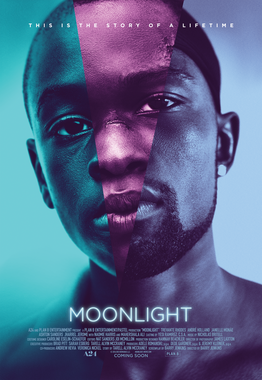
Moonlight (2016) poster, October 2016. (Film Fan via Wikipedia; orig. A24). Qualifies as fair use under US copyright law as illustration of subject/review of film.

Moonlight (2016) poster, October 2016. (Film Fan via Wikipedia; orig. A24). Qualifies as fair use under US copyright law as illustration of subject/review of film.

I finally, finally saw Moonlight with the wife and son at AFI Silver Spring yesterday, months after the in-crowd had already seen it and attempted to spoil it for the rest of us. It was excellent. The cinematography, the loud and incredible silences, the small moments, when actors just being in the moment with their facial expressions did more than any dialogue could to move me and anyone else watching. Mahershala Ali was only in five scenes. But his first scene set the tone for the whole movie. As Juan, Ali channeled both the need for hard hypermasculinity and the vulnerable fragility of such in just one scene. His time with the youngest version of Chiron made me laugh, cry, sad, and angry, and left me wondering if I’ve seen this much intimacy between Black man and Black boy on screen before. I know I have (Antwone Fisher, The Wire, even Roots comes to mind), but on-screen doesn’t reflect this anti-stereotypical slice of truth nearly as often as it should.

Moonlight snap shot (cropped), Mahershala Ali and Alex Hibbert, October 23, 2015. (http://variety.com).

Moonlight snap shot (cropped), Mahershala Ali and Alex Hibbert, October 23, 2015. (http://variety.com).

Yet I was also not as impressed as I expected to be. Not because I didn’t like the performances — I loved them. I thought every actor in the film was legit, every scene was moving in some way. Naomie Harris I’ve been fond of for years, André Holland and Janelle Monáe’s work I already knew, and Trevante Rhodes and Barry Jenkins, well, the two need bigger platforms for doing more great work. Moonlight wasn’t a film. It was a collage, a kaleidoscope of precious moments, blood-churning episodes, and tender images. Jenkins’ treatment of coming-of-age, Black boyhood into manhood, and Black masculinity, hypermasculinity, and vulnerability was avant-garde.

Still, I felt like I’d seen Moonlight before. Or, really, lived parts of Moonlight in my own past. No, I did not befriend an older, Afro-Cuban crack dealer in 1990s Miami, have a drug-addicted, abusive mother, or have a group of kids chase me around and beat me up off and on for ten years. But I didn’t look at the world the same way as my peers. I didn’t sound like a Noo Yawker, walk and talk and code switch like Denzel Washington, or try to fit in like so many of my 616 neighbors and my Mount Vernon school mates during my growing up years. And I paid for it, dearly, with few friends before I turned eleven, and no friends in the six years before I went off to the University of Pittsburgh.

But on Chiron and that most pernicious issue of hypermasculinity, the need to be hard all the time, I’ve been there too. I’d been called “faggot” (or in my father’s case, “faggat”) enough times to occasionally question my own sexual orientation growing up. My senior year at MVHS one day, I hit a three-run homer during a softball game in gym class. It wasn’t the first time I’d done that. But for one Jamaican dude, me drilling a ball 350 feet off his slow fastball was an affront. He called me a “faggot” after the game, and threatened to wait for me after school with a machete to chop me, adding “bumbaclot mon” at the end of his threat. I left school as normal and waited for him. He was lucky he didn’t show up that day.

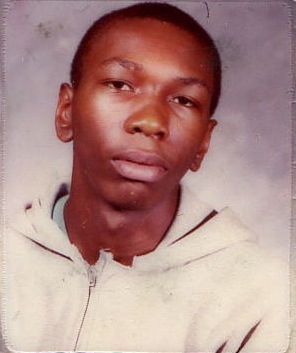
Me at 16, Mount Vernon High School ID, Mount Vernon, New York, November 1985, March 21, 2012. (Donald Earl Collins).

Me at 16, Mount Vernon High School ID, Mount Vernon, New York, November 1985, March 21, 2012. (Donald Earl Collins).

You see, my rage didn’t need years to build up. All before I’d finally lose it one day, and take out a bully with a wooden chair and break it across his back, like the way Chiron did at the end of II of Moonlight. I didn’t have bullies at school per se. There were a couple I dealt with at 616, but they weren’t regular. Many folks would make a crack, but generally left me along. Any bullying I faced in high school was completely random and momentary, because I stood up for myself. Because if I could face down a six-foot-one, Isshin-ryn black belt of an abuser in my idiot stepfather Maurice, a stupid football player was gonna get hurt trying to hurt me.

No, the bullying I faced was in middle school, from a bunch of overwhelmed and racist Italian classmates in Humanities. I’ve named them in Boy @ The Window and here in this blog before. Alex, Anthony N., Andrew, Anthony Z., etc, the Italian Club. That things were much, much worse at home meant that I saw them as background noise. There was always a part of me, though, that had enough rage, even in seventh grade, to take a desk and smash Anthony N.’s head in with it until his fuckin’ Italian brains spread out all over the floor and walls!

I ended up beating up a wannabe bully in JD that year instead. I won kufi battles in eighth and ninth grade. I wore a blank face that most of my more dumb ass classmates interpreted as a smile. I made plans to get out, because I never wanted to fit in. I was already awake, coping with the day-to-day, but in it for the long-term. I had that President Barack Obama, audacity-of-hope-beyond-failure, beyond reality thing goin’. When I saw Chiron as played by Ashton Sanders, I wanted to hug him, beat up his bullies for him, and tell him that you can love who you want to love, even if they never love you back. And to always, always be your best self, and not some “I don’t want to feel pain again” version.

Yes, I’m A Sexist Feminist

27 Tuesday Dec 2016

Posted by decollins1969 in 1, Academia, Boy @ The Window, Christianity, culture, Eclectic, eclectic music, Hebrew-Israelite, High Rise Buildings, Jimme, Marriage, Mount Vernon New York, My Father, Politics, Pop Culture, race, Religion, Youth

≈ Leave a comment

Tags

Black Masculinity, Chivalry, Contradictions, Dahlia, Damsel-in-Distress Syndrome, Father-Son Relationship, Feminism, Masculinity, Misogyny, Mother-Son Relationship, Nice Guy, Owning Imperfection, Patriarchy, Phyllis, Sexism, Womanism


Hostile vs. Benevolent Sexism, March 10, 2015. (http://www.dailymail.co.uk).

Hostile vs. Benevolent Sexism, March 10, 2015. (http://www.dailymail.co.uk).

I finished up a chapter in Boy @ The Window with the closest approximation to my contemporaneous thoughts about Phyllis (a.k.a., “Crush #2” at times on this blog) in August 1988:

screen-shot-2016-12-27-at-7-43-51-am

I must’ve rewritten these two paragraphs at least a half-dozen times before putting the book out for limited consumption. The thought process that I went through at eighteen years old bothered me then, and looking at the words even today leaves me wanting. Probably because there is more than a bit of sexism contained within these words.

But I wasn’t wrong, of course, not in ’88, not when I wrote and rewrote these paragraphs between 2007 and 2011, and not now, at least in terms of how I perceived things then. While I believed in reproductive rights, in equal pay for equal work, and in passing the Equal Rights Amendment growing up, I also believed in saving damsels from distress and in distinguishing between “ladies” and “bitches.” Or, as my father put it when he argued with my Mom in front of me when I was four years old, “You’s a black bit’!” Or, my contradiction could’ve fully formed when my father tried to set me up with a prostitute a couple of weeks before my seventeenth birthday, in December 1986.

There was no way in 1988 I could’ve understood the contradictions between the idea of feminism (in any form) and the notion of “being a nice guy.” I hadn’t been exposed, or, rather, exposed myself to Paula Giddings, Elsa Barkley Brown, Evelyn Brooks Higginbotham, bell hooks, Maya Angelou, Angela Davis, and Zora Neale Hurston. I hadn’t yet been engaged in the hundreds of conversations I’d eventually have with women folk I’d become friends with, people with whom I bonded because of their suffering, people from whom I’d hidden my own suffering during those years. Date rape, physical abuse, the more typical abuse of serial cheating, among other issues. With many of these women, I recognized the sexism and misogyny I saw in myself in 1988, and saw them again when I wrote down my contemporaneous thoughts in Boy @ The Window. It didn’t occur to me until the mid-1990s that women could be just as sexist and misogynistic as men, and often could pass down their notions of masculinity and patriarchy to their children. And that thought scared me.

Imprisoned brain (or, maybe, Culture Club and "Church of the Poison Mind" [1983]), December 27, 2016. (http://mdjunction.com).

Imprisoned brain (or, maybe, Culture Club and “Church of the Poison Mind” [1983]), December 27, 2016. (http://mdjunction.com).

It scared me because I realized I may have learned more of my contradictions from my Mom than from my father or idiot ex-stepfather. After all, she was the one constant in my parenting, the one person who engaged me in ideas like chivalry and manliness, who through her acquiescence to Maurice might have made it okay for me to see women, especially Black women (and to a lesser extent, Latina women) as ones in need of help, even when they decide not to take it.

And it may have made it okay for me to see myself as the victim in my incident with Dahlia in June 1987, when I accidentally (the first time), and later deliberately smacked her on her left butt cheek. Maybe I was the victim in a way, at least of my own deluded thought process. And there hasn’t been a time in the past twenty-nine and a half years in which I haven’t regretted that second, deliberate slap, in response to Dahlia accusing of thoughts I didn’t have, because my only obsession in 1987 was Phyllis. I’ve said and written this before, including in Boy @ The Window. To Dahlia, I am so sorry.

Beijing smog alert, Beijing, China, December 6, 2016. (http://ibtimes.com).

Beijing smog alert, Beijing, China, December 6, 2016. (http://ibtimes.com).

I may never be the perfect intersectional womanist feminist I’ve tried to be since I told my Mom to abort my future (and since deceased) sister in 1982. I still believe that professional women’s tennis players should play best-of-five-set matches at the Gram Slam tournaments. I think more women — particularly White women — should stop calling themselves feminists if their feminism stops when dealing with women of color or poor women in general. I think that most men who aren’t feminists are assholes. But I also know that, just like with racism (as now well noted by Ibram Kendi) and with narcissism (my next project, maybe), sexist ideas are as pervasive as smog in L.A. and Beijing. I don’t have to like it or accept it, but I do have to accept that I am a man, and I will make mistakes, including sexist ones. I will have to own up, and keep trying to do better.

Christmas is Carnage!

25 Sunday Dec 2016

Posted by decollins1969 in 1, Boy @ The Window, Christianity, culture, Eclectic, Hebrew-Israelite, Mount Vernon New York, Patriotism, Politics, Pop Culture, race, Religion, Youth

≈ 2 Comments

Tags

Abundance Fables, Babe (1995), Capitalism, Carnage, Christmas, Excess, Family, Family Dysfunction, Faux Moralisms, History, It's A Wonderful Life (1946), Jesus, Mythology, Origins, Romans, Suicide


A white duck? goose?, December 25, 2016. (http://pinterest.com).

A white duck? goose?, December 25, 2016. (http://pinterest.com).

One of the funniest lines in Babe (1995) comes from Ferdinand the duck (who kind of looks like a goose) yelling just before Christmas Day, “Christmas means carnage!,” as he hoped to avoid A. Hoggett’s chopping block for making duck a l’orange. But really, that’s what this holiday has felt like for me for years.

Saying “Jesus is the reason for the season” doesn’t quite help, because that’s only partly true. All the actual evidence points to Jesus’ birthday being either in April or August, not the Winter solstice. The combination of a celebration of Jesus’ birth with either the Saturnalia festivals or the “birthday of the unconquered sun” (sol invictus) commemorations via Constantine and other Roman emperors (take your pick), led to Christmas becoming a December 25th tradition in Europe, the Middle East, and Northern/East Africa. And all of this became formalized by the end of the fourth century CE. So while I believe in Jesus’ life, death, and resurrection, and what Jesus stood for while walking among humans, I don’t see Christmas as a strictly religious, spiritual, or Christian holiday.

The Queen's Christmas tree, Windsor Castle (steel engraving), published in The Illustrated London News, 1848, in "Godey's Lady's Book," December 1850 . (Wetman via Wikipedia). In public domain.

The Queen’s Christmas tree, Windsor Castle (steel engraving), published in The Illustrated London News, 1848, in Godey’s Lady’s Book, December 1850. (Wetman via Wikipedia). In public domain.

That’s because of how the holiday came to dominate much of the world. The myth-making in the UK and the US between 1820 and 1870 helped turn an inconsistently celebrated holiday for Jesus’ birth, community, family, and some gift-giving into capitalism at its best and worst. That the Christmas tree didn’t become a common part of the holiday until Queen Victoria and her husband Prince Albert began taking an annual picture of themselves around a tree in 1850 was a function of German influences and British imperialism, not just the beauty of a decorated tree. Christmas cards didn’t become normalized until a German immigrant to the US thought he could make a fortune selling cards for people to mail each other, in the 1860s and 1870s. Congress didn’t make Christmas a federal holiday until 1870, and did so in an attempt to reunite the country around the common idea of Christmas as a form of family healing. Enacted five years after the Civil War and the loss of 620,000 lives, the Christmas holiday was one thing that formerly slave-owning Southerners and anti-slavery/anti-Black Northerners could agree on.

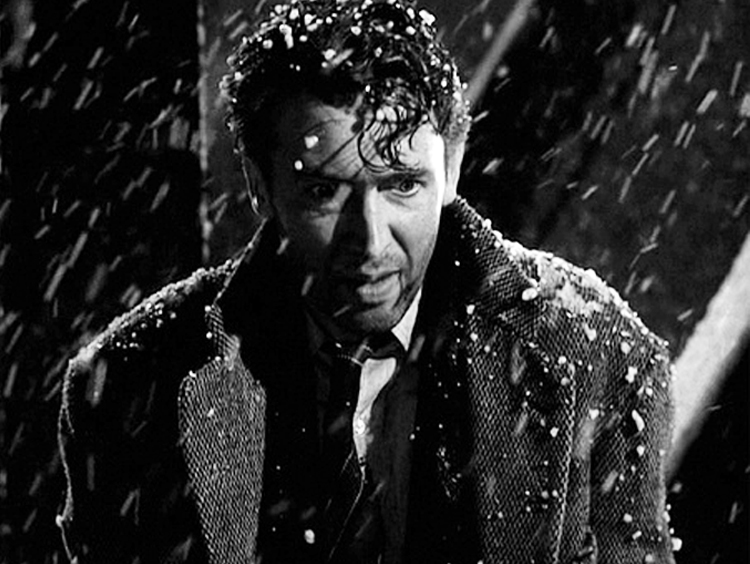
The British and later American influences on the world — military, geopolitical, economic, and popular culture — made the holiday into the trillion-dollar business that is today. You do not have to be Christian, Muslim, or even Jewish to celebrate the holiday, because while Jesus is important to tens of millions, it is not the unifying theme, and hasn’t been for decades. Commercials and other ads, endless rounds of shopping for the latest in high-tech electronics, the near-global slaughtering of spruce and fir trees, turkeys, chickens, sheep, goats, geese, and yes, ducks. That has been the main theme of Christmas for most, It’s A Wonderful Life’s (1946) annual re-broadcast on NBC notwithstanding.

The bridge scene in It's A Wonderful Life, where James Stewart's character's was contemplating suicide, 1946. (http://salon.com).

The bridge scene in It’s A Wonderful Life, where James Stewart’s character’s was contemplating suicide, 1946. (http://salon.com).

I am not bah-humbugging out about the holiday, though. I just want to remind people to not wallow too much in the mythology they tend to believe is universal about the holiday, because most of what people believe about Christmas is at best only one-third true. The fact is, some folks do bug out this time of the year, from loneliness, from a daily reminder during this season that they are the have-nots in a holiday myth built on fables of abundance. And some people attempt to and actually succeed in checking out — some permanently — this time of the year. I should know, because I almost did thirty-three years ago.

And with social media, we reinforce these tensions of economic inequality, of moralistic exclusion, of reading more spiritual meaning into a holiday that has been a big driver of consumer capitalism for nearly 150 years. We essentially stick up middle fingers at those whose families are distant and dysfunctional. We basically blow raspberries at those who do not have enough resources to do much more than provide the basics for themselves and their loved one, with many more having even less. And we shun those who have the audacity to point out the hypocrisy that is the annual holiday season.

Christmas for me has only been a holiday for me because of my younger siblings (when they were just kids, between 1988 and 1996) and because of my wife and now teenage son. I went nearly a decade of my life without Christmas trees, cards, and gifts, a combination of being a Hebrew-Israelite and abject poverty between 1979 and 1988. So despite the temptations of being in this capitalist world and somewhat of it, Christmas is only a big deal to me because of kids and their vulnerability during this time of year. Otherwise, a moment of thanksgiving and prayer, well-prepared food (but not a Saturnalia feast’s worth), and being around those who truly love and care about me is really all I’ve ever needed. That folks may only get a facsimile of this, and only around holidays like Thanksgiving and Christmas (if at all), is part of the carnage that is Christmas.

This, by the way, is what all of us need, every day, Christmas or not. So, Happy Holidays, Merry Christmas, Happy Chanukah, and Merry Kwanzaa, but let’s pay it forward, too!

A Story of My Life

24 Thursday Nov 2016

Posted by decollins1969 in 1, Academia, Boy @ The Window, Carnegie Mellon University, Christianity, culture, Eclectic, Pittsburgh, Politics, Pop Culture, race, Religion, University of Pittsburgh, Work, Youth

≈ Leave a comment

Tags

American Exceptionalism, CMU, Doctorate, Giving Thanks, Homelessness, Horatio Nelson Stories, Joe Trotter, Pitt, Ron Slater, Scars, Thanksgiving, Thanksgiving 1988


One of dozen of rags-to-riches falsehoods from Gilded Age author Horatio Nelson (1832-1899). (http://www.pavillionpress.com).

One of dozen of rags-to-riches falsehoods from Gilded Age author Horatio Nelson (1832-1899). (http://www.pavillionpress.com).

That one of the not-so-small miracles of my young adult life from ’88 and me completing my dissertation process in ’96 are just a day apart on the November calendar every year is a story unto itself. Between a month before my nineteen birthday and a month before my twenty-seventh, I went from a semester of homelessness, lack of money for food and rent and living in a firetrap to finishing up a doctorate in history. If this were someone else’s story, I’d think that amazing, even almost unbelievable. At the time, I was so worn out and beat up by Joe Trotter, my dissertation committee, and the scars accumulated over that eight-year — really, twenty-year — period, that the idea of seeing myself as an American example of a Horatio Nelson story would’ve likely made me angry enough to spit blood.

Even now, I don’t and won’t see myself as exceptional. That’s that American bullshit about rags-to-riches stories, about being-a-credit-to-my-race tropes, that I’d be subscribing to here. What I really was back then was young and hungry. So young that I was willing to put up with all kinds of people’s baggage, taking near-minimum wage jobs, allowing people to call me out of my name, excusing racist comments and actions. All because I wanted the brass ring, for myself and for my family. I was already hungry, from years in poverty, from years without friendship bonds, from years of people not recognizing my, dare I say, brilliance. I had a chip on my shoulder, but it wasn’t because I was mad. I was after a righteous reckoning.

Two decades removed from those Carnegie Mellon days, and approaching thirty years since Ron Slater and my band of new friends kept me in money and food during Thanksgiving ’88 and beyond, and I am thankful. I am thankful that I am no longer either of those versions of myself. The one too afraid to ask for help, and the one too naive to realize that the America I believed in for so long never existed. I am thankful that I know more about asking for and providing help, about understanding that in this America, help might never arrive, at least when folks most need it. I am thankful mostly that I still have optimism, I still have drive, and I still have people who like and love me enough to remind me that a few of America’s giga-pixels are worth savoring.

Songs in the Key of Life at 40

18 Friday Nov 2016

Posted by decollins1969 in 1, Boy @ The Window, Christianity, culture, Eclectic, eclectic music, Hebrew-Israelite, Jimme, Marriage, Mount Vernon New York, music, My Father, New York City, Pittsburgh, Politics, Pop Culture, race, Religion, University of Pittsburgh, Work, Youth

≈ Leave a comment

Tags

"As", "I Wish", "Love's in Need of Love Today", "Sir Duke", Black Genius, Blackness, Elaine, Growing Up, Love, Pitt, Prescience, Songs in the Key of Life (1976), Stevie Wonder, Uplift, Wendy


Stevie Wonder's Songs in the Key of Life LP/CD cover and sleeve, 1976, 1999. (http://genius.com).

Stevie Wonder’s Songs in the Key of Life LP/CD cover and sleeve, 1976, 1999. (http://genius.com).

In all the nuclear meltdowns in the last weeks of Election ’16 and in the asteroid impact of Donald Trump becoming the 45th president of the United States, I almost completely forgot about one of the modern era’s greatest milestones. At the end of September, Stevie Wonder’s Songs in the Key of Life double-album turned forty years old!

My wife swears that this was Stevie Wonder’s last great production of genius, that virtually all the music he’s done since has either been merely “that’s nice” or complete schlock. But compared to Songs In The Key Of Life, at least 75 percent of the music produced since 1500 CE would be schlock! I mean, between “I Wish,” “Sir Duke,” “Love’s in Need of Love Today,” “Have a Talk with God,” “Village Ghetto Land,” and my all-time favorite, “As,” who could ask for anything more out of an album or an artist?

My fandom for Songs in the Key of Life has occurred over several stages since its release on September 28, 1976. I was nearly seven when the double-album dropped, and my life couldn’t have been messier. Between my Mom and my father Jimme’s rocky and violent divorce process, my own coping with sexual assault, and my Mom getting kidney sick and ending up at Mount Vernon Hospital as a patient for three months. Add to this having babysitters as primary caregivers during that time, and a second-grade teacher who wasn’t exactly sympathetic to Black kids who couldn’t settle down. It was a rough time, maybe even rougher than my Hebrew-Israelite years.

But songs from the double-LP were there, either thanks to WBLS-107.5 FM, or to people blasting songs off 8-tracks and cassette decks out of their cars in South Side Mount Vernon. Or, in the case of hanging out with my dad, because of his drinking buddies playing Stevie Wonder’s songs over and over again. For those first few years, “I Wish” and “Sir Duke” were my favorite songs from Songs in the Key of Life. That was probably because they were the only songs from the set I’d heard in full prior to 1982.

Then, with the Wendy crush/puppy love/mini-love of the spring and summer of ’82, one of the songs my mind conjured up was “As.” The song’s more than seven minutes long, and I barely knew the words “until the rainbow burns the stars out in the sky,” much less the entirety of the poetry of that song, much less its full meaning. But my heart knew how that song made me feel, and for matter, how Wendy made me feel, at least for a time. Once my stepfather Maurice began beating on me, my Mom lost her job, and we slipped into welfare poverty, though, Stevie Wonder’s greatest works slipped from my mind.

Nine years later, and it was my friend Elaine who reintroduced me to Songs in the Key of Life. It was during the spring and summer of ’91, when I both liked and loathed Elaine at the same time. It was also the summer before graduate school at the University of Pittsburgh, and it was like my mind and heart knew I needed to feed myself more than Phil Collins, Anita Baker, PE, and Salt ‘n Pepa. I borrowed Elaine’s set of cassette recordings from the genius’ 2-LP set, and spent parts of April, May, and June walking the 3.4 miles between my place in S’Liberty and my job at Western Psychiatric in Oakland listening to Stevie Wonder. I played Songs in the Key of Life straight through a half-dozen times. But of all the songs, “Love’s in Need of Love Today” and “Have a Talk with God” became two of my favorites. After the potential for a more serious relationship with Elaine faded, I gave her back her cassettes in August.

It would be another fifteen years before I finally got Songs in the Key of Life on CD. It was 2006, and I’d finally gotten me and my wife into the iPod era. Between that and my work on my memoir Boy @ The Window, I wanted to explore what made me me musically over the years. In remembering my Wendy-love days, I literally had to go through every song on Songs in the Key of Life again before I remembered “As” in full. I was shocked that after thirty years and so many other Stevie Wonder songs, that it had remained a melody in my heart and mind. It was in the summer of ’06 that “As” became my favorite song off this all-time great album(s).

Given what had occurred in the US over the past decade, and what has been happening to people of color in the US for as long as I’ve been alive, Stevie Wonder’s music from Songs in the Key of Life is always relevant, always uplifting, always life-affirming. Trust me, with Trump’s ascendancy to the White House, “the force of evil plans” will try “to make you its possession.” And yes, I did think “that love would be in need of love today,” because it wasn’t as if “hate” wasn’t going around “breaking hearts” and bodies during the Obama years.

But I’ll close with this, perhaps the most important stanza from “As.” This, to remind myself and all of you America’s may be in more trouble than ever before, but know that trouble has been with America longer than we’ve had the privilege of Stevie Wonder’s Songs in the Key of Life as genius. Thanks to Wendy, Elaine, my former Mount Vernon neighbors, and unknown New Yorkers, for playing these songs for me over the years, whether they meant to or not.

We all know sometimes life’s hates and troubles
Can make you wish you were born in another time and space
But you can bet you life times that and twice its double
That God knew exactly where he wanted you to be placed
So make sure when you say you’re in it but not of it
You’re not helping to make this earth a place sometimes called Hell
Change your words into truths and then change that truth into love
And maybe our children’s grandchildren
And their great-great grandchildren will tell
I’ll be loving you

← Older posts
Newer posts →

Boy @ The Window: A Memoir

Boy @ The Window: A Memoir

Places to Buy/Download Boy @ The Window

There's a few ways in which you can read excerpts of, borrow and/or purchase and download Boy @ The Window. There's the trade paperback edition of Boy @ The Window, available for purchase via Amazon.com at http://www.amazon.com/Boy-Window-Donald-Earl-Collins/dp/0989256138/

There's also a Kindle edition on Amazon.com. The enhanced edition can be read only with Kindle Fire, an iPad or a full-color tablet. The links to the enhanced edition through Apple's iBookstore and the Barnes & Noble NOOK edition are below. The link to the Amazon Kindle version is also immediately below:

scr2555-proj697-a-kindle-logo-rgb-lg

Boy @ The Window on Amazon.com: http://www.amazon.com/Boy-The-Window-Memoir-ebook/dp/B00CD95FBU/

iBookstore-logo-300x100

Boy @ The Window on Apple's iBookstore: https://itunes.apple.com/us/book/boy-the-window/id643768275?ls=1

Barnes & Noble (bn.com) logo, June 26, 2013. (http://www.logotypes101.com).

Boy @ The Window on Barnes & Noble: http://www.barnesandnoble.com/w/boy-the-window-donald-earl-collins/1115182183?ean=2940016741567

You can also add, read and review Boy @ The Window on Goodreads.com. Just click on the button below:

Boy @ The Window

Twitter Updates

Tweets by decollins1969
  • RSS - Posts
  • RSS - Comments

Archives

  • June 2025
  • April 2023
  • September 2022
  • August 2022
  • July 2022
  • June 2022
  • May 2022
  • April 2022
  • March 2022
  • January 2022
  • December 2021
  • November 2021
  • October 2021
  • September 2021
  • August 2021
  • July 2021
  • June 2021
  • April 2021
  • March 2021
  • February 2021
  • January 2021
  • December 2020
  • November 2020
  • October 2020
  • September 2020
  • August 2020
  • July 2020
  • May 2020
  • April 2020
  • March 2020
  • January 2020
  • December 2019
  • November 2019
  • August 2019
  • July 2019
  • June 2019
  • May 2019
  • April 2019
  • March 2019
  • February 2019
  • January 2019
  • December 2018
  • November 2018
  • October 2018
  • September 2018
  • August 2018
  • July 2018
  • June 2018
  • May 2018
  • March 2018
  • February 2018
  • January 2018
  • December 2017
  • November 2017
  • October 2017
  • September 2017
  • August 2017
  • July 2017
  • June 2017
  • May 2017
  • April 2017
  • March 2017
  • February 2017
  • January 2017
  • December 2016
  • November 2016
  • October 2016
  • September 2016
  • August 2016
  • July 2016
  • June 2016
  • May 2016
  • April 2016
  • March 2016
  • February 2016
  • January 2016
  • December 2015
  • November 2015
  • October 2015
  • September 2015
  • August 2015
  • July 2015
  • June 2015
  • May 2015
  • April 2015
  • March 2015
  • February 2015
  • January 2015
  • December 2014
  • November 2014
  • October 2014
  • September 2014
  • August 2014
  • July 2014
  • June 2014
  • May 2014
  • April 2014
  • March 2014
  • February 2014
  • January 2014
  • December 2013
  • November 2013
  • October 2013
  • September 2013
  • August 2013
  • July 2013
  • June 2013
  • May 2013
  • April 2013
  • March 2013
  • February 2013
  • January 2013
  • December 2012
  • November 2012
  • October 2012
  • September 2012
  • August 2012
  • July 2012
  • June 2012
  • May 2012
  • April 2012
  • March 2012
  • February 2012
  • January 2012
  • December 2011
  • November 2011
  • October 2011
  • September 2011
  • August 2011
  • July 2011
  • June 2011
  • May 2011
  • April 2011
  • March 2011
  • February 2011
  • January 2011
  • December 2010
  • November 2010
  • October 2010
  • September 2010
  • August 2010
  • July 2010
  • June 2010
  • May 2010
  • April 2010
  • March 2010
  • February 2010
  • January 2010
  • December 2009
  • November 2009
  • October 2009
  • September 2009
  • August 2009
  • July 2009
  • June 2009
  • May 2009
  • April 2009
  • March 2009
  • February 2009
  • January 2009
  • December 2008
  • November 2008
  • October 2008
  • September 2008
  • August 2008
  • July 2008
  • June 2008
  • May 2008
  • April 2008
  • March 2008
  • February 2008
  • January 2008
  • December 2007
  • November 2007
  • October 2007
  • September 2007
  • August 2007
  • July 2007
  • June 2007

Recent Comments

decollins1969's avatardecollins1969 on No Good Teaching Deed Goes…
Mary Rose O’Connell's avatarMary Rose O’Connell on No Good Teaching Deed Goes…
Lyndah McCaskill's avatarLyndah McCaskill on The Raunchiest of Them Al…

NetworkedBlogs on Facebook

NetworkedBlogs
Blog:
Notes From a Boy @ The Window
Topics:
My Life, Culture & Education, Politics & Goofyness
 
Follow my blog

616 616 East Lincoln Avenue A.B. Davis Middle School Abuse Academia Academy for Educational Development AED Afrocentricity American Narcissism Authenticity Bigotry Blackness Boy @ The Window Carnegie Mellon University Child Abuse Class of 1987 CMU Coping Strategies Crush #1 Crush #2 Death Disillusionment Diversity Domestic Violence Economic Inequality Education Family Friendship Friendships Graduate School Hebrew-Israelites High-Stakes Testing Higher Education History Homelessness Humanities Humanities Program Hypocrisy Internalized Racism Jealousy Joe Trotter Joe William Trotter Jr. K-12 Education Love Manhood Maurice Eugene Washington Maurice Washington Misogyny Mother-Son Relationship Mount Vernon High School Mount Vernon New York Mount Vernon public schools Multiculturalism MVHS Narcissism NFL Pitt Pittsburgh Politics of Education Poverty President Barack Obama Race Racial Stereotypes Racism Relationships Self-Awareness Self-Discovery Self-Reflection Sexism Social Justice Teaching and Learning University of Pittsburgh Violence Whiteness Writing

Top Rated

Blog at WordPress.com.

  • Subscribe Subscribed
    • Notes from a Boy @ The Window
    • Join 103 other subscribers
    • Already have a WordPress.com account? Log in now.
    • Notes from a Boy @ The Window
    • Subscribe Subscribed
    • Sign up
    • Log in
    • Report this content
    • View site in Reader
    • Manage subscriptions
    • Collapse this bar
 

Loading Comments...