• About Me
  • Other Writings
  • Interview Clips
  • All About Me: American Racism, American Narcissism, and the Conversation America Can’t Have
  • Video Clips
  • Boy @ The Window Pictures
  • Boy @ The Window Theme Music

Notes from a Boy @ The Window

~

Notes from a Boy @ The Window

Tag Archives: Poverty

The Third Armpit of Hell

27 Friday Jul 2012

Posted by decollins1969 in 1, Boy @ The Window, culture, Eclectic, High Rise Buildings, Marriage, Mount Vernon New York, My Father, New York City, Politics, Pop Culture, race, Upper East Side, Upper West Side, Work, Youth

≈ 1 Comment

Tags

Coming-of-Age, Dante's Inferno, Economic Inequality, Growing Up, Home, Metro-North, Neighborhoods, New York, New York City, NYC, Poverty, Race, Self-Discovery, Subway Trains, The City


Illustration of Dante’s Inferno, Map of Lower Hell, 16th century. (Giovanni Stradano via Wikipedia). In public domain.

During most of my Pittsburgh years, whenever someone I knew asked me what it was like to live in the New York City area, I often said two things. One, that “New York was a great place to live if you have money.” But, “if you don’t have money, New York could be like the third armpit of hell.”

I didn’t even bother to discuss Mount Vernon until I was well into graduate school. Too unknown, too complicated to explain its proximity to the Bronx and to midtown Manhattan. And from the average Pittsburgher’s perspective, it was a distinction without a difference. As far as some were concerned, Mount Vernon could’ve just as easily been outside of Buffalo as it could’ve been in the heart of Harlem.

But I definitely knew better, that my relationship with Mount Vernon and “The City” was a love-hate one, born from my growing-up experiences during the Reagan years. The lens with which I viewed the New York City area, a trifocal one of race, poverty and “outsider” status, made me ambivalent about my times growing up in Mount Vernon and all of my times in New York.

2 NYC subway train with graffiti (cropped), 1980s, December 20, 2009. (Cope2 via http://www.doobybrain.com/). Qualifies as fair use – low resolution picture.

I have my father Jimme to thank, though. Without him, I would still be afraid of New York, not just ambivalent about it. Drunk or not, working or on his way to a hole-in-the-wall bar. Jimme would take me and my older brother Darren out and down to the city often enough, to ride the Subway, to hang out with him in Harlem, Spanish Harlem, and especially Midtown. Whether it was to help him with his janitorial work on weekends, or just to hang out, we frequented Manhattan and other parts of the five boroughs off and on between ’80 and ’85, ’82 — the year of abuse — excepted.

Because of that year, the longest time I spent outside of the city growing up was between April ’81 and July ’83. After not making it down to Manhattan in all of ’82, we went to Midtown in July, where we learned about two of my father’s watering holes between 43rd and 47th. They were both near Mickey Mantle’s restaurant on 47th. He also had an Irish pub he’d like to go to around East 59th and Third, a drinking bar near his job on 64th and Columbus, and a couple of places near Macy’s on 34th Street. Because of our height and the times, when it was still legal for eighteen-year-olds to drink in public watering holes, me and Darren were allowed into these fine establishments. I learned a lot about vermouth, vodka, Cosmos and Long Island Iced Tea that summer.

Grand Central Terminal Main Concourse in New York City, March 4, 2006. (Janke and Diliff via Wikipedia). Permission granted via cc-Attribution-Share Alike 3.0 license.

I also learned a lot about the not-so-nice side of New York in those years. I recognized this as I’d board the Uptown 2 Subway from West 42nd Street and 7th Avenue in Manhattan at the tail end of rush hour. As I’d board the train, I’d notice the crunch of humanity in all of its oblivion, self-absorption, and diversity. As the doors close, I’d watch as the express train passed 50th, 59th, and 66th Street before it would grind to a halt at 72nd Street. I’d notice that a fair number of the White passengers alighted here. Between 96th and 125th Street, the load of the train would gradually lighten as about half of the passengers who’d crushed me between a tall, stale-breathed smoker and a woman who wasn’t my girlfriend were now at street level.

About three-quarters of the passengers for the rest of my trip would be Latino and Afro-Caribbean. After another hour of endless stops in the Bronx, the 2 would pull me out of my slumber as it would slowly roll into the rickety East 241st stop.

By the time I was a rising senior at Pitt, I certainly didn’t need my father to accompany on my trips into Manhattan. I also avoided the long trek from 616 across Mount Vernon to 241st to take the 2 whenever I could afford to. Metro-North was a luxurious godsend compared to the puddles of piss and infinite amounts of graffiti on the Subway I’d seen throughout the ’80s.

Toph’s “Hairy Pits” from Avatar: The Last Airbender (screenshot), July 26, 2012. (Donald Earl Collins). Qualifies as fair use — low resolution picture.

But it introduced me to other odious issues. Like Grand Central Station, which by the summer of ’90 was in desperate need of renovation. Especially the restrooms, festooned with enough garbage, feces and bodily odors and fluids to make a coroner vomit.

Off a return trip from Pittsburgh that summer, I made the mistake of having no choice but to use the almost  unusable facilities there, which in the end I couldn’t use. Meanwhile, I observed homeless males hanging out in the restroom with carts, along with an individual who looked to have Kaposi’s sarcoma, an obvious sign of full-blown AIDS.

That’s when I coined New York to be “the third armpit of hell,” the place where poverty had meant your dreams were dead on arrival. For once, it made me content that I was from a place where many smug New Yorkers disdainly considered “upstate.” Though the New York City area has changed — and mostly for the better — since ’90, it’s still a place where economic inequality can easily grind the life out of people.


The “Invisible” Poor & The Middle Class Mythology

19 Thursday Jul 2012

Posted by decollins1969 in 1, Academia, Boy @ The Window, Eclectic, Mount Vernon New York, race, Work, Youth

≈ Leave a comment

Tags

American Dream, Aspirations, Chris Hayes, Creflo Dollar, Economic Inequality, Gospel of Prosperity, Journalists, Media, Media Coverage, Middle Class, Mitt Romney, MSNBC, Political Optics, poor, Poverty, President Barack Obama, President Obama, Social Castes, social mobility, Up with Chris Hayes, Uppers, Wealthy


Transparent (or invisible) Woman (cropped), July 19, 2012. (http://cgtrader.com).

This past weekend, I found myself drawn into the discussion of the middle class and middle class aspirations on MSNBC’s Up with Chris Hayes (otherwise known as “Uppers”). It was a good and yet wholly unsatisfying discussion of technical definitions of what middle class is and of the political optics of only discussing the middle class as a socioeconomic category. Chris Hayes and his guests justified this with an all-too-common refrain. “If you’re poor, you’re aspiring to be middle class,” Hayes said on Saturday. With that, Hayes and his guests rendered America’s poor invisible, and failed to see beyond the politics of invisibility in the process.

There are two issues here, and many layers within them, about America’s poor, working, on welfare, or otherwise. One issue is that journalists, commentators, political operatives and most politicians treat the poor as if they are an unknowable group of people. It’s as if they all think the same way, as if there are all Black or of color, and a complete drag on the American economy and the federal budget. And that’s on a day in which the media and politics deem America’s poor as discussable. Most of the time, America’s poor are invisible, shoved into the middle class category by commentators and politicians at every turn.

Yes, America’s middle class is struggling too, fighting tooth and nail to not slip into the class of the invisible working poor, treading water to avoid food banks and food stamps. But they have something to struggle with — and for — at least. Their homes, their cars, a retirement account, their families’ net worth, all accoutrements of being middle class in America. America’s poor don’t possess anything to struggle with or for.

Chris Hayes on a train in Switzerland, November 10, 2008. (Matthew Yglesias via Wikimedia Commons/Flickr.com). Released to public domain via cc-Attribution-Share Alike 2.0 Generic license.

Except, maybe, with their vote, if they care to vote at all. Yet no mainstream commentator nor presidential candidate has truly spoken to their needs, their plight, to how their situation is completely interconnected with the struggles of the American middle class, not their aspirations. Not Chris Hayes, nor his weekend compadre, Melissa Harris-Perry, not President Barack Obama, and definitely not the presumptive GOP nominee, Mitt Romney.

It’s a story I’m all too familiar with, as someone who grew up in poverty in Mount Vernon, New York. Not to mention as someone who had to go to college and graduate school and then struggled for two years at part-time work before finding a job with a Ph.D. in ’99 (see my “The Five Senses of Poverty” post from July ’10). I was thirty years old by the time I earned a middle class income. Yet in all of that time, the only mainstream politician who spent time on the issues of the American poor as if these were real people was President Jimmy Carter, and we know what happened with him. Outside of my degrees and my publications, I was invisible until the fall of ’99.

Otherwise, it’s been four decades of Presidents Nixon, Reagan and Clinton concerned with “welfare queens,” “pink Cadillacs,” and “mend it, don’t end it” welfare policies, and the media following suit. It’s like being kicked hard by someone as one is laying on the ground with broken ribs and internal hemorrhaging, as if they want to poor to die, painfully.

But it’s not just the ones with microphones and word processing programs that kill America’s poor by rendering them invisible. Despite the general notion that the media and politicians nurture — that everyone not rich aspires to be firmly entrenched in the middle class — most Americans middle class and poor aspire to be rich, wealthy, well-off.

Creflo Dollar, pastor, World Changers Church International, November 1, 2010. (Zwicky Institut via Flickr.com). In public domain.

This is the other neglected issue, whether inadvertent like with Chris Hayes and his guests on Uppers, or deliberate on the part of President Obama and Romney. Why so? Because they don’t acknowledge that it’s hard to be truly middle class in America these days. To be in the middle class, one must borrow, borrow, borrow, beg and sometimes steal while struggling to pay student loans, car notes, a mortgage and child care costs.

This wasn’t the case even thirty years ago, before the severe double-dip recession, high interest rates and inflation and Reagan Revolution took full hold. Then, a high school diploma and raw initiative was all most folks needed to find a job at a GM plant or to get an administrative job in government or with a large corporation (although, typing at 90 words per minute enhanced a woman’s chances, at least). Now, two years of college or postsecondary technical training, some experience in a specialized field, and a personal connection is the floor for a living wage — not exactly middle class. Of course, no one wants to be in the basement with nearly one in five Americans, 50 million in all, working just to be poor.

Stacks of money, April 13, 2008. (Allureme via Wikipedia). Released to public domain via cc-Attribution 3.0 License.

America’s poor and fledgling middle class both aspire to be rich (or die tryin’), and not just middle class. The rise of fundamentalist Christianity, mega-churches and the cult of prosperity as these pastors reimagine the New Testament. The endless lines for Powerball and Mega Millions whenever the pot is more than $100 million. The fascination with reality shows about the well-off or about competing to be well-off. All of this is the manifestation of the warping of the American Dream since the early 1970s, where the pursuit of riches has led to debt slavery for millions.

The old American Dream has become myth, and the old American middle class is but the story of Camelot, Timbuktu and Shangri-La. In our new world, “the poor will be with us always” has been made a plain and unyielding truth by those in power, reinforced by those with a media platform.

College Isn’t For Everyone

07 Thursday Jun 2012

Posted by decollins1969 in 1, Academia, Boy @ The Window, culture, Eclectic, Politics, race

≈ Leave a comment

Tags

Adult Learners, College Access, College Success, Economic Inequality, Education, Education News, Education Reporting, Educational Inequality, For-Profit Colleges, Ivy League Schools, Jay Mathews, K-16 Education, Parental Advantages, Parents, Politics of Education, Poverty, Public Education, Public Institutions, Taking Advantage, Washington Post


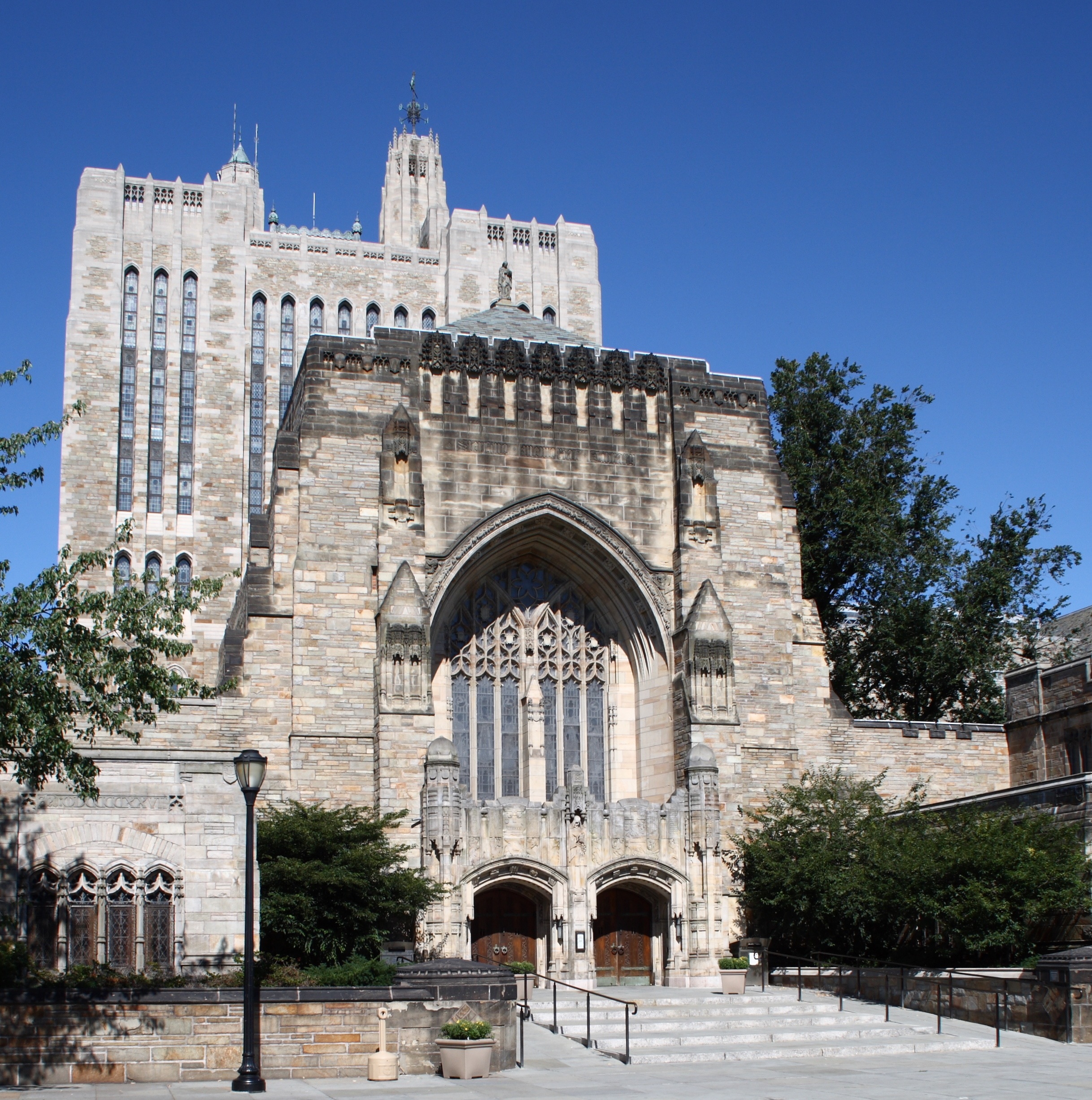
Sterling Memorial Library (cropped), Yale University, New Haven, CT, September 3, 2008. (Ragesoss via Wikipedia). Permission granted via licenses with GFDL and Creative Commons cc-by-sa-2.5.

In May ’05, I attended a conference in DC hosted by the Council for Opportunity in Education on college access and college success. Jay Mathews, an education columnist with The Washington Post, was a guest speaker. Mathews spent most of his talk telling educators that the public doesn’t care for our extensive analysis of what does and doesn’t work in K-16 education reform. “Readers only care about two things,” Matthew said — testing, and “how can I get my kid into Harvard, Yale or Princeton?”

I certainly didn’t like Mathews’ smug and dismissive talk, but he was right about one point, however inadvertent on his part. That most Americans don’t think about education news unless it either confirms their worst fears — that public education is a waste of taxpayer dollars — or confirms their highest hopes — that an Ivy League school (or the near equivalent) accepts Tyler or Courtney as students. Little else matters for most of the American reading public, because columnists, reporters and editors like Mathews have long since abandoned the idea that education is a playing-field leveler for most people. “College isn’t for everyone,” is the common refrain in Mathews’ world, and in the world of most right-thinking Americans.

What does go unreported and underreported, though, is that most Americans with the money and knowledge to give their kids every advantage possible, and do so in a rather ruthless fashion. All while denying other kids in their community similar opportunities, deliberately or otherwise. Over the past thirty-five years, property taxes and other taxes that cover the costs of a public education have been slashed, as taxpayers revolted in places like California and New York in the 1970s and 1980s.

That alone has meant two things: the contributions of the federal government to public education increased to make up for these long-term tax cuts, and the ability of most American school districts to provide all of the necessary resources for students has gone down. This opened the door for the politicized hammering of teachers unions as too powerful, and the growth of the testing mandate since the early 1990s, further weakening public education. Need I even mention public charter schools as the suggested alternative for Americans of lower-income?

Gated community, Houston, TX area [but virtual gates in education for years], February 13, 2012. (Chelsea Lameira via http://www.houstonagentmagazine.com)

But that’s only part of the story. There are plenty of parents who take even more advantage of loopholes based on money and knowledge. They hold their kids out of school a full year before kindergarten, giving them an extra twelve months to become proficient readers before they’ve ever stepped into a classroom. They pay for tutors and Kumon early on, but not because their kids are struggling with reading, writing and math. No, these parents pay for this extra help to give their students the ability to score in the top percentiles on tests that will label their children as “gifted.”

Some parents even transfer their children to different schools within a district with the “right” demographic mixtures to ensure their student’s success and their ability to be noticed. Some parents will begin the process of preparing their kids for the SATs and for AP courses via Kaplan or Princeton Review as early as fifth and sixth grade. And all to ensure that, in the end, their kids will have the post-high school choice of an Ivy League school, or at least, an equivalent elite school, like a Stanford or Georgetown.

These parents, the majority of Americans who would only readily agree with Mathews’ worldview on education news, aren’t evil. But, then again, we all know what the road to Hell is paved with. And in this case, these advantages on the one end point to the severe disadvantages on the other end, no matter how rare it is for the likes of Mathews to write about.

I’m not talking about poverty from birth to eighteen per se, although I could go there in detail. No, it’s the end result, the young adult or over-the-age-of-twenty-five person who finally decides after years of educational neglect to take advantage of the twenty-first century, to go to college after struggling to finish elementary, middle and high school. Most of these students never knew a tutor, never had a parent who understood the loopholes in public education of which to take advantage.

These adult students come into college — often a for-profit institution like University of Phoenix, a

University of Maryland University College administrative offices, Largo, MD, July 2, 2010. (Donald Earl Collins).

community college or a public institution like the one in which I teach now in University of Maryland University College — as raw and unpolished. These students are often long on enthusiasm, yet short on the skills and especially knowledge they need for success. And they have a sharp learning curve in order to get there. One in which these students have to learn in a year or what it took the most advantaged Americans eighteen or nineteen years to learn. The graduation rates of these institutions illustrate how difficult it is for most adult students to climb Mount Everest in their shorts, and all in the middle of a blizzard.

“College isn’t for everyone,” I hear Mathews and millions of other smug Americans say. Of course it isn’t. Especially when you make sure that it isn’t, through money, knowledge and cunning politics.

28 Years Later

22 Tuesday May 2012

Posted by decollins1969 in 1, Boy @ The Window, Christianity, Eclectic, Hebrew-Israelite, Mount Vernon New York, race, Religion, Youth

≈ 2 Comments

Tags

616, 616 East Lincoln Avenue, Birthday, Brother, Brotherhood, Eri Washington, Family, Poverty, Remembrance, Welfare


My brother Eri with my then 3-year-old son Noah roaming free (cropped), November 23, 2006. (Angelia N. Levy).

Knowing the nuances of the solar calendar allows me a unique perspective on the rhythms of life. That this leap year is laid out in exactly the same way as the one from ’84, twenty-eight years ago, means that any event that occurred in ’84 happened on the same day and date that I live in this year. And twenty-eight years ago today, on this Tuesday morning, my youngest brother Eri Washington was born (see my post “The Meaning of Eri’s 25th” from May ’09 for much more).

My youngest sibling’s birth occurred on the fringes of the worst period of all of our lives. But of course the newest member of this poor facsimile of a functioning family didn’t notice any of this in his first moments and days. Despite our fall into welfare in April ’83 (see my “Good Times, Good Times…Not!” post from August ’09), and Eri being the fourth of my younger siblings born in a five-year-span, my youngest brother thrived.

In many ways, Eri had it better than any of us in those first days and months of life. With the great Balkis Makeda having taken up residence in the master bedroom and watching to make sure that my mother didn’t contaminate our food with her “issues of blood,” I became the cook of the house from May 25 through the middle of July (see my “Top Cook” post from May ’09). That freed up my mother to spend more time with Eri and my late sister Sarai than she had with my other younger siblings, or with me and Darren for that matter.

Eri had been born weighing in at something like six pounds and fourteen ounces, making him the smallest baby out of the six of us. But he grew the fastest of any of us in those first weeks. Eri had more than doubled his weight by the second half of July ’84. It wasn’t because of my cooking, though, at least not directly. My mother having more free time to take care of the youngest two, especially Eri, meant that he was as healthy as any breastfed middle class kid in the suburbs, even though he was only choking down Enfamil.

Twenty eight years later, and Eri’s still here, struggling and working. That Sarai isn’t here with us is a testimony to how strong and healthy Eri was from conception to birth to his first days and weeks at 616, in the midst of grinding, unyielding poverty.

I’ve long since ceased to give him and my other brothers serious advice about how to go about their lives. They didn’t listen much to me when I lived at 616 — at least about the value of an advanced education. Nor did they listen during my years in college and grad school in Pittsburgh. Eri certainly didn’t listen much to me between the ages of eight and seventeen. The fact, though, that some things about a basic education and a need to work hard and smart in order to give yourself chances at success, apparently did sink in.

Eri, you’re still my little brother, all six-foot-four, 240 or so pounds of you. So Happy Birthday on this day, your actual birth day twenty-eight years ago. I love you very much!

Quitting Before a Fight

13 Monday Feb 2012

Posted by decollins1969 in 1, Boy @ The Window, culture, Eclectic, Hebrew-Israelite, Mount Vernon New York, Pop Culture, race, Religion, Youth

≈ Leave a comment

Tags

616, 616 East Lincoln Avenue, 7S, A.B. Davis Middle School, Failure, Grades, Humanities, Humiliation, Humility, Isolation, Maturity, Mount Vernon Hospital, Mount Vernon New York, Mount Vernon public schools, Paul Court, Poverty, Quitting, The Crucible


Mike Tyson-Michael Spinks Fight, Convention Hall, Atlantic City, NJ, June 27, 1988. (http://antekprizering.com).

As a writer, I can often see my past as if it happened within the past week. As a forty-two year-old, though, it sometimes seems like my failures and pitfalls are a long-lost memory, one of a very bad dream. To think that it’s been a full thirty years since my preteen struggles with identity, purpose, and the realization that I was in an intense academic competition that I was predestined to lose. It seems like I was playing a role, acting my way through my tweener and teenage years.

But this time thirty years ago, I seriously thought about quitting the Humanities Program. It was the beginning of the third marking period in seventh grade at A.B. Davis Middle School, early February ’82. My grades were unimpressive. I struggled in every subject except social studies, where three years of reading World Book Encyclopedia and forty books of all kinds on World War II made me a nerdy standout among my mostly nerdy peers. My social studies teacher Paul Court was so much fun and so inept that he played games with us to keep our class interesting. Anyone who could find factual errors in his teachings on American history would earn twenty-five cents. I’d already earned more than three dollars by the end of the second marking period.

I barely averaged a C+ in math. My Italian teacher Ms. Fleming told me that my “Italian sounded British.” And I was averaging a C+ in art. In Art! All because Doris Mann, who was about as good an art teacher as I was at making friends, said, “I don’t give A’s for effort. I give out grades based on your ability to create good art.” I couldn’t believe that she gave me C+’s while the art world fifteen miles away cheered folks who smeared blood, paint, and feces on canvasses!

I thought that I was the only one who felt like a failure. I was certain that I was more of a failure than my Holmes School classmates or other, non-Pennington-Grimes students in Humanities, at least. If other students appeared to have problems, especially my classmates who were alumni of the Pennington-Grimes program (Mount Vernon public schools’ K-6 Humanities Program), I believed that they were faking it.

The Crucible (play), date and location unknown. (http://reyvl.com).

I had good reason to. It was around this time that one of my White female classmates from Pennington-Grimes had become anxiety-ridden prior to a test in our English class. She began to sweat, her hands and face turned colors, like one of Arthur Miller’s female characters in The Crucible, his famous Salem-Witch-Trial play.

Within a few seconds, three of her friends joined this tortured soul in this expression of fear. The one girl kept saying, over and over, “I know I’m going to fail!” The other three huddled around her and joined in séance, as if they expected God to witness this physical expression of pressurized fear and take pity on them. That this involved the Pennington-Grimes group of Humanities girls was not lost on me. They loved their grades, almost as much as they loved Jordache Jeans, The Gap or Benetton.

We received our exam grades from Mrs. Sesay a few days later. My grade: a 78. The Fear Bunch’s lowest grade: a 92. Understanding how quickly fear can destroy your confidence: priceless. Their fears had left me thinking more about failure — theirs and mine — than it did about the task at hand.

Then it was my turn to act demon-possessed. I went to the back of the classroom at the end of that day and chanted, “I’m silly, I’m stupid. I’m silly, I’m stupid. I’m silly, I’m stupid.” over and over again while pounding the back of my head into the side wall. But I learned a valuable lesson that day. That doing well required me to ignore the worries and grades of other, to concentrate on me and my own emotions on test days.

So, I spent the first two weeks in February thinking about sliding into the general population of A.B. Davis Middle School. I couldn’t do much else other than think. With the growing problems of lack of food, late rent payments and three siblings at 616, my mother’s tiny Mount Vernon Hospital paycheck, and my idiot and long-term unemployed Hebrew-Israelite of a stepfather, I had no one to talk to about school (see “Humanities: First Contact, Full Circle” from September ’11).

What I didn’t realize was that I hadn’t yet begun to fight. My efforts up to that point in Humanities — from making friends to studying — were all half-hearted at best. I was the emotional equivalent of an eight-year-old in a preteen’s body, one right at the early stages of puberty at that. With life at 616 starting to fall apart and the isolation I felt at school, I was growing up, whether I wanted to or not. All it would take was an immature spark of inspiration to prove it….

Trick or Trick

31 Monday Oct 2011

Posted by decollins1969 in 1, Boy @ The Window, culture, Eclectic, Hebrew-Israelite, Mount Vernon New York, race, Religion, Youth

≈ Leave a comment

Tags

616, 616 East Lincoln Avenue, A.B. Davis Middle School, Clear View School, Con Edison, Fasting, Food, Grilled Ham & Cheese Sandwich, Halloween, Hebrew-Israelites, Humanities, Ice Cream Sandwich, Maurice Washington, Mount Vernon New York, Poverty, The Clearview School


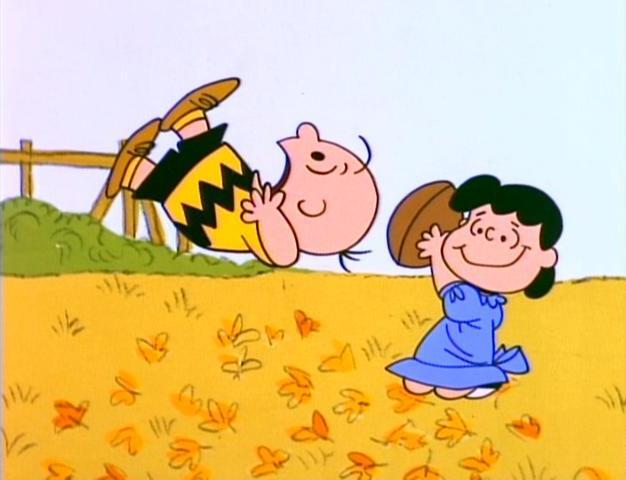
Charlie Brown fooled by Lucy and the football, again, October 30, 2011. (http://www.flickr.com).

I’ve never really liked Halloween. Probably because most of my Octobers growing up in Mount Vernon, New York were pretty horrible ones. The worst of those late Octobers were in the early 80s, starting in ’81.

That year, Halloween was a forbidden holiday in my life anyway. But the trick was on me. On a day just before Halloween, my day’s meal consisted of an ice cream sandwich as hard as a rock. The lunch at A.B. Davis Middle School that Friday — as it was most Fridays back then — was a grilled ham and cheese sandwich with fries, not exactly a Hebrew-Israelite’s diet. It was also about thirty degrees outside and partly cloudy, unusually cold for early fall in New York. So I stood near the steps leading down to the back of Davis, which led to the athletic field below. The field had turned a dirty yellow-green, the color of mid-fall. It matched how I felt about my life on that day.

The only reason I even had a rock-hard ice cream sandwich for lunch was because I’d won one of our seventh grade social studies teacher Mr. Court’s bets. He’d made an incorrect historical assertion in class, and I caught it, collecting a quarter from him that morning. Still, I learned, fully and truly for the first time, how

A Single Vanilla Ice Cream Sandwich, 1994. (Renee Comet/National Cancer Institute). In public domain.

poor me and my family had become, all while bitterly jamming the ice cream sandwich down my throat. So much for discovering my inner Hebrew-Israelite self through fasting and eating kosher foods!

I very quickly grew to hate hearing the words Hebrew-Israelite, especially since I’d never been to a traditional synagogue, much less Israel, Palestine, or even Ethiopia. Our Hebrew-Israelite ways had left us with little to eat when I was at home. There was a benefit to all of this. It made the fasting part of fasting and prayer easier. Not easy, just easier. My first Yom Kippur ceremony was difficult. We fasted on fruit for three days, and I barely made it through school each of those days. I almost passed out from the lack of food.

My older brother Darren, meanwhile, had decided that “the day of atonement” and all things Torah didn’t include his stomach. By the end of October, I would watch him take his kufi off as he boarded his bus for The Clear View School (see “About My Brother” from December ’07). I caught Darren walking near our apartment building with the last of a Hostess’ Apple Pie and its wrapper during Yom Kipper. He had snuck around the building to eat his contraband. What made this transgression worse was that Hostess used lard to create its desserts. And Darren, once caught, just stared at me and smiled.

My Mom was too busy and tired for me to think about complaining to her about this or about the issues I faced during my first days of Humanities. For more than three years, my Mom’s income had dropped so much compared to rising food and energy prices that we didn’t have food in the house for the last ten days of every month. Sometimes we didn’t have heat either, because we were usually two or three weeks behind on

Anthracite coal (like the lump of coal that was my life in '81), March 7, 2007. (United States Geological Survey). In public domain.

the Con Edison bill. I also knew that we were consistently behind on rent. I felt as isolated as a kidnapped tweener chained to a radiator in a walled-off-window basement.

Lack of food and heat at home weren’t the only problems. My Mom had popped out two of my younger brothers in the previous three years. We lived at 616 in a 1,200 square-foot, two bedroom and one bathroom apartment, so overcrowding had become an issue. Me and Darren were sharing a bedroom with our two siblings.

Not only did I start to believe that my then idiot stepfather Maurice Washington — oops, Judah ben Israel — had colluded with his version of God to play a cruel trick on my mother and my family. Not only did it finally dawn on me that we had slid into poverty somewhere between beginning on ’79 and Halloween ’81. But I knew that we were in a family crisis, financial, material and spiritual. And there was nothing, absolutely nothing, I knew to do about it. Not even asking for candy would’ve helped.

Balkis Makeda’s 2nd Coming

23 Monday May 2011

Posted by decollins1969 in 1, Boy @ The Window, culture, Eclectic, Mount Vernon High School, Politics, race, Religion, Youth

≈ Leave a comment

Tags

616, 616 East Lincoln Avenue, Balkis Makeda, Balqis Makeda, Birthday, Christianity, Cooking, Cult, Cults, Eri, Hebrew-Israelites, Hell, Hello, Interpreting Dreams, Israelites, Ivory Soap, Judah ben Israel, King Solomon, Kufi, Maurice Eugene Washington, Mount Vernon High School, Mount Vernon New York, Poverty, Queen of Sheba, Race, Reincarnation, Rituals, Unclean Issues of Blood


Queen of Sheba traveling to Solomon: A fresco in Ethiopia, Date Unknown. Source: http://www.expedition360.com/journal/archives/2007/05/. In public domain.

Yesterday, my youngest brother Eri turned twenty-seven (Happy Birthday again, bro!). He was the fourth baby my mother gave birth to in a five-year span. I’d been pissed before about all that had happened with us regarding my mother, my stupid (ex)-stepfather, our poverty and being on welfare, and the whole Hebrew-Israelite thing. But now, along with Eri’s birth, came with it an elderly trespasser at 616, courtesy of the fifty-four-inch waist — and waste — of an idiot Maurice.

You see, my stupid stepfather invited his Hebrew-Israelite matriarch “Balkis Makeda” to stay with us. The woman claimed to be a reincarnated Balkis Makeda (Queen of Sheba and wife of King Solomon of the ancient Israelites), and was the catalyst in Maurice’s Hebrew-Israelite conversion during his separation from Mom between October ’80 and April ’81.

Because of Maurice — um, excuse me, Judah ben Israel — and our fearless leader “Balkis Makeda,” we followed a number of un-Torah-like practices. This included the requirement that we all were to believe that she was the reincarnation of the Queen of Sheba, living among us in the twentieth century as an average person and showing us the way to Yahweh and ultimate truth.

Bar of Ivory Soap, December 28, 2009. Source: Erin Gifford, http://couponcravings.com/2009/12/cvs-free-ivory-soap.html.

We stopped using Ivory Soap at home because our leader had a dream once about rats gnawing on a bar of it. Baby Maurice couldn’t use a soap that’s 99.44 percent pure because of Makeda’s dream, and we switched to Zest. (The real reason, I think, was because the soap was white — like Whites ethnically — and considered the opposite of pure by many in the Hebrew-Israelite community).We weren’t allowed to use the word “Hello” when greeting someone in person or when answering the telephone. Maurice explained that “Hello’s got the word Hell in it, you know, Hell-low!” We’d somehow be committing someone to eternal damnation with a universal English greeting.

Now in her seventies and in declining health, the geezer was moved in before Mom could seriously object. What a situation! Six kids, including me, plus Mom, Maurice, and an old woman living together in a 1,200-square-foot, two-bedroom, one-bathroom apartment. We now needed to behave like good little Hebrew-Israelites with this woman in our house, so as to not embarrass my stepfather. Yeah, right!

One of the other rules of our absurdly orthodox practice was that Mom couldn’t cook or do any familial tasks for the next three months. She was “unclean” because she’d just given birth to Eri. This might’ve made sense in the deserts of ancient Canaan, with no antibiotics and drugs to deal with unclean issues of blood and other bodily fluids. It didn’t now. Plus I didn’t remember Mom not cooking for three months after Yiscoc and Sarai were born. This was suck-up time, plain and simple.

Maurice made what was an abyss of bad even worse by cooking dinner for three days. Three straight nights of over-boiled and under-ripened cabbage drenched in its own juices and seasoned to high heaven with red and black pepper. My stepfather could’ve been the founder of a new weight-loss diet. Mom, of course, asked me to take over her cooking duties, which I did for the next six weeks (see my “Top Cook” post from May ’09).

The woman couldn’t stand us, and especially couldn’t stand me. She probably sensed how much I couldn’t

A child in the Black Hebrews community, in Dimona, Israel, September 5, 2005. Source: Dror Eiger, http://flickr.com/photos/95465714@N00/41252116. In public domain, as file is licensed under the Creative Commons Attribution-Share Alike 2.0 Generic license.

stand her and her idiotic notions of Judaism, even with the context of being a Hebrew-Israelite. All I knew was that when I cut through all of the words and nuggets of truth, ritual and superstition, that “Makeda” was full of crap, and had fostered the conversion of my stupid stepfather, the only person I knew who was even more full of crap than her. I was already a Christian in the closet by then. Now I faced the prospect of revealing my spiritual conversion in the middle of such a grand mess. But I knew I had little other choice.

Within weeks of “coming out” to Mom, Maurice and my classmates at Mount Vernon High School (see my post “Kufi Emancipation Day” from September ’09 for more), the older woman moved out, under pressure from Mom. Both, ironically, were under pressure from me, as I threatened to move out myself. She died in Section 8 housing on Mount Vernon’s South Side in February ’85. I dare say that she wasn’t the reincarnated Makeda. For the only one who could’ve learned a lesson from a lifetime of poverty and cult-like rituals would’ve been her, not us.

← Older posts
Newer posts →

Boy @ The Window: A Memoir

Boy @ The Window: A Memoir

Places to Buy/Download Boy @ The Window

There's a few ways in which you can read excerpts of, borrow and/or purchase and download Boy @ The Window. There's the trade paperback edition of Boy @ The Window, available for purchase via Amazon.com at http://www.amazon.com/Boy-Window-Donald-Earl-Collins/dp/0989256138/

There's also a Kindle edition on Amazon.com. The enhanced edition can be read only with Kindle Fire, an iPad or a full-color tablet. The links to the enhanced edition through Apple's iBookstore and the Barnes & Noble NOOK edition are below. The link to the Amazon Kindle version is also immediately below:

scr2555-proj697-a-kindle-logo-rgb-lg

Boy @ The Window on Amazon.com: http://www.amazon.com/Boy-The-Window-Memoir-ebook/dp/B00CD95FBU/

iBookstore-logo-300x100

Boy @ The Window on Apple's iBookstore: https://itunes.apple.com/us/book/boy-the-window/id643768275?ls=1

Barnes & Noble (bn.com) logo, June 26, 2013. (http://www.logotypes101.com).

Boy @ The Window on Barnes & Noble: http://www.barnesandnoble.com/w/boy-the-window-donald-earl-collins/1115182183?ean=2940016741567

You can also add, read and review Boy @ The Window on Goodreads.com. Just click on the button below:

Boy @ The Window

Twitter Updates

Tweets by decollins1969
  • RSS - Posts
  • RSS - Comments

Archives

  • June 2025
  • April 2023
  • September 2022
  • August 2022
  • July 2022
  • June 2022
  • May 2022
  • April 2022
  • March 2022
  • January 2022
  • December 2021
  • November 2021
  • October 2021
  • September 2021
  • August 2021
  • July 2021
  • June 2021
  • April 2021
  • March 2021
  • February 2021
  • January 2021
  • December 2020
  • November 2020
  • October 2020
  • September 2020
  • August 2020
  • July 2020
  • May 2020
  • April 2020
  • March 2020
  • January 2020
  • December 2019
  • November 2019
  • August 2019
  • July 2019
  • June 2019
  • May 2019
  • April 2019
  • March 2019
  • February 2019
  • January 2019
  • December 2018
  • November 2018
  • October 2018
  • September 2018
  • August 2018
  • July 2018
  • June 2018
  • May 2018
  • March 2018
  • February 2018
  • January 2018
  • December 2017
  • November 2017
  • October 2017
  • September 2017
  • August 2017
  • July 2017
  • June 2017
  • May 2017
  • April 2017
  • March 2017
  • February 2017
  • January 2017
  • December 2016
  • November 2016
  • October 2016
  • September 2016
  • August 2016
  • July 2016
  • June 2016
  • May 2016
  • April 2016
  • March 2016
  • February 2016
  • January 2016
  • December 2015
  • November 2015
  • October 2015
  • September 2015
  • August 2015
  • July 2015
  • June 2015
  • May 2015
  • April 2015
  • March 2015
  • February 2015
  • January 2015
  • December 2014
  • November 2014
  • October 2014
  • September 2014
  • August 2014
  • July 2014
  • June 2014
  • May 2014
  • April 2014
  • March 2014
  • February 2014
  • January 2014
  • December 2013
  • November 2013
  • October 2013
  • September 2013
  • August 2013
  • July 2013
  • June 2013
  • May 2013
  • April 2013
  • March 2013
  • February 2013
  • January 2013
  • December 2012
  • November 2012
  • October 2012
  • September 2012
  • August 2012
  • July 2012
  • June 2012
  • May 2012
  • April 2012
  • March 2012
  • February 2012
  • January 2012
  • December 2011
  • November 2011
  • October 2011
  • September 2011
  • August 2011
  • July 2011
  • June 2011
  • May 2011
  • April 2011
  • March 2011
  • February 2011
  • January 2011
  • December 2010
  • November 2010
  • October 2010
  • September 2010
  • August 2010
  • July 2010
  • June 2010
  • May 2010
  • April 2010
  • March 2010
  • February 2010
  • January 2010
  • December 2009
  • November 2009
  • October 2009
  • September 2009
  • August 2009
  • July 2009
  • June 2009
  • May 2009
  • April 2009
  • March 2009
  • February 2009
  • January 2009
  • December 2008
  • November 2008
  • October 2008
  • September 2008
  • August 2008
  • July 2008
  • June 2008
  • May 2008
  • April 2008
  • March 2008
  • February 2008
  • January 2008
  • December 2007
  • November 2007
  • October 2007
  • September 2007
  • August 2007
  • July 2007
  • June 2007

Recent Comments

MaryPena's avatarMaryPena on My Day of Atonement/Bitter Hat…
decollins1969's avatardecollins1969 on No Good Teaching Deed Goes…
Mary Rose O’Connell's avatarMary Rose O’Connell on No Good Teaching Deed Goes…

NetworkedBlogs on Facebook

NetworkedBlogs
Blog:
Notes From a Boy @ The Window
Topics:
My Life, Culture & Education, Politics & Goofyness
 
Follow my blog

616 616 East Lincoln Avenue A.B. Davis Middle School Abuse Academia Academy for Educational Development AED Afrocentricity American Narcissism Authenticity Bigotry Blackness Boy @ The Window Carnegie Mellon University Child Abuse Class of 1987 CMU Coping Strategies Crush #1 Crush #2 Death Disillusionment Diversity Domestic Violence Economic Inequality Education Family Friendship Friendships Graduate School Hebrew-Israelites High-Stakes Testing Higher Education History Homelessness Humanities Humanities Program Hypocrisy Internalized Racism Jealousy Joe Trotter Joe William Trotter Jr. K-12 Education Love Manhood Maurice Eugene Washington Maurice Washington Misogyny Mother-Son Relationship Mount Vernon High School Mount Vernon New York Mount Vernon public schools Multiculturalism MVHS Narcissism NFL Pitt Pittsburgh Politics of Education Poverty President Barack Obama Race Racial Stereotypes Racism Relationships Self-Awareness Self-Discovery Self-Reflection Sexism Social Justice Teaching and Learning University of Pittsburgh Violence Whiteness Writing

Top Rated

Blog at WordPress.com.

  • Subscribe Subscribed
    • Notes from a Boy @ The Window
    • Join 103 other subscribers
    • Already have a WordPress.com account? Log in now.
    • Notes from a Boy @ The Window
    • Subscribe Subscribed
    • Sign up
    • Log in
    • Report this content
    • View site in Reader
    • Manage subscriptions
    • Collapse this bar
 

Loading Comments...