• About Me
  • Other Writings
  • Interview Clips
  • All About Me: American Racism, American Narcissism, and the Conversation America Can’t Have
  • Video Clips
  • Boy @ The Window Pictures
  • Boy @ The Window Theme Music

Notes from a Boy @ The Window

~

Notes from a Boy @ The Window

Tag Archives: Multiculturalism

Boy @ The Window Origins: Meltzer Conversations

14 Saturday Mar 2015

Posted by decollins1969 in 1, Academia, Boy @ The Window, Carnegie Mellon University, Christianity, culture, Eclectic, Hebrew-Israelite, Mount Vernon High School, Mount Vernon New York, Pittsburgh, Politics, Pop Culture, race, Religion, Youth

≈ Leave a comment

Tags

Benetton Group, Black Elites, Black Identity, Black Masculinity, Black Migration, Black Washington, CMU, Colorism, Dissertation, Doctoral Thesis, Harold Meltzer, Harper Stewart, Humanities, Hypermasculinity, Inequality, Internalized Racism, Logic, Manhood, Multiculturalism, Personal Insights, Race, Racial Identity, Rationalism, Self-Discovery, Social Injustice, Taye Diggs, The Best Man (1999), Washington DC, X-Men Origins: Wolverine (2009)


X-Men Origins: Wolverine (2009) scene, where Wolverine frees mutants kept as experiments by Colonel William Stryker , March 13, 2015. (http://cdn.collider.com/).

X-Men Origins: Wolverine (2009) scene, where Wolverine frees mutants kept as experiments by Colonel William Stryker , March 13, 2015. (http://cdn.collider.com/).

Of all the tangents I took related to writing Boy @ The Window, the most direct path that got me to write a memoir about the most painful period in my life was through several conversations with my dear teacher, friend and mentor in the late Harold Meltzer. I’ve discussed bits and pieces of some of those conversations here and in longer form in Boy @ The Window. It’s still worth rehashing some of those conversations, at least in terms of what was and wasn’t good advice, as well as in explaining how some of the main themes of the memoir developed over time.

As I wrote in Boy @ The Window, though my “first interview with him was in August ’02,” the first time “we discussed the possibility of me doing Boy @ The Window went back to February ’95.” Meltzer had been retired from teaching about a year and a half, while I was beginning the heavy lifting phase of my doctoral thesis, “living in DC for a couple of months while hitting the archives and libraries up for dusty information. In need of a writing break, I gave him a call on one cold and boring Saturday afternoon.”

It was in response to a letter he sent congratulating me. I’d recently published an op-ed in my hometown and county newspaper, “Solving African American Identity Crisis.” I was writing about issues like using the n-word, hypermasculinity, and internalized racism in the short and, for me at least, dummied down piece. Somehow our discussion of that piece led to a discussion of my classmate Sam. Did I really want to spend an hour and a half talking with Meltzer about Sam and some of my other Humanities classmates and their possible identity issues, considering some of my own serious growing pains — the Hebrew-Israelite years, my suicide attempt, my Black masculinity and manhood issues? Absolutely not!

But I learned quite a bit about how I might want to approach writing Boy @ The Window through that phone call. Not because Meltzer had given me any sage advice, which he didn’t, or because he revealed things to me that I shouldn’t have come to learn during our conversation, which he definitely did.
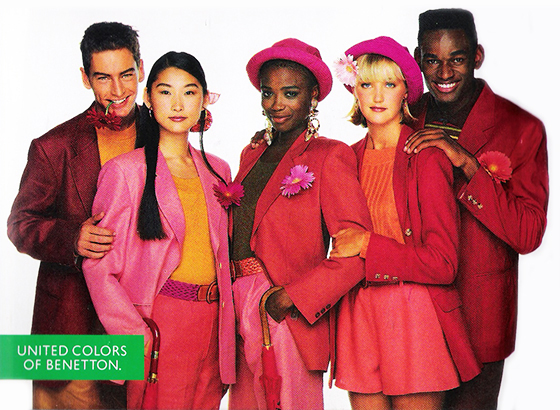
Benetton ad, 1980s, January 2013. (http://fashionfollower.com/).

Benetton ad, 1980s, January 2013. (http://fashionfollower.com/).

No, it was the idea that a lot of the things that I had pursued as a historian and researcher were things that came out of my experiences growing up. Multiculturalism as a historical phenomenon (at least if one linked it to cultural pluralism)? Can anyone say Humanities Program, or, what I used to call “Benetton Group” when we were at A.B. Davis Middle School? Writing about African American identity issues? Obviously related to living in Mount Vernon, the land where any hint of weakness translated into me being called a “faggot” or a “pussy.”

And what about any scholarly concerns with racial and socioeconomic inequality and Black migration? Anyone ever meet my Mom and my father Jimme, 1960s-era migrants from Arkansas and Georgia/Florida respectively? An examination of the Black Washingtonian elite and their looking down upon ordinary Blacks because of their own colorism or the latter’s lack of education? Come on down, Estelle Abel and any number of well-established Black Mount Vernon-ites who never gave me the time of day! As much as academia had been an escape for me, into a world of rationalism and logic, a place of dispassionate scholarship, it was all personal for me, without realizing it until that phone conversation with Meltzer.

Fast-forward to November ’02, the last interview I did with Meltzer before his death two months later. We spent the last couple of hours on that brisk fall Thursday discussing the book idea that would become Boy @ The Window. Meltzer thought that it should be a work of fiction, “based on the real flesh and blood folks in my life, but with different names of course to protect me from any potential lawsuits. He did make me rethink the project from a simple research study of my high school years into narrative nonfiction or a memoir.” 

Screen shot of fictional character Harper Stewart's bestselling novel nfinished Business, from The Best Man (1999), March 14, 2015. (hitchdied via http://s785.photobucket.com/).

Screen shot of fictional character Harper Stewart’s bestselling novel Unfinished Business, from The Best Man (1999), March 14, 2015. (hitchdied via http://s785.photobucket.com/).

Was Meltzer correct? Should I have done a Harper Stewart — played by actor Taye Diggs in The Best Man (1999)? Should I have fictionalized all of my experiences and those of my family, teachers, administrators and classmates? I’m not sure if it would’ve made a difference. Stories of fiction tend to have a tight symmetry to them. Or, the theme of “what goes around comes around” is usually a big one in any novel. You can’t leave too many loose threads or unresolved issues, even if the novel is part of a series. For my purposes, since my life remains a work in progress, a story of relative — not obvious or absolute — success, telling it as fiction would hardly ring true to me, much less to any group of readers.

Whatever else anyone wants to say about the late Harold Meltzer, the dude got me to think about difficult things until I was no longer comfortable in leaving my uncomfortable experiences and assumptions unchallenged. The very definition of a mentor, the very purpose of Boy @ The Window.

Je Suis Charlie – Non!

13 Tuesday Jan 2015

Posted by decollins1969 in 1, culture, Eclectic, Movies, Patriotism, Politics, Pop Culture, race, Religion

≈ Leave a comment

Tags

Boko Haram, Charlie Hebdo, Cherif Kouachi, France, Freedom of Expression, Freedom of Speech, Homophobia, Hypocrisy, Islamists, Je suis Charlie, Jihadists, Journalism, KKK, Multiculturalism, Neo-Nazi, Nigeria, Paris, Racism, Said Kouachi, Terrorist Attack, The Interview (2014)


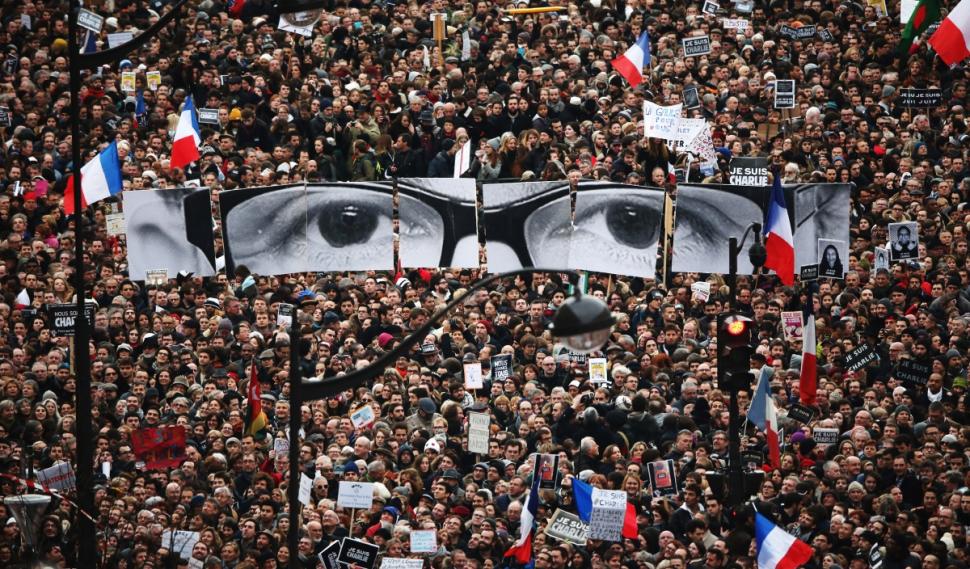
An estimate 1.6 million were part of Sunday's unity march following the attack on Charlie Hebdo and the hostage situations in Paris last week, Paris, France, January 11, 2015. (Christopher Furlong/Getty Images, via http://nydailynews.com).

An estimate 1.6 million were part of Sunday’s unity march following the attack on Charlie Hebdo and the hostage situations in Paris last week, Paris, France, January 11, 2015. (Christopher Furlong/Getty Images, via http://nydailynews.com).

Okay. So my French is horrible. But nothing should be lost in translation. I’m not for Islamists and other similarly motivated people murdering in the name of a religion. I’m not for the suppression of free speech, or free expression, or religion, or atheism. Like millions all over the world, I find it unacceptable that anyone would murder a group of Charlie Hebdo staffers and editors because of their work.

I also think that Charlie Hebdo’s work is only a notch or two above disgusting, meaning it could easily be the organ for the KKK, a neo-Nazi party or some other organization whose motto is hatred and intolerance. It’s not just about the prophet Muhammad. They’ve portrayed African politicians as monkeys, being gay as deviant, and immigrants as the scourge of Europe. All in the name of satire. Except that irreverence and satire is actually supposed to be funny, not racist, anti-immigrant, anti-religion and homophobic. Well, at least the French arm of the Neo-Nazi Party’s laughing every week!

In a country of well over 60 million people, Charlie Hebdo‘s average weekly circulation was 160,000, on par with some newspapers in central Pennsylvania. Yet everyone who’s anyone has run to support them with “Je suis Charlie,” as if this is the equivalent of #BlackLivesMatter or something. The folks at Charlie Hebdo didn’t deserve murder, but they also shouldn’t be supported as if they were doing groundbreaking investigative journalism either.

Some of the 2,000 feared dead after Boko Haram massacred and burned down 16 villages, Baga, Borno State, Nigeria, January 8, 2015. (http://ww.w.mainstreamreports.com/)

Some of the 2,000 dead after Boko Haram massacred and burned down 16 villages, Baga, Borno State, Nigeria, January 8, 2015. (http://ww.w.mainstreamreports.com/)

So no, I am NOT Charlie. I am not Charlie because there have been close to a dozen other bombings and attacks all over the globe in the past week, in places like Pakistan and Syria and Nigeria, in Texas and Colorado and other places. I am not Charlie because I refuse to elevate the lives of a few French racists over the wholesale slaughtering of 2,000 in Nigeria by Boko Haram.

I am NOT Charlie because no Muslim should ever have to apologize for being Muslim, just because a small group of radicalized fanatics took their religion’s name in vain. I am NOT Charlie because I understand that anyone can commit a violent and senseless act based on any religion, any belief, and any philosophy. Including killing others based on the idea that there is no God at all.

I cannot nor will not be Charlie because while I believe in free speech and expression, I also believe in embracing a multicultural world. Something that these cretins — Cherif and Said Kouachi and the staff at Charlie Hebdo — obviously didn’t believe in at all. I cannot be Charlie because that would require me to live in a world without context, without understanding that there is a global economic and political context to radical Jihadists. A context that is as much about economic inequality, deliberate religious misinformation, and the political dominance of Europe and the US, that last one going back at least two centuries.

January 13, 2015. (http://www.dailymail.co.uk/).

January 13, 2015. (http://www.dailymail.co.uk/).

I refuse to be Charlie because though I believe we should defend even the most vile and incompetent forms of speech and expression, I also believe that we need to challenge such expression at every turn. I am NOT Charlie because I’m also NOT The Interview. I am also not a stereotype or a monkey or a caricature or someone whom Whites in Hollywood or White Frenchmen running a rag can easily define and pigeonhole. I am not Charlie because I’m not a commodity that can be bought or sold or taken advantage of. I am NOT Charlie because I refuse to support the idea that you should run three million copies of your weekly to take advantage of the deaths of colleagues because the eyes of the European world are on you this week.

I am NOT Charlie. I AM a man, though, who sees all sides of what many have all but oversimplified as a war between good and evil.

On Tolerance and Not Wearing My Kufi Anymore

06 Saturday Sep 2014

Posted by decollins1969 in 1, Boy @ The Window, Christianity, culture, Eclectic, Hebrew-Israelite, Mount Vernon High School, Mount Vernon New York, Pop Culture, race, Religion, Youth

≈ Leave a comment

Tags

Acceptance, Discovery Channel, Diversity, East African Jews, Embracing, Genetics, Humanities, Intolerance, Jewish Diaspora, Judaism, Kufi, Multiculturalism, MVHS, Racial Assumptions, Ten Lost Tribes, Tolerance, Yarmulke


Mahatma Gandhi (1869-1948) quote on superiority and tolerance, September 6, 2014. (http://thousayest.wordpress.com).

Mahatma Gandhi (1869-1948) quote on superiority and tolerance, September 6, 2014. (http://thousayest.wordpress.com).

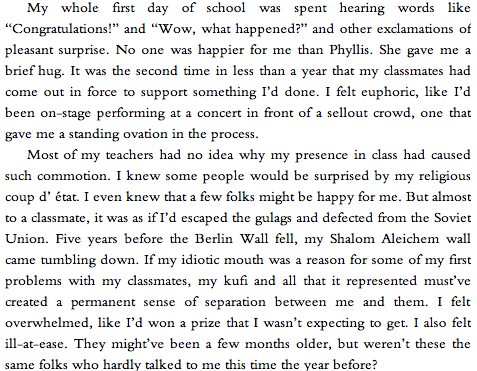
Today’s date marks three decades since I decided to stop wearing my kufi in public, my first day of tenth grade at Mount Vernon High School (NY). It also marked my coming-out party (so to speak) as a Christian and a day of defiance toward both my Mom and my idiot stepfather Maurice Washington (now deceased), all of which is well-documented here and in Boy @ The Window.

What I haven’t spent much time or space writing about was how my one-time classmates received me in terms of my kufi or the Hebrew-Israelite religion during the three years between the start of seventh grade in ’81 and the end of ninth grade in June ’84. Sure, I’ve talked about Alex and the “Italian Club,” kufi battles and other incidents involving my classmates in which bullying or attempts at bullying occurred. How much were these incidents about me, about me being poor and Black, about me being weird and Black, about me and my kufi? It wasn’t always clear.

What was clear was that the vast majority of my classmates, though they may have given me weird looks or quietly snickered, said nothing to me one way or the other about my kufi or my religion. But on that first day of tenth grade, the day I stopped wearing my kufi, my classmates were hardly silent at all.

Screen shot 2014-09-06 at 1.14.44 PM

I wondered most of all about my Jewish classmates, at least the ones who actually practiced Judaism. With Josh as the one exception, they to a person never said a word or asked a single question about my religion or my kufi. This despite the fact that fundamentally, I was an Orthodox Jew between ’81 and ’84. I didn’t get an answer while I was in Humanities or at MVHS. Years later, I interviewed one of my former classmates, whose father was a rabbi at one of the largest synagogues in Westchester County. I asked him about the silence. “I thought nothing of it,” he said, as he’d been “taught to respect other people’s beliefs.”

On some level, I could accept this answer at face value. But even at the moment of the interview, I didn’t find this former classmate’s answer enlightened or satisfying at all. His answer on the surface demonstrates the very definition of tolerance. Yet tolerance through silence is the absolute minimal definition of respect for differences. Tolerance is hardly the same as accepting or embracing differences, defined by taking active steps to understand and empathize with different peoples and cultures. Not to mention taking the extra step of working to protect those people and their differences from the intolerant.

Standing ovation, opera house unknown, May 21, 2012.(http://www.thelmagazine.com).

Standing ovation, opera house unknown, May 21, 2012.(http://www.thelmagazine.com).

I knew on some level even in ’84 that many if not most of my Jewish classmates had remained silent because the idea of Blacks as Jews in terms of religion or genetics was barely in their consciousness. It’s still hard for many Jews I’ve known over the years to accept now, even with a population of Ethiopian and other East African Jews living and working in Israel. It’s difficult to embrace the mosaic that is the Jewish diaspora, even with evidence pointing to communities made up of the descendants of some of the so-called Ten Lost Tribes of ancient Israel living in southern Africa and northern India (as documented by the Discovery Channel in documentaries over the past fifteen years). Me as a kufi and yarmulke-wearing Black teenager practicing Judaism had to be weird and beyond the pale for those classmates.

The way the rest of my classmates reacted to the end of my Shalom-Aleichem-days was also an example of minimal tolerance, or really, intolerance. In six years of Humanities, I’d never gotten that many of my classmates to pay attention to me for longer than an answer to a history question unless it was for ridicule or for a presentation or an award. The fact that at least two dozen had something positive to say about my lack of a kufi, or upon further inquiry, my turn to the Christian side, told me all I needed to know about my status with my classmates for the previous three years.

I’m hardly excluding myself from this notion of intolerance. My view of myself as a Christian in those first months after I converted was one that set me apart from Catholics, Baptists, Jehovah’s Witnesses, the Nation of Islam and Jews alike. I didn’t necessarily think or say things about these different religions or the classmates who practiced them. I just ignored those differences while giving every appearance that my nondenominational view of Christianity, my Bible-quoting and toting self, was the only lens through which anyone should view themselves and the world around them. It would be another year before I recognized my own childishness regarding my views of spirituality, religion and tolerance.

My and Diane Ravitch’s Path to Reign of Error

11 Tuesday Mar 2014

Posted by decollins1969 in 1, Academia, Boy @ The Window, Carnegie Mellon University, culture, Eclectic, Mount Vernon High School, Mount Vernon New York, New York City, Patriotism, Pittsburgh, Politics, Pop Culture, race, Upper East Side, Youth

≈ Leave a comment

Tags

Bill & Melinda Gates Foundation, Book Review, Corporate Education Reform, Diane Ravitch, Fear of a "Black" America (2004), High-Stakes Testing, Humanities Program, Institutional Racism, Michelle Rhee, Multiculturalism, Neoconservative Movement, Politics of Education, Poverty, Privatization, Racial Segregation, Racism, Reign of Error (2013), Social Injustice, Social Justice, Teach for America, Writing Passion


Reign of Error (2013) by Diane Ravitch, front cover. (http://bn.com).

Reign of Error (2013) by Diane Ravitch, front cover. (http://bn.com).

I first began reading Diane Ravitch in July 1990, the summer before my senior year at the University of Pittsburgh. It was the summer in which I became interested in understanding magnet programs and their relationship with desegregation and diversity efforts, courtesy of my own experience with Mount Vernon, New York public schools and its now defunct Humanities Program. I read both The Great School Wars: New York City, 1805-1973 (1974) and The Troubled Crusade: American Education, 1945-1980 (1985) that summer, with education scholar and Ford Foundation director Jeanne Oakes’ Keeping Track: How Schools Structure Inequality (1985) sandwiched in between.

It was the beginning of a twenty-year period of constantly intellectual disagreement between me and Ravitch. Oakes’ work captured inequality in terms of race and socioeconomics so much better than Ravitch, whose writings back then often treated these inequalities and distinctions as afterthoughts. When I shifted my research area to multicultural education and multiculturalism, though, that was when I found Ravitch’s absolutist defense of so-called traditional American democratic education and all things e pluribus unum unbelievably stifling. With all Ravitch knew about the politics of education, in New York and with the US Department of Education, how could she possibly defend a system that did as much to control and exclude students as it did to provide something akin to an equal opportunity?

I chalked Ravitch up to being another out-of-touch neoconservative, scared to death of race and diversity and multiculturalism. I said as much at conferences like the American Educational Research Association meeting and other conferences. I wrote as much in my dissertation and in my first book, Fear of a “Black” America: Multiculturalism and the African American Experience (2004). Through it all, I always found Ravitch’s writing compelling, but her conclusions wanting, because they lacked perspective and empathy in the context of public schools and diversity.

Then, Ravitch wrote Left Back: A Century of Battles Over School Reform in 2000. Though it contained some of her common themes — overemphasis on the mantra of reform, the need for more testing, support for school choice, denigration of a multicultural curriculum — Ravitch showed growth in this book. She was less hostile to a more progressive curriculum and seemed, for the first time, really, to understand how much race and poverty had shaped the direction and the harshness of school reform going back to 1900. I happily used Ravitch’s Left Back in my History of American Education Reform course at George Washington in 2002. For her book provided a comprehensive and even-handed overview of the politics of K-12 education in a way that any educator of any American ideological perspective could understand.

I’ve finally read Ravitch’s Reign of Error: The Hoax of the Privatization Movement and the Danger to America’s Public Schools (2013). Reign of Error is Ravitch at her most passionate and energized. If I hadn’t read a couple dozen of Ravitch’s articles from the 1980s and 1990s and four of her previous books, I would think that this was her first book, as there is sense of urgency in Reign of Error that can seldom be found outside of epic memoirs and epic fiction novels.

Ravitch’s argument in Reign of Error is a simple one. Corporate education reform, if allowed to continue unfettered, will destroy public education in the US, and in the process, American democracy. Privatizing public schools (i.e., turning them into “public” charter schools), destroying teacher’s unions, constant high-stakes testing, bypassing school boards and forgetting about racial segregation and poverty — that’s corporate education reform’s agenda. As Ravitch said in Chapter 12 on the fallacies of merit pay for teachers, “Merit pay is the idea that never works and never dies (p. 119).” She could have also substituted the words “school choice,” “creationism,” “standardized testing,” “closing schools,” and “privatization” for “merit pay.”

But Ravitch goes further in her 400-page treatise. That though public education in the US has had its share of problems — the need for more teacher training and time for professional development, racial segregation and high levels of poverty while underfunded — that corporate education reform has compounded these problems several times over. That with corporate education reform, teachers, parents and students will have no say in public education, at least the ones without their own personal foundation with which to endow their own public charter school.

From a writer’s standpoint, this wasn’t Ravitch’s best effort. Her argument is repetitive, one where she likely could’ve cut the main chapters by a quarter (about 100 pages) and made the same points. I likely could’ve become inebriated if I had a shot of vodka every time the words “poverty,” “Gates,” “Walton,” “Broad,” “high-stakes testing,” and “corporate education reform” come up. But given my history with reading Ravitch and with this topic, of course Reign of Error was repetitive — it was like reading my own words on this same topic.

Ultimately, Ravitch’s Reign of Error is a primer for anyone interested in averting the social injustice that is the corporate education reform tyranny of wealthy philanthropists, money-grubbing entrepreneurs and politicians across America’s limited ideological spectrum. For those whom up to now this issue has been of limited interest, or for those who’ve felt the change in public education but haven’t quite been able to articulate those feelings, Reign of Error is for you.

For educators, parents and even students already involved in writing about or protesting against corporate education reform, this book is still for you. Ravitch provides so much ammunition that Reign of Error can be applied in numerous ways to numerous situations. At school board meetings. With #AskMichelleRhee hash tags on Twitter. In job interviews with Teach for America and with the Bill & Melinda Gates Foundation. In letters to the editor of the mainstream newspapers and in comments to mainstream TV and radio newscasters. In arguments with neoconservative parents who send their kids to private schools.

“Protecting our public schools against privatization and saving them for generations of American children is the civil rights issue of our time (p. 325).” is how Ravitch ended her Reign of Error. It’s not an exaggeration. But it does beg a question. If we can successfully fend off corporate education reform — and assume that the country will continue to ignore the poverty and racial segregation that Ravitch desperately wants addressed — can she and I then spend five minutes discussing multiculturalism?

The Fall of the House of D’Souza

25 Saturday Jan 2014

Posted by decollins1969 in 1, Academia, culture, Eclectic, Patriotism, Politics, Pop Culture, race, Religion

≈ Leave a comment

Tags

Campaign Finance Fraud, Dinesh D'Souza, Indictment, Intellectual Conservatism, Multiculturalism, Race, Racism


It’s been a sad last 20 months for Dinesh D’Souza. Once one of the princes of the intellectual conservatism set, he’s shown himself to be a fascist hypocrite and fool. Between his 2016: Obama’s America — a half-baked documentary only the late Jerry Falwell would’ve been proud of — his extramarital issues, his forced resignation from King’s College, and now, campaign fraud in the Citizens United age? It’s all proof-positive that there really aren’t any intellectual conservatives in the US, at least by global standards of what it means to be a real intellectual.

If anything, what we have are a bunch of pretenders to the throne. Folks who are radical right-wingers and don’t understand anything outside of the affluent, heterosexual and semi-religious (if not spiritual) White male world. So-called scholars who are about as open to new ideas and diverse people as Archie Bunker in season one of All In The Family. Hypocrites who deny for others what they demand for themselves (thanks, U2, for that one).

Since Illiberal Education (1991) and The End of Racism (1995), D’Souza’s been trying to outdo himself. Except that takes more intellectual depth and stamina than he had even when putting together his two most celebrated books (at least, celebrated in his circles). Between his books on Reagan and Obama, it’s like reading the ramblings of, well, a fraudulent author teetering on insanity. I don’t feel sorry at all for D’Souza, who lost his youthful intellectual edge faster than the end of the ticking of an egg-timer. (from HuffPost)

The Road to Boy @ The Window, Part 4: Fear of a “Black” America

26 Thursday Sep 2013

Posted by decollins1969 in 1, Academia, Boy @ The Window, Carnegie Mellon University, culture, Eclectic, eclectic music, music, Patriotism, Pittsburgh, Politics, Pop Culture, race, University of Pittsburgh, Youth

≈ Leave a comment

Tags

Academia, Afrocentricity, Authentic Blackness, Authenticity, Emotion, Estelle Abel, Fear of a "Black" America, Fear Of A Black Planet, Fear of Black Males, Joe Trotter, Multicultural Education, Multiculturalism, PE, Personal Vignettes, Politics of Academia, Politics of Education, Politics of Fear, Public Enemy, Rage, Richard Altenbaugh


FearBookCover3copy

Given that Fear of a “Black” America was my first book, but one based on my doctoral dissertation, and that Boy @ The Window is a memoir, the road from one to the other may not be that obvious with an initial glance. But despite the intellectual, semi-scholarly nature of my book on Blacks and multiculturalism, there are parallel themes that run between Fear of a “Black” America and Boy @ The Window. Perhaps none are more important, though, than the challenge of authenticity, of fitting in, of being able to mesh the complicated onion that I’ve found myself to be over the years.

I think that was why I decided in November ’98 to turn my dissertation “A Substance of Things Hoped For” into a more readable book. Yes, after all that work to write a 505-page thesis, it would’ve been a shame to just let it sit on my then girlfriend’s coffee table, to be used either as a door stop or a base for her doing her nails. Yes, I still had something to prove to academia. That my scholarship as a historian and educator on the issue of multiculturalism was sound. That the conventional academic wisdom around Blacks, people of color and multiculturalism was paternalistic fear-mongering.

Public Enemy, Fear Of A Black Planet (1990) Album Cover

Public Enemy, Fear Of A Black Planet (1990) Album Cover

And in thinking that last part through, I came up with my Public Enemy-inspired title and thread for the first book. It was about fear in many forms. Elite White fears of a majority-people-of-color US within their own lifetimes. Conservative fears of a K-16 education system that included the cultural and historical perspectives of peoples of color, of the poor, of women, of the LGBT, of so many others they’d rather discard. General American skepticism that any Blacks had ever given any thought at all to cultural pluralism, intercultural education, or multiculturalism/multicultural education, at least before White theorists had thought through these ideas first.

Afrocentrists and nationalists who thought of multiculturalism as soft and utterly unrepresentative of the Black experience — or, at least, what they considered an authentic version thereof? That was as difficult a challenge as any I faced in writing both my dissertation and Fear of a “Black” America. So much so that I made a few interesting decisions along the way. I sought out an agent — yes, a literary agent — for the first book, and found one, too (things were so much easier in ’99). I wanted the book to have an impact beyond academia.

In the writing process, I decided to weave the theme of fear, skepticism, willful and inadvertent misunderstandings throughout the 200-page book. All while covering Black intellectual thought about what we now call Afrocentricity and multiculturalism, Black activism and activities around education and Negro History Week, and the so-called Culture Wars of the 1980s and 1990s. All to show that multiculturalism was/is a part of America’s evolution, even if some folks are gnashing their teeth and wearing sackcloth and ashes along the way.

One thing was missing, though, from my six chapters. Me, in a word. Yes, my argument was crystal clear, my evidence was sound, my notes and analysis lined up well enough by the summer of ’00. Yet, as my one-time agent noted, “there’s not enough of you in this manuscript.”  Bottom line: folks weren’t going to buy the book unless I made it more compelling, which meant putting something of me or about me in it.

Fear Book & The Authentic Me

Fear Book & The Authentic Me

So I did. I wrote mostly about my experiences in academia and how they paralleled with some of the critical issues in Fear of a “Black” America. I talked about my Duquesne University students in the College of Education in ’98 and ’99, most of whom were cultural conservatives. I brought up conversations I had with professors skeptical about my scholarship, like Richard Altenbaugh in March ’98 or my former dissertation advisor Joe Trotter in April ’96. I also wrote about my conversation with Estelle Abel over my lack of authenticity as a young Black man in June ’87, having thought about it for the first time in thirteen years. I wasn’t sure if that made Fear of a “Black” America any better, but it made me feel better about my first book.

By the time I’d given my agent the final draft of Fear of a “Black” America in October ’00, I was ready — maybe for the first time in years — to take a look at my life before Pitt, grad school, Spencer Fellowship and becoming Dr. Collins. I wasn’t sure if I wanted to open up the emotional side of that Pandora’s box just yet. But in some ways, I really needed to, precisely because of my experiences with people in grad school at Pitt and Carnegie Mellon. And precisely because of my occasional moments of rage and overreaction, if only because Fear of a Black “America” helped me tap into emotions I didn’t know I had.

On Academic Entourages & Standing Apart From Them

11 Wednesday Sep 2013

Posted by decollins1969 in 1, Academia, Carnegie Mellon University, culture, Eclectic, Pittsburgh, Politics, Pop Culture, race, Religion, University of Pittsburgh, Work, Youth

≈ Leave a comment

Tags

Academia, African American Studies, Afrocentricity, Authenticity, Black Issues in Higher Education, Blackness, Entourage, Fear of a "Black" America, Followers, Loner, Marc, Molefi Asante, Multiculturalism, Politics of Academia, Publishing, Sycophants, Writing


Lil Wayne entourage, Hartford, CT, July 2011. (http://4umf.com/).

Lil Wayne entourage, Hartford, CT, July 2011. (http://4umf.com/).

This week for many is about anniversary number twelve of the 9/11 attacks, which if I hadn’t lived through them, would sound like something out of a Kurt Vonnegut novel. But because I’ve been counting my days for years, this week also represents two decades since I realized that radical “Islamic” terrorists, pro athletes and popular music artists aren’t the only ones with followers. I learned for the first time that even in the world of academia, paragons and those who allege themselves as such also have their entourages of true believers and sycophants. It was a realization that bothered the loner and the aspiring academic historian in me.

Letters to the Editor, Black Issues in Higher Education, September 9, 1993. (Donald Earl Collins)

Letters to the Editor, Black Issues in Higher Education, September 9, 1993. (Donald Earl Collins).

It all occurred in the aftermath of my first major publication, co-written with my friend Marc and published in Black Issues In Higher Education in August ’93. “Afrocentricity: The Fight for Control of African-American Thought” was our 1,200 word contribution to the debate over multicultural education and Afrocentricity in both higher education and in Black culture more generally. It was a publication that came as a surprise, because the editors at Black Issues In Higher Education (the same folks who ran Emerge Magazine, by the way) hadn’t contacted us about receiving our pitch and article, about accepting it for publication, or about when they intended to publish. And even though our article was literally in the centerfold of their August 12, ’93 issue, the folks at Black Issues in Higher Education never paid us for the publication of our work.

The reason why because clearer in their September 9 and September 23 issues. In the “Letters to the Editor” section, the editors published a dozen letters, ten of which were critical of our work. These weren’t scholarly or even logical critiques — we were wrong because we weren’t members of the Church of Afrocentric Babble, plain and simple. These were “How dare you!” or “Shame on you!” letters, not ones based on what we’d actually written.

What became obvious  to me was that Molefi Asante’s former and current students had written most of the letters. Not exactly an unbiased set of sources, as in the circle of Afrocentricity in the early ’90s, there were few people more prominent than Asante (he was the Father of Afrocentricity, after all). Once I realized this, I found myself disappointed. With Black Issues in Higher Education, with Black folks in academia — particularly at Temple University — and with academia itself. Me and Marc weren’t being challenged on our ideas, but on the idea that two alleged neophytes had the balls to challenge the orthodoxy of the early ’90s in African American studies and in high-brow Black cultural circles.

Marc pushed for a response from one of the editors about their unprofessionalism (and to find out why we weren’t being paid for our piece), which led to a conversation with one of the big-wigs. He apparently said to Marc, “We published it [the “Afrocentricity” piece] to teach you a lesson.” When Marc told me, I said, “Well, I guess we’re not gonna get paid.” (Turned out this was standard practice for the likes of Black Issues in Higher Education, Emerge, and for freelancers at BET as well). Marc, pissed and disillusioned, said, “We were just trying to help.”

Letters to the Editor, Black Issues in Higher Education, September 23, 1993. (Donald Earl Collins).

Letters to the Editor, Black Issues in Higher Education, September 23, 1993. (Donald Earl Collins).

It was the last one of many factors that pushed me to write my dissertation and my first book Fear of a “Black” America (2004) on the relationship between education, multiculturalism, and Black identity. I wanted to show that Afrocentricity wasn’t the only strain of thought that ran through the heads of Black scholars and found its way into small “c” curriculum and cultural events in Black communities. In doing so, I certainly stood apart, but I also stood alone a lot, too.

In recent years, I’ve seen numerous entourages eviscerate lone wolfs. On Twitter, in our 24/7 media coverage of the mundane and insignificant yet insane, and at academic conferences. As recently as a couple of months ago, I saw a version of this on Facebook in response to a post I wrote about Mark Anthony Neal’s Looking for Leroy (2013). The entourage makes it difficult for an up-and-comer to get off to an honest start, for conformity with only subatomic levels of independent thought seems to be the norm.

Somewhere between now and when my son (knock on wood) reaches my age of forty-three, maybe some of what I’ve written over the past twenty years will break through the ice of entourages, mad-dog and otherwise. Still, it is a damnable thing when groups get together to stomp out different voices (literally and figuratively), because that’s seems to be the only way to keep the band together.

← Older posts
Newer posts →

Boy @ The Window: A Memoir

Boy @ The Window: A Memoir

Places to Buy/Download Boy @ The Window

There's a few ways in which you can read excerpts of, borrow and/or purchase and download Boy @ The Window. There's the trade paperback edition of Boy @ The Window, available for purchase via Amazon.com at http://www.amazon.com/Boy-Window-Donald-Earl-Collins/dp/0989256138/

There's also a Kindle edition on Amazon.com. The enhanced edition can be read only with Kindle Fire, an iPad or a full-color tablet. The links to the enhanced edition through Apple's iBookstore and the Barnes & Noble NOOK edition are below. The link to the Amazon Kindle version is also immediately below:

scr2555-proj697-a-kindle-logo-rgb-lg

Boy @ The Window on Amazon.com: http://www.amazon.com/Boy-The-Window-Memoir-ebook/dp/B00CD95FBU/

iBookstore-logo-300x100

Boy @ The Window on Apple's iBookstore: https://itunes.apple.com/us/book/boy-the-window/id643768275?ls=1

Barnes & Noble (bn.com) logo, June 26, 2013. (http://www.logotypes101.com).

Boy @ The Window on Barnes & Noble: http://www.barnesandnoble.com/w/boy-the-window-donald-earl-collins/1115182183?ean=2940016741567

You can also add, read and review Boy @ The Window on Goodreads.com. Just click on the button below:

Boy @ The Window

Twitter Updates

Tweets by decollins1969
  • RSS - Posts
  • RSS - Comments

Archives

  • June 2025
  • April 2023
  • September 2022
  • August 2022
  • July 2022
  • June 2022
  • May 2022
  • April 2022
  • March 2022
  • January 2022
  • December 2021
  • November 2021
  • October 2021
  • September 2021
  • August 2021
  • July 2021
  • June 2021
  • April 2021
  • March 2021
  • February 2021
  • January 2021
  • December 2020
  • November 2020
  • October 2020
  • September 2020
  • August 2020
  • July 2020
  • May 2020
  • April 2020
  • March 2020
  • January 2020
  • December 2019
  • November 2019
  • August 2019
  • July 2019
  • June 2019
  • May 2019
  • April 2019
  • March 2019
  • February 2019
  • January 2019
  • December 2018
  • November 2018
  • October 2018
  • September 2018
  • August 2018
  • July 2018
  • June 2018
  • May 2018
  • March 2018
  • February 2018
  • January 2018
  • December 2017
  • November 2017
  • October 2017
  • September 2017
  • August 2017
  • July 2017
  • June 2017
  • May 2017
  • April 2017
  • March 2017
  • February 2017
  • January 2017
  • December 2016
  • November 2016
  • October 2016
  • September 2016
  • August 2016
  • July 2016
  • June 2016
  • May 2016
  • April 2016
  • March 2016
  • February 2016
  • January 2016
  • December 2015
  • November 2015
  • October 2015
  • September 2015
  • August 2015
  • July 2015
  • June 2015
  • May 2015
  • April 2015
  • March 2015
  • February 2015
  • January 2015
  • December 2014
  • November 2014
  • October 2014
  • September 2014
  • August 2014
  • July 2014
  • June 2014
  • May 2014
  • April 2014
  • March 2014
  • February 2014
  • January 2014
  • December 2013
  • November 2013
  • October 2013
  • September 2013
  • August 2013
  • July 2013
  • June 2013
  • May 2013
  • April 2013
  • March 2013
  • February 2013
  • January 2013
  • December 2012
  • November 2012
  • October 2012
  • September 2012
  • August 2012
  • July 2012
  • June 2012
  • May 2012
  • April 2012
  • March 2012
  • February 2012
  • January 2012
  • December 2011
  • November 2011
  • October 2011
  • September 2011
  • August 2011
  • July 2011
  • June 2011
  • May 2011
  • April 2011
  • March 2011
  • February 2011
  • January 2011
  • December 2010
  • November 2010
  • October 2010
  • September 2010
  • August 2010
  • July 2010
  • June 2010
  • May 2010
  • April 2010
  • March 2010
  • February 2010
  • January 2010
  • December 2009
  • November 2009
  • October 2009
  • September 2009
  • August 2009
  • July 2009
  • June 2009
  • May 2009
  • April 2009
  • March 2009
  • February 2009
  • January 2009
  • December 2008
  • November 2008
  • October 2008
  • September 2008
  • August 2008
  • July 2008
  • June 2008
  • May 2008
  • April 2008
  • March 2008
  • February 2008
  • January 2008
  • December 2007
  • November 2007
  • October 2007
  • September 2007
  • August 2007
  • July 2007
  • June 2007

Recent Comments

MaryPena's avatarMaryPena on My Day of Atonement/Bitter Hat…
decollins1969's avatardecollins1969 on No Good Teaching Deed Goes…
Mary Rose O’Connell's avatarMary Rose O’Connell on No Good Teaching Deed Goes…

NetworkedBlogs on Facebook

NetworkedBlogs
Blog:
Notes From a Boy @ The Window
Topics:
My Life, Culture & Education, Politics & Goofyness
 
Follow my blog

616 616 East Lincoln Avenue A.B. Davis Middle School Abuse Academia Academy for Educational Development AED Afrocentricity American Narcissism Authenticity Bigotry Blackness Boy @ The Window Carnegie Mellon University Child Abuse Class of 1987 CMU Coping Strategies Crush #1 Crush #2 Death Disillusionment Diversity Domestic Violence Economic Inequality Education Family Friendship Friendships Graduate School Hebrew-Israelites High-Stakes Testing Higher Education History Homelessness Humanities Humanities Program Hypocrisy Internalized Racism Jealousy Joe Trotter Joe William Trotter Jr. K-12 Education Love Manhood Maurice Eugene Washington Maurice Washington Misogyny Mother-Son Relationship Mount Vernon High School Mount Vernon New York Mount Vernon public schools Multiculturalism MVHS Narcissism NFL Pitt Pittsburgh Politics of Education Poverty President Barack Obama Race Racial Stereotypes Racism Relationships Self-Awareness Self-Discovery Self-Reflection Sexism Social Justice Teaching and Learning University of Pittsburgh Violence Whiteness Writing

Top Rated

Blog at WordPress.com.

  • Subscribe Subscribed
    • Notes from a Boy @ The Window
    • Join 103 other subscribers
    • Already have a WordPress.com account? Log in now.
    • Notes from a Boy @ The Window
    • Subscribe Subscribed
    • Sign up
    • Log in
    • Report this content
    • View site in Reader
    • Manage subscriptions
    • Collapse this bar
 

Loading Comments...