• About Me
  • Other Writings
  • Interview Clips
  • All About Me: American Racism, American Narcissism, and the Conversation America Can’t Have
  • Video Clips
  • Boy @ The Window Pictures
  • Boy @ The Window Theme Music

Notes from a Boy @ The Window

~

Notes from a Boy @ The Window

Tag Archives: Humanities

Aside

Part of My Real-Life Hunger Games

24 Wednesday Jun 2015

Posted by decollins1969 in 1, Boy @ The Window, Christianity, culture, Eclectic, eclectic music, Mount Vernon High School, Mount Vernon New York, music, Pop Culture, race, Religion, Youth

≈ Leave a comment

Tags

"Things Can Only Get Better" (1985), 10th Grade, 616, 616 East Lincoln Avenue, Addie Viggiano, Authority Figures, Chemistry, Disillusionment, Harold Meltzer, Howard Jones, Humanities, hunger, Iced Fudge Nut Brownie, Italian, MVHS, New York State Regents Exams, Paul Lewis, Poverty, Sara Lee, Trigonometry


Consequences of hunger in schools, NOKID Hunger, January 2015. (http://www.youthonassignment.org/).

Consequences of hunger in schools, NOKID Hunger, January 2015. (http://www.youthonassignment.org/).

This time three decades ago I’d started to recover from a week of seemingly endless tests and Regents exams at Mount Vernon High School, which couldn’t have come at a worse time for me. The cupboards and fridge at 616 were as bare as they had been since the days before my Mom had gone on welfare. There was only enough milk for my younger siblings, and besides cornbread and cabbage, we were SOL. That Monday we had our exams in World History and English. Tuesday was the Trig Regents, which I started preparing for at the end of February because our teacher Ms. Viggiano didn’t know the difference between sine, cosine and tangent. All of those went pretty well.

Then we ran out of food Tuesday night. I woke up the next morning with water, milk, ice and freeze-dried meat as my choices for breakfast and 50 cents in my pocket. I chose water and only water for the morning. And Wednesday was the busiest day of all. There were two Regents exams, one that morning in Italian, the other in Chemistry. I went to school feeling like I could overcome my hunger and do decently on the test. After all, I had been taking Italian since seventh grade, and I already knew I had scored an eight out of ten on the oral part of this exam. But deep down, I knew I just didn’t have the energy to get through the exam. I had a headache from the lack of food, which grew worse as I started to forget the difference between Italian in past, present, future and present perfect tense. I finished the exam and found myself just hoping for a 70 (anything below a 65 was an F, and the exam counted for a third of my total grade for the course).
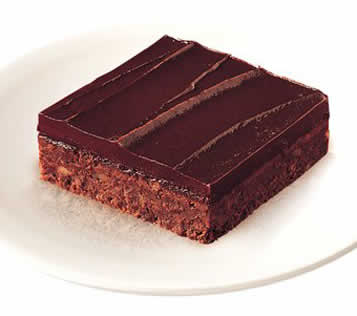
Sara Lee Iced Fudge Nut Brownie (yes, they still make them), 2014. (http://saraleefoodservice.com/).

Sara Lee Iced Fudge Nut Brownie (yes, they still make them), 2014. (http://saraleefoodservice.com/).

I went to lunch and walked over to Chester Heights (Eastchester) to a deli and bought the only thing I could think of to eat: one Sara Lee Brownie. It cost 45 cents, and it was probably the best investment I had made up to this point in my life. I walked back to MVHS, slowly ate the brownie to make it last, and had just enough time to drink some more water before we sat down to take the Chemistry Regents.

When I opened up the exam booklet I started laughing. Our idiot Chemistry teacher Mr. Lewis had told us the month before to “not worry” about organic chemistry as part of the Regents exam even though he had never covered it in class. Listening to him had me averaging a C in his class all year, with my highest exam grade an 87. So I bought a Barron’s Chemistry Regents test prep book the weekend after his pronouncement, and did nothing but study organic chemistry for this exam. It turned out that the first ten questions on the exam were organic chemistry ones, and something like thirty-five out of 100 total covered organic chem. With my brownie digesting, I was ready to kick some butt. I left that afternoon knowing that I did pretty well. But after that shaky morning, I found myself still wondering, did I do well, or was my malnourished mind playing tricks on me?

I found out on Friday, June 21st that I had failed the Italian Regents, with a total score of 45 — I’d only earned a 37 out of 90 on the written party of the exam (I’d taken the oral part with Ms. Maldonado a couple of weeks earlier). On the Chemistry Regents, I had the third highest score in the school — a 95 out of 100. I was bummed, ecstatic, pissed and disillusioned with my teachers and with myself, all at the same time. The goofy-assed Howard Jones tune “Things Can Only Get Better,” a hit at that time, popped into my head from that morning and off and on for the rest of June.

Luckily on the Friday we found out our scores was also the same day we were to meet our AP US History teacher. I’ve already described my late friend and mentor in a previous post. But it’s worth mentioning again how he broke down my protective wall to talk to me about things I’d never discuss with my classmates or my Mom or Jimme. One of those issues was hunger. Not just my constant need for food even when there was food at 616. My hunger, my drive for something better in life. Meltzer noticed it, and gradually got me to exhibit that side of myself in class.

NO KID Hungry campaign logo, Share Our Strength, June 24, 2015. (https://www.nokidhungry.org/).

NO KID Hungry campaign logo, Share Our Strength, June 24, 2015. (https://www.nokidhungry.org/).

For years after AP, Meltzer would say, over and over again, “You know, I never worried about you.” I guess it was because I didn’t take the world around me at face value. I had a healthy disdain for authority figures and the daily bullshit that the world attempted to feed my mind with every day. I wasn’t intimidated by my classmates, and I wasn’t going to allow myself to engage in worrying about grades and pleasing teachers the ways in which they did.

Meltzer picked up on this, and laughed about it all the time. He said that I had that one-of-a-kind look of a student who wasn’t just hungry for good grades, but hungry for knowledge, hungry for something to make sense of a senseless world. I guess that this is all true. Boy, it’s remembering days of hunger past that I miss people like Meltzer the most.

MVHS and Memorial Day Weekend Decisions

25 Monday May 2015

Posted by decollins1969 in 1, Boy @ The Window, culture, Eclectic, eclectic music, Jimme, Mount Vernon High School, Mount Vernon New York, music, My Father, Pop Culture, race, Youth

≈ Leave a comment

Tags

"Voices Carry" (1985), 616, 616 East Lincoln Avenue, Angst, Barron's Regents Exam Test Prep Books, Carol Buckley, Chemistry, DiFeo, Disillusionment, Humanities, Joey Chestnut, Keyboarding, Martino, Mary Zini, Meltzer, MVHS, New York State Regents Exams, Paul Lewis, Self-, Takeru Kobayashi, Teaching and Learning, Teenage Angst, Til Tuesday, Trigonometry, Viggiano


Laurence Fishburne yelling "Wake up!" at end of movie School Daze (1988), December 9, 2009. (screenshot via Tumblr.com). Qualifies as fair use due to low resolution and clarity of picture.

Laurence Fishburne yelling “Wake up!” at end of movie School Daze (1988), December 9, 2009. (screenshot via Tumblr.com). Qualifies as fair use due to low resolution of picture.

Thirty years ago this weekend, I made a couple of decisions that I would take with me for the rest of my days of formal schooling, and still keep in mind for myself when I’m in the classroom as a professor. The decisions I made about my teachers came out of a sense of both malaise and desperation. You see, I was near the end of tenth grade in May ’85, and had figured out months earlier that I had hit the mediocre-and-apathetic-teacher-lottery at Mount Vernon High School that year.

That my Humanities teachers were underwhelming shouldn’t have been a surprise, really. Yet it was. I’ve written here and in Boy @ The Window already about two teachers — Zini for history and Lewis for Chemistry — who either “got on my last nerves” or as an “unimaginative instructor” who lived in “a chain-smoking world.” But I also had an Italian teacher who lost his job in April because of the distractions of owning a car dealership, a Trig teacher who could screw up an equation for me faster than I could quip, “Yeah, right!,” and an English teacher in Carol Buckley who spent most our eighth periods together lying on a couch and asking us to water her plants! The best teacher I had that year was my keyboarding instructor, who spent most of the year congratulating the women in the class who came in typing sixty or ninety-five words per minute.

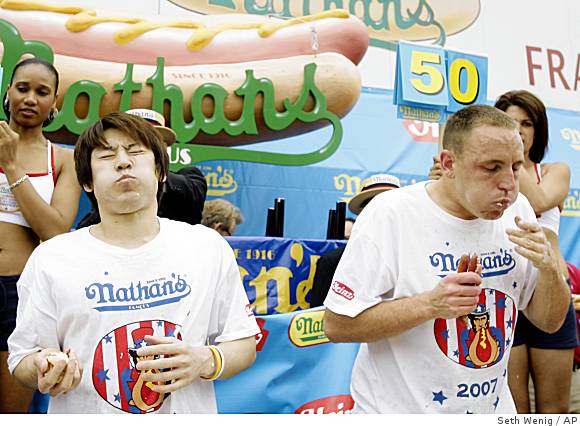
It wasn’t all their fault. I was fifteen as well, more than a bit rebellious, as nearly every adult authority figure in my life had either abused or neglected me in some way. Yeah, maybe I did take my teenage angst, my lack of belonging, and my troubles at 616 with my Mom, my idiot ex-stepfather and my father Jimme out on them from time to time. I’m sure that’s true. It’s also true that I distracted myself with Humanities and school. I used that forty-two weeks out of each year to throw down academically, to work, to grind, to use my Jedi-mind tricks to take music and movies, arts and sports to absorb knowledge like Takeru Kobayashi and ‎Joey Chestnut at a hot dog eating competition. Those teachers, with their lack of nuance, or in some cases, actual lack of knowledge (and in at least one case, lack of teaching acumen), ruined my standard operating mode.

Takeru Kobayashi and Joey Chestnut battle it out at the 2007 Nathan's Famous Fourth of July Hot Dog Eating Contest, Coney Island, Brooklyn, NY, July 4, 2007. (Seth Wenig/AP; http://philly.com).

Takeru Kobayashi and Joey Chestnut battle it out at the 2007 Nathan’s Famous Fourth of July Hot Dog Eating Contest, Coney Island, Brooklyn, NY, July 4, 2007. (Seth Wenig/AP; http://philly.com).

My Memorial Day Weekend ’85 decisions actually began in February. I decided after another week of watching Viggiano mess up another sine, cosine and tangent lecture that I needed to learn how to do Trig properly, which meant on my own. I went to Mount Vernon Public Library, checked out the best Trig textbook I could find, and began working on angles and equations whenever I could squeeze in a spare moment. I bought the Barron’s Trig Regents Exam test preparation book at the end of February, and started working on practice exams in April.

It wasn’t until the week going into Memorial Day Weekend, though, that I had an epiphany about my tenth-grade teachers. Lewis made it so with yet another stream of nonsense.

Lewis went as far as to say, “There’s nothing to worry about” on the subject of organic chemistry. “There will be hardly any organic chemistry on the exam, anyway,” he said. After eight months of listening to his blathering, I thought “That’s it! Whatever he says to do, I’m doing the opposite!” The next time I got money from Jimme, I went out and bought the Barron’s Chemistry Regents exam prep book. It was just before Memorial Day, and I had a month before the exam.

That wasn’t all I decided and did. I really did think that my teachers were incompetent, lazy and arrogant. I simply could no longer trust them, even as I was desperate to trust someone at fifteen. I decided that ultimately, I was my own best teacher and own best barometer of what I needed to learn and why I needed to learn it. I decided that teachers had to earn my trust as a student, that I was no longer going to automatically entrust them with my educational enrichment, no questions asked. I decided that if I really was going to be going to college in a couple of years, that I had to keep my eyes open for individuals I could trust, because by the end of tenth grade, I didn’t trust Humanities as a program and MVHS as a school.

Those decisions turned out to be good ones, even though it also meant few new friends and only a couple of mentors after tenth grade. Luckily there was Meltzer, luckily there was Martino, and luckily, I was only two years from graduating.

Middle School Teachers, Middle School Memories

14 Thursday May 2015

Posted by decollins1969 in 1, Academia, Boy @ The Window, culture, Eclectic, eclectic music, Mount Vernon New York, music, Pittsburgh, Politics, Pop Culture, race, Work, Youth

≈ 1 Comment

Tags

A.B. Davis Middle School, Algebra, Bad Teaching Habits, Duquesne University College of Education, Good Teaching Habits, Humanities, Humanities Program, Life Lessons, MCPS, Middle Schools, Montgomery County MD, Montgomery County Public Schools, Mrs. Mignone, Ms. Jeanne Longerano, Research, Science, Silver Spring Maryland, Sligo Middle School, Teacher Expectations, Teaching and Learning


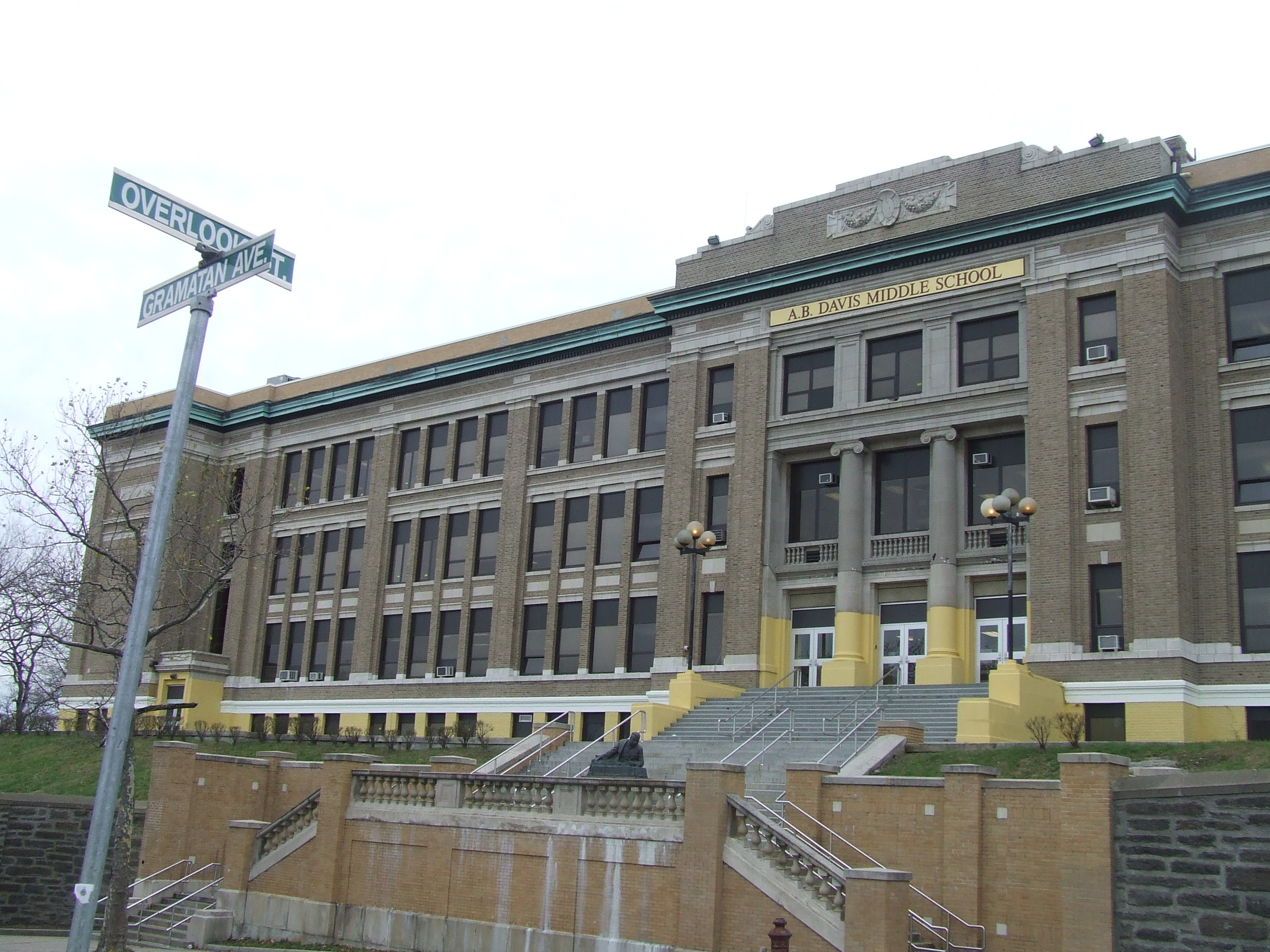
A.B. Davis Middle School, Mount Vernon, NY, November 21, 2006. (Donald Earl Collins). Built in 19226, it used to be Mount Vernon High School before Black migration, the Brown decision and ending some discriminatory ability grouping practices forced the school board to build a new high school after 1954.

A.B. Davis Middle School, Mount Vernon, NY, November 21, 2006. (Donald Earl Collins). Built in 1926, it used to be Mount Vernon High School before Black migration, the Brown decision and ending some discriminatory ability grouping practices forced the school board to build a new high school after 1954.

There’s a reason why much of the recent research on middle schools has called for the elimination of middle schools long-term, that instead, K-5 or K-6 ought to become K-8. It’s a transitional period for kids, one that even with the best of parents, most preteens face mostly unprepared. It’s based on a system that educators and policy makers designed a century ago, when the average student completed their formal education in seventh or eighth grade (only one in five students living in the early twentieth century went on to high school).

The teachers traditionally prepared by schools of education really aren’t prepared specifically for sixth, seventh or eighth grade, but for secondary education. Meaning, teachers either have higher social and emotional expectations of 10-to-14-year-olds than they have prepared for, or they have higher academic expectation of their students than the students have been prepared for, or both. These are among the reasons why middle schools can easily become a black hole for students too young to be dealing with teachers trained really for high school, and a black hole for teachers who simply aren’t as prepared for tweeners and thirteen-year-olds as they like to pretend.

Sligo Middle School, Silver Spring, MD, August 2014. (http://montgomeryschoolsmd.org/).

Sligo Middle School, Silver Spring, MD, August 2014. (http://montgomeryschoolsmd.org/).

Despite the advances in teacher preparation in the past couple of decades, this reality still exists at most middle schools, including my son’s Sligo Middle School in Silver Spring. Common Core, PAARC assessments, a wide variety of fatty lunch options, all make students feel that education matters and yet it really doesn’t. My son has already had a couple of teachers whose first and second instinct for controlling their classrooms has been to yell early and often, to the point where I’m convinced that at least one of his teachers this year had Tourette’s (at least, until we had the school move him out of that class). At least two others could be accused of unconsciously labeling their students, as their expectations of their students have gone unmet.

Through meeting these teachers, I’ve re-recognized something that used to be wrong in my own teaching, back when I first started teaching in Duquesne University’s College of Education in the late-1990s. To have high expectations and standards of conduct isn’t enough. Teachers need to communicate it, through examples, through their lessons, through a rubric, quite frankly, and not just a laundry list of expectation. Simply put, given the age of the students, teachers need to positively and consistently encourage students to meet those expectations, and lay out why these expectations will help them, academically and practically.

I had precisely two teachers at A.B. Davis Middle School in Mount Vernon, New York in the early 1980s who did exactly that. My eighth-grade science teacher, Mrs. Mignone, and my first-year, eighth-grade Algebra teacher, Ms. Jeanne Longerano were the best two teachers I had in two years of middle school Humanities-style. Both were committed to the idea that every student in the classroom deserved their undivided attention, which meant that we as students — even us fidgety ones — had to give our maximum preteen attention to what was happening in the classroom as well. Both had high expectations of us, academically and otherwise. I don’t think I got away with much of anything in their classrooms that 1982-83 school year, not even as much as scratching my pubescent balls because the hair was coming in that year.

I learned a life lesson about internalized racism and having high standards for human decency from Mrs. Mignone at the end of eighth grade. Not to mention, the applications of math to science, and science to history, which I carry with me to this day. From Ms. Longerano, I renewed my love for math, began my technical understanding of computer science (we had a computer science club that she started that year), and had a neighbor that I talked to from time to time. Ms. Longerano had given us such a strong foundation in Algebra that it wasn’t until AP Calculus in twelfth grade when I ran into any serious math troubles again.

In all, though, I had twelve different teachers in two years of middle school. I had an art teacher who was also the Humanities coordinator for A.B. Davis in Doris Mann who graded us on the quality of our art, “not just for trying,” to use her words. I had a seventh-grade science teacher whom I’d based some of the nutty stories I told my son over the years, about him eating raw clams in class or coming in after being sprayed by a skunk that same morning. I had a music teacher in Mrs. Mallory for two years who was flat-out goofy to the point of seriously immature, only to find out years later that she had done her same song-and-dance when she taught second-graders. I had a seventh-grade social studies teacher in Mr. Court who was the teacher who probably made his class the most fun, but not necessarily the most educational.

In contrast, Ms. Simmons (seventh-grade math), Ms. Fleming (Italian), and Dr. Demon Travel (eighth-grade social studies), were teachers who cared more about discipline and/or quick-and-dirty rote memorization than anything else. Simmons actually intimidated me, until one day near the end of the school year, I stood next to her. Only to find that I’d grown two inches, to five-foot-four, and that I was now at least an inch taller than her curly mini-fro. Mrs. Sesay, my homeroom and seventh-grade English teacher, was the opposite, a teacher who had little control over her classroom. Almost every incident of taunting and humiliation I experienced in seventh grade had its origins in 7S homeroom or English first period.

Still, I survived, mostly because of a crush in seventh grade, more maturity in eighth, and two really wonderful teachers in that latter year. I don’t want my son, though, to look back at his middle school years and go “Meh.” Unfortunately, he can already do that for sixth grade. Seventh and eighth will have to be better, even if it means I have to home-school him.

The 8th-Grade History Award Race

06 Wednesday May 2015

Posted by decollins1969 in 1, Boy @ The Window, culture, Eclectic, eclectic music, Mount Vernon New York, music, Politics, Pop Culture, race, University of Pittsburgh, Youth

≈ Leave a comment

Tags

616 East Lincoln Avenue, 8U, A.B. Davis Middle School, Benetton Group, Cool, Demontravel, Dr. Demontravel, Exoticism, Grimes Center for Creative Education, History, History Award, Humanities, Humanities Program, Pennington-Grimes ES, Teaching and Learning


Mikhail Sergeyevich Gorbachev, last general-secretary of the Communist Party, USSR (1985-90), first and last president of the USSR (1990-91), May 6, 2015. (http://biography.com).

Mikhail Sergeyevich Gorbachev, last general-secretary of the Communist Party, USSR (1985-90), first and last president of the USSR (1990-91), May 6, 2015. (http://biography.com).

One of the worst teachers I ever had was my eighth grade history teacher at A.B. Davis Middle School between September ’82 and June ’83. His name was Mr. Demontravel, our American history teacher. Or as he preferred in the last three months of eighth grade, Dr. Demontravel (he had finished his doctoral thesis on the Civil War, on what beyond that, I wasn’t sure, and, given the way he was to me and us, I didn’t care either). Or as I liked to call him throughout that year, “Demon Travel.”

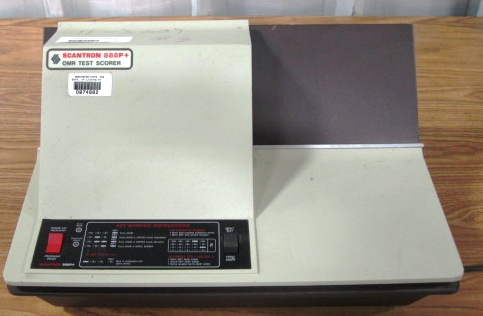
Old Scantron machine, January 24, 2012. (http://www.publicsurplus.com/).

Old Scantron machine, January 24, 2012. (http://www.publicsurplus.com/).

His was a class that sucked the life out of history for most of us. Like most teachers of K-12 social studies or history, it was a dates, names, and places class. Unlike most social studies teachers, his teaching methodology was the epitome of lazy. Every class, five days a week, Demontravel would put up five questions on the blackboard for us to copy down and answer using our textbook. At the end of every two-week period, we’d get a fifty-question multiple choice exam, helping Scantron stay in business.

Demontravel rarely stood up to lecture or do anything else. Lectures for him might as well have been appearances by Halley’s Comet, only the lectures were far less memorable. This process went on unabated for forty-weeks, four marking periods, an entire school year. Calling this boring would only get you into the door of the intellectual famine Demontravel subjected us to in eighth grade.

He wasn’t particularly helpful on the rare occasions when someone did have a question. When a classmate did ask him something, the portly Demontravel would stand up from his desk, which was to our right as we faced the chalkboard, slowly walk toward it, point to a question on the board, tell us in his best Teddy Roosevelt voice what page to turn to in looking for the answer, and then, just as slowly, return to his seat at his desk. Demontravel was truly an unremarkable and boring fifty-something man, virtually bald in all of his pink salmon-headedness, skinny and potbellied beyond belief. His shiny bald head had a Gorbachev-like spot on it.

But there was the fact that there was a prize on the line for us nerdy middle-schoolers—the eighth-grade History Award. “Something I could actually win,” I thought. And Demontravel was the sole arbiter over the award. My favorite and easiest subject was in the hands of this hack of a teacher. That made me downright angry whenever I thought about it.

Post Grape-Nuts cereal at its visual best, with milk, raspberries and blueberries, May 6, 2015. (http://plantbasednutritionlifestyle.com/).

Post Grape-Nuts cereal at its visual best, with milk, raspberries and blueberries, May 6, 2015. (http://plantbasednutritionlifestyle.com/).

I ended up not winning the award, mostly because I correctly corrected Demontravel in front of the whole class one day about key battles of World War I on the Eastern Front. And, also because after he threatened to kick me out of his classroom, I drew a naked picture of his Santa Claus-looking body with a scrotum the size of two Grape-Nuts! Though I drew it in Italian class, I’m sure my counselor told Demontravel about it.

So, 96.4 average or not, I lost the award to my classmate Jennifer, who had a 96.3 average. She was part of what I came to call the “Benetton Group.” They were a group of superficially aware, middle-class-to-affluent folks in the Humanities Program who went through the Grimes Center program (which later became Pennington-Grimes Elementary) together, who thought they were down with the cool and the exotic (with people like Wendy and Brandie being prima facie examples of both). Or, at least, Jennifer acted like she was a part of that group.

She was a bit withdrawn in eighth grade. I never fully understood why. All I knew the first half of the year was that she had set a mark that I needed to beat to have any chance at the history award. By the time I drew my post-modernist interpretation of my lazy, boring-ass history teacher, though, I cared far less about the award and a bit more about this person I only talked to after school, on our walks back to our real lives near the Mount Vernon-Pelham border.

As I wrote in Boy @ The Window:

Screen Shot 2015-05-06 at 12.57.01 PM

I guess Jennifer knew that she would no longer be a part of the grand experiment that was Humanities, the social experience that was integration in a “dangerous” majority of color high school. I bumped into Jennifer a handful of times after eighth grade, between high school and my bachelor’s degree finish at the University of Pittsburgh. Though I have no idea where life has taken her, I must admit, I enjoyed competing with her all eighth grade for an award I knew I’d never get.

Boy @ The Window Origins: Meltzer Conversations

14 Saturday Mar 2015

Posted by decollins1969 in 1, Academia, Boy @ The Window, Carnegie Mellon University, Christianity, culture, Eclectic, Hebrew-Israelite, Mount Vernon High School, Mount Vernon New York, Pittsburgh, Politics, Pop Culture, race, Religion, Youth

≈ Leave a comment

Tags

Benetton Group, Black Elites, Black Identity, Black Masculinity, Black Migration, Black Washington, CMU, Colorism, Dissertation, Doctoral Thesis, Harold Meltzer, Harper Stewart, Humanities, Hypermasculinity, Inequality, Internalized Racism, Logic, Manhood, Multiculturalism, Personal Insights, Race, Racial Identity, Rationalism, Self-Discovery, Social Injustice, Taye Diggs, The Best Man (1999), Washington DC, X-Men Origins: Wolverine (2009)


X-Men Origins: Wolverine (2009) scene, where Wolverine frees mutants kept as experiments by Colonel William Stryker , March 13, 2015. (http://cdn.collider.com/).

X-Men Origins: Wolverine (2009) scene, where Wolverine frees mutants kept as experiments by Colonel William Stryker , March 13, 2015. (http://cdn.collider.com/).

Of all the tangents I took related to writing Boy @ The Window, the most direct path that got me to write a memoir about the most painful period in my life was through several conversations with my dear teacher, friend and mentor in the late Harold Meltzer. I’ve discussed bits and pieces of some of those conversations here and in longer form in Boy @ The Window. It’s still worth rehashing some of those conversations, at least in terms of what was and wasn’t good advice, as well as in explaining how some of the main themes of the memoir developed over time.

As I wrote in Boy @ The Window, though my “first interview with him was in August ’02,” the first time “we discussed the possibility of me doing Boy @ The Window went back to February ’95.” Meltzer had been retired from teaching about a year and a half, while I was beginning the heavy lifting phase of my doctoral thesis, “living in DC for a couple of months while hitting the archives and libraries up for dusty information. In need of a writing break, I gave him a call on one cold and boring Saturday afternoon.”

It was in response to a letter he sent congratulating me. I’d recently published an op-ed in my hometown and county newspaper, “Solving African American Identity Crisis.” I was writing about issues like using the n-word, hypermasculinity, and internalized racism in the short and, for me at least, dummied down piece. Somehow our discussion of that piece led to a discussion of my classmate Sam. Did I really want to spend an hour and a half talking with Meltzer about Sam and some of my other Humanities classmates and their possible identity issues, considering some of my own serious growing pains — the Hebrew-Israelite years, my suicide attempt, my Black masculinity and manhood issues? Absolutely not!

But I learned quite a bit about how I might want to approach writing Boy @ The Window through that phone call. Not because Meltzer had given me any sage advice, which he didn’t, or because he revealed things to me that I shouldn’t have come to learn during our conversation, which he definitely did.

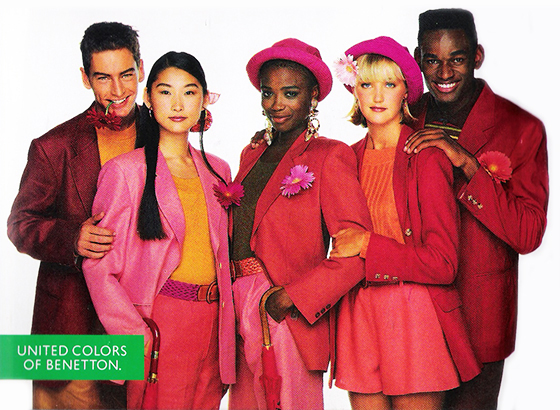
Benetton ad, 1980s, January 2013. (http://fashionfollower.com/).

Benetton ad, 1980s, January 2013. (http://fashionfollower.com/).

No, it was the idea that a lot of the things that I had pursued as a historian and researcher were things that came out of my experiences growing up. Multiculturalism as a historical phenomenon (at least if one linked it to cultural pluralism)? Can anyone say Humanities Program, or, what I used to call “Benetton Group” when we were at A.B. Davis Middle School? Writing about African American identity issues? Obviously related to living in Mount Vernon, the land where any hint of weakness translated into me being called a “faggot” or a “pussy.”

And what about any scholarly concerns with racial and socioeconomic inequality and Black migration? Anyone ever meet my Mom and my father Jimme, 1960s-era migrants from Arkansas and Georgia/Florida respectively? An examination of the Black Washingtonian elite and their looking down upon ordinary Blacks because of their own colorism or the latter’s lack of education? Come on down, Estelle Abel and any number of well-established Black Mount Vernon-ites who never gave me the time of day! As much as academia had been an escape for me, into a world of rationalism and logic, a place of dispassionate scholarship, it was all personal for me, without realizing it until that phone conversation with Meltzer.

Fast-forward to November ’02, the last interview I did with Meltzer before his death two months later. We spent the last couple of hours on that brisk fall Thursday discussing the book idea that would become Boy @ The Window. Meltzer thought that it should be a work of fiction, “based on the real flesh and blood folks in my life, but with different names of course to protect me from any potential lawsuits. He did make me rethink the project from a simple research study of my high school years into narrative nonfiction or a memoir.” 

Screen shot of fictional character Harper Stewart's bestselling novel nfinished Business, from The Best Man (1999), March 14, 2015. (hitchdied via http://s785.photobucket.com/).

Screen shot of fictional character Harper Stewart’s bestselling novel Unfinished Business, from The Best Man (1999), March 14, 2015. (hitchdied via http://s785.photobucket.com/).

Was Meltzer correct? Should I have done a Harper Stewart — played by actor Taye Diggs in The Best Man (1999)? Should I have fictionalized all of my experiences and those of my family, teachers, administrators and classmates? I’m not sure if it would’ve made a difference. Stories of fiction tend to have a tight symmetry to them. Or, the theme of “what goes around comes around” is usually a big one in any novel. You can’t leave too many loose threads or unresolved issues, even if the novel is part of a series. For my purposes, since my life remains a work in progress, a story of relative — not obvious or absolute — success, telling it as fiction would hardly ring true to me, much less to any group of readers.

Whatever else anyone wants to say about the late Harold Meltzer, the dude got me to think about difficult things until I was no longer comfortable in leaving my uncomfortable experiences and assumptions unchallenged. The very definition of a mentor, the very purpose of Boy @ The Window.

Biting Off Too Much, And Almost Choking On It

03 Wednesday Dec 2014

Posted by decollins1969 in 1, Academia, Boy @ The Window, culture, Eclectic, Pittsburgh, Pop Culture, Sports, University of Pittsburgh, Work, Youth

≈ Leave a comment

Tags

Arrogance, Calculus, Differential Equations, Football Analogies, Grad School, Graduate School, Heimlich Maneuver, History Major, Humanities, Joe Montana, Lifelong Learning, Limitations, Multiple Integrals, Overachievers, Overachieving, Partial Derivaties, Pitt, Pride, Self-Discovery, Warren Moon


"Bush Gag" cartoon, Pat Bagley, Salt Lake Tribune, November 5, 2008. (http://dailykos.com). Qualifies as fair use under copyright laws -- low resolution picture.

“Bush Gag” cartoon, Pat Bagley, Salt Lake Tribune, November 5, 2008. (http://dailykos.com). Qualifies as fair use under copyright laws — low resolution picture.

I’m someone who’s in a state of constant learning, constantly wanting to challenge myself and others to be better, to do more and better. I don’t apologize for this. But I do need to acknowledge that too often, I exert so much pressure on myself to excel that I take on a Thanksgiving feast’s worth of challenges. More times than not, I come through on the other side, but frequently in need of the Heimlich maneuver to keep from suffocating on it all.

For those of you who are still in undergrad or have recently finished, or at least, still remember clearly the details of this part of your academic journey, this story is most poignant for you. After years of relying mostly on my great memory and very good writing skills to be the very good student I’d been over the previous decade, I wanted to do better, to not have to scramble in the last three weeks of a sixteen-week semester and look like a dog with a serious constipation problem trying to void, like almost two-thirds of the sickly, underdressed, raccoon-eyed students I’d seen on campus during my first two years at the University of Pittsburgh.

As I wrote at the end of my coming-of-age memoir Boy @ The Window:

I reasoned that I needed to have balance to my semesters so that I wouldn’t spend the last two or three weeks of them playing catch up. Starting with the fall of ’89, I took all my syllabi from all of my classes, grabbed a calendar, and crafted a table where I knew exactly what to read, when to study, and when to begin my research and writing projects for each class I had in a semester. That way, I could know when to slack off or party, when to buckle down and study, and when to just shift into academic cruise control.

Hall-of-Fame QB Warren Moon with Houston Oilers, throwing from within pocket on his 527-yd passing day against the Kansas City Chiefs, December 16, 1990. (http://spokeo.com).

Hall-of-Fame QB Warren Moon with Houston Oilers, throwing from within pocket on his 527-yd passing day against the Kansas City Chiefs, December 16, 1990. (http://spokeo.com).

Those were literally my words and thoughts from a quarter-century ago. I also decided to become more organized because, thinking back, I knew that I couldn’t be a scrambling student in grad school. At least one who could be consistent and successful, who could sit and step up in the pocket and deliver academic darts for touchdowns — to use one of the many football analogies I would’ve said in ’89 (and probably now, too). All I knew was that after the spring semester — with thirty-six-hour workweeks and five courses — that I wanted more time to hang out with friends, to even maybe date.

Only, I was dumb enough to take third-semester calculus a year and a half after my last math course, and I was now a history major taking writing intensive courses. But at the time, I had my very good reasons. I was only one course shy of a minor in mathematics, which I figured would look good on my academic resume when I did apply to grad schools. I wanted to learn the basics about differential equations, because I was just that kind of guy. I wanted, most of all, to challenge myself, because that part of my Humanities indoctrination had stayed with me well beyond my high school graduation.

That course was a struggle, mostly because my attention was split between writing papers and reading thick history texts, constitutional law books and African American literature on the one hand, and math equations on the other. Fourteen months away from derivates and integrals and volumes was too long for me. I couldn’t really adjust to being in a lecture hall with nearly 400 students, being in memorization mode, no longer with much in common with this huge group of STEM-inclined classmates. By the middle of October, I was miserable whenever it was time to march up that hill to Benedum Hall.

A simple first-order linear differential equation (nothing "simple" about it), December 2, 2014. (http://revisionworld.com/).

A simple first-order linear differential equation (nothing “simple” about it), December 2, 2014. (http://revisionworld.com/).

But it did get worse. About a month before the end of that semester, my friend Terri looped me into unwittingly setting up my friend Marc with our mutual friend Michele. And it worked! All too well, as I realized that I had a bit of a crush on Michele myself, but only after they’d started dating. It was a rocky last three weeks of ’89. I managed a 2.98 GPA that terrible semester, including a D+ in multiple integrals and differential equations. I missed a C- in that class by two-tenths of a point. Terrible by my own standards.

Lessons here, if any? Don’t bite off more than you can chew, maybe? I know that three admissions committees used that D+ against me in either rejecting me outright or in not offering me fellowship money to cover tuition when I applied to grad schools a year later. So, one other lesson could be to not take unnecessary risks, to not challenge myself. That would be the wrong lesson, though.

The real lesson would be to know our limitations, that we can’t be all things to ourselves and others and do well at all things all the time, that we have a finite amount of time and choices, in school and in life. With so much going on in my life these days, it’s still a lesson of which I have to keep reminding myself, practically every single day.

The Long-Term Legacy of Humanities’ Soft-Bigotry

10 Wednesday Sep 2014

Posted by decollins1969 in 1, Boy @ The Window, Christianity, culture, Eclectic, Hebrew-Israelite, Mount Vernon High School, Mount Vernon New York, Patriotism, Politics, Pop Culture, race, Religion, Youth

≈ Leave a comment

Tags

Anti-Intellectualism, Center-Right Nation, Classmates, Colorblind Racism, Conservatism, Controlling the Narrative, Evangelical Christianity, Homophobia, Humanities, Humanities Program, Inferiority Complex, Intellectual Conservatism, Kerry Washington, Lazy Thinking, MVHS, Neil DiCarlo, Olivia Pope, Racism, Respectability Politics, Richard Capozzola, Scandal, School-to-Prison Pipeline, White Privilege, White Resentment, Whiteness, Willful Ignorance, Xenophobia


Ex-Classmates Proverbs

Ex-Classmates Proverbs

This week marks thirty-three years since my first days in the gifted-track Humanities Program, a fairly diverse group of very smart and (some) pretty creative students. Despite the common refrain among administrators of this long-gone program, me and my Humanities classmates weren’t the “crème de la crème” when it came to critical or independent thinking. In recent years, I’ve learned that their views on politics, religion, sports, entertainment, family and so many other things are so typically and sadly American.

Since the creators’ premise for the Humanities Program was to develop the whole person, and not just academic success, it seems to me that the program failed in terms of providing a holistic education. That our parents and other authority figures helped shape the opinions and beliefs we take to adulthood is part of my observation here. The disappointing part for me, though, has been the fact that these opinions have gone unadulterated over the past twenty-five or thirty years.

This isn’t an indictment of everyone I’ve ever known from Mount Vernon, New York, or from Mount Vernon public schools, or from MVHS, or even from my Humanities years. There are more than a few individuals who I am so glad to have reconnected with in person or through Facebook, Twitter and WordPress in the past decade or so. Everyone has the right to their beliefs, their ignorance, their opinions, however ill-informed or illogical. But there are consequences to never challenging one’s own beliefs, ignorance and opinions. Consequences that include victim-blaming, xenophobia, religion-as-politics, respectability politics, jingoist hyper-patriotism and colorblind racism.

What I’ve observed over the past ten or eleven years is that, when taken as a whole, it seems that I grew up around and reconnected with a group whose beliefs and opinions differ so much from my own. So much so that it really strains my memory to think that I grew up there. As my wife said to me on her first visit to Mount Vernon in Christmas ’99, after seeing a burned out Mazda smack-dab in the middle of downtown, “You sure you weren’t adopted?”

You Can’t Go Home Again to a Place That Was Never Home

I suspected some stark differences by the time I started working on Boy @ The Window in earnest in ’06. Any number of the ex-classmates I interviewed expressed opinions that I’d heard long before about “illegals,” about how Mount Vernon was some sort of middle-class haven, about our Humanities class being a faux “Benetton commercial” or a “mini-Fame.”

These were the kinds of opinions I remembered hearing from their parents and our teachers back in the ’80s. The sense of paternalism and entitlement, or the sense that MVHS was dangerous or “a jungle” or full of “animals.” It reminded me that there were many classmates who I’d met in seventh grade who’d transfer to private or parochial school or had enrolled in “better” schools in other districts by tenth grade because their parents were terrified by the so-called dangers of a mostly Black and Latino high school, with poverty and criminality being the unspoken words here.

I’ve faced off with the son of our late former principal Richard Capozzola several times on my blog and on Facebook in the past three years over this very issue, of how MVHS was run like a prison-prep program. His rationale for justifying Capozzola’s anti-Black draconian policies at MVHS consisted of “my dad was a great dad” and that I “wouldn’t have survived a day” at MVHS without his father as principal. The frame of MVHS as a war-zone or prison with students of color assumed to be criminals within this frame, this son of Capozzola couldn’t recognize even if Spock did a mind-meld to give him a dose of the Black experience.

Uncritical Melody, On Mount Vernon and the World

Neil DiCarlo, ex-classmate, right-winger, and one-time candidate for NY State Senate out of Putnam Valley, October 15, 2012. (http://archive.lohud.com/).

Neil DiCarlo, ex-classmate, right-winger, and one-time candidate for NY State Senate out of Putnam Valley, October 15, 2012. (http://archive.lohud.com/).

My observations aren’t limited to race or MVHS per se. Among my former classmates, with everything from affirmative action to Zionism, from political parties to education reform, from immigration reform to religious diversity, so many have views that range from conservative to right-wing. For some, every question can be answered with Leviticus or Ephesians, and any disagreement with a condemnation to Hell. For others, the frame for these issues are a “both sides do it” or “let’s look at both sides.” As if any issue involving climate change or social injustice is an algebraic equation, as if these issues are about finding some preposterous balance, rather than about exploitation or oppression.

But where I’ve found myself most at odds with some of my ex-classmates is the very issue of Mount Vernon itself as a city or a nurturing environment. It’s not as if I’ve never acknowledged the reality that if one didn’t grow up in poverty, or had connections to city politics, church or community leaders, or at least thirty cousins within a mile of your domicile, that Mount Vernon was a pretty good place to grow up. It wasn’t for me. It wasn’t for many people I grew up around.

Yet time and again, as I’ve told my story here and as I began to put Boy @ The Window together between ’06 and ’11, some of my former classmates and a couple of my former neighbors have opined that I have an ax to grind. Yeah, actually, I do, but not about Mount Vernon per se. About the poverty, abuse and ostracism I experienced growing up there, that shaped my experiences there, that authority figures often ignored. In those things, I do have a point that I have and will continue to hammer away at with the sledgehammer I have at my disposal. Too often, my former classmates believe that the only Mount Vernon that should be on public display is the one that emphasizes their raceless or supercool middle-class experience.

Some of My Classmates = Conservative America

Kerry Washington as Olivia Pope from Scandal, a show about damage control, controlling the narrative, September 15, 2011. (http://scandal.wikia.com).

Kerry Washington as Olivia Pope from Scandal, a show about damage control, controlling the narrative, September 15, 2011. (http://scandal.wikia.com).

Even in this, there’s a conservative perspective. One that says, “don’t rock the boat, don’t express a perspective that’s different than the narrative we want to put out to the world.” I know from experience and as an educator that sweeping truth into a dustbin and expressing only acceptable opinions — or acting as if all opinions, when expressed respectfully, are equal to each other — hurts us all, but especially those who are shut out of the conversation. I wish that so many of my ex-classmates had learned this while growing up in Mount Vernon, while in Mount Vernon public schools, while in Humanities with me.

I’ve come around to Morning Joe host Joe Scarborough’s way of thinking. America is a center-right nation, just as the Founding Fathers intended. Or, to be most precise, America’s DNA is one that has always had the “this-is-a-heterosexual-White-man’s-country” mutation baked into it, a gene that morphs to the point of virtual immutability. A fair number of my ex-classmates also have this mutation, which may explain my inability to fit in more than my kufi, Hebrew-Israelite status, or living at 616 in the midst of poverty domestic violence and child abuse.

← Older posts
Newer posts →

Boy @ The Window: A Memoir

Boy @ The Window: A Memoir

Places to Buy/Download Boy @ The Window

There's a few ways in which you can read excerpts of, borrow and/or purchase and download Boy @ The Window. There's the trade paperback edition of Boy @ The Window, available for purchase via Amazon.com at http://www.amazon.com/Boy-Window-Donald-Earl-Collins/dp/0989256138/

There's also a Kindle edition on Amazon.com. The enhanced edition can be read only with Kindle Fire, an iPad or a full-color tablet. The links to the enhanced edition through Apple's iBookstore and the Barnes & Noble NOOK edition are below. The link to the Amazon Kindle version is also immediately below:

scr2555-proj697-a-kindle-logo-rgb-lg

Boy @ The Window on Amazon.com: http://www.amazon.com/Boy-The-Window-Memoir-ebook/dp/B00CD95FBU/

iBookstore-logo-300x100

Boy @ The Window on Apple's iBookstore: https://itunes.apple.com/us/book/boy-the-window/id643768275?ls=1

Barnes & Noble (bn.com) logo, June 26, 2013. (http://www.logotypes101.com).

Boy @ The Window on Barnes & Noble: http://www.barnesandnoble.com/w/boy-the-window-donald-earl-collins/1115182183?ean=2940016741567

You can also add, read and review Boy @ The Window on Goodreads.com. Just click on the button below:

Boy @ The Window

Twitter Updates

Tweets by decollins1969
  • RSS - Posts
  • RSS - Comments

Archives

  • June 2025
  • April 2023
  • September 2022
  • August 2022
  • July 2022
  • June 2022
  • May 2022
  • April 2022
  • March 2022
  • January 2022
  • December 2021
  • November 2021
  • October 2021
  • September 2021
  • August 2021
  • July 2021
  • June 2021
  • April 2021
  • March 2021
  • February 2021
  • January 2021
  • December 2020
  • November 2020
  • October 2020
  • September 2020
  • August 2020
  • July 2020
  • May 2020
  • April 2020
  • March 2020
  • January 2020
  • December 2019
  • November 2019
  • August 2019
  • July 2019
  • June 2019
  • May 2019
  • April 2019
  • March 2019
  • February 2019
  • January 2019
  • December 2018
  • November 2018
  • October 2018
  • September 2018
  • August 2018
  • July 2018
  • June 2018
  • May 2018
  • March 2018
  • February 2018
  • January 2018
  • December 2017
  • November 2017
  • October 2017
  • September 2017
  • August 2017
  • July 2017
  • June 2017
  • May 2017
  • April 2017
  • March 2017
  • February 2017
  • January 2017
  • December 2016
  • November 2016
  • October 2016
  • September 2016
  • August 2016
  • July 2016
  • June 2016
  • May 2016
  • April 2016
  • March 2016
  • February 2016
  • January 2016
  • December 2015
  • November 2015
  • October 2015
  • September 2015
  • August 2015
  • July 2015
  • June 2015
  • May 2015
  • April 2015
  • March 2015
  • February 2015
  • January 2015
  • December 2014
  • November 2014
  • October 2014
  • September 2014
  • August 2014
  • July 2014
  • June 2014
  • May 2014
  • April 2014
  • March 2014
  • February 2014
  • January 2014
  • December 2013
  • November 2013
  • October 2013
  • September 2013
  • August 2013
  • July 2013
  • June 2013
  • May 2013
  • April 2013
  • March 2013
  • February 2013
  • January 2013
  • December 2012
  • November 2012
  • October 2012
  • September 2012
  • August 2012
  • July 2012
  • June 2012
  • May 2012
  • April 2012
  • March 2012
  • February 2012
  • January 2012
  • December 2011
  • November 2011
  • October 2011
  • September 2011
  • August 2011
  • July 2011
  • June 2011
  • May 2011
  • April 2011
  • March 2011
  • February 2011
  • January 2011
  • December 2010
  • November 2010
  • October 2010
  • September 2010
  • August 2010
  • July 2010
  • June 2010
  • May 2010
  • April 2010
  • March 2010
  • February 2010
  • January 2010
  • December 2009
  • November 2009
  • October 2009
  • September 2009
  • August 2009
  • July 2009
  • June 2009
  • May 2009
  • April 2009
  • March 2009
  • February 2009
  • January 2009
  • December 2008
  • November 2008
  • October 2008
  • September 2008
  • August 2008
  • July 2008
  • June 2008
  • May 2008
  • April 2008
  • March 2008
  • February 2008
  • January 2008
  • December 2007
  • November 2007
  • October 2007
  • September 2007
  • August 2007
  • July 2007
  • June 2007

Recent Comments

decollins1969's avatardecollins1969 on No Good Teaching Deed Goes…
Mary Rose O’Connell's avatarMary Rose O’Connell on No Good Teaching Deed Goes…
Lyndah McCaskill's avatarLyndah McCaskill on The Raunchiest of Them Al…

NetworkedBlogs on Facebook

NetworkedBlogs
Blog:
Notes From a Boy @ The Window
Topics:
My Life, Culture & Education, Politics & Goofyness
 
Follow my blog

616 616 East Lincoln Avenue A.B. Davis Middle School Abuse Academia Academy for Educational Development AED Afrocentricity American Narcissism Authenticity Bigotry Blackness Boy @ The Window Carnegie Mellon University Child Abuse Class of 1987 CMU Coping Strategies Crush #1 Crush #2 Death Disillusionment Diversity Domestic Violence Economic Inequality Education Family Friendship Friendships Graduate School Hebrew-Israelites High-Stakes Testing Higher Education History Homelessness Humanities Humanities Program Hypocrisy Internalized Racism Jealousy Joe Trotter Joe William Trotter Jr. K-12 Education Love Manhood Maurice Eugene Washington Maurice Washington Misogyny Mother-Son Relationship Mount Vernon High School Mount Vernon New York Mount Vernon public schools Multiculturalism MVHS Narcissism NFL Pitt Pittsburgh Politics of Education Poverty President Barack Obama Race Racial Stereotypes Racism Relationships Self-Awareness Self-Discovery Self-Reflection Sexism Social Justice Teaching and Learning University of Pittsburgh Violence Whiteness Writing

Top Rated

Blog at WordPress.com.

  • Subscribe Subscribed
    • Notes from a Boy @ The Window
    • Join 103 other subscribers
    • Already have a WordPress.com account? Log in now.
    • Notes from a Boy @ The Window
    • Subscribe Subscribed
    • Sign up
    • Log in
    • Report this content
    • View site in Reader
    • Manage subscriptions
    • Collapse this bar
 

Loading Comments...