• About Me
  • Other Writings
  • Interview Clips
  • All About Me: American Racism, American Narcissism, and the Conversation America Can’t Have
  • Video Clips
  • Boy @ The Window Pictures
  • Boy @ The Window Theme Music

Notes from a Boy @ The Window

~

Notes from a Boy @ The Window

Category Archives: Work

The “Are You Sure’s” and Doubting Sylvias

30 Tuesday Dec 2014

Posted by decollins1969 in 1, Academia, Boy @ The Window, culture, Eclectic, Mount Vernon High School, Mount Vernon New York, Pittsburgh, Pop Culture, race, University of Pittsburgh, Work

≈ Leave a comment

Tags

"Are You Sure?", Advising, Career Options, Cigarette Smoke, Doubters, Doubting Thomas, Doubts, Elitism, JD, MD, Mentoring, MVHS, PhD, Racism, Sylvia Fasulo, Tiki Barber, Vassar College
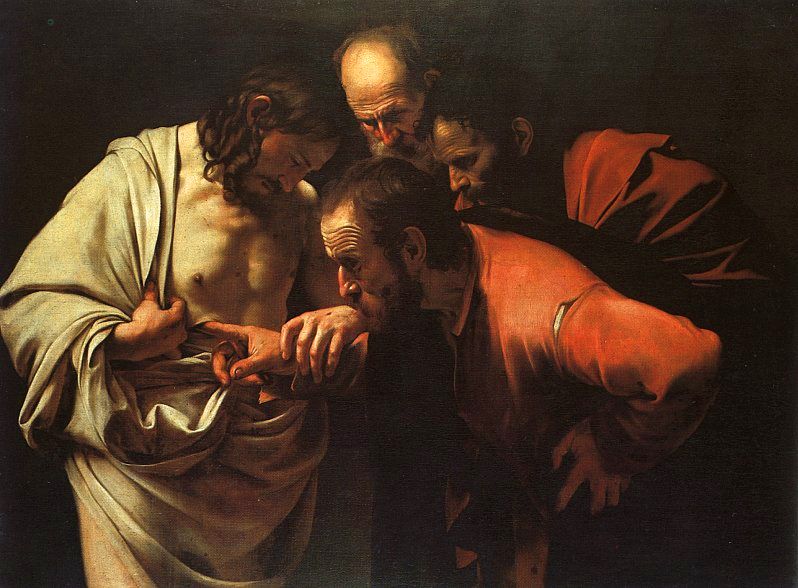

The Incredulity of Saint Thomas, by Caravaggio, c. 1601-02, uploaded April 13, 2005. (Dante Alighieri via Wikipedia). In public domain.

The Incredulity of Saint Thomas, by Caravaggio, c. 1601-02, uploaded April 13, 2005. (Dante Alighieri via Wikipedia). In public domain.

We all have doubters in our lives. Even if the only doubters turn out to be ourselves. As someone without much of a roadmap for any success, doubt has been a constant companion, one that I often had to ignore to experience any victories in my life. To have those with influence pretend to be on my side but add to those doubts, though. As a twenty-year-old, it was somewhere between bewildering and rage inducing. As a forty-five year-old who regularly advises students, love ones, friends and others about their futures, looking back at those doubters, it’s almost unforgivable the seeds they attempted to plant.

Of all the non-relatives in positions to advise me, few were worse than my high school guidance counselor Sylvia Fasulo. For four years, Fasulo forced me to listen to her “Are you sure…?” questions about difficult classes, the colleges I wanted to attend, the career paths I thought about taking. Her patrician Vassar arrogance toward me as the poor Black kid drove me up a wall every time I walked into her cigarette-filled office.

"Raleigh's First Pipe in England," an illustration in Frederick William Fairholt's Tobacco (1859), June 8, 2014. (Materialscientist via Wikipedia). In public domain.

“Raleigh’s First Pipe in England,” an illustration in Frederick William Fairholt’s Tobacco (1859), June 8, 2014. (Materialscientist via Wikipedia). In public domain.

I hated having Fasulo as my counselor especially once it was time for me to apply for college. She was condescending, demeaning and chain-smoked up my clothes for my troubles. Most of all, I hated having to reveal things about myself to her that I otherwise wouldn’t have shared. Like my family’s financial situation. Fasulo became only the second person I would tell that we were on welfare, that my father and mother had divorced and that he hadn’t made a child support payment since ’78. I had to talk to her about my role in my family as acting first-born child and my responsibilities. It was necessary and humiliating at the same time.

Despite and not because of Fasulo, things worked out for me in the end. Going to Pitt, meeting the people and the professors I’d become friends and colleagues with, was probably one of the best decisions I ever made. Still, I had one parting shot from her in the middle of my junior year at the University of Pittsburgh. It was the holiday season in ’89, and I took time while home in Mount Vernon to visit my favorite teacher, the late Harold Meltzer. I had just missed him, but bumped into Fasulo. It was about as fortuitous as having diarrhea and being nowhere near a toilet with toilet paper.

She asked me where I was in school, and I told her about my considerations for graduate school, law school and the world of work. It was a toss-off sentence, my attempt to end a conversation, not begin one. “Being a lawyer’s hard work,” Fasulo said in response. She then went on to tell me about 70-hour work weeks and billable hours and the bar exam, as if any of this was supposed to be surprising or would somehow scare me. I cut her off, saying “You know, you’re not my counselor anymore, so thanks but no thanks for your advice,” and left her office while she tried to explain her idiotic perspective.
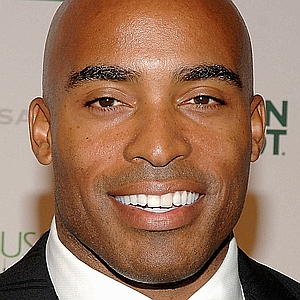
Tiki Barber, the personification of a doubter, at the American Museum of Natural History, October 16, 2008. (Jamie McCarthy/WireImage.com via http://thenypost.files.wordpress.com/).

Tiki Barber, the personification of a doubter, at the American Museum of Natural History, October 16, 2008. (Jamie McCarthy/WireImage.com via http://thenypost.files.wordpress.com/).

A quarter-century later, and though I am more than content with the fact that I opted for a PhD over a JD thirteen out of every fourteen days (people with law degrees do make more money on average), I sometimes question if the PhD in history was worth it. After all, a JD is far more portable. A JD would’ve served me better in my nonprofit and consulting careers than having to explain a doctorate. I wouldn’t want to think that I went in the direction of a graduate program for five and a half years simply because I had a conversation with a racial elitist.

It’s probably more likely that I didn’t go to medical school to earn an MD because my Mom and my idiot late-ex-stepfather both told me I couldn’t be a surgeon because I had “ten thumbs.” By more likely, I mean highly unlikely on both counts. I ultimately did what I wanted to do educationally speaking, despite own my doubts, despite the doubts of those who believed it was their job to advise me. But constantly asking, “Are you sure, Donald…?” isn’t exactly the best way to advise or mentor anyone, especially someone in their teens or a literal twenty-year-old. You lay out options, you ascertain what’s going on in their heart as well as their mind. You introduce them to other people who could provide better advice, based on direct expertise or experiences. Otherwise, you’re a doubter, not an advisor or a mentor.

Biting Off Too Much, And Almost Choking On It

03 Wednesday Dec 2014

Posted by decollins1969 in 1, Academia, Boy @ The Window, culture, Eclectic, Pittsburgh, Pop Culture, Sports, University of Pittsburgh, Work, Youth

≈ Leave a comment

Tags

Arrogance, Calculus, Differential Equations, Football Analogies, Grad School, Graduate School, Heimlich Maneuver, History Major, Humanities, Joe Montana, Lifelong Learning, Limitations, Multiple Integrals, Overachievers, Overachieving, Partial Derivaties, Pitt, Pride, Self-Discovery, Warren Moon


"Bush Gag" cartoon, Pat Bagley, Salt Lake Tribune, November 5, 2008. (http://dailykos.com). Qualifies as fair use under copyright laws -- low resolution picture.

“Bush Gag” cartoon, Pat Bagley, Salt Lake Tribune, November 5, 2008. (http://dailykos.com). Qualifies as fair use under copyright laws — low resolution picture.

I’m someone who’s in a state of constant learning, constantly wanting to challenge myself and others to be better, to do more and better. I don’t apologize for this. But I do need to acknowledge that too often, I exert so much pressure on myself to excel that I take on a Thanksgiving feast’s worth of challenges. More times than not, I come through on the other side, but frequently in need of the Heimlich maneuver to keep from suffocating on it all.

For those of you who are still in undergrad or have recently finished, or at least, still remember clearly the details of this part of your academic journey, this story is most poignant for you. After years of relying mostly on my great memory and very good writing skills to be the very good student I’d been over the previous decade, I wanted to do better, to not have to scramble in the last three weeks of a sixteen-week semester and look like a dog with a serious constipation problem trying to void, like almost two-thirds of the sickly, underdressed, raccoon-eyed students I’d seen on campus during my first two years at the University of Pittsburgh.

As I wrote at the end of my coming-of-age memoir Boy @ The Window:

I reasoned that I needed to have balance to my semesters so that I wouldn’t spend the last two or three weeks of them playing catch up. Starting with the fall of ’89, I took all my syllabi from all of my classes, grabbed a calendar, and crafted a table where I knew exactly what to read, when to study, and when to begin my research and writing projects for each class I had in a semester. That way, I could know when to slack off or party, when to buckle down and study, and when to just shift into academic cruise control.

Hall-of-Fame QB Warren Moon with Houston Oilers, throwing from within pocket on his 527-yd passing day against the Kansas City Chiefs, December 16, 1990. (http://spokeo.com).

Hall-of-Fame QB Warren Moon with Houston Oilers, throwing from within pocket on his 527-yd passing day against the Kansas City Chiefs, December 16, 1990. (http://spokeo.com).

Those were literally my words and thoughts from a quarter-century ago. I also decided to become more organized because, thinking back, I knew that I couldn’t be a scrambling student in grad school. At least one who could be consistent and successful, who could sit and step up in the pocket and deliver academic darts for touchdowns — to use one of the many football analogies I would’ve said in ’89 (and probably now, too). All I knew was that after the spring semester — with thirty-six-hour workweeks and five courses — that I wanted more time to hang out with friends, to even maybe date.

Only, I was dumb enough to take third-semester calculus a year and a half after my last math course, and I was now a history major taking writing intensive courses. But at the time, I had my very good reasons. I was only one course shy of a minor in mathematics, which I figured would look good on my academic resume when I did apply to grad schools. I wanted to learn the basics about differential equations, because I was just that kind of guy. I wanted, most of all, to challenge myself, because that part of my Humanities indoctrination had stayed with me well beyond my high school graduation.

That course was a struggle, mostly because my attention was split between writing papers and reading thick history texts, constitutional law books and African American literature on the one hand, and math equations on the other. Fourteen months away from derivates and integrals and volumes was too long for me. I couldn’t really adjust to being in a lecture hall with nearly 400 students, being in memorization mode, no longer with much in common with this huge group of STEM-inclined classmates. By the middle of October, I was miserable whenever it was time to march up that hill to Benedum Hall.

A simple first-order linear differential equation (nothing "simple" about it), December 2, 2014. (http://revisionworld.com/).

A simple first-order linear differential equation (nothing “simple” about it), December 2, 2014. (http://revisionworld.com/).

But it did get worse. About a month before the end of that semester, my friend Terri looped me into unwittingly setting up my friend Marc with our mutual friend Michele. And it worked! All too well, as I realized that I had a bit of a crush on Michele myself, but only after they’d started dating. It was a rocky last three weeks of ’89. I managed a 2.98 GPA that terrible semester, including a D+ in multiple integrals and differential equations. I missed a C- in that class by two-tenths of a point. Terrible by my own standards.

Lessons here, if any? Don’t bite off more than you can chew, maybe? I know that three admissions committees used that D+ against me in either rejecting me outright or in not offering me fellowship money to cover tuition when I applied to grad schools a year later. So, one other lesson could be to not take unnecessary risks, to not challenge myself. That would be the wrong lesson, though.

The real lesson would be to know our limitations, that we can’t be all things to ourselves and others and do well at all things all the time, that we have a finite amount of time and choices, in school and in life. With so much going on in my life these days, it’s still a lesson of which I have to keep reminding myself, practically every single day.

A Diarrhea Football Sunday

23 Sunday Nov 2014

Posted by decollins1969 in 1, Boy @ The Window, culture, earth, wind & fire, Eclectic, High Rise Buildings, Jimme, Mount Vernon New York, My Father, New York City, Pop Culture, Sports, Work, Youth

≈ Leave a comment

Tags

616, 616 East Lincoln Avenue, Come-From-Behind Victory, Coping Strategies, Diarrhea, East Rutherford New Jersey, Football, G/I Tract, Gastrointestinal Illness, Giants, Giants Stadium, Kansas City Chiefs, New York Giants, NFL, Phil Simms, Pizza Shop, Pressures, Sicilian Pizza Pie, Stress, Stressors, Zeke Mowatt


Porthcawl, Wales takes a battering from a fierce Atlantic storm, February 5, 2014. (Getty Images, via http://www.express.co.uk).

Porthcawl, Wales takes a battering from a fierce Atlantic storm, February 5, 2014. (Getty Images, via http://www.express.co.uk).

I’m probably going to disgust a few of you who read this post. I promise I won’t go into a slurry of detail about this particular experience. It’s just that after years of gastrointestinal issues, I’ve learned a thing or two about triggers and coping strategies that may be helpful to folks.

Haagen-Dazs specialty milkshakes (my son had the $7 cookies and cream yesterday), November 23, 2014 (posted June 10, 2011). (http://www.qsrmagazine.com/).

Haagen-Dazs specialty milkshakes (my son had the $7 cookies and cream yesterday), November 23, 2014 (posted June 10, 2011). (http://www.qsrmagazine.com/).

This weekend thirty years ago, I learned for the first time that my body handled stress in a unique and painful way. I should’ve been aware of this much sooner than a month before my fifteenth birthday, and should’ve figured out how to counteract this long before my mid-thirties. I’d seen signs of it. The mugging I suffered from when I was nine in ’79. The recent broken toilet incident at 616. My inability to drink a chocolate milkshake from Carvel’s without the need to find a bathroom within forty-five minutes of my first sip.

But it wasn’t until the Sunday after Thanksgiving ’84, November 25th, that I recognized the link between the constant stress I felt and my G/I tract issues. It was a brisk late November day, like so many that time of year. The Giants were playing a big game in East Rutherford, against the Kansas City Chiefs. With a 7-5 record at the time, the Giants were fighting with both the Cowboys and Redskins for playoff position. They’d been on a roll of late, having won three of their previous four, including one on the road against Danny White’s Cowboys.

That’s what I thought about as the 1 pm game time approached. It wasn’t the only thing on my mind, though. It had been a long and stressful couple of months prior to this semi-break of a Thanksgiving weekend. This stretch included arguments with my Mom, including one in which I almost moved out. It included incidents with my teachers, especially Ms. Zini. It also included too many weekends of tracking down my father for money — including money that he owed us for working down in the city with him since the end of September. And washing clothes, and grocery shopping, and watching after Maurice, Yiscoc, Sarai and Eri, and cleaning the apartment.

Somewhere in all of this, I must’ve picked up a stomach bug, from either my younger siblings or from something I ate. At least that’s what I thought at the time. The toilet became my constant companion throughout that afternoon, as a stepfather-free Sunday gave me and my older brother Darren the opportunity to watch the Giants game without interruption. That was, except from my stomach.

Flour water in a jar, November 23, 2014. (Donald Earl Collins).

Flour water in a jar, November 23, 2014. (Donald Earl Collins).

I really didn’t know why I’d been on the toilet five times in two hours, but between that and Phil Simms’ lousy play in the first three quarters of the game (three interceptions, no touchdown passes), I felt really ill. My Mom suggested that I should drink flour water to settle my stomach. “Yuck” was the only thing I thought of her idea. The flour water thought had crossed my own mind, too though.

After Kansas City scored to take a 27-14 lead with a bit more than ten minutes left, I finally had an idea much more pleasant than flour water. I hadn’t eaten all day, and barely anything the night before. So I took five dollars of my Jimme money and went down the street to the local pizza shop. I order a slice of Sicilian with extra cheese. As thick as this shop made their Sicilians, I figured that would plug up my intestines.

While I waited for them to warm up my slice, I listened to the Giants game, which they had on their TV in the back of the shop. Simms had rallied the team and driven them down the field for a touchdown by the time I paid for my Sicilian slice. That actually lifted my spirits a bit.

I was hurting, so I didn’t wait. After I walked out of the shop, I took two big bites of my slice to see if it would help. By the time I made it to the front of 616, I let out a gigantic belch, and then my stomach, which had felt like a nor’easter in the middle of the Atlantic Ocean for hours, had finally calmed.

A good-looking Sicilian slice (my shop would've wrapped it in aluminum, though), November 23, 2014. (http://slice.seriouseats.com).

A good-looking Sicilian slice (my shop would’ve wrapped it in aluminum, though), November 23, 2014. (http://slice.seriouseats.com).

After I made it back upstairs to our place, the Giants had the ball again with less than three minutes in the game. They were driving on the Chiefs’ side of the field, in a two-minute drill. As I sat, ate and belched, Simms actually drove all the way down field for game-winning touchdown, a short pass to Zeke Mowatt. They won the game 28-27! I was stunned!

I learned a lot on that diarrhea football Sunday. For me, even watching a football game was stress-inducing. That sleeplessness and running myself down, the pressures of 616 and school, the pressure I put on myself, all manifested physiologically in my G/I tract. Sometimes escaping into comfort food, being pleasantly surprised by success, even someone’s else success, could calm my stomach. Sometimes not. Becoming fully aware of how my body responded to stress, though, would turn out to be a blessing, saving me from many moments of embarrassment over the years.

Neoliberals, Neocons, and Other Useless Labels

04 Tuesday Nov 2014

Posted by decollins1969 in 1, Academia, Christianity, culture, Eclectic, Marriage, Patriotism, Politics, Pop Culture, race, Religion, University of Pittsburgh, Work

≈ Leave a comment

Tags

1964 Election, Academic Jargon, Arthur Schlesinger Jr., Barry Goldwater, Classism, Corruption, Cycles of American History (1986), Definitions, Democrats, Election 2014, Fascism, Graduate School, Homophobia, Labels, LBJ, Midterm Elections, Neoconservatism, Neoconservative, Neoliberal, Neoliberalism, President Lyndon Baines Johnson, Racism, Republicans, Richard Nixon, Right-Wingers, Sexism, Silent Majority, Southern Strategy, Time on the Cross (1974)


The Matrix, Path of Neo, November 4, 2014. (http://comic.com).

The Matrix, Path of Neo, November 4, 2014. (http://comicvine.com).

I’ve never really had much patience for technical academic jargon, even in my wide-eyed grad school days twenty years ago. And my patience for terms like post-structuralism, post-modern, neo-Marxist and eschatological has grown government-paper-stock-thin as I’ve approached middle-age. Lately, terms like neoliberal and neoconservative have found their way into my sniper sights, especially with the ’14 midterm elections upon us. These terms may have meant something very separate and distinctive fifty or sixty years ago, but they darn sure don’t now. Except, maybe, to academicians and the elite literati, people who somehow believe that these terms are as useful as food, drink and water.

It wasn’t until grad school at the University of Pittsburgh when I became aware of these terms. Back then, I saw neoliberal or neoliberalism in everything I read about race and economic concerns. Whether it was about Robert Fogel and Stanley Engerman’s ridiculous statistical depiction of slavery in Time on the Cross (1974), or Arthur Schlesinger, Jr.’s work on twentieth-century political shifts in his Cycles of American History (1986), they and the reviewers of their books used the term neoliberal like it was parsley for making pesto.

Neoconservative hasn’t been around as long, a term about a decade younger than it’s post-World War II counterpart. It’s definition has evaded most academicians and the vast majority of lay-folk over the last half-century. Sometimes it’s used interchangeably with conservative or politically conservative, sometimes it’s used in the same sentence as right-wing or the religious right or evangelicals.

Asteroid Eros, a near-Earth object, or NEO, June 16, 2014. (http://jpl.nasa.gov). In public domain.

Asteroid Eros, a near-Earth object, or NEO, June 16, 2014. (http://jpl.nasa.gov). In public domain.

Though it’s definition is elusive, it’s history isn’t. Barry Goldwater’s gigantic loss to President Lyndon Baines Johnson in the ’64 Presidential Election led to a host of disaffected Democrats, old-money Republicans and other political misfits getting together and hatching a plan to dismantle the Democratic Party’s New Deal coalition. They took advantage of the racism and roiling, boiling resentment of Southern Democrats — Dixiecrats, really — toward their party, the federal government and its growing support for Blacks and civil rights. They also took advantage of wealthy Republicans and the ages-old cry of corporations desperate for lower taxes and ever-higher profit margins. All of this came together in Richard Nixon’s ’68 presidential campaign with the Southern Strategy, turning Southern voters from Democrat to Republican. Not to mention with LBJ and Vietnam, the so-called Silent Majority, and their resentment toward rebellious, privileged college students and protestors.

We know it all worked, because fifty years later, to talk of the South as a Democratic bloc today is almost as ludicrous as it was to talk about the South as being ripe for a Republican takeover in ’64. Beyond that, though, with the inclusion of evangelical Christians and other religious and social conservatives came the inclusion of traditional conservatism, neoconservatism, and neoliberalism in the Republican Party, the Democratic Party, and in the US’ cultural mainstream by the late-1980s.

By then, these terms neoliberal and neoconservative had lost their original meaning, if they were really that different in meaning to begin with. The Republicans had married the terms and allowed the coupling to have kids and then grandkids with names like smaller government, deregulation, lower taxes for the wealthy (so-called “job creators”) and for corporations, prison-industrial complex, ending abortion, welfare reform, education reform, and voter disenfranchisement. This combination of war hawks, an unfettered version of free-market capitalism, with low government regulation and taxes on the rich and corporation, combined with high government regulation of nonconformist activities and peoples (people of color, LGBT marriage rights, women’s reproductive rights, everyone who isn’t Christian or Christian-sounding)? I don’t understand why we don’t call it what it really is.

Quote from Henry A. Wallace, Vice-President of the nited States, 1944. (http://meetville.com).

Quote from Henry A. Wallace, Vice-President of the United States, 1944. (http://meetville.com).

Ladies and gentlemen and transgender, what we have in the US today — and have had in increasing measure for more than four decades — is a mild form of fascism, plain and simple. Yes, you can still vote, but the process is rigged from start to finish by greed and corruption and legal barriers to benefit the rich, the greedy and the corrupt. Yes, we have representation, through gerrymandered districts and hundreds of candidates with lined pockets running unopposed. Yes, we still have a Congress, a group who has done nothing to support ordinary Americans without also benefiting the top 1% in more than thirty years. A group who, in recent years, has done next to nothing at all other than raise more money to run for reelection in the past four years. As for the presidency, despite Congress’ control of the purse strings, every president since FDR’s third term has found a way to increase their political power, even as their influence on the legislative branch has decreased.

With all this, I have no use for the terms neoliberal and neoconservative. Not when all roads have led us to oligarchy, plutocracy and fascism.

The ’72 Dolphins and Baby-Boomer Narcissism

01 Saturday Nov 2014

Posted by decollins1969 in 1, culture, Eclectic, Politics, Pop Culture, race, Work, Youth

≈ Leave a comment

Tags

17-0, 1972 Dolphins, American Narcissism, Baby Boom Generation, Baby Boomers, Civil Rights Generation, Elitism, Gen Xers, Generation X, Generation Y, Hypocrisy, Miami Dolphins, Millennials, Narcissism, NFL, Perfect Season, Self-Aggrandizement


For as long as I’ve been alive, America has confronted me with its Baby-Boomer narcissism. This idea that the Boomers were the generation that forever changed the country and the world, the folks who’ve shaped our popular culture — and the response of younger generations to it — has been around for more than sixty years. The Beatles, Watergate, Vietnam, Led Zeppelin, The Rolling Stone, Roe v. Wade, “I Have A Dream” — Boomers have taken credit for it all. It sometimes makes me wanna puke.

Bill and Hillary Clinton (nee Rodham), circa 1971, Yale University, New Haven, CT. (Charles F. Palmer/HuffPost via http://clintonlibrary.gov/photogallery.html?galAlbum=28).

Bill and Hillary Clinton (nee Rodham), circa 1971, Yale University, New Haven, CT. (Charles F. Palmer/HuffPost via http://clintonlibrary.gov/photogallery.html?galAlbum=28).

Along with the arrogance of this constant supposition of their centrality to the sort-of-historical is the obvious factual ignorance that comes with it. It’s as if the ’80s didn’t happen and Generation X wasn’t born and didn’t grow up. Or the ’90s were only about Baby Boomers having kids of their own. Or that Boomers somehow didn’t vote for the likes of Nixon, Reagan, Bush 41 and Bush 43 — seven times in all!

But nothing, absolutely nothing, has demonstrated Baby-Boomer narcissism more than that annual rite of fall that has been the ’72 Miami Dolphins celebrating when every NFL team has lost their first game of a given season. The remaining members of that team get together with the hopes that no other NFL team finishes the season with a perfect record. It’s a sad sight watching elderly men long out of professional football show their glee on TV and in pictures when every team has at least one loss on the season. Every. Single. Year.

Yet it so represents this nation of Baby Boomers that have ruled this roost for so many years. Before most Gen Xers were old enough to vote, much less protest, Baby Boomers had coined us “slackers” and “apathetic” about life and politics. Heck, Baby Boomers took away Gen Xers’ right to drink — but not to die in war — just as the first Gen Xers turned eighteen! And for the past ten years, Boomers have turned their critical eye to Millennials, looking for flaws in their politics, voting patterns and vapid obsession with pop culture. As if Millennials didn’t cut their self-absorbed eyeteeth on a steady diet of Baby-Boomer megalomania.

President Barack Obama honors the Super Bowl VII Champions and their 1972 perfect season, East Room, White House, August 20, 2013. (UPI/Kevin Dietsch). Read more: http://www.upi.com/Top_News/US/2013/08/20/Obama-welcomes-72-Dolphins-to-the-White-House/UPI-27321377029133/#ixzz3HopWhqwX

President Barack Obama honors the Super Bowl VII Champions and their 1972 perfect season, East Room, White House, August 20, 2013. (UPI/Kevin Dietsch).
Read more: http://www.upi.com/Top_News/US/2013/08/20/Obama-welcomes-72-Dolphins-to-the-White-House/UPI-27321377029133/#ixzz3HopWhqwX

So when Mercury Morris or Bob Griese or elder statesman Don Shula have gone on TV year after year after year to gloat about their perfect season, it doesn’t reflect pride in their 17-0 record. It’s a reflection of their desperation, a selfish attempt to hang on to a past that is irrelevant in today’s NFL. And yes, it’s their fault. Kind of like when civil rights Boomers who claim the blood and name of the movement, yet root for younger generations of social justice activists to not do so well as them. All while taking ginormous amounts of credit for every good thing that happened during their watch years and years ago.

Is there something to be done about this? Maybe. We could try to ignore these winners of yesteryear and the annual ESPN champagne cork-popping graphic in honor of the ’72 Dolphins team. Or, better still, we can say, “Enough!” Forty-two years is long enough to celebrate the so-called perfect season. Especially when it was on a fourteen-game schedule.

As for the rest of the elite Baby Boomers, you can continue to self-aggrandize, as if three million protesters and stoners could fully represent the other 76 million Americans born between 1945 and 1961. Just remember. Gen Xers and Millennials will be the near-final arbiters of your history. It will be one in which you were as responsible preemptive war as LBJ and Robert McNamara, as accountable for NSA and a virtual police state as Nixon was for Watergate, as culpable for climate change as Ford and GM. That’s as much your narcissistic legacy as the anti-war movement and free-love.

Billy Joel, "We Didn't Start The Fire" (video screen shot), 1989. (http://denverlibrary.org/).

Billy Joel, “We Didn’t Start The Fire” (video screen shot), 1989. (http://denverlibrary.org/).

A Weak Legacy: The Acts of the Civil Rights Apostles at 50

24 Friday Oct 2014

Posted by decollins1969 in 1, Academia, Boy @ The Window, culture, Eclectic, eclectic music, Mount Vernon New York, Politics, Pop Culture, race, Work, Youth

≈ Leave a comment

Tags

"The Way It Is" (1986), AERA, American Educational Research Association, Brown Lecture, Brown v. Board of Education (1954), Bruce Hornsby and The Range, Civil Rights Act of 1964, Class Inequality, Color Bar, Derrick Bell, Inequality, Jesse B. Semple, Legacy, Mother-Son Relationship, Poverty, Racial Inequality, Racism, Symbols, The Acts of the Apostles, Voter Disenfranchisement, Voting Rights Act of 1965


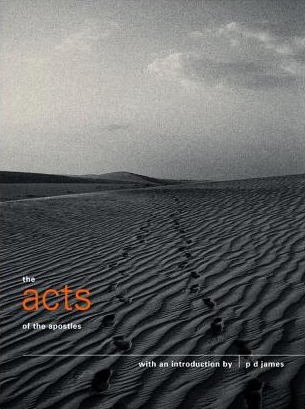
The Acts of the Apostles (book cover), 1999. (http://books.google.com).

The Acts of the Apostles (book cover), 1999. (http://books.google.com).

Yesterday evening, I attended the eleventh annual Brown lecture hosted by the American Educational Research Association at the Ronald Reagan Building here in DC. The great scholar James Anderson talked for about an hour about the connections between voter disenfranchisement and state policies that created systems of educational inequality for Blacks as part of the Jim Crow era. Anderson wondered aloud that with the recent efforts to restrict voting and with the Supreme striking down Section 4(b) (and essentially Section 5) of the Voting Rights Act of 1965 if this meant a return of gross educational inequality on the basis of race and class in 2014. As if the trends of inequality only rise and fall with well protected or unprotected voting rights. Voting rights enforcement is a good barometer, but hardly the only one. The last twenty years of high-stakes testing and corporate education reform provide evidence of a trend of educational inequality that has occurred despite and (in many cases) precisely because of voter participation across all racial lines.

The following, though, is my full response, to Anderson, AERA and all of those in legacy-celebration mode with the Brown decision and the Acts in 2014 and 2015. What was true in 1964 and 1965 remains true fifty years later. The Civil Rights and Voting Rights Acts have been much more lightbulbs on a symbol of real progress — the Civil Rights Movement — than it has been an actual marker of progress. At least for those poor, Black and of color. For Whites, though, the Acts have been the sign of a post-racial America without having to work at it or talk about it. But for the adults I grew up around in Mount Vernon, New York in the 1970’s, there was a lingering hopefulness about race relations and racial equality in America that is absent these days. I don’t know if I felt it because of Archie Bunker and All In The Family or because of all those reproductions I saw of the late Martin Luther King, John F. Kennedy and Robert F. Kennedy together in the same painting over so many living-room mantles when I was six years old. Yet no matter how down or how out, so many poorer Blacks I knew back then had hope for a brighter present and future.

Jesse Jackson, an Obama election sign, and the American flag -- three symbols in one picture, July 2008. (http://plus.google.com).

Jesse Jackson, an Obama election sign, and the American flag — three symbols in one picture, July 2008. (http://plus.google.com).

It wasn’t as if they contemplated Title VII of the Civil Rights Act or Section 2 of the Voting Rights Act at the disco house parties my mother would take me and my older brother to, playing with other kids while the adults danced away their troubles. No, it was the idea that finally, Blacks who looked like us could pry open a door and get an opportunity to succeed in America. Or, to quote The Jeffersons‘ theme song, to “gettin’ our turn at bat.” It didn’t matter to them that the Civil Rights Act, even with all its enforcement teeth, would benefit White women and those lucky enough to be part of Black middle class more than us poor Black folk. Or if the Voting Rights Act could be thwarted by gerrymandering and state decisions to make voting harder for us. The Acts crystallized hope, symbolized a chance, however small, for a better education, a better job, and a better life, for themselves and their families.

The adults in my life were putting on a good face, though, as I came to realize when I was a preteen. My mother had once held the hope that me and my older brother would “make it” by going to college and finding “good-paying jobs.” But by the start of the Reagan Revolution, she no longer spoke in such lofty terms. My mother was hardly alone. By 1979, Blacks like Florence Grier in Bob Blauner’s oral history book Black Lives, White Lives (1989) were saying, to “tell you the truth, I’m not hopeful that we’re going to progress in the eighties as fast as we progressed from the sixties to the seventies.”

Polling back then also reflected this sense of frustration about race and over racial discrimination among Blacks, in contrast to the White sentiment that America had move beyond its racist past. In March 1981, ABC News and The Washington Post conducted their first combined poll on the state of race relations in the US. While 73 percent of Blacks in the poll saw “deep rooted continuing racial problems and blame them on discrimination…only 46 percent of the Whites agreed.”

First page of the Civil Rights Act of 1964 (bent and warped), July 8, 1964. (http://www.ourdocuments.gov/document_data/pdf/doc_097.pdf). In public domain.

First page of the Civil Rights Act of 1964 (bent and warped), July 8, 1964. (http://www.ourdocuments.gov/document_data/pdf/doc_097.pdf). In public domain.

The hopes and aspirations that the Civil Rights Act symbolized have eroded with the Act itself, and are all but absent for younger generations of Americans. An MTV and David Binder Research poll from early 2014 found that 48 percent of White millennials believe anti-White discrimination is as significant as discrimination against people of color, while 65 percent of the people of color they polled believe that Whites have more opportunities for success. Even my own eleven-year-old son reflects this trend. “People were more stupid back then,” my son said to me recently while we talked about the Civil Rights Movement and White resistance to integration, as if racial inequality ended with the movement.Thanks in no small part to the success of the neoconservative movement in declaring the death of racism in the 1980s and 1990s, the generation born after 1981 does not see the federal government as the catalyst for a better life or as a leveler of any playing field.

Bruce Hornsby and The Range’s lyrics from their hit “The Way It Is” summed up the weaknesses of the Civil Rights Act and its legacy well, for us in 1986 as well as today:

Well, they passed a law in ’64

To give those who ain’t got a little more

But it only goes so far

Cause the law don’t change another’s mind…

Nor, apparently, does it create a lasting legacy of racial equality and social mobility.

Can Family and Friends Ever Understand The Why Behind a Memoir?

20 Monday Oct 2014

Posted by decollins1969 in 1, Boy @ The Window, culture, Eclectic, Jimme, Mount Vernon New York, My Father, Pop Culture, race, Religion, Work, Youth

≈ Leave a comment

Tags

"Dirty Laundry", Catharsis, Charles M. Blow, Child Abuse, Core Friends, Extended Family, Family, Father-Son Relationships, Fire Shut Up in My Bones (2014), Friends, Memoirs, Mother-Son Relationship, Neglect, Poverty, Sexual Assault, Sexuality, Writing


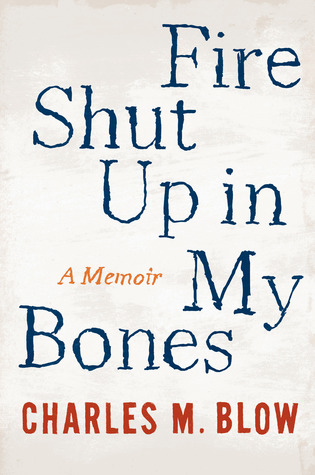
Front cover, Fire Shut Up in My Bones, Charles M. Blow, September 23, 2014. (http://goodreads.com).

Front cover, Fire Shut Up in My Bones, Charles M. Blow, September 23, 2014. (http://goodreads.com).

I started reading New York Times columnist Charles M. Blow’s memoir Fire Shut Up In My Bones two weeks ago. Like many who have read it, I have found it a good read, a revealing read, even a powerful read at times. I have been able to put it down, though. Mostly because as someone who’s recently written a memoir about my own painful and trying experiences with abuse and neglect, about confusion, distrust and occasional rage, Blow’s book has been a reminder of how difficult it was for me to relive those experiences enough to write them down in words and revise them into a book of my own.

Still, as I do intend to finish Fire before the holidays, I do have a couple of questions. One is really basic. Had Blow ever heard of the Kinsey Report (1948), the first one about the sexual experiences and habits of men, particularly gay and bisexual men, prior to turning thirty? The one thing I learned from reading this report twenty years ago is that there’s a lot of gray between heterosexual, gay and bisexual. That you can be heterosexual, and still have a small level of attraction to those of your same gender simultaneously.

256 shades of gray (cropped), October 20, 2014. (http://cs.dartmouth.edu).

256 shades of gray (cropped), October 20, 2014. (http://cs.dartmouth.edu).

But this is a minor question, more about his curious road to understanding his sexuality — not to mention my own road — than it is about Fire itself. My second question is a much more important one. How have Blow’s family and friends received his book since he decided to write it? How have they received Fire in the months since he announced it was coming out in September? How have they received him and Fire since it officially hit the shelves last month?

If his immediate and extended family was/is anything like mine (and from reading Fire so far, it is), then my best guess is their reaction’s been mixed at best. In the year since I released Boy @ The Window in paperback, my siblings have liked the book, but my mother and father haven’t exactly been happy about me writing it. My mother hasn’t said one word about Boy @ The Window since I put it out last year. Nor did she ask any questions about the book in the six and half years that I toiled in writing and rewriting it.

My father, meanwhile, showed interest in the book right from the moment I told him I planned to write Boy @ The Window. That was, until the paperback edition came out during the holidays last year. At that point, he said, “I don’t wanna talk to you no more.” We’ve talked several times since, but he’s still pissed with me about including him in my memoir, even though I never hid this from him at any point in the process.

Among my friends, most of my core group has bought and read Boy @ The Window. Most have given me positive feedback, some very extensive. Yet I found myself mildly surprised how few friends outside of this core group have bought or read the book. I take that back. Actually, I’m surprised by the negative feedback I’ve gotten from folks who’ve claimed to be friends of mine, who’ve never read a word of Boy @ The Window. But this feedback hasn’t been about the memoir. It’s really about their wanting to deny facts about me or about them that they’ve assumed are in Boy @ The Window, as if my job in this instance was to only be truthful when it felt good for them.

Dirty laundry in a basket, October 20, 2014. (http://plus.google.com).

Dirty laundry in a basket, October 20, 2014. (http://plus.google.com).

My platform is tiny when compared with Blow’s, so I imagine that the reaction to Fire in terms of both praise and condemnation has been more extreme, even as the praise has been much more public. I suppose if I was the perpetrator whom sexually assaulted Blow, I’d likely want to shut him up. I’m not so sure that anyone in his family, proud of him as they may be, wants what they’d likely consider “dirty laundry” out there for anyone to read. You don’t grow up in a family as traditional as Blow’s and expect everyone to be alright with their character’s characterization in a bestseller.

This I do know, and I suspect Blow has known for a while, too. That writing a memoir like Fire isn’t about seeking revenge or outing family secrets per se. Bottom line — it ain’t about the proverbial you! In some respects, as cathartic as writing a memoir like my Boy @ The Window or Blow’s Fire may be, it’s not so much about the authors,’ really, at least after the tenth edit.

There are so many stories that never see the light of day, because the fire for telling them burned out a long time ago. Or the window became a rubber room or a jail cell. It’s about telling a story that needs to be told, regardless of whether family’s happy about it, or whether some of your friends can relate to it or not. Because there’s always, always, an audience who needs to read it, hear it, see it and learn from it themselves.


← Older posts
Newer posts →

Boy @ The Window: A Memoir

Boy @ The Window: A Memoir

Places to Buy/Download Boy @ The Window

There's a few ways in which you can read excerpts of, borrow and/or purchase and download Boy @ The Window. There's the trade paperback edition of Boy @ The Window, available for purchase via Amazon.com at http://www.amazon.com/Boy-Window-Donald-Earl-Collins/dp/0989256138/

There's also a Kindle edition on Amazon.com. The enhanced edition can be read only with Kindle Fire, an iPad or a full-color tablet. The links to the enhanced edition through Apple's iBookstore and the Barnes & Noble NOOK edition are below. The link to the Amazon Kindle version is also immediately below:

scr2555-proj697-a-kindle-logo-rgb-lg

Boy @ The Window on Amazon.com: http://www.amazon.com/Boy-The-Window-Memoir-ebook/dp/B00CD95FBU/

iBookstore-logo-300x100

Boy @ The Window on Apple's iBookstore: https://itunes.apple.com/us/book/boy-the-window/id643768275?ls=1

Barnes & Noble (bn.com) logo, June 26, 2013. (http://www.logotypes101.com).

Boy @ The Window on Barnes & Noble: http://www.barnesandnoble.com/w/boy-the-window-donald-earl-collins/1115182183?ean=2940016741567

You can also add, read and review Boy @ The Window on Goodreads.com. Just click on the button below:

Boy @ The Window

Twitter Updates

Tweets by decollins1969
  • RSS - Posts
  • RSS - Comments

Archives

  • June 2025
  • April 2023
  • September 2022
  • August 2022
  • July 2022
  • June 2022
  • May 2022
  • April 2022
  • March 2022
  • January 2022
  • December 2021
  • November 2021
  • October 2021
  • September 2021
  • August 2021
  • July 2021
  • June 2021
  • April 2021
  • March 2021
  • February 2021
  • January 2021
  • December 2020
  • November 2020
  • October 2020
  • September 2020
  • August 2020
  • July 2020
  • May 2020
  • April 2020
  • March 2020
  • January 2020
  • December 2019
  • November 2019
  • August 2019
  • July 2019
  • June 2019
  • May 2019
  • April 2019
  • March 2019
  • February 2019
  • January 2019
  • December 2018
  • November 2018
  • October 2018
  • September 2018
  • August 2018
  • July 2018
  • June 2018
  • May 2018
  • March 2018
  • February 2018
  • January 2018
  • December 2017
  • November 2017
  • October 2017
  • September 2017
  • August 2017
  • July 2017
  • June 2017
  • May 2017
  • April 2017
  • March 2017
  • February 2017
  • January 2017
  • December 2016
  • November 2016
  • October 2016
  • September 2016
  • August 2016
  • July 2016
  • June 2016
  • May 2016
  • April 2016
  • March 2016
  • February 2016
  • January 2016
  • December 2015
  • November 2015
  • October 2015
  • September 2015
  • August 2015
  • July 2015
  • June 2015
  • May 2015
  • April 2015
  • March 2015
  • February 2015
  • January 2015
  • December 2014
  • November 2014
  • October 2014
  • September 2014
  • August 2014
  • July 2014
  • June 2014
  • May 2014
  • April 2014
  • March 2014
  • February 2014
  • January 2014
  • December 2013
  • November 2013
  • October 2013
  • September 2013
  • August 2013
  • July 2013
  • June 2013
  • May 2013
  • April 2013
  • March 2013
  • February 2013
  • January 2013
  • December 2012
  • November 2012
  • October 2012
  • September 2012
  • August 2012
  • July 2012
  • June 2012
  • May 2012
  • April 2012
  • March 2012
  • February 2012
  • January 2012
  • December 2011
  • November 2011
  • October 2011
  • September 2011
  • August 2011
  • July 2011
  • June 2011
  • May 2011
  • April 2011
  • March 2011
  • February 2011
  • January 2011
  • December 2010
  • November 2010
  • October 2010
  • September 2010
  • August 2010
  • July 2010
  • June 2010
  • May 2010
  • April 2010
  • March 2010
  • February 2010
  • January 2010
  • December 2009
  • November 2009
  • October 2009
  • September 2009
  • August 2009
  • July 2009
  • June 2009
  • May 2009
  • April 2009
  • March 2009
  • February 2009
  • January 2009
  • December 2008
  • November 2008
  • October 2008
  • September 2008
  • August 2008
  • July 2008
  • June 2008
  • May 2008
  • April 2008
  • March 2008
  • February 2008
  • January 2008
  • December 2007
  • November 2007
  • October 2007
  • September 2007
  • August 2007
  • July 2007
  • June 2007

Recent Comments

MaryPena's avatarMaryPena on My Day of Atonement/Bitter Hat…
decollins1969's avatardecollins1969 on No Good Teaching Deed Goes…
Mary Rose O’Connell's avatarMary Rose O’Connell on No Good Teaching Deed Goes…

NetworkedBlogs on Facebook

NetworkedBlogs
Blog:
Notes From a Boy @ The Window
Topics:
My Life, Culture & Education, Politics & Goofyness
 
Follow my blog

616 616 East Lincoln Avenue A.B. Davis Middle School Abuse Academia Academy for Educational Development AED Afrocentricity American Narcissism Authenticity Bigotry Blackness Boy @ The Window Carnegie Mellon University Child Abuse Class of 1987 CMU Coping Strategies Crush #1 Crush #2 Death Disillusionment Diversity Domestic Violence Economic Inequality Education Family Friendship Friendships Graduate School Hebrew-Israelites High-Stakes Testing Higher Education History Homelessness Humanities Humanities Program Hypocrisy Internalized Racism Jealousy Joe Trotter Joe William Trotter Jr. K-12 Education Love Manhood Maurice Eugene Washington Maurice Washington Misogyny Mother-Son Relationship Mount Vernon High School Mount Vernon New York Mount Vernon public schools Multiculturalism MVHS Narcissism NFL Pitt Pittsburgh Politics of Education Poverty President Barack Obama Race Racial Stereotypes Racism Relationships Self-Awareness Self-Discovery Self-Reflection Sexism Social Justice Teaching and Learning University of Pittsburgh Violence Whiteness Writing

Top Rated

Blog at WordPress.com.

  • Subscribe Subscribed
    • Notes from a Boy @ The Window
    • Join 103 other subscribers
    • Already have a WordPress.com account? Log in now.
    • Notes from a Boy @ The Window
    • Subscribe Subscribed
    • Sign up
    • Log in
    • Report this content
    • View site in Reader
    • Manage subscriptions
    • Collapse this bar
 

Loading Comments...