• About Me
  • Other Writings
  • Interview Clips
  • All About Me: American Racism, American Narcissism, and the Conversation America Can’t Have
  • Video Clips
  • Boy @ The Window Pictures
  • Boy @ The Window Theme Music

Notes from a Boy @ The Window

~

Notes from a Boy @ The Window

Category Archives: Pop Culture

My and Diane Ravitch’s Path to Reign of Error

11 Tuesday Mar 2014

Posted by decollins1969 in 1, Academia, Boy @ The Window, Carnegie Mellon University, culture, Eclectic, Mount Vernon High School, Mount Vernon New York, New York City, Patriotism, Pittsburgh, Politics, Pop Culture, race, Upper East Side, Youth

≈ Leave a comment

Tags

Bill & Melinda Gates Foundation, Book Review, Corporate Education Reform, Diane Ravitch, Fear of a "Black" America (2004), High-Stakes Testing, Humanities Program, Institutional Racism, Michelle Rhee, Multiculturalism, Neoconservative Movement, Politics of Education, Poverty, Privatization, Racial Segregation, Racism, Reign of Error (2013), Social Injustice, Social Justice, Teach for America, Writing Passion


Reign of Error (2013) by Diane Ravitch, front cover. (http://bn.com).

Reign of Error (2013) by Diane Ravitch, front cover. (http://bn.com).

I first began reading Diane Ravitch in July 1990, the summer before my senior year at the University of Pittsburgh. It was the summer in which I became interested in understanding magnet programs and their relationship with desegregation and diversity efforts, courtesy of my own experience with Mount Vernon, New York public schools and its now defunct Humanities Program. I read both The Great School Wars: New York City, 1805-1973 (1974) and The Troubled Crusade: American Education, 1945-1980 (1985) that summer, with education scholar and Ford Foundation director Jeanne Oakes’ Keeping Track: How Schools Structure Inequality (1985) sandwiched in between.

It was the beginning of a twenty-year period of constantly intellectual disagreement between me and Ravitch. Oakes’ work captured inequality in terms of race and socioeconomics so much better than Ravitch, whose writings back then often treated these inequalities and distinctions as afterthoughts. When I shifted my research area to multicultural education and multiculturalism, though, that was when I found Ravitch’s absolutist defense of so-called traditional American democratic education and all things e pluribus unum unbelievably stifling. With all Ravitch knew about the politics of education, in New York and with the US Department of Education, how could she possibly defend a system that did as much to control and exclude students as it did to provide something akin to an equal opportunity?

I chalked Ravitch up to being another out-of-touch neoconservative, scared to death of race and diversity and multiculturalism. I said as much at conferences like the American Educational Research Association meeting and other conferences. I wrote as much in my dissertation and in my first book, Fear of a “Black” America: Multiculturalism and the African American Experience (2004). Through it all, I always found Ravitch’s writing compelling, but her conclusions wanting, because they lacked perspective and empathy in the context of public schools and diversity.

Then, Ravitch wrote Left Back: A Century of Battles Over School Reform in 2000. Though it contained some of her common themes — overemphasis on the mantra of reform, the need for more testing, support for school choice, denigration of a multicultural curriculum — Ravitch showed growth in this book. She was less hostile to a more progressive curriculum and seemed, for the first time, really, to understand how much race and poverty had shaped the direction and the harshness of school reform going back to 1900. I happily used Ravitch’s Left Back in my History of American Education Reform course at George Washington in 2002. For her book provided a comprehensive and even-handed overview of the politics of K-12 education in a way that any educator of any American ideological perspective could understand.

I’ve finally read Ravitch’s Reign of Error: The Hoax of the Privatization Movement and the Danger to America’s Public Schools (2013). Reign of Error is Ravitch at her most passionate and energized. If I hadn’t read a couple dozen of Ravitch’s articles from the 1980s and 1990s and four of her previous books, I would think that this was her first book, as there is sense of urgency in Reign of Error that can seldom be found outside of epic memoirs and epic fiction novels.

Ravitch’s argument in Reign of Error is a simple one. Corporate education reform, if allowed to continue unfettered, will destroy public education in the US, and in the process, American democracy. Privatizing public schools (i.e., turning them into “public” charter schools), destroying teacher’s unions, constant high-stakes testing, bypassing school boards and forgetting about racial segregation and poverty — that’s corporate education reform’s agenda. As Ravitch said in Chapter 12 on the fallacies of merit pay for teachers, “Merit pay is the idea that never works and never dies (p. 119).” She could have also substituted the words “school choice,” “creationism,” “standardized testing,” “closing schools,” and “privatization” for “merit pay.”

But Ravitch goes further in her 400-page treatise. That though public education in the US has had its share of problems — the need for more teacher training and time for professional development, racial segregation and high levels of poverty while underfunded — that corporate education reform has compounded these problems several times over. That with corporate education reform, teachers, parents and students will have no say in public education, at least the ones without their own personal foundation with which to endow their own public charter school.

From a writer’s standpoint, this wasn’t Ravitch’s best effort. Her argument is repetitive, one where she likely could’ve cut the main chapters by a quarter (about 100 pages) and made the same points. I likely could’ve become inebriated if I had a shot of vodka every time the words “poverty,” “Gates,” “Walton,” “Broad,” “high-stakes testing,” and “corporate education reform” come up. But given my history with reading Ravitch and with this topic, of course Reign of Error was repetitive — it was like reading my own words on this same topic.

Ultimately, Ravitch’s Reign of Error is a primer for anyone interested in averting the social injustice that is the corporate education reform tyranny of wealthy philanthropists, money-grubbing entrepreneurs and politicians across America’s limited ideological spectrum. For those whom up to now this issue has been of limited interest, or for those who’ve felt the change in public education but haven’t quite been able to articulate those feelings, Reign of Error is for you.

For educators, parents and even students already involved in writing about or protesting against corporate education reform, this book is still for you. Ravitch provides so much ammunition that Reign of Error can be applied in numerous ways to numerous situations. At school board meetings. With #AskMichelleRhee hash tags on Twitter. In job interviews with Teach for America and with the Bill & Melinda Gates Foundation. In letters to the editor of the mainstream newspapers and in comments to mainstream TV and radio newscasters. In arguments with neoconservative parents who send their kids to private schools.

“Protecting our public schools against privatization and saving them for generations of American children is the civil rights issue of our time (p. 325).” is how Ravitch ended her Reign of Error. It’s not an exaggeration. But it does beg a question. If we can successfully fend off corporate education reform — and assume that the country will continue to ignore the poverty and racial segregation that Ravitch desperately wants addressed — can she and I then spend five minutes discussing multiculturalism?


Fear and (White) Women’s History Month

06 Thursday Mar 2014

Posted by decollins1969 in 1, Boy @ The Window, culture, Eclectic, Politics, Pop Culture, race, Youth

≈ Leave a comment

Tags

Death By A Thousand Cuts, Domestic Violence, Elitism, Fear, Feminism, Microaggressions, Misogyny, Racism, Sexual Harassment, Stereotypes, Threats, Violence, Whiteness, Women's History Month


The Scream (1893) by Edvard Munch, The National Gallery, Oslo, Norway, November 27, 2013. (The Herald via Wikipedia). In public domain (US).

The Scream (1893) by Edvard Munch, The National Gallery, Oslo, Norway, November 27, 2013. (The Herald via Wikipedia). In public domain (US).

I often find it ironic that Women’s History Month follows immediately after Black History Month. In this sequence, both are racialized, as the former tends to represent White women, while the latter represents all Blacks regardless of gender, sexual orientation, or country of origin. Meaning that women of color often have to fight to be recognized during Women’s History Month, that poor women often go unrecognized in both Black and Women’s History months, and that other nuances of demographics and history aren’t thought of at all.

Such is the case with issues of -isms within feminism and Women’s History Month. Particularly when combined with the actualization of fear. In the cases of domestic violence, rape, assault, kidnapping, harassment and other threats against women, it’s certainly understandable that the fear of such things (and the breaking down those threats and fears in dialogue) are a big part of feminism and Women’s History Month more specifically. But when combined with certain -isms — especially racism and elitism — these issues become more about profiling stereotypical threats rather than dealing with real threats against women, especially (but not exclusively) for White women.

Compact Glock 19 in 9x19mm Parabellum, November 4, 2007. (Vladimir Dudak via Wikipedia). Released to public domain via CC 3.0 & GNU.

Compact Glock 19 in 9x19mm Parabellum, November 4, 2007. (Vladimir Dudak via Wikipedia). Released to public domain via CC 3.0 & GNU.

It’s something I experience every day. A White woman crossing the street as I approach, on my way home, to my car, to run an errand, or to pick up my son from school. A woman — White or Black — gasping audibly at the sight of me in an elevator, some even not getting on board, as if I had a ski mask over my face and a Glock in my right hand. White female co-workers who, upon seeing me outside the office, would put on a blank face and walk by me while I’m holding open a door, too scared to even say “Hello,” much less a “Thank you.”

It’s the nearly daily reminder that where feminism and Whiteness intertwine, I represent the Black male misogynist. I am dangerous, the guy whom White women and middle class women of color imbue anti-feminist threats and violence. Even when standing still on an elevator, deep in my own thoughts about work, teaching, family and writing.

Martyrdom of Joseph Marchand (1860) by unknown, September 27, 2008. (World Imaging via Wikipedia). Released to public domain via CC 3.0 and GNU.

Martyrdom of Joseph Marchand (1860) by unknown (or death by 1,000 cuts), September 27, 2008. (World Imaging via Wikipedia). Released to public domain via CC 3.0 and GNU.

I get it. White women often have to expend micro-energies on microaggressions from men — including Black men — in order to get through the day. For some, it’s probably an exhausting part of their existence. Likely so much so that they forget to turn off their shields even when bumping into a male co-worker or friend.

From my perspective, though, it’s not that simple. It’s not like I look at every White male and female and see another willfully ignorant and entitled racist ready to accuse me of ruining the country or threaten me with bodily harm. I think that in some feminist circles, racial and classist profiling goes on even more so than with most police officers. Fear is an important part of our existence, but it shouldn’t be the centerpiece of how anyone lives their lives, even when it’s justifiable.

In thinking about feminism, Whiteness and Women’s History Month, my two little cents’ worth of thoughts come down to this. I’m tired of being a victim of your fears, which when multiplied over the past 150 years, have often led to misunderstandings, false accusations, arrests, convictions, beatings and deaths. I’m tired of abstract discussions of microaggressions, threats and violence against mostly White women that don’t include the perspectives of women of color. And I’m tired of feminists who refuse to evaluate their own elitism and Whiteness in how they go about their everyday lives.

Amateur Eugenicists: Why Smart Poor Students Have a Hard Time

05 Wednesday Mar 2014

Posted by decollins1969 in 1, Academia, Boy @ The Window, Carnegie Mellon University, culture, Eclectic, Jimme, Mount Vernon High School, My Father, Pop Culture, race, University of Pittsburgh, Youth

≈ 4 Comments

Tags

"Why Ivy League Schools Are So Bad at Economic Diversity", Bigotry, Christy2012, Elitism, Eugenics, Jerome Karabel, Meritocracy, Poverty and Intelligence, Race and Intelligence, Racial Determinism, Racism, Robin J. Hayes, Scientific Racism, Social Darwinism, The Atlantic, The Chosen (2005), Yale


Scientific racism, using "evidence" to compare the Irish to the African, by H. Strickland Constable, Harper's Weekly, 1899. (JasonAQuest via Wikipedia). In public domain.

Scientific racism, using “evidence” to compare the Irish to the African, by H. Strickland Constable, Harper’s Weekly, 1899. (JasonAQuest via Wikipedia). In public domain.

I do generally loathe reading the comments sections of most news sites (any sites, really), but the one on Robin J. Hayes’ “Why Ivy League Schools Are So Bad at Economic Diversity” in The Atlantic is a real trip. There are dozens of comments in which people are playing amateur eugenicists, as they’ve connected wealth & poverty to intelligence. For these folks, the poor perpetuate themselves because they are stupid, and when they have kids, they’ll be born stupid as well, and therefore, will remain poor. As if structural inequality and structural racism have nothing to do with creating the gaps in wealth and education for millions of Americans.

I’m sure I haven’t seen more Social Darwinist /scientific racist /pro-eugenics comments anywhere, including on neo-Nazi websites. Apparently, the only thing The Atlantic’s commentators read while in college (as this is allegedly the profile of their readers) was Charles Murray and Richard Herrnstein’s The Bell Curve (1994), as their arguments came out of studies that are now well over 100 years old. (I defy anyone to say they’ve read all 838 pages, though!) What these people should’ve been reading is Jerome Karabel’s The Chosen (2005) and Nick Lemann’s The Big Test (1999), both of which indicate the Ivy League’s long history of high racial and socioeconomic bias, not just high selectivity.

The Chosen (2005) front cover, March 5, 2014. (Donald Earl Collins).

The Chosen (2005) front cover, March 5, 2014. (Donald Earl Collins).

So I responded, using the lessons I’ve learned from my life and from writing Boy @ The Window, pointing out along the way that “Yale and the others offer what they offer to us po’ folk because they want to appear like they’re doing good, knowing full well that actually working to increase economic diversity is too much for them to fathom.” It elicited this counter-response from someone calling themselves Christy2012:

Pardon me for being so blunt, but you seem to imply that you were somehow obvious Yale material based on your top 2% status. However, you indicated on your blog that you earned a 2.6 GPA at University of Pittsburgh, a much less competitive institution, in your freshman year. Do you suppose you would have attained a higher GPA at Yale? Many rich people get turned down by Yale with even better credentials and Columbia is a fairly elite school itself. That Columbia offered you at chance and that you didn’t exactly hit it out of the park at UPitt is not exactly evidence that the schools are biased against the poor (maybe even the opposite).

Maybe there was (or is) an issue relating to how they consider deadbeat fathers in financial aid and scholarship consideration. It seems you should probably focus on that and that is probably an issue for more middle class applicants too.

It turns out that Christy2012 made these personal swipes from an extremely selective and incorrect reading of my blog because she believes all poor students and students of color really aren’t smart. I/we apparently benefited instead from “affirmative action and/or the pity of bleeding-heart White liberals,” and “not because of our abilities or because of hard work” (my translation of her other comments, by the way). Of course, Christy2012 never revealed anything personal about herself. It’s likely she never attended an elite college and has never met a poor person — especially one of color — that she didn’t feel superiority over.

From The Matrix: A sea of pods in which humans are fusion batteries (the future of the poor, as viewed by The Atlantic's amateur eugenicists), March 5, 2014. (http://www.tony5m17h.net/MatrixNet.gif).

From The Matrix: A sea of pods in which humans are fusion batteries (the future of the poor, as viewed by The Atlantic’s amateur eugenicists), March 5, 2014. (http://www.tony5m17h.net/MatrixNet.gif).

If this set of comments is any indication, it will be hard for Yale or any other school — even if they’re sincere in their efforts at racial and economic diversity — to fulfill them. So many folks even without holding positions of power or serving as gatekeepers decide before looking that poor folks and poor folks who look like me are incapable and unqualified for anything other than a mop, a broom or a jail cell. Is there any wonder that so few of America’s poor and of color have a chance at any higher education of significance, forget about getting into an elite or Ivy League institution?

City Place Mall: Why You Don’t Shop Where There’s A “Hood Policy”

04 Tuesday Mar 2014

Posted by decollins1969 in 1, culture, eclectic music, High Rise Buildings, Pop Culture, race

≈ 1 Comment

Tags

Breathing While Black, City Place Mall, Criminalization, Dehumanization, George Zimmerman, Hood Policy, Hoodies, Institutional Racism, Lisa Petrie, Malls, Petri Dish, Petrie Ross Ventures, Racial Stereotypes, Racism, Silver Spring Maryland, Trayvon Martin, White Fears, White Supremacy, Whiteness


City Place Mall, main entrance, Silver Spring, MD, June 10, 2012. (Farragutful via Wikipedia). Released to public domain via CC 3.0.

City Place Mall, main entrance, Silver Spring, MD, June 10, 2012. (Farragutful via Wikipedia). Released to public domain via CC 3.0.

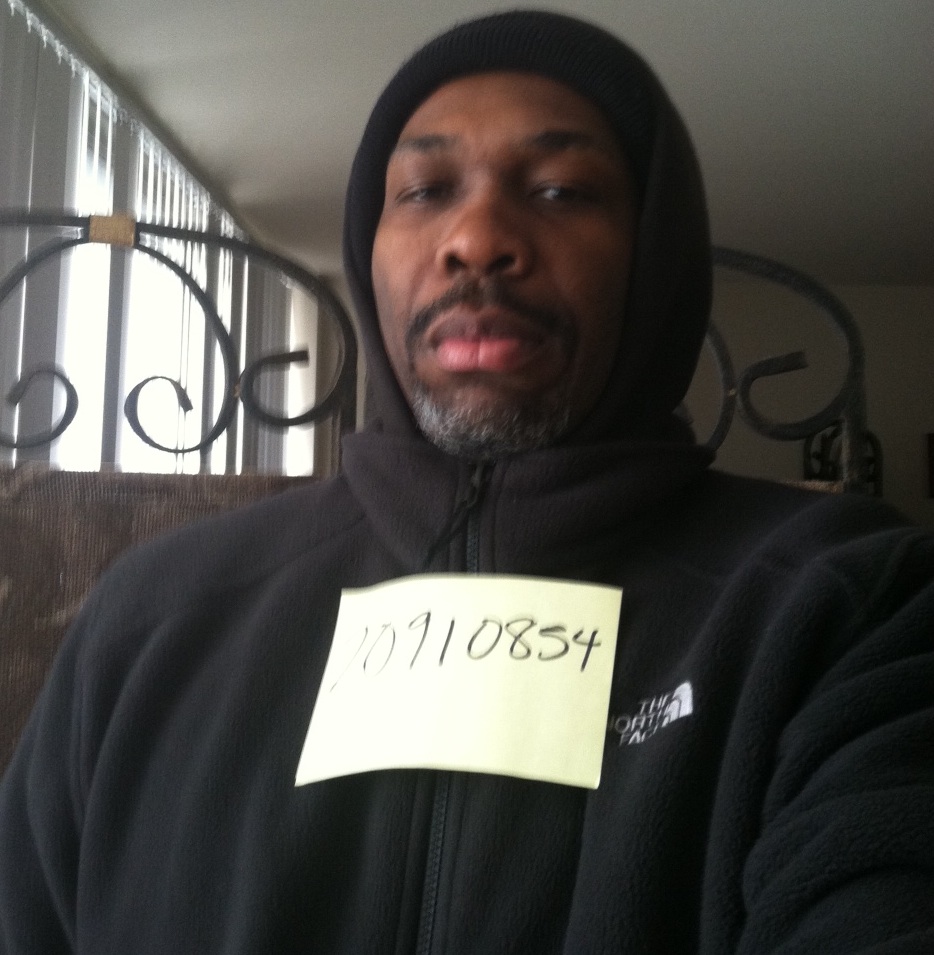
Last Thursday afternoon (February 27), a security guard at City Place Mall in Downtown Silver Spring, Maryland confronted me and my 10-year-old son about wearing a hood over our heads, having just come inside from below-freezing and windy weather. The security guard explained that the policy at City Place Mall is to forbid patrons from wearing hoods, hats, scarves, sunglasses and other clothing that would make us more difficult to identify. When I asked for a written indication of this policy, the security guard told us that the one sign for your 400,000-square-foot mall was downstairs in the lower lobby, which does patrons like me little good in informing us of their racism and stupidity.

Keep in mind, I’m a 44-year-old man with a 10-year-old kid, who’s only intent was to go to an indoor ATM machine to withdraw my money from my bank account so that we wouldn’t freeze. We weren’t shopping at Marshall’s or another store in the mall. What were we going to do, buy two packs of Skittles at the dump of a snack store at City Place instead of just one? Buy two bottles of Lipton Ice Tea (Arizona Ice Tea makes our teeth hurt)?

Me with hood get-up I wore last week with son in tow (numbers added), March 4, 2014. (Donald Earl Collins).

Me with hood get-up I wore last week with son in tow (numbers added), March 4, 2014. (Donald Earl Collins).

If this is how they treat all patrons, this policy would merely be a stupid one. I suspect, though, that they don’t stop women in veils or burqas, Sikhs with turbans or every person wearing sunglasses. No, Black and Brown male patrons — especially ones that look young and healthy — are their targets for such an idiotic policy.

I emailed Lisa Petrie about this incident and wanted clarifications about this policy. Petrie is a co-owner of Petrie Ross Ventures, LLC, the Annapolis-based group that manages (read owns here) City Place Mall. In addition, I asked her to answer the following questions:

1. Is this in fact the policy of City Place Mall, to force patrons to remove hoods and other clothing upon entering the mall?

2. If this is in fact your policy, then why isn’t it posted conspicuously at the entrances to the mall for all patrons to see and read?

3. Is this policy one that security guards are supposed to apply, and if so, are they doing so in an equitable manner?

Petrie didn’t answer any of my questions. Instead, she emailed me this response:

It is our policy in all of our properties to ask our patrons to remove their hats, hoods, etc. only as a safety precaution for all that visit our malls. I am unsure as to the procedures as I am not part of the operations team however I will ask that if you have any questions that you follow up with the property manager on site, Mr. Gary Brewer.

Bottom half of a Petri dish, the only thing I'll buy from City Place Mall in the future, October 20, 2005. (Miaow Miaow via Wikipedia). Released to public domain via CC 2.0.

Bottom half of a Petri dish, the only thing I’ll buy from City Place Mall in the future, October 20, 2005. (Miaow Miaow via Wikipedia). Released to public domain via CC 2.0.

This is a ridiculous statement, unless by “safety precaution,” Petrie means that there are George Zimmermans in all their malls waiting to shoot anyone with a hood over their heads if their skin has a significant melanin content. I did, after Petrie sent me his contact information, send Brewer the same information about the incident, as well as my questions. Mr. Brewer has refused to respond.

If this is how City Place Mall and Petrie Ross expects to treat its patrons, though, I think that whatever plans you have for this mall should come with the disclaimer that not all patrons are welcome, especially Black and Brown males. You can name your dilapidated mall Ellsworth or even Crap. I already don’t shop there. I can always withdraw money from another ATM.

What I Didn’t Know Growing Up – It Still Hurts

27 Thursday Feb 2014

Posted by decollins1969 in 1, Boy @ The Window, Christianity, culture, Eclectic, Hebrew-Israelite, Jimme, Marriage, Mount Vernon New York, My Father, New York City, Politics, Pop Culture, race, Religion, Sports, Work, Youth

≈ Leave a comment

Tags

Achievements, Ancestors, Arkansas, Basketball, Black History Month, Collins Family, Family, Gill Family, Harrison Georgia, Houston Texas, Ignorance, Jim Crow, Knowledge, Lineage, Mom, Mother, Parenting, Poverty, Segregation, Tenant Farming, Universality, Wisdom


George Bernard Shaw and ignorance, June 2013. (http://www.irelandcalling.ie/).

George Bernard Shaw and ignorance, June 2013. (http://www.irelandcalling.ie/).

“My people perish for a lack of knowledge,” it seems, is something that anyone can find in almost any religion’s texts anywhere. Heck, depending on perspective, even atheists in general can agree with this statement (of course, the issue would be what constitutes “knowledge”). I read this verse (it’s in Hosea and Isaiah, and versions of it as well as in Jewish texts and the Qur’an) for the first time when I was fifteen in ’85, less than a year after I converted to Christianity. Boy, I had no idea how little I knew about myself, my family and my history when I first read that verse twenty-nine years ago.

In light of the end of Black History Month, I wouldn’t be me without noting how little any of us know about our families, our lineages and our ancestors. But it’s not just true of the millions of us descended from West and Central Africans kidnapped, bound, abused, raped and nearly worked to death to provide Europeans (and Arabs) wealth and comfort. Most of us don’t even know what we think we know about much more recent history and events than surviving the Middle Passage or overcoming Jim Crow.

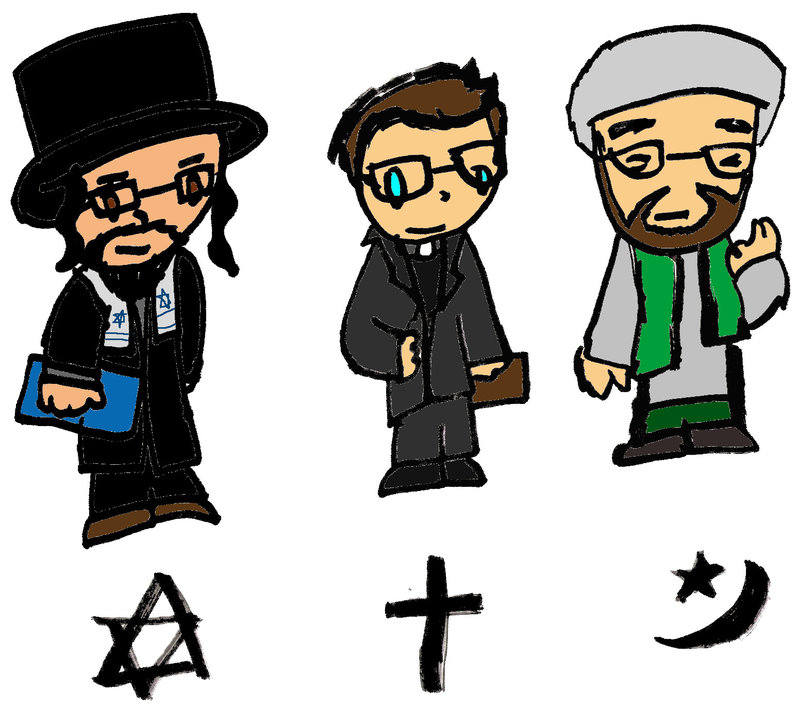
A rabbi, a priest and an imam, 2013-2014. (PizzaSpaghetti via http://www.deviantART.com).

A rabbi, a priest and an imam, 2013-2014. (PizzaSpaghetti via http://www.deviantART.com).

For me and my family, I knew so little about us that my Mom could’ve told me that Satan had thrown us out of Hell for being too brown to burn and I would’ve accepted it as an appropriate answer. All I really knew of my mother’s side of my family was that they were from Arkansas, that my Uncle Sam (I chuckled sometimes thinking of the irony) was my Mom’s closest sibling, and that they grew up as dirt poor as anyone could get without living in a thatched root hut on less than $1 a day.

I asked for more during those rare moments when my focus wasn’t on high school, getting into college and getting as far away from 616 and Mount Vernon, New York as possible. I ended up finding out about how my Mom’s mother once beat her with the back of a wooden brush for not being ready on time for church, that there were years where her father made only $200 total from cotton farming, and that she was the oldest of twelve kids. She had done some form of work either taking care of her siblings, cooking, cleaning, washing clothes by hand, and hoeing and picking cotton, since she was five or six. Oh yeah, and she played basketball in high school.

On my father’s side, I knew a bit more, if only because Darren and me went with my father to visit the Collins farm in Harrison, Georgia in August ’75. I was five and a half then, but I do remember the fresh smoked ham and bacon, the smell of my grandfather’s Maxwell House coffee, me being too scared to ride a horse, so they put me on a sow (my brother did ride the horse, though). But what people did, how a Black family owned their own land going back to the turn of the twentieth century, I wouldn’t have known to even ask about at not quite six years old.

What I didn’t know until after high school, college, even after earning a Ph.D. in knowing (that’s what a history degree ultimately is) was so much worse than I imagined. To find out at twenty-three that my Mom was a star basketball player in high school. She played center, and led her team to Arkansas’ segregated state quarterfinals in ’65. My Uncle Sam played four sports in high school (basketball, football, baseball and track and field) and was offered college scholarships, but didn’t have the grades to move forward. I learned a year later that my Uncle Paul followed in their footsteps, and played three years at the University of Houston, left early and played for the Houston Rockets in ’82-’83 (not a good year for them, or for me, for that matter) before blowing out a knee and moving into entertainment work.

My father’s family — at least the women of the family — boasted at least three college degrees. Two of my aunts became school teachers. My uncles started businesses in Atlanta and in parts of rural Georgia, working their way well beyond the farm to the work they wanted to do.

Unidentified tenant farmer, his home, automobile, and family, Lee Wilson & Company, rural Arkansas, 1940s. (http://libinfo.uark.edu/SpecialCollections/)

Unidentified tenant farmer, his home, automobile, and family, Lee Wilson & Company, rural Arkansas, 1940s. (http://libinfo.uark.edu/SpecialCollections/)

I learned all of this by the time I turned thirty-two, just a year and a half before my own son was born. How many different decisions I would’ve made about my life if I had known that one half of my family was full of athletes, and the other half was full of business owners, not to mention three aunts with a college education? I would’ve known to try out for any sport in high school — particularly basketball — and to not be afraid to fail. I would’ve known that I was only the first person in my immediate family to take a go at college beyond a certificate in dietary science (my Mom earned that in the summer of ’75), and not the first one on either side as I once thought.

Most of all, I would’ve known that though I was lonely and played the role of a loner my last years growing up, that I wasn’t alone. There were a whole bunch of people in my lineage, some of whom were alive and well, from whom I could’ve drawn strength, found kinship, felt pride and confidence in, where I wouldn’t have seen myself as an abandoned and abused underdog anymore.

If I’d known all this growing up, I wouldn’t have felt and sometimes feel robbed now, by poverty and parenting, abuse and alcoholism. This is why having knowledge to draw from is so important.

Academia’s Silence Must Be Heard

24 Monday Feb 2014

Posted by decollins1969 in 1, Academia, Carnegie Mellon University, culture, Eclectic, Politics, Pop Culture, University of Pittsburgh, Youth

≈ Leave a comment

Tags

Academe Magazine, Academic Writing, Banishment, Exile, Fear of a "Black" America, Joshua Rothman, Nicholas Kristof, OAH, Organization of American Historians, Scholar-Activist, Scholarship, Shunning, Silence, Troublemaker


At Eternity's Gate, by Vincent Van Gogh, oil on canvas painting, Kröller-Müller Museum (The Netherlands), May 1890. (Eloquence via Wikipedia). In public domain.

At Eternity’s Gate, by Vincent Van Gogh, oil on canvas painting, Kröller-Müller Museum (The Netherlands), May 1890. (Eloquence via Wikipedia). In public domain.

I’ve learned the hard way how the world of academia treats folks who break its unwritten covenants. The ones that say accept all of our strictures about what to publish, how to write, when to write it, about tenured/tenure-streamed vs. non-tenured, adjuncts and graduate student TAs and unionization, among so many others. Those of us who make trouble, who question the archaic wisdom of those in our world, are often cast out, rendered invisible or otherwise completely forgotten about.

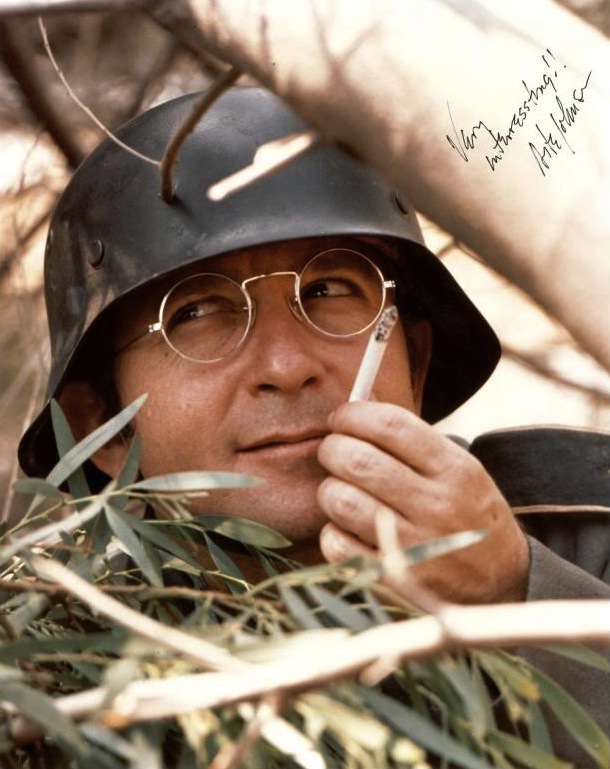
The funny thing about going against the grain of academia — or at least, my fields of US/African American history and American education/ed policy — has been that criticism can serve as a better sign of acceptance than hearing nothing at all. It was like this for me in grad school at Pitt and Carnegie Mellon, and even my first five years after finishing my doctorate. Whenever someone said that my work on multiculturalism and Black history was “interesting,” the flatness with which a professor or grad student said “interesting” was the key for me. If the “interesting” was completely flat, it meant “but I completely disagree with your line of research” or “this thing is too simplistic and boring for me as a scholar to get excited about.” If the “interesting” had a lilt to it or even a slightly raised eyebrow, it meant that one of my colleagues or more senior folk really found my work intriguing.

Actor Arte Johnson as the Nazi German character Wolfgang on NBC's Laugh-In (1968-73), saying "Very interresting..." per usual,  September 4, 2011. (http://photobucket.com)

Actor Arte Johnson as the Nazi German character Wolfgang on NBC’s Laugh-In (1968-73), saying “Very interesting…” per usual, September 4, 2011. (http://photobucket.com)

That term “interesting” was my indication that some people acknowledged and understood the importance of my work, and that some absolutely couldn’t and wouldn’t. But over the past decade, as I’ve complained about the nature of academic writing, about the limits of scholarship and about the changing nature of academia itself (from a hiring perspective), the one thing I’ve noticed the most has been academia’s silence. The collective silence has been deafening, so much so that I finally concluded it meant not only disagreement, but a shunning as well. Like the Amish, only without the Rumspringa.

I had fleeting moments when I noticed the silence, like at my second OAH presentation in Los Angeles in ’01 on Black women intellectuals and multiculturalism. Even though my research was sound, I knew I needed to work on drawing clearer connections between how I’d been defining intellectual and connecting it with notions of cultural pluralism, and thus, multiculturalism. With forty people in the audience, and with thirty-five minutes of Q and A, no one asked me a single question. No one in the audience, it seemed, was interested in multiculturalism or historical contributions to the idea from Anna Julia Cooper, Zora Neale Hurston, Mary Church Terrell or anyone else.

I noticed even more as I submitted my first book Fear of a “Black” America for publication with the university presses prior to ’04. At least with the likes of Praeger and Farrar, Straus & Giroux, I’d frequently get a detailed response, good and bad. But with the university presses, it was deadly silence. I guess me working full-time in the nonprofit world and only teaching ed foundation courses part-time was one of my deficits.

The final set of hints of silence that came my way was in the year after I published Fear of a “Black” America. I decided in ’05 to write an article on the overuse of the term scholar-activist, an article I published in Academe Magazine that fall. Grad students tended to like it, activists outside of academia have cited it hundreds of times, and my immediate circle of friends in academia loved it. But my relevant fields within academia remained silent about it. They were silent about my argument that exercising academic freedom doesn’t automatically make one an activist, and that academic writing, even writings that lean hard to the left, don’t make an academician an activist either.

Dante in Exile (n.d.), painting by anonymous, Archivo Iconografico S.A., Itália, June 3, 2006. (Fernando S. Aldado via Wikipedia). In public domain.

Dante in Exile (n.d.), painting by anonymous author, Archivo Iconografico S.A., Itália, June 3, 2006. (Fernando S. Aldado via Wikipedia). In public domain.

I realize then I had evolved as a writer to the point where I wasn’t just uncomfortable with academic writing, the tenure process and the lack of unionization for adjuncts and grad students — I’d been uncomfortable for years. No, I wanted a teaching, even administrative relationship with higher education for sure, but not one where all of my eggs were in the academic writing basket. Unlike Joshua Rothman’s grand assumption in his “Why Is Academic Writing So Academic?” piece in last week’s New Yorker, that “[p]rofessors live inside that system [of academic writing] and have made peace with it,” I have not and will not make peace with this. Ever.

I think Nicholas Kristof is a hack, and that most of the columnists of The New York Times are hacks as well. But in knowing the sadistic silence of academia as well as I do, I also know that this world of higher education can and does grind many of its participants up, often without making the slightest sound. It’s a wonder that I’m still teaching and writing anything at all.

Over 3 Billion Blacks Killed

19 Wednesday Feb 2014

Posted by decollins1969 in 1, culture, Eclectic, Movies, music, Politics, Pop Culture, race, Youth

≈ Leave a comment

Tags

Black Lives, Dehumanization, Gangsta Rap, George Zimmerman, Hunger Games, Independence Day, Individual Racism, Institutional Racism, Jordan Davis, Michael Dunn, Nikita (2010-13), Popular Culture, Racial Stereotypes, Racism, Sardonic, Terminator, The Day After Tomorrow (2004), The Purge (2013), The War of The Worlds (2005), Trayvon Martin, Violence


McDonald's signage, Austin, MN, May 20, 2006. (Jonathunder via Wikipedia). Released to public domain via CC and GFDL.

McDonald’s signage, Austin, MN, May 20, 2006. (Jonathunder via Wikipedia). Released to public domain via CC and GFDL.

Do you remember those McDonald’s signs back in the ’70 and ’80s, before the corporation went global (from 6,000 to 30,000 franchises since ’92), where they said, “Over 100 Million Served” hamburgers or “10 Billion Served?” If the signage is there at all these days, it usually says “Billions and Billions Served.” That’s about as cheap as Black life is in the US as well, though maybe a bit more expensive in Western countries in general (they do use the Euro, after all!).

I’ve been thinking about the low value of Black lives for years, even in the middle of grad school at Pitt. But I must admit, it’s been on my mind more and more since George Zimmerman shot and killed Trayvon Martin nearly two years ago. Now, with the hung jury over the murder of Jordan Davis, with so many who find it easy to render Black and Brown lives cheaper than dog meat in the middle of the Roman Coliseum 2,000 years ago, it seems that there’s no such thing as a dead stereotype.

Jordan Davis' Facebook picture, February 17, 2014. (via Huffington Post).

Jordan Davis’ Facebook picture, February 17, 2014. (via Huffington Post).

It’s so infused in popular culture, as life and art intertwine in a macabre dance on Black and Brown bodies. Blacks especially (and for the most part, Latinos) don’t feel pain the same way as Whites. We lack the emotional and psychological control of Whites. We’re irrational and prone to criminal behavior. We’re lazy and don’t mind living in abject poverty. We love illegal drugs, but love malt liquor and hard alcohol even more. We’ll eat anything deep-fried, and don’t mind dying before middle age just so that we can save the Social Security dollars for elderly White folk.

With that as the backdrop, it’s no wonder much of the movies, music, TV and Internet depictions of us ultimately ends in our gratuitous, ubiquitous and anonymous deaths. Yes, even in 2014! I’ve recently binge-watched the now defunct CW series Nikita (2010-14) with Maggie Q as the lead. I counted at least thirty Black actors on the series over its seventy-four episodes. Only two survived the series, and one (character played by Lyndie Greenwood) wasn’t even in the last two episodes because the actress was doing double-duty on FOX’s Sleepy Hollow!

But if anyone were to take some of the largest grossing films and franchises of all time, it would become obvious how cheap folks in the US and elsewhere think Black and Brown lives really are. Between Independence Day (1996) and The Terminator series of films (1984-2009) alone, you would have to assume that almost all of the forty million Blacks living in the US died in these fictional realities, not to mention the 1.2 billion folks of at least partial African descent living in other Western nations, Africa, the Caribbean, Brazil and the rest of Latin America. That this has occurred more than once in these films alone puts us at 2.48 billion Blacks killed.

Then, between lesser known/lesser quality films like The Day After Tomorrow (2004), Deep Impact (1998), The War of the Worlds (2005) and Hunger Games (2012-present), it would seem that in every global calamity, most Blacks draw the short straw. These movies (and, prior to these movies, books) put us easily over three billion Blacks and Browns killed. And that’s without accounting for standard action films, cops-and-criminals shows, and other cinematographic renderings of the Black and Brown as disposable human beings. Unless you’re Don Cheadle, Denzel Washington, Will Smith, Morgan Freeman (sometimes) or Halle Berry, if you’re Black or Brown, your job in popular culture is to die a violent death.

Of course, those upset with my sardonic take will say, “Well what about gansta rap? What about Ice-T, Ice Cube, Snoop Dogg and so many other rappers who present Black lives as cheaper than bottled water?” Three things: 1. you really need to update yourself on today’s rap, between Lil Jon, Rick Ross and Lil Wayne, before commenting; 2. the “gansta rappers” of the ’90s were mostly rapping about a lived experience, not some fantasy life; and 3. they figured out that they could and can make money off of Black deaths in lyrical rhymes, just like folks in the movie, TV and real worlds.

Venison meat for braising, February 19, 2014. (http://www.simplyscratch.com).

Venison meat for braising, February 19, 2014. (http://www.simplyscratch.com).

This will make the likes of George Zimmerman, Michael Dunn, and substantial numbers in the NYPD and LAPD happy. Actually, what would really make them happy would be a version of the movie The Purge (2013). But instead of crime and murder being legal for one day a year, they would have to get a “coon hunting” license to kill themselves a Black or Brown person one day a year. That way, they could keep our numbers low, just like hunters do with deer every fall.

← Older posts
Newer posts →

Boy @ The Window: A Memoir

Boy @ The Window: A Memoir

Places to Buy/Download Boy @ The Window

There's a few ways in which you can read excerpts of, borrow and/or purchase and download Boy @ The Window. There's the trade paperback edition of Boy @ The Window, available for purchase via Amazon.com at http://www.amazon.com/Boy-Window-Donald-Earl-Collins/dp/0989256138/

There's also a Kindle edition on Amazon.com. The enhanced edition can be read only with Kindle Fire, an iPad or a full-color tablet. The links to the enhanced edition through Apple's iBookstore and the Barnes & Noble NOOK edition are below. The link to the Amazon Kindle version is also immediately below:

scr2555-proj697-a-kindle-logo-rgb-lg

Boy @ The Window on Amazon.com: http://www.amazon.com/Boy-The-Window-Memoir-ebook/dp/B00CD95FBU/

iBookstore-logo-300x100

Boy @ The Window on Apple's iBookstore: https://itunes.apple.com/us/book/boy-the-window/id643768275?ls=1

Barnes & Noble (bn.com) logo, June 26, 2013. (http://www.logotypes101.com).

Boy @ The Window on Barnes & Noble: http://www.barnesandnoble.com/w/boy-the-window-donald-earl-collins/1115182183?ean=2940016741567

You can also add, read and review Boy @ The Window on Goodreads.com. Just click on the button below:

Boy @ The Window

Twitter Updates

Tweets by decollins1969
  • RSS - Posts
  • RSS - Comments

Archives

  • June 2025
  • April 2023
  • September 2022
  • August 2022
  • July 2022
  • June 2022
  • May 2022
  • April 2022
  • March 2022
  • January 2022
  • December 2021
  • November 2021
  • October 2021
  • September 2021
  • August 2021
  • July 2021
  • June 2021
  • April 2021
  • March 2021
  • February 2021
  • January 2021
  • December 2020
  • November 2020
  • October 2020
  • September 2020
  • August 2020
  • July 2020
  • May 2020
  • April 2020
  • March 2020
  • January 2020
  • December 2019
  • November 2019
  • August 2019
  • July 2019
  • June 2019
  • May 2019
  • April 2019
  • March 2019
  • February 2019
  • January 2019
  • December 2018
  • November 2018
  • October 2018
  • September 2018
  • August 2018
  • July 2018
  • June 2018
  • May 2018
  • March 2018
  • February 2018
  • January 2018
  • December 2017
  • November 2017
  • October 2017
  • September 2017
  • August 2017
  • July 2017
  • June 2017
  • May 2017
  • April 2017
  • March 2017
  • February 2017
  • January 2017
  • December 2016
  • November 2016
  • October 2016
  • September 2016
  • August 2016
  • July 2016
  • June 2016
  • May 2016
  • April 2016
  • March 2016
  • February 2016
  • January 2016
  • December 2015
  • November 2015
  • October 2015
  • September 2015
  • August 2015
  • July 2015
  • June 2015
  • May 2015
  • April 2015
  • March 2015
  • February 2015
  • January 2015
  • December 2014
  • November 2014
  • October 2014
  • September 2014
  • August 2014
  • July 2014
  • June 2014
  • May 2014
  • April 2014
  • March 2014
  • February 2014
  • January 2014
  • December 2013
  • November 2013
  • October 2013
  • September 2013
  • August 2013
  • July 2013
  • June 2013
  • May 2013
  • April 2013
  • March 2013
  • February 2013
  • January 2013
  • December 2012
  • November 2012
  • October 2012
  • September 2012
  • August 2012
  • July 2012
  • June 2012
  • May 2012
  • April 2012
  • March 2012
  • February 2012
  • January 2012
  • December 2011
  • November 2011
  • October 2011
  • September 2011
  • August 2011
  • July 2011
  • June 2011
  • May 2011
  • April 2011
  • March 2011
  • February 2011
  • January 2011
  • December 2010
  • November 2010
  • October 2010
  • September 2010
  • August 2010
  • July 2010
  • June 2010
  • May 2010
  • April 2010
  • March 2010
  • February 2010
  • January 2010
  • December 2009
  • November 2009
  • October 2009
  • September 2009
  • August 2009
  • July 2009
  • June 2009
  • May 2009
  • April 2009
  • March 2009
  • February 2009
  • January 2009
  • December 2008
  • November 2008
  • October 2008
  • September 2008
  • August 2008
  • July 2008
  • June 2008
  • May 2008
  • April 2008
  • March 2008
  • February 2008
  • January 2008
  • December 2007
  • November 2007
  • October 2007
  • September 2007
  • August 2007
  • July 2007
  • June 2007

Recent Comments

MaryPena's avatarMaryPena on My Day of Atonement/Bitter Hat…
decollins1969's avatardecollins1969 on No Good Teaching Deed Goes…
Mary Rose O’Connell's avatarMary Rose O’Connell on No Good Teaching Deed Goes…

NetworkedBlogs on Facebook

NetworkedBlogs
Blog:
Notes From a Boy @ The Window
Topics:
My Life, Culture & Education, Politics & Goofyness
 
Follow my blog

616 616 East Lincoln Avenue A.B. Davis Middle School Abuse Academia Academy for Educational Development AED Afrocentricity American Narcissism Authenticity Bigotry Blackness Boy @ The Window Carnegie Mellon University Child Abuse Class of 1987 CMU Coping Strategies Crush #1 Crush #2 Death Disillusionment Diversity Domestic Violence Economic Inequality Education Family Friendship Friendships Graduate School Hebrew-Israelites High-Stakes Testing Higher Education History Homelessness Humanities Humanities Program Hypocrisy Internalized Racism Jealousy Joe Trotter Joe William Trotter Jr. K-12 Education Love Manhood Maurice Eugene Washington Maurice Washington Misogyny Mother-Son Relationship Mount Vernon High School Mount Vernon New York Mount Vernon public schools Multiculturalism MVHS Narcissism NFL Pitt Pittsburgh Politics of Education Poverty President Barack Obama Race Racial Stereotypes Racism Relationships Self-Awareness Self-Discovery Self-Reflection Sexism Social Justice Teaching and Learning University of Pittsburgh Violence Whiteness Writing

Top Rated

Blog at WordPress.com.

  • Subscribe Subscribed
    • Notes from a Boy @ The Window
    • Join 103 other subscribers
    • Already have a WordPress.com account? Log in now.
    • Notes from a Boy @ The Window
    • Subscribe Subscribed
    • Sign up
    • Log in
    • Report this content
    • View site in Reader
    • Manage subscriptions
    • Collapse this bar
 

Loading Comments...