• About Me
  • Other Writings
  • Interview Clips
  • All About Me: American Racism, American Narcissism, and the Conversation America Can’t Have
  • Video Clips
  • Boy @ The Window Pictures
  • Boy @ The Window Theme Music

Notes from a Boy @ The Window

~

Notes from a Boy @ The Window

Category Archives: Politics

Unbearable Being Of Whiteness

24 Thursday Apr 2014

Posted by decollins1969 in 1, Christianity, culture, Eclectic, Politics, Pop Culture, race, Religion, Work, Youth

≈ 2 Comments

Tags

Cliven Bundy, Diagnostic and Statistical Manual for Mental Disorders, DSM-IV, Education, Ethan Couch, Frazier Glenn Miller, Hate Crimes, Hypocrisy, Injustice, Racism, Terrorism, Unbearable Lightness of Being (1984), Wade Michael Page, Wages of Whiteness, White Supremacy, Whiteness


White supremacist and deadbeat grazing fee payer Cliven Bundy at his ranch, Bunkerville, Nevada, April 11, 2014. (Jim Urquhart/Reuters via http://www.newsweek.com).

White supremacist and deadbeat grazing fee payer Cliven Bundy at his ranch, Bunkerville, Nevada, April 11, 2014. (Jim Urquhart/Reuters via http://www.newsweek.com).

There have been few things more disappointing than seeing how frequently the structures, institutions and individuals in this country cut Whites slack for things that would have me out of work, in jail or long dead. If I were a human rights attorney specializing in racial justice, I’d want to take a sledgehammer to my head at least five days a week, every single week, given the ridiculous things that occur and how the mainstream media reports them.

Cliven Bundy is the latest in a long, long, long line of White supremacists whom the media have turned into heroes. Bundy has the distinction of refusing to pay over $1 million in grazing fees for his cattle over a tw0-decade period, even though his cattle grazed on federally-owned land in Nevada. When federal agents came to his ranch to seize his cattle, instead of paying his fees, Bundy and his neo-Nazi/militia buddies brazenly displayed their guns and rifles for the whole world to see. Bundy and company complained that the government had violated their rights as ranchers — rights to an endless free lunch for their cattle, apparently.

The sad truth is, all one would have to do to change the perception here would be to make Bundy and the rest of his master-race-band Black. There would’ve been a shootout, and not necessarily with law enforcement, either. The mainstream media would’ve called them terrorists, militants, anarchists and Black Panther-wannabes. And that would be the end of the story.

Then there’s Ethan Couch, the now seventeen-year-old who ran over and killed four people on a road outside of Fort Worth, Texas, not to mention permanently disabling one of his teenage passengers. A judge sentenced Couch to ten years’ probation, in no small part because a psychologist testified that Couch suffered from affluenza. Affluenza, of course, is the inability to link bad behavior with consequences due to parents inadvertently teaching the lesson that wealth buys the privilege of not having to suffer any consequences. Last I checked, affluenza appears nowhere in the Diagnostic and Statistical Manual for Mental Disorders. 

Affluenza Awareness Poster Child (of character King Joffrey from Game of Thrones), April 24, 2014. (Roflbot via http://disinfo.s3.amazonaws.com/).

Affluenza Awareness Poster Child (of character King Joffrey from Game of Thrones), April 24, 2014. (Roflbot via http://disinfo.s3.amazonaws.com/).

If I did this, even at the age of ten, my Black ass would be in juvenile detention, especially in Texas, and likely transferred to a high-security prison as soon as I started puberty. It wouldn’t have mattered if Dr. Phil himself had testified that I suffered from the poverty pox. I would’ve been treated as close to an adult in the Texas criminal justice system as the system would’ve allowed. The media wouldn’t have whispered a protest, much less bought the poverty pox defense or tried to treat it as a plausible psychological disorder (of course, grinding poverty does result in PTSD for millions, but let’s not tell that to the mainstream loonies).

So I’m tired. I’m tired of employers making excuses for lazy twenty-three year-olds whom happen to be White, saying that “they’re young.” As if someone incompetent and lazy in their work deserves more consideration than a Black man or woman in their mid-twenties because they are White and have a college degree? Ridiculous!

I’m tired of teachers and professors who explain away inconsistencies in someone’s academic record, saying “thery’re brilliant” or “he’s a genius.” Is boredom really an excuse for not working hard or completing assignments? Is a higher SAT score really a justification for ignoring borderline personality disorder or the potential for violent behavior? It is the epitome of arrogance to excuse immoral or criminal behavior on the basis of high analytical intelligence, but I’ve seen it enough times to know that it’s a normal part of Whiteness’ wages.

I’m tired of the mainstream media reporting the ludicrous as normal and the normal as ludicrous as they ignore their own complicity in upholding Whiteness’ wages. Frazier Glenn Miller (Overland Park, Kansas shooting, Jewish community center) and Wade Michael Page (Oak Creek, Wisconsin shooting, Sikh temple) committed acts of domestic terrorism, hate crimes based on Whiteness. But whenever these shootings occur, the mainstream theme talks about mental illness, about whether racism is an illness. Maybe in a couple hundred years, individual racism will be in DSM-XV. What about the structural and institutional racism that ensures the privileges of Whiteness, though?

Frazier Glenn Miller mugshot, April 14, 2014. (European Pressphoto Agency via http://nymag.com).

Frazier Glenn Miller mugshot, April 14, 2014. (European Pressphoto Agency via http://nymag.com).

I’m tired of injustice being called justice. How can a kid in the back of a squad car in Arkansas shoot himself in the head with his hands handcuffed and his arms behind his back (that kind of contortionist act would be a highlight of Cirque de Soleil!)? Seriously? Marissa Alexander shoots a warning shot to ward off her abusive husband and protect her kids, but she can’t use self-defense as her defense? Come on!

I’m really am tired of the bullshit. It’s a wonder sometimes that I don’t have high-blood pressure (except when I’m dealing with incompetent nurses). But hey, the forces of Whiteness still have time to drive me there if I let them.

Why I Waited 9 Months to Watch 12 Years A Slave

20 Sunday Apr 2014

Posted by decollins1969 in 1, Academia, Boy @ The Window, Christianity, culture, Eclectic, eclectic music, Hebrew-Israelite, Movies, music, Politics, Pop Culture, race, Religion, Youth

≈ Leave a comment

Tags

12 Years A Slave (2013), African American History, Black Heritage, Chiwetel Ejiofor, Father-Son Relationships, Growing Pains, Growing Up, Inhumanity, Late Bloomer, Learning About Race, Lupita Nyong'o, Michael Fassbender, Slavery, Solomon Northrup, Steve McQueen, US History


Chiwetel Ejiofor in 12 Years A Slave (2013) screen shot, January 17, 2014. (http://blog.sfgate.com/). Qualifies as fair use under US copyright laws -- it illustrates subject of piece.

Chiwetel Ejiofor in 12 Years A Slave (2013) screen shot, January 17, 2014. (http://blog.sfgate.com/). Qualifies as fair use under US copyright laws — it illustrates subject of piece.

I’m usually late to the game. That’s been a running theme in my life since the early ’80s, when, as a result of my Hebrew-Israelite years, I found myself often years behind on pop culture trends. New books, new music, new dance moves, new colloquialisms, new movies. I might as well declared myself as an adult in April ’81, at least as far as the ’80s were concerned. Yet I did catch up, sometimes taking as long as a decade to get a punchline to a joke that my nemesis and classmate Alex made in seventh grade.

But not following the herd has its benefits, too. For one, I’ve gotten to look at things from a fresh perspective (some would even say as an outsider — that’s accurate as well), without succumbing to hype or groupthink about a piece of culture. Waiting also has meant that I’ve often read reviews of movies but managed to miss content-based details and that I’ve read books without forming an opinion based on its popularity ahead of my read (it’s also true about my path to Christianity). Being forced by circumstance to wait has meant that I am less apt to make sweeping declarations like “I grew up on hip-hop” when I in fact grew up with it, not on it like a drug.

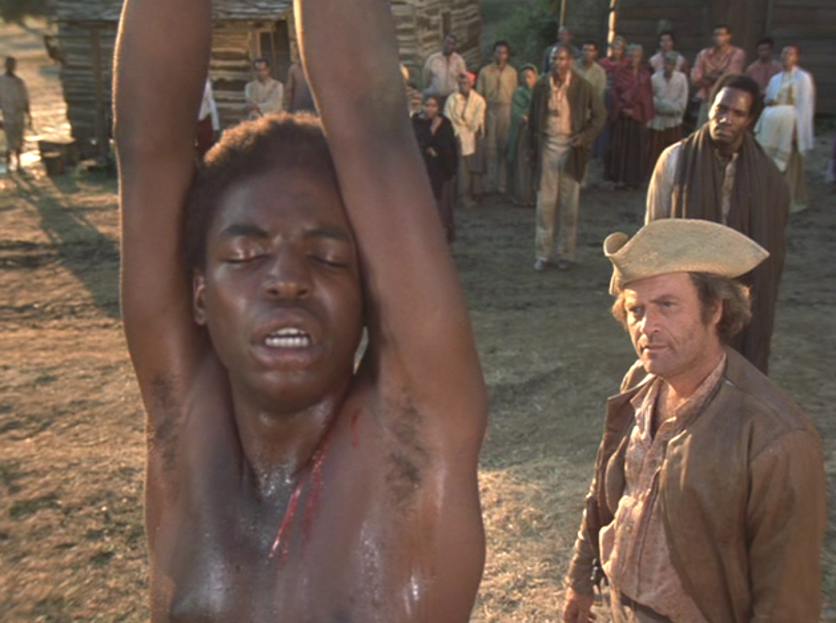
Kunta Kinte being whipped, Roots (1977) screenshot, July 6, 2012. (http://irvine.wikis.gdc.georgetown.edu). Qualifies as fair use under US Copyright laws because of screenshot's low resolution.

Kunta Kinte being whipped, Roots (1977) screenshot, July 6, 2012. (http://irvine.wikis.gdc.georgetown.edu). Qualifies as fair use under US Copyright laws because of screenshot’s low resolution.

With 12 Years A Slave (2013), though, I wanted to see it even before it came out here in the DC area in August. I’d heard about this film for months even before it was out in “select cities” in the US. Between Chiwetel Ejiofor and Michael Fassbender — two supreme British actors — I knew the film would be good. And depressing. And sad. And anger-inducing. And stomach churning. It would be an emotional roller-coaster-ride akin to my introduction to Roots on ABC in February ’77, when I was only seven years old.

So what stopped me from seeing it? My ten-year-old son. I wanted him to see the film with me. But I also knew that he would have a lot of questions. Outside of family and his visits to watch me teach my American and World History classes, my son has had little exposure to race in popular culture in an obvious sense. Most of his friends in our suburban, middle-class Silver-Spring-world are White, and his other Black friends have even less exposure to race than our deliberate injections (or inoculations) for our son.

I decided not to take him to see 12 Years A Slave because it would’ve been two hours of questions in a crowded theater, with those sitting around us ready to strangle us for ruining their watching experience. But I did queue it via Netflix weeks before it came out on DVD, with the expectation that we would watch it during his Spring Break, Easter Week.

As soon as I told my son that we were watching 12 Years A Slave last week, he became whiny and upset. Whiny because his time away from anime and Disney shows would be interrupted with parenting. Upset because of the movie title and its implications. As my son said to me when he was upset, “You made me watch Roots last year!” Well, we watched three hours of it, enough for him to see the sequence of kidnapping, the Middle Passage, slave auctions, running away, rape, whippings, and Kunta Kinte’s foot cut off. I guess the message of slavery and history really did stick with him!

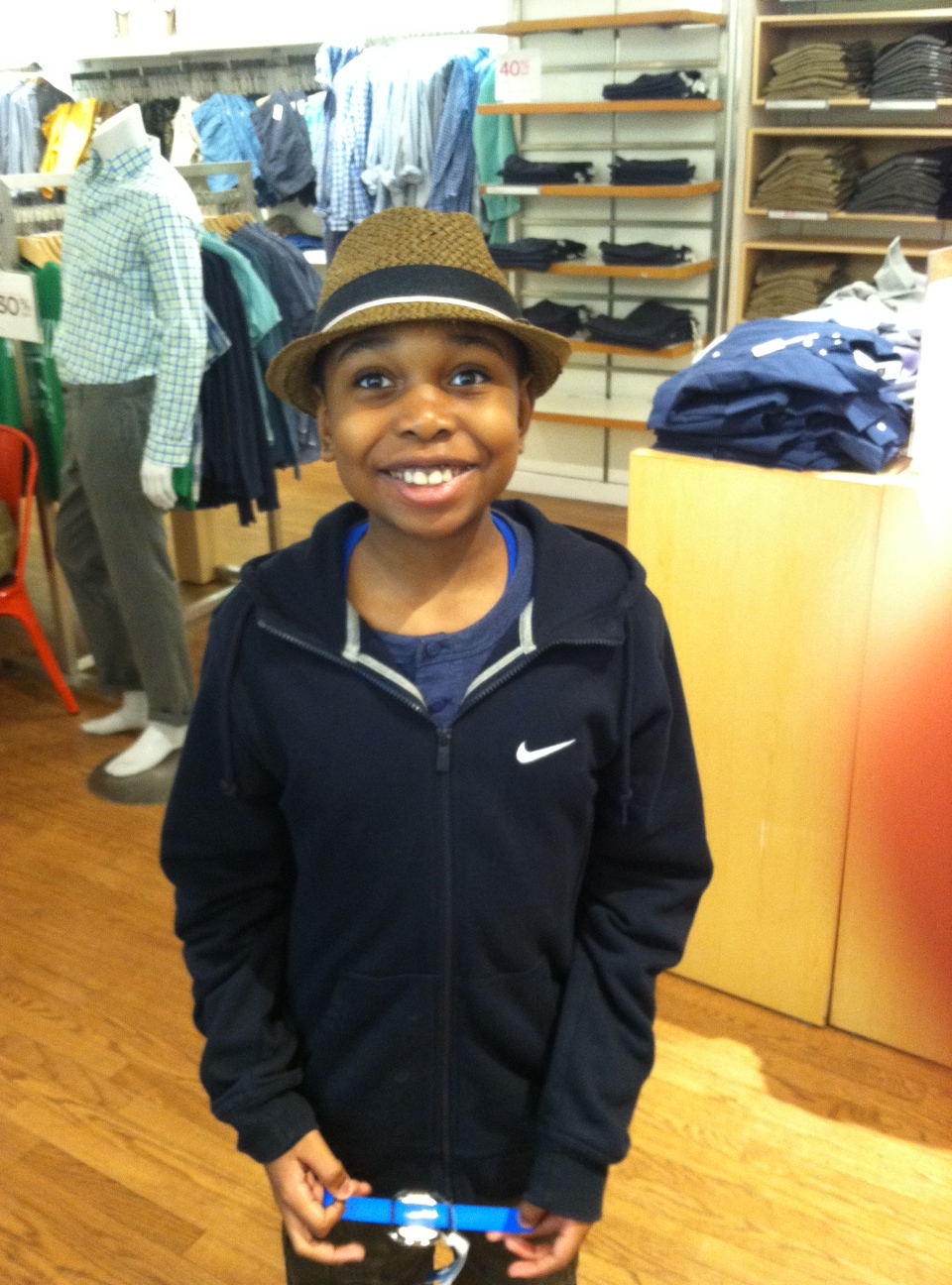
Noah trying to look cool at  The Gap store, Chevy Chase, MD, March 28, 2014. (Donald Earl Collins).

Noah trying to look cool at The Gap store, Chevy Chase, MD, March 28, 2014. (Donald Earl Collins).

We finally sat down and watched 12 Years A Slave Thursday evening. And yes, Noah did have a ton of questions, about Solomon Northrup, about free Blacks, kidnapping, mistreatment and the concept of property, about race, sexual attraction and rape, and about the rule of law. But I was more surprised about two things. One, my son sat through most of the two-and-a-quarter hour film, and only got up twice. Two, he paid serious attention in a way that he hadn’t appeared to in watching serious films before.

Still, my son was more than happy to return to his Nintendo 3DS and the land of Disney shows before bedtime that evening. The fact that he fell asleep right after bedtime, though, made it obvious, at least to me, that we’d given him more thought for food about history, race, and his own heritage.

And though I don’t think the movie was as epic as the hype-meisters have presented it to be, it was a great film, with great acting — I’m not sure if todays American actors could’ve pulled off Ejiofor’s, Fassbender’s or Lupita Nyong’o’s roles. 12 Years A Slave is also an important film, at least in terms of interrogating the meaning of race and inhumanity in this world. I just hope that those messages made it into my son’s conscious thinking. Time will tell, but enlightenment is a journey, not a race.

Bow Down to Isabel Wilkerson

27 Thursday Mar 2014

Posted by decollins1969 in 1, Academia, Boy @ The Window, Carnegie Mellon University, culture, Eclectic, Jimme, Marriage, Mount Vernon New York, My Father, New York City, Politics, Pop Culture, race, Youth

≈ Leave a comment

Tags

Academic Writing, Black Migration, Book Review, Creative Nonfiction Writing, Great Migration, Isabel Wilkerson, Joe William Trotter Jr., Proletarianization Thesis, The Warmth of Other Suns (2011)


Isabel Wilkerson, The Warmth of Other Suns, front cover (2011), Random House.

Isabel Wilkerson, The Warmth of Other Suns, front cover (2011), Random House.

I’ve finally read Isabel Wilkerson’s book The Warmth of Other Suns (2011) this month, just as I finished teaching a mini-course in post-1865 African American history. If I ever have the opportunity again to choose my own books for a survey-level course in African American history, this would be one of my cornerstone books. I know I stand at the back of a very long list when I say this, but this is a wonderfully powerful and insightful book, with language and a writing style equally as tender.

This was what I wrote regarding my first impressions on Goodreads.com:

My God – this book is a masterpiece! Wilkerson has done what historians and writers as diverse and groundbreaking as Kenneth Kusmer, David Levering Lewis, Joe William Trotter, Jr., Nicholas Lemann, Thomas Sugrue and James Grossman couldn’t (and in a couple of cases, wouldn’t) do. She put flesh, blood and bones on the Black individuals and families who migrated “up North” and out West throughout the bulk of the twentieth century. She didn’t distract with neo-Marxist, post-modern, post-structural, proletarian, or other overly academic theories for understanding the “hows” and “whys” behind Black migration between 1915 and the 1970s.

Reading Wilkerson’s The Warmth of Other Suns (2011) was like reading into my own family’s pasts (my mother and father came to New York City — specifically, the Bronx (Pelham Parkway and Wakefield) — during the 1960s from Arkansas and Georgia/Florida before moving to Mount Vernon). She captured so well the aspirations, the inspirations and the trepidations of the people who migrated, and the things they faced upon arrival. Wilkerson, most of all, grounded herself in the scholarly, but weaved it into a story that was nothing less than literary. If you’re a US or African American historian, a Black Studies, Black Women’s Studies or American Studies scholar, you must incorporate in your curriculum if you haven’t already. If you’re a writer who aspires to tell an important story — one that educates as it entertains — then The Warmth of Other Suns is a great place to start and Wilkerson a great writer to emulate.

Wilkerson called the Great Migration one of the great events of the twentieth century. But it was more than that. It was one of the great events in American history, a silent and gradual revolution on par with westward expansion and more significant than the second wave of immigration from Southern and Eastern Europe to the US between 1870 and 1914. I and millions of others like me should know. I wouldn’t be writing at all if I wasn’t a child of two Black migrants who left farms in the South for New York City.

The Hillary Question

20 Thursday Mar 2014

Posted by decollins1969 in 1, culture, Eclectic, Marriage, Politics, Pop Culture

≈ 2 Comments

Tags

2016 Election, Barbara Jordan, Benazir Bhutto, Clintonites, Femininity, Feminism, Golda Meir, Hillary Clinton, Hillary-ites, Liberal Politics, Political Experience, Presidency, President, President Bill Clinton, Progressive Politics, Shirley Chisholm, Social Justice, Triangulation


Hillary Rodham Clinton, official (67th) Secretary of State portrait, January 27, 2009. (Gage via Wikipedia, US Dept of State). In public domain.

Hillary Rodham Clinton, official (67th) Secretary of State portrait, January 27, 2009. (Gage via Wikipedia, US Dept of State). In public domain.

As it is Women’s History Month, it would be a real shame to let it go by without comment on the second attempt to crown former First Lady, US Senator and Secretary of State Hillary Clinton the next President of the United States. Only, this attempt at coronation has been underway literally since the week after President Barack Obama’s reelection in November ’12.

We have at least sixteen months before the campaigning for the ’16 election cycle heats up to luke-warm seriousness, and yet the Hillary-ites (my name for her branch of the Clintonites) have been out in force proclaiming Clinton to be the most qualified, the most deserving, with the most diverse set of experiences necessary to be the forty-fifth POTUS. And, by the way, she’s a woman, her supporters seem to emphasize at every turn, as if her gender alone makes her deserving of the office.

If it comes down to it in thirty-two months, I will hold my nose while voting for Hillary Clinton over her potential GOP opponent (as it’s as likely as a man-made black hole that the Republicans would put up a progressive the equivalent of a Teddy Roosevelt). But I cannot in good conscience support any effort to have her become the next president. It’s not about gender for me. Despite the Zionism she represented, I admired Golda Meir, not to mention, Shirley Chisholm, Barbara Jordan, Benazir Bhutto and Indira Gandhi. Really, my issue with Hillary Clinton comes down to what two other people represent — the late Margaret Thatcher, and Mrs. Clinton’s husband, President Bill Clinton, our forty-second president.

My issues in detail:

1. Hillary Clinton’s election is a victory for American women. This bothers me more than any other argument. It’s similar to the argument for Obama that came out of the ’08 election — that this would be a victory for Blacks and forward-thinking Americans — especially for supporters who had no idea about his agenda. In Obama’s case, his agenda was a difficult one to know or articulate — he’d only been on the national stage for four years, and his excellent memoir Dreams from My Father (1995, 2004) didn’t often match his policy-specific proclamations (that is, on the infrequent occasions in which he made them).

Lilly Ledbetter discusses why Barack Obama (who would sign the equal pay act that is in her name) is the best candidate for working families, Pittsburgh, PA, October 9, 2008. (Blargh29 via Wikipedia). Released to public domain.

Lilly Ledbetter discusses why Barack Obama (who would sign the equal pay act that is in her name) is the best candidate for working families, Pittsburgh, PA, October 9, 2008. (Blargh29 via Wikipedia). Released to public domain.

In Hillary Clinton’s case, we have a record of her statements and policy prescriptions, going back to the mid-1990s. Despite the wishes of many Hillary-supporting feminists, Mrs. Clinton’s record on issues as far-ranging as reproductive rights, equal pay, women serving in the military, really, any progressive issues that affected women, has been inconsistent. Since the universal health care debacle she experienced in ’94, Clinton has spoken little in public about these issues. She proposed few bills related to women’s rights while serving one and a third terms (eight years) in the Senate, and wasn’t exactly front and center on issues like repealing DADT or DOMA or the Lilly Ledbetter Fair Pay Act of ’09 during her time campaigning or during her years as Secretary of State.

Maybe there’s a really good argument to be made for supporting Hillary Clinton, but seeing her as a vanguard of feminism or progressive social justice shouldn’t be one of them. It seems that her supporters may be confusing femininity with feminism.

2. Hillary has lots of political experience for the office of President. Sure, she has experience, but I wouldn’t go so far to argue that Hillary Clinton’s experience is above and beyond anyone else’s. Despite her work on the universal healthcare bill in ’94, we shouldn’t count her time as First Lady. It’s not an elected or appointed office, which was one reason why Mrs. Clinton found herself in an antagonistic relationship with Congress and the American public.

So, that leaves her time in the Senate (which I commented on in 1.) and her time as Secretary of State. In the former position, there’s still the fact that she voted for action in Iraq in ’02. In the latter position, there’s the theme of inaction in terms of Iran, the Arab Spring, and yes, despite the right-wing hyperbole, Benghazi. It seems that John Kerry as Secretary of State has found himself doing a lot more in one year than Mrs. Clinton did in four. I’m not sure that Hillary Clinton’s experience is one that should be used as justification for a four-year-long victory lap conducted on her behalf by her supporters.

Logo of Hillary Rodham Clinton presidential campaign, December 13, 2008. (718 Bot via Wikipedia). Qualifies as fair use under US Copyright laws -- low resolution/critical commentary re: Hillary Clinton's possible 2016 Presidential run, a subject of public interest.

Logo of Hillary Rodham Clinton presidential campaign, December 13, 2008. (718 Bot via Wikipedia). Qualifies as fair use under US Copyright laws — low resolution/critical commentary re: Hillary Clinton’s possible 2016 Presidential run, a subject of public interest.

3. Hillary Clinton has a unique set of experiences that make her preeminently qualified to be President. No. Not buying this argument. Without a gun to my head, I can think of people whose combination of direct political experiences and diverse set of life experiences would be good potential candidates for President, even in ’16. Joe Biden, Elizabeth Warren, Patty Murray, and Tammy Baldwin, and that’s just the Vice President and the US Senate. That Hillary Clinton learned how to be President by osmosis from being married to Bill isn’t comforting at all. If she follows POTUS 42’s strategy of testing-the-wind-with-right-index-finger triangulation, we will all suffer for it. Plus, by this definition, shouldn’t Michelle Obama run for President in ’16 also?

Would Hillary Clinton be a terrible choice? No. But she would be an uninspiring one, one whose organizational and management skills would be in question from day one, precisely because of the political and other experiential baggage she’s carried for more than twenty years. The office of President is already one that’s been bought and paid for in recent decades. The coronation of Hillary Clinton, if successful, will continue this trend, and to the detriment of every ordinary American, male, female and transgender.

My and Diane Ravitch’s Path to Reign of Error

11 Tuesday Mar 2014

Posted by decollins1969 in 1, Academia, Boy @ The Window, Carnegie Mellon University, culture, Eclectic, Mount Vernon High School, Mount Vernon New York, New York City, Patriotism, Pittsburgh, Politics, Pop Culture, race, Upper East Side, Youth

≈ Leave a comment

Tags

Bill & Melinda Gates Foundation, Book Review, Corporate Education Reform, Diane Ravitch, Fear of a "Black" America (2004), High-Stakes Testing, Humanities Program, Institutional Racism, Michelle Rhee, Multiculturalism, Neoconservative Movement, Politics of Education, Poverty, Privatization, Racial Segregation, Racism, Reign of Error (2013), Social Injustice, Social Justice, Teach for America, Writing Passion


Reign of Error (2013) by Diane Ravitch, front cover. (http://bn.com).

Reign of Error (2013) by Diane Ravitch, front cover. (http://bn.com).

I first began reading Diane Ravitch in July 1990, the summer before my senior year at the University of Pittsburgh. It was the summer in which I became interested in understanding magnet programs and their relationship with desegregation and diversity efforts, courtesy of my own experience with Mount Vernon, New York public schools and its now defunct Humanities Program. I read both The Great School Wars: New York City, 1805-1973 (1974) and The Troubled Crusade: American Education, 1945-1980 (1985) that summer, with education scholar and Ford Foundation director Jeanne Oakes’ Keeping Track: How Schools Structure Inequality (1985) sandwiched in between.

It was the beginning of a twenty-year period of constantly intellectual disagreement between me and Ravitch. Oakes’ work captured inequality in terms of race and socioeconomics so much better than Ravitch, whose writings back then often treated these inequalities and distinctions as afterthoughts. When I shifted my research area to multicultural education and multiculturalism, though, that was when I found Ravitch’s absolutist defense of so-called traditional American democratic education and all things e pluribus unum unbelievably stifling. With all Ravitch knew about the politics of education, in New York and with the US Department of Education, how could she possibly defend a system that did as much to control and exclude students as it did to provide something akin to an equal opportunity?

I chalked Ravitch up to being another out-of-touch neoconservative, scared to death of race and diversity and multiculturalism. I said as much at conferences like the American Educational Research Association meeting and other conferences. I wrote as much in my dissertation and in my first book, Fear of a “Black” America: Multiculturalism and the African American Experience (2004). Through it all, I always found Ravitch’s writing compelling, but her conclusions wanting, because they lacked perspective and empathy in the context of public schools and diversity.

Then, Ravitch wrote Left Back: A Century of Battles Over School Reform in 2000. Though it contained some of her common themes — overemphasis on the mantra of reform, the need for more testing, support for school choice, denigration of a multicultural curriculum — Ravitch showed growth in this book. She was less hostile to a more progressive curriculum and seemed, for the first time, really, to understand how much race and poverty had shaped the direction and the harshness of school reform going back to 1900. I happily used Ravitch’s Left Back in my History of American Education Reform course at George Washington in 2002. For her book provided a comprehensive and even-handed overview of the politics of K-12 education in a way that any educator of any American ideological perspective could understand.

I’ve finally read Ravitch’s Reign of Error: The Hoax of the Privatization Movement and the Danger to America’s Public Schools (2013). Reign of Error is Ravitch at her most passionate and energized. If I hadn’t read a couple dozen of Ravitch’s articles from the 1980s and 1990s and four of her previous books, I would think that this was her first book, as there is sense of urgency in Reign of Error that can seldom be found outside of epic memoirs and epic fiction novels.

Ravitch’s argument in Reign of Error is a simple one. Corporate education reform, if allowed to continue unfettered, will destroy public education in the US, and in the process, American democracy. Privatizing public schools (i.e., turning them into “public” charter schools), destroying teacher’s unions, constant high-stakes testing, bypassing school boards and forgetting about racial segregation and poverty — that’s corporate education reform’s agenda. As Ravitch said in Chapter 12 on the fallacies of merit pay for teachers, “Merit pay is the idea that never works and never dies (p. 119).” She could have also substituted the words “school choice,” “creationism,” “standardized testing,” “closing schools,” and “privatization” for “merit pay.”

But Ravitch goes further in her 400-page treatise. That though public education in the US has had its share of problems — the need for more teacher training and time for professional development, racial segregation and high levels of poverty while underfunded — that corporate education reform has compounded these problems several times over. That with corporate education reform, teachers, parents and students will have no say in public education, at least the ones without their own personal foundation with which to endow their own public charter school.

From a writer’s standpoint, this wasn’t Ravitch’s best effort. Her argument is repetitive, one where she likely could’ve cut the main chapters by a quarter (about 100 pages) and made the same points. I likely could’ve become inebriated if I had a shot of vodka every time the words “poverty,” “Gates,” “Walton,” “Broad,” “high-stakes testing,” and “corporate education reform” come up. But given my history with reading Ravitch and with this topic, of course Reign of Error was repetitive — it was like reading my own words on this same topic.

Ultimately, Ravitch’s Reign of Error is a primer for anyone interested in averting the social injustice that is the corporate education reform tyranny of wealthy philanthropists, money-grubbing entrepreneurs and politicians across America’s limited ideological spectrum. For those whom up to now this issue has been of limited interest, or for those who’ve felt the change in public education but haven’t quite been able to articulate those feelings, Reign of Error is for you.

For educators, parents and even students already involved in writing about or protesting against corporate education reform, this book is still for you. Ravitch provides so much ammunition that Reign of Error can be applied in numerous ways to numerous situations. At school board meetings. With #AskMichelleRhee hash tags on Twitter. In job interviews with Teach for America and with the Bill & Melinda Gates Foundation. In letters to the editor of the mainstream newspapers and in comments to mainstream TV and radio newscasters. In arguments with neoconservative parents who send their kids to private schools.

“Protecting our public schools against privatization and saving them for generations of American children is the civil rights issue of our time (p. 325).” is how Ravitch ended her Reign of Error. It’s not an exaggeration. But it does beg a question. If we can successfully fend off corporate education reform — and assume that the country will continue to ignore the poverty and racial segregation that Ravitch desperately wants addressed — can she and I then spend five minutes discussing multiculturalism?

Fear and (White) Women’s History Month

06 Thursday Mar 2014

Posted by decollins1969 in 1, Boy @ The Window, culture, Eclectic, Politics, Pop Culture, race, Youth

≈ Leave a comment

Tags

Death By A Thousand Cuts, Domestic Violence, Elitism, Fear, Feminism, Microaggressions, Misogyny, Racism, Sexual Harassment, Stereotypes, Threats, Violence, Whiteness, Women's History Month


The Scream (1893) by Edvard Munch, The National Gallery, Oslo, Norway, November 27, 2013. (The Herald via Wikipedia). In public domain (US).

The Scream (1893) by Edvard Munch, The National Gallery, Oslo, Norway, November 27, 2013. (The Herald via Wikipedia). In public domain (US).

I often find it ironic that Women’s History Month follows immediately after Black History Month. In this sequence, both are racialized, as the former tends to represent White women, while the latter represents all Blacks regardless of gender, sexual orientation, or country of origin. Meaning that women of color often have to fight to be recognized during Women’s History Month, that poor women often go unrecognized in both Black and Women’s History months, and that other nuances of demographics and history aren’t thought of at all.

Such is the case with issues of -isms within feminism and Women’s History Month. Particularly when combined with the actualization of fear. In the cases of domestic violence, rape, assault, kidnapping, harassment and other threats against women, it’s certainly understandable that the fear of such things (and the breaking down those threats and fears in dialogue) are a big part of feminism and Women’s History Month more specifically. But when combined with certain -isms — especially racism and elitism — these issues become more about profiling stereotypical threats rather than dealing with real threats against women, especially (but not exclusively) for White women.

Compact Glock 19 in 9x19mm Parabellum, November 4, 2007. (Vladimir Dudak via Wikipedia). Released to public domain via CC 3.0 & GNU.

Compact Glock 19 in 9x19mm Parabellum, November 4, 2007. (Vladimir Dudak via Wikipedia). Released to public domain via CC 3.0 & GNU.

It’s something I experience every day. A White woman crossing the street as I approach, on my way home, to my car, to run an errand, or to pick up my son from school. A woman — White or Black — gasping audibly at the sight of me in an elevator, some even not getting on board, as if I had a ski mask over my face and a Glock in my right hand. White female co-workers who, upon seeing me outside the office, would put on a blank face and walk by me while I’m holding open a door, too scared to even say “Hello,” much less a “Thank you.”

It’s the nearly daily reminder that where feminism and Whiteness intertwine, I represent the Black male misogynist. I am dangerous, the guy whom White women and middle class women of color imbue anti-feminist threats and violence. Even when standing still on an elevator, deep in my own thoughts about work, teaching, family and writing.

Martyrdom of Joseph Marchand (1860) by unknown, September 27, 2008. (World Imaging via Wikipedia). Released to public domain via CC 3.0 and GNU.

Martyrdom of Joseph Marchand (1860) by unknown (or death by 1,000 cuts), September 27, 2008. (World Imaging via Wikipedia). Released to public domain via CC 3.0 and GNU.

I get it. White women often have to expend micro-energies on microaggressions from men — including Black men — in order to get through the day. For some, it’s probably an exhausting part of their existence. Likely so much so that they forget to turn off their shields even when bumping into a male co-worker or friend.

From my perspective, though, it’s not that simple. It’s not like I look at every White male and female and see another willfully ignorant and entitled racist ready to accuse me of ruining the country or threaten me with bodily harm. I think that in some feminist circles, racial and classist profiling goes on even more so than with most police officers. Fear is an important part of our existence, but it shouldn’t be the centerpiece of how anyone lives their lives, even when it’s justifiable.

In thinking about feminism, Whiteness and Women’s History Month, my two little cents’ worth of thoughts come down to this. I’m tired of being a victim of your fears, which when multiplied over the past 150 years, have often led to misunderstandings, false accusations, arrests, convictions, beatings and deaths. I’m tired of abstract discussions of microaggressions, threats and violence against mostly White women that don’t include the perspectives of women of color. And I’m tired of feminists who refuse to evaluate their own elitism and Whiteness in how they go about their everyday lives.

What I Didn’t Know Growing Up – It Still Hurts

27 Thursday Feb 2014

Posted by decollins1969 in 1, Boy @ The Window, Christianity, culture, Eclectic, Hebrew-Israelite, Jimme, Marriage, Mount Vernon New York, My Father, New York City, Politics, Pop Culture, race, Religion, Sports, Work, Youth

≈ Leave a comment

Tags

Achievements, Ancestors, Arkansas, Basketball, Black History Month, Collins Family, Family, Gill Family, Harrison Georgia, Houston Texas, Ignorance, Jim Crow, Knowledge, Lineage, Mom, Mother, Parenting, Poverty, Segregation, Tenant Farming, Universality, Wisdom


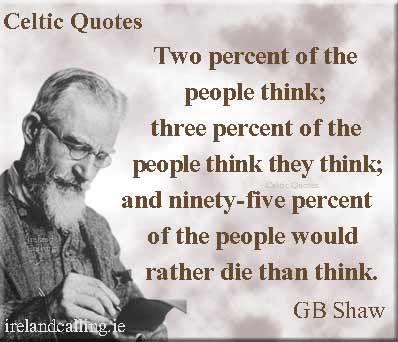
George Bernard Shaw and ignorance, June 2013. (http://www.irelandcalling.ie/).

George Bernard Shaw and ignorance, June 2013. (http://www.irelandcalling.ie/).

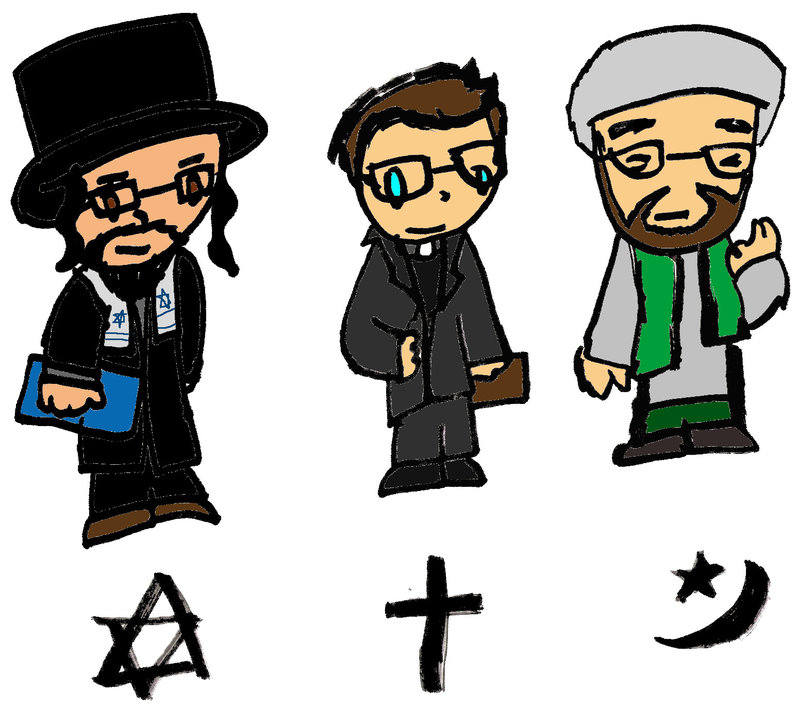
“My people perish for a lack of knowledge,” it seems, is something that anyone can find in almost any religion’s texts anywhere. Heck, depending on perspective, even atheists in general can agree with this statement (of course, the issue would be what constitutes “knowledge”). I read this verse (it’s in Hosea and Isaiah, and versions of it as well as in Jewish texts and the Qur’an) for the first time when I was fifteen in ’85, less than a year after I converted to Christianity. Boy, I had no idea how little I knew about myself, my family and my history when I first read that verse twenty-nine years ago.

In light of the end of Black History Month, I wouldn’t be me without noting how little any of us know about our families, our lineages and our ancestors. But it’s not just true of the millions of us descended from West and Central Africans kidnapped, bound, abused, raped and nearly worked to death to provide Europeans (and Arabs) wealth and comfort. Most of us don’t even know what we think we know about much more recent history and events than surviving the Middle Passage or overcoming Jim Crow.

A rabbi, a priest and an imam, 2013-2014. (PizzaSpaghetti via http://www.deviantART.com).

A rabbi, a priest and an imam, 2013-2014. (PizzaSpaghetti via http://www.deviantART.com).

For me and my family, I knew so little about us that my Mom could’ve told me that Satan had thrown us out of Hell for being too brown to burn and I would’ve accepted it as an appropriate answer. All I really knew of my mother’s side of my family was that they were from Arkansas, that my Uncle Sam (I chuckled sometimes thinking of the irony) was my Mom’s closest sibling, and that they grew up as dirt poor as anyone could get without living in a thatched root hut on less than $1 a day.

I asked for more during those rare moments when my focus wasn’t on high school, getting into college and getting as far away from 616 and Mount Vernon, New York as possible. I ended up finding out about how my Mom’s mother once beat her with the back of a wooden brush for not being ready on time for church, that there were years where her father made only $200 total from cotton farming, and that she was the oldest of twelve kids. She had done some form of work either taking care of her siblings, cooking, cleaning, washing clothes by hand, and hoeing and picking cotton, since she was five or six. Oh yeah, and she played basketball in high school.

On my father’s side, I knew a bit more, if only because Darren and me went with my father to visit the Collins farm in Harrison, Georgia in August ’75. I was five and a half then, but I do remember the fresh smoked ham and bacon, the smell of my grandfather’s Maxwell House coffee, me being too scared to ride a horse, so they put me on a sow (my brother did ride the horse, though). But what people did, how a Black family owned their own land going back to the turn of the twentieth century, I wouldn’t have known to even ask about at not quite six years old.

What I didn’t know until after high school, college, even after earning a Ph.D. in knowing (that’s what a history degree ultimately is) was so much worse than I imagined. To find out at twenty-three that my Mom was a star basketball player in high school. She played center, and led her team to Arkansas’ segregated state quarterfinals in ’65. My Uncle Sam played four sports in high school (basketball, football, baseball and track and field) and was offered college scholarships, but didn’t have the grades to move forward. I learned a year later that my Uncle Paul followed in their footsteps, and played three years at the University of Houston, left early and played for the Houston Rockets in ’82-’83 (not a good year for them, or for me, for that matter) before blowing out a knee and moving into entertainment work.

My father’s family — at least the women of the family — boasted at least three college degrees. Two of my aunts became school teachers. My uncles started businesses in Atlanta and in parts of rural Georgia, working their way well beyond the farm to the work they wanted to do.

Unidentified tenant farmer, his home, automobile, and family, Lee Wilson & Company, rural Arkansas, 1940s. (http://libinfo.uark.edu/SpecialCollections/)

Unidentified tenant farmer, his home, automobile, and family, Lee Wilson & Company, rural Arkansas, 1940s. (http://libinfo.uark.edu/SpecialCollections/)

I learned all of this by the time I turned thirty-two, just a year and a half before my own son was born. How many different decisions I would’ve made about my life if I had known that one half of my family was full of athletes, and the other half was full of business owners, not to mention three aunts with a college education? I would’ve known to try out for any sport in high school — particularly basketball — and to not be afraid to fail. I would’ve known that I was only the first person in my immediate family to take a go at college beyond a certificate in dietary science (my Mom earned that in the summer of ’75), and not the first one on either side as I once thought.

Most of all, I would’ve known that though I was lonely and played the role of a loner my last years growing up, that I wasn’t alone. There were a whole bunch of people in my lineage, some of whom were alive and well, from whom I could’ve drawn strength, found kinship, felt pride and confidence in, where I wouldn’t have seen myself as an abandoned and abused underdog anymore.

If I’d known all this growing up, I wouldn’t have felt and sometimes feel robbed now, by poverty and parenting, abuse and alcoholism. This is why having knowledge to draw from is so important.

← Older posts
Newer posts →

Boy @ The Window: A Memoir

Boy @ The Window: A Memoir

Places to Buy/Download Boy @ The Window

There's a few ways in which you can read excerpts of, borrow and/or purchase and download Boy @ The Window. There's the trade paperback edition of Boy @ The Window, available for purchase via Amazon.com at http://www.amazon.com/Boy-Window-Donald-Earl-Collins/dp/0989256138/

There's also a Kindle edition on Amazon.com. The enhanced edition can be read only with Kindle Fire, an iPad or a full-color tablet. The links to the enhanced edition through Apple's iBookstore and the Barnes & Noble NOOK edition are below. The link to the Amazon Kindle version is also immediately below:

scr2555-proj697-a-kindle-logo-rgb-lg

Boy @ The Window on Amazon.com: http://www.amazon.com/Boy-The-Window-Memoir-ebook/dp/B00CD95FBU/

iBookstore-logo-300x100

Boy @ The Window on Apple's iBookstore: https://itunes.apple.com/us/book/boy-the-window/id643768275?ls=1

Barnes & Noble (bn.com) logo, June 26, 2013. (http://www.logotypes101.com).

Boy @ The Window on Barnes & Noble: http://www.barnesandnoble.com/w/boy-the-window-donald-earl-collins/1115182183?ean=2940016741567

You can also add, read and review Boy @ The Window on Goodreads.com. Just click on the button below:

Boy @ The Window

Twitter Updates

Tweets by decollins1969
  • RSS - Posts
  • RSS - Comments

Archives

  • June 2025
  • April 2023
  • September 2022
  • August 2022
  • July 2022
  • June 2022
  • May 2022
  • April 2022
  • March 2022
  • January 2022
  • December 2021
  • November 2021
  • October 2021
  • September 2021
  • August 2021
  • July 2021
  • June 2021
  • April 2021
  • March 2021
  • February 2021
  • January 2021
  • December 2020
  • November 2020
  • October 2020
  • September 2020
  • August 2020
  • July 2020
  • May 2020
  • April 2020
  • March 2020
  • January 2020
  • December 2019
  • November 2019
  • August 2019
  • July 2019
  • June 2019
  • May 2019
  • April 2019
  • March 2019
  • February 2019
  • January 2019
  • December 2018
  • November 2018
  • October 2018
  • September 2018
  • August 2018
  • July 2018
  • June 2018
  • May 2018
  • March 2018
  • February 2018
  • January 2018
  • December 2017
  • November 2017
  • October 2017
  • September 2017
  • August 2017
  • July 2017
  • June 2017
  • May 2017
  • April 2017
  • March 2017
  • February 2017
  • January 2017
  • December 2016
  • November 2016
  • October 2016
  • September 2016
  • August 2016
  • July 2016
  • June 2016
  • May 2016
  • April 2016
  • March 2016
  • February 2016
  • January 2016
  • December 2015
  • November 2015
  • October 2015
  • September 2015
  • August 2015
  • July 2015
  • June 2015
  • May 2015
  • April 2015
  • March 2015
  • February 2015
  • January 2015
  • December 2014
  • November 2014
  • October 2014
  • September 2014
  • August 2014
  • July 2014
  • June 2014
  • May 2014
  • April 2014
  • March 2014
  • February 2014
  • January 2014
  • December 2013
  • November 2013
  • October 2013
  • September 2013
  • August 2013
  • July 2013
  • June 2013
  • May 2013
  • April 2013
  • March 2013
  • February 2013
  • January 2013
  • December 2012
  • November 2012
  • October 2012
  • September 2012
  • August 2012
  • July 2012
  • June 2012
  • May 2012
  • April 2012
  • March 2012
  • February 2012
  • January 2012
  • December 2011
  • November 2011
  • October 2011
  • September 2011
  • August 2011
  • July 2011
  • June 2011
  • May 2011
  • April 2011
  • March 2011
  • February 2011
  • January 2011
  • December 2010
  • November 2010
  • October 2010
  • September 2010
  • August 2010
  • July 2010
  • June 2010
  • May 2010
  • April 2010
  • March 2010
  • February 2010
  • January 2010
  • December 2009
  • November 2009
  • October 2009
  • September 2009
  • August 2009
  • July 2009
  • June 2009
  • May 2009
  • April 2009
  • March 2009
  • February 2009
  • January 2009
  • December 2008
  • November 2008
  • October 2008
  • September 2008
  • August 2008
  • July 2008
  • June 2008
  • May 2008
  • April 2008
  • March 2008
  • February 2008
  • January 2008
  • December 2007
  • November 2007
  • October 2007
  • September 2007
  • August 2007
  • July 2007
  • June 2007

Recent Comments

MaryPena's avatarMaryPena on My Day of Atonement/Bitter Hat…
decollins1969's avatardecollins1969 on No Good Teaching Deed Goes…
Mary Rose O’Connell's avatarMary Rose O’Connell on No Good Teaching Deed Goes…

NetworkedBlogs on Facebook

NetworkedBlogs
Blog:
Notes From a Boy @ The Window
Topics:
My Life, Culture & Education, Politics & Goofyness
 
Follow my blog

616 616 East Lincoln Avenue A.B. Davis Middle School Abuse Academia Academy for Educational Development AED Afrocentricity American Narcissism Authenticity Bigotry Blackness Boy @ The Window Carnegie Mellon University Child Abuse Class of 1987 CMU Coping Strategies Crush #1 Crush #2 Death Disillusionment Diversity Domestic Violence Economic Inequality Education Family Friendship Friendships Graduate School Hebrew-Israelites High-Stakes Testing Higher Education History Homelessness Humanities Humanities Program Hypocrisy Internalized Racism Jealousy Joe Trotter Joe William Trotter Jr. K-12 Education Love Manhood Maurice Eugene Washington Maurice Washington Misogyny Mother-Son Relationship Mount Vernon High School Mount Vernon New York Mount Vernon public schools Multiculturalism MVHS Narcissism NFL Pitt Pittsburgh Politics of Education Poverty President Barack Obama Race Racial Stereotypes Racism Relationships Self-Awareness Self-Discovery Self-Reflection Sexism Social Justice Teaching and Learning University of Pittsburgh Violence Whiteness Writing

Top Rated

Blog at WordPress.com.

  • Subscribe Subscribed
    • Notes from a Boy @ The Window
    • Join 103 other subscribers
    • Already have a WordPress.com account? Log in now.
    • Notes from a Boy @ The Window
    • Subscribe Subscribed
    • Sign up
    • Log in
    • Report this content
    • View site in Reader
    • Manage subscriptions
    • Collapse this bar
 

Loading Comments...