• About Me
  • Other Writings
  • Interview Clips
  • All About Me: American Racism, American Narcissism, and the Conversation America Can’t Have
  • Video Clips
  • Boy @ The Window Pictures
  • Boy @ The Window Theme Music

Notes from a Boy @ The Window

~

Notes from a Boy @ The Window

Category Archives: Politics

Montgomery County Public Schools’ World Studies Mythology

29 Tuesday Sep 2015

Posted by decollins1969 in 1, Academia, culture, Eclectic, Politics, Pop Culture, race, Religion, Youth

≈ Leave a comment

Tags

Comfort Food, Common Core, Common Core State Standards, Crock, Curriculum 2.0, Curriculum Development, Eurocentric Perspective, Eurocentrism, Falsehoods, Latin America, Maryland, MCPS, Middle Ages, Middle School, Montgomery County Public Schools, Multicultural Education, Multiculturalism, Mythology, Teaching and Learning, Technocrats, Western Civilization, Western Dominance, World History, World Studies


Satirical cartoon of Rudyard Kipling's The White (?) Man's Burden ("white" colonial powers being carried as the burden of their "colored" subjects), Life Magazine, March 16, 1899. (Travb via Wikipedia). In public domain.

Satirical cartoon of Rudyard Kipling’s The White (?) Man’s Burden (“white” colonial powers being carried as the burden of their “colored” subjects), Life Magazine, March 16, 1899. (Travb via Wikipedia). In public domain.

My son is taking Advanced World Studies in seventh grade this year. As a historian — and one that’s taught World History fifteen times over the years — I thought it was a good thing that he would have exposure to world history and cultures before engaging in US history in eighth grade and in high school. Once again, the technocrats in K-12 education have proven me dead wrong. While there may be some exposure to the rest of the world, the frame for the curriculum is one that not-so-subtly implies that world studies, advanced or otherwise, cannot exist without a European or Western frame to tell students how to think about the non-Western part of the globe.

I noticed it the first week, but didn’t pay much attention to the brief synopsis (what teachers call their “syllabus”) of the course until Back to School Night last week. The four units for my son’s course are

  • Unit One: The Foundation of Modern Political Systems: Europe in the Middle Ages
  • Unit Two: The Influence of Culture in Africa: The Middle Ages and Today
  • Unit Three: Geography Shapes Latin America
  • Unit Four: The Impact of Economics: One World Past and Present

When I finally read through it, I was incensed. It sunk in with my experiences with AP World History and with World History at the college level why so many of my own students were almost completely ignorant of world history that wasn’t about ancient Greece, the Roman Empire, or Western Europe. School districts, even ones as above par as MCPS, have helped lull students into a false sense of security through the exchange of knowledge as comfort food, rather than a higher protein diet of actual history.Screen Shot 2015-09-29 at 7.12.09 AM

Unit One is fine, for the most part, although the idea of a nation-state or some sort of constitutional democracy doesn’t entirely come from Europe. But it’s downhill from there. Culture, Africa and the Middle Ages for Africa? Really? The Middle Ages is a specifically Western and Central European experience, as no civilization from the classical world experienced a greater decline or collapse than Rome in the fifth century CE. To just take that term and paste it unto another continent, another group of people, and their different history is just plain wrong. How about Culture and Africa, 1000-1500 CE? You don’t need the frame of Europe’s Middle Ages to discuss Africa, unless your point is to embed some sense of Western dominance as a subliminal theme within the curriculum.

Or unless the curriculum developers in Rockville were thinking about making the Age of European Discovery and the Transatlantic Slave Trade Africa’s “Middle Ages.” The period between 1450 and 1800, in which the Portuguese, the Dutch, the Spanish, the English, and the French helped stoke the fires of intertribal and cross-kingdom warfare to obtain millions of slaves for their colonies in the Western Hemisphere. That’s probably too much for the advanced twelve-year-old, though, no?

Storming of the Teocalli by Hernán Cortez and His Troops (1848), painting by Emanuel Leutze, January 11, 2012. (Penelope37 via Wikipedia). In public domain.

Storming of the Teocalli by Hernán Cortez and His Troops (1848), painting by Emanuel Leutze, January 11, 2012. (Penelope37 via Wikipedia). In public domain.

Unit Three and the term “Latin America?” Seriously? It covers the Maya, the Mexica (or rather, Aztecs), and the Inca, all prior to European contact in the sixteenth century. So technically, there’s no Latin in the Americas before 1500. MCPS, ever heard of the Americas, the Western Hemisphere, Mesoamerica, and Andean civilizations, all terms that are more accurate alternatives to Latin America in the time before Columbus and conquistadors? Unless, again, the point of curriculum designers here was to bake into the recipe for this course a sense of inevitability. That is, that the pre-Columbian cultures of the Western Hemisphere, no matter how sophisticated, were doomed to fall by the wayside in the wake of Western dominance over the globe.

Unit Four and “One World Past and Present” in the context of trade, economic systems, and communication bring the themes of European dominance together in the period since 1450. The MCPS curriculum designers do hint that “the cultural diffusion between many ‘worlds’ had both positive and negative consequences.” But for the most part, the technocrats provide a sense of progress to market-based economies and positive globalization in this unit, as Europeans led the charge to make the world one and whole.

Stainless steel Crock-Pot, September 29, 2015. (http://amazon.com).

Stainless steel Crock-Pot, September 29, 2015. (http://amazon.com).

This is a crock of a curriculum, MCPS, a shameful attempt at world studies. The course might as well be called, Advanced and Expanded Western Civilization, How Europeans Went From the Middle Ages to Dominating the World. The point of any world history or world studies course is supposed to be the study of specific bits of history of the world, without imposing a Western model, frame, or sense of progress and comparison on the rest of the world in the process. Otherwise, what’s the point? You might as well teach Western Civ in middle school, then, and save world history to teachers and curriculum designers who understand that the world is a bigger place than Western-culture-navel-gazing.

Though the pressures of Common Core may have birthed this new curriculum as part of MCPS’s Curriculum 2.0 efforts, it’s not specifically a Common Core-inspired curriculum. One of the problems with Common Core State Standards and PARCC assessments is that they mask the problems that existed in America’s K-12 education long before. One of which is fake efforts at diversity and a multicultural curriculum, of which MCPS’s World Studies is but one example. It may well be true that virtually all world history curriculum is bs, however. But that is an article for another day.

Aside

Past Labor’s Opportunities Lost

07 Monday Sep 2015

Posted by decollins1969 in 1, Academia, Boy @ The Window, Carnegie Mellon University, culture, Eclectic, Pittsburgh, Politics, Pop Culture, race, Work, Youth

≈ Leave a comment

Tags

Advisor-Student Relationships, Anger, CMU, Dissertation Completion, Howard University, Jealousy, job search, Joe William Trotter Jr., Labor Day, Mentoring, NYU, Post-Docs, Rage, Running Interference, Spencer Foundation, Spencer Foundation Dissertation Fellowship Program, Steven Schlossman, University of Maryland, University of Wisconsin-Madison


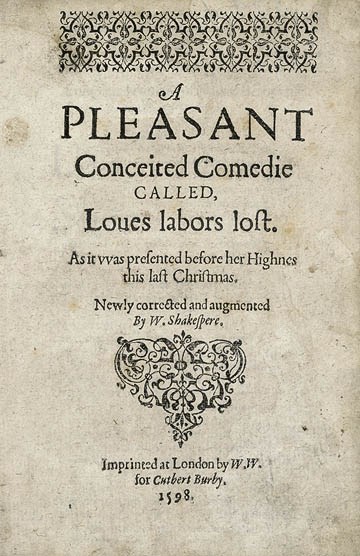
Title page of the first quarto of William Shakespeare's Love's Labour's Lost (1598), uploaded May 2, 2011 (Tom Reedy via Wikipedia). In public domain.

Title page of the first quarto of William Shakespeare’s Love’s Labour’s Lost (1598), uploaded May 2, 2011 (Tom Reedy via Wikipedia). In public domain.

One of the more gut-wrenching periods of my career began right after Labor Day 1995. In some respects, that period of my career has left a stain over the past two decades. Not so much in terms of what I have done or in what I’m doing now, as much as in setting limits on the range of possible outcomes with which I could’ve begun my career.

Right after Labor Day, I saw an ad in The Chronicle of Higher Education for an open-ranked (tenured or tenure-stream) position at NYU’s school of education in US education history. I hadn’t thought about teaching in a school of education before, but after meeting my friend Cath and having received my Spencer Foundation fellowship, I understood that this was likely a better choice for me than a history department. I wasn’t the only one who thought so. My department chair Steven Schlossman had received a letter and a telephone call from his equivalent peer at NYU asking if there were any graduate students in the pipeline who could apply for the position. Schlossman apparently told that department chair about me and my multiculturalism dissertation, and caught up with me that same week to give me a copy of the letter and encouraged me to apply for the job.

I was two-and-a-half chapters into my planned eight-chapter dissertation, and I still had some US Census data to look at and interviews to conduct as part of the process. I knew that my advisor Joe Trotter wouldn’t be happy about the idea of me applying for a job so soon into the process, but Schlossman and I also knew that the job — if I somehow got it — wouldn’t start for eleven months. That was more than enough time for me to write, revise, revise again, polish up and defend my dissertation. I was on a Spencer fellowship, after all!

A defensive pass interference penalty not called, Detroit Lions v. Dallas Cowboys Wildcard Game, January 4, 2015. (http://bleacherreport.com/articles/2319198-refs-pick-up-flag-after-pass-interference-on-cowboys-in-4th-quarter; FOX Sports).

A defensive pass interference penalty not called, Detroit Lions v. Dallas Cowboys Wildcard Game, January 4, 2015. (http://bleacherreport.com/articles/2319198-refs-pick-up-flag-after-pass-interference-on-cowboys-in-4th-quarter; FOX Sports).

Of course Trotter thought otherwise. He was incensed that Schlossman had discussed the NYU job with me, that I hadn’t talked with him about the position first. Of course Trotter said that he needed to “run interference” on my behalf, to protect me and my career. By “running interference,” Trotter meant that he would not write a letter of recommendation on my behalf. He told me to put the job out of my mind, to focus on my dissertation, and that we could revisit the prospect of apply for jobs when I was much further along.

A few months later, in February ’96, I saw another job ad in the Chronicle, this one for a history of education assistant professorship at University of Wisconsin-Milwaukee. Schlossman saw that ad as well, but I was still the dutiful ABD student with Trotter as my patron. I decided this time to approach Trotter before meeting with Schlossman about the job. Trotter flipped out again, telling me, “you’re not ready,” that he had seen too many of his own peers not finish dissertations when taking jobs, only to end up unemployed. Keep in mind, I had written six of my eight chapters at this point, and had started working on number seven that month.

Trotter’s “you’re not ready” pronouncements rang even more hollow in March, when I requested a letter from him to apply for a post-doctoral fellowship in African American Studies at University of Maryland, College Park. He refused at first, then agreed, with the caveat that he would write in his letter his belief that  I wouldn’t complete my dissertation in time to begin the fellowship at the end of August ’96. With that kind of endorsement, of course I didn’t apply!

When we finally had our blow-out argument that April 4th, I was frustrated, he was actually angry, for reasons I didn’t put together until I considered my age and his HNIC status and age later on. Most of Trotter’s stonewalling occurred after he found out that I was still only about to turn twenty-six at the time of the NYU job prospect. Between that and the limited mileage remaining in his proletarianization hypothesis, I was working for and with an advisor who was giving me mixed signals and mediocre advice. Both were based in part on jealousy, and in part on Trotter’s own bad experiences at University of Minnesota and on the job front in the 1970s and early 1980s.

Danger Bad Advice Ahead fake sign, September 7, 2015. (http://wordspicturesweb.com).

Danger Bad Advice Ahead fake sign, September 7, 2015. (http://wordspicturesweb.com).

Trotter didn’t understand that in blocking my first attempts to begin my career, he had helped set up a struggle for me to have even a semblance of a career before I had completed the first draft of my dissertation. As it was, I finished the first draft in June ’96, the second at the end of July, and polished it up before Labor Day Weekend ’96. That fact that I was done with all major revisions to my dissertation in time for any job that year made ready to strangle Trotter at that point.

Still, it would be only fair to say that my career moves — good and bad, smart and stupid — have mainly been of my own making. It would also be unfair to blame Trotter for any moves that I have made or didn’t make that didn’t work out after 1996-97. But every career has a beginning. And in the beginning, Trotter was there, making a mess of my first steps. It took until the spring of 2000 before Howard University offered me a tenure-track position in Afro-American Studies, to which I did say no. I didn’t need any more Joe Trotter’s in my life at that point, and working in the nonprofit world paid my bills better than teaching at that time.

My overall advice would be to make damn sure that you choose an advisor who cares about your whole career and about you as a person. Don’t choose someone to advise and mentor you out of convenience, and make sure that your advisor isn’t someone who just wants to mold you into a mediocre version of themselves. After all, it’s not their career trajectory or reputation that’s on the line. It’s yours.

Aside

We’re Talking About Plutonomics

04 Friday Sep 2015

Posted by decollins1969 in 1, Boy @ The Window, culture, Eclectic, eclectic music, Politics, Pop Culture, Work, Youth

≈ Leave a comment

Tags

"Money's Too Tight (To Mention)" (1985), American Narcissism, Capitalism, Mick Hucknall, Plutocracy, Plutonomics, Reaganomics, Simply Red, Top 1%


"The Logic of the 'Haves'" cartoon illustration, November 20, 2010. (Chan Lowe/Florida Sun-Sentinel; http://blogs.trb.com/0.

“The Logic of the ‘Haves'” cartoon illustration, November 20, 2010. (Chan Lowe/Florida Sun-Sentinel; http://blogs.trb.com/).

On my iPod (yes, iPod, where I can still store thousands of songs and not have to make a phone call and check my email, I listened to Simply Red’s version “Money’s Too Tight (To Mention)” (released in the US in 1986) this morning. At one point, lead singer Mick Hucknall croons, “We’re talking ’bout Reagan’omic’s,” and after hearing this song off and on for twenty-nine years (my life story’s in most of those lyrics), it hit me. Reaganomics really doesn’t do justice to what Congress and the GOP and conservatives and neocons and corporate/wealthy interests have done to the US economy in my lifetime.

It’s been the culmination of the plutocrats’ ultimate fantasy – tricking Americans into thinking that the marriage between the federal, state and local governments and rigged capitalism doesn’t actually exist. All while garnering hero status in the eyes of the majority of Americans. They now have their narcissism, and can eat it with caviar and champagne, too.

It doesn’t matter if the unemployment rate is 5.1 percent as of today. Fewer people are in the workforce now than there were when the economy cratered in 2008. Real income is 25 percent lower in 2015 than its peak in 1973. College graduates must take a job at Costco (if they are really lucky) or Starbucks to make anywhere near a living wage. There is simply not enough skilled work to employ a highly educated workforce in a nation that has moved heavily toward lower-tiered service industry work.

Yet, we continue to call this state of affairs capitalism, or unbridled capitalism, or something akin to capitalism run amok. Of course that’s true, especially for card-carrying Marxists. But psychologically, given the ability of the wealthy and the corporations they own to profit regardless of the Dow Jones or the socioeconomic status of ordinary Americans, it’s not enough to say that this is capitalism. It’s Plutonomics, the economic screwing of the bottom ninety percent (or especially, the bottom three-fifths) of Americans for the benefit of the top ten and especially the top one-percent. Plutocrats have such a hold on the American psyche, that even now, most Americans believe that Donald Trump became a billionaire through hard work. Most Americans take in the prosperity gospel the way a thirsty person drinks water after a day in the desert.

And Plutonomics has been around much, much, much longer than capitalism. Think Rome, think Han China, think slavery and the Western Hemisphere.


Aside

My “-tions” and History as Conjunction Junction

02 Wednesday Sep 2015

Posted by decollins1969 in 1, Academia, Boy @ The Window, Christianity, culture, Eclectic, Mount Vernon High School, Movies, Politics, Pop Culture, race, Religion, Youth

≈ 4 Comments

Tags

American Exceptionalism, American Mythology, AP US History, AP US History Exam, Ben Carson, College Board, Conservatives, Curriculum Framework, Cypher, Educational Testing Service, ETS, Founding Fathers, Harold Meltzer, Joe Pantoliano, Lynne Cheney, Mealy-Mouthed, morison, Morison and Commager, Selling Out, The -tions, The Matrix (1999), WASPs


AP US History curriculum framework and Common Core, July 24, 2014. (Todd Wiseman; http://www.texastribune.org/).

AP US History curriculum framework and Common Core, July 24, 2014. (Todd Wiseman; http://www.texastribune.org/).

So, the College Board and ETS sold out last month to the willfully ignorant, ideologically conservative set, and will mythologize AP US History after all. The tales of the perfectly brilliant Founding Fathers, of great, rich, powerful White men who built this nation with their bare hands, who pulled themselves up by their bootstraps without any help, will be front and center now. AP US History has gone through a re-re-revision of its curriculum guide to spend time providing lessons in blind patriotism, in American civics as great legend, making a generation of already over-tested kids even more ripe for being underprepared for college and beyond. One more instance where providing an opportunity for independent thinking has knuckled under to the profit-motive for two so-called, multibillion-dollar nonprofits.

I wrote about the small scale of the College Board’s middle-of-the-road approach in its second revision of the AP US History curriculum in the Atlanta Journal-Constitution in May, a few months before they showed flexibility to the right-wing nut-jobs. As a historian, professor, educator, writer, and critical thinker, I don’t think I was ever satisfied with AP US History or its mealy-mouthed curriculum. Just because one presents a complex concept that can be difficult to discuss in pleasant language doesn’t change the fact that people and even students will frequently resist that concept. The idea that slavery played a central role in building the economic infrastructure of the US, for instance. That’s hard for most Americans to accept, even with the evidence staring in their faces every single day.

Samuel Eliot Morison and Henry Steele Commager, The Growth of the American Republic, Volume I (unknown edition, but the edition I had access to in 1985), September 2, 2015. (http://www.booksoutofprint.com.au/).

Samuel Eliot Morison and Henry Steele Commager, The Growth of the American Republic, Volume I (unknown edition, but the edition I had access to in 1985), September 2, 2015.

As a student in the late Harold Meltzer’s AP US History class at Mount Vernon High School in eleventh grade back in September ’85, though, I found the once nationally recommended textbook for the course unacceptable myself. It was a textbook people like Lynne Cheney and Ben Carson would’ve loved, and can still be found in many high school classrooms even today. Samuel Eliot Morison and Henry Steele Commager’s The Growth of the American Republic, originally published in 1930, a time when rich WASP males were the only people of US history who counted.

I don’t recall exactly what edition we had, but it was a 1962 version, well-preserved by Meltzer. It was built fundamentally on what we academic historians call consensus history, meaning a unified, singular march toward a better society, a better American republic. Meaning that American Indian removal, slavery, Reconstruction and Jim Crow, the Cult of Domesticity, the anti-immigration movement, the battles between labor and robber barons, got almost no play in the textbook. I was so bored with Morison and Commager that I stopped reading the book after the first eight pages, including the table of contents. I earned my 5 on the AP US History exam anyway.

That’s what the privileged set wants for our kids from pre-K through graduate school. A steady diet of history from a patriotic victors’ perspective, of progress and constant triumph, of narcissistic navel-gazing. But teaching history in the twenty-first century needs to be about more than powerful people, famous places, significant events or even a mass of faceless victims. Add to this the fact that most high schools and many undergraduate programs still teach US, European and most aspects of history around the world as if the subject was a trivia game like Jeopardy or Trivial Pursuit. I know that’s what most of my students would want — although a few would pull their hair out from a well-learned hatred of the subject or from sheer boredom.

What I have done in my US and African American history courses over the years is talk about what I call “the -tions.” Assimilation, civilization, exploration, and gentrification, and especially immigration, industrialization, migration, and urbanization. The -tions represent large-scale processes and patterns that add up to defining themes in history, especially for the past 500 years. After all, history is about people, and what people say, do, and leave behind over the course of their lives. Not just famous, rich, slaveowning individuals who came together to found a country to maximize their own material advantages. But the millions of African slaves and dusky non-WASP European immigrants whom those same WASP males worked to death to build this great nation.

The -tions give us historians the what and how, but not the why people did what they did. This would be where capitalism, sexism, imperialism, racism, and ethnocentrism come into play. The idea of profit, whether for oneself or for king and country, drove the need for cheap labor, and thus, the use of kidnapped African slaves on plantations or starving Irish peasants in northeastern factories. Or, the idea that middle class WASP “ladies” shouldn’t work outside the home or have a say in public life, lest their moral centers become corrupted. 

"Ignorance is bliss" scene screen shot from The Matrix (1999) with Joe Pantoliano as Cypher eating a Matrix steak, September 2, 2015. (http://chicagoboyz.net).

“Ignorance is bliss” scene screen shot from The Matrix (1999) with Joe Pantoliano as Cypher eating a Matrix steak, September 2, 2015. (http://chicagoboyz.net).

I try to channel these ideas through my teaching, in smaller doses in introductory courses, in larger ones in upper-level courses. The majority of my students fight it like my teaching methodology is chemotherapy or like Joe Pantoliano’s character Cypher in The Matrix (1999), desperately desiring to be blissfully ignorant over knowing the full measure of US history. For me, it’s not even about ideology. It’s about truth, about viewing life and history and people with an independent and skeptical lens, as “everybody lies…but we don’t lie all of the time.”

To work through all this may be too much for many. But it’s better than taking the free ride of lazy history that the College Board and ETS are now providing, courtesy of the privileged class.

Aside

Leaving Mount Vernon

26 Wednesday Aug 2015

Posted by decollins1969 in 1, Boy @ The Window, Christianity, culture, Eclectic, eclectic music, High Rise Buildings, Jimme, Mount Vernon High School, Mount Vernon New York, music, My Father, New York City, Pittsburgh, Politics, Pop Culture, race, Religion, University of Pittsburgh, Work, Youth

≈ Leave a comment

Tags

"Emotion (Ain't Nobody)" Remix (2014), "Swimming Pools (Drank)" (2012), Child Abuse, College, Domestic Violence, Emotions, Family, Kendrick Lamar, Leaving, Loneliness, Maverick Sabre, Moving, Pitt, Politics of Respectability, Poverty, Respectability Politics, Self-Awareness, Self-Discovery


I left for Pittsburgh and for the University of Pittsburgh on this day/date twenty-eight years ago, my first trip on my own. It was my first trip out-of-state since my Mom took me and my brother Darren on a bus trip to Pennsylvania Amish country in June ’78, nine years earlier. At 5:51 am on the last Wednesday in August ’87, with my older brother Darren’s help — and with my Mom and three of four younger siblings watching us from the living room window — I packed my luggage, Army sack, and two boxes of bedding and materials into a Reliable Taxi. We headed for East 241st to meet up with my dad. From there, we took the 2 Subway all the way to Penn Station, with enough time to board and get all of my stuff on the 7:50 am Pennsylvanian train to the ‘Burgh. For the second time in a row, my dad was sober, and gave me a glassy-eyed hug and shoulder squeeze. Darren was both sad and happy to see me go.

Amtrak's Pennsylvanian train pulling out of Altoona, PA station, heading east for Philly, NYC, uploaded February 2013. (Dustin F.; http://www.northeastrailfans.com/).

Amtrak’s Pennsylvanian train pulling out of Altoona, PA station, heading east for Philly, NYC, uploaded February 2013. (Dustin F.; http://www.northeastrailfans.com/).

I’ve gone over the trip to Pittsburgh and my transformation from a seventeen-year-old with the pent-up emotions of someone who hadn’t left May 31, 1982 behind throughout my eight years of blogging and through my memoir. I’ve written about moving on to Pittsburgh before. What I haven’t really written about fully is how I thought and felt in leaving Mount Vernon, New York behind. The short answer is, I was somewhere between terrified, joyous, embittered, and sad to go, and all at once.

I was terrified. It was my first trip on my own, to a city I’d never been to before, to a university I never visited prior to saying yes. I could meet people who might catch on that I was someone who had spent the previous six years with few acquaintances, much less friends. I was hopeful, but had zero idea what to expect.

But I really was happy to leave. Between my decade living at 616, the abuse, the poverty, the Hebrew-Israelite years, the constant ridicule, the years in Humanities, the constant work of watching after Mom, my dad, my siblings, I was through. Throw in a summer of obsession with and emasculation by Phyllis, and five years of realizing that I needed to get out, and going to Pittsburgh was a no-brainer. Heck, if I’d been a bit smarter about my application process, I could’ve just as easily applied to the University of Washington, Stanford, Northwestern, Georgetown, Michigan, University of Toronto and UPenn and almost certainly gotten in. It didn’t matter where I was going, really. I just needed to go and find my myself, and my education with that.

That last year or so in Mount Vernon had let me know that even with an academic scholarship (after a private investigation) from Columbia, staying would’ve been a huge mistake. Between the silent disdain and snickering of Black teachers at Mount Vernon High School around my sullen presence and the whole Estelle Abel episode at the end of four years of torment. Add to that the years of Black middle class folk talking at me about how my life was so much better because they marched or protested somewhere before I was conceived, or because they prayed for me. Add to that this insistence that I “give back to the community.” As if Black Mount Vernon had given me anything but a hard way to go since I was knee-high to a boil weevil.

Viewing and wake service for Heavy D, Grace Baptist Church, Mount Vernon, NY, November 17, 2011. (Mike Coppola/Getty Images; https://cbsnewyork.files.wordpress.com/).

Viewing and wake service for Heavy D, Grace Baptist Church, Mount Vernon, NY, November 17, 2011. (Mike Coppola/Getty Images; https://cbsnewyork.files.wordpress.com/).

As I saw it, the only difference between the vapid, seething facade of White liberalism among paternalistic White Mount Vernonites and the false smiles and frequent excoriations of Mount Vernon’s Black middle class was skin color. They drank deep from swimming pools full of what we now call respectability politics, born out of a need to be good examples to the world, like Kendrick Lamar described in “Swimming Pools” (2012). (Pour up [drank], head shot [drank]…faded [drank]). This isn’t the same as doing the right thing at the right time or speaking truth to power. You make money, wear nice clothes, drive a nice car, stand up straight, look a White man in the eye while firmly grasping his hand. And apologize for not being as assimilable as you pretend. It was 100%, USDA-approved bullshit, and it smelled like it a lot of days, too.

I was sad to leave, too. There was a part of me that still wanted to fit in, out of loneliness, if nothing else. I still liked Clover Donuts and some of the breakfast places on the South Side. I longed for some sort of acceptance, an acknowledgment that I was a real person, even though that would’ve required being around real people at 616, and in Humanities, and in the rest of Mount Vernon. I knew that I’d miss the close proximity to The City. I’d put my hopes and dreams in a place in which I knew I couldn’t afford to stay, literally and figuratively. That longing would come to haunt me in the coming year, but I’d eventually learn, I could always visit New York.

Aside

“And There’s Winners, And There’s Losers…

19 Wednesday Aug 2015

Posted by decollins1969 in 1, Christianity, culture, Eclectic, eclectic music, New York City, Patriotism, Politics, Pop Culture, race, Religion, Work

≈ Leave a comment

Tags

"Pink Houses" (1983), 2016 Election, American Narcissism, Bankruptcy, Comb-Over, Donald Trump, FOX News Debate, Frank Sinatra, Hypocrisy, John Mellencamp, Losers, Misogyny, Narcissism, New York, New York" (1980), Racism, RNC Debate, The Donald, Trump Supporters, Winners, Xenophobia


“But they ain’t no big deal/’Cause the simple man, baby/Pays for thrills/The bills the pills that kill” – John Mellencamp, “Pink Houses” (1983).

Donald Trump’s entire campaign might as well be called “The Ultimate Narcissist Does The Pink Houses” Tour, complete with Def Leppard, his kids, and Omarosa going to bat for him on CNN. Trump and his angry band of supporters see the world in the simplest way, like an indoctrinated twelve-year-old forced to be part of a religious cult (I can definitely relate). Trump sees himself as a “winner,” the US as a country that used to be a “winner,” and anything or anyone who doesn’t fit his narrative as “losers.” Of course there’s a contradiction here. Trump doesn’t have the courage to call many of his supporters “losers,” though there are about four decades’ worth of his actions and statements that would serve as evidence of his thoughts about his base.

2016 presidential candidate Donald Trump meeting with New England Patriots owner Robert Kraft, Gillette Stadium, Foxboro, MA, October 21, 2012. (Nancy Lane/Boston Herald;http://bostonhearld.com).

2016 presidential candidate Donald Trump meeting with New England Patriots owner Robert Kraft, Gillette Stadium, Foxboro, MA, October 21, 2012. (Nancy Lane/Boston Herald;http://bostonhearld.com).

At the “Big Boys” RNC debate a couple of weeks ago, Trump couched everything in terms of “winners” and “losers.” President Obama was an “incompetent loser.” The US is “losing to China” economically. Mexican immigrants are turning the US into “a nation of losers.” The US has to “win” against ISIS (I prefer the term Islamic State or IS that most news agencies use outside the US, but that would make me a loser). Trump’s pronouncements at the debate and since have been about more than sound bites of “us” vs. “them,” as the more progressive media elements have said. It’s been about presenting himself as America’s winner, as the one at “the top of the heap, king of the hill, A-number-1.”

In a nation full of narcissists, this has a real appeal, even if the reality of Trump’s life contradicts both the winner image he portrays and the lives that most of his supporters actually live. The most obvious is Trump’s net worth being more like between $1.4 billion and $4 billion (Oprah Winfrey territory), and not the $10 billion he says it is. Or that he has — or, as Trump would say, “my companies” have — filed for Chapter 11 four times in the past quarter-century. Or his multiple divorces. Or his ridiculous comb-over in 20+mph winds.

I guess all of those falsities and setbacks should be more nuanced, as part of life’s long and bumpy journey. By Trump’s own definition, because his net worth — though envy-inducing — is hardly #1 (still between Bill Gates, Warren Buffett, and Michael Bloomberg), he should see himself as a loser. Because Trump has seen multiple business ventures crash and burn, the “loser” moniker could fit. Oh, but narcissism allows for those suffering from grandiose inflations of themselves to see their failings, their losses as mere bumps in the road, and not part of the “winners and losers” narrative.

Picture of abandoned Palma Nova mobile home park, where the last of the 900 families had been evicted in 2009, Davie, Florida, February 15, 2010. (Mike Stocker/Miami Sun-Sentinel; http://www.sun-sentinel.com/local/broward/fl-palma-nova-davie-pg-photogallery.html).

Picture of abandoned Palma Nova mobile home park, where the last of the 900 families had been evicted in 2009, Davie, Florida, February 15, 2010. (Mike Stocker/Miami Sun-Sentinel; http://www.sun-sentinel.com/local/broward/fl-palma-nova-davie-pg-photogallery.html).

The same goes for Trump’s supporters, most of whom couldn’t hope to be PTA president at their neighborhood elementary school, much less run for POTUS. The US is so replete with narcissism that it’s in the bloodstream of ordinary low-income Americans (the majority of the working population, by the way). And as such, their reasons for supporting Trump are as sad as they are predictable. They see him as a winner, even though he was born into wealth via his real estate magnate father (or as many New Yorkers saw him, slum lord), Fred Trump. The Donald was born halfway between third and home plate, and somehow ordinary Americans see him as a quintessential American?

Trump’s supporters also see him as someone who “tells it like it is.” Really? Ready to be fooled again, just like with so many numbskulls and wing-nuts who’ve sold Americans the magic of tax cuts for the rich and for corporations and endless prosperity in the past? Some of these narcissists are like gambling addicts, taking their last dollars to a slot machine on the hope of making it rich with crusty toenails. It both a real shame, and pitiful to watch.

Aside

What’s Up With These Leftist Labels, Anyway?

05 Wednesday Aug 2015

Posted by decollins1969 in 1, Academia, Boy @ The Window, Christianity, culture, Eclectic, eclectic music, Hebrew-Israelite, Mount Vernon High School, Mount Vernon New York, Pittsburgh, Politics, Pop Culture, race, Religion, Youth

≈ Leave a comment

Tags

"I Am 32 Flavors" (1998), Alana Davis, Anti-Stereotype, Class Struggle, Critical Race Theory, Derrick A. Bell, Dick Oestreicher, Evangelical Christianity, Franz Fanon, Graduate School, Humanities, JD, Karl Marx, Labeling, Labels, Leftist, Liberal, Marxist, Neo-Marxist, Pitt, Rosemary Martino, Stereotypes, W. E. B. Du Bois


Asian woman in nude breaking through a barcode, September 2010. (unknown author/woman, http://www.willeyelisten.com).

Asian woman in nude breaking through a bar code, September 2010. (unknown author/woman, http://www.willeyelisten.com).

Over the years, I’ve grown tired of the idea that my social, cultural, economic and political beliefs could be summed up with one or two words. Like “progressive,” “Communist,” “neo-Marxist,” “leftist,” “liberal,” and/or “Marxist.” Why? Because like so many things American (or in this case, Western), ideologues and intellectuals take the easiest path and slap overgeneralized labels on groups of people without thought, without nuance, and certainly without an understanding of both people and history.

I’ve felt this way about these labels at least since my first year of grad school in the University of Pittsburgh’s MA and PhD programs (1991-92), and likely longer than that. But in that program, I was surrounded by professors and colleagues who were various shades of Marxism. At least that’s what they claimed. More to the point, they claimed that “the class struggle” was the defining feature of both human history and US history. “The class struggle” trumped slavery and America’s racial caste system, the near eradication of indigenous cultures in the US and around the world, it trumped the exploitation and exclusion of women in Western civilizations.

I admit it. It really, really, really pissed me off to be earning my MA and beginning my doctoral work around such ignorant thinkers. They would ask me about my Marxism, and I’d say, “I’m not a Marxist. I’m not a neo-Marxist. I’m not even a Groucho Marxist.” My Pitt grad school colleagues would laugh, sometimes a little too forcefully. My professors, for the most part, ignored me, since I was an African American history student who believed that race intertwined with class to be US history’s defining feature. How scandalous!

It wasn’t that I hadn’t read Karl Marx’s and Frederick Engels’ Communist Manifesto (1848). I read it via Rosemary Martino in twelfth grade, though I can’t remember if I read it for AP English or for her Humanities Philosophy class. I’d also read Marx’s much longer Das Kapital (1867), Frantz Fanon’s Black Skin, White Masks (1952) and The Wretched of the Earth (1961), Du Bois’ The Souls of Black Folk (1903), Ralph Ellison’s Invisible Man (1952), and so many other supposedly Marxist-leaning tombs by the time I’d taken my first full semester of grad-level courses (I took my first grad course my junior year at Pitt).

A basic world political spectrum chart (really, too simple), August 5, 2015. (http://www.endofprejudice.com/).

A basic world political spectrum chart (really, too simple), August 5, 2015. (http://www.endofprejudice.com/).

I just wasn’t that impressed on the Marxism part of things. I mean, I was well acquainted with oppression, exploitation and abuse long before I’d read anything by Marx and Engels, or George Orwell in ninth grade English, for that matter. I had a contrarian Humanities classmate in JD who espoused what I considered even at the time his version of Communist gibberish all through middle school and into our sophomore year at Mount Vernon High School. So how do you label someone a Marxist or Communist who both views it with disdain and didn’t grow up quoting from it? I’d like to know.

This last question, though, is bigger than just my own experience with poverty, race, racism, child abuse, sexual assault, domestic violence, homelessness, cultish religions, and sheer willful ignorance and neglect. Historically, labeling anyone who had radical ideas about the falsities of human civilizations as civilizing the human tendency to spread inequality and oppression to the most vulnerable as Communist is a bit ahistorical, no? So-called leftists or socialists do that with Jesus and Muhammad almost every day. Maybe we should call Karl Marx an original, Asiatic Christian or original Muslim, minus the spiritual component of kneeling before God in prayer.

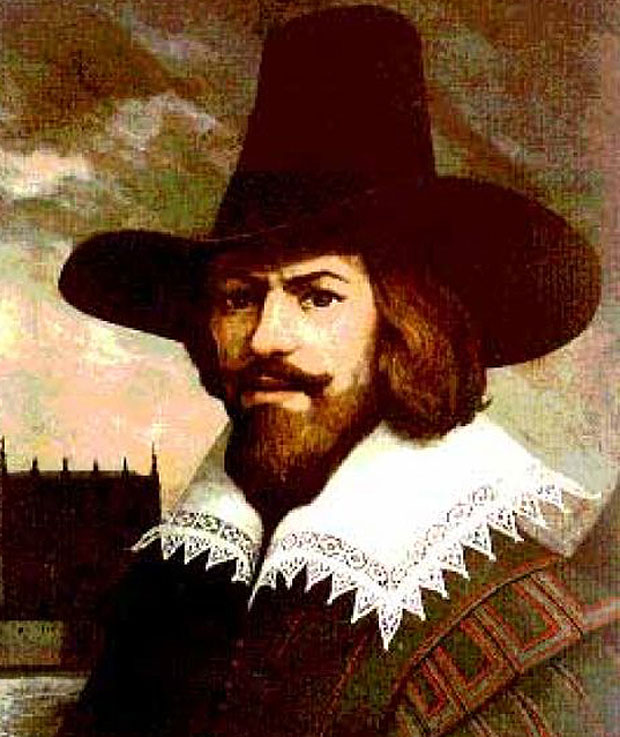
Portrait of Guy Fawkes (1570-1606), author/date unknown, August 5, 2015. (http://plus.google.com).

Portrait of Guy Fawkes (1570-1606), author/date unknown, August 5, 2015. (http://plus.google.com).

For me, growing up in a striving household that ended up in grinding welfare poverty didn’t make me a Communist. I went through several stages of belief, from my Mom and idiot stepfather Maurice hoisting the Hebrew-Israelite thing on me, to evangelical Christianity, to just plain Christianity, to critical race theorist adherent. I never completely gave up on capitalist democracy, because what would’ve been the point of that? By the time my son was born in 2003, I saw myself more in European terms, as either a Social Democrat or a Christian Democrats, believers in compromises and reforms from within that ameliorate the worst forms of racial, gender and other forms of oppression and poverty.

Yet even that is too big a label to hang on me or others, now and across history. What did people call those who wanted to rid the world of poverty and economic oppression prior to 1848? Or prior to the French Revolution, for that matter? Troublemakers? Radicals? Jacobites? Weird? Lunatics? To be honest, any of these terms fit me better than progressive, liberal, leftist or Marxist. Because ultimately, I don’t believe in any single economic or political belief system crafted by Homo sapiens. They’re all subject to corruption, all subject to be bent by those with the most power and resources.

So, who am I, ideologically speaking? To quote Alana Davis, “I am 32 flavors” and dim sum. Go ahead. Try to figure that out and come up with a label that fits!

← Older posts
Newer posts →

Boy @ The Window: A Memoir

Boy @ The Window: A Memoir

Places to Buy/Download Boy @ The Window

There's a few ways in which you can read excerpts of, borrow and/or purchase and download Boy @ The Window. There's the trade paperback edition of Boy @ The Window, available for purchase via Amazon.com at http://www.amazon.com/Boy-Window-Donald-Earl-Collins/dp/0989256138/

There's also a Kindle edition on Amazon.com. The enhanced edition can be read only with Kindle Fire, an iPad or a full-color tablet. The links to the enhanced edition through Apple's iBookstore and the Barnes & Noble NOOK edition are below. The link to the Amazon Kindle version is also immediately below:

scr2555-proj697-a-kindle-logo-rgb-lg

Boy @ The Window on Amazon.com: http://www.amazon.com/Boy-The-Window-Memoir-ebook/dp/B00CD95FBU/

iBookstore-logo-300x100

Boy @ The Window on Apple's iBookstore: https://itunes.apple.com/us/book/boy-the-window/id643768275?ls=1

Barnes & Noble (bn.com) logo, June 26, 2013. (http://www.logotypes101.com).

Boy @ The Window on Barnes & Noble: http://www.barnesandnoble.com/w/boy-the-window-donald-earl-collins/1115182183?ean=2940016741567

You can also add, read and review Boy @ The Window on Goodreads.com. Just click on the button below:

Boy @ The Window

Twitter Updates

Tweets by decollins1969
  • RSS - Posts
  • RSS - Comments

Archives

  • June 2025
  • April 2023
  • September 2022
  • August 2022
  • July 2022
  • June 2022
  • May 2022
  • April 2022
  • March 2022
  • January 2022
  • December 2021
  • November 2021
  • October 2021
  • September 2021
  • August 2021
  • July 2021
  • June 2021
  • April 2021
  • March 2021
  • February 2021
  • January 2021
  • December 2020
  • November 2020
  • October 2020
  • September 2020
  • August 2020
  • July 2020
  • May 2020
  • April 2020
  • March 2020
  • January 2020
  • December 2019
  • November 2019
  • August 2019
  • July 2019
  • June 2019
  • May 2019
  • April 2019
  • March 2019
  • February 2019
  • January 2019
  • December 2018
  • November 2018
  • October 2018
  • September 2018
  • August 2018
  • July 2018
  • June 2018
  • May 2018
  • March 2018
  • February 2018
  • January 2018
  • December 2017
  • November 2017
  • October 2017
  • September 2017
  • August 2017
  • July 2017
  • June 2017
  • May 2017
  • April 2017
  • March 2017
  • February 2017
  • January 2017
  • December 2016
  • November 2016
  • October 2016
  • September 2016
  • August 2016
  • July 2016
  • June 2016
  • May 2016
  • April 2016
  • March 2016
  • February 2016
  • January 2016
  • December 2015
  • November 2015
  • October 2015
  • September 2015
  • August 2015
  • July 2015
  • June 2015
  • May 2015
  • April 2015
  • March 2015
  • February 2015
  • January 2015
  • December 2014
  • November 2014
  • October 2014
  • September 2014
  • August 2014
  • July 2014
  • June 2014
  • May 2014
  • April 2014
  • March 2014
  • February 2014
  • January 2014
  • December 2013
  • November 2013
  • October 2013
  • September 2013
  • August 2013
  • July 2013
  • June 2013
  • May 2013
  • April 2013
  • March 2013
  • February 2013
  • January 2013
  • December 2012
  • November 2012
  • October 2012
  • September 2012
  • August 2012
  • July 2012
  • June 2012
  • May 2012
  • April 2012
  • March 2012
  • February 2012
  • January 2012
  • December 2011
  • November 2011
  • October 2011
  • September 2011
  • August 2011
  • July 2011
  • June 2011
  • May 2011
  • April 2011
  • March 2011
  • February 2011
  • January 2011
  • December 2010
  • November 2010
  • October 2010
  • September 2010
  • August 2010
  • July 2010
  • June 2010
  • May 2010
  • April 2010
  • March 2010
  • February 2010
  • January 2010
  • December 2009
  • November 2009
  • October 2009
  • September 2009
  • August 2009
  • July 2009
  • June 2009
  • May 2009
  • April 2009
  • March 2009
  • February 2009
  • January 2009
  • December 2008
  • November 2008
  • October 2008
  • September 2008
  • August 2008
  • July 2008
  • June 2008
  • May 2008
  • April 2008
  • March 2008
  • February 2008
  • January 2008
  • December 2007
  • November 2007
  • October 2007
  • September 2007
  • August 2007
  • July 2007
  • June 2007

Recent Comments

MaryPena's avatarMaryPena on My Day of Atonement/Bitter Hat…
decollins1969's avatardecollins1969 on No Good Teaching Deed Goes…
Mary Rose O’Connell's avatarMary Rose O’Connell on No Good Teaching Deed Goes…

NetworkedBlogs on Facebook

NetworkedBlogs
Blog:
Notes From a Boy @ The Window
Topics:
My Life, Culture & Education, Politics & Goofyness
 
Follow my blog

616 616 East Lincoln Avenue A.B. Davis Middle School Abuse Academia Academy for Educational Development AED Afrocentricity American Narcissism Authenticity Bigotry Blackness Boy @ The Window Carnegie Mellon University Child Abuse Class of 1987 CMU Coping Strategies Crush #1 Crush #2 Death Disillusionment Diversity Domestic Violence Economic Inequality Education Family Friendship Friendships Graduate School Hebrew-Israelites High-Stakes Testing Higher Education History Homelessness Humanities Humanities Program Hypocrisy Internalized Racism Jealousy Joe Trotter Joe William Trotter Jr. K-12 Education Love Manhood Maurice Eugene Washington Maurice Washington Misogyny Mother-Son Relationship Mount Vernon High School Mount Vernon New York Mount Vernon public schools Multiculturalism MVHS Narcissism NFL Pitt Pittsburgh Politics of Education Poverty President Barack Obama Race Racial Stereotypes Racism Relationships Self-Awareness Self-Discovery Self-Reflection Sexism Social Justice Teaching and Learning University of Pittsburgh Violence Whiteness Writing

Top Rated

Blog at WordPress.com.

  • Subscribe Subscribed
    • Notes from a Boy @ The Window
    • Join 103 other subscribers
    • Already have a WordPress.com account? Log in now.
    • Notes from a Boy @ The Window
    • Subscribe Subscribed
    • Sign up
    • Log in
    • Report this content
    • View site in Reader
    • Manage subscriptions
    • Collapse this bar
 

Loading Comments...