• About Me
  • Other Writings
  • Interview Clips
  • All About Me: American Racism, American Narcissism, and the Conversation America Can’t Have
  • Video Clips
  • Boy @ The Window Pictures
  • Boy @ The Window Theme Music

Notes from a Boy @ The Window

~

Notes from a Boy @ The Window

Category Archives: Politics

NOT “Only In America”

30 Sunday Apr 2017

Posted by decollins1969 in 1, culture, Eclectic, Politics, Pop Culture, race

≈ Leave a comment

Tags

"Only in America", 45, American Press, Elitism, Hasan Minhaj, Narcissism, WHCD, White House Correspondents' Dinner


Daily Show with Trevor Noah’s Hasan Minhaj speaking at White House Correspondents’ Dinner, Washington, DC, April 29, 2017. (http://complex.com)

Once again, I made myself into a gullible dupe for the American press. I watched the White House Correspondents’ Dinner last night when I had so many other choices. I could’ve watched the Pittsburgh Penguins dismantle the playoff adverse Washington Capitals 6-2. Or slept through an NBA playoff game or rerun. Or watched the last four episodes of season one of This Is Us, or the season-ender to The Expanse. Instead, I chose to watch those smug, not-so-objective elites with pens, notepads, microphones, cameras, laptops, and press passes gaze longingly at each other. I sat and watched them talk about the freedom of the press as if it was still 1974 and the nation could still believe it was a just one.

The narcissistic navel-gazing continued even as Hasan Minhaj took the stage and began to roast the press for its ineptitude, and 45 for his voluminous idiocies. It was a pretty good roasting, but compared to Stephen Colbert in ’06 and Larry Wilmore last year, Minhaj was underwhelming. Then, Minhaj said something at the end of his speech that momentary kept me from REM sleep.

And it’s the same position a lot of minority kids feel in this country. You know—do I come up here and just try to fit in, and not ruffle any feathers? Or do I say how I really feel?

Because this event is about celebrating the First Amendment and free speech. Free speech is the foundation of an open and liberal democracy. From college campuses to the White House, only in America can a first-generation, Indian-American Muslim kid get on this stage and make fun of the president.

Really? “Only in America?” An Indian American Muslim couldn’t do what Minhaj did in, say, Canada, or in the UK, where Sadiq Khan, a British Pakistani, is London’s mayor, or even, say, in India?  This statement alone answered Minhaj’s question for me. Sir, wasn’t this an attempt to “just try to fit in, and not ruffle any features?” You just told every America elite to the left of the Islamophobic set exactly what they wanted to hear!

There are two other problems with the refrain, “Only in America,” especially in the context of Minhaj and free speech, free expression, and freedom of the press. One is that none of the First Amendment is free. Sure, if one narrowly means free from government coercion and persecution, then what Minhaj highlighted is mostly true. But given the platform Minhaj had last night, his truth was a lie for most of us. Because for most of us, the connections and money isn’t readily available to have such a lofty platform to proclaim America as uniquely free.

“Only in America” also assumes that anyone who couldn’t be Hasan Minhaj is a loser. Millions of Americans of color and tens of millions of poor and low-income Whites, you simply have worked hard enough, been extroverted enough, or told enough off-color jokes. Apparently, that’s what it takes to make “Only in America” true for us all. Despite his calling 45 the “orange man behind the Muslim ban,” in this one fundamental area of belief, Minhaj is no different from 45. For “Only in America” may be the most narcissistic, hypocritical, and fact-denying thing anyone can say about themselves and the US.

In·ter·sec·tion·al·i·ty

24 Monday Apr 2017

Posted by decollins1969 in 1, Academia, Carnegie Mellon University, culture, Eclectic, New York City, Pittsburgh, Politics, Pop Culture, race, University of Pittsburgh, Youth

≈ Leave a comment

Tags

Academic Conferences, Afrocentricity, bell hooks, CMU, Critical Race Theory, Diversity, Elsa Barkley Brown, Evelyn Brooks Higginbotham, Intersectionality, Kimberlè Crenshaw, Marginalization, Misogyny, Multiculturalism, OAH, Organization of American Historians, Patricia J. Williams, Paula Giddings, Pitt, Presidential Classroom, Racism, Sexism, Tera Hunter


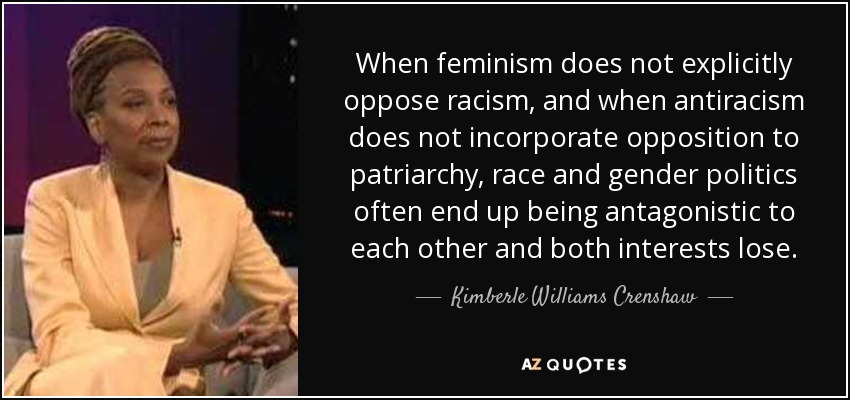
Kimberlè Crenshaw quote, from “Whose Story Is It Anyway?: Feminist and Anti-Racist Appropriations of Anita Hill,” in Toni Morrison’s Race-ing Justice, En-gendering Power, 1992, p. 403. (http://azquotes.com).

In truth, I’ve considered the issue of intersectionality as a historian and writer since 1993, when I wrote my quantitative methods requirement-fulfilling paper, “The Dying of Black Women’s Children.” Except that, for me and for most of my colleagues, the term was barely in use. Matter of fact, in five and half years of graduate school and in my first three years after finishing the doctorate, I may have heard the term used only once or twice. It’s not like I didn’t think about the unique issues facing women of color — especially Black women — in the context of US history and African American history. Sometimes as a historian, how leading Black men and White women marginalized African American women in education movements, in the suffrage movement, and in the Civil Rights Movement was all I could think about. In the context of understanding American education and the role of Black women as teachers and education, it made me reconsider the notion of education as a form of social control versus it as a form of social liberation as an and-both, and not an either-or proposition.

But, as with all other issues, I’m not perfect. I remember getting into an argument with an African American women at a joint Carnegie Mellon-University of Pittsburgh conference on diversity in 1992. She was a second-year master’s student in the public policy program at CMU’s Heinz School (now Heinz College) to my second year as a grad student and first as a PhD student. I had talked about my initial research on multiculturalism and Black education, and what that research could mean in terms of diversity in higher education. Over lunch, I barely got three sentences out about the implications before this student pounced on me for not taking a more Afrocentric approach to my research, all but calling me an Uncle Tom. She also pointed out that while I had accounted for race and gender in my work, I hadn’t accounted for them together. I was already used to middle class Black folk who only radicalized at the ripe young age of twenty-two telling me that my research was too conservative and too White. But on the second part, not accounting enough for Black women in my research, I did take to heart.

In 1999, at my “Black Brahmins” presentation on W. E. B. Du Bois, Carter G. Woodson, and Alain Locke and their ideas around multiculturalism and connections to Harvard at the Organization of American Historians conference in Toronto, I got a cold shoulder from the panel’s moderator, Stephanie Shaw. She barely said a word to me the entire time, and barely commented on my paper. I figured that Shaw thought I should’ve found a way to make the paper more inclusive of Black women graduates of Harvard and multiculturalism, even though Harvard didn’t allow any women to attend. I could’ve included Black women who attended Radcliffe College around the turn of the twentieth century, but even then, those women did not earn graduate degrees or become proponents of pluralism or what we’d call multiculturalism today. I followed up at OAH in Los Angeles in 2001 with my “Multicultural Sisters” paper, but by then, I no longer had an interest in multiculturalism as a historian.

Times Square intersection time-lapse, August 2014. (http://shutterstock.com).

On this day and date in 2000, though, was the argument I had with a colleague at Presidential Classroom, one that would keep me conscious about intersectionality and womanism from that point on. Sev had been brought on by my racist boss Jay Wickliff to help out with the international recruitment for the weekly civic education programs we had for high school juniors and seniors. Sev was Canadian, had been an intern with the program the summer before, and had recently finished up a master’s in history. She had stopped by my office to ask about some revisions I’d been making to parts of our upcoming summer programs, especially the one on media and democracy, which was a new program for Presidential Classroom. Somehow the conversation swung toward women’s rights and issues that Sev thought were important to women. I kept correcting her, saying that some of these issues were “only important to White women.” She took offense, telling me that I shouldn’t be correcting her, that her master’s made her as much an expert on the topic as me. I remember actually chuckling at that assertion, which miffed Sev even more. The common refrain, “Just because you have a PhD…,” was how she responded.

But I did take a few minutes to break down the differences between second-wave and third-wave feminism (or womanism). I went on about the history of exclusion that Black women in particular had faced from Black men in civil rights movements and White women around suffrage and reproductive rights. I said, “maybe it’s because you’re Canadian, but here in the US, these issues you’re bringing up mostly concern middle class White women.” She didn’t like that at all. Before Sev responded, Wickliff, having overheard our argument, came by and said, “Slavery was a hoax” as a joke. That was the moment I knew my days working for this group of Whiteness folks were numbered.

A few months later, in my new job at AED with New Voices, I picked up and read Kimberlè Crenshaw’s essay “Demarginalizing the Intersection of Race and Sex” (1989) for the first time. I knew that I already understood intersectionality for Black women, how misogyny, sexism, and racism constantly confer a double marginalization, discrimination, and violation on Black women. Now, between Crenshaw and my own experiences, I also realized that I could experience intersectionality as a Black man, between White men and White women. Especially middle class ones, where their well-meaning color-blind racism had served to put me in a box as well. It was an and-both box, where I was a historian who didn’t write about intersectionality enough and a professional who had also experienced race and gender-based marginalization, albeit differently from women or color. What I did learn, finally, was that the intersection of race, class, and gender made Times Square look like Walden Pond by comparison.

The Cruel Lure of Academia

22 Saturday Apr 2017

Posted by decollins1969 in 1, Academia, Boy @ The Window, Carnegie Mellon University, culture, Eclectic, High Rise Buildings, Jimme, Mount Vernon New York, My Father, New York City, Pittsburgh, Politics, Pop Culture, race, Upper East Side, Upper West Side, Work, Youth

≈ Leave a comment

Tags

Academia, Academic Culture, Academic Jobs, Barbara Lazarus, Bruce Anthony Jones, Burnout, CMU, Contingent Faculty, Faculty, False Gods, Family Issues, job search, Joe William Trotter Jr., Meritocracy, Pitt, Politics of Academia, Publish-or-Perish, Teachers College, Tenure-Stream Positions


Rihanna as Medusa, GQ Magazine cover, December 2013. (http://pinterest.com).

Twenty years ago on this date, I took the call that would help define my last two decades professionally. It was a call from Teachers College, Columbia University. I had made a final cut of interviewees “out of more than 300 applicants,” for a tenure-track assistant professorship in the history of education, the administrative assistant to the ed foundations department chair’s office had told me. It was my first post-PhD job call, one at the time that I hoped would be the only one I’d need.

It wasn’t my first interview for an academic position, though. That distinction went to Illinois State University, in April ’94. Two of their history professors were at the American Educational Research Association annual meeting in New Orleans, screening applicants for a lecturer and a non-tenured assistant professor position. I dared not tell my advisor Joe Trotter or anyone else about the screening invite. I went, I met the two youngish professors, both of whom told me to finish my PhD before applying for another job, because they thought my work “too promising” for non-tenure-stream positions. I had also interviewed for two education nonprofit positions, both in Pittsburgh, and both only offering me only a few thousand more than the US Postal Service offered me in ’92, when my name for a job finally came up.

Burned out 40w light bulb, April 27, 2010. (http://www.iamtonyang.com).

Now I had gotten a call from one of the most prestigious education schools in the world. A school within the same university that wanted to hire a private investigator ten years earlier because they didn’t want to give a poor Black kid a four-year free-ride. Despite the irony, I was happy, nervous, and apprehensive. I was happy for the opportunity, nervous about my prospects, and apprehensive about the possibility of moving back to New York. But, most important, I was also burned out emotionally and psychologically from the dissertation process, though not as burned out as I would become in the six weeks that followed.

The interview itself three weeks later was one of the best I’ve ever done for anything. I gave my job talk on multiculturalism and Black education, and for once, professors and graduate students in the audience didn’t look at me like I was speaking Vulcan. I actually had fun on that eight-hour interview day. As much fun as eight hours of scrutiny and answering the same questions over and over again could bring.

But, I remained apprehensive. Because I knew that I had a lot of big decisions ahead if I didn’t get this position, and just as many or more if I did.

Could I pay rent or eat through the summer if I didn’t get the job? Should I go groveling back to Carnegie Mellon, so that I could teach the required World History course for the 1997-98 school year? Could I pick up an adjunct gig at Pitt, Duquesne, or one of the other universities for next year, or what if it’s already too late to reach out? Could I get help from Bruce Anthony Jones, or beyond my dissertation committee, people like Barbara Lazarus, in securing my future? These were the normal questions that an army of PhDs in fields like history faced every single year.

For me, though, the idea of being an assistant professor twelve miles from where I grew up and thirty blocks from one of the buildings I helped my alcoholic father clean made my brain twist in knots. Heck, Teachers College had put me up at the Hotel Beacon on Broadway, between 74th and 75th Street, just three blocks from a high-rise me, my older brother Darren, and my father had cleaned the carpets and floors of regularly between 1984 and 1986. Did I really want to go back to a place with so many bad and embarrassing memories?

Plus, it wasn’t just my past I worried about. Living in subsidized faculty housing wasn’t ideal for me and my soon-to-be-wife. My younger siblings could reach me by catching the 1 or 2 train, and with the recent fire at 616 and the trauma that had caused, their visits were likely to be a regular part of my routine. I had given Mom something like $5,000 in the three years before the possibility of this job, as a graduate student. As a professor, she would likely expect me to do so much more.

Charging Bull of Wall Street (or a false god), cropped, January 19, 2016. (Sam Valadi/Flickr, via http://www.atlasobscura.com/)

Looking back, if Teachers College had offered me the job and I’d of course taken it, I likely wouldn’t have earned tenure. Oh, I would’ve been a fine classroom professor, and most of my students would’ve liked, loved, or learned from me. But between me having not dealt with my Mount Vernon/NY past, my Mom and siblings and family issues, and trying to turn my dissertation into a book and churn out academic pieces, I would’ve needed psychotherapy after three or six years. But Teachers College rejected me two months later. It supposedly came down to me and one other person.

This is what academia does to its own. With too few tenure-stream jobs and way too many qualified candidates, each job interview or job earned becomes magnified, to the point where taking a position can close as many doors as receiving a rejection for a job. Combine that with the false gods of meritocracy and academic freedom, and you have a recipe for a world of competitive disappointment. Academia is a world full highly educated people working for working-class wages but with elitist expectations of themselves and of those lucky few with tenure-stream positions. Add race, class, gender, family, and intersectionality to this brew, and it’s a wonder more of us don’t experience depression or some other mental illness.

I wouldn’t have been able to write this twenty years ago, even if I subconsciously suspected or consciously knew this to be true. I was tempted by the brass ring, only to find it was really a rusty old nail bent to look like something valuable.

Psalm 23 and Christian-isms I Don’t Understand

14 Friday Apr 2017

Posted by decollins1969 in 1, Boy @ The Window, Christianity, culture, Eclectic, eclectic music, music, Patriotism, Politics, Pop Culture, race, Religion, Youth

≈ Leave a comment

Tags

American Christians, American Narcissism, Bono, Christianity, God's Politics (2005), Hypocrisy, Jim Wallis, Psalm 23, Social Control, Social Justice, Social Revolution, U2


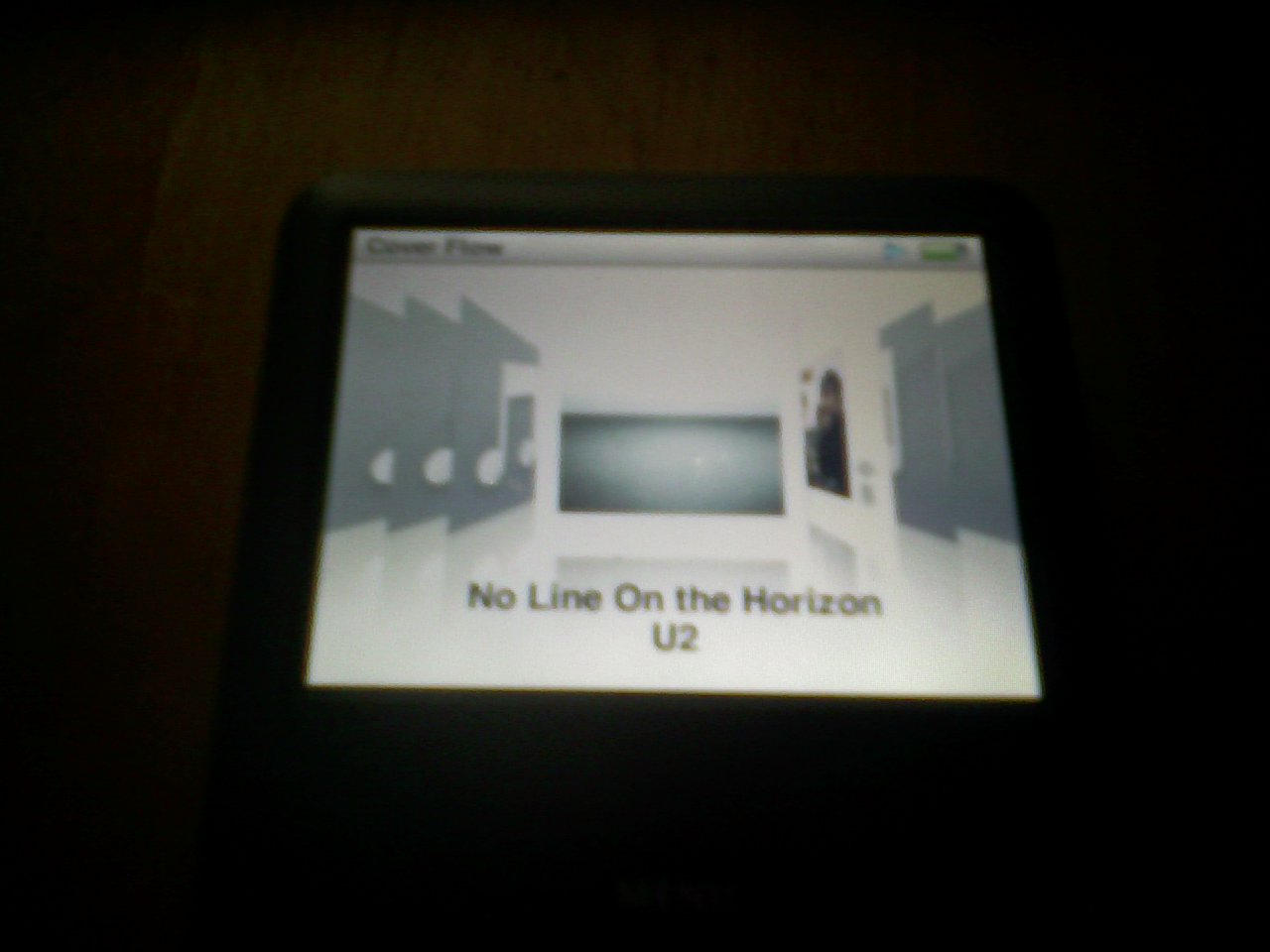
My iPod w/ U2, November 13, 2010. (Donald Earl Collins)

It’s Easter Week for 2017, and year 33 since I became a follower of Christ. I’ve written at length about my conversion and my evolution as a Christian. I’ve also posted about my problems with Christians and the way many impose — or at least, attempt to impose — their racism, sexism, misogyny, hyper-masculinity, heterosexism, homophobia, transphobia, Islamophobia, and anti-Black respectability politics on the world.

For me, it shows most American Christians to be hypocrites as best, and full of shit at worse, when it comes to following the two most basic rules of Christianity. To have “no other gods but God,” and “to do unto others as you would have others do unto you.” For most American Christians (if not Western Christians in general), money is god, Whiteness is god, and the two go together better than the chocolate and peanut butter in a Reese’s peanut butter cup. Both assert that others are but dirty pieces of gum on one’s shoe, that hatred, violence, and permanent superiority in the name of these gods supersedes following any important teaching or practice of Jesus and his disciples.

But that’s not all. After all these years, I still don’t quite get even some of the more mundane Christian practices and assumptions. The most basic one is Psalm 23. For the life of me, I don’t understand why pastors, priests, and parishioners seem to only read the psalm after a person has died. The psalm reads as:

The Lord is my shepherd; I shall not want.
He maketh me to lie down in green pastures; He leadeth me beside the still waters.
He restoreth my soul; He leadeth me in the paths of righteousness for His name’s sake.
Yea, though I walk through the valley of the shadow of death, I will fear no evil; for Thou art with me; Thy rod and Thy staff, they comfort me.
Thou preparest a table before me in the presence of mine enemies; Thou anointest my head with oil; my cup runneth over.
Surely goodness and mercy shall follow me all the days of my life; and I will dwell in the house of the Lord for ever.

The Bajoran Wormhole screenshot (or the entrance to the Celestial Temple), Star Trek DS9. June 18, 2011. (Donald Earl Collins).

It has always seemed to me that the living have needed the verses around “I shall not want,” lying down “in green pastures,” and walking “through the valley of the shadow of death” far more than the dead. No one has explained what Psalm 23 has to do with wakes and funerals to my satisfaction. The way people use Psalm 23 assumes so much about what occurs after we die — something none of us could ever fully comprehend — and completely neglects the reality that the living need rest, peace, and strength in our walk through a corrupt world. Kind of like the way many American Christians value embryos, cats, and dogs over Black and Brown babies, toddlers, and adults.

In 2005, I picked up evangelical Jim Wallis’ book God’s Politics in an attempt to expand my knowledge of the intersection between social justice activism and Christianity. Wallis’ book was supposed to be a primer on how to fight for the rights of the most vulnerable while also standing for “traditional” American Christian values. The book was a hot mess, as it did little more than insist on the right of those who weren’t Christian or following evangelical values (e.g., openly LGBT, pro-choice, womanist, and anti-racist) to exist and to be tolerated. Wallis wasn’t exactly calling for a revolution in God’s Politics. Certainly not when he insisted that many Black play “the race card” in identifying American racism in its myriad forms.

Where I stopped reading, though, was in Wallis’ description of U2 lead singer Bono’s activism and religiosity. Wallis saw Bono as someone “who has become a serious and well-informed activist,” and as a “spiritual man, though not a churchy person.” That was a back-handed compliment. But then Wallis expressed surprise to learn that Bono would get “on his knees” to pray for guidance, as this image of this rock superstar for Wallis was “humbling and heartening.” That came from pages 198-99 of God’s Politics, and that was where I stopped reading. The self-aggrandizement and name-dropping. The assumption that Bono couldn’t possibly be thinking in both social justice and Christian terms because of his profession. And the most obvious fact of all: Wallis likely had never listened to or read a single verse of a U2 song going back to the October album (1980). There are enough Christian and biblical allusions in U2’s catalog to keep most preachers in sermons for a generation. But yeah, let’s assume that anyone other than a devout evangelical Christian is living in sin or isn’t serious about combating Whiteness or poverty or any host of manmade plagues!

Religion in general isn’t the issue. Christianity at its heart is a belief system based on forgiveness, reconciliation, embracing of diverse peoples and differences, and of course, eternal salvation. What people do with religion is what they do with everything else. It can occasionally become a catalyst for spiritual freedom and social change, even revolution. But, much more often, institutionalized religion is a spiritual yoke, a way to control the way multitudes of millions see themselves and the world around them. Funny, then, that American Christianity represents everything that America is, and very little of the basic tenets of Jesus’ teachings in practice. Promoting blind patriotism, a lover’s embrace of money changers — a.k.a., capitalism, a hatred of vulnerable populations, and a tendency to racially self-segregate. This is the American way.

American Christians have let me down in so many ways. We have let our individual -isms and individualism overwhelm whatever it is that supposedly makes us Christian in the first place. If evangelicals want to look for someone to blame for America’s decline since the 1970s, they need only to stand fully unclothed in front of a full-length mirror. Maybe Bono as quoted by Wallis was right when he said that maybe “God [was] on his knees praying” for us to get it together in eradicating poverty, systemic racism, homophobia, HIV-AIDS, and climate change. Too bad most of us aren’t listening.

Racial Privilege Matters Most

26 Sunday Mar 2017

Posted by decollins1969 in 1, culture, Eclectic, Politics, Pop Culture, race, Youth

≈ Leave a comment

Tags

#BlackLivesMatter, #MissingBlackGirls, #MissingDCGirls, #WhiteLivesMatter, Contrast, Girls of Color, Intersectionality, Marginalization, Montgomery County MD, News Coverage, Racial Privilege, Rape, Rockville High School, Trolls, Twitter


World War Z gif of horde climbing a wall (much like the way Americans see immigrants regardless of status), March 26, 2017. (http://reddit.com).

I’m sure I’m not the only one who noticed the stark, sad, and anger-inducing contrast between two events in the past couple of weeks. One involved the alleged rape of a 14-year-old girl by two undocumented immigrants (ages 18 and 17) at Rockville High School. The press gave this incident coverage on a local and national scale. So much so that xenophobic, anti-Latino Twitter trolls got involved.

Screen shot of tweets regarding Rockville High School rape, March 26, 2017. (http://twitter.com)

The proverbial “they” used the arrests as evidence of an immigration form of World War Z, in which angry hordes of the undocumented pour through America’s border with Mexico, raping, pillaging, and drugging up White (and mostly female) innocents. “Build the wall,” “illegals,” and “liberals” all became a cabal of iniquity in the (White) America First camp. What about the 14-year-old girl, the counseling she may need, or security issues at Rockville High School in general? Instead, two almost adult teenagers are a stand-in for immigration policies and 11 million undocumented persons. But what else is new?

On the other end of the spectrum has been the lack of coverage of missing Black and Latina girls in the DC area — in fact, in many parts of the US. So little has been even the local coverage that it took a tweet (one that I retweeted myself) two weeks ago for DC affiliates to pay closer attention.

Screen shot of retweet on 8 missing Black girls in Washngton, DC, March 12, 2017. (Twitter via @BlackMarvelGirl).

National coverage only kicked in when someone erroneously posted on Instagram that 14 Black and Latino girls had gone missing in the DC area in a 24-hour-period. True or not, there was no corresponding outrage over even the mere possibility that girls of color could have been kidnapped, trafficked, raped, or murdered as part of a crime spree. Though the facts of this particular Instagram posting were skewed, there’s no debate or daily concern for what happens to youth of color, especially girls of color, in the US. When confronted with the fact that 37 percent of America’s missing children are Black (Blacks are 12.4 percent of the US population), the excuse has been that most of them are “runaways.” And with that kicks in all kinds of racist and misogynistic assumptions. “The poverty and crime and drugs” got to be too much. “They’ve been exposed to more,” and therefore, can handle being on their own. “They’re sexually promiscuous” anyway, so let them run off with older men.

No one considers the why. In this case, why would these girls run away? Physical and sexual abuse at home, leading to vulnerability outside the home to human trafficking, rape, prostitution, or run-of-the-mill homelessness and poverty. No matter how one looks at this, this should be national news. That is, if America wasn’t primed to see only White kids as innocent.

Which brings me back to Rockville High School. No one knows the identity of the 14-year-old rape victim. But based on the Twitter trolls and the Washington Post comments section, most assume the girl is White. It proves a few things, especially for me as a Montgomery County (MD) resident. One, that my upper middle-class neighbors would turn on me in a second if I met anything approaching a criminal stereotype. For them, I would represent the alleged cultural deficiencies of 44 million other Blacks. Two, that for all their so-called liberal ideology, most White Americans are center-right, no matter where they live. They will turn a tragic incident into a racial or xenophobic referendum on millions of people faster than you can say “white on rice.” Three, only White lives matter and always matter to Whites, especially when put in contrast to the lives of people of color, immigrant or native-born or otherwise.

Show me you’re a liberal by embracing the truth of your own racial privilege. Show me you’re a liberal when you have to risk ostracism from your neighbors about defending the rights of undocumented immigrants as alleged rapists or decrying how the media doesn’t cover missing, exploited, and abused Black and Latina girls. Don’t tell me you’re a liberal, when it’s obvious your racism, sexism, and xenophobia is showing.

A Viable GOP Alternative to Obamacare – But It’ll Never Happen

08 Wednesday Mar 2017

Posted by decollins1969 in 1, culture, Eclectic, Politics, Pop Culture

≈ Leave a comment

Tags

Affordable Care Act, Alternate Universe, American Healthcare Act, GOP Alternative, Obamacare, Plagiarism, Republican Party


Speaker of the House Paul Ryan (R-WI) and GOP leadership with a copy of the American Health Care Act at a news conference, Washington, DC, March 7, 2017. (Chip Somodevilla/Getty Images via http://www.dolphnsix.com/).

Here’s the one and only way the GOP can put together a plausible alternative to the Affordable Care Act, a.k.a., Obamacare. At least, a plan that wouldn’t actually move healthcare left politically and build the path toward universal healthcare, leaving GOP leadership melting in their own clothes.

It’s pretty simple. They should hire a copy editor and a proofreader, ideally, someone who has ghostwritten books for the conservative rich and shameless. House Speaker Paul Ryan should give them a copy of the ACA, and give them three weeks to rewrite it, phrase for phrase, and sentence by sentence. They should replace words like “exchanges” with “alternative swaps,” and “individual mandate” with “personal responsibility.” The editor and proofreader should look out for specific references to coverage for preexisting conditions, the poverty thresholds for qualifying for Medicaid, and coverage of women’s reproductive healthcare costs. The two of them should make a point of burying them into subsections, using the term “other persons” (just like in the US Constitution) or, in the case of women, the female symbol ♀, which few GOP members or their constituents would know.

The biggest issue after a thorough rewriting and review would be how to repackage the old plan as new. This is where Ryan can reach out to retired GOP leadership like John Boehner or Newt Gingrich. They were so good at boiling complex issues down to three words for their conservative and far-right conservative comrades. “Tax-and-spend,” “cap-and-trade,” and “drill, baby, drill,” are among their top 40 hits since the 1980s. With help from the old heads, Ryan can come up with “more-for-less” (really “more or less,” and for Spanish speakers, “mas o menos”) in boiling down the essentials of the new-old bill. The official name of the bill would be the Alternative Healthcare Act, or the AHA. But with 45 as president, it would likely remain either Trumpcare or MAGACare.

The bill would be immensely popular, even with non-Republicans, and would pass Congressional Budget Office muster, not to mention the news media’s. And despite reporting from Rachel Maddow and Chris Hayes at MSNBC, Vice News on HBO, and Mother Jones and The Atlantic, most will not notice that the GOP bill is exactly the same as Obamacare. Certainly not the dunderheads at FOX News or Breitbart.

There’s just one problem. There’s no way Ryan’s oversized ego would allow for this nefarious, new-wine-in-old-wine-skins plan to go forward. Nearly a third of the GOP members in the House just want to repeal Obamacare without providing any replacement at all, not even if it were only for their grandparents, kids, and grandkids. Mostly, the plan would die because someone would leak its details before the copy editor finished word-smithing the first ten pages of the ACA.

Hundreds of alligators at a watering hole, Myakka River State Park, Florida, March 6, 2017. (Lee Dalton via http://www.dailymail.co.uk/).

Bottom line: the GOP is caught between a roiling river full of hungry alligators and a rocky shoreline with a pride of starving lions who cannot believe their luck. The GOP as a party deserves to be eaten for lunch, starting with their guts, and all while being suffocated. And their last thoughts should be, “pain and gain.”

What Do We Tell Them Now?

23 Thursday Feb 2017

Posted by decollins1969 in 1, culture, Eclectic, Patriotism, Politics, Pop Culture, race, Religion, Work

≈ Leave a comment

Tags

45, American Mythology, American Racism, Civic Education, Critical Thinking, Edutainment, High School Students, Hypocrisy, Independent Thinking, Jay Wickliff, Meritocracy, Political Corruption, Presidential Classroom


One version of Presidential Classroom logo, January 27, 2014. (http://congressionalaward.org).

One version of Presidential Classroom logo, January 27, 2014. (http://congressionalaward.org).

In all of my professional work experiences, I’ve had two stints outside of academia and more traditional nonprofit settings in which I worked with high school students. One was during my two summers as a consultant with the Junior Statesmen Foundation, where I co-taught and co-prepared an accelerated version of AP US History for students attending the JSA summer program that Princeton University hosted, in 2008 and 2009. I loved those summers with those students, even though it meant not seeing my family for a few weeks at a time.

The other one was during my time as Director of Curriculum for Presidential Classroom. Presidential Classroom, by the way, was never affiliated with the White House. Nor was it an actual classroom. From 1968 to 2011, it was a civic education program that made money by getting schools and parents to cough off dollars to send their high school kids to Washington, DC for a week. Presidential Classroom’s purpose was for students to learn about how the center of American power works from an up-close-and-personal perspective, to serve as a possible way to inspire teenagers to take up public service as adults. It was so influenced by the exaggerated sense Baby Boomers had of themselves and of their activism that was “the ’60s.”

Except that by the time I came on board as a staff person, those lofty purposes were no longer Presidential Classroom’s raison d’être. Like any small nonprofit, it was trying to make more money and compete successfully in a crowded market. Close Up had caught up with and surpassed the organization ten years before I accepted the position. As my one-time boss reminded our staff of twelve continuously, Close Up cleared 20,000 students through their programs in DC every year, while Presidential Classroom struggled to attract 4,000 students in its programs. The board of directors had decided a few years before my time at Presidential Classroom that the organization’s programming had to be more entertaining, and not just about being on Capitol Hill or asking undersecretaries of state and education cogent policy questions.
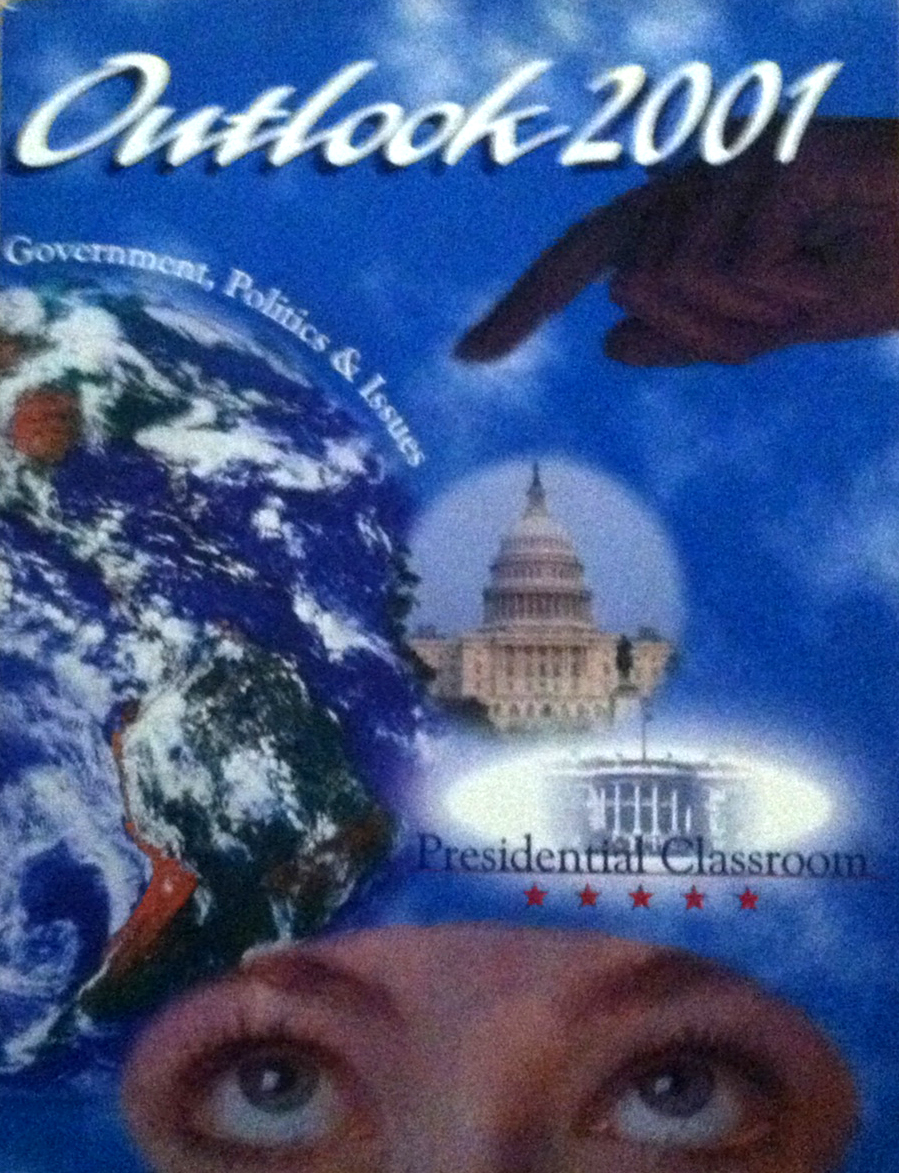
Outlook 2001, my second and last time on the Presidential Classroom annual resource guide, December 1, 2000. (Donald Earl Collins).

Outlook 2001, my second and last time on the Presidential Classroom annual resource guide, December 1, 2000. (Donald Earl Collins).

Across two summer cycles and one winter/spring cycle between June 1999 and December 2000, I worked with high school juniors and seniors as part of what I called “edutainment.” I held up the education end. One of my main jobs before groups of 300-400 students arrived for their week of civic education was to revise the organization’s resource book Outlook. It was my job to cover the various ideological and policy topics of the day using primary and secondary sources in the resource book. Even though the organization only expected me to cover two sides to any policy-based issue or political perspective, I knew that this was too simplistic. I often had three points of view for each topic in the resource book.

It was all to make sure that when the high school students got together to debate each other on immigration reform, reproductive rights, affirmative action, or climate change, they didn’t sound like they just quoted Jack Van Impe or Jimmy Swaggart. It was supposed to help them ask well-thought out questions when meeting with representatives and senators, or during a Q-and-A session with a cabinet member, senior Pentagon official, or an editor from The Washington Post or USA Today.

Unfortunately, what little bit of learning students gained during their week in DC translated into a confirmation of their existing ideas about American politics and civic engagement. Plus, it didn’t help that I was working for Presidential Classroom at the end of President Bill Clinton’s impeachment debacle and throughout the 2000 Presidential Election cycle. Arguments about the articles of impeachment turned into whether Monica Lewinsky seduced Clinton or whether the president used his power to obtain sexual favors from a then-twenty-three year-old intern. Six-year-old Elián González became either a proverbial poster child for “illegals” or a symbol of America’s broken promise as a melting pot. Every White student had a story about their dad or brother being screwed out of a job because of affirmative action, of course without actual evidence.

As for the three branches of government, checks and balances, and the bicameral chamber, or more importantly, the process of how a bill became law, who really cared? The students and some staff were more interested in comedy troupes in Georgetown or attracting more “Orientals” to program than in the distance between how government in DC was supposed to work and the Hill’s sorry-ass reality.

What remains of Presidential Classroom, a broken link on the Miller Center website, February 22, 2017. (Donald Earl Collins).

What remains of Presidential Classroom, a broken link on the Miller Center website, February 22, 2017. (Donald Earl Collins).

As hard and difficult as that job was at the turn of the twenty-first century, it would be impossible now. There’s absolutely no way I could do that Presidential Classroom job in the era of 45. I couldn’t keep a straight face while discussing meritocracy, the distinctions between the Democratic and Republican parties, or in believing that we were really exposing high school juniors and seniors to how Washington actually works. In order to do a proper debate, each group of high school students we had back then would need the full week to just focus on learning how to debate, forget about meeting folks on the Hill or engaging appointees in Q-and-A sessions. We’d have to take away their smartphones and cut off their access to wi-fi and TV to get them to concentrate. Most of all, how could I, how could any of us, have explained the ascendancy of 45 to the presidency without hundreds of center-right parents calling us for weeks afterward complaining about how often we brought American racism to John and Becky’s attention?

If Presidential Classroom existed in 2017, and I found myself unlucky enough to be its executive director, I would forever refocus it away from Capitol Hill. I would have students meet up with policy analysts and lobbyists from K Street, Northwest and the Massachusetts Avenue corridor between D Street, Northeast (the National Republican Committee and the Heritage Foundation) and 18th Street, Northwest (where the American Enterprise Institute, Carnegie Endowment for International Peace, and Johns Hopkins SAIS are located). I would bring in journalists from across the center-right ideological spectrum. But only after I got the so-called liberal ones to admit that their first duty is to sell a story, not objectivity and certainly not truth, and with that, exposing their center-right perspective.

Most of all, I’d show them the rest of DC. The parts of the area that have gentrified in the past twenty years. The parts of Wards 7 and 8 that have concentrated poverty and the ills that result from it. I would introduce them to the nonprofit and social justice organizations that truly give a shit about neighborhood displacement and homelessness, mass incarceration, and political corruption. In all of this, I would want the students to see not only how DC really works, but what good people who care about civic participation and public service must do to put a dent into this out-of-control, money-drenched machine.

← Older posts
Newer posts →

Boy @ The Window: A Memoir

Boy @ The Window: A Memoir

Places to Buy/Download Boy @ The Window

There's a few ways in which you can read excerpts of, borrow and/or purchase and download Boy @ The Window. There's the trade paperback edition of Boy @ The Window, available for purchase via Amazon.com at http://www.amazon.com/Boy-Window-Donald-Earl-Collins/dp/0989256138/

There's also a Kindle edition on Amazon.com. The enhanced edition can be read only with Kindle Fire, an iPad or a full-color tablet. The links to the enhanced edition through Apple's iBookstore and the Barnes & Noble NOOK edition are below. The link to the Amazon Kindle version is also immediately below:

scr2555-proj697-a-kindle-logo-rgb-lg

Boy @ The Window on Amazon.com: http://www.amazon.com/Boy-The-Window-Memoir-ebook/dp/B00CD95FBU/

iBookstore-logo-300x100

Boy @ The Window on Apple's iBookstore: https://itunes.apple.com/us/book/boy-the-window/id643768275?ls=1

Barnes & Noble (bn.com) logo, June 26, 2013. (http://www.logotypes101.com).

Boy @ The Window on Barnes & Noble: http://www.barnesandnoble.com/w/boy-the-window-donald-earl-collins/1115182183?ean=2940016741567

You can also add, read and review Boy @ The Window on Goodreads.com. Just click on the button below:

Boy @ The Window

Twitter Updates

Tweets by decollins1969
  • RSS - Posts
  • RSS - Comments

Archives

  • June 2025
  • April 2023
  • September 2022
  • August 2022
  • July 2022
  • June 2022
  • May 2022
  • April 2022
  • March 2022
  • January 2022
  • December 2021
  • November 2021
  • October 2021
  • September 2021
  • August 2021
  • July 2021
  • June 2021
  • April 2021
  • March 2021
  • February 2021
  • January 2021
  • December 2020
  • November 2020
  • October 2020
  • September 2020
  • August 2020
  • July 2020
  • May 2020
  • April 2020
  • March 2020
  • January 2020
  • December 2019
  • November 2019
  • August 2019
  • July 2019
  • June 2019
  • May 2019
  • April 2019
  • March 2019
  • February 2019
  • January 2019
  • December 2018
  • November 2018
  • October 2018
  • September 2018
  • August 2018
  • July 2018
  • June 2018
  • May 2018
  • March 2018
  • February 2018
  • January 2018
  • December 2017
  • November 2017
  • October 2017
  • September 2017
  • August 2017
  • July 2017
  • June 2017
  • May 2017
  • April 2017
  • March 2017
  • February 2017
  • January 2017
  • December 2016
  • November 2016
  • October 2016
  • September 2016
  • August 2016
  • July 2016
  • June 2016
  • May 2016
  • April 2016
  • March 2016
  • February 2016
  • January 2016
  • December 2015
  • November 2015
  • October 2015
  • September 2015
  • August 2015
  • July 2015
  • June 2015
  • May 2015
  • April 2015
  • March 2015
  • February 2015
  • January 2015
  • December 2014
  • November 2014
  • October 2014
  • September 2014
  • August 2014
  • July 2014
  • June 2014
  • May 2014
  • April 2014
  • March 2014
  • February 2014
  • January 2014
  • December 2013
  • November 2013
  • October 2013
  • September 2013
  • August 2013
  • July 2013
  • June 2013
  • May 2013
  • April 2013
  • March 2013
  • February 2013
  • January 2013
  • December 2012
  • November 2012
  • October 2012
  • September 2012
  • August 2012
  • July 2012
  • June 2012
  • May 2012
  • April 2012
  • March 2012
  • February 2012
  • January 2012
  • December 2011
  • November 2011
  • October 2011
  • September 2011
  • August 2011
  • July 2011
  • June 2011
  • May 2011
  • April 2011
  • March 2011
  • February 2011
  • January 2011
  • December 2010
  • November 2010
  • October 2010
  • September 2010
  • August 2010
  • July 2010
  • June 2010
  • May 2010
  • April 2010
  • March 2010
  • February 2010
  • January 2010
  • December 2009
  • November 2009
  • October 2009
  • September 2009
  • August 2009
  • July 2009
  • June 2009
  • May 2009
  • April 2009
  • March 2009
  • February 2009
  • January 2009
  • December 2008
  • November 2008
  • October 2008
  • September 2008
  • August 2008
  • July 2008
  • June 2008
  • May 2008
  • April 2008
  • March 2008
  • February 2008
  • January 2008
  • December 2007
  • November 2007
  • October 2007
  • September 2007
  • August 2007
  • July 2007
  • June 2007

Recent Comments

decollins1969's avatardecollins1969 on No Good Teaching Deed Goes…
Mary Rose O’Connell's avatarMary Rose O’Connell on No Good Teaching Deed Goes…
Lyndah McCaskill's avatarLyndah McCaskill on The Raunchiest of Them Al…

NetworkedBlogs on Facebook

NetworkedBlogs
Blog:
Notes From a Boy @ The Window
Topics:
My Life, Culture & Education, Politics & Goofyness
 
Follow my blog

616 616 East Lincoln Avenue A.B. Davis Middle School Abuse Academia Academy for Educational Development AED Afrocentricity American Narcissism Authenticity Bigotry Blackness Boy @ The Window Carnegie Mellon University Child Abuse Class of 1987 CMU Coping Strategies Crush #1 Crush #2 Death Disillusionment Diversity Domestic Violence Economic Inequality Education Family Friendship Friendships Graduate School Hebrew-Israelites High-Stakes Testing Higher Education History Homelessness Humanities Humanities Program Hypocrisy Internalized Racism Jealousy Joe Trotter Joe William Trotter Jr. K-12 Education Love Manhood Maurice Eugene Washington Maurice Washington Misogyny Mother-Son Relationship Mount Vernon High School Mount Vernon New York Mount Vernon public schools Multiculturalism MVHS Narcissism NFL Pitt Pittsburgh Politics of Education Poverty President Barack Obama Race Racial Stereotypes Racism Relationships Self-Awareness Self-Discovery Self-Reflection Sexism Social Justice Teaching and Learning University of Pittsburgh Violence Whiteness Writing

Top Rated

Blog at WordPress.com.

  • Subscribe Subscribed
    • Notes from a Boy @ The Window
    • Join 103 other subscribers
    • Already have a WordPress.com account? Log in now.
    • Notes from a Boy @ The Window
    • Subscribe Subscribed
    • Sign up
    • Log in
    • Report this content
    • View site in Reader
    • Manage subscriptions
    • Collapse this bar
 

Loading Comments...