• About Me
  • Other Writings
  • Interview Clips
  • All About Me: American Racism, American Narcissism, and the Conversation America Can’t Have
  • Video Clips
  • Boy @ The Window Pictures
  • Boy @ The Window Theme Music

Notes from a Boy @ The Window

~

Notes from a Boy @ The Window

Category Archives: Mount Vernon New York

Stinking Up The Joint

15 Tuesday Apr 2014

Posted by decollins1969 in 1, Boy @ The Window, culture, Eclectic, Jimme, Mount Vernon High School, Mount Vernon New York, New York City, Pop Culture, race, Youth

≈ Leave a comment

Tags

Brandon Lee, Classmates, Deodorant, Geometry, Gym Class, Humanities, Looney Tunes, Louis Cuglietto, Pepe Le Pew, Poverty, Puberty, Smell, Speed Stick Deodorant, Stench, Stick, Swimming, The Crow (1994), Tough-Love, Underarm Stench, Underarms


Pepe Le Pew stinking up the flowers, April 15, 2014. (Chuck Jones/WB, via http://www.animationartwork.com/). Qualifies as fair use because of picture's low resolution and related subject matter.

Pepe Le Pew stinking up the flowers, April 15, 2014. (Chuck Jones/WB, via http://www.animationartwork.com/). Qualifies as fair use because of picture’s low resolution and related subject matter.

Puberty is often a confusing and scatterbrained time even for the most well-adjusted of folks. Changes in body chemistry, hair growth, body parts, height, weight and sleep patterns are all part of this excruciating rite of passage. When thrown in with the realities of poverty and the cruelty of Humanities and Mount Vernon High School, puberty was also a long march of embarrassing moments.

One of my last embarrassing moment strictly thanks to puberty came around this time three decades ago. It was an unusually warm early April Tuesday in ’84, one in which I was hardly prepared. I’d just started using deodorant the year before, once spring had sprung in ’83, with basketball and softball as a regular part of gym class. In gym for ninth grade, we were in the swimming pool for March and April.

We just happened to be out of deodorant at 616 while I was in the midst of this class. It wouldn’t have been much of a problem, except for the fact that the cool weather of early spring had given way to a sudden heatwave, bringing temps into the upper seventies the second week in April. On that fateful Tuesday, I tried one of my Mom’s home remedies, and put a baking soda paste on my armpits, hoping to conceal my still new manly smell.

Well, it actually did work, at least from periods one through six. Then it was time for gym. I didn’t count on the fact that the high level of chlorine in the pool would completely wash away my makeshift deodorant. Nor did I consider that the swimming pool area would be about ten degrees warmer than it was outdoors. Nor did I think about the fact that we ordinary students weren’t allowed to shower after swimming or any other gym activity, for that matter. That was reserved for the school’s athletes — equipment must be protected from the “animals,” as some administrators and parents saw fit to describe us.

Speed Stick (green) deodorant by Mennen, 1980s edition (en Español), April 15, 2014. (http://www.b2bsupply.co/).

Speed Stick (green) deodorant by Mennen, 1980s edition (en Español), April 15, 2014. (http://www.b2bsupply.co/).

So, no deodorant, in a hot area of an already warm school with the air conditioning turned off, and with no opportunity to rinse off — what do you think happened eighth period? I went to Geometry class, completely unable to conceal my underarm stench. From about the second minute on, my equally sweaty classmates complained about “the smell” and “the stink,” all the while, fanning themselves with manila folders. Even with Mr. Louis Cuglietto’s windows open, it didn’t help — there was no wind to speak of.

But of all the sweat and smells, mine was the one that stood out most. Why? Because, despite it all, I remained an engaged student, and raised my right hand to answer questions. Which meant that I raised my right arm, and anyone within a six-foot radius could smell me. After ten minutes of complaints, I put my arms down, and held them close to my body for the remainder of class, looking forward to the end of the school day.

After class, Cuglietto pulled me aside to tell me, “You’re a man now. You need to get some deodorant,” as if he was offering sage advice or tough love. This wasn’t the first time Cuglietto played his version of poor assumptions about race, class and gender, and it wouldn’t be his last. I ignored him, and went on my way home.

But I didn’t stop there. I went over to Jimme’s on South 10th that evening. It was the middle of the week, a time of hungover sobriety for my father, which meant he would be home early from work. I bummed $20 off him while taking a stick of his surplus Speed Stick with me.

Is there a lesson here? Remember to keep deodorant in stock no matter what? Don’t swim with baking-soda-for-deodorant under your arms? That some teachers and classmates wouldn’t understand a moment of my life even if I passed it onto them like Brandon Lee’s character from the movie The Crow (1994)? That I was poor and in puberty, and things like this sometimes happen? Yeah, sure, I guess. The real lesson here is to remember, not for revenge or retribution, but so that younger others like me know that they’re not alone, so that the story can be told, later and better.

My Christianity at 30

08 Tuesday Apr 2014

Posted by decollins1969 in 1, Boy @ The Window, Christianity, culture, Eclectic, Hebrew-Israelite, Mount Vernon New York, Pop Culture, race, Religion, Youth

≈ Leave a comment

Tags

Action, Activism, Atheism, Atheists, Christianity, Critical Thinking, Easter Sunday, Evangelical Christianity, Evangelicals, Faith, Frederick K.C. Price, Gospel of Prosperity, Hypocrisy, Renewal, Revelation, Salvation, Social Control, Social Justice, Spirituality, Wisdom


The full prayer kneel, April 8, 2014. (Donald Earl Collins).

The full prayer kneel, April 8, 2014. (Donald Earl Collins).

No, today’s not my thirtieth birthday — I’m still forty-four and twenty months away from entering middle age. But, it has been thirty years since I converted to Christianity, two weeks before Easter Sunday ’84, sometime between 8:55 and 9 am. You could say — and many would — that this marks three full decades since my spiritual rebirth, a milestone as significant as my birthday on the final Saturday of the ’60s at Mount Vernon Hospital.

In many ways, it was a renewal, a reboot, a beginning of sorts. To claim control over my life and my destiny, at least, as much control as I could muster. In the past thirty years, the issues of control and perfection, faith, knowledge and wisdom, and the expectations I have of myself, my God and those who either don’t see God as real or as real to me have remained constants in my life.

Perhaps this has been because of how I became a Christian in the first place, a bit more than three months after an aborted suicide attempt on my fourteenth birthday. With my abusive stepfather Maurice and his insistence that we were Hebrew-Israelites, I couldn’t be open about my conversion or the thought and faith process that led me to Christianity. At least, I didn’t feel strong enough back then to be open about it. I remained a clandestine Christian for five months before I stood up to the idiot after my first day of tenth grade — my first time not wearing my kufi since sixth grade — and dared him to kill me. He didn’t, and it was my first full victory against my stepfather.

As for my classmates, the splits between the denominational Christian, agnostic, atheist and Nation of Islam sets were ones I’d become aware of long before my conversion. And, by tenth grade, it was obvious that many of my immediate Humanities classmates were about as accepting of the spiritual as Bill Maher and the late Christopher Hitchens. Maybe not openly so, but the barrier of intolerance and disdain was there.

Break the chains, April 8, 2014. (http://www.flrministry.com).

Break the chains, April 8, 2014. (http://www.flrministry.com).

Over the years, my walk with Jesus’ life, death and resurrection has grown more complicated, with euphoric highs, quiet lows, and periods of almost evangelical revival along the way. Still, I remain faithful, even as I remain disillusioned, about my life, humanity, the universe and the afterlife. I still pray, and believe that God listens to my prayers, but understand that prayer without action is tantamount to talking to myself. “Faith without works is dead,” is what the good book actually says. Unfortunately, there are way too many alleged Christians in exalted places and in positions of power who practice neither faith nor the works of Jesus. All they do is talk about their Christianity while acting like pagan Roman emperors.

I no longer welcome debate about what and in whom I believe. I find those who smirk and call my walk the equivalent of someone with a mental illness or an imaginary friend about as bigoted as a Christian who believes that all atheists are the sons and daughters of Satan. There’s a certain hubris in claiming the nonexistence of the spiritual because the people whom are representatives of the religious are themselves flawed and full of crap. Then, I guess, there’s a certain hypocrisy in the universe, in evolution, in all life, and I don’t think any of us have enough knowledge to be that cynical and nihilistic.

I no longer regularly attend church. I’ve been to at least a dozen churches in the DC area over the past decade and a half, and combined, I’ve gotten less out of all of those services than in one service I attended at my mother-in-law’s church in Pittsburgh last September. Heck, I’ve found more wisdom and compassion and realness in some of the courses I’ve taught than at most of these churches. Church is a place for fellowship with other Christians, but I have a hard time with my own contradictions, much less those of others.

Bertrand Russell wisdom quote, April 8, 2014. (http://izquotes.com).

Bertrand Russell wisdom quote, April 8, 2014. (http://izquotes.com).

For my son Noah’s sake, though, I want to find a place or two where we can feel comfortable exposing him to Christianity. Places where the hypocrisy quotient isn’t so high, and with the understanding that this is a long spiritual walk, not a magical carpet ride of infinite miracles and treasure chests full of gold. I’m tired of the megachurches, the Gospel of Prosperity, the overly emotional, the attempts to strangle human behaviors, and the endless predictions of apocalypse based on homophobia, misogyny, Whiteness, and a terrible understanding of history.

But I do have a one-on-one spiritual walk that’s mine, that no one — atheist or evangelical — can take away from me. It’s a walk that has taken me far from the despair and abuse of my youth, warts and all.

My First Mugging

03 Thursday Apr 2014

Posted by decollins1969 in 1, Boy @ The Window, culture, Eclectic, High Rise Buildings, Mount Vernon New York, Pop Culture, race, Youth

≈ 2 Comments

Tags

616 East Lincoln Avenue, Black Boys, Brotherhood, Bullying, Darren, Manhood, Mother-Son Relationship, Muggers, Mugging, Pearsall Drive, Poverty, Projects, Robbery, Street Smarts, Thugs, Vernon Woods, Wannabe


New York mugging, Granger (1857), April 3, 2014. (http://chroniclevitae.com).

New York mugging, Granger (1857), April 3, 2014. (http://chroniclevitae.com).

This is another story not in Boy @ The Window, though it could’ve been. It was thirty-five years ago this week that a group of my preteen neighbors from the Pearsall Drive projects (now the Vernon Woods co-op community) jumped me on my way home from the store, beat me up and stole a grand total of four dollars. It seems like such a small thing now, getting mugged for the first time, a block from 616 East Lincoln, our apartment building on the eastern edge of Mount Vernon, New York. Still, I learned a few things on that first Saturday in April ’79 about myself, my older brother, my mother and humans in general, things that haven’t changed in the three and a half decades since.

That particular day was definitely a crisp early spring one, windy, partly sunny and cloudy, just warm enough not to need a winter coat. I’d barely been out the house at all since attempting to run away from home some four months earlier. In the months in between, I’d been engrossed in reading everything I could, especially World Book Encyclopedia, not to mention what I hadn’t already read in Charles Schulz’ Peanuts series.

I hadn’t been out the apartment to do much of anything other than go to school or to the store. So little was my time outside that when I had to do a full food shop, I’d forgotten a few basic rules about protecting myself. Like making sure that a group of nine-to-fourteen-year-olds weren’t following us home from the local grocery store. And making sure to take the most direct route home when I could, or a circuitous route home when necessary. Going west on the north side of East Lincoln, making a left on Station Place, then a left on Lafayette Avenue, then a final left on Bradley, walking four short blocks that would’ve left us in front of 616.

134 Pearsall Drive (now part of the Vernon Woods co-op complex), April 3, 2014. (http://trulia.com)

134 Pearsall Drive (now part of the Vernon Woods co-op complex), April 3, 2014. (http://trulia.com)

On this day, the circuitous route would’ve been better. But that would’ve meant me being better, too. I was already not feeling well when I left with Darren for the grocery store. I had a stomach ache, and the diarrhea that came with it. So my best bet was to go to the store at 671 East Lincoln with Darren, cross over to the south side of East Lincoln, and walk as quickly as we could back to 616.

Only, the half-dozen boys trailing me and Darren back home had crossed with us, and immediately tried to surround us near East Lincoln and Pearsall. Darren, to his credit, ran off for home, leaving me alone and holding two paper bags of groceries. Somewhere between “nigga” and “muthafucka” and “giv’ me the money,” I struggled and ran away with the groceries, where after a minute or two, I ended up in the bottom floor of one of the project buildings.

I was jumped again, punched in the face and the mouth until one of the wannabe thugs had busted my lip and left me bleeding down the side of my face. I somehow crapped on myself during the run, but hadn’t noticed because I was too busy trying to not get mugged. After they took the four dollars’ worth of change I had in my right pant pocket, another wannabe said, “Oh shit, the punk dukeyed on hisself!” They laughed and left me there, in this abandoned, junky apartment, garbage and groceries and two ripped grocery bags all over the room, bloodied and soiled.

I picked up all I could from what remained of the groceries and began the long one-block walk home. By the time I walked through the front door, there was my Mom, angry with me about the groceries. “What I’m gonna do with this!” she said. It was afterward that she noticed my condition. “You let them kids scare the shit out of you!,” she gasped with what seemed like a bit of laughter in her voice. I said, very angrily, “I told you before I left that I had diarrhea!,” then went into the bathroom and cried.

Oscar de la Hoya's face after his beat-down via Manny Pacquiao, December 6, 2008. (AP via http://boxingscene.com).

Oscar de la Hoya’s face after his beat-down via Manny Pacquiao, December 6, 2008. (AP via http://boxingscene.com).

My Mom came in later to help me wash myself down. In the meantime, I had a bruised left cheek, a busted lip, feces all over my lower body, and soreness all over my ribs and stomach. It took about twenty minutes in all, but by the time I was done and washed, I went into mine and Darren’s bedroom and fell asleep.

It was April 7, ’79, and I already knew that I couldn’t count on my older brother to help whenever there would be a crisis. I knew that my Mom cared about me, but apparently not enough to keep me protected. I knew that the assholes that lived around me wouldn’t have minded it if I’d been run over by a Mack truck, as long as they could get a dollar out of me. I knew, most of all, that I needed to look out for myself as much as I could, since there weren’t any cousins or other family around to look out for me.

So when at the end of ’83, the city had sold the projects at Pearsall Drive to a real estate developer, though I was sad for a few individuals, I wasn’t sad in general. Those wannabes had helped make one relatively small aspect of my life — going to the store, going outside and going to Wilson’s Woods — miserable. And with so much misery in my life already, I was glad to see many of those kids move away.

Bow Down to Isabel Wilkerson

27 Thursday Mar 2014

Posted by decollins1969 in 1, Academia, Boy @ The Window, Carnegie Mellon University, culture, Eclectic, Jimme, Marriage, Mount Vernon New York, My Father, New York City, Politics, Pop Culture, race, Youth

≈ Leave a comment

Tags

Academic Writing, Black Migration, Book Review, Creative Nonfiction Writing, Great Migration, Isabel Wilkerson, Joe William Trotter Jr., Proletarianization Thesis, The Warmth of Other Suns (2011)


Isabel Wilkerson, The Warmth of Other Suns, front cover (2011), Random House.

Isabel Wilkerson, The Warmth of Other Suns, front cover (2011), Random House.

I’ve finally read Isabel Wilkerson’s book The Warmth of Other Suns (2011) this month, just as I finished teaching a mini-course in post-1865 African American history. If I ever have the opportunity again to choose my own books for a survey-level course in African American history, this would be one of my cornerstone books. I know I stand at the back of a very long list when I say this, but this is a wonderfully powerful and insightful book, with language and a writing style equally as tender.

This was what I wrote regarding my first impressions on Goodreads.com:

My God – this book is a masterpiece! Wilkerson has done what historians and writers as diverse and groundbreaking as Kenneth Kusmer, David Levering Lewis, Joe William Trotter, Jr., Nicholas Lemann, Thomas Sugrue and James Grossman couldn’t (and in a couple of cases, wouldn’t) do. She put flesh, blood and bones on the Black individuals and families who migrated “up North” and out West throughout the bulk of the twentieth century. She didn’t distract with neo-Marxist, post-modern, post-structural, proletarian, or other overly academic theories for understanding the “hows” and “whys” behind Black migration between 1915 and the 1970s.

Reading Wilkerson’s The Warmth of Other Suns (2011) was like reading into my own family’s pasts (my mother and father came to New York City — specifically, the Bronx (Pelham Parkway and Wakefield) — during the 1960s from Arkansas and Georgia/Florida before moving to Mount Vernon). She captured so well the aspirations, the inspirations and the trepidations of the people who migrated, and the things they faced upon arrival. Wilkerson, most of all, grounded herself in the scholarly, but weaved it into a story that was nothing less than literary. If you’re a US or African American historian, a Black Studies, Black Women’s Studies or American Studies scholar, you must incorporate in your curriculum if you haven’t already. If you’re a writer who aspires to tell an important story — one that educates as it entertains — then The Warmth of Other Suns is a great place to start and Wilkerson a great writer to emulate.

Wilkerson called the Great Migration one of the great events of the twentieth century. But it was more than that. It was one of the great events in American history, a silent and gradual revolution on par with westward expansion and more significant than the second wave of immigration from Southern and Eastern Europe to the US between 1870 and 1914. I and millions of others like me should know. I wouldn’t be writing at all if I wasn’t a child of two Black migrants who left farms in the South for New York City.

Woman In Love

15 Saturday Mar 2014

Posted by decollins1969 in 1, Boy @ The Window, culture, Eclectic, eclectic music, Marriage, Mount Vernon New York, music, Pop Culture, Youth

≈ Leave a comment

Tags

"I'm Every Woman" (1979), "Sweet Love" (1986), "Woman In Love" (1980), Anita Baker, Barbra Streisand, Bipolar Disorder, Celine Dion, Chaka Khan, Crushes, Drugs, Empathy, Endorphins, Euphoria, Love, Male-Female Relationships, Phyllis, Romance, Understanding Women, Wendy, Woman


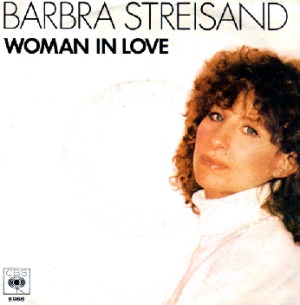
Cover art of "Woman In Love" (1980) single by Barbra Streisand, August 9, 2006. (JeanMarcDekesel via Wikipedia, http://www.discogs.com/viewimages?what=R&obid=539484). Qualifies as fair use under US copyright laws (low resolution and subject matter).

Cover art of “Woman In Love” (1980) single by Barbra Streisand, August 9, 2006. (JeanMarcDekesel via Wikipedia, http://www.discogs.com/viewimages?what=R&obid=539484). Qualifies as fair use under US copyright laws (low resolution and subject matter).

I actually like a couple of Barbra Streisand songs, both from ’80, and both from her collaboration with The Bee Gees (specifically, Barry Gibb). One is “Guilty,” the other “Woman In Love.” And yes, this is but one sign of how weird I am. But for the past thirty-four years, these songs have been part of my mental and actual music rotation, allowing me to ponder the mysteries of the opposite sex in the process.

For those moments, I’ve sometimes found myself wondering, has any woman ever felt that way about me? “I am a woman in love/And I’d do anything/To get you into my world/And hold you within.” I honesty have no idea, but the possibility of stirring passion in someone other than myself has fascinated me since the days of my Wendy crush in March ’82.

So, every time I’ve had a crush or love of major note, Streisand’s “Woman In Love” has given me to ability to think about what it would be like to be a woman. Young. In love. With all of the hopes and hurts, battles and betrayals. In ’85 with Phyllis, in ’91, in ’95 with my eventual wife, even after marriage. Somehow, the overwrought and — dare I say, Jewish — angst with which Streisand sang the song resonated with me and has stayed with me after all these years.

Cover art for Anita Baker's  Rapture (1986) CD, April 25, 2006. (Faustlin via Wikipedia). Qualifies as fair use (low resolution).

Cover art for Anita Baker’s Rapture (1986) CD, April 25, 2006. (Faustlin via Wikipedia). Qualifies as fair use (low resolution).

It wasn’t just Streisand that’s given me this feeling over the years. Anita Baker’s “Sweet Love,” and “Body and Soul,” Chaka Khan’s “I’m Every Woman” (still like this version better than Whitney’s, may she rest in peace) and “Through The Fire,” even some stuff from Celine Dion. Their music has gotten me about as close as could get to understanding what it must feel like to be a woman, at least in a generic sense. My wife, though, could probably testify to a lot more moments.

Of course, I can’t actually be a “woman in love,” no matter how much experience, imagination and empathy I can muster. Passing a kidney stone for nineteen hours in ’02 may approximate what my wife went through in giving birth to our son in ’03. But I didn’t have to carry that kidney stone around for nine months while it made noticeable changes to my body, my diet and my psyche. And having a child that you’ve fallen in love with before their birth often make the process worth it. I couldn’t get my doctors to let me see my kidney stone, much less keep it!

“It’s a right I defend/Over and over again,” Streisand sings in “Woman In Love.” As a boy and man who’s been “in love” at least four times in forty-four years, I feel that I can relate — a lot, if not in total. Taken to it’s most illogical extent, though, would mean obsession, possibly even stalker-like tendencies, especially if someone else doesn’t feel anything near the same way. But, when you’re in the middle of it, you might as well be on coke, Oxycontin and weed all at once, and with some latent form of bipolar disorder to boot. And the hangover from being in love requires much more than a Bloody Mary to get over.

Parts of your brain on drugs (endorphins) when in love, June 28, 2004. (Andreas Bartels, AP/Forbes.com).

Parts of your brain on drugs (endorphins) when in love, June 28, 2004. (Andreas Bartels, AP/Forbes.com).

How women do it, I guess I’ll never know.

My and Diane Ravitch’s Path to Reign of Error

11 Tuesday Mar 2014

Posted by decollins1969 in 1, Academia, Boy @ The Window, Carnegie Mellon University, culture, Eclectic, Mount Vernon High School, Mount Vernon New York, New York City, Patriotism, Pittsburgh, Politics, Pop Culture, race, Upper East Side, Youth

≈ Leave a comment

Tags

Bill & Melinda Gates Foundation, Book Review, Corporate Education Reform, Diane Ravitch, Fear of a "Black" America (2004), High-Stakes Testing, Humanities Program, Institutional Racism, Michelle Rhee, Multiculturalism, Neoconservative Movement, Politics of Education, Poverty, Privatization, Racial Segregation, Racism, Reign of Error (2013), Social Injustice, Social Justice, Teach for America, Writing Passion


Reign of Error (2013) by Diane Ravitch, front cover. (http://bn.com).

Reign of Error (2013) by Diane Ravitch, front cover. (http://bn.com).

I first began reading Diane Ravitch in July 1990, the summer before my senior year at the University of Pittsburgh. It was the summer in which I became interested in understanding magnet programs and their relationship with desegregation and diversity efforts, courtesy of my own experience with Mount Vernon, New York public schools and its now defunct Humanities Program. I read both The Great School Wars: New York City, 1805-1973 (1974) and The Troubled Crusade: American Education, 1945-1980 (1985) that summer, with education scholar and Ford Foundation director Jeanne Oakes’ Keeping Track: How Schools Structure Inequality (1985) sandwiched in between.

It was the beginning of a twenty-year period of constantly intellectual disagreement between me and Ravitch. Oakes’ work captured inequality in terms of race and socioeconomics so much better than Ravitch, whose writings back then often treated these inequalities and distinctions as afterthoughts. When I shifted my research area to multicultural education and multiculturalism, though, that was when I found Ravitch’s absolutist defense of so-called traditional American democratic education and all things e pluribus unum unbelievably stifling. With all Ravitch knew about the politics of education, in New York and with the US Department of Education, how could she possibly defend a system that did as much to control and exclude students as it did to provide something akin to an equal opportunity?

I chalked Ravitch up to being another out-of-touch neoconservative, scared to death of race and diversity and multiculturalism. I said as much at conferences like the American Educational Research Association meeting and other conferences. I wrote as much in my dissertation and in my first book, Fear of a “Black” America: Multiculturalism and the African American Experience (2004). Through it all, I always found Ravitch’s writing compelling, but her conclusions wanting, because they lacked perspective and empathy in the context of public schools and diversity.

Then, Ravitch wrote Left Back: A Century of Battles Over School Reform in 2000. Though it contained some of her common themes — overemphasis on the mantra of reform, the need for more testing, support for school choice, denigration of a multicultural curriculum — Ravitch showed growth in this book. She was less hostile to a more progressive curriculum and seemed, for the first time, really, to understand how much race and poverty had shaped the direction and the harshness of school reform going back to 1900. I happily used Ravitch’s Left Back in my History of American Education Reform course at George Washington in 2002. For her book provided a comprehensive and even-handed overview of the politics of K-12 education in a way that any educator of any American ideological perspective could understand.

I’ve finally read Ravitch’s Reign of Error: The Hoax of the Privatization Movement and the Danger to America’s Public Schools (2013). Reign of Error is Ravitch at her most passionate and energized. If I hadn’t read a couple dozen of Ravitch’s articles from the 1980s and 1990s and four of her previous books, I would think that this was her first book, as there is sense of urgency in Reign of Error that can seldom be found outside of epic memoirs and epic fiction novels.

Ravitch’s argument in Reign of Error is a simple one. Corporate education reform, if allowed to continue unfettered, will destroy public education in the US, and in the process, American democracy. Privatizing public schools (i.e., turning them into “public” charter schools), destroying teacher’s unions, constant high-stakes testing, bypassing school boards and forgetting about racial segregation and poverty — that’s corporate education reform’s agenda. As Ravitch said in Chapter 12 on the fallacies of merit pay for teachers, “Merit pay is the idea that never works and never dies (p. 119).” She could have also substituted the words “school choice,” “creationism,” “standardized testing,” “closing schools,” and “privatization” for “merit pay.”

But Ravitch goes further in her 400-page treatise. That though public education in the US has had its share of problems — the need for more teacher training and time for professional development, racial segregation and high levels of poverty while underfunded — that corporate education reform has compounded these problems several times over. That with corporate education reform, teachers, parents and students will have no say in public education, at least the ones without their own personal foundation with which to endow their own public charter school.

From a writer’s standpoint, this wasn’t Ravitch’s best effort. Her argument is repetitive, one where she likely could’ve cut the main chapters by a quarter (about 100 pages) and made the same points. I likely could’ve become inebriated if I had a shot of vodka every time the words “poverty,” “Gates,” “Walton,” “Broad,” “high-stakes testing,” and “corporate education reform” come up. But given my history with reading Ravitch and with this topic, of course Reign of Error was repetitive — it was like reading my own words on this same topic.

Ultimately, Ravitch’s Reign of Error is a primer for anyone interested in averting the social injustice that is the corporate education reform tyranny of wealthy philanthropists, money-grubbing entrepreneurs and politicians across America’s limited ideological spectrum. For those whom up to now this issue has been of limited interest, or for those who’ve felt the change in public education but haven’t quite been able to articulate those feelings, Reign of Error is for you.

For educators, parents and even students already involved in writing about or protesting against corporate education reform, this book is still for you. Ravitch provides so much ammunition that Reign of Error can be applied in numerous ways to numerous situations. At school board meetings. With #AskMichelleRhee hash tags on Twitter. In job interviews with Teach for America and with the Bill & Melinda Gates Foundation. In letters to the editor of the mainstream newspapers and in comments to mainstream TV and radio newscasters. In arguments with neoconservative parents who send their kids to private schools.

“Protecting our public schools against privatization and saving them for generations of American children is the civil rights issue of our time (p. 325).” is how Ravitch ended her Reign of Error. It’s not an exaggeration. But it does beg a question. If we can successfully fend off corporate education reform — and assume that the country will continue to ignore the poverty and racial segregation that Ravitch desperately wants addressed — can she and I then spend five minutes discussing multiculturalism?

What I Didn’t Know Growing Up – It Still Hurts

27 Thursday Feb 2014

Posted by decollins1969 in 1, Boy @ The Window, Christianity, culture, Eclectic, Hebrew-Israelite, Jimme, Marriage, Mount Vernon New York, My Father, New York City, Politics, Pop Culture, race, Religion, Sports, Work, Youth

≈ Leave a comment

Tags

Achievements, Ancestors, Arkansas, Basketball, Black History Month, Collins Family, Family, Gill Family, Harrison Georgia, Houston Texas, Ignorance, Jim Crow, Knowledge, Lineage, Mom, Mother, Parenting, Poverty, Segregation, Tenant Farming, Universality, Wisdom


George Bernard Shaw and ignorance, June 2013. (http://www.irelandcalling.ie/).

George Bernard Shaw and ignorance, June 2013. (http://www.irelandcalling.ie/).

“My people perish for a lack of knowledge,” it seems, is something that anyone can find in almost any religion’s texts anywhere. Heck, depending on perspective, even atheists in general can agree with this statement (of course, the issue would be what constitutes “knowledge”). I read this verse (it’s in Hosea and Isaiah, and versions of it as well as in Jewish texts and the Qur’an) for the first time when I was fifteen in ’85, less than a year after I converted to Christianity. Boy, I had no idea how little I knew about myself, my family and my history when I first read that verse twenty-nine years ago.

In light of the end of Black History Month, I wouldn’t be me without noting how little any of us know about our families, our lineages and our ancestors. But it’s not just true of the millions of us descended from West and Central Africans kidnapped, bound, abused, raped and nearly worked to death to provide Europeans (and Arabs) wealth and comfort. Most of us don’t even know what we think we know about much more recent history and events than surviving the Middle Passage or overcoming Jim Crow.

A rabbi, a priest and an imam, 2013-2014. (PizzaSpaghetti via http://www.deviantART.com).

A rabbi, a priest and an imam, 2013-2014. (PizzaSpaghetti via http://www.deviantART.com).

For me and my family, I knew so little about us that my Mom could’ve told me that Satan had thrown us out of Hell for being too brown to burn and I would’ve accepted it as an appropriate answer. All I really knew of my mother’s side of my family was that they were from Arkansas, that my Uncle Sam (I chuckled sometimes thinking of the irony) was my Mom’s closest sibling, and that they grew up as dirt poor as anyone could get without living in a thatched root hut on less than $1 a day.

I asked for more during those rare moments when my focus wasn’t on high school, getting into college and getting as far away from 616 and Mount Vernon, New York as possible. I ended up finding out about how my Mom’s mother once beat her with the back of a wooden brush for not being ready on time for church, that there were years where her father made only $200 total from cotton farming, and that she was the oldest of twelve kids. She had done some form of work either taking care of her siblings, cooking, cleaning, washing clothes by hand, and hoeing and picking cotton, since she was five or six. Oh yeah, and she played basketball in high school.

On my father’s side, I knew a bit more, if only because Darren and me went with my father to visit the Collins farm in Harrison, Georgia in August ’75. I was five and a half then, but I do remember the fresh smoked ham and bacon, the smell of my grandfather’s Maxwell House coffee, me being too scared to ride a horse, so they put me on a sow (my brother did ride the horse, though). But what people did, how a Black family owned their own land going back to the turn of the twentieth century, I wouldn’t have known to even ask about at not quite six years old.

What I didn’t know until after high school, college, even after earning a Ph.D. in knowing (that’s what a history degree ultimately is) was so much worse than I imagined. To find out at twenty-three that my Mom was a star basketball player in high school. She played center, and led her team to Arkansas’ segregated state quarterfinals in ’65. My Uncle Sam played four sports in high school (basketball, football, baseball and track and field) and was offered college scholarships, but didn’t have the grades to move forward. I learned a year later that my Uncle Paul followed in their footsteps, and played three years at the University of Houston, left early and played for the Houston Rockets in ’82-’83 (not a good year for them, or for me, for that matter) before blowing out a knee and moving into entertainment work.

My father’s family — at least the women of the family — boasted at least three college degrees. Two of my aunts became school teachers. My uncles started businesses in Atlanta and in parts of rural Georgia, working their way well beyond the farm to the work they wanted to do.

Unidentified tenant farmer, his home, automobile, and family, Lee Wilson & Company, rural Arkansas, 1940s. (http://libinfo.uark.edu/SpecialCollections/)

Unidentified tenant farmer, his home, automobile, and family, Lee Wilson & Company, rural Arkansas, 1940s. (http://libinfo.uark.edu/SpecialCollections/)

I learned all of this by the time I turned thirty-two, just a year and a half before my own son was born. How many different decisions I would’ve made about my life if I had known that one half of my family was full of athletes, and the other half was full of business owners, not to mention three aunts with a college education? I would’ve known to try out for any sport in high school — particularly basketball — and to not be afraid to fail. I would’ve known that I was only the first person in my immediate family to take a go at college beyond a certificate in dietary science (my Mom earned that in the summer of ’75), and not the first one on either side as I once thought.

Most of all, I would’ve known that though I was lonely and played the role of a loner my last years growing up, that I wasn’t alone. There were a whole bunch of people in my lineage, some of whom were alive and well, from whom I could’ve drawn strength, found kinship, felt pride and confidence in, where I wouldn’t have seen myself as an abandoned and abused underdog anymore.

If I’d known all this growing up, I wouldn’t have felt and sometimes feel robbed now, by poverty and parenting, abuse and alcoholism. This is why having knowledge to draw from is so important.

← Older posts
Newer posts →

Boy @ The Window: A Memoir

Boy @ The Window: A Memoir

Places to Buy/Download Boy @ The Window

There's a few ways in which you can read excerpts of, borrow and/or purchase and download Boy @ The Window. There's the trade paperback edition of Boy @ The Window, available for purchase via Amazon.com at http://www.amazon.com/Boy-Window-Donald-Earl-Collins/dp/0989256138/

There's also a Kindle edition on Amazon.com. The enhanced edition can be read only with Kindle Fire, an iPad or a full-color tablet. The links to the enhanced edition through Apple's iBookstore and the Barnes & Noble NOOK edition are below. The link to the Amazon Kindle version is also immediately below:

scr2555-proj697-a-kindle-logo-rgb-lg

Boy @ The Window on Amazon.com: http://www.amazon.com/Boy-The-Window-Memoir-ebook/dp/B00CD95FBU/

iBookstore-logo-300x100

Boy @ The Window on Apple's iBookstore: https://itunes.apple.com/us/book/boy-the-window/id643768275?ls=1

Barnes & Noble (bn.com) logo, June 26, 2013. (http://www.logotypes101.com).

Boy @ The Window on Barnes & Noble: http://www.barnesandnoble.com/w/boy-the-window-donald-earl-collins/1115182183?ean=2940016741567

You can also add, read and review Boy @ The Window on Goodreads.com. Just click on the button below:

Boy @ The Window

Twitter Updates

Tweets by decollins1969
  • RSS - Posts
  • RSS - Comments

Archives

  • June 2025
  • April 2023
  • September 2022
  • August 2022
  • July 2022
  • June 2022
  • May 2022
  • April 2022
  • March 2022
  • January 2022
  • December 2021
  • November 2021
  • October 2021
  • September 2021
  • August 2021
  • July 2021
  • June 2021
  • April 2021
  • March 2021
  • February 2021
  • January 2021
  • December 2020
  • November 2020
  • October 2020
  • September 2020
  • August 2020
  • July 2020
  • May 2020
  • April 2020
  • March 2020
  • January 2020
  • December 2019
  • November 2019
  • August 2019
  • July 2019
  • June 2019
  • May 2019
  • April 2019
  • March 2019
  • February 2019
  • January 2019
  • December 2018
  • November 2018
  • October 2018
  • September 2018
  • August 2018
  • July 2018
  • June 2018
  • May 2018
  • March 2018
  • February 2018
  • January 2018
  • December 2017
  • November 2017
  • October 2017
  • September 2017
  • August 2017
  • July 2017
  • June 2017
  • May 2017
  • April 2017
  • March 2017
  • February 2017
  • January 2017
  • December 2016
  • November 2016
  • October 2016
  • September 2016
  • August 2016
  • July 2016
  • June 2016
  • May 2016
  • April 2016
  • March 2016
  • February 2016
  • January 2016
  • December 2015
  • November 2015
  • October 2015
  • September 2015
  • August 2015
  • July 2015
  • June 2015
  • May 2015
  • April 2015
  • March 2015
  • February 2015
  • January 2015
  • December 2014
  • November 2014
  • October 2014
  • September 2014
  • August 2014
  • July 2014
  • June 2014
  • May 2014
  • April 2014
  • March 2014
  • February 2014
  • January 2014
  • December 2013
  • November 2013
  • October 2013
  • September 2013
  • August 2013
  • July 2013
  • June 2013
  • May 2013
  • April 2013
  • March 2013
  • February 2013
  • January 2013
  • December 2012
  • November 2012
  • October 2012
  • September 2012
  • August 2012
  • July 2012
  • June 2012
  • May 2012
  • April 2012
  • March 2012
  • February 2012
  • January 2012
  • December 2011
  • November 2011
  • October 2011
  • September 2011
  • August 2011
  • July 2011
  • June 2011
  • May 2011
  • April 2011
  • March 2011
  • February 2011
  • January 2011
  • December 2010
  • November 2010
  • October 2010
  • September 2010
  • August 2010
  • July 2010
  • June 2010
  • May 2010
  • April 2010
  • March 2010
  • February 2010
  • January 2010
  • December 2009
  • November 2009
  • October 2009
  • September 2009
  • August 2009
  • July 2009
  • June 2009
  • May 2009
  • April 2009
  • March 2009
  • February 2009
  • January 2009
  • December 2008
  • November 2008
  • October 2008
  • September 2008
  • August 2008
  • July 2008
  • June 2008
  • May 2008
  • April 2008
  • March 2008
  • February 2008
  • January 2008
  • December 2007
  • November 2007
  • October 2007
  • September 2007
  • August 2007
  • July 2007
  • June 2007

Recent Comments

MaryPena's avatarMaryPena on My Day of Atonement/Bitter Hat…
decollins1969's avatardecollins1969 on No Good Teaching Deed Goes…
Mary Rose O’Connell's avatarMary Rose O’Connell on No Good Teaching Deed Goes…

NetworkedBlogs on Facebook

NetworkedBlogs
Blog:
Notes From a Boy @ The Window
Topics:
My Life, Culture & Education, Politics & Goofyness
 
Follow my blog

616 616 East Lincoln Avenue A.B. Davis Middle School Abuse Academia Academy for Educational Development AED Afrocentricity American Narcissism Authenticity Bigotry Blackness Boy @ The Window Carnegie Mellon University Child Abuse Class of 1987 CMU Coping Strategies Crush #1 Crush #2 Death Disillusionment Diversity Domestic Violence Economic Inequality Education Family Friendship Friendships Graduate School Hebrew-Israelites High-Stakes Testing Higher Education History Homelessness Humanities Humanities Program Hypocrisy Internalized Racism Jealousy Joe Trotter Joe William Trotter Jr. K-12 Education Love Manhood Maurice Eugene Washington Maurice Washington Misogyny Mother-Son Relationship Mount Vernon High School Mount Vernon New York Mount Vernon public schools Multiculturalism MVHS Narcissism NFL Pitt Pittsburgh Politics of Education Poverty President Barack Obama Race Racial Stereotypes Racism Relationships Self-Awareness Self-Discovery Self-Reflection Sexism Social Justice Teaching and Learning University of Pittsburgh Violence Whiteness Writing

Top Rated

Blog at WordPress.com.

  • Subscribe Subscribed
    • Notes from a Boy @ The Window
    • Join 103 other subscribers
    • Already have a WordPress.com account? Log in now.
    • Notes from a Boy @ The Window
    • Subscribe Subscribed
    • Sign up
    • Log in
    • Report this content
    • View site in Reader
    • Manage subscriptions
    • Collapse this bar
 

Loading Comments...