• About Me
  • Other Writings
  • Interview Clips
  • All About Me: American Racism, American Narcissism, and the Conversation America Can’t Have
  • Video Clips
  • Boy @ The Window Pictures
  • Boy @ The Window Theme Music

Notes from a Boy @ The Window

~

Notes from a Boy @ The Window

Category Archives: Mount Vernon High School

The Story of a Picture

12 Tuesday Feb 2013

Posted by decollins1969 in 1, Boy @ The Window, culture, Eclectic, Mount Vernon High School, Mount Vernon New York, Pop Culture, race, Youth

≈ Leave a comment

Tags

616, 616 East Lincoln Avenue, C-Town, Emotions, Greasy Face, hunger, lunch, Milk-n-Things, Mount Vernon High School ID, MVHS, MVHS ID Picture, Pictures, Poverty, Self-Reflection, Tandy, Tired, TRS-80
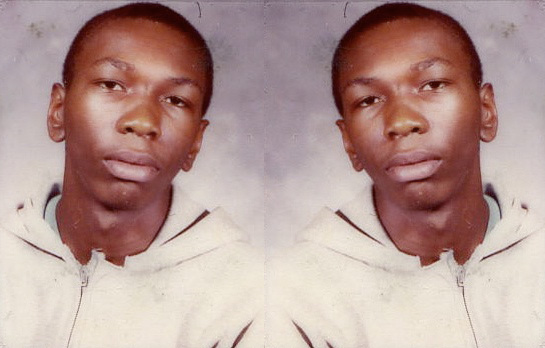

MVHS ID Picture (with horizontal flip), February 12, 2013. (Donald Earl Collins).

MVHS ID Picture (with horizontal flip), February 12, 2013. (Donald Earl Collins).

Many thanks to those of you who’ve responded so far to my post “Potential Boy @ The Window Book Covers” from last week. I truly appreciated all of the feedback and well wishes.

I’m sure that you noticed the one thing every potential front cover for the manuscript had in common — at least, besides the title. The picture I used on all the draft covers was of me not quite two months from my sixteenth birthday, my second Mount Vernon High School ID picture, taken in November ’85. I use this picture because there are only have a dozen or so surviving pictures of me from the period between February ’75 and November ’95.

Who knows? Between the extended Collins and Gill families, occasional photos taken by friends, acquaintances and colleagues, there could be another half-dozen more. A Sears portrait picture of me in March ’75, a couple of pictures that happened to include me from my senior year at MVHS, and a picture of me with my Uncle Sam at my graduation on June 18, ’87. That’s all I have to work with from the Boy @ The Window years, 1981-89.

There weren’t many opportunities for me to capture myself in picture mode during those years. But if I had to have one and only one picture that could encompass the physical and psychological strain, the emotional strife and torment that life and school was for me back then, the MVHS ID picture would be the one. As my good friend Cath already noted, I looked tired with “Samsonite” bags underneath my eyes the morning I took that picture.

That morning was Friday, November 8, ’85, and not a particularly memorable one at that. It seemed like I was always tired, especially before lunch, which was sixth period that year. Maybe I was hungrier than normal that morning, because I often went without. Or maybe, as usual, I hadn’t gotten a full night’s rest, sleeping in the same room with my older brother Darren and two of my younger brothers Maurice and Yiscoc. Or maybe it was a week of making extra runs to C-Town in Pelham or Milk-n-Things for food. It may well have been that I expended too much energy in Meltzer’s AP US History class second period, and I hadn’t properly paced myself.

Whatever it was, I was tired, more tired than usual. I was also fed up with the whimsical decisions of the mercurial staff at MVHS. They were the ones a full two months behind in taking ID pictures for our class, as our ninth-grade IDs were only designed to be actively used for two years. Yet they saw fit to pull us out of class fifth period to take pictures that second November Friday.
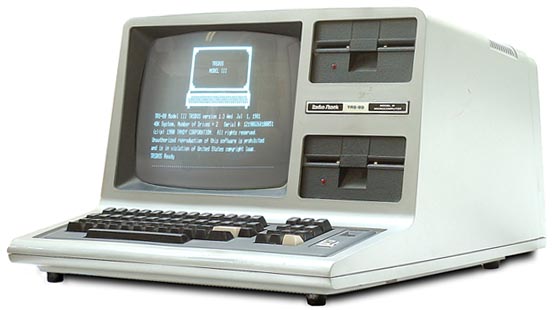
Tandy TRS-80 III, February 12, 2013. (http://oldcomputers.net/pics/).

Tandy TRS-80 III, February 12, 2013. (http://oldcomputers.net/pics/).

It was bad enough I had to miss Ms. Walters’ Pascal class, where I was just starting to feel comfortable with the material and the Tandy TRS-80s (or Trash 80s, as we nicknamed them). Now the idiot powers that were had the entire Class of ’87 — more than 600 of us at the time — standing in a wrapping-around-the-room line adjacent to the cafeteria, waiting for them to take our ID pictures.

The process for me lasted over an hour, but not quite seventy-five minutes. By now, it was time for my sixth-period lunch. I’d grown tired of idiot kids trying to cut the line, hearing dumb-ass conversations about music and sports and hair, and standing while the numbskulls with the camera and laminate machine took forever to process one picture at a time.

When I finally came up, I was imagining myself with a baseball bat smashing up everything while screaming as loud as I could. Only to hear the idiot with the camera yell, “Smile for me, honey!” I was nobody’s “honey,” especially the middle-aged Italian woman yelling at me to smile on command! So I narrowed my eyes — and stopped just short of rolling them — and bit down on the right corner of my lip as they took my picture.

That I was in my ripped gray zip-up hoodie, with a faded powder-blue Puma t-shirt underneath it wasn’t a surprise. It was one of a combination of clothes I wore to school as part of my “five-day rotation,” as I called it back then (an homage to baseball). I wouldn’t have worn that combination, though, had I known that MVHS would have my picture taken that day.

I left the room, grabbed what I believe was “murder burgers and suicide fries” for lunch at the cafeteria, and torpedoed them down my throat about fifteen minutes before gym. I was poor, hungry, tired, pissed, determined and greasy, in so many more ways than one, that day — in fact, every day. For one picture on one day, though, I inadvertently showed it all.

The Falsehoods of a Civil Rights Movement Legacy

15 Tuesday Jan 2013

Posted by decollins1969 in 1, Academia, Boy @ The Window, culture, Eclectic, Mount Vernon High School, Mount Vernon New York, New York City, Patriotism, Politics, Pop Culture, race, Youth

≈ Leave a comment

Tags

Birthday, Civil Rights, Civil Rights Movement, Class Divide, Educational Aspirations, Estelle Abel, Generation X, Generation Y, Generational Divide, Generational Prejudice, Legacy, Martin Luther King Jr., Mythology, Myths, Police Brutality, Post-Civil Rights Generation, Poverty, Racism, Stop and Frisk


Martin Luther King, Jr. Memorial statue, National Parks Service, Washington, DC, August 2, 2012. (NPS via Wikipedia). Qualifies as fair use under US Copyright laws, as this is a 2D picture of a 3D sculpture.

Martin Luther King, Jr. Memorial statue, National Parks Service, Washington, DC, August 2, 2012. (NPS via Wikipedia). Qualifies as fair use under US Copyright laws, as this is a 2D picture of a 3D sculpture.

Well, it’s not officially Martin Luther King Day yet, but since Dr. King was actually born on January 15, 1929, better for me to talk about him today than next week. Especially with President Obama’s second inaugural going on at the same time. But what a legacy! Yet his generation of civil rights activists and righteous protesters have done as much harm to his legacy as have conservatives invoking his “I Have a Dream” speech every time they’re called out on their bigotry.

Yeah, that’s right, I said it! One of the benefits — if you want to call it that — of being born in ’69 is that I’ve witnessed the devolution of the Civil Rights Movement and its leaders and followers into a gauntlet of gatekeepers who expect everyone from my generation to start every sentence paying homage to their sacrifices. I have no problems with that, at least in theory. But the reality is that most folks from the Civil Rights generation — at least the successful ones — made few if any sacrifices for “the cause.” They were in the right place at the right time with the right education and managed to find jobs, careers and positions of influence while the least fortunate of us all saw few material or psychological benefits from Dr. King’s ultimate sacrifice.

I’ve already talked at length about Estelle Abel, a former Mount Vernon High School Science Department chair (see my posts “My Last Day” from June ’11 and “In-Abel-ed” from June ’12 for much more). Her soliloquy about sacrifice and the Civil Rights Movement was supposed to make me feel bad about letting Black Mount Vernon, New York down because I only graduated fourteenth in my class out of over five hundred students. There are others, former and current teachers, professors, librarians, politicians, writers, producers, editors, pastors, politicians, bosses and charlatans who’ve made a point to discuss their elitist notions of the Civil Rights Movement and generation with me.

Hundreds of thousands descended on Washington, DC's Lincoln Memorial August 28, 1963. (Marines' Photo via Wikipedia). In public domain.

Hundreds of thousands descend on Lincoln Memorial August 28, 1963. (Marines’ Photo via Wikipedia). In public domain.

But most — if not all — of these folks are wrong about their glorified view of the Movement and its legacy four and a half decades later. For college educated, middle class African Americans, life has gotten better, even with bigotry, glass ceilings, DWB, a less stable economy, and the conservative backlash that has gone on unabated since the three years before Dr. King’s assassination. For Blacks not as fortunate, almost nothing has changed, at least not for the better.

Some of it, to be sure (and to cut Bill Cosby some slack), is because of individual choices and poor decision-making. Folks, however, can rarely make decisions outside of their own context and circumstances — think outside of the box, in other words — without a significant amount of help. Poverty in all of its forms is just as grinding now as it was a half-century ago. To expect people from the generations since Dr. King to suddenly forget their poverty, abuse, neglect and exploitation and give praise to a generation where many but far from most made sacrifices for the Movement is ludicrous.

I’m certain that had Dr. King lived over the past forty-five years, he wouldn’t have stood by to allow his generation to constantly criticize the under-forty-five as slackers and immature and unfocused, as folks more concerned with money than equality. King likely would’ve made the point that the post-Civil Rights Generations X and Y are merely a reflection of their upbringing, of their parents and teachers and mentors’ nurturing and training. He would’ve made the same point that others from his generation like the late law professor and scholar-activist Derrick Bell has made over the years. That fighting racism, educational neglect and economic exploitation requires more tools than the moral high-ground, protests, marches, a sympathetic media and obvious redneck tactics. The Movement is itself a shifting terrain that requires new tools and tactics to achieve small victories over a long period of time, longer than most folks from the era are willing to admit.

I actually don’t have a strong ax to grind against the Civil Rights generation. Without folks like Dr. King or Jesse Jackson, Medgar Evers or Ella Baker, I wouldn’t have found myself in a gifted-track program in middle school or high school in the ’80s. But let’s not act as if my life was a walk in the park. The legacy of the Civil Rights era never stopped a fist from being thrown into my face by my now ex-stepfather. It never kept us from going on welfare or kept two of my siblings from bring diagnosed as mentally retarded.

NYPD Stop and Frisk caption (actual details for photo unknown), August 2012. (http://thinkprogress.org).

NYPD Stop and Frisk caption (actual details for photo unknown), August 2012. (http://thinkprogress.org).

Nor did the Civil Rights Movement’s legacy stop teachers and professors from putting up barriers to my success as a student or employers from putting up a glass ceiling in an attempt to slow my career advance. It never stopped me from being followed and frisked by police or harassed by overzealous security guards. It’s never paid one of my bills, kept food on my plate or kept me from experiencing homelessness. It’s never even been a source of pride, because that would mean that the Civil Rights Movement and its legacy would belong to me as much as it does to the people who allegedly marched with Dr. King.

I can’t wait for those who cling almost in desperation to the idyllic legacy of Dr. King and the cause to retire and fade away, for the ’60s to truly be over. Maybe that’s when folks from the post-’60s generation — folks like me who care about economic and educational equity, social justice and spiritual transformation — will be able to make an impact on our nation’s sorry state of consciousness without pouring libations to folks who gave up on Dr. King’s work ages ago.

Remembering Harold Meltzer

09 Wednesday Jan 2013

Posted by decollins1969 in 1, Academia, Boy @ The Window, culture, Eclectic, eclectic music, Mount Vernon High School, Mount Vernon New York, Politics, Pop Culture, race, Youth

≈ 5 Comments

Tags

AP US History, Bitterness, Confirmed Bachelor, Death, Dedication, Egalitarianism, Eulogy, Friendship, Harold I. Meltzer, Harold Meltzer, Homophobia, Humanities, Humanities Program, Learning, Life, Mentoring, Metropolitan Opera House, Morison & Commanger, Perseverance, Politics of Education, Self-Discovery, Teaching


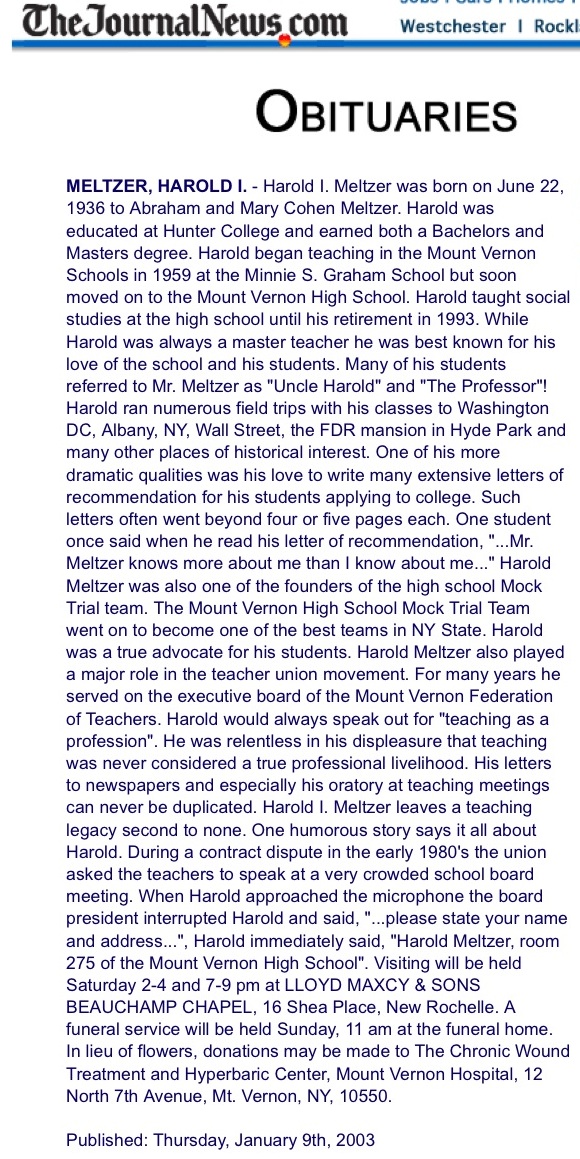
Harold Meltzer obituary (via Frank Pandolfo), January 9, 2003. (Westchester Journal News).

Harold Meltzer obituary (via Frank Pandolfo), January 9, 2003. (The Journal News).

Harold Meltzer, my favorite and best teacher of all, died on January 2, 2003 at the age of sixty-six, ten years ago last week. He was all too young and all too bitter about his years as a history teacher at Mount Vernon High School. But then, dealing with entitled parents and unrepentant administrators in Mount Vernon, New York for thirty-five years would do that to most people. Despite that, Meltzer was a rock, the first teacher since my elementary school years that I genuinely trusted with my family secrets and my inner self. He was the first and maybe only teacher I had in my six years of Humanities who actually seemed like he wanted to teach us (see my post “No Good Teaching Deed Goes Unpunished” from May ’11).

I met Meltzer on our last day of tenth grade, after three days of finals and Regents exams, on June 21, ’85. He had summoned fourteen of us to “Room 275 of Mount Vernon High School,” as the invitation read. We had all registered to take Meltzer’s AP American History class in eleventh grade, our first opportunity to earn college credit while in high school.

Meltzer started off talking to us about Morison and Commager — who I now know as the great consensus historians of the ’50s, until the social history revolution made their textbooks irrelevant by the ’80s — as we sat in this classroom of old history books and even older dust and chalk. Meltzer himself looked to be in his late-fifties (he was actually a day away from his forty-ninth birthday), tall and lanky except for the protruding pouch in the tummy section. His hair was a mutt-like mixture of silver, white and dull gray, and his beard was a long, tangled mess.

Met Logo and A full house, seen from rear of stage, at the Metropolitan Opera House (former bldg, 39th Street), for a concert by pianist Josef Hofmann, November 28, 1937. (National Archives via Wikimedia). In public domain.

Met Logo and A full house, seen from rear of stage, at the Metropolitan Opera House (former bldg, 39th Street), for a concert by pianist Josef Hofmann, November 28, 1937. (National Archives via Wikimedia). In public domain.

The way he spoke, and the way his eyes looked when he spoke made me see him as a yarmulke-wearing preteen on his way to temple. The force with which his words would leave his mouth hit me immediately. As much as I noticed how frequently spit would spew out of Meltzer’s mouth, the rhythm of his speech was slow and sing-song, like an elder or grandfather taking you on a long, winding, roller-coaster-ride of a story. Most of all, I knew that he cared — about history, about teaching, about us learning, about each of us as people. Maybe, just maybe, for some of us, he cared too much.

But for at least for me, Meltzer’s eccentric space in which he told Metropolitan Opera House stories and talked about egalitarianism extended beyond the historical. He was the first teacher I had since before Humanities who’d ask me if things at home were all right, and knew intuitively that things weren’t. He was the first to ask me about how poor my family was and about hunger. And he was the first teacher ever to ask if I had a girlfriend. Needless to say, these questions were unexpected. Yet through these questions, Meltzer had begun to crack my thin, hard wall of separation between school and family.

Because Meltzer cared deeply about reaching students — about reaching me — our student-teacher relationship because a friendship after high school and a mentoring one as well. I wasn’t looking for a mentor, and Meltzer was only being Meltzer. Still, his stories about his battles with MVHS administrators, Board of Education folk, and with upper-crust parents who believed their kids were entitled to A’s just for showing up, were filled with lessons of perseverance, patience, and looking beyond everyday headaches in order to reach people. While this wasn’t a factor in my going to graduate school and spending a significant part of my life as a history professor and educator, these stories have helped me over the years.

1972 Dodge Dart Dark Green (similar to '74 Dodge Dart Meltzer owned when I was at MVHS), December 25, 2009. (http://www.fotosdecarros.com).

1972 Dodge Dart Dark Green (similar to ’74 Dodge Dart Meltzer owned when I was at MVHS), December 25, 2009. (http://www.fotosdecarros.com).

But unfortunately, it was a factor in why Meltzer became embittered and took early retirement in June ’93. The end of the Humanities Program, the intolerance of some administrators toward Meltzer as a “confirmed bachelor,” the lack of decency — forget about gratitude — from many of his most successful students. Those changes, these things, all would take a toll on any teacher who’d stay after school day after day to run Mock Trial, to facilitate study groups, to work on letters of recommendation for students. But no, most of my former classmates who had Meltzer between ’85 and ’87, all they could say was that “Meltzer was weird” or that “I didn’t understand” his lessons.

I’m thankful that I did have Meltzer as a teacher, friend and mentor between ’85 and ’02. I’m thankful that I had a chance to interview him for what is now my Boy @ The Window manuscript in August and November ’02, just a couple of months before he passed (see my post “Mr. Meltzer” from June ’09). I’m glad that despite his physical and psychological pain, Meltzer welcomed me with open arms and answered my questions about his life and his career. I just wish that my former classmates and some of Meltzer’s more cut-throat colleagues had taken the time to really know the man.

We Called Him Mr. Lewis

03 Monday Dec 2012

Posted by decollins1969 in 1, Academia, Boy @ The Window, culture, Eclectic, Jimme, Mount Vernon High School, Mount Vernon New York, My Father, Politics, Pop Culture, race, Youth

≈ Leave a comment

Tags

Arne Duncan, Bill & Melinda Gates Foundation, Chemistry, Cigarettes, Disllusionment, ExxonMobil, Family Income, High-Stakes Testing, Humanities, Low-Income Students, Michelle Rhee, New York State Regents Exam, Nicotine, Organic Chemistry, Politics of Education, Poverty, Steve Perry, Students of Color, Teacher Effectiveness, Tenth Grade, US Department of Education, Wendy Kopp


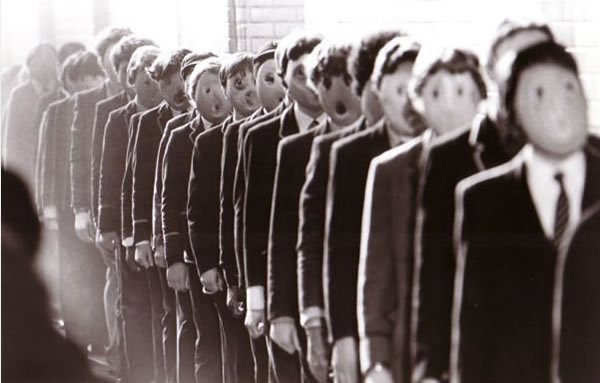
Screenshot from To Sir, with Love (1967), December 3, 2012. (http://movies.tvguide.com). Qualifies as fair use under US Copyright laws - pic's low resolution/subject matter for blog.

Screenshot from To Sir, with Love (1967), December 3, 2012. (http://movies.tvguide.com). Qualifies as fair use under US Copyright laws – pic’s low resolution/subject matter for blog.

The dumb technocratic class (Wendy Kopp, Michelle Rhee, Steve Perry, Arne Duncan) and the assholes who fund them (Bill & Melinda Gates Foundation, ExxonMobil, US Department of Education) continue to pump out the mantra that effective teachers are the single most important variable in student performance, retention and graduation. This despite a half-century’s worth of research showing that family income was the far more important piece of data.

But even if Kopp, Rhee and Perry’s snake oil somehow turned out to be true, the fact is, the high-stakes testing movement and No Child Left Behind (and now Race to the Top) has turned effective teachers into lab leaders teaching to state-wide tests. Our current K-12 regime makes it so that ineffective teachers can be seen as effective because they’re only concerned with higher test scores, not actual learning. And some of them, not even concerned with that.

About this time thirty years ago, I had a group of wholly ineffective teachers in my tenth grade Humanities classes at Mount Vernon High School (see my posts “Half-Baked Z and Christian Zeal” from September ’10 and “This…Is…Jeopardy” from March ’11). Mr. Lewis was but one example of an unimaginative instructor. He was our Level 1 Chemistry teacher. We started his class in a very tense situation. There were fifty-one students in our class to start the year because the school administrators had failed to hire a new Level 0 (the highest level for the highest of the high-performing students) teacher for Chemistry. Our future valedictorian and other Level 0 folks spent a month protesting to the head of the Science Department, Estelle Abel, about the overcrowding and the mixing of the two levels. It took nearly two months before the situation was resolved. By that time, November ’84, none of us wanted Lewis for a teacher.

His was a class that could be fun and entertaining, but not usually educational. Sometimes our chemistry education came with errors and miscalculations. Perhaps his mistakes piled up because it was seventh period and near the end of the school day. Or maybe we were tired and inattentive.

Marlboro cigarette butts, September 19, 2007. (bachmont via Wikipedia/Flickr.com). In public domain.

Marlboro cigarette butts, September 19, 2007. (bachmont via Wikipedia/Flickr.com). In public domain.

The truth was that Lewis was a teacher with a serious chemical addiction. His was a chain-smoking world. When he opened up the door to the storage room where the test tubes and Pyrex jars were, stale cigarette smoke entered the room. His teeth were a pasty yellow, and they had a film that seemed to build up on them and in his mouth by the time we had him at the end of the day. On more than one occasion, Lewis would get phlegm caught in his mouth while in the middle of one of his lectures. Then he’d pause as he gulped the phlegm, and then he kept going. It was absolutely disgusting.

One day I met with Mr. Lewis after class to discuss my struggles with the material. He was at the front lab table sitting on a stool. In front of him on the table were fifteen Marlboro cigarettes, all lit and neatly lined up in a row. During our ten minutes together, he smoked one cigarette after another, sucking them down so fast that he had to pause to clear his throat from time to time. By the time I left, he’d gone through twelve out of fifteen, and I smelled like I’d been at one of my father Jimme’s bars. I was more than sure that Lewis’ nicotine dependency was a factor in his inability to teach Chemistry to us well (Cigarettes And Coffee, by Otis Redding).

My grades for the year going into the last weeks of the school year had ranged between an unimpressive 70 and an 87. But with the New York State Regents Exam in Chemistry coming up, Lewis was nonchalant in his attempts to prepare us for the Regents. Lewis went as far as to say, “There’s nothing to worry about” on the subject of organic chemistry. “There will be hardly any organic chemistry on the exam, anyway,” he said. After eight months of listening to his blathering, I thought “That’s it!” The next time I got money from Jimme, I  bought the Barron’s Chemistry Regents exam prep book. It was just before Memorial Day, and I had a month before the exam.

Barron's Regents Exams & Answers Chemistry (2011), December 3, 2012 (http://barnesandnoble.com).

Barron’s Regents Exams & Answers Chemistry (2011), December 3, 2012 (http://barnesandnoble.com).

On my Chemistry Regents I scored a 95, the third or fourth highest grade in the school (the highest grades were a 99 and 97 that year). My score raised my final grade in Lewis’ class six points, from a 79 to an 85. My score left me feeling jaded and disillusioned. “Wow,” I thought. “My teachers really don’t know much more than I do!” I knew that a lot of my Level 1 Chemistry classmates didn’t fare so well on the exams, because they believed Lewis when he said that there wouldn’t be much organic chemistry on the exam. By my own count during the exam, between thirty-five and forty of the 100 questions were organic chemistry ones.

It took having Meltzer for AP US History in eleventh grade for me to trust teachers again. I didn’t need anyone to teach tests to me. I needed a teacher who could help me open up a door into myself and into a world I hadn’t explored before. And millions of students — especially of color and from impoverished backgrounds — need teachers free to do that, without the threat of high-stakes tests hanging over them like a boulder.

Fear of Flying Solo (Not Literally)

19 Monday Nov 2012

Posted by decollins1969 in 1, Boy @ The Window, culture, Eclectic, eclectic music, Mount Vernon High School, Mount Vernon New York, music, Pop Culture, race, Youth

≈ Leave a comment

Tags

"Sign 'O' the Times (1987), Blackness, Busch Beer, Continental Airlines, Coping Strategies, Crush #2, Depression, First Flight, Homesickness, Infatuation, Loneliness, Love, Lust, Manhood, Obsession, Prince, Self-Discovery, Theft, University of Pittsburgh


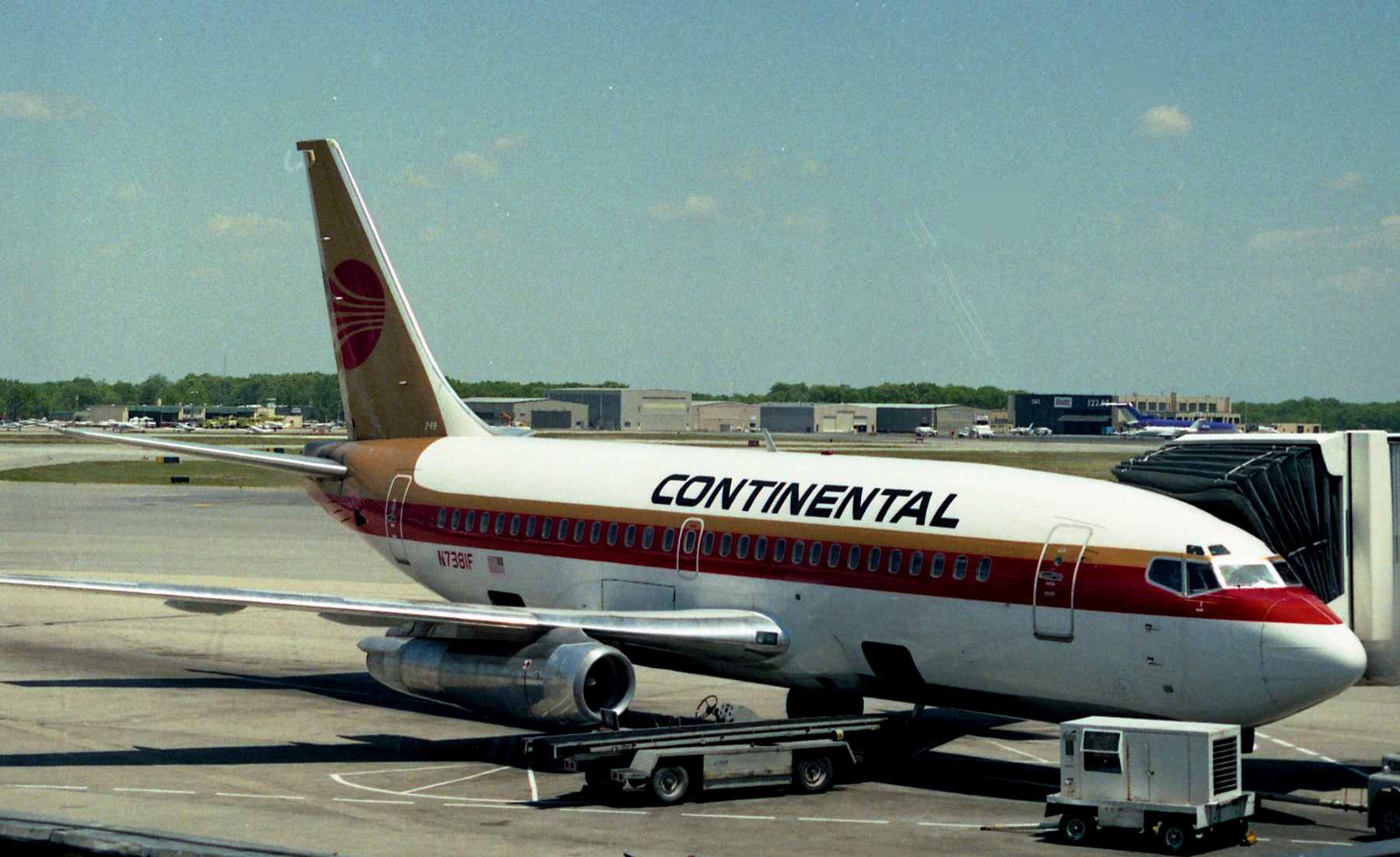
Continental Airlines B737-200 (similar to one I flew on in November ’87, logo included), Providence, RI, 1990, January 2, 2009. (Phillip Capper via Wikipedia). Releases to public domain via cc-Attribution 2.0 Generic license.

This week twenty-five years ago, the pressures of college, “homesickness” and Crush #2 had screwed up the inner movie and music soundtrack (think Enigma’s “I Love You, I’ll Kill You” [1993]) that had been my coping mechanism for the previous half decade. I was in the midst of a psychological breakthrough, but it felt more like a combination of depression and a nervous breakdown at the time. Such were my times as an emotionally tortured seventeen-year-old who should’ve left Mount Vernon a full year earlier (see my post “A One-Year Sooner ‘What If’” from June ’11).

The downward spiral of my first semester at the University of Pittsburgh started with a burglary the third week in October ’87. While I took a bathroom break at my computer lab job in the Cathedral of Learning, someone stole my Calculus textbook. I felt violated, especially since it happened at work. It made me more distrustful of the people I worked with and of Pitt students in general. Of course, I didn’t really even trust myself at the time, and the loss of my textbook didn’t make it any easier. I was out of money to boot, which meant that I wouldn’t be able to replace this loss.

Excerpts of Prince’s Sign ‘O’ the Times (1987) liner notes, November 19, 2012. (Donald Earl Collins). Qualifies as fair use under US Copyright laws – low resolution illustration of text-like writing style for this post.

Crush #2’s response to my letter about her emasculating comments back in the summer made matters worse (see my posts “Origins of the Obsession” from June ’12 and “A Dream That Had to Die” from July ’07). Her letter, dated November 2, was in purple ink, with heart-shapes and circles for dots over “i”s. Reading her letter was like reading the liner notes off of a Prince album in those days. Like the song “I Would Die 4 U,” Crush # 2 had decided to limit her English skills to the ’80s equivalent of text messaging, a real revolution on both their parts. She started, “Thank U 4 your card 2day,” an insult to my intelligence. She wrote indirectly that she did like me at one point in time, but added “but we’re in college now . . . around lots of nu people” She admitted that I was her and her sister’s topic of conversation back in July, but “I needed 2 get over that.” She hinted that I shouldn’t write her again, and that was it. No apologies, no attempt to understand how I felt.

16-ounce “Pounder” can of Busch Beer, November 19, 2012. (http://price2watch.com)

After Crush #2’s wonderful, text-message-like response, I all but stopped going to class. I missed eighteen of twenty-four classes at one stretch between November 3 and Thanksgiving, only showing up for exams or if my black-cloud mood had let up long enough to allow me to function. The weekend before Thanksgiving, I allowed my dorm mates to cheer me up by getting a couple of cases of Busch Beer. These were the pounder type, sixteen-ounce cans of Busch beer. I downed four cans in fifteen minutes, and was drunk within a half hour. I started throwing around the word “bitch” as if it was part of a drinking game. I spent the next day vomiting and trying to regain my balance.

I barely recovered from my bender in time to go home for Thanksgiving that Monday, November 23. I still managed a few firsts, though. That trip back home was my first ever on an airplane. I took a Continental flight from the old and decrepit blue hangar that was Pittsburgh Airport into Newark, with the late Craig “Ironhead” Hayward on the flight sitting in first-class. He was a senior and the starting running back for the Pitt Panthers. Besides being a great player, he was a bit of a party animal and had gotten into fights with Pitt Police. I remember the student newspaper having him in their police blotter, allegedly body-slamming a patron at the O while being arrested for a being a disorderly drunk.

It was the first series of events in which I couldn’t use music, sports or my imagination to escape (see my post “Coping In The Boy @ The Window World” from October ’12). I hadn’t realized that I was attempting to escape myself, not just my immediate past or Mount Vernon. I spent those last weeks of ’87 as if draped in a fog, unable to face the world. I fully understood, though, that I couldn’t drink my way out of my problems. I was obsessed with a woman whom felt sorry for me, had friends at Pitt who weren’t really my friends, and was homesick for 616, a place that was never really mine to call home in the first place.

Male duck swimming solo, Chicago River, Chicago, IL, June 16, 2002. (Donald Earl Collins)

Most of all, after five years of hiding my emotions and opinions, I no longer knew how to be me. Luckily, thinking about Crush #2 as a “triflin’ ass” was, for better and worse, a good start toward recovery for me. And, for that moment in my life, I needed that anger to be a better student, to be a better me. Because as far as I was concerned, I was out in Pittsburgh, alone, facing down my past and present all at once.

My Take On K-12 & Higher Education & Corporatism

08 Monday Oct 2012

Posted by decollins1969 in 1, Academia, Boy @ The Window, culture, Eclectic, Mount Vernon High School, Mount Vernon New York, Movies, New York City, Politics, Pop Culture, race, Youth

≈ Leave a comment

Tags

Adult Learners, Bill & Melinda Gates Foundation, Corporatized Education Reform, Education, For-Profit Colleges, Future of American Education, High-Stakes Testing, Higher Education, Higher Education Access and Success, K-12 Education, K-12 Education Reform, KIPP, Knowledge Is Power Program, Low-Income Students, Poverty, Privatization, Self-Discovery, Students of Color, Teach for America, Technocrats, The New Teacher Project, University of Phoenix


Pink Floyd–The Wall (1982), February 16, 2012. (http://free-education.info). Qualifies as fair use under US Copyright laws – low res and related to blog subject.

We often treat K-12 education and higher education as if they have nothing in common, as if they possess completely separate values and have developed in complete isolation from each other. But in this age where the American technocratic and the plutocratic elites want to privatize everything, there are clear connections behind and between emerging trends in corporatized K-12 education reform and with the rise of for-profit colleges and universities. These trends and connections aren’t good ones for the mass of American students, particularly for those who are poor and of color.

It’s pretty simply really. Both public education and postsecondary education have been under attack from profiteers and the politicians who do their bidding for at least a quarter century. In particular, the issues have been how to improve public schools so that poor Black and Latino kids can graduate high school on the one hand, and how to modify higher education so that the adult version of these kids can obtain a serviceable certificate or degree on the other. With these changes comes the theme of a watered-down education for the poorest twenty-five percent of Americans. It’s the new pathway to a sub-living wage job and tens of thousand of dollars of student loan debt.

A better way of presenting this reality, though, would be to overlay my own educational journey as a poor African American growing up in Mount Vernon, New York onto this corporatized educational insanity. I would’ve gone to public school to be sure. But instead of the SRA exam test that I took every year between third and sixth grade (not a high-stakes test evaluating teaching effectiveness, by the way), I would’ve seen some sort of comprehensive reading/mathematics test from at least second grade on.

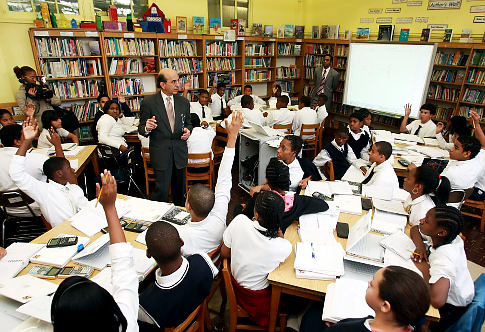
Overcrowded classroom (with DOE Chancellor Joel Klein) with two teachers, PS 189, Brooklyn, NY, September 16, 2009. (Craig Warga/NY Daily News). Qualifies as fair use – blog subject with no comparable picture.

Given where I grew up, instead of having a group of veteran Black teachers for most of elementary schools, I would’ve ended up with some teachers from Teach for America or The New Teacher Project. For the technocrats surely would’ve held my teachers responsible for the sixty-percent poverty rate at my elementary schools, um, I mean, the low test scores. Teachers from these alternate certification programs tend to be well-meaning, perhaps even extremely smart, but not passionate or fully trained teachers. Certainly not like the highly dedicated African American teachers I had at Nathan Hale (now Cecil Cooper) and William H. Holmes Elementary, who held us all to high enough standards to prepare me for a gifted-talented magnet school program known as Humanities.

Of course, given the resources devoted to high-stakes testing, and the constant practice tests, there would’ve been the virtual elimination of music, art, PE, and creative writing. With that shift, there wouldn’t have been a Humanities Program, just a few classes for the best and brightest students. Instead, the option of a private charter school or a KIPP program may have been a possibility. With an average cost of $10,000, however, I doubt a $1,000 or $2,500 voucher would’ve made it possible for me to attend the one, and with KIPP schools being all about discipline, I would’ve thrived there about as much as fish thrive in the desert.

I would’ve moved on to middle school and high school, received algebra in ninth or tenth grade (if at all), struggled to enhance my reading, writing, science, math and other skills, and otherwise would’ve goofed my way to a high school diploma. Would I have taken an AP class, or had a Meltzer as a history teacher, or taken the PSAT or SAT? I’m not sure, but highly unlikely. Still, I would’ve graded with a diploma, with proof that my education was the equivalent of an average ninth or tenth grader’s, confirmed by a decade of standardized state tests!

Then, after three to five years of struggling to find full-time work above minimum wage, or after several years in the military, I’d make the choice between  a University of Phoenix, Kaplan University, DeVry University or some other for-profit college. I’d discover quite quickly that I was wholly unprepared for even the most watered-down online college curriculum, taking courses in a four, six or eight-week format (instead of the typical ten or sixteen-week semester format).

Romanian Army POWs from Battle of Stalingrad, February 3, 1943. (http://ww2incolor.com).

There would’ve been no agonizing choice between Columbia University and the University of Pittsburgh, no switch of majors from computer science to history, no big moment in my development as a person. All because I wouldn’t have had the kind of earth-shattering experience that attending college full-time and in-person often can be.

Somehow, if I’d somehow survived the first semester or first year, I might’ve eventually graduated, albeit with a degree that will be of limited use in obtaining a good living wage. And with $70,000 in student loan debt and a degree from a disreputable for-profit college, forget about me going to graduate school to be a professor.

That’s what this K-16 system will lead to. Money flowing into the hands of illegitimate technocrats, testing companies, charter schools and for-profit institutions. Money and influence flowing from entities like the Bill & Melinda Gates Foundation and Teach for America. A permanent, if slightly better educated, low-wage underclass. That’s the now and future construction of K-16 education if we allow these trends to continue.

Coping in the Boy @ The Window World

06 Saturday Oct 2012

Posted by decollins1969 in 1, Boy @ The Window, Christianity, culture, earth, wind & fire, Eclectic, eclectic music, Marriage, Mount Vernon High School, Mount Vernon New York, music, Politics, Pop Culture, race, Religion, Sports, Youth

≈ 1 Comment

Tags

"Owner Of A Lonely Heart", Battlestar Galactica, Battlestar Galactica (2004 series), Coping Strategies, Fantasy, Football, Humanities, Imagination, Inner Vision, Inner World, New York Giants, New York Knicks, New York Mets, Psychology, Self-Discovery, Touré, Who's Afraid of Post-Blackness (2011), Yes


Gaius Baltar tortured/in imagination (merged pics), Battlestar Galactica, October 6, 2012. Qualifies as fair use under US Copyright laws – low res (1st picture) and merged rendering.

“A wide receiver tiptoeing the sideline of a football field after making an acrobatic catch, barely keeping his left foot in-bounds by tapping his big toe in the two inches of space between the grass and the thick white line in front of him. A note in a song that is so inspiring, so well-balanced between rhythm and harmony, so well sung that the hairs on my neck stand up and my spirit feels like soaring.” This is what I wrote in the first paragraph of the preface (which I need to revise yet again, by the way) to my Boy @ The Window manuscript.

In context, I was writing about the infinitesimal decisions and actions that could’ve added up to success or failure for me growing up in those dismal days and years. But I could’ve just as easily been writing about what imaginations and fantasies went through my head growing up to make my inner world more powerful than anything I saw and experienced in the real world. Much of Boy @ The Window is about how I coped, good, bad and ugly (see my posts “Peanuts Land” from April ’12 and “Mr. Mister’s ‘Kyrie’” from March ’11 for more).

How I coped through imagination, inner projection and fantasy changed during the worst of my preteen and post-puberty years. I went from imagining and acting out an entire city, nation-state and culture in my room to the need for an internal world that couldn’t be taken apart by abuse, poverty and isolation. Ultimately it came for me in the form of the everyday things I either already liked or was on the cusp of liking. I already enjoyed a wide variety of music by the fall of ’82. Once I became a sports fan and occasional sports participant, those images and achievements became part of my inner movie and soundtrack.

It became a partnership that I eventually learned to conjure up at will, that became part of my residual sleeping state, that made the madness of 616, MVHS and Mount Vernon, New York dissolve into background noise.

Santonio Holmes’ Super Bowl XLIII game-winning catch, Tampa, FL, February 1, 2009. (http://bleacherreport.com).

It meant, though, that watching a Mets, Giants or Knicks game or listening to Earth, Wind & Fire wasn’t a simple casual experience. It involved rooting for the underdog, which in turn meant rooting for myself. It included the synching of home runs, touchdown passes and three-pointers to guitar riffs, crescendos and other highlights in a particular song or series of songs. It meant that my imagination became itself a fully dedicated line for coping with stress, checking anger, solving problems, and seeing my world the way I chose to see it, rather than the way my world actually was.

Take one of my favorite songs as a teenager, Yes’ “Owner Of A Lonely Heart” (1983). It wasn’t just the fact that I actually felt lonely and could relate to the song. When I heard the song, I could see myself running a screen play in football, following a group of well set-up blockers all the way to the end zone for a touchdown. I could relate emotionally, because the song was about me as an underdog, because of my unrequited love for Crush #1, because I now knew what a screen pass was. It made existential philosophy easier for me to understand my senior year of high school in my AP English and Philosophy classes.

“Owner Of A Lonely Heart” also reminded me to never “concede my free will,” even when my now ex-stepfather Maurice’s fists met my face and teeth and ribs at fifteen and sixteen. Like a scene from the ’00s Battlestar Galactica involving Gaius Baltar or Caprica Six, I often projected a view of the world I wanted over whatever was going on in reality. Going the mile or so between 616 and the C-Town in Pelham could either be a chance for me to catch a long touchdown pass or for me to figure out to which colleges I should apply.

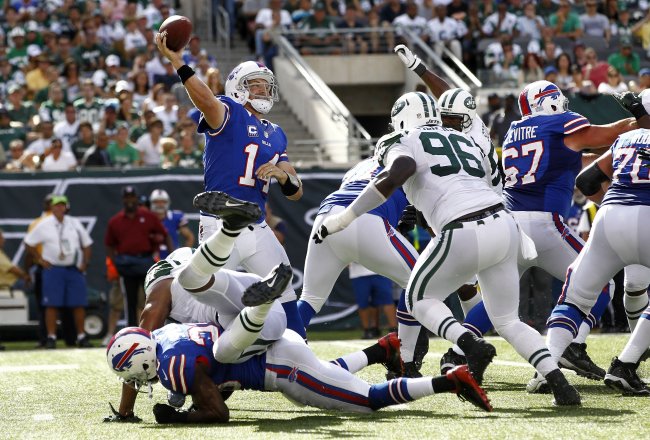
Ryan Fitzpatrick of Buffalo Bills v. NY Jets, in rare protection against blitz while in pocket, October 6, 2012. (http://bleacherreport.com).

Sometimes, if I allowed myself to slip deeply enough, like, in the moments before an exam, I could use a buildup point in the song to bring in an extra blocking tight end to run a max-protect play. I’d snap the ball, send three receivers on one side of the defense, and wait just long enough for one to cross before delivering a perfect pass that allowed my receiver to split the secondary for a long score. All while taking a hit in my right ribs and being knocked down to the turf, just a quarter-second after my index finger’s come off the ball, giving it a smoother spiral rotation while in flight. And so many times, that re-visioning of my world made it so that my natural ability to remember everything and discern many things resulted in very good grades, solid performances, and a balancing act that made life at 616 and MVHS just bearable enough.

I was reminded of how often my mind went down this road by Touré’s Who’s Afraid of Post-Blackness (which I blogged about earlier this week), particularly his chapter on imagination and art, “Keep It Real Is a Prison.” Except that my mind does still go there sometimes. Usually as I’m about to give a speech, or while running a five-miler, drilling a three or driving. Or in writing something for publication, like Boy @ The Window.

← Older posts
Newer posts →

Boy @ The Window: A Memoir

Boy @ The Window: A Memoir

Places to Buy/Download Boy @ The Window

There's a few ways in which you can read excerpts of, borrow and/or purchase and download Boy @ The Window. There's the trade paperback edition of Boy @ The Window, available for purchase via Amazon.com at http://www.amazon.com/Boy-Window-Donald-Earl-Collins/dp/0989256138/

There's also a Kindle edition on Amazon.com. The enhanced edition can be read only with Kindle Fire, an iPad or a full-color tablet. The links to the enhanced edition through Apple's iBookstore and the Barnes & Noble NOOK edition are below. The link to the Amazon Kindle version is also immediately below:

scr2555-proj697-a-kindle-logo-rgb-lg

Boy @ The Window on Amazon.com: http://www.amazon.com/Boy-The-Window-Memoir-ebook/dp/B00CD95FBU/

iBookstore-logo-300x100

Boy @ The Window on Apple's iBookstore: https://itunes.apple.com/us/book/boy-the-window/id643768275?ls=1

Barnes & Noble (bn.com) logo, June 26, 2013. (http://www.logotypes101.com).

Boy @ The Window on Barnes & Noble: http://www.barnesandnoble.com/w/boy-the-window-donald-earl-collins/1115182183?ean=2940016741567

You can also add, read and review Boy @ The Window on Goodreads.com. Just click on the button below:

Boy @ The Window

Twitter Updates

Tweets by decollins1969
  • RSS - Posts
  • RSS - Comments

Archives

  • June 2025
  • April 2023
  • September 2022
  • August 2022
  • July 2022
  • June 2022
  • May 2022
  • April 2022
  • March 2022
  • January 2022
  • December 2021
  • November 2021
  • October 2021
  • September 2021
  • August 2021
  • July 2021
  • June 2021
  • April 2021
  • March 2021
  • February 2021
  • January 2021
  • December 2020
  • November 2020
  • October 2020
  • September 2020
  • August 2020
  • July 2020
  • May 2020
  • April 2020
  • March 2020
  • January 2020
  • December 2019
  • November 2019
  • August 2019
  • July 2019
  • June 2019
  • May 2019
  • April 2019
  • March 2019
  • February 2019
  • January 2019
  • December 2018
  • November 2018
  • October 2018
  • September 2018
  • August 2018
  • July 2018
  • June 2018
  • May 2018
  • March 2018
  • February 2018
  • January 2018
  • December 2017
  • November 2017
  • October 2017
  • September 2017
  • August 2017
  • July 2017
  • June 2017
  • May 2017
  • April 2017
  • March 2017
  • February 2017
  • January 2017
  • December 2016
  • November 2016
  • October 2016
  • September 2016
  • August 2016
  • July 2016
  • June 2016
  • May 2016
  • April 2016
  • March 2016
  • February 2016
  • January 2016
  • December 2015
  • November 2015
  • October 2015
  • September 2015
  • August 2015
  • July 2015
  • June 2015
  • May 2015
  • April 2015
  • March 2015
  • February 2015
  • January 2015
  • December 2014
  • November 2014
  • October 2014
  • September 2014
  • August 2014
  • July 2014
  • June 2014
  • May 2014
  • April 2014
  • March 2014
  • February 2014
  • January 2014
  • December 2013
  • November 2013
  • October 2013
  • September 2013
  • August 2013
  • July 2013
  • June 2013
  • May 2013
  • April 2013
  • March 2013
  • February 2013
  • January 2013
  • December 2012
  • November 2012
  • October 2012
  • September 2012
  • August 2012
  • July 2012
  • June 2012
  • May 2012
  • April 2012
  • March 2012
  • February 2012
  • January 2012
  • December 2011
  • November 2011
  • October 2011
  • September 2011
  • August 2011
  • July 2011
  • June 2011
  • May 2011
  • April 2011
  • March 2011
  • February 2011
  • January 2011
  • December 2010
  • November 2010
  • October 2010
  • September 2010
  • August 2010
  • July 2010
  • June 2010
  • May 2010
  • April 2010
  • March 2010
  • February 2010
  • January 2010
  • December 2009
  • November 2009
  • October 2009
  • September 2009
  • August 2009
  • July 2009
  • June 2009
  • May 2009
  • April 2009
  • March 2009
  • February 2009
  • January 2009
  • December 2008
  • November 2008
  • October 2008
  • September 2008
  • August 2008
  • July 2008
  • June 2008
  • May 2008
  • April 2008
  • March 2008
  • February 2008
  • January 2008
  • December 2007
  • November 2007
  • October 2007
  • September 2007
  • August 2007
  • July 2007
  • June 2007

Recent Comments

decollins1969's avatardecollins1969 on No Good Teaching Deed Goes…
Mary Rose O’Connell's avatarMary Rose O’Connell on No Good Teaching Deed Goes…
Lyndah McCaskill's avatarLyndah McCaskill on The Raunchiest of Them Al…

NetworkedBlogs on Facebook

NetworkedBlogs
Blog:
Notes From a Boy @ The Window
Topics:
My Life, Culture & Education, Politics & Goofyness
 
Follow my blog

616 616 East Lincoln Avenue A.B. Davis Middle School Abuse Academia Academy for Educational Development AED Afrocentricity American Narcissism Authenticity Bigotry Blackness Boy @ The Window Carnegie Mellon University Child Abuse Class of 1987 CMU Coping Strategies Crush #1 Crush #2 Death Disillusionment Diversity Domestic Violence Economic Inequality Education Family Friendship Friendships Graduate School Hebrew-Israelites High-Stakes Testing Higher Education History Homelessness Humanities Humanities Program Hypocrisy Internalized Racism Jealousy Joe Trotter Joe William Trotter Jr. K-12 Education Love Manhood Maurice Eugene Washington Maurice Washington Misogyny Mother-Son Relationship Mount Vernon High School Mount Vernon New York Mount Vernon public schools Multiculturalism MVHS Narcissism NFL Pitt Pittsburgh Politics of Education Poverty President Barack Obama Race Racial Stereotypes Racism Relationships Self-Awareness Self-Discovery Self-Reflection Sexism Social Justice Teaching and Learning University of Pittsburgh Violence Whiteness Writing

Top Rated

Blog at WordPress.com.

  • Subscribe Subscribed
    • Notes from a Boy @ The Window
    • Join 103 other subscribers
    • Already have a WordPress.com account? Log in now.
    • Notes from a Boy @ The Window
    • Subscribe Subscribed
    • Sign up
    • Log in
    • Report this content
    • View site in Reader
    • Manage subscriptions
    • Collapse this bar
 

Loading Comments...