• About Me
  • Other Writings
  • Interview Clips
  • All About Me: American Racism, American Narcissism, and the Conversation America Can’t Have
  • Video Clips
  • Boy @ The Window Pictures
  • Boy @ The Window Theme Music

Notes from a Boy @ The Window

~

Notes from a Boy @ The Window

Category Archives: Mount Vernon High School

The Long-Term Legacy of Humanities’ Soft-Bigotry

10 Wednesday Sep 2014

Posted by decollins1969 in 1, Boy @ The Window, Christianity, culture, Eclectic, Hebrew-Israelite, Mount Vernon High School, Mount Vernon New York, Patriotism, Politics, Pop Culture, race, Religion, Youth

≈ Leave a comment

Tags

Anti-Intellectualism, Center-Right Nation, Classmates, Colorblind Racism, Conservatism, Controlling the Narrative, Evangelical Christianity, Homophobia, Humanities, Humanities Program, Inferiority Complex, Intellectual Conservatism, Kerry Washington, Lazy Thinking, MVHS, Neil DiCarlo, Olivia Pope, Racism, Respectability Politics, Richard Capozzola, Scandal, School-to-Prison Pipeline, White Privilege, White Resentment, Whiteness, Willful Ignorance, Xenophobia


Ex-Classmates Proverbs

Ex-Classmates Proverbs

This week marks thirty-three years since my first days in the gifted-track Humanities Program, a fairly diverse group of very smart and (some) pretty creative students. Despite the common refrain among administrators of this long-gone program, me and my Humanities classmates weren’t the “crème de la crème” when it came to critical or independent thinking. In recent years, I’ve learned that their views on politics, religion, sports, entertainment, family and so many other things are so typically and sadly American.

Since the creators’ premise for the Humanities Program was to develop the whole person, and not just academic success, it seems to me that the program failed in terms of providing a holistic education. That our parents and other authority figures helped shape the opinions and beliefs we take to adulthood is part of my observation here. The disappointing part for me, though, has been the fact that these opinions have gone unadulterated over the past twenty-five or thirty years.

This isn’t an indictment of everyone I’ve ever known from Mount Vernon, New York, or from Mount Vernon public schools, or from MVHS, or even from my Humanities years. There are more than a few individuals who I am so glad to have reconnected with in person or through Facebook, Twitter and WordPress in the past decade or so. Everyone has the right to their beliefs, their ignorance, their opinions, however ill-informed or illogical. But there are consequences to never challenging one’s own beliefs, ignorance and opinions. Consequences that include victim-blaming, xenophobia, religion-as-politics, respectability politics, jingoist hyper-patriotism and colorblind racism.

What I’ve observed over the past ten or eleven years is that, when taken as a whole, it seems that I grew up around and reconnected with a group whose beliefs and opinions differ so much from my own. So much so that it really strains my memory to think that I grew up there. As my wife said to me on her first visit to Mount Vernon in Christmas ’99, after seeing a burned out Mazda smack-dab in the middle of downtown, “You sure you weren’t adopted?”

You Can’t Go Home Again to a Place That Was Never Home

I suspected some stark differences by the time I started working on Boy @ The Window in earnest in ’06. Any number of the ex-classmates I interviewed expressed opinions that I’d heard long before about “illegals,” about how Mount Vernon was some sort of middle-class haven, about our Humanities class being a faux “Benetton commercial” or a “mini-Fame.”

These were the kinds of opinions I remembered hearing from their parents and our teachers back in the ’80s. The sense of paternalism and entitlement, or the sense that MVHS was dangerous or “a jungle” or full of “animals.” It reminded me that there were many classmates who I’d met in seventh grade who’d transfer to private or parochial school or had enrolled in “better” schools in other districts by tenth grade because their parents were terrified by the so-called dangers of a mostly Black and Latino high school, with poverty and criminality being the unspoken words here.

I’ve faced off with the son of our late former principal Richard Capozzola several times on my blog and on Facebook in the past three years over this very issue, of how MVHS was run like a prison-prep program. His rationale for justifying Capozzola’s anti-Black draconian policies at MVHS consisted of “my dad was a great dad” and that I “wouldn’t have survived a day” at MVHS without his father as principal. The frame of MVHS as a war-zone or prison with students of color assumed to be criminals within this frame, this son of Capozzola couldn’t recognize even if Spock did a mind-meld to give him a dose of the Black experience.

Uncritical Melody, On Mount Vernon and the World

Neil DiCarlo, ex-classmate, right-winger, and one-time candidate for NY State Senate out of Putnam Valley, October 15, 2012. (http://archive.lohud.com/).

Neil DiCarlo, ex-classmate, right-winger, and one-time candidate for NY State Senate out of Putnam Valley, October 15, 2012. (http://archive.lohud.com/).

My observations aren’t limited to race or MVHS per se. Among my former classmates, with everything from affirmative action to Zionism, from political parties to education reform, from immigration reform to religious diversity, so many have views that range from conservative to right-wing. For some, every question can be answered with Leviticus or Ephesians, and any disagreement with a condemnation to Hell. For others, the frame for these issues are a “both sides do it” or “let’s look at both sides.” As if any issue involving climate change or social injustice is an algebraic equation, as if these issues are about finding some preposterous balance, rather than about exploitation or oppression.

But where I’ve found myself most at odds with some of my ex-classmates is the very issue of Mount Vernon itself as a city or a nurturing environment. It’s not as if I’ve never acknowledged the reality that if one didn’t grow up in poverty, or had connections to city politics, church or community leaders, or at least thirty cousins within a mile of your domicile, that Mount Vernon was a pretty good place to grow up. It wasn’t for me. It wasn’t for many people I grew up around.

Yet time and again, as I’ve told my story here and as I began to put Boy @ The Window together between ’06 and ’11, some of my former classmates and a couple of my former neighbors have opined that I have an ax to grind. Yeah, actually, I do, but not about Mount Vernon per se. About the poverty, abuse and ostracism I experienced growing up there, that shaped my experiences there, that authority figures often ignored. In those things, I do have a point that I have and will continue to hammer away at with the sledgehammer I have at my disposal. Too often, my former classmates believe that the only Mount Vernon that should be on public display is the one that emphasizes their raceless or supercool middle-class experience.

Some of My Classmates = Conservative America

Kerry Washington as Olivia Pope from Scandal, a show about damage control, controlling the narrative, September 15, 2011. (http://scandal.wikia.com).

Kerry Washington as Olivia Pope from Scandal, a show about damage control, controlling the narrative, September 15, 2011. (http://scandal.wikia.com).

Even in this, there’s a conservative perspective. One that says, “don’t rock the boat, don’t express a perspective that’s different than the narrative we want to put out to the world.” I know from experience and as an educator that sweeping truth into a dustbin and expressing only acceptable opinions — or acting as if all opinions, when expressed respectfully, are equal to each other — hurts us all, but especially those who are shut out of the conversation. I wish that so many of my ex-classmates had learned this while growing up in Mount Vernon, while in Mount Vernon public schools, while in Humanities with me.

I’ve come around to Morning Joe host Joe Scarborough’s way of thinking. America is a center-right nation, just as the Founding Fathers intended. Or, to be most precise, America’s DNA is one that has always had the “this-is-a-heterosexual-White-man’s-country” mutation baked into it, a gene that morphs to the point of virtual immutability. A fair number of my ex-classmates also have this mutation, which may explain my inability to fit in more than my kufi, Hebrew-Israelite status, or living at 616 in the midst of poverty domestic violence and child abuse.

On Tolerance and Not Wearing My Kufi Anymore

06 Saturday Sep 2014

Posted by decollins1969 in 1, Boy @ The Window, Christianity, culture, Eclectic, Hebrew-Israelite, Mount Vernon High School, Mount Vernon New York, Pop Culture, race, Religion, Youth

≈ Leave a comment

Tags

Acceptance, Discovery Channel, Diversity, East African Jews, Embracing, Genetics, Humanities, Intolerance, Jewish Diaspora, Judaism, Kufi, Multiculturalism, MVHS, Racial Assumptions, Ten Lost Tribes, Tolerance, Yarmulke


Mahatma Gandhi (1869-1948) quote on superiority and tolerance, September 6, 2014. (http://thousayest.wordpress.com).

Mahatma Gandhi (1869-1948) quote on superiority and tolerance, September 6, 2014. (http://thousayest.wordpress.com).

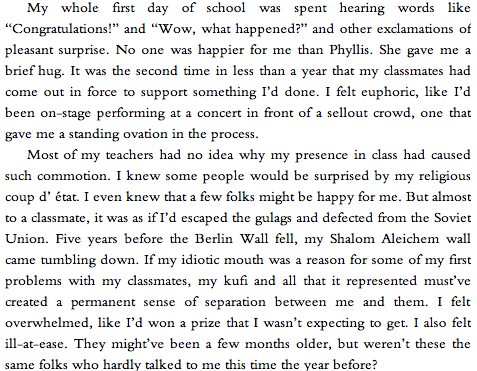
Today’s date marks three decades since I decided to stop wearing my kufi in public, my first day of tenth grade at Mount Vernon High School (NY). It also marked my coming-out party (so to speak) as a Christian and a day of defiance toward both my Mom and my idiot stepfather Maurice Washington (now deceased), all of which is well-documented here and in Boy @ The Window.

What I haven’t spent much time or space writing about was how my one-time classmates received me in terms of my kufi or the Hebrew-Israelite religion during the three years between the start of seventh grade in ’81 and the end of ninth grade in June ’84. Sure, I’ve talked about Alex and the “Italian Club,” kufi battles and other incidents involving my classmates in which bullying or attempts at bullying occurred. How much were these incidents about me, about me being poor and Black, about me being weird and Black, about me and my kufi? It wasn’t always clear.

What was clear was that the vast majority of my classmates, though they may have given me weird looks or quietly snickered, said nothing to me one way or the other about my kufi or my religion. But on that first day of tenth grade, the day I stopped wearing my kufi, my classmates were hardly silent at all.

Screen shot 2014-09-06 at 1.14.44 PM

I wondered most of all about my Jewish classmates, at least the ones who actually practiced Judaism. With Josh as the one exception, they to a person never said a word or asked a single question about my religion or my kufi. This despite the fact that fundamentally, I was an Orthodox Jew between ’81 and ’84. I didn’t get an answer while I was in Humanities or at MVHS. Years later, I interviewed one of my former classmates, whose father was a rabbi at one of the largest synagogues in Westchester County. I asked him about the silence. “I thought nothing of it,” he said, as he’d been “taught to respect other people’s beliefs.”

On some level, I could accept this answer at face value. But even at the moment of the interview, I didn’t find this former classmate’s answer enlightened or satisfying at all. His answer on the surface demonstrates the very definition of tolerance. Yet tolerance through silence is the absolute minimal definition of respect for differences. Tolerance is hardly the same as accepting or embracing differences, defined by taking active steps to understand and empathize with different peoples and cultures. Not to mention taking the extra step of working to protect those people and their differences from the intolerant.

Standing ovation, opera house unknown, May 21, 2012.(http://www.thelmagazine.com).

Standing ovation, opera house unknown, May 21, 2012.(http://www.thelmagazine.com).

I knew on some level even in ’84 that many if not most of my Jewish classmates had remained silent because the idea of Blacks as Jews in terms of religion or genetics was barely in their consciousness. It’s still hard for many Jews I’ve known over the years to accept now, even with a population of Ethiopian and other East African Jews living and working in Israel. It’s difficult to embrace the mosaic that is the Jewish diaspora, even with evidence pointing to communities made up of the descendants of some of the so-called Ten Lost Tribes of ancient Israel living in southern Africa and northern India (as documented by the Discovery Channel in documentaries over the past fifteen years). Me as a kufi and yarmulke-wearing Black teenager practicing Judaism had to be weird and beyond the pale for those classmates.

The way the rest of my classmates reacted to the end of my Shalom-Aleichem-days was also an example of minimal tolerance, or really, intolerance. In six years of Humanities, I’d never gotten that many of my classmates to pay attention to me for longer than an answer to a history question unless it was for ridicule or for a presentation or an award. The fact that at least two dozen had something positive to say about my lack of a kufi, or upon further inquiry, my turn to the Christian side, told me all I needed to know about my status with my classmates for the previous three years.

I’m hardly excluding myself from this notion of intolerance. My view of myself as a Christian in those first months after I converted was one that set me apart from Catholics, Baptists, Jehovah’s Witnesses, the Nation of Islam and Jews alike. I didn’t necessarily think or say things about these different religions or the classmates who practiced them. I just ignored those differences while giving every appearance that my nondenominational view of Christianity, my Bible-quoting and toting self, was the only lens through which anyone should view themselves and the world around them. It would be another year before I recognized my own childishness regarding my views of spirituality, religion and tolerance.

First Day and Last Day of School This Week

03 Wednesday Sep 2014

Posted by decollins1969 in 1, Academia, Boy @ The Window, Carnegie Mellon University, culture, Eclectic, Mount Vernon High School, Mount Vernon New York, Pittsburgh, Politics, Pop Culture, race, Youth

≈ Leave a comment

Tags

ABD, Bruce Anthony Jones, Cecil Parker Elementary, CMU, Common Ground (1985), Dan Resnick, Daniel P. Resnick, Dick and Jane, Dissertation, Dissertation Overview Defense, Humanities, Humanities Program, J. Anthony Lukas, Joe Trotter, Kindergarten, Mrs. Shannon, Nathan Hale Elementary, PhD, World Book Encyclopedia


Cecil Parker Elementary School (formerly Nathan Hale ES), Mount Vernon, NY,  November 23, 2006. (Donald Earl Collins).

Cecil Parker Elementary School (formerly Nathan Hale ES), Mount Vernon, NY, November 23, 2006. (Donald Earl Collins).

I’ve written about parts of this before, back in my first days of blogging about my life and times as a student. But this week is especially poignant. Yesterday (September 2) marked twenty years since I sat through and passed my PhD dissertation overview defense at Carnegie Mellon in Pittsburgh, making me ABD (All But Dissertation, an official PhD candidate). Tomorrow (September 4) will be forty years since my first day of school, attending kindergarten at the Nathan Hale Elementary School (now Cecil Parker ES) in Mount Vernon, New York. It was a school two buildings and an asphalt playground down from our second-floor flat, 425 South Sixth Avenue. In between was nineteen years and 363 days of time as a formal student, going from learning how to read “Dick and Jane went to the store” to writing a “book” about multiculturalism and Black Washington, DC.

I’m sure most of us don’t remember so much of what occurred in between day one and day 7,303 of student-hood. I remember plenty, though. I remember the morning being unusually cold and having to wear a windbreaker or a raincoat (according to a weather website, the high that day was only 69F, and it actually rained at some point during the day). Kindergarten was only a half-day endeavor back then, so I remember getting released to come home for lunch and spending the rest of the day playing with my Tonka toys and watching Sesame Street and The Electric Company.

Second floor of Baker Hall, Carnegie Mellon University, Pittsburgh, PA, December 2, 2010. (Daderot via Wikimedia). In public domain.

Second floor of Baker Hall, Carnegie Mellon University, Pittsburgh, PA, December 2, 2010. (Daderot via Wikimedia). In public domain.

Contrast that with a warm first Friday in September ’94, at a time when I’d met some new first-year PhD students in the History program, Carl, Jeff, Susannah and a few others, who all seemed surprisingly interested in my dissertation work. I think it was just that I was one of their first points of contact, going through something they themselves hoped to do within a few years. Either way, I’d been preparing to defend my eighty-page dissertation overview for the previous six weeks, in between working on a migration studies research project for Joe Trotter and keeping an eye out for dissertation grants that I firmly believed were necessary for me to get out of grad school with my sanity intact.

As I walked up the sloped, dark, factory-mimicking hallway on the second floor of Baker Hall to what would be two hours of interrogation from Trotter, Dan Resnick, Bruce Anthony Jones and Department Chair Steve Schlossman (among others in the conference room that morning) with my “entourage,” I had this two-decade juxtaposition in mind. I actually started thinking about the long path from kindergarten to PhD, and all the bumps, bruises and breaks along the way. About how on a September 2nd morning six years before, I’d been homeless and came within days of dropping out of college. About how none of this would have been possible without my older brother Darren, who taught me how to read on Christmas Day ’74. Or, for that matter, without my third-grade teacher Mrs. Shannon encouraging my Mom to buy the entire set of the ’78 edition of The World Book Encyclopedia, which led to me reading through that set between December ’78 and April ’79.

Even J. Anthony Lukas‘ Common Ground: A Turbulent Decade in the Lives of Three American Families (1985) was in my head as I laid out my papers and dissertation overview as references for my overview defense. I’d only read the book in the previous year. This Pulitzer Prize-winning book for nonfiction lived up to the award it earned Lukas, as he went to excruciating lengths to make the process of desegregation by busing, White fears, and Boston’s racism and racial divide come alive.

Front cover of Common Ground (1985) by J. Anthony Lukas, September 3, 2014. (http://goodreads.com).

Front cover of Common Ground (1985) by J. Anthony Lukas, September 3, 2014. (http://goodreads.com).

In reading about what the White parents did to stop busing in September ’74, it forced up a memory of watching the evening news my first two days of school about Boston’s White community rioting over busing and desegregation. The picket signs, the bottles and rocks. I remembered asking my Mom about it then, but I don’t think she gave me a direct answer. Lukas, though, did, twenty years later.

Finally, I thought about my Humanities classmates as I sat down and had gone through all of the pleasantries with my dissertation committee and other professors and grad students in the room. I thought about how classmates like Josh and Danny ridiculed me as a savant, who told me that history essentially was only trivia, that I couldn’t do anything with it other than “go on Jeopardy.” In some ways, they were right. They just weren’t correct on September 2, ’94.

All of this gave me a place to start. So when Trotter asked me, “What in your life has prepared you for this moment?,” I knew from which parts of my life’s journey to pick. Only to realize that in starting at the beginning, I was nowhere near full circle.

Big Feet and Football Tryouts

20 Wednesday Aug 2014

Posted by decollins1969 in 1, Boy @ The Window, culture, Eclectic, Mount Vernon High School, Mount Vernon New York, Pop Culture, Sports, Work, Youth

≈ Leave a comment

Tags

616, 616 East Lincoln Avenue, Adulthood, Coming-of-Age, Decision-Making, Foot Sizes, Football, Football Tryouts, Humanities, Humanities Program, Mother-Son Relationship, MVHS, Puberty, Puma, Self-Awareness


Aerial view of refurbished fields (for track and field, football, softball and tennis) across from MVHS (and the Cross County Parkway), Mount Vernon, NY, circa 2012. (Google Maps)

Aerial view of refurbished fields (for track and field, football, softball and tennis) across from MVHS (and the Cross County Parkway), Mount Vernon, NY, circa 2012. (Google Maps)

Three decades ago this week, I tried out for Mount Vernon High School’s junior varsity football team and made the team. Only to immediately quit. Mostly because I realized that there was too much going on at 616 for me to be a Humanities student, a blocking wide receiver (the coaches had an unimaginative view of offense) and a jack-of-all-adult-responsibilities at home.

What made the decision easier was something my Mom did that made my tryouts harder. As I wrote in Boy @ The Window:

Screen shot 2014-08-19 at 9.55.52 PM

I ended up making the team, but they wanted me to sit on the bench for a year while I bulked up to at least 175 pounds. The most I’ve ever weighed was 238 pounds at six-foot-three, and I weigh 228 now. It took me until ’10 before I wore my first pair of size-fifteen sneakers that actually fit (I wear size sixteens now). The idea of me as an offensive lineman simply because my sneakers were two sizes too big was and remains ridiculous. Thanks Mom, and thanks, coaches!

The one lesson I took with me from the process of trying out was that I couldn’t rely on my Mom to help me do the things I wanted to do with my life. Nor could I rely on her encouragement (or lack thereof) in that process. It wasn’t an assessment based on anger or disappointment. I’d only begun to figure out that my life was my life, and the decisions I needed to make needed to be my own.

An “Acting White” Conversation

28 Monday Jul 2014

Posted by decollins1969 in 1, Academia, Boy @ The Window, culture, Eclectic, eclectic music, Mount Vernon High School, Mount Vernon New York, New York City, Pittsburgh, Politics, Pop Culture, race, University of Pittsburgh, Youth

≈ 1 Comment

Tags

"Not Black Enough", 616, 616 East Lincoln Avenue, Acting White, Authentic Blackness, Authenticity, Denial, Internalized Racism, Mother-Son Relationship, My Brother's Keeper Initiative, Nia-Malika Henderson, President Barack Obama, Racial Denial, Racial Stereotypes, Racism, Structural Racism, Whiteness


Two Oreo Cookies, February 6, 2011. (Evan-Amos via Wikipedia).

Two Oreo Cookies, February 6, 2011. (Evan-Amos via Wikipedia).

Two years ago, a conservative woman engaged me in what became an increasingly vitriolic conversation on “acting White,” blind loyalty and political ideology. The below only covers (for the most part) the “acting White” part of the conversation.

 Apologies for commenting here but the Star Trek one [my blog post Why Ferengi Are Jewish & The Maquis Are Latino from 2011] had comments closed. In light of your thoughts on positive or negative stereotypes, how do you feel about the cultural phenomena of “acting white” term in Black community? (in case it needs explaining, that’s a derogatory term – by Black community – for a minority child who studies hard. See http://en.wikipedia.org/wiki/Acting_white)

To which I responded:

Given how my life has evolved over the past four decades, I think I understand what “acting White” means. But the fact is, African Americans have a diversity of opinions on this issue. There are some Blacks, though, who believe in the idea of an authentic Blackness, which I’ve written about as an educator, historian and from a personal perspective over the years. Part of this is generational, and part of this is socioeconomic in nature. And this issue of authenticity has been around since the days of slavery, so it’s not new. What’s new is the increasing push-back from Blacks of various backgrounds about this issue of “acting White.” Bottom line: those who use this phrase tend to be anti-intellectual, distrustful of higher education and as bigoted as any other group in American society toward “others.”

But my visitor to my blog wasn’t done, not by a long shot:

Sorry, Wasn’t too clear in my question. Do you feel that the fact of how widespread it is in the culture (both the use and the lack of disapproval) has any *material* consequences to the socioeconomic outcomes for Blacks as a group in the 1990-2020 period? It’s clear that you disapprove of it, but do you feel it is a problem that **must** be fixed for Blacks to succeed (beyond mere “bigotry is bad” angle)?

In response, I broke down the assumptions embedded in the previous comment:

Is your head in the sand?, July 28, 2014. (http://www.thelifecoach.co.nz/).

Is your head in the sand?, July 28, 2014. (http://www.thelifecoach.co.nz/).

Your assumption here is troubling, as if 40 million African Americans all think alike on this topic. Sure, there’s a slice of Blacks who have a litmus test for “authentic” Blackness, and for them, those who can’t meet this test are considered “acting White.” But no, there’s no agreed upon definition for either in African America. Your premise supposes the sociological or psychological effect of this is a lower socioeconomic status for African Americans. Keep in mind that since the 1970s, more than 50 percent of Blacks have been middle or upper middle class, while the poverty rate for Blacks has varied between 25 and 33 percent over the past 40 years. Your question ignores other factors, including de-industrialization, expanding economic inequality, and structural racism as factors that have far more effect on social mobility than a cultural litmus test that a small slice of Blacks strictly adhere to.

There’s more, much more, and the comments section under About Me from the period August 30-September 3, 2012 has the rest. The assumption that I was protecting the race under a false sense of loyalty. The idea that Blacks who were otherwise equal in intelligence and from equally impoverished backgrounds were doing better than her because of affirmative action and other forms of alleged “reverse racism” (whatever this fiction is). My response was to treat her like one of my ideologically bull-headed student for whom facts and scholarly research matter about as much as ants inside an anthill.

President Barack Obama’s recent comments about the meaning and implications of “acting White”  has made me think about this issue — again. The fact is, there may well be individuals who decide to not go to college or medical school, take certain jobs or listen to Pearl Jam because of their notions of “acting White” and “authentic Blackness.” I know there are — including a friend of mine who committed suicide sixteen years ago after deciding to not go to medical school over this whole issue. But the idea that large groups of Blacks in poverty or as practicing Afrocentrists are avoiding success and education because it may be too White for them? Absolute bullshit! Period. Anything to come up with a simple-minded excuse to cover up structural racism, residential segregation and poverty as the factors for lack of Black social mobility when compared to Whites.

“Acting White,” or at least, being “not Black enough,” comes out of the following (between my experience and thirty years of research):

1. The idea that “acting White” = not cool. That’s all. Not about intellect per se, but more about the constant expression of high intellect in casual situations, or at least, lacking the ability to switch up from high-brow to colloquial language. I’ve been in this situation many times, with neighborhood kids in Mount Vernon, New York, at MVHS, at the University of Pittsburgh and even in my own classroom.

2. “Acting White” = doing things that Blacks have only seen Whites do. In this case, beyond language, it could include forms of dress, having eclectic music tastes, or eating fried chicken with a fork and knife. Or, more seriously, taking a political position that others can easily perceive as being against the interests of African Americans. I can attest to the comments I’ve gotten for embracing “White” music as part of my overall repertoire over the years.

The Fool’s Speech Part II

The Fool’s Speech Part II

3. “Acting White” = not wanting to be around or like other Blacks. In my experience, this applies even more within African American families than it does to Black neighbors, classmates or friends. My Mom wanted me to go to college, but she also wasn’t comfortable with the idea that college would change the way I saw her and the rest of the world. She was especially not happy when I decided to go to graduate school, because it meant that I might no longer be able to relate to her and my brother.

I can honestly say that even with all this, I’ve never met anyone who deliberately practiced self-sabotage in their education or in any other area of their lives to avoid “acting White.” That this is a topic of conversation at all confirms that Americans love living in denial of all things connected to racial inequality. Especially the structural racism from which they draw a benefit — material and/or psychological — every single day. Calling “acting White” a theory is an insult to the scientific method and to all Blacks, including those who’ve used the term over the years.

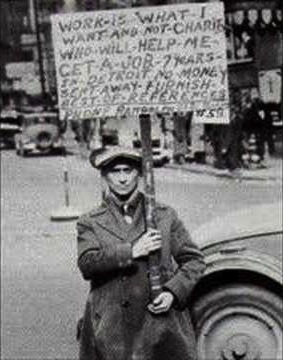
Brother, Can You Spare Me A Job?

26 Saturday Jul 2014

Posted by decollins1969 in 1, Academia, Boy @ The Window, culture, Eclectic, eclectic music, Mount Vernon High School, Mount Vernon New York, music, Pittsburgh, Politics, Pop Culture, race, University of Pittsburgh, Work, Youth

≈ Leave a comment

Tags

"Brother Can You Spare a Dime" (1932), Al Jolson, Booker T. Washington, Corporate Responsibility, Gender Discrimination, General Foods, Hard Work Mythology, My Brother's Keeper, My Brother's Keeper Initiative, Operation Opportunity, Paternalism, Philanthropy, Poverty, President Barack Obama, Race, Racial Paternalism, White House


Screenshot from "Brother, Can You Spare Me a Dime" video/song (song originally recorded in 1932), July 26, 2014. (http://youtube.com).

Screenshot from “Brother, Can You Spare a Dime” video/song (song originally recorded in 1932), July 26, 2014. (http://youtube.com).

In the past five months, there’s been much debate and derision over the White House’s My Brother’s Keeper Task Force and Initiative. Most of it has centered around the exclusion of girls and young women of color from the initiative, as if the problems affecting Black and Latino males aren’t the same ones affecting Black and Latino females. Poverty, a resource-poor education, lack of entry-level jobs leading to careers, woeful access to higher education, lack of access to public services. These effects may lead to different responses from boys/young men of color and girls/young women of color, but the problems that effect vulnerable populations of color are no respecter of gender.

There’s other problems with the initiative, even if President Barack Obama and the White House were to ensure the inclusion of Black and Latino females in the My Brother’s Keeper Initiative tomorrow. It’s an extremely racially paternalistic initiative. On the face of things, it’s not much different from the work Booker T. Washington did a century ago via the William McKinley and Teddy Roosevelt administrations and with money from White philanthropists such as Henry Huttleston Rogers (Standard Oil), Julius Rosenwald (Sears), and George Eastman (Kodak).

Sure, in the case of Washington, The Rosenwald Fund built a few thousand schools, and the philanthropists contributed money to Washington that would build an endowment for Tuskegee. Still, that money came with strings attached. Most of the schools built weren’t high schools, were geared toward what we would call low-level vocational education today, and certainly weren’t part of any agenda to end Jim Crow. For all the good Washington was able to do through these robber-baron era philanthropists — especially in reducing Black illiteracy — it took Black migration out of the South to lead to lasting changes around notions of racial progress and the idea of segregation as the norm for a representative democracy.

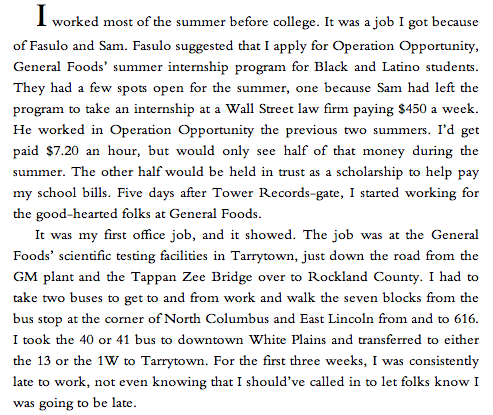
As for My Brother’s Keeper, I am reminded of a passage from my Boy @ The Window about my very first full-time “office” job in the summer of ’87, in between my graduation from Mount Vernon High School and my freshman year at the University of Pittsburgh. It’s about my working for General Foods (now Kraft Foods) in Tarrytown, New York as part of their Operation Opportunity program.

Screen shot 2014-07-26 at 11.10.49 AM

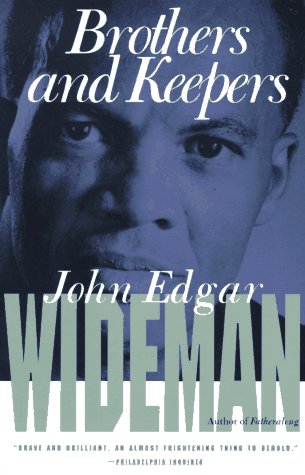
John Edgar Wideman, Brothers and Keepers (originally published in 1984), July 26, 2014. (http://goodreads.com).

John Edgar Wideman, Brothers and Keepers (originally published in 1984), July 26, 2014. (http://goodreads.com).

Beyond the $1,022 the program saved on my behalf — which would go toward room, board and two textbooks for my second semester at Pitt — there really wasn’t much about this program that was opportunity-inducing. Operation Opportunity seemed like it was a checkmark that General Foods could put in its “doing good” column. It provided an opportunity to observe others and do menial tasks without actually promising anything that would help me even a year later, as I went through the summer of ’88 unemployed, and the first week of my sophomore year at Pitt homeless. Not to mention, I picked up a terrible cold in the heat of a 98-degree-July day while spending two hours in a meat-locker-of-a-trailer doing measurements on Jell-O pudding pops!

Now I have no idea what the Annie E. Casey Foundation, the W.K. Kellogg Foundation or Magic Johnson Enterprises intends to do to be keepers of brothers, or brothas, for that matter. But all too frequently, these efforts turn into one-time experiments or corporate-responsibly checkmarks. As my friend and colleague Catherine Lugg has said more than once over the years (albeit, on education research, not specifically on this), social change and diversity efforts are far more than just “bringing a pet to class.” The idea that we need to learn how to work hard is yet another myth that this initiative will perpetuate, whether it’s a success or a failure.

It’s not hard to figure that poor children and young adults of color need more access to public health services, more resources in their formal education, more and better quality food to eat, and more nurturing. Whether any of these kids or young adults — male or female — can obtain these resources without racial paternalism, experimentation or other strings attached, I for one remain extremely skeptical.

My Sister’s Death, Four Years Later

11 Friday Jul 2014

Posted by decollins1969 in 1, Boy @ The Window, culture, Mount Vernon High School, Mount Vernon New York, Pop Culture, race, Youth

≈ Leave a comment

Tags

616, 616 East Lincoln Avenue, Commemoration, Dying, Living, Parenting, Sarai, Sarai Washington, Sickle Cell Anemia, Terminal Illness, What Could've Been


Sarai, Yonkers Apartment, Yonkers, NY, December 23, 1995. (Donald Earl Collins).

Sarai at 12, Yonkers Apartment, Yonkers, NY, December 23, 1995. (Donald Earl Collins).

My sister Sarai Adar Washington died on this date four years ago, Sunday morning, July 11, ’10. If she had lived, she would be 31 years, five months and two days today. I miss her, of course. I know she’s better off in the sweet by-and-by, that living with such a permanent, unyielding and relentless terminal disease like sickle-cell anemia wasn’t a real alternative in the intermediate run.

Screen shot 2014-07-11 at 9.45.51 AM

Still, I do wonder what life could’ve been like for Sarai if she hadn’t had to live with this dreadful genetic illness. Things like whether she had experienced the joys of sex and relationships, of falling in love and having a person with which to share her love and life. Or if Sarai would’ve gone on to college after high school, as there would’ve been a reason for her to do so, to keep living her life as fully as she could. Maybe, once she did decide to move out and live with a group of friends in Alabama, she would’ve stayed there working, dating, having the best of times on her own.

There’s really nothing more to say. Sarai’s gone, and though I wish we’d been closer in age and thus closer as brother and sister, and she’d been a healthy person, it was what it was. So, for one moment on this day, let me say, once again. Sarai, I love you, and miss you very much.

← Older posts
Newer posts →

Boy @ The Window: A Memoir

Boy @ The Window: A Memoir

Places to Buy/Download Boy @ The Window

There's a few ways in which you can read excerpts of, borrow and/or purchase and download Boy @ The Window. There's the trade paperback edition of Boy @ The Window, available for purchase via Amazon.com at http://www.amazon.com/Boy-Window-Donald-Earl-Collins/dp/0989256138/

There's also a Kindle edition on Amazon.com. The enhanced edition can be read only with Kindle Fire, an iPad or a full-color tablet. The links to the enhanced edition through Apple's iBookstore and the Barnes & Noble NOOK edition are below. The link to the Amazon Kindle version is also immediately below:

scr2555-proj697-a-kindle-logo-rgb-lg

Boy @ The Window on Amazon.com: http://www.amazon.com/Boy-The-Window-Memoir-ebook/dp/B00CD95FBU/

iBookstore-logo-300x100

Boy @ The Window on Apple's iBookstore: https://itunes.apple.com/us/book/boy-the-window/id643768275?ls=1

Barnes & Noble (bn.com) logo, June 26, 2013. (http://www.logotypes101.com).

Boy @ The Window on Barnes & Noble: http://www.barnesandnoble.com/w/boy-the-window-donald-earl-collins/1115182183?ean=2940016741567

You can also add, read and review Boy @ The Window on Goodreads.com. Just click on the button below:

Boy @ The Window

Twitter Updates

Tweets by decollins1969
  • RSS - Posts
  • RSS - Comments

Archives

  • June 2025
  • April 2023
  • September 2022
  • August 2022
  • July 2022
  • June 2022
  • May 2022
  • April 2022
  • March 2022
  • January 2022
  • December 2021
  • November 2021
  • October 2021
  • September 2021
  • August 2021
  • July 2021
  • June 2021
  • April 2021
  • March 2021
  • February 2021
  • January 2021
  • December 2020
  • November 2020
  • October 2020
  • September 2020
  • August 2020
  • July 2020
  • May 2020
  • April 2020
  • March 2020
  • January 2020
  • December 2019
  • November 2019
  • August 2019
  • July 2019
  • June 2019
  • May 2019
  • April 2019
  • March 2019
  • February 2019
  • January 2019
  • December 2018
  • November 2018
  • October 2018
  • September 2018
  • August 2018
  • July 2018
  • June 2018
  • May 2018
  • March 2018
  • February 2018
  • January 2018
  • December 2017
  • November 2017
  • October 2017
  • September 2017
  • August 2017
  • July 2017
  • June 2017
  • May 2017
  • April 2017
  • March 2017
  • February 2017
  • January 2017
  • December 2016
  • November 2016
  • October 2016
  • September 2016
  • August 2016
  • July 2016
  • June 2016
  • May 2016
  • April 2016
  • March 2016
  • February 2016
  • January 2016
  • December 2015
  • November 2015
  • October 2015
  • September 2015
  • August 2015
  • July 2015
  • June 2015
  • May 2015
  • April 2015
  • March 2015
  • February 2015
  • January 2015
  • December 2014
  • November 2014
  • October 2014
  • September 2014
  • August 2014
  • July 2014
  • June 2014
  • May 2014
  • April 2014
  • March 2014
  • February 2014
  • January 2014
  • December 2013
  • November 2013
  • October 2013
  • September 2013
  • August 2013
  • July 2013
  • June 2013
  • May 2013
  • April 2013
  • March 2013
  • February 2013
  • January 2013
  • December 2012
  • November 2012
  • October 2012
  • September 2012
  • August 2012
  • July 2012
  • June 2012
  • May 2012
  • April 2012
  • March 2012
  • February 2012
  • January 2012
  • December 2011
  • November 2011
  • October 2011
  • September 2011
  • August 2011
  • July 2011
  • June 2011
  • May 2011
  • April 2011
  • March 2011
  • February 2011
  • January 2011
  • December 2010
  • November 2010
  • October 2010
  • September 2010
  • August 2010
  • July 2010
  • June 2010
  • May 2010
  • April 2010
  • March 2010
  • February 2010
  • January 2010
  • December 2009
  • November 2009
  • October 2009
  • September 2009
  • August 2009
  • July 2009
  • June 2009
  • May 2009
  • April 2009
  • March 2009
  • February 2009
  • January 2009
  • December 2008
  • November 2008
  • October 2008
  • September 2008
  • August 2008
  • July 2008
  • June 2008
  • May 2008
  • April 2008
  • March 2008
  • February 2008
  • January 2008
  • December 2007
  • November 2007
  • October 2007
  • September 2007
  • August 2007
  • July 2007
  • June 2007

Recent Comments

decollins1969's avatardecollins1969 on No Good Teaching Deed Goes…
Mary Rose O’Connell's avatarMary Rose O’Connell on No Good Teaching Deed Goes…
Lyndah McCaskill's avatarLyndah McCaskill on The Raunchiest of Them Al…

NetworkedBlogs on Facebook

NetworkedBlogs
Blog:
Notes From a Boy @ The Window
Topics:
My Life, Culture & Education, Politics & Goofyness
 
Follow my blog

616 616 East Lincoln Avenue A.B. Davis Middle School Abuse Academia Academy for Educational Development AED Afrocentricity American Narcissism Authenticity Bigotry Blackness Boy @ The Window Carnegie Mellon University Child Abuse Class of 1987 CMU Coping Strategies Crush #1 Crush #2 Death Disillusionment Diversity Domestic Violence Economic Inequality Education Family Friendship Friendships Graduate School Hebrew-Israelites High-Stakes Testing Higher Education History Homelessness Humanities Humanities Program Hypocrisy Internalized Racism Jealousy Joe Trotter Joe William Trotter Jr. K-12 Education Love Manhood Maurice Eugene Washington Maurice Washington Misogyny Mother-Son Relationship Mount Vernon High School Mount Vernon New York Mount Vernon public schools Multiculturalism MVHS Narcissism NFL Pitt Pittsburgh Politics of Education Poverty President Barack Obama Race Racial Stereotypes Racism Relationships Self-Awareness Self-Discovery Self-Reflection Sexism Social Justice Teaching and Learning University of Pittsburgh Violence Whiteness Writing

Top Rated

Blog at WordPress.com.

  • Subscribe Subscribed
    • Notes from a Boy @ The Window
    • Join 103 other subscribers
    • Already have a WordPress.com account? Log in now.
    • Notes from a Boy @ The Window
    • Subscribe Subscribed
    • Sign up
    • Log in
    • Report this content
    • View site in Reader
    • Manage subscriptions
    • Collapse this bar
 

Loading Comments...