• About Me
  • Other Writings
  • Interview Clips
  • All About Me: American Racism, American Narcissism, and the Conversation America Can’t Have
  • Video Clips
  • Boy @ The Window Pictures
  • Boy @ The Window Theme Music

Notes from a Boy @ The Window

~

Notes from a Boy @ The Window

Tag Archives: Teaching and Learning

The 8th-Grade History Award Race

06 Wednesday May 2015

Posted by decollins1969 in 1, Boy @ The Window, culture, Eclectic, eclectic music, Mount Vernon New York, music, Politics, Pop Culture, race, University of Pittsburgh, Youth

≈ Leave a comment

Tags

616 East Lincoln Avenue, 8U, A.B. Davis Middle School, Benetton Group, Cool, Demontravel, Dr. Demontravel, Exoticism, Grimes Center for Creative Education, History, History Award, Humanities, Humanities Program, Pennington-Grimes ES, Teaching and Learning


Mikhail Sergeyevich Gorbachev, last general-secretary of the Communist Party, USSR (1985-90), first and last president of the USSR (1990-91), May 6, 2015. (http://biography.com).

Mikhail Sergeyevich Gorbachev, last general-secretary of the Communist Party, USSR (1985-90), first and last president of the USSR (1990-91), May 6, 2015. (http://biography.com).

One of the worst teachers I ever had was my eighth grade history teacher at A.B. Davis Middle School between September ’82 and June ’83. His name was Mr. Demontravel, our American history teacher. Or as he preferred in the last three months of eighth grade, Dr. Demontravel (he had finished his doctoral thesis on the Civil War, on what beyond that, I wasn’t sure, and, given the way he was to me and us, I didn’t care either). Or as I liked to call him throughout that year, “Demon Travel.”
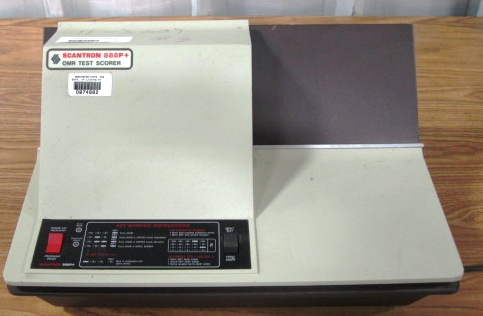
Old Scantron machine, January 24, 2012. (http://www.publicsurplus.com/).

Old Scantron machine, January 24, 2012. (http://www.publicsurplus.com/).

His was a class that sucked the life out of history for most of us. Like most teachers of K-12 social studies or history, it was a dates, names, and places class. Unlike most social studies teachers, his teaching methodology was the epitome of lazy. Every class, five days a week, Demontravel would put up five questions on the blackboard for us to copy down and answer using our textbook. At the end of every two-week period, we’d get a fifty-question multiple choice exam, helping Scantron stay in business.

Demontravel rarely stood up to lecture or do anything else. Lectures for him might as well have been appearances by Halley’s Comet, only the lectures were far less memorable. This process went on unabated for forty-weeks, four marking periods, an entire school year. Calling this boring would only get you into the door of the intellectual famine Demontravel subjected us to in eighth grade.

He wasn’t particularly helpful on the rare occasions when someone did have a question. When a classmate did ask him something, the portly Demontravel would stand up from his desk, which was to our right as we faced the chalkboard, slowly walk toward it, point to a question on the board, tell us in his best Teddy Roosevelt voice what page to turn to in looking for the answer, and then, just as slowly, return to his seat at his desk. Demontravel was truly an unremarkable and boring fifty-something man, virtually bald in all of his pink salmon-headedness, skinny and potbellied beyond belief. His shiny bald head had a Gorbachev-like spot on it.

But there was the fact that there was a prize on the line for us nerdy middle-schoolers—the eighth-grade History Award. “Something I could actually win,” I thought. And Demontravel was the sole arbiter over the award. My favorite and easiest subject was in the hands of this hack of a teacher. That made me downright angry whenever I thought about it.

Post Grape-Nuts cereal at its visual best, with milk, raspberries and blueberries, May 6, 2015. (http://plantbasednutritionlifestyle.com/).

Post Grape-Nuts cereal at its visual best, with milk, raspberries and blueberries, May 6, 2015. (http://plantbasednutritionlifestyle.com/).

I ended up not winning the award, mostly because I correctly corrected Demontravel in front of the whole class one day about key battles of World War I on the Eastern Front. And, also because after he threatened to kick me out of his classroom, I drew a naked picture of his Santa Claus-looking body with a scrotum the size of two Grape-Nuts! Though I drew it in Italian class, I’m sure my counselor told Demontravel about it.

So, 96.4 average or not, I lost the award to my classmate Jennifer, who had a 96.3 average. She was part of what I came to call the “Benetton Group.” They were a group of superficially aware, middle-class-to-affluent folks in the Humanities Program who went through the Grimes Center program (which later became Pennington-Grimes Elementary) together, who thought they were down with the cool and the exotic (with people like Wendy and Brandie being prima facie examples of both). Or, at least, Jennifer acted like she was a part of that group.

She was a bit withdrawn in eighth grade. I never fully understood why. All I knew the first half of the year was that she had set a mark that I needed to beat to have any chance at the history award. By the time I drew my post-modernist interpretation of my lazy, boring-ass history teacher, though, I cared far less about the award and a bit more about this person I only talked to after school, on our walks back to our real lives near the Mount Vernon-Pelham border.

As I wrote in Boy @ The Window:

Screen Shot 2015-05-06 at 12.57.01 PM

I guess Jennifer knew that she would no longer be a part of the grand experiment that was Humanities, the social experience that was integration in a “dangerous” majority of color high school. I bumped into Jennifer a handful of times after eighth grade, between high school and my bachelor’s degree finish at the University of Pittsburgh. Though I have no idea where life has taken her, I must admit, I enjoyed competing with her all eighth grade for an award I knew I’d never get.


Teaching Migration, In Song

17 Friday Oct 2014

Posted by decollins1969 in 1, Academia, Boy @ The Window, culture, Eclectic, eclectic music, High Rise Buildings, Jimme, Marriage, Mount Vernon New York, music, My Father, New York City, Politics, Pop Culture, race, Religion, Upper East Side, Upper West Side, Work, Youth

≈ Leave a comment

Tags

"(Sittin' On) The Dock of the Bay" (1968), "Living For The City" (1973), African American History, Africana Studies, Arrested Development, Black Boy (1945), Black History, Black Migration, Bruce Springsteen, Cities, Gil Scott-Heron, Gladys Knights and The Pips, Great Migration, Isabel Wilkerson, James Grossman, Joblessness, John Mellencamp, Kate Bush, Land of Hope (1989), Marvin Gaye, Mary Patillo, Migration, Nas, Nicholas Lemann, Nina Simone, Otis Redding, Peter Gabriel, Poverty, Richard Wright, Stevie Wonder, Teaching and Learning, The Promised Land (1991), The Warmth of Other Suns (2010), Tracy Chapman, Tupac, Urban America, urban blight


Stevie Wonder and Wonderlove, live performance of "Living For The City," circa 1974.  (http://youtube.com).

Stevie Wonder and Wonderlove, live performance of “Living For The City,” circa 1974. (http://youtube.com).

If I ever had the chance to teach a course specifically on the history of Black migration in America, I already know what books I’d use. Isabel Wilkerson’s The Warmth of Other Suns (2010); Nicholas Lemann’s The Promised Land (1991); James Grossman’s Land of Hope (1989); Mary Patillo’s Black Picket Fences (1999); even Richard Wright’s Black Boy (1945) and Maya Angelou’s I Know Why the Caged Bird Sings (1969). All have moved beyond the statistics of some seven or eight million Blacks moving from the rural Jim Crow South to America’s cities, North, Midwest, West and South for the first three-quarters of the twentieth century.

Falsas Promesas Broken Promises, taken by John Fekner, Charlotte Street Stencils, South Bronx, New York. 1980. (Liftarn via Wikipedia). Released to public domain via CC-SA-3.0.

Falsas Promesas Broken Promises, taken by John Fekner, Charlotte Street Stencils, South Bronx, New York. 1980. (Liftarn via Wikipedia). Released to public domain via CC-SA-3.0.

But that wouldn’t be near enough to communicate the range of emotions, the psychological states and the pressures that these people faced in leaving their homes for the not-so-bright lights of America’s big cities, not to mention what they faced in the days and years after they arrived. I should know. I’m the nearly forty-five year-old son of a mother originally from Bradley, Arkansas (population 500) and a father from Harrison, Georgia. They moved to New York City in the ’60s (specifically, the Tremont section of the Bronx), then to the South Side of Mount Vernon, New York (just outside the Bronx), hooked up, and sired me and my older brother Darren between December 1967 and January 1970.

That short summary is hardly the story, though. For me — like with so many other things in my life — music tells the story, emotions and psychology beyond what words on a page alone can approximate, but not fully duplicate. Music communicates the stories, emotions and psychology of those who migrated and stayed (or didn’t) in cities across the US better than Census data or a hypothesis on proletarianization. I wanted music from my own lifetime (or at least, within a few years of it) — not just folk songs or Blind Willie Johnson or Duke Ellington — music that fit my family’s transition from migration to our current times of racism and urban poverty.

Easily the top two songs on my list to play in class would be:

Trade ad for Otis Redding's single "Try a Little Tenderness," January 7, 1967. (Viniciusmc via Wikipedia/Billboard Magazine, page 7). In public domain).

Trade ad for Otis Redding’s single “Try a Little Tenderness,” January 7, 1967. (Viniciusmc via Wikipedia/Billboard Magazine, page 7). In public domain).

1. Otis Redding, “(Sittin’ On) the Dock of the Bay,” (1968), released after Redding’s death in a plane crash in Madison, Wisconsin; and

2. Stevie Wonder, “Living For The City,” (1973).

Both songs run the full emotional and psychological gamut. From hopefulness to oblivion, from delusion to despair, from rage and anger to resignation. The melancholy of Redding’s “It’s two thousand miles I roamed/Just to make this dock my home” (in reference to the distance from Georgia to San Francisco Bay) juxtaposed with Wonder’s bitterness and anger:

“His hair is long, his feet are hard and gritty
He spends his life walkin’ the streets of New York City
He’s almost dead from breathin’ in air pollution
He tried to vote but to him there’s no solution…”

It communicates so much beyond the lyrics and liner notes, a reminder for those of us who find America and its cities unforgiving today just how relentless it must’ve been for our parents and uncles and aunts and grandparents forty or more years ago.

There are other songs that I’d put on this playlist. Some are directly related to Black migration, some try to bridge the gap between the abundance of music on “the ghetto” and urban poverty and chaos and the lack of music from my own lifetime on migration.

3. Gladys Knight and the Pips, “Midnight Train to Georgia” (1973).
4. Marvin Gaye, “Inner City Blues” (1971).
5. Gil Scott-Heron, “95 South (All of The Places We’ve Been)” (1977).
6. Tracy Chapman, “Fast Car” (1987).
7. Nas (featuring Olu Dara, his father), “Bridging the Gap” (2004).

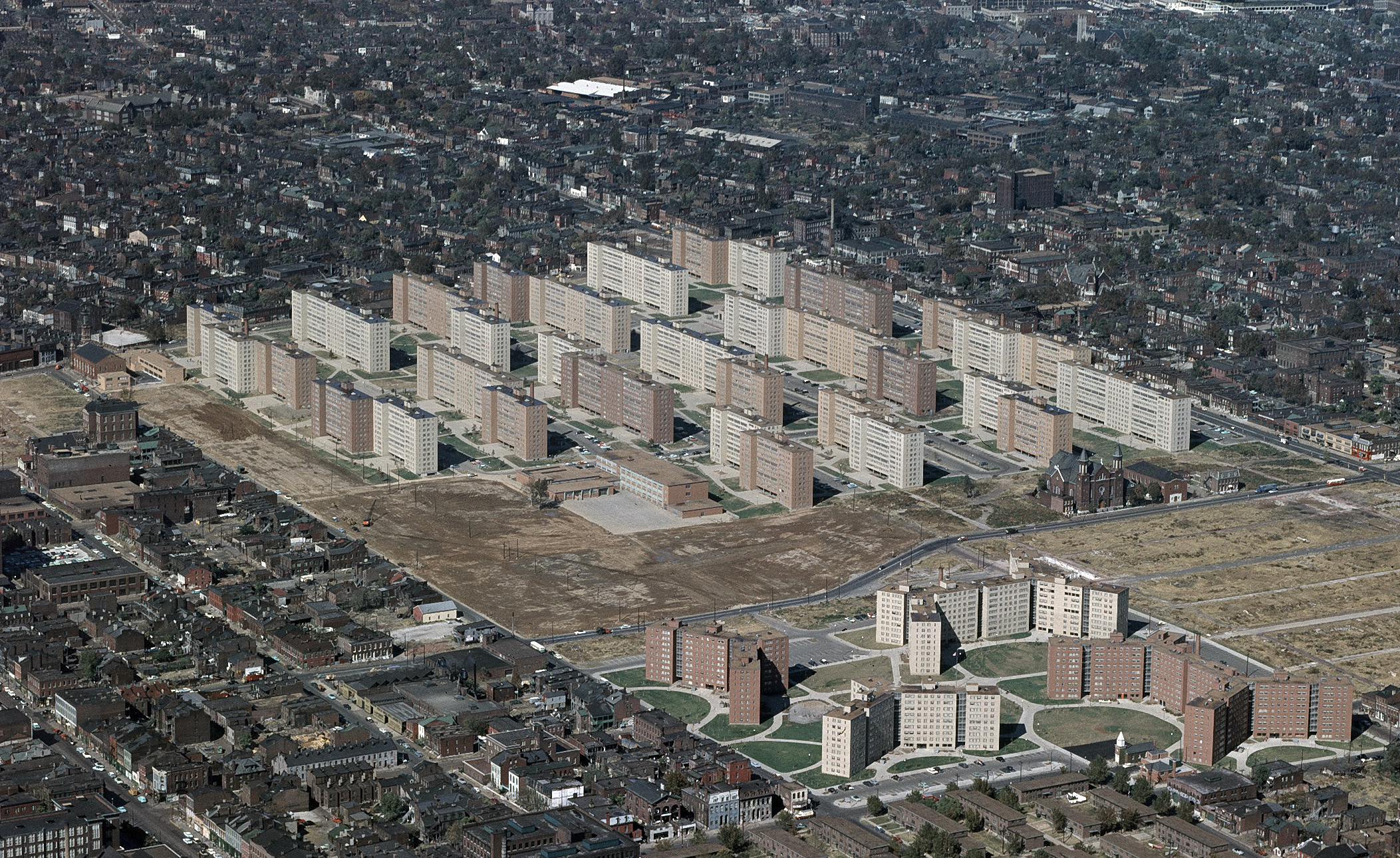
Pruitt–Igoe public housing projects, St. Louis, Missouri, circa 1967. This late-1950s "urban renewal" project was built, but  failed and was razed in the 1970s. (Cadastral via Wikipedia/US Geological Survey). In public domain.

Pruitt–Igoe public housing projects, St. Louis, Missouri, circa 1967. This late-1950s “urban renewal” project was built, but failed and was razed in the 1970s. (Cadastral via Wikipedia/US Geological Survey). In public domain.

That most of these songs come from the period between 1967 and 1974 isn’t an accident. It was the height of the Civil Rights Movement, combined with the Black Power Movement and the “Black is Beautiful” campaign, the beginning of the White backlash against civil rights — including Dr. Martin Luther King, Jr.’s assassination — and the Anti-War Movement was in full swing. It was a good time to take a look at the present and recent past to reconnect with hopes and dreams in the midst of the nightmare of urban poverty.

After ’73 was the beginning of the dance and disco era, as well as a focus on the urban, on crime, on drugs, on poverty  — but not in a “let’s try to solve it” kind of way. This was where rap, hip-hop, some R&B and early forms of what we now call neo-soul picked up, with little reflection on this once prominent past.

Still, there would be some honorable mentions for this migration course, music that could evoke some aspect of the Black migration, of the hope that took a downward turn, of the poverty and joblessness that have permeated America, Black and White and Brown, since the ’70s.

8.  Arrested Development, “Tennessee” (1992).
9. Tina and Ike Turner (and Credence Clearwater Revival), “Proud Mary” (1970).
10. Nina Simone, “The Backlash Blues” (1967).
11. NWA, “Straight Outta Compton” (1989).
12. Tupac, “Cradle 2 the Grave” (1994).
13. John Mellencamp, “Pink Houses” (1983).
14. Bruce Springsteen, “Born In The U.S.A..” (1984). [the song’s release was thirty years ago this month, by the way]
15. Peter Gabriel and Kate Bush, “Don’t Give Up” (1986)

Nina Simone performs at a concert in 1964. (http://npr.org, via Hulton Archive/Stringer/Getty Images).

Nina Simone performs at a concert in 1964. (http://npr.org, via Hulton Archive/Stringer/Getty Images).

Through music, I’d hope to have a course and discussion about Black migration that reaches beyond the words origin and destination, that migration has merely been a physical manifestation of a difficult and seemingly unending cultural and spiritual journey in the US. That Black migration can also easily include the parallel journeys of those of the African or Afro-Caribbean diaspora, not to mention those from Latin America.

For me, though, a course like this would be a personal foray into all the things that have made me who I’ve been for nearly four and a half decades — a person better than the sum of America’s parts and racist, sexist, homophobic and evangelical assumptions.

Students and the Joys and Travails of College Teaching

16 Wednesday Jul 2014

Posted by decollins1969 in 1, Academia, Carnegie Mellon University, culture, Eclectic, Pittsburgh, Pop Culture, University of Pittsburgh, Work

≈ Leave a comment

Tags

Adult Learners, Ambition, Aspirations, Civic Education, College Students, Duquesne University College of Education, Enthusiasm, George Washington University, High School Students, Joy, JSA, Junior States of America, Motivation, Passion, Presidential Classroom, Teaching and Learning, Traditional College Students, Travails, UDC, UMUC, Undergraduate Students, University of Maryland University College, World Cup 2014 Final Pictures


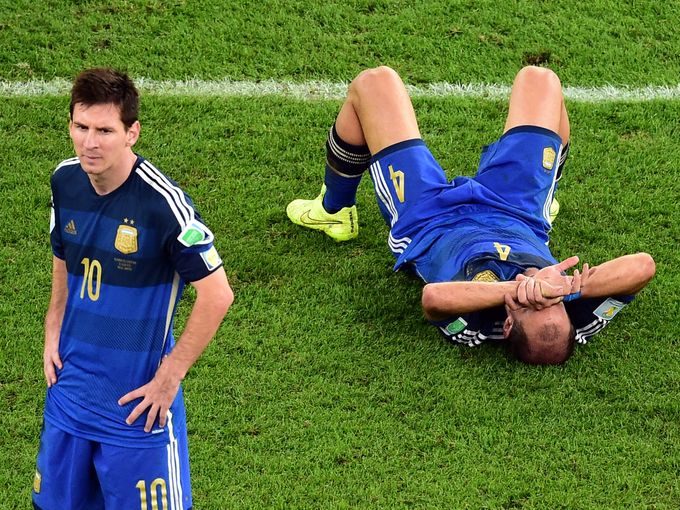
Argentina's Pablo Zabaleta lies on the pitch as Lionel Messi stands beside him after losing to Germany in the final, Rio de Janeiro, Brazil, July 13, 2014. (Francois Xavier Marit/AP via http://usatoday.com).

Argentina’s Pablo Zabaleta lies on the pitch as Lionel Messi stands beside him after losing to Germany in the final, Rio de Janeiro, Brazil, July 13, 2014. (Francois Xavier Marit/AP via http://usatoday.com).

Maybe not to that extreme, but there are circumstances where teaching a college course can be a joy or torture or even sometimes both at the same time. Some of this has to do with the actual nature of the course, some of it with my disposition, some of this with the types of students that walk through the door. But, in teaching somewhere around sixty courses since ’91, working with a civic education nonprofit and consulting with another one, I’ve found two large categories of students who have made teaching more enjoyable over the years, though not always an actual joy. One group has been graduate students, the other high school students aspiring for college.

There are a number of reasons why, of course. Some are pretty easy to understand. High school students aspiring to go to college or taking college-level courses are often ambitious and motivated, students who are amenable to learning. Graduate students often aspire to be better at their specific profession of study, which in my experience, has this group of students essentially aspiring to be some version of me. Even the brown-nosers in both groups tend to have the motivation necessary to be better students, or at least, to look like they’re better students.

It also has helped over the years that the several hundred high school and graduate students who’ve been in my classrooms have actually wanted to be there. Doing a week in Washington to learn how Capitol Hill really works, or a summer course at Princeton on AP US History or taking one of my undergraduate course over the years at the University of Pittsburgh, UDC and UMUC, those students (and their parents) made the choice to take those steps. Those students wanted to get into a college of their choice, to be well prepared, to make themselves better students, and perhaps even, better people.

History graduate students have choices, for the most part, in terms of which graduate seminars they take and in their specific cultural, geographic area and time period focus. In my experience teaching school of education courses, though, at Duquesne and George Washington University (courses like History of American Education, Multicultural Education or History of American Education Reform), the students I’ve taught in those courses chose to be there. They chose to read as many as eight books in eight weeks, to write term papers and research papers and do original research. Those students wanted to become better as teachers, as researchers, and in a few cases, to become college professors themselves.

Ready and waiting: 500,000 Germany supporters await the arrival of the country's World Cup stars, Brandenburg Gate in Berlin, July 15, 2014. (AFP/Getty via http://www.dailymail.co.uk/sport/worldcup2014/).

Ready and waiting: 500,000 Germany supporters await the arrival of the country’s World Cup stars, Brandenburg Gate in Berlin, July 15, 2014. (AFP/Getty via http://www.dailymail.co.uk/).

So what’s different teaching undergraduate courses with undergraduate students? Well, they’ve tended to complain the most about general education requirements, ones that require them to take a course in US or World History (my African American History students are generally happier about taking the course). But that’s not all. A fair number have treated me as their enemy, not as their professor or a teacher invested in their learning. Of course these students were in school to complete a degree. But college was no longer an aspiration. It was now a reality, with all of the responsibilities and complications that come with the five-year march toward a four-year degree. For traditional college-aged students, there have always been competing interests, the need to organize a life that involves working 15-20 hours per week and some semblance of a social life, and attempting to figure out a major (often not history).

With my adult learners, those pressures come from at least three directions. The personal pressure to perform academically, the workplace, familial and parental pressures, and the pressure of learning how to be a college student on the fly. Add to this mix the general lack of academic preparation for college for those over twenty-five. All of this has frequently led to a combination of insufficient motivation to learn — even when I’ve explained the “what’s-in-it-for-them” piece — and a quiet hostility toward the process of college matriculation. For this group as a whole — traditional college students and adult learners — aspirations can frequently turn into Being and Nothingness, or rather, a state of being and meaninglessness.

This mindset has been the most difficult aspect of my job as a teaching professor over the years. It’s somewhere between extremely hard and absolutely impossible to teach students whose minds have been closed to learning or self-improvement, whose idea of an education is a piece of paper and a rubber stamp. That most of those students who’ve made my work most difficult are undergraduates isn’t surprising, though. That’s part of the job.

Still, there are times where I miss those days when I taught or worked with high school students fully motivated to get into college, who already had a sense of where they wanted their lives to go. There are times when I miss a grad student angling for a higher grade or with a real interest in my writing and research. For better and sometimes for worse, at least they’re interested in the learning enterprise.

AP US History Exam Day & Harold Meltzer

13 Tuesday May 2014

Posted by decollins1969 in 1, Boy @ The Window, culture, Eclectic, eclectic music, Mount Vernon High School, Mount Vernon New York, music, Politics, Pop Culture, race, Youth

≈ Leave a comment

Tags

AP, AP American History, AP US History, AP US History Exam, Appreciation, College Board, Coping Strategies, ETS, Exam Day, Harold Meltzer, Kaplan, Mentoring, Photographic Memory, Princeton Review, Privilege, Self-Discovery, Teaching and Learning


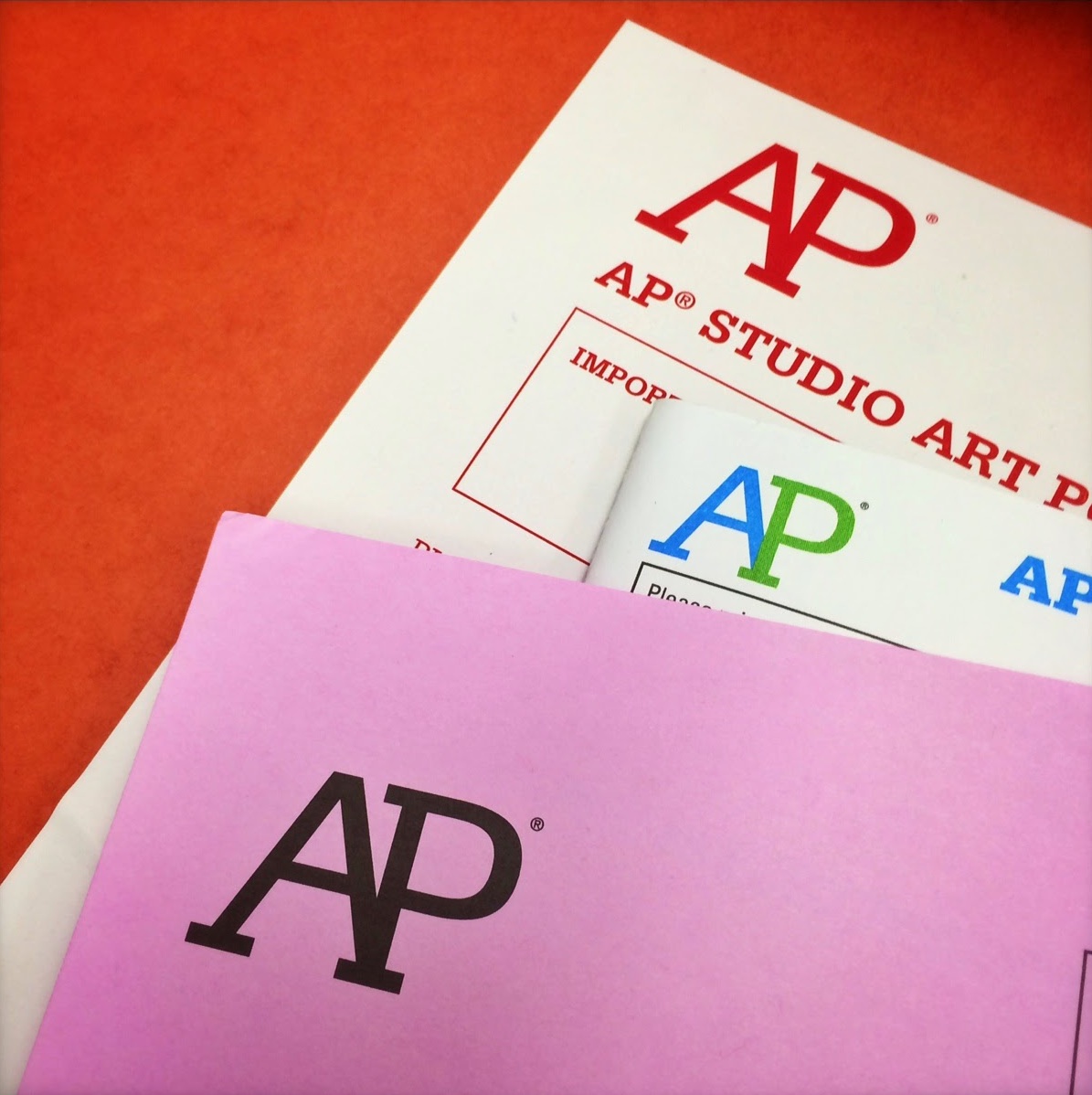
AP Day (cropped), May 9, 2014. (Tim Needles/http://artroom161.blogspot.com/).

AP Day (cropped), May 9, 2014. (Tim Needles/http://artroom161.blogspot.com/).

Twenty-eight years ago on this day/date, I was on my way to Mount Vernon High School, listening to Mr. Mister, Simple Minds, Sting and Whitney along the way. I was a few minutes away from a three-hour exam that could change my future. It wasn’t exactly the sunniest or warmest of days, though. That second Tuesday in May ’86 was brisk and heavy with clouds, a high of only 52°F. Still, with the way I felt that morning, May 13th might as well have been sunny with a high of seventy-two. 

I’ve written about my AP US History exam experience and Harold Meltzer ad nauseum here in this blog, as well as in Boy @ The Window. How I felt in the months and weeks before the exam. My expectations for a “5” and what that meant in comparison to taking something much less representative of the college experience, like the SAT. My perspective on my AP classmates and the general sense of obnoxious whining that permeated our classroom in throughout March and April ’86, and in whispers the following year. The keys to my academic success, and me being conscious of those keys, for the very first time. And, of course, the mentoring and tutelage of the late Harold Meltzer, the only teacher after elementary school who took a genuine interest in my development as a human being, not just in my grades or in my intellectual abilities.

I was a high school junior whom, at sixteen years old, had more wisdom about what would leave me well prepared for college than most parents, teachers and so-called education reformers possessed in ’86 or in 2014. Taking Algebra in eighth grade, AP courses in eleventh and twelfth grade, accelerated math and science classes all through high school. I knew even then that the APUSH exam was far more representative of my academic preparation than any SAT score would indicate, no matter how high.

AP US History For Dummies cover (2008), May 13, 2014. (http://bookoutlet.com/).

AP US History For Dummies cover (2008), May 13, 2014. (http://bookoutlet.com/).

Yet I’ve found myself in debates with folks in recent months over an issue that’s been well settled in the education world for more than a decade. Over a single four-digit score that many thought should be the difference between going to an elite school and attending a no-name local technical institute. These folks refused to recognize what even the College Board and ETS recognize. That social class and racial privilege have been infused in the SAT process for years, with so many students taking SAT-prep courses at Princeton Review and Kaplan being all the prima facie evidence I need.

Now, this doesn’t mean that Advanced Placement (or International Baccalaureate, for that matter) is much better. But in terms of the actual amount of time spent in direct preparation, with the right teacher, even an impoverished Black kid like I was could attend a public school with a magnet program and earn a “5” — without spending $1,500 on Kaplan or Princeton Review. 

Enough on that. Today, I can truly say that AP US History Exam ’86 Day was a fundamentally important milestone for me. It sealed the deal I made for myself in the midst of the summer of abuse, to get out of 616, out of Mount Vernon, and into college. Thanks Humanities. Thanks, Mr. Meltzer. Thanks, classmates. And, thank God!

Black History = American History, But For American Stupidity

04 Tuesday Feb 2014

Posted by decollins1969 in 1, Academia, culture, Eclectic, Patriotism, Politics, Pop Culture, race

≈ 2 Comments

Tags

African American History, American History, Black History, Black History Month, Prejudice, Racism, Self-Discovery, Teaching, Teaching and Learning, US History, Willful Ignorance


Pythagorean Theorem (except when it comes to Black history and race), February 4, 2014. (http://ncalculators.com/)

Pythagorean Theorem (except when it comes to Black history and race), February 4, 2014. (http://ncalculators.com/)

It’s Black History Month. It’s a month that often feels more like an obligation to honor the Civil Rights Movement than it does a full month to celebrate and appreciate all African American contributions to the development and success of the United States over the previous four centuries. Yet there are many Whites, Blacks and other people of color who refuse to see this at all. Some argue for a White History Month, some argue that Blacks don’t have a culture or history at all — or at least, one worth celebrating. And some argue that the time and need for a Black History Month has passed.

Some of this ridiculousness I parody here:

Black History=American History

Black History=American History

No argument is more central to the reason why Black History Month needs to continue than the one I’ve heard from conservatives and former students over the years. That because Black history shines a light on America’s racist, economic loading of the dice in favor of White elites and business interests, I’m being “anti-patriotic” when I talk about or teach on this. Then, of course, I get the “love-America-or-leave-it” response.

People who respond this way are such assholes. Some of your ancestors brought my ancestors here in chains, well before most of these alleged patriots’ ancestors even thought about coming here. My ancestors built plantations, chopped down forests, grew the cash crops that made White men rich and provided the money necessary to make America an industrial capitalistic powerhouse, built the White House and the Capitol, and have fought in every war this country’s been a part of. But I’m unpatriotic when through Black history I can point out America’s flaws and great failings?

The less evolved part of me would say, at least in a street argument, “Kiss my Black ass!” But to be honest, I don’t want these folks to touch me, much less kiss my butt. What I want them to do is read, listen, watch and learn, and not just assume everything they’ve heard from FOX News, their parents and in elementary school social studies is the gospel truth. That way, they would then have the choice between understanding that US history and Black history are one and the same and wallowing in their willful stupidity.

“I Am Become Columbus, Destroyer of Worlds”

14 Monday Oct 2013

Posted by decollins1969 in 1, Academia, Boy @ The Window, Christianity, culture, Eclectic, Mount Vernon High School, Patriotism, Politics, Pop Culture, race, Religion, Youth

≈ 1 Comment

Tags

American Indians, Christopher Columbus, Columbus Day, Diseases, Enslavement, Exploitation, Genocide, History, Indigenous Groups, J. Robert Oppenheimer, Native Populations, Teaching and Learning


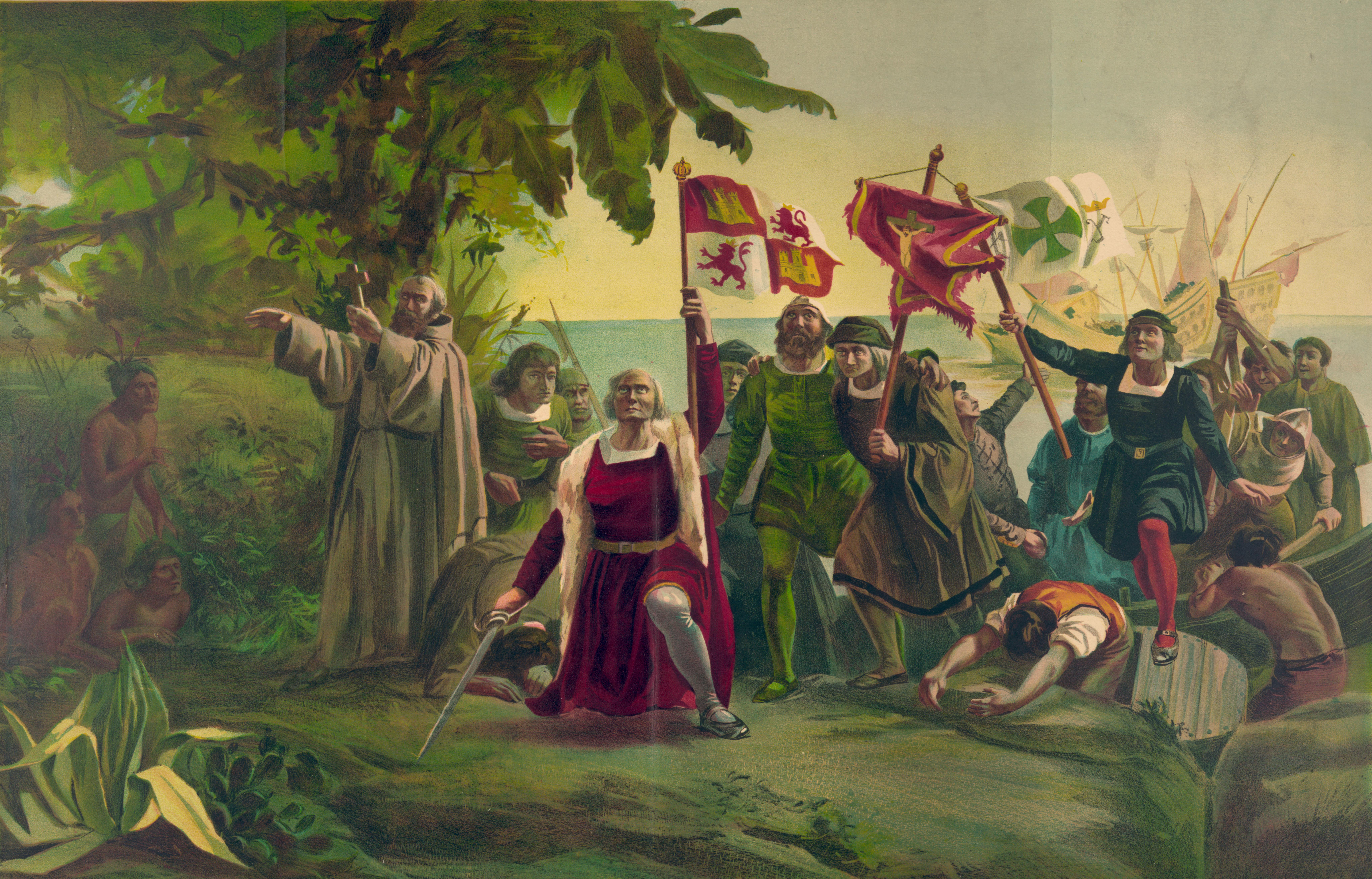
Dióscoro Teófilo Puebla Tolín, First landing of Columbus on the shores of the New World, at San Salvador, West Indies, 1862 (published 1892, Currier& Ives). (Dantadd via Wikipedia). In public domain.

Dióscoro Teófilo Puebla Tolín, First landing of Columbus on the shores of the New World, at San Salvador, West Indies, 1862 (published 1892, Currier& Ives). (Dantadd via Wikipedia). In public domain.

The title kind of says it all, no? On this Columbus Day, 2013, we should all acknowledge this as the beginning of the inadvertent (and frequently deliberate) genocide conducted against the indigenous groups that made up the Western Hemisphere as of October 12, 1492. The day that Christopher Columbus “discovered” America — as if First Nation tribes or Native Americans or American Indians were looking to be discovered — was the first day of more than half a millennium’s worth of physical and psychological assault on the peoples of the Western Hemisphere.

I talk about this in all of my courses — US History, World History (when I get to 1500 CE), and African American History. I describe how this notion of discovery was pretty much invented in the nineteenth century, to create a mythology about the greatness of God-fearing Europeans (and, in the US context, Americans) and their pre-ordained but altruistic triumph over the heathen Indians, those “noble savages.” I go over the fact that the Eurasian diseases that the Spaniards and other Europeans brought with them to the Western Hemisphere wiped out tens of millions of the indigenous between 1492 and 1700. Smallpox, measles, mumps, rubella, bubonic plague, chicken pox all helped reduce a population that experts have estimated to have been between 70 and 100 million at the time of first contact to between seven and 10 million by the end of the seventeenth century.

Drawing accompanying text in Book XII of the 16th-century Florentine Codex (compiled by Fray Bernardino de Sahagún, 1540–1585), showing Nahuas of conquest-era Central Mexico suffering from smallpox, September 11, 2009. (Wikipedia). In public domain.

Drawing in Book XII of Florentine Codex (compiled by Fray Bernardino de Sahagún, 1540–1585), showing Nahuas of Central Mexico suffering from smallpox, September 11, 2009. (Wikipedia). In public domain.

I talk about Columbus’ second voyage, where he helped establish the first European settlement in what is now Haiti and then in the Dominican Republic, all while searching for gold, enslaving Arawak Indians and engaging in full-fledged battles. Just a year and a half after the first, glorious “discovery!”

The justification, of course, was and often remains that Europeans were civilized Catholic Christians, whereas these half-dressed natives were hedonistic polytheists. Even now, we often get caught up in the human sacrifice rituals of the Maya and Aztecs and somehow use that as justification for exploitation, slavery, and the inadvertent wiping out of whole cultures — worlds, if you will. It’s a justification that should make any believer in a higher power queasy, and any non-believer extremely angry.

I’m disappointed. We still sugarcoat the real meaning of Columbus Day for people of all ages. I began to learn about all of this in fifth grade (thank you, Mrs. O’Daniel), in October ’79. But I didn’t come to know most of the full story until high school. Even then, no one — not Flanagan, Zini or Meltzer — mentioned disease, exploitation, slavery and warfare as the genocidal combination that essentially handed Western Europeans the Western Hemisphere. I guess they either didn’t know or thought that it would be too painful a lesson to teach fourteen-to-eighteen year-olds.

As J. Robert Oppenheimer said in ’65, twenty years after the Manhattan Project’s success in creating the world’s first nuclear bomb, “Now I am become Death, the destroyer of worlds.” Well, one doesn’t have to have God-like powers or be a Hindu deity to create large-scale human suffering, as was the case with Columbus. All one really needs is the conviction necessary to treat other humans as if they are only meat with brains and eyes.

How High-Stakes Testing Strangles Motivation and Competition

31 Wednesday Jul 2013

Posted by decollins1969 in 1, Academia, Boy @ The Window, culture, Eclectic, Mount Vernon New York, Pop Culture, race, Youth

≈ Leave a comment

Tags

Ability Grouping, Competition, Education Reform, High-Stakes Testing, K-12 Education, MAP-M, MAP-R, Montgomery County Public Schools, Motivation, Mount Vernon public schools, MSA, SRA, Teacher Effectiveness, Teaching and Learning, Teaching Styles, Testing, Tracking


Homer strangles Bart (again), The Simpsons, February 2011. (http://www.goodwp.com/).

Homer strangling Bart (again), The Simpsons, February 2011. (http://www.goodwp.com/).

One of the biggest casualties in the current K-12 education reform effort — otherwise known as measuring teacher effectiveness through high-stakes testing — is the notion of competition, academic and otherwise. At least, students competing to make themselves better students, better athletes and even better people in the process of matriculating through elementary, middle and high school. Competition suffers when the teaching, motivational, psychological and financial resources necessary to level the K-12 playing field have gone instead to testing companies and psychometricians.

So much has been the emphasis on testing and raising test scores that most in education reform now think competition among students on the K-12 stage is an abomination that must be rooted out, and not part and parcel of the learning and human development process. This is really too bad. For what often makes school fun for children is a healthy dose of competition throughout the process.

To use myself and my ten-year-old son as but two examples of what has occurred in K-12 education reform over the past three and a half decades, it is apparent to most educators how much has changed as a result of the fear of competition and lack of autonomy to motivate students. Testing, of course, was part of my educational experience growing up. From third grade through sixth grade in Mount Vernon, New York’s public schools, the school district tested us with the SRA (Science Research Associates, Inc.) exam in reading comprehension and mathematics every spring. At the end of the school year, we’d learn how well or not so well we tested in these areas in terms of grade level.

Data mining (one of the hallmarks of reduced teacher autonomy), cropped and edited, September 2006. (http://www.qualitydigest.com).

Data mining (one of the hallmarks of reduced teacher autonomy), cropped and edited, September 2006. (http://www.qualitydigest.com).

The Mount Vernon Board of Education used the test for two purposes. One, it was a diagnostic exam, as it would show students with reading and math comprehension skills at, above or below grade level. When I took the SRA in third grade, for example, I read at the 3.9 grade level, or on par as a third marking period third-grader. When I took the fourth grade version of the SRA the following year, I had jumped up to a 7.4 in reading, or the equivalent of a mid-year seventh-grader.

The district used the SRA for a second purpose, though, at least by the end of sixth grade. It was part of a package that determined what academic track a student would take as they moved on to middle school. In my case, my straight A’s and my SRA scores (which put me at the 12th grade level in reading comprehension and 11th grade level in math) put me in the gifted-track magnet program called Humanities in 1981. For some of my elementary school classmates, it meant general education classes, or, in a couple of cases, remedial or special education classes.

Ability tracking through an examination and grades over four years has its own sinister flaws in terms of race and class — it has tended to disadvantage Black students, especially poor Black kids. But it at least wasn’t the constant mantra of testing that millions like my ten-year-old son has faced since he began kindergarten in August 2008. For nearly every year, my son has taken a school-level, county-district level, or state-level exam in Montgomery County (Maryland) Public Schools, including MAP-M and MAP-R, TerraNova and the MSA assessments. What’s more, teachers have administered practice versions of these exams (including unit guides and what they call formatives) about once every six weeks during the school year since my son began second grade.

The constant testing would be meaningful if teachers could get together and decide at the classroom level how best to address students’ needs in areas like reading comprehension and mathematics. These determinations now are tightly controlled at the state, district and school leadership levels, leaving teachers with little room to use their abilities to, well, teach. Really, motivating students — the most critical tool a teacher has in challenging students to become better learners — has become a secondary tool. Especially since these test scores only count in favor or against individual teachers and individual schools, and not specifically for or against students.

Robot teaching math 3d illustration, July 31, 2013. (http://www.123rf.com).

Robot teaching math 3d illustration, July 31, 2013. (http://www.123rf.com).

The last piece is a good thing. Most educators now agree that ability grouping or tracking has fostered too much competition for a school district’s resources among students, teachers, administrators and parents. K-12 education reform has leaned so far the other way, though, that teachers have virtually no say in the curriculum from which they teach, even in kindergarten, and have little from which to motivate their students as learners. In fact, teachers and school-level administrators are the only ones with some motivation and sense of competition, as dollars and jobs are at stake every spring as a result of annual testing. This motivation, though, is all about teaching students how to get better test scores, and not about actual learning, development or academic improvement, a poor way to reform K-12 education.

And it is the motivation to learn that sparks the competition necessary for students to improve themselves, to work with each other to become better students. Another student’s success can even encourage other students to work harder, to make themselves better academically, athletically or even socially. In the current K-12-as-laboratory-experiment-environment, this theme of motivation and healthy competition leading to student success is not only missing. For reformers, it’s been deliberately omitted, as if poor kids and students of color in urban environments don’t need motivation and competition to become better students and people.

← Older posts
Newer posts →

Boy @ The Window: A Memoir

Boy @ The Window: A Memoir

Places to Buy/Download Boy @ The Window

There's a few ways in which you can read excerpts of, borrow and/or purchase and download Boy @ The Window. There's the trade paperback edition of Boy @ The Window, available for purchase via Amazon.com at http://www.amazon.com/Boy-Window-Donald-Earl-Collins/dp/0989256138/

There's also a Kindle edition on Amazon.com. The enhanced edition can be read only with Kindle Fire, an iPad or a full-color tablet. The links to the enhanced edition through Apple's iBookstore and the Barnes & Noble NOOK edition are below. The link to the Amazon Kindle version is also immediately below:

scr2555-proj697-a-kindle-logo-rgb-lg

Boy @ The Window on Amazon.com: http://www.amazon.com/Boy-The-Window-Memoir-ebook/dp/B00CD95FBU/

iBookstore-logo-300x100

Boy @ The Window on Apple's iBookstore: https://itunes.apple.com/us/book/boy-the-window/id643768275?ls=1

Barnes & Noble (bn.com) logo, June 26, 2013. (http://www.logotypes101.com).

Boy @ The Window on Barnes & Noble: http://www.barnesandnoble.com/w/boy-the-window-donald-earl-collins/1115182183?ean=2940016741567

You can also add, read and review Boy @ The Window on Goodreads.com. Just click on the button below:

Boy @ The Window

Twitter Updates

Tweets by decollins1969
  • RSS - Posts
  • RSS - Comments

Archives

  • June 2025
  • April 2023
  • September 2022
  • August 2022
  • July 2022
  • June 2022
  • May 2022
  • April 2022
  • March 2022
  • January 2022
  • December 2021
  • November 2021
  • October 2021
  • September 2021
  • August 2021
  • July 2021
  • June 2021
  • April 2021
  • March 2021
  • February 2021
  • January 2021
  • December 2020
  • November 2020
  • October 2020
  • September 2020
  • August 2020
  • July 2020
  • May 2020
  • April 2020
  • March 2020
  • January 2020
  • December 2019
  • November 2019
  • August 2019
  • July 2019
  • June 2019
  • May 2019
  • April 2019
  • March 2019
  • February 2019
  • January 2019
  • December 2018
  • November 2018
  • October 2018
  • September 2018
  • August 2018
  • July 2018
  • June 2018
  • May 2018
  • March 2018
  • February 2018
  • January 2018
  • December 2017
  • November 2017
  • October 2017
  • September 2017
  • August 2017
  • July 2017
  • June 2017
  • May 2017
  • April 2017
  • March 2017
  • February 2017
  • January 2017
  • December 2016
  • November 2016
  • October 2016
  • September 2016
  • August 2016
  • July 2016
  • June 2016
  • May 2016
  • April 2016
  • March 2016
  • February 2016
  • January 2016
  • December 2015
  • November 2015
  • October 2015
  • September 2015
  • August 2015
  • July 2015
  • June 2015
  • May 2015
  • April 2015
  • March 2015
  • February 2015
  • January 2015
  • December 2014
  • November 2014
  • October 2014
  • September 2014
  • August 2014
  • July 2014
  • June 2014
  • May 2014
  • April 2014
  • March 2014
  • February 2014
  • January 2014
  • December 2013
  • November 2013
  • October 2013
  • September 2013
  • August 2013
  • July 2013
  • June 2013
  • May 2013
  • April 2013
  • March 2013
  • February 2013
  • January 2013
  • December 2012
  • November 2012
  • October 2012
  • September 2012
  • August 2012
  • July 2012
  • June 2012
  • May 2012
  • April 2012
  • March 2012
  • February 2012
  • January 2012
  • December 2011
  • November 2011
  • October 2011
  • September 2011
  • August 2011
  • July 2011
  • June 2011
  • May 2011
  • April 2011
  • March 2011
  • February 2011
  • January 2011
  • December 2010
  • November 2010
  • October 2010
  • September 2010
  • August 2010
  • July 2010
  • June 2010
  • May 2010
  • April 2010
  • March 2010
  • February 2010
  • January 2010
  • December 2009
  • November 2009
  • October 2009
  • September 2009
  • August 2009
  • July 2009
  • June 2009
  • May 2009
  • April 2009
  • March 2009
  • February 2009
  • January 2009
  • December 2008
  • November 2008
  • October 2008
  • September 2008
  • August 2008
  • July 2008
  • June 2008
  • May 2008
  • April 2008
  • March 2008
  • February 2008
  • January 2008
  • December 2007
  • November 2007
  • October 2007
  • September 2007
  • August 2007
  • July 2007
  • June 2007

Recent Comments

MaryPena's avatarMaryPena on My Day of Atonement/Bitter Hat…
decollins1969's avatardecollins1969 on No Good Teaching Deed Goes…
Mary Rose O’Connell's avatarMary Rose O’Connell on No Good Teaching Deed Goes…

NetworkedBlogs on Facebook

NetworkedBlogs
Blog:
Notes From a Boy @ The Window
Topics:
My Life, Culture & Education, Politics & Goofyness
 
Follow my blog

616 616 East Lincoln Avenue A.B. Davis Middle School Abuse Academia Academy for Educational Development AED Afrocentricity American Narcissism Authenticity Bigotry Blackness Boy @ The Window Carnegie Mellon University Child Abuse Class of 1987 CMU Coping Strategies Crush #1 Crush #2 Death Disillusionment Diversity Domestic Violence Economic Inequality Education Family Friendship Friendships Graduate School Hebrew-Israelites High-Stakes Testing Higher Education History Homelessness Humanities Humanities Program Hypocrisy Internalized Racism Jealousy Joe Trotter Joe William Trotter Jr. K-12 Education Love Manhood Maurice Eugene Washington Maurice Washington Misogyny Mother-Son Relationship Mount Vernon High School Mount Vernon New York Mount Vernon public schools Multiculturalism MVHS Narcissism NFL Pitt Pittsburgh Politics of Education Poverty President Barack Obama Race Racial Stereotypes Racism Relationships Self-Awareness Self-Discovery Self-Reflection Sexism Social Justice Teaching and Learning University of Pittsburgh Violence Whiteness Writing

Top Rated

Blog at WordPress.com.

  • Subscribe Subscribed
    • Notes from a Boy @ The Window
    • Join 103 other subscribers
    • Already have a WordPress.com account? Log in now.
    • Notes from a Boy @ The Window
    • Subscribe Subscribed
    • Sign up
    • Log in
    • Report this content
    • View site in Reader
    • Manage subscriptions
    • Collapse this bar
 

Loading Comments...