• About Me
  • Other Writings
  • Interview Clips
  • All About Me: American Racism, American Narcissism, and the Conversation America Can’t Have
  • Video Clips
  • Boy @ The Window Pictures
  • Boy @ The Window Theme Music

Notes from a Boy @ The Window

~

Notes from a Boy @ The Window

Tag Archives: Poverty

The Yoke of Student Loans

18 Tuesday Jul 2017

Posted by decollins1969 in 1, Academia, Boy @ The Window, Carnegie Mellon University, culture, Eclectic, Mount Vernon High School, Mount Vernon New York, Movies, Pittsburgh, Politics, Pop Culture, race, University of Pittsburgh, Work, Youth

≈ Leave a comment

Tags

Adult Learners, American Individualism, CMU, Debt Peonage, Financial Aid, Financial Literacy, First-Generation Students, HSBC, In Time (2011), Interest Rates, Loan Payments, Marine Midland Bank, Navient, Nontraditional Students, Perkins Loans, Pitt, Poverty, Sallie Mae, Self-Reflection, Stafford Loans, Student Loans
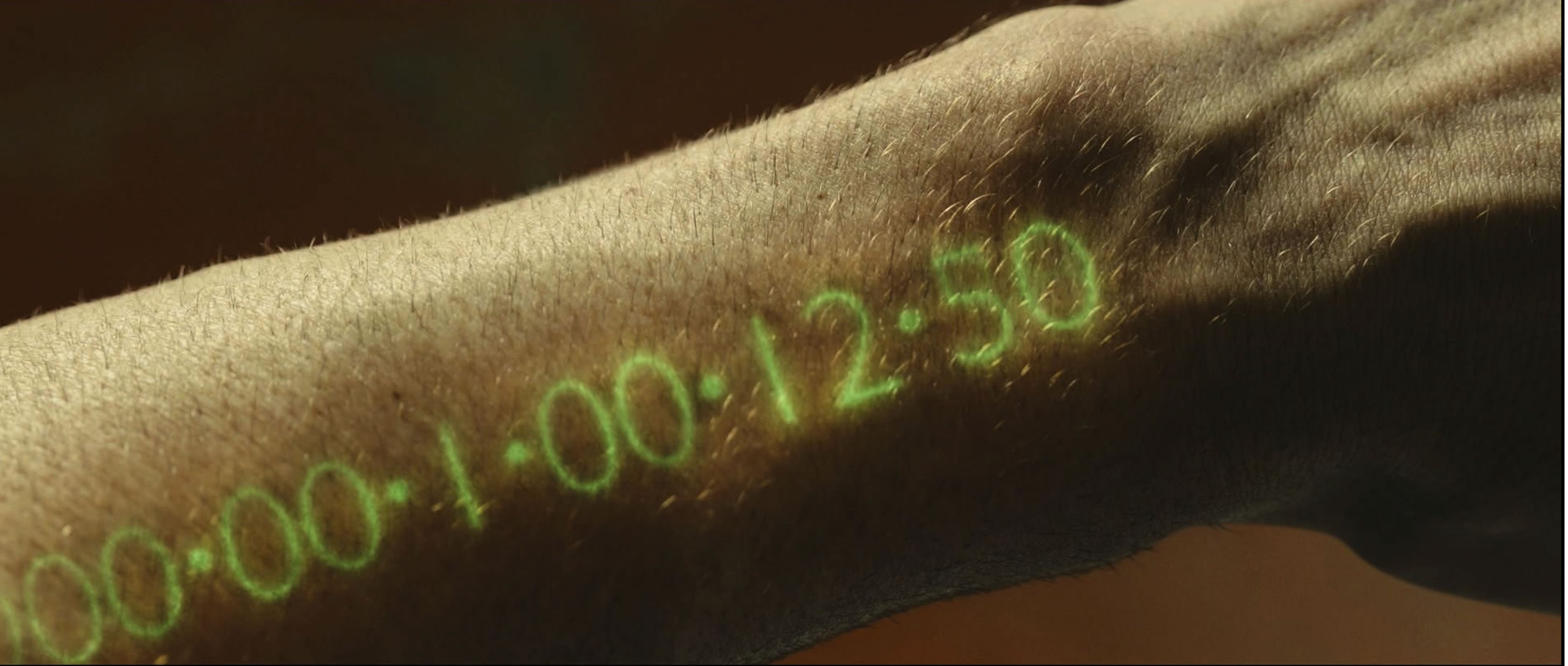

Time, money, debt, yoke = same difference, from screen short from movie In Time (2011), October 27, 2011. (http://collider.com/in-time-review/).

This week in July thirty years ago, I took out the first of what would be a series of student loans. Loans that would help cover eight of my ten years of undergraduate and graduate studies at the University of Pittsburgh and Carnegie Mellon University. In three-and-a-half-months, I will be ending my twentieth year paying off those loans. If I had to do it all over again, I may have stayed in New York State to take advantage of the TAP award (need-based financial aid). That way, I wouldn’t have needed to borrow for my undergrad. But given my near desperation for wanting to escape grinding poverty, 616 and my family, Mount Vernon, New York, and the stigma that was my life living there among hostile and indifferent classmates, teachers, and neighbors, borrowing $2,625 on July 16 of ’87 didn’t seem so bad.

Yep, my first subsidized/unsubsidized Stafford student loan was a modest one. It was a set maximum based on the old laws limiting student borrowing (especially for college freshmen) three decades ago. I remember thinking to myself, “How the heck am I gonna pay this back?,” as I went through an hour of phone calls between Pitt’s financial aid office and Marine Midland Bank (now part of HSBC). The latter was where I had my first bank account, where I had deposited $500 of scholarship money from Mount Vernon’s Afro-Caribbean Club. That’s how little I knew about the process – I went with a bank that didn’t exist outside of New York State to work with a school in Western Pennsylvania!

Pact with the Devil, July 18, 2017. (http://evil.wikia.com/wiki/Pact_with_the_Devil)

Because I wasn’t yet eighteen, I needed my Mom to co-sign my loan. Because my Mom didn’t have collateral, she needed to add two relatives who did have assets to my first loan. In the end, Mom chose my maternal grandmother Beulah and my great-great-aunt in Seattle Inez (who just happened to be Johnny Gill’s great or great-great grandmother — didn’t know it at the time) as relatives with collateral who could be on the hook if I or she ever defaulted on our future payments. Of course, Mom didn’t actually seek permission from my then sixty-year-old grandma in rural Arkansas or my better-off, octogenarian, great-great aunt for this sign-off. Apparently, Marine Midland didn’t care, either. And that’s how it was for the next four years, having relatives whom I had never met (and in the case of great-great aunt Inez, who died at 101 years old in the early ’00s, would never meet) as collateral for my loans.

I’d also take out the smaller Perkins Loan for my undergraduate time at Pitt, an additional $2,000 per year, for three of my four years there. In all, I’d borrow more than $16,000 in four years, with a high of $4,000 in Stafford Loans in my junior year, 1989-90.

It bothered me every time I had to re-up for student loans. Not just because of the false notion of American individualism, the idea that I shouldn’t need anyone’s help to go earn a degree. It bothered me because I feared, sometimes to the point of nightmares, that I’d never be able to pay this money back.

Graduate school at Carnegie Mellon and the loosening of the student loan rules and amounts under President Clinton in 1994 made things better and worse. I barely borrowed my first two and a half years of grad school at both Pitt and CMU, to the tune of $1,800 in all. CMU paid me so little as a grad student that I had little choice if I ever planned on eating more than one meal a day but to borrow. And that’s how most of my borrowing occurred between January 1994 and January 1997, to either have to supplement my meager stipend (before the year of my Spencer Dissertation fellowship). Or, to use the funds to help support my dissertation research, the travel to/from and living arrangements while in DC in 1994 and 1995. Unlike many of my graduate school colleagues (especially the ones working on professional master’s degrees or a law degree), I didn’t use my loans to go on extended weekends to Bermuda or to take summer vacations in the Grand Caymans.

Of course, I graduated in May ’97, and lo and behold, I couldn’t find full-time work. And with the exception of the months of July, August, and September 1998, I wouldn’t have full-time or full-time equivalent work until I left Pittsburgh for work in the DC area in the summer of 1999. But, my consolidated student loans through the dispensations of Sallie Mae never took that into account when my first payment became due Thanksgiving Week 1997. I was able to get a reduced payment of $20 per month for the first two years. I didn’t default, but it made paying off my student loans that much harder. It didn’t help that Sallie Mae had locked in my interest rate at eight percent, retroactive to July 1987, and unchangeable under any circumstances. Even with consumer interest rates the way they have been for the past decade.

Relationship between lenders and payees, July 27, 2015. (http://forbes.com).

Flush or not, full-time or underemployed or somewhere in between, the student loan payments, deferments, and forebearances have been non-stop for two decades. Even credit card companies will leave folks alone if they make regular minimum payments. Not so with student loans or with Sallie Mae (now Navient, which must mean assholes in financial aid-speak). Despite everything I’ve been through financially over the years, I finally paid off the original principal of my consolidated student loans about two years ago. Great. It still means that I have left another decade of payments on accumulated interest before I can be forever free of this nearly endless cycle.

Here’s the real thing that I think I’d do over again, that should be done about this corrupt and serfdom-like process. Sixteen, seventeen, or eighteen years old is way too young to be making financial decisions that I or anyone else will have to live with for four decades or more. Even deciding to serve in the military isn’t a decades’ long commitment (unless one chooses to re-up or goes to officer’s school). At the very least, no one under twenty-one should have to commit themselves to debt peonage, including student loans. As for me, working thirty hours a week on or off campus between 1987 and 1997 to cover costs and necessities would’ve been preferable to this iron collar.

The real problem, of course, is that adult learners are taking out many of these loans these days. Even though they may be old enough to know better, they aren’t experienced enough. Lumina Foundation and other organizations have concentrated on “financial literacy” as the way out. This is wrong-headed, as it does nothing to change this financially enslaving system. Really, it would take free and significantly-reduced undergraduate tuition to do the trick. But where’s the fun, profit, and human misery in that?

From One Starving Writer to Another

19 Sunday Mar 2017

Posted by decollins1969 in 1, Boy @ The Window, culture, Eclectic, Mount Vernon High School, Mount Vernon New York, Pop Culture, University of Pittsburgh, Youth

≈ Leave a comment

Tags

"The Raven", AP English, Columbia, Crush #2, Edgar Allen Poe, MVHS, Phyllis, Poverty, Rosemary Martino, Self-Discovery, Teaching and Learning, The Starving Artist, UMUC, Writing Career


Raven eating a hand (in my case, the writer’s dead hand), March 19, 2017. (creativeuncut.stfi.re via http://pinterest.com).

Six years ago, a student of mine made a reference that very much reminded me of, well, me, the person I was my senior year at Mount Vernon High School. It was as part of a conversation about looking for work. She didn’t want to be another starving artist, living in some basement apartment somewhere, “smearing paint on a canvas” while waiting for a big break. I thought at the time that the idea of a starving artist had all but died out in the era of bling-bling.

But it made me think for a while about the choices I’ve made with my life and career in the years since the middle of my senior year at MVHS. I once said to my AP English teacher Rosemary Martino that I didn’t want to be a starving artist “like Edgar Allen Poe” all those years ago. Now a student had made a similar — although better developed — reference. I think I understood better the momentary look of shock on my former teacher’s face after that conversation.

My student made me think about what Martino saw in my writing so many years ago. I certainly wasn’t focused on it. The same week she commented on making myself into a writer was also the week I had my Ivy League dilemma, between Columbia and the University of Pittsburgh for undergrad. I was waist-deep into my obsession with Phyllis, or really, my obsession with my crush on Phyllis. So much so that I wrote my creative writing assignment for Martino about me and my Crush #2, switching the names to “Donna” and “Phil” to barely cover up the truth of this otherwise short fictional work. Martino returned it without comment. She did comment heavily, though, on my assessment of Henrik Ibsen’s A Doll’s House, a series of redundant paragraphs in search for a coherent sentence.

But my wack “The Way It Is” title was as much an indication that I was as far away from seeing myself as a writer as Earth is for Alpha Centauri without a faster-than-light-speed vehicle. And I was starving on so many levels back then. For food. For attention. For love. For a connection with anything or anyone who didn’t remind me of my poverty. Martino’s encouragement, though she obviously meant well, sent me scurrying in my mind for something a bit more comfortable than Poe’s indebted and untimely death.

My own student’s commentary made me wonder if the quality of my life and career would be better these days if I had embraced the promise Martino saw in my writing back then. I mean, I was already a slightly malnourished six-foot-one and 160-pounder at that point anyway. The inner struggle to put thoughts to paper creatively would’ve been much easier at seventeen than it is as a married forty-seven year-old with a contrarian teenager and bills to pay.

Maybe so. But until Noah or one of his progeny designs a time machine, I can’t rewrite my history in order to make me embrace what I now see as my calling. All I know is that those words I uttered in March ’87 have stayed with me for three decades. The question of finding and following my calling has always been juxtaposed with my need to eat and pay the rent and other bills. How do I do both without dropping one of the balls that I’m juggling?

The issue for more than half of my adult life was finding my calling. Along the way, I spent the summer of ’88 unemployed, the first week of my sophomore year at Pitt homeless and three weeks in May ’91 losing sixteen pounds for lack of food. Not to mention six weeks of unemployment in ’93, walking to Carnegie Mellon many a time in the snow with holes in my sneakers in ’94, and two and a half years of underemployment from December ’96 to June ’99. I was a starving writer long before I saw myself foremost as one. In all, I’ve probably made about $2,500 in direct net income as an author and writer since 2003 (half through Fear of a “Black” America, the other half in the past two years), not counting consultancies or giving talks based on my writing. If I depended on my writing income, I maybe could pay the cable bill or treat us to a night of Cheesecake Factory and a movie. Two or three times a year. When one doesn’t follow their calling and doesn’t follow a typical path to making a buck, the tendency is insufficient funds.

Creative abilities, even genius, may well drive people mad, but most folks in pursuit of their calling aren’t fools. No one, including the starving artist, wants to starve. Some of us, though, have a desire for much more than the ability to get a job, any job, and hold one long enough to see our own kids graduate from college and meet someone they truly love. Even with the responsibilities of adulthood, we shouldn’t give up on our own aspirations, for it’s those things that we reach for (although not at all costs) that will help others — including the most important folks — in our lives pursue their own calling.

Too Close for Comfort

30 Friday Dec 2016

Posted by decollins1969 in 1, Boy @ The Window, culture, Eclectic, Mount Vernon High School, Mount Vernon New York, New York City, Pittsburgh, Pop Culture, race, University of Pittsburgh, Youth

≈ Leave a comment

Tags

616, 616 East Lincoln Avenue, Code Switching, Embarrassment, Family Dysfunction, Humanities, JD, Laurell, Mom, Mother-Son Relationship, Pitt, Poverty, Self-Awareness, Self-Realization, The Bold and the Beautiful, The Gill Family, The Price is Right, Uncle Sam


Skyline of downtown Houston from Sabine Park, Houston, Texas, July 15, 2010. (Jujutacular via Wikipedia). Permission granted via GNU Free Documentation License.

Skyline of downtown Houston from Sabine Park, Houston, Texas, July 15, 2010. (Jujutacular via Wikipedia). Permission granted via GNU Free Documentation License.

My Mom and my Uncle Sam are in Houston, Texas/Bradley, Arkansas this week, burying their father and my grandfather, who died ten days ago, just three weeks after his 97th birthday. Given what they’ve told me so far, it seems like they’ve been treated as outsiders by my extended family of uncles, aunts, grand uncles and aunts, and cousins that I barely know or whom I’ve never met. They’ve learned some embarrassing stuff as well, details that I will not go into here. I had been conflicted about going versus not going, especially given that I’d only met my grandfather once, in June 2001, and that wasn’t a pleasant visit, at least environmentally speaking. After the past few days, I’m definitely glad I didn’t go.

My Mom and my Uncle Sam Gill, Jr., Mount Vernon, NY, November 23, 2006. (Donald Earl Collins).

My Mom and my Uncle Sam Gill, Jr., Mount Vernon, NY, November 23, 2006. (Donald Earl Collins).

I do feel bad for my Mom and Uncle Sam, though. And not just the natural empathy of feeling for your kin when their father passes away either. I feel for them because they are part of a family dynamic that has gone on for nearly a half-century without their input and with a limited bit of shunning as well. Some of this may well be deliberate, but most of this is natural, as time and distance has meant limited understanding and inclusion between my uncles and aunts with the New York Gills since the time of my birth in 1969. But some of this is about embarrassment, too. My Mom and my Uncle Sam’s lives haven’t exactly been a bowl of pitted cherries with whipped cream, either.

This is a topic that I’ve known all too well with my own family over the past three decades. One example would be the next to last day of 1988, the first year in which I rediscovered myself as someone other than an emotionally wounded twelve-year-old. It was a day of both eye-opening lies and hidden truths, a moment of unexpected boldness and moments of seeing familiar faces and places with different eyes.

It was the day my friend and former high school classmate Laurell decided to pick me up from 616 to spend time with her, as well as her friend Nicole, our former eighth-grade Algebra teacher Jeanne Longerano, and eventually, our mutual acquaintances JD and Josh. It was a day I was forced to code switch, to traverse my 616 world, my former Humanities world, and maintain my new conception of myself at the same time. It wasn’t exactly my Miles Davis moment:

screen-shot-2016-12-30-at-11-01-32-am

What I discuss in different parts of Boy @ The Window, but not in this particular scene, was the exact nature of “too disgusting” at 616. Let’s see. Blotches of gray and black stains on a salmon-colored area rug around a 19-inch television set in the living room. On top of the rug was my then stepfather Maurice who was laid out in nothing but his size-54 underwear. This meant that most of his 400-plus pound fatty bulk was exposed for anyone to see. A cobble of broken down sofas, busted chairs, and a

Deepwater Horizon oil spill aerial, Gulf of Mexico, May 6, 2010. (Reuters/Daniel Beltra via Flickr, http://motherjones.com).

Deepwater Horizon oil spill aerial, Gulf of Mexico, May 6, 2010 (same color as area rug with stains). (Reuters/Daniel Beltra via Flickr, http://motherjones.com).

kitchen table with hanger wire connecting each of its three remaining legs to the tabletop. Kitchen, hallway, and bathroom walls stained with grape jelly, crayons, and even feces. Dust balls the size of Matchbox cars in the hallway, lined up as if in rush-hour traffic. And the never-ending smell of cigarette smoke, overused cooking oil, and farts from eight human beings between the ages of four and forty-one. Seriously, what would anyone else have done under the circumstances, especially now that I was a fully awake college-aged student? I wasn’t acting just out of embarrassment or just to protect my Mom from embarrassment. I was acting to protect Laurell as well.

Contrast 616 with what happened next on December 30, 1988, between The Price is Right’s first Showcase Showdown and the end of The Bold and the Beautiful on CBS (roughly, between 11:25 am and 2 pm):

screen-shot-2016-12-30-at-10-05-18-am

Afterward, we went down the street to the nearest pizza shop, and hung out until midafternoon, telling each other what we thought would be the best thing to say. Even me. I didn’t talk about homelessness, or a semester without money for food, or living in a deathtrap in the South Oakland section of Pittsburgh. Laurell did give me a heartfelt hug after dropping me off at 616, still puzzled about why I wouldn’t let her and Nicole visit with my family. Hopefully, after years as a high school math teacher, she understands better now.

Biohazard symbol (orange), May 29, 2009. (Nandhp via Wikipedia). In public domain.

Biohazard symbol (orange), May 29, 2009. (Nandhp via Wikipedia). In public domain.

Even though my Mom and Uncle Sam are obviously just as much Gill as the rest of my extended family in Texas, Arkansas (and Washington State, Louisiana, and elsewhere), they’re not part of the everyday that my other uncles, aunts, grand aunts and uncles, and cousins have had with each other for decades. So the extended Gills cannot see my Mom and my uncle and their struggles the same way they see their own. Nor can my extended Gills see those things that may be embarrassing to my Mom and my uncle the same way either. It makes for a bewildering family dynamic. And this in many ways explains well why so many families have a hard time being families, in the closeness (and closest) meaning of the word.

Dysfunction is so much a part of families these days. but even in dysfunction, you can learn truths about yourself, especially in moments of life, death, and in my case, rebirth.

Go Greyhound (only when you can’t afford anything else)

17 Saturday Dec 2016

Posted by decollins1969 in 1, Boy @ The Window, Christianity, culture, Eclectic, eclectic music, Marriage, Mount Vernon New York, music, New York City, Pittsburgh, Pop Culture, Religion, University of Pittsburgh, Youth

≈ Leave a comment

Tags

616 East Lincoln Avenue, Abuse, Chance Encounter, Damsel-in-Distress Syndrome, Dating, Friendships, Greyhound, Growing Up, Mother-Son Relationship, Pitt, Poverty, Psychological Scars, Self-Awareness, Winter Weather


Screen shot of December 1988 calendar, December 17, 2016. (http://timeanddate.com).

Screen shot of December 1988 calendar, December 17, 2016. (http://timeanddate.com).

It amazes me sometimes when I look at a date on a calendar and not only know I was doing at that time years and decades ago. It is uncanny sometimes how similar the weather is on a specific date versus the same date and time from another year of my nearly forty-seven.

So it is with today, a cold and freezing wet day, not only here in the DMV, but also in Pittsburgh. It’s not as cold as it was on Saturday, December 17, 1988, when lake-effect snow was pouring down on Eastern Ohio, Western New York, and Western Pennsylvania. But dreary is dreary anyway. Despite the weather, I was grateful after making it through a semester that began in homelessness, continued in foodless-ness, and ended with new friendships and with enough money to hang out for the first time in well over a year. I had aced my courses in spite of it all, faced down my Mom in changing my academic and career course to history, and felt like Pitt, if not Pittsburgh, had become my home for the first time. Thirteen months after the second of two rebuffs from my high school classmate Phyllis, I was finally, finally, self-aware of my emotional and psychological scars enough to want to begin the long, painful, and difficult work of healing.

So why couldn’t I sleep the night before my first Greyhound trip from Pittsburgh to New York?

Greyhound Bus and blizzard, Vancouver, BC, Canada, circa 2015. (http://huffingtonpost.com).

Greyhound Bus and blizzard, Vancouver, BC, Canada, circa 2015. (http://huffingtonpost.com).

There was something different about this, though. I couldn’t go to sleep, even though I was absolutely exhausted. I wasn’t supposed to catch a bus until eight o’clock that morning, but I gave up getting sleep at five-thirty. I went out in a snowstorm to catch a PAT-Transit bus downtown, and walked over from Grant to the Greyhound Bus terminal. I didn’t think we were going anywhere the way the snow was coming down, but we left on time for New York City. Good thing for us that the bus was a non-stopper between Pittsburgh and Philly.

On the bus and across from me was a young Black woman with a Brooklyn accent. She was as pretty as anyone I’d seen in the previous seven years. But I was so tired that I kept to myself. Despite our driver’s attempts to kill us all by going at near ninety an hour on the part of the Pennsylvania Turnpike that crossed the Allegheny Mountains, I slept for a couple of hours, playing Phil Collins, Peter Cetera, Brenda Russell and Kenny G throughout.

I suppose I was antsy about going back to New York, to Mount Vernon, to 616, to the life of constantly looking over my shoulder and looking at myself through the eyes of my former classmates and neighbors. After finally rediscovering the real me, and finally beginning the process of putting away the coping strategy, Boy-@-The-Window-me, I was going back into the third armpit of hell for the next nineteen days. Or, maybe it was my terrible taste in music (except for Phil Collins, of course)!

I also had unfinished business. Now that I realized I could trust myself again, at least in part, what did everything mean? Could I sustain friendships? Would I know how to date? Can I reconcile what kind of Christian I could be in a secular, scholarly world? What would being a history major mean for me by the time I graduated in 1991? Why does this woman across from my seat keep staring at me?

Once I woke up, I looked over at her and struck up a conversation. We talked from central Pennsylvania to Philly and from there to New York. She was a second-year medical student at Wayne State University in Detroit, and was in between boyfriends. We talked about our families and our growing up in and around the big city. She was the first person to tell me, “Anything above 125th Street is upstate, don’t’cha know?,” referencing Mount Vernon. It was a long and wonderful conversation, and if I hadn’t been embarrassed by 616, I would’ve asked her out. She didn’t give me the chance to think about it. She gave me her number and said, ‘You don’t have to call, but I really would like it if you did.’

Rhiannon Griffith-Bowman smokes an e-cigarette, San Rafael, CA, April 16, 2015. (Justin Sullivan/Getty Images; http://washingtonpost.com).

Rhiannon Griffith-Bowman smokes an e-cigarette, San Rafael, CA, April 16, 2015. (Justin Sullivan/Getty Images; http://washingtonpost.com).

I should’ve given her a call, but I didn’t. I was scared, not of her, but of being my better self while at 616. I had no idea how to do the dating thing when I had to be around my idiot stepfather and his size-54, 450-pound, greasy, abusive personage. Or my Mom, who spent every waking moment either singing God’s praises (literally) or hatching plots with my input to find another way to drive my stepfather out of 616 once and for all. Or my siblings, four of which were now between the ages of four and nine, and my older brother Darren, who might as well been a six-foot-five thirteen-year-old. My Mom and Maurice smoked up a storm. There were evenings where they would have farting contests, with legs lifted up in the air, as if they were part of a nasty, stupid comedy routine! There was no way I could handle the psychological code switching I’d have to do just to hang out, not at almost nineteen years old, and with a woman four years older than me.

Looking back, I realized I had deeply over-thought the situation, that I could’ve just had tunnel vision and done what I wanted to do, and not involve myself with any 616 drama that Xmas/New Year’s break. But I couldn’t do that, not yet. My sexist, damsel-in-distress syndrome was still more powerful than any of my other sexist, misogynistic, or even feminist tendencies. Even with all that, the first of my Greyhound bus trips was easily the most important one I went on.

Looking Back to My Future

04 Sunday Sep 2016

Posted by decollins1969 in 1, Boy @ The Window, Christianity, culture, Eclectic, Mount Vernon High School, Mount Vernon New York, My Father, New York City, Pittsburgh, Politics, Pop Culture, race, Religion, University of Pittsburgh, Work, Youth

≈ Leave a comment

Tags

616, 616 East Lincoln Avenue, Blair Kelley, Dr. Jack Daniel, Familial Obligations, Forbes Quadrangle, Fordham University, Grit, Homelessness, Hunter College, Pedro Noguera, Pitt, Poverty, Resilience, Ron Slater, Survivor's Guilt, Wesley V. Posvar Hall, What Ifs


The power of "What If?," September 4, 2016. (http://giphy.com).

The power of “What If?,” September 4, 2016. (http://giphy.com).

I don’t “what if” my past moments nearly as much as I used to, thanks in part to one of my first Twitter conversations six years ago. It was with Blair Kelley, a professor and dean at North Carolina State University. I brought up the fact that I sometimes indulged my students’ “What if…?” scenarios regarding slavery and other issues in US history in order to help them find the truth. She said that this was a waste of time, that “What is…?” is already hard enough for students to understand, much less playing out a “What if…?” to get to a “What is…?”

Kelley was right. Students often play the “What if…?” game to deflect from what actually happened, out of potential pain or discomfort with historical truths, or because their conception of history doesn’t allow for humanity and human nature as significant factors. So I stopped humoring my students in fantasies about the South winning the Civil War or Nazi Germany winning World War II in Europe. It hasn’t made my students any happier, but it has made teaching them easier.

As for my own “What ifs…?,” I still think of a few on occasion. Like what if I had gone to college at Columbia or another elite institution instead of Pitt? Or what if I had possessed the courage to act on my crush on Wendy in seventh grade, or not wear my kufi to school during the Hebrew-Israelite years at all? Those can be very good mental distractions when I’m running a 10K or working on a boring set of revisions to an education piece. But they’re also rather silly distractions, with me knowing full well why I did or didn’t do most things, even knowing my thought process at the time they occurred in ’81, ’82, or ’87.

With this weekend being exactly twenty-eight years since my five days of undergraduate homelessness on Pitt’s campus, I have a real “What if…?” scenario to reconsider. What if I hadn’t bumped into my friend Leandrew, who had told me about the dilapidated fire-trap rowhouse he lived in on Welsford? What if I hadn’t met with my landlord Mr. Fu and gotten my 200-square-foot room with a literal hole in the wall so that two rooms could share a single radiator, all for $140 per month (about $285 in 2016 dollars)? What if I had to spend Labor Day weekend on a closed Pitt campus sleeping on that top floor concrete landing in a Forbes Quadrangle (now Posvar Hall) stairwell, where I had already spent three nights?

The mythical 6th-floor landing I slept on for three days (leading out to the roof), Wesley Posvar Hall, September 29, 2013. (Donald Earl Collins).

The mythical 6th-floor landing I slept on for three days (leading out to the roof), Wesley Posvar Hall, September 29, 2013. (Donald Earl Collins).

I already know the answers to these questions. I decided on this after praying about this on Wednesday, August 31 in ’88 while in that stairwell, laying on some of my clothes and my book bag. If I came out of Labor Day weekend without housing, I’d have to take my remaining $300 and go back to New York, to Mount Vernon, to 616. I’d have to drop or withdraw from my courses at Pitt. Maybe, with add-drop still going on, I could have some of my financial aid refunded, after Pitt deducted the $819 I owed them from my freshman year. I could enroll at Fordham or at CUNY’s Hunter College for the Winter/Spring 1989 semester, maybe find work somewhere in the area, and gut it out a few months at 616 with my nonfunctioning family.

I knew then that this was a scenario as ridiculous as Napoleon conquering Russia in the dead of winter. One of the reasons (but not the main reason) I left for the University of Pittsburgh in the first place was to get away from my family, to meet people unlike my Mom, my idiot stepfather, my five siblings at crowded 616, and the asshole Humanities classmates I’d gone to school with every day for the previous six years. I knew I had to have the mental space I needed to find myself, to figure myself out, all in considering whether I even had a future, much less how that future would take shape or how I’d shape myself into a future.

If I had gone with my cockamamie idea, the best case outcome would’ve been me transferring to Hunter or Fordham with my first year’s credits from Pitt, and me making it through a few semesters full-time before becoming a part-time student. I have no idea if I would’ve finished with a degree in history or something else from Hunter or Fordham. But given how exhausted I was each time I went back to Pitt after a summer of paid and familial work, I likely wouldn’t have even considered grad school.

The weight of guilt, survivor's and otherwise, September 2014. (http://www.fumsnow.com/).

The weight of guilt, survivor’s and otherwise, September 2014. (http://www.fumsnow.com/).

Why? I would’ve been at 616. I would’ve been obligated to help out with everything, from dealing with my idiot stepfather before me and my Mom finally forced him out, to providing food, entertainment, and childcare for my four younger siblings. I know this because during my college years, I did come back to 616 to work each summer and during the holidays. Those additional responsibilities were ones I felt obligated to fulfill until I was in my early thirties, and felt most intense when I had to face my family’s poverty head-on.

Keep in mind, this is the best-case outcome. Most likely, I would have stopped going to school all together after my bout with homelessness. I would’ve found part-time or full-time low-wage work, first to help out, then to find a roach trap somewhere in Mount Vernon or in the Bronx, and been relegated to the torture of “What ifs?” around getting a degree and having a better life. Maybe, just maybe, I would’ve been bumped around enough by that rough life to try again, to seek help from the likes of an ombudsman like Ron Slater or a provost like Jack Daniel. But I barely knew how to seek help when I first went about doing it as a homeless and broke-ass student in ’88. Given my mental makeup back then, it would’ve been a monumental task to trust that much after years of low-wage work and unrelenting poverty at 616.

UCLA education professor (although he is so much more than that) Pedro Noguera reminded me of something I’ve come to disdain in recent years. This idea that philanthropists and researchers can use kids and families as experimental subjects on the issue of “grit” or “resilience” is one I find disgusting. The idea that oppression and inequality can be overcome if you or I simply toughen up, grow a thick outer shell and just push through? The idea that with grit and spit and sweat, anyone can just overcome through sheer will power a lack of preparation, a lack of resources, a lack of access to resources, a lack of connections, and a lack of knowledge? Are you kidding me?

Quaker Instant Grits, Super Family Size, September 4, 2016. (http://soap.com).

Quaker Instant Grits, Super Family Size, September 4, 2016. (http://soap.com).

I had just about the best academic preparation anyone could have going into college, and I still came within three or four days of dropping out and heading back to 616. I was staring into the abyss of my future. The only grit I knew that would’ve worked for me on August 31, ’88 would’ve been a gigantic box of Quaker’s Instant Grits. And that was assuming I found a place to live in Pittsburgh so I could buy a pot and cook them. I didn’t want to be resilient. I’d always been resilient. But I didn’t call it that. I called it surviving.

And without help, without knowing how to ask for help, without some occasional divine or quantum-level intervention, my grit, resiliency, or survival up to August 31, ’88, wouldn’t have mattered. Philanthropists, educators, and social scientists need to stop asking individuals, families, and communities in poverty to be part of their test of resiliency as if we’re all rats in their maze. They need to start asking all of us not just how we survive, but what we need to succeed. Then again, they shouldn’t even need to ask. It’s not as if this is a “What if…?” The Great Society and War on Poverty efforts in the 1960s haven’t already provided a roadmap. Go study that!

How I Met My Son

31 Sunday Jul 2016

Posted by decollins1969 in 1, Boy @ The Window, Christianity, culture, Eclectic, Hebrew-Israelite, Jimme, Marriage, Mount Vernon New York, Politics, Pop Culture, race, Religion, Youth

≈ Leave a comment

Tags

616 East Lincoln Avenue, 9/11, Abuse, Amadou Diallo, Baggage, Black Masculinity, Burden of Success, Child Abuse, Darren Gill, Domestic Violence, Eri, Family Intervention, Father-Son Relationship, Humanities, Maurice, Maurice Eugene Washington, Misogyny, Mother-Son Relationship, Noah, Parenting, Penguins, Poverty, Self-Reflection, Siblings, Teenager, Yiscoc


Noah's birthday cake, Cheesecake Factory Original Cheesecake, adorned with candles, July 30, 2016. (Donald Earl Collins).

Noah’s birthday cake, Cheesecake Factory Original Cheesecake, adorned with candles, July 30, 2016. (Donald Earl Collins).

My son turned thirteen yesterday. That sentence by itself speaks volumes. That I have a son, that he’s reached an age where he’s in the midst of puberty, with a discernible personality, with a set of abilities and potential for developing more talents. Wow! Noah loves art, anime, and apples. He’s a classic contrarian who’s just beginning to realize that he has academic and athletic talents. He’s mostly observant, thoughtful, and independent thinking enough to deal with this crazy world outside our home. That he’s managed to get to this point without me messing him up with my own baggage as his father. To me, that’s not just amazing. That’s a miracle.

As late as the early spring of ’02, a half-year before me and my wife conceived our one and only egg, I had some doubts about ever being a dad. But those small doubts mattered little compared to where I’d been the summer and fall of ’01. I wasn’t dead set against becoming a parent. I just felt that in this dangerous, chaotic, racist, oppressive world, how could I be so selfish as to bring a child into this life?

Daddy Emperor Penguin with baby penguin, accessed July 31, 2016. (National Geographic via http://pinterest.com).

Daddy Emperor Penguin with baby penguin, accessed July 31, 2016. (National Geographic via http://pinterest.com).

I wasn’t just thinking of Amadou Diallo or the aftermath of 9/11. This wasn’t just about the expense of raising a kid. Mostly, it had to do with growing up as the second of six, but with ALL of the responsibilities of a first-born Gen-Xer watching over four siblings ten to fourteen years younger than me, not to mention my wayward older brother. It was the trauma of living through eight years of abject, unrelenting poverty with an abusive asshole of a bully who frequently threatened my and my Mom’s existence. It was having to swallow shit from all of my legal guardians about my lack of observable Black testosterone coursing through my brain cells. Add going through a magnet program from middle school to high school and going to the University of Pittsburgh to this baggage. What I was by twenty was a hopeful but yet emotionally exhausted human being.

So, I was never someone who had this American evangelical desire to get married or have kids (which is also a passion connected to Whiteness, by the way, to propagate their numbers, but not just). Even when it was obvious that me and my wife were heading toward marriage by 1998, I was more against having kids than in favor of the idea. I was still occasionally sending money to my Mom and my siblings to help them out, and taking trips to 616 to put out figurative fires. I had changed enough diapers, made enough bottles, dressed, lunched, dinnered, and laundered enough for my siblings to say “I’m good” when it came to having my own child.

But when my youngest brother Eri beat me to the punch by siring his own kid with his high school girlfriend at seventeen in the spring of ’01, I lost it. I couldn’t sleep soundly for months. I listened to my Mom complain week after week about him and his post-high school dropout future. My brothers Maurice and Yiscoc weren’t doing much better. My family was a cyclone of a disaster, and nothing I had done to blaze a trail for them since 1982 had done much good.

This was when I decided to do my intervention, to go after both my Mom and my siblings. Not so much out of anger, and yes, I had enough anger to keep my current iPhone powered for three days. No, this was a combination of righteous indignation and, well, love. I did my due diligence to dig into my Mom’s life with a few questions that I already knew the answers to, about when and how it all went so wrong for us all. And then I did the intervention, in January ’02, right after the birth of my only nephew.

Only later did I realize the intervention I did was really for me. Only later did I figure out that the 616 intervention had freed me from my self-imposed burden to help lift my family out of poverty. The constant anguish and exhaustion I felt when dealing with my family went away in the weeks after the intervention, and I was able to get a good night’s sleep for the first time in months, maybe years.

Noah in portrait, May 16, 2016. (Donald Earl Collins)

Noah in portrait, May 16, 2016. (Donald Earl Collins)

That’s when I was ready to do my part in the miracle of conception, childbirth, and parenting. Giving myself that permission and then having the recognition of the baggage I carried going in has made fatherhood and parenting much easier (not easy, just much easier) than it would’ve been if I had done like Eri or followed Phil Knight’s “Just Do It” advice.

It’s hard to really be passionate about having a child when nearly all your free time with family between the ages of twelve and thirty-one has been to participate in raising kids. Since my little egg arrived thirteen years ago, though, I’ve reserved my parenting for him. I’m the father penguin in -100°F temps, braving blizzards in eighty-mile-an-hour winds to see my son through. I think it’s paid off so far.

Fife and Shalom

12 Tuesday Jul 2016

Posted by decollins1969 in 1, Boy @ The Window, culture, Eclectic, eclectic music, Hebrew-Israelite, Mount Vernon New York, music, New York City, Pop Culture, race, Religion, Youth

≈ Leave a comment

Tags

A.B. Davis Middle School, Black Male Identity, Black Masculinity, Chorus, Domestic Violence, Fife, Judah ben Israel, Manhood, Maurice Eugene Washington, Mentoring, Music Lessons, Oppression, Poverty, Pulaski Day Parade, Summer of Abuse, Tamrin, Trombone, Type 2 Diabetes, William H. Holmes Elementary


Civil War-era wooden fife, May 19, 2004. (Kevin Saff/National Parks Service via Wikipedia). In public domain.

Civil War-era wooden fife, May 19, 2004. (Kevin Saff/National Parks Service via Wikipedia). In public domain.

One thing I never discussed here or in Boy @ The Window were the handful of “leisure” activities I had during the Hebrew-Israelite years. The world in which we lived back in the ’81-to-’84 period had precious few resources and even less room for things like summer camps, overseas travel, baseball games, amusement parks, or even a free impromptu rap battle at Van Cortlandt or Hartley Park. Heck, the Kool cigarettes’ music series that sponsored “Teddy Pendergast” or “Rufus and Chaka Khan” in those days might as well have been a trip to see the World Cup in France compared to our pitiful roach-and-belt circumstances.

One of my idiot stepfather Maurice’s Hebrew-Israelite friends, though, did provide a free service for us males in ’81 and ’82. His name was Tamrin. He was a heavy-set dude, probably about five-foot-eight, maybe 120 or 125 kilos (between 245-260 pounds), and likely in his late-thirties. Unlike so many of the Hebrew-Israelite men I had the curse to meet in those naiveté-shattering years, Tamrin had a lighter touch. His idea was to put together a boy’s band of fifes, drums, bugles, and other marching instruments to lead us Hebrew-Israelites in marches through the street of Mount Vernon, as well as temple sites in the Bronx, in Harlem, and in Brooklyn (specifically, Bed-Stuy and Flatbush, if memory serves). Even at twelve, I knew how ridiculously uncool that idea sounded.

That was his plan, anyway. So off and on, between August ’81 through the second week in July ’82, Tamrin gave me and other kids music lessons to play overly bombastic marching band music. These were the kind of joyless songs which one was mostly likely to hear at Moscow’s May Day parade of soldiers and nuclear missiles than hear anywhere in ancient Israel. I was picked out because I had musical training in my immediate pass. I played the trombone in fifth grade. Or rather, I had six months of trombone-playing lessons at William H. Holmes ES before my music teacher had a heart attack and died in March ’80. I sang in chorus all through sixth, seven, and eventually, eighth grade. I could read music, though I struggled in transition between half-notes and quarter-notes.

Pulaski Day Parade on Fifth Avenue in Manhattan, October 6, 2013. (http://www.posteaglenewspaper.com).

Pulaski Day Parade on Fifth Avenue in Manhattan, October 6, 2013. (http://www.posteaglenewspaper.com).

So Tamrin would come over about twice a month, usually on Saturday afternoons, and spend a couple of hours with me playing the fife. (Can you imagine that? A twelve-year-old, kufi-wearing Donald playing such a small and delicate reed instrument? Really? Really!) Tamrin took us to the Pulaski Day Parade down in Manhattan the first Sunday in October ’81 to see how the pros do the fife-and-drum thing. The costumes I found fascinating, but I dreamed of food, not of marching around with fife.

Once Mom’s already pitiful funds got down to a disposal income of $5 per day — that was in December ’81 — Tamrin didn’t come around as much. Though he wasn’t getting paid much, I think he still expected $10 per lesson. Still, he came around even when he wasn’t getting paid, though it was only once a month during the ’81-’82 winter. That’s when I noticed, though just barely, that Tamrin had diabetes. His fingers had swelled during the winter, and he moved slower, too.

From mid-April to the beginning of July, Tamrin was around nearly every Saturday for an hour at a time, working with me on marching while playing fife, polishing up fife-ful flourishes, and getting me to learn more bombastic music. There were a couple of times I played with the other preteen and teenage Hebrew-Israelite kids. They seemed about as cool with this fife-and-drum band as I was with having an abusive stepfather.

And that’s who stopped my participation in Tamrin’s pet project. After my summer of abuse began in earnest on July 6, ’82, Tamrin came around that Saturday, July 10. I played my fife to some music, but the knot on my head, the bruises to my left cheek and jaw, and my busted lip would’ve been obvious to any observer in the week after Maurice tried to beat me into submission. I kept playing my music, but I knew that Tamrin and Maurice were jawing at each other about something or other, hopefully not me. All I know was, that was Tamrin’s last time working with me to play the fife. I’d continue to see Tamrin at temple. But that second Saturday in July ’82 would be the last he’d come over to 616 to teach me terrible music for the fife.

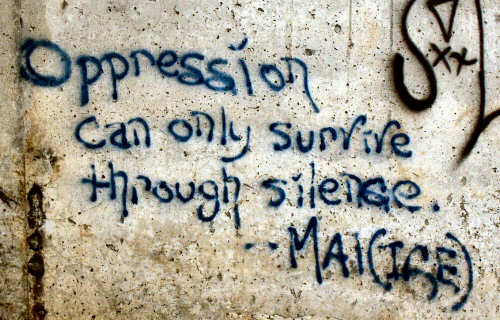
Oppression graffiti, January 15, 2013. (Students for Liberty via http://genderlitutopiadystopia.wikia.com).

Oppression graffiti, January 15, 2013. (Students for Liberty via http://genderlitutopiadystopia.wikia.com).

Did I play a good fife? Tamrin thought so. Compared to my Hebrew-Israelite comrades, I’m pretty sure I did. But like with so many things Hebrew-Israelite during those years, it was a bitter march to nowhere. The fife was part of a Hebrew-Israelite physical and spiritual gulag that put me into more chains, rather than freeing me to be me. Despite Tamrin’s intentions, the idea of molding me and others into men in conditions that would make most “men” contemplate homelessness or running away was a ridiculous pipe-dream.

That Tamrin was likely the only adult male in the Hebrew-Israelite camp who saw Maurice for the lying, abusive, womanizing asshole he was made me realize not everyone in this world was against me. But in a religion that when practiced helped oppress me and others more than the outside world, what was any Tamrin to do?

← Older posts
Newer posts →

Boy @ The Window: A Memoir

Boy @ The Window: A Memoir

Places to Buy/Download Boy @ The Window

There's a few ways in which you can read excerpts of, borrow and/or purchase and download Boy @ The Window. There's the trade paperback edition of Boy @ The Window, available for purchase via Amazon.com at http://www.amazon.com/Boy-Window-Donald-Earl-Collins/dp/0989256138/

There's also a Kindle edition on Amazon.com. The enhanced edition can be read only with Kindle Fire, an iPad or a full-color tablet. The links to the enhanced edition through Apple's iBookstore and the Barnes & Noble NOOK edition are below. The link to the Amazon Kindle version is also immediately below:

scr2555-proj697-a-kindle-logo-rgb-lg

Boy @ The Window on Amazon.com: http://www.amazon.com/Boy-The-Window-Memoir-ebook/dp/B00CD95FBU/

iBookstore-logo-300x100

Boy @ The Window on Apple's iBookstore: https://itunes.apple.com/us/book/boy-the-window/id643768275?ls=1

Barnes & Noble (bn.com) logo, June 26, 2013. (http://www.logotypes101.com).

Boy @ The Window on Barnes & Noble: http://www.barnesandnoble.com/w/boy-the-window-donald-earl-collins/1115182183?ean=2940016741567

You can also add, read and review Boy @ The Window on Goodreads.com. Just click on the button below:

Boy @ The Window

Twitter Updates

Tweets by decollins1969
  • RSS - Posts
  • RSS - Comments

Archives

  • June 2025
  • April 2023
  • September 2022
  • August 2022
  • July 2022
  • June 2022
  • May 2022
  • April 2022
  • March 2022
  • January 2022
  • December 2021
  • November 2021
  • October 2021
  • September 2021
  • August 2021
  • July 2021
  • June 2021
  • April 2021
  • March 2021
  • February 2021
  • January 2021
  • December 2020
  • November 2020
  • October 2020
  • September 2020
  • August 2020
  • July 2020
  • May 2020
  • April 2020
  • March 2020
  • January 2020
  • December 2019
  • November 2019
  • August 2019
  • July 2019
  • June 2019
  • May 2019
  • April 2019
  • March 2019
  • February 2019
  • January 2019
  • December 2018
  • November 2018
  • October 2018
  • September 2018
  • August 2018
  • July 2018
  • June 2018
  • May 2018
  • March 2018
  • February 2018
  • January 2018
  • December 2017
  • November 2017
  • October 2017
  • September 2017
  • August 2017
  • July 2017
  • June 2017
  • May 2017
  • April 2017
  • March 2017
  • February 2017
  • January 2017
  • December 2016
  • November 2016
  • October 2016
  • September 2016
  • August 2016
  • July 2016
  • June 2016
  • May 2016
  • April 2016
  • March 2016
  • February 2016
  • January 2016
  • December 2015
  • November 2015
  • October 2015
  • September 2015
  • August 2015
  • July 2015
  • June 2015
  • May 2015
  • April 2015
  • March 2015
  • February 2015
  • January 2015
  • December 2014
  • November 2014
  • October 2014
  • September 2014
  • August 2014
  • July 2014
  • June 2014
  • May 2014
  • April 2014
  • March 2014
  • February 2014
  • January 2014
  • December 2013
  • November 2013
  • October 2013
  • September 2013
  • August 2013
  • July 2013
  • June 2013
  • May 2013
  • April 2013
  • March 2013
  • February 2013
  • January 2013
  • December 2012
  • November 2012
  • October 2012
  • September 2012
  • August 2012
  • July 2012
  • June 2012
  • May 2012
  • April 2012
  • March 2012
  • February 2012
  • January 2012
  • December 2011
  • November 2011
  • October 2011
  • September 2011
  • August 2011
  • July 2011
  • June 2011
  • May 2011
  • April 2011
  • March 2011
  • February 2011
  • January 2011
  • December 2010
  • November 2010
  • October 2010
  • September 2010
  • August 2010
  • July 2010
  • June 2010
  • May 2010
  • April 2010
  • March 2010
  • February 2010
  • January 2010
  • December 2009
  • November 2009
  • October 2009
  • September 2009
  • August 2009
  • July 2009
  • June 2009
  • May 2009
  • April 2009
  • March 2009
  • February 2009
  • January 2009
  • December 2008
  • November 2008
  • October 2008
  • September 2008
  • August 2008
  • July 2008
  • June 2008
  • May 2008
  • April 2008
  • March 2008
  • February 2008
  • January 2008
  • December 2007
  • November 2007
  • October 2007
  • September 2007
  • August 2007
  • July 2007
  • June 2007

Recent Comments

MaryPena's avatarMaryPena on My Day of Atonement/Bitter Hat…
decollins1969's avatardecollins1969 on No Good Teaching Deed Goes…
Mary Rose O’Connell's avatarMary Rose O’Connell on No Good Teaching Deed Goes…

NetworkedBlogs on Facebook

NetworkedBlogs
Blog:
Notes From a Boy @ The Window
Topics:
My Life, Culture & Education, Politics & Goofyness
 
Follow my blog

616 616 East Lincoln Avenue A.B. Davis Middle School Abuse Academia Academy for Educational Development AED Afrocentricity American Narcissism Authenticity Bigotry Blackness Boy @ The Window Carnegie Mellon University Child Abuse Class of 1987 CMU Coping Strategies Crush #1 Crush #2 Death Disillusionment Diversity Domestic Violence Economic Inequality Education Family Friendship Friendships Graduate School Hebrew-Israelites High-Stakes Testing Higher Education History Homelessness Humanities Humanities Program Hypocrisy Internalized Racism Jealousy Joe Trotter Joe William Trotter Jr. K-12 Education Love Manhood Maurice Eugene Washington Maurice Washington Misogyny Mother-Son Relationship Mount Vernon High School Mount Vernon New York Mount Vernon public schools Multiculturalism MVHS Narcissism NFL Pitt Pittsburgh Politics of Education Poverty President Barack Obama Race Racial Stereotypes Racism Relationships Self-Awareness Self-Discovery Self-Reflection Sexism Social Justice Teaching and Learning University of Pittsburgh Violence Whiteness Writing

Top Rated

Blog at WordPress.com.

  • Subscribe Subscribed
    • Notes from a Boy @ The Window
    • Join 103 other subscribers
    • Already have a WordPress.com account? Log in now.
    • Notes from a Boy @ The Window
    • Subscribe Subscribed
    • Sign up
    • Log in
    • Report this content
    • View site in Reader
    • Manage subscriptions
    • Collapse this bar
 

Loading Comments...