• About Me
  • Other Writings
  • Interview Clips
  • All About Me: American Racism, American Narcissism, and the Conversation America Can’t Have
  • Video Clips
  • Boy @ The Window Pictures
  • Boy @ The Window Theme Music

Notes from a Boy @ The Window

~

Notes from a Boy @ The Window

Tag Archives: Pitt

Rich, Lorde, and What I Care/Don’t Care About

20 Tuesday Mar 2018

Posted by decollins1969 in 1, Boy @ The Window, Christianity, culture, Eclectic, Hebrew-Israelite, Mount Vernon High School, Mount Vernon New York, music, Pittsburgh, Politics, Pop Culture, race, Religion, University of Pittsburgh, Youth

≈ Leave a comment

Tags

Adrienne Rich, Audre Lorde, General Writing, Intersectionality, Pitt, Poetry, Poets, Positioning, Privilege, Sexual Orientation, The Last Poets
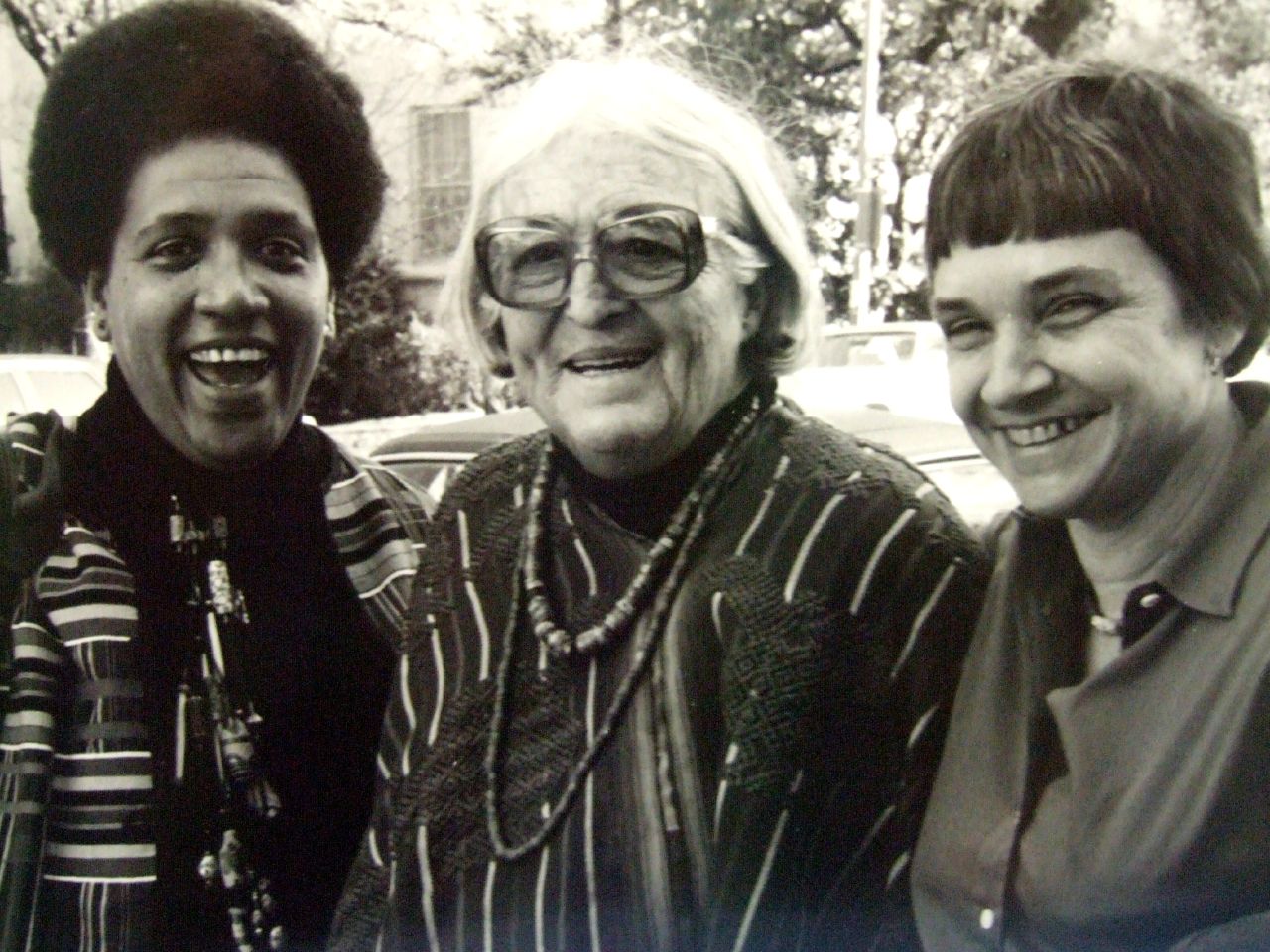

Audre Lorde, Meridel Lesueur, and Adrienne Rich after leading a writing workshop, Austin, TX, 1980. (K. Kendall/Flickr, July 15, 2007). Released to the public domain via CC-SA-2.0.

Among the literary arts, poetry is somewhere between okay and blech for me. At least most of the time. That doesn’t mean I hate all poetry or all poets. I fully appreciate the rhyme and meter (and lack thereof) of so many, from James Weldon Johnson and Archibald MacLeish to Phillis Wheatley and Langston Hughes. I love the emotional layering in the choice of the words, and in more modern times, the delivering of such words, with The Last Poets, with Gil Scott-Heron, and of course, Maya Angelou. Rap legends like Tupac, Nas, Eminem, Public Enemy have lyrics that are essentially spoken-word poetry put to bass, beats, and music loops. Heck, I’ve even enjoyed W. E. B. DuBois’ forays in the art in my scholarly research (when I more regularly did it) over the years.

But as a writer of prose (and often, long-winded prose), I also find the form of poetry ill-fitting. For me, it’s like being a home-run hitter in baseball playing hard-court tennis. It’s not that I can’t hit a baseline winner or an ace. But for every one of those, I could easily hit four tennis balls in a row out of the court, and literally onto the roof of a house half a block away. I prefer the ability to lay out my thoughts and explain them in full sentences, without worrying over every single word and the rhythm that a sequence of carefully chosen words may or may not bring.

I barely read any poetry during my Humanities years, unless my English classes forced me to. Emily Dickinson, Edgar Allan Poe, John Keats, Alexander Pope, all for 10th grade English, and with the exception of Pope’s “The Rape of the Lock,” not particularly entertaining. I was convinced after high school in ’87 that I’d never read poetry again.

What brought on a new interest in poetry came from my sophomore year at Pitt. I had to take a General Writing class in Fall 1988. I had to because if I wanted to take upper-level History classes as a History major, this general education requirement needed to be knocked off.  But I had an enthusiastic graduate student as my instructor. When I say enthusiastic, I mean someone who knew their students wouldn’t be, but whose passion for teaching and literature of all kinds made the class and the readings more interesting. She told me early on, after reading one of my first essays, that I should’ve been able to pass out of General Writing through the diagnostic tests Pitt gave my freshman year. “I wasn’t exactly awake when I took it last year,” I said in response.
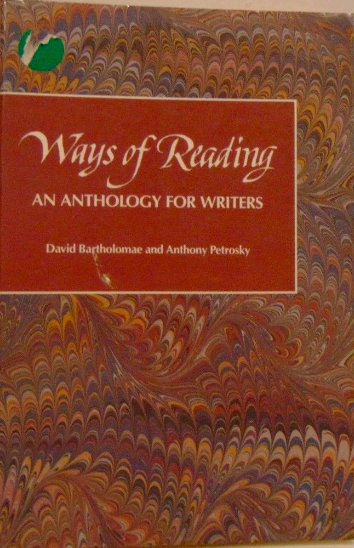
Ways of Reading anthology book (2nd edition), used in 1988. (http://ebay.ca).

When we got to the poetry portion of the course, I thought at first I was going to die from boredom. But our instructor didn’t assign us the usual suspects. The main poet we read that week was Adrienne Rich. She was someone I’d heard of growing up, but that was about it. Until the assignment of reading both Rich’s poetry and her essay “When We Dead Awaken: Writing as Re-Vision,” that is.

There were three things I’d never considered before reading Rich. One was the idea that writing was both art and craft, and that most writing was editing and re-envisioning one’s work. Two was the notion of transforming and being transformed through the writing process, and all as a proxy for a meaningful life. Three was the positioning of poets and other writers in literature, the privileging of men over women, of White males over feminists, of White heterosexual feminists over lesbian feminists, and especially Black lesbian feminists.

That last one about power, privilege, and positioning, it really grabbed me. So much so that I read more Rich that October weekend, in between pangs of hunger from lack of money and my Saturday evening shift at the Cathedral of Learning computer lab.

And the more I read of Rich, the more I decided to read about one of Rich’s contemporaries. I moved on to Audre Lorde the following week. She wasn’t among the long list of readings we had for General Writing, but she should’ve been. I couldn’t believe that someone who lived only miles away from my growing up experience in Mount Vernon and in New York could yet have such a vastly different experience with the city and the area.

I picked up Sister Outsider (1984) for the first time near the end of that fall semester. Lorde’s collection of essays about civil rights, about Black feminism (or womanism), about what we now call intersectionality, opened my eyes to how even Rich’s brand of feminism could be problematic. But more than that. Lorde, along with Rich, helped me realize, and not for the first time, that I didn’t care if the person I read or learned from was straight or gay, male or female (or later on, transgender), Black, Brown, or White. This despite what the Hebrew-Israelites and the evangelicals tried to teach me. They just had to be excellent in their work.

Excerpt of Audre Lorde’s Power (1978) (screenshot). (http://poetryfoundation.org).

Sister Outsider also opened up my eyes to the possibility that even my poetry-loathing ass could appreciate a true master at work in the art. So early on the following semester, I read Lorde’s poetry for the first time, likely some poems from her Coal (1976). Lorde talking about her upbringing, her relationship with her mother, and her issues with her own skin color, resonated with me.

But that was it with poetry for me until I borrowed my friend E’s recording of The Lost Poets 1971 album, and then read Angelou’s poetry, both in the summer of ’91. By then, I knew that while I’d never be a full-fledged fan of it, I could still appreciate the work, the art, and the layering of ideologies, emotions, and ideas contained in the best of poetry.

Colson Whitehead’s a Genius, But What’s Slavery to Me?

06 Saturday Jan 2018

Posted by decollins1969 in 1, Boy @ The Window, culture, Eclectic, Politics, Pop Culture, race, Religion, University of Pittsburgh

≈ Leave a comment

Tags

Colson Whitehead, Cora, DNA, Emotional Detachment, Escape, John Blassingame, Joseph Heller, Pitt, Ralph Ellison Octavia Butler, Slavery, Slavery Studies, Sterling Stuckey, Teaching and Learning, The Underground Railroad (2016), Toni Morrison, UMUC


Colson Whitehead is a genius. I am absolutely convinced of this truth. I’ve read other things by him. But his novel The Underground Railroad is one part Joseph Heller’s Catch-22 and two parts Ralph Ellison’s Invisible Man mixed with the macabre and mystical in Octavia Butler and Toni Morrison. Every sentence in Underground Railroad was written with precision, especially the first 120 pages. It was as if Whitehead put every word through a metal acid bath, every phrase was pored over with an electron microscope. I was hooked by page 24, and didn’t stop to put the book down again until page 160. I finished the book in eight hours over two days, not a record, but pretty close.

The Underground Railroad is all about escape, of course, but not just the obvious, physical escape from slavery’s asphyxiating grasp. It was a need to escape the post-traumatic stress of having been a slave. It was finding ways to use the mind and spirit to cope with torture, whippings, rapes, mangled bodies, demonic rhythms of an existence in which humans are little more than broken toys. It was escaping inhumanity to find humanity and the divine, even in the most minuscule of proportions.

I loved the main character Cora. That Whitehead made his main character female, a third-generation slave from a plantation in Georgia during the antebellum period wasn’t lost on me. As with all of his characters, Whitehead developed Cora with a full sense of imperfection, making her a nearly perfect lens for me to view the novel. She and Mabel and Ajarry fully embodied kidnapping and slavery in all its horror. Folks, if you want anyone to come close to the actual experience of what slavery was for Africans in America, Whitehead got as close as any writer I’ve read in my lifetime.

I could nitpick about Whitehead a bit, too. That Cora’s femaleness wasn’t fully explored, with everything from not having periods to how she may have experienced her development as a woman prior to her first escapes or her one almost romantic moment. Or about the mystical mashup of the last twenty to thirty pages. Or about the railroad going on to infinity, in this case, Missouri, as Cora never really escapes.

My biggest criticism, though, isn’t really a criticism at all. It’s an admission. I really didn’t want to read The Underground Railroad. I made no plans to buy it or to check it out from a library. I would’ve been content in life to have never read this masterpiece.

Why? I’m sick and tired of talking about slavery, about the physical, mental, psychic, and spiritual torture of millions of Africans so that a few Whites could profit financially and many more could profit psychologically. It feels like I’ve been talking about slavery my whole life, even though I’ve only been aware of it since Roots and its television debut in February 1977, or for 41 of my forty-eight years.

I studied slavery with deliberate disembodiment in my teens and twenties. It might’ve been through reading books by Alice Walker or Morrison. But by the Fall Semester 1989 at Pitt, I was reading and writing about slavery and American racism in earnest. I wrote my undergraduate readings paper about the slavery studies literature for my professor Larry Glasco’s class. The next semester, I took a grad course in Comparative Slavery, reading about the differences between slave systems in Brazil, Cuba, the US, and for my 34-page paper, slavery in South Africa before 1838.

Having done that, nearly every course I took through my master’s program in 1991-92 had a slavery studies component. So I read White paternalists like Ulrich B. Phillips. Racist historians like him contended that Blacks in the US should be on their knees and thankful that Whites stole them, sold them, and slaughtered their ancestors during slavery, such was the civilizing effect. I read slavery studies by not-so-obscure authors like Sterling Stuckey and John Blassingame, who made the living hell that was slavery come alive in stories and statistics. I also read White apologists like Fogel and Engerman in their Time on the Cross. I remember saying in my US history grad seminar in 1991, “so they’re saying that slavery wasn’t so harsh because the average slave received 21 lashes per year versus the standard 39?.” It was my translation of their multiple regression analysis.

By the time I started my PhD work in September 1992, I was through with studying slavery. It was too painful to be in class with White students who at their best could never really understand slavery beyond statistics and ideology. Even if it was in their DNA via an unknown African ancestor (some estimate that as many as one in eight Southern Whites carry recent African DNA, and about four percent of Whites in the US overall). That any person could and did regularly argue that slavery was a “necessary evil” or “saved” Africans in the US from “savagery” helped me move into twentieth-century US and African American history as a field of study. Still brutal, still mind-destroying, but not the complete horror show of slavery.

Whenever I touch the subject of slavery in the courses I teach these days, I still get that sense of outrage and indignation when I see students unable to deal with the bitter, devastating truth. “C’mon, slavery wasn’t that bad. They were fed and clothed. And wasn’t there White slavery for the Irish, too?” That’s what one of my White students said in a world history course I taught a couple of years ago, in response to a discussion of the differences between the American, French, and Haitian Revolutions. The latter was the first fully successful slave revolt in the Western Hemisphere, leading to the founding of Haiti as an independent nation in 1804.

I don’t know how Whitehead could write this novel and not go through hours of emotional torment at the end of each day. In my own experience, writing about any trauma has left me dazed for minutes or even an hour or two at a time, unable to sleep, and wondering why I’ve never smoked weed. I’m thankful Whitehead did, and I hope that he’s healing.

I was so uncomfortable reading Whitehead’s The Underground Railroad because I knew that the horror and pain of slavery was literally encoded in my DNA. I was uncomfortable because I knew that people like this one UMUC student would never get it, even if he did read the novel. Whitehead didn’t write the novel for him, though. I think he wrote it for me, freeing me from my discomfort with the horrible.

“You Can Tell From The Lines On Her Face…”

01 Monday Jan 2018

Posted by decollins1969 in 1, Boy @ The Window, culture, Eclectic, eclectic music, Mount Vernon New York, music, New York City, Pittsburgh, Politics, Pop Culture, race, Religion, University of Pittsburgh, Youth

≈ Leave a comment

Tags

"Another Day In Paradise" (1989), American Narcissism, Homelessness, Humanity, Phil Collins, Pitt, Winners and Losers


One of the more haunting songs for me from the ’80s is Phil Collins’ “Another Day In Paradise.” It came out in the mid-fall of 1989, and ended the ’80s as a #1 hit. It was also #1 to start the ’90s. For those who were younger than ten in late ’89, “Another Day In Paradise” was a song about chronic homelessness and the callousness of folk toward the homeless, in the UK and in the US.

There were at least three million people living on the streets between Battery Park in New York and the Santa Monica Pier in Southern California when Collins released his admonishment for the world and God to do something about what was then considered a serious crisis. It’s not Phil Collins’ best song. But if you gave a damn about people you saw every day, leather-faced, wearing tatters, obviously sick in body and broken in mind, then this song may have touched you in some way.

It touched me. Just sixteen months removed from five days of worry about my future, sleeping on a concrete slab, and washing up in public bathrooms, I was going to be moved by “Another Day In Paradise” anyway. Unlike most Americans, I cannot walk by someone homeless and not have it register that this could be me. I don’t give change every time a panhandler asks me. I’m not made of money. Sometimes, though, I do tear up, because seeing families without a place or home sitting on a sidewalk in the rain should make anyone sad or angry. Especially on days like today, when much of the nation is around 10ºF (-11 or -12ºC).

America had as many as five million homeless people during the height of the Great Recession, and as few as about 600,000 as recently as a year or two ago. But as with most social statistics, this is likely an underestimate. There are plenty of well-washed, well-kempt, and somewhat healthy folk in this country who don’t have a place of permanent residence. They bounce from friend to friend or from extended family member to caring loved one. They may have access to a bed or some halfway house or temporary housing. Still, they aren’t guaranteed a place to sleep, sit, or rest from one day, week, or month to the next. And this takes a toll.

It took a toll on my own family between April 1995 and March 1998, especially the first seven months after the 616 fire. I’m convinced it’s why my younger siblings struggled for years afterward to earn a high school diploma or GED. The disruption in their lives, of their dreams, in their peace of mind. It can and does drive many people to drink, drugs, and madness. It drives those who are with mental illness to the grave, like my former classmate Brandie Weston.

Yet our nation homeless-proofs itself with jagged spikes on stone walls, covered steam grates, and patrol officers hell-bent on making sure homeless Americans will not see one moment of sleep and rest. We treat our most vulnerable Americans as if they’re some form of contagion, a diseased sort of garbage that we’d love to put on a barge and dump in the middle of the Pacific.

America in our policies and our people visits indignities, malignancies, and wrath upon our homeless, whether military veterans, impoverished families, or mentally ill individuals. It’s what we do to anyone in our nation who isn’t a so-called winner. And if you’re a person of color who’s homeless, the best you can hope for is being near a college campus, where a steady stream of the well-off exploit your stories for A’s and writing jobs.

America does “to the least of us” whatever it can to take advantage, ridicule, hide, and even eliminate their existence. Proving once again that while America is a great nation, we are a horrible people. Phil Collins was right. We “can tell from the lines on her face” that America has forever calloused itself, human but often devoid of humanity.

Dateline: Noriega

20 Wednesday Dec 2017

Posted by decollins1969 in 1, Academia, Boy @ The Window, culture, Eclectic, Mount Vernon New York, Patriotism, Pittsburgh, Politics, Pop Culture, University of Pittsburgh, Youth

≈ Leave a comment

Tags

#TaxCutScam, 616 East Lincoln Avenue, American Imperialism, George H. W. Bush, Invasion, Iraq, Kuwait, Manuel Noriega, Military, Panama, Paul Ryan, Pitt, Post-Cold War Era, Saddam Hussein


An army helicopter ferries reinforcements to the Vatican embassy in Panama City, where Gen. Manuel Noriega has taken refuge, Panama, December 21, 1989. (David Walters/Miami Herald).

It was on Wednesday, December 20, 1989 was the true beginning of the post-Cold War world, American style. It was on this date twenty-eight years ago that President George H. W. Bush sent in 20,000 soldiers and sailors to end Manuel Noriega’ dictatorial rule over Panama. It remains a date from which any student of history can infer as the beginning of blatant American aggressions abroad and increasingly craven governmental behaviors at home. At least without the counterweight of the Soviet Union to keep the US from running totally amok.

That week was part of my holiday semester break during my junior year at Pitt. I’d only been back in Mount Vernon and 616 for three full days, yet I was once again fully engrossed in my role as eldest child (in responsibility, if not in age). I was washing dishes post-breakfast that Wednesday morning between 11 am and 12 noon, as the national news of that day preempted The Price Is Right. It was no accident that within two months of the end of communist rule across most of Eastern Europe that the US hatches it first invasion of another nation. At least, that’s the thought I had in my head just before I cut the skin in between my middle finger and my ring finger on my right hand. This as I scrubbed out a glass that apparently had a chip around its rim. I bled profusely for a good ten minutes afterward, all while watching Dan Rather and company dig deep for analysis of what was happening in Panama and why.

It wasn’t even as complex as covering my second-level cut with a band-aid (which we didn’t have at 616). Noriega had become increasingly erratic and more difficult for Bush the puppet-master to control. It wasn’t as if his dictatorship and his running drugs through Panama had been any concern of either Bush or Reagan in the eight years before the invasion.

Drug trafficking and dictatorial crimes would be the excuses the Bush Administration would make for Operation Just Cause, an invasion that took 650 lives (150 or so Panamanian soldiers and more than 500 civilians), including 23 Americans. But it was essentially President Bush’s personal use of military forces to take down an asset that was the real reason for this incursion. Noriega was a man who Bush and other CIA officials had been using for the benefit of US interests in the Panama Canal and in Central America for nearly two decades. See? Much simpler than any justification over drugs and human rights violations Bush and Cheney (then Secretary of Defense) could muster.

Rep. Paul Ryan (R-WI) gaveling in ecstacy as House passed its $1.45-trillion tax cut bill, December 19, 2017 (http://twitter.com).

Both the UN and the European Parliament condemned the action. It didn’t matter. A year later, the US was part of the largest coalition of forces assembled since the end of World War II, this time to kick another former US asset in Saddam Hussein out of Kuwait. That Hussein invaded Kuwait after getting mixed signals from the Bush Administration is pretty well documented. That Hussein would no longer wear the leash the former head of the CIA had put on him was the ultimate cause for an counter-invasion that ultimately has destabilized the Middle East over the past three decades.

This week, Congress is doing for the US what the US has done to countries and regions with increasing levels of brazen and calloused bigotry since 1989 (and in cases like Batista and Cuba, Pinochet and Chile, far longer than 30 years). What’s another trillion dollars between friends, especially friends who can donate to your congressional campaign or stash hundreds of billions of dollars off-shore?

Who can Americans count on to stop this ride of greed-possessed, craven people who believe that the only Americans who count are the one’s who count suitcases full of cash to go asleep at night? Americans can’t invade themselves, after all. Of course, Americans can resist, elect more Democratic candidates, yada, yada. But dear world, we need your help, because America’s leaders are doing their level best to decay the US from within.

Darren and Donald

10 Sunday Dec 2017

Posted by decollins1969 in 1, Boy @ The Window, culture, Eclectic, Jimme, Marriage, Mount Vernon High School, Mount Vernon New York, My Father, Pittsburgh, Pop Culture, University of Pittsburgh, Work, Youth

≈ Leave a comment

Tags

Angelia, Anniversary, Brother-Brother Relationship, Darren Gill, Dating, Family, Friendships, Happy 50th Birthday, Homelessness, Love-Disdain, Pitt, Relationships


A better picture of Darren and me, taken in April 1975, Sears, Mount Vernon, NY, July 6, 2006. (Donald Earl Collins).

My older brother Darren turned 50 years old yesterday. The start of my courtship with my wife of more than seventeen years began on this date and day 22 years ago, at her job’s Christmas party in Pittsburgh. The parallels wouldn’t be clear to anyone looking from the outside in on two of the more important relationships of my nearly forty-eight years. But one thing is apparent. The relationship that I’ve always attempted to have with Darren I’ve always had with my wife. One of friendship, sharing, caring, and rooting for each other.

Me and Darren were never that close, even when he taught me how to read, even when I taught him algebra, and even when we both were dodging rocks and bullies at 616. I have the scars to prove it. Three of them, exactly. Earned when I fought Darren over a chocolate Easter bunny on Easter Sunday 1977. Darren clawed my right cheek with his three middle finger on left hand to hold on to the candy, and then proceeded to eat while I was on the floor bleeding and crying.

The time between August ’08 and May ’09 wasn’t much different. My consulting work had dried up after the middle of the summer, as the Great Recession puckered up assholes and opportunities for additional work across the board. I had to dip deeply into my savings to get through, while only then teaching one class a semester at UMUC those two semesters. Darren caught wind of my job troubles through our father. During Thanksgiving, Christmas, and Mother’s Day during those months, Darren would ask very loudly, “Did you get a job yet?,” as if I wasn’t working at all. Of course, he was visiting Mom at 616 for free food during my calls to check in with family.

The third time Darren pulled this stunt, it sunk in what he was attempting to do. “Just because I’m not working full-time doesn’t mean I’m not working. I’m still teaching, and I still have some consulting work, which pays $550 per day,” I said. Darren responded, “Oh, oh, okay.” I knew he didn’t get the gig economy or the idea that I could work three days as a consultant and make as much as he would make in a month. Darren’s only goal through those eight months was to embarrass me with Mom and my siblings, to take glee and joy in whatever misery I was experiencing in the feast-and-famine consulting world.

It was all part of a long pattern of Darren wanting everyone in his life to be as miserable as he has been for nearly all of his adult life. I’ve long understand why he wanted all of us to accompany him in his abyss. Fourteen years going to a school for the mentally retarded and aping that behavior in a affluently lily-White context would mess anyone up. Coupling this with our lives, between Mom, our dad, and our idiot ex-stepfather would lead most to either self-loathing or suicide. Darren chose the former. It has meant him not having much of a life for more than three decades, though.

Given how we grew up, it’s amazing that I could form bonds of friendship and relationship at all. The level of distrust, anger, and disappointment was so great at one point that I could’ve lived as a hermit for the past three decades without anyone to notice. I wouldn’t be surprise if a group of my classmates from Mount Vernon High School have the caption, “Least likely to bond with another human EVER!,”around my yearbook picture. I wouldn’t be surprised at all if all of them were laughing while drawing a penis coming from out of my forehead. I did break out, despite them, despite 616, despite Mom, Jimme, Maurice, and Darren.

The five-day saga of homelessness in ’88 was just one of several events in my first two years at Pitt that made me see what I was doing to myself. But it was the most powerful event, in that it made me fully conscious of the fact that I didn’t like myself very much. It made me aware of the fact that I had maybe two people in the whole world at the time whom I called “friend” and meant it. The rest were acquaintances, former classmates, or soapbox types who liked bouncing ideas off me. Five days of staring into the pit of my possible future of misery — while looking at the seven years of grinding poverty and suffering before — fundamentally changes how I saw myself and my need to connect with other people.

By the time I first met Angelia in ’90, I was well past those events, yet it was as if I was experiencing a social life for the first time. In some respects, I actually was. So much so that I almost short-circuited a friendship before it actually began. Even after we began dating at the end of ’95, Angelia would sometimes call me a “tactless wonder.” That was usually in the context of someone getting on my nerves with their willful ignorance or witless prattle (the “getting on my nerves” part happens much more often than I let on) or being in a social setting after days of dissertation writing.

Beyond that, I’ve learned to accept that weird-old me is an okay person, that I won’t always succeed, that I have a love-disdain relationship with humans. Forming and maintaining friendships and my marriage, though, is hard, but not the impossible thing I thought it would be for me to do this time three decades ago. I remain happy about finding Angelia so many years ago. I remain hopeful that Darren may do the same, in this life or the next.

A Brief History of My “Virginity”

01 Friday Sep 2017

Posted by decollins1969 in 1, Boy @ The Window, Christianity, culture, Eclectic, Jimme, Marriage, Mount Vernon New York, Pittsburgh, Pop Culture, race, Religion, University of Pittsburgh, Youth

≈ Leave a comment

Tags

425 South Sixth Avenue, 616, 616 East Lincoln Avenue, A.C. Green, Abuse, Black Masculinity, Boyz n the Hood (1991), Cuba Gooding Jr., Dating, Evangelical Christianity, Falsehoods, Feminism, HBO, Hypermasculinity, Insecure (2016- ), Molestation, Obaa Boni, Patriarchy, Pitt, Relationships, Sensuality, Sexism, Sexuality, Tré, Virginity, Womanism, Yvonne Orji


Nigerian-American actor Yvonne Orji, who plays Molly on the HBO series Insecure (2016-), August 15, 2017. (http://www.sowetanlive.co.za/).

Yvonne Orji, one of the lead actors from the HBO series Insecure, has revealed the fact that she is a thirty-three year-old virgin in recent weeks. But Orji has in fact spoken about her virginity several times over the past year, something I was surprised to learn (that she had spoken so much about it, not the fact of it). Some folks on social media have applauded Orji’s stance on her sexuality, while others like womanist Obaa Boni derided Orji’s adherence to her virginity as “patriarchal.”

Screen shot of @obaa_boni tweets re: Yvonne Orji’s virginity, August 23, 2017. (Donald Earl Collins via http://twitter.com).

Let me first say that there’s nothing wrong with virginity, celibacy, or promiscuity. So as long as it’s transparent, healthy, and done with a full understanding of why one has moved in a certain direction sexually. The problem is, people often do the wrong things for the right reasons and the wrong things for the wrong reasons. Especially in a world where gratuitous sensuality is everywhere, fake-sex-porn is ubiquitous, and social norms remain hostile and puritanical. This is especially so in the US, where the distance between healthy sexuality and where many Americans are with their sexuality is about the same as between a racism-less society and the virulent racism that is truly all-American.

I was once Yvonne Orji, believing that maintaining my virginity kept me in a state of purity, if not in a physical sense, then certainly in a spiritual one. There were several reasons beyond “being pure in God’s eyes,” or saving myself for the right person, though, that I emphasized my virginity.

Screen shot of Cuba Gooding, Jr. as Tré in Boyz n the Hood (1991). (http://mentalfloss.com).

My top two reasons were practical ones. As the second of six kids growing up at 616 in Mount Vernon (my Mom remarried and had my younger brothers and sister between the time I was nine-and-a-half and fourteen-and-a-half years old), I didn’t want to become a father, especially a teenage father. Like Tré from Boyz n the Hood (1991), I didn’t want to be stereotypically Black and male, to make a baby when I had no means to take care of it, to impregnate another person when I wasn’t sure if I’d make it to thirty. Also, STDs scared the crap out of me, especially AIDS. I was smart enough even at fifteen to know that AIDS wasn’t a “gay disease,” that it could infect anyone, especially anyone without protection.

But the fact was, I had lost pieces of my virginity long before I tried to find a state of purity. I had already been sexually molested before I hit my seventh birthday. Any number of teenage girls at 616 had attempted to come on to me before I had started my first day of high school. Heck, my father had hired a prostitute to get rid of my penetrative virginity the month of my seventeenth birthday!

Beyond that, masturbation from the time I was thirteen, porn mags between birthdays seventeen and nineteen, the occasional date at Pitt, where kisses, petting, and touching was involved. I had pretty much lost my sexual virginity by the time I was nineteen, and yet I didn’t really know how to be me sexually at all. So when I finally did start hooking up with folks for purely sexual purposes, it was an emotionally messy dance, between religious guilt, occasional actual pleasure, and lots of frustration in between. It wasn’t until I was twenty-four where I felt fully comfortable with myself sexually, and even then, I had another decade of pseudo-evangelical, patriarchal, and puritanical bullshit to get over.

Which is why I rarely gave anyone any advice about what to do or how to be on the sexual side of relationships before my mid-thirties, especially when asked. Have sex at fifteen with a partner of the same age whom cares about and respects you? Sounds fine. Stay celibate for ten years? Okay. Have fuck buddies for a couple of years? Sure! Remain a virgin like former NBA player A. C. Green until you turn thirty-eight? Whatevs!

Former NBA Ironman A.C. Green, Time Warner Cable Media Upfront Event, “Summertime is Cable Time,” Hollywood, CA, May 3, 2011. (Toby Canham/Getty Images; http://zimbio.com).

My Black masculinity shouldn’t have been defined by evangelical White Christian notions of virgin purity, any more than it should’ve been by how frequently I penetrated a woman. My relationship with God should’ve never been about some fucked up notion of sexual purity. It is way too easy to let Western culture screw each of us up, with the result that it will take way too many years to find our sexual equilibrium. For so many, that day of balance between sexual freedom and mature responsibility will never come.

Just realize that being a virgin doesn’t make one special, and having a regular rotation of trusted sexual partners doesn’t make one a slut or a stud. As a culture, we are both obese and anorexic when it comes to sexuality and sexual activity. We imagine it too much, do it too little, and often do it incorrectly and for the wrong reasons. No wonder America is such an angry place, with so many believing in an angry God!

Moving On, Thirty Years Later

26 Saturday Aug 2017

Posted by decollins1969 in 1, Boy @ The Window, Christianity, culture, Eclectic, Marriage, Mount Vernon New York, New York City, Pittsburgh, Politics, Pop Culture, race, Religion, University of Pittsburgh, Work, Youth

≈ Leave a comment

Tags

616, 616 East Lincoln Avenue, Darren, Domestic Violence, Eri, Family Responsibilities, Leaving Home, Maurice, Mother-Son Relationship, Pitt, Poverty, Sarai, Siblings, Survivor's Guilt, Westchester Business Institute, Westchester County Department of Community Mental Health, Yiscoc


A Boeing 767 Delta flight at takeoff, JFK Airport, Jamaica, Queens, NY, circa 2011. (http://panynj.gov).

I am now three full decades removed from Moving Day 1987, the final Wednesday in August, when I moved for my freshman year of college to Pittsburgh. I was leaving Mount Vernon and 616, but neither would begin to leave me, at least for another year or so.

It was a day of days. But really, it wasn’t the hardest leaving day I faced. In the summers I’d come home to work and watch after my younger siblings, the end of those Augusts were tearful ones. I played music for me and my siblings to sing to before I left at the end of the summer of ’88. I added an extra week to my stay in 1990, just so I could spend extra time with Maurice, Yiscoc, Sarai, and Eri, teaching them how to ride a bike and how to tie their shoes, and missed a week’s worth of classes at Pitt to start the fall. Even in ’92, when I came back to 616 to work for two months that summer at Westchester County Department of Community Mental Health because I couldn’t find a teaching gig at Pitt, I stayed an extra week. That was my life outside of college, grad school, and Pittsburgh for a good decade after my first trip to Pittsburgh. It got easier to leave as my life became about working, teaching, dating, and writing, but leaving was always hard.

My hardest leaving day was in late-August 1989. After a full summer of work, between two jobs, the end of my Mom’s marriage (finally!), my older brother Darren moving out, and my schedule of activities with the younger Gang of Four, I saw going back to the University of Pittsburgh for my third year as a vacation. But it wasn’t going to be one for Mom. She would be completely on her own with my younger siblings for the first time once I left. And I knew the thought of being with them without any help, or least, without any enemies at 616 to war against (like my idiot ex-stepfather Maurice) terrified her.

Screen shot of 616 East Lincoln Avenue, Mount Vernon, NY, June 2016. (http://maps.google.com)

I stayed an extra five days before leaving on August 30, because Mom still had two weekends of summer courses left to finish at Westchester Business institute. Mom made the decision to not finish up her business law and accounting classes that session the Saturday before I left. She said to me, “Go on to Pittsburgh, Donald. I’ll be all right.” It didn’t make sense to me. She had an A in the business law class, and likely could’ve talked with her instructor about taking an incomplete and then the final exam once my siblings started school after Labor Day. I said as much, but Mom, per usual, didn’t listen to me. She ended up with a D in the business law course, and an F, of course, in the accounting class. Mom wouldn’t return to Westchester Business Institute to finish up her associate’s degree until January 1996.

I felt guilty at the time that I put my own education over my Mom’s. I felt guilty that I couldn’t help out more. Mostly, I felt guilty that despite what I saw back then as “my responsibilities to the family,” I wanted to leave, and part of me wanted to stay gone. I didn’t want to come home for Christmas, my birthday, and New Year’s every single holiday season. I didn’t want to spend my summers living at 616 while working in Mount Vernon or White Plains. And though I wanted to help the Gang of Four out as much as I could, I would’ve preferred bringing them to Pittsburgh, and not going back to Mount Vernon over and over again.

Looking back, though, I realized the truth. Mom really didn’t enjoy school. Mom decided to go to Westchester Business Institute because I was in college. And as a professor who has taught hundreds of adult learners (students twenty-five and sometimes much older), I know that earning a degree with your kids can be a great motivator for enrolling in higher ed. It just can’t be the only motivator. At some point, it has to be about more than a friendly familial competition or even about using the degree to earn a few extra dollars. It has to be about improving yourself and the people around you. Mom wasn’t ready to juggle that burden, and likely had gone through too much that summer to spend another fifteen months in school while also watching after my younger siblings.

Boy, it was hard to leave that last Wednesday in August ’89. I was nervous for Mom, sad for my siblings, and maybe even a little angry with Mom and God about the impossible choice I thought I had made at the time. But I reminded myself that I wouldn’t be any good to anyone if I couldn’t finish my degree and use it to help others. I reminded myself that I was still only nineteen years old, that, my outward maturity and 616 aside, I still had a lot to learn about life.

← Older posts
Newer posts →

Boy @ The Window: A Memoir

Boy @ The Window: A Memoir

Places to Buy/Download Boy @ The Window

There's a few ways in which you can read excerpts of, borrow and/or purchase and download Boy @ The Window. There's the trade paperback edition of Boy @ The Window, available for purchase via Amazon.com at http://www.amazon.com/Boy-Window-Donald-Earl-Collins/dp/0989256138/

There's also a Kindle edition on Amazon.com. The enhanced edition can be read only with Kindle Fire, an iPad or a full-color tablet. The links to the enhanced edition through Apple's iBookstore and the Barnes & Noble NOOK edition are below. The link to the Amazon Kindle version is also immediately below:

scr2555-proj697-a-kindle-logo-rgb-lg

Boy @ The Window on Amazon.com: http://www.amazon.com/Boy-The-Window-Memoir-ebook/dp/B00CD95FBU/

iBookstore-logo-300x100

Boy @ The Window on Apple's iBookstore: https://itunes.apple.com/us/book/boy-the-window/id643768275?ls=1

Barnes & Noble (bn.com) logo, June 26, 2013. (http://www.logotypes101.com).

Boy @ The Window on Barnes & Noble: http://www.barnesandnoble.com/w/boy-the-window-donald-earl-collins/1115182183?ean=2940016741567

You can also add, read and review Boy @ The Window on Goodreads.com. Just click on the button below:

Boy @ The Window

Twitter Updates

Tweets by decollins1969
  • RSS - Posts
  • RSS - Comments

Archives

  • June 2025
  • April 2023
  • September 2022
  • August 2022
  • July 2022
  • June 2022
  • May 2022
  • April 2022
  • March 2022
  • January 2022
  • December 2021
  • November 2021
  • October 2021
  • September 2021
  • August 2021
  • July 2021
  • June 2021
  • April 2021
  • March 2021
  • February 2021
  • January 2021
  • December 2020
  • November 2020
  • October 2020
  • September 2020
  • August 2020
  • July 2020
  • May 2020
  • April 2020
  • March 2020
  • January 2020
  • December 2019
  • November 2019
  • August 2019
  • July 2019
  • June 2019
  • May 2019
  • April 2019
  • March 2019
  • February 2019
  • January 2019
  • December 2018
  • November 2018
  • October 2018
  • September 2018
  • August 2018
  • July 2018
  • June 2018
  • May 2018
  • March 2018
  • February 2018
  • January 2018
  • December 2017
  • November 2017
  • October 2017
  • September 2017
  • August 2017
  • July 2017
  • June 2017
  • May 2017
  • April 2017
  • March 2017
  • February 2017
  • January 2017
  • December 2016
  • November 2016
  • October 2016
  • September 2016
  • August 2016
  • July 2016
  • June 2016
  • May 2016
  • April 2016
  • March 2016
  • February 2016
  • January 2016
  • December 2015
  • November 2015
  • October 2015
  • September 2015
  • August 2015
  • July 2015
  • June 2015
  • May 2015
  • April 2015
  • March 2015
  • February 2015
  • January 2015
  • December 2014
  • November 2014
  • October 2014
  • September 2014
  • August 2014
  • July 2014
  • June 2014
  • May 2014
  • April 2014
  • March 2014
  • February 2014
  • January 2014
  • December 2013
  • November 2013
  • October 2013
  • September 2013
  • August 2013
  • July 2013
  • June 2013
  • May 2013
  • April 2013
  • March 2013
  • February 2013
  • January 2013
  • December 2012
  • November 2012
  • October 2012
  • September 2012
  • August 2012
  • July 2012
  • June 2012
  • May 2012
  • April 2012
  • March 2012
  • February 2012
  • January 2012
  • December 2011
  • November 2011
  • October 2011
  • September 2011
  • August 2011
  • July 2011
  • June 2011
  • May 2011
  • April 2011
  • March 2011
  • February 2011
  • January 2011
  • December 2010
  • November 2010
  • October 2010
  • September 2010
  • August 2010
  • July 2010
  • June 2010
  • May 2010
  • April 2010
  • March 2010
  • February 2010
  • January 2010
  • December 2009
  • November 2009
  • October 2009
  • September 2009
  • August 2009
  • July 2009
  • June 2009
  • May 2009
  • April 2009
  • March 2009
  • February 2009
  • January 2009
  • December 2008
  • November 2008
  • October 2008
  • September 2008
  • August 2008
  • July 2008
  • June 2008
  • May 2008
  • April 2008
  • March 2008
  • February 2008
  • January 2008
  • December 2007
  • November 2007
  • October 2007
  • September 2007
  • August 2007
  • July 2007
  • June 2007

Recent Comments

MaryPena's avatarMaryPena on My Day of Atonement/Bitter Hat…
decollins1969's avatardecollins1969 on No Good Teaching Deed Goes…
Mary Rose O’Connell's avatarMary Rose O’Connell on No Good Teaching Deed Goes…

NetworkedBlogs on Facebook

NetworkedBlogs
Blog:
Notes From a Boy @ The Window
Topics:
My Life, Culture & Education, Politics & Goofyness
 
Follow my blog

616 616 East Lincoln Avenue A.B. Davis Middle School Abuse Academia Academy for Educational Development AED Afrocentricity American Narcissism Authenticity Bigotry Blackness Boy @ The Window Carnegie Mellon University Child Abuse Class of 1987 CMU Coping Strategies Crush #1 Crush #2 Death Disillusionment Diversity Domestic Violence Economic Inequality Education Family Friendship Friendships Graduate School Hebrew-Israelites High-Stakes Testing Higher Education History Homelessness Humanities Humanities Program Hypocrisy Internalized Racism Jealousy Joe Trotter Joe William Trotter Jr. K-12 Education Love Manhood Maurice Eugene Washington Maurice Washington Misogyny Mother-Son Relationship Mount Vernon High School Mount Vernon New York Mount Vernon public schools Multiculturalism MVHS Narcissism NFL Pitt Pittsburgh Politics of Education Poverty President Barack Obama Race Racial Stereotypes Racism Relationships Self-Awareness Self-Discovery Self-Reflection Sexism Social Justice Teaching and Learning University of Pittsburgh Violence Whiteness Writing

Top Rated

Blog at WordPress.com.

  • Subscribe Subscribed
    • Notes from a Boy @ The Window
    • Join 103 other subscribers
    • Already have a WordPress.com account? Log in now.
    • Notes from a Boy @ The Window
    • Subscribe Subscribed
    • Sign up
    • Log in
    • Report this content
    • View site in Reader
    • Manage subscriptions
    • Collapse this bar
 

Loading Comments...