• About Me
  • Other Writings
  • Interview Clips
  • All About Me: American Racism, American Narcissism, and the Conversation America Can’t Have
  • Video Clips
  • Boy @ The Window Pictures
  • Boy @ The Window Theme Music

Notes from a Boy @ The Window

~

Notes from a Boy @ The Window

Tag Archives: Institutional Racism

Whiteness, Symbols and Racial Context

21 Wednesday May 2014

Posted by decollins1969 in 1, culture, Eclectic, Politics, Pop Culture, race, Youth

≈ 2 Comments

Tags

Affirmative Action, Class Privilege, Colorblind Racism, Colorblindness, Entitlement, Individual Racism, Individualism, Institutional Racism, Privilege, Racial Assumptions, Racial Context, Racial Stereotypes, Racism, Structural Racism, Symbolism, Symbols, Whiteness


The Matrix (1999) meme (only, the "What if I told you" part is incorrect) featuring Laurence Fishburne as Morpheus, May 21, 2014. (http://imgflip.com).

The Matrix (1999) meme (only, the “What if I told you” part is incorrect) featuring Laurence Fishburne as Morpheus, May 21, 2014. (http://imgflip.com).

For most Whites, racism’s an individual thing. For most Whites, Racism must be obvious. For most Whites, racial bias can only be a deliberate choice. For most Whites, racism’s not infused in the fabric of American culture, or baked into America’s institutions, or infused in its very political and economic structure. Of course, these “most Whites” are just plain wrong. What scares them on this issue — maybe even more than actually using the words “race” or “racism” — is the possibility that though racism is learned, that it also isn’t a decision. It’s an assumption, or really, many layers of assumptions. Of “rights.” Of entitlement. Of privilege. Of being special. Of being colorblind. Of folks knowing their place, and they as Whites knowing where to place these folks.

As I wrote in another social media context last week, part of the insidious nature of Whiteness — aside from its ability to morph over time — are the issues of symbolism and context. Racism for most is obvious and relies heavily on the most obvious of symbols, like in the case of hooded KKK members burning crosses, or in Donald Sterling‘s case, an elderly rich White guy whose Archie Bunker paternalism can be seen from space.

These incidents are the tip of the proverbial iceberg of race and racism in the US because most people of color exist outside the context that comes with Whiteness. For walking in Whiteness without any acknowledgement of one’s privilege — but with tons of assumptions of privilege — is the psychological and social equivalent of breathing and walking at the same time — one only thinks about it when forced to. If those Black and Brown are on TV in orange jump suits, it fits the narrative and context of Whiteness. If someone like me is a college professor in a predominantly White classroom, however, the context doesn’t fit the Whiteness playbook, and with that systems error, many of my White students manifest so many racial assumptions.

Writer, educator and NBA Hall of Famer Kareem Abdul-Jabbar on ABC's This Week discussing NBA's response to Donald Sterling's racist statements, May 4, 2014. (http://www.politifact.com).

Writer, educator and NBA Hall of Famer Kareem Abdul-Jabbar on ABC’s This Week discussing NBA’s response to Donald Sterling’s racist statements, May 4, 2014. (http://www.politifact.com).

These out-of-context scenarios occur on individual and institutional scales. Like having White co-workers only recognize me in the context of being at work and at a desk, but being scared upon seeing me board an elevator with them five minutes after the end of a work day. Or in spotting me searching for something at a store, only to ask me to help them find something for them, assuming that I work there. Or in assuming that in the context of sports and entertainment, anyone Black or Brown with an IQ higher than 100 with verbal skills is “angry,” or is “too cerebral” to be successful, or has “an attitude problem.”

Then there’s the assumption that no matter one’s grades, test scores or degrees, that wee folk of color achieved all we have because of affirmative action, the symbol of so-called reverse racism in the US (talk about the narcissism and master-race assumptions of intelligence embedded in this line of reasoning!). For most of the history of Whiteness and racism in American history, this was an infrequent prospect. These days, these microaggressions and racist behaviors occur almost every moment of every day. Precisely because there are so many successful Black and Brown folks, at least in the semi-conscious mind of Whites in the midst of their own Whiteness. This despite the reality that these successful Black and Brown folks are only symbols of  the very success that has eluded a broad majority of those of color.

Agent Mr. Smith (played by Hugo Weaving) about to explode, The Matrix (1999), May 21, 2014. (http://www.oocities.org/)

Agent Mr. Smith (played by Hugo Weaving) about to explode, The Matrix (1999), May 21, 2014. (http://www.oocities.org/)

But the context here will rarely be obvious to those awash in Whiteness. Structural inequality and racism, institutional racism, even internalized racism — all confirm the world that most operating in Whiteness can see, precisely because this world is the one in which they are comfortable and virtually unchallenged. Challenging the very structures and institutions upon which Whiteness has been built is like trying to metaphorically deconstruct The Matrix. Most living in Whiteness don’t want to wake up, For waking up would obliterate their world, their very understanding of their existence. And that’s too high a price for recognizing racism and inequality, and their own inadvertent hand in both.


My and Diane Ravitch’s Path to Reign of Error

11 Tuesday Mar 2014

Posted by decollins1969 in 1, Academia, Boy @ The Window, Carnegie Mellon University, culture, Eclectic, Mount Vernon High School, Mount Vernon New York, New York City, Patriotism, Pittsburgh, Politics, Pop Culture, race, Upper East Side, Youth

≈ Leave a comment

Tags

Bill & Melinda Gates Foundation, Book Review, Corporate Education Reform, Diane Ravitch, Fear of a "Black" America (2004), High-Stakes Testing, Humanities Program, Institutional Racism, Michelle Rhee, Multiculturalism, Neoconservative Movement, Politics of Education, Poverty, Privatization, Racial Segregation, Racism, Reign of Error (2013), Social Injustice, Social Justice, Teach for America, Writing Passion


Reign of Error (2013) by Diane Ravitch, front cover. (http://bn.com).

Reign of Error (2013) by Diane Ravitch, front cover. (http://bn.com).

I first began reading Diane Ravitch in July 1990, the summer before my senior year at the University of Pittsburgh. It was the summer in which I became interested in understanding magnet programs and their relationship with desegregation and diversity efforts, courtesy of my own experience with Mount Vernon, New York public schools and its now defunct Humanities Program. I read both The Great School Wars: New York City, 1805-1973 (1974) and The Troubled Crusade: American Education, 1945-1980 (1985) that summer, with education scholar and Ford Foundation director Jeanne Oakes’ Keeping Track: How Schools Structure Inequality (1985) sandwiched in between.

It was the beginning of a twenty-year period of constantly intellectual disagreement between me and Ravitch. Oakes’ work captured inequality in terms of race and socioeconomics so much better than Ravitch, whose writings back then often treated these inequalities and distinctions as afterthoughts. When I shifted my research area to multicultural education and multiculturalism, though, that was when I found Ravitch’s absolutist defense of so-called traditional American democratic education and all things e pluribus unum unbelievably stifling. With all Ravitch knew about the politics of education, in New York and with the US Department of Education, how could she possibly defend a system that did as much to control and exclude students as it did to provide something akin to an equal opportunity?

I chalked Ravitch up to being another out-of-touch neoconservative, scared to death of race and diversity and multiculturalism. I said as much at conferences like the American Educational Research Association meeting and other conferences. I wrote as much in my dissertation and in my first book, Fear of a “Black” America: Multiculturalism and the African American Experience (2004). Through it all, I always found Ravitch’s writing compelling, but her conclusions wanting, because they lacked perspective and empathy in the context of public schools and diversity.

Then, Ravitch wrote Left Back: A Century of Battles Over School Reform in 2000. Though it contained some of her common themes — overemphasis on the mantra of reform, the need for more testing, support for school choice, denigration of a multicultural curriculum — Ravitch showed growth in this book. She was less hostile to a more progressive curriculum and seemed, for the first time, really, to understand how much race and poverty had shaped the direction and the harshness of school reform going back to 1900. I happily used Ravitch’s Left Back in my History of American Education Reform course at George Washington in 2002. For her book provided a comprehensive and even-handed overview of the politics of K-12 education in a way that any educator of any American ideological perspective could understand.

I’ve finally read Ravitch’s Reign of Error: The Hoax of the Privatization Movement and the Danger to America’s Public Schools (2013). Reign of Error is Ravitch at her most passionate and energized. If I hadn’t read a couple dozen of Ravitch’s articles from the 1980s and 1990s and four of her previous books, I would think that this was her first book, as there is sense of urgency in Reign of Error that can seldom be found outside of epic memoirs and epic fiction novels.

Ravitch’s argument in Reign of Error is a simple one. Corporate education reform, if allowed to continue unfettered, will destroy public education in the US, and in the process, American democracy. Privatizing public schools (i.e., turning them into “public” charter schools), destroying teacher’s unions, constant high-stakes testing, bypassing school boards and forgetting about racial segregation and poverty — that’s corporate education reform’s agenda. As Ravitch said in Chapter 12 on the fallacies of merit pay for teachers, “Merit pay is the idea that never works and never dies (p. 119).” She could have also substituted the words “school choice,” “creationism,” “standardized testing,” “closing schools,” and “privatization” for “merit pay.”

But Ravitch goes further in her 400-page treatise. That though public education in the US has had its share of problems — the need for more teacher training and time for professional development, racial segregation and high levels of poverty while underfunded — that corporate education reform has compounded these problems several times over. That with corporate education reform, teachers, parents and students will have no say in public education, at least the ones without their own personal foundation with which to endow their own public charter school.

From a writer’s standpoint, this wasn’t Ravitch’s best effort. Her argument is repetitive, one where she likely could’ve cut the main chapters by a quarter (about 100 pages) and made the same points. I likely could’ve become inebriated if I had a shot of vodka every time the words “poverty,” “Gates,” “Walton,” “Broad,” “high-stakes testing,” and “corporate education reform” come up. But given my history with reading Ravitch and with this topic, of course Reign of Error was repetitive — it was like reading my own words on this same topic.

Ultimately, Ravitch’s Reign of Error is a primer for anyone interested in averting the social injustice that is the corporate education reform tyranny of wealthy philanthropists, money-grubbing entrepreneurs and politicians across America’s limited ideological spectrum. For those whom up to now this issue has been of limited interest, or for those who’ve felt the change in public education but haven’t quite been able to articulate those feelings, Reign of Error is for you.

For educators, parents and even students already involved in writing about or protesting against corporate education reform, this book is still for you. Ravitch provides so much ammunition that Reign of Error can be applied in numerous ways to numerous situations. At school board meetings. With #AskMichelleRhee hash tags on Twitter. In job interviews with Teach for America and with the Bill & Melinda Gates Foundation. In letters to the editor of the mainstream newspapers and in comments to mainstream TV and radio newscasters. In arguments with neoconservative parents who send their kids to private schools.

“Protecting our public schools against privatization and saving them for generations of American children is the civil rights issue of our time (p. 325).” is how Ravitch ended her Reign of Error. It’s not an exaggeration. But it does beg a question. If we can successfully fend off corporate education reform — and assume that the country will continue to ignore the poverty and racial segregation that Ravitch desperately wants addressed — can she and I then spend five minutes discussing multiculturalism?

City Place Mall: Why You Don’t Shop Where There’s A “Hood Policy”

04 Tuesday Mar 2014

Posted by decollins1969 in 1, culture, eclectic music, High Rise Buildings, Pop Culture, race

≈ 1 Comment

Tags

Breathing While Black, City Place Mall, Criminalization, Dehumanization, George Zimmerman, Hood Policy, Hoodies, Institutional Racism, Lisa Petrie, Malls, Petri Dish, Petrie Ross Ventures, Racial Stereotypes, Racism, Silver Spring Maryland, Trayvon Martin, White Fears, White Supremacy, Whiteness


City Place Mall, main entrance, Silver Spring, MD, June 10, 2012. (Farragutful via Wikipedia). Released to public domain via CC 3.0.

City Place Mall, main entrance, Silver Spring, MD, June 10, 2012. (Farragutful via Wikipedia). Released to public domain via CC 3.0.

Last Thursday afternoon (February 27), a security guard at City Place Mall in Downtown Silver Spring, Maryland confronted me and my 10-year-old son about wearing a hood over our heads, having just come inside from below-freezing and windy weather. The security guard explained that the policy at City Place Mall is to forbid patrons from wearing hoods, hats, scarves, sunglasses and other clothing that would make us more difficult to identify. When I asked for a written indication of this policy, the security guard told us that the one sign for your 400,000-square-foot mall was downstairs in the lower lobby, which does patrons like me little good in informing us of their racism and stupidity.

Keep in mind, I’m a 44-year-old man with a 10-year-old kid, who’s only intent was to go to an indoor ATM machine to withdraw my money from my bank account so that we wouldn’t freeze. We weren’t shopping at Marshall’s or another store in the mall. What were we going to do, buy two packs of Skittles at the dump of a snack store at City Place instead of just one? Buy two bottles of Lipton Ice Tea (Arizona Ice Tea makes our teeth hurt)?

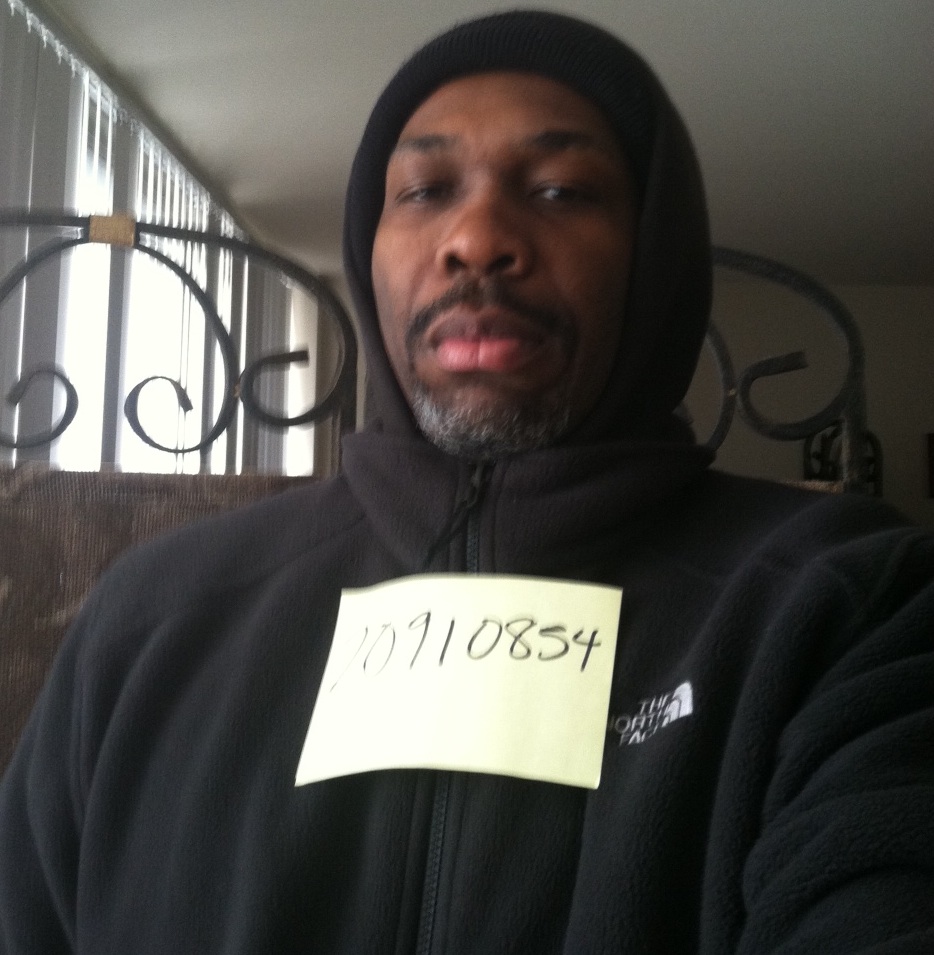
Me with hood get-up I wore last week with son in tow (numbers added), March 4, 2014. (Donald Earl Collins).

Me with hood get-up I wore last week with son in tow (numbers added), March 4, 2014. (Donald Earl Collins).

If this is how they treat all patrons, this policy would merely be a stupid one. I suspect, though, that they don’t stop women in veils or burqas, Sikhs with turbans or every person wearing sunglasses. No, Black and Brown male patrons — especially ones that look young and healthy — are their targets for such an idiotic policy.

I emailed Lisa Petrie about this incident and wanted clarifications about this policy. Petrie is a co-owner of Petrie Ross Ventures, LLC, the Annapolis-based group that manages (read owns here) City Place Mall. In addition, I asked her to answer the following questions:

1. Is this in fact the policy of City Place Mall, to force patrons to remove hoods and other clothing upon entering the mall?

2. If this is in fact your policy, then why isn’t it posted conspicuously at the entrances to the mall for all patrons to see and read?

3. Is this policy one that security guards are supposed to apply, and if so, are they doing so in an equitable manner?

Petrie didn’t answer any of my questions. Instead, she emailed me this response:

It is our policy in all of our properties to ask our patrons to remove their hats, hoods, etc. only as a safety precaution for all that visit our malls. I am unsure as to the procedures as I am not part of the operations team however I will ask that if you have any questions that you follow up with the property manager on site, Mr. Gary Brewer.

Bottom half of a Petri dish, the only thing I'll buy from City Place Mall in the future, October 20, 2005. (Miaow Miaow via Wikipedia). Released to public domain via CC 2.0.

Bottom half of a Petri dish, the only thing I’ll buy from City Place Mall in the future, October 20, 2005. (Miaow Miaow via Wikipedia). Released to public domain via CC 2.0.

This is a ridiculous statement, unless by “safety precaution,” Petrie means that there are George Zimmermans in all their malls waiting to shoot anyone with a hood over their heads if their skin has a significant melanin content. I did, after Petrie sent me his contact information, send Brewer the same information about the incident, as well as my questions. Mr. Brewer has refused to respond.

If this is how City Place Mall and Petrie Ross expects to treat its patrons, though, I think that whatever plans you have for this mall should come with the disclaimer that not all patrons are welcome, especially Black and Brown males. You can name your dilapidated mall Ellsworth or even Crap. I already don’t shop there. I can always withdraw money from another ATM.

Over 3 Billion Blacks Killed

19 Wednesday Feb 2014

Posted by decollins1969 in 1, culture, Eclectic, Movies, music, Politics, Pop Culture, race, Youth

≈ Leave a comment

Tags

Black Lives, Dehumanization, Gangsta Rap, George Zimmerman, Hunger Games, Independence Day, Individual Racism, Institutional Racism, Jordan Davis, Michael Dunn, Nikita (2010-13), Popular Culture, Racial Stereotypes, Racism, Sardonic, Terminator, The Day After Tomorrow (2004), The Purge (2013), The War of The Worlds (2005), Trayvon Martin, Violence


McDonald's signage, Austin, MN, May 20, 2006. (Jonathunder via Wikipedia). Released to public domain via CC and GFDL.

McDonald’s signage, Austin, MN, May 20, 2006. (Jonathunder via Wikipedia). Released to public domain via CC and GFDL.

Do you remember those McDonald’s signs back in the ’70 and ’80s, before the corporation went global (from 6,000 to 30,000 franchises since ’92), where they said, “Over 100 Million Served” hamburgers or “10 Billion Served?” If the signage is there at all these days, it usually says “Billions and Billions Served.” That’s about as cheap as Black life is in the US as well, though maybe a bit more expensive in Western countries in general (they do use the Euro, after all!).

I’ve been thinking about the low value of Black lives for years, even in the middle of grad school at Pitt. But I must admit, it’s been on my mind more and more since George Zimmerman shot and killed Trayvon Martin nearly two years ago. Now, with the hung jury over the murder of Jordan Davis, with so many who find it easy to render Black and Brown lives cheaper than dog meat in the middle of the Roman Coliseum 2,000 years ago, it seems that there’s no such thing as a dead stereotype.

Jordan Davis' Facebook picture, February 17, 2014. (via Huffington Post).

Jordan Davis’ Facebook picture, February 17, 2014. (via Huffington Post).

It’s so infused in popular culture, as life and art intertwine in a macabre dance on Black and Brown bodies. Blacks especially (and for the most part, Latinos) don’t feel pain the same way as Whites. We lack the emotional and psychological control of Whites. We’re irrational and prone to criminal behavior. We’re lazy and don’t mind living in abject poverty. We love illegal drugs, but love malt liquor and hard alcohol even more. We’ll eat anything deep-fried, and don’t mind dying before middle age just so that we can save the Social Security dollars for elderly White folk.

With that as the backdrop, it’s no wonder much of the movies, music, TV and Internet depictions of us ultimately ends in our gratuitous, ubiquitous and anonymous deaths. Yes, even in 2014! I’ve recently binge-watched the now defunct CW series Nikita (2010-14) with Maggie Q as the lead. I counted at least thirty Black actors on the series over its seventy-four episodes. Only two survived the series, and one (character played by Lyndie Greenwood) wasn’t even in the last two episodes because the actress was doing double-duty on FOX’s Sleepy Hollow!

But if anyone were to take some of the largest grossing films and franchises of all time, it would become obvious how cheap folks in the US and elsewhere think Black and Brown lives really are. Between Independence Day (1996) and The Terminator series of films (1984-2009) alone, you would have to assume that almost all of the forty million Blacks living in the US died in these fictional realities, not to mention the 1.2 billion folks of at least partial African descent living in other Western nations, Africa, the Caribbean, Brazil and the rest of Latin America. That this has occurred more than once in these films alone puts us at 2.48 billion Blacks killed.

Then, between lesser known/lesser quality films like The Day After Tomorrow (2004), Deep Impact (1998), The War of the Worlds (2005) and Hunger Games (2012-present), it would seem that in every global calamity, most Blacks draw the short straw. These movies (and, prior to these movies, books) put us easily over three billion Blacks and Browns killed. And that’s without accounting for standard action films, cops-and-criminals shows, and other cinematographic renderings of the Black and Brown as disposable human beings. Unless you’re Don Cheadle, Denzel Washington, Will Smith, Morgan Freeman (sometimes) or Halle Berry, if you’re Black or Brown, your job in popular culture is to die a violent death.

Of course, those upset with my sardonic take will say, “Well what about gansta rap? What about Ice-T, Ice Cube, Snoop Dogg and so many other rappers who present Black lives as cheaper than bottled water?” Three things: 1. you really need to update yourself on today’s rap, between Lil Jon, Rick Ross and Lil Wayne, before commenting; 2. the “gansta rappers” of the ’90s were mostly rapping about a lived experience, not some fantasy life; and 3. they figured out that they could and can make money off of Black deaths in lyrical rhymes, just like folks in the movie, TV and real worlds.

Venison meat for braising, February 19, 2014. (http://www.simplyscratch.com).

Venison meat for braising, February 19, 2014. (http://www.simplyscratch.com).

This will make the likes of George Zimmerman, Michael Dunn, and substantial numbers in the NYPD and LAPD happy. Actually, what would really make them happy would be a version of the movie The Purge (2013). But instead of crime and murder being legal for one day a year, they would have to get a “coon hunting” license to kill themselves a Black or Brown person one day a year. That way, they could keep our numbers low, just like hunters do with deer every fall.

Racism Doesn’t Care What Year It Is

09 Sunday Feb 2014

Posted by decollins1969 in 1, culture, Eclectic, eclectic music, Movies, music, Politics, Pop Culture, Youth

≈ 1 Comment

Tags

"And The Beat Goes On" (1979), "I Have A Dream" speech, "We Shall Overcome", Bigotry, Civil Rights Act, Individual Racism, Institutional Racism, Internet, James Byrd, Jonathan Ferrell, Laws, Marissa Alexander, MOVE, Oppression, Philadelphia PD, Racism, Rev. Dr. Martin Luther King Jr., Social Justice, Social Media, Sophia Stewart, Structural Racism, Technology, Television, The Matrix (1999), The Whispers, Trayvon Martin, Voting Rights Act, Wachowski Siblings, Yusef Hawkins


Joel Ward in celebration with Washington Capitals teammates after scoring game/series winning goal in Round 1 of Stanley Cup Playoffs against Boston Bruins (all while fans chanted racial slurs), April 26, 2012. (http://www.flightunit.com/).

Joel Ward in celebration with Washington Capitals teammates after scoring game/series winning goal in Round 1 of Stanley Cup Playoffs against Boston Bruins (all while fans chanted racial slurs), April 26, 2012. (http://www.flightunit.com/).

One of the many throwaway sentences I’ve heard and read for almost all of my life has increasingly driven me more nuts over the years. In response to a racist statement or incident, an interviewee on the air or someone writing a column will say, “It’s 1984!” or “This is 2006!,” with “and we’re still putting up with this?” or “and we’re still dealing with” racism or bigotry to finish the thought. It’s the one phrase you can expect anyone White, Black, Latino, Asian and/or American Indian to use when interviewed or with access to a public platform. As if the year in which racial injustice and bigotry manifests itself actually matters!

Seriously, did people think that marches, speeches and laws alone would end up killing the complex and morphing structure of American racism that’s existed for more than three centuries? Did we really think that singing “We Shall Overcome” and quoting Dr. Martin Luther King’s “I Have A Dream” speech would allow individual Whiteness and hatred to melt away? Was the Civil Rights Act of 1964 and the Voting Rights Act of 1965 somehow supposed to end all race-based discrimination, even when fully enforced (of course, the federal government has never fully enforced these laws)?

Picture of Michael Griffith, killed by car after group of Whites in Howard Beach, Queens attempted to beat him and his friends with baseball bats on December 20, 1986. (Denis Hamill; http://nydailynews.com).

Picture of Michael Griffith, killed by car after group of Whites in Howard Beach, Queens attempted to beat him and his friends with baseball bats on December 20, 1986. (Denis Hamill; http://nydailynews.com).

Yes, we live in an ultra-modern age, where my generation and my son’s generation know more about the world, the universe and life than my mother and grandfather’s generations. But having more knowledge often means that we as humans tend to be more destructive toward each other before becoming wise enough to end that specific pattern of destruction. Or, as has often been the case in human history, until a new group comes along and topples one structure of oppression before implementing a new and sometimes kinder and gentler one.

To think about it another way, just because we’re technologically advanced and more scientifically driven doesn’t mean that humans in general — and Americans specifically — will act rationally and change their behaviors. Especially if it involves giving up an advantage — real or perceived — in the process.

Even though we invented the atomic bomb in 1945, it didn’t stop us from using it against the Japanese or racist White rednecks from beating to death Black veterans of World War II. Though we had television sets in nearly every American home in the 1960s, it didn’t stop Bull Conner from unleashing dogs and turning fire hoses on Black kids in Birmingham, Alabama, Medgar Evers from getting shot in Mississippi or Selma, Alabama marchers from getting beat up. And though we were poised to land on the Moon in July ’69, it didn’t mean that James Earl Ray wouldn’t take a moment to blow away Dr. King fifteen months earlier.

The first oracle from The Matrix (1999, 2003), played by the late Gloria Foster, February 9, 2014. (http://matrix.wikia.com).

The first oracle from The Matrix (1999, 2003), played by the late Gloria Foster, February 9, 2014. (http://matrix.wikia.com).

In my own lifetime, there’s been more of this lag between knowledge, self-interest and racism. From Yusef Hawkins in Bensonhurst in ’89 to James Byrd being beaten, chained and dragged behind a pickup truck in Jasper, Texas in ’98. From the Philly PD’s bombing of MOVE and the community around it in ’85 to Hurricane Katrina in ’05. Not to mention individual incidents and distinctions, like Trayvon Martin, Marissa Alexander and Jonathan Ferrell. As the ’70s hit by The Whispers goes, “And The Beat Goes On.” We have the Internet, social media, the ability to mobilize outrage and righteous indignation into demonstrations for human rights and social justice. But the human capacity to build oppressive institutions remains, as well as our capacity to hate.

But, to quote The Oracle from The Matrix trilogy (1999-2003), not to mention Buddha, “Everything that has a beginning has an End,” right? Of course, that quote might well have been inspired by a story written by Sophia Stewart in ’81, whom the Wachowski siblings apparently plagiarized in making their multi-billion dollar films. Again, why does the year racism manifests itself matter?

On the Insignificance of Saggy Pants & Respectability

20 Friday Sep 2013

Posted by decollins1969 in Boy @ The Window, culture, Eclectic, eclectic music, Movies, music, Politics, Pop Culture, race, Youth

≈ Leave a comment

Tags

Birmingham Church Bombing, Black Elite, Boyz n the Hood (1991), Economic Inequality, Florida A&M University, Hip-Hop Culture, Institutional Racism, John L. Lewis, Jonathan Ferrell, March on Washington, NWA, Police Brutality, Racism, Respectability, Saggy Pants, Thug Life, TLC, Trayvon Martin, Tupac, Violence, White Supremacists


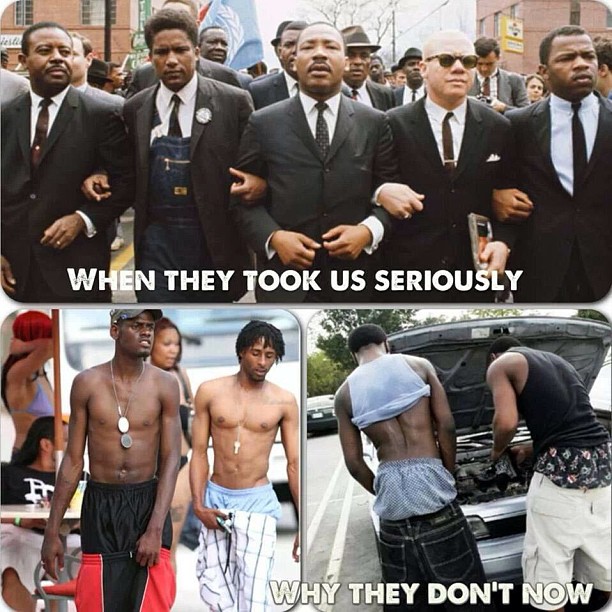
"When They Took Us Seriously/Why They Don't Now" poster, September 20, 2013. (Tim Brinkley/Google +).

“When They Took Us Seriously/Why They Don’t Now” poster, September 20, 2013. (Tim Brinkley/Google +).

In the past month of March on Washington and “I Have A Dream” speech commemorations and Birmingham church bombing dedications, a series of images lamenting rap culture and “thug life” have made their way around the Internet. The one that has stuck with me the most has been the image of the Selma March in 1965 juxtaposed with seemingly random photos of young Black males with saggy pants. The caption reads, “When they took us seriously/Why they don’t now.” Really? White supremacists took respectable Negroes seriously in the ’60s because they marched and wore suits, but don’t take Black males seriously now because of the saggy pants phenomenon? The truth is, they did and didn’t take us seriously then and now, and it has almost nothing to do with pulling our pants up above our boxers.

I have to say, though, that I hate saggy pants. It makes the people wearing them look somewhere between goofballs and idiots. It’s never mattered to me whether White guys or Black guys or college guys or hip-hop divas have worn saggy pants. I didn’t like it when it became a style in the early ’90s, thanks in large measure to NWA and Tupac, TLC and Snoop Dog and a host of other hip-hop/rap artists. I certainly don’t like it now, and would never buy a pair for my ten-year-old son to wear that way. The saggy pants style has been a sad twist on hand-me-downs and poverty as marketable clothes for the hip-hop cool.

But the saggy pants style has never translated for me as embracing a  “thug life” or some devolution of Black culture or American society. It wasn’t life imitating art, ala Boyz n the Hood (1991), Menace II Society (1993) or Clockers (1997). Nor have I ever seen it as something that meant that Whites or the new Black elite could say, “See. These Black folk don’t deserve respect, or health care, or a quality education, or good-paying jobs.” Over the past two decades, I’ve seen it as a style — a bad style, to be sure — but a style that some Blacks (and Whites, Latinos and Asians) have embraced.

Any young Black person who’s striving for higher education, or careers, or their own stereotypical success story in life, will tell you that they don’t wear saggy pants for every time or season. Even those who don’t know learn very quickly that saggy pants aren’t welcome in allegedly more respectable settings. If anything, the prevalence of saggy pants in 2013 has as much to do with the reality that opportunities for education, employment and prosperity remain so out of reach that it really doesn’t matter to many what they wear and where they wear it. There’s no need to code switch if everyone in your world knows the same exact code of cool.

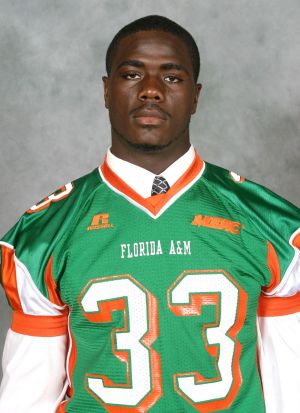
Jonathan Ferrell, Florida A&M football picture, September 20, 2013. (AP/Florida A&M University).

Jonathan Ferrell, Florida A&M football picture, September 20, 2013. (AP/Florida A&M University).

Recent events have made it pretty obvious that it really doesn’t matter what Black males wear. We remain targets for deeply ingrained stereotypes, institutional racism, and pre-emptive White violence. Whether it was Trayvon Martin wearing a hoodie in the rain, or John Lewis wearing a suit in Selma forty-eight years ago, it hasn’t mattered to Whites in fear of the Black boogie man. Florida A&M University graduate and former football player Jonathan Ferrell learned this deadly lesson in North Carolina just a week ago. It doesn’t matter what we wear, at least as far as many Whites and some Black elites are concerned.

Blacks all look the same to them, and looked the same to them in the ’60s. Suits, hoodies or baggy pants, we’re criminals and imbeciles from birth, thugs for life, and a drain on families and American society. This doesn’t mean that any one of us shouldn’t take responsibility for how we act, speak and look in public. I dare say, though, that structural economic issues like unemployment in deeply impoverished Black communities (or crank-infested White ones) won’t be solved with young folk pulling their pants up. We need to stop focusing on the insignificant, because saggy pants and respectability are the trees in this morphing forest of racism and economic inequality.

WWMLKD (What Would Martin Luther King Do) – and Say Now?

05 Monday Aug 2013

Posted by decollins1969 in 1, Academia, Boy @ The Window, culture, Eclectic, Movies, Politics, Pop Culture, race, Youth

≈ 1 Comment

Tags

"I Have A Dream" speech, "I've Been To The Mountaintop" speech, "Return of the King" (2006), Aaron McGruder, Activism, Black Elite, Black Gen Xers, Civil Rights, Civil Rights Generation, Civil Rights Leadership, Civil Rights Movement, Elitism, Institutional Racism, March on Washington, Martin Luther King, Memphis Sanitation Worker's Strike, MLK, MLK Assassination, Post-Civil Rights Generation, Racism, Rev. Dr. Martin Luther King, Socioeconomic Status, The Boondocks, WWJD


"Return of the King" screenshot, Aaron McGruder's The Boondocks, originally aired, January 15, 2006. (Wikipedia). Qualifies as fair use due to picture's low resolution and direct subject of this blog post.

“Return of the King” screenshot, Aaron McGruder’s The Boondocks, originally aired, January 15, 2006. (Wikipedia). Qualifies as fair use due to picture’s low resolution and direct subject of this blog post.

Perhaps the most famous episode of Aaron’s McGruder’s award-winning series The Boondocks was his “Return of the King,” which originally aired on the Martin Luther King, Jr. Holiday in ’06. In it, King survived his ’68 assassination and came out of a coma into an early twenty-first century America and Black America in which his style of activism was no longer in vogue.

Instead, in McGruder’s vision, King came to realize how generations of younger Blacks have become lost in their overt materialism, as symbolized by ass-shaking, hip-hop and rap culture, the constant use of “nigga” in public, and the self-aggrandizement of Black televangelists and other purveyors of the cult of prosperity. In response, McGruder’s King said, “I’ve seen what’s around the corner, I’ve seen what’s over the horizon, and I promise you, you niggas have nothing to celebrate! And no, I won’t get there with you. I’m going to Canada!”

McGruder’s attempt to address the generational and socioeconomic divide between the Civil Rights generation and the post-civil rights generations that have followed was a limited one. It certainly represented well the views of a Black elite nurtured at the altar of the Civil Rights Movement. But despite the hilarity and the double-meanings, I don’t think that The Boondocks‘ “Return of the King” episode is even close to a decent representative of what King would’ve been like had he lived to see the fiftieth anniversary of the March on Washington and his “I Have A Dream” speech at the Lincoln Memorial.

Extrapolating from King’s last years:

The best and easiest guess in thinking about what King would’ve said or done in the years between that dreaded first Thursday in April ’68 and today would be to look at what King was doing in the last months of his life. Openly protesting the Vietnam War and the oppression of the poor and of color in the US and abroad. Breaking with other civil rights leaders on the Vietnam War and issue of addressing the collusion between institutional racism, income inequality and anti-union efforts in Memphis, in Chicago and in other places in the US.

Memphis sanitation workers' strike/march under "I Am A Man" picket signs, Memphis, TN, March 29, 1968. (Ernest C. Withers via http://workers.org).

Memphis sanitation workers’ strike/march under “I Am A Man” picket signs, Memphis, TN, March 29, 1968. (Ernest C. Withers via http://workers.org).

Alienating a president in Lyndon Baines Johnson — the most radical supporter of civil rights and anti-poverty efforts of any president ever — was what King did in expanding his words and deeds beyond “I Have A Dream” and “We Shall Overcome” mobilizations to end segregation and overt racial discrimination. Moving beyond the grassroots movement paradigm of respectable Negroes (i.e., traditional church-going, middle and some working-class Blacks) to include Black men and women who weren’t relatively well-educated and in good jobs — like the sanitation workers in Memphis — was where King had already moved himself.

This is the King that would’ve evolved over the previous forty-five or so years had he lived. Based on this actual King, it would be a bit mystifying to hear him give speeches on, grant interviews for or write op-eds in which his main theme would be to eviscerate the American poor, Blacks and Latinos for buying into a material capitalistic hip-hop culture. Or to spend all of his waning moments lamenting the perpetual stereotype of teenage welfare mothers looking for a handout instead of a hand up. Or to devote his remaining energies to blaming Black males for their inability to wear waist-fitting pants and then connecting hip-hop to a criminal culture, a drug culture and general thuggery (That’s Bill Cosby’s and Don Lemon’s jobs, apparently).

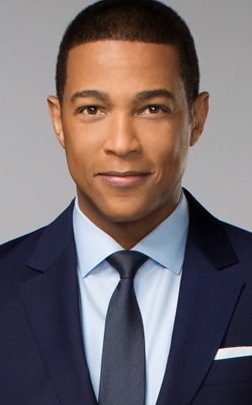
Don Lemon, CNN picture, August 5, 2013. (http://cnn.com).

Don Lemon, CNN picture, August 5, 2013. (http://cnn.com).

King would’ve probably withdrawn from public life by now, maybe even to Canada, as McGruder’s version suggests. But not before an additional two or three decades in which he would’ve boldly gone after the military-industrial complex, corporate welfare, government corruption, the War on Drugs and insufficient investment in America’s public schools and infrastructure. King would’ve seen all of them as factors that would have a negative impact on the life chances of the poor, especially poor African Americans.

Assessing blame – or not:

No doubt that King would’ve also found aspects of how Blacks have expressed themselves in pop culture and in the public sphere over the past four and half decades problematic. Yet based on the last years of his life, I think that he would’ve saved much of his ire for the aging Civil Rights generation for resting on their laurels and standing in judgment of younger Blacks, poor Blacks, or anyone else who didn’t follow directly in their now elitist footsteps. As King evolved in the four years, seven months and one week between the March on Washington and his assassination, so had his views of civil rights leadership. Well-meaning but pretentious, with the assumption that fixing the South would clear the way for Blacks of every socioeconomic stripe everywhere.

What’s most important to realize, though, is that King, had he lived, would’ve seen what most Americans regardless of race have seen in their own lives. Decline in wealth and income, a gulf of wealth between them and the top one-percent of income earners, a significant decline of well-paying union jobs replaced by minimum-wage non-union ones, rising unemployment, and expensive housing and healthcare. These are among so many other things that 240 to 270 million of us face on various levels that didn’t exist at the end of King’s life, things that disproportionately affect the poor, especially the poor and of color.

King and the legacy of the Civil Rights Movement:

The movement never evolved to address such issues, King would’ve said. Individuals did. Jesse Jackson, at least in the 1970s and 1980s, did. But the leaders of the Civil Rights Movement as a whole didn’t. They assumed that eliminating all forms of deliberate and overt discrimination in public institutions would bring down barriers for all African Americans. King would’ve said they were incorrect, and knew as much by the time of the Memphis sanitation workers’ strike in February and March ’68.

Unlevel playing field (soccer in this case), August 5, 2013. (http://funatico.com).

Unlevel playing field (soccer in this case), August 5, 2013. (http://funatico.com).

Despite the Civil Rights Act of 1964 and the Voting Rights Act of 1965 (both of which have obviously been weakened by the Reagan Years and this year’s Supreme Court Shelby County v. Holder decision), the life chances for any Black person born into poverty haven’t improve much at all. They remain in segregated communities, despite the movement toward mixed housing. They send their kids to underfunded and overcrowded schools, despite the paternalistic efforts of the so-called education reform movement. Jobs that pay a living wage are few, and conditions that promote neighborhood stability are better but still rare.

To assume that Blacks a half-century removed from the March on Washington and King’s “I Have A Dream” speech would be eternally grateful for the triumphs of the Civil Rights Movement in the wake of subtle yet pervasive discrimination on the basis of both race and socioeconomic status is ludicrous. It would smack of the elitism in which those who benefited most from the movement have displayed over the years. King would’ve realized the same thing, certainly well before the turn of the twenty-first century.

That anyone poor and of color in particular can overcome such barriers to, say, earn a doctorate or write a book is something akin to a miracle. Or to become a professional athlete or a music artist, a bit more common, if stereotypical, for that matter. King would’ve seen this and brought an analysis to the legacy of civil rights that didn’t put the movement and its leaders on a pedestal or proclaim victory where defeat was obvious.

What King would’ve (maybe) done:

King wouldn’t have given speeches in the years after the height of the movement to Black Gen Xers where he would’ve said, “I’ve got mine. Now it’s time to get yours,” or blamed hip-hop culture for so-called Black-on-Black crime. Instead, King would’ve listened, learned, facilitated and spoken without accusing those most vulnerable to discrimination of being the only ones at fault, if he would’ve faulted them at all. In terms of what he would’ve done beyond the attempt to form multiracial coalitions to fight for better conditions, it’s unclear. It would’ve been better than chest-thumping and belly aching, though.

← Older posts
Newer posts →

Boy @ The Window: A Memoir

Boy @ The Window: A Memoir

Places to Buy/Download Boy @ The Window

There's a few ways in which you can read excerpts of, borrow and/or purchase and download Boy @ The Window. There's the trade paperback edition of Boy @ The Window, available for purchase via Amazon.com at http://www.amazon.com/Boy-Window-Donald-Earl-Collins/dp/0989256138/

There's also a Kindle edition on Amazon.com. The enhanced edition can be read only with Kindle Fire, an iPad or a full-color tablet. The links to the enhanced edition through Apple's iBookstore and the Barnes & Noble NOOK edition are below. The link to the Amazon Kindle version is also immediately below:

scr2555-proj697-a-kindle-logo-rgb-lg

Boy @ The Window on Amazon.com: http://www.amazon.com/Boy-The-Window-Memoir-ebook/dp/B00CD95FBU/

iBookstore-logo-300x100

Boy @ The Window on Apple's iBookstore: https://itunes.apple.com/us/book/boy-the-window/id643768275?ls=1

Barnes & Noble (bn.com) logo, June 26, 2013. (http://www.logotypes101.com).

Boy @ The Window on Barnes & Noble: http://www.barnesandnoble.com/w/boy-the-window-donald-earl-collins/1115182183?ean=2940016741567

You can also add, read and review Boy @ The Window on Goodreads.com. Just click on the button below:

Boy @ The Window

Twitter Updates

Tweets by decollins1969
  • RSS - Posts
  • RSS - Comments

Archives

  • June 2025
  • April 2023
  • September 2022
  • August 2022
  • July 2022
  • June 2022
  • May 2022
  • April 2022
  • March 2022
  • January 2022
  • December 2021
  • November 2021
  • October 2021
  • September 2021
  • August 2021
  • July 2021
  • June 2021
  • April 2021
  • March 2021
  • February 2021
  • January 2021
  • December 2020
  • November 2020
  • October 2020
  • September 2020
  • August 2020
  • July 2020
  • May 2020
  • April 2020
  • March 2020
  • January 2020
  • December 2019
  • November 2019
  • August 2019
  • July 2019
  • June 2019
  • May 2019
  • April 2019
  • March 2019
  • February 2019
  • January 2019
  • December 2018
  • November 2018
  • October 2018
  • September 2018
  • August 2018
  • July 2018
  • June 2018
  • May 2018
  • March 2018
  • February 2018
  • January 2018
  • December 2017
  • November 2017
  • October 2017
  • September 2017
  • August 2017
  • July 2017
  • June 2017
  • May 2017
  • April 2017
  • March 2017
  • February 2017
  • January 2017
  • December 2016
  • November 2016
  • October 2016
  • September 2016
  • August 2016
  • July 2016
  • June 2016
  • May 2016
  • April 2016
  • March 2016
  • February 2016
  • January 2016
  • December 2015
  • November 2015
  • October 2015
  • September 2015
  • August 2015
  • July 2015
  • June 2015
  • May 2015
  • April 2015
  • March 2015
  • February 2015
  • January 2015
  • December 2014
  • November 2014
  • October 2014
  • September 2014
  • August 2014
  • July 2014
  • June 2014
  • May 2014
  • April 2014
  • March 2014
  • February 2014
  • January 2014
  • December 2013
  • November 2013
  • October 2013
  • September 2013
  • August 2013
  • July 2013
  • June 2013
  • May 2013
  • April 2013
  • March 2013
  • February 2013
  • January 2013
  • December 2012
  • November 2012
  • October 2012
  • September 2012
  • August 2012
  • July 2012
  • June 2012
  • May 2012
  • April 2012
  • March 2012
  • February 2012
  • January 2012
  • December 2011
  • November 2011
  • October 2011
  • September 2011
  • August 2011
  • July 2011
  • June 2011
  • May 2011
  • April 2011
  • March 2011
  • February 2011
  • January 2011
  • December 2010
  • November 2010
  • October 2010
  • September 2010
  • August 2010
  • July 2010
  • June 2010
  • May 2010
  • April 2010
  • March 2010
  • February 2010
  • January 2010
  • December 2009
  • November 2009
  • October 2009
  • September 2009
  • August 2009
  • July 2009
  • June 2009
  • May 2009
  • April 2009
  • March 2009
  • February 2009
  • January 2009
  • December 2008
  • November 2008
  • October 2008
  • September 2008
  • August 2008
  • July 2008
  • June 2008
  • May 2008
  • April 2008
  • March 2008
  • February 2008
  • January 2008
  • December 2007
  • November 2007
  • October 2007
  • September 2007
  • August 2007
  • July 2007
  • June 2007

Recent Comments

MaryPena's avatarMaryPena on My Day of Atonement/Bitter Hat…
decollins1969's avatardecollins1969 on No Good Teaching Deed Goes…
Mary Rose O’Connell's avatarMary Rose O’Connell on No Good Teaching Deed Goes…

NetworkedBlogs on Facebook

NetworkedBlogs
Blog:
Notes From a Boy @ The Window
Topics:
My Life, Culture & Education, Politics & Goofyness
 
Follow my blog

616 616 East Lincoln Avenue A.B. Davis Middle School Abuse Academia Academy for Educational Development AED Afrocentricity American Narcissism Authenticity Bigotry Blackness Boy @ The Window Carnegie Mellon University Child Abuse Class of 1987 CMU Coping Strategies Crush #1 Crush #2 Death Disillusionment Diversity Domestic Violence Economic Inequality Education Family Friendship Friendships Graduate School Hebrew-Israelites High-Stakes Testing Higher Education History Homelessness Humanities Humanities Program Hypocrisy Internalized Racism Jealousy Joe Trotter Joe William Trotter Jr. K-12 Education Love Manhood Maurice Eugene Washington Maurice Washington Misogyny Mother-Son Relationship Mount Vernon High School Mount Vernon New York Mount Vernon public schools Multiculturalism MVHS Narcissism NFL Pitt Pittsburgh Politics of Education Poverty President Barack Obama Race Racial Stereotypes Racism Relationships Self-Awareness Self-Discovery Self-Reflection Sexism Social Justice Teaching and Learning University of Pittsburgh Violence Whiteness Writing

Top Rated

Blog at WordPress.com.

  • Subscribe Subscribed
    • Notes from a Boy @ The Window
    • Join 103 other subscribers
    • Already have a WordPress.com account? Log in now.
    • Notes from a Boy @ The Window
    • Subscribe Subscribed
    • Sign up
    • Log in
    • Report this content
    • View site in Reader
    • Manage subscriptions
    • Collapse this bar
 

Loading Comments...