• About Me
  • Other Writings
  • Interview Clips
  • All About Me: American Racism, American Narcissism, and the Conversation America Can’t Have
  • Video Clips
  • Boy @ The Window Pictures
  • Boy @ The Window Theme Music

Notes from a Boy @ The Window

~

Notes from a Boy @ The Window

Tag Archives: 616

Too Close for Comfort

30 Friday Dec 2016

Posted by decollins1969 in 1, Boy @ The Window, culture, Eclectic, Mount Vernon High School, Mount Vernon New York, New York City, Pittsburgh, Pop Culture, race, University of Pittsburgh, Youth

≈ Leave a comment

Tags

616, 616 East Lincoln Avenue, Code Switching, Embarrassment, Family Dysfunction, Humanities, JD, Laurell, Mom, Mother-Son Relationship, Pitt, Poverty, Self-Awareness, Self-Realization, The Bold and the Beautiful, The Gill Family, The Price is Right, Uncle Sam


Skyline of downtown Houston from Sabine Park, Houston, Texas, July 15, 2010. (Jujutacular via Wikipedia). Permission granted via GNU Free Documentation License.

Skyline of downtown Houston from Sabine Park, Houston, Texas, July 15, 2010. (Jujutacular via Wikipedia). Permission granted via GNU Free Documentation License.

My Mom and my Uncle Sam are in Houston, Texas/Bradley, Arkansas this week, burying their father and my grandfather, who died ten days ago, just three weeks after his 97th birthday. Given what they’ve told me so far, it seems like they’ve been treated as outsiders by my extended family of uncles, aunts, grand uncles and aunts, and cousins that I barely know or whom I’ve never met. They’ve learned some embarrassing stuff as well, details that I will not go into here. I had been conflicted about going versus not going, especially given that I’d only met my grandfather once, in June 2001, and that wasn’t a pleasant visit, at least environmentally speaking. After the past few days, I’m definitely glad I didn’t go.
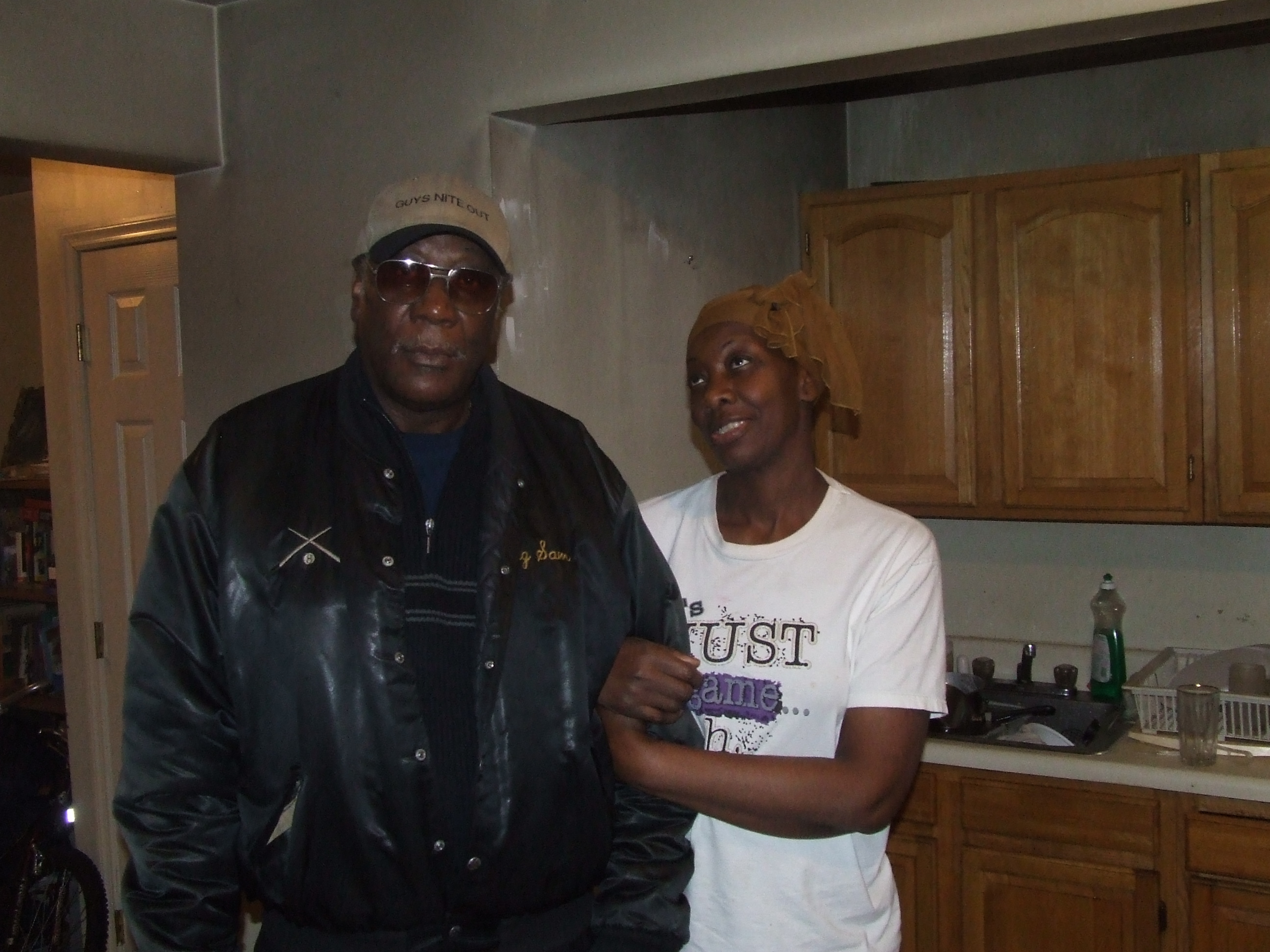
My Mom and my Uncle Sam Gill, Jr., Mount Vernon, NY, November 23, 2006. (Donald Earl Collins).

My Mom and my Uncle Sam Gill, Jr., Mount Vernon, NY, November 23, 2006. (Donald Earl Collins).

I do feel bad for my Mom and Uncle Sam, though. And not just the natural empathy of feeling for your kin when their father passes away either. I feel for them because they are part of a family dynamic that has gone on for nearly a half-century without their input and with a limited bit of shunning as well. Some of this may well be deliberate, but most of this is natural, as time and distance has meant limited understanding and inclusion between my uncles and aunts with the New York Gills since the time of my birth in 1969. But some of this is about embarrassment, too. My Mom and my Uncle Sam’s lives haven’t exactly been a bowl of pitted cherries with whipped cream, either.

This is a topic that I’ve known all too well with my own family over the past three decades. One example would be the next to last day of 1988, the first year in which I rediscovered myself as someone other than an emotionally wounded twelve-year-old. It was a day of both eye-opening lies and hidden truths, a moment of unexpected boldness and moments of seeing familiar faces and places with different eyes.

It was the day my friend and former high school classmate Laurell decided to pick me up from 616 to spend time with her, as well as her friend Nicole, our former eighth-grade Algebra teacher Jeanne Longerano, and eventually, our mutual acquaintances JD and Josh. It was a day I was forced to code switch, to traverse my 616 world, my former Humanities world, and maintain my new conception of myself at the same time. It wasn’t exactly my Miles Davis moment:

screen-shot-2016-12-30-at-11-01-32-am

What I discuss in different parts of Boy @ The Window, but not in this particular scene, was the exact nature of “too disgusting” at 616. Let’s see. Blotches of gray and black stains on a salmon-colored area rug around a 19-inch television set in the living room. On top of the rug was my then stepfather Maurice who was laid out in nothing but his size-54 underwear. This meant that most of his 400-plus pound fatty bulk was exposed for anyone to see. A cobble of broken down sofas, busted chairs, and a

Deepwater Horizon oil spill aerial, Gulf of Mexico, May 6, 2010. (Reuters/Daniel Beltra via Flickr, http://motherjones.com).

Deepwater Horizon oil spill aerial, Gulf of Mexico, May 6, 2010 (same color as area rug with stains). (Reuters/Daniel Beltra via Flickr, http://motherjones.com).

kitchen table with hanger wire connecting each of its three remaining legs to the tabletop. Kitchen, hallway, and bathroom walls stained with grape jelly, crayons, and even feces. Dust balls the size of Matchbox cars in the hallway, lined up as if in rush-hour traffic. And the never-ending smell of cigarette smoke, overused cooking oil, and farts from eight human beings between the ages of four and forty-one. Seriously, what would anyone else have done under the circumstances, especially now that I was a fully awake college-aged student? I wasn’t acting just out of embarrassment or just to protect my Mom from embarrassment. I was acting to protect Laurell as well.

Contrast 616 with what happened next on December 30, 1988, between The Price is Right’s first Showcase Showdown and the end of The Bold and the Beautiful on CBS (roughly, between 11:25 am and 2 pm):

screen-shot-2016-12-30-at-10-05-18-am

Afterward, we went down the street to the nearest pizza shop, and hung out until midafternoon, telling each other what we thought would be the best thing to say. Even me. I didn’t talk about homelessness, or a semester without money for food, or living in a deathtrap in the South Oakland section of Pittsburgh. Laurell did give me a heartfelt hug after dropping me off at 616, still puzzled about why I wouldn’t let her and Nicole visit with my family. Hopefully, after years as a high school math teacher, she understands better now.

Biohazard symbol (orange), May 29, 2009. (Nandhp via Wikipedia). In public domain.

Biohazard symbol (orange), May 29, 2009. (Nandhp via Wikipedia). In public domain.

Even though my Mom and Uncle Sam are obviously just as much Gill as the rest of my extended family in Texas, Arkansas (and Washington State, Louisiana, and elsewhere), they’re not part of the everyday that my other uncles, aunts, grand aunts and uncles, and cousins have had with each other for decades. So the extended Gills cannot see my Mom and my uncle and their struggles the same way they see their own. Nor can my extended Gills see those things that may be embarrassing to my Mom and my uncle the same way either. It makes for a bewildering family dynamic. And this in many ways explains well why so many families have a hard time being families, in the closeness (and closest) meaning of the word.

Dysfunction is so much a part of families these days. but even in dysfunction, you can learn truths about yourself, especially in moments of life, death, and in my case, rebirth.

David Wolf, A Teacher I Hope To Never Become

27 Thursday Oct 2016

Posted by decollins1969 in 1, Academia, Boy @ The Window, Carnegie Mellon University, culture, Eclectic, Jimme, Mount Vernon High School, Mount Vernon New York, My Father, New York City, Pop Culture, race, Sports, University of Pittsburgh, Youth

≈ Leave a comment

Tags

1986 World Series, 616, 616 East Lincoln Avenue, AP Physics, Bad Teaching Habits, David Wolf, Escapism, Humanities, Jesse Orosco, Mets, Mother-Son Relationship, MVHS, New York Mets, Senioritis, Teaching and Learning


Film critic Gene Shalit (closest approximation I could find to David Wolf), circa 1980. (http://imdb.com).

Film critic Gene Shalit (closest approximation I could find to David Wolf), circa 1980. (http://imdb.com).

This date was one of the great ones during my Boy @ The Window years. It was a day (and evening) that almost made me forget the role I’d been in since the spring of ’81. One as the sometimes adult male with adult responsibilities on the one hand, and as the nearly ostracized emotional equivalent of a twelve-year-old on the other. But yes, even small miracles (at least in my mind at the time) did happen. The New York Metropolitans, my Mets, won Game 7 of the 1986 World Series thirty years ago on this date 8-5, a biting cold Monday night at the end of October! My Giants beat and beat up the Redskins that same evening 27-24, on their way to a 14-2 record and their first Super Bowl. My underdogs weren’t anymore.

Within three days of that ultimate day of vicarious escapism, the reality of having neglected my studies had sunk in. Or, to be completely honest, the reality of needing much more time to study than I could’ve ever devoted, even without the distractions of senioritis, my Mets and Giants winning or on their way to championships, set in. Because that’s what it would’ve taken for me to have a successful senior year at Mount Vernon High School academically. A greater commitment to AP Physics C, AP English, and AP Calculus AB than my bifurcated life would have allowed. Between four siblings ages two to seven, college applications, and constant errands and chores for my Mom, my weekends of tracking down my father at one watering hole or another, I should’ve gone off to college after my junior year. I should’ve used the summer of ’86 to take gym or something to get the one-quarter credit I needed to graduate.

Instead, here I was with the one teacher who was probably the one most ill-equipped to handle any students other than near-genius devotees to AP Physics. I had David Wolf the year before in high school Physics, so I knew how intolerant he could be toward students who were unprepared, or “just [didn’t] get it.” Or, at least I thought I knew. The week before the Mets’ Game 7 win, Wolf had given us our end-of-marking-period exam on mechanics, and the day after was when we received our exams back with grades. I had the fourth highest score out of seven students, a 22 out of 100. You can look at any grades I’d earned prior to and since this exam in any course between kindergarten and doctorate, and none come close to a 22.

But it obviously wasn’t just me.

David Wolf was another character who was sometimes funny but otherwise sucked as a teacher. It would’ve been hard for me to know what Butler had been like as a teacher when he was happily married. Wolf was a mediocre teacher on his best days because he simply didn’t care if we learned anything in his class. Of course that didn’t make him much different from most of our other teachers. What made Wolf different was the fact that he went out of his way to embarrass students, as if the shock of being outed by him would somehow make us better.

Wolf “taught” us the more difficult AP Physics C version of this Physics course, involving mechanics, electricity and magnetism. It was the equivalent of second semester Physics right from the start, and most of us needed at least a semester of Calculus to keep up with him. Had I known this was Wolf’s plan, I may well have taken my former classmate Laurell’s advice (eight years too late) and switched to AP Biology. Instead, I chose to see this as a new challenge I could take on and will myself through, just like I had in every other difficult class I’d taken up to that point. But after the first two months of the year, it crossed my mind that struggling through this course wasn’t worth it.

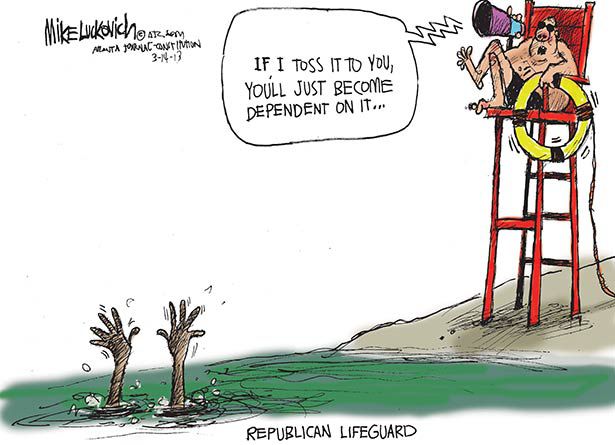
Sink or Swim Republican Lifeguard Cartoon, Mike Luckovich, March 14, 2013. (Luckovich/Atlanta Journal-Constitution; http://luckovich.blog.ajc.com).

Sink or Swim Republican Lifeguard Cartoon, Mike Luckovich, March 14, 2013. (Luckovich/Atlanta Journal-Constitution; http://luckovich.blog.ajc.com).

When I wrote in Boy @ The Window, “Laurell was practically using third-semester Calculus to build the Great Pyramids by comparison,” it was hyperbole, of course. Partly because Egyptian calculus was likely more complicated. And partly because Laurell had done something that I couldn’t do. She had gone to Wolf at the end of eleventh grade and borrowed from him a copy of the AP Physics textbook. She had devoted much of her summer to studying up on AP Physics and AP Calculus BC (once the harder version of AP Calculus) before day one of twelfth grade. So Laurell was going to do well, no matter what. Dozens of hours to study wasn’t sometime I had at chaotic 616, textbook weeks ahead of time or otherwise.

However, me doing well or terribly wasn’t my issue with Wolf. It was his sink-or-swim approach, with no attempt to help struggling students in any way. It was his dickish attitude, where he would literally lean on his stool or against the chalkboard insulting us as we attempted to answer a Physics problem.

Wolf’s class remained the most painful academic experience I’d have in Humanities. Period…Wolf continued to berate and belittle us, wondering, ‘Why are you still here?,’ or exclaiming ‘You decided to show up today!’ On the rare occasions I managed to solve a problem at the chalkboard, he gave me a Bronx cheer, the kind good Yankees fans gave when their team was down ten runs and a Yankee hit a home run to close the gap to nine.

Now, some would say this was good preparation for college. Where? While I certainly have known indifferent professors regarding my own abilities or their distance from other students in general, I’ve only known a few who even threw out the rare bit of sarcasm in the classroom. Plus, for courses like Physics, there were TAs who could walk students through problems better than Khan Academy. Even saying that Wolf was good preparation for graduate school would be a stretch. Quiet exclusion, rather than insults and ostracism, is the rule at the doctoral level. And having an advisor like Wolf would’ve led to blood, and not my own, plain and simple.

After years in the classroom with high school, undergrad, and grad students, I understand that being a professor isn’t the same as being a K-12 teacher. Most of the time, I’m not dealing with parents (except as students), I don’t teach five days a week, and I have the expectation that my students should behave as college students. All the more reason that as I have grown older and more experienced as an educator, the more I’ve found Wolf’s behavior objectionable, even almost unforgivable. In all seriousness, why even show up to teach if your primary form of solace at work is yelling insults at students while standing in the hallway in between class periods?

No Time For Jealousy

30 Friday Sep 2016

Posted by decollins1969 in 1, Academia, Boy @ The Window, culture, Eclectic, Mount Vernon High School, Mount Vernon New York, My Father, New York City, Politics, Pop Culture, race, University of Pittsburgh, Youth

≈ Leave a comment

Tags

616, 616 East Lincoln Avenue, Class, Coveting, Envy, Erika, General Foods, Humanities, JD, Jealousy, Love Canal, Mother-Son Relationship, Mount Vernon Hospital, MVHS, Smorgasbord, Target, Wendy


Envy, June 2009. (http://psychologytoday.com).

Envy, June 2009. (http://psychologytoday.com).

There are some emotions and human actions in which I don’t allow myself to partake. I usually don’t follow the herd. I don’t get caught up in what’s popular at the moment, no matter how many cool people in my life are riding the wave. I don’t build someone up in order to tear them down. And I don’t allow myself more than a flash of envy or jealousy.

Sometimes, these choices are rather easy, like with me having never watched an episode of Scandal or Empire. Sometimes, the choice to not virtually excoriate someone is difficult, given the narcissisms and moralisms that make up American culture. Sometimes, my path less traveled is one that has become easier over time. With jealousy, I’ve learned over the past thirty-five years that it’s a waste of time, neurons, and quantum energy to peer into the lives of those allegedly better off.

But this was hardly an easy process. I had so many reasons to be jealous when I was a preteen and teenager. My middle school and high school Humanities years were ones of constant, albeit momentary, jealousy. I was envious of classmates whose parents made more in a month than my Mom made working all year at Mount Vernon Hospital. I felt envy whenever I saw a classmate chow down on a smorgasbord of a lunch every day, especially on all the days I couldn’t eat because I either didn’t have the money to buy lunch or because the Hebrew-Israelite no-pork rule prevented me from eating the Friday grilled ham and cheese sandwich. Jealousy would come along when I’d see the mini-cliques of former Grimes and Pennington Elementary classmates getting along like the best of friends. Or, when my classmates would come to school wearing the latest and best of ’80s fashion while I walked around in sneakers with holes in the bottoms.

Smorgasbord, from breakfast to dinner, September 2010. (http://web2printexperts.com).

Smorgasbord, from breakfast to dinner, September 2010. (http://web2printexperts.com).

These first bouts with jealousy quickly turned inward toward my own insecurities and inadequacies, and outward toward my parents’ inability to do anything to make my life better materially. For years after the shock of preteen and early adolescent jealousy, I never saw myself as worthy of my classmates, not even worthy enough to befriend someone whose life, though maybe materially blessed, might have been unstable in other areas.

My first realization of seeing myself as being jealous, though, was toward the end of tenth grade at Mount Vernon High School. That’s when my secret first love Wendy and the contrarian one JD had begun to date. I didn’t feel this sense of love or weird emotional trepidation regarding Wendy by the time we were in tenth grade, though. I sensed as early as seventh grade this particular eventuality. No, I was more jealous of the reality that Wendy and JD could connect with each other in a way that I knew for me was beyond my reach. I didn’t really have any friends, so dating would’ve been like building a bridge over the Pacific Ocean by comparison.

But I learned something as well. Because theirs was an interracial relationship, I got a first-row seat to the stares, the whispers, and the occasional ignorant-ass comments from the other high schoolers about them dating. Seeing that, hearing that, made me aware of the fact that jealousy is a dangerous emotion, and give the life of deficits I had to make up, I didn’t have time or gray matter to waste in the matter of woe-is-me-as-outsider in 1985 or in the foreseeable future.

Public Enemy logo (note the crosshairs target), September 30, 2016. (http://twitter.com).

Public Enemy logo (note the crosshairs target), September 30, 2016. (http://twitter.com).

A year later, when I sensed on some level that some of my classmates were actually jealous of me, I balked at the idea. I thought, “I have nothing that anyone should be jealous of.” To me, this was literally true. With some of the cool kids literally laughing at me as I walked by them in the hallways, I couldn’t foresee a situation in which anyone would ever be jealous of me.

And yet I was wrong. My academic success, my fierce insistence to fight isolation by making myself independent of fads, trends, and conventional wisdom, had already made me a target of other’s envy. It wasn’t until the summer after I graduated when a co-worker at my General Foods job, one who was one year behind me at Mount Vernon High School, cut through the psychology for me. Erika cleared up so many things for me about the nature of friendships, relationships, and jealousy. I owe her big time for that, then and now.

Love Canal, suburban community turned EPA Superfund site, circa 1980. (http://buffalonews.com).

Love Canal, suburban community turned EPA Superfund site, circa 1980. (http://buffalonews.com).

Nearly thirty years later, and I am still surprised when I discover that someone is jealous of me. Really, I am. I guess it’s because I operate by the moment-of-envy rule. Meaning that I allow myself to feel jealous, but only for a moment, and remind myself of my own path, my own destination, and the work I must do to get there. After all, I don’t really want someone’s else job, promotion, salary, status, car, or house. That’s their life, and only God truly knows if their life would be one I’d want to have. And then I move on, knowing that the green grass on the other side of the tracks can often obscure the Love Canal underneath. I move on, because there’s always more work to do, for me, my wife, and my son. I move on, because after all these years, that’s all I know how to do.

Looking Back to My Future

04 Sunday Sep 2016

Posted by decollins1969 in 1, Boy @ The Window, Christianity, culture, Eclectic, Mount Vernon High School, Mount Vernon New York, My Father, New York City, Pittsburgh, Politics, Pop Culture, race, Religion, University of Pittsburgh, Work, Youth

≈ Leave a comment

Tags

616, 616 East Lincoln Avenue, Blair Kelley, Dr. Jack Daniel, Familial Obligations, Forbes Quadrangle, Fordham University, Grit, Homelessness, Hunter College, Pedro Noguera, Pitt, Poverty, Resilience, Ron Slater, Survivor's Guilt, Wesley V. Posvar Hall, What Ifs


The power of "What If?," September 4, 2016. (http://giphy.com).

The power of “What If?,” September 4, 2016. (http://giphy.com).

I don’t “what if” my past moments nearly as much as I used to, thanks in part to one of my first Twitter conversations six years ago. It was with Blair Kelley, a professor and dean at North Carolina State University. I brought up the fact that I sometimes indulged my students’ “What if…?” scenarios regarding slavery and other issues in US history in order to help them find the truth. She said that this was a waste of time, that “What is…?” is already hard enough for students to understand, much less playing out a “What if…?” to get to a “What is…?”

Kelley was right. Students often play the “What if…?” game to deflect from what actually happened, out of potential pain or discomfort with historical truths, or because their conception of history doesn’t allow for humanity and human nature as significant factors. So I stopped humoring my students in fantasies about the South winning the Civil War or Nazi Germany winning World War II in Europe. It hasn’t made my students any happier, but it has made teaching them easier.

As for my own “What ifs…?,” I still think of a few on occasion. Like what if I had gone to college at Columbia or another elite institution instead of Pitt? Or what if I had possessed the courage to act on my crush on Wendy in seventh grade, or not wear my kufi to school during the Hebrew-Israelite years at all? Those can be very good mental distractions when I’m running a 10K or working on a boring set of revisions to an education piece. But they’re also rather silly distractions, with me knowing full well why I did or didn’t do most things, even knowing my thought process at the time they occurred in ’81, ’82, or ’87.

With this weekend being exactly twenty-eight years since my five days of undergraduate homelessness on Pitt’s campus, I have a real “What if…?” scenario to reconsider. What if I hadn’t bumped into my friend Leandrew, who had told me about the dilapidated fire-trap rowhouse he lived in on Welsford? What if I hadn’t met with my landlord Mr. Fu and gotten my 200-square-foot room with a literal hole in the wall so that two rooms could share a single radiator, all for $140 per month (about $285 in 2016 dollars)? What if I had to spend Labor Day weekend on a closed Pitt campus sleeping on that top floor concrete landing in a Forbes Quadrangle (now Posvar Hall) stairwell, where I had already spent three nights?

The mythical 6th-floor landing I slept on for three days (leading out to the roof), Wesley Posvar Hall, September 29, 2013. (Donald Earl Collins).

The mythical 6th-floor landing I slept on for three days (leading out to the roof), Wesley Posvar Hall, September 29, 2013. (Donald Earl Collins).

I already know the answers to these questions. I decided on this after praying about this on Wednesday, August 31 in ’88 while in that stairwell, laying on some of my clothes and my book bag. If I came out of Labor Day weekend without housing, I’d have to take my remaining $300 and go back to New York, to Mount Vernon, to 616. I’d have to drop or withdraw from my courses at Pitt. Maybe, with add-drop still going on, I could have some of my financial aid refunded, after Pitt deducted the $819 I owed them from my freshman year. I could enroll at Fordham or at CUNY’s Hunter College for the Winter/Spring 1989 semester, maybe find work somewhere in the area, and gut it out a few months at 616 with my nonfunctioning family.

I knew then that this was a scenario as ridiculous as Napoleon conquering Russia in the dead of winter. One of the reasons (but not the main reason) I left for the University of Pittsburgh in the first place was to get away from my family, to meet people unlike my Mom, my idiot stepfather, my five siblings at crowded 616, and the asshole Humanities classmates I’d gone to school with every day for the previous six years. I knew I had to have the mental space I needed to find myself, to figure myself out, all in considering whether I even had a future, much less how that future would take shape or how I’d shape myself into a future.

If I had gone with my cockamamie idea, the best case outcome would’ve been me transferring to Hunter or Fordham with my first year’s credits from Pitt, and me making it through a few semesters full-time before becoming a part-time student. I have no idea if I would’ve finished with a degree in history or something else from Hunter or Fordham. But given how exhausted I was each time I went back to Pitt after a summer of paid and familial work, I likely wouldn’t have even considered grad school.

The weight of guilt, survivor's and otherwise, September 2014. (http://www.fumsnow.com/).

The weight of guilt, survivor’s and otherwise, September 2014. (http://www.fumsnow.com/).

Why? I would’ve been at 616. I would’ve been obligated to help out with everything, from dealing with my idiot stepfather before me and my Mom finally forced him out, to providing food, entertainment, and childcare for my four younger siblings. I know this because during my college years, I did come back to 616 to work each summer and during the holidays. Those additional responsibilities were ones I felt obligated to fulfill until I was in my early thirties, and felt most intense when I had to face my family’s poverty head-on.

Keep in mind, this is the best-case outcome. Most likely, I would have stopped going to school all together after my bout with homelessness. I would’ve found part-time or full-time low-wage work, first to help out, then to find a roach trap somewhere in Mount Vernon or in the Bronx, and been relegated to the torture of “What ifs?” around getting a degree and having a better life. Maybe, just maybe, I would’ve been bumped around enough by that rough life to try again, to seek help from the likes of an ombudsman like Ron Slater or a provost like Jack Daniel. But I barely knew how to seek help when I first went about doing it as a homeless and broke-ass student in ’88. Given my mental makeup back then, it would’ve been a monumental task to trust that much after years of low-wage work and unrelenting poverty at 616.

UCLA education professor (although he is so much more than that) Pedro Noguera reminded me of something I’ve come to disdain in recent years. This idea that philanthropists and researchers can use kids and families as experimental subjects on the issue of “grit” or “resilience” is one I find disgusting. The idea that oppression and inequality can be overcome if you or I simply toughen up, grow a thick outer shell and just push through? The idea that with grit and spit and sweat, anyone can just overcome through sheer will power a lack of preparation, a lack of resources, a lack of access to resources, a lack of connections, and a lack of knowledge? Are you kidding me?

Quaker Instant Grits, Super Family Size, September 4, 2016. (http://soap.com).

Quaker Instant Grits, Super Family Size, September 4, 2016. (http://soap.com).

I had just about the best academic preparation anyone could have going into college, and I still came within three or four days of dropping out and heading back to 616. I was staring into the abyss of my future. The only grit I knew that would’ve worked for me on August 31, ’88 would’ve been a gigantic box of Quaker’s Instant Grits. And that was assuming I found a place to live in Pittsburgh so I could buy a pot and cook them. I didn’t want to be resilient. I’d always been resilient. But I didn’t call it that. I called it surviving.

And without help, without knowing how to ask for help, without some occasional divine or quantum-level intervention, my grit, resiliency, or survival up to August 31, ’88, wouldn’t have mattered. Philanthropists, educators, and social scientists need to stop asking individuals, families, and communities in poverty to be part of their test of resiliency as if we’re all rats in their maze. They need to start asking all of us not just how we survive, but what we need to succeed. Then again, they shouldn’t even need to ask. It’s not as if this is a “What if…?” The Great Society and War on Poverty efforts in the 1960s haven’t already provided a roadmap. Go study that!

A Big Wheel and Recovered Memories, Part Two

06 Saturday Aug 2016

Posted by decollins1969 in 1, Boy @ The Window, culture, Eclectic, Jimme, Marriage, Mount Vernon New York, My Father, New York City, Pop Culture, race, Youth

≈ Leave a comment

Tags

425 South Sixth Avenue, 616, 616 East Lincoln Avenue, Anti-Gay Slur, Big Wheel, c, Chevy Malibu, Dukey, Father-Son Relationship, Heterosexism, Hypermasculinity, Molestation, Mother-Son Relationship, Nathan Hale Elementary, Parenting, Pedophilia, Recovered Memories, Sexual Assault, Signs of Trauma


It took me until three weeks after the sex assault on the Nathan Hale ES playground before I told my parents. Those three weeks are a blur, but not the blur that the incident with the light-skinned teenager and his three friends would become until three weeks before my forty-fifth birthday

At the beginning of August ’76, my Mom and my dad Jimme were having another one of their vicious arguments. It was that Saturday afternoon when I finally learned that my Mom had filed for a divorce the month before. Anyway, I somehow managed to get myself in the middle of that argument. I complained that Darren’s bigger butt had been the final straw for my Big Wheel. It had broken in half after he tried to ride it earlier that week.

“I told him, it says ‘90-lb limit’,”  I said to my Mom (which I pronounced as “ninety lebs”) while pointing at the inscribed warning label on my now broken Big Wheel, crying.

“You broke that shit weeks ago!,” my Mom yelled.

“I didn’t break it. A bunch of kids did,” I said.

“And you didn’t try to stop ‘em?,” Mom asked.

“I did try to stop ‘em. But they took it and one of them stuck a pee-pee in my mouth,” I explained.

“I done told you not to leave the house when I’m not here! That’s what you get for not listenin’!,” my Mom screamed.

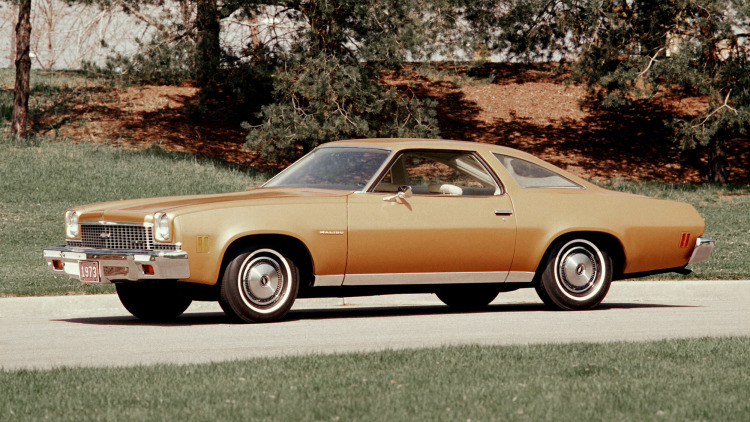
I was so shocked by how angry she was. I was mad, too. I didn’t think. I just ran out the house and out into the middle of the street. I saw a tan Chevy Malibu coming down the street and I just stood there.

1973 tan-ish Chevy Malibu, August 5, 2016. (http://www.autoblog.com).

1973 tan-ish Chevy Malibu, August 5, 2016. (http://www.autoblog.com).

The older, salt-and-pepper bearded and balding Black man didn’t slow down until he realized I wasn’t planning to move. He slammed on the brakes and came to a stop about three feet in front of me. The man put his car in park and got out. He then slammed his driver’s side door really hard, and yelled, “Boy, what’s wrong with you? Are you tryin’ to get yourself killed? Where’s your mama?”

He grabbed me by the back of my chocolate-brown t-shirt and made me show him where I lived. We marched upstairs to the second-floor, where he proceeded to explain my suicidal actions. My Mom then took the older man’s belt and beat me with it in front of him, with Darren and Jimme watching. Afterwards, she said “Thank you” to the older man, and then sent me to bed without dinner. “Don’t you EVER do that again!,” she screamed.

Nine months after that bicentennial summer, we moved across town to 616 East Lincoln, a three-in-one, five-story Tudor-style apartment complex. After a summer camp at Darren’s Clear View School in Dobbs Ferry, we went outside on 616’s grounds for the first time, in August ’77. The kids at 616 and 630 East Lincoln chased us around the vast two-building complex while throwing rocks at us. Scared, we hid behind the big, wooden, dark-brown front door and huddled, hoping that the kids wouldn’t find us.

Instead, a couple of young Black Turks saw us and took us upstairs to my Mom and my eventual stepfather Maurice. The two young men said that they saw us doing “the dukey.” I had no idea what they were talking about. All I knew was that my Mom and stepfather proceeded to whip us as if we’d gone to the grocery store and stolen $100 worth of candy and soda. Both “dukey” and “faggot” were part of my vocabulary — again.

The mind of a child is a strange place. Mine was no different. For years afterward, I’d managed to forget these most painful memories. I managed to bury them without burying all of my other memories, so many memories that I have for the last forty-one out of my forty-five years. I somehow didn’t remember the connections between my Big Wheel, the light-skinned teenager and standing in the middle of South Sixth, waiting to be run over. I didn’t remember my Mom’s response to finding out that her six-year-old son had been sexually assaulted.

It’s ironic. Ironic because I’ve already written my coming-of-age memoir in Boy @ The Window. I spent the better part of a decade researching, writing and revising it before self-publishing it in 2013. I included excruciating details about my family, my Mom, my father Jimme. I included as many relevant and embarrassing events as I could about how I became the person I always wanted to be. And with all that work, I never remembered the moment a teenager forced his penis tip into my mouth.

Buildings/dream in state of collapse, via Inception (2010), August 5, 2016. (http://www.cinemablend.com).

Buildings/dream in state of collapse, via Inception (2010), August 5, 2016. (http://www.cinemablend.com).

I only remembered during the holidays in 2014. One night in early December, I had a really bad trying-to-escape dream — again. This time, though, I remembered the taste of a penis in my mouth, and then I saw the light-skinned teenager. Even in my dream, I said, “That’s him. That’s it.”

After I woke up, a flood of images erupted in my brain. The Chevy Malibu and me standing in the street. Seeing the light-skinned kid who  assaulted me on the playground at 616 on the same day the other kids chased Darren and me around the building while pelting us with pebbles and rocks. The wall of fear that my Mom had on her face when the neighbors told her that they thought Darren and me were “faggots” because we were standing so close to each other that we looked like we were “doing the dukey.”

The now-remembered incident explained so much. My Mom’s constant fear that I’d turn out gay. My father Jimme constantly calling me a “faggat” (as he pronounced it when he was drunk) whenever I stepped out of line or looked at people the wrong way. My Mom giving my one-time idiot stepfather Maurice carte blanche to “turn” me and Darren “into men” through Isshin-ryu karate and draconian physical abuse. Me being terrified at times when around Black guys on the basketball courts or in other social setting. My looking at young women from afar, attainable and yet all but unattainable for me. The sheer desire to save the people in my life from violence and destruction, especially my Mom and Darren, but the inability to do either.

My family’s fear of the mere possibility that I or my brother Darren could be gay drove many of their measures of physical, verbal and emotional abuse. So much so that they ignored all the signs of my actual abuse. Like standing in middle of the street to get run over by a car, were just considered “defiant” or “weird.” Or with me constantly chewing my fingernails right down to nail bed. Or me constantly stuffing sandwiches and other food down into the recesses of my winter coats, having already ripped out the pockets, and leaving the food there. Or the day I stood on Nathan Hale’s playground during recess in May ’77, when I took some string from my red and blue-striped t-shirt, gradually unraveled it, and swallowed nearly a third of it. My Mom figured she could beat the “something’s wrong with you, fool” out of me. My father calling me a “faggat” from the time I turned fourteen was just tough love, not a form of abuse piled on top of abuse.

Now that I remember everything about the physical and the sexual abuse, what do I do next? It’s been forty years since I found out how horrible life could be. It’s not as if I’ll be able to track down and then beat up the light-skinned teenager, who’s now in his early fifties, assuming he’s still alive.

I could start by revising Boy @ The Window. I wasn’t just weird because I wore a kufi, spoke too slowly, or grew up with weird people. I wasn’t just a child of poverty, abuse, and divorce. I was also a sexual abuse victim, all but completely unacknowledged, and yet such a major part of the story.

Forgiving my abuser could be at the top of the list. It would be difficult to be angry at someone whom I’d forgotten about for nearly four decades. But you know what? If I could just punch him in the throat and then knee him in the balls until one fell out and rolled down the street, that would give me some satisfaction.

Mostly, I’m just satisfied that I know my past in full. I already paid the bill. Now that I know what I paid for, I can move forward. I can look at my past, present, and future with more sanity than I thought possible.

Fun Times With Stepfather Maurice

03 Wednesday Aug 2016

Posted by decollins1969 in 1, Boy @ The Window, Christianity, culture, Eclectic, Hebrew-Israelite, Marriage, Mount Vernon New York, Pop Culture, race, Religion, Youth

≈ Leave a comment

Tags

616, 616 East Lincoln Avenue, Child Abuse, Colorism, Immaturity, Internalized Racism, Maurice Eugene Washington, Misogyny, Self-Abuse, Stepfather, Stupid Sayings, Stupidity, Type 2 Diabetes


Male lion eating carcass (the equivalent of fun times with Maurice), August 3, 2016. (Aljameen Alston via http://pinterest.com).

Male lion eating carcass (the equivalent of fun times with Maurice), August 3, 2016. (Aljameen Alston via http://pinterest.com).

Today would be my idiot ex-stepfather’s Maurice Eugene Washington’s sixty-sixth birthday. Maurice died almost four years ago, after a twenty-year losing battle with Type-2 diabetes, kidney failure, hypertension, heart disease, limbs lost, and a host of other ailments included. That, after years of abusing his body with food, much more often than he laid a fist or kick on me or my Mom.

Most of the time these days, I feel far more pity for Maurice than anger. Forgiveness does come with the benefit of some empathy. If only because I know that Maurice had less maturity and more confusion in his heart than a sociopathic misogynist in the middle of puberty. Which, in point of fact, would pretty much describe my ex-stepfather from the time his was fifteen until his death in 2012.

So in the spirit of macabre humor, below are some of Maurice’s favorite stock phrases from my being forced to grow up around him between ’81 and ’89. Most of these made it to Boy @ The Window:

“You and your brother [Darren] are gonna be my brown-skinned servants.”

“Take that base outta ya voice, boy, before I cave yo’ chest in!”

Maurice would sometimes sing his threats, bellowing

‘I’m gonna beat yo’ ass, jus’ like a car burns gas,’ adding, ‘And ya KNOW that!’ at the end

It was something he pulled from the disco group known as the The Jammers.

Whenever I reminded him that he wasn’t my father or whenever I told him that I’d never call him “Dad” again, Maurice would yell

Don’t you EVER say that again, muthafucka! I’ll kill you next time!

Sometimes, he’d threatened to kick me out of 616.

That boy’s defiant. I won’t tolerant it in my house!

Once I passed fourteen, I knew this was an idle threat. Boy, he loved calling me “boy” or “it” when I stood my ground. Maurice had colorism issues long before I ever knew what colorism was.

Or, Maurice would get all Hebrew-Israelite on me and quote from Exodus 20.

Honour thy father and thy mother: that thy days may be long upon the land which the LORD thy God giveth thee.

Even in the midst of busted lips, bruised ribs, and knots on my forehead, I found that last one absolutely preposterous. We owned nothing. This irrational abusive asshole wasn’t my father, and had beaten up my Mom in front of me. Only a god in cahoots with the devil him or herself — or my idiot ex-stepfather — would think that Exodus 20 applied to my situation with this shell of a human being. Mind you, the fool kept quoting this verse to me as late as the week before he broke up with my Mom in ’89!

There is some humor to glean from these, as much as you can find alcohol content in a fresh slice of bacon. I just hope I never say things even in the same galaxy of stupid, demeaning, or threatening to my own son as this idiot said to me growing up.

Sometimes, though, when my son asks, I tell him what it would be like to have an abusive father in the form of Maurice. Sometimes I’ve even imitated how the fool would’ve sounded, and my son will then start to laugh. Luckily, he sees my stories as stories, not the hellish nightmare that my life had once been.

My Busing Blues

25 Wednesday May 2016

Posted by decollins1969 in 1, Academia, Boy @ The Window, culture, Eclectic, Jimme, Marriage, Mount Vernon New York, My Father, Pittsburgh, Politics, Pop Culture, race, University of Pittsburgh, Youth

≈ Leave a comment

Tags

425 South Sixth Avenue, 616, 616 East Lincoln Avenue, Boston, Busing, Classism, Common Ground (1985), Community, Desegregation Orders, Divorce, Economic Inequality, Educational Equity, Friendships, J. Anthony Lukas, Ms. Hirsch, Nathan Hale Elementary, Ostracism, Racism, School Desegregation, Second Grade, William H. Holmes Elementary, Youth


TFD bus (they're still around?), South Side, Mount Vernon, NY, May 25, 2016. (http://zztalon.tripod.com/).

TFD bus (they’re still around?), May 25, 2016. (http://zztalon.tripod.com/).

Schooling and friendships have been the main theme of my posts this month. I find myself in deeper reflection about my years before the Boy @ The Window years these days. Maybe because I’ve come to realize that those years between ’74 and ’81 were far more influential in how I saw the world than I’d previously given credit.

One issue that I think I’ve had insight into for years before actually becoming an educator is busing. Maybe not so much in relation to school desegregation, though. As a seven-year-old, it would’ve been in terms of friendships and belonging. The only time I faced a no-choice busing situation was my last two and a half months of second grade, between April and late-June 1977. My Mom and Maurice had moved in together and moved me and my brother Darren to North Side Mount Vernon and 616, the house of horrors that would become the central locale of my memoir.

The Soiling of Old Glory, Boston, MA, April 5, 1976. (Stanley Forman/Boston Herald American via Wikipedia). Qualifies as fair use due to historical important of photo and low resolution.

The Soiling of Old Glory, Boston, MA, April 5, 1976. (Stanley Forman/Boston Herald American via Wikipedia). Qualifies as fair use due to historical important of photo and low resolution.

The only thing I knew of busing before the move from 425 South Sixth to 616 East Lincoln was that Darren had been taking a bus to Clear View School in Dobbs Ferry every school day since my first day of kindergarten in ’74. Also, the images in my head from national news on the three main networks about Boston Public Schools and protests in ’74 and ’75. I had no idea in the spring of ’77 that many White and more than a few Black parents were fighting a desegregation order that required widespread busing in Boston. All I knew at the time was that a lot of angry people with signs and bricks and bottles were on my TV screen at the beginning of September almost every year.

My spring of busing was one of misery. Not because Mount Vernon was under any desegregation order, which it was. Mom had made the decision to not disrupt second grade for me by keeping me at Nathan Hale Elementary, the school that we had lived two doors down from prior to our 616 move. The other option was for me to start at William H. Holmes Elementary five months sooner, so that my transition to third grade would’ve been easier. Thanks, Mom.

Even at the time, I wished she had. Mom had been sick for half that school year. She and my father Jimme were in the midst of a nasty divorce. We had already moved. It made no sense for me to continue to go to Nathan Hale Elementary. I couldn’t stand my teacher Ms. Hirsch. She was the only teacher prior to Humanities, and especially Humanities at Mount Vernon HS, who thought of me and other students as essentially kids without a future. Ms. Hirsch was the only teacher prior to my senior year at MVHS who told me that I wouldn’t “amount to anything.” I hated, hated being in her classroom. It was a feeling I wouldn’t have again until David Wolf and AP Physics my senior year, and even then, that feeling only lasted for forty-five minutes, and even then, it wasn’t with me every day.

By the end of second grade, I was without any friends. Not because I did anything weird, which I’m sure I did. The constant disruptions in our living arrangements meant that I no longer played in the playground next to Nathan Hale after school, where I could hang out with other first, second, and third graders. (I was scared to go there by myself otherwise, anyway — this issue, to be continued.) A bunch of my first grade friends from Ms. Griffin’s class had left during the summer of ’76, leaving Winston, a first grader, as my only friend at Nathan Hale. Yeah, I talked to Lauren and one other girl in Ms. Hirsch’s class, but that was pretty much it.

Now and Later candies, made by Farley's and Sathers, October 26, 2010. (Evan-Amos/Vanamo Media via Wikipedia). Released to public domain.

Now and Later candies, made by Farley’s and Sathers, October 26, 2010. (Evan-Amos/Vanamo Media via Wikipedia). Released to public domain.

Taking the bus to and from school for those last fifty days or so of school was torture. Not because kids make fun of me, which they didn’t, or because I was part of some experiment related to desegregation, which I wasn’t. I hated the smell, of bubblegum and Now-&-Laters, of sweat from recess and gym, of exhaust fumes from cars because our little TFD bus wasn’t air-conditioned. Mostly, I couldn’t stand the forty-five minutes or hour that it would take to go from 616 to Nathan Hale, picking up kids all through Mount Vernon along the way.

Fourteen years later, in an upper-level US urban history undergraduate course (my last history class before grad school) at the University of Pittsburgh, one of my required readings was J. Anthony Lukas‘ Common Ground (1985), his Pulitzer Prize-winning book on busing and school desegregation in Boston. There were so many powerful parts of Lukas’ book that piqued my interest. His coverage of parents from all sides of the busing controversy. The sense that school desegregation was a bit of a Pyrrhic victory legally, but not so much culturally, because of the “hearts and minds” issues around race. What struck me, though, was the limited perspective Lukas provided on kids who had to ride these buses between Black, White, and Puerto Rican neighborhoods to get to these schools throughout Boston.

Front cover of Common Ground (1985) by J. Anthony Lukas, September 3, 2014. (http://goodreads.com).

Front cover of Common Ground (1985) by J. Anthony Lukas, September 3, 2014. (http://goodreads.com).

I imagined what it would’ve been like to bus in Boston during my K-2 years. I had it hard enough as a child of abuse and divorce, with a move to an uncertain future, and with at least one teacher who saw me as little more than human garbage. Add screaming and spit-flying from White parents raging over school desegregation? I really could’ve been written off, never having a chance to become a good student, and more importantly, a lifelong learner. Maybe the only lesson I would’ve learned from busing was that Whites against busing have serious high-blood pressure issues. Or, more realistically, that White parents didn’t want me to become friends with their kids.

Either way, Lukas helped me realize, maybe for the first time, how twisted and evil American society would have to be to expose kids to blatant racism and not-so-blatant economic inequalities as demonstrated through busing.

← Older posts
Newer posts →

Boy @ The Window: A Memoir

Boy @ The Window: A Memoir

Places to Buy/Download Boy @ The Window

There's a few ways in which you can read excerpts of, borrow and/or purchase and download Boy @ The Window. There's the trade paperback edition of Boy @ The Window, available for purchase via Amazon.com at http://www.amazon.com/Boy-Window-Donald-Earl-Collins/dp/0989256138/

There's also a Kindle edition on Amazon.com. The enhanced edition can be read only with Kindle Fire, an iPad or a full-color tablet. The links to the enhanced edition through Apple's iBookstore and the Barnes & Noble NOOK edition are below. The link to the Amazon Kindle version is also immediately below:

scr2555-proj697-a-kindle-logo-rgb-lg

Boy @ The Window on Amazon.com: http://www.amazon.com/Boy-The-Window-Memoir-ebook/dp/B00CD95FBU/

iBookstore-logo-300x100

Boy @ The Window on Apple's iBookstore: https://itunes.apple.com/us/book/boy-the-window/id643768275?ls=1

Barnes & Noble (bn.com) logo, June 26, 2013. (http://www.logotypes101.com).

Boy @ The Window on Barnes & Noble: http://www.barnesandnoble.com/w/boy-the-window-donald-earl-collins/1115182183?ean=2940016741567

You can also add, read and review Boy @ The Window on Goodreads.com. Just click on the button below:

Boy @ The Window

Twitter Updates

Tweets by decollins1969
  • RSS - Posts
  • RSS - Comments

Archives

  • June 2025
  • April 2023
  • September 2022
  • August 2022
  • July 2022
  • June 2022
  • May 2022
  • April 2022
  • March 2022
  • January 2022
  • December 2021
  • November 2021
  • October 2021
  • September 2021
  • August 2021
  • July 2021
  • June 2021
  • April 2021
  • March 2021
  • February 2021
  • January 2021
  • December 2020
  • November 2020
  • October 2020
  • September 2020
  • August 2020
  • July 2020
  • May 2020
  • April 2020
  • March 2020
  • January 2020
  • December 2019
  • November 2019
  • August 2019
  • July 2019
  • June 2019
  • May 2019
  • April 2019
  • March 2019
  • February 2019
  • January 2019
  • December 2018
  • November 2018
  • October 2018
  • September 2018
  • August 2018
  • July 2018
  • June 2018
  • May 2018
  • March 2018
  • February 2018
  • January 2018
  • December 2017
  • November 2017
  • October 2017
  • September 2017
  • August 2017
  • July 2017
  • June 2017
  • May 2017
  • April 2017
  • March 2017
  • February 2017
  • January 2017
  • December 2016
  • November 2016
  • October 2016
  • September 2016
  • August 2016
  • July 2016
  • June 2016
  • May 2016
  • April 2016
  • March 2016
  • February 2016
  • January 2016
  • December 2015
  • November 2015
  • October 2015
  • September 2015
  • August 2015
  • July 2015
  • June 2015
  • May 2015
  • April 2015
  • March 2015
  • February 2015
  • January 2015
  • December 2014
  • November 2014
  • October 2014
  • September 2014
  • August 2014
  • July 2014
  • June 2014
  • May 2014
  • April 2014
  • March 2014
  • February 2014
  • January 2014
  • December 2013
  • November 2013
  • October 2013
  • September 2013
  • August 2013
  • July 2013
  • June 2013
  • May 2013
  • April 2013
  • March 2013
  • February 2013
  • January 2013
  • December 2012
  • November 2012
  • October 2012
  • September 2012
  • August 2012
  • July 2012
  • June 2012
  • May 2012
  • April 2012
  • March 2012
  • February 2012
  • January 2012
  • December 2011
  • November 2011
  • October 2011
  • September 2011
  • August 2011
  • July 2011
  • June 2011
  • May 2011
  • April 2011
  • March 2011
  • February 2011
  • January 2011
  • December 2010
  • November 2010
  • October 2010
  • September 2010
  • August 2010
  • July 2010
  • June 2010
  • May 2010
  • April 2010
  • March 2010
  • February 2010
  • January 2010
  • December 2009
  • November 2009
  • October 2009
  • September 2009
  • August 2009
  • July 2009
  • June 2009
  • May 2009
  • April 2009
  • March 2009
  • February 2009
  • January 2009
  • December 2008
  • November 2008
  • October 2008
  • September 2008
  • August 2008
  • July 2008
  • June 2008
  • May 2008
  • April 2008
  • March 2008
  • February 2008
  • January 2008
  • December 2007
  • November 2007
  • October 2007
  • September 2007
  • August 2007
  • July 2007
  • June 2007

Recent Comments

MaryPena's avatarMaryPena on My Day of Atonement/Bitter Hat…
decollins1969's avatardecollins1969 on No Good Teaching Deed Goes…
Mary Rose O’Connell's avatarMary Rose O’Connell on No Good Teaching Deed Goes…

NetworkedBlogs on Facebook

NetworkedBlogs
Blog:
Notes From a Boy @ The Window
Topics:
My Life, Culture & Education, Politics & Goofyness
 
Follow my blog

616 616 East Lincoln Avenue A.B. Davis Middle School Abuse Academia Academy for Educational Development AED Afrocentricity American Narcissism Authenticity Bigotry Blackness Boy @ The Window Carnegie Mellon University Child Abuse Class of 1987 CMU Coping Strategies Crush #1 Crush #2 Death Disillusionment Diversity Domestic Violence Economic Inequality Education Family Friendship Friendships Graduate School Hebrew-Israelites High-Stakes Testing Higher Education History Homelessness Humanities Humanities Program Hypocrisy Internalized Racism Jealousy Joe Trotter Joe William Trotter Jr. K-12 Education Love Manhood Maurice Eugene Washington Maurice Washington Misogyny Mother-Son Relationship Mount Vernon High School Mount Vernon New York Mount Vernon public schools Multiculturalism MVHS Narcissism NFL Pitt Pittsburgh Politics of Education Poverty President Barack Obama Race Racial Stereotypes Racism Relationships Self-Awareness Self-Discovery Self-Reflection Sexism Social Justice Teaching and Learning University of Pittsburgh Violence Whiteness Writing

Top Rated

Blog at WordPress.com.

  • Subscribe Subscribed
    • Notes from a Boy @ The Window
    • Join 103 other subscribers
    • Already have a WordPress.com account? Log in now.
    • Notes from a Boy @ The Window
    • Subscribe Subscribed
    • Sign up
    • Log in
    • Report this content
    • View site in Reader
    • Manage subscriptions
    • Collapse this bar
 

Loading Comments...