• About Me
  • Other Writings
  • Interview Clips
  • All About Me: American Racism, American Narcissism, and the Conversation America Can’t Have
  • Video Clips
  • Boy @ The Window Pictures
  • Boy @ The Window Theme Music

Notes from a Boy @ The Window

~

Notes from a Boy @ The Window

Category Archives: Work

My Mom’s Migration Story, 50 Years Later

23 Tuesday Aug 2016

Posted by decollins1969 in 1, Boy @ The Window, Christianity, culture, Eclectic, Hebrew-Israelite, Jimme, Marriage, Mount Vernon New York, My Father, New York City, Pittsburgh, Politics, race, Religion, Work, Youth

≈ Leave a comment

Tags

Black Migrants, Black Migration, Bradley Arkansas, Child Abuse, Domestic Violence, Education, Highs and Lows, Insecurities, Intervention, Mary Louise Gill, Mother-Son Relationship, Mount Vernon Hospital, Self-Defense, Self-Reflection, Southern Stigmas, Welfare Poverty


I would be a pretty terrible son and historian to not discuss the fact that this July and August marks fifty years since my mother moved to New York from little ol’ Bradley, Arkansas. For those who think fifty years on anything revolving around race and class is “a long time ago” or “ancient history,” consider the following. At the time Mom moved across the country to Gotham, the Civil Rights Movement had entered its northern, splintered phase, the Voting Rights Act of 1965 was barely a year old, and the very first episode of Star Trek with William Shatner and Leonard Nimoy would air that September.

Bus route my mother took from Bradley, Arkansas to New York City in late-July 1966, August 23, 2016. (http://maps.google.com).

Bus route my mother took from Bradley, Arkansas to New York City in late-July 1966 (highlighted in blue with yellow dots), August 23, 2016. (http://maps.google.com).

On balance, with any neutral but fair eye at all, I’d have to say that Mom’s transition has been more failure than success. Five decades of crisis after crisis, of having a handful of fleeting moments of peace and progress followed by years of abuse, misery, poverty, and sorrow. That could be the summary I’d write about Mom’s fifty years of post-migration experiences in New York and in Mount Vernon.

But, let’s start from the top, through Boy @ The Window:

After drifting a bit after her high school graduation, one of Mom’s first cousins came for a visit to Arkansas in the summer of ’66 and told her that there was good-paying work in New York City. Her cousin lived in the [170s, the Tremont section of the] Bronx, a hotbed of Black migration and West Indian immigration in those years. Without much thought, Mom took a four-day bus trip from Texarkana to New York to what she hoped would be a new life. Given the alternative of tenant farming and generational poverty, New York must’ve seemed like going to heaven.

Mom had it rough long before my father and my older brother Darren and I had come along to be a burden. She lived with her cousin for nearly a year in the Bronx, paying $15 a week for a one-bedroom flat, before good luck turned to bad and then back to wonderful. They had both lost jobs at some factory, but had heard through the other late Black arrivals in the Bronx and Mount Vernon about good paying jobs at Mount Vernon Hospital. When Mount Vernon Hospital hired Mom to be a cook in their dietary department, she and her first cousin went their separate ways living-together-wise. They’d stay in touch until ’78, when Mom’s first cousin moved to Virginia, presumably for work with the Navy.

In the interim, Mom met my father at a juke joint on Mount Vernon’s South Side. It was a place where only Southern Black migrants would be comfortable. They didn’t have to pretend to like the grime, the hustle, the noise, and the taunts that New York and New Yawkers threw at them every day. They could be themselves. They could be shy, apprehensive, even, about their time in a place where everyone joked about their Southern accents and their slow ways. I think that’s what made my father attractive to Mom. Here was someone who made Mom sound much less Southern by comparison. At the same time, my father worked in the city, had a job as a janitor with the Federal Reserve Bank, and knew the Subway better than she knew the route from her one-room flat on Adams Street to Mount Vernon Hospital.

My Mom at 48 years old, Yonkers, NY, December 23, 1995. (Donald Earl Collins).

My Mom at 48 years old, Yonkers, NY, December 23, 1995. (Donald Earl Collins).

Within a year of meeting, Mom gave birth to my older brother Darren. Mom often said that she “wasn’t a teenager” when Darren was born in December ’67, as she had turned twenty six weeks earlier. Yet as I finally pointed out during the intervention fourteen years ago, “But you got pregnant when you were nineteen,” all to let Mom know that the stigma of teenage pregnancy was more about her and her insecurities than it was about what White folks thought, especially back then.

I came along two years later, Mom married my father in ’70, and things started falling apart soon after. Mom never gave herself a chance to live the city, and not just work in it. Mom never gave herself time to grow beyond her insecurities and her vanity about her looks. She never really tried to make her aspirations for joining the Navy or going to college happen. The latter, at least until after I went off to the University of Pittsburgh in ’87.

As I wrote about Mom’s/our family’s fall into welfare poverty by ’83 in Boy @ The Window,

Sixteen years, a dead-end job and two abusive husbands later, Mom must’ve been thinking that Mount Vernon was a hellish pit that got hotter every time she tried to make her and our lives better. With a fourteen-year-old kid in a school for the retarded, a twelve-year-old getting beat up by the second husband, a three-year-old who all but refused to speak because of his abuse, a one-year-old and another one on its way, it was little wonder that she showed about as much affection as an NYPD police officer. The ‘I love you, Donald’ faucet, which was an occasional drip prior to the summer of ’82, was pretty much turned off after that.

Yes, this is all truly sad. There was way too much too soon for Mom. Family, marriage, abuse, poverty, and internalized issues around race, sexism, misogyny, Black masculinity, evangelical Christianity (and the whole Hebrew-Israelite debacle), and all in New York. It would’ve been overwhelming for anyone whose income never saw $20,000 in any year prior to temp work in ’99, and $30,000 until working for Westchester County Medical Center in 2003.

There are so many mistakes Mom made, with me, my siblings older and younger, in choosing mates, and with work. I’ve written about roughly half of them. But, awful or awesome, without Mom’s momentary hope and courage — often the very definition of Black migration, especially to New York — I wouldn’t be here to tell the tale.

“Fear of The Unknown” or “Other” = Inhumanity

09 Saturday Jul 2016

Posted by decollins1969 in 1, Academia, culture, Eclectic, Politics, Pop Culture, race, Religion, Work, Youth

≈ Leave a comment

Tags

"Fear of the Other", "Fear of the Unknown", #AltonSterling, #PhiladoCastile, American Narcissism, Black Box, Dallas, Duquesne University College of Education, Empathy, History of American Education, Humanity, Inhumanity, Islamophobia, Racism, Southern and Eastern European Immigrants, Teaching and Learning, Xenophobia


A black box with question mark, a certain "fear of the unknown," July 9, 2016. (http://socialcapitalmarkets.net).

A black box with question mark, a certain “fear of the unknown,” July 9, 2016. (http://socialcapitalmarkets.net).

The phrases “fear of the unknown” or “fear of the other” has been something that I’ve been familiar with as long as I’ve been in the classroom. So many essays, so many discussions, so many presentations where these stock phrases have greeted me in my capacity as instructor, professor, facilitator, administrator, and public speaker. Ultimately, the use of these all-too-often used phrases reflects the inability of the people who speak and write them to see other people as Homo sapiens, thus diminishing their humanity in the process.

The first time I seriously encountered either phrase, though, was in my second semester of teaching History of American Education in the College of Education at Duquesne University for MAT students. It was the fall of 1998, and I was teaching a required education foundations course (I was also doing Multicultural Education that semester). To be sure, there were a couple of veteran teachers who didn’t like having a twenty-eight year-old Black man telling them about the marbled history of their profession and the institutions for which they served as K-12 teachers. Some of their bigoted evaluation responses disclosed as much.

It was the week I lectured on the Southern and Eastern European immigrant experience in America’s emerging public school systems between roughly 1880 and 1930. In going through the efforts of educators to literally beat out of these children the language of their mother countries (e.g., Italian, Yiddish, Greek, Polish, etc.) while sorting them into lower intellectual tracks within public schools, I noted the anti-immigrant xenophobia among WASPs at that time. One of my students during discussion tried to explain it away as a WASP “fear of the unknown.” I asked, “What was the unknown? Were these immigrants aliens?” — in this case, I meant “extraterrestrials.”

Data Mining/Fear of the Unknown cartoon, Adam Zyglis, Buffalo News, July 6, 2013. (http://adamzyglis.buffalonews.com/2013/07/06/data-mining/).

Data Mining/Fear of the Unknown cartoon, Adam Zyglis, Buffalo News, July 6, 2013. (http://adamzyglis.buffalonews.com/2013/07/06/data-mining/).

The student didn’t really answer my question, as if “fear of the unknown” needed no explanation. But on the paper related to the experiences of the children of Southern and Eastern European immigrants, Black migrants, and working-class women, over and over again, the phrase “fear of the unknown” kept showing up. What made this use of phrase even more disappointing was an even more sobering Western Pennsylvanian reality. Most of my students were the descendants of Southern and Eastern European immigrants, some of whom were old enough to have had contact with grandparents who must have recounted their experiences with xenophobia in public education. That these students couldn’t possibly see the inhumanity of the phrase “fear of the unknown” made me question whether these current and future teachers should be in a classroom at all.

Luckily, I did manage to reach a few of my more skeptical students around these sorts of issues as this course progressed. After all, most teachers really do want to help their students. A couple even wrote me notes after slamming me in their evaluations about how my History of American Education course had opened their eyes to inequality and social reproduction in K-12 education.

Since then, I have remained keenly aware of when students, colleagues, public speakers, and fellow administrators (specifically in the context of the nonprofit world) have said or written the “fear of the unknown” or “fear of others” phrases. Mostly, it’s not in the context of White ethnics from an era in which “White” mostly meant “White Anglo-Saxon Protestants.” Over the past fifteen years, I’ve seen and heard “fear of the unknown” in reference to Blacks, Latinos viewed only as free-loading immigrants, and Arab-Muslim Americans as US-hating terrorists. There have been students who have justified the race riots of the not-so-recent past (the ones where White mobs stormed into Black neighborhoods and burned them out while maiming and killing Black men, women, and children) with the phrase “fear of the unknown.” Or co-workers who’ve explained away their xenophobia or homophobia as a natural “fear of the other.” Or public speakers who’ve explained Islam as if it were a magical black box that churns out terrorists the way Detroit used to turn out automobiles.

Caravaggio's Narcissus (1594-96) , May 15, 2011. (Masur via Wikipedia). In public domain.

Caravaggio’s Narcissus (1594-96) , May 15, 2011. (Masur via Wikipedia). In public domain.

Stop it. Just stop it. What does “fear of the unknown” really mean? That you didn’t know that Black Americans were human beings with a need for work, education, housing, sleep, air to breathe, and food to eat? That you couldn’t conceive of Latinos as a group of folks who’ve been part of the American landscape (specifically Texas and the southwestern US) for far longer than there has been a US? That you can’t contemplate the idea that Arab Muslims have just as much right to exercise their First Amendment rights to freedom of speech, religion, and assembly as any “red-blooded American?”

Using the phrase “fear of the unknown” says more about the people using it than it does about the “others” they attempt to describe as “unknowns.” All anyone really needs to know is that the so-called others are human beings. To say “unknown” or “other” means than you think you are superior to these “unknowns.” Or, conversely, that these “other” humans are not “normal,” that they are defective or not quite your equals. When groups of humans attempt to justify inequality or their fear with phrases like “fear of the unknown” or “fear of the other,” it means they have little or no empathy for the “unknown” or “other.” And when we as humans can cut ourselves off from other humans in this way, doesn’t that make us less humane, more “other” because we believe ourselves to be normal, even special, and therefore, better, than these “unknown others?”

Of course, there are tremendous psychological and material advantages to seeing other humans as “unknowns” and “others.” This week of #AltonSterling, #PhiladoCastile, and #Dallas has been proof positive of the value of some lives versus “unknown others.” The truth is, no Homo sapiens live in black holes. Unless those with the power to cut off empathy to their psychological and material advantage make a mental home for us there.

Independence Day On The 6’s

04 Monday Jul 2016

Posted by decollins1969 in 1, Boy @ The Window, culture, Eclectic, High Rise Buildings, Jimme, Marriage, Mount Vernon New York, My Father, New York City, Patriotism, Pittsburgh, Pop Culture, race, Sports, Work, Youth

≈ Leave a comment

Tags

1976, 1996, 2006, 7 Train, Adulthood, Coming-of-Age, Dwight Gooden, Escapism, Growing Up, Independence Day, July 4th, Lee Iacocca, Manhood, Metro-North, Mets, New York Mets, Nolan Ryan, Peace, Shea Stadium, Siblings, Statue of Liberty, Subway, Technisort


Shea Stadium (taken from 7 Subway), Flushing Meadows, Queens, NY, September 10, 2008. (Gary Dunaier via http://farm4.static.flickr.com/). In public domain.

Shea Stadium (taken from 7 Subway), Flushing Meadows, Queens, NY, September 10, 2008. (Gary Dunaier via http://farm4.static.flickr.com/). In public domain.

For me, the 6’s are ’76, ’86, ’96, and ’06. For 2016, all I’ve done today is make BBQ chicken legs and thigh (after an hour of so of marinating), corn on the cob, mac and cheese, and New York Style blondies with chocolate chips and walnuts. It’s a rainy 240th anniversary of America’s independence from the United Kingdom of Great Britain, England, Wales, Scotland, and Northern Ireland. About as dreary the Mid-Atlantic and the nation, really, can be during an election cycle.

It wasn’t that way for most of my on-the-6 Independence Days. I’ve talked about my first one, the bicentennial of 1976, the summer of “baseball, hot dogs, apple pie, and Chevrolet.” That Saturday down in a ship and fireworks smoked filled New York Harbor, followed a train ride with my inebriated father to New Haven. I slept more peacefully on that train ride than I probably did at home. At least, until the conductor woke us up to let us know we were in Connecticut. We were lucky the trains in and out of New York were free that day.

Typical Pittsburgh fireworks show for Independence Day, Point State Park, Pittsburgh, PA, July 4, 2014. (http://davedicello.com/).

Typical Pittsburgh fireworks show for Independence Day, Point State Park, Pittsburgh, PA, July 4, 2014. (http://davedicello.com/).

Independence Day/Week 1996 was pretty good, if not as meandering. Me and my future spouse Angelia went to Point State Park in Downtown Pittsburgh to watch the fireworks. For all of the issues that po-dunk Pittsburgh has, bad fireworks shows weren’t one of them. I needed the break, after a spring of turmoil with my advisor Joe Trotter and weeks revised my then 430-page dissertation (I would end up writing seventy-five pages [net] that month while doing a second set of revisions). It rained that afternoon and early evening, but it cleared up at 8 pm, just in time for some excellent fireworks. We perched ourselves where we could see sparkles and artwork over the confluence of the Allegheny, Monongahela, and Ohio Rivers.

Tuesday, July 4th of ’06 wasn’t memorable. It was my first summer working on Boy @ The Window, and I had already began planning my escape from AED and the daily grind of nonprofit work and raising money. I think we had my sister-in-law over.  I made some ribs and chicken, bought dinner rolls and macaroni salad, and talked mostly about my then nearly three-year-old son and his potty training woes. Ah, the boring stability of a more typical middle-class American life!

Of all my Independence Days — on a “6” year or not — one stands out over all the rest. Friday, July 4, 1986. It was the grand re-opening of the Statue of Liberty, courtesy of one-time Chrysler head Lee Iacocca and The Statue of Liberty-Ellis Island Foundation, which had raised hundreds of millions to restore both symbols of American inclusion (via European immigrants, at least) and American freedom to museum-quality glory. My Mom, my idiot stepfather Maurice, and my younger siblings Sarai and Eri went down to Battery Park by Subway and Bee-Line bus to see the grand ships and fireworks for that celebration of the Statue of Liberty at 100 years old.

Dwight Gooden, aka, "Dr. K," Shea Stadium, 1986. (Source/http://itsonbroadway.wordpress.com/2011/05/16/dwight-gooden-aka-dr-k/).

Dwight Gooden, aka, “Dr. K,” Shea Stadium, 1986. (Source/http://itsonbroadway.wordpress.com/2011/05/16/dwight-gooden-aka-dr-k/).

Not so for me and the rest of us. I took me, my older brother Darren, and my then near-seven year-old brother Maurice and nearly five year-old brother Yiscoc to Shea Stadium to watch the Mets play. It was either a 1:05 pm or 1:35 pm start, I don’t remember. What I do remember, though, is that was a beautiful eighty-five degree afternoon, beautiful because it wasn’t particularly humid, and there were no storm clouds to be found that Friday. Dwight Gooden was on the mound for the Mets, starting against the all-time great Nolan Ryan. It was built up to be a duel, and it was.

Keith Hernandez drove in a run in the first, and that was it until the top of the seventh inning, when Dr. K gave up a home run to Kevin Bass. Other than that, fly balls, walks, double-plays, and strikeouts were the order of the day. Lenny Dykstra drove in the game-winning run with a double to right-center field at the bottom of the seventh inning off of a reliever, as Ryan was out after beginning the bottom of the sixth giving up a walk and a hit. Despite giving up five walks and only striking out four, Gooden got a complete-game win, and 30,000 saw the Mets go to 54-21, well on their way toward their World Series title for 1986.

That was already a good day. But it so much better with three of my brothers there, away from 616 and Mount Vernon, hanging out, without an adult to supervise, or rather, abuse us in some way. It was one of the first times I actually felt like a responsible adult. I took the four of us down to the city on Metro-North at the Pelham stop, rode into grimy Grand Central, took the Shuttle train to Times Square, and then the 7 Subway to Shea. Maurice and Yiscoc were so enamored with the trains and the city that it seemed all they did was stare at skyscrapers and out of train windows when we weren’t at the game. Darren, though mostly quiet, at least wasn’t staring off into space plotting some revenge on me for my “5” on the AP US History Exam while doing the Wave.

Shea Stadium, second level, behind visitors dugout, Flushing Meadow, Queens, NY, 2008. (http://www.bloggingmets.com/)

Shea Stadium, second level, behind visitors dugout, Flushing Meadow, Queens, NY, 2008. (http://www.bloggingmets.com/)

It was so cheap to do what we did that day. The four upper-deck, left-of-home plate tickets we bought cost $4 each, but each hot dog was $3, and the sodas were $2. apiece Given my $3.40-per-hour job with Technisort, though, the $50 excursion wasn’t so cheap that I wasn’t thinking about sneaking a Sabrett hot dog from a street vendor in before we got to the stadium. To be sure, the hot dogs at Shea were better than my usual fare on the street or at Gray’s Papaya.

It was probably the best day I had during my Boy @ The Window years. I was with innocent family members, watching my favorite team and one of my favorite players. I was lost in the humongous human mob of New York on a double-whammy of an Independence Day weekend. I slept well that evening, knowing that I’d drawn a 10 am-2 pm shift that Saturday. I planned on buying a new Walkman at the Cross County Mall that Saturday afternoon. A normal weekend for many sixteen-year-olds was a small eye-wall in the chaotic hurricane that was my life back then.

Addendum to “My Muhammad Ali:” Open Agendas

11 Saturday Jun 2016

Posted by decollins1969 in 1, culture, Eclectic, Patriotism, Politics, Pop Culture, race, Religion, Sports, Work, Youth

≈ Leave a comment

Tags

American Exceptionalism, American Individualism, American Narcissism, Anti-Racism, Attallah Shabazz, Billy Crystal, Bryant Gumbel, Economic Inequality, Funeral, Hypocrisy, Interfaith Service, Joe Rapport, KFC Center, Louisville Kentucky, Muhammad Ali, President Barack Obama, President Bill Clinton, Public Funeral, Religious Acceptance, Religious Bigotry, Structural Racism, Valerie Jarrett


Ambassador Attallach Shabazz (eldest daughter of Malcolm X) speaking at Muhammad Ali's public funeral, KFC Yum! Center, Louisville, KY, June 10, 2016. (http://www.odt.co.nz/).

Ambassador Attallah Shabazz (eldest daughter of Malcolm X) speaking at Muhammad Ali’s public funeral, KFC Yum! Center, Louisville, KY, June 10, 2016. (http://www.odt.co.nz/).

Public spectacles, if not properly processed and analyzed, are like champagne and wedding cake at a reception. Without a filter, a spectacle can easily become empty calories and shiny objects, lacking in context and devoid of implications.

The hours-long coverage of both Muhammad Ali’s ride to his grave and the public funeral service that followed the private one in Louisville, Kentucky on Friday had its moments. Ambasador Attallah Shabazz’s heartbreak, joy, and eloquence regarding her lifelong relationship with Ali and the connections between him, her, and her father, Malcolm X. Bryant Gumbel’s somber and bittersweet speech about Ali the man and athlete, so imperfect, so flawed, and yet, nearly as great as Ali said he himself was. Billy Crystal’s ability to mix comedy and sorrow, so typical of the great comedian when he was in his heyday. Rabbi Joe Rapport’s ability to keep his words and stories simple, to make his message plain. They were the highlight of the public interfaith spectacle that despite all objections to the contrary (including my own), was all that Ali wanted in the aftermath of his death.

"Ali Wins Decision" on 8-0 Supreme Court decision to "Kayo Draft Rap," June 29, 1971. (http://www.nydailynews.com).

“Ali Wins Decision” with SCOTUS decision to “Kayo Draft Rap,” June 29, 1971. (http://www.nydailynews.com).

If the service had only consisted of this group of men and women, the service would’ve been over in under an hour, and would have accomplished all Ali apparently wanted. Sadly, other people had the opportunity to speak for Ali and on his behalf, imbuing their own selfish and whitewashing stamps on the man and his public funeral. Valerie Jarrett, one of the powers behind President Barack Obama’s Oval Office chair, read Obama’s statement commemorating Ali at the funeral. Except that Valerie Jarrett’s reading of the president’s commemorative letter sounded more like a call to America as a great and exceptional nation.

He’d have everything stripped from him – his titles, his standing, his money, his passion, very nearly his freedom.  But Ali still chose America. I imagine he knew that only here, in this country, could he win it all back.

Where else was Ali going to go to continue his career? Ali was going through the courts in order to keep from going to prison for draft dodging, no? Running away would’ve made his predicament worse, not better. Ali may have chosen America between 1967 and 1970. But let’s not pretend as if Saudi Arabia, Australia, Sweden, and the USSR had invited him to live and fight heavyweight championship fights abroad as an alternative.

President 42, William Jefferson Clinton, ended the four (or was it five?) hour public funeral with his standard “I feel your pain” speech. Clinton had been crying for at least twenty minutes before he walked up the steps to the podium. His face was flush and a bright pink from grief. Clinton began with a few choked words as he stifled tears. Now, I am not saying that any of this was Clinton fakery. He has always been in the moment as long as he’s been in the public eye. And in that moment on Friday, the former president was as heartbroken as anyone in that 18,000-seat arena.

Still, Clinton managed a select choice of words that conjured up America the beautiful and the message of American individualism.

We have all seen the beautiful pictures of the humble Muhammad Ali with a boy and people visiting and driving by. I think he decided something I hope every young person here will decide. I think he decided very young, to write his own life story. I think he decided, before he could possibly have worked it all out, and before fate and time could work their will on him, he decided he would not be ever be disempowered. He decided that not his race nor his place, the expectations of others, positive negative or otherwise would strip from him the power to write his own story.

See how Clinton just slipped that in his eulogy, as if structural racism, economic inequality, the chaos of one’s family or community can be overcome by sheer force of will? (Or, as the researchers call it these days, “grit” and “resilience?”) Clinton snuck that American rugged individualism in there faster than a twenty-seven year-old Ali could turn out the lights and jump into bed. Or, rather, the way a sneaky teenager can spike a bowl of punch with whisky or rum.

How much grit does one need to overcome society's barriers?, June 11, 2016. (http://shop.takachpress.com).

How much grit does one need to overcome society’s barriers?, June 11, 2016. (http://shop.takachpress.com).

For Ali, it wasn’t just grit or determination that was critical. He had skills that only a handful of people on the entire planet have ever possessed in any generation. The kind of skills that made him a three-time heavyweight champion. His family was working-class in the Jim Crow South, a major achievement in the 1940s and 1950s. A Louisville police officer who also happened to train boxers “discovered” Ali in 1954, when the latter was twelve years old. Maybe Ali, like me at twelve, had discovered some sense of his calling and pursued it fully. But opportunities matter. Talent matters. A background that incubates and nurtures that talent matters. Sheer will alone only gets individuals so far. Thanks for continuing to spread the American mythology, Clinton.

Clinton also said

I have spent a lot of time now, as I get older and older, trying to figure out what makes people tick, how do they turn out the way they are, how do some people refuse to become victims and rise from every defeat.

The answer isn’t merely in individual struggle, but in dismantling structures that stifle the ability of individuals to overcome. Or really, dismantling structures so that there is no need to overcome racism and inequality in the first place. The idea that it’s just the individual’s fault that they do not overcome being victims. This could just as easily be the argument that rapist Brock Turner’s father made against “Emily Poe” after his son was sentenced to only six months in county jail for sexual assault in California.

The Trials of Muhammad Ali (2013) poster, June 11, 2016. (http://www.kartemquin.com).

The Trials of Muhammad Ali (2013) poster, June 11, 2016. (http://www.kartemquin.com).

Maybe President Obama’s right. “Muhammad Ali was America. He will always be America.” But what America was he? Was he a narcissistic megalomaniac who had no empathy for the plight of the poor and vulnerable and didn’t understand structural racism and religious intolerance as fundamental obstacles to freedom? Or was he the unapologetic Black man who stood for what America ought to be, rather than the hypocrisy that America often is? Or, perhaps, Ali represents both strands of this bipolar and narcissistic American identity after all?

What this means is that while Ali can forever rest in peace, for America, peace will remain elusive.

Lifetimes of Hypocrisy

08 Wednesday Jun 2016

Posted by decollins1969 in 1, Academia, Carnegie Mellon University, culture, Eclectic, Pittsburgh, Politics, Pop Culture, race, University of Pittsburgh, Work, Youth

≈ Leave a comment

Tags

"Hard Habit to Break" (1984), Academia, Academy for Educational Development, AED, Capitalism, Chicago, CMU, Contradictions, Disillusionment, Hypocrisy, Illusions, Ironic, Irony, Leftists, Liberals, New Voices, Nonprofit Organizations, Nonprofit World, Pitt, Progressives, Social Justice, Worker Exploitation, Working-Class History Seminar


Twitter conversation on labor historian job and irony, May 26, 2016. (screen shot Donald Earl Collins).

Twitter conversation on labor historian job and irony, May 26, 2016. (screen shot Donald Earl Collins).

Irony/Ironic is a word that we in the West use a bit too often. It is ironic, for instance, that I left the job insecurity and financial instability of the nonprofit world after a decade, only to find myself part of the unstable world that is academia these days. But it isn’t ironic that nonprofit organizations working for a better world exist only because their leaders have the task of constantly raising money for their work. The best of these leaders make high-six-figure incomes and their nonprofits make billions, in organizations like Educational Testing Service, College Board, and my former organization, Academy for Educational Development. This isn’t an example of irony, at least not just. It’s maybe a contradiction, it’s maybe hypocrisy, it’s maybe even straight-up bullcrap.

A week and a half ago, a colleague became part of a Twitter conversation about a labor historian job at Rutgers University. (Full disclosure: I’d already seen the job a week earlier on Rutgers’ website, so no surprises for me). The job was for a non-tenure track position teaching a 4/3 load (four undergraduate courses one semester, three the other, with no summer courses, at least), the position potentially renewable after one year. The standard teaching load at most four-year institutions is between five and six courses (counting summers) per year. The ironic punch line was that it was the Labor Studies & Employment Relations Department that advertised this position, a department that ought to “know better.”

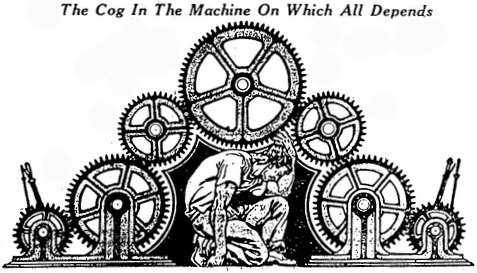
The Cog in the Machine, June 8, 2016. (http://catholicreadingproject.blogspot.com).

The Cog in the Machine, June 8, 2016. (http://catholicreadingproject.blogspot.com).

The problem for me is that this isn’t ironic at all. This department exists within the Rutgers School of Management and Labor Relations. These schools are not exactly incubators for “workers of the world unite” types, and would be most likely to take advantage of the weak job market to hire a labor historian desperately in need of a one-year or more gig. This is naked exploitation to be sure, but I find no irony in this job search at all. This is typical of the majority of jobs in higher education these days.

It is definitely hypocrisy, at least on the level of academia at large. Especially in considering that supposed bastions of liberal ideals (which universities really aren’t — they’re capitalist business enterprises which sometimes house some leftist leaning faculty) have turned the secure work of the professoriate into non-tenured service industry work. That this has coincided with the plunge in the number of full-time positions and in the number of living-wage positions in the US labor force in general is telling. It says that academia is nothing special beyond the expensive education, that it isn’t some sacred place for intellectual exchange and political mobilization. It is as firmly tied to capitalist pursuits as Wall Street and K Street.

I learned this lesson a quarter-century ago, thanks to the working-class history seminars at the University of Pittsburgh and Carnegie Mellon University. Between Dick Oestreicher, Bill Chase, Reid Andrews, Joe Trotter, and Joel Tarr (among others), the level of hypocrisy was enough to make me sick. The distance between what these people wrote regarding leftist movements, ideas, ideals, and exploited workers and how they treated students and colleagues sometimes was breathtaking. It was like the distance between the Terran system (Earth) and Alpha Centauri (roughly 25 trillion miles).

Hammer & Sickle & Pitt Flag [symbolic of Pitt's history department], December 13, 2012. (Donald Earl Collins).

Hammer & Sickle & Pitt Flag [symbolic of Pitt’s history department], December 13, 2012. (Donald Earl Collins).

Sure, it’s all “let’s start a communist revolution” when discussing the 180th nuanced on E. P. Thompson’s The Making of the English Working-Class. But when graduate students wanted to unionize to have their work recognized as workers, then these leftists suddenly became capitalists. “No, you’re not workers,” they said. “You’re students.” In the face of virulent racism, they said, “Get use to it. Shit happens.” Heck, some of these so-called bleeding-heart-liberals were themselves harassing students, exploiting their work for prestige and profit, and playing favorites to promote yes-men and yes-women while keeping others from pursuing their doctorates.

I saw the same distance between noble liberal ideals and center-right realities in my decade in the nonprofit world, mostly working in social justice. Yes, some of the very people who had made it their calling to ameliorate racism and combat injustices were also knee-deep in their own contradictions. Gender-based, race-based, and intersectional harassment wasn’t exactly uncommon. Exploitative labor practices like working two people full-time for the price of one, denying promotions based on gender or racial bias, even paranoia over power within a social justice organization. They all were the usual things I witnessed or experienced in the years between 1997 and 2008.

Wolf in sheep's clothing, a false prophet (a symbol of my ex-stepfather), November 2008. (Source/flickr.com)

Wolf in sheep’s clothing, a false prophet (a symbol of my ex-stepfather), November 2008. (Source/flickr.com)

There is nothing sacred and no safe space for those of us looking for such things. This belief in academia as being so different from the rest of the working world is an illusion cooked up by neo-conservatives who’ve made millions selling the idea that academia is a liberal bastion. We should all look for positions and places in which our work can thrive and we as individuals or even groups of people can grow. Those obviously still exist. But believe me, it’s been years since I thought that academia was a place where being far left-of-center was a good thing. It’s only good if you’re good at acting like this is so. It’s another illusion that others have chosen to create to cover up their hypocrisies. The irony is that people still believe in these ideals anyway.

End of the Dorm Room State

30 Saturday Apr 2016

Posted by decollins1969 in 1, Academia, Boy @ The Window, culture, Eclectic, Jimme, Mount Vernon New York, My Father, New York City, Pittsburgh, Pop Culture, race, University of Pittsburgh, Work, Youth

≈ Leave a comment

Tags

25 Welsford Street, 616 East Lincoln Avenue, Computing and Information Systems, Father-Son Relationship, Financial Aid, Freshman Year, Homelessness, La Guardia Airport, Lothrop Hall, Naivete, Pitt, Pork Neck Bones and Rice, South Oakland, Tuna Fish, unemployment, US Air, Western Union


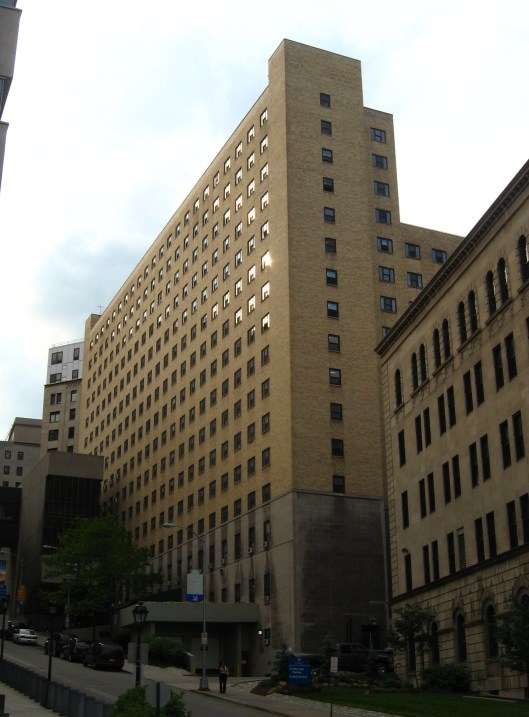
Lothrop Hall (we lived on the fourth floor in 1987-88), University of Pittsburgh, June 8, 2008. (TheZachMorrisExperience via Wikipedia). Released to the public domain via CC-SA-3.0.

Lothrop Hall (we lived on the fourth floor in 1987-88), University of Pittsburgh, June 8, 2008. (TheZachMorrisExperience via Wikipedia). Released to the public domain via CC-SA-3.0.

On this day and date twenty-eight years ago was the Saturday end to my freshman year at the University of Pittsburgh. Like today here in the DMV, it was a cool and cloudy day, a day in which I was tired from the year, but hopeful now that I had survived many of my inner doubts and outward troubles to make it to another fall of courses.

But there was a lot of unfinished business at Pitt. And, no, after my first Dean’s List, it wasn’t my grades. Six weeks earlier that year was March 15. That was the deadline for me to put down a $350 deposit to guarantee a dorm room for next year. Otherwise, I’d have to participate in a lottery for one. And the deadline for that was April 30th.

As of that morning, I had more than enough money to cover my deposit, as I’d gotten paid for my eighty or so hours of computer lab work with Pitt from the month of March. That money was way too late now. I knew that I’d have to go back to New York, to Mount Vernon, to find work for the summer, to have the money I needed to find a place to live for the fall when I’d come back to Pitt.

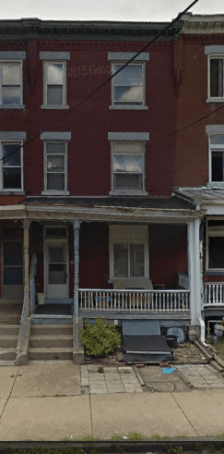
25 Welsford Street, Pittsburgh (where I lived my sophomore and junior years at Pitt), August 2015. (Google Maps).

25 Welsford Street, Pittsburgh (where I lived my sophomore and junior years at Pitt), August 2015. (Google Maps).

It wasn’t like I didn’t ask my parents. Mom didn’t have the money, between my idiot stepfather, my four younger siblings and my older brother Darren. Eight-hundred and fifty dollars of AFDC, food stamps, and WIC per month can only be stretched so far in a place as expensive as the New York metropolitan area. And my father Jimme, well, I let him know a month before the dorm reservation deadline that I needed the money. He said at least twice that he had wired me the funds via Western Union. I checked both times with the check cashing place in North Oakland, only to walk out empty-handed.

The timing just didn’t work out. That’s what I told myself, at least. I’d find a better place to live than Lothrop Hall. Between carousing Pitt basketball players, underaged boozers, the more than occasional tokers, and the terrible cafeteria food, I was probably better off living off-campus anyway.

You can convince yourself of a lot of things in the hours before a US Air flight to La Guardia when you’re staring at 120 days of living at 616 and being in Mount Vernon. Both places where I’d barely fit in before thirty-three weeks of college and relative independence. I was about to reclaim my emotionless role as the eldest son, all but running a house that was never mine to run in the first place. The fact of my questionable residential status as a sophomore at the University of Pittsburgh could wait.

Like with so many things going on in my life that leap year, I was terribly wrong. I found myself unemployed for the summer, homeless in Pittsburgh for five days, and broke and malnourished for most of the Fall ’88 semester. From April 30th to the Tuesday before Thanksgiving, I’d live with financial crisis, without a place to lay my head, and with tuna fish sandwiches and pork neck bones and rice as food for many of those days.

I did make friends my freshman year, and I did have friends my sophomore year, some of whom probably would’ve taken me in had they known about my troubles. But that’s the thing about abuse and poverty and race in a country that purports to be great and yet contradicts itself. You seldom tell anyone about anything bad in your life, out of embarrassment or out of pride, because you don’t want to be the living embodiment of a stereotype. Still, when I hinted about my lack of eats in October and November, my friends and even my classmates did help.

Fast-forward to ’92, the spring my father refused to believe that I knocked off my MA in Pitt’s history program in two semesters. He had told my brother Darren and his drinking buddies for years that he had paid my way through college. I also found out about that bit of Jimme braggadocio that spring.

Bumble Bee Tuna in oil (not water for me - still has been almost 28 years since eating), April 30, 2016. (http://www.upcitemdb.com).

Bumble Bee Tuna in oil (not water for me – still has been almost 28 years since eating), April 30, 2016. (http://www.upcitemdb.com).

When I went over to his place in late June to show him my MA degree, he even tried to tell me how he paid for my BA for four years. “What are you talking about?,” I said.

“My bachelor’s cost $32,000, and my other expenses over four years were another $20,000. In four years, you sent me $480 total,” I yelled, even though my drunk father was only a couple of feet away.

“Naw, naw, naw, I paid, I paid,” my father kept saying, with very little of the confidence than he had displayed before.

The total of my father’s payments for me and college was actually $880, including $480 he Western Union-ed to me my first three semesters. I’d forgotten the $400 I managed to get from him in August ’88 so that I could find a place to live my sophomore year in Pittsburgh. It is true, without that money, and without me surviving my first days in Pittsburgh minus a dorm room, I wouldn’t have finished college. But as a father myself, I’m not sure I’d ever claim credit for that, drunk or sober.

The Student-Athlete System and the Exploitation Lens

01 Friday Apr 2016

Posted by decollins1969 in 1, Academia, culture, Eclectic, eclectic music, music, Politics, Pop Culture, race, Sports, Work, Youth

≈ Leave a comment

Tags

"I Got Plenty O' Nuttin'" (1935), Bob Stoops, College Athletes, Ed O'Bannon, Exploitation, Jim Boeheim, Justifications, Kirk Schulz, Mark Emmert, National Collegiate Athletic Association, NCAA, NCAA Division I Football, NCAA Division I Men's Basketball, O'Bannon v. NCAA (2015), Ocsar G. Johnston, Porgy & Bess, Real Sports (HBO), Rhetoric, Sharecropping, Slavery, Student-Athletes, The Business of Amateurs (2016), The Sporting News


NCAA logo, September 4, 2014. (Getty Images/SportingNews.com).

NCAA logo, September 4, 2014. (Getty Images/SportingNews.com).

In July, US District Judge Claudia Wilken gave final approval to a combined $60 million in settlements of former and current college athletes’ claims against the NCAA and EA Sports. The deal granted as many as 93,000 claims of up to $7,000 for the use of college athletes’ images and likenesses in video games between 2003 and 2014. The groundbreaking decision provides student-athletes payments for the fruits of their labor for the first time. But these combined settlements are separate from the O’Bannon v. NCAA case. This main lawsuit against the NCAA’s use of unpaid college athletes remains in limbo. The NCAA asked for and the courts granted a stay, delaying a process that would make every college athlete eligible for some compensation in exchange for universities using their labor.

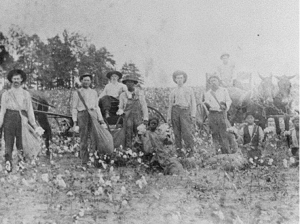
Beyond the response that often compares the NCAA student-athlete labor system to slavery, few have discussed the ways in which the NCAA’s defenders construct their arguments for the status quo. In many ways, the NCAA system isn’t much different from sharecropping. It was an agricultural economic system mostly located in the American South that took advantage of impoverished Whites and Blacks between 1870 and 1980. Both provided meager benefits like room, board, and clothing at an exorbitant cost while reaping huge profits from its workers. One system kept sharecroppers deeply in debt while the other has kept college athletes from profiting off of their work. The carrot in sharecropping was access to land to grow cotton and other crops for a profit at the end of a harvest season, minus landownership and all the necessary tools, seeds, and other necessities for producing those crops. The incentive in the NCAA’s system has been a year-to-year scholarship to cover the cost of a four-year degree, with the remote possibility in a handful of sports to earn enough recognition to become a professional athlete. Minus, until last fall, coverage for books, clothing, food outside of sporting events and practices, and the hours necessary to take advantage of an athletic scholarship. Defenders of both systems fought tooth-and-nail to keep sharecroppers and college athletes from organizing themselves into unions.

Unlike in slavery, the majority of sharecroppers were White, although more than a third were African American. All entered into sharecropping under contract, though the poor economic conditions of the South after the Civil War and the terror of White supremacist groups left poor Whites and Blacks few options. Likewise, NCAA’s college athletes also sign contracts and waivers that left them with few options in pursuing their athletic craft or in completing a college degree a year earlier than the average college student. And at least three different ways, the people defending the NCAA’s student-athlete system match sharecropping’s defenders with the language of exploitation. Though neither system is slavery, both are still closely related forms of exploitation, with a brutality that provides few good options for those engaged in doing the actual work.

George Gershwin's Porgy & Bess, with "I Got Plenty O' Nuttin'" (1935), oft sung by Ella Fitzgerald and Louie Armstrong (among others), April 1, 2016. (cropped and combined).

George Gershwin’s Porgy & Bess, with “I Got Plenty O’ Nuttin'” (1935), oft sung by Ella Fitzgerald and Louie Armstrong (among others), April 1, 2016. (cropped and combined).

1. The circular reasoning argument. This one is where defenders use the very label of their system — whether “sharecroppers” or “student-athletes” — to justify the existence and need for their system. Historian Chris Myers Asch documented numerous examples of this in his 2008 book The Senator and the Sharecropper. Asch included in his book a 1936 interview with psychologist John Dollard, one in which Mississippi planter William Alexander Percy said, “To live among a people whom, because of their needs, one must in common decency protect and defend is a sore burden in a world where one’s own troubles are about all any life can shoulder” (p. 70). Especially since many elites like Edward Everett Davis — dean of North Texas Agricultural College (now University of Texas at Arlington) from 1925 to 1946 — saw sharecroppers as “the most serious rural problem in the South.” In his The White Scourge (1940), Davis wrote that sharecroppers were “those biologically impoverished tribes of marginal humanity — black, white, and Mexican — subsisting on cotton” (p. ix).

Compare this line of reasoning with NCAA President Mark Emmert’s on why universities should not pay college athletes. On the 2011 Frontline episode “Money and March Madness,” Emmert said, “fact is, they’re not employees, they’re student-athletes.” In another interview, for the upcoming documentary The Business of Amateurs (release date TBD), Emmert said, “there’s not even a salary to debate. They’re not employees, they’re students.” For Emmert and the portions of the public who support his stance, the label “student-athlete” by itself justifies not paying college athletes, just like the label “sharecropper” did for planters who frequently cheated their workers out of profits. The idea for both has been they are but children that institutions need to care for, albeit under contract.

Black and White sharecroppers in Randolph County, Georgia, 1910. (Georgia Archives, Vanishing Georgia Collection)

Black and White sharecroppers in Randolph County, Georgia, 1910. (Georgia Archives, Vanishing Georgia Collection)

2. The low or no profit-margin argument. This has been a popular idea, to claim that despite the wealth generated under sharecropping, landowners made few, if any, profits. As shown by historian Lawrence J. Nelson in his 1999 book King Cotton’s Advocate, Oscar G. Johnston, head of the financial division of the Agricultural Adjustment Administration (a New Deal program), wrote in a 1937 memo, “any person familiar with the operation realizes that the sharecropper system is more favorable to the tenant than the cash wage system [paying hourly wages].” According to Johnston, any “criticisms” of sharecropping as an exploitative economic system came “from persons wholly ignorant of the system or the economic situation” (p. 88).

Syracuse University men’s basketball coach Jim Boeheim claimed that there are few to no profits in college athletics in his 2013 New York State Associated Press symposium speech. “I’m not against kids getting money. But the problem is, you give the 12 basketball players $150, now you gotta give the field hockey players. So now you’re talking 150 athletes. One-hundred fifty times $150 times eight. That’s a lot of money,” Boeheim said. In pleading for a stay in the O’Bannon case last year, the NCAA’s lawyers said that it and “many schools and students” would be “irreparably harmed” if the court allowed the injunction to go into effect. Yet the NCAA’s $11-billion contract with CBS and Turner Broadcasting for the NCAA Men’s Basketball Tournament and $500-million-per-year contract with ESPN for the college football playoffs contradicts the notion of irreparable harm.

3. The fringe-benefits argument. This is the assertion that a person’s status in this system produces material and intangible benefits, even despite the potential pitfalls and vulnerabilities. Asch wrote of another 1936 interview John Dollard conducted, in which one farmer said, “when times are bad he has to take care of the Negroes first, whether they make anything or not.” Another farmer said that sharecroppers only worked about three months out of the year, and used the rest of their time to “fish, fool around, attend revivals, and follow other trivial pursuits” (p. 71). Despite the evidence of poverty for the vast majority, planters consistently painted sharecroppers’ lives as ones with benefits than ones full of rampant exploitation.

Oklahoma football coach Bob Stoops' 17,000 square-foot home on lakefront property, Norman, OK, November 25, 2015. (http://sportshoop.la/).

Oklahoma football coach Bob Stoops’ 17,000 square-foot home on lakefront property, Norman, OK, November 25, 2015. (http://sportshoop.la/).

The common refrain in college athletics is likewise about benefits that outweigh injuries, long-term disabilities, the pressures of athletic and academic performance, and the loss of material benefits. University of Oklahoma head football coach Bob Stoops put it this way in a 2013 Sporting News interview: “I don’t see why people say these guys don’t get paid. It’s simple, they are paid quite often, quite a bit and quite handsomely.” They also “get room and board…the best nutritionist, the best strength coach to develop you, the best tutors to help you academically, and coaches to teach you and help you develop. How much do you think it would cost to hire a personal trainer and tutor for four to five years?,” Stoops said. The athletic scholarship, a non-guaranteed, year-by-year deal, is the only fringe benefit that matters in the case of college athletes.

Like Oscar Johnston’s defense of the sharecropping system in the 1930s, the NCAA’s defense fits the pattern of “it’s a terrible system, but it could be much worse.” During his Real Sports conversation last March, Kansas State University president and NCAA Board of Governors member Kirk Schulz said, “Well, a scholarship at Kansas State, a four-year scholarship, is about $180,000, and our average debt load of all of our students is about $26, $27,000.”

—————————————–

Apparently, the system is fair precisely because naked exploitation is better than the illusion of choices given to the typical college student. These arguments in support of student-athlete system dovetail almost perfectly with the arguments that supported sharecropping as a necessary evil in the 1930s. The justifications are paternalistic and elitist, with a mix of class and racial imagery to boot. To the point where any NCAA executive, college or university coach or athletic director, university president or journalist in support of not paying these athletes should be beyond embarrassed.

← Older posts
Newer posts →

Boy @ The Window: A Memoir

Boy @ The Window: A Memoir

Places to Buy/Download Boy @ The Window

There's a few ways in which you can read excerpts of, borrow and/or purchase and download Boy @ The Window. There's the trade paperback edition of Boy @ The Window, available for purchase via Amazon.com at http://www.amazon.com/Boy-Window-Donald-Earl-Collins/dp/0989256138/

There's also a Kindle edition on Amazon.com. The enhanced edition can be read only with Kindle Fire, an iPad or a full-color tablet. The links to the enhanced edition through Apple's iBookstore and the Barnes & Noble NOOK edition are below. The link to the Amazon Kindle version is also immediately below:

scr2555-proj697-a-kindle-logo-rgb-lg

Boy @ The Window on Amazon.com: http://www.amazon.com/Boy-The-Window-Memoir-ebook/dp/B00CD95FBU/

iBookstore-logo-300x100

Boy @ The Window on Apple's iBookstore: https://itunes.apple.com/us/book/boy-the-window/id643768275?ls=1

Barnes & Noble (bn.com) logo, June 26, 2013. (http://www.logotypes101.com).

Boy @ The Window on Barnes & Noble: http://www.barnesandnoble.com/w/boy-the-window-donald-earl-collins/1115182183?ean=2940016741567

You can also add, read and review Boy @ The Window on Goodreads.com. Just click on the button below:

Boy @ The Window

Twitter Updates

Tweets by decollins1969
  • RSS - Posts
  • RSS - Comments

Archives

  • June 2025
  • April 2023
  • September 2022
  • August 2022
  • July 2022
  • June 2022
  • May 2022
  • April 2022
  • March 2022
  • January 2022
  • December 2021
  • November 2021
  • October 2021
  • September 2021
  • August 2021
  • July 2021
  • June 2021
  • April 2021
  • March 2021
  • February 2021
  • January 2021
  • December 2020
  • November 2020
  • October 2020
  • September 2020
  • August 2020
  • July 2020
  • May 2020
  • April 2020
  • March 2020
  • January 2020
  • December 2019
  • November 2019
  • August 2019
  • July 2019
  • June 2019
  • May 2019
  • April 2019
  • March 2019
  • February 2019
  • January 2019
  • December 2018
  • November 2018
  • October 2018
  • September 2018
  • August 2018
  • July 2018
  • June 2018
  • May 2018
  • March 2018
  • February 2018
  • January 2018
  • December 2017
  • November 2017
  • October 2017
  • September 2017
  • August 2017
  • July 2017
  • June 2017
  • May 2017
  • April 2017
  • March 2017
  • February 2017
  • January 2017
  • December 2016
  • November 2016
  • October 2016
  • September 2016
  • August 2016
  • July 2016
  • June 2016
  • May 2016
  • April 2016
  • March 2016
  • February 2016
  • January 2016
  • December 2015
  • November 2015
  • October 2015
  • September 2015
  • August 2015
  • July 2015
  • June 2015
  • May 2015
  • April 2015
  • March 2015
  • February 2015
  • January 2015
  • December 2014
  • November 2014
  • October 2014
  • September 2014
  • August 2014
  • July 2014
  • June 2014
  • May 2014
  • April 2014
  • March 2014
  • February 2014
  • January 2014
  • December 2013
  • November 2013
  • October 2013
  • September 2013
  • August 2013
  • July 2013
  • June 2013
  • May 2013
  • April 2013
  • March 2013
  • February 2013
  • January 2013
  • December 2012
  • November 2012
  • October 2012
  • September 2012
  • August 2012
  • July 2012
  • June 2012
  • May 2012
  • April 2012
  • March 2012
  • February 2012
  • January 2012
  • December 2011
  • November 2011
  • October 2011
  • September 2011
  • August 2011
  • July 2011
  • June 2011
  • May 2011
  • April 2011
  • March 2011
  • February 2011
  • January 2011
  • December 2010
  • November 2010
  • October 2010
  • September 2010
  • August 2010
  • July 2010
  • June 2010
  • May 2010
  • April 2010
  • March 2010
  • February 2010
  • January 2010
  • December 2009
  • November 2009
  • October 2009
  • September 2009
  • August 2009
  • July 2009
  • June 2009
  • May 2009
  • April 2009
  • March 2009
  • February 2009
  • January 2009
  • December 2008
  • November 2008
  • October 2008
  • September 2008
  • August 2008
  • July 2008
  • June 2008
  • May 2008
  • April 2008
  • March 2008
  • February 2008
  • January 2008
  • December 2007
  • November 2007
  • October 2007
  • September 2007
  • August 2007
  • July 2007
  • June 2007

Recent Comments

MaryPena's avatarMaryPena on My Day of Atonement/Bitter Hat…
decollins1969's avatardecollins1969 on No Good Teaching Deed Goes…
Mary Rose O’Connell's avatarMary Rose O’Connell on No Good Teaching Deed Goes…

NetworkedBlogs on Facebook

NetworkedBlogs
Blog:
Notes From a Boy @ The Window
Topics:
My Life, Culture & Education, Politics & Goofyness
 
Follow my blog

616 616 East Lincoln Avenue A.B. Davis Middle School Abuse Academia Academy for Educational Development AED Afrocentricity American Narcissism Authenticity Bigotry Blackness Boy @ The Window Carnegie Mellon University Child Abuse Class of 1987 CMU Coping Strategies Crush #1 Crush #2 Death Disillusionment Diversity Domestic Violence Economic Inequality Education Family Friendship Friendships Graduate School Hebrew-Israelites High-Stakes Testing Higher Education History Homelessness Humanities Humanities Program Hypocrisy Internalized Racism Jealousy Joe Trotter Joe William Trotter Jr. K-12 Education Love Manhood Maurice Eugene Washington Maurice Washington Misogyny Mother-Son Relationship Mount Vernon High School Mount Vernon New York Mount Vernon public schools Multiculturalism MVHS Narcissism NFL Pitt Pittsburgh Politics of Education Poverty President Barack Obama Race Racial Stereotypes Racism Relationships Self-Awareness Self-Discovery Self-Reflection Sexism Social Justice Teaching and Learning University of Pittsburgh Violence Whiteness Writing

Top Rated

Blog at WordPress.com.

  • Subscribe Subscribed
    • Notes from a Boy @ The Window
    • Join 103 other subscribers
    • Already have a WordPress.com account? Log in now.
    • Notes from a Boy @ The Window
    • Subscribe Subscribed
    • Sign up
    • Log in
    • Report this content
    • View site in Reader
    • Manage subscriptions
    • Collapse this bar
 

Loading Comments...