• About Me
  • Other Writings
  • Interview Clips
  • All About Me: American Racism, American Narcissism, and the Conversation America Can’t Have
  • Video Clips
  • Boy @ The Window Pictures
  • Boy @ The Window Theme Music

Notes from a Boy @ The Window

~

Notes from a Boy @ The Window

Category Archives: Work

What I Didn’t Know (in ’81, in ’97, in ’13)…

18 Saturday May 2013

Posted by decollins1969 in 1, Academia, Boy @ The Window, Carnegie Mellon University, Christianity, culture, Eclectic, eclectic music, Hebrew-Israelite, Mount Vernon New York, Movies, music, Pittsburgh, Politics, Pop Culture, race, Religion, University of Pittsburgh, Work, Youth

≈ Leave a comment

Tags

616 East Lincoln Avenue, Anticipation, Back Stabbers, Bruce Anthony Jones, Child Abuse, CMU, Domestic Violence, Family, Hustling, Joe Trotter, Joe William Trotter Jr., Not Knowing, O'Jays, Pitt, Poverty, Publishing, Success, The Matrix (1999), Welfare Poverty, Wisdom, Writing


Noah with me, January 3, 2004 [he was five months old]. (Angelia N. Levy).

Noah with me, February 28, 2004 [he was seven months old]. (Angelia N. Levy).

What I didn’t know across the past thirty-two years could be another book for me. I assume that would be the case for anyone would could look back across their life and second-guess themselves over that long a period of time. For me, though, the significance of today comes out of my mathematics background. You see, today’s my sixteenth PhD graduation anniversary. Not all that significant, I suppose. Except that I’m as far away from the end of my graduate school days at Carnegie Mellon today as I was from the first days of being a Hebrew-Israelite and watching my family fall into welfare poverty when I graduated in ’97.

100th Commencement Ceremony program, Carnegie Mellon University, May 18, 1997. (Donald Earl Collins).

100th Commencement Ceremony program, Carnegie Mellon University, May 18, 1997. (Donald Earl Collins).

Two things will hurt your success in this life. One is not acting on the things you know you should or must do. I learned that hard lesson from watching my mother make the decision to not make any decisions until it was too late, all while growing up at 616. Two is the enormous danger of not knowing, and therefore, not being able to act or respond to new or damaging situations as they arise. I’ve learned that lesson pretty well, too. Sometimes the hard way, through really bad experiences or decisions I didn’t play out like a game of eleventh-dimension chess. Sometimes through insight, foresight, even divine inspiration, anticipating what I didn’t know ahead of time.

And even with anticipation, you still might not be able to do anything about what you do and don’t know, simply because you’re not in any position to change things. That was especially true in ’81. I knew that my now deceased idiot ex-stepfather Maurice Washington was no good. But when my Mom decided to end her six months’ separation from him, there was nothing I could really do about it. I knew that with inflation rates of 14.5 percent in ’79 and 11.8 percent in ’80 (thank you, Scholastic Weekly Reader) and my Mom income of roughly $15,000 per year that we had less and less to work with at home. Again, not much I could do about that, either. Even paper boy jobs were drying up by the time I turned twelve!
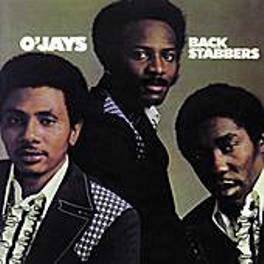
O'Jays Back Stabbers (1972) album cover, November 10, 2011. (Dan56 via Wikipedia). Qualifies as fair use as low-resolution illustration of subject matter.

O’Jays Back Stabbers (1972) album cover, November 10, 2011. (Dan56 via Wikipedia). Qualifies as fair use as low-resolution illustration of subject matter.

What I didn’t know was how quick and violent the shift into poverty would be. What I didn’t know was that Maurice would use his/our conversion as Hebrew-Israelites as justification for abusing my Mom and me. What I didn’t know was that my Mom would have three more kids by this man between July ’81 and May ’84. What I didn’t know was that I would feel so low about the loss of my best friend and my sense of self that I’d attempt to take my own life on my fourteenth birthday, at the end of ’83.

But when I looked back on this in ’97, I mostly thought about the good things that had occurred in the fifteen years between the domestic violence my Mom endured on Memorial Day ’82 and my doctoral graduation ceremony. My independent conversion to Christianity in ’84. Knocking out a 5 on my AP US History exam without ever cracking open Morison and Commager. Overcoming poverty and my lack of self-esteem to build a life at Pitt and in Pittsburgh between ’88 and ’97.

Still, I’d already been wounded, badly. By the things I knew but did nothing about. By those things I could’ve anticipated but my efforts to counteract were insufficient. By those things I couldn’t have known at all. I knew I’d have problems with my “running interference” advisor Joe Trotter coming down the dissertation stretch. Yet because of departmental politics and my need to be done sooner rather than later, I did nothing about this until I was six chapters into an eight-chapter dissertation. I knew my mentor and committee member Bruce Anthony Jones could sometimes be unreliable. Yet I had no idea that he would completely abandon me and his other doctoral students the moment he signed his name to my and their dissertations.

My dissertation's signature page, May 18, 2013. (Donald Earl Collins),

My dissertation’s signature page, May 18, 2013. (Donald Earl Collins),

Most of all, I never anticipated that my Mom would actually be jealous of me, and would spend a whole week with me at 616 and in Pittsburgh doing and saying things to completely disparage what I’d worked so hard for. For me, for her, for my family. That was hard to get over. There are times I’m not sure if I’m entirely over this yet.

What I’m sure of in ’13, though, is what I do know, don’t know, and can only anticipate with the wisdom of experience and wisdom beyond my experience. I know that I love my wife, that there’s a lot in common between her and Crush #1 (for those of you who’ve read Boy @ The Window so far, the implications should be obvious), real and from my own imagination. I didn’t know that I’d have a kid, a son who at nearly ten is both wonderful and perplexing, and hopefully, off to a much better start in life than I ever got. I suspect that one of my references for jobs and consulting gigs has been undermining my efforts over the past five years, and have thus removed her as a reference.

What I don’t know — but can only hope and work like a dog toward — is whether Boy @ The Window will be a success. I’m not sure if quantifying it would help. I sold a thousand copies of Fear of a “Black” America between August ’04 and January ’07, without the benefit of this blog, Twitter, Facebook or the e-book platforms. How long before I sell my first hundred, thousand, 5,000 or more? I have no idea. But as they say, I “must walk the path, not just know it.”


Boy @ The Window Is Live!

16 Tuesday Apr 2013

Posted by decollins1969 in 1, Boy @ The Window, Christianity, culture, Eclectic, eclectic music, Hebrew-Israelite, Jimme, Mount Vernon High School, Mount Vernon New York, Movies, music, My Father, New York City, Pittsburgh, Pop Culture, race, Religion, Sports, University of Pittsburgh, Work, Youth

≈ 3 Comments

Tags

E-Book, ebook, PDF edition, Publishing


Final Cover

Final Cover

Well, “it is done,” as my former graduate advisor Joe Trotter used to say. Boy @ The Window is now a published book. For now, it’s an e-book, available on Amazon.com through Kindle Books (as Boy @ The Window: A Memoir) and through Smashwords.com (which will then ensure that the book makes its way to iBooks, Apple’s bookstore, as well as Barnes & Noble.com). I also have a free PDF edition of Boy @ The Window (text only) available on this blog site (in the sidebar to the right), at least for the next three months.

I anticipate putting out a trade paperback edition in the next few months, either in July or in the fall. But with more than forty percent of the book market now in the e-book realm, it made far more sense to start with the fastest growing part of the market first. It’s a bit weird not holding a copy of Boy @ The Window in my hands, being able to leaf through the paper pages. It’s been on my iPad, though, for a couple of days, and seeing it there in 100 percent working order has been a pretty good feeling.

For me, at least, incidents like the Boston Marathon bombing yesterday — and so many other tragedies and dastardly events in the seven years and four months since I first began writing my book — are a reminder to live every day like there may not be a next one. After years of work and waiting for the commercial market to say “yes” to Boy @ The Window, I knew I didn’t want to wait forever to put this work of mine out into the world. So, “hello, world!”

Seasons of Flu

26 Tuesday Feb 2013

Posted by decollins1969 in 1, Academia, Boy @ The Window, culture, Eclectic, Work, Youth

≈ 1 Comment

Tags

Biohazard, Biohazardous, Carnegie Mellon University, Chills, East Liberty, Flu, Hygiene-Challenged College Students, Influenza, Overworked, Pitt, PNC Bank, Poor Hygiene, Rest, Students, Sweats, Symptoms, Teaching, Teaching and Learning, Theraflu, University of Pittsburgh


God Bless You cartoon, January 2013, February 26, 2013. (http://www.cartoonaday.com).

God Bless You cartoon, January 2013, February 26, 2013. (http://www.cartoonaday.com).

I’ve had the flu three times in my life: February ’77, March ’86 and February ’93. I’ve had the stomach flu at least half a dozen times, including the week after I marched for my doctorate in May ’97. But given my IBS (Irritable Bowel Syndrome) issues, the stomach flu’s nothing compared to full-on influenza.

I get my flu shots regularly these days, but twenty years ago, I knew nothing about protecting myself from the illness that has caused the deaths of 36,000 people on average every year. So it was during my second year of graduate school at Pitt. It was a particularly bad flu season in Pittsburgh — in fact, in the whole northeastern US — the winter of 1992-93.

What made that winter particularly terrible for me was the fact that I had four discussion sections of US History to 1877 students to teach that semester, 120 students in all. Not to mention the requirement of showing up for every one of Bill Stanton’s lectures, in which more than 200 students attended twice a week. I was in constant contact with students that semester, with office hours, my first letters of recommendation and students needing makeup exams.

Biohazard symbol (orange), May 29, 2009. (Nandhp via Wikipedia). In public domain.

Biohazard symbol (orange), May 29, 2009. (Nandhp via Wikipedia). In public domain.

I risked exposure to these unkempt, hygienically-challenged students at least four days a week from the beginning of January on. By the third week of February, I had a section in which six out of eighteen students had shown up with the flu or flu-like symptoms. They sneezed, coughed and breathed their way through my Friday morning class, leaving their biohazardous tissues on the conference table or in an overflowing garbage can.

My first symptoms showed up by the end of the day that last Monday in February. At first, I thought that I had caught a cold. I kept working full-tilt on my quantitative methods project to fulfill my last non-class-taking requirement before any potential PhD comprehensive exams next year. It was only a potential prospect, as I was also working with Joe Trotter and then graduate advisor John Modell on a deal to transfer my graduate school credits to Carnegie Mellon, in order to finish my history doctorate there.

So I barely noticed that Tuesday and Wednesday that my lymph nodes had swollen, my teeth started to hurt, and my body temperature seemed off. I attributed it to another cold snap, and had the nerve to even play a game of pick-up basketball up on the hill Tuesday afternoon. By the end of the day on Wednesday, though, I felt it all. I was way too hot one minute, cold and shivering the next, sweating all the while. My nose was red and running like a mucus faucet. And every part of me ached, like I was in the midst of going through three years’ worth of puberty, all at once, and all at the age of twenty-three.

I went home, hoping to be better in time for my discussion sections at 2 pm and 3 pm on Thursday. Even though I felt even worse, I went in to teach that next day, barely able to wait ten minutes for the 71B bus outside of my place on Highland Avenue. The two sections that afternoon were a blur, as my mouth was dry and my mind was a swirling mess.

The only medication I had was two packs of two-year-old Theraflu and some Advil. I’d taken one pack of the Theraflu before my sections that morning, which may have been why I felt like my mind was floating and my kidneys were flooding at the same time. My monthly TA paycheck for teaching was due to me via a direct deposit into my PNC Bank account at 12:01 am that Friday. Only then could I go get some more chicken noodle soup and safer Theraflu to take for my flu-ridden body.

Theraflu Maximum Strength, circa 1998, February 26, 2013. (http://drugstore.com).

Theraflu Maximum Strength, circa 1998, February 26, 2013. (http://drugstore.com).

I stood at the PNC Bank ATM at 12:05 am that Friday, February 26 — the one on the corner of Highland and Penn Avenue in East Liberty — shivering and looking from side to side in case some wannabe thug was on the prowl. I managed to get fresh meds and soup at Giant Eagle, and fell asleep at 1 am. Somehow I woke up six hours later, woozy, somewhat refreshed, and hoarse. I still taught my other two sections at 9 and 10 am.  Then I went home to rest, because I was to be part of some PAGPSA gathering  (see my post “James and the PAGPSA” from November ’12 for more) and presentation on campus at 6 pm that evening.

What did I learn from all of this? To stay away from sickly students, for one. To drink and take lots of vitamin C. That I should take the time off when I was really, truly sick. That flu shots were ninety-five percent effective at preventing people from picking up the flu of a given season. Most of all, that I was truly a part of this world, and that flu could kick ass in my super-strong immune system as well.

All Work and No Play

28 Monday Jan 2013

Posted by decollins1969 in 1, Academia, Boy @ The Window, Christianity, culture, Eclectic, Hebrew-Israelite, Mount Vernon New York, Pop Culture, race, Religion, Work, Youth

≈ Leave a comment

Tags

616, 616 East Lincoln Avenue, Acid, Acting, Atheism, Balance, CIS, Computer and Information System, Evolution, Falcon Crest, Fringe, History Major, Intolerance, John Noble, LSD, Neal Galpern, Pitt, Religion, Robert Foxworth, Sexual Harassment, University of Pittsburgh, Walter Bishop, Yin and Yang


Yin & Yang symbol from Taoism, good symbol for balance in life, January 28, 2013. (http://taoism.about.com).

Yin & Yang symbol from Taoism, good symbol for balance in life, January 28, 2013. (http://taoism.about.com).

As those high schools students I taught through JSA at Princeton in the summers of ’08 and ’09 either have come to realize or are realizing now, finding balance between school, full-time or part-time work, family and some semblance of a social life is just a tad difficult. Sometimes, it’s even impossible. So it was for me the spring of ’89, the last spring before I’d put together what I came to call my “16-week strategy for success and a social life.”

It was the semester where in which I worked 36 hours a week over a seven-week period and faced sexual harassment from a co-worker who was the BFF of my supervisor of Pitt’s Cathedral of Learning labs for Computer and Information Services (CIS) (see my post “On People and Stress” from February ’09). It was the last semester in which I had to worry about my mother and my younger siblings from afar because of the possibility of domestic violence, as my idiot stepfather Maurice still lived with them at 616.

This was my first set of classes as a History major, but I also had some general ed requirements to fulfill (see my post “Major Change” from October ’10). It would’ve been a tough semester even if I hadn’t worked, but with the CIS schedule the way it was, I was in for an interesting ride. For Macro, the chair of the Economics department was our professor. The class was at nine o’clock in the morning on Tuesdays and Thursdays, with a discussion section at 8 am on Tuesday to boot. It was almost as if he wanted folks to fail. With my schedule the way it was, I rarely made it to class on Tuesdays, and I only made it to one discussion section all semester long. To make up for that, I never missed the class on Thursdays, and often participated in the lecture discussions, such as they were.

Actor Robert Foxworth on Broadway in August: Osage County, August 2008. (Joan Marcus/Playbill).

Actor Robert Foxworth on Broadway in August: Osage County, August 2008. (Joan Marcus/Playbill).

Shakespeare was later in the day on Tuesdays and Thursdays, taught by Wion, who looked like the actor Robert Foxworth from the CBS show Falcon Crest, only not quite as handsome. He delivered lines from Taming of The Shrew and Othello like he’d been a wannabe actor in a previous career but realized teaching was more of his shtick. Wion often used Freudian pop psychology to explain the motives of characters in Shakespeare’s plays, and as he did, all of our eyes glazed over. This analysis for us was so ’70s, especially for the second-wave feminists in the class.

My Bio and Philosophy classes seemed to fit under the theme of “questioning God,” as there were students in both who had an ax to grind against “dumb Christians.” Bio in some ways was easier, at least because we had a professor who understood why some of us who were Christian might find evolution difficult to swallow. After several yelps from students during one of his lectures on evolution, mutation and reproduction, he said, “just because there’s evolution doesn’t mean that God doesn’t exist. Who’s to say that evolution isn’t a higher being’s method for the creation of life?” I appreciated that answer very much.

In existentialism class, especially the discussion section, no reconciliation was possible. My discussion section instructor was an Australian man in his late-twenties, with curly hair like the lead singer from Simply Red, except my instructor’s hair was a dirty blonde. He spent discussion after discussion railing on Christians as “people who refuse to believe that God doesn’t exist.” One of our discussions was so anti-anything other than atheism that I found it just as bigoted as anything I’d heard from Hebrew-Israelites or out of a televangelist’s mouth, and said as much. I was ignored.

No class that semester drove me nuts like my History majors writing seminar with Neal Galpern. We met on Monday and Wednesday afternoons for about an hour and a half, and it was the most boring hour and a half on my schedule. Galpern was an aging hippie complete with comb-over who graduated with doctorate in hand from Berkeley in ’75. He sometimes acted like he was still dropping acid. His stuttering starts and stops and numerous “Um”s could stop his lectures and our discussions cold. He wanted each of us to write a research-based paper of no less than twenty papers on any comparative topic in history that we could come up with, as vague as the man himself.

John Noble as Dr. Walter Bishop on Fringe, Season 5, after dropping acid, December 2012. (http://fringetelevision.com).

John Noble as Dr. Walter Bishop on Fringe, Season 5, after dropping acid, December 2012. (http://fringetelevision.com).

I couldn’t stand Galpern and his constant skipping over my hand in class and his snarky comments to all of us as if we were all dense and he was clearer than Antarctic ice melt. I didn’t challenge Galpern in class, at least not directly. I challenged him with my project. I decided to do a paper that compared the main features of the Civil Rights Movement in the US to the Anti-Apartheid Movement in South Africa. Admittedly it was too big a project, but it was Galpern’s job to help me narrow the topic into a doable chunk.

Instead all the advice he gave me consisted of “You need to find another topic, um . . . because, um . . . I’m afraid . . . I don’t, um . . . know much . . . about this.” I refused to budge. I wasn’t about to do a stupid paper on medieval Europe just because that happened to be his area of alleged expertise. After a meeting where Galpern finally gave in to me, I went across the hall to our classroom on the third floor of Forbes Quad and imitated my professor’s halting style of conversation. Galpern walked in, and I just kept going until I finished my, um, sentence. Yeah, it would be safe to say that he didn’t like me too much either!

I finished that semester with two A-‘s in my writing seminar and in existential philosophy, a B+ in Shakespeare, a B in Biology, and even pulled out a C+ in Macro, despite my lack of attendance. It was a difficult time. Yet it was also the start of my growth into early adulthood, and understanding that finding balance would be the key to sustained success.

Jacksonville Visit

24 Thursday Jan 2013

Posted by decollins1969 in 1, Boy @ The Window, Christianity, culture, Eclectic, Jimme, Mount Vernon New York, My Father, Pop Culture, race, Religion, Work, Youth

≈ Leave a comment

Tags

616, 616 East Lincoln Avenue, Alcoholism, Extended Family, Family Intervention, Father-Son Relationships, Forgiveness, Intervention, Jacksonville, Jacksonville Florida, Love


Me and My Father Jimme, Mall, Jacksonville Waterfront, August 27, 2007. (Angelia N. Levy).

Me and My Father Jimme, Jacksonville Waterfront, August 27, 2007. (Angelia N. Levy).

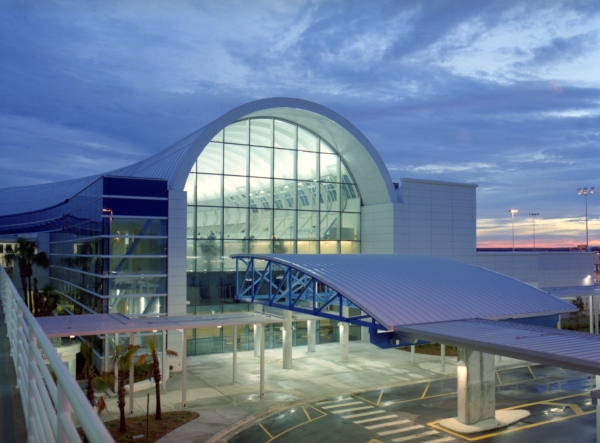
Under almost no circumstances could I have ever seen myself visiting Jacksonville. A nuclear holocaust, the collapse of the federal government, a super-flu pandemic, perhaps. And that would be a hypothetical maybe at best. But I did visit, for the first time, eleven years ago this week, to see my father Jimme for the first time in since Christmas Eve ’94. It was a life-changing event, and for once, for the better.

It was a memorable visit because after three years of talking over the phone, I finally would get to see Jimme and his new family (see my post “Finding My Father for the First Time” from November ’11). It was a calm-before-the-storm two-day visit, nestled in between the sturm und drang of the ’02 New Voices Winter Retreat in Atlanta and my family intervention at 616 in Mount Vernon (see my post “The Intervention” from January ’08).

I honestly had few expectations. I knew Jacksonville covered a lot of acreage as a city, but was basically Georgia south more than it was a major city in Florida. I knew that the town had a high poverty rate, and I knew that they had the Jacksonville Jaguars. Not much more than that was in my memory banks as I touched down on my flight from Hartsdale International Airport to podunk Jacksonville’s airport on a rainy Sunday in January.

Glass extension of Jacksonville International Airport, January 24, 2013. (http://www.airport-technology.com).

Glass extension of Jacksonville International Airport, January 24, 2013. (http://www.airport-technology.com).

Collins family members besides my father were there to greet me, including a couple of second-cousins. They were much more excited to see me than I was to see them, mostly because I hadn’t been prepared to meet extended family on this trip. They gave me a brief tour of the city — although I wasn’t going to see much in the rain (and there wasn’t much to see to begin with). Still, I was happy that they were happy and chatty and welcoming.

Meeting my father’s second wife Mary was interesting, if only because she shared my mother’s first name. Though loud in so many ways, she was also very kind, very Christian and very warm to me. Like most folks, she made assumptions about me that I couldn’t possibly live up to, like viewing everything in life through the lens of the Bible. It made for a lively dinner discussion on the subject my second night there. Ms. Mary has kept her conversations with me much shorter since that first visit.

But the most important part of my visit, though, was the two days I spent with my father. This was my first time seeing him completely sober since ’88, and this was nearly five years since he had given up drinking. The change in his physical appearance was dramatic, as he now only looked his age, and not twenty years older than his age. He looked better and strong than he had in years, maybe decades.

That wasn’t all that had changed. Me and my father talked about everything, from family to work, politics to writing, education and religion over those forty-eight hours. He shared his secret to his new diabetes diet – a case and a half of diet soda per day and no water intake.

My father, Silver Spring, MD, September 8, 2012. (Noah M. Collins).

My father, Silver Spring, MD, September 8, 2012. (Noah M. Collins).

I spend our last conversation telling my father about what I was about to do in Mount Vernon, that I was going to spend an evening airing out three decades of dirty laundry, for the sake of my younger siblings. That’s when he apologized to me about his alcoholism and all the things he had put me and my older brother Darren through growing up. I told him that I’d forgiven him a long time ago.

It was a touching moment out of several touching moments that visit. I left that Tuesday morning, in awe of the fact that sometimes people can and do change for the better, even miraculously so. Even in a place like Jacksonville.

Glad Obama’s In, But Nothing to Celebrate

21 Monday Jan 2013

Posted by decollins1969 in 1, culture, Eclectic, Patriotism, Politics, Pop Culture, race, Religion, Work

≈ Leave a comment

Tags

Capitulation, Centrist, Compromise, Domestic Policies, foreign policy, Glenn Greenwald, Great Recession, Inauguration, Inauguration Day, Long-Term Unemployment, Mitt Romney, National Security, Obama, Obama Administration, Obama's Legacy, Obama's Second Term, Police State, Policies, President Barack Obama, President Obama, Privatization, Rhetoric, Second Inauguration, Wall Street Deregulation


President Barack Obama takes his first oath of office, US Capitol, January 20, 2009. (DoD photo by Master Sgt. Cecilio Ricardo, USAF/Wikipedia). In public domain.

President Barack Obama takes his first oath of office, US Capitol, January 20, 2009. (DoD photo by Master Sgt. Cecilio Ricardo, USAF/Wikipedia). In public domain.

Don’t get me wrong. I wholeheartedly supported President Barack Obama for election in ’08 and again in ’12, as my blog posts and my thousands of tweets show over the past five years. I’ve admonished neo-cons, naysayers, liberals and racists on my pages over the past half-decade for their ridiculous statements about the president’s ancestry, motivations and policies.

But, even with all of this, I’ve gleaned flaws in President Obama’s approach to domestic and foreign policy, to his administration’s continuing Bush’s work on the semi-police state, to his whole-cloth acceptance of K-12 education “reform” and backing off on regulations for the for-profit higher education institution world (see my posts “Can Do No Wrong” [March ’10], “Bad Conversations and Education Reform” [November ’10], “The POTUS and The Last Airbender” [December ’10],  “For the Love of a Lockout & an Impasse” [July ’11], “Emancipation and Compromise” [this month] and “Why Obama Is Only A Failed Centrist President” [this month]).

The recent fiscal cliff solution, the extension of widespread surveillance powers over our email, cell phone calls, text messages (and, presumably, blogs, tweets and Facebook pages like my own as well), and the ho-hum approval of $633 billion in appropriations for the Defense Department’s budget this year, though, give me even less of a reason to celebrate President Obama’s second inauguration.

Crowd at National Mall morning of President Obama's inauguration, January 20, 2009. (DoD photo by Senior Master Sgt. Thomas Meneguin, USAF/Wikipedia). In public domain.

Crowd at National Mall morning of President Obama’s inauguration, January 20, 2009. (DoD photo by Senior Master Sgt. Thomas Meneguin, USAF/Wikipedia). In public domain.

Without a doubt, he was a better choice than that dumb-ass sycophant Mitt Romney. If only because Romney’s entire raison d’être as president would’ve been to allow the rich and corporations another round of economic rape, destroying the American middle class, and pushing the working poor and welfare poor into oblivion in the process.

Obama’s win in November, however, was a sigh of relief for me, not really a jumping-for-joy moment. Now, after witnessing the fiscal cliff debacle, it is obvious that the next four years will be more of the same lukewarm, milk-toast domestic proposals, hardline national security and military policies, and half-baked rhetoric that we were all a part of in President Obama’s first term. By 2017, if I’m still alive to write and tweet, here’s what will remain before us as major crises when Obama leaves office:

National debt; universal health care reform; higher education reform; student aid; student loan policy; minimum wage; living wage; union-busting; long-term unemployment; long-term underemployment; de-industrialization; Wall Street/banking deregulation; housing/mortgage crisis; comprehensive immigration reform; federal tax code; rendition and torture; warrantless wiretapping/surveillance; drone strikes on innocent civilians; upgrading the electrical grid; crumbling infrastructure (roads, bridges, water and sewage systems); PreK-12 education reform; social mobility; green jobs; environmental pollution; cap-and-trade; global warming/climate change; nuclear proliferation; Medicare/Medicaid solvency; religious tolerance; racial/ethnic tensions; women’s reproductive rights; over-incarceration of poor men and women of color; police brutality; gun violence; violent crimes; domestic terrorism; cybersecurity; military-industrial complex; racial/gender/age/sexual orientation discrimination in the workplace; school privatization/high-stakes testing/charter schools/voucher programs; border security, the War on Drugs, prison-industrial complex; voter disenfranchisement; decriminalization of marijuana (and other drugs); post-trauma stress disorder for war veterans and the poor; lingering effects of the Great Recession; funding for public mental health facilities; high-speed rail; food security and policy; prescription drug abuse; Big Pharma; Social Security “reform;” obesity/diabetes/high-blood pressure and other long-term illnesses; and GMOs.

Aerial views of the damage caused by Hurricane Sandy,  New Jersey coast taken during a search and rescue mission, October 30, 2012.  (Master Sgt. Mark C. Olsen, USAF/Wikipedia). In public domain.

Aerial views of Hurricane Sandy damage, New Jersey coast [climate change as example of crises that will go unaddressed during Obama’s second term], October 30, 2012. (Master Sgt. Mark C. Olsen, USAF/Wikipedia). In public domain.

Now, you tell me. Do I really have any reason to see today as a day of celebration?

Sports and “The -tions”

22 Saturday Dec 2012

Posted by decollins1969 in 1, Academia, culture, Eclectic, High Rise Buildings, Politics, Pop Culture, race, Sports, Work

≈ Leave a comment

Tags

"Social Political Economic", African American History, De-industrialization, Declining Cities, Economic Inequality, Gentrification, High School Social Studies Teaching Formula, Higher Education, History, History of American Sports, History of Education, Immigration, Industrialization, Migration, social mobility, Suburbanization, Teaching History, The -tions, Urbanization, US History, World History


Gentrification via sports collage, December 22, 2012. [Includes aerial view of location of new DC baseball stadium site, June 22, 2006, http://www.wreckingcorp.com; Nationals Park Greeting Card; Baseball Stadium Price Tag cartoon, March 27, 2008 (Nate Beeler/Washington Examiner)]

Gentrification via sports collage, December 22, 2012. [Includes aerial view of location of new DC baseball stadium site, June 22, 2006, http://www.wreckingcorp.com; Nationals Park Greeting Card; Baseball Stadium Price Tag cartoon, March 27, 2008 (Nate Beeler/Washington Examiner)]

Off and on for the past twenty years, I’ve attempted to wean my students off the ridiculous high school social studies formula for addressing an essay question or writing a history paper. Thinking about history — particularly modern world history or US history — purely in social, political and economic terms misses so much. History is about patterns, trends and dynamic processes involving people and human tendencies. So in my discussion sections for US History Since 1877 in the fall of ’92, I began to discuss the idea that you can better understand history through applying what I started to call “the -tions” as a series of trends, processes and patterns.

I did this because I’d already grown tired of students who had adopted “the formula.” The formula goes something like this. First, write an introduction (usually, without mention of the need for a clear thesis statement). Then, put facts, events, ideas and evidence in the social, political and economic changes silos (it always has to be these three). Then, write a conclusion that restates the introduction, with a “my essay/paper has proven” sentence.

Steel grain silos, Ralls, Texas, October 12, 2010. (Leaflet via Wikipedia). In public domain.

Steel grain silos, Ralls, Texas, October 12, 2010. (Leaflet via Wikipedia). In public domain.

It’s a terrible way to teach history, and a terrible way to write about it. It leaves so much out, including the idea that history is a constantly evolving process, not a static picture of events involving larger-than-life individuals herding billions of people through one period of history or another. So I decided to make immigration, industrialization, urbanization, and migration (sometimes called internal migration) a bigger focus with my students my second year of graduate school at Pitt. Some liked it, some didn’t, and some just kept writing their formulaic five-paragraph essays for their midterm and final exams. Oh well.

So, in expanding my list of -tions to include de-industrialization, suburbanization, globalization and gentrification over the years, I’ve begun to see patterns beyond what I typically teach or even write about. The rise and decline of American cities are a case in point. Especially if one compares this to the rise and decline of mainstream American team sports over time. That baseball, football and basketball have all been the nation’s first or second most popular sports at one point or another since the 1890s is a reflection of the leisure activities available to ordinary Americans living in growing or declining cities.

Of course, I could also include boxing (as this was America’s most popular sport through the first four decades of the twentieth century). But as an individual sport wrought with even more racial overtones than baseball, boxing deserves a separate discussion. For team sports, though, their rise or decline in popularity seems to have followed a number of trends related to the -tions.

Baseball was the nation’s most popular team sport from the 1890s through the 1950s, mirroring the growth of American cities (urbanization) during the same period. Immigrants from Southern and Eastern Europe helped grow these cities, as they left behind rural poverty, religious persecution and pogroms for industrial exploitation here in the US. Native-born Whites, already enamored with baseball, essentially introduced these immigrant groups to the sport, which in turn made it more popular. Of course, many sons of these immigrants became great baseball players. Blacks migrating to cities such as New York, Pittsburgh, Kansas City and Chicago also adopted the pastime. Every -tion is involved, at least, that’s my argument.

As we well know, though, baseball has declined in popularity since the 1950s, as the professional game became an integrated sport, and as millions of Whites began moving to the suburbs, taking millions of jobs with them. Blacks underwent a second massive wave of migration after 1940 that grew during the 1950s and 1960s.

During this transition, basketball and football (especially the latter) became more popular sports. Both were sports whose history and records were less revered than those in baseball, and at least appeared to be more welcoming of athletes of color than baseball. In the migration of Whites from cities to suburbs and Blacks to cities, the shuffling of team sports’ popularity and their locations began.

Pittsburgh's Civic Arena under demolitiion, March 11, 2012 (AVPHOTOGRAPHICS PGH via Flickr.com). In public domain. The "Igloo" (home of the Pittsburgh Penguins) itself was built after the demolition of the Lower Hill District between 1958 and 1961, displacing thousands of Blacks in the process.

Pittsburgh’s Civic Arena under demolition, March 11, 2012. (AVPHOTOGRAPHICS PGH via Flickr.com). In public domain. The “Igloo” (home of the Pittsburgh Penguins) itself was built after the demolition of the Lower Hill District between 1958 and 1961, displacing thousands of Blacks.

Once the US economy began to decline, and then de-industrialize, in the 1970s, 1980s, and 1990, the role of declining cities attempting to hold on to their sports franchises became a new theme. Declining post-industrial cities like Baltimore, Detroit and Cleveland lost their teams entirely to other cities, or lost them to the suburbs. While Sunbelt cities like Dallas-Fort Worth, Atlanta, Phoenix, Denver and Houston have picked up some of these pieces.

Gentrification, backed by a politically conservative model for economic growth and nary a concern for the declining income of city residents, has led to a return of professional sports teams to city centers. Billions of taxpayer dollars have gone into sports arenas and stadiums in Washington, DC, Brooklyn, Seattle, Detroit, Boston, San Jose, and so many other places across the country. But with little to no benefit for the people living in these cities, especially the poor. As a result of the inflation that came with gentrification and these commercial building ventures, millions of America’s poor have been forced to move out into poorer suburban communities that often border major cities.

Maybe it’s just me. I just don’t find much to celebrate about the business side of sports today, because it reflects the trends of growing economic inequality and much more difficult social mobility. It shows how desperate the mayors of declining cities are for growing their municipalities, without regard for its poor and working-class residents. It’s emblematic of our culture’s inability to see that the shift from industrial work to service industry work has left millions without the ability to live decent lives in city or suburb, whether they migrate to Houston or stay in New York. Sports is a reflection of these trends, but they also exacerbate them as well.

← Older posts
Newer posts →

Boy @ The Window: A Memoir

Boy @ The Window: A Memoir

Places to Buy/Download Boy @ The Window

There's a few ways in which you can read excerpts of, borrow and/or purchase and download Boy @ The Window. There's the trade paperback edition of Boy @ The Window, available for purchase via Amazon.com at http://www.amazon.com/Boy-Window-Donald-Earl-Collins/dp/0989256138/

There's also a Kindle edition on Amazon.com. The enhanced edition can be read only with Kindle Fire, an iPad or a full-color tablet. The links to the enhanced edition through Apple's iBookstore and the Barnes & Noble NOOK edition are below. The link to the Amazon Kindle version is also immediately below:

scr2555-proj697-a-kindle-logo-rgb-lg

Boy @ The Window on Amazon.com: http://www.amazon.com/Boy-The-Window-Memoir-ebook/dp/B00CD95FBU/

iBookstore-logo-300x100

Boy @ The Window on Apple's iBookstore: https://itunes.apple.com/us/book/boy-the-window/id643768275?ls=1

Barnes & Noble (bn.com) logo, June 26, 2013. (http://www.logotypes101.com).

Boy @ The Window on Barnes & Noble: http://www.barnesandnoble.com/w/boy-the-window-donald-earl-collins/1115182183?ean=2940016741567

You can also add, read and review Boy @ The Window on Goodreads.com. Just click on the button below:

Boy @ The Window

Twitter Updates

Tweets by decollins1969
  • RSS - Posts
  • RSS - Comments

Archives

  • June 2025
  • April 2023
  • September 2022
  • August 2022
  • July 2022
  • June 2022
  • May 2022
  • April 2022
  • March 2022
  • January 2022
  • December 2021
  • November 2021
  • October 2021
  • September 2021
  • August 2021
  • July 2021
  • June 2021
  • April 2021
  • March 2021
  • February 2021
  • January 2021
  • December 2020
  • November 2020
  • October 2020
  • September 2020
  • August 2020
  • July 2020
  • May 2020
  • April 2020
  • March 2020
  • January 2020
  • December 2019
  • November 2019
  • August 2019
  • July 2019
  • June 2019
  • May 2019
  • April 2019
  • March 2019
  • February 2019
  • January 2019
  • December 2018
  • November 2018
  • October 2018
  • September 2018
  • August 2018
  • July 2018
  • June 2018
  • May 2018
  • March 2018
  • February 2018
  • January 2018
  • December 2017
  • November 2017
  • October 2017
  • September 2017
  • August 2017
  • July 2017
  • June 2017
  • May 2017
  • April 2017
  • March 2017
  • February 2017
  • January 2017
  • December 2016
  • November 2016
  • October 2016
  • September 2016
  • August 2016
  • July 2016
  • June 2016
  • May 2016
  • April 2016
  • March 2016
  • February 2016
  • January 2016
  • December 2015
  • November 2015
  • October 2015
  • September 2015
  • August 2015
  • July 2015
  • June 2015
  • May 2015
  • April 2015
  • March 2015
  • February 2015
  • January 2015
  • December 2014
  • November 2014
  • October 2014
  • September 2014
  • August 2014
  • July 2014
  • June 2014
  • May 2014
  • April 2014
  • March 2014
  • February 2014
  • January 2014
  • December 2013
  • November 2013
  • October 2013
  • September 2013
  • August 2013
  • July 2013
  • June 2013
  • May 2013
  • April 2013
  • March 2013
  • February 2013
  • January 2013
  • December 2012
  • November 2012
  • October 2012
  • September 2012
  • August 2012
  • July 2012
  • June 2012
  • May 2012
  • April 2012
  • March 2012
  • February 2012
  • January 2012
  • December 2011
  • November 2011
  • October 2011
  • September 2011
  • August 2011
  • July 2011
  • June 2011
  • May 2011
  • April 2011
  • March 2011
  • February 2011
  • January 2011
  • December 2010
  • November 2010
  • October 2010
  • September 2010
  • August 2010
  • July 2010
  • June 2010
  • May 2010
  • April 2010
  • March 2010
  • February 2010
  • January 2010
  • December 2009
  • November 2009
  • October 2009
  • September 2009
  • August 2009
  • July 2009
  • June 2009
  • May 2009
  • April 2009
  • March 2009
  • February 2009
  • January 2009
  • December 2008
  • November 2008
  • October 2008
  • September 2008
  • August 2008
  • July 2008
  • June 2008
  • May 2008
  • April 2008
  • March 2008
  • February 2008
  • January 2008
  • December 2007
  • November 2007
  • October 2007
  • September 2007
  • August 2007
  • July 2007
  • June 2007

Recent Comments

MaryPena's avatarMaryPena on My Day of Atonement/Bitter Hat…
decollins1969's avatardecollins1969 on No Good Teaching Deed Goes…
Mary Rose O’Connell's avatarMary Rose O’Connell on No Good Teaching Deed Goes…

NetworkedBlogs on Facebook

NetworkedBlogs
Blog:
Notes From a Boy @ The Window
Topics:
My Life, Culture & Education, Politics & Goofyness
 
Follow my blog

616 616 East Lincoln Avenue A.B. Davis Middle School Abuse Academia Academy for Educational Development AED Afrocentricity American Narcissism Authenticity Bigotry Blackness Boy @ The Window Carnegie Mellon University Child Abuse Class of 1987 CMU Coping Strategies Crush #1 Crush #2 Death Disillusionment Diversity Domestic Violence Economic Inequality Education Family Friendship Friendships Graduate School Hebrew-Israelites High-Stakes Testing Higher Education History Homelessness Humanities Humanities Program Hypocrisy Internalized Racism Jealousy Joe Trotter Joe William Trotter Jr. K-12 Education Love Manhood Maurice Eugene Washington Maurice Washington Misogyny Mother-Son Relationship Mount Vernon High School Mount Vernon New York Mount Vernon public schools Multiculturalism MVHS Narcissism NFL Pitt Pittsburgh Politics of Education Poverty President Barack Obama Race Racial Stereotypes Racism Relationships Self-Awareness Self-Discovery Self-Reflection Sexism Social Justice Teaching and Learning University of Pittsburgh Violence Whiteness Writing

Top Rated

Blog at WordPress.com.

  • Subscribe Subscribed
    • Notes from a Boy @ The Window
    • Join 103 other subscribers
    • Already have a WordPress.com account? Log in now.
    • Notes from a Boy @ The Window
    • Subscribe Subscribed
    • Sign up
    • Log in
    • Report this content
    • View site in Reader
    • Manage subscriptions
    • Collapse this bar
 

Loading Comments...