• About Me
  • Other Writings
  • Interview Clips
  • All About Me: American Racism, American Narcissism, and the Conversation America Can’t Have
  • Video Clips
  • Boy @ The Window Pictures
  • Boy @ The Window Theme Music

Notes from a Boy @ The Window

~

Notes from a Boy @ The Window

Category Archives: Work

Teaching Migration, In Song

17 Friday Oct 2014

Posted by decollins1969 in 1, Academia, Boy @ The Window, culture, Eclectic, eclectic music, High Rise Buildings, Jimme, Marriage, Mount Vernon New York, music, My Father, New York City, Politics, Pop Culture, race, Religion, Upper East Side, Upper West Side, Work, Youth

≈ Leave a comment

Tags

"(Sittin' On) The Dock of the Bay" (1968), "Living For The City" (1973), African American History, Africana Studies, Arrested Development, Black Boy (1945), Black History, Black Migration, Bruce Springsteen, Cities, Gil Scott-Heron, Gladys Knights and The Pips, Great Migration, Isabel Wilkerson, James Grossman, Joblessness, John Mellencamp, Kate Bush, Land of Hope (1989), Marvin Gaye, Mary Patillo, Migration, Nas, Nicholas Lemann, Nina Simone, Otis Redding, Peter Gabriel, Poverty, Richard Wright, Stevie Wonder, Teaching and Learning, The Promised Land (1991), The Warmth of Other Suns (2010), Tracy Chapman, Tupac, Urban America, urban blight


Stevie Wonder and Wonderlove, live performance of "Living For The City," circa 1974.  (http://youtube.com).

Stevie Wonder and Wonderlove, live performance of “Living For The City,” circa 1974. (http://youtube.com).

If I ever had the chance to teach a course specifically on the history of Black migration in America, I already know what books I’d use. Isabel Wilkerson’s The Warmth of Other Suns (2010); Nicholas Lemann’s The Promised Land (1991); James Grossman’s Land of Hope (1989); Mary Patillo’s Black Picket Fences (1999); even Richard Wright’s Black Boy (1945) and Maya Angelou’s I Know Why the Caged Bird Sings (1969). All have moved beyond the statistics of some seven or eight million Blacks moving from the rural Jim Crow South to America’s cities, North, Midwest, West and South for the first three-quarters of the twentieth century.
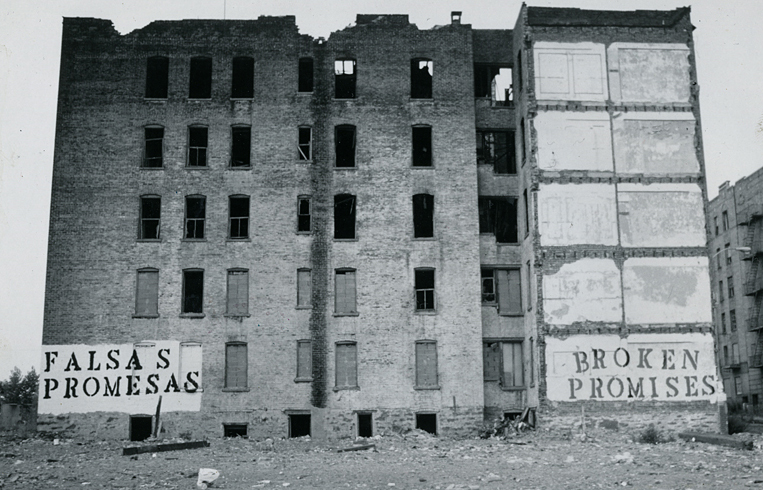
Falsas Promesas Broken Promises, taken by John Fekner, Charlotte Street Stencils, South Bronx, New York. 1980. (Liftarn via Wikipedia). Released to public domain via CC-SA-3.0.

Falsas Promesas Broken Promises, taken by John Fekner, Charlotte Street Stencils, South Bronx, New York. 1980. (Liftarn via Wikipedia). Released to public domain via CC-SA-3.0.

But that wouldn’t be near enough to communicate the range of emotions, the psychological states and the pressures that these people faced in leaving their homes for the not-so-bright lights of America’s big cities, not to mention what they faced in the days and years after they arrived. I should know. I’m the nearly forty-five year-old son of a mother originally from Bradley, Arkansas (population 500) and a father from Harrison, Georgia. They moved to New York City in the ’60s (specifically, the Tremont section of the Bronx), then to the South Side of Mount Vernon, New York (just outside the Bronx), hooked up, and sired me and my older brother Darren between December 1967 and January 1970.

That short summary is hardly the story, though. For me — like with so many other things in my life — music tells the story, emotions and psychology beyond what words on a page alone can approximate, but not fully duplicate. Music communicates the stories, emotions and psychology of those who migrated and stayed (or didn’t) in cities across the US better than Census data or a hypothesis on proletarianization. I wanted music from my own lifetime (or at least, within a few years of it) — not just folk songs or Blind Willie Johnson or Duke Ellington — music that fit my family’s transition from migration to our current times of racism and urban poverty.

Easily the top two songs on my list to play in class would be:

Trade ad for Otis Redding's single "Try a Little Tenderness," January 7, 1967. (Viniciusmc via Wikipedia/Billboard Magazine, page 7). In public domain).

Trade ad for Otis Redding’s single “Try a Little Tenderness,” January 7, 1967. (Viniciusmc via Wikipedia/Billboard Magazine, page 7). In public domain).

1. Otis Redding, “(Sittin’ On) the Dock of the Bay,” (1968), released after Redding’s death in a plane crash in Madison, Wisconsin; and

2. Stevie Wonder, “Living For The City,” (1973).

Both songs run the full emotional and psychological gamut. From hopefulness to oblivion, from delusion to despair, from rage and anger to resignation. The melancholy of Redding’s “It’s two thousand miles I roamed/Just to make this dock my home” (in reference to the distance from Georgia to San Francisco Bay) juxtaposed with Wonder’s bitterness and anger:

“His hair is long, his feet are hard and gritty
He spends his life walkin’ the streets of New York City
He’s almost dead from breathin’ in air pollution
He tried to vote but to him there’s no solution…”

It communicates so much beyond the lyrics and liner notes, a reminder for those of us who find America and its cities unforgiving today just how relentless it must’ve been for our parents and uncles and aunts and grandparents forty or more years ago.

There are other songs that I’d put on this playlist. Some are directly related to Black migration, some try to bridge the gap between the abundance of music on “the ghetto” and urban poverty and chaos and the lack of music from my own lifetime on migration.

3. Gladys Knight and the Pips, “Midnight Train to Georgia” (1973).
4. Marvin Gaye, “Inner City Blues” (1971).
5. Gil Scott-Heron, “95 South (All of The Places We’ve Been)” (1977).
6. Tracy Chapman, “Fast Car” (1987).
7. Nas (featuring Olu Dara, his father), “Bridging the Gap” (2004).
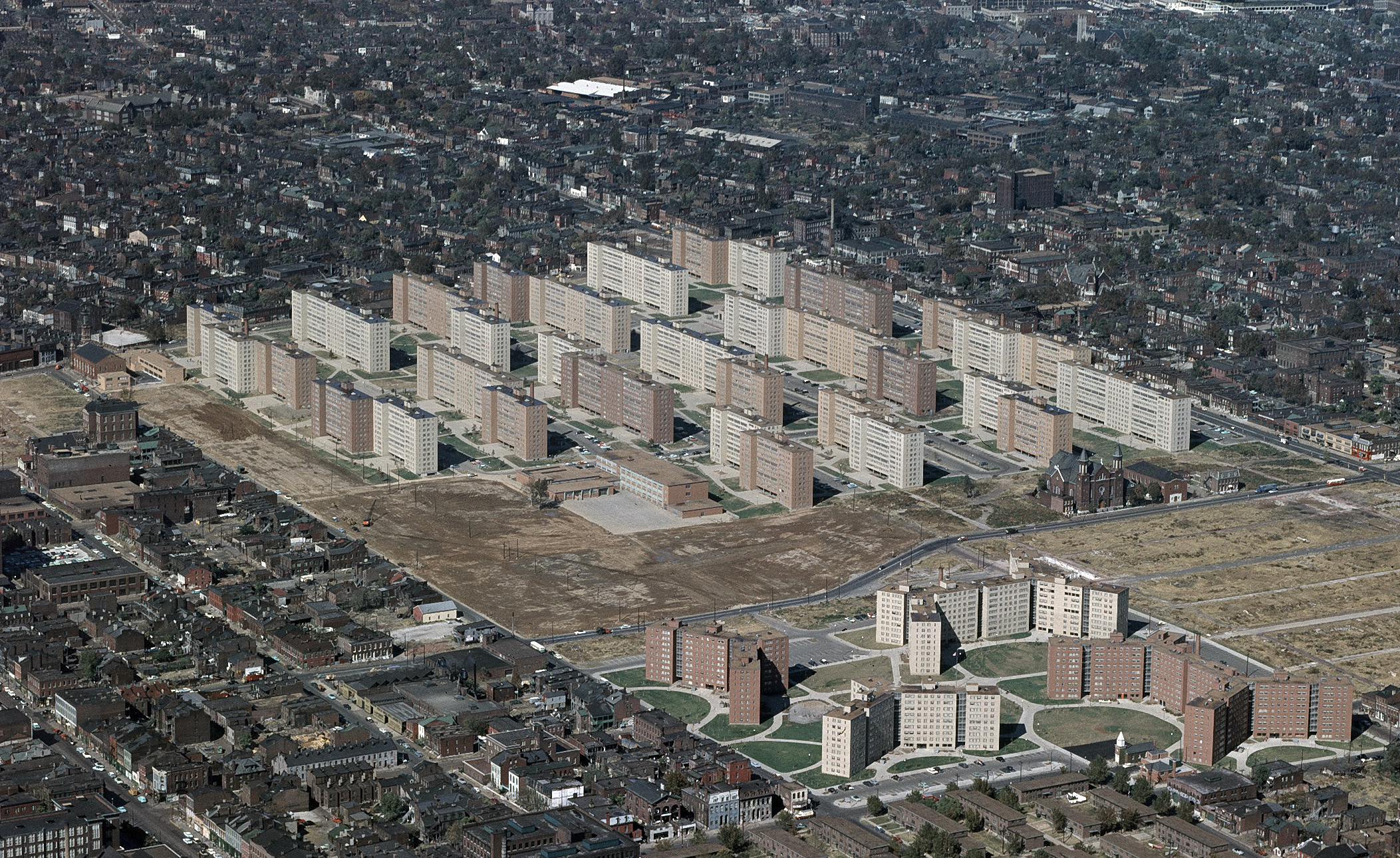
Pruitt–Igoe public housing projects, St. Louis, Missouri, circa 1967. This late-1950s "urban renewal" project was built, but  failed and was razed in the 1970s. (Cadastral via Wikipedia/US Geological Survey). In public domain.

Pruitt–Igoe public housing projects, St. Louis, Missouri, circa 1967. This late-1950s “urban renewal” project was built, but failed and was razed in the 1970s. (Cadastral via Wikipedia/US Geological Survey). In public domain.

That most of these songs come from the period between 1967 and 1974 isn’t an accident. It was the height of the Civil Rights Movement, combined with the Black Power Movement and the “Black is Beautiful” campaign, the beginning of the White backlash against civil rights — including Dr. Martin Luther King, Jr.’s assassination — and the Anti-War Movement was in full swing. It was a good time to take a look at the present and recent past to reconnect with hopes and dreams in the midst of the nightmare of urban poverty.

After ’73 was the beginning of the dance and disco era, as well as a focus on the urban, on crime, on drugs, on poverty  — but not in a “let’s try to solve it” kind of way. This was where rap, hip-hop, some R&B and early forms of what we now call neo-soul picked up, with little reflection on this once prominent past.

Still, there would be some honorable mentions for this migration course, music that could evoke some aspect of the Black migration, of the hope that took a downward turn, of the poverty and joblessness that have permeated America, Black and White and Brown, since the ’70s.

8.  Arrested Development, “Tennessee” (1992).
9. Tina and Ike Turner (and Credence Clearwater Revival), “Proud Mary” (1970).
10. Nina Simone, “The Backlash Blues” (1967).
11. NWA, “Straight Outta Compton” (1989).
12. Tupac, “Cradle 2 the Grave” (1994).
13. John Mellencamp, “Pink Houses” (1983).
14. Bruce Springsteen, “Born In The U.S.A..” (1984). [the song’s release was thirty years ago this month, by the way]
15. Peter Gabriel and Kate Bush, “Don’t Give Up” (1986)
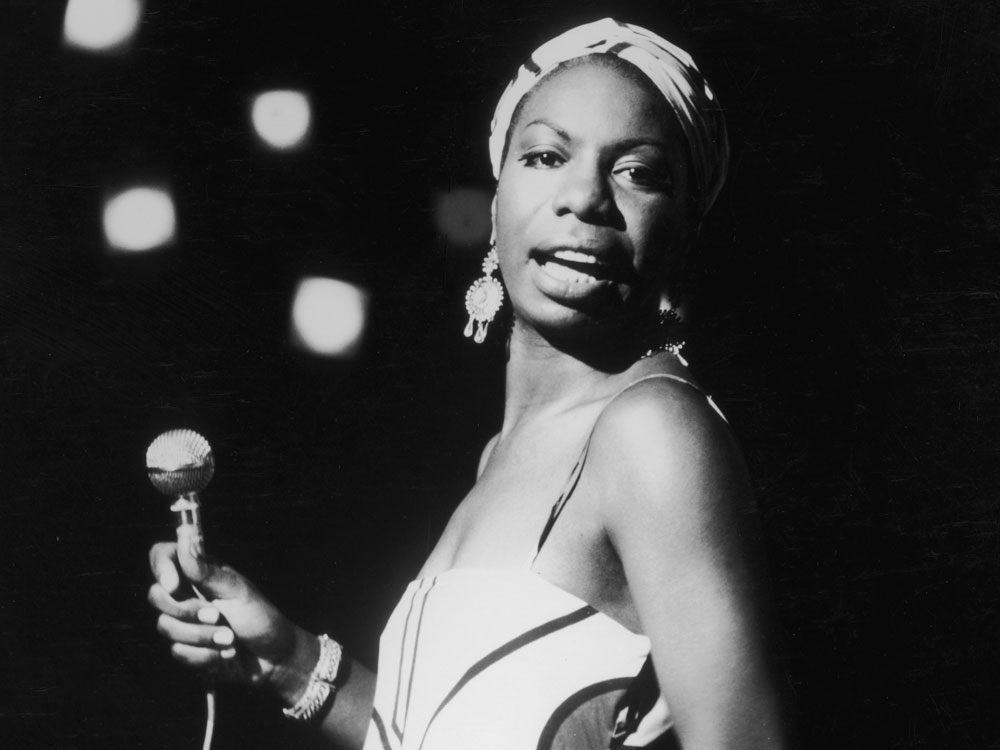
Nina Simone performs at a concert in 1964. (http://npr.org, via Hulton Archive/Stringer/Getty Images).

Nina Simone performs at a concert in 1964. (http://npr.org, via Hulton Archive/Stringer/Getty Images).

Through music, I’d hope to have a course and discussion about Black migration that reaches beyond the words origin and destination, that migration has merely been a physical manifestation of a difficult and seemingly unending cultural and spiritual journey in the US. That Black migration can also easily include the parallel journeys of those of the African or Afro-Caribbean diaspora, not to mention those from Latin America.

For me, though, a course like this would be a personal foray into all the things that have made me who I’ve been for nearly four and a half decades — a person better than the sum of America’s parts and racist, sexist, homophobic and evangelical assumptions.
Contingent Faculty and the Cold Case of Rollo Turner

02 Thursday Oct 2014

Posted by decollins1969 in 1, Academia, culture, Eclectic, Pittsburgh, Politics, Pop Culture, race, University of Pittsburgh, Work

≈ 4 Comments

Tags

Adjunct Faculty, Africana Studies, Afrocentricity, Brenda Berrian, Buddhism, Clarence 'Rollo' Turner, Contingent Faculty, Death, Department of Black Studies, Diversity, Firing, Income Loss, J.D. O'Connor, Lawsuit, Rollo Turner, Steven Salaita, Termination, Unionization, University of Illinois Urbana-Champaign


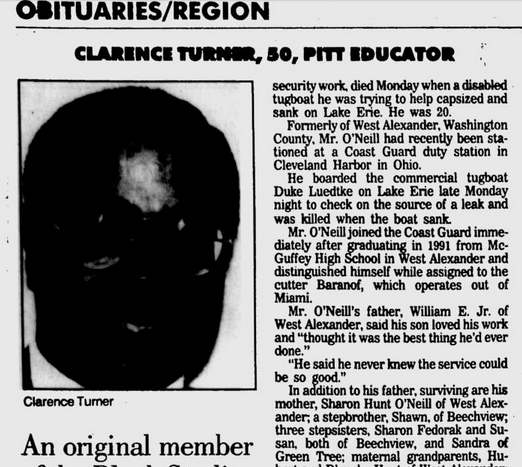
Clarence "Rollo" Turner, in Obituaries section, Pittsburgh Post-Gazette, September 24, 1993. (http://news.google.com).

Clarence “Rollo” Turner, in Obituaries section, Pittsburgh Post-Gazette, September 24, 1993. (http://news.google.com).

Two months ago, the University of Illinois Urbana-Champaign rescinded a job offer they had made to Steven Salaita (then an associate professor of English at Virginia Tech) for a tenured position in American Indian Studies over a bunch of his allegedly anti-Israel tweets. Between mainstream media and social media, the response against this attack on academic freedom and traditional hiring protocols has been tremendous. Thousands of academicians have signed petitions, penned articles and canceled speeches and events at UIUC over Chancellor Phyllis Wise and the Illinois board of trustees’ decision to take back their offer of employment. While the American Association of University Professors, the American Studies Association, the Foundation for Individual Rights in Education, and so many others have argued that Professor Salaita should be in the classroom teaching his courses this fall, this issue is about more than academic freedom and UIUC following job offer guidelines.

The fact is, non-tenure-stream faculty lack the protections and supportive outrage that academia has poured out for those in tenure-track and tenured positions like Professor Salaita. So many contingent faculty lose their jobs over far less than an impolite tweet or an excited utterance. Yet it doesn’t become a story in The New York Times or a petition letter with over 2,000 signatures. No, most contingent faculty, when they lose their jobs, often do so in obscurity, often over doing their jobs with the idea that they were free to teach as they saw fit.

The sadder fact, though, is that this isn’t a new phenomenon at all. Take the case of Clarence Rollo Turner, who passed away twenty-one years ago last month at the age of 50. He was once a veteran senior lecturer in the Department of Black Studies at the University of Pittsburgh, as well as my one-time professor for his History of Blacks in Sports course during the spring semester of 1990. I took Turner’s course in my junior year for an easy-A in the midst of taking a bunch of upper-level undergraduate (and one graduate) history courses that semester. Turner’s was a fun course, and he was a knowledgeable professor beyond its contents. Who knew that in three and a half years the politics of academia would cut short the life of a pioneer? It points to the reality that with half of all higher education instructors serving as contingent faculty, academic freedom is an oxymoron and job protections have become secondary to academic politics and fundraising efforts.

Rollo Turner’s Contingent Teaching Story:

If you’ve never heard of Rollo Turner, it’s mostly because he didn’t have the opportunity to turn himself into a household name in or out of academia, even in Pittsburgh. And, of course, because most non-tenured and non-tenure-stream faculty are seldom central figures at their universities or in their fields just because they’re very good instructors. Turner, though, was a founding member of the Black Studies Program-turned-department (now of Africana Studies) at the University of Pittsburgh. The university had hired Turner in the wake of a game-changing sit-in of Black undergraduate and graduate students in their takeover of an entire floor of the university’s central computer systems on Martin Luther King, Jr.’s birthday in 1969. It was a protest over the lack of student and faculty diversity at the University of Pittsburgh in general. But it was also a protest to demand a Black Studies program that would represent the research and experiences of Blacks on Blacks on an otherwise lily-White Campus, one engaged exclusively in research that almost always excluded Blacks.

In the process of starting this program, the university hired faculty who had yet to earn their doctorates, in some cases with barely a bachelor’s degree. This was 1969, though, when not having a PhD didn’t automatically disqualify candidates from a full-time academic position. Turner was one of several beneficiaries from this change of climate at the University of Pittsburgh, as he was finishing up a master’s degrees in Sociology at Indiana University when the University of Pittsburgh hired him (Turner, incidentally, had helped lead protests for more Black inclusion and a Black Studies program at Indiana in 1968).

Turner took on a joint appointment with the Department of Sociology and with the new Black Studies Program, teaching courses like the Sociology of the Black Family, Introduction to Black Studies and his History of Blacks in Sports along the way. Although the standard courseload for a full-time faculty member at the University of Pittsburgh was five over two semesters per year, Turner had been on a 2-2 schedule from September 1969 through December 1991. For more than twenty-two years, Turner had only taught four courses per year.

When the then-new department chair Brenda Berrian demanded that Turner take on a third course in January 1992, he refused, citing his twenty-two year history with the Black Studies Department and the last-minute nature of the request as reasons. Berrian then moved to terminate Turner. She and two Pitt police officers arrived in Turner’s classroom on the first Friday of the spring semester and had him removed from his classroom and escorted out of the building. Berrian fired him in the middle of his lecture, in front of a room full of students. This was how The Pitt News first reported the incident, and it was corroborated by everything that Rollo Turner told me a few weeks later.

The Politics of Academia:

But though it was that heavy-handed, it was hardly that simple. Turner had gotten himself caught up in a battle that involved his contingent employment status, degree completion, departmental reputation and petty ideological politics. More than twenty-two years as a non-tenured senior lecturer with only a master’s degree and a few publications that included two book-length bibliographies had caught up with Turner. As a contingent faculty member, even with over two decades put in, Turner lacked the protections afforded tenure-stream and tenured faculty members. Granted, at $37,000 a year and living in Pittsburgh at the time in 1992, Turner was a very well-paid senior lecturer. At least, that’s what many would argue today. This was also Berrian’s position as Turner’s termination turned into a $60,000 lawsuit.

Beyond the issue of compensation, contracts and contingent status was what Berrian and the other tenured faculty of the Department of Black Studies wanted for the department’s future. They wanted to bolster the department’s reputation within and outside the University of Pittsburgh. They wanted to be a full-fledged department in which students could major in Black Studies (students could only earn a minor in the subject until 1993), and perhaps, even offer a master’s degree in the field. Two things stood in the way of this progression. One was the fact that half of the department’s faculty didn’t have doctorates, now a much bigger deal in 1992 than it had ever been in 1969.

Two was that not everyone wanted to go in the ideological direction that Berrian had chosen for the Department of Black Studies. She wanted to move toward an Afrocentric approach in teaching and conducting research, something Turner openly rejected as “nonsense.” The idea of a litmus test for what was and wasn’t authentically “Black” or “African” was too extreme for Turner. As a tenured faculty member, Turner’s objections may well have cost him political clout within the department, but it wouldn’t have cost him his job.

Turner’s Final Months:

Turner sued Berrian and the University of Pittsburgh for wrongful termination – stemming in no small part from a hostile work environment – and breach of contract (his was a three-year contract with a year and a half left on it). The suit dragged on in the Civil Court division of Allegheny County Common Pleas Court well into 1993 as Turner – with two daughters in college and a son in the middle of high school – went over a year and a half without a paycheck. As late as August 1993, the month before he died, Turner told me that things on the lawsuit front had taken a turn for the better. Despite the stress of the situation, he hadn’t let Berrian or the University of Pittsburgh “steal his inner peace,” Turner said.

Yet even with years of Buddhism and meditation under his belt and a lifestyle that included biking through all parts of Pittsburgh, Turner died in late-September 1993. No doubt that between the stress of his lawsuit, the sense of betrayal, and the financial upheaval, it all caught up with him. Rollo Turner may well have become a mentor of mine because of the stand that he took, minus the strength of a union or support from a substantial number of tenured faculty. None of this was possible in the end. Precisely because contingent faculty seldom have rights that tenured faculty and university administrators are bound to respect.

Lessons, If Any:

There are so many lessons to be learned here, lessons that resonate with me more now as an adjunct professor than they did when I was a graduate student or when I worked in the nonprofit world. Contingent faculty shouldn’t rock the boat, take a controversial stance, or involve themselves in hot-button issues within their field or department. Or that anyone serving as non-tenured faculty without a doctorate should endeavor to write their dissertation at break-neck speed. Or really, if given the choice, why would anyone who could possibly do anything else with their lives in academia, especially anything that could provide more security and protection, choose a job as a contingent faculty member, whether in 1992 or 2014?

Mostly, it points to the reality that university leaders tend to see much of the talent in academia – non-tenured faculty among others – as expendable. That, and the fact that this expendability has grown with the rapid increase in contingent faculty (and graduate students, for that matter) teaching courses once reserved for tenure and tenure-stream instructors. Until contingent faculty, graduate student teaching assistants and tenured/tenure-stream professors unionize and take a collective stand on working conditions and job protections, cases like Turner’s will continue to go cold and remain tragic ones, with no end in sight.

There’s Know Place Like Home…

29 Friday Aug 2014

Posted by decollins1969 in 1, Academia, Boy @ The Window, Carnegie Mellon University, Cleaning, culture, Eclectic, High Rise Buildings, Jimme, Mount Vernon New York, My Father, New York City, Pop Culture, race, Upper East Side, Upper West Side, Work, Youth

≈ Leave a comment

Tags

241st Street Subway, East Side, Father-Son Relationships, Gramercy Park, Home, Levi Brothers, Manhattan, Metro-North, Sense of Direction, Street Knowledge, Subway, The Bronx, Wakefield, West Side


Dorothy's heel-clicking in screen shot from The Wizard of Oz (1939), August 29, 2014. (http://vivandlarry.com). Qualifies as fair use under US copyright laws - low resolution and relevance to subject matter.

Dorothy’s heel-clicking in screen shot from The Wizard of Oz (1939), August 29, 2014. (http://vivandlarry.com). Qualifies as fair use under US copyright laws – low resolution and relevance to subject matter.

Yes, the title’s a deliberate play on words. In no small part because of Facebook and Boy @ The Window, I am reminded every day of where I grew up, Mount Vernon, New York. But all too frequently, those who think they know me either assume that Mount Vernon’s so far from New York City that I seldom spent time there. Or, more recently, some have assumed that my experience of The Big Apple is a recent phenomenon, as if I only started spending time in the five boroughs when I hit my mid-thirties.

Neither is true, of course. In many ways, I’m as much of a child of The Bronx and Manhattan as I am of Mount Vernon. I spent countless hours catching the 2, 3, 5 and 6 trains between 241st, Dyre Avenue, 180th, Pelham Parkway, 149th, 110th, 125th, 72nd, 86th and so many other stops. I used to know where to get the best brownies in the area, in Wakefield, at a bakery near some taxi stands and between the 238th and 241st Street stops. I could tell you which bars my father Jimme frequented, which bars he didn’t, what pizza shops had slices to die for, and what places to avoid near Times Square. I’d been to Mets games, Ice Capades, the Bronx Zoo, a Puerto Rican Day and a Pulaski Day parade, concerts at Van Cortlandt Park, even MOMA before I graduated high school.

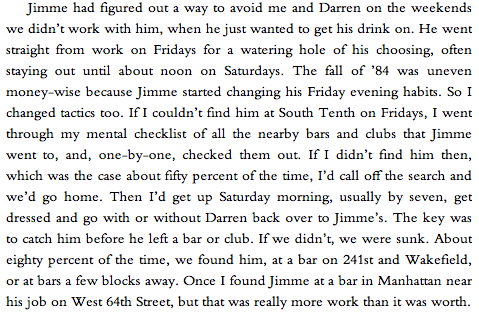
One of the reasons I could do all of this by the time I was fifteen was because of all the times Jimme had taken me and Darren down to the Bronx and Manhattan. Mostly to watch him pick up his paycheck from the Levi brothers at their cleaners on 20 West 64th or on East 59th. But between ’82 and ’85, I learned where nearly all of my father’s watering holes were, and on the most desperate of weekends, could track him to one of them in order to get money for myself and to help out my Mom at 616. While my classmates would occasionally take the Metro-North into the city to take in a Broadway play or go to a Knicks game, I was learning about the city in all of its varying inequalities and nuances by looking for and working for my father.

Screen shot 2014-08-29 at 6.28.50 AM

Fast-forward to the end of August ’93, just a few days before I began the Carnegie Mellon University phase of my grad school and doctoral journey. I had been short on money that whole summer, unemployed for six weeks after transferring from Pitt, working as an “intern” for six dollars and hour, and nearly $600 behind on rent at one point in late June. I’d survived the eviction notice and a summer in which I learned who my truest, closest friends were. I took a few days from my personal drama to visit my Mom and my siblings at 616, and in the process, decided to track down my father for a few extra dollars, as well as to see him for the first time in over a year. It had been that long because Jimme had accused me of faking my master’s degree when I lasted visited him.

Central Park, looking out toward Midtown's West Side, New York, NY, August 5, 2014. (Donald Earl Collins).

Central Park, looking out toward Midtown’s West Side, New York, NY, August 5, 2014. (Donald Earl Collins).

But I wasn’t fifteen anymore. Instead of a long walk and the Subway, I took the Metro-North down from Pelham to Grand Central, took the S (Shuttle) over to Times Square, and the 1 train to 66th, and walked over to the Levi’s cleaners on West 64th. Only to find out Jimme wasn’t in that day. I then remembered that the other Levi brother had a dry cleaner on East 59th. I walked the ten blocks over there and found the other Levi brother in the midst of arguing with clients and barking orders to his Latino and Afro-Caribbean underlings. My father was doing a cleaning job for him at some high-rises down near Gramercy Park.

I rode the 4 train down to 23rd Street, got my east-west bearings, and walked toward a set of high-rises near FDR Drive. Though I’d forgotten the address, I knew somehow that Jimme would be in the most expensive-looking high-rise or set of high-rises in the bunch. I found a guard, who sent me to the floor where Jimme and his co-worker John were working.

As soon as Jimme saw me come off the elevator, he said, “Bo’ watcha doin’ up here? How the hell yo’ find me?”

“You’re not the only one who knows The City, you know” I said.

It’s no wonder I feel a bit insulted when people either tell me I’m from upstate New York or that I’m not a New Yorker. I know the city better than at least a third of the people who live and work there every day.

Aside

Caught Between Rage and a Working Faith

21 Thursday Aug 2014

Posted by decollins1969 in 1, Academia, culture, Eclectic, New York City, Politics, Pop Culture, race, Work, Youth

≈ Leave a comment

Tags

Activism, Anger, Anger Management, Black Reconstruction (1935), Civil Rights, Eric Garner, Faith, Federal Government, Ferguson Missouri, Ferguson PD, God, Institutional Racism, James 2:26, Michael Brown, Murder, NYPD, Officer Darren Wilson, Police, Police Brutality, Prayer, Rage, Science, Social Justice, Structural Racism, Sunil Dutta, W. E. B. Du Bois, Wages of Whiteness, Works


"Officer Go Fuck Yourself" aiming rifle at protestors and journalists, Ferguson, MO, August 19, 2014. (http://www.deathandtaxesmag.com/).

“Officer Go Fuck Yourself” aiming rifle at protestors and journalists, Ferguson, MO, August 19, 2014. (http://www.deathandtaxesmag.com/).

We can add Tamir Rice, Sandra Bland, Walter Scott, Freddie Gray, Kindra Chapman, Samuel DuBose, Joyce Curnell, Ralkina Jones, Raynette Turner and Christian Taylor to the list I started the post below with nearly a year ago. You could add Zachary Hammond to it as well, as structural White supremacy kills Whites dead, too (police state). There’s The Guardian‘s “The Counted” webpages on deaths at the hands of law enforcement. There’s also the Killed By Police website and via Facebook, and Fatal Encounters, among others, that track these death back much further (since The Guardian only began their webpages in June 2015).

The post I wrote last year was about what we could do, what I could or can do in light of living in a racist police state, otherwise known as living with the Gestapo. It’s still an open question, especially with reporters shoving microphones in the faces of the aggrieved asking them to forgive police officers who murder five seconds after learning the news. We’re supposed to be nonviolent, to forgive and turn the other cheek. Long before Malcolm X said during a radio interview in Boston in 1964, “In fact, it’s a crime for any Negro leader to teach our people not to do something to protect ourselves in the face of the violence that is inflicted upon us by the white people here in America,” this has been an issue. Martin Delany, Frederick Douglass, Ida B. Wells (before she became Wells-Barnett) Booker T. Washington, W. E. B. Du Bois, Nannie Burroughs, Marcus Garvey, among many others, raised this issue of what to do about state-sanctioned racism-based violence and murder years ago. We still don’t have any good answers, but we do have options. (A revolution, though, may well be necessary…)

+===================================================+

After the events of the past month — between Eric Garner and the NYPD, Michael Brown and the Ferguson, Missouri PD — I find myself of two minds. My primal mind says, “Fuck the fucking police!” Resist with rocks, with bricks, with bombs and grenades. Go buy a composite bow with composite arrows. Go buy a rifle with a scope, and take out as many of these motherfuckers as I can. Maybe they’ll think twice about putting someone like me in a choke-hold or shooting us with our hands up if they knew we could organize ourselves into vigilante groups, well armed and well adept at escape and stealth, ready to put the likes of Sunil Dutta out of their racist-ass misery!


– What we should be able to do to any corrupt cop or vigilante killing unarmed people of color…

Eric Garner in midst of dying from choke-hold via NYPD's finest, Daniel Pantaleo and (not pictured)  and Justin Damico, Staten Island, NY, July 17, 2014. (http://www.thegrio.com).

Eric Garner in midst of dying from choke-hold via NYPD’s finest, Daniel Pantaleo and (not pictured) and Justin Damico, Staten Island, NY, July 17, 2014. (http://www.thegrio.com).

The mind I live in and with every day, though, puts the kibosh on such evil yet well deserved plans of action. Because in light of so much police harassment, brutality and state-sanctioned murders, to say that this shouldn’t be a response belies everything all of us know about human nature. Yet my mind says, “No. This isn’t the way to fight. You’re a writer. You’re a teacher. You’re a believer. Use your tools!” So I pray, I always pray, for people to seek and find the light, to forgive and be forgiven, for peace.

But as the New Testament in James says, “Faith without works is dead” (look that one up, evangelical Christians committed to White privilege!). None of us can hope to change our own lives — much less something as intractable as structural and institutional racism — on prayer and faith in God, the federal government and/or science alone. We have to do, too. In my case, writing and teaching is what I do. Posting to my blog about the palpable rage that I know exists within me and many others who have faced brutality because of racism, misogyny, poverty, homophobia, Whiteness and fear. Teaching about “the physical and psychological wages of Whiteness” (thanks, W.E.B. Du Bois via Black Reconstruction [1935]). Being part of the social media crowd demanding humanity and justice for Michael Brown. This is who I am and what I do.

Me the Evil Blogger at home, Silver Spring, MD, August 1, 2010. (Donald Earl Collins).

Me the Evil Blogger at home, Silver Spring, MD, August 1, 2010. (Donald Earl Collins).

Is it enough to assuage my rage, my guilt for not being able to do more? Yes, most of the time. But I have to remind the perfectionist that remains within me, I can’t do much, but I can do something. And, that this isn’t about me, even with as much as I’ve experienced in racial profiling and abuse of power, at home and with police. It’s about all of us. So, if I do buy a composite bow with arrows, I will train to use it well. Just not on other humans, no matter how reprehensible.

Big Feet and Football Tryouts

20 Wednesday Aug 2014

Posted by decollins1969 in 1, Boy @ The Window, culture, Eclectic, Mount Vernon High School, Mount Vernon New York, Pop Culture, Sports, Work, Youth

≈ Leave a comment

Tags

616, 616 East Lincoln Avenue, Adulthood, Coming-of-Age, Decision-Making, Foot Sizes, Football, Football Tryouts, Humanities, Humanities Program, Mother-Son Relationship, MVHS, Puberty, Puma, Self-Awareness


Aerial view of refurbished fields (for track and field, football, softball and tennis) across from MVHS (and the Cross County Parkway), Mount Vernon, NY, circa 2012. (Google Maps)

Aerial view of refurbished fields (for track and field, football, softball and tennis) across from MVHS (and the Cross County Parkway), Mount Vernon, NY, circa 2012. (Google Maps)

Three decades ago this week, I tried out for Mount Vernon High School’s junior varsity football team and made the team. Only to immediately quit. Mostly because I realized that there was too much going on at 616 for me to be a Humanities student, a blocking wide receiver (the coaches had an unimaginative view of offense) and a jack-of-all-adult-responsibilities at home.

What made the decision easier was something my Mom did that made my tryouts harder. As I wrote in Boy @ The Window:

Screen shot 2014-08-19 at 9.55.52 PM

I ended up making the team, but they wanted me to sit on the bench for a year while I bulked up to at least 175 pounds. The most I’ve ever weighed was 238 pounds at six-foot-three, and I weigh 228 now. It took me until ’10 before I wore my first pair of size-fifteen sneakers that actually fit (I wear size sixteens now). The idea of me as an offensive lineman simply because my sneakers were two sizes too big was and remains ridiculous. Thanks Mom, and thanks, coaches!

The one lesson I took with me from the process of trying out was that I couldn’t rely on my Mom to help me do the things I wanted to do with my life. Nor could I rely on her encouragement (or lack thereof) in that process. It wasn’t an assessment based on anger or disappointment. I’d only begun to figure out that my life was my life, and the decisions I needed to make needed to be my own.

Brother, Can You Spare Me A Job?

26 Saturday Jul 2014

Posted by decollins1969 in 1, Academia, Boy @ The Window, culture, Eclectic, eclectic music, Mount Vernon High School, Mount Vernon New York, music, Pittsburgh, Politics, Pop Culture, race, University of Pittsburgh, Work, Youth

≈ Leave a comment

Tags

"Brother Can You Spare a Dime" (1932), Al Jolson, Booker T. Washington, Corporate Responsibility, Gender Discrimination, General Foods, Hard Work Mythology, My Brother's Keeper, My Brother's Keeper Initiative, Operation Opportunity, Paternalism, Philanthropy, Poverty, President Barack Obama, Race, Racial Paternalism, White House


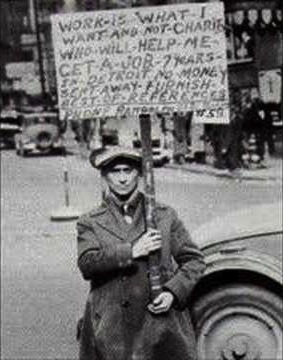
Screenshot from "Brother, Can You Spare Me a Dime" video/song (song originally recorded in 1932), July 26, 2014. (http://youtube.com).

Screenshot from “Brother, Can You Spare a Dime” video/song (song originally recorded in 1932), July 26, 2014. (http://youtube.com).

In the past five months, there’s been much debate and derision over the White House’s My Brother’s Keeper Task Force and Initiative. Most of it has centered around the exclusion of girls and young women of color from the initiative, as if the problems affecting Black and Latino males aren’t the same ones affecting Black and Latino females. Poverty, a resource-poor education, lack of entry-level jobs leading to careers, woeful access to higher education, lack of access to public services. These effects may lead to different responses from boys/young men of color and girls/young women of color, but the problems that effect vulnerable populations of color are no respecter of gender.

There’s other problems with the initiative, even if President Barack Obama and the White House were to ensure the inclusion of Black and Latino females in the My Brother’s Keeper Initiative tomorrow. It’s an extremely racially paternalistic initiative. On the face of things, it’s not much different from the work Booker T. Washington did a century ago via the William McKinley and Teddy Roosevelt administrations and with money from White philanthropists such as Henry Huttleston Rogers (Standard Oil), Julius Rosenwald (Sears), and George Eastman (Kodak).

Sure, in the case of Washington, The Rosenwald Fund built a few thousand schools, and the philanthropists contributed money to Washington that would build an endowment for Tuskegee. Still, that money came with strings attached. Most of the schools built weren’t high schools, were geared toward what we would call low-level vocational education today, and certainly weren’t part of any agenda to end Jim Crow. For all the good Washington was able to do through these robber-baron era philanthropists — especially in reducing Black illiteracy — it took Black migration out of the South to lead to lasting changes around notions of racial progress and the idea of segregation as the norm for a representative democracy.

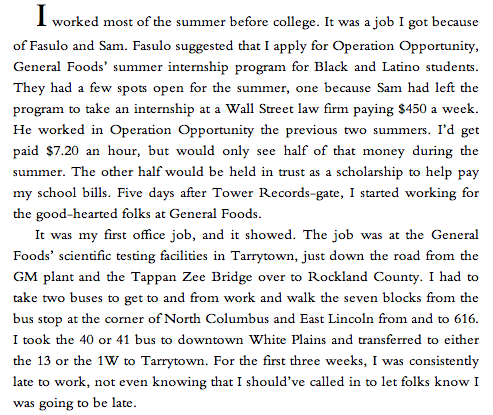
As for My Brother’s Keeper, I am reminded of a passage from my Boy @ The Window about my very first full-time “office” job in the summer of ’87, in between my graduation from Mount Vernon High School and my freshman year at the University of Pittsburgh. It’s about my working for General Foods (now Kraft Foods) in Tarrytown, New York as part of their Operation Opportunity program.

Screen shot 2014-07-26 at 11.10.49 AM

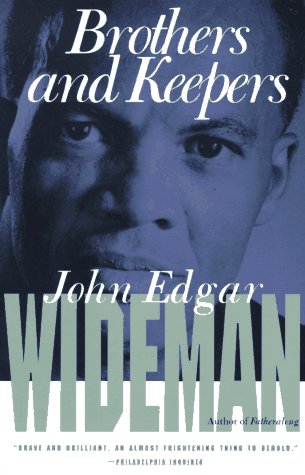
John Edgar Wideman, Brothers and Keepers (originally published in 1984), July 26, 2014. (http://goodreads.com).

John Edgar Wideman, Brothers and Keepers (originally published in 1984), July 26, 2014. (http://goodreads.com).

Beyond the $1,022 the program saved on my behalf — which would go toward room, board and two textbooks for my second semester at Pitt — there really wasn’t much about this program that was opportunity-inducing. Operation Opportunity seemed like it was a checkmark that General Foods could put in its “doing good” column. It provided an opportunity to observe others and do menial tasks without actually promising anything that would help me even a year later, as I went through the summer of ’88 unemployed, and the first week of my sophomore year at Pitt homeless. Not to mention, I picked up a terrible cold in the heat of a 98-degree-July day while spending two hours in a meat-locker-of-a-trailer doing measurements on Jell-O pudding pops!

Now I have no idea what the Annie E. Casey Foundation, the W.K. Kellogg Foundation or Magic Johnson Enterprises intends to do to be keepers of brothers, or brothas, for that matter. But all too frequently, these efforts turn into one-time experiments or corporate-responsibly checkmarks. As my friend and colleague Catherine Lugg has said more than once over the years (albeit, on education research, not specifically on this), social change and diversity efforts are far more than just “bringing a pet to class.” The idea that we need to learn how to work hard is yet another myth that this initiative will perpetuate, whether it’s a success or a failure.

It’s not hard to figure that poor children and young adults of color need more access to public health services, more resources in their formal education, more and better quality food to eat, and more nurturing. Whether any of these kids or young adults — male or female — can obtain these resources without racial paternalism, experimentation or other strings attached, I for one remain extremely skeptical.

Students and the Joys and Travails of College Teaching

16 Wednesday Jul 2014

Posted by decollins1969 in 1, Academia, Carnegie Mellon University, culture, Eclectic, Pittsburgh, Pop Culture, University of Pittsburgh, Work

≈ Leave a comment

Tags

Adult Learners, Ambition, Aspirations, Civic Education, College Students, Duquesne University College of Education, Enthusiasm, George Washington University, High School Students, Joy, JSA, Junior States of America, Motivation, Passion, Presidential Classroom, Teaching and Learning, Traditional College Students, Travails, UDC, UMUC, Undergraduate Students, University of Maryland University College, World Cup 2014 Final Pictures


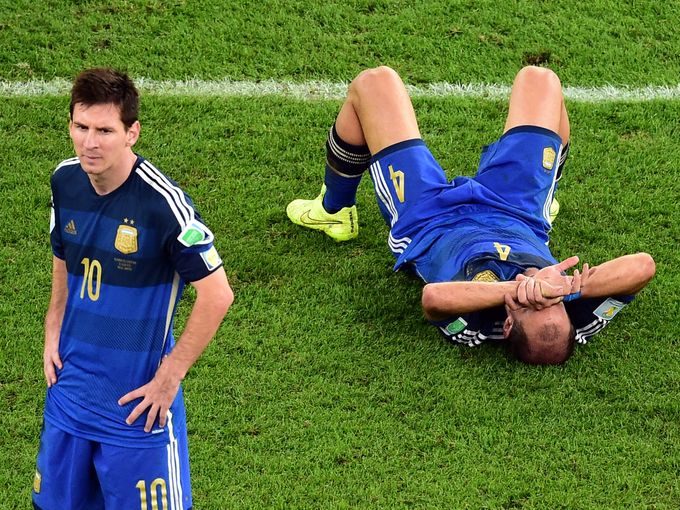
Argentina's Pablo Zabaleta lies on the pitch as Lionel Messi stands beside him after losing to Germany in the final, Rio de Janeiro, Brazil, July 13, 2014. (Francois Xavier Marit/AP via http://usatoday.com).

Argentina’s Pablo Zabaleta lies on the pitch as Lionel Messi stands beside him after losing to Germany in the final, Rio de Janeiro, Brazil, July 13, 2014. (Francois Xavier Marit/AP via http://usatoday.com).

Maybe not to that extreme, but there are circumstances where teaching a college course can be a joy or torture or even sometimes both at the same time. Some of this has to do with the actual nature of the course, some of it with my disposition, some of this with the types of students that walk through the door. But, in teaching somewhere around sixty courses since ’91, working with a civic education nonprofit and consulting with another one, I’ve found two large categories of students who have made teaching more enjoyable over the years, though not always an actual joy. One group has been graduate students, the other high school students aspiring for college.

There are a number of reasons why, of course. Some are pretty easy to understand. High school students aspiring to go to college or taking college-level courses are often ambitious and motivated, students who are amenable to learning. Graduate students often aspire to be better at their specific profession of study, which in my experience, has this group of students essentially aspiring to be some version of me. Even the brown-nosers in both groups tend to have the motivation necessary to be better students, or at least, to look like they’re better students.

It also has helped over the years that the several hundred high school and graduate students who’ve been in my classrooms have actually wanted to be there. Doing a week in Washington to learn how Capitol Hill really works, or a summer course at Princeton on AP US History or taking one of my undergraduate course over the years at the University of Pittsburgh, UDC and UMUC, those students (and their parents) made the choice to take those steps. Those students wanted to get into a college of their choice, to be well prepared, to make themselves better students, and perhaps even, better people.

History graduate students have choices, for the most part, in terms of which graduate seminars they take and in their specific cultural, geographic area and time period focus. In my experience teaching school of education courses, though, at Duquesne and George Washington University (courses like History of American Education, Multicultural Education or History of American Education Reform), the students I’ve taught in those courses chose to be there. They chose to read as many as eight books in eight weeks, to write term papers and research papers and do original research. Those students wanted to become better as teachers, as researchers, and in a few cases, to become college professors themselves.

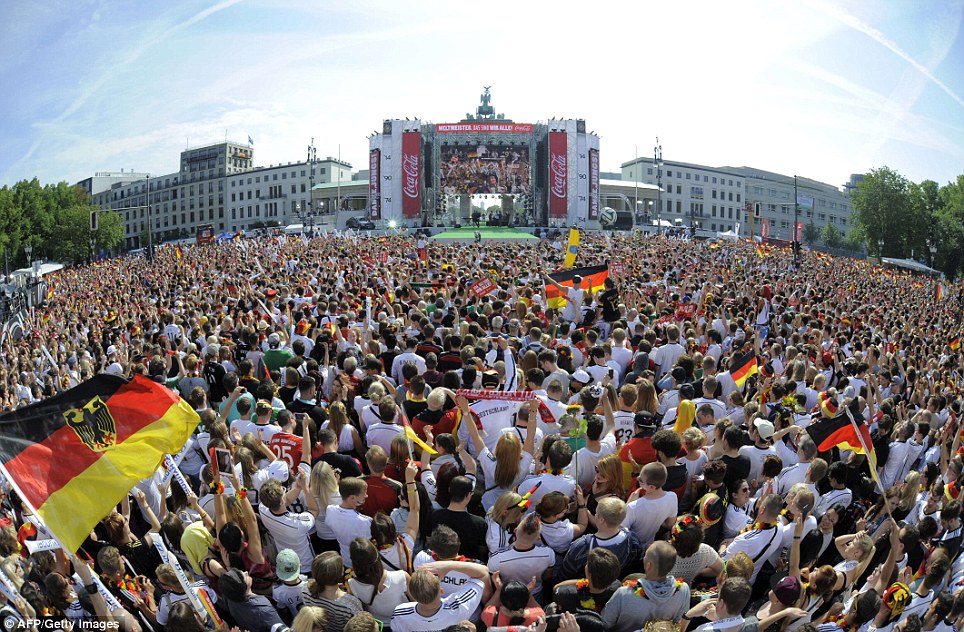
Ready and waiting: 500,000 Germany supporters await the arrival of the country's World Cup stars, Brandenburg Gate in Berlin, July 15, 2014. (AFP/Getty via http://www.dailymail.co.uk/sport/worldcup2014/).

Ready and waiting: 500,000 Germany supporters await the arrival of the country’s World Cup stars, Brandenburg Gate in Berlin, July 15, 2014. (AFP/Getty via http://www.dailymail.co.uk/).

So what’s different teaching undergraduate courses with undergraduate students? Well, they’ve tended to complain the most about general education requirements, ones that require them to take a course in US or World History (my African American History students are generally happier about taking the course). But that’s not all. A fair number have treated me as their enemy, not as their professor or a teacher invested in their learning. Of course these students were in school to complete a degree. But college was no longer an aspiration. It was now a reality, with all of the responsibilities and complications that come with the five-year march toward a four-year degree. For traditional college-aged students, there have always been competing interests, the need to organize a life that involves working 15-20 hours per week and some semblance of a social life, and attempting to figure out a major (often not history).

With my adult learners, those pressures come from at least three directions. The personal pressure to perform academically, the workplace, familial and parental pressures, and the pressure of learning how to be a college student on the fly. Add to this mix the general lack of academic preparation for college for those over twenty-five. All of this has frequently led to a combination of insufficient motivation to learn — even when I’ve explained the “what’s-in-it-for-them” piece — and a quiet hostility toward the process of college matriculation. For this group as a whole — traditional college students and adult learners — aspirations can frequently turn into Being and Nothingness, or rather, a state of being and meaninglessness.

This mindset has been the most difficult aspect of my job as a teaching professor over the years. It’s somewhere between extremely hard and absolutely impossible to teach students whose minds have been closed to learning or self-improvement, whose idea of an education is a piece of paper and a rubber stamp. That most of those students who’ve made my work most difficult are undergraduates isn’t surprising, though. That’s part of the job.

Still, there are times where I miss those days when I taught or worked with high school students fully motivated to get into college, who already had a sense of where they wanted their lives to go. There are times when I miss a grad student angling for a higher grade or with a real interest in my writing and research. For better and sometimes for worse, at least they’re interested in the learning enterprise.

← Older posts
Newer posts →

Boy @ The Window: A Memoir

Boy @ The Window: A Memoir

Places to Buy/Download Boy @ The Window

There's a few ways in which you can read excerpts of, borrow and/or purchase and download Boy @ The Window. There's the trade paperback edition of Boy @ The Window, available for purchase via Amazon.com at http://www.amazon.com/Boy-Window-Donald-Earl-Collins/dp/0989256138/

There's also a Kindle edition on Amazon.com. The enhanced edition can be read only with Kindle Fire, an iPad or a full-color tablet. The links to the enhanced edition through Apple's iBookstore and the Barnes & Noble NOOK edition are below. The link to the Amazon Kindle version is also immediately below:

scr2555-proj697-a-kindle-logo-rgb-lg

Boy @ The Window on Amazon.com: http://www.amazon.com/Boy-The-Window-Memoir-ebook/dp/B00CD95FBU/

iBookstore-logo-300x100

Boy @ The Window on Apple's iBookstore: https://itunes.apple.com/us/book/boy-the-window/id643768275?ls=1

Barnes & Noble (bn.com) logo, June 26, 2013. (http://www.logotypes101.com).

Boy @ The Window on Barnes & Noble: http://www.barnesandnoble.com/w/boy-the-window-donald-earl-collins/1115182183?ean=2940016741567

You can also add, read and review Boy @ The Window on Goodreads.com. Just click on the button below:

Boy @ The Window

Twitter Updates

Tweets by decollins1969
  • RSS - Posts
  • RSS - Comments

Archives

  • June 2025
  • April 2023
  • September 2022
  • August 2022
  • July 2022
  • June 2022
  • May 2022
  • April 2022
  • March 2022
  • January 2022
  • December 2021
  • November 2021
  • October 2021
  • September 2021
  • August 2021
  • July 2021
  • June 2021
  • April 2021
  • March 2021
  • February 2021
  • January 2021
  • December 2020
  • November 2020
  • October 2020
  • September 2020
  • August 2020
  • July 2020
  • May 2020
  • April 2020
  • March 2020
  • January 2020
  • December 2019
  • November 2019
  • August 2019
  • July 2019
  • June 2019
  • May 2019
  • April 2019
  • March 2019
  • February 2019
  • January 2019
  • December 2018
  • November 2018
  • October 2018
  • September 2018
  • August 2018
  • July 2018
  • June 2018
  • May 2018
  • March 2018
  • February 2018
  • January 2018
  • December 2017
  • November 2017
  • October 2017
  • September 2017
  • August 2017
  • July 2017
  • June 2017
  • May 2017
  • April 2017
  • March 2017
  • February 2017
  • January 2017
  • December 2016
  • November 2016
  • October 2016
  • September 2016
  • August 2016
  • July 2016
  • June 2016
  • May 2016
  • April 2016
  • March 2016
  • February 2016
  • January 2016
  • December 2015
  • November 2015
  • October 2015
  • September 2015
  • August 2015
  • July 2015
  • June 2015
  • May 2015
  • April 2015
  • March 2015
  • February 2015
  • January 2015
  • December 2014
  • November 2014
  • October 2014
  • September 2014
  • August 2014
  • July 2014
  • June 2014
  • May 2014
  • April 2014
  • March 2014
  • February 2014
  • January 2014
  • December 2013
  • November 2013
  • October 2013
  • September 2013
  • August 2013
  • July 2013
  • June 2013
  • May 2013
  • April 2013
  • March 2013
  • February 2013
  • January 2013
  • December 2012
  • November 2012
  • October 2012
  • September 2012
  • August 2012
  • July 2012
  • June 2012
  • May 2012
  • April 2012
  • March 2012
  • February 2012
  • January 2012
  • December 2011
  • November 2011
  • October 2011
  • September 2011
  • August 2011
  • July 2011
  • June 2011
  • May 2011
  • April 2011
  • March 2011
  • February 2011
  • January 2011
  • December 2010
  • November 2010
  • October 2010
  • September 2010
  • August 2010
  • July 2010
  • June 2010
  • May 2010
  • April 2010
  • March 2010
  • February 2010
  • January 2010
  • December 2009
  • November 2009
  • October 2009
  • September 2009
  • August 2009
  • July 2009
  • June 2009
  • May 2009
  • April 2009
  • March 2009
  • February 2009
  • January 2009
  • December 2008
  • November 2008
  • October 2008
  • September 2008
  • August 2008
  • July 2008
  • June 2008
  • May 2008
  • April 2008
  • March 2008
  • February 2008
  • January 2008
  • December 2007
  • November 2007
  • October 2007
  • September 2007
  • August 2007
  • July 2007
  • June 2007

Recent Comments

MaryPena's avatarMaryPena on My Day of Atonement/Bitter Hat…
decollins1969's avatardecollins1969 on No Good Teaching Deed Goes…
Mary Rose O’Connell's avatarMary Rose O’Connell on No Good Teaching Deed Goes…

NetworkedBlogs on Facebook

NetworkedBlogs
Blog:
Notes From a Boy @ The Window
Topics:
My Life, Culture & Education, Politics & Goofyness
 
Follow my blog

616 616 East Lincoln Avenue A.B. Davis Middle School Abuse Academia Academy for Educational Development AED Afrocentricity American Narcissism Authenticity Bigotry Blackness Boy @ The Window Carnegie Mellon University Child Abuse Class of 1987 CMU Coping Strategies Crush #1 Crush #2 Death Disillusionment Diversity Domestic Violence Economic Inequality Education Family Friendship Friendships Graduate School Hebrew-Israelites High-Stakes Testing Higher Education History Homelessness Humanities Humanities Program Hypocrisy Internalized Racism Jealousy Joe Trotter Joe William Trotter Jr. K-12 Education Love Manhood Maurice Eugene Washington Maurice Washington Misogyny Mother-Son Relationship Mount Vernon High School Mount Vernon New York Mount Vernon public schools Multiculturalism MVHS Narcissism NFL Pitt Pittsburgh Politics of Education Poverty President Barack Obama Race Racial Stereotypes Racism Relationships Self-Awareness Self-Discovery Self-Reflection Sexism Social Justice Teaching and Learning University of Pittsburgh Violence Whiteness Writing

Top Rated

Blog at WordPress.com.

  • Subscribe Subscribed
    • Notes from a Boy @ The Window
    • Join 103 other subscribers
    • Already have a WordPress.com account? Log in now.
    • Notes from a Boy @ The Window
    • Subscribe Subscribed
    • Sign up
    • Log in
    • Report this content
    • View site in Reader
    • Manage subscriptions
    • Collapse this bar
 

Loading Comments...