• About Me
  • Other Writings
  • Interview Clips
  • All About Me: American Racism, American Narcissism, and the Conversation America Can’t Have
  • Video Clips
  • Boy @ The Window Pictures
  • Boy @ The Window Theme Music

Notes from a Boy @ The Window

~

Notes from a Boy @ The Window

Category Archives: University of Pittsburgh

Contingent Faculty and the Cold Case of Rollo Turner

02 Thursday Oct 2014

Posted by decollins1969 in 1, Academia, culture, Eclectic, Pittsburgh, Politics, Pop Culture, race, University of Pittsburgh, Work

≈ 4 Comments

Tags

Adjunct Faculty, Africana Studies, Afrocentricity, Brenda Berrian, Buddhism, Clarence 'Rollo' Turner, Contingent Faculty, Death, Department of Black Studies, Diversity, Firing, Income Loss, J.D. O'Connor, Lawsuit, Rollo Turner, Steven Salaita, Termination, Unionization, University of Illinois Urbana-Champaign
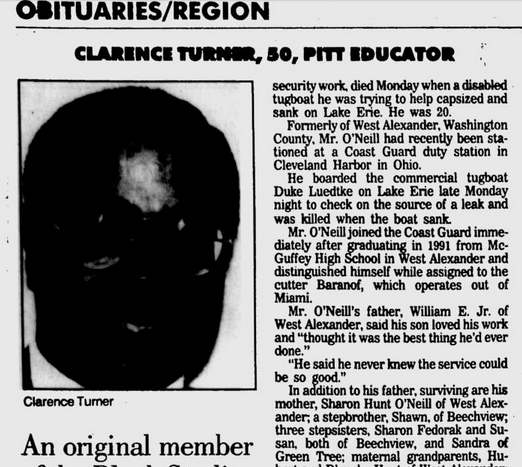

Clarence "Rollo" Turner, in Obituaries section, Pittsburgh Post-Gazette, September 24, 1993. (http://news.google.com).

Clarence “Rollo” Turner, in Obituaries section, Pittsburgh Post-Gazette, September 24, 1993. (http://news.google.com).

Two months ago, the University of Illinois Urbana-Champaign rescinded a job offer they had made to Steven Salaita (then an associate professor of English at Virginia Tech) for a tenured position in American Indian Studies over a bunch of his allegedly anti-Israel tweets. Between mainstream media and social media, the response against this attack on academic freedom and traditional hiring protocols has been tremendous. Thousands of academicians have signed petitions, penned articles and canceled speeches and events at UIUC over Chancellor Phyllis Wise and the Illinois board of trustees’ decision to take back their offer of employment. While the American Association of University Professors, the American Studies Association, the Foundation for Individual Rights in Education, and so many others have argued that Professor Salaita should be in the classroom teaching his courses this fall, this issue is about more than academic freedom and UIUC following job offer guidelines.

The fact is, non-tenure-stream faculty lack the protections and supportive outrage that academia has poured out for those in tenure-track and tenured positions like Professor Salaita. So many contingent faculty lose their jobs over far less than an impolite tweet or an excited utterance. Yet it doesn’t become a story in The New York Times or a petition letter with over 2,000 signatures. No, most contingent faculty, when they lose their jobs, often do so in obscurity, often over doing their jobs with the idea that they were free to teach as they saw fit.

The sadder fact, though, is that this isn’t a new phenomenon at all. Take the case of Clarence Rollo Turner, who passed away twenty-one years ago last month at the age of 50. He was once a veteran senior lecturer in the Department of Black Studies at the University of Pittsburgh, as well as my one-time professor for his History of Blacks in Sports course during the spring semester of 1990. I took Turner’s course in my junior year for an easy-A in the midst of taking a bunch of upper-level undergraduate (and one graduate) history courses that semester. Turner’s was a fun course, and he was a knowledgeable professor beyond its contents. Who knew that in three and a half years the politics of academia would cut short the life of a pioneer? It points to the reality that with half of all higher education instructors serving as contingent faculty, academic freedom is an oxymoron and job protections have become secondary to academic politics and fundraising efforts.

Rollo Turner’s Contingent Teaching Story:

If you’ve never heard of Rollo Turner, it’s mostly because he didn’t have the opportunity to turn himself into a household name in or out of academia, even in Pittsburgh. And, of course, because most non-tenured and non-tenure-stream faculty are seldom central figures at their universities or in their fields just because they’re very good instructors. Turner, though, was a founding member of the Black Studies Program-turned-department (now of Africana Studies) at the University of Pittsburgh. The university had hired Turner in the wake of a game-changing sit-in of Black undergraduate and graduate students in their takeover of an entire floor of the university’s central computer systems on Martin Luther King, Jr.’s birthday in 1969. It was a protest over the lack of student and faculty diversity at the University of Pittsburgh in general. But it was also a protest to demand a Black Studies program that would represent the research and experiences of Blacks on Blacks on an otherwise lily-White Campus, one engaged exclusively in research that almost always excluded Blacks.

In the process of starting this program, the university hired faculty who had yet to earn their doctorates, in some cases with barely a bachelor’s degree. This was 1969, though, when not having a PhD didn’t automatically disqualify candidates from a full-time academic position. Turner was one of several beneficiaries from this change of climate at the University of Pittsburgh, as he was finishing up a master’s degrees in Sociology at Indiana University when the University of Pittsburgh hired him (Turner, incidentally, had helped lead protests for more Black inclusion and a Black Studies program at Indiana in 1968).

Turner took on a joint appointment with the Department of Sociology and with the new Black Studies Program, teaching courses like the Sociology of the Black Family, Introduction to Black Studies and his History of Blacks in Sports along the way. Although the standard courseload for a full-time faculty member at the University of Pittsburgh was five over two semesters per year, Turner had been on a 2-2 schedule from September 1969 through December 1991. For more than twenty-two years, Turner had only taught four courses per year.

When the then-new department chair Brenda Berrian demanded that Turner take on a third course in January 1992, he refused, citing his twenty-two year history with the Black Studies Department and the last-minute nature of the request as reasons. Berrian then moved to terminate Turner. She and two Pitt police officers arrived in Turner’s classroom on the first Friday of the spring semester and had him removed from his classroom and escorted out of the building. Berrian fired him in the middle of his lecture, in front of a room full of students. This was how The Pitt News first reported the incident, and it was corroborated by everything that Rollo Turner told me a few weeks later.

The Politics of Academia:

But though it was that heavy-handed, it was hardly that simple. Turner had gotten himself caught up in a battle that involved his contingent employment status, degree completion, departmental reputation and petty ideological politics. More than twenty-two years as a non-tenured senior lecturer with only a master’s degree and a few publications that included two book-length bibliographies had caught up with Turner. As a contingent faculty member, even with over two decades put in, Turner lacked the protections afforded tenure-stream and tenured faculty members. Granted, at $37,000 a year and living in Pittsburgh at the time in 1992, Turner was a very well-paid senior lecturer. At least, that’s what many would argue today. This was also Berrian’s position as Turner’s termination turned into a $60,000 lawsuit.

Beyond the issue of compensation, contracts and contingent status was what Berrian and the other tenured faculty of the Department of Black Studies wanted for the department’s future. They wanted to bolster the department’s reputation within and outside the University of Pittsburgh. They wanted to be a full-fledged department in which students could major in Black Studies (students could only earn a minor in the subject until 1993), and perhaps, even offer a master’s degree in the field. Two things stood in the way of this progression. One was the fact that half of the department’s faculty didn’t have doctorates, now a much bigger deal in 1992 than it had ever been in 1969.

Two was that not everyone wanted to go in the ideological direction that Berrian had chosen for the Department of Black Studies. She wanted to move toward an Afrocentric approach in teaching and conducting research, something Turner openly rejected as “nonsense.” The idea of a litmus test for what was and wasn’t authentically “Black” or “African” was too extreme for Turner. As a tenured faculty member, Turner’s objections may well have cost him political clout within the department, but it wouldn’t have cost him his job.

Turner’s Final Months:

Turner sued Berrian and the University of Pittsburgh for wrongful termination – stemming in no small part from a hostile work environment – and breach of contract (his was a three-year contract with a year and a half left on it). The suit dragged on in the Civil Court division of Allegheny County Common Pleas Court well into 1993 as Turner – with two daughters in college and a son in the middle of high school – went over a year and a half without a paycheck. As late as August 1993, the month before he died, Turner told me that things on the lawsuit front had taken a turn for the better. Despite the stress of the situation, he hadn’t let Berrian or the University of Pittsburgh “steal his inner peace,” Turner said.

Yet even with years of Buddhism and meditation under his belt and a lifestyle that included biking through all parts of Pittsburgh, Turner died in late-September 1993. No doubt that between the stress of his lawsuit, the sense of betrayal, and the financial upheaval, it all caught up with him. Rollo Turner may well have become a mentor of mine because of the stand that he took, minus the strength of a union or support from a substantial number of tenured faculty. None of this was possible in the end. Precisely because contingent faculty seldom have rights that tenured faculty and university administrators are bound to respect.

Lessons, If Any:

There are so many lessons to be learned here, lessons that resonate with me more now as an adjunct professor than they did when I was a graduate student or when I worked in the nonprofit world. Contingent faculty shouldn’t rock the boat, take a controversial stance, or involve themselves in hot-button issues within their field or department. Or that anyone serving as non-tenured faculty without a doctorate should endeavor to write their dissertation at break-neck speed. Or really, if given the choice, why would anyone who could possibly do anything else with their lives in academia, especially anything that could provide more security and protection, choose a job as a contingent faculty member, whether in 1992 or 2014?

Mostly, it points to the reality that university leaders tend to see much of the talent in academia – non-tenured faculty among others – as expendable. That, and the fact that this expendability has grown with the rapid increase in contingent faculty (and graduate students, for that matter) teaching courses once reserved for tenure and tenure-stream instructors. Until contingent faculty, graduate student teaching assistants and tenured/tenure-stream professors unionize and take a collective stand on working conditions and job protections, cases like Turner’s will continue to go cold and remain tragic ones, with no end in sight.

An “Acting White” Conversation

28 Monday Jul 2014

Posted by decollins1969 in 1, Academia, Boy @ The Window, culture, Eclectic, eclectic music, Mount Vernon High School, Mount Vernon New York, New York City, Pittsburgh, Politics, Pop Culture, race, University of Pittsburgh, Youth

≈ 1 Comment

Tags

"Not Black Enough", 616, 616 East Lincoln Avenue, Acting White, Authentic Blackness, Authenticity, Denial, Internalized Racism, Mother-Son Relationship, My Brother's Keeper Initiative, Nia-Malika Henderson, President Barack Obama, Racial Denial, Racial Stereotypes, Racism, Structural Racism, Whiteness


Two Oreo Cookies, February 6, 2011. (Evan-Amos via Wikipedia).

Two Oreo Cookies, February 6, 2011. (Evan-Amos via Wikipedia).

Two years ago, a conservative woman engaged me in what became an increasingly vitriolic conversation on “acting White,” blind loyalty and political ideology. The below only covers (for the most part) the “acting White” part of the conversation.

 Apologies for commenting here but the Star Trek one [my blog post Why Ferengi Are Jewish & The Maquis Are Latino from 2011] had comments closed. In light of your thoughts on positive or negative stereotypes, how do you feel about the cultural phenomena of “acting white” term in Black community? (in case it needs explaining, that’s a derogatory term – by Black community – for a minority child who studies hard. See http://en.wikipedia.org/wiki/Acting_white)

To which I responded:

Given how my life has evolved over the past four decades, I think I understand what “acting White” means. But the fact is, African Americans have a diversity of opinions on this issue. There are some Blacks, though, who believe in the idea of an authentic Blackness, which I’ve written about as an educator, historian and from a personal perspective over the years. Part of this is generational, and part of this is socioeconomic in nature. And this issue of authenticity has been around since the days of slavery, so it’s not new. What’s new is the increasing push-back from Blacks of various backgrounds about this issue of “acting White.” Bottom line: those who use this phrase tend to be anti-intellectual, distrustful of higher education and as bigoted as any other group in American society toward “others.”

But my visitor to my blog wasn’t done, not by a long shot:

Sorry, Wasn’t too clear in my question. Do you feel that the fact of how widespread it is in the culture (both the use and the lack of disapproval) has any *material* consequences to the socioeconomic outcomes for Blacks as a group in the 1990-2020 period? It’s clear that you disapprove of it, but do you feel it is a problem that **must** be fixed for Blacks to succeed (beyond mere “bigotry is bad” angle)?

In response, I broke down the assumptions embedded in the previous comment:

Is your head in the sand?, July 28, 2014. (http://www.thelifecoach.co.nz/).

Is your head in the sand?, July 28, 2014. (http://www.thelifecoach.co.nz/).

Your assumption here is troubling, as if 40 million African Americans all think alike on this topic. Sure, there’s a slice of Blacks who have a litmus test for “authentic” Blackness, and for them, those who can’t meet this test are considered “acting White.” But no, there’s no agreed upon definition for either in African America. Your premise supposes the sociological or psychological effect of this is a lower socioeconomic status for African Americans. Keep in mind that since the 1970s, more than 50 percent of Blacks have been middle or upper middle class, while the poverty rate for Blacks has varied between 25 and 33 percent over the past 40 years. Your question ignores other factors, including de-industrialization, expanding economic inequality, and structural racism as factors that have far more effect on social mobility than a cultural litmus test that a small slice of Blacks strictly adhere to.

There’s more, much more, and the comments section under About Me from the period August 30-September 3, 2012 has the rest. The assumption that I was protecting the race under a false sense of loyalty. The idea that Blacks who were otherwise equal in intelligence and from equally impoverished backgrounds were doing better than her because of affirmative action and other forms of alleged “reverse racism” (whatever this fiction is). My response was to treat her like one of my ideologically bull-headed student for whom facts and scholarly research matter about as much as ants inside an anthill.

President Barack Obama’s recent comments about the meaning and implications of “acting White”  has made me think about this issue — again. The fact is, there may well be individuals who decide to not go to college or medical school, take certain jobs or listen to Pearl Jam because of their notions of “acting White” and “authentic Blackness.” I know there are — including a friend of mine who committed suicide sixteen years ago after deciding to not go to medical school over this whole issue. But the idea that large groups of Blacks in poverty or as practicing Afrocentrists are avoiding success and education because it may be too White for them? Absolute bullshit! Period. Anything to come up with a simple-minded excuse to cover up structural racism, residential segregation and poverty as the factors for lack of Black social mobility when compared to Whites.

“Acting White,” or at least, being “not Black enough,” comes out of the following (between my experience and thirty years of research):

1. The idea that “acting White” = not cool. That’s all. Not about intellect per se, but more about the constant expression of high intellect in casual situations, or at least, lacking the ability to switch up from high-brow to colloquial language. I’ve been in this situation many times, with neighborhood kids in Mount Vernon, New York, at MVHS, at the University of Pittsburgh and even in my own classroom.

2. “Acting White” = doing things that Blacks have only seen Whites do. In this case, beyond language, it could include forms of dress, having eclectic music tastes, or eating fried chicken with a fork and knife. Or, more seriously, taking a political position that others can easily perceive as being against the interests of African Americans. I can attest to the comments I’ve gotten for embracing “White” music as part of my overall repertoire over the years.

The Fool’s Speech Part II

The Fool’s Speech Part II

3. “Acting White” = not wanting to be around or like other Blacks. In my experience, this applies even more within African American families than it does to Black neighbors, classmates or friends. My Mom wanted me to go to college, but she also wasn’t comfortable with the idea that college would change the way I saw her and the rest of the world. She was especially not happy when I decided to go to graduate school, because it meant that I might no longer be able to relate to her and my brother.

I can honestly say that even with all this, I’ve never met anyone who deliberately practiced self-sabotage in their education or in any other area of their lives to avoid “acting White.” That this is a topic of conversation at all confirms that Americans love living in denial of all things connected to racial inequality. Especially the structural racism from which they draw a benefit — material and/or psychological — every single day. Calling “acting White” a theory is an insult to the scientific method and to all Blacks, including those who’ve used the term over the years.

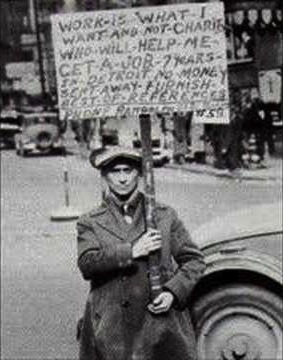
Brother, Can You Spare Me A Job?

26 Saturday Jul 2014

Posted by decollins1969 in 1, Academia, Boy @ The Window, culture, Eclectic, eclectic music, Mount Vernon High School, Mount Vernon New York, music, Pittsburgh, Politics, Pop Culture, race, University of Pittsburgh, Work, Youth

≈ Leave a comment

Tags

"Brother Can You Spare a Dime" (1932), Al Jolson, Booker T. Washington, Corporate Responsibility, Gender Discrimination, General Foods, Hard Work Mythology, My Brother's Keeper, My Brother's Keeper Initiative, Operation Opportunity, Paternalism, Philanthropy, Poverty, President Barack Obama, Race, Racial Paternalism, White House


Screenshot from "Brother, Can You Spare Me a Dime" video/song (song originally recorded in 1932), July 26, 2014. (http://youtube.com).

Screenshot from “Brother, Can You Spare a Dime” video/song (song originally recorded in 1932), July 26, 2014. (http://youtube.com).

In the past five months, there’s been much debate and derision over the White House’s My Brother’s Keeper Task Force and Initiative. Most of it has centered around the exclusion of girls and young women of color from the initiative, as if the problems affecting Black and Latino males aren’t the same ones affecting Black and Latino females. Poverty, a resource-poor education, lack of entry-level jobs leading to careers, woeful access to higher education, lack of access to public services. These effects may lead to different responses from boys/young men of color and girls/young women of color, but the problems that effect vulnerable populations of color are no respecter of gender.

There’s other problems with the initiative, even if President Barack Obama and the White House were to ensure the inclusion of Black and Latino females in the My Brother’s Keeper Initiative tomorrow. It’s an extremely racially paternalistic initiative. On the face of things, it’s not much different from the work Booker T. Washington did a century ago via the William McKinley and Teddy Roosevelt administrations and with money from White philanthropists such as Henry Huttleston Rogers (Standard Oil), Julius Rosenwald (Sears), and George Eastman (Kodak).

Sure, in the case of Washington, The Rosenwald Fund built a few thousand schools, and the philanthropists contributed money to Washington that would build an endowment for Tuskegee. Still, that money came with strings attached. Most of the schools built weren’t high schools, were geared toward what we would call low-level vocational education today, and certainly weren’t part of any agenda to end Jim Crow. For all the good Washington was able to do through these robber-baron era philanthropists — especially in reducing Black illiteracy — it took Black migration out of the South to lead to lasting changes around notions of racial progress and the idea of segregation as the norm for a representative democracy.

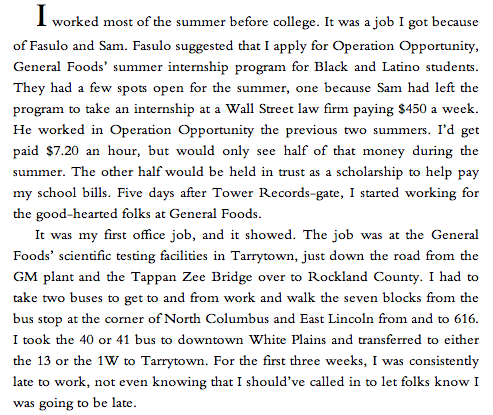
As for My Brother’s Keeper, I am reminded of a passage from my Boy @ The Window about my very first full-time “office” job in the summer of ’87, in between my graduation from Mount Vernon High School and my freshman year at the University of Pittsburgh. It’s about my working for General Foods (now Kraft Foods) in Tarrytown, New York as part of their Operation Opportunity program.

Screen shot 2014-07-26 at 11.10.49 AM

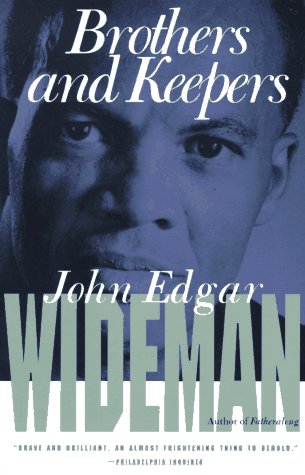
John Edgar Wideman, Brothers and Keepers (originally published in 1984), July 26, 2014. (http://goodreads.com).

John Edgar Wideman, Brothers and Keepers (originally published in 1984), July 26, 2014. (http://goodreads.com).

Beyond the $1,022 the program saved on my behalf — which would go toward room, board and two textbooks for my second semester at Pitt — there really wasn’t much about this program that was opportunity-inducing. Operation Opportunity seemed like it was a checkmark that General Foods could put in its “doing good” column. It provided an opportunity to observe others and do menial tasks without actually promising anything that would help me even a year later, as I went through the summer of ’88 unemployed, and the first week of my sophomore year at Pitt homeless. Not to mention, I picked up a terrible cold in the heat of a 98-degree-July day while spending two hours in a meat-locker-of-a-trailer doing measurements on Jell-O pudding pops!

Now I have no idea what the Annie E. Casey Foundation, the W.K. Kellogg Foundation or Magic Johnson Enterprises intends to do to be keepers of brothers, or brothas, for that matter. But all too frequently, these efforts turn into one-time experiments or corporate-responsibly checkmarks. As my friend and colleague Catherine Lugg has said more than once over the years (albeit, on education research, not specifically on this), social change and diversity efforts are far more than just “bringing a pet to class.” The idea that we need to learn how to work hard is yet another myth that this initiative will perpetuate, whether it’s a success or a failure.

It’s not hard to figure that poor children and young adults of color need more access to public health services, more resources in their formal education, more and better quality food to eat, and more nurturing. Whether any of these kids or young adults — male or female — can obtain these resources without racial paternalism, experimentation or other strings attached, I for one remain extremely skeptical.

Students and the Joys and Travails of College Teaching

16 Wednesday Jul 2014

Posted by decollins1969 in 1, Academia, Carnegie Mellon University, culture, Eclectic, Pittsburgh, Pop Culture, University of Pittsburgh, Work

≈ Leave a comment

Tags

Adult Learners, Ambition, Aspirations, Civic Education, College Students, Duquesne University College of Education, Enthusiasm, George Washington University, High School Students, Joy, JSA, Junior States of America, Motivation, Passion, Presidential Classroom, Teaching and Learning, Traditional College Students, Travails, UDC, UMUC, Undergraduate Students, University of Maryland University College, World Cup 2014 Final Pictures


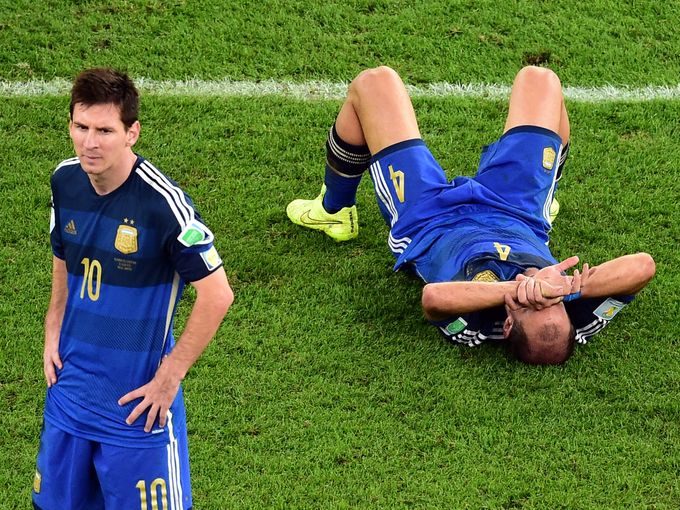
Argentina's Pablo Zabaleta lies on the pitch as Lionel Messi stands beside him after losing to Germany in the final, Rio de Janeiro, Brazil, July 13, 2014. (Francois Xavier Marit/AP via http://usatoday.com).

Argentina’s Pablo Zabaleta lies on the pitch as Lionel Messi stands beside him after losing to Germany in the final, Rio de Janeiro, Brazil, July 13, 2014. (Francois Xavier Marit/AP via http://usatoday.com).

Maybe not to that extreme, but there are circumstances where teaching a college course can be a joy or torture or even sometimes both at the same time. Some of this has to do with the actual nature of the course, some of it with my disposition, some of this with the types of students that walk through the door. But, in teaching somewhere around sixty courses since ’91, working with a civic education nonprofit and consulting with another one, I’ve found two large categories of students who have made teaching more enjoyable over the years, though not always an actual joy. One group has been graduate students, the other high school students aspiring for college.

There are a number of reasons why, of course. Some are pretty easy to understand. High school students aspiring to go to college or taking college-level courses are often ambitious and motivated, students who are amenable to learning. Graduate students often aspire to be better at their specific profession of study, which in my experience, has this group of students essentially aspiring to be some version of me. Even the brown-nosers in both groups tend to have the motivation necessary to be better students, or at least, to look like they’re better students.

It also has helped over the years that the several hundred high school and graduate students who’ve been in my classrooms have actually wanted to be there. Doing a week in Washington to learn how Capitol Hill really works, or a summer course at Princeton on AP US History or taking one of my undergraduate course over the years at the University of Pittsburgh, UDC and UMUC, those students (and their parents) made the choice to take those steps. Those students wanted to get into a college of their choice, to be well prepared, to make themselves better students, and perhaps even, better people.

History graduate students have choices, for the most part, in terms of which graduate seminars they take and in their specific cultural, geographic area and time period focus. In my experience teaching school of education courses, though, at Duquesne and George Washington University (courses like History of American Education, Multicultural Education or History of American Education Reform), the students I’ve taught in those courses chose to be there. They chose to read as many as eight books in eight weeks, to write term papers and research papers and do original research. Those students wanted to become better as teachers, as researchers, and in a few cases, to become college professors themselves.

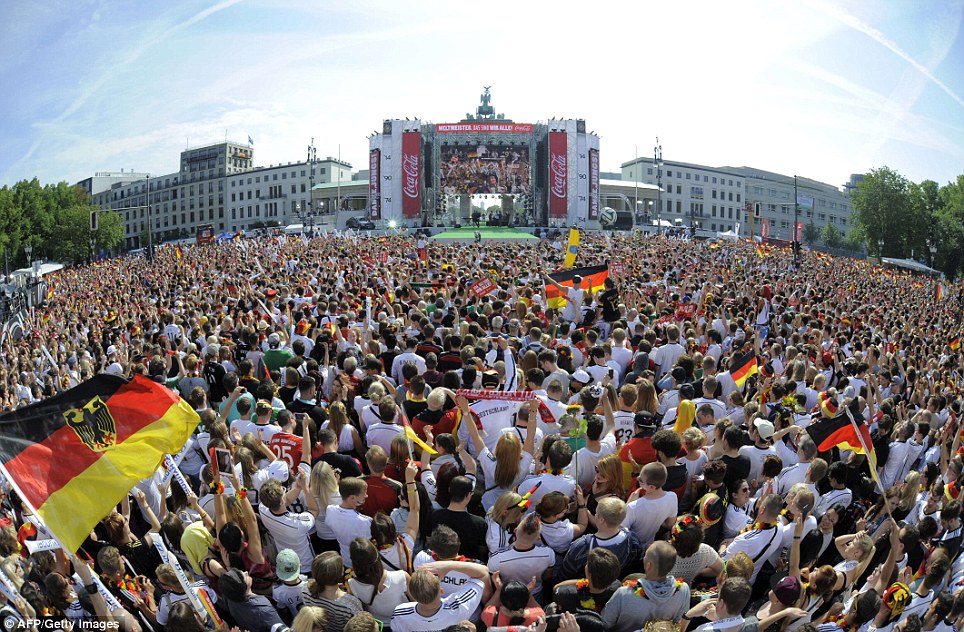
Ready and waiting: 500,000 Germany supporters await the arrival of the country's World Cup stars, Brandenburg Gate in Berlin, July 15, 2014. (AFP/Getty via http://www.dailymail.co.uk/sport/worldcup2014/).

Ready and waiting: 500,000 Germany supporters await the arrival of the country’s World Cup stars, Brandenburg Gate in Berlin, July 15, 2014. (AFP/Getty via http://www.dailymail.co.uk/).

So what’s different teaching undergraduate courses with undergraduate students? Well, they’ve tended to complain the most about general education requirements, ones that require them to take a course in US or World History (my African American History students are generally happier about taking the course). But that’s not all. A fair number have treated me as their enemy, not as their professor or a teacher invested in their learning. Of course these students were in school to complete a degree. But college was no longer an aspiration. It was now a reality, with all of the responsibilities and complications that come with the five-year march toward a four-year degree. For traditional college-aged students, there have always been competing interests, the need to organize a life that involves working 15-20 hours per week and some semblance of a social life, and attempting to figure out a major (often not history).

With my adult learners, those pressures come from at least three directions. The personal pressure to perform academically, the workplace, familial and parental pressures, and the pressure of learning how to be a college student on the fly. Add to this mix the general lack of academic preparation for college for those over twenty-five. All of this has frequently led to a combination of insufficient motivation to learn — even when I’ve explained the “what’s-in-it-for-them” piece — and a quiet hostility toward the process of college matriculation. For this group as a whole — traditional college students and adult learners — aspirations can frequently turn into Being and Nothingness, or rather, a state of being and meaninglessness.

This mindset has been the most difficult aspect of my job as a teaching professor over the years. It’s somewhere between extremely hard and absolutely impossible to teach students whose minds have been closed to learning or self-improvement, whose idea of an education is a piece of paper and a rubber stamp. That most of those students who’ve made my work most difficult are undergraduates isn’t surprising, though. That’s part of the job.

Still, there are times where I miss those days when I taught or worked with high school students fully motivated to get into college, who already had a sense of where they wanted their lives to go. There are times when I miss a grad student angling for a higher grade or with a real interest in my writing and research. For better and sometimes for worse, at least they’re interested in the learning enterprise.

The Meaning of Chicken McNuggets

23 Monday Jun 2014

Posted by decollins1969 in 1, Boy @ The Window, culture, Eclectic, Mount Vernon High School, Mount Vernon New York, Pittsburgh, Pop Culture, University of Pittsburgh, Youth

≈ Leave a comment

Tags

616, 616 East Lincoln Avenue, Chicken McNuggets, Class of '87, Contaminated Food, Coping Strategies, Distractions, Food, Food Critic, Food Justice, Food Policy, Food Politics, General Foods, McDonald's, MVHS, Operation Opportunity, Pink Slime, Self-Discovery, Self-Reflection, Sweet and Sour Sauce, Vanilla Milkshake


McDonald's Chicken McNuggets with Sweet and Sour Sauce, November 17, 2006. (The Food Pornographer via Flickr). In public domain.

McDonald’s Chicken McNuggets with Sweet and Sour Sauce, November 17, 2006. (The Food Pornographer via Flickr). In public domain.

I’ve found it amazing over the years how much my diet and palate has changed, and how my cooking has changed with it. Once upon a time, I thought that Burger King, Arthur Treacher’s, and (to go more local) Mount Vernon’s Papa Wong’s and Clover Donuts had the best food in the world. I knew no other way of preparing fish other than frying it in oil and coating it with a combination of flour and corn meal. And any meal that cost more than $10 — whether eating out or in buying the ingredients to make a meal for my 616 party-of-eight — was a real luxury.

By the summer of ’87 — the summer between the end of high school and the beginning of my college journey at Pitt — I was working for General Foods (now Kraft Foods) in Tarrytown, New York as part of the minority access program Operation Opportunity (the details are all in Boy @ The Window). After work, I often stopped in White Plains at or near The Galleria to switch buses, since it took two buses and a three-quarters-of-a-mile walk to get from 616 and Mount Vernon to the company’s testing facilities down the road from the Tappan Zee Bridge. I also stopped at The Galleria to avoid the hum-drum grind of poverty and chaos at home, to get something substantial to eat, to check out and/or buy the latest tune. And, to feel like a normal seventeen-year-old, and not the boy-man who always felt as if he was part of some epic struggle.

As I described it in Boy @ The Window:

Screen shot 2014-06-23 at 7.32.17 AM

And it was a heaven, a haven, a distraction, if only temporarily, from all of my terrors and fears. Of being permanently alone, of not being able to establish real, lasting friendships, of not being able to love, of only being able to evaluate myself through the eyes of women who saw me as a boring automaton. Not to mention, of having yet another incident with my idiot stepfather Maurice over my refusal to submit to him as “Dad.”

It was also really my first time on my own for more than a few hours without the crutch of high school and Humanities, without the constant noise of my younger siblings tearing up the apartment like it was the Daytona 500. So with every bite of those six orange-yellow McNuggets and every slurp of that fake vanilla milkshake, I savored my quieter mind. I may have looked to others as if I was woofing down the food faster than Scooby Doo and Shaggy in the middle of a food orgy. But for me, those five or six minutes lasted more like twenty, as if I was in deep meditation or watching a bird flap its wings in slow-motion.

Mechanically processed chicken, the key ingredient in McDonald's Chicken McNuggets, pouring out into small tubs, October 5, 2010. (http://huffingtonpost.com).

Mechanically processed chicken, the key ingredient in McDonald’s Chicken McNuggets, pouring out into small tubs, October 5, 2010. (http://huffingtonpost.com).

Twenty seven years later, and I can barely stand the sight or smell of anything McDonald’s — or any fast food in general. Thank you, by the way, Eric Schlosser and your Fast Food Nation (2002) book for making my stomach churn with every fast-food smell my nose can detect! I even make my own pizzas most of the time now! I buy my son Noah and my wife (on occasion) Mickey D’s, mostly McNuggets, and lately, with milkshakes that apparently now contain some dairy-like substances. As for me, I do sometimes eat a couple of fries, but my near-middle-aged tongue and stomach limits my ability to push down the food.

My palate after thirty years of cooking and progressing from $5 spaghetti meals for eight to broiling sockeye salmon in olive oil with a from-scratch fettuccine dish is far more sophisticated now. I no longer can lose myself in food in order to de-stress from carrying the weight of my world. Cooking, however, has been my one of my cathartic exercises for the past twenty years. It’s sometimes even more of a remedy than writing. Too bad there was never any hemp in those McNuggets, though!

Tyranny of the Self-Righteous “Liberal”

18 Wednesday Jun 2014

Posted by decollins1969 in 1, Academia, culture, Eclectic, Pittsburgh, Politics, Pop Culture, race, University of Pittsburgh, Youth

≈ 2 Comments

Tags

ADM, Agribusiness, Amazonian Rain Forest, Archer Daniels Midland, Climate Change, ConAgra, Decriminalization, Drug Policy, Economic Development, Economic Inequality, Environmental Justice, Environmentalism, Food Justice, Food Policy, Global South, Global Warming, GM, GMOs, Gun Control Debate, Gun Safety, Hypocrisy, Monsanto, Pitt, Saving the Planet, Species Diversity, Third World, Veganism, Vegans, White Liberals


Toni Collette as Fiona, "Ms. Granola Suicide," in movie About A Boy (2002), screen shot, June 18, 2014. (http://hotmovies.com via Universal). Qualifies as fair use - low resolution picture is personification of topic (self-righteous liberal).

Toni Collette as Fiona, “Ms. Granola Suicide,” in movie About A Boy (2002), screen shot, June 18, 2014. (http://hotmovies.com via Universal). Qualifies as fair use – low resolution picture is personification of topic (self-righteous liberal).

More and more, I’ve tired of folks who proclaim that because they’ve finally “seen the light” on a particular niche or chic liberal issue, that their view is not only the right and only one. Anyone who doesn’t fall in line with their perspective is the enemy, a sap in support of the destructive forces of capitalism, a person whose individual actions will destroy the world.

That most — but not all, of course — of these people are White liberals isn’t exactly a surprise. This first occurred to me a quarter-century ago, when, as a Pitt undergrad, students active in environmentalism were going around campus asking us to donate time, money and signatures to stop Brazil from tearing down their Amazonian rain forests. Though I understood that we needed to process as much oxygen as our bodies would allow (and pull as much CO2 out of the atmosphere as possible), I also thought, “where the heck do we get off telling Brazil what to do?”

Brazil was and still is a leader in Global South economic development, with massive inequalities to boot. After two and a half centuries of virtually unchecked economic and industrial growth at the expense of the environment, though, where did we as Americans have the right to tell people in other countries to slow or halt their economic development? After exploiting the riches, resources and peoples of the world, where did these do-gooders get off telling other countries that they ‘d have to find a slower way to deal with poverty, or to not exploit their own resources?

An aerial picture of an area of the Amazon Rainforest, Brazil, September 9, 2009. (Felipe Menegaz via Wikipedia). Released to public domain via CC-SA-3.0/GNU.

An aerial picture of an area of the Amazon Rainforest, Brazil, September 9, 2009. (Felipe Menegaz via Wikipedia). Released to public domain via CC-SA-3.0/GNU.

I would get into the occasional argument about this very White, very un-liberal liberal way of thinking. One where we’d get to keep our modern development while countries like Brazil were supposed to languish in the Third World box we and Europe built for them. Of course, the do-gooders would argue back at me, telling me that I wanted to destroy the environment and make the air unhealthy for our future kids and grandkids to breathe. As far as they were concerned, keeping the Global South poor and exploitable was our only chance at beating back global warming and species destruction.

It’s not any different today with issues like food justice, gun control and safety, and drug policy (and for some, religion). I have a Facebook friend who has become more belligerent about promoting veganism and condemning us so-called meat-eaters (technically, humans are omnivores) over the past half-decade. The issue for him couldn’t just be about agribusinesses and their gross abuse of the land, of crops and of domesticated animals, their control and degradation of much of the world’s food supply. No, it’s about individuals making choices that empower these massive corporations instead of going to an organic farm or farmers market or choosing to turn away from all animal proteins for the sake of their bodies or to curtail climate change.

I have no problems with vegans or veganism (I’ve tried it myself on occasion) or with fighting Archer Daniels Midland, Monsanto and ConAgra. I do have a problem with the myopic thinking that people like my Facebook friend have in attacking individuals. It’s such a ’70s liberal way of confronting a huge issue. Not to mention a very White and elitist perspective. Fact is, a truly healthy and well-rounded vegan diet is an expensive one, as the federal government doesn’t subsidize vegan products like it does agribusiness. In a nation like the US, with a shrinking middle class and growing inequality, to expect every individual to stop shopping at Walmart and eating Big Macs in exchange for the organic farm and lentils is arrogant and wholly unrealistic.

There’s no way I’d tell my Facebook friend all this. I’d get argued down as if I were attempting to spread a superflu across the planet. And it wouldn’t be a rational argument either. But then again, it’s okay for White liberals to be irrational in their arguments, especially when it’s in defense of the planet!

ConAgra Foods logo, June 18, 2014. (http://innovate.unl.edu/).

ConAgra Foods logo, June 18, 2014. (http://innovate.unl.edu/).

There’s also irony around gun control and safety and drug policy. When it’s so-called Black-on-Black crime, or a drive-by in New York or Chicago, those meet White liberal expectations. When it’s Columbine or Newtown or Santa Barbara, involving White-on-White crime, then it becomes time for more mental health screenings and more gun control. When heroin and crack cocaine found their way into poor Black and Latino communities in the ’70s and ’80s, we needed tougher drug laws to lock away “the animals” and “thugs.” Now that crystal meth and heroin have made their ways into White-middle-class suburbia, it’s now time to decriminalize some drug possessions and legalize marijuana. But no contradictions there!

A big part of the problem with everyday White liberalism is the idea that individuals and their individual decisions will add up to a groundswell of societal change. Yet how can you change the world if you’re not willing to sacrifice the structures that exploit others who aren’t White and middle class, who don’t live in America or in some suburban cul-de-sac? But go ahead, keep on keeping on with your non-GMO, organic vegan tuna salads made of soybeans and carrots while yelling at the rest of us impoverished shlubs to get with the program!

When Those Close Put Up Roadblocks

07 Saturday Jun 2014

Posted by decollins1969 in 1, Academia, Boy @ The Window, Carnegie Mellon University, culture, Eclectic, Mount Vernon New York, New York City, Pittsburgh, Politics, Pop Culture, race, University of Pittsburgh, Youth

≈ Leave a comment

Tags

Coming-of-Age, Detours, Dr. Don, Dreams, Faith, Forgive and Forget, Forgiveness, History, Internalized Racism, Jealousy, Memoir, Past, PAT Transit, PhD, PhD process, Pitt, Roadblocks, Self-Discovery, Self-Loathing, Sellout, Writing


Detours vs. roadblocks, June 1, 2012. (http://www.ideaarchitects.org).

Detours vs. roadblocks, June 1, 2012. (http://www.ideaarchitects.org).

This was the best title I could come up with, since it’s about folks in my life with whom I’ve shared some affinity over the years, beyond family, and to a lesser extent, friendships. This isn’t about haters or crabs-in-the-barrel mentality per se. It’s simply the observation that as I pursue dreams and push through goals in life that some whom have the choice between being supportive or actively working against my interests, how more than a few have chosen to do the latter.

That this has occurred in my life mostly as I pursued my doctorate and pressed on as a writer isn’t a coincidence. The things I’ve worked the hardest for in life, the dreams most difficult to achieve, the amount of energy and pressing through needed to overcome my own doubts in the process — all came with an audience of detractors. A bit more than twenty years ago, some of my Pitt friends started falling by the wayside as I pursued my grad degrees, which is normal, but there were some pretty weird conversations I had with them as they did. One insisted on calling me “Dr. Don” about a dozen times during a PAT Transit bus ride one day in September ’92, laughing to the point of hilarity while doing it. I thought that he was going to choke on his own spit all the while, he was laughing so hard. Or that I was going to choke him myself if he said “Dr. Don” one more time!

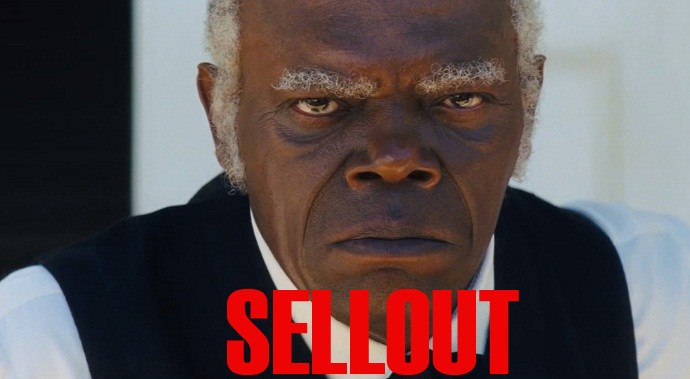
Screen shot of character played by Samuel L. Jackson in Django Unchained (2012) with "Sellout" addition (not an endorsement, by the way), October 31, 2013. (http://forwardtimesonline.com/2013/).

Screen shot of character played by Samuel L. Jackson in Django Unchained (2012) with “Sellout” addition (not an endorsement, by the way), October 31, 2013. (http://forwardtimesonline.com/2013/).

Another guy — who eventually committed suicide in ’98 — told me straight up that people like me were “sellouts,” that “The Man” wasn’t going to accept people like me or him “no matta how many degrees we get” or don’t get. That was six weeks before my committee approved my dissertation, in October ’96. Luckily, I learned not to bring up my education to folks unless it was for professional purposes or unless someone asked.

That these were Black acquaintances from my days as an undergrad at the University of Pittsburgh was a bit surprising, considering that my tendency is to always encourage folks to pursue their dreams. I’d always assumed the worst of the folks — Black, White, Afro-Caribbean and Latino — that I grew up with in Mount Vernon, New York, precisely because their encouragement literally made me suicidal by the time I turned fourteen. By the late-90s, I realized this was more than a New-York-area-social-etiquette-disorder.

With writing and books over the past decade — especially with Boy @ The Window — I’ve experienced some of those same headwinds from folks who seemed to think they had a better idea for the direction of my life than I. When I first started working on my memoir at the end of ’06, I had a conversation with my Pitt and AED colleague Stacey, whom I’d known for sixteen years. Upon telling her about my project, she said, “You need to wait on that,” that I should “publish a few more books,” be in my fifties, before “writin’ a biography.” So I knew that she wasn’t going to buy a copy when it came out. Oh well!

Last fall, at an African American Alumni Council event at Pitt, it was one of my first opportunities to discuss the now published Boy @ The Window, which was immediately followed by public criticism. Right after I talked about the book, an older alumna walked right up to me, and got within a foot or so of my face — close enough to hug. “You’re too young to have a memoir,” she said with a smile on her face, and then walked away as if her’s was the final say on the topic.

At the least, it showed that most don’t know the difference between a memoir (on one period or aspect of one’s life, often with a look at the world beyond) and an autobiography (the story of my entire life). Boy, understand the genre before criticizing it or my role in it already!

One foot in the grave (apparently), June 7, 2014. (http://www.virginmedia.com/).

One foot in the grave (apparently), June 7, 2014. (http://www.virginmedia.com/).

And, yes, I know. I see my Facebook friends especially posting other people’s sayings every single day. About letting go, moving on, forgetting the past, pushing past the haters, sitting in a lotus position, meditating and praying, and then drinking a wheat-grass smoothie. I do let go, I do forgive, and I don’t let the naysayers in my life have the final say. But letting go doesn’t mean I don’t get to highlight some truth, point out hypocrisy, and that I should just be quiet for the sake of being quiet.

It hasn’t been lost on me that most of these specific, potentially dream-destroying microaggressions have come from Black folk, male and female, well-off and immersed in poverty. Do I put these people in the same category as White literary agents who’ve said things to me like, “Oh no, not another abuse story!” or “There are too many black coming-of-age stories in the market?” Of course not. Gate keepers practicing ignorance in the midst of structural racism isn’t the same as people who may have internalized racism.

Or in the latter case, it could just be that my pursuit of what I’ve wanted and finally come to know for my life brought attention to dreams deferred, delayed and denied, by others and by their own fears of failure and success. If I’d let this stand in my way, I’d still be living in Mount Vernon, undoubtedly living in grinding poverty, wondering how could I let everything I wanted out of life get away from me.

← Older posts
Newer posts →

Boy @ The Window: A Memoir

Boy @ The Window: A Memoir

Places to Buy/Download Boy @ The Window

There's a few ways in which you can read excerpts of, borrow and/or purchase and download Boy @ The Window. There's the trade paperback edition of Boy @ The Window, available for purchase via Amazon.com at http://www.amazon.com/Boy-Window-Donald-Earl-Collins/dp/0989256138/

There's also a Kindle edition on Amazon.com. The enhanced edition can be read only with Kindle Fire, an iPad or a full-color tablet. The links to the enhanced edition through Apple's iBookstore and the Barnes & Noble NOOK edition are below. The link to the Amazon Kindle version is also immediately below:

scr2555-proj697-a-kindle-logo-rgb-lg

Boy @ The Window on Amazon.com: http://www.amazon.com/Boy-The-Window-Memoir-ebook/dp/B00CD95FBU/

iBookstore-logo-300x100

Boy @ The Window on Apple's iBookstore: https://itunes.apple.com/us/book/boy-the-window/id643768275?ls=1

Barnes & Noble (bn.com) logo, June 26, 2013. (http://www.logotypes101.com).

Boy @ The Window on Barnes & Noble: http://www.barnesandnoble.com/w/boy-the-window-donald-earl-collins/1115182183?ean=2940016741567

You can also add, read and review Boy @ The Window on Goodreads.com. Just click on the button below:

Boy @ The Window

Twitter Updates

Tweets by decollins1969
  • RSS - Posts
  • RSS - Comments

Archives

  • June 2025
  • April 2023
  • September 2022
  • August 2022
  • July 2022
  • June 2022
  • May 2022
  • April 2022
  • March 2022
  • January 2022
  • December 2021
  • November 2021
  • October 2021
  • September 2021
  • August 2021
  • July 2021
  • June 2021
  • April 2021
  • March 2021
  • February 2021
  • January 2021
  • December 2020
  • November 2020
  • October 2020
  • September 2020
  • August 2020
  • July 2020
  • May 2020
  • April 2020
  • March 2020
  • January 2020
  • December 2019
  • November 2019
  • August 2019
  • July 2019
  • June 2019
  • May 2019
  • April 2019
  • March 2019
  • February 2019
  • January 2019
  • December 2018
  • November 2018
  • October 2018
  • September 2018
  • August 2018
  • July 2018
  • June 2018
  • May 2018
  • March 2018
  • February 2018
  • January 2018
  • December 2017
  • November 2017
  • October 2017
  • September 2017
  • August 2017
  • July 2017
  • June 2017
  • May 2017
  • April 2017
  • March 2017
  • February 2017
  • January 2017
  • December 2016
  • November 2016
  • October 2016
  • September 2016
  • August 2016
  • July 2016
  • June 2016
  • May 2016
  • April 2016
  • March 2016
  • February 2016
  • January 2016
  • December 2015
  • November 2015
  • October 2015
  • September 2015
  • August 2015
  • July 2015
  • June 2015
  • May 2015
  • April 2015
  • March 2015
  • February 2015
  • January 2015
  • December 2014
  • November 2014
  • October 2014
  • September 2014
  • August 2014
  • July 2014
  • June 2014
  • May 2014
  • April 2014
  • March 2014
  • February 2014
  • January 2014
  • December 2013
  • November 2013
  • October 2013
  • September 2013
  • August 2013
  • July 2013
  • June 2013
  • May 2013
  • April 2013
  • March 2013
  • February 2013
  • January 2013
  • December 2012
  • November 2012
  • October 2012
  • September 2012
  • August 2012
  • July 2012
  • June 2012
  • May 2012
  • April 2012
  • March 2012
  • February 2012
  • January 2012
  • December 2011
  • November 2011
  • October 2011
  • September 2011
  • August 2011
  • July 2011
  • June 2011
  • May 2011
  • April 2011
  • March 2011
  • February 2011
  • January 2011
  • December 2010
  • November 2010
  • October 2010
  • September 2010
  • August 2010
  • July 2010
  • June 2010
  • May 2010
  • April 2010
  • March 2010
  • February 2010
  • January 2010
  • December 2009
  • November 2009
  • October 2009
  • September 2009
  • August 2009
  • July 2009
  • June 2009
  • May 2009
  • April 2009
  • March 2009
  • February 2009
  • January 2009
  • December 2008
  • November 2008
  • October 2008
  • September 2008
  • August 2008
  • July 2008
  • June 2008
  • May 2008
  • April 2008
  • March 2008
  • February 2008
  • January 2008
  • December 2007
  • November 2007
  • October 2007
  • September 2007
  • August 2007
  • July 2007
  • June 2007

Recent Comments

MaryPena's avatarMaryPena on My Day of Atonement/Bitter Hat…
decollins1969's avatardecollins1969 on No Good Teaching Deed Goes…
Mary Rose O’Connell's avatarMary Rose O’Connell on No Good Teaching Deed Goes…

NetworkedBlogs on Facebook

NetworkedBlogs
Blog:
Notes From a Boy @ The Window
Topics:
My Life, Culture & Education, Politics & Goofyness
 
Follow my blog

616 616 East Lincoln Avenue A.B. Davis Middle School Abuse Academia Academy for Educational Development AED Afrocentricity American Narcissism Authenticity Bigotry Blackness Boy @ The Window Carnegie Mellon University Child Abuse Class of 1987 CMU Coping Strategies Crush #1 Crush #2 Death Disillusionment Diversity Domestic Violence Economic Inequality Education Family Friendship Friendships Graduate School Hebrew-Israelites High-Stakes Testing Higher Education History Homelessness Humanities Humanities Program Hypocrisy Internalized Racism Jealousy Joe Trotter Joe William Trotter Jr. K-12 Education Love Manhood Maurice Eugene Washington Maurice Washington Misogyny Mother-Son Relationship Mount Vernon High School Mount Vernon New York Mount Vernon public schools Multiculturalism MVHS Narcissism NFL Pitt Pittsburgh Politics of Education Poverty President Barack Obama Race Racial Stereotypes Racism Relationships Self-Awareness Self-Discovery Self-Reflection Sexism Social Justice Teaching and Learning University of Pittsburgh Violence Whiteness Writing

Top Rated

Blog at WordPress.com.

  • Subscribe Subscribed
    • Notes from a Boy @ The Window
    • Join 103 other subscribers
    • Already have a WordPress.com account? Log in now.
    • Notes from a Boy @ The Window
    • Subscribe Subscribed
    • Sign up
    • Log in
    • Report this content
    • View site in Reader
    • Manage subscriptions
    • Collapse this bar
 

Loading Comments...