• About Me
  • Other Writings
  • Interview Clips
  • All About Me: American Racism, American Narcissism, and the Conversation America Can’t Have
  • Video Clips
  • Boy @ The Window Pictures
  • Boy @ The Window Theme Music

Notes from a Boy @ The Window

~

Notes from a Boy @ The Window

Category Archives: Christianity

Aside

“And There’s Winners, And There’s Losers…

19 Wednesday Aug 2015

Posted by decollins1969 in 1, Christianity, culture, Eclectic, eclectic music, New York City, Patriotism, Politics, Pop Culture, race, Religion, Work

≈ Leave a comment

Tags

"Pink Houses" (1983), 2016 Election, American Narcissism, Bankruptcy, Comb-Over, Donald Trump, FOX News Debate, Frank Sinatra, Hypocrisy, John Mellencamp, Losers, Misogyny, Narcissism, New York, New York" (1980), Racism, RNC Debate, The Donald, Trump Supporters, Winners, Xenophobia


“But they ain’t no big deal/’Cause the simple man, baby/Pays for thrills/The bills the pills that kill” – John Mellencamp, “Pink Houses” (1983).

Donald Trump’s entire campaign might as well be called “The Ultimate Narcissist Does The Pink Houses” Tour, complete with Def Leppard, his kids, and Omarosa going to bat for him on CNN. Trump and his angry band of supporters see the world in the simplest way, like an indoctrinated twelve-year-old forced to be part of a religious cult (I can definitely relate). Trump sees himself as a “winner,” the US as a country that used to be a “winner,” and anything or anyone who doesn’t fit his narrative as “losers.” Of course there’s a contradiction here. Trump doesn’t have the courage to call many of his supporters “losers,” though there are about four decades’ worth of his actions and statements that would serve as evidence of his thoughts about his base.

2016 presidential candidate Donald Trump meeting with New England Patriots owner Robert Kraft, Gillette Stadium, Foxboro, MA, October 21, 2012. (Nancy Lane/Boston Herald;http://bostonhearld.com).

2016 presidential candidate Donald Trump meeting with New England Patriots owner Robert Kraft, Gillette Stadium, Foxboro, MA, October 21, 2012. (Nancy Lane/Boston Herald;http://bostonhearld.com).

At the “Big Boys” RNC debate a couple of weeks ago, Trump couched everything in terms of “winners” and “losers.” President Obama was an “incompetent loser.” The US is “losing to China” economically. Mexican immigrants are turning the US into “a nation of losers.” The US has to “win” against ISIS (I prefer the term Islamic State or IS that most news agencies use outside the US, but that would make me a loser). Trump’s pronouncements at the debate and since have been about more than sound bites of “us” vs. “them,” as the more progressive media elements have said. It’s been about presenting himself as America’s winner, as the one at “the top of the heap, king of the hill, A-number-1.”

In a nation full of narcissists, this has a real appeal, even if the reality of Trump’s life contradicts both the winner image he portrays and the lives that most of his supporters actually live. The most obvious is Trump’s net worth being more like between $1.4 billion and $4 billion (Oprah Winfrey territory), and not the $10 billion he says it is. Or that he has — or, as Trump would say, “my companies” have — filed for Chapter 11 four times in the past quarter-century. Or his multiple divorces. Or his ridiculous comb-over in 20+mph winds.

I guess all of those falsities and setbacks should be more nuanced, as part of life’s long and bumpy journey. By Trump’s own definition, because his net worth — though envy-inducing — is hardly #1 (still between Bill Gates, Warren Buffett, and Michael Bloomberg), he should see himself as a loser. Because Trump has seen multiple business ventures crash and burn, the “loser” moniker could fit. Oh, but narcissism allows for those suffering from grandiose inflations of themselves to see their failings, their losses as mere bumps in the road, and not part of the “winners and losers” narrative.

Picture of abandoned Palma Nova mobile home park, where the last of the 900 families had been evicted in 2009, Davie, Florida, February 15, 2010. (Mike Stocker/Miami Sun-Sentinel; http://www.sun-sentinel.com/local/broward/fl-palma-nova-davie-pg-photogallery.html).

Picture of abandoned Palma Nova mobile home park, where the last of the 900 families had been evicted in 2009, Davie, Florida, February 15, 2010. (Mike Stocker/Miami Sun-Sentinel; http://www.sun-sentinel.com/local/broward/fl-palma-nova-davie-pg-photogallery.html).

The same goes for Trump’s supporters, most of whom couldn’t hope to be PTA president at their neighborhood elementary school, much less run for POTUS. The US is so replete with narcissism that it’s in the bloodstream of ordinary low-income Americans (the majority of the working population, by the way). And as such, their reasons for supporting Trump are as sad as they are predictable. They see him as a winner, even though he was born into wealth via his real estate magnate father (or as many New Yorkers saw him, slum lord), Fred Trump. The Donald was born halfway between third and home plate, and somehow ordinary Americans see him as a quintessential American?

Trump’s supporters also see him as someone who “tells it like it is.” Really? Ready to be fooled again, just like with so many numbskulls and wing-nuts who’ve sold Americans the magic of tax cuts for the rich and for corporations and endless prosperity in the past? Some of these narcissists are like gambling addicts, taking their last dollars to a slot machine on the hope of making it rich with crusty toenails. It both a real shame, and pitiful to watch.

Aside

What’s Up With These Leftist Labels, Anyway?

05 Wednesday Aug 2015

Posted by decollins1969 in 1, Academia, Boy @ The Window, Christianity, culture, Eclectic, eclectic music, Hebrew-Israelite, Mount Vernon High School, Mount Vernon New York, Pittsburgh, Politics, Pop Culture, race, Religion, Youth

≈ Leave a comment

Tags

"I Am 32 Flavors" (1998), Alana Davis, Anti-Stereotype, Class Struggle, Critical Race Theory, Derrick A. Bell, Dick Oestreicher, Evangelical Christianity, Franz Fanon, Graduate School, Humanities, JD, Karl Marx, Labeling, Labels, Leftist, Liberal, Marxist, Neo-Marxist, Pitt, Rosemary Martino, Stereotypes, W. E. B. Du Bois


Asian woman in nude breaking through a barcode, September 2010. (unknown author/woman, http://www.willeyelisten.com).

Asian woman in nude breaking through a bar code, September 2010. (unknown author/woman, http://www.willeyelisten.com).

Over the years, I’ve grown tired of the idea that my social, cultural, economic and political beliefs could be summed up with one or two words. Like “progressive,” “Communist,” “neo-Marxist,” “leftist,” “liberal,” and/or “Marxist.” Why? Because like so many things American (or in this case, Western), ideologues and intellectuals take the easiest path and slap overgeneralized labels on groups of people without thought, without nuance, and certainly without an understanding of both people and history.

I’ve felt this way about these labels at least since my first year of grad school in the University of Pittsburgh’s MA and PhD programs (1991-92), and likely longer than that. But in that program, I was surrounded by professors and colleagues who were various shades of Marxism. At least that’s what they claimed. More to the point, they claimed that “the class struggle” was the defining feature of both human history and US history. “The class struggle” trumped slavery and America’s racial caste system, the near eradication of indigenous cultures in the US and around the world, it trumped the exploitation and exclusion of women in Western civilizations.

I admit it. It really, really, really pissed me off to be earning my MA and beginning my doctoral work around such ignorant thinkers. They would ask me about my Marxism, and I’d say, “I’m not a Marxist. I’m not a neo-Marxist. I’m not even a Groucho Marxist.” My Pitt grad school colleagues would laugh, sometimes a little too forcefully. My professors, for the most part, ignored me, since I was an African American history student who believed that race intertwined with class to be US history’s defining feature. How scandalous!

It wasn’t that I hadn’t read Karl Marx’s and Frederick Engels’ Communist Manifesto (1848). I read it via Rosemary Martino in twelfth grade, though I can’t remember if I read it for AP English or for her Humanities Philosophy class. I’d also read Marx’s much longer Das Kapital (1867), Frantz Fanon’s Black Skin, White Masks (1952) and The Wretched of the Earth (1961), Du Bois’ The Souls of Black Folk (1903), Ralph Ellison’s Invisible Man (1952), and so many other supposedly Marxist-leaning tombs by the time I’d taken my first full semester of grad-level courses (I took my first grad course my junior year at Pitt).

A basic world political spectrum chart (really, too simple), August 5, 2015. (http://www.endofprejudice.com/).

A basic world political spectrum chart (really, too simple), August 5, 2015. (http://www.endofprejudice.com/).

I just wasn’t that impressed on the Marxism part of things. I mean, I was well acquainted with oppression, exploitation and abuse long before I’d read anything by Marx and Engels, or George Orwell in ninth grade English, for that matter. I had a contrarian Humanities classmate in JD who espoused what I considered even at the time his version of Communist gibberish all through middle school and into our sophomore year at Mount Vernon High School. So how do you label someone a Marxist or Communist who both views it with disdain and didn’t grow up quoting from it? I’d like to know.

This last question, though, is bigger than just my own experience with poverty, race, racism, child abuse, sexual assault, domestic violence, homelessness, cultish religions, and sheer willful ignorance and neglect. Historically, labeling anyone who had radical ideas about the falsities of human civilizations as civilizing the human tendency to spread inequality and oppression to the most vulnerable as Communist is a bit ahistorical, no? So-called leftists or socialists do that with Jesus and Muhammad almost every day. Maybe we should call Karl Marx an original, Asiatic Christian or original Muslim, minus the spiritual component of kneeling before God in prayer.

Portrait of Guy Fawkes (1570-1606), author/date unknown, August 5, 2015. (http://plus.google.com).

Portrait of Guy Fawkes (1570-1606), author/date unknown, August 5, 2015. (http://plus.google.com).

For me, growing up in a striving household that ended up in grinding welfare poverty didn’t make me a Communist. I went through several stages of belief, from my Mom and idiot stepfather Maurice hoisting the Hebrew-Israelite thing on me, to evangelical Christianity, to just plain Christianity, to critical race theorist adherent. I never completely gave up on capitalist democracy, because what would’ve been the point of that? By the time my son was born in 2003, I saw myself more in European terms, as either a Social Democrat or a Christian Democrats, believers in compromises and reforms from within that ameliorate the worst forms of racial, gender and other forms of oppression and poverty.

Yet even that is too big a label to hang on me or others, now and across history. What did people call those who wanted to rid the world of poverty and economic oppression prior to 1848? Or prior to the French Revolution, for that matter? Troublemakers? Radicals? Jacobites? Weird? Lunatics? To be honest, any of these terms fit me better than progressive, liberal, leftist or Marxist. Because ultimately, I don’t believe in any single economic or political belief system crafted by Homo sapiens. They’re all subject to corruption, all subject to be bent by those with the most power and resources.

So, who am I, ideologically speaking? To quote Alana Davis, “I am 32 flavors” and dim sum. Go ahead. Try to figure that out and come up with a label that fits!

Aside

RIP Sister, Sarai Adar Washington (February 9, 1983-July 11, 2010)

11 Saturday Jul 2015

Posted by decollins1969 in 1, Boy @ The Window, Carnegie Mellon University, Christianity, culture, Eclectic, Mount Vernon High School, Mount Vernon New York, Pop Culture, race, Work, Youth

≈ Leave a comment

Tags

616, 616 East Lincoln Avenue, Brother-Sister Relationship, Death, Dread, Eri Washington, Father Figures, Growing Up, Independence, Life, Mazza Gallerie, Sarai Washington, Sickle Cell Anemia, The Matrix Revolutions (2003)


Sarai Washington, circa 2003.

Sarai Washington, circa 2009.

It’s been five years since I received my brother Eri’s call telling me what I had known and dreaded would come for nearly thirty years. That my only sister Sarai had died from complications stemming from sickle-cell anemia.

As soon as I picked up the phone five years ago, I knew. Sarai had been in and out the hospital for months since she had returned to New York at the tail end of ’09. Before then, she had lived either on her own or with two of her high school friends in Huntsville, Alabama since ’05. The skin and bone bruises, the constant blood transfusions, the always-there pain of sickled red blood cells circulating through her body. The average life expectancy for anyone with the disease is thirty-three years. That I had Sarai in my life for 82 percent of that life expectancy was still a minor miracle in the midst of what to me seemed completely unnecessary pain.

We weren’t as close in her later years, though. I mean, Sarai saw me as a bit of a father-figure when she was growing up. I had thirteen years and six weeks on her, so that’s how it goes. Between the 616 fire and homelessness for her and my other younger siblings in ’95, though — not to mention puberty — Sarai no longer treated me as her hero. That was fine by me. I already had too many people in my life who thought of me as some sort of hero or saint.

I think, though, that my sister enjoyed not really having to think about her future, about not feeling the need to grow up, since, what would be the point, really? I thought that because she knew more about her disease than anyone, it was her responsibility to grow up and find the best care possible to manage her disease, to bring some meaning to her life. That’s where our closeness became less so. I have a way of expecting more out of people than most people are willing to expect of themselves.

Sarai & Noah, November 2003. (Donald Earl Collins).

Sarai & Noah, November 2003. (Donald Earl Collins).

When Sarai came to live with me and my wife Angelia in ’03, to help us out with our then newborn son Noah, it was obvious that my sister was doing little to take care of herself. When I finally confronted her about her poor diet and unwillingness to watch over her disease, Sarai yelled, “You’re not my father!,” right in front of Mazza Gallerie, on the DC-Chevy Chase border (we had gone to see The Matrix Revolutions, much more for her than for me). Of course she was right. But of course, I was right also.

Sarai decided the next day to pack up her stuff and move back home to 616 and Mount Vernon, “where no one told her what to do,” she wrote as part of her going away letter. She also said that I “don’t know anything about the streets” as yet another familial “Just because you have a Ph.D…” coup de grace. I thought, “If I didn’t know anything about the streets, you and the rest of the younger siblings would’ve gotten your asses kicked through the early ’90s.”

But I knew Sarai’s letter wasn’t about the streets. It was about her living her life the way she wanted, without me or anyone else telling her how to take care of herself. That’s why she went away to Alabama for nearly four years.

Luckily I did get to talk to her a couple of times after that. Though we weren’t close, I loved her, and I know she loved me. The sad truth was, though, Sarai never had enough time to take charge over her life, and I couldn’t make her take that precious little time.

Aside

American Narcissism, or, “Smiling, Crying, and Celebrity”

10 Friday Jul 2015

Posted by decollins1969 in 1, Christianity, culture, Eclectic, eclectic music, Movies, music, Patriotism, Politics, Pop Culture, race, Religion

≈ Leave a comment

Tags

"Charlie X", "Original Of The Species" (2005), American Narcissism, Captain James T. Kirk, Gordon Ramsey, How To Dismantle An Atomic Bomb (2004), Kitchen Nightmares, Narcissism, Psychic Powers, Self-Aggrandizement, Self-Love, Self-Promotion, South Carolina State Rep. Jenny Horne, Star Trek, Star Trek TOS (1966-69), Thasians, U2, US Foreign Policy, US History, William Shatner


South Carolina Representative Jenny Horne (Republican) speaking on floor of House chamber, Columbia, SC, July 8, 2015. (http://www.slate.com via C-SPAN3).

South Carolina Representative Jenny Horne (Republican) speaking on floor of House chamber, Columbia, SC, July 8, 2015. (http://www.slate.com via C-SPAN3).

There are so many examples of the US as a nation of narcissists that when I step outside of my own narcissism, it literally leaves me with vertigo. I can see narcissism everywhere. In how Americans drive, as if they’re the only car on the road in bumper-to-bumper traffic. I see it in how people walk on sidewalks, as if no one else will ever need space to walk in the opposite direction, or as if everyone wants to walk at a slow, plodding pace. I see it in how we reacted to even minor criticism, as if the comment “this needs revision” equals “you’re a lazy, untalented hack of a writer,” and deserves a response equally personal and nasty.

From U2's "Original Of The Species" (2005) video, from How To Dismantle An Atomic Bomb (2004) album, July 9, 2015. (http://youtube.com).

From U2’s “Original Of The Species” (2005) video, from How To Dismantle An Atomic Bomb (2004) album, July 9, 2015. (http://youtube.com).

One of the better demonstrations of narcissism American style is through our popular culture. From Frank Sinatra to Rick Ross, Mae West to Nicki Minaj, we have a century’s worth of pop culture divas as examples of narcissism at the level of prominent American individuals. The narcissism is so normal that we have benign terms for it, like “self-promotion” or “self-love.” People, especially in the pop culture world, should promote and love themselves, of course. But at what point is narcissism a self-defeating process of “me as triumphant,” “me as the center of the universe,” “me for everyone to like/love more and more?”

A clear-cut example of art imitating life imitating art for me around narcissism would be a Star Trek: TOS (The Original Series) episode. Season 1, Episode 2, September 15, 1966, was the airing of the “Charlie X” episode on NBC. It was the one in which a seventeen-year-old who had been stranded on an alien planet since the age of three was taken up to the Enterprise by a transport ship. Once on the Enterprise, the teenager displayed both petulance and his toolbox of god-like powers, hurting crew members or making them disappear at a whim. All because they either unknowingly insulted him or made him jealous in some way. As one story line summary for the episode reads, “Captain Kirk must learn the limits to the power of a 17-year-old boy with the psychic ability to create anything and destroy anyone.”

Charlie Evans, played by Robert Walker, Jr., Star Trek TOS, Season 1, Episode 2, September 15, 1966. (https://thesouloftheplot.files.wordpress.com/).

Charlie Evans, played by Robert Walker, Jr., Star Trek TOS, Season 1, Episode 2, September 15, 1966. (https://thesouloftheplot.files.wordpress.com/).

The Charlie Evans character became fixated on a female crew member — consistently called “a girl” in 1966 (that wasn’t acceptable even back then) — in one Yeoman Janice Rand. Charlie’s obsession with having her, his dislike for criticism and being told what to do, his inability to check his emotions, his destructive responses, were all based on his needs from moment to moment. Every potential slight, every action that he couldn’t control led Charlie to do some damning things. With his thoughts, Charlie took away Lt. Uhura’s voice, broke Spock’s legs, blinded another crew member, took away one woman’s face, aged another woman, and made one other woman disappear. When Charlie couldn’t win at chess, he melted the chess pieces. “I can make you all go away! Any time I want to!,” Charlie exclaimed at one point in the episode.

Within a scene or two, just before the episode’s climax, Kirk finally said, “Charlie, there are a million things in this universe you can have and a million things you can’t have. It’s no fun facing that, but that’s the way things are.” This was when Charlie was on the verge of taking over the ship and possibly wiping out the Enterprise‘s crew. But then, the Thasians came (the aliens who’d given Charlie his powers in the first place) with their own starship to take Charlie in as one of their own. “We gave him [Charlie] the power so he could live. He will use it – always. And he will destroy you, or, you will be forced to destroy him,” the face of the Thasians said. Then, the Thasians disappeared Charlie to their starship, with Charlie’s final words, “I wanna stay… stay… stay… stay… sta…” lingering on the Enterprise‘s bridge.

Defaced woman, Star Trek TOS, Season 1, Episode 2, September 15, 1966. (http://goodcomics.comicbookresources.com/).

Defaced woman, Star Trek TOS, Season 1, Episode 2, September 15, 1966. (http://goodcomics.comicbookresources.com/).

If this episode doesn’t serve as a metaphor for America as a nation and Americans as 320 million individuals with varying levels of narcissism, I don’t know what does. America has always declared itself at the center of the world, centuries before it became a world superpower. Any affront — real or perceived — has often led to skirmishes and wars, embargoes and removals. America’s relatively short history includes Indian wars, Barbary pirates, the War of 1812, the American Revolution, Manifest Destiny and the Mexican-American War, the Monroe Doctrine, Banana Republics and Cuba, Manuel Noriega and Panama, Beirut and Grenada. The central theme of American history and foreign policy has been to self-aggrandize, to settle scores, to challenge other countries to duels, to take advantage of those in the most vulnerable places in the US and around the globe.

So too has narcissism been a part of ordinary Americans’ lives. Just watch a rerun of Kitchen Nightmares on BBC America or on FOX. Any criticism delivered by soccer coach-chef Gordon Ramsey is received about the same way as a toddler reacts when their favorite toy goes missing. Taunts, tantrums, threats, gnashing of teeth, juvenile guilt and despair.

And, for a moment, there may even be a haunting realization that your intellect and experiences aren’t at the center of the universe. But just for a moment. After all, there aren’t any Thasians to check and balance America’s narcissism. Still, narcissism has a way of using up people and nations. Maybe in a hundred years, maybe in 500, but some time in the future, historians will write about American narcissism the same way many historians write about the gross inequalities of an over-glorified ancient Rome.

Aside

Part of My Real-Life Hunger Games

24 Wednesday Jun 2015

Posted by decollins1969 in 1, Boy @ The Window, Christianity, culture, Eclectic, eclectic music, Mount Vernon High School, Mount Vernon New York, music, Pop Culture, race, Religion, Youth

≈ Leave a comment

Tags

"Things Can Only Get Better" (1985), 10th Grade, 616, 616 East Lincoln Avenue, Addie Viggiano, Authority Figures, Chemistry, Disillusionment, Harold Meltzer, Howard Jones, Humanities, hunger, Iced Fudge Nut Brownie, Italian, MVHS, New York State Regents Exams, Paul Lewis, Poverty, Sara Lee, Trigonometry


Consequences of hunger in schools, NOKID Hunger, January 2015. (http://www.youthonassignment.org/).

Consequences of hunger in schools, NOKID Hunger, January 2015. (http://www.youthonassignment.org/).

This time three decades ago I’d started to recover from a week of seemingly endless tests and Regents exams at Mount Vernon High School, which couldn’t have come at a worse time for me. The cupboards and fridge at 616 were as bare as they had been since the days before my Mom had gone on welfare. There was only enough milk for my younger siblings, and besides cornbread and cabbage, we were SOL. That Monday we had our exams in World History and English. Tuesday was the Trig Regents, which I started preparing for at the end of February because our teacher Ms. Viggiano didn’t know the difference between sine, cosine and tangent. All of those went pretty well.

Then we ran out of food Tuesday night. I woke up the next morning with water, milk, ice and freeze-dried meat as my choices for breakfast and 50 cents in my pocket. I chose water and only water for the morning. And Wednesday was the busiest day of all. There were two Regents exams, one that morning in Italian, the other in Chemistry. I went to school feeling like I could overcome my hunger and do decently on the test. After all, I had been taking Italian since seventh grade, and I already knew I had scored an eight out of ten on the oral part of this exam. But deep down, I knew I just didn’t have the energy to get through the exam. I had a headache from the lack of food, which grew worse as I started to forget the difference between Italian in past, present, future and present perfect tense. I finished the exam and found myself just hoping for a 70 (anything below a 65 was an F, and the exam counted for a third of my total grade for the course).

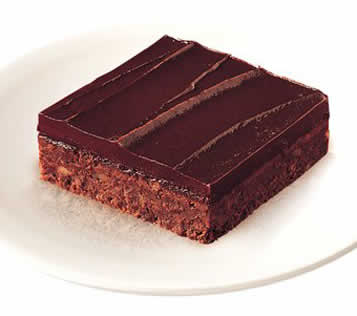
Sara Lee Iced Fudge Nut Brownie (yes, they still make them), 2014. (http://saraleefoodservice.com/).

Sara Lee Iced Fudge Nut Brownie (yes, they still make them), 2014. (http://saraleefoodservice.com/).

I went to lunch and walked over to Chester Heights (Eastchester) to a deli and bought the only thing I could think of to eat: one Sara Lee Brownie. It cost 45 cents, and it was probably the best investment I had made up to this point in my life. I walked back to MVHS, slowly ate the brownie to make it last, and had just enough time to drink some more water before we sat down to take the Chemistry Regents.

When I opened up the exam booklet I started laughing. Our idiot Chemistry teacher Mr. Lewis had told us the month before to “not worry” about organic chemistry as part of the Regents exam even though he had never covered it in class. Listening to him had me averaging a C in his class all year, with my highest exam grade an 87. So I bought a Barron’s Chemistry Regents test prep book the weekend after his pronouncement, and did nothing but study organic chemistry for this exam. It turned out that the first ten questions on the exam were organic chemistry ones, and something like thirty-five out of 100 total covered organic chem. With my brownie digesting, I was ready to kick some butt. I left that afternoon knowing that I did pretty well. But after that shaky morning, I found myself still wondering, did I do well, or was my malnourished mind playing tricks on me?

I found out on Friday, June 21st that I had failed the Italian Regents, with a total score of 45 — I’d only earned a 37 out of 90 on the written party of the exam (I’d taken the oral part with Ms. Maldonado a couple of weeks earlier). On the Chemistry Regents, I had the third highest score in the school — a 95 out of 100. I was bummed, ecstatic, pissed and disillusioned with my teachers and with myself, all at the same time. The goofy-assed Howard Jones tune “Things Can Only Get Better,” a hit at that time, popped into my head from that morning and off and on for the rest of June.

Luckily on the Friday we found out our scores was also the same day we were to meet our AP US History teacher. I’ve already described my late friend and mentor in a previous post. But it’s worth mentioning again how he broke down my protective wall to talk to me about things I’d never discuss with my classmates or my Mom or Jimme. One of those issues was hunger. Not just my constant need for food even when there was food at 616. My hunger, my drive for something better in life. Meltzer noticed it, and gradually got me to exhibit that side of myself in class.

NO KID Hungry campaign logo, Share Our Strength, June 24, 2015. (https://www.nokidhungry.org/).

NO KID Hungry campaign logo, Share Our Strength, June 24, 2015. (https://www.nokidhungry.org/).

For years after AP, Meltzer would say, over and over again, “You know, I never worried about you.” I guess it was because I didn’t take the world around me at face value. I had a healthy disdain for authority figures and the daily bullshit that the world attempted to feed my mind with every day. I wasn’t intimidated by my classmates, and I wasn’t going to allow myself to engage in worrying about grades and pleasing teachers the ways in which they did.

Meltzer picked up on this, and laughed about it all the time. He said that I had that one-of-a-kind look of a student who wasn’t just hungry for good grades, but hungry for knowledge, hungry for something to make sense of a senseless world. I guess that this is all true. Boy, it’s remembering days of hunger past that I miss people like Meltzer the most.

Didn’t We Never Have It All

04 Thursday Jun 2015

Posted by decollins1969 in 1, Boy @ The Window, Christianity, culture, Eclectic, eclectic music, Hebrew-Israelite, Marriage, Mount Vernon New York, My Father, New York City, Pop Culture, race, Religion, Work, Youth

≈ Leave a comment

Tags

"Why Women Still Can't Have It All", Anne-Marie Slaughter, Arkansas, Black Migration, Bradley Arkansas, Conservatism, Evangelical Christianity, Hats, Judah ben Israel, Maurice Eugene Washington, Melissa Harris-Perry, Mother-Son Relationship, Mount Vernon Hospital, MSNBC, Perfectionism, Self-Awareness, Self-Loathing, Self-Sufficiency, Self-Worth, Strikebreaker, Tenant Farming, Vanity, Wear and Tear, Welfare, Welfare Poverty, Xenophobia


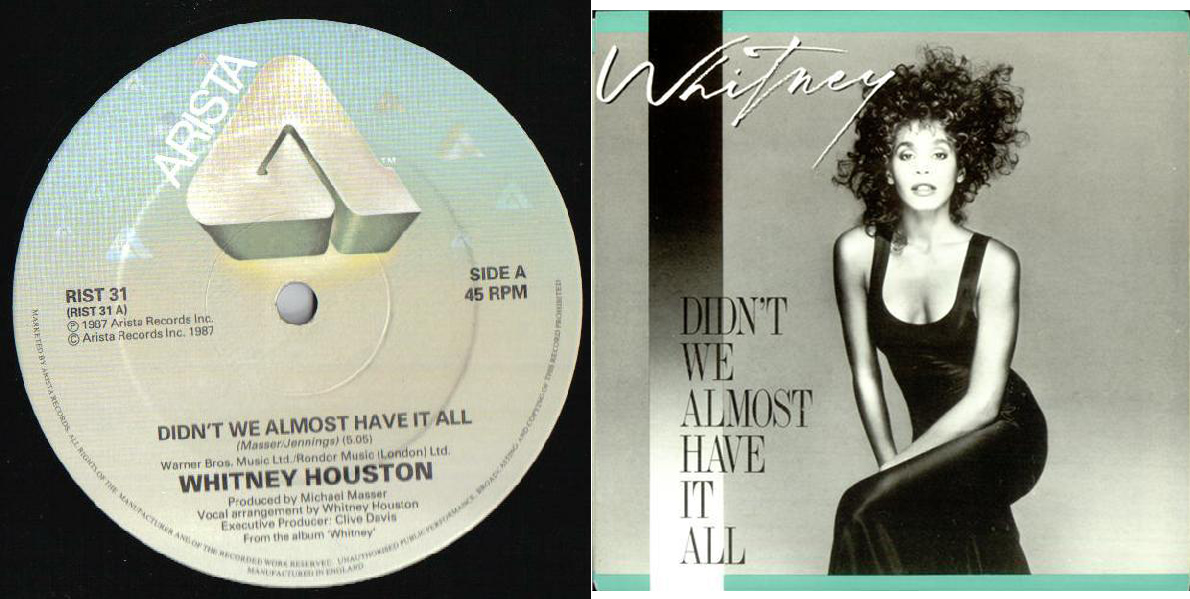
Whitney Houston, "Didn't We Almost Have It All" (released August 1987) Single 45rpm, from 2nd Whitney album (not exactly a favorite), June 4, 2015. (combined/cropped by Donald Earl Collins; http://musicstack.com and http://rapgenius.com).

Whitney Houston, “Didn’t We Almost Have It All” (released August 1987) Single 45rpm, from 2nd Whitney album (not exactly a favorite), June 4, 2015. (combined/cropped by Donald Earl Collins; http://musicstack.com and http://rapgenius.com).

I’ve been thinking about this for nearly a year. It started for me last August. Melissa Harris-Perry had a segment on her MSNBC show regarding the multiple hats women of color have worn over the years in taking care of their families, immediate, extended and non-biological. In response to Anne-Marie Slaughter’s July/August 2012 piece in The Atlantic about “Why Women Still Can’t Have It All,” Harris-Perry and her guests made the point that feminism for women of color has been about far more than having a successful, sexist-free career. That throughout American history, women of color have found themselves wearing multiple hats as primary breadwinners, primary caretakers and primary childrearers, often in ways that traditional feminists don’t discuss or recognize. All without fanfare and with many setback along the way.

What I’ve witnessed and been a part of in my own life reflects much of the conversation that Harris-Perry led on her show. The physical, mental and psychological scars from caring for family, friends and children, while struggling financially and dealing with racism and misogyny often manifests in disease and depression for so many women of color. There’s so much more, though, in terms of how my own mother’s multiple hats and habits led me to so many of my own. All initially to help her, but in the end, helping myself become self-sufficient. Not to mention making myself more understanding of where all the wear, tear and lack of care that wearing so much for so long can lead.

My Mom’s Hats and Habits:

The Anne-Marie Slaughter image of multitasking/wearing multiple hats (just think what this is like for poor, low-income, women of color), February 4, 2015. (ALAMY; http://telegraph.co.uk).

The Anne-Marie Slaughter image of multitasking/wearing multiple hats (just think what this is like for poor, low-income, women of color), February 4, 2015. (ALAMY; http://telegraph.co.uk).

Before I turned thirteen years old, my mother had been far more than my Mom. She’d been a dietary supervisor at Mount Vernon Hospital, just outside New York City, since 1968, the year before I was born. She had been a high school basketball player, a caregiver to her eleven brothers and sisters, and a cotton-picking breadwinner for her family in segregated southwestern Arkansas, an area located in the Red River Valley, part of the larger Mississippi Delta region. She had become our family’s primary breadwinner in the years after she gave birth to my older brother and me. Not to mention a married young woman now living a thirty-minute train ride from Midtown Manhattan, between the Hudson and Hutchinson Rivers, on the border between affluent Westchester County and the Bronx.

Life didn’t treat my Mom too kindly once she married my alcoholic father in 1971. And it actually went from bad to worse as she divorced him for my stepfather in 1978. By then, she had become a cigarette smoker, a one-time adulterer, and an abuse survivor. My Mom did everything she could to shield my older brother and me from her habits and the realities of our tough life in Mount Vernon in the 1970s and early 1980s. But by the end 1982, as I turned thirteen, all the hats my Mom had worn began to fall to the ground. In taking on the role of a strikebreaker, all of our lives would change forever.

In response to concessions made to the union, who left her unprotected, Mount Vernon Hospital cut her from full-time to part-time. My Mom became the besieged one. She was the old woman in the shoe, with six kids — including four under the age of five — and a cheating, abusive, unemployed, sometimes-at-home husband. It was my Mom’s job to take care of us all. Yet no longer was she a breadwinner. My Mom had become one of Reagan’s alleged welfare queens, pulling in $16,600 in AFDC payments per year from April 1983 until I left for college in August 1987. With all of that, I became a hat juggler myself.

Once Her Hats Became My Own:

For a while during my teenage years, my Mom had been my friend, one in which I could usually confide, albeit out of anger and frustration. All while taking on more and more of what had been her duties, including the brunt of her second husband’s rage and fists. I’d become an everyday grocery shopper, a frequent family cook, and a sometimes provider, the last mostly through tracking down my own father for a few extra dollars every Friday or Saturday at one of his favorite bars. Or, by the time I was sixteen, through working part-time. I provided childcare on afternoons, evenings and weekends. I washed clothes with my older brother on Saturdays or Sundays every week without fail from October 1982 on.

Hat stall at a Sunday fair, Amsterdam, The Netherlands, August 31, 2008. (Jorgeroyan via Wikipedia). Released to public domain via CC BY-SA 3.0.

Hat stall at a Sunday fair, Amsterdam, The Netherlands, August 31, 2008. (Jorgeroyan via Wikipedia). Released to public domain via CC BY-SA 3.0.

By the end of high school, I realized too who my Mom wasn’t, maybe for the first time. She wasn’t an encourager, a person who pushed her kids to pursue their dreams. With so many “Are you sure…?” questions my last two years of high school, it’s a wonder I applied to any colleges at all. Mom wasn’t a nurturer either, especially after I became a teenager. My Mom had only said “I love you” to me two times between my twelfth and nineteenth birthdays, including at my high school graduation ceremony in June 1987. She also wasn’t easygoing. Any mistake with money or my time would get a “Serves you right…” sermon about never screwing up.

The Toll Caring For Others Can Take:

All of this has made my Mom a conservatively cautious perfectionist, one living with depression and in constant denial about our shared past. I guess that it was all too much for her, like reaching the Jordan River, but not being allowed to cross it. Our shared experiences had also made me cautious and perfectionistic in my dealings with myself and the world, as I had to wear so many of my Mom’s hats and cross so many of those rivers with her. My mother tried to be all things to me and my older brother especially, and failed more than she succeeded in the process. For that and so many other reasons, despite her mistakes, I love her very much.

It’s been more than twenty-seven years since I moved away for the greener pastures of the University of Pittsburgh. Yet it’s only been in the past decade that I’ve learned to stop striving for perfection in all the things I say and do. It ultimately takes a lifetime to unlearn all the bad habits and prejudices and give up on juggling all the ideas and roles that our parents have put on us. My journey with and without my Mom has been no different. Now that my Mom’s in her late sixties, I just hope that the only hat she tries to wear these days is one to keep her head warm on the coldest of days.

Merit-hypocrisy in the Air

18 Saturday Apr 2015

Posted by decollins1969 in 1, Academia, Boy @ The Window, Carnegie Mellon University, Christianity, culture, Eclectic, Mount Vernon New York, Movies, Pittsburgh, Politics, Pop Culture, race, Religion, University of Pittsburgh, Work, Youth

≈ Leave a comment

Tags

"Who-You-Know" World, Academia, Ageism, Bruce Anthony Jones, Daniel P. Resnick, Dick Oestreicher, Envy, Hard Work, Hypocrisy, Jay Wickliff, Jealousy, Jelani Cobb, Joe William Trotter Jr., Ken Williams, Meritocracy, Nepotism, New Voices, New Voices Fellowship Program, Nonprofit World, Presidential Classroom, Racism, Wendy Goldman


Meritocracy cartoon, October 29, 2010 (Josh C. Lyman via http://www.clibsy.com/).

Meritocracy cartoon, October 29, 2010 (Josh C. Lyman via http://www.clibsy.com/).

One of the hardest ideals for me to give up on in all of my life has been the idea of meritocracy. Even when I couldn’t spell the word, much less define it or use it in a sentence, I believed in this ideal. It was the driving force behind my educational progression from the middle of fourth grade in January ’79 until I finished my doctorate in May ’97. The meritocratic ideal even guided me in my career, in both academia and in the nonprofit world. Only to realize by the end of ’09 what I suspected, but ignored, for many years. My ideal of a meritocracy is shared by only a precious few, and the rest give lip service to it before wiping it off their mouths, concealing their split lips and forked tongue with nepotism instead.

Being the historian I am — whom people like Jelani Cobb joked about on Twitter as a curse — I am programmed to look back at situations in my own life to look for root causes, to understand what I can do to not repeat my own mistakes, my not-so-well-planned decisions. I’ve thought about my advisor Joe Trotter and my dissertation committee of Trotter, Dan Resnick (husband of education researcher Lauren Resnick) and Bruce Anthony Jones. The biggest mistake I made was in putting this hodgepodge committee of a HNIC advisor, racial determinist and closeted wanderer together to help guide me through my dissertation and then into my first postdoctoral job.

Aaron Eckhart as main character in movie I, Frankenstein (2014), August 12, 2013. (http://sciencefiction.com/).

Aaron Eckhart as main character in movie I, Frankenstein (2014), August 12, 2013. (http://sciencefiction.com/).

Of course, I didn’t know enough about these men to describe them this way, certainly not until I’d graduated and couldn’t find full-time work for more than two years. The signs, though, were there. Trotter’s unwillingness to recommend me for any job before my completed first draft of my dissertation was really complete (it took me two weeks to revise my dissertation from first to final draft). Resnick calling my dissertation writing “journalistic” and saying that my nearly 2,000 endnotes and thirty pages of sources was “insufficient.” Bruce pulling back on his schedule with me even before taking the job at University of Missouri at Columbia in July ’96.

None of this had anything to with my work. It was about me, whether I as a twenty-six year-old had suffered enough, had gone through enough humiliation, to earn a simple letter of recommendation for a job. When Trotter finally decided it was time to write me a letter of recommendation, it was December ’96, and the job was University of Nebraska-Omaha, “subject to budget considerations,” meaning that it could (and it did) easily fall through. Resnick flat-out refused to share anything he wanted to write about me, with all his “confidentiality” concerns, while I wrote all my letters for myself for Bruce. It was a disaster, and none of it had anything to do with the quality of my work as a historian, educator, or academic writer.

The work I ended up getting after Carnegie Mellon was the result of my dissertation, my teaching experiences, and my networking. The idea that I’d earned my spot, though, was still lacking in the places in which I worked. Particularly at Presidential Classroom, where I was the token highly-educated Negro on staff, and working at Academy for Educational Development with the New Voices Fellowship Program. In both cases, I had bosses whose racial biases only became clear once I began working with them. The then executive director Jay Wickliff never cared about the quality of my work or my degrees. Wickliff’s only concern was that I should keep my mouth shut when he acted or spoke in a racist manner.

My immediate supervisor Ken, on the other hand, wanted all the credit for work I did under him, except in cases when he deemed my methods “not diplomatic enough.” Even before his bipolar disorder led him to a psychological breakdown, Ken regularly accused me of gunning for his position, sometimes turning red whenever he heard about my latest publication, teaching assignment or conference presentation. I had to fight to keep my job and to move on within AED in those final months of ’03 and early ’04, a fight that had zero to do with merit.

Dixie Biggs, Lip Service teapot, April 19, 2015. (http://pinterest.com).

Dixie Biggs, Lip Service teapot, April 19, 2015. (http://pinterest.com).

I say all this because the one thing that every one of these folks had in common is their lip service to the belief that hard work and results are the keys to success and career advancement. Yet for every one of them, the merit that I had earned didn’t matter. My relative youth, my age, my race, my heterosexual orientation, even my achievements, either scared them or gave them reason to have contempt for me.

I say all of this because in the past eleven years, I have been very careful about the company I keep, about the mentors I seek, about the friends I make, personally and professionally. I went from not trusting anyone as a preteen and teenager to trusting a few too many folks in my twenties and early thirties. All because I believed that my hard working nature and talent mattered more than anything else. What has always mattered more is who you know, especially in high places like academia and with large nonprofits and foundations. So, please, please, please be careful about the supposedly great people you meet. Many of them aren’t so great at all.

That’s why the idea that academia is a place full of progressive leftists is ridiculous. Yes, people like Dick Oestreicher, Wendy Goldman, Joe Trotter and so many others wrote and talked about progressive movements and ideals while I was their student. But fundamentally, they couldn’t have cared less about the actual human beings they worked with and advised, particularly my Black ass. Their ideals stopped the moment they ended their talk at a conference or wrote the last sentence of a particular book. They only cared about people that they could shape and mold into their own image. And that’s not meritocracy. That’s the ultimate form of nepotism.

← Older posts
Newer posts →

Boy @ The Window: A Memoir

Boy @ The Window: A Memoir

Places to Buy/Download Boy @ The Window

There's a few ways in which you can read excerpts of, borrow and/or purchase and download Boy @ The Window. There's the trade paperback edition of Boy @ The Window, available for purchase via Amazon.com at http://www.amazon.com/Boy-Window-Donald-Earl-Collins/dp/0989256138/

There's also a Kindle edition on Amazon.com. The enhanced edition can be read only with Kindle Fire, an iPad or a full-color tablet. The links to the enhanced edition through Apple's iBookstore and the Barnes & Noble NOOK edition are below. The link to the Amazon Kindle version is also immediately below:

scr2555-proj697-a-kindle-logo-rgb-lg

Boy @ The Window on Amazon.com: http://www.amazon.com/Boy-The-Window-Memoir-ebook/dp/B00CD95FBU/

iBookstore-logo-300x100

Boy @ The Window on Apple's iBookstore: https://itunes.apple.com/us/book/boy-the-window/id643768275?ls=1

Barnes & Noble (bn.com) logo, June 26, 2013. (http://www.logotypes101.com).

Boy @ The Window on Barnes & Noble: http://www.barnesandnoble.com/w/boy-the-window-donald-earl-collins/1115182183?ean=2940016741567

You can also add, read and review Boy @ The Window on Goodreads.com. Just click on the button below:

Boy @ The Window

Twitter Updates

Tweets by decollins1969
  • RSS - Posts
  • RSS - Comments

Archives

  • June 2025
  • April 2023
  • September 2022
  • August 2022
  • July 2022
  • June 2022
  • May 2022
  • April 2022
  • March 2022
  • January 2022
  • December 2021
  • November 2021
  • October 2021
  • September 2021
  • August 2021
  • July 2021
  • June 2021
  • April 2021
  • March 2021
  • February 2021
  • January 2021
  • December 2020
  • November 2020
  • October 2020
  • September 2020
  • August 2020
  • July 2020
  • May 2020
  • April 2020
  • March 2020
  • January 2020
  • December 2019
  • November 2019
  • August 2019
  • July 2019
  • June 2019
  • May 2019
  • April 2019
  • March 2019
  • February 2019
  • January 2019
  • December 2018
  • November 2018
  • October 2018
  • September 2018
  • August 2018
  • July 2018
  • June 2018
  • May 2018
  • March 2018
  • February 2018
  • January 2018
  • December 2017
  • November 2017
  • October 2017
  • September 2017
  • August 2017
  • July 2017
  • June 2017
  • May 2017
  • April 2017
  • March 2017
  • February 2017
  • January 2017
  • December 2016
  • November 2016
  • October 2016
  • September 2016
  • August 2016
  • July 2016
  • June 2016
  • May 2016
  • April 2016
  • March 2016
  • February 2016
  • January 2016
  • December 2015
  • November 2015
  • October 2015
  • September 2015
  • August 2015
  • July 2015
  • June 2015
  • May 2015
  • April 2015
  • March 2015
  • February 2015
  • January 2015
  • December 2014
  • November 2014
  • October 2014
  • September 2014
  • August 2014
  • July 2014
  • June 2014
  • May 2014
  • April 2014
  • March 2014
  • February 2014
  • January 2014
  • December 2013
  • November 2013
  • October 2013
  • September 2013
  • August 2013
  • July 2013
  • June 2013
  • May 2013
  • April 2013
  • March 2013
  • February 2013
  • January 2013
  • December 2012
  • November 2012
  • October 2012
  • September 2012
  • August 2012
  • July 2012
  • June 2012
  • May 2012
  • April 2012
  • March 2012
  • February 2012
  • January 2012
  • December 2011
  • November 2011
  • October 2011
  • September 2011
  • August 2011
  • July 2011
  • June 2011
  • May 2011
  • April 2011
  • March 2011
  • February 2011
  • January 2011
  • December 2010
  • November 2010
  • October 2010
  • September 2010
  • August 2010
  • July 2010
  • June 2010
  • May 2010
  • April 2010
  • March 2010
  • February 2010
  • January 2010
  • December 2009
  • November 2009
  • October 2009
  • September 2009
  • August 2009
  • July 2009
  • June 2009
  • May 2009
  • April 2009
  • March 2009
  • February 2009
  • January 2009
  • December 2008
  • November 2008
  • October 2008
  • September 2008
  • August 2008
  • July 2008
  • June 2008
  • May 2008
  • April 2008
  • March 2008
  • February 2008
  • January 2008
  • December 2007
  • November 2007
  • October 2007
  • September 2007
  • August 2007
  • July 2007
  • June 2007

Recent Comments

MaryPena's avatarMaryPena on My Day of Atonement/Bitter Hat…
decollins1969's avatardecollins1969 on No Good Teaching Deed Goes…
Mary Rose O’Connell's avatarMary Rose O’Connell on No Good Teaching Deed Goes…

NetworkedBlogs on Facebook

NetworkedBlogs
Blog:
Notes From a Boy @ The Window
Topics:
My Life, Culture & Education, Politics & Goofyness
 
Follow my blog

616 616 East Lincoln Avenue A.B. Davis Middle School Abuse Academia Academy for Educational Development AED Afrocentricity American Narcissism Authenticity Bigotry Blackness Boy @ The Window Carnegie Mellon University Child Abuse Class of 1987 CMU Coping Strategies Crush #1 Crush #2 Death Disillusionment Diversity Domestic Violence Economic Inequality Education Family Friendship Friendships Graduate School Hebrew-Israelites High-Stakes Testing Higher Education History Homelessness Humanities Humanities Program Hypocrisy Internalized Racism Jealousy Joe Trotter Joe William Trotter Jr. K-12 Education Love Manhood Maurice Eugene Washington Maurice Washington Misogyny Mother-Son Relationship Mount Vernon High School Mount Vernon New York Mount Vernon public schools Multiculturalism MVHS Narcissism NFL Pitt Pittsburgh Politics of Education Poverty President Barack Obama Race Racial Stereotypes Racism Relationships Self-Awareness Self-Discovery Self-Reflection Sexism Social Justice Teaching and Learning University of Pittsburgh Violence Whiteness Writing

Top Rated

Blog at WordPress.com.

  • Subscribe Subscribed
    • Notes from a Boy @ The Window
    • Join 103 other subscribers
    • Already have a WordPress.com account? Log in now.
    • Notes from a Boy @ The Window
    • Subscribe Subscribed
    • Sign up
    • Log in
    • Report this content
    • View site in Reader
    • Manage subscriptions
    • Collapse this bar
 

Loading Comments...