• About Me
  • Other Writings
  • Interview Clips
  • All About Me: American Racism, American Narcissism, and the Conversation America Can’t Have
  • Video Clips
  • Boy @ The Window Pictures
  • Boy @ The Window Theme Music

Notes from a Boy @ The Window

~

Notes from a Boy @ The Window

Category Archives: Pop Culture

Fandom and the False Belief in Transcendence

31 Friday Jan 2020

Posted by decollins1969 in 1, culture, Eclectic, Politics, Pop Culture, race, Sports

≈ Leave a comment

Tags

Anti-Racism, Atonement, Black Genius, False Idols, Fandom, Greatness, Idolatry, Kobe Bryant, Michael Jordan, Misogyny, MJ, NBA, Racism, Rape, Transcendent
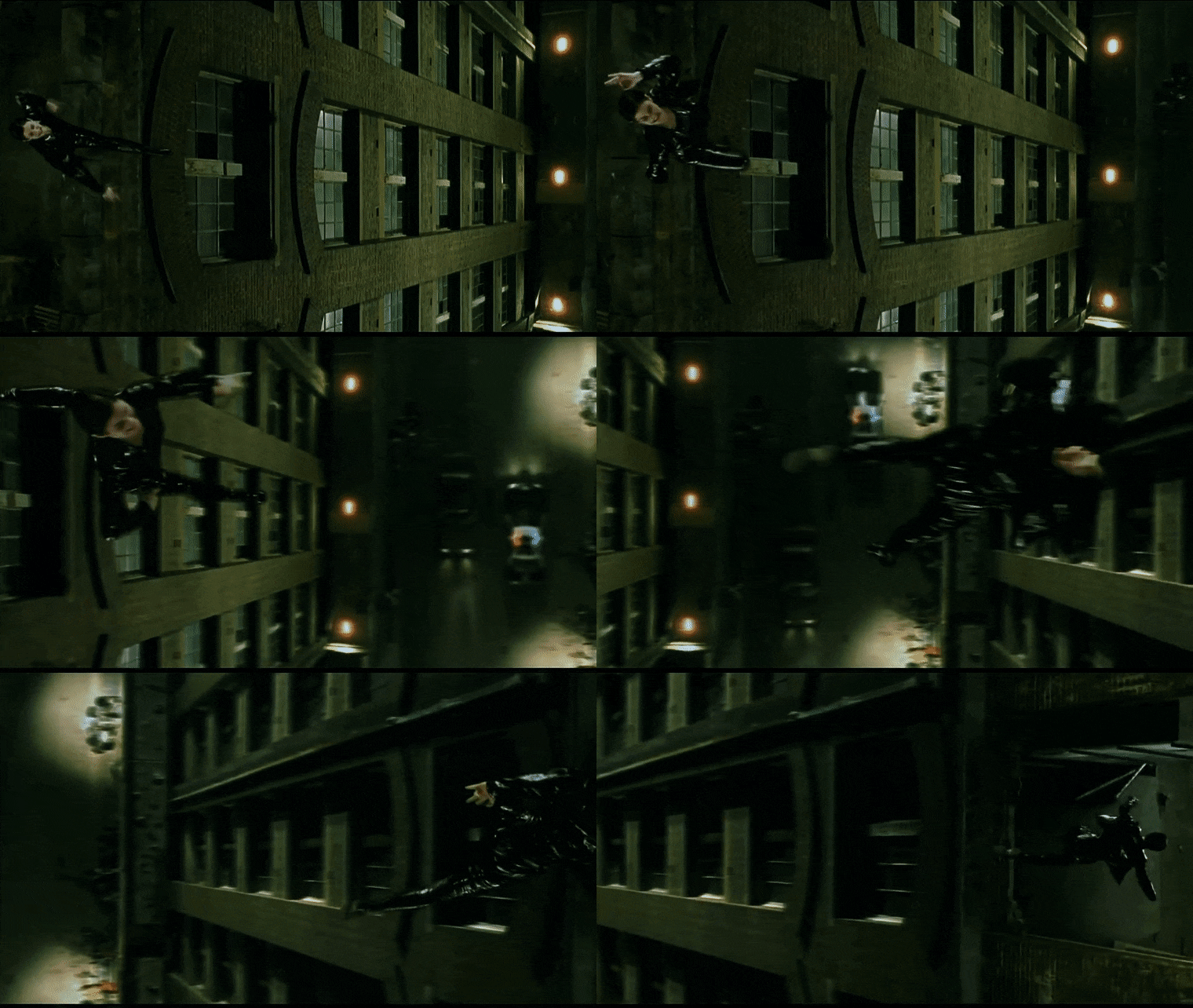

Trinity jumping across the street clip (GIF), The Matrix (1999), January 31, 2020. (https://gfycat.com/; https://youtube.com).

I don’t know who needs to read this, but no matter how talented someone is, no matter how often someone had triumphed in their field, no matter how popular they are, and no matter their level of celebrity status, that person is not necessarily transcendent. Many of these folk are assholes. Yet we Americans use the term so often that all one would have to do to transcend in this country is film themselves with an iPhone 11 in slofie mode while jumping from one building to another in The Matrix series (either as Carrie-Anne Moss’ Trinity or Keanu Reeves’ Neo) to sell themselves as such. Or, to just not talk about the realities of the ugly and oppressive world in which we all inhabit while selling sneakers and entertaining millions.

So, let me be clear. The death of former NBA player Kobe Bryant, his 13-year-old daughter Gianna Bryant, John and Keri and their teenage daughter Alyssa Altobelli, Sarah and her 13-year-old daughter Payton Chester, Christina Mauser, and the pilot Ara Zobayan is nothing short of painfully tragic. Kobe Bryant, of course, played for the Los Angeles Lakers for 20 years. He won five NBA Championships and two Olympic gold medals as part of the USA Basketball team, was an 18-time NBA All-Star, and at the time he retired in 2016, was the league’s third all-time leading scorer, at 33,643 total points. LeBron James only passed Bryant on the all-time scoring list the night before the tragic accident. At 41 years old, Bryant was only into his fourth year of post-NBA life, supporting the WNBA, investing himself in girl’s basketball, winning an Oscar for a five-minute short. This polyglot, this nerd whom experts often mention in the same breath with Michael Jordan and LeBron and other all-time greats, is truly one of the greatest professional basketball players in the history of the sport, full stop.

But, does that make Kobe Bryant “transcendent beyond his sport,” as I have heard the commentators say this week, and have read the sports and culture columnists tweet and write this week? No, absolutely not. We each all have the responsibility to put our lives and our times into perspective, to take a panoramic look at the world in which we inhabit and to dig deep into the soil and rock of that world for meaning. If not, we risk idolizing the first person who comes along to rock our world, and in the process, becoming as short-sighted and as narcissistic as the celebrities, entertainers, artists, athletes, and politicians we worship.

And that has sadly been the case with Bryant. The news and sports media has been paving over the potholes and sinkholes in Bryant’s life faster than The New York Times newspaper plant in College Point, Queens can ink and fold a million hard copies. Bryant’s semi-admitted raping of a 19-year-old in September 2004 (the “incident” was in 2003) has suddenly become a full-throated mea culpa that apparently was unprecedented in the annals of American sport and celebrity. Not one that the rape survivor or any other person who has ever experience rape or sexual violence (yours truly included) should acknowledge, or believe that it would ever make up for the rape, but hey, what do I know?

But my case against transcendence hardly begins or ends with Bryant as a one-time alleged rapist. As great a basketball player as he was, for the bulk of his career, Bryant was a selfish ball hog. By comparison, Bryant made AI’s (Allen Iverson) one-on-five scoring attempts and successes look like Iverson had no choice because he was on the court by himself a lot of those times (which for half of Iverson’s career, was pretty close to the truth). Bryant’s last game in the NBA was one where he scored 60 while taking 50 shots, and he in fact owns the most field goals attempts in any single game of any player this side of Wilt Chamberlain! If this were Rucker Park and not the NBA, maybe transcendence would apply in terms of athletic ability. But as someone who saw how MJ could regularly get 30 while taking only 13 shots (and making 15 free throws) in the second half of his career, great, but not transcendent, from even within the sport of basketball.

Speaking of, the transcendence case really breaks down in terms of cultural influence outside of basketball. Some argue that Bryant was an ambassador of the game and made it international. Really? Two words in response. Dream Team! And, two more words. Michael Jordan! Without the 1992 Summer Olympics in Barcelona, and with MJ and Magic and Larry and Patrick and Hakeem, et al. among 11 future Hall-of-Famers, Bryant’s overseas efforts would’ve been like selling the current brand of NFL football to the world (no one likes weak tea made from sewage water, by the way). Also, if one wants to know two more names from different sports who have MJ-esque transcendence or higher, try Tiger and Serena (I don’t even need to use their last names)!

How big was Jordan, and how big does Jordan remain? His Air Jordans are still among the leading earners for Nike in 2019, 16 years after MJ retired, and nearly 36 years after Nike started making them. Air Jordans went well with hip-hop gear and in rap lyrics and videos — for decades. MJ’s shaved head and goat-tee became fashion trends (one could argue the same for Bryant’s messy Afro look, I suppose) that remain with us to this day. But so does MJ’s reluctance to speak out against racism, homophobia, sexism and misogyny, something that Bryant inherited and adopted in shaping his public persona as well.

And it’s this last piece that truly makes the case that the late Bryant was not and could not be transcendent. LeBron James, for all his greatness, has also put his weight and words into Black Lives Matter, mass incarceration, police brutality, and calling out White supremacists. Certainly athletes from the recent past, from Muhammad Ali and Arthur Ashe to Jim Brown and Althea Gibson, and of course, Jackie Robinson, and Kareem Abdul-Jabbar, fought oppression with the very lives they lived and the barriers they dismantled. All of them had flaws, but none of them had PR machines in their prime to cover up their mistakes and probable crimes, either. Heck, even O.J. Simpson for better and certainly for worse in transcendent in this social justice and injustice sense.

Now, could Bryant have “transcended basketball” if he had live to, say, 60, 70, or even 80 years old? Maybe. But probably not. His image mattered too much to him. The world outside of basketball and family, not so much. And that’s okay. That doesn’t make his death and the deaths of the other eight — especially the three teenagers — on that helicopter any less tragic. This doesn’t make the pain or sadness any fan feels for him and his family any less real. But maybe, just maybe, those who are just fans and members of the media should check themselves before putting Bryant on a pedestal or altar. As tragic a death as it is, death is part of life, after all, and Bryant had as full a 41 years as anyone could expect. Just not a transcendent 41 years.

Ugly

12 Sunday Jan 2020

Posted by decollins1969 in 1, Boy @ The Window, culture, Eclectic, Mount Vernon High School, Mount Vernon New York, New York City, Politics, Pop Culture, race, University of Pittsburgh, Youth

≈ Leave a comment

Tags

616 East Lincoln Avenue, Anti-Blackness, Ari Lennox, Beauty and Truth, Blue Ivy, Bria Myles, Child Abuse, Colorism, Domestic Violence, Finding Forrester (2000), Lizzo, Moonlight (2016), Nemeses, Poverty, Racism, Self-Discovery, Self-Doubt, Self-Reflection, Suicide Attempt, Toxic Masculinity, Ugly


Me in April 1975, Sears Picture Studio, Mount Vernon, NY. (Cropped/Donald Earl Collins).

Another title for this could be “Ugly Donald,” an homage toward Ugly Betty. But one word should cover it!

All this talk over the past few weeks about who is and who isn’t “ugly,” or “fat,” or just “too dark” take me back to how I felt about myself for most of the 1980s, and sometimes even as I gotten older over the 30 years since the Reagan decade. Honestly, I don’t think I’ve been in a camp of vipers like this since my preteen and early puberty years, where I definitely had my own excited utterances toward Black boys and girls in particular (also, the occasionally flat-butt White girl and bed-headed White boy, but I digress). So I never understood the need for deliberate meanness toward people over something that they would have to spend tens of thousands of dollars to fix for a group of misogynoirist assholes who aren’t worth a nanosecond of thought.

Whether Lizzo, Blue Ivy Carter, Bria Myles, Ari Lennox, or Teyana Taylor, these mofos who made fun of their looks, or called them a “rottweiler/German shepherd mix” (sic), or told them to workout to lose weight are such boring-ass losers. These women are beautiful. Black women are beautiful. Full stop. You got time to waste running down an active entertainer over your bullshit? Your ugliness is the kind that takes years of therapy, prayer, active listening, and educational reprogramming (i.e., reading lots of books on Blackness, Black feminisms, and intersectionality) to overcome, if you overcome it at all.

I have a bit of experience with ugly over the years. Usually from family and classmates throwing it in my direction. “Whatcha makin’ that ugly face for?,” my mom would say to me many, many times growing up. “You ugly, faggot!,” I remember hearing from folx in around the 616 and 630 apartment buildings on East Lincoln in Mount Vernon from the time I was nine. “Ain’t no one gonna eva wanna be with your ugly ass!,” an older girl who once attempted to molest me said to me when I was 12. I was ugly, alright. I felt ugly, living with poverty and abuse and anti-Black ugliness in the many places I went in Mount Vernon. It was probably why I felt more comfortable around my father, especially when in the Bronx or down in Manhattan doing work. The anonymity of the city meant that for hours or even days at a time, the centrality of my ugliness could disappear.

I felt so ugly inside and out that I wanted to take my own life at 14. I was so ugly that it scared me to look at myself in the mirror for more than a few seconds, mostly to make sure toothpaste or dried drool or eye crust was off my face. I kept my face as blank as I could, like Jamal Wallace (played by Rob Brown) in Finding Forrester, just so I wouldn’t have to endure more put-downs about my tall, lanky ass and my ugly features on top of that.

Me at Prom Dinner, White Plains, NY, May 21, 1987. (Suzanne Johnson neè De Feo).

But the worst of all this was my senior year at Mount Vernon High School. My final days took an ugly turn the moment my classmates learned I was ranked 14th out of 545 students (509 of us eventually graduated in June 1987). I’ve written ad nauseam about how my White Humanities classmates responded to my ranking, as if I threatened their worldview of them being more intelligent than the Black folx they went to school with every day. Months before my soon-to-be former Black classmates began to stare through me like I was a ghost, they began to clown me. I’d blow by them in the hallways, and they’d bust out laughing. They’d comment on my ugly, brittle hair, talking about how my “hair could break picks.” They’d talk about my “cheap clothes from Taiwan” — which they were from, by the way (how did they know that?). Or, they’d simply shake their heads, as if my existence was a “shaking my head” moment on par with Raven-Symoné declaring herself “not Black.”

Clyde was among that group of Black guys and gals who made a point of telling me I was ugly throughout my senior year. He did it so many times that somewhere around February of that school year, I lost track of the number. “You ugly. There ain’t nothin’ in the world that’s gonna fix that,” Clyde said to me once. Most days, I ignored it, because what would have been the point? We were graduating, and my plans for college were bigger than any insult any asshole could muster. But, one day before winter break, Clyde just said, “You ugly, Donald. You ugly.” It took every bit of the low energy I had to not cry, and not pick up a desk and tear his fucking head off with it, like the chair revenge scene in Moonlight.

It took getting away and going to college for me to stop seeing myself and my own unique blend of Blackness as not ugly, even handsome. A bout of homelessness here and months of struggling to pay rent and eat there will begin to harden you against the bullshit of muthafuckas who would prefer to tear you down rather than build something for themselves or others. As Flavor Flav from PE would say, “Motherfuck them any damn way!”

After those days of sleeping on concrete slabs or eating tuna fish out of a can until I could eat it anymore, it didn’t matter how the Clydes, Gordons, and Tomikas saw me. I saw myself clearly, for the very first time. And I clearly saw my naysayers, too, as the short-in-body and in mind, coloristic, Blackness-but-only-so-much, racist, sexist, and homophobic pieces of shit for whom they were. Why should it have ever mattered what they thought of me?

One Saturday in early February 1989 in the shared bathroom in the Fu rowhouse on Welsford Avenue in South Oakland, I looked at myself in the mirror. I had just finished washing up. I was six-two, maybe 175 pounds, and six weeks past my 19th birthday, with barely enough facial hair to clog up my right nostril. I must’ve stood there staring at every angle of my face for two or three minutes. Then I chuckled. “You’re an okay-looking guy. You’re not Billy Dee or Denzel, but you’re not bad-looking at all.” Nor am I Idris Elba. But being me since has almost always been okay enough. The truth is, it always should been, for any of us.

“On the Next Episode of ‘Dumb MFers’…”

04 Saturday Jan 2020

Posted by decollins1969 in 1, Boy @ The Window, Christianity, culture, Eclectic, Hebrew-Israelite, Mount Vernon New York, Movies, My Father, New York City, Patriotism, Politics, Pop Culture, race, Religion, University of Pittsburgh, Youth

≈ Leave a comment

Tags

45, American Imperialism, American Narcissism, American Racism, Evangelicals, Fandom, Gospel of Prosperity, Idris Elba, Impeachment, Internalized Racism, Iran, MF, Motherfucker, Pitt, Qasem Soleimani, Reality TV, The Wire, Trump, White Supremacy, Whiteness


Pre-speech prayers over President Donald J. Trump (led by Pastors Paula White-Cain — laying on hands — and Guillermo Maldonado), Evangelicals for Trump coalition rally,, El Rey Jesús International Ministry, West Kendall neighborhood, Miami, January 3, 2020. (Tom Brenner/Reuters via https://nationalpost.com/).

My wife can attest to this. Since the days of HBO’s The Wire (2002-2008), I have had the idea of Idris Elba doing a voice over leading into the next episode of an alternative television series. But instead of Elba narrating in his smooth American Russell “Stringer” Bell baritone, “On the next episode of The Wire,” I’d have him say, “On the next episode of Dumb Muthafuckas,” said exactly the way I’ve spelt it here. Then, the no-so-happy highlights from the next episode would ensue!

On the use of the MF word. I grew up around folx who didn’t use the n-word (with the notable exception of my idiot ex-stepfather, who said and wrote the n-word as “niggah” or “nigguh,” such were the influences of the late-1960s and 1970s on him). My mom would either say “Ns” or “Ens” (depending on spelling), or would grunt “un-un” in reference to Black folk she felt were assholes or fucking up in some way. But motherfucker, particularly the AAVE (African American Vernacular English) way of saying it as muthafucka? That could flow freely like the Hudson River after a spring or summer rainstorm, even during the Hebrew-Israelite years, though less so since we went evangelical Christian in the late-1980s! It could start a sentence and end a sentence, and in heated, violent arguments, often at the same time.

Screenshot of a younger Idris Elba as Stringer Bell in HBO’s The Wire (2002-2008), January 4, 2020. (https://hbo.com).

But it wasn’t just Mom. My father said “muddafucka” when he was in drinking mode growing up. I once played a game in my head, and counted up the number of times he used it at a bar in the Bronx to describe the other drunks, the barkeep, and other folks in the city. I lost count after 50, between “po’ ass muddafucka,” dumb muddafucka,” “git out of here, muddafucka,” and “Suck my dict, muddafucka!” And that was all in 45 minutes!

Their friends, their kids, and so many others I was around in Mount Vernon, the Bronx, and in Manhattan growing up all used variations of MF. I didn’t become regularly acquainted with the n-word outside of Roots or A Soldier’s Story until I went off to college and Pittsburgh. But when Bruce Willis said the line to Alan Rickman’s character Hans Gruber in Diehard (1988), “Yippee-ki-yay, muthafucka!,” he said it the way the Black and Brown folk I grew up around said it, and not the wimpy ways most Whites tend to use it. And every Black who was in the theater with me that night audibly gasped with delight

So when I use MF here, I am being tongue-in-cheek and as serious as a muthafucka. Especially when it comes to America’s daily reality TV show, 45 and his cabal of mostly obese in body, mind, and spirit privileged White man hell-bent on making America a blatantly White supremacist country again (see Mike Pompeo, William Barr, and Rudy Giuliani here, among a legion of others). They are stunningly craven, which also makes them stunningly stupid. They collectively are the person who comes along and knocks down the Jenga tower you have carefully constructed and deconstructed over several hours with a sledgehammer, and then burp in your face immediately afterward. All while not knowing the chain of events they have set off for themselves and for you. They are too orgasmically high on power and drunk off of spreading lies and fear to contemplate playing checkers, much less picking up a bishop to play chess.

And that’s why the show should be titled Dumb Motherfuckers. Because the 45 thesis is to destroy all of former President Barack Obama’s proverbial statues, statues, paintings, treaties, deals, orders, and obelisks in order to restore Whiteness in the White House. The problem is, the Obamas merely brought their Blackness to the White House. The government remained steeped in Whiteness in policies and in attitude the entire time Obama wore the trappings of American imperial power. But when your racism and narcissism is so great as to think that the first Black president was an affront to millions of Whites and some footsoldiers-for-racism Black and Brown folx, being a bunch of dumb motherfuckers lighting up the US and the world with tiki-torches is the result.

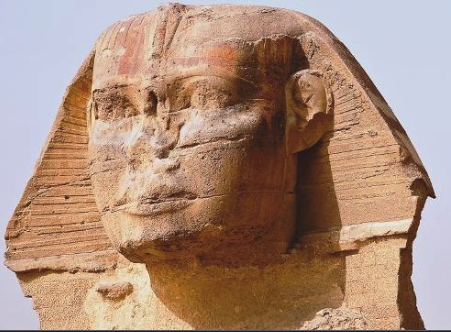
Screenshot of ancient Egypt’s Sphinx, complete with closeup of its smashed nose, January 4, 2020. (https://education.abc.net.au).

Now America enters season four of Dumb Motherfuckers. Season three ended with a cliffhanger, as the House of Representatives voted in favor of impeaching 45 on two counts. But, what will Nancy Pelosi do next? Will Mitch McConnell continue his pledge to march “in lockstep with the White House,” like a jackbooted SS officer in a parade at Nuremberg? Will 45 continue to play golf while the US continues its march toward full-on corporate plutocratic fascism? Stay tuned!

As of 36 hours ago, Dumb Motherfuckers‘ producers threw us a plot twist, assassinating Iran’s leading general, Qasem Soleimani, a sort of declaration of war, and certainly a violation of the Geneva Convention. Sure, this plot twist is a distraction from impeachment and the 2020 election cycle. But it is also another drumbeat toward a war that will cost hundreds of thousands of Black and Brown lives, and displace millions of people from their homes and their possible futures. But that doesn’t matter, right? Ratings, a.k.a., votes, do.

45 and his minions of motherfuckers don’t care about all that. Nor are they smart enough to know where this new plot direction will take them or the rest of the US and the world. What they do know is that there are roughly 60 million Americans who are down for anything that 45 does. If 45 ran over a White family with a steamroller, killing three children under the age of five and their Scottish terrier in the process, his fans would find an excuse, say he’s “making America great again,” call me a racist, and threaten me and my life. So know that they would support, “Bomb bomb bomb/Bomb bomb Iran,” just like the late Sen. John McCain did during his 2008 election run. And apparently, through prayers and supplications, through megachurches and the Gospel of Prosperity.

This is what makes watching Dumb Motherfuckers so frustrating, because it is all so predictable. The thinly-veiled imperialism, the rank anti-Black, anti-Brown, anti-Jewish racism, xenophobia as World War Z, and Islamophobia, the obvious women-are-meat misogyny, and the wicked hoarding of wealth. The use of blind patriotism and Christianity to rally Whiteness and White folk into supporting utter stupidity. Just like in 1968-1969, 1973, 1983, 1989, 1991, 2001, and 2002-03, from Vietnam and Grenada to Panama, the First Gulf War, and Afghanistan. Dumb Motherfuckers isn’t dumb just because the characters are dumb. It’s dumb because it will eventually leave the Whites who want to be rich and want Black and Brown people to suffer thoroughly and lethally screwed as well. But give the (White and internalized racism Black and Brown) public what it wants, right? Dumb muthafuckas — it’s a shame and a pitiful!

My Whole Self At 50

27 Friday Dec 2019

Posted by decollins1969 in 1, Academia, Boy @ The Window, Carnegie Mellon University, Christianity, culture, Eclectic, Hebrew-Israelite, Mount Vernon High School, Mount Vernon New York, My Father, New York City, Pittsburgh, Politics, Pop Culture, race, Religion, University of Pittsburgh, Work, Youth

≈ Leave a comment

Tags

Academic Writing, Achievements, Betrayal, Calling, CMU, Crew, Domestic Violence, DV, Failures, Family, Fears, Love, Misfits, Misogynoir, Ostracism, Patriarchy, Pitt, Purpose, Self-Reflection, Setbacks, Toxic Masculinity, Turning 50, Writing


Selfie of me at 50, December 27, 2019. (Donald Earl Collins)

The title could just as easily be, “Confessions From an Educated Fool.” After all, I am highly educated, and have done more than my share of dumb-ass bullshit over the years to avoid certain truths about myself.

I have no idea what turning 50 really means. For Black men, the average life expectancy of 64.5 years makes me worry about every ache and every anomaly. Based on my family genetics, I have at least 30 years where my age will in no way be reflected in my height, weight, athleticism, sex drive, or other general health issues. My mind should remain sharp until I am in my late-80s or early 90s, if not longer. As of now, I know I am in better overall shape than I was this time 10 years ago, but lack the running stamina I developed during most of my 40s. On the other hand, my knees have been thanking me for the past 17 months since I stopped running 300-plus miles a year.

Depending on how I look at my life, I am a scrambler who has turned an Olympic-size swimming pool full of diarrhea with turd chunks into two kilos of gold. Or, I am a once brilliant and talented young Black man whose temper and impatience fucked up his future. Two things can be true, sometimes equally so, and at the same time. That is, if I don’t account for upbringing, systemic racism, extreme poverty, the violence of misogynoir and toxic masculinity, and a host of other burdens that my differential equation mind could not factor into my life’s calculus. Much less control or counteract with respectability or kindness or the Golden Rules of Christianity.

Some context. When I was 11, I participated in my first writing contest and came in second place among the dozens of K-12 students who submitted to the local newspaper, the Mount Vernon Daily Argus. By then, I had long buried the sexual assault I endured and the subsequent suicide attempt from five years earlier. I graduated 14th in a class of 509 in 1987, only to spend my last days of high school and the year after my enrollment at Pitt treated as if I were an invisible ghost by many of my former classmates. At 25, I earned a Spencer Foundation Dissertation Fellowship. But the entire time I was in commune with “my fellow Fellows,” as I used to say, I was ambivalent about my prospects, in and out of academia. At 26, in part because of the Spencer fellowship, I completed my dissertation. Yet my advisor’s petty jealousies and psychological abuse burned me out, just as my dissertation committee’s subsequent abandonment of me once I graduated left me feeling burned.

I was a young prospect with a doctorate from Carnegie Mellon, but with little in financial support or connections to continue to spin shit into gold. After two years, I left the wonderful world of adjunct teaching for a civic education job with the center-right organization Presidential Classroom. My boss was both extremely paranoia about terrorist attacks on DC and openly racist, referring to Asians as “Orientals” and making comments like “Slavery was a hoax.” After seven job interviews for academic positions over three years, Howard University offered me a tenure-stream assistant professorship in June 2000. I said no. At the time, I told my significant other, two months into our marriage, “I do not like working for racists, but at least I know where I stand. With Howard’s constant elitism, I’d likely lose it and pop one of my colleagues in the mouth for saying something elitist and stupid.” I was averaging 100-to-110 hours of work per week and about five hours of broken sleep at night when I made this decision.

Sometimes I think it’s the dumbest adult decision I ever made. Most of time, though, I think about the broom closet that they offered me as an office. I remember the urinals in the Founders Library that dated back to the tenure of Mordecai Johnson (1926-1960). I ruminate on rough attitudes of my one-time colleagues (I eventually taught there as an adjunct in 2007). And through all this, I remind myself that it was okay to say no. Especially to colorism, respectability politics, and a campus that has been in need of a total gutting and a top-down renovation at least since I began visiting in 1993.

My career has been one of wandering by necessity. I have never been a complete fit anywhere. Damn sure not in academia. Definitely not in the nonprofit world. Certainly not in consulting. And not quite as a freelance writer and author. I have had to bend and break so many rules and norms, just to survive, that to mold and shape myself like a shapeshifter would nearly always lead to me feeling at constant war, with myself and my work.

Selfie of me post-workout, December 24, 2019. (Donald Earl Collins).

Especially since so much of this war was over who I am. I am a writer, damn it! I love teaching — most of the time. I like managing projects, and was fairly good at raising money. I am an excellent cook (just ask anyone other than my Mom). I am a pretty good basketball player even now, and could’ve made a D1 college squad back in the day. I once considered stripping to make ends meet after finishing my doctorate (my eventual wife talked me out of it, a lot, while I gunned for a six-pack). But since at least the spring of 1981 (maybe, with Peanuts Land, the spring of 1979), I have been a storytelling, introspective, imagining-of-alternative-worlds-and-lives, mixing-fictional-techniques-with-my-real-life writer. It took me 21 years to admit that I was a writer, another decade to see myself as a writer first and foremost. That no matter the job or my roles in that job, that I was, am, and will always be a writer.

That was what motivated me to write Fear of a “Black” America and Boy @ The Window and then self-publish them, even as the process of researching and writing Boy @ The Window led me to uncover so many uncomfortable truths about me, my family, and the people I grew up around. Including the truth about my greatest failure, my refusal to dig out the splinter in my mind. The dual decision to not see myself as a writer and then to not dedicate myself spirit, soul, and body to my craft and calling until after turning 45. That’s my biggest regret, my daily frustration, my constant companion, buried just a few millimeters between my flesh and my bones.

Even when I finally push through, break through, blow up, and have any modest level of success as an author of x-number of books — and I will, because, me — I will continue to carry this deep well of what coulda and shoulda been. My need to credential myself, to make up for the loss of my childhood to poverty and domestic violence and child abuse, my desire for worth and work, my simple arrogance of youth. It nearly squeezed out the divine voice of purpose in my mind. More than once, it all drove me to the edge of the galaxy, where rage against the world, a lust for lust and self-destruction, and the sheer drop into the abyss of depression all intersect into a nebula of desperate insanity.

This is precisely why it is so important to have a crew, a group of folx who will not jump into the void with you, but instead will support you with critique and encouragement, and yes, love. Of course, I could not have transitioned from the burnout of the nonprofit world and the constant search for money to “change the world” into the constant search for income through freelance writer and teaching social justice through history and education without my wife. After years of watching bosses and co-workers get down on their knees to beg for money while they morphed the grassroots and systemic social justice work they really wanted to do into inchworm-paced “social change” models, I wanted out. I figured, consulting, occasionally teaching, and doing the work I truly wanted to do would be better.

Then, the Great Recession hit, and did a number on my permanent job prospects and consulting work. If someone had told me on verge of my 40th birthday that I would spend the next decade primarily working as contingent faculty at not one but two universities, I would have laughed until I cried. I would’ve also predicted that my wife would’ve handed me divorce papers. I didn’t die from woeful laughter, and my beloved did not demand that I move on.

But we did argue. One of those arguments led me to a “Fuck It” realization at the end of 2014. No one would ever offer me a permanent position at a university as faculty, not without offering me an administrator position first. And since the unofficial rules of the academy have never really applied to me and my writing, I had the right to publish anywhere, on any topic, even if and when other academicians — including some whom I had trained — looked at me like I was some tragic figure.

Along with some counterintuitive thinking about my eclectic writing skills and queer approaches to understanding the application of history and education in mainstream journalism, this new truth has been my resurrection and insurrection as a writer. Between The Guardian and Seven Scribes, The Atlantic, Huffington Post, and The Washington Post, and especially Al Jazeera English, I have come closest to being my truest and whole self outside of marriage, friendship, parenting, and my many moments in prayer.

I owe my wife for allowing me the space necessary to finally access my calling. But I also owe my small inner circle of folx who may not have always understood my journey and the decisions I made that led me to where I am at half-century. They’ve read my horrific drafts, heard my most hare-brained ideas, smiled through my most ludicrous of plans both before and during this bitter slog of a rollercoaster ride. I’m more than sure that some in my circle still don’t understand my end game. Mostly because there is some aspect of my whole self that I haven’t shared with them. Not only my desire as a writer. But my general desire to be excellent at everything, my quest to know everything, and my contradictory default of being scared of nearly everything, especially of whatever good moments I have had. Too many times, I have seen the anvil drop on or near me all too soon after drilling a three.

I think I have one more big run in me left. The proverbial they say that life is a marathon and not a sprint. They are wrong. Life is like a continuous basketball game, where one can be overmatched, but can take timeouts and make a series of 12-0 or 30-13 runs to tie the game or take the lead. I am in the midst of a run right now, as unexpected as living past the age of 30 was for me when I almost jumped off a bridge on my 14th birthday, 36 years ago.

I need the crew I have, and I could use some help from a few more folx who may want to join me on my journey into decade six. I’m gunning for a book contract for my American narcissism and American racism work. I’m looking for some career stability that takes advantage of my work in academia, in nonprofits, and in freelance writing. I’m looking to make sure that my son becomes the whole person he needs to be without spending the next 20 or 30 years kvetching about everything in the universe. I’m looking forward to spending more time traveling outside the US with him, with my wife, with others, and with myself. It’s time. It’s been time for 50 years.

My Thoughts on Cut-Throat Finals Week

17 Tuesday Dec 2019

Posted by decollins1969 in 1, Academia, Boy @ The Window, Carnegie Mellon University, Christianity, culture, Eclectic, Mount Vernon High School, Mount Vernon New York, Movies, Politics, Pop Culture, Religion, University of Pittsburgh, Youth

≈ Leave a comment

Tags

Cheating, CMU, Cut-Throat Competition, Death Race (2008), Finals Week, Immaturity, Narcissism, Obsession with A's, Pitt, Teaching and Learning, The Equalizer (2014)


Death Race (2008) Dreadnought scene screen shot, December 17, 2019. (https://youtube.com).

I have seen some shady shit as a student and educator over the years. Between my middle school and high school magnet programs in Money Earnin’ Mount Vernon, my four years as an undergrad at the University of Pittsburgh, my three years of grad school course work at Pitt and at Carnegie Mellon, and my years of contingent teaching, I have seen students do everything short of killing me or killing their classmates for a higher grade.

This semester provided some new wrinkles (really, old wrinkles I haven’t seen since my Humanities days in the 1980s) that actually shocked me. All as I taught my 77th, 78th, 79th, and 80th classes in my roller-coaster of a teaching career. I have felt a certain way toward some of my most demanding, hold-my-hand-for-an-A, spoiled-brat students over the years. This semester, I found myself actually despising three in particular across two universities and four classes. By no means does my grading reflect what I think of them, as I assigned each of them the grades they earned. But really, there is no letter in the alphabet low enough for them that I could assign. At least, one in which I would ever feel fully satisfied. And that is all because they all made the decision to be cut-throat, toward me and toward their peers.

I fully understand the compulsion. Six years in a magnet program that was one part Benetton commercial and three parts Death Race — the Jason Statham version from 2008 — showed me George Orwell’s Animal Farm as a live-action drama set from 1981 to 1987. Students giving each other incorrect notes from which to study. Classmates telling each other they were going to fail a final, or that they didn’t belong in Humanities. One Class of ’87 star making sure to say to another that they were only getting into an elite school because they were Black.

Hazing, bullying, torture, ostracism, denigration were all part of my experience, and that was before we started taking AP courses! I even snickered when our valedictorian received a 67 on an English essay in 11th grade because she failed to underline the title of a James Baldwin book (either Go Tell It on the Mountain or The Fire Next Time, who can remember such mundanity nearly 34 years later). We became good friends for a while after high school — go figure!

So, it’s not like I couldn’t conceive of setting up a classmate to fail, using someone else’s better words to substitute for my gross and imperfect writing, or spending money to hire a tutor to study for an AP exam. I could’ve really done it, if I had the will and/or the wealth. I just wouldn’t do it. You know, “Do unto others as you would have others do unto you.” It’s in Matthews, the first book of the Gospels in the New Testament. It’s one of the few tenets that I have tried hard to follow in all my years as a human being and as a Christian. (The tenets I follow consistently are universal ones, so please do not get your atheistic drawers all twisted.)

But not always. During finals week my second semester at Pitt, at the end of April 1988, I put that Golden Rule aside, and for good reason. During our two-hour, multiple-choice final exam in Roman History, I noticed him. A skinny, geeky White yinzer with dirty blond hair sitting behind me in the Cathedral of Learning lecture hall on the ground floor. I noticed him because I heard him, somewhere around the question 70 mark. The only time his pencil made a noise was after I had filled in a bubble with an answer. By question 75, I knew the dumb mf was cheating off my answer sheet.

Denzel Washington’s character putting corkscrew to throw/soft palate/brain cavity, The Equalizer (2014), December 17, 2019. (https://imdb.com).

So I did what my years in Mount Vernon and in Humanities had trained me for. I proceeded to answer the next 25 questions on this 100-question exam incorrectly on purpose. It was rich and dripping with caramel-chocolate-on-ripe-strawberries revenge! I knew every correct answer and just kept bubbling in one wrong one after another. And as sure as dog-shit peppering dirty snow piles on Manhattan’s Upper West Side in February, Mr. Yinzer bubbled in his answers right after mine.

Then, I stopped. I paused for a half-minute after bubbling in question 100. I picked up my big eraser, and frantically rubbed out my incorrect answers to each of those last 25 questions. Then I turned around, and gave the yinzer a “Gotcha!” look. He was pissed and scared, his face the pale color of white pastel paint mixed with water. I turned back around, and carefully bubbled in my correct answers for the last quarter of the exam.

After I got up to submit my exam to the professor, I walked up the steps toward the back of the lecture hall, passing Mr. Yinzer along the way. He shot me a look, one where he knew he was caught, like a rat in an old-style trap, about to die from the pain of asphyxiation and a broken neck. I rolled my eyes with the thought, That’s what you get, dumb muthafucka!

I am not proud of that moment. Sure, the yinzer deserved it. But, I could’ve reported it to the professor. I could have just covered my answer sheet up better. I could have confronted the student directly. I could have even let the student ride my coattails toward an A on his final exam. Instead, I went all cut-throat and ensured that this student failed his final. In what way am I really better than him when I helped an academically drowning classmate swallow more water while holding his head down?

I know. What I did may seem milquetoast on the scale between blatant cheating and the viral slut-shaming of a peer with whom you are in academic competition. But that’s the point. None of this should be acceptable. My A in the course would not have changed, and Mr. Yinzer would still have struggled academically even if had succeeded at cheating on this one exam.

At just 10 days before I turn 50, I have figured out what I hate, actually hate, about other humans. I hate habitual liars, especially the ones who regularly lie to themselves while telling me their lies. I hate elitist assholery, even from those whom I admire, even from among my friends. I hate cheating, and those who think they can get away with it. I hate brown-nosing, as I smell this shit from a mile away. Now, I despise those who would eat A’s and A-‘s for their three squares a day before recognizing that education is about much more than a high grade an a job to pay off their student loans. Education is about freedom, having and making good choices, and finding yourself a crew that you can rely on and can rely on you long after graduation. Those who think otherwise are as lost as Dr. Manhattan caught in a quantum vortex.

When I Choose The Wrong Book For a Class

09 Saturday Nov 2019

Posted by decollins1969 in 1, Academia, Boy @ The Window, culture, Eclectic, Mount Vernon High School, Politics, Pop Culture, race, Youth

≈ Leave a comment

Tags

American University, Anti-Blackness, AU, Countering Stereotypes, Dinaw Mengestu, Elitism, Internalized Racism, Self-Criticism, Sepha Stephanos, Teaching and Learning, Teaching Mistakes, The Beautiful Things That Heaven Bears (2007), Washington DC: Life Inside a Monument, White Gaze


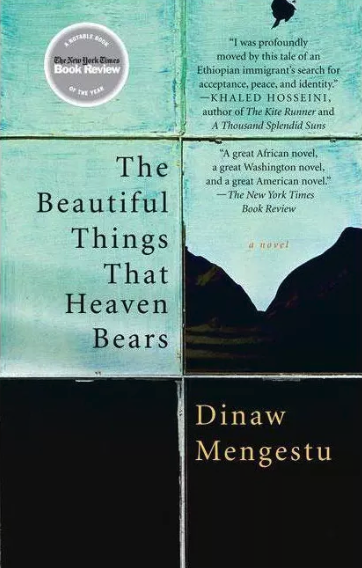
Screen Shot of The Beautiful Things That Heaven Bears (2007), by Dinaw Mengestu, November 9., 2019. (https://target.com).

Yes, I’m back! After two months of grading, writing, pitching, grading, revising, pitching, and more grading, though I’m not sure I’m ready to be back, but I have things to get down on here anyway.

I have taught eighty undergrad and grad-level classes since 1996, and been a part of more than 90 high school, college, and graduate classes as a guest lecturer, TA, instructor, or professor since 1991. I have definitely made more than my share of mistakes in the classroom. Miscounted the number of students to split into small groups. Occasionally quipped in New Yorker-sarcasm English to my Midwestern or Southern-raised students, not exactly endearing myself to them. I have miscalculated grades, posted an electronic announcement to one class when it was meant for another. But, on historical context, historical content, storytelling, use of materials, the substance and guts of courses, I can honestly say I do not allow myself to make egregious errors.

Now, that does not mean that I haven’t inherited errors from courses that others had taught or haven’t been hamstrung with mediocre materials and textbooks that my previous institutions (and one current one) have said were just fine for my students over the years. This is about my unforced errors.

This semester, in my Washington, DC class (the full title is Washington, DC: Life Inside a Monument, a terrible title, really) at AU, I made one all-time error, one in which I should take 60 percent of the blame. I chose a book for the course based mostly on a couple of recommendations from colleagues, a Washington Post review of the best books on DC and the DMV, and an admittedly quick skimming of the first 15 pages. It was Dinaw Mengestu’s The Beautiful Things That Heaven Bears, a historical novel about the lonely and isolated experience of one Sepha Stephanos, an Ethiopian immigrant living in Logan Circle, set some 17 years after his escape from the Ethiopian Civil War (roughly 1996 or 1997).

I picked it ultimately because there are precious few books about any aspect the DC immigrant experience, much less one about the history of Black and Brown immigrants in the area. The problem was, I decided to read the book — one month into the semester, that is. Once I dug in, I started having flashbacks of my AP English class with Rosemary Martino, where we spent the better part of three months reading Fyodor Dostoyevsky’s Crime and Punishment. Mengestu’s Sepha was not lonely, apathetic, and dyspeptic merely because he was a thirtysomething stranger in the strange land of the US, of DC, of Black DC. I’m more than sure that loneliness and isolation are an inevitable consequence of leaving one’s home country and family behind for another country in another part of the world. But no, most of Sepha’s isolation was self-imposed. For 17 years, this man lived in a predominantly Black part of DC, in the midst of a nascent Ethiopian residential and business community within walking distance of his apartment and corner store, during the heart of the Marion Barry years. Yet he only has two friends, one from Kenya, the other from the DRC (Democratic Republic of the Congo). Really?

What was worse was once the White character Judith and her biracial daughter Naomi moved into Logan Square at the height of Sepha’s deepening self-loathing and depression. Judith apparently bought a mansion-turned-broken-down-addict hangout across the street from Sepha, and spent a significant chunk of change fixing it up for upper-middle-class habitability. Sepha becomes enamored with the two of them as they began to frequent his falling-apart store. He becomes sort-of-friends with Judith, and sort-of-a-father-figure to Naomi.

There were at least four times between pages 52 and 120 where I put down the book out of sheer frustration with the plot, the characters, and with Mengestu for writing this non-historical, non-realistic historical novel. Mengestu crafted a main character that had serious internalized racism, and was as anti-Black as a drunk Trump supporter at a tiki-torch rally. How can any reader explain a man who owns a store for the better part of a decade and a half in Black Washington, interacting with Black women of all classes and stripes — some presumably who may have struck up a conversation with him, some presumably with a precocious preteen daughter — and it’s this first White women in the neighborhood that raises your spirits?

Mengestu had Sepha do awkward Data-from-Star-Trek: TNG-type things. Like standing in the middle of the sidewalk a block from his place while watching Judith go into her house. Or over-explaining the shabbiness of his apartment to Judith, who invited herself over to his place. Or weird kisses between Sepha and Judith, not unlike ones involving two tweeners unsure of themselves. The awkwardness ultimately stems from Sepha’s elitism, self-loathing, and internalized racism. Judith is too good for me, was what Sepha thought, just like he thought he was too good for too poor and too Black Logan Circle. That’s why this thirtysomething man was acting like a weird homeless stalker, fully befitting a macabre and existential Dostoyevsky work.

But then came the backlash from the Mengestu-reverse-one-drop-rule approach to pre-gentrification gentrification. Somehow, the Black Washingtonians in Logan Circle became so hostile to the presence of one White woman with a kid that they threw a brick through her window and later set fire to her house. In what scenario in any major city in the US have Black folks ever deliberately attempted to forcibly drive out White folks who happened to move into a predominately Black neighborhood? There isn’t one.

My students, for the most part, though, loved the book. They thought it was “so cool” to get a glimpse of the “real” immigrant experience from an atypical perspective. They really liked the interplay between Sepha, Judith, and Naomi. They mostly wrote papers relating the book to the actual relations between Black Washingtonians in Shaw with the Ethiopia community there. They used Mengestu’s book as evidence that Blacks in Shaw drove Ethiopians out of Shaw and across the border into Silver Spring, Maryland, all because Black Shaw residents blocked renaming the U Street strip “Little Ethiopia” in 2005. All these conclusions, despite two full hours of discussion over two weeks about the books and its historical and local inconsistencies and stereotypes.

I haven’t been this beside myself about having inadvertently reinforced racial and cultural stereotypes since the first time I taught World History under Peter Stearns in 1994. But at least I was a 24-year-old grad student then. Now, I’m thinking that maybe 2.5 hours per week with my mostly affluent and White students is not enough time to counteract the idea that an excursion to Georgetown, Nats Park, or Chinatown is peak DC exploration. I also think that me as the little-old-nobody professor cannot overcome a MacArthur “genius” award-winner author whose book libraries possess in volume and school districts like DCPS and Montgomery County (and apparently) all over the country regularly use.

But if Mengestu is a genius, he is such because he has captured the White gaze. A story about Ethiopian migration to the US and the impact of such on that generation between the late-1970s and the turn of the 21st century. It is tailor-made to pull on the heartstrings of White Baby Boomers and loaded with a sense of exoticism. Mengestu’s DC looks more like where he grew up in real life (Peoria, Illinois and in the Chicagoland area — pretty White-bred communities, really) than any part of the DMV I have experienced since 1992. And no, being a Georgetown University student and earning a bachelor’s degree in the process is nowhere near enough time in DC to realistically depict even a sliver of DC, fiction or nonfiction.

I have learned my lesson. The Beautiful Things That Heaven Bears will not be a part of any course I teach moving forward. I will continue to pick books as I always have before this one. I will rely on my own counsel, and unlike most of my colleagues, will actually continue to read them before I put them in my syllabi. As for this DC course, I am replacing Mengestu’s book of anti-Blackness and elitism with Camille Acker’s Training School for Negro Girls. If I am going to continue to use historical fiction, it should center Black girls and Black women living in DC/the DMV, and not Mengestu’s kinder, gentler version of Dostoyevsky’s Raskolnikov in Sepha.

Namby-Pamby Land

18 Sunday Aug 2019

Posted by decollins1969 in 1, Boy @ The Window, culture, Eclectic, High Rise Buildings, Marriage, Mount Vernon New York, Movies, New York City, Pittsburgh, Politics, Pop Culture, race, Work

≈ Leave a comment

Tags

Class Privilege, Contradictions, DC, DMV, Gentrification, Montgomery County MD, Montgomery County Public Schools, Silver Spring Maryland, Struggling Middle Class, Suburban Toxicity, Washington DC, White Privilege


The Sound of Music (1965) poster with Julie Andrews. (Pictorial Press Ltd/Alamy/AP; https://www.telegraph.co.uk/)

Last week marked an all-time milestone. Me and my future wife moved to the DMV on Tuesday, August 10, 1999, and moved into our luxury high-rise apartment in downtown Silver Spring, Maryland the next morning. It was a crazy move, done between two jobs and the crossroads of two careers, and with bronchitis on top of that. It was also two days after I proposed to Angelia. Lucky me, she was very, very kind in saying yes, despite my sometimes manly, trash-ass flaws!

Twenty years here in DC, in Suburban Maryland, and (mostly for work) in Confederate Northern Virginia has been both good and terrible at the same time. Living around here has been an exercise in outsized cosmopolitanism. The expensive apartments and homes, the high-salaried jobs that come with stress that will age you right into the grave, side-by-side with examples of poverty that reminded me of my Mount Vernon growing-up years. I’ve seen it happen, to 23-year-olds and 60-year-olds of every stripe. Not much different from what I’ve seen of New Yorkers over the years.

United Therapeutics headquarters (a block long, across from high-rise apartments), Silver Spring, MD, August 23, 2018. (https://moretocome.net).

Living in the DC-area has also been an exercise in patience. The area’s penchant for urban and suburban elitism is matched by its Southern and East Coast colloquial nature. Gentrification in NE and SE DC would be a case in point, with Trader Joe’s and restaurants serving osso bucco within a sniff of an old fried fish or crab shack. Or watching downtown Silver Spring, once dotted with dimly-lit bars and mom-and-pop eateries, turn into a gentrified nightmare, with two-dozen new luxury high-rise apartment buildings and a Star-Trek-like office starship that United Therapeutics had built across the street from our former place. All as Silver Spring has no mayor, save the Silver Spring Chamber of Commerce and Montgomery County executives selling off county buildings and parking lots to the lowest bidder. Only to see DC government match the suburbs in driving out its residents living with poverty, to rename neighborhoods in an effort to get White-suburbanite bodies and dollars while giving the trillion-dollar businesses of the world significant tax breaks.

But since I (mostly) left AED and the nonprofit world to go back into academia as a part-time and (since 2012) full-time contingent faculty member at two universities, I really don’t spend that much time in DC. Working on nationwide initiatives and programs tends to distort one’s view of DC, and it certainly did mine, at least in my time here before about 2006. Really, it shouldn’t have. I had lived in Shepherd Park while dissertation-ing for several months in 1995, and regularly visited across various communities between 1992 and 1998. Still, being solidly middle class after years of growing-up, welfare, and self-imposed-via-grad-school poverty does create a bias.

I thought DC was great those first years as a result. This despite the poverty I saw. This no matter the homelessness I breathed in, regardless of the LGBTQ discrimination I witnessed. This in contrast with the education “reforms” occurring in PG County and in DC itself, as politicians like Adrian Fenty and school supers like Michelle Rhee and John Deasy letting the corporate education reform vultures into the school districts. Only to create money-leeching charter schools that would only leave another generation of students with less educational resources and not improve their life chances while also decimating teachers’ autonomy and teachers unions.

I thought the same of Silver Spring and Montgomery County, especially after Angelia gave birth to our one and only egg in 2003. After all, we lived in middle class section of an upper-middle-class community in one of the best school districts in the US, and easily the best in the state. What I didn’t realize until we moved our son from daycare at a federal agency in DC to one adjacent to his eventual elementary school in Silver Spring was the level of White-bred provinciality our near-immediate neighbors possessed. Yes, even the Black ones. Whether Ivy League-educated, PhD-ed, JD-ed, school teacher, firefighter, nonprofit entrepreneur, lawyer, or government bureaucrat, they all seemed to know very little about the world beyond a two-square mile radius.

Now, some of this was because our kids were four or five years old. I didn’t watch anything other than PBS Kids Sprout, Disney Channel, and Nickelodeon (with the exceptions of The Wire and Grey’s Anatomy) between 2003 and 2010, except for news, of course. But as our kids became preteens and then teenagers, I knew it was more than that. My neighbors, though struggling through the Great Recession and a general downshift of the US middle class throughout the past two decades, still expressed little concern beyond their own day-to-day, as if nothing impacted them as individuals or a family. As our conversations did shift toward politics and -isms, they would cliché their way through them with platitudes like “If we could just get rid of the hate” and “Things have gotten better since the ’60s.” These conversations were so White that I sometimes clicked my tongue to signal to my prefrontal cortex that it was time to go in Standby mode.

That provincial laziness in thinking and general willful ignorance of the relationship with the world outside the community made me more aware of Namby-Pamby Land as a whole. From my fellow drivers (some I’ve recognized while driving) driving too slow, taking seconds to react to a green or red light, and blowing through stop signs, to my neighbors walking down sidewalks six abreast and forcing people into streets to go around them. And of course, their general resistance to changing intra-district boundaries because they didn’t want to “go over the bridge” across 495 to have little Johnny or Maddie attend school with less-well-off Latinx kids.

That’s the price I’ve paid for living in a suburban community of relative class privilege. The toxicity of it all has left me wanting for the New York of my youth (not Mount Vernon, mind you) as I’ve gotten older. But I guess it could be worse. It could Potomac or Bethesda, Maryland-worse.

← Older posts
Newer posts →

Boy @ The Window: A Memoir

Boy @ The Window: A Memoir

Places to Buy/Download Boy @ The Window

There's a few ways in which you can read excerpts of, borrow and/or purchase and download Boy @ The Window. There's the trade paperback edition of Boy @ The Window, available for purchase via Amazon.com at http://www.amazon.com/Boy-Window-Donald-Earl-Collins/dp/0989256138/

There's also a Kindle edition on Amazon.com. The enhanced edition can be read only with Kindle Fire, an iPad or a full-color tablet. The links to the enhanced edition through Apple's iBookstore and the Barnes & Noble NOOK edition are below. The link to the Amazon Kindle version is also immediately below:

scr2555-proj697-a-kindle-logo-rgb-lg

Boy @ The Window on Amazon.com: http://www.amazon.com/Boy-The-Window-Memoir-ebook/dp/B00CD95FBU/

iBookstore-logo-300x100

Boy @ The Window on Apple's iBookstore: https://itunes.apple.com/us/book/boy-the-window/id643768275?ls=1

Barnes & Noble (bn.com) logo, June 26, 2013. (http://www.logotypes101.com).

Boy @ The Window on Barnes & Noble: http://www.barnesandnoble.com/w/boy-the-window-donald-earl-collins/1115182183?ean=2940016741567

You can also add, read and review Boy @ The Window on Goodreads.com. Just click on the button below:

Boy @ The Window

Twitter Updates

Tweets by decollins1969
  • RSS - Posts
  • RSS - Comments

Archives

  • June 2025
  • April 2023
  • September 2022
  • August 2022
  • July 2022
  • June 2022
  • May 2022
  • April 2022
  • March 2022
  • January 2022
  • December 2021
  • November 2021
  • October 2021
  • September 2021
  • August 2021
  • July 2021
  • June 2021
  • April 2021
  • March 2021
  • February 2021
  • January 2021
  • December 2020
  • November 2020
  • October 2020
  • September 2020
  • August 2020
  • July 2020
  • May 2020
  • April 2020
  • March 2020
  • January 2020
  • December 2019
  • November 2019
  • August 2019
  • July 2019
  • June 2019
  • May 2019
  • April 2019
  • March 2019
  • February 2019
  • January 2019
  • December 2018
  • November 2018
  • October 2018
  • September 2018
  • August 2018
  • July 2018
  • June 2018
  • May 2018
  • March 2018
  • February 2018
  • January 2018
  • December 2017
  • November 2017
  • October 2017
  • September 2017
  • August 2017
  • July 2017
  • June 2017
  • May 2017
  • April 2017
  • March 2017
  • February 2017
  • January 2017
  • December 2016
  • November 2016
  • October 2016
  • September 2016
  • August 2016
  • July 2016
  • June 2016
  • May 2016
  • April 2016
  • March 2016
  • February 2016
  • January 2016
  • December 2015
  • November 2015
  • October 2015
  • September 2015
  • August 2015
  • July 2015
  • June 2015
  • May 2015
  • April 2015
  • March 2015
  • February 2015
  • January 2015
  • December 2014
  • November 2014
  • October 2014
  • September 2014
  • August 2014
  • July 2014
  • June 2014
  • May 2014
  • April 2014
  • March 2014
  • February 2014
  • January 2014
  • December 2013
  • November 2013
  • October 2013
  • September 2013
  • August 2013
  • July 2013
  • June 2013
  • May 2013
  • April 2013
  • March 2013
  • February 2013
  • January 2013
  • December 2012
  • November 2012
  • October 2012
  • September 2012
  • August 2012
  • July 2012
  • June 2012
  • May 2012
  • April 2012
  • March 2012
  • February 2012
  • January 2012
  • December 2011
  • November 2011
  • October 2011
  • September 2011
  • August 2011
  • July 2011
  • June 2011
  • May 2011
  • April 2011
  • March 2011
  • February 2011
  • January 2011
  • December 2010
  • November 2010
  • October 2010
  • September 2010
  • August 2010
  • July 2010
  • June 2010
  • May 2010
  • April 2010
  • March 2010
  • February 2010
  • January 2010
  • December 2009
  • November 2009
  • October 2009
  • September 2009
  • August 2009
  • July 2009
  • June 2009
  • May 2009
  • April 2009
  • March 2009
  • February 2009
  • January 2009
  • December 2008
  • November 2008
  • October 2008
  • September 2008
  • August 2008
  • July 2008
  • June 2008
  • May 2008
  • April 2008
  • March 2008
  • February 2008
  • January 2008
  • December 2007
  • November 2007
  • October 2007
  • September 2007
  • August 2007
  • July 2007
  • June 2007

Recent Comments

decollins1969's avatardecollins1969 on No Good Teaching Deed Goes…
Mary Rose O’Connell's avatarMary Rose O’Connell on No Good Teaching Deed Goes…
Lyndah McCaskill's avatarLyndah McCaskill on The Raunchiest of Them Al…

NetworkedBlogs on Facebook

NetworkedBlogs
Blog:
Notes From a Boy @ The Window
Topics:
My Life, Culture & Education, Politics & Goofyness
 
Follow my blog

616 616 East Lincoln Avenue A.B. Davis Middle School Abuse Academia Academy for Educational Development AED Afrocentricity American Narcissism Authenticity Bigotry Blackness Boy @ The Window Carnegie Mellon University Child Abuse Class of 1987 CMU Coping Strategies Crush #1 Crush #2 Death Disillusionment Diversity Domestic Violence Economic Inequality Education Family Friendship Friendships Graduate School Hebrew-Israelites High-Stakes Testing Higher Education History Homelessness Humanities Humanities Program Hypocrisy Internalized Racism Jealousy Joe Trotter Joe William Trotter Jr. K-12 Education Love Manhood Maurice Eugene Washington Maurice Washington Misogyny Mother-Son Relationship Mount Vernon High School Mount Vernon New York Mount Vernon public schools Multiculturalism MVHS Narcissism NFL Pitt Pittsburgh Politics of Education Poverty President Barack Obama Race Racial Stereotypes Racism Relationships Self-Awareness Self-Discovery Self-Reflection Sexism Social Justice Teaching and Learning University of Pittsburgh Violence Whiteness Writing

Top Rated

Blog at WordPress.com.

  • Subscribe Subscribed
    • Notes from a Boy @ The Window
    • Join 103 other subscribers
    • Already have a WordPress.com account? Log in now.
    • Notes from a Boy @ The Window
    • Subscribe Subscribed
    • Sign up
    • Log in
    • Report this content
    • View site in Reader
    • Manage subscriptions
    • Collapse this bar
 

Loading Comments...