• About Me
  • Other Writings
  • Interview Clips
  • All About Me: American Racism, American Narcissism, and the Conversation America Can’t Have
  • Video Clips
  • Boy @ The Window Pictures
  • Boy @ The Window Theme Music

Notes from a Boy @ The Window

~

Notes from a Boy @ The Window

Category Archives: Pop Culture

“The Negro Problem,” “The Jewish Question,” & “Closing the Achievement Gap”

10 Saturday Aug 2013

Posted by decollins1969 in 1, Academia, culture, Eclectic, Politics, Pop Culture, race

≈ Leave a comment

Tags

Anti-Union, Booker T. Washington, Closing the Achievement Gap, Corporatized Education Reform, Crisis in Education, Education Reform, Eugenicists, Eugenics Movement, Frederick Hoffman, High-Stakes Testing, Jewish Question, Negro Problem, Parallels, Private Foundations, Teacher Effectiveness, Teachers Unions, Technocrats, W. E. B. Du Bois
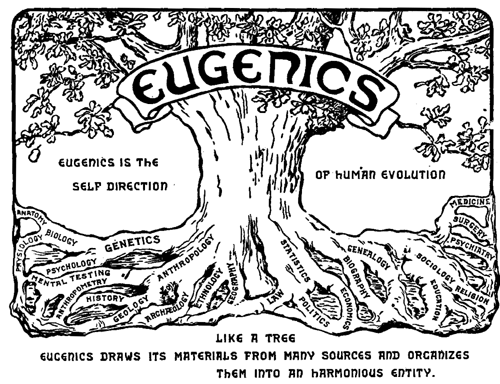

Logo of the Second International Congress of Eugenics, 1921, May 9, 2005. (Fastfission via Wikipedia). In public domain.

Logo of the Second International Congress of Eugenics, 1921, May 9, 2005. (Fastfission via Wikipedia). In public domain.

What do these three disparate phrases have in common? This came up during my recent lunch with my friend Andrew at Lebanese Taverna a little more than a week ago. Among other things, we were lamenting the dominant theme of education reform as union-busting and the supplanting of teachers with high-stakes tests and Teach for America substitutes.

As we discussed Andrew’s second book on the 1990s culture wars and their roots in the 1960s conservative movement, it occurred to me that what both of us have thought of as recent or new really wasn’t. The efforts over the past decade to “close the achievement gap,” an actual problem really, are based in the nineteen and twentieth-century eugenics movement more than it is in a real sincere effort to confront the barriers to high academic achievement for students in poverty and for students of color.

Satirical cartoon of Rudyard Kipling's The White (?) Man's Burden ("white" colonial powers being carried as the burden of their "colored" subjects),  Life Magazine, March 16, 1899. (Travb via Wikipedia). In public domain.

Satirical cartoon of Rudyard Kipling’s The White (?) Man’s Burden (“white” colonial powers being carried as the burden of their “colored” subjects), Life Magazine, March 16, 1899. (Travb via Wikipedia). In public domain.

“How does it feel to be a problem?,” W. E. B. Du Bois asked numerous times and wrote in numerous ways in his The Souls of Black Folk (1903).  The Negro problem for White scholars and politicians at the turn of the twentieth century varied from Frederick Hoffman’s 1896 statistical eugenics argument that predicted the “extinction of the Negro” to the much more common struggle of how to educate the Negro (but not educate them too well). Hoffman’s White supremacy argument was a bit outside the mainstream even for his Whites-are-always-right era. The more mainstream problem of Negro education became one of “practical” vocational (or, as it was called at the time, industrial) education as advocated by accommodationist Booker T. Washington versus Du Bois’ higher education and leadership preparation for the Black Talented Tenth.

We’re here again, in the early twenty-first century, with the technocrats in government and White paternalists in the private foundation world sounding the alarm that there’s an achievement gap between the affluent and the poor, as well as between Whites, Blacks and Latinos. Except that this achievement gap’s been around for a half-century. Except that the biggest single factor in raising student achievement rates is family income and occupation(s), not more testing or a theory of change to assess teacher effectiveness. Except that schools in the districts in which the achievement gap is the most obvious — segregated, mostly poor and of color — are underfunded when accounting for inflation and other factors (e.g., age of school buildings, teacher-student ratios).

So too with the “Jewish question” in comparison to this crisis in education. One of the worst kept secrets in the first half of the twentieth century was that the Jewish question wasn’t just a Nazi German one, but an American one as well. The real Jewish question for American educators was how to explain Jewish overrepresentation as high achievers in public education and as the best and brightest in higher education. That despite the work of eugenicists — the technocrats of their day — to tweak IQ tests and entrance tests in favor of affluent White Anglo-Saxon Protestants.

They couldn’t answer their Jewish question in higher education, except to limit the number of Jews accepted in elite institutions like Harvard, Yale and Princeton (in the latter case, to the point of exclusion). But we know how Nazi Germans decided to address their Jewish question — exclusion, discrimination, persecution, and the Final Solution. All to the detriment of advanced science and technology programs, not to mention the German economy. Vast resources went to a deadly and ultimately useless cause, all in the name of racial purity and betterment for “Nordic Aryans.”

"Mind The Gap" warning in London Underground, Victoria Station, November 27, 2011. (Reinhard Dietrich via Wikipedia). Released to public domain.

“Mind The Gap” warning in London Underground, Victoria Station, November 27, 2011. (Reinhard Dietrich via Wikipedia). Released to public domain.

In a very limited sense, the same is occurring with the education reform movement these days. Educators and politicians all pulling billions of dollars that could otherwise go to free breakfast and lunch programs, psychological services, physical education and arts programs for an eugenics-light agenda. No one from this movement has suggested a final solution as such, but they do believe that teachers unions, bad teachers and not enough STEM programs are the problem. Note that though the goal here is to “close the achievement gap,” the actual things that occur at schools in which most of the high-achieving Whites and Asian Americans (many of whom attend private and parochial schools) aren’t on the table at all.

Ultimately, the problem with the fear-mongering crowd on the “problem,” the “question” and the “gap” is that their perspective is one of the all-knowing, all-seeing White paternalist. One whose ideas about a situation or a group comes out of thin air, in some strange attempt to help said situation or group. In the case of today’s version of education reform, the only end-game is to destroy public education while exacting a profit in the process. Closing the achievement gap? Yeah, if “closing the gap” is defined by closing schools, killing unions and leaving most of America’s poor and of color students with no alternative for a better future.

Terri and Mr. Asexual

07 Wednesday Aug 2013

Posted by decollins1969 in 1, Boy @ The Window, culture, Eclectic, High Rise Buildings, Pittsburgh, Pop Culture, race, University of Pittsburgh, Work, Youth

≈ Leave a comment

Tags

Apartment Hunting, Asexuality, Bipolar Disorder, Biracial, Clubbing, Clubs, Dallas, Friendship, Friendships, Mother-Daughter Relationships, Night Life, Terri, Westchester County Department of Community Mental Health


Asexual pride flag, September 18, 2010. (Wikipedia). In public domain.

Asexual pride flag, September 18, 2010. (Wikipedia). In public domain.

One of my inner circle of friends during my undergraduate years at the University of Pittsburgh was Terri. She was one of the more interesting folks I met during all my years at Pitt and in Pittsburgh. She was so smart, so intriguing, so whimsical, so troubled, so much in fear of success and so flawed. I learned so much from Terri without ever really trying, because she herself was in search of something during all the years I knew her.

I first met Terri in January ’89 at Pitt’s William Pitt Student Union, in the TV room where a bunch of us were watching Dallas (the original series on CBS that Friday night).

William Pitt Union (as viewed from Cathedral of Learning), University of Pittsburgh, July 28, 2012. (Mackensen via Wikipedia).

William Pitt Union (as viewed from Cathedral of Learning), University of Pittsburgh, July 28, 2012. (Mackensen via Wikipedia).

(From Boy @ The Window) “At five-two, she had short dark-brown hair and also wore glasses. There was something about Terri that I knew was different, that she wasn’t just “Black,” whatever that meant. She was one of the first biracial women I’d come to know. It seemed like those were the first words out of her mouth. Maybe not. But Terri did tell us she was “half-Black and half-White” before the night was over….She immediately jumped into our growing conversation once they sat down and criticized Dallas as one of many examples of lily-Whiteness on TV. That launched a whole new discussion, with everything from The Cosby Show to 227.

“After about an hour of debates, jokes and wonderful conversation, we all went out into Oakland. We started at The O, the nickname for Original’s. It had already been a mainstay for students and steelworkers in need of cheap food and beer since ’60. The Pitt football team often drank and caroused there, often getting into fights with Pitt Police. This Friday it was overcrowded and dirty, and we wanted to talk. Terri had become the leader of our pack, and took us over to Hemingway’s as an alternative. The bar and restaurant was The O’s opposite, very quiet, very reserved, with a very much older and Whiter crowd. It was also the first time I’d been carded, so I couldn’t have a drink even if I wanted to.”

Terri was the one who could truly bring out my adventurous side, as she introduced me to Pittsburgh’s night life — Black and White. She didn’t seem to care that I was still only nineteen or twenty years old. Terri could talk herself — and me — into a private over-twenty-five club in Homewood or Penn Hills, or out of trouble with police like no one I knew back then. I met all kinds of Pittsburghers as a result. Gay and straight, older and younger, college educated and working-class stiff. Hanging out with her was a constant balance between a real social life and one when being out too late may have put her or us in danger.

Apartment building at corner of North Aiken & Centre Avenue in Shadyside, Pittsburgh, PA, August 7, 2013. (http://pittsburgh.olx.com).

Apartment building at corner of North Aiken & Centre Avenue in Shadyside, Pittsburgh, PA, August 7, 2013. (http://pittsburgh.olx.com).

My shift to a more regulated schedule with Terri began during the summer of ’90. I came back to the ‘Burgh the first week of August after nearly two months working at Westchester County Department of Community Mental Health. I wanted to find my first real apartment, not just a room in which I shared a kitchen and bathroom with six others in South Oakland (which I’d done in the two previous years). I stayed with Terri and her mother at their new place in Shadyside for a week, fairly close to all the neighborhoods in which I hoped to find a place.

At first, the late nights of talking and hanging out were fun. But by the third day, I was knee-deep in apartment listings and phone calls to landlords in Oakland, Shadyside, Squirrel Hill, Wilkinsburg, Bloomfield, Point Breeze, Homewood and East Liberty. Terri wasn’t exactly a happy camper, with me, her mother or her various suitors for that particular week. Terri and her mother had several arguments that week, about money, dating, even over her treatment of me. The most remarkable thing what hearing Terri call her mother a “bitch” over and over again one night, as if it was a period at the end of a sentence.

My problem, of course, was that I was “asexual” according to Terri. It wasn’t the first time someone had described me as such, and it certainly wasn’t the first time Terri had called me “asexual.” This time and week was different somehow. I guess that Terri thought that I’d look at a couple of places and then spend the rest of the week partying. But given my finances, I couldn’t just plop down money on a $400 a month one-bedroom with bay windows. I don’t think that she understood this, though, not the way Terri spent money back then.

I assumed, right or wrong, that she felt spurned by my lack of interest that week in spending my late nights out on the town with her.  For that week at least, I wasn’t into the Terri Show. As up and charming as she could be, Terri had a dark side, one in which her mother obviously faced much more than anyone else. I still considered her a friend, even a good friend. I just couldn’t be the kind of friend that could be what she wanted me to be on whim and demand. And over the next six years, I gradually also stopped being the friend that would listen to all of Terri’s gripes about life and race, identity and bad boyfriends.

WWMLKD (What Would Martin Luther King Do) – and Say Now?

05 Monday Aug 2013

Posted by decollins1969 in 1, Academia, Boy @ The Window, culture, Eclectic, Movies, Politics, Pop Culture, race, Youth

≈ 1 Comment

Tags

"I Have A Dream" speech, "I've Been To The Mountaintop" speech, "Return of the King" (2006), Aaron McGruder, Activism, Black Elite, Black Gen Xers, Civil Rights, Civil Rights Generation, Civil Rights Leadership, Civil Rights Movement, Elitism, Institutional Racism, March on Washington, Martin Luther King, Memphis Sanitation Worker's Strike, MLK, MLK Assassination, Post-Civil Rights Generation, Racism, Rev. Dr. Martin Luther King, Socioeconomic Status, The Boondocks, WWJD


"Return of the King" screenshot, Aaron McGruder's The Boondocks, originally aired, January 15, 2006. (Wikipedia). Qualifies as fair use due to picture's low resolution and direct subject of this blog post.

“Return of the King” screenshot, Aaron McGruder’s The Boondocks, originally aired, January 15, 2006. (Wikipedia). Qualifies as fair use due to picture’s low resolution and direct subject of this blog post.

Perhaps the most famous episode of Aaron’s McGruder’s award-winning series The Boondocks was his “Return of the King,” which originally aired on the Martin Luther King, Jr. Holiday in ’06. In it, King survived his ’68 assassination and came out of a coma into an early twenty-first century America and Black America in which his style of activism was no longer in vogue.

Instead, in McGruder’s vision, King came to realize how generations of younger Blacks have become lost in their overt materialism, as symbolized by ass-shaking, hip-hop and rap culture, the constant use of “nigga” in public, and the self-aggrandizement of Black televangelists and other purveyors of the cult of prosperity. In response, McGruder’s King said, “I’ve seen what’s around the corner, I’ve seen what’s over the horizon, and I promise you, you niggas have nothing to celebrate! And no, I won’t get there with you. I’m going to Canada!”

McGruder’s attempt to address the generational and socioeconomic divide between the Civil Rights generation and the post-civil rights generations that have followed was a limited one. It certainly represented well the views of a Black elite nurtured at the altar of the Civil Rights Movement. But despite the hilarity and the double-meanings, I don’t think that The Boondocks‘ “Return of the King” episode is even close to a decent representative of what King would’ve been like had he lived to see the fiftieth anniversary of the March on Washington and his “I Have A Dream” speech at the Lincoln Memorial.

Extrapolating from King’s last years:

The best and easiest guess in thinking about what King would’ve said or done in the years between that dreaded first Thursday in April ’68 and today would be to look at what King was doing in the last months of his life. Openly protesting the Vietnam War and the oppression of the poor and of color in the US and abroad. Breaking with other civil rights leaders on the Vietnam War and issue of addressing the collusion between institutional racism, income inequality and anti-union efforts in Memphis, in Chicago and in other places in the US.

Memphis sanitation workers' strike/march under "I Am A Man" picket signs, Memphis, TN, March 29, 1968. (Ernest C. Withers via http://workers.org).

Memphis sanitation workers’ strike/march under “I Am A Man” picket signs, Memphis, TN, March 29, 1968. (Ernest C. Withers via http://workers.org).

Alienating a president in Lyndon Baines Johnson — the most radical supporter of civil rights and anti-poverty efforts of any president ever — was what King did in expanding his words and deeds beyond “I Have A Dream” and “We Shall Overcome” mobilizations to end segregation and overt racial discrimination. Moving beyond the grassroots movement paradigm of respectable Negroes (i.e., traditional church-going, middle and some working-class Blacks) to include Black men and women who weren’t relatively well-educated and in good jobs — like the sanitation workers in Memphis — was where King had already moved himself.

This is the King that would’ve evolved over the previous forty-five or so years had he lived. Based on this actual King, it would be a bit mystifying to hear him give speeches on, grant interviews for or write op-eds in which his main theme would be to eviscerate the American poor, Blacks and Latinos for buying into a material capitalistic hip-hop culture. Or to spend all of his waning moments lamenting the perpetual stereotype of teenage welfare mothers looking for a handout instead of a hand up. Or to devote his remaining energies to blaming Black males for their inability to wear waist-fitting pants and then connecting hip-hop to a criminal culture, a drug culture and general thuggery (That’s Bill Cosby’s and Don Lemon’s jobs, apparently).

Don Lemon, CNN picture, August 5, 2013. (http://cnn.com).

Don Lemon, CNN picture, August 5, 2013. (http://cnn.com).

King would’ve probably withdrawn from public life by now, maybe even to Canada, as McGruder’s version suggests. But not before an additional two or three decades in which he would’ve boldly gone after the military-industrial complex, corporate welfare, government corruption, the War on Drugs and insufficient investment in America’s public schools and infrastructure. King would’ve seen all of them as factors that would have a negative impact on the life chances of the poor, especially poor African Americans.

Assessing blame – or not:

No doubt that King would’ve also found aspects of how Blacks have expressed themselves in pop culture and in the public sphere over the past four and half decades problematic. Yet based on the last years of his life, I think that he would’ve saved much of his ire for the aging Civil Rights generation for resting on their laurels and standing in judgment of younger Blacks, poor Blacks, or anyone else who didn’t follow directly in their now elitist footsteps. As King evolved in the four years, seven months and one week between the March on Washington and his assassination, so had his views of civil rights leadership. Well-meaning but pretentious, with the assumption that fixing the South would clear the way for Blacks of every socioeconomic stripe everywhere.

What’s most important to realize, though, is that King, had he lived, would’ve seen what most Americans regardless of race have seen in their own lives. Decline in wealth and income, a gulf of wealth between them and the top one-percent of income earners, a significant decline of well-paying union jobs replaced by minimum-wage non-union ones, rising unemployment, and expensive housing and healthcare. These are among so many other things that 240 to 270 million of us face on various levels that didn’t exist at the end of King’s life, things that disproportionately affect the poor, especially the poor and of color.

King and the legacy of the Civil Rights Movement:

The movement never evolved to address such issues, King would’ve said. Individuals did. Jesse Jackson, at least in the 1970s and 1980s, did. But the leaders of the Civil Rights Movement as a whole didn’t. They assumed that eliminating all forms of deliberate and overt discrimination in public institutions would bring down barriers for all African Americans. King would’ve said they were incorrect, and knew as much by the time of the Memphis sanitation workers’ strike in February and March ’68.

Unlevel playing field (soccer in this case), August 5, 2013. (http://funatico.com).

Unlevel playing field (soccer in this case), August 5, 2013. (http://funatico.com).

Despite the Civil Rights Act of 1964 and the Voting Rights Act of 1965 (both of which have obviously been weakened by the Reagan Years and this year’s Supreme Court Shelby County v. Holder decision), the life chances for any Black person born into poverty haven’t improve much at all. They remain in segregated communities, despite the movement toward mixed housing. They send their kids to underfunded and overcrowded schools, despite the paternalistic efforts of the so-called education reform movement. Jobs that pay a living wage are few, and conditions that promote neighborhood stability are better but still rare.

To assume that Blacks a half-century removed from the March on Washington and King’s “I Have A Dream” speech would be eternally grateful for the triumphs of the Civil Rights Movement in the wake of subtle yet pervasive discrimination on the basis of both race and socioeconomic status is ludicrous. It would smack of the elitism in which those who benefited most from the movement have displayed over the years. King would’ve realized the same thing, certainly well before the turn of the twenty-first century.

That anyone poor and of color in particular can overcome such barriers to, say, earn a doctorate or write a book is something akin to a miracle. Or to become a professional athlete or a music artist, a bit more common, if stereotypical, for that matter. King would’ve seen this and brought an analysis to the legacy of civil rights that didn’t put the movement and its leaders on a pedestal or proclaim victory where defeat was obvious.

What King would’ve (maybe) done:

King wouldn’t have given speeches in the years after the height of the movement to Black Gen Xers where he would’ve said, “I’ve got mine. Now it’s time to get yours,” or blamed hip-hop culture for so-called Black-on-Black crime. Instead, King would’ve listened, learned, facilitated and spoken without accusing those most vulnerable to discrimination of being the only ones at fault, if he would’ve faulted them at all. In terms of what he would’ve done beyond the attempt to form multiracial coalitions to fight for better conditions, it’s unclear. It would’ve been better than chest-thumping and belly aching, though.

How High-Stakes Testing Strangles Motivation and Competition

31 Wednesday Jul 2013

Posted by decollins1969 in 1, Academia, Boy @ The Window, culture, Eclectic, Mount Vernon New York, Pop Culture, race, Youth

≈ Leave a comment

Tags

Ability Grouping, Competition, Education Reform, High-Stakes Testing, K-12 Education, MAP-M, MAP-R, Montgomery County Public Schools, Motivation, Mount Vernon public schools, MSA, SRA, Teacher Effectiveness, Teaching and Learning, Teaching Styles, Testing, Tracking


Homer strangles Bart (again), The Simpsons, February 2011. (http://www.goodwp.com/).

Homer strangling Bart (again), The Simpsons, February 2011. (http://www.goodwp.com/).

One of the biggest casualties in the current K-12 education reform effort — otherwise known as measuring teacher effectiveness through high-stakes testing — is the notion of competition, academic and otherwise. At least, students competing to make themselves better students, better athletes and even better people in the process of matriculating through elementary, middle and high school. Competition suffers when the teaching, motivational, psychological and financial resources necessary to level the K-12 playing field have gone instead to testing companies and psychometricians.

So much has been the emphasis on testing and raising test scores that most in education reform now think competition among students on the K-12 stage is an abomination that must be rooted out, and not part and parcel of the learning and human development process. This is really too bad. For what often makes school fun for children is a healthy dose of competition throughout the process.

To use myself and my ten-year-old son as but two examples of what has occurred in K-12 education reform over the past three and a half decades, it is apparent to most educators how much has changed as a result of the fear of competition and lack of autonomy to motivate students. Testing, of course, was part of my educational experience growing up. From third grade through sixth grade in Mount Vernon, New York’s public schools, the school district tested us with the SRA (Science Research Associates, Inc.) exam in reading comprehension and mathematics every spring. At the end of the school year, we’d learn how well or not so well we tested in these areas in terms of grade level.

Data mining (one of the hallmarks of reduced teacher autonomy), cropped and edited, September 2006. (http://www.qualitydigest.com).

Data mining (one of the hallmarks of reduced teacher autonomy), cropped and edited, September 2006. (http://www.qualitydigest.com).

The Mount Vernon Board of Education used the test for two purposes. One, it was a diagnostic exam, as it would show students with reading and math comprehension skills at, above or below grade level. When I took the SRA in third grade, for example, I read at the 3.9 grade level, or on par as a third marking period third-grader. When I took the fourth grade version of the SRA the following year, I had jumped up to a 7.4 in reading, or the equivalent of a mid-year seventh-grader.

The district used the SRA for a second purpose, though, at least by the end of sixth grade. It was part of a package that determined what academic track a student would take as they moved on to middle school. In my case, my straight A’s and my SRA scores (which put me at the 12th grade level in reading comprehension and 11th grade level in math) put me in the gifted-track magnet program called Humanities in 1981. For some of my elementary school classmates, it meant general education classes, or, in a couple of cases, remedial or special education classes.

Ability tracking through an examination and grades over four years has its own sinister flaws in terms of race and class — it has tended to disadvantage Black students, especially poor Black kids. But it at least wasn’t the constant mantra of testing that millions like my ten-year-old son has faced since he began kindergarten in August 2008. For nearly every year, my son has taken a school-level, county-district level, or state-level exam in Montgomery County (Maryland) Public Schools, including MAP-M and MAP-R, TerraNova and the MSA assessments. What’s more, teachers have administered practice versions of these exams (including unit guides and what they call formatives) about once every six weeks during the school year since my son began second grade.

The constant testing would be meaningful if teachers could get together and decide at the classroom level how best to address students’ needs in areas like reading comprehension and mathematics. These determinations now are tightly controlled at the state, district and school leadership levels, leaving teachers with little room to use their abilities to, well, teach. Really, motivating students — the most critical tool a teacher has in challenging students to become better learners — has become a secondary tool. Especially since these test scores only count in favor or against individual teachers and individual schools, and not specifically for or against students.

Robot teaching math 3d illustration, July 31, 2013. (http://www.123rf.com).

Robot teaching math 3d illustration, July 31, 2013. (http://www.123rf.com).

The last piece is a good thing. Most educators now agree that ability grouping or tracking has fostered too much competition for a school district’s resources among students, teachers, administrators and parents. K-12 education reform has leaned so far the other way, though, that teachers have virtually no say in the curriculum from which they teach, even in kindergarten, and have little from which to motivate their students as learners. In fact, teachers and school-level administrators are the only ones with some motivation and sense of competition, as dollars and jobs are at stake every spring as a result of annual testing. This motivation, though, is all about teaching students how to get better test scores, and not about actual learning, development or academic improvement, a poor way to reform K-12 education.

And it is the motivation to learn that sparks the competition necessary for students to improve themselves, to work with each other to become better students. Another student’s success can even encourage other students to work harder, to make themselves better academically, athletically or even socially. In the current K-12-as-laboratory-experiment-environment, this theme of motivation and healthy competition leading to student success is not only missing. For reformers, it’s been deliberately omitted, as if poor kids and students of color in urban environments don’t need motivation and competition to become better students and people.

The Things Dumb Racists Say

27 Saturday Jul 2013

Posted by decollins1969 in 1, Academia, Christianity, culture, Eclectic, Movies, Patriotism, Politics, Pop Culture, race, Religion

≈ Leave a comment

Tags

Anthea Butler, Bigotry, Ignorance, Professor Anthea Butler, Racism, Religious Studies, The American President (1995), Trolls, Tumblr, Twitter, UPenn, Willful Ignorance, Zimmerman Trial, Zimmerman Verdict


John Bauer's illustration from Walter Stenström's The boy and the trolls or The Adventure in childrens' anthology Among pixies and trolls (1915), November 1, 2005. (Thuresson via Wikipedia). In public domain.

John Bauer’s illustration from Walter Stenström’s The boy and the trolls or The Adventure, in childrens’ anthology Among Pixies and Trolls (1915), November 1, 2005. (Thuresson via Wikipedia). In public domain.

I loved, I loved, I loved reading and hearing what Anthea Butler had to say in the wake of the Zimmerman not-guilty verdict from two weeks ago (via her piece “The Zimmerman Verdict: America’s Racist God” and MSNBC). I love the courage and strength she’s shown over the past two weeks in standing up to the trolls in social media who’ve literally called her everything except a child of God in expressing the very racism they’ve attempted to deny.

If I’ve been reminded of nothing else in the past fortnight, it’s the fact that the US has a significant reading and writing crisis. In looking at Butler’s The Things People Say Tumblr page, it’s never been clearer to me that the average American can’t write a single sentence without a significant misspelling or grammatical error, and that angry people expressing their bigotry are even more prone to screw up the English language in any form.

UPenn Professor Anthea Butler, circa 2011. (http://www.sas.upenn.edu/religious_studies/faculty/butler).

UPenn Professor Anthea Butler, circa 2011. (http://www.sas.upenn.edu/religious_studies/faculty/butler).

Yet the most ignorant thing I’ve seen beyond the indirect threats, the nasty racist name-calling and the demeaning of academia for making Butler one of their “affirmative action” hires is the sheer ignorance about religion, Christianity and the ways in which this group of (mostly) White trolls has use both to justify their vitriol and racism. On one level, it’s pretty simple. How dare this [pick any expletive and add either the N-word or the C-word] say anything to point out how some Whites use Christianity and God to support their racist world views, right?

But this simplicity belies a greater truth. That not one of Butler’s post-Zimmerman trolls understood their own religion and the walk of Christianity. They haven’t a clue as to the sheer work it would take to earn any doctorate, much less one in religious studies. These folks have no idea that a PhD in religious studies doesn’t require becoming a priest or a pastor, or sounding all high-brow and polite in the face of injustice. (Heck, I’ve met religious studies professors who are agnostic or atheists!).

They are ignorant, and willfully so. My guess is, they are a small sample size of maybe 100 million Americans — mostly, but hardly exclusively White — who wallow in ignorance thinking that this will shield them from the inexorable march toward a majority of color country that the US will be well before mid-twenty-first century. The fact is, Butler’s trolls are so scared of change that they are threatened by a seventeen-year-old wearing a hoodie with cellphone, Skittles and iced tea in hand. As well as by a University of Pennsylvania professor who they see as unqualified (a bit of a contradiction to be threatened by someone they see as insignificant, but that’s racism for ya!).

I might have worded it a bit differently, though (but then again, I’m a different writer, no?). As a Christian for more than twenty-nine years, I don’t see my God as one who represents racist Whites. After all, we are commanded to “treat our neighbors as we would treat ourselves.”

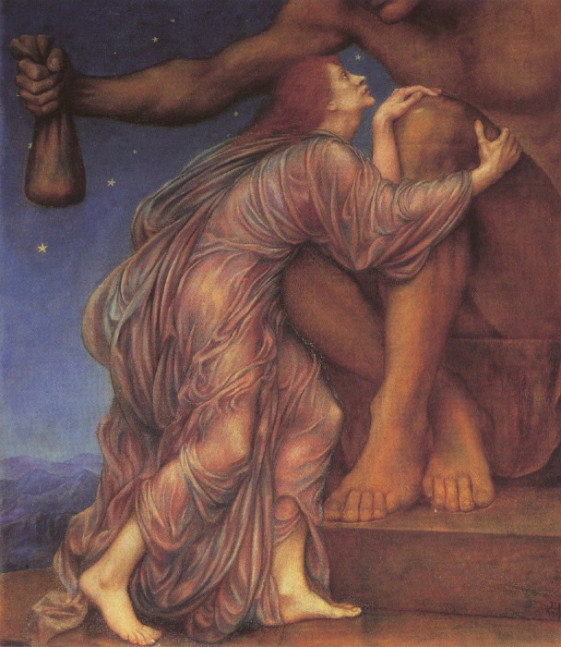
Evelyn de Morgan's The Worship of Mammon (1909), September 7, 2006. (Shell Kinney via Wikipedia). In public domain.

Evelyn de Morgan’s The Worship of Mammon (1909), September 7, 2006. (Shell Kinney via Wikipedia). In public domain.

But since Butler’s trolls obviously do think that they worship God, let me at least say this. If you believe in corporate capitalism and the corrections of the market, then your god is money, and the love of/lust for it. If you believe in the criminality of Blacks and Black male bodies, then your god is White. If you believe it’s okay to voice your displeasure by calling Butler a “n—-r c–t,” then your god is one that subjugates women, especially Black women. These beliefs do not and cannot represent my beliefs in God, in the life of Jesus, heck, in life of anyone who has ever spoken on behalf of social justice and human rights in history.

To misquote The American President (1995):

“Professor Anthea Butler has done nothing to you, trolls….You want a character debate? You better stick with me, ‘cuz Professor Anthea Butler is way out of your league.”

We Have Syllogisms, But I Have Silly-isms

20 Saturday Jul 2013

Posted by decollins1969 in 1, Academia, Boy @ The Window, Carnegie Mellon University, culture, Eclectic, eclectic music, Movies, music, Pittsburgh, Pop Culture, University of Pittsburgh, Youth

≈ Leave a comment

Tags

"Once In A Lifetime" (1983), Anita Baker, Authors, Book Titles, Books, Chicago, Chicago 17, Christine Stansell, Derrick Bell, Graduate School, Leon Litwack, Memory, Otis Redding, Patricia Cooper, Sean Wilentz, Silly-isms, Syllogisms, The Commodores, The Police, Writing Craft


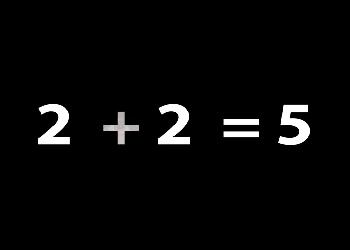
Bad Math (2+2=5) picture, July 20, 2013. (http://www.scenicreflections.com).

Bad Math (2+2=5) picture, July 20, 2013. (http://www.scenicreflections.com).

I’m far from done discussing issues of race, racism, civil rights and education this summer. Not by a long shot. Especially with the half-century anniversary of the March on Washington and W. E. B. Du Bois’ death just over five weeks away. But a one or two blog break is needed, if only because I need it today.

When it comes to so many things in my life, my memory is better than IBM’s Watson. You give me a date anytime in the previous seventy years, I can tell you within a day what day of the week it falls on. I can tell you what I had for dinner on many a given day twenty or thirty years ago, what 616 smelled like in the middle of a July heat wave in ’82, and which of my former Humanities classmates were dating in the summer of ’85. Yeah, and where I walked to clear my head on any given Saturday or Sunday between July ’85 and August ’87.

But I frequently forget people’s names, but never their faces. I forget to bring reuseable bags with me to the grocery store, but recall physics facts and figures I haven’t looked at since AP Physics my senior year of high school. And — most importantly for today’s post — I often forget book titles. But I almost always remember the book’s content, context, audience, writing tone and style, where it fits in the historical literature or in its genre (and even whether it gave me a headache or inspired me), or whether it forced me to truly change the way I thought about a given issue or topic.

When I was a grad student at Pitt and Carnegie Mellon, reading books the way Joey Chestnut and Takeru Kobayashi suck down hot dogs, I couldn’t keep the book titles in my head when I referred to them in seminars or in my papers. I just couldn’t. Maybe it was because the titles were boring, or because the books themselves were regurgitative snore-fests. Whatever the case, by the middle of my second year of grad school in late ’92, I needed a way to find a way back to a title and an author’s name, especially when in class refuting another student’s argument, in delivering a paper at a conference, or in answering questions from my professors about multiculturalism.

Otis Redding, The Dock of The Bay (posthumous album - 1968), July 20, 2013. (http://vibe.com; Atlantic Records).

Otis Redding, The Dock of The Bay (posthumous album – 1968), July 20, 2013. (http://vibe.com; Atlantic Records).

That’s when I inadvertently took my penchant for pop cultural references and began applying them liberally to the task of keeping book titles and authors’ names straight in my head. (I would’ve tried to memorize them otherwise). It started with the late Derrick Bell’s Faces at the Bottom of the Well (1992), which somehow bounced around a few neurons to conjure Otis Redding’s “Sittin’ On the Dock of the Bay” (1966). I didn’t need Redding to remind me of Bell or the title of his best-selling allegorical book. What it did, though, was free my mind to think of my massive amounts of reading on two levels, one scholarly, and one as reminders of my life and the lives of those suffering from inequality on the basis of race, class, gender and education.

So, when more boring book titles and/or books would come along, my mind would automatically go there. I turned David Tyack’s One Best System (1974) — a book about America’s K-12 system as a sorting out machine for the majority of the nation’s students — into Paul Carrick’s “One Good Reason,” a minor pop hit from ’88. My mind translated Patricia Cooper’s Once a Cigar Maker — all about gender and working-class issues in industrialization at the turn of the twentieth century — into Chicago’s “Once In A Lifetime” (not a hit, but on the Chicago 17 album). Or, even more often, I’d go, “You’re once, twiiiceee, three times a cigar maker, and I looooathe you” — a nod to Lionel Richie and The Commodores.

Anita Baker's Rapture (1986) album cover, July 20, 2013. (Donald Earl Collins).

Anita Baker’s Rapture (1986) album cover, July 20, 2013. (Donald Earl Collins).

I went further — and sillier — as I transferred from the University of Pittsburgh to CMU. Sean Wilentz’s Chants Democratic (1984) became Sean Wilentz “and the Pirates of Penzance” because of the rhyme scheme between “Wilentz” and “Chants.” Historian Christine Stansell was “don’t stand, don’t stand so, don’t Stansell close to me,” my homage to The Police. Leon Litwack’s Been in the Storm So Long (1979) became Anita Baker’s “Been So Long” (1986) from her Rapture album, while Michael Katz’s In the Shadow of the Poorhouse (1989) for me morphed into “Under The Poorhouse,” set to the tune of The Drifters’ “Under The Boardwalk” (1964).

It’s been nearly two decades since my last graduate seminar, yet I still find myself setting my book titles and authors to tunes and cinema. It makes reading an adventure for me, even as it helps me remember who wrote what. Silly, yes, it’s true. But don’t tell me I’m the only one who does this!

38.990666 -77.026088

Earth, Wind & Fire’s “Fantasy,” My Reality

18 Thursday Jul 2013

Posted by decollins1969 in 1, Boy @ The Window, culture, earth, wind & fire, Eclectic, eclectic music, Mount Vernon New York, music, New York City, Politics, Pop Culture, race, Youth

≈ Leave a comment

Tags

"Fantasy" (1978), Anger, Anger Management, Bigotry, Fear, Forgiveness, George Zimmerman, Lyrics, Police Brutality, Racism, Reality, Trayvon Martin, Zimmerman Trial


n  Cover of Earth, Wind & Fire's single "Fantasy" (1978), February 29, 2008. (Columbia Records). Qualifies as fair use due to low resolution and subject matter of this blog post.

Cover of Earth, Wind & Fire’s single “Fantasy” (1978), February 29, 2008. (Columbia Records). Qualifies as fair use due to low resolution and subject matter of this blog post.

Below are two excerpts from Boy @ The Window about how I viewed Mount Vernon, New York and my world between the ages of ten and twelve:

“My only links to the great metropolis to the south were WNBC-TV (Channel 4), Warner Wolf – with his famous “Let’s go to the video tape!” line – doing sports on WCBS-TV (Channel 2), and WABC-AM 77 and WBLS-FM 107.5 on the radio. I found the AM station more fun to listen to, but I also liked listening to the sign-off song WBLS played at the end of the evening, Moody’s Mood for Love, with that, ‘There I go, There I go, The-ere I go…’ start. Music had been an important part of my imagination in ’79, with acts like Earth, Wind & Fire, Christopher Cross, Billy Joel and The Commodores. Not to mention Frank Sinatra, Queen, Donna Summer and Michael Jackson’s Off The Wall album. The music also made me feel like I was as much a part of New York as I was a part of Mount Vernon. It left me thinking of the ozone and burnt rubber smell that I noticed as soon as I would walk down into the Subway system in Manhattan…

“Besides the occasional reminder of life outside of my world, of Mount Vernon, I was the center of my own universe. Mount Vernon was but a stage on which my life played out, a place I hoped would stay this way forever. I was an eleven-year-old who thought that my world was the world. I lived my life like Philip Bailey and Maurice White would’ve wanted me to. I came to see ‘victory in a life called fantasy’ as my own life, living as if my imagination and dreams could be made into reality. All I had to do was wish it so.”

(And yes, I know the actual lyrics are about a land called fantasy, but that’s not how I sang it back then).

There have been so many moments since then where my Earth, Wind & Fire visions have collided with the reality that life for me and people who look like me has hardly been a fantasy. I had to get over my idiot ex-stepfather’s abuse in order to even listen to Earth, Wind & Fire again, because he was a fan as well, and I didn’t want us to both like the same music. But even more than that has been the reality that there are people, places and things who’ve (and that have) come through my life and stood in between me and all the things I wanted out of life. Individuals like Joe Trotter or Ken, policies like racial profiling and redlining, institutions like Columbia University or the former Academy for Educational Development.

The Enchanted Garden of Messer Ansaldo (1889), by Marie Spartali Stillman, March 7, 2006. (Charivari via Wikipedia). In public domain.

The Enchanted Garden of Messer Ansaldo (1889), by Marie Spartali Stillman, March 7, 2006. (Charivari via Wikipedia). In public domain.

While some of these instances have been disappointing in the sense of betrayal that I felt, the disillusionment that came with these incidents of discrimination and harassment pushed me ever closer to the person and writer I wanted to be. I don’t know what to make of how I’ve been feeling about the Zimmerman trial and verdict, the response of so-called White liberals and more obviously racist and gleeful White teabaggers over the past five days. I’ve felt badly for Trayvon Martin’s family, Rachel Jeantel and for so many others who’ve been figuratively beaten down by media coverage and stereotypes over the past months.

But I didn’t think I was angry. Not until I went for a run this morning. It’s was a comparatively pedestrian 3.1-mile run after I’d done a five-miler a day and a half before. Earth, Wind & Fire’s “Fantasy” started playing on my iPod as I was running uphill. All it made me think about was all the challenges that I and so many others have had to face because of individual bigotry and fear and institutional racism and indifference. I know that many things in life aren’t fair. What I realized at that moment, though, was that there really are folks in this world who wish evil and unfairness on people like me. That’s their fantasy!

That made me angry again, but not for too long. For I also knew that I had the power to ask for forgiveness, as well as the power to forgive others. It’s a power that no one can take away from me, that enables me to be honest about where I am, and clear-headed about where I want to go. That power, among others, does truly help bring my “mind to everlasting liberty.” Even in the face of the evil, indifference and ignorance that I see every day.

38.990666 -77.026088
← Older posts
Newer posts →

Boy @ The Window: A Memoir

Boy @ The Window: A Memoir

Places to Buy/Download Boy @ The Window

There's a few ways in which you can read excerpts of, borrow and/or purchase and download Boy @ The Window. There's the trade paperback edition of Boy @ The Window, available for purchase via Amazon.com at http://www.amazon.com/Boy-Window-Donald-Earl-Collins/dp/0989256138/

There's also a Kindle edition on Amazon.com. The enhanced edition can be read only with Kindle Fire, an iPad or a full-color tablet. The links to the enhanced edition through Apple's iBookstore and the Barnes & Noble NOOK edition are below. The link to the Amazon Kindle version is also immediately below:

scr2555-proj697-a-kindle-logo-rgb-lg

Boy @ The Window on Amazon.com: http://www.amazon.com/Boy-The-Window-Memoir-ebook/dp/B00CD95FBU/

iBookstore-logo-300x100

Boy @ The Window on Apple's iBookstore: https://itunes.apple.com/us/book/boy-the-window/id643768275?ls=1

Barnes & Noble (bn.com) logo, June 26, 2013. (http://www.logotypes101.com).

Boy @ The Window on Barnes & Noble: http://www.barnesandnoble.com/w/boy-the-window-donald-earl-collins/1115182183?ean=2940016741567

You can also add, read and review Boy @ The Window on Goodreads.com. Just click on the button below:

Boy @ The Window

Twitter Updates

Tweets by decollins1969
  • RSS - Posts
  • RSS - Comments

Archives

  • June 2025
  • April 2023
  • September 2022
  • August 2022
  • July 2022
  • June 2022
  • May 2022
  • April 2022
  • March 2022
  • January 2022
  • December 2021
  • November 2021
  • October 2021
  • September 2021
  • August 2021
  • July 2021
  • June 2021
  • April 2021
  • March 2021
  • February 2021
  • January 2021
  • December 2020
  • November 2020
  • October 2020
  • September 2020
  • August 2020
  • July 2020
  • May 2020
  • April 2020
  • March 2020
  • January 2020
  • December 2019
  • November 2019
  • August 2019
  • July 2019
  • June 2019
  • May 2019
  • April 2019
  • March 2019
  • February 2019
  • January 2019
  • December 2018
  • November 2018
  • October 2018
  • September 2018
  • August 2018
  • July 2018
  • June 2018
  • May 2018
  • March 2018
  • February 2018
  • January 2018
  • December 2017
  • November 2017
  • October 2017
  • September 2017
  • August 2017
  • July 2017
  • June 2017
  • May 2017
  • April 2017
  • March 2017
  • February 2017
  • January 2017
  • December 2016
  • November 2016
  • October 2016
  • September 2016
  • August 2016
  • July 2016
  • June 2016
  • May 2016
  • April 2016
  • March 2016
  • February 2016
  • January 2016
  • December 2015
  • November 2015
  • October 2015
  • September 2015
  • August 2015
  • July 2015
  • June 2015
  • May 2015
  • April 2015
  • March 2015
  • February 2015
  • January 2015
  • December 2014
  • November 2014
  • October 2014
  • September 2014
  • August 2014
  • July 2014
  • June 2014
  • May 2014
  • April 2014
  • March 2014
  • February 2014
  • January 2014
  • December 2013
  • November 2013
  • October 2013
  • September 2013
  • August 2013
  • July 2013
  • June 2013
  • May 2013
  • April 2013
  • March 2013
  • February 2013
  • January 2013
  • December 2012
  • November 2012
  • October 2012
  • September 2012
  • August 2012
  • July 2012
  • June 2012
  • May 2012
  • April 2012
  • March 2012
  • February 2012
  • January 2012
  • December 2011
  • November 2011
  • October 2011
  • September 2011
  • August 2011
  • July 2011
  • June 2011
  • May 2011
  • April 2011
  • March 2011
  • February 2011
  • January 2011
  • December 2010
  • November 2010
  • October 2010
  • September 2010
  • August 2010
  • July 2010
  • June 2010
  • May 2010
  • April 2010
  • March 2010
  • February 2010
  • January 2010
  • December 2009
  • November 2009
  • October 2009
  • September 2009
  • August 2009
  • July 2009
  • June 2009
  • May 2009
  • April 2009
  • March 2009
  • February 2009
  • January 2009
  • December 2008
  • November 2008
  • October 2008
  • September 2008
  • August 2008
  • July 2008
  • June 2008
  • May 2008
  • April 2008
  • March 2008
  • February 2008
  • January 2008
  • December 2007
  • November 2007
  • October 2007
  • September 2007
  • August 2007
  • July 2007
  • June 2007

Recent Comments

MaryPena's avatarMaryPena on My Day of Atonement/Bitter Hat…
decollins1969's avatardecollins1969 on No Good Teaching Deed Goes…
Mary Rose O’Connell's avatarMary Rose O’Connell on No Good Teaching Deed Goes…

NetworkedBlogs on Facebook

NetworkedBlogs
Blog:
Notes From a Boy @ The Window
Topics:
My Life, Culture & Education, Politics & Goofyness
 
Follow my blog

616 616 East Lincoln Avenue A.B. Davis Middle School Abuse Academia Academy for Educational Development AED Afrocentricity American Narcissism Authenticity Bigotry Blackness Boy @ The Window Carnegie Mellon University Child Abuse Class of 1987 CMU Coping Strategies Crush #1 Crush #2 Death Disillusionment Diversity Domestic Violence Economic Inequality Education Family Friendship Friendships Graduate School Hebrew-Israelites High-Stakes Testing Higher Education History Homelessness Humanities Humanities Program Hypocrisy Internalized Racism Jealousy Joe Trotter Joe William Trotter Jr. K-12 Education Love Manhood Maurice Eugene Washington Maurice Washington Misogyny Mother-Son Relationship Mount Vernon High School Mount Vernon New York Mount Vernon public schools Multiculturalism MVHS Narcissism NFL Pitt Pittsburgh Politics of Education Poverty President Barack Obama Race Racial Stereotypes Racism Relationships Self-Awareness Self-Discovery Self-Reflection Sexism Social Justice Teaching and Learning University of Pittsburgh Violence Whiteness Writing

Top Rated

Blog at WordPress.com.

  • Subscribe Subscribed
    • Notes from a Boy @ The Window
    • Join 103 other subscribers
    • Already have a WordPress.com account? Log in now.
    • Notes from a Boy @ The Window
    • Subscribe Subscribed
    • Sign up
    • Log in
    • Report this content
    • View site in Reader
    • Manage subscriptions
    • Collapse this bar
 

Loading Comments...