• About Me
  • Other Writings
  • Interview Clips
  • All About Me: American Racism, American Narcissism, and the Conversation America Can’t Have
  • Video Clips
  • Boy @ The Window Pictures
  • Boy @ The Window Theme Music

Notes from a Boy @ The Window

~

Notes from a Boy @ The Window

Category Archives: New York City

A Man and a Tank

04 Wednesday Jun 2014

Posted by decollins1969 in 1, Boy @ The Window, culture, Eclectic, Mount Vernon New York, New York City, Patriotism, Politics, Pop Culture, Youth

≈ Leave a comment

Tags

1989, ABC News, Dissidents, Freedom, Government Crackdown, Injustice, Laurence Glasco, Looney Tunes, Murder, Peter Jennings, Protests, Tank, Tiananmen Square
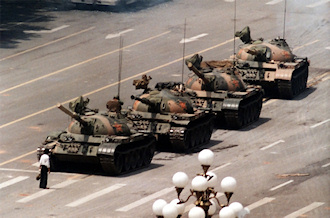

"Tank Man" temporarily stops the advance of a column of tanks, Tianenmen Square, Beijing, China, June 5, 1989. (Jeff Widener/AP via Wikipedia).

“Tank Man” temporarily stops the advance of a column of tanks, Tiananmen Square, Beijing, China, June 5, 1989. (Jeff Widener/AP via Wikipedia).

[Originally posted June 4, 2009]

Saturday, June 3, 1989, 12:04 pm. Me and my younger siblings were at 616, watching cartoons on ABC. It was a run of old Looney Tunes cartoons, which had Maurice, Yiscoc, Sarai and especially Eri cracking up. It was a great morning, with my mother taking her Saturday classes at Westchester Business Institute, my idiot stepfather out carousing, and my older brother Darren roaming the streets like the goofball he could be. Then the late Peter Jennings broke into our local New York area broadcast to let us know that Chinese tanks were rolling into Tiananmen Square in Beijing, breaking through seven weeks worth of protests over the government’s continuing limits on the civil and political rights of its citizens.

It was after midnight in Beijing, already June 4. For the next forty or forty-five minutes, images kept coming on to our TV from Tiananmen Square as the Chinese military and their tanks toppled barricades, ran over cars and literally chased thousands of protesters out of the square. When I saw the first images of a blood-splattered protester and then of another one crying, I started to cry myself. My siblings looked at me like I was crazy. Then, no more images. Jennings reported that the Chinese government had forced ABC to shut down their satellite communications from within China. My guess was that they did it at gun point.

By the time I switched to another station for my siblings to watch, I found myself wondering why I hadn’t followed the story more closely. I mean, I was actually following it. But I guess I assumed that, like the glasnost and perestroika that had been pushed by Gorbachev since ’86, that the protests would be allowed to continue in Beijing. And like many other naive Americans, we were wrong about that. We hardly knew enough about four millennia of Chinese political history to understand how important an unopposed central authority has been to this culture. If I had applied anything I learned from a semester of East Asian History at all, I wouldn’t have been surprised at all.

With me crying — albeit not audibly — my youngest brother Eri asked me what was wrong and what was going on. I explained to them as best I could that this was a government crackdown on dissidents, that the Chinese government engaged in human rights abuses all the time, and that this crackdown meant many people were dying and going to die. Those few minutes were the most in which Eri and my other siblings had shown any interest in the world outside of Mount Vernon and New York City in all of times I spent with them growing up.
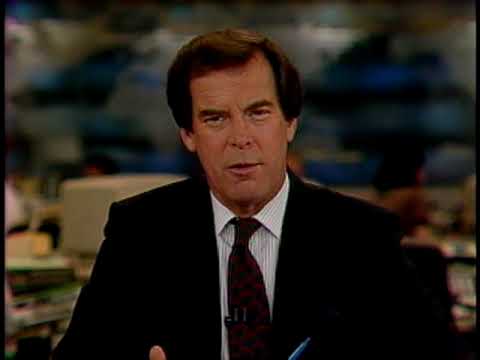
Peter Jennings, ABC World News Tonight anchor, November 1989 (broadcasting fall of Berlin Wall). (screenshot via Youtube).

Peter Jennings, ABC World News Tonight anchor, November 1989 (broadcasting fall of Berlin Wall). (screenshot via Youtube).

In the days that followed, the occasional picture or piece of film made it out of China to Hong Kong (still a British territory in ’89) or Japan or South Korea showing images like the man standing in front of a column of tanks, ready to die in the crackdown on him and other protesters. I must admit, it moved me. It was obvious that people would go to jail, likely face torture, that many would die and many more would lick their wounds as the Chinese government would blackout all but the official state news about what really was going on.

Larry Glasco, one of my Pitt history professors, was there for a visit when the crackdown began. He said he saw dead men hanging from lamp posts, bodies of dead and injured in spots, and faced his own crisis in dealing with the military. They confiscated his camera and threatened to hold him in jail in order to make sure he didn’t take his pictures back to the US. From what I remember, he did managed to smuggle some film — not much — out after the crackdown had ended. His wasn’t the only story I would hear during the second half of ’89 about what people witnessed as tourists and researchers in looking at the Tiananmen Square protests. It was the first time I had the chance to see up close what a tyrannical government really looks like when acting to protect itself.

It’s different from police brutality or even a racist mob. For better or worse, we’ve never seen this level of government or military intervention in this country over protesters that those everyday folks in China faced down twenty years ago. Even if we count what Native Americans faced in the late-nineteenth century or the Bonus Army crackdown by General Douglas MacArthur in 1932, that would only get us to a limited sense of what the Tiananmen Square dissidents faced. It made me think about how wrong one of my Humanities classmates was when he argued about the long-term viability of communism because it would reduce economic inequality and give people a greater degree of freedom.

But we were both incorrect. Any economic or political system in which citizens and others must show deference or actually walk in fear of isn’t one that any should follow. I don’t care if the system is communist, capitalist, or socialist, or if the government is a monarchy, a constitutional monarchy, or a representative democracy. If folks living in these systems and under these governments can’t speak their minds or publish their ideas, especially if they contradict whatever the government or system says, the government isn’t a just one. Although governments and systems should fit the cultural and historical context of a given population, it also should remain flexible enough to adjust to the changing needs of a people. That’s what the regime in China failed to understand in ’89 and for years afterward.

I’m hardly advocating the overthrowing of governments or even the imposition of American democracy. If anyone’s bothered to notice, we haven’t exactly been living up to many of our ideals overseas and at home over the last six decades. I’m merely attempting to remember the events of early June ’89 that touched me emotionally, that enabled me to understand that beyond the political and economic theories there’s the reality of the human condition, the need to keep humans who have authority in check. I learned this all too well growing up at 616 and attending Mount Vernon’s public schools. Without those checks and balances, the rights and lives of others face tanks lined up in formation, ready to run them over.
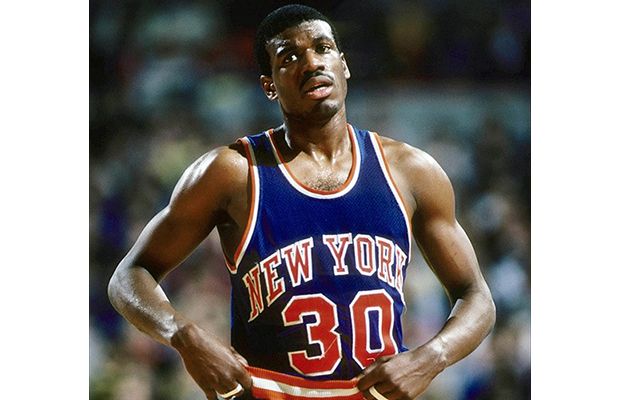
Bernard King and The Knicks of ’84

26 Monday May 2014

Posted by decollins1969 in 1, Boy @ The Window, culture, Eclectic, Mount Vernon New York, New York City, Pop Culture, race, Sports, Youth

≈ Leave a comment

Tags

ACL Tear, Basketball, Basketball Career, Bernard King, Darrell Walker, Earl Monroe, Earl The Pearl, Ernie Grunfeld, Futility, Knickerbockers, Knicks, Larry Bird, NBA, New York Knicks, NY Knicks, Ray Williams, Self-Discovery


Bernard King, one of the all-time greats, 1984 NBA Playoffs. (http://www.totalprosports.com/).

Bernard King, one of the all-time greats, 1984 NBA Playoffs. (http://www.totalprosports.com/).

I usually keep it kind of heavy on Memorial Day. Between what Memorial Day is really about — America’s fallen soldiers, sailors, marines and pilots — and the abuse and domestic violence I’ve seen and experienced on Memorial Day ’82, I consider any Memorial Day that’s incident-free a good one.

Earl "The Pearl" Monroe driving for a layup, May 26, 2014. (http://i.cdn.turner.com/).

Earl “The Pearl” Monroe driving for a lay up, May 26, 2014. (http://i.cdn.turner.com/).

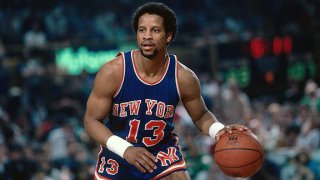
But in light of the running theme of this year — that being a look back at the world in which I lived in’84 — I wouldn’t be providing a complete account if I didn’t talk about my Knicks at least once. To think that it’s been forty-one years since they last won a title is just, well, atrociously pathetic. It’s like being a New York Rangers fan in ’94 — oh yeah, that was me, too! I actually do have a few memories of the Knicks of Walt “Clyde” Frazier, Dave DeBusschere, Willis Reed, Bill Bradley and Earl “The Pearl” Monroe (my Mom and Uncle Sam gave me “Earl” as a middle name because of him back in ’69), but they’re very vague memories, almost snapshots. I was three and change, after all, hardly old enough to appreciate great defense, the midrange J, the turnaround J, or setting up defenders off the dribble to beat them to the hoop like these guys did.

I came into my own with basketball in ’83, just after the Knicks and Micheal Ray Richardson parted ways (that’s an understatement!). At that point, my Knicks had only sucked for the better part of a decade, but now with Bernard King as their superstar, and the coke-snorting Richardson gone, things were going to allegedly get better for the team. At least, according to the New York Post and New York Daily News. With disciplinarian Hubie Brown as head coach, we’d have a serious chance to compete with Larry Bird, Kevin McHale, Robert Parish, Dennis Johnson and the rest of the hated Boston Celtics.

I loved watching King play. He could nail a J from anywhere. Off the dribble, double-teamed, facing the basket, off a screen, top of the key, with his back to the basket. He could also drive to the hole with ease. King could score at will, and back in ’84, probably in his sleep, too. He wasn’t by any stretch a great defender, the big knock on King throughout most of his career. Between Reggie Jackson and Dwight Gooden, though, there was King for me.

New York Knicks favorite and Mont Vernon great Ray Williams, circa 1983 (died March 23, 2013). (Dick Raphael/NBAE/Getty Images via http://espn.go.com/).

New York Knicks favorite and Mont Vernon great Ray Williams, circa 1983 (died March 23, 2013). (Dick Raphael/NBAE/Getty Images via http://espn.go.com/).

Not only did we have the Brooklyn native as the Knicks centerpiece for ending the Celtics’ dominance of the East. We had Louis Orr. We had Rory Sparrow. We had Bill Cartwright. We had Trent Tucker. We had Mount Vernon, New York’s own Ray Williams (may he RIP). We had just drafted Darrell Walker, known to defend with ferociousness. We even had Ernie Grunfeld — once the all-time leading scorer in the University of Tennessee’s Men’s Basketball history — coming off the bench. Yeah, it was going to be playoffs and contending for championships for the foreseeable future.

Really, who was I kidding? What was the New York sports media snorting and injecting? Outside of Williams, Cartwright and Walker, no one on the team defended consistently enough to stop Mike Gminski on the Nets, much less Bird, Parish or McHale. But boy did they entertain! King scoring 50 or more in games on WOR-Channel 9 (before MSG got their own channel and broadcast all of the games themselves) was such a treat! I actually enjoyed it when Walker and Danny Ainge got into a fight during the second round of the NBA playoffs in ’84. Those were pretty good teams with King as a scoring machine. Pretty good, but hardly good enough.

I actually cried after the Celtics slaughtered my Knicks at the Boston Garden in Game Seven of that May ’84 Conference Semifinal series, 121-104. I cried even more, though, after King tore up his right knee’s ACL in a game against the then Kansas City Kings in March ’85, in the middle of an already miserable season. It lead to the Knicks in the first-ever NBA Draft Lottery, them getting the #1 pick, and Patrick Ewing in the process. But King and Ewing would never play a game together, both with injuries throughout the 1985-86 and 1986-87 seasons. It would be nearly another decade before my Knicks were strong enough to be part of any serious championship conversation.

Failure is a part of life, but so is hope. And back in May ’84, all I could do as a naive fourteen-year-old growing up in basketball’s mecca was hope. As I hope that someone will end the insanity that has been James Dolan and the Knicks on 33rd and Madison soon.

Where 1 PhD = A Second High School Diploma

14 Wednesday May 2014

Posted by decollins1969 in 1, Academia, Boy @ The Window, Carnegie Mellon University, culture, Eclectic, Mount Vernon High School, Mount Vernon New York, New York City, Pittsburgh, Pop Culture, race, University of Pittsburgh, Youth

≈ Leave a comment

Tags

Associate's Degree, CMU, High School Diploma, Homelessness, Jealousy, job search, Lame Jokes, Mother-Son Relationship, PhD Graduation, Pitt, Subway, Teachers College, Westchester Business Institute, White Plains New York, Yonkers


Absurditty (or an Absurd Ditty, deliberately misspelled), where $100 = 2 quarters, May 14, 2014. (Donald Earl Collins).

Absurditty (or an Absurd Ditty, deliberately misspelled), where $100 = 2 quarters, May 14, 2014. (Donald Earl Collins).

I could’ve just as easily titled this post, “Road to Boy @ The Window, Part 5: My Mother and My Doctoral Graduation.” Precisely because any chance I had of immediately getting over the psychological and emotional hump of finishing a doctorate while dealing with the betrayals of an advisor and dissertation committee was gone by the end of my graduation day, the third Sunday in ’97 (anniversary number seventeen, just four days away). That process opened me up to looking at my past, to figuring out how someone like me could go on to do a PhD, to teach, to write, to learn, all well beyond the expectations of my parents and my classmates.

The process of feeling uneasy about my relationship with my Mom, though, had begun the day after my interview at Teachers College. That Tuesday, May 13th, I left the Hotel Beacon, made my way down to the 66th Street stop, and caught the 1 train to The Bronx and Van Cortlandt Park. I then caught a Westchester Bee-Line Bus up Broadway and crossed the Yonkers-Bronx border, where I got off to walk up a one-block-long hill.

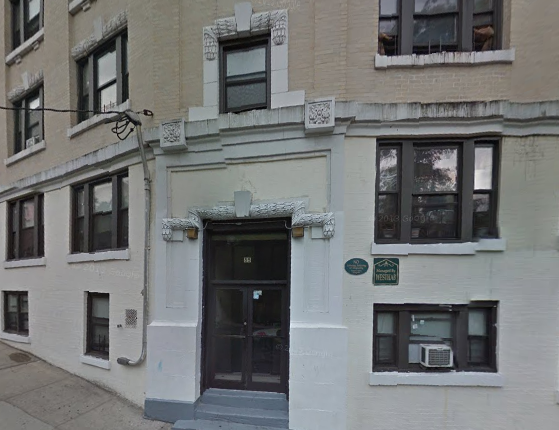
I arrived at my Mom’s temporary place on Bruce Avenue. This was where she and my younger siblings had been living since the end of ’95, as a result of an electrical fire that swept through two floors of 616. Not to mention, an incompetent Mount Vernon Fire Department that did more damage by flooding two of the three buildings on the property in the process of putting the fire out. It was a sparse place that made 616 look like a luxury high-rise by comparison. There were holes in the walls because my younger siblings Yiscoc and especially Eri had punched through the cheap plaster and nonexistent sheet rock in their teenage anger and rage.

Front door of 85 Bruce Avenue, Yonkers, NY (screen shot), taken in October 2007. (Google Maps).

Front door of 85 Bruce Avenue, Yonkers, NY (screen shot), taken in October 2007. (Google Maps).

It was in the midst of all of this that my Mom was finally graduating from Westchester Business Institute with her associate’s. I was happy for her. The only thing that concerned me was the kind of work she could find with the degree. I was willing to help her in any way I could, including coming up and spending a few days in Yonkers to attend her ceremony in White Plains that Tuesday evening. I wanted to continue to provide my Mom the emotional support that I thought she wanted.

That began to change the morning after her graduation ceremony. We were sitting down at this cafeteria bench that served as the kitchen table, with her drinking cream-infused tea from a chipped white flower mug and eating a piece of toast while I contemplated walking down the hill for some yogurt. We’d been talking about looking for work, about her moving out and finding a place in White Plains, or even moving back to a fully renovated 616. I brought up the real possibility that if I got the Teachers College job, I would move back to the New York area (though not Mount Vernon — out of the question).

This was when my Mom said, “You know, you were in school so long, you could’ve had another high school diploma.” It was out of the blue, and caught me completely off guard. It was quiet for a moment, with me in a deep frown, and my Mom sitting there for a few seconds. Then she forced a laugh. “It’s a joke,” she said, as if I was supposed to be oblivious to the nonverbal displays of disdain for nearly a decade’s worth of my work. And, what was the joke? My degree, or the amount of time and energy I spent in earning it?

I sort of ignored what my Mom had said at first. But really, how could I? Mom had told the lamest of jokes over the years — like about how diarrhea “was like ‘dying in the rear’,”  she’d say as if she heard the joke from someone else. But no matter how I looked at it, comparing everything I went through from August ’87 up to that point to a diploma that I earned while living in two hells — 616 and Mount Vernon High School — wasn’t a joke. Not for either of us.

My Mother's Associate's Degree Photo, Westchester Business Institute, May 12, 1997.

My Mother’s Associate’s Degree Photo, Westchester Business Institute, May 12, 1997.

My Mom disappointed me a day later, as she said, “I don’t have to tell you that I’m proud of you. I tell other folks, just not you.” It was in response to me saying that I thought her joke wasn’t one at all. But she hadn’t sealed our fates as a mother and son in a long-term strained relationship, at least not yet. That would occur a few days later.

Even under the strictest of measures, comparing a PhD to a high school diploma is ridiculous. It’s like comparing the buying power of Oprah to an ant colony. But I figured out a long time ago, long before starting my master’s program in history at Pitt, that a degree is only worth anything if you use it to enhance your life, advance your career, or pursue your calling. Even with all my qualms. About academia, about the publish-or-perish model, about the not-for-profit profit world, even about myself as a writer. It was all worth it.

One thing I did learn, though, about my Mom, maybe for the first time. I’d always wondered about the saying, “I love you, but I don’t like you.” I hadn’t really understood what that meant until the week of my doctoral graduation.

My First Adult Job Interview, Teachers College

12 Monday May 2014

Posted by decollins1969 in 1, Academia, Boy @ The Window, Carnegie Mellon University, culture, Eclectic, eclectic music, Mount Vernon New York, New York City, Pittsburgh, Politics, Pop Culture, race, Upper West Side, Work, Youth

≈ Leave a comment

Tags

Barnes & Noble, Beacon Theater, Calling, CMU, Disillusionment, Finishing Second, Hotel Beacon, job interview, Job Talk, Joe William Trotter Jr., PTSD, Racial Harassment, Rage, Steven Schlossman, Teachers College, Walking While Black, Writer, Writing


Teachers College today, West 120th (between Broadway and Amsterdam), New York, NY, April 15, 2014. (http://ccnmtl.columbia.edu/).

Teachers College today, West 120th (between Broadway and Amsterdam), New York, NY, April 15, 2014. (http://ccnmtl.columbia.edu/).

Seventeen years ago this week (check the calendar – the days and dates coincide with the week of May 12-18, ’97) was perhaps one of the most euphoric and bitterly disappointing weeks in my entire adult life. It was such a strange week that it forced me into second guessing myself and my path in life for many years afterward.

But it didn’t start out that way. On Monday, May 12th, I did my very first post-doctoral interview, for an assistant professor position at Teachers College (Columbia’s school of education) in Morningside Heights (West Harlem, really). I’d flown in from Pittsburgh the evening before, and stayed at the Hotel Beacon at Teachers College’s expense, because Monday was going to be a very long day. It was loud that Sunday night, as there was some event at the Beacon Theater. But somehow, I had just enough discipline and memories of New York’s smells and sounds to fall asleep comfortably.

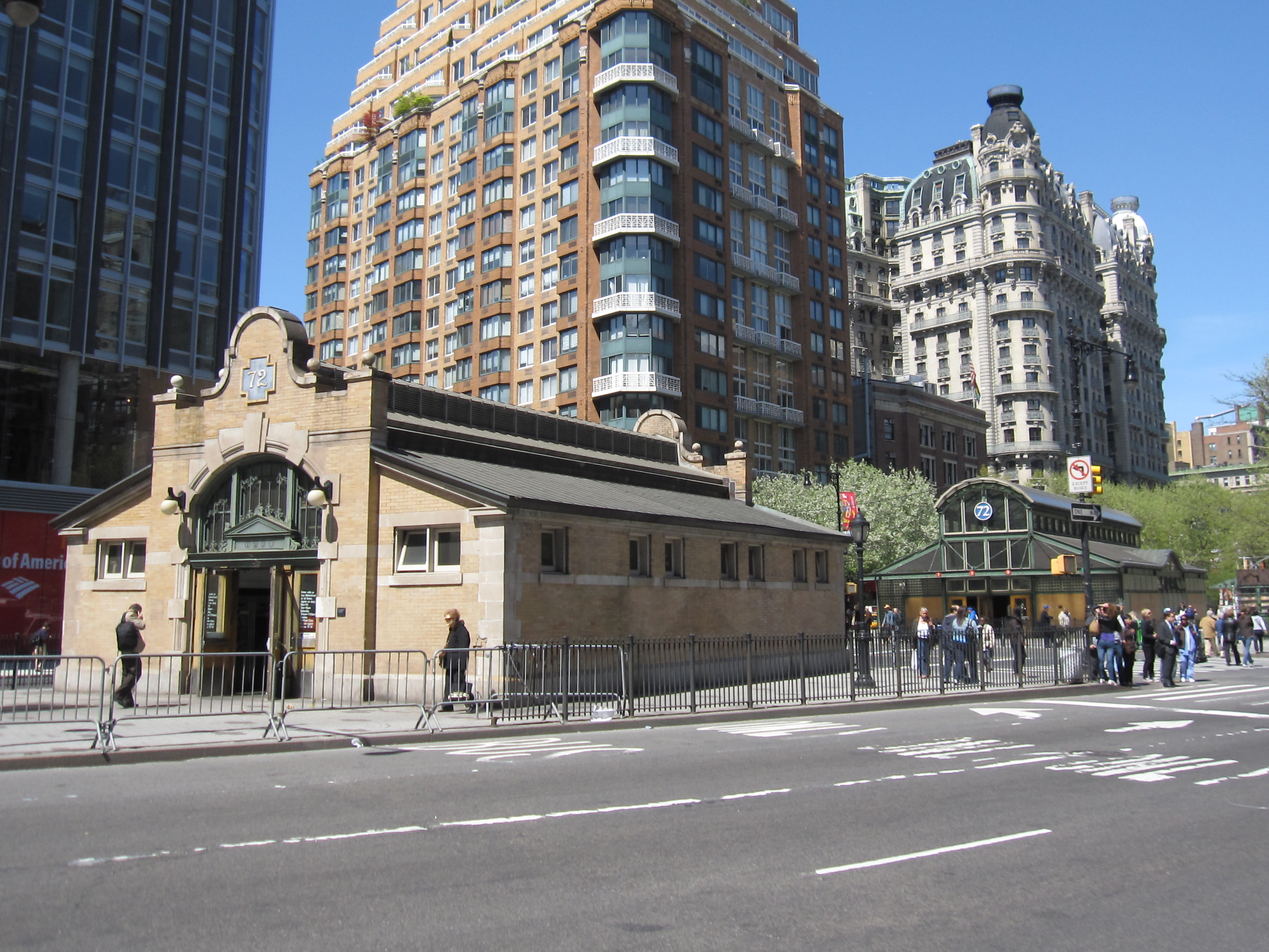
My day started at 8:30 am, so of course, I was up before seven. I put on my one and only suit — at least, the only suit I owned that fit my six-three, 215-pound frame — went over my job talk on multiculturalism, and went on my pensive way to the 72nd Street Subway entrance on Broadway. It was a meat-packed ride to 125th Street, where I had to get off (I had forgotten to walk down to 66th Street to catch the local 1 instead of the express 2 train) and walk the six or so blocks to Teachers College.

Original control house (left) and newer control house, on opposite sides of 72nd Street  (IRT Broadway – Seventh Avenue Line), New York, NY, April 13, 2010. (Gryffindor via Wikipedia). Released to public domain via CC-SA-3.0.

Original control house (left) and newer control house, on opposite sides of 72nd Street (IRT Broadway – Seventh Avenue Line), New York, NY, April 13, 2010. (Gryffindor via Wikipedia). Released to public domain via CC-SA-3.0.

After that, my day was an eight-hour blur, meeting with faculty, grad students and deans. Making sure not to eat too much while being grilled with questions over lunch. Giving my job talk and making sure to tell jokes, to bring up facts relevant to this history of education job, and, of course, to smile. Talking with grad students about how I finished my 505-page dissertation in twenty-seven months, about my teaching style and about growing up in Mount Vernon. It was as intense a process as I had expected it to be, but I felt at the end that I’d done everything possible to get the job.

I knew that I was one out of only five candidates invited to interview, out of over 500 applicants. I even had the chair of the History Department, Steve Schlossman, lobby on my behalf for the job, prior to my interview. And, despite my former advisor in Joe Trotter, I’d managed to put together a group of letters from folks that should’ve passed muster. All I could do after the interview was wait.

But life didn’t wait to intervene. After leaving the interview for the hotel, I changed into my more casual clothing, jeans and a long-sleeve t-shirt, and went off to Tower Records and Barnes & Noble on 66th and Broadway, and later, Haagan Dazs (that last one was a big gastrointestinal mistake!).  

From the moment I walked in the door at Barnes & Noble until I left a half-hour later, a Latino security guard tailed me as I perused books in the African American nonfiction, Cultural Studies and Music sections of the store, across three floors. As I walked out, I walked up to the guard and said

“While you were stalking me, you probably let half a dozen White folks slip out of here with books and CDs. Did you learn anything while you were watching me?”

“I was just doing my job,” the dumb-ass security guard said in response.

“Well, if following a Black guy around for thirty minutes is part of your job, you deserve to lose your job,” I said to him as I walked out.

It was a bit of a harbinger of things to come. I was more pissed off about these everyday slights — or, rather, microaggressions — than I’d been before Trotter and my doctorate. And I was less patient about waiting for what I wanted than I’d been as a grad student.

What your second-place prize often looks like, May 12, 2014. (http://www.wmciu.org.uk/).

What your second-place prize often looks like, May 12, 2014. (http://www.wmciu.org.uk/).

Three weeks later, I received a reimbursement check for my travel and other expenses, and within twenty-four hours, a call from the search committee chair. I’d finished second for the job. Second! To whom, I still don’t know. The chair kept telling me, “you didn’t do anything wrong…you did a very good set of interviews,” as if those compliments would pay my rent next month. I was disappointed, hopeful, but disappointed. It was my first shot, my best shot, and I’d given my best effort. “What now?,” I thought.

It’s a question that I still must ask seventeen years, two books and two careers later. I’ve long since realized that the question of what my life would’ve been like if I’d gotten the Teachers College job was moot, because my issues were about more than finding work. I still would’ve been unhappy, with a New York-esque rage to go with it.

So I counted my blessings, and I count them still. Not getting this particular job bought me the time and energy I needed. I needed that time, to see myself as the writer I also wanted to be, not just the educator and thinker I already knew I was. A better, more personable, more revealing and feeling writer than the cold and metallic one that grad school and Trotter helped turn me into by the end of ’96.

When Nightmares Go Nuclear

03 Saturday May 2014

Posted by decollins1969 in 1, Academia, Boy @ The Window, Christianity, culture, earth, wind & fire, Eclectic, Hebrew-Israelite, High Rise Buildings, Mount Vernon New York, Movies, music, New York City, Pittsburgh, Politics, Pop Culture, Religion, Youth

≈ Leave a comment

Tags

"99 Luftballons" (1983), Dreams, Ebony Pictorial History of Black America (1974), Lerone Bennett, Mrs. O'Daniel, Nena, Nightmares, Nuclear Annihilation, Nuclear War, Post-Traumatic Stress Disorder, PTSD, Subliminal Messages, Terminator 2 (1991), Textbooks, The Day After (1983), Whiteness


Color version of mushroom cloud over Nagasaki, Japan, August 9, 1945. (http://www.mphpa.org via US Army Air Force). In public domain.

Color version of mushroom cloud over Nagasaki, Japan, August 9, 1945. (http://www.mphpa.org via US Army Air Force). In public domain.

I find myself seeing bright orange, yellow and white lights filling the sky and obscuring everything around me. It doesn’t matter whether I’m above ground, at home, at school or work, or on a Subway platform underground in New York. Once these lights hit, it’s over. I find myself no longer in my body, for it no longer exists. Yet I still have eyes with which to witness. Through a purple haze, the intense heat, literally searing, melting and vaporizing flesh and bone. A shock wave, crushing and churning the world all at once. Spirits once safely in bodies are now on the same plane of this new existence with me, all watching as the light, the heat and the supersonic shock wave tear into our former world. Where do we go from here, as the world is no more?

That’s a milder version of a nightmare that has been with me now off and on for thirty-four years. I’m sure that I was among the hundreds of millions of folks in the West whom dreamt often of a nuclear nightmare. It was during the final phase of the Cold War, with Soviet and American aggressions, Reagan’s presidency, and a renewed arms race. All made the prospect of “99 Luftballons” (1983) and the launch of 1,000 nuclear tipped ICBMs and SLBMs and one billion or more dead a dreadful, gnawing fact that I couldn’t do a damn thing about.

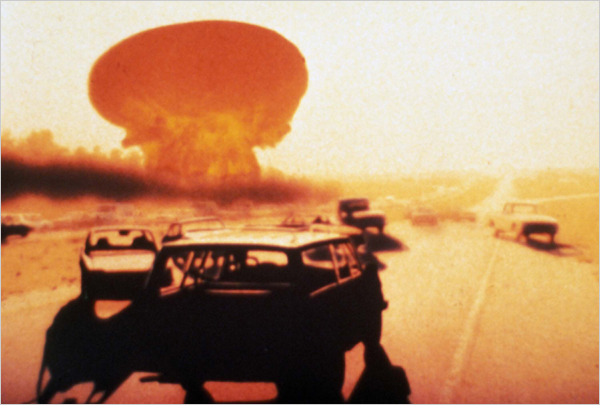
Screen shot from The Day After (November 1983) ABC movie, presumably suburban Kansas City, MO/KS, October 21, 2007. (Stout/NY Times).

Screen shot from The Day After (November 1983) ABC movie, presumably suburban Kansas City, MO/KS, October 21, 2007. (Stout/NY Times).

The very first time I fully understood the dangerous and fatal that defined this world was toward the end of fifth grade, in May ’80. It was an early May Thursday in Mrs. O’Daniel’s classroom at William H. Holmes Elementary in Mount Vernon, New York, a bright, sunny spring day. We were in independent reading mode, and Mrs. O’Daniel had given me permission to read ahead in our social studies textbook, which focused on American history.

We had left off with the Great Depression and all of the suffering that came with it. Of course, this was a collective history, one which didn’t even have the special sufferings of people of color or women in blue boxes — yet. So Whites represented all Americans. This wasn’t something I picked up on in ’80, at least consciously. But luckily, between Lerone Bennett’s edited three-volume Ebony Pictorial History of Black America (1974) at home and Mrs. O’Daniel constantly supplementing our knowledge at school, I was more aware of the deficiencies of textbooks long before I could articulate them.

As I turned the pages and read about the great battles of World War II, the horrors of Pearl Harbor and the gathering of the righteous power of the US to win the war, I suddenly saw something that shook me to my core. It was the picture of the atomic bomb’s mushroom cloud hovering over Nagasaki like death itself. It was in full color, bright and yellow and white, and obviously hot and broiling. The camera shot had managed to capture some of the landscape below, the area surrounding Nagasaki an August summer green. As I read about the 70,000 killed instantly at Hiroshima, an area the size of Mount Vernon completely flattened by a bomb that at its core had only a few pounds of weapons-grade uranium, I was frightened. I could be dead at a moment’s notice, or worse, suffer from radiation burns and sickness, in which case I’d truly be among the walking dead.

But this was only one phase of my nightmare. As things at 616 went from stable to completely out of control, my nuclear nightmares became more frequent. It seemed like there was a nuke for every day of the week during my last year as a Hebrew-Israelite. Watching The Day After on ABC in November ’83 didn’t help matters, but I also couldn’t help myself. I was both repulsed by and attracted to the idea of nuclear annihilation and survival. Maybe because I was already living through one hell of a disaster at 616.

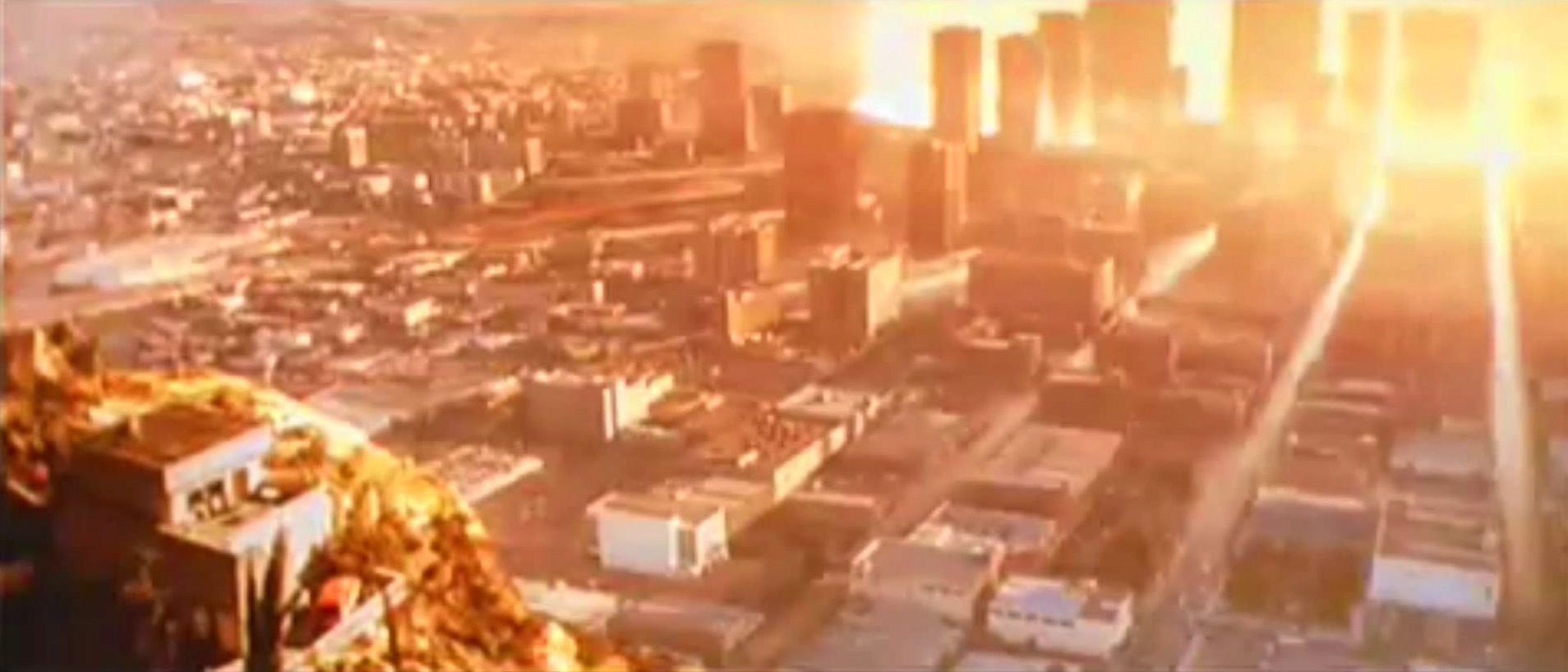
Cropped screen shot of Los Angeles at beginning of nuclear strike, from Terminator 2 (1991), May 3, 2014. (http://youtube.com).

Cropped screen shot of Los Angeles at beginning of nuclear strike, from Terminator 2 (1991), May 3, 2014. (http://youtube.com).

My nuclear nightmares continued at nearly daily pace until after I saw Terminator 2 in June ’91. At that point, I realized that my nightmares weren’t so much about the plausibility of surviving a nuclear holocaust as they were about surviving my own preteen and teenage years. It occurred to me there are worse things in life than dying, and like surviving nuclear war, surviving a violent and unstable childhood like mine has significant side effects. I could be occasionally be up, I was much more frequently down, I could occasionally fly into a rage. And I could have recurring nightmares of me murdering my now dead ex-stepfather. All signs of PTSD.

Realizing this, I took control over my dream world, and managed to push my plutonium-tipped dreams into a box, along with so many things from my decade of evangelistically twisted fire and brimstone from two religions. I still watch end-of-the-world movies, though without the extreme fervor of dream-based certainty of suffering a lingering death. Though I do often find it funny how White fears permeate these movies.

Boy @ The Window – 1st Anniversary!

17 Thursday Apr 2014

Posted by decollins1969 in 1, Boy @ The Window, Christianity, culture, Eclectic, Hebrew-Israelite, High Rise Buildings, Jimme, Marriage, Mount Vernon High School, Mount Vernon New York, My Father, New York City, Pittsburgh, Pop Culture, race, Religion, Sports, University of Pittsburgh, Youth

≈ Leave a comment

Tags

Book Promotions, BookExpo America 2014, Positive Feedback, Publishing Business


Boy @ The Window 1st Anniversary

Boy @ The Window 1st Anniversary

Nope, no balloons or streamers for this one, the one-year anniversary since I put out the first e-book version of Boy @ The Window on Amazon Kindle. Yay, me! It’s been a pretty good twelve months, one of a few highs and a bunch of lows in selling and promoting the book, in moving forward with a plan, only to have tossed it aside for a new set of plans for the remainder of 2014 and 2015.

The bit of encouraging news — aside from some royalties for Boy @ The Window so far — is that there are a couple of places reviewing it now (finally), and I’m finally moving along with promoting the book. Beyond that, there are few things tougher psychologically than book promotions. This is why folks hire publicists — emotional distance can be helpful in reaching out to friends and strangers.

But, from the feedback (mostly through email and Facebook) I’ve gotten so far, people really like Boy @ The Window. Trust me, when a reader tells you they couldn’t put the book down once they started to read it, that’s an emotional boost! It’s part of what has enabled me to keep going on this venture into the cyclone of the publishing world.

I’ve planned for attending BookExpo America for the first time at the end of next month in New York. It’ll likely be a gigantic sea of authors, publishers, editors and others looking for an edge. I just hope that it’s worth the money I’m about to spend there.

One thing that I should note, though, as I continue to write on my blog and proceed with Boy @ The Window promotions. There are plenty of posts here that aren’t in the memoir, and plenty of stories in Boy @ The Window that I haven’t posted here. You can get some idea of what’s in the book from reading my posts, but it would be far from a complete picture. Buy a copy. Take it for a spin. It’ll make you laugh and cry, angry and hopeful, and all at times in the same paragraph.

Stinking Up The Joint

15 Tuesday Apr 2014

Posted by decollins1969 in 1, Boy @ The Window, culture, Eclectic, Jimme, Mount Vernon High School, Mount Vernon New York, New York City, Pop Culture, race, Youth

≈ Leave a comment

Tags

Brandon Lee, Classmates, Deodorant, Geometry, Gym Class, Humanities, Looney Tunes, Louis Cuglietto, Pepe Le Pew, Poverty, Puberty, Smell, Speed Stick Deodorant, Stench, Stick, Swimming, The Crow (1994), Tough-Love, Underarm Stench, Underarms


Pepe Le Pew stinking up the flowers, April 15, 2014. (Chuck Jones/WB, via http://www.animationartwork.com/). Qualifies as fair use because of picture's low resolution and related subject matter.

Pepe Le Pew stinking up the flowers, April 15, 2014. (Chuck Jones/WB, via http://www.animationartwork.com/). Qualifies as fair use because of picture’s low resolution and related subject matter.

Puberty is often a confusing and scatterbrained time even for the most well-adjusted of folks. Changes in body chemistry, hair growth, body parts, height, weight and sleep patterns are all part of this excruciating rite of passage. When thrown in with the realities of poverty and the cruelty of Humanities and Mount Vernon High School, puberty was also a long march of embarrassing moments.

One of my last embarrassing moment strictly thanks to puberty came around this time three decades ago. It was an unusually warm early April Tuesday in ’84, one in which I was hardly prepared. I’d just started using deodorant the year before, once spring had sprung in ’83, with basketball and softball as a regular part of gym class. In gym for ninth grade, we were in the swimming pool for March and April.

We just happened to be out of deodorant at 616 while I was in the midst of this class. It wouldn’t have been much of a problem, except for the fact that the cool weather of early spring had given way to a sudden heatwave, bringing temps into the upper seventies the second week in April. On that fateful Tuesday, I tried one of my Mom’s home remedies, and put a baking soda paste on my armpits, hoping to conceal my still new manly smell.

Well, it actually did work, at least from periods one through six. Then it was time for gym. I didn’t count on the fact that the high level of chlorine in the pool would completely wash away my makeshift deodorant. Nor did I consider that the swimming pool area would be about ten degrees warmer than it was outdoors. Nor did I think about the fact that we ordinary students weren’t allowed to shower after swimming or any other gym activity, for that matter. That was reserved for the school’s athletes — equipment must be protected from the “animals,” as some administrators and parents saw fit to describe us.

Speed Stick (green) deodorant by Mennen, 1980s edition (en Español), April 15, 2014. (http://www.b2bsupply.co/).

Speed Stick (green) deodorant by Mennen, 1980s edition (en Español), April 15, 2014. (http://www.b2bsupply.co/).

So, no deodorant, in a hot area of an already warm school with the air conditioning turned off, and with no opportunity to rinse off — what do you think happened eighth period? I went to Geometry class, completely unable to conceal my underarm stench. From about the second minute on, my equally sweaty classmates complained about “the smell” and “the stink,” all the while, fanning themselves with manila folders. Even with Mr. Louis Cuglietto’s windows open, it didn’t help — there was no wind to speak of.

But of all the sweat and smells, mine was the one that stood out most. Why? Because, despite it all, I remained an engaged student, and raised my right hand to answer questions. Which meant that I raised my right arm, and anyone within a six-foot radius could smell me. After ten minutes of complaints, I put my arms down, and held them close to my body for the remainder of class, looking forward to the end of the school day.

After class, Cuglietto pulled me aside to tell me, “You’re a man now. You need to get some deodorant,” as if he was offering sage advice or tough love. This wasn’t the first time Cuglietto played his version of poor assumptions about race, class and gender, and it wouldn’t be his last. I ignored him, and went on my way home.

But I didn’t stop there. I went over to Jimme’s on South 10th that evening. It was the middle of the week, a time of hungover sobriety for my father, which meant he would be home early from work. I bummed $20 off him while taking a stick of his surplus Speed Stick with me.

Is there a lesson here? Remember to keep deodorant in stock no matter what? Don’t swim with baking-soda-for-deodorant under your arms? That some teachers and classmates wouldn’t understand a moment of my life even if I passed it onto them like Brandon Lee’s character from the movie The Crow (1994)? That I was poor and in puberty, and things like this sometimes happen? Yeah, sure, I guess. The real lesson here is to remember, not for revenge or retribution, but so that younger others like me know that they’re not alone, so that the story can be told, later and better.

← Older posts
Newer posts →

Boy @ The Window: A Memoir

Boy @ The Window: A Memoir

Places to Buy/Download Boy @ The Window

There's a few ways in which you can read excerpts of, borrow and/or purchase and download Boy @ The Window. There's the trade paperback edition of Boy @ The Window, available for purchase via Amazon.com at http://www.amazon.com/Boy-Window-Donald-Earl-Collins/dp/0989256138/

There's also a Kindle edition on Amazon.com. The enhanced edition can be read only with Kindle Fire, an iPad or a full-color tablet. The links to the enhanced edition through Apple's iBookstore and the Barnes & Noble NOOK edition are below. The link to the Amazon Kindle version is also immediately below:

scr2555-proj697-a-kindle-logo-rgb-lg

Boy @ The Window on Amazon.com: http://www.amazon.com/Boy-The-Window-Memoir-ebook/dp/B00CD95FBU/

iBookstore-logo-300x100

Boy @ The Window on Apple's iBookstore: https://itunes.apple.com/us/book/boy-the-window/id643768275?ls=1

Barnes & Noble (bn.com) logo, June 26, 2013. (http://www.logotypes101.com).

Boy @ The Window on Barnes & Noble: http://www.barnesandnoble.com/w/boy-the-window-donald-earl-collins/1115182183?ean=2940016741567

You can also add, read and review Boy @ The Window on Goodreads.com. Just click on the button below:

Boy @ The Window

Twitter Updates

Tweets by decollins1969
  • RSS - Posts
  • RSS - Comments

Archives

  • June 2025
  • April 2023
  • September 2022
  • August 2022
  • July 2022
  • June 2022
  • May 2022
  • April 2022
  • March 2022
  • January 2022
  • December 2021
  • November 2021
  • October 2021
  • September 2021
  • August 2021
  • July 2021
  • June 2021
  • April 2021
  • March 2021
  • February 2021
  • January 2021
  • December 2020
  • November 2020
  • October 2020
  • September 2020
  • August 2020
  • July 2020
  • May 2020
  • April 2020
  • March 2020
  • January 2020
  • December 2019
  • November 2019
  • August 2019
  • July 2019
  • June 2019
  • May 2019
  • April 2019
  • March 2019
  • February 2019
  • January 2019
  • December 2018
  • November 2018
  • October 2018
  • September 2018
  • August 2018
  • July 2018
  • June 2018
  • May 2018
  • March 2018
  • February 2018
  • January 2018
  • December 2017
  • November 2017
  • October 2017
  • September 2017
  • August 2017
  • July 2017
  • June 2017
  • May 2017
  • April 2017
  • March 2017
  • February 2017
  • January 2017
  • December 2016
  • November 2016
  • October 2016
  • September 2016
  • August 2016
  • July 2016
  • June 2016
  • May 2016
  • April 2016
  • March 2016
  • February 2016
  • January 2016
  • December 2015
  • November 2015
  • October 2015
  • September 2015
  • August 2015
  • July 2015
  • June 2015
  • May 2015
  • April 2015
  • March 2015
  • February 2015
  • January 2015
  • December 2014
  • November 2014
  • October 2014
  • September 2014
  • August 2014
  • July 2014
  • June 2014
  • May 2014
  • April 2014
  • March 2014
  • February 2014
  • January 2014
  • December 2013
  • November 2013
  • October 2013
  • September 2013
  • August 2013
  • July 2013
  • June 2013
  • May 2013
  • April 2013
  • March 2013
  • February 2013
  • January 2013
  • December 2012
  • November 2012
  • October 2012
  • September 2012
  • August 2012
  • July 2012
  • June 2012
  • May 2012
  • April 2012
  • March 2012
  • February 2012
  • January 2012
  • December 2011
  • November 2011
  • October 2011
  • September 2011
  • August 2011
  • July 2011
  • June 2011
  • May 2011
  • April 2011
  • March 2011
  • February 2011
  • January 2011
  • December 2010
  • November 2010
  • October 2010
  • September 2010
  • August 2010
  • July 2010
  • June 2010
  • May 2010
  • April 2010
  • March 2010
  • February 2010
  • January 2010
  • December 2009
  • November 2009
  • October 2009
  • September 2009
  • August 2009
  • July 2009
  • June 2009
  • May 2009
  • April 2009
  • March 2009
  • February 2009
  • January 2009
  • December 2008
  • November 2008
  • October 2008
  • September 2008
  • August 2008
  • July 2008
  • June 2008
  • May 2008
  • April 2008
  • March 2008
  • February 2008
  • January 2008
  • December 2007
  • November 2007
  • October 2007
  • September 2007
  • August 2007
  • July 2007
  • June 2007

Recent Comments

MaryPena's avatarMaryPena on My Day of Atonement/Bitter Hat…
decollins1969's avatardecollins1969 on No Good Teaching Deed Goes…
Mary Rose O’Connell's avatarMary Rose O’Connell on No Good Teaching Deed Goes…

NetworkedBlogs on Facebook

NetworkedBlogs
Blog:
Notes From a Boy @ The Window
Topics:
My Life, Culture & Education, Politics & Goofyness
 
Follow my blog

616 616 East Lincoln Avenue A.B. Davis Middle School Abuse Academia Academy for Educational Development AED Afrocentricity American Narcissism Authenticity Bigotry Blackness Boy @ The Window Carnegie Mellon University Child Abuse Class of 1987 CMU Coping Strategies Crush #1 Crush #2 Death Disillusionment Diversity Domestic Violence Economic Inequality Education Family Friendship Friendships Graduate School Hebrew-Israelites High-Stakes Testing Higher Education History Homelessness Humanities Humanities Program Hypocrisy Internalized Racism Jealousy Joe Trotter Joe William Trotter Jr. K-12 Education Love Manhood Maurice Eugene Washington Maurice Washington Misogyny Mother-Son Relationship Mount Vernon High School Mount Vernon New York Mount Vernon public schools Multiculturalism MVHS Narcissism NFL Pitt Pittsburgh Politics of Education Poverty President Barack Obama Race Racial Stereotypes Racism Relationships Self-Awareness Self-Discovery Self-Reflection Sexism Social Justice Teaching and Learning University of Pittsburgh Violence Whiteness Writing

Top Rated

Blog at WordPress.com.

  • Subscribe Subscribed
    • Notes from a Boy @ The Window
    • Join 103 other subscribers
    • Already have a WordPress.com account? Log in now.
    • Notes from a Boy @ The Window
    • Subscribe Subscribed
    • Sign up
    • Log in
    • Report this content
    • View site in Reader
    • Manage subscriptions
    • Collapse this bar
 

Loading Comments...