• About Me
  • Other Writings
  • Interview Clips
  • All About Me: American Racism, American Narcissism, and the Conversation America Can’t Have
  • Video Clips
  • Boy @ The Window Pictures
  • Boy @ The Window Theme Music

Notes from a Boy @ The Window

~

Notes from a Boy @ The Window

Category Archives: My Father

The Walking Danger

12 Friday Jul 2013

Posted by decollins1969 in 1, Boy @ The Window, culture, Eclectic, Hebrew-Israelite, Jimme, Mount Vernon New York, music, My Father, New York City, Pop Culture, race, Upper West Side, Youth

≈ Leave a comment

Tags

Abuse, Black Males, Distrust, Escape, Exploration, Life, Racial Stereotypes, Stigma of Criminality, Value, Walking, Walking While Black


blackbox1-290x160

Justice4Trayvon blackout box, July 12, 2013. (http://jet.com).

Regardless of the verdict in the Florida v. Zimmerman (a.k.a. Justice4Trayvon) trial, there’s one sad and terrifying lesson to take away from the past seventeen months. No Black male past puberty can assume themselves to be safe once they leave their homes to do so much as to cross the street. It doesn’t matter if you’re 6’1″ and 173 pounds, like I was my senior year of high school, or 6’6″ and 300 pounds, like a good- sized high school offensive lineman. We’re not just assumed guilty. We’re assumed to have a value the equivalent of a quart of recycled cooking oil.

It amazes me that with as much walking as I did while growing up in Mount Vernon and in walking all through the city, I only faced a handful of Walking While Black incidents. From the time my Mom and my late idiot ex-stepfather Maurice moved me and my older brother Darren into 616, I was a frequent walker. At seven, my Mom sent us to the store for groceries, for soda, for cigarettes and pork rinds. Yeah, the store was a block and a half away on East Lincoln, but that block and a half led to my first mugging at nine.

By then, my walks to the store went into Pelham and Milk ‘n Things, a three-block walk, as well as stores within three blocks of the Pelham border. That led to the first weird stares from Italian store owners. At the same time, when my father Jimme came back into our lives in ’79, we’d walk to Mount Vernon’s South Side. We’d walk to East Third Street and Wino Park on Fulton and Third, to the rib shack across the street from the park, to Sanford Blvd, even into the Bronx depending on Jimme’s alcohol level. That would lead to confrontations with street folks, and even occasional stares from cops.
Wise Cheez Doodles, one of my favorites to buy as a teenager, July 12, 2013. (http://twitter.com).

Wise Cheez Doodles, one of my favorites to buy as a teenager, July 12, 2013. (http://twitter.com).

By the time I hit puberty in the spring and summer of ’82, in no small part because of the collapse of anything resembling a family at Hebrew-Israelite 616, I began to walk everywhere. Some of my walks were because my Mom’s marriage had given her more mouths to feed and no time to go to the store. So me (mostly) and Darren (on occasion) would walk from 616 to stores like C-Town in Pelham (a mile or so away), Waldbaum’s on East Prospect (a mile and a quarter away) or stores in between for food. This became part of an eventual everyday routine, one that would last until well after I began college at the University of Pittsburgh (at least, when I was home for the holidays or the summer).

We also walked to get my younger brothers and sister Sarai out of the stifling apartment, especially because it was quite literally so during the summer months. We walked from 616 to Pelham, Pelham Manor, the Bronx, Bronxville and New Rochelle in those first couple of summers after puberty. The kids helped us look less suspicious, I suppose, because two teenage Black males had no business being anywhere near the six-figure-income-set’s communities in the mid-80s (or even now) otherwise.

I also began walking to explore, escape and think. It was next to impossible to think at home, with the constant noise, threats of abuse and actual abuse and domestic violence. So by the time I’d reached tenth grade, I needed to walk, by myself and with no agenda other than to make plans for my future while clearing my head. I did get followed by Bronxville PD a couple of times. But mostly, lost Whites from out-of-state would stop and ask for directions to the Bronx River Parkway or I-87.
Hershey's Chocolate Milk (at 17, a 16oz was my favorite store-bought drink), July 12, 2013. (http://www.gifarmer.com).

Hershey’s Chocolate Milk (at 17, a 16oz was my favorite store-bought drink), July 12, 2013. (http://www.gifarmer.com).

It wasn’t until after my seventeenth birthday — when I finally began to put on a little weight (muscle, I guess) — that walking around New York, Mount Vernon and nearby environs began to feel dangerous. Or at least, others began to act as if I was the danger. I’d become a regular weekend strap-hanger on the 2 out of 241st Street headed either to the Upper West Side, Midtown or Downtown, as well as parts of the Bronx. To hunt for the latest tapes, to go to a museum or a library, to just walk around and take the city in. But I also knew to be careful, to be leery of the NYPD, to keep my hands out of my pockets whenever I went to Tower Records or Crazy Eddie’s or even Gray’s Papaya.

Still, there were incidents at Milk-N-Things and Tower Records and a general feeling that folks, older, often White but also frequently Black were genuinely afraid that I — a person who’d been mugged four times before my fourteenth birthday — would hurt them.

Walking was how I learned how different I was from a societal perspective. That though a teenage, I was the dangerous Black male, to be treated as if I just escaped the plantation, as if I hope to find a store to knock over and a White girl to knock up against her will.

I’d hoped to spare my son this lesson. Sadly, because of George Zimmerman killing Trayvon Martin, I can’t. But at least he won’t have to learn this lesson from scratch like I did. And luckily, I knew and did enough to avoid danger — or being seen as the danger — long before I turned seventeen.

Boy @ The Window Is Live!

16 Tuesday Apr 2013

Posted by decollins1969 in 1, Boy @ The Window, Christianity, culture, Eclectic, eclectic music, Hebrew-Israelite, Jimme, Mount Vernon High School, Mount Vernon New York, Movies, music, My Father, New York City, Pittsburgh, Pop Culture, race, Religion, Sports, University of Pittsburgh, Work, Youth

≈ 3 Comments

Tags

E-Book, ebook, PDF edition, Publishing


Final Cover

Final Cover

Well, “it is done,” as my former graduate advisor Joe Trotter used to say. Boy @ The Window is now a published book. For now, it’s an e-book, available on Amazon.com through Kindle Books (as Boy @ The Window: A Memoir) and through Smashwords.com (which will then ensure that the book makes its way to iBooks, Apple’s bookstore, as well as Barnes & Noble.com). I also have a free PDF edition of Boy @ The Window (text only) available on this blog site (in the sidebar to the right), at least for the next three months.

I anticipate putting out a trade paperback edition in the next few months, either in July or in the fall. But with more than forty percent of the book market now in the e-book realm, it made far more sense to start with the fastest growing part of the market first. It’s a bit weird not holding a copy of Boy @ The Window in my hands, being able to leaf through the paper pages. It’s been on my iPad, though, for a couple of days, and seeing it there in 100 percent working order has been a pretty good feeling.

For me, at least, incidents like the Boston Marathon bombing yesterday — and so many other tragedies and dastardly events in the seven years and four months since I first began writing my book — are a reminder to live every day like there may not be a next one. After years of work and waiting for the commercial market to say “yes” to Boy @ The Window, I knew I didn’t want to wait forever to put this work of mine out into the world. So, “hello, world!”

Colorism and the Enduring Power of School Daze

11 Monday Mar 2013

Posted by decollins1969 in 1, Academia, Boy @ The Window, culture, Eclectic, Jimme, Mount Vernon High School, Mount Vernon New York, Movies, My Father, Politics, Pop Culture, race, Youth

≈ Leave a comment

Tags

Brown Paper Bag Rule, Cafe au Lait, Color Struck, Colorism, Dark-Skinned, Fraternities, Giacarlo Esposito, Hazing, HBCUs, Hedonism, High Yellow, Internalized Racism, Intrarace Relations, Laurence Fishburne, Light-Skinned, Mo' Better Blues (1990), Pitt, Redbone, School Daze (1988), Shunning, Sororities, Spike Lee, Tar Baby, The Silent Treatment, Tisha Campbell, University of Pittsburgh, Wesley Snipes


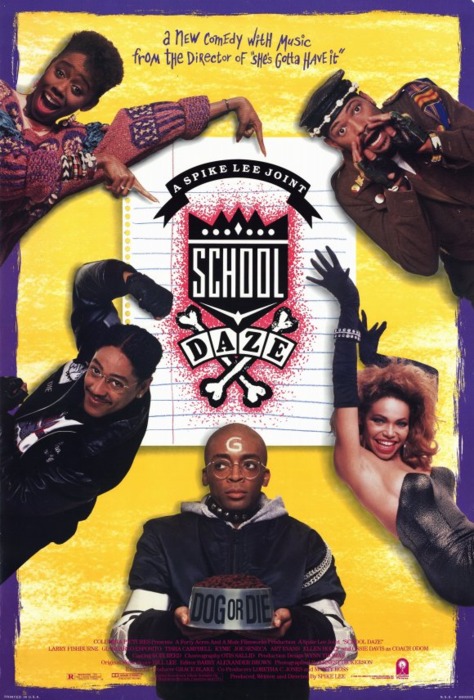
School Daze (1988) movie poster, September 17, 2012. (QuasyBoy via Wikipedia). Qualifies as fair use under US Copyright laws, as depicts subject of blog, is scaled-down and is of low-resolution.

School Daze (1988) movie poster, September 17, 2012. (QuasyBoy via Wikipedia). Qualifies as fair use under US Copyright laws, as depicts subject of blog, is scaled-down and is of low-resolution.

One of the few films I saw soon after it came out in theaters during my Boy @ The Window years was School Daze. It was in fact on this date twenty-five years ago that I went to the old theater in Pittsburgh that once was on Forbes Avenue near the Oakland Primanti Bros. sandwich place to see the film. It gave me some serious food for thought that Spring Break Friday evening, so much so that the lessons of School Daze have stayed with me to this day. Considering that I turned down a date with an upperclassman not interested in seeing the film in the process, School Daze was more than worth it.

The biggest lesson for me was on colorism. Not the macabre hazing of Q-dog frat boys and the cliquish AKA and Delta soros. Not the lack of care for the academic or the step-show battles. Not the hedonist behavior of Black middle class Gen Xers hell-bent on doing everything other than graduating from college. I already knew students like this at Pitt. Really, I already knew former classmates from Mount Vernon High School who attended HBCU’s like Howard, Morehouse, Hampton and Spelman, the kind of people who’d be perfect candidates for this Spike Lee joint. That they would psychologically and physically abuse each other in bed and on campus didn’t surprise me in the least.

"Good and Bad Hair" scene, School Daze (1988), March 10, 2013. (Donald Earl Collins via YouTube). Qualifies as fair use (see previous picture).

“Good and Bad Hair” scene, School Daze (1988), March 10, 2013. (Donald Earl Collins via YouTube). Qualifies as fair use (see previous picture).

No, it was the issue of being color-struck that was truly eye-opening for me. For I think I always knew on a semi-conscious level that colorism was alive and well among Black folks I’d come to know in Mount Vernon and in my first year at Pitt. It was frequently subtle, but also occasionally out in the open. With terms like “café au lait,” “redbone,” “mocha,” “caramel,” light-skinned,” “high yeller,” “dark-skinned,” “tar baby,” “chocolate-brown,” “good hair,” “nappy head,” “paper-bag brown,” and “light, bright and almost White,” among others. With obvious preferences among my male and female counterparts for young Black women and (sometimes) young Black men who passed the brown-paper-bag rule. (For those unfamiliar, if a Black male or female’s skin color was lighter than a brown paper bag, they were light enough to be attractive and acceptable by others. In terms of beauty, sometimes in pledging to a sorority or fraternity, often in terms of being part of a popular and better connected circle of Black folk.)

I certainly saw it with my father Jimme, who threw around the word “redbone” in my last year of high school as if the only young women in my NYC-area universe were light, bright and almost White. But I also saw it in the cliquishness and popularity of some of my classmates and other MVHS attendees and alumni. The most prominent of them at the time was Albert Brown, aka, Al B. Sure. Despite the uni-brow and limited talent, he went a long way in terms of popularity with his Class of ’86 and in the years immediately after high school. But there were others, classmates with bit-role appearances on ABC’s All My Children, folks whose entire circle of so-called close friends met some internalized color line.

It’s safe to say that by the time I left the theater — about 9 pm that Friday — I was actually angry. I wanted to take Giancarlo Esposito behind a building and beat him into another world. But more than that, it put some of the issues I had with high school and my first year at the University of Pittsburgh in perspective. Obvious and subtle forms of bigotry, individual racism and institutional/structural racism are all things I expected to face. This internalized bigotry on the basis of skin color, though, explained some of the shunning that I’d faced in my last couple of years of high school (see my post “The Silent Treatment” from June ’11) especially.

Hazing scene from School Daze (1988), March 10, 2013. (http://tumbler.com). Qualifies as fair use (see previous picture).

Hazing scene from School Daze (1988), March 10, 2013. (http://tumbler.com). Qualifies as fair use (see previous picture).

Yeah, I was weird because I was in a weird place in terms of domestic violence, child abuse and welfare poverty in those years. I didn’t help matters by being down with Tears for Fears and Sting and Mr. Mister and by often walking at Warp Factor Three or higher to cover the twenty-acre school between classes. But being poor and looking poor and a darker shade of brown was the first thing the Rick James-Eddie Murphy “Party All The Time” set saw, even before I turned into a blur walking past them every day.

A few years after School Daze, I went to David Lawrence Hall to watch the Pitt Film Club’s showing of Mo’ Better Blues (1990) with Denzel Washington and Wesley Snipes. A decidedly light-skinned underclassman (who was in my easy-A Intro to Black Studies course – I was a senior at Pitt by this time) – let’s call her ‘R’ – saw me and decided to sit with me to watch the film. Every time Wesley Snipes was on the screen, she commented on how dark he was. Making me uncomfortable, to say the least.

I finally asked, “Well, what about me?,” given her obvious distaste for Snipes. “Oh, you’re fine. Wesley’s just too dark,” R responded. I did a double-take, realizing that her perspective on skin color was just too odd for words. A quarter-century later, and my guess is that there are Black folks (and Whites who love “dark”-skinned Blacks) who still need to “WAAAAKKKKKE UUUUUUPPPPPPP!”

Kidneys, Baking Soda & 240 East Third Street

06 Wednesday Feb 2013

Posted by decollins1969 in 1, Boy @ The Window, culture, Eclectic, Jimme, Marriage, Mount Vernon New York, My Father, Politics, Pop Culture, race, Youth

≈ Leave a comment

Tags

240 East Third Street, 616, 616 East Lincoln Avenue, Alcohol Abuse, Alcoholism, Arthur, Baking Soda, Black Migrants, Black Migration, Callie Mae, Cecil Parker Elementary, Child Neglect, Divorce, Domestic Violence, Drinking Buddies, Drug Abuse, Flu, Ida, Kidney Failure, Kidney Transplant, Lo, Mount Vernon Hospital, Nathan Hale Elementary, North Side, Poverty, South Side


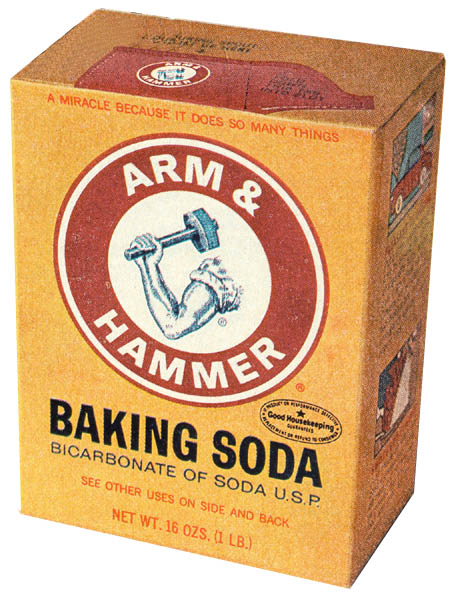
Arm & Hammer Baking Soda, 1lb Box, circa 1970s, February 6, 2013. (http://wackypackages.org).

Arm & Hammer Baking Soda, 1lb Box, circa 1970s, February 6, 2013. (http://wackypackages.org).

I wrote at length thirteen months ago about the devolution of my mother and father’s marriage in ’76 and ’77, and how that led to an incident with a coffee table on or around my seventh birthday (see my post “Stomping in Coffee Table Glass” from December ’11). It was a difficult time in all of our lives, and my grades in second grade reflected this. Me and my older brother Darren had a different living arrangement from week to week between September ’76 and April ’77. But for my mom, it was life-threatening. No wonder my Uncle Sam clotheslined my father Jimme as if he were Deacon Jones and my father was Johnny Unitas!

Despite my mother’s (real and imagined) infidelity and her filing for divorce — or because of it — my father refused to move out of our second-floor flat at 425 South Sixth. From September ’76 through March ’77, he’d come and go as it pleased him. Jimme would be home for a few hours on a Wednesday, cut the cords to the telephone or dump my mom’s mink stole in a bathtub, and then be gone for another five days or a full week. If my mom somehow was home when Jimme was, they’d fight all hours. On the nights my mother was out with her bowling league, or with friends, or (presumably) with my eventual stepfather Maurice, she’d call us to make sure we were okay, only to find Jimme at the other end of the line, threatening to kill her and us.

Starting at the end of that September, barely a month into the school year, Darren and me found ourselves spending more and more time with our babysitter Ida at 240 East Third Street. For folks who have never been to this part of the Mount Vernon, New York’s South Side, the best thing to say about 240 East Third was that it was next door to an environmentally hazardous scrap metal yard. It was a dangerous place, one of extreme poverty, alcohol and drug abuse, a place in which the most recent of Black migrants from the South and their sons and daughters tried to make into a home.

240 East Third Street, Mount Vernon, NY, September 2007. (http://googlemaps.com).

240 East Third Street, Mount Vernon, NY, September 2007. (http://googlemaps.com).

Ida had been our babysitter for as long as long as we could remember. One of my first memories was calling her a “bitch” when I was three because she had made us a bubble bath out of very itchy Tide detergent. I didn’t know the full meaning of what I said, but Ida took a switch and whupped me anyway. Now we were living with her for days at a time, having to walk a mile down East Third, then South Fulton Avenue, and then Sanford Blvd to get to Nathan Hale Elementary (now Cecil Parker Elementary). The irony was that our real home was just two doors down from the school.

That wasn’t the only irony. On the many days we spent with Ida, we also spent time with her friends, Callie Mae, Lo (short for Lorenzo) and Arthur. The reason we could spend so much time with these friends of my mom was precisely because they were Jimme’s friends originally. They were part of his circle of drinking buddies! And, with us already at 240 East Third, my father would swing around and drink to his heart’s content with all of them.

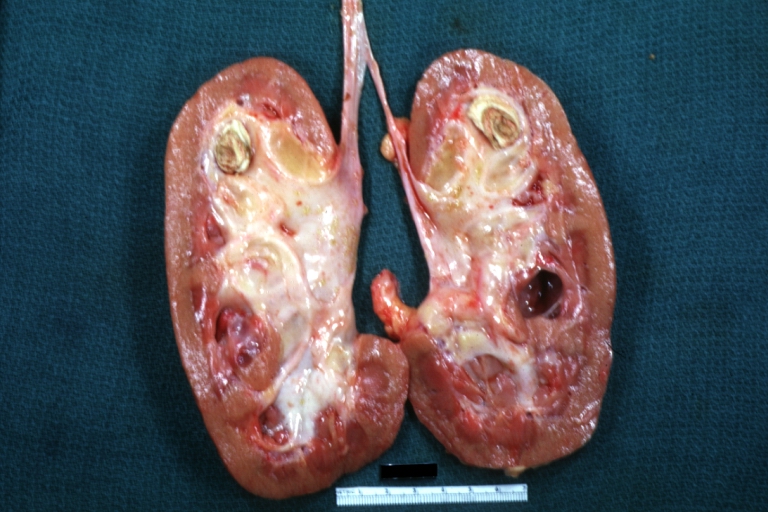
My mother, meanwhile, began experiencing what the doctors at Mount Vernon Hospital thought was mere signs of stress. Her kidneys, though, were shutting down, causing a multitude of health issues. She’d gone to see her primary care physician about this in October, then again in December and January. By the end of January ’77, my mother was stuck at the hospital, as her doctors at one point thought that she would need a fast-track to a kidney transplant. Keep in mind that this is ’77, so kidney transplants weren’t the exact science that they are today.

I ended up in the hospital with her in early February ’77, with a fever of 105°F. They put me in a bed near my mom, stuck a thermometer in my butt, and figured out that I had the flu. That I still have positive thoughts of this visit is a sure sign of delusion and the grimness of that time in our lives.

One human kidney, sliced open to reveal hydronephrosis, typically the obstruction of the free flow of urine from the kidney, February 6, 2013. (http://meducation.net).

One human kidney, sliced open to reveal hydronephrosis, typically the obstruction of the free flow of urine from the kidney, February 6, 2013. (http://meducation.net).

Luckily, my mom and her doctors were smart enough to have a specialist from Westchester County Medical Center come in to check out her candidacy for a kidney transplant. He took one look at her labs and realized that she didn’t need a transplant after all. It turned out that my mom’s sodium levels were so low that they had caused the flow of fluids and waste through her kidneys to drop by something like 80 percent. The doctor’s solution was really simple. “Eat baking soda,” he told my mom and her doctors. That was in March ’77.

Two teaspoons of baking soda a day, to be exact. That’s what it took to bring my mom’s kidneys back to life and for my brother and me to finally move toward a more stable home situation at 616 (at least between April ’77 and the Hebrew-Israelite years). It wasn’t that I hated 240 East Third. I just hated what being there meant for us and for my mom.

Jacksonville Visit

24 Thursday Jan 2013

Posted by decollins1969 in 1, Boy @ The Window, Christianity, culture, Eclectic, Jimme, Mount Vernon New York, My Father, Pop Culture, race, Religion, Work, Youth

≈ Leave a comment

Tags

616, 616 East Lincoln Avenue, Alcoholism, Extended Family, Family Intervention, Father-Son Relationships, Forgiveness, Intervention, Jacksonville, Jacksonville Florida, Love


Me and My Father Jimme, Mall, Jacksonville Waterfront, August 27, 2007. (Angelia N. Levy).

Me and My Father Jimme, Jacksonville Waterfront, August 27, 2007. (Angelia N. Levy).

Under almost no circumstances could I have ever seen myself visiting Jacksonville. A nuclear holocaust, the collapse of the federal government, a super-flu pandemic, perhaps. And that would be a hypothetical maybe at best. But I did visit, for the first time, eleven years ago this week, to see my father Jimme for the first time in since Christmas Eve ’94. It was a life-changing event, and for once, for the better.

It was a memorable visit because after three years of talking over the phone, I finally would get to see Jimme and his new family (see my post “Finding My Father for the First Time” from November ’11). It was a calm-before-the-storm two-day visit, nestled in between the sturm und drang of the ’02 New Voices Winter Retreat in Atlanta and my family intervention at 616 in Mount Vernon (see my post “The Intervention” from January ’08).

I honestly had few expectations. I knew Jacksonville covered a lot of acreage as a city, but was basically Georgia south more than it was a major city in Florida. I knew that the town had a high poverty rate, and I knew that they had the Jacksonville Jaguars. Not much more than that was in my memory banks as I touched down on my flight from Hartsdale International Airport to podunk Jacksonville’s airport on a rainy Sunday in January.

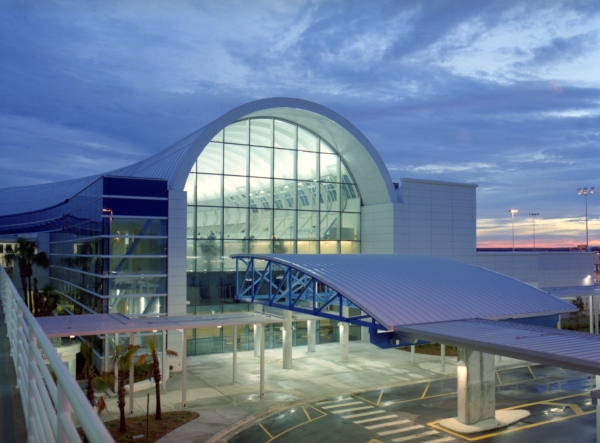
Glass extension of Jacksonville International Airport, January 24, 2013. (http://www.airport-technology.com).

Glass extension of Jacksonville International Airport, January 24, 2013. (http://www.airport-technology.com).

Collins family members besides my father were there to greet me, including a couple of second-cousins. They were much more excited to see me than I was to see them, mostly because I hadn’t been prepared to meet extended family on this trip. They gave me a brief tour of the city — although I wasn’t going to see much in the rain (and there wasn’t much to see to begin with). Still, I was happy that they were happy and chatty and welcoming.

Meeting my father’s second wife Mary was interesting, if only because she shared my mother’s first name. Though loud in so many ways, she was also very kind, very Christian and very warm to me. Like most folks, she made assumptions about me that I couldn’t possibly live up to, like viewing everything in life through the lens of the Bible. It made for a lively dinner discussion on the subject my second night there. Ms. Mary has kept her conversations with me much shorter since that first visit.

But the most important part of my visit, though, was the two days I spent with my father. This was my first time seeing him completely sober since ’88, and this was nearly five years since he had given up drinking. The change in his physical appearance was dramatic, as he now only looked his age, and not twenty years older than his age. He looked better and strong than he had in years, maybe decades.

That wasn’t all that had changed. Me and my father talked about everything, from family to work, politics to writing, education and religion over those forty-eight hours. He shared his secret to his new diabetes diet – a case and a half of diet soda per day and no water intake.

My father, Silver Spring, MD, September 8, 2012. (Noah M. Collins).

My father, Silver Spring, MD, September 8, 2012. (Noah M. Collins).

I spend our last conversation telling my father about what I was about to do in Mount Vernon, that I was going to spend an evening airing out three decades of dirty laundry, for the sake of my younger siblings. That’s when he apologized to me about his alcoholism and all the things he had put me and my older brother Darren through growing up. I told him that I’d forgiven him a long time ago.

It was a touching moment out of several touching moments that visit. I left that Tuesday morning, in awe of the fact that sometimes people can and do change for the better, even miraculously so. Even in a place like Jacksonville.

My Beef With Cory Booker’s Food Stamps Experiment

05 Wednesday Dec 2012

Posted by decollins1969 in 1, Boy @ The Window, culture, Eclectic, Jimme, Marriage, Mount Vernon New York, My Father, New York City, Politics, Pop Culture, race, Work, Youth

≈ Leave a comment

Tags

616, 616 East Lincoln Avenue, Academy for Educational Development, C-Town, Cory Booker, Food Stamps, Food Stamps Experiment, hunger, Newark New Jersey, Nutrition, Omar Wasow, Poverty, Social Safety Net, Social Welfare, Stanford University, Welfare


Cory Booker at the 2011 Time 100 Gala, April 27, 2011. (David Shankbone via Wikipedia). Released to public domain via  Creative Commons Attribution 3.0 license.

Cory Booker at the 2011 Time 100 Gala, April 27, 2011. (David Shankbone via Wikipedia). Released to public domain via Creative Commons Attribution 3.0 license.

I like Cory Booker. I worked with someone at Academy for Educational Development in the mid-00s who told me stories about Booker while she knew him at Stanford and her contact with him over the years. I’ve admired his work in Newark, for the most part, and the fact that he’s been a personable, in-your-face Twitter-accessible mayor who has fought hard for his city over the past decade.

But this week-long “I feel your pain” publicity stunt through living on $30 in food stamps (the SNAP program) seems a bad idea at best, and just plain disingenuous otherwise. Booker’s argument has been the need to raise awareness of how difficult it is to live on food stamps for the most impoverished of us, in Newark or anywhere else in the US. After being critical of Booker’s slumming it via food stamps on Twitter a couple of weeks ago, I received this response from Booker through tech guru and Princeton doctoral candidate Omar Wasow:

“@decollins1969 @corybooker said you can’t love your neighbor if you don’t understand them & you can’t understand w/out shared experience”

Really? I didn’t know that Franklin D. Roosevelt had been homeless, old and sick and out of work before ramming through the Social Security Act of 1935! Or that Lyndon Johnson had been a sharecropper or beaten up for marching to Selma before pushing through the Civil Rights Act of 1964 and Voting Rights Act of 1965!

President Bill Clinton (in context of "I feel your pain" quote), July 23, 2009. (http://dailybail.com).

President Bill Clinton (in context of “I feel your pain” quote), July 23, 2009. (http://dailybail.com).

What worries me, though, more than anything else, is how messiah-like this tweet sounds. It would be a different story if so many politicians and journalists hadn’t run this experiment before (see my post “Slumming Lords Spinning Stories Out Of Suffering” from October ’10). It would be even more different if this experiment really opened up a dialogue on the paltry social safety net and deep poverty. Not to mention the working poor and the millions from the struggling middle class who have fallen into poverty since the start of the Great Recession more than four years ago.

But as someone who’s had way more than one week or one month’s worth of experience with poverty, WIC, welfare checks, case workers with Westchester County Department of Social Services, and of course, food stamps, I actually find these attempts to walk in the shoes of my youth — among millions of others who’ve lived in welfare poverty — insulting on so many levels (see my posts “The Five Sense of Poverty,” “Hunger,” and “Shopping at C-Town“).
Here’s what I lived with between ages twelve and seventeen (October ’82 through August ’87). As the second-oldest child and only other sane person in a household of six, then seven, then eight persons (including my four younger siblings, born between ’79 and ’84), I had many adult responsibilities. I negotiated over the phone with Con Edison and NYNEX/Bell Atlantic when we fell behind on the heat bill or the telephone bill. I walked my mom’s $275 rent check (often three weeks late in ’82 and ’83) over to the super’s office for payment, and usually was at the receiving end of verbal insults and threats for being late.
I went to Waldbaum’s, C-Town and other grocery stores almost every day after school, sometimes three times in one evening (because my mom often forgot items). I also washed clothes with my older brother Darren once a week, watched over my siblings, cooked about one out of every five meals from ’84 until I went off to college in ’87.
Lab mice "Avatars" implanted with cancer to treat cancer, October 5, 2012. (http://danisfoundation.org).

Lab mice “Avatars” implanted with cancer to treat cancer, October 5, 2012. (http://danisfoundation.org).

This is the short list. In doing all of this, especially once we went on welfare in April ’83 (after the birth of my now deceased sister Sarai), I learned a lot about how little Americans thought of the poor, and how little the federal government thought of people like me and my family. The average budget for my mom to raise a family of six kids with a consistently unemployed and wayward idiot (now late) stepfather was a monthly welfare check of $558, $75 in food stamps, and about $50 in WIC benefits.
Even in the best months, it meant a week to ten days with little or no food in the house. Great Northern beans and rice, $5 spaghetti and meat sauce dinners, and days without was a typical month. Unless, of course, my weekly weekend excursions to track down my father Jimme in Mount Vernon, the Bronx and sometimes in Midtown Manhattan at his favorite watering holes yielded enough extra funds to keep me, Darren and my family in food and clean clothes during the leaner times each month at 616.

So, you see Cory Booker, your publicity endeavor really teaches us little about the realities of poverty, hunger and nutrition for the poorest among us, whether in Newark, Mount Vernon, New York or the rest of the US. (Except that you have no experience stretching a dollar). Your food stamps experiment will do what it always does – get the media’s attention. But to understand the embarrassment, the cold stares, the harshness of what I went through and millions like me are going through now? One week and $30 isn’t even close to good enough.

We Called Him Mr. Lewis

03 Monday Dec 2012

Posted by decollins1969 in 1, Academia, Boy @ The Window, culture, Eclectic, Jimme, Mount Vernon High School, Mount Vernon New York, My Father, Politics, Pop Culture, race, Youth

≈ Leave a comment

Tags

Arne Duncan, Bill & Melinda Gates Foundation, Chemistry, Cigarettes, Disllusionment, ExxonMobil, Family Income, High-Stakes Testing, Humanities, Low-Income Students, Michelle Rhee, New York State Regents Exam, Nicotine, Organic Chemistry, Politics of Education, Poverty, Steve Perry, Students of Color, Teacher Effectiveness, Tenth Grade, US Department of Education, Wendy Kopp


Screenshot from To Sir, with Love (1967), December 3, 2012. (http://movies.tvguide.com). Qualifies as fair use under US Copyright laws - pic's low resolution/subject matter for blog.

Screenshot from To Sir, with Love (1967), December 3, 2012. (http://movies.tvguide.com). Qualifies as fair use under US Copyright laws – pic’s low resolution/subject matter for blog.

The dumb technocratic class (Wendy Kopp, Michelle Rhee, Steve Perry, Arne Duncan) and the assholes who fund them (Bill & Melinda Gates Foundation, ExxonMobil, US Department of Education) continue to pump out the mantra that effective teachers are the single most important variable in student performance, retention and graduation. This despite a half-century’s worth of research showing that family income was the far more important piece of data.

But even if Kopp, Rhee and Perry’s snake oil somehow turned out to be true, the fact is, the high-stakes testing movement and No Child Left Behind (and now Race to the Top) has turned effective teachers into lab leaders teaching to state-wide tests. Our current K-12 regime makes it so that ineffective teachers can be seen as effective because they’re only concerned with higher test scores, not actual learning. And some of them, not even concerned with that.

About this time thirty years ago, I had a group of wholly ineffective teachers in my tenth grade Humanities classes at Mount Vernon High School (see my posts “Half-Baked Z and Christian Zeal” from September ’10 and “This…Is…Jeopardy” from March ’11). Mr. Lewis was but one example of an unimaginative instructor. He was our Level 1 Chemistry teacher. We started his class in a very tense situation. There were fifty-one students in our class to start the year because the school administrators had failed to hire a new Level 0 (the highest level for the highest of the high-performing students) teacher for Chemistry. Our future valedictorian and other Level 0 folks spent a month protesting to the head of the Science Department, Estelle Abel, about the overcrowding and the mixing of the two levels. It took nearly two months before the situation was resolved. By that time, November ’84, none of us wanted Lewis for a teacher.

His was a class that could be fun and entertaining, but not usually educational. Sometimes our chemistry education came with errors and miscalculations. Perhaps his mistakes piled up because it was seventh period and near the end of the school day. Or maybe we were tired and inattentive.

Marlboro cigarette butts, September 19, 2007. (bachmont via Wikipedia/Flickr.com). In public domain.

Marlboro cigarette butts, September 19, 2007. (bachmont via Wikipedia/Flickr.com). In public domain.

The truth was that Lewis was a teacher with a serious chemical addiction. His was a chain-smoking world. When he opened up the door to the storage room where the test tubes and Pyrex jars were, stale cigarette smoke entered the room. His teeth were a pasty yellow, and they had a film that seemed to build up on them and in his mouth by the time we had him at the end of the day. On more than one occasion, Lewis would get phlegm caught in his mouth while in the middle of one of his lectures. Then he’d pause as he gulped the phlegm, and then he kept going. It was absolutely disgusting.

One day I met with Mr. Lewis after class to discuss my struggles with the material. He was at the front lab table sitting on a stool. In front of him on the table were fifteen Marlboro cigarettes, all lit and neatly lined up in a row. During our ten minutes together, he smoked one cigarette after another, sucking them down so fast that he had to pause to clear his throat from time to time. By the time I left, he’d gone through twelve out of fifteen, and I smelled like I’d been at one of my father Jimme’s bars. I was more than sure that Lewis’ nicotine dependency was a factor in his inability to teach Chemistry to us well (Cigarettes And Coffee, by Otis Redding).

My grades for the year going into the last weeks of the school year had ranged between an unimpressive 70 and an 87. But with the New York State Regents Exam in Chemistry coming up, Lewis was nonchalant in his attempts to prepare us for the Regents. Lewis went as far as to say, “There’s nothing to worry about” on the subject of organic chemistry. “There will be hardly any organic chemistry on the exam, anyway,” he said. After eight months of listening to his blathering, I thought “That’s it!” The next time I got money from Jimme, I  bought the Barron’s Chemistry Regents exam prep book. It was just before Memorial Day, and I had a month before the exam.

Barron's Regents Exams & Answers Chemistry (2011), December 3, 2012 (http://barnesandnoble.com).

Barron’s Regents Exams & Answers Chemistry (2011), December 3, 2012 (http://barnesandnoble.com).

On my Chemistry Regents I scored a 95, the third or fourth highest grade in the school (the highest grades were a 99 and 97 that year). My score raised my final grade in Lewis’ class six points, from a 79 to an 85. My score left me feeling jaded and disillusioned. “Wow,” I thought. “My teachers really don’t know much more than I do!” I knew that a lot of my Level 1 Chemistry classmates didn’t fare so well on the exams, because they believed Lewis when he said that there wouldn’t be much organic chemistry on the exam. By my own count during the exam, between thirty-five and forty of the 100 questions were organic chemistry ones.

It took having Meltzer for AP US History in eleventh grade for me to trust teachers again. I didn’t need anyone to teach tests to me. I needed a teacher who could help me open up a door into myself and into a world I hadn’t explored before. And millions of students — especially of color and from impoverished backgrounds — need teachers free to do that, without the threat of high-stakes tests hanging over them like a boulder.

← Older posts
Newer posts →

Boy @ The Window: A Memoir

Boy @ The Window: A Memoir

Places to Buy/Download Boy @ The Window

There's a few ways in which you can read excerpts of, borrow and/or purchase and download Boy @ The Window. There's the trade paperback edition of Boy @ The Window, available for purchase via Amazon.com at http://www.amazon.com/Boy-Window-Donald-Earl-Collins/dp/0989256138/

There's also a Kindle edition on Amazon.com. The enhanced edition can be read only with Kindle Fire, an iPad or a full-color tablet. The links to the enhanced edition through Apple's iBookstore and the Barnes & Noble NOOK edition are below. The link to the Amazon Kindle version is also immediately below:

scr2555-proj697-a-kindle-logo-rgb-lg

Boy @ The Window on Amazon.com: http://www.amazon.com/Boy-The-Window-Memoir-ebook/dp/B00CD95FBU/

iBookstore-logo-300x100

Boy @ The Window on Apple's iBookstore: https://itunes.apple.com/us/book/boy-the-window/id643768275?ls=1

Barnes & Noble (bn.com) logo, June 26, 2013. (http://www.logotypes101.com).

Boy @ The Window on Barnes & Noble: http://www.barnesandnoble.com/w/boy-the-window-donald-earl-collins/1115182183?ean=2940016741567

You can also add, read and review Boy @ The Window on Goodreads.com. Just click on the button below:

Boy @ The Window

Twitter Updates

Tweets by decollins1969
  • RSS - Posts
  • RSS - Comments

Archives

  • June 2025
  • April 2023
  • September 2022
  • August 2022
  • July 2022
  • June 2022
  • May 2022
  • April 2022
  • March 2022
  • January 2022
  • December 2021
  • November 2021
  • October 2021
  • September 2021
  • August 2021
  • July 2021
  • June 2021
  • April 2021
  • March 2021
  • February 2021
  • January 2021
  • December 2020
  • November 2020
  • October 2020
  • September 2020
  • August 2020
  • July 2020
  • May 2020
  • April 2020
  • March 2020
  • January 2020
  • December 2019
  • November 2019
  • August 2019
  • July 2019
  • June 2019
  • May 2019
  • April 2019
  • March 2019
  • February 2019
  • January 2019
  • December 2018
  • November 2018
  • October 2018
  • September 2018
  • August 2018
  • July 2018
  • June 2018
  • May 2018
  • March 2018
  • February 2018
  • January 2018
  • December 2017
  • November 2017
  • October 2017
  • September 2017
  • August 2017
  • July 2017
  • June 2017
  • May 2017
  • April 2017
  • March 2017
  • February 2017
  • January 2017
  • December 2016
  • November 2016
  • October 2016
  • September 2016
  • August 2016
  • July 2016
  • June 2016
  • May 2016
  • April 2016
  • March 2016
  • February 2016
  • January 2016
  • December 2015
  • November 2015
  • October 2015
  • September 2015
  • August 2015
  • July 2015
  • June 2015
  • May 2015
  • April 2015
  • March 2015
  • February 2015
  • January 2015
  • December 2014
  • November 2014
  • October 2014
  • September 2014
  • August 2014
  • July 2014
  • June 2014
  • May 2014
  • April 2014
  • March 2014
  • February 2014
  • January 2014
  • December 2013
  • November 2013
  • October 2013
  • September 2013
  • August 2013
  • July 2013
  • June 2013
  • May 2013
  • April 2013
  • March 2013
  • February 2013
  • January 2013
  • December 2012
  • November 2012
  • October 2012
  • September 2012
  • August 2012
  • July 2012
  • June 2012
  • May 2012
  • April 2012
  • March 2012
  • February 2012
  • January 2012
  • December 2011
  • November 2011
  • October 2011
  • September 2011
  • August 2011
  • July 2011
  • June 2011
  • May 2011
  • April 2011
  • March 2011
  • February 2011
  • January 2011
  • December 2010
  • November 2010
  • October 2010
  • September 2010
  • August 2010
  • July 2010
  • June 2010
  • May 2010
  • April 2010
  • March 2010
  • February 2010
  • January 2010
  • December 2009
  • November 2009
  • October 2009
  • September 2009
  • August 2009
  • July 2009
  • June 2009
  • May 2009
  • April 2009
  • March 2009
  • February 2009
  • January 2009
  • December 2008
  • November 2008
  • October 2008
  • September 2008
  • August 2008
  • July 2008
  • June 2008
  • May 2008
  • April 2008
  • March 2008
  • February 2008
  • January 2008
  • December 2007
  • November 2007
  • October 2007
  • September 2007
  • August 2007
  • July 2007
  • June 2007

Recent Comments

MaryPena's avatarMaryPena on My Day of Atonement/Bitter Hat…
decollins1969's avatardecollins1969 on No Good Teaching Deed Goes…
Mary Rose O’Connell's avatarMary Rose O’Connell on No Good Teaching Deed Goes…

NetworkedBlogs on Facebook

NetworkedBlogs
Blog:
Notes From a Boy @ The Window
Topics:
My Life, Culture & Education, Politics & Goofyness
 
Follow my blog

616 616 East Lincoln Avenue A.B. Davis Middle School Abuse Academia Academy for Educational Development AED Afrocentricity American Narcissism Authenticity Bigotry Blackness Boy @ The Window Carnegie Mellon University Child Abuse Class of 1987 CMU Coping Strategies Crush #1 Crush #2 Death Disillusionment Diversity Domestic Violence Economic Inequality Education Family Friendship Friendships Graduate School Hebrew-Israelites High-Stakes Testing Higher Education History Homelessness Humanities Humanities Program Hypocrisy Internalized Racism Jealousy Joe Trotter Joe William Trotter Jr. K-12 Education Love Manhood Maurice Eugene Washington Maurice Washington Misogyny Mother-Son Relationship Mount Vernon High School Mount Vernon New York Mount Vernon public schools Multiculturalism MVHS Narcissism NFL Pitt Pittsburgh Politics of Education Poverty President Barack Obama Race Racial Stereotypes Racism Relationships Self-Awareness Self-Discovery Self-Reflection Sexism Social Justice Teaching and Learning University of Pittsburgh Violence Whiteness Writing

Top Rated

Blog at WordPress.com.

  • Subscribe Subscribed
    • Notes from a Boy @ The Window
    • Join 103 other subscribers
    • Already have a WordPress.com account? Log in now.
    • Notes from a Boy @ The Window
    • Subscribe Subscribed
    • Sign up
    • Log in
    • Report this content
    • View site in Reader
    • Manage subscriptions
    • Collapse this bar
 

Loading Comments...