• About Me
  • Other Writings
  • Interview Clips
  • All About Me: American Racism, American Narcissism, and the Conversation America Can’t Have
  • Video Clips
  • Boy @ The Window Pictures
  • Boy @ The Window Theme Music

Notes from a Boy @ The Window

~

Notes from a Boy @ The Window

Category Archives: Mount Vernon New York

The Meaning of Chicken McNuggets

23 Monday Jun 2014

Posted by decollins1969 in 1, Boy @ The Window, culture, Eclectic, Mount Vernon High School, Mount Vernon New York, Pittsburgh, Pop Culture, University of Pittsburgh, Youth

≈ Leave a comment

Tags

616, 616 East Lincoln Avenue, Chicken McNuggets, Class of '87, Contaminated Food, Coping Strategies, Distractions, Food, Food Critic, Food Justice, Food Policy, Food Politics, General Foods, McDonald's, MVHS, Operation Opportunity, Pink Slime, Self-Discovery, Self-Reflection, Sweet and Sour Sauce, Vanilla Milkshake


McDonald's Chicken McNuggets with Sweet and Sour Sauce, November 17, 2006. (The Food Pornographer via Flickr). In public domain.

McDonald’s Chicken McNuggets with Sweet and Sour Sauce, November 17, 2006. (The Food Pornographer via Flickr). In public domain.

I’ve found it amazing over the years how much my diet and palate has changed, and how my cooking has changed with it. Once upon a time, I thought that Burger King, Arthur Treacher’s, and (to go more local) Mount Vernon’s Papa Wong’s and Clover Donuts had the best food in the world. I knew no other way of preparing fish other than frying it in oil and coating it with a combination of flour and corn meal. And any meal that cost more than $10 — whether eating out or in buying the ingredients to make a meal for my 616 party-of-eight — was a real luxury.

By the summer of ’87 — the summer between the end of high school and the beginning of my college journey at Pitt — I was working for General Foods (now Kraft Foods) in Tarrytown, New York as part of the minority access program Operation Opportunity (the details are all in Boy @ The Window). After work, I often stopped in White Plains at or near The Galleria to switch buses, since it took two buses and a three-quarters-of-a-mile walk to get from 616 and Mount Vernon to the company’s testing facilities down the road from the Tappan Zee Bridge. I also stopped at The Galleria to avoid the hum-drum grind of poverty and chaos at home, to get something substantial to eat, to check out and/or buy the latest tune. And, to feel like a normal seventeen-year-old, and not the boy-man who always felt as if he was part of some epic struggle.

As I described it in Boy @ The Window:

Screen shot 2014-06-23 at 7.32.17 AM

And it was a heaven, a haven, a distraction, if only temporarily, from all of my terrors and fears. Of being permanently alone, of not being able to establish real, lasting friendships, of not being able to love, of only being able to evaluate myself through the eyes of women who saw me as a boring automaton. Not to mention, of having yet another incident with my idiot stepfather Maurice over my refusal to submit to him as “Dad.”

It was also really my first time on my own for more than a few hours without the crutch of high school and Humanities, without the constant noise of my younger siblings tearing up the apartment like it was the Daytona 500. So with every bite of those six orange-yellow McNuggets and every slurp of that fake vanilla milkshake, I savored my quieter mind. I may have looked to others as if I was woofing down the food faster than Scooby Doo and Shaggy in the middle of a food orgy. But for me, those five or six minutes lasted more like twenty, as if I was in deep meditation or watching a bird flap its wings in slow-motion.

Mechanically processed chicken, the key ingredient in McDonald's Chicken McNuggets, pouring out into small tubs, October 5, 2010. (http://huffingtonpost.com).

Mechanically processed chicken, the key ingredient in McDonald’s Chicken McNuggets, pouring out into small tubs, October 5, 2010. (http://huffingtonpost.com).

Twenty seven years later, and I can barely stand the sight or smell of anything McDonald’s — or any fast food in general. Thank you, by the way, Eric Schlosser and your Fast Food Nation (2002) book for making my stomach churn with every fast-food smell my nose can detect! I even make my own pizzas most of the time now! I buy my son Noah and my wife (on occasion) Mickey D’s, mostly McNuggets, and lately, with milkshakes that apparently now contain some dairy-like substances. As for me, I do sometimes eat a couple of fries, but my near-middle-aged tongue and stomach limits my ability to push down the food.

My palate after thirty years of cooking and progressing from $5 spaghetti meals for eight to broiling sockeye salmon in olive oil with a from-scratch fettuccine dish is far more sophisticated now. I no longer can lose myself in food in order to de-stress from carrying the weight of my world. Cooking, however, has been my one of my cathartic exercises for the past twenty years. It’s sometimes even more of a remedy than writing. Too bad there was never any hemp in those McNuggets, though!

Race and The OJ Simpson Effect at 20

12 Thursday Jun 2014

Posted by decollins1969 in 1, Carnegie Mellon University, culture, Eclectic, Mount Vernon New York, Pittsburgh, Politics, Pop Culture, race, Sports, Work, Youth

≈ 2 Comments

Tags

1994 NBA Finals, Covenant Church of Pittsburgh, Dialogue on Race, Economic Inequality, Game 5, Houston Rockets, Internalized Racism, Men's Retreat, New York Knicks, Newsweek, Nicole Brown Simpson, O.J. Simpson, OJ Simpson, Pharrell Williams, Race Riots, Racial Stereotypes, Racial Stigma, Racism, Ron Goldman, Time Magazine, Trial, White Bronco


O.J. Simpson on the covers of Newsweek and Time Magazine, (the picture on right altered to make Simpson appear darker and caused an outcry), June 27, 1994. (Theo's Little Bot via Wikipedia). Qualifies as fair use due to low resolution of image and relevance to subject matter.

O.J. Simpson on the covers of Newsweek and Time Magazine, (the picture on right altered to make Simpson appear darker and caused an outcry), June 27, 1994. (Theo’s Little Bot via Wikipedia). Qualifies as fair use due to low resolution of image and relevance to subject matter.

Today’s the twentieth anniversary of the deaths of Nicole Brown Simpson and Ron Goldman, still officially-allegedly murdered by the once great NFL Hall of Fame running back O.J. Simpson. In five days, it’ll be twenty years since the bizarre police chase of Simpson in a white Ford Bronco with his friend Al Cowlings on I-405 in the Los Angeles area. In the process, he took all of us — the media, the sports world, and anyone who cared about race and justice — on a ride that folks are still talking about two decades later. It had an impact on me in terms of how I saw Blacks and Whites and race. I shouldn’t have been, but I was mildly surprised that so many would become so emotionally caught up in a double-homicide case involving what at one time was one of the world’s most recognizable faces.

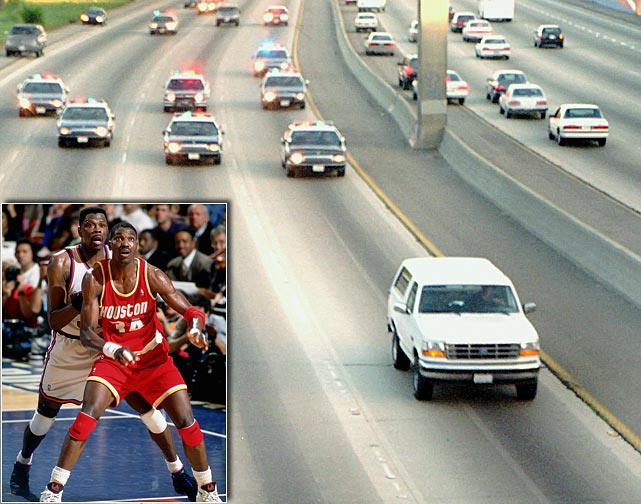
That week twenty years ago was my absolute commitment to two events. The NBA Finals between my New York Knicks and the Houston Rockets. And a church retreat for the male members (nearly 100 of us, almost all Black — talk about irony!) of Covenant Church of Pittsburgh. It was to be a week of watching my Knicks play at home and three days in the mountains of Western Pennsylvania at a retreat lodge, in a spirit of learning how to be godly men and of adult male bonding. The first full day of the retreat was June 17. After a day of workshops, prayer, praise, and singing (at least for me and the rest of the men’s choir), we all piled into the rec room to watch Game 5 of the Final. Only to see an overhead shot of a slow-moving white Bronco being trailed by an escort of L.A.’s finest instead of Patrick Ewing, John Starks, Doc Rivers, Charles Oakley, and the rest of the cast of characters from my favorite team.

Screen shot of NBA on NBA coverage of 1994 NBA Finals, Game 5, MSG, New York at Bronco chase of OJ Simpson, I-405 in L.A., June 1, 1994. (SI photos via Tumblr).

Screen shot of NBA on NBA coverage of 1994 NBA Finals, Game 5, MSG, New York at Bronco chase of OJ Simpson, I-405 in L.A., June 17, 1994. (SI photos via Tumblr).

The Knicks won, which was great, but I barely saw the game. They were up 3-2, but would lose the last two games in the next six days in Houston, turning Choke City into Clutch City overnight. But that wasn’t what I was thinking about when it first happen. I hoped that the police wouldn’t shoot Simpson before he had a chance to go to trial. The L.A. riots were just two years before. I feared that the issue of race would be front and center, with Simpson’s issues with his now dead White ex-wife.

What I saw within ten days of the Bronco chase was an artificially darkened Simpson on the cover of Time. I watched as the media condemned Simpson well before the trial. As Blacks were becoming angrier about the coverage. As Whites grew more confident about Simpson being convicted, losing his fortune and fame, and possibly getting the death penalty (or at least, life imprisonment). It was amazing how quickly folks took sides on the issue. My mother proclaimed that O.J. was innocent long before the prosecution botched the trial. Some of my grad school colleagues — all White, mind you — made all kinds of assumptions about where I stood on O.J. Simpson. They didn’t like the fact that I was willing to wait until the trial to make up my mind.

Many have benefitted from the O.J. Simpson effect over the last twenty years. From lawyers to journalists, TV stations and authors, many have reaped benefits and have built careers from the O.J. Simpson trial and verdict. Greta Van Susteren, Dan Abrams, Nancy Grace, Court TV (now TruTV), the late Johnnie Cochran, Alan Dershowitz, Christopher Darden and Robert Shapiro, among so many others. Even Mark Fuhrman got a book and a radio talk show (at least for a while) out of the trial. One could argue that Kim Kardashian, daughter of Simpson defense “Dream Team” lawyer Robert Kardashian, has benefited, albeit indirectly (it’s not as if her father’s a regular on her family’s reality shows, right?).

Conservative media in general received the greatest indirect residuals of all from the murders, trial, and acquittal involving Simpson. The events between June 12, ’94 and October 3, ’95 helped intensify an atmosphere of conservatism, a sense that our nation was out of control. With the acquittal, it made sense to millions for cable and talk radio to increase its coverage of news, especially news with a more “fair and balanced” slant.

National dialogue on race cartoon, July 21, 2010. (Bob Englehart/Hartford Courant).

National dialogue on race cartoon, July 21, 2010. (Bob Englehart/Hartford Courant).

Obviously Simpson hasn’t benefited. Our national dialogue on race hasn’t improved, either. Whites still seemingly want Blacks to be stereotypes and to shut up while entertaining them with our lives and our deaths. Some Black elites still make a point of divorcing themselves from other Blacks and from the world that’s race in America, Pharrell Williams most recently so. And with rapidly increasing economic inequality, it’s a wonder that thousands of Whites haven’t come in to Black and Latino neighborhoods to burn down businesses and beat up and lynch those of us unlucky to encounter their mobs, like they typically did this time a century ago.

All because of the multitude of examples of individual Black success, and occasions of Black-on-White (and especially blond)-woman-violence. Things change, but the cancer that is Whiteness and race remain the same, “a shame and a pitiful,” as my father would say.

Killing Joe Trotter

10 Tuesday Jun 2014

Posted by decollins1969 in 1, Academia, Boy @ The Window, Carnegie Mellon University, Christianity, culture, Eclectic, Hebrew-Israelite, Mount Vernon New York, Pittsburgh, Politics, Pop Culture, race, Religion, Youth

≈ Leave a comment

Tags

Advisor-Student Relationships, Burnout, Child Abuse, CMU, Dissertation, Dissertation Committee, Dreams, Emotional Baggage, Father Figures, Forgive and Forget, Forgiveness, Graduate School, Guerilla Warfare, Hatred, Imagination, Joe Trotter, Joe William Trotter Jr., Mental Health, Murder, Paternalism, PhD, Psychological Baggage, PTSD, Self-Awareness, Self-Defense, Un-father Figures


Yeah, I did it. I killed the man who kinged himself mentor over me. I took some piano wire, tightened it around my hands while listening to him yammer on an on about “running interference” to protect “my interests.

As the pointy-headed, smoothly bald and mahogany man gazed at my thesis, myopically gazing into nowhere, I pounced. I quickly jumped out of my seat and took Trotter from behind. He clutched at the wire with his elderly left hand as I pulled and tugged, hoping to prolong the bloody agony for as long as I could. Trotter choked for air, then choked for real, as spit, bile, blood and tongue all became his substitute for oxygen. Then, with one bicep curl and pull, I garroted his throat, and watched as his already dead eyes turned lifeless. All as his burgundy blood poured down his white shirt and gray suit. It collected into a small pond, where his pants crotch and his mahogany office chair met. Trotter’s was a chair that was now fully endowed all right. Thanks to my righteous stand.

=======================

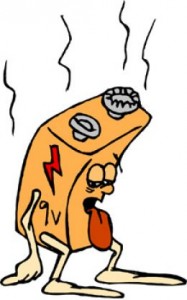
Tired, mentally drained, battery, March 2014. (http://blog.batterysharks.com/).

Tired, mentally drained, battery, March 2014. (http://blog.batterysharks.com/).

First, a disclaimer. I am in no way advocating killing Joe Trotter, or any other professor, whether they’re a great advisor or a terrible one (except perhaps in the case of literal self-defense). This was how I imagined what I could do to Trotter in the spring and summer of ’96, as our battles over my dissertation and my future turned from typical to ugly. By mid-July ’96, after his handwritten all-caps comments telling me to disregard my evidence on Black migration to DC during the Great Migration period (1915-30) — or really, the lack of evidence — I was mentally drained. I went back to our first big arguments over my future, the “you’re not ready” meetings from November ’95 and April ’96, and thought about what I could’ve done if I’d stayed in his office five minutes longer. That’s when I imagined killing my advisor for the first time.

By the time Trotter and my dissertation committee had approved my magnum opus, the week before Thanksgiving in ’96, I’d played that scenario in my head at least a dozen times. That’s when I knew I was burned out from the whole process. I may have become Dr. Collins, but I might as well have been my younger and abused self, the one who had to wade through five years of suffering at 616 and in Mount Vernon just to get to college.

Four months ago, I actually dreamed about killing Joe Trotter, exactly as described above, in his office, on a warm spring day like I imagined eighteen years ago. Keep in mind, I don’t think about Trotter much these days, other than when I write a blog post or am in a discussion of worst dissertation advisors ever. So when I woke up from this old-imagination-turned-dream, I had a Boy @ The Window moment and revelation. Did my struggles with Trotter open up old wounds, unearth my deliberately buried past? Did I see my fight with Trotter over my dissertation in the same light as my guerrilla warfare with my abusive and manipulative ex-stepfather?

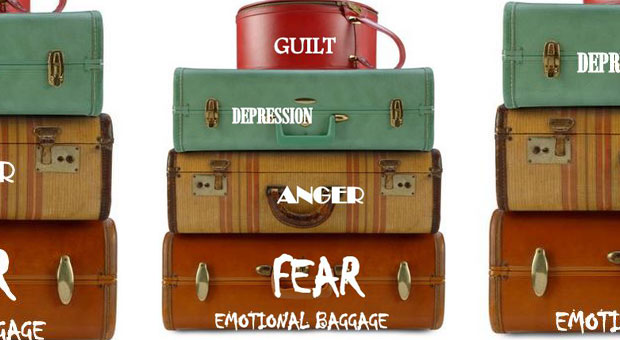
I obviously brought baggage into my doctoral process that I’d hidden from everyone, including myself, and hadn’t fully resolved. The fact that Trotter was at times tyrannical, deceitful and paternalistic didn’t help matters. In some ways, then, Trotter must’ve morphed into Maurice Washington during the dissertation process, with me only half-realizing it once I was freshly minted.

Emotional and psychological baggage, January 2014. (http://www.projecteve.com/).

Emotional and psychological baggage, January 2014. (http://www.projecteve.com/).

I actually went to Trotter’s office a few weeks after I graduated, to apologize for how our relationship devolved, and to grant him my forgiveness as well. Arrogant as my act was, I needed to make the gesture, to at least begin my healing process. I knew Trotter was beyond surprised, but he shook my hand anyway. I also knew, as I walked away from his Baker Hall office, that other than a letter of recommendation, Trotter no longer had anything to offer me. At least, anything that would help me resolve some deep, underlying issues.

It’s safe to say that of all the reasons that led to me writing Boy @ The Window, my problems with Trotter in ’95 and ’96 were near the top of the list. Still, I needed to kill the idea that Trotter was an indispensable part of my present and future, if I were to ever resolve the issues from my growing-up past.

When Those Close Put Up Roadblocks

07 Saturday Jun 2014

Posted by decollins1969 in 1, Academia, Boy @ The Window, Carnegie Mellon University, culture, Eclectic, Mount Vernon New York, New York City, Pittsburgh, Politics, Pop Culture, race, University of Pittsburgh, Youth

≈ Leave a comment

Tags

Coming-of-Age, Detours, Dr. Don, Dreams, Faith, Forgive and Forget, Forgiveness, History, Internalized Racism, Jealousy, Memoir, Past, PAT Transit, PhD, PhD process, Pitt, Roadblocks, Self-Discovery, Self-Loathing, Sellout, Writing


Detours vs. roadblocks, June 1, 2012. (http://www.ideaarchitects.org).

Detours vs. roadblocks, June 1, 2012. (http://www.ideaarchitects.org).

This was the best title I could come up with, since it’s about folks in my life with whom I’ve shared some affinity over the years, beyond family, and to a lesser extent, friendships. This isn’t about haters or crabs-in-the-barrel mentality per se. It’s simply the observation that as I pursue dreams and push through goals in life that some whom have the choice between being supportive or actively working against my interests, how more than a few have chosen to do the latter.

That this has occurred in my life mostly as I pursued my doctorate and pressed on as a writer isn’t a coincidence. The things I’ve worked the hardest for in life, the dreams most difficult to achieve, the amount of energy and pressing through needed to overcome my own doubts in the process — all came with an audience of detractors. A bit more than twenty years ago, some of my Pitt friends started falling by the wayside as I pursued my grad degrees, which is normal, but there were some pretty weird conversations I had with them as they did. One insisted on calling me “Dr. Don” about a dozen times during a PAT Transit bus ride one day in September ’92, laughing to the point of hilarity while doing it. I thought that he was going to choke on his own spit all the while, he was laughing so hard. Or that I was going to choke him myself if he said “Dr. Don” one more time!

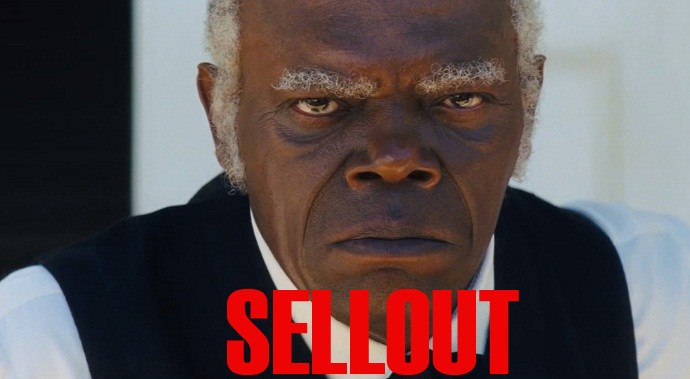
Screen shot of character played by Samuel L. Jackson in Django Unchained (2012) with "Sellout" addition (not an endorsement, by the way), October 31, 2013. (http://forwardtimesonline.com/2013/).

Screen shot of character played by Samuel L. Jackson in Django Unchained (2012) with “Sellout” addition (not an endorsement, by the way), October 31, 2013. (http://forwardtimesonline.com/2013/).

Another guy — who eventually committed suicide in ’98 — told me straight up that people like me were “sellouts,” that “The Man” wasn’t going to accept people like me or him “no matta how many degrees we get” or don’t get. That was six weeks before my committee approved my dissertation, in October ’96. Luckily, I learned not to bring up my education to folks unless it was for professional purposes or unless someone asked.

That these were Black acquaintances from my days as an undergrad at the University of Pittsburgh was a bit surprising, considering that my tendency is to always encourage folks to pursue their dreams. I’d always assumed the worst of the folks — Black, White, Afro-Caribbean and Latino — that I grew up with in Mount Vernon, New York, precisely because their encouragement literally made me suicidal by the time I turned fourteen. By the late-90s, I realized this was more than a New-York-area-social-etiquette-disorder.

With writing and books over the past decade — especially with Boy @ The Window — I’ve experienced some of those same headwinds from folks who seemed to think they had a better idea for the direction of my life than I. When I first started working on my memoir at the end of ’06, I had a conversation with my Pitt and AED colleague Stacey, whom I’d known for sixteen years. Upon telling her about my project, she said, “You need to wait on that,” that I should “publish a few more books,” be in my fifties, before “writin’ a biography.” So I knew that she wasn’t going to buy a copy when it came out. Oh well!

Last fall, at an African American Alumni Council event at Pitt, it was one of my first opportunities to discuss the now published Boy @ The Window, which was immediately followed by public criticism. Right after I talked about the book, an older alumna walked right up to me, and got within a foot or so of my face — close enough to hug. “You’re too young to have a memoir,” she said with a smile on her face, and then walked away as if her’s was the final say on the topic.

At the least, it showed that most don’t know the difference between a memoir (on one period or aspect of one’s life, often with a look at the world beyond) and an autobiography (the story of my entire life). Boy, understand the genre before criticizing it or my role in it already!

One foot in the grave (apparently), June 7, 2014. (http://www.virginmedia.com/).

One foot in the grave (apparently), June 7, 2014. (http://www.virginmedia.com/).

And, yes, I know. I see my Facebook friends especially posting other people’s sayings every single day. About letting go, moving on, forgetting the past, pushing past the haters, sitting in a lotus position, meditating and praying, and then drinking a wheat-grass smoothie. I do let go, I do forgive, and I don’t let the naysayers in my life have the final say. But letting go doesn’t mean I don’t get to highlight some truth, point out hypocrisy, and that I should just be quiet for the sake of being quiet.

It hasn’t been lost on me that most of these specific, potentially dream-destroying microaggressions have come from Black folk, male and female, well-off and immersed in poverty. Do I put these people in the same category as White literary agents who’ve said things to me like, “Oh no, not another abuse story!” or “There are too many black coming-of-age stories in the market?” Of course not. Gate keepers practicing ignorance in the midst of structural racism isn’t the same as people who may have internalized racism.

Or in the latter case, it could just be that my pursuit of what I’ve wanted and finally come to know for my life brought attention to dreams deferred, delayed and denied, by others and by their own fears of failure and success. If I’d let this stand in my way, I’d still be living in Mount Vernon, undoubtedly living in grinding poverty, wondering how could I let everything I wanted out of life get away from me.

A Man and a Tank

04 Wednesday Jun 2014

Posted by decollins1969 in 1, Boy @ The Window, culture, Eclectic, Mount Vernon New York, New York City, Patriotism, Politics, Pop Culture, Youth

≈ Leave a comment

Tags

1989, ABC News, Dissidents, Freedom, Government Crackdown, Injustice, Laurence Glasco, Looney Tunes, Murder, Peter Jennings, Protests, Tank, Tiananmen Square


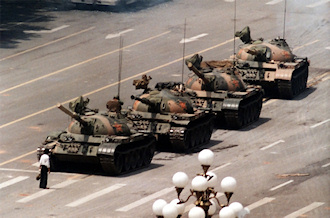
"Tank Man" temporarily stops the advance of a column of tanks, Tianenmen Square, Beijing, China, June 5, 1989. (Jeff Widener/AP via Wikipedia).

“Tank Man” temporarily stops the advance of a column of tanks, Tiananmen Square, Beijing, China, June 5, 1989. (Jeff Widener/AP via Wikipedia).

[Originally posted June 4, 2009]

Saturday, June 3, 1989, 12:04 pm. Me and my younger siblings were at 616, watching cartoons on ABC. It was a run of old Looney Tunes cartoons, which had Maurice, Yiscoc, Sarai and especially Eri cracking up. It was a great morning, with my mother taking her Saturday classes at Westchester Business Institute, my idiot stepfather out carousing, and my older brother Darren roaming the streets like the goofball he could be. Then the late Peter Jennings broke into our local New York area broadcast to let us know that Chinese tanks were rolling into Tiananmen Square in Beijing, breaking through seven weeks worth of protests over the government’s continuing limits on the civil and political rights of its citizens.

It was after midnight in Beijing, already June 4. For the next forty or forty-five minutes, images kept coming on to our TV from Tiananmen Square as the Chinese military and their tanks toppled barricades, ran over cars and literally chased thousands of protesters out of the square. When I saw the first images of a blood-splattered protester and then of another one crying, I started to cry myself. My siblings looked at me like I was crazy. Then, no more images. Jennings reported that the Chinese government had forced ABC to shut down their satellite communications from within China. My guess was that they did it at gun point.

By the time I switched to another station for my siblings to watch, I found myself wondering why I hadn’t followed the story more closely. I mean, I was actually following it. But I guess I assumed that, like the glasnost and perestroika that had been pushed by Gorbachev since ’86, that the protests would be allowed to continue in Beijing. And like many other naive Americans, we were wrong about that. We hardly knew enough about four millennia of Chinese political history to understand how important an unopposed central authority has been to this culture. If I had applied anything I learned from a semester of East Asian History at all, I wouldn’t have been surprised at all.

With me crying — albeit not audibly — my youngest brother Eri asked me what was wrong and what was going on. I explained to them as best I could that this was a government crackdown on dissidents, that the Chinese government engaged in human rights abuses all the time, and that this crackdown meant many people were dying and going to die. Those few minutes were the most in which Eri and my other siblings had shown any interest in the world outside of Mount Vernon and New York City in all of times I spent with them growing up.

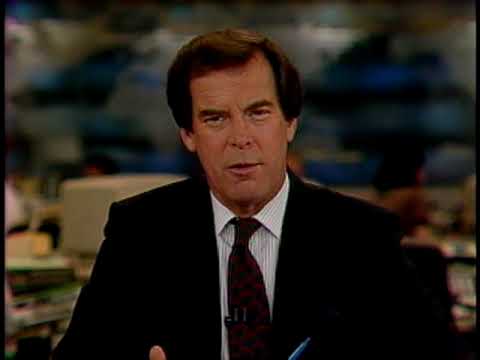
Peter Jennings, ABC World News Tonight anchor, November 1989 (broadcasting fall of Berlin Wall). (screenshot via Youtube).

Peter Jennings, ABC World News Tonight anchor, November 1989 (broadcasting fall of Berlin Wall). (screenshot via Youtube).

In the days that followed, the occasional picture or piece of film made it out of China to Hong Kong (still a British territory in ’89) or Japan or South Korea showing images like the man standing in front of a column of tanks, ready to die in the crackdown on him and other protesters. I must admit, it moved me. It was obvious that people would go to jail, likely face torture, that many would die and many more would lick their wounds as the Chinese government would blackout all but the official state news about what really was going on.

Larry Glasco, one of my Pitt history professors, was there for a visit when the crackdown began. He said he saw dead men hanging from lamp posts, bodies of dead and injured in spots, and faced his own crisis in dealing with the military. They confiscated his camera and threatened to hold him in jail in order to make sure he didn’t take his pictures back to the US. From what I remember, he did managed to smuggle some film — not much — out after the crackdown had ended. His wasn’t the only story I would hear during the second half of ’89 about what people witnessed as tourists and researchers in looking at the Tiananmen Square protests. It was the first time I had the chance to see up close what a tyrannical government really looks like when acting to protect itself.

It’s different from police brutality or even a racist mob. For better or worse, we’ve never seen this level of government or military intervention in this country over protesters that those everyday folks in China faced down twenty years ago. Even if we count what Native Americans faced in the late-nineteenth century or the Bonus Army crackdown by General Douglas MacArthur in 1932, that would only get us to a limited sense of what the Tiananmen Square dissidents faced. It made me think about how wrong one of my Humanities classmates was when he argued about the long-term viability of communism because it would reduce economic inequality and give people a greater degree of freedom.

But we were both incorrect. Any economic or political system in which citizens and others must show deference or actually walk in fear of isn’t one that any should follow. I don’t care if the system is communist, capitalist, or socialist, or if the government is a monarchy, a constitutional monarchy, or a representative democracy. If folks living in these systems and under these governments can’t speak their minds or publish their ideas, especially if they contradict whatever the government or system says, the government isn’t a just one. Although governments and systems should fit the cultural and historical context of a given population, it also should remain flexible enough to adjust to the changing needs of a people. That’s what the regime in China failed to understand in ’89 and for years afterward.

I’m hardly advocating the overthrowing of governments or even the imposition of American democracy. If anyone’s bothered to notice, we haven’t exactly been living up to many of our ideals overseas and at home over the last six decades. I’m merely attempting to remember the events of early June ’89 that touched me emotionally, that enabled me to understand that beyond the political and economic theories there’s the reality of the human condition, the need to keep humans who have authority in check. I learned this all too well growing up at 616 and attending Mount Vernon’s public schools. Without those checks and balances, the rights and lives of others face tanks lined up in formation, ready to run them over.

Visiting My Uncle Paul in Georgia

31 Saturday May 2014

Posted by decollins1969 in 1, Academia, Boy @ The Window, Carnegie Mellon University, culture, earth, wind & fire, Eclectic, eclectic music, Marriage, Mount Vernon New York, music, Pittsburgh, Pop Culture, race, Sports, Work, Youth

≈ Leave a comment

Tags

40th Anniversity of Brown v. Board of Education, Allergies, Atlanta, Basketball, Conference, Delta Airlines, Family, Georgia Dome, Gill Family, Gwinnett County, Hartsfield International Airport, ITT Technical Institute, Joe Trotter, Laser Light Shows, Self-Discovery, Self-Reflection, Stone Mountain, The Gill Family, UGA, Uncle George, Uncle Paul, Uncle Robert, Uncle Sam, University of Georgia


Stone Mountain Park, lake side view/photo (was within visual range on the road side view of Confederate-ana back in '94), Stone Mtn, GA, May 31, 2014. (http://new.gwinnetteconomicdevelopment.com/).

Stone Mountain Park, lake side view/photo (was within visual range on the road side view of Confederate-ana back in ’94), Stone Mtn, GA, May 31, 2014. (http://new.gwinnetteconomicdevelopment.com/).

The second leg of what would eventually be five visits with my extended Gill and Collins families as an adult occurred the month after meeting much of my extended Gill family in Houston in April ’94. This second visit was very different from the first. It was part of a three-city trip, between research for my dissertation in DC (and a visit with my friend Laurell in the process) and going up to Mount Vernon to visit my Mom and siblings. Plus, like the Houston-New Orleans trip, I’d come to the Atlanta area to present at a conference, one at the University of Georgia on the 40th Anniversary of the Brown v. Board of Education decision.

I’d been invited to talk about multiculturalism as it related to desegregation in terms of curriculum by Layli Phillips, then an Assistant Professor in African American Studies and Psychology at the Athens campus, about sixty miles from my uncle’s place in Gwinnett County. It was an invite and acceptance my advisor Joe Trotter wasn’t happy about, as it was “too soon” for me to discuss my topic “in front of strangers.” But Phillips had already bought the round-trip tickets for me to fly from DC to Atlanta, and then from Atlanta to LaGuardia, per my request. Oh well!

I came to Hartsfield all tired and stuffed up from hay-fever-heavy DC that Saturday afternoon in mid-May, a couple of days before my UGA presentation. There, I met my Uncle Paul right at the gate, along with his seventeen-year-old son. Like my Uncles Sam and Robert, Uncle Paul was taller than me, a still wiry six-five at thirty-eight, still fit enough to stop, pop and hit a J despite his swollen knees. His son was built just like him, and a star basketball player at his high school in Gwinnett County.

They didn’t give me any time to rest. I was immediately taken to their two-bedroom apartment in some off-the-main route beaten path, a gated community with stucco walls and plastic pink flamingos to boot. There, I’d also meet one of my uncle’s girlfriends, an older woman who apparently understood that my Uncle Paul wasn’t exactly ready to settle down.

My Uncle Paul’s playing days in Houston (college and NBA) and overseas had ended long before I’d learn how to shoot a J myself. He’d gone back to school — specifically ITT Technical Institute — in the mid-1980s and become an A/V expert who specialized in special effects, including laser lights, smoke and other technologies meant to enhance the concert-going experience. He’d worked before on tours, with Earth, Wind + Fire (when Maurice White was still healthy enough to tour) and New Edition. That’s how our family learned that Johnny Gill was a distant cousin, as his great-grandmother and my great-grandmother were sisters, one staying in the Texas-Arkansas area, the other moving to Seattle for some reason or other.

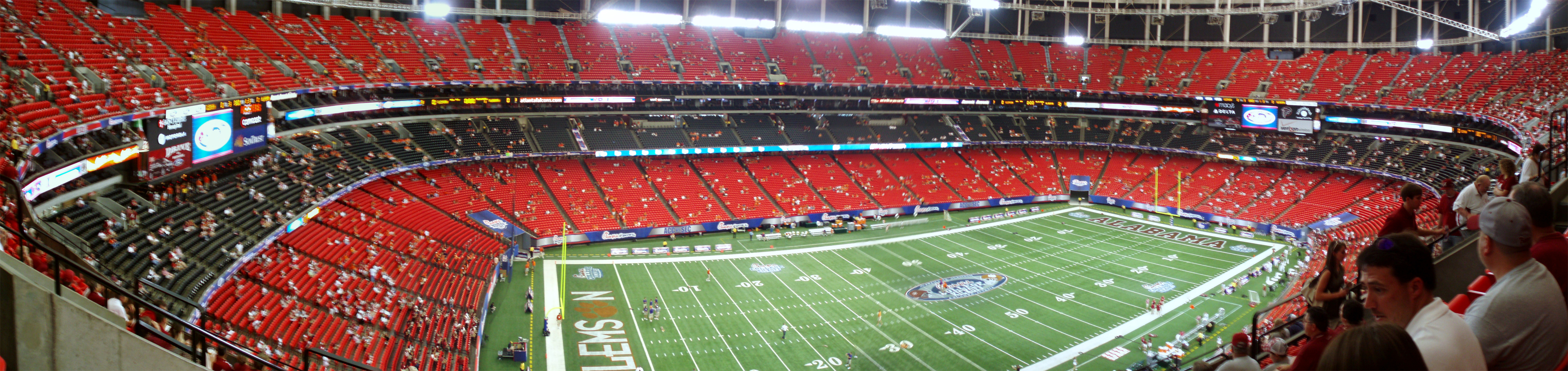
Panoramic pic of the Georgia Dome, Atlanta, GA (where was on the left of the field back in '94), August 30, 2008. (Latics via Wikipedia). Released to  public domain via CC-SA-3.0.

Panoramic pic of the Georgia Dome, Atlanta, GA (where was on the left of the field back in ’94), August 30, 2008. (Latics via Wikipedia). Released to public domain via CC-SA-3.0.

There was a jazz and blues extravaganza going on at the Georgia Dome in downtown Atlanta that evening, and so within hours of landing, we were back in the heart of the city, setting up equipment on what normally was the playing field for the Atlanta Falcons. I was so mesmerized thinking about losing a football in the lights of the Georgia Dome that my uncle yelled at me to “get my ass in gear,” because he needed help unloading some heavy equipment. I wasn’t the biggest fan of the quality of music, but having a backstage view of the whole thing, and to see what my uncle Paul did for a living, I was truly, truly impressed.

That Sunday I spent in my uncle’s home, hearing about his playing days, his knee issues, his knowledge of basketball as a game, his travels to play in Europe, and indirectly, his sexual conquests. That last part I could’ve done without — I’d spent two days hearing the same thing from my other uncles the month before. Then he grilled me with questions about Mount Vernon, about New York, about why I didn’t play sports, about “the chicks in college.” My Uncle Paul assumed, incorrectly, that living in New York was heaven compared to being tenant farmers in southwestern Arkansas, and that I was in grad school for the sex. “I wouldn’t have made it to where I am if that was what it was all about,” I said in shocked response.

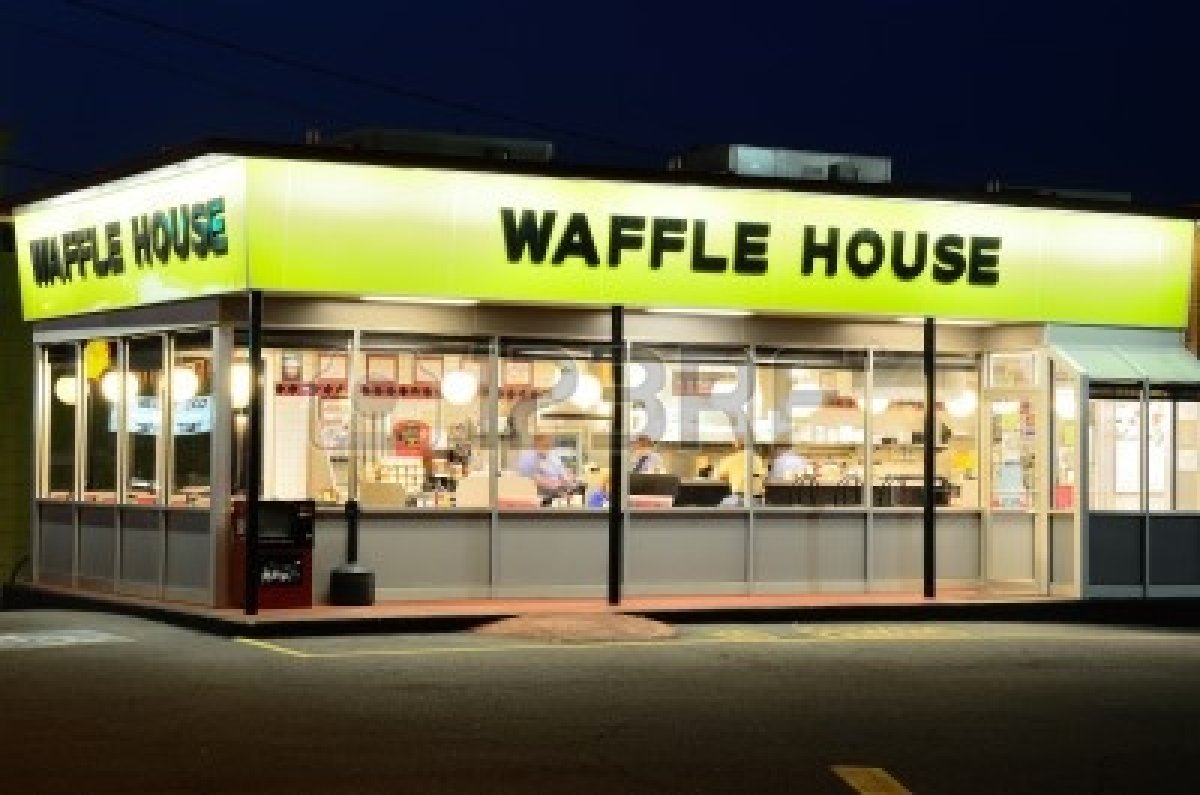
Waffle House, off UGA's main campus (and across street from seedy motel I stay in night before conference), Athens, GA, June 1, 2011. (http://www.123rf.com).

Waffle House, off UGA’s main campus (and across street from seedy motel I stay in night before conference), Athens, GA, June 1, 2011. (http://www.123rf.com).

He made a jambalaya dinner for us and his lady friend, all the while talking about each other’s work. My uncle’s son was bored to tears. Then, after dinner, and after his girlfriend had left and his son had gone to hang out with friends, my uncle took me out in his vintage Porsche 911 (it had been covered in the parking lot up to that point) to some high-class, late-night, members-only club somewhere in Gwinnett. Between him doing somewhere around eighty in a fifty-five and taking me to this place to “meet a girl,” I was in more shock. “I like looking for women on my own, thank you very much,” I yelled through the Mary J. Blige at one point.

I went off that Monday morning to Athens for the Brown Decision conference, and was gone for thirty hours. I did get a ride back from a presenter, and then a ride back my uncle’s place. That’s when I walked into the place to see my cousin on the black-leather living room couch, stripped down and on top of a young woman. He only stopped when I yelled for a second time, “I’m back!” Then, the proverbial scattering of two youngins’ caught up in lust occurred. They left, presumably to finish what they had started.

I left for New York that Wednesday morning, having enjoyed my time with my Uncle Paul, but also seeing some downside to a lifestyle that left him busy and his son without supervision. That some dumb thug killed my cousin four years later was still very much a surprise, as he wasn’t a violent person, at least the person I met in ’94. I felt so horrible for him and for my Uncle Paul, as I couldn’t imagine the totality of the pain of such a tragedy.

But good, bad or otherwise, it felt good to get to know my people, my family. I’d grown up with a family that was one in name only. Poverty, religion, abuse had all rendered the meaning of family useless for me growing up, and seeing more examples of the same thing in my time in Mount Vernon didn’t help. I knew that my Uncle Paul wasn’t perfect. Nor were my uncles in Houston. But I knew they loved each other, had dreams and plans for their lives, and had acted on many of these things in living their lives. I knew that I needed to keep doing the same.

Bernard King and The Knicks of ’84

26 Monday May 2014

Posted by decollins1969 in 1, Boy @ The Window, culture, Eclectic, Mount Vernon New York, New York City, Pop Culture, race, Sports, Youth

≈ Leave a comment

Tags

ACL Tear, Basketball, Basketball Career, Bernard King, Darrell Walker, Earl Monroe, Earl The Pearl, Ernie Grunfeld, Futility, Knickerbockers, Knicks, Larry Bird, NBA, New York Knicks, NY Knicks, Ray Williams, Self-Discovery


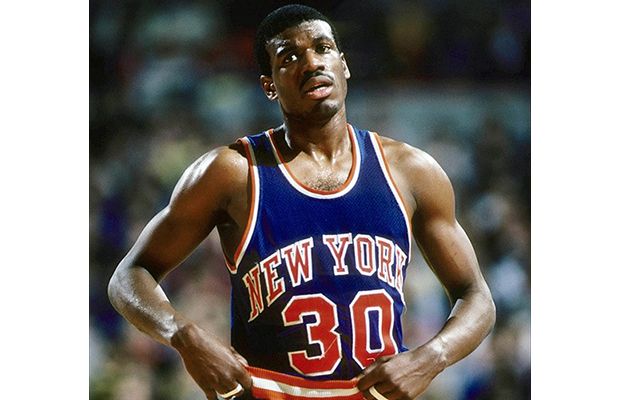
Bernard King, one of the all-time greats, 1984 NBA Playoffs. (http://www.totalprosports.com/).

Bernard King, one of the all-time greats, 1984 NBA Playoffs. (http://www.totalprosports.com/).

I usually keep it kind of heavy on Memorial Day. Between what Memorial Day is really about — America’s fallen soldiers, sailors, marines and pilots — and the abuse and domestic violence I’ve seen and experienced on Memorial Day ’82, I consider any Memorial Day that’s incident-free a good one.

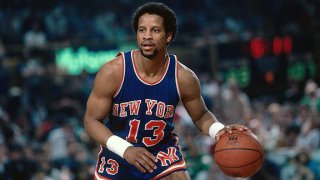
Earl "The Pearl" Monroe driving for a layup, May 26, 2014. (http://i.cdn.turner.com/).

Earl “The Pearl” Monroe driving for a lay up, May 26, 2014. (http://i.cdn.turner.com/).

But in light of the running theme of this year — that being a look back at the world in which I lived in’84 — I wouldn’t be providing a complete account if I didn’t talk about my Knicks at least once. To think that it’s been forty-one years since they last won a title is just, well, atrociously pathetic. It’s like being a New York Rangers fan in ’94 — oh yeah, that was me, too! I actually do have a few memories of the Knicks of Walt “Clyde” Frazier, Dave DeBusschere, Willis Reed, Bill Bradley and Earl “The Pearl” Monroe (my Mom and Uncle Sam gave me “Earl” as a middle name because of him back in ’69), but they’re very vague memories, almost snapshots. I was three and change, after all, hardly old enough to appreciate great defense, the midrange J, the turnaround J, or setting up defenders off the dribble to beat them to the hoop like these guys did.

I came into my own with basketball in ’83, just after the Knicks and Micheal Ray Richardson parted ways (that’s an understatement!). At that point, my Knicks had only sucked for the better part of a decade, but now with Bernard King as their superstar, and the coke-snorting Richardson gone, things were going to allegedly get better for the team. At least, according to the New York Post and New York Daily News. With disciplinarian Hubie Brown as head coach, we’d have a serious chance to compete with Larry Bird, Kevin McHale, Robert Parish, Dennis Johnson and the rest of the hated Boston Celtics.

I loved watching King play. He could nail a J from anywhere. Off the dribble, double-teamed, facing the basket, off a screen, top of the key, with his back to the basket. He could also drive to the hole with ease. King could score at will, and back in ’84, probably in his sleep, too. He wasn’t by any stretch a great defender, the big knock on King throughout most of his career. Between Reggie Jackson and Dwight Gooden, though, there was King for me.

New York Knicks favorite and Mont Vernon great Ray Williams, circa 1983 (died March 23, 2013). (Dick Raphael/NBAE/Getty Images via http://espn.go.com/).

New York Knicks favorite and Mont Vernon great Ray Williams, circa 1983 (died March 23, 2013). (Dick Raphael/NBAE/Getty Images via http://espn.go.com/).

Not only did we have the Brooklyn native as the Knicks centerpiece for ending the Celtics’ dominance of the East. We had Louis Orr. We had Rory Sparrow. We had Bill Cartwright. We had Trent Tucker. We had Mount Vernon, New York’s own Ray Williams (may he RIP). We had just drafted Darrell Walker, known to defend with ferociousness. We even had Ernie Grunfeld — once the all-time leading scorer in the University of Tennessee’s Men’s Basketball history — coming off the bench. Yeah, it was going to be playoffs and contending for championships for the foreseeable future.

Really, who was I kidding? What was the New York sports media snorting and injecting? Outside of Williams, Cartwright and Walker, no one on the team defended consistently enough to stop Mike Gminski on the Nets, much less Bird, Parish or McHale. But boy did they entertain! King scoring 50 or more in games on WOR-Channel 9 (before MSG got their own channel and broadcast all of the games themselves) was such a treat! I actually enjoyed it when Walker and Danny Ainge got into a fight during the second round of the NBA playoffs in ’84. Those were pretty good teams with King as a scoring machine. Pretty good, but hardly good enough.

I actually cried after the Celtics slaughtered my Knicks at the Boston Garden in Game Seven of that May ’84 Conference Semifinal series, 121-104. I cried even more, though, after King tore up his right knee’s ACL in a game against the then Kansas City Kings in March ’85, in the middle of an already miserable season. It lead to the Knicks in the first-ever NBA Draft Lottery, them getting the #1 pick, and Patrick Ewing in the process. But King and Ewing would never play a game together, both with injuries throughout the 1985-86 and 1986-87 seasons. It would be nearly another decade before my Knicks were strong enough to be part of any serious championship conversation.

Failure is a part of life, but so is hope. And back in May ’84, all I could do as a naive fourteen-year-old growing up in basketball’s mecca was hope. As I hope that someone will end the insanity that has been James Dolan and the Knicks on 33rd and Madison soon.

← Older posts
Newer posts →

Boy @ The Window: A Memoir

Boy @ The Window: A Memoir

Places to Buy/Download Boy @ The Window

There's a few ways in which you can read excerpts of, borrow and/or purchase and download Boy @ The Window. There's the trade paperback edition of Boy @ The Window, available for purchase via Amazon.com at http://www.amazon.com/Boy-Window-Donald-Earl-Collins/dp/0989256138/

There's also a Kindle edition on Amazon.com. The enhanced edition can be read only with Kindle Fire, an iPad or a full-color tablet. The links to the enhanced edition through Apple's iBookstore and the Barnes & Noble NOOK edition are below. The link to the Amazon Kindle version is also immediately below:

scr2555-proj697-a-kindle-logo-rgb-lg

Boy @ The Window on Amazon.com: http://www.amazon.com/Boy-The-Window-Memoir-ebook/dp/B00CD95FBU/

iBookstore-logo-300x100

Boy @ The Window on Apple's iBookstore: https://itunes.apple.com/us/book/boy-the-window/id643768275?ls=1

Barnes & Noble (bn.com) logo, June 26, 2013. (http://www.logotypes101.com).

Boy @ The Window on Barnes & Noble: http://www.barnesandnoble.com/w/boy-the-window-donald-earl-collins/1115182183?ean=2940016741567

You can also add, read and review Boy @ The Window on Goodreads.com. Just click on the button below:

Boy @ The Window

Twitter Updates

Tweets by decollins1969
  • RSS - Posts
  • RSS - Comments

Archives

  • June 2025
  • April 2023
  • September 2022
  • August 2022
  • July 2022
  • June 2022
  • May 2022
  • April 2022
  • March 2022
  • January 2022
  • December 2021
  • November 2021
  • October 2021
  • September 2021
  • August 2021
  • July 2021
  • June 2021
  • April 2021
  • March 2021
  • February 2021
  • January 2021
  • December 2020
  • November 2020
  • October 2020
  • September 2020
  • August 2020
  • July 2020
  • May 2020
  • April 2020
  • March 2020
  • January 2020
  • December 2019
  • November 2019
  • August 2019
  • July 2019
  • June 2019
  • May 2019
  • April 2019
  • March 2019
  • February 2019
  • January 2019
  • December 2018
  • November 2018
  • October 2018
  • September 2018
  • August 2018
  • July 2018
  • June 2018
  • May 2018
  • March 2018
  • February 2018
  • January 2018
  • December 2017
  • November 2017
  • October 2017
  • September 2017
  • August 2017
  • July 2017
  • June 2017
  • May 2017
  • April 2017
  • March 2017
  • February 2017
  • January 2017
  • December 2016
  • November 2016
  • October 2016
  • September 2016
  • August 2016
  • July 2016
  • June 2016
  • May 2016
  • April 2016
  • March 2016
  • February 2016
  • January 2016
  • December 2015
  • November 2015
  • October 2015
  • September 2015
  • August 2015
  • July 2015
  • June 2015
  • May 2015
  • April 2015
  • March 2015
  • February 2015
  • January 2015
  • December 2014
  • November 2014
  • October 2014
  • September 2014
  • August 2014
  • July 2014
  • June 2014
  • May 2014
  • April 2014
  • March 2014
  • February 2014
  • January 2014
  • December 2013
  • November 2013
  • October 2013
  • September 2013
  • August 2013
  • July 2013
  • June 2013
  • May 2013
  • April 2013
  • March 2013
  • February 2013
  • January 2013
  • December 2012
  • November 2012
  • October 2012
  • September 2012
  • August 2012
  • July 2012
  • June 2012
  • May 2012
  • April 2012
  • March 2012
  • February 2012
  • January 2012
  • December 2011
  • November 2011
  • October 2011
  • September 2011
  • August 2011
  • July 2011
  • June 2011
  • May 2011
  • April 2011
  • March 2011
  • February 2011
  • January 2011
  • December 2010
  • November 2010
  • October 2010
  • September 2010
  • August 2010
  • July 2010
  • June 2010
  • May 2010
  • April 2010
  • March 2010
  • February 2010
  • January 2010
  • December 2009
  • November 2009
  • October 2009
  • September 2009
  • August 2009
  • July 2009
  • June 2009
  • May 2009
  • April 2009
  • March 2009
  • February 2009
  • January 2009
  • December 2008
  • November 2008
  • October 2008
  • September 2008
  • August 2008
  • July 2008
  • June 2008
  • May 2008
  • April 2008
  • March 2008
  • February 2008
  • January 2008
  • December 2007
  • November 2007
  • October 2007
  • September 2007
  • August 2007
  • July 2007
  • June 2007

Recent Comments

MaryPena's avatarMaryPena on My Day of Atonement/Bitter Hat…
decollins1969's avatardecollins1969 on No Good Teaching Deed Goes…
Mary Rose O’Connell's avatarMary Rose O’Connell on No Good Teaching Deed Goes…

NetworkedBlogs on Facebook

NetworkedBlogs
Blog:
Notes From a Boy @ The Window
Topics:
My Life, Culture & Education, Politics & Goofyness
 
Follow my blog

616 616 East Lincoln Avenue A.B. Davis Middle School Abuse Academia Academy for Educational Development AED Afrocentricity American Narcissism Authenticity Bigotry Blackness Boy @ The Window Carnegie Mellon University Child Abuse Class of 1987 CMU Coping Strategies Crush #1 Crush #2 Death Disillusionment Diversity Domestic Violence Economic Inequality Education Family Friendship Friendships Graduate School Hebrew-Israelites High-Stakes Testing Higher Education History Homelessness Humanities Humanities Program Hypocrisy Internalized Racism Jealousy Joe Trotter Joe William Trotter Jr. K-12 Education Love Manhood Maurice Eugene Washington Maurice Washington Misogyny Mother-Son Relationship Mount Vernon High School Mount Vernon New York Mount Vernon public schools Multiculturalism MVHS Narcissism NFL Pitt Pittsburgh Politics of Education Poverty President Barack Obama Race Racial Stereotypes Racism Relationships Self-Awareness Self-Discovery Self-Reflection Sexism Social Justice Teaching and Learning University of Pittsburgh Violence Whiteness Writing

Top Rated

Blog at WordPress.com.

  • Subscribe Subscribed
    • Notes from a Boy @ The Window
    • Join 103 other subscribers
    • Already have a WordPress.com account? Log in now.
    • Notes from a Boy @ The Window
    • Subscribe Subscribed
    • Sign up
    • Log in
    • Report this content
    • View site in Reader
    • Manage subscriptions
    • Collapse this bar
 

Loading Comments...