• About Me
  • Other Writings
  • Interview Clips
  • All About Me: American Racism, American Narcissism, and the Conversation America Can’t Have
  • Video Clips
  • Boy @ The Window Pictures
  • Boy @ The Window Theme Music

Notes from a Boy @ The Window

~

Notes from a Boy @ The Window

Category Archives: Academia

Tyranny of the Self-Righteous “Liberal”

18 Wednesday Jun 2014

Posted by decollins1969 in 1, Academia, culture, Eclectic, Pittsburgh, Politics, Pop Culture, race, University of Pittsburgh, Youth

≈ 2 Comments

Tags

ADM, Agribusiness, Amazonian Rain Forest, Archer Daniels Midland, Climate Change, ConAgra, Decriminalization, Drug Policy, Economic Development, Economic Inequality, Environmental Justice, Environmentalism, Food Justice, Food Policy, Global South, Global Warming, GM, GMOs, Gun Control Debate, Gun Safety, Hypocrisy, Monsanto, Pitt, Saving the Planet, Species Diversity, Third World, Veganism, Vegans, White Liberals


Toni Collette as Fiona, "Ms. Granola Suicide," in movie About A Boy (2002), screen shot, June 18, 2014. (http://hotmovies.com via Universal). Qualifies as fair use - low resolution picture is personification of topic (self-righteous liberal).

Toni Collette as Fiona, “Ms. Granola Suicide,” in movie About A Boy (2002), screen shot, June 18, 2014. (http://hotmovies.com via Universal). Qualifies as fair use – low resolution picture is personification of topic (self-righteous liberal).

More and more, I’ve tired of folks who proclaim that because they’ve finally “seen the light” on a particular niche or chic liberal issue, that their view is not only the right and only one. Anyone who doesn’t fall in line with their perspective is the enemy, a sap in support of the destructive forces of capitalism, a person whose individual actions will destroy the world.

That most — but not all, of course — of these people are White liberals isn’t exactly a surprise. This first occurred to me a quarter-century ago, when, as a Pitt undergrad, students active in environmentalism were going around campus asking us to donate time, money and signatures to stop Brazil from tearing down their Amazonian rain forests. Though I understood that we needed to process as much oxygen as our bodies would allow (and pull as much CO2 out of the atmosphere as possible), I also thought, “where the heck do we get off telling Brazil what to do?”

Brazil was and still is a leader in Global South economic development, with massive inequalities to boot. After two and a half centuries of virtually unchecked economic and industrial growth at the expense of the environment, though, where did we as Americans have the right to tell people in other countries to slow or halt their economic development? After exploiting the riches, resources and peoples of the world, where did these do-gooders get off telling other countries that they ‘d have to find a slower way to deal with poverty, or to not exploit their own resources?

An aerial picture of an area of the Amazon Rainforest, Brazil, September 9, 2009. (Felipe Menegaz via Wikipedia). Released to public domain via CC-SA-3.0/GNU.

An aerial picture of an area of the Amazon Rainforest, Brazil, September 9, 2009. (Felipe Menegaz via Wikipedia). Released to public domain via CC-SA-3.0/GNU.

I would get into the occasional argument about this very White, very un-liberal liberal way of thinking. One where we’d get to keep our modern development while countries like Brazil were supposed to languish in the Third World box we and Europe built for them. Of course, the do-gooders would argue back at me, telling me that I wanted to destroy the environment and make the air unhealthy for our future kids and grandkids to breathe. As far as they were concerned, keeping the Global South poor and exploitable was our only chance at beating back global warming and species destruction.

It’s not any different today with issues like food justice, gun control and safety, and drug policy (and for some, religion). I have a Facebook friend who has become more belligerent about promoting veganism and condemning us so-called meat-eaters (technically, humans are omnivores) over the past half-decade. The issue for him couldn’t just be about agribusinesses and their gross abuse of the land, of crops and of domesticated animals, their control and degradation of much of the world’s food supply. No, it’s about individuals making choices that empower these massive corporations instead of going to an organic farm or farmers market or choosing to turn away from all animal proteins for the sake of their bodies or to curtail climate change.

I have no problems with vegans or veganism (I’ve tried it myself on occasion) or with fighting Archer Daniels Midland, Monsanto and ConAgra. I do have a problem with the myopic thinking that people like my Facebook friend have in attacking individuals. It’s such a ’70s liberal way of confronting a huge issue. Not to mention a very White and elitist perspective. Fact is, a truly healthy and well-rounded vegan diet is an expensive one, as the federal government doesn’t subsidize vegan products like it does agribusiness. In a nation like the US, with a shrinking middle class and growing inequality, to expect every individual to stop shopping at Walmart and eating Big Macs in exchange for the organic farm and lentils is arrogant and wholly unrealistic.

There’s no way I’d tell my Facebook friend all this. I’d get argued down as if I were attempting to spread a superflu across the planet. And it wouldn’t be a rational argument either. But then again, it’s okay for White liberals to be irrational in their arguments, especially when it’s in defense of the planet!

ConAgra Foods logo, June 18, 2014. (http://innovate.unl.edu/).

ConAgra Foods logo, June 18, 2014. (http://innovate.unl.edu/).

There’s also irony around gun control and safety and drug policy. When it’s so-called Black-on-Black crime, or a drive-by in New York or Chicago, those meet White liberal expectations. When it’s Columbine or Newtown or Santa Barbara, involving White-on-White crime, then it becomes time for more mental health screenings and more gun control. When heroin and crack cocaine found their way into poor Black and Latino communities in the ’70s and ’80s, we needed tougher drug laws to lock away “the animals” and “thugs.” Now that crystal meth and heroin have made their ways into White-middle-class suburbia, it’s now time to decriminalize some drug possessions and legalize marijuana. But no contradictions there!

A big part of the problem with everyday White liberalism is the idea that individuals and their individual decisions will add up to a groundswell of societal change. Yet how can you change the world if you’re not willing to sacrifice the structures that exploit others who aren’t White and middle class, who don’t live in America or in some suburban cul-de-sac? But go ahead, keep on keeping on with your non-GMO, organic vegan tuna salads made of soybeans and carrots while yelling at the rest of us impoverished shlubs to get with the program!
Killing Joe Trotter

10 Tuesday Jun 2014

Posted by decollins1969 in 1, Academia, Boy @ The Window, Carnegie Mellon University, Christianity, culture, Eclectic, Hebrew-Israelite, Mount Vernon New York, Pittsburgh, Politics, Pop Culture, race, Religion, Youth

≈ Leave a comment

Tags

Advisor-Student Relationships, Burnout, Child Abuse, CMU, Dissertation, Dissertation Committee, Dreams, Emotional Baggage, Father Figures, Forgive and Forget, Forgiveness, Graduate School, Guerilla Warfare, Hatred, Imagination, Joe Trotter, Joe William Trotter Jr., Mental Health, Murder, Paternalism, PhD, Psychological Baggage, PTSD, Self-Awareness, Self-Defense, Un-father Figures


Yeah, I did it. I killed the man who kinged himself mentor over me. I took some piano wire, tightened it around my hands while listening to him yammer on an on about “running interference” to protect “my interests.

As the pointy-headed, smoothly bald and mahogany man gazed at my thesis, myopically gazing into nowhere, I pounced. I quickly jumped out of my seat and took Trotter from behind. He clutched at the wire with his elderly left hand as I pulled and tugged, hoping to prolong the bloody agony for as long as I could. Trotter choked for air, then choked for real, as spit, bile, blood and tongue all became his substitute for oxygen. Then, with one bicep curl and pull, I garroted his throat, and watched as his already dead eyes turned lifeless. All as his burgundy blood poured down his white shirt and gray suit. It collected into a small pond, where his pants crotch and his mahogany office chair met. Trotter’s was a chair that was now fully endowed all right. Thanks to my righteous stand.

=======================

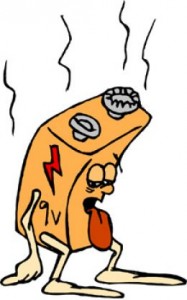
Tired, mentally drained, battery, March 2014. (http://blog.batterysharks.com/).

Tired, mentally drained, battery, March 2014. (http://blog.batterysharks.com/).

First, a disclaimer. I am in no way advocating killing Joe Trotter, or any other professor, whether they’re a great advisor or a terrible one (except perhaps in the case of literal self-defense). This was how I imagined what I could do to Trotter in the spring and summer of ’96, as our battles over my dissertation and my future turned from typical to ugly. By mid-July ’96, after his handwritten all-caps comments telling me to disregard my evidence on Black migration to DC during the Great Migration period (1915-30) — or really, the lack of evidence — I was mentally drained. I went back to our first big arguments over my future, the “you’re not ready” meetings from November ’95 and April ’96, and thought about what I could’ve done if I’d stayed in his office five minutes longer. That’s when I imagined killing my advisor for the first time.

By the time Trotter and my dissertation committee had approved my magnum opus, the week before Thanksgiving in ’96, I’d played that scenario in my head at least a dozen times. That’s when I knew I was burned out from the whole process. I may have become Dr. Collins, but I might as well have been my younger and abused self, the one who had to wade through five years of suffering at 616 and in Mount Vernon just to get to college.

Four months ago, I actually dreamed about killing Joe Trotter, exactly as described above, in his office, on a warm spring day like I imagined eighteen years ago. Keep in mind, I don’t think about Trotter much these days, other than when I write a blog post or am in a discussion of worst dissertation advisors ever. So when I woke up from this old-imagination-turned-dream, I had a Boy @ The Window moment and revelation. Did my struggles with Trotter open up old wounds, unearth my deliberately buried past? Did I see my fight with Trotter over my dissertation in the same light as my guerrilla warfare with my abusive and manipulative ex-stepfather?

I obviously brought baggage into my doctoral process that I’d hidden from everyone, including myself, and hadn’t fully resolved. The fact that Trotter was at times tyrannical, deceitful and paternalistic didn’t help matters. In some ways, then, Trotter must’ve morphed into Maurice Washington during the dissertation process, with me only half-realizing it once I was freshly minted.

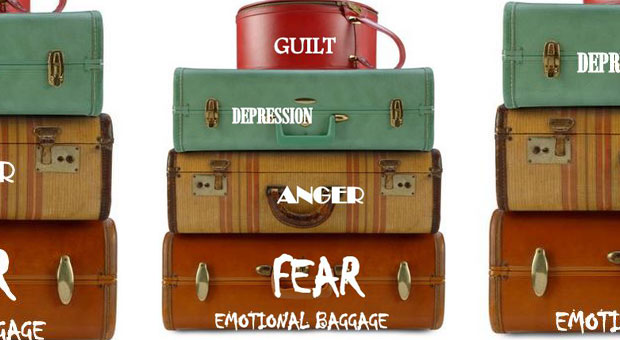
Emotional and psychological baggage, January 2014. (http://www.projecteve.com/).

Emotional and psychological baggage, January 2014. (http://www.projecteve.com/).

I actually went to Trotter’s office a few weeks after I graduated, to apologize for how our relationship devolved, and to grant him my forgiveness as well. Arrogant as my act was, I needed to make the gesture, to at least begin my healing process. I knew Trotter was beyond surprised, but he shook my hand anyway. I also knew, as I walked away from his Baker Hall office, that other than a letter of recommendation, Trotter no longer had anything to offer me. At least, anything that would help me resolve some deep, underlying issues.

It’s safe to say that of all the reasons that led to me writing Boy @ The Window, my problems with Trotter in ’95 and ’96 were near the top of the list. Still, I needed to kill the idea that Trotter was an indispensable part of my present and future, if I were to ever resolve the issues from my growing-up past.

When Those Close Put Up Roadblocks

07 Saturday Jun 2014

Posted by decollins1969 in 1, Academia, Boy @ The Window, Carnegie Mellon University, culture, Eclectic, Mount Vernon New York, New York City, Pittsburgh, Politics, Pop Culture, race, University of Pittsburgh, Youth

≈ Leave a comment

Tags

Coming-of-Age, Detours, Dr. Don, Dreams, Faith, Forgive and Forget, Forgiveness, History, Internalized Racism, Jealousy, Memoir, Past, PAT Transit, PhD, PhD process, Pitt, Roadblocks, Self-Discovery, Self-Loathing, Sellout, Writing


Detours vs. roadblocks, June 1, 2012. (http://www.ideaarchitects.org).

Detours vs. roadblocks, June 1, 2012. (http://www.ideaarchitects.org).

This was the best title I could come up with, since it’s about folks in my life with whom I’ve shared some affinity over the years, beyond family, and to a lesser extent, friendships. This isn’t about haters or crabs-in-the-barrel mentality per se. It’s simply the observation that as I pursue dreams and push through goals in life that some whom have the choice between being supportive or actively working against my interests, how more than a few have chosen to do the latter.

That this has occurred in my life mostly as I pursued my doctorate and pressed on as a writer isn’t a coincidence. The things I’ve worked the hardest for in life, the dreams most difficult to achieve, the amount of energy and pressing through needed to overcome my own doubts in the process — all came with an audience of detractors. A bit more than twenty years ago, some of my Pitt friends started falling by the wayside as I pursued my grad degrees, which is normal, but there were some pretty weird conversations I had with them as they did. One insisted on calling me “Dr. Don” about a dozen times during a PAT Transit bus ride one day in September ’92, laughing to the point of hilarity while doing it. I thought that he was going to choke on his own spit all the while, he was laughing so hard. Or that I was going to choke him myself if he said “Dr. Don” one more time!

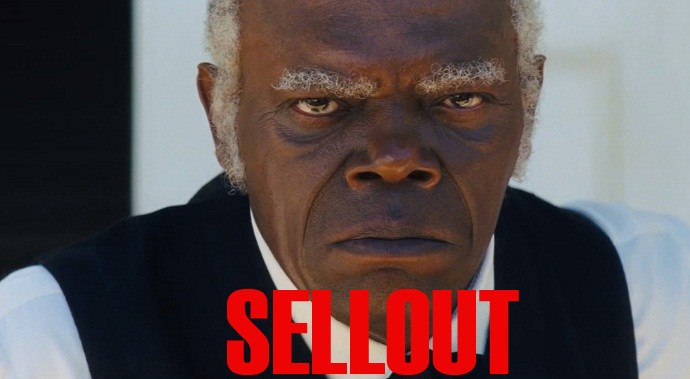
Screen shot of character played by Samuel L. Jackson in Django Unchained (2012) with "Sellout" addition (not an endorsement, by the way), October 31, 2013. (http://forwardtimesonline.com/2013/).

Screen shot of character played by Samuel L. Jackson in Django Unchained (2012) with “Sellout” addition (not an endorsement, by the way), October 31, 2013. (http://forwardtimesonline.com/2013/).

Another guy — who eventually committed suicide in ’98 — told me straight up that people like me were “sellouts,” that “The Man” wasn’t going to accept people like me or him “no matta how many degrees we get” or don’t get. That was six weeks before my committee approved my dissertation, in October ’96. Luckily, I learned not to bring up my education to folks unless it was for professional purposes or unless someone asked.

That these were Black acquaintances from my days as an undergrad at the University of Pittsburgh was a bit surprising, considering that my tendency is to always encourage folks to pursue their dreams. I’d always assumed the worst of the folks — Black, White, Afro-Caribbean and Latino — that I grew up with in Mount Vernon, New York, precisely because their encouragement literally made me suicidal by the time I turned fourteen. By the late-90s, I realized this was more than a New-York-area-social-etiquette-disorder.

With writing and books over the past decade — especially with Boy @ The Window — I’ve experienced some of those same headwinds from folks who seemed to think they had a better idea for the direction of my life than I. When I first started working on my memoir at the end of ’06, I had a conversation with my Pitt and AED colleague Stacey, whom I’d known for sixteen years. Upon telling her about my project, she said, “You need to wait on that,” that I should “publish a few more books,” be in my fifties, before “writin’ a biography.” So I knew that she wasn’t going to buy a copy when it came out. Oh well!

Last fall, at an African American Alumni Council event at Pitt, it was one of my first opportunities to discuss the now published Boy @ The Window, which was immediately followed by public criticism. Right after I talked about the book, an older alumna walked right up to me, and got within a foot or so of my face — close enough to hug. “You’re too young to have a memoir,” she said with a smile on her face, and then walked away as if her’s was the final say on the topic.

At the least, it showed that most don’t know the difference between a memoir (on one period or aspect of one’s life, often with a look at the world beyond) and an autobiography (the story of my entire life). Boy, understand the genre before criticizing it or my role in it already!

One foot in the grave (apparently), June 7, 2014. (http://www.virginmedia.com/).

One foot in the grave (apparently), June 7, 2014. (http://www.virginmedia.com/).

And, yes, I know. I see my Facebook friends especially posting other people’s sayings every single day. About letting go, moving on, forgetting the past, pushing past the haters, sitting in a lotus position, meditating and praying, and then drinking a wheat-grass smoothie. I do let go, I do forgive, and I don’t let the naysayers in my life have the final say. But letting go doesn’t mean I don’t get to highlight some truth, point out hypocrisy, and that I should just be quiet for the sake of being quiet.

It hasn’t been lost on me that most of these specific, potentially dream-destroying microaggressions have come from Black folk, male and female, well-off and immersed in poverty. Do I put these people in the same category as White literary agents who’ve said things to me like, “Oh no, not another abuse story!” or “There are too many black coming-of-age stories in the market?” Of course not. Gate keepers practicing ignorance in the midst of structural racism isn’t the same as people who may have internalized racism.

Or in the latter case, it could just be that my pursuit of what I’ve wanted and finally come to know for my life brought attention to dreams deferred, delayed and denied, by others and by their own fears of failure and success. If I’d let this stand in my way, I’d still be living in Mount Vernon, undoubtedly living in grinding poverty, wondering how could I let everything I wanted out of life get away from me.

Visiting My Uncle Paul in Georgia

31 Saturday May 2014

Posted by decollins1969 in 1, Academia, Boy @ The Window, Carnegie Mellon University, culture, earth, wind & fire, Eclectic, eclectic music, Marriage, Mount Vernon New York, music, Pittsburgh, Pop Culture, race, Sports, Work, Youth

≈ Leave a comment

Tags

40th Anniversity of Brown v. Board of Education, Allergies, Atlanta, Basketball, Conference, Delta Airlines, Family, Georgia Dome, Gill Family, Gwinnett County, Hartsfield International Airport, ITT Technical Institute, Joe Trotter, Laser Light Shows, Self-Discovery, Self-Reflection, Stone Mountain, The Gill Family, UGA, Uncle George, Uncle Paul, Uncle Robert, Uncle Sam, University of Georgia


Stone Mountain Park, lake side view/photo (was within visual range on the road side view of Confederate-ana back in '94), Stone Mtn, GA, May 31, 2014. (http://new.gwinnetteconomicdevelopment.com/).

Stone Mountain Park, lake side view/photo (was within visual range on the road side view of Confederate-ana back in ’94), Stone Mtn, GA, May 31, 2014. (http://new.gwinnetteconomicdevelopment.com/).

The second leg of what would eventually be five visits with my extended Gill and Collins families as an adult occurred the month after meeting much of my extended Gill family in Houston in April ’94. This second visit was very different from the first. It was part of a three-city trip, between research for my dissertation in DC (and a visit with my friend Laurell in the process) and going up to Mount Vernon to visit my Mom and siblings. Plus, like the Houston-New Orleans trip, I’d come to the Atlanta area to present at a conference, one at the University of Georgia on the 40th Anniversary of the Brown v. Board of Education decision.

I’d been invited to talk about multiculturalism as it related to desegregation in terms of curriculum by Layli Phillips, then an Assistant Professor in African American Studies and Psychology at the Athens campus, about sixty miles from my uncle’s place in Gwinnett County. It was an invite and acceptance my advisor Joe Trotter wasn’t happy about, as it was “too soon” for me to discuss my topic “in front of strangers.” But Phillips had already bought the round-trip tickets for me to fly from DC to Atlanta, and then from Atlanta to LaGuardia, per my request. Oh well!

I came to Hartsfield all tired and stuffed up from hay-fever-heavy DC that Saturday afternoon in mid-May, a couple of days before my UGA presentation. There, I met my Uncle Paul right at the gate, along with his seventeen-year-old son. Like my Uncles Sam and Robert, Uncle Paul was taller than me, a still wiry six-five at thirty-eight, still fit enough to stop, pop and hit a J despite his swollen knees. His son was built just like him, and a star basketball player at his high school in Gwinnett County.

They didn’t give me any time to rest. I was immediately taken to their two-bedroom apartment in some off-the-main route beaten path, a gated community with stucco walls and plastic pink flamingos to boot. There, I’d also meet one of my uncle’s girlfriends, an older woman who apparently understood that my Uncle Paul wasn’t exactly ready to settle down.

My Uncle Paul’s playing days in Houston (college and NBA) and overseas had ended long before I’d learn how to shoot a J myself. He’d gone back to school — specifically ITT Technical Institute — in the mid-1980s and become an A/V expert who specialized in special effects, including laser lights, smoke and other technologies meant to enhance the concert-going experience. He’d worked before on tours, with Earth, Wind + Fire (when Maurice White was still healthy enough to tour) and New Edition. That’s how our family learned that Johnny Gill was a distant cousin, as his great-grandmother and my great-grandmother were sisters, one staying in the Texas-Arkansas area, the other moving to Seattle for some reason or other.

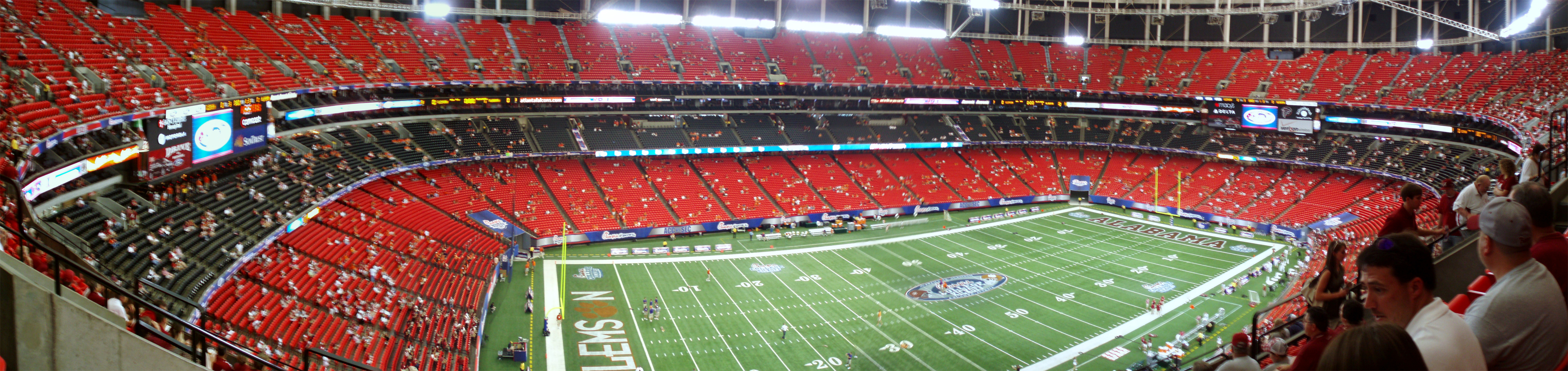
Panoramic pic of the Georgia Dome, Atlanta, GA (where was on the left of the field back in '94), August 30, 2008. (Latics via Wikipedia). Released to  public domain via CC-SA-3.0.

Panoramic pic of the Georgia Dome, Atlanta, GA (where was on the left of the field back in ’94), August 30, 2008. (Latics via Wikipedia). Released to public domain via CC-SA-3.0.

There was a jazz and blues extravaganza going on at the Georgia Dome in downtown Atlanta that evening, and so within hours of landing, we were back in the heart of the city, setting up equipment on what normally was the playing field for the Atlanta Falcons. I was so mesmerized thinking about losing a football in the lights of the Georgia Dome that my uncle yelled at me to “get my ass in gear,” because he needed help unloading some heavy equipment. I wasn’t the biggest fan of the quality of music, but having a backstage view of the whole thing, and to see what my uncle Paul did for a living, I was truly, truly impressed.

That Sunday I spent in my uncle’s home, hearing about his playing days, his knee issues, his knowledge of basketball as a game, his travels to play in Europe, and indirectly, his sexual conquests. That last part I could’ve done without — I’d spent two days hearing the same thing from my other uncles the month before. Then he grilled me with questions about Mount Vernon, about New York, about why I didn’t play sports, about “the chicks in college.” My Uncle Paul assumed, incorrectly, that living in New York was heaven compared to being tenant farmers in southwestern Arkansas, and that I was in grad school for the sex. “I wouldn’t have made it to where I am if that was what it was all about,” I said in shocked response.

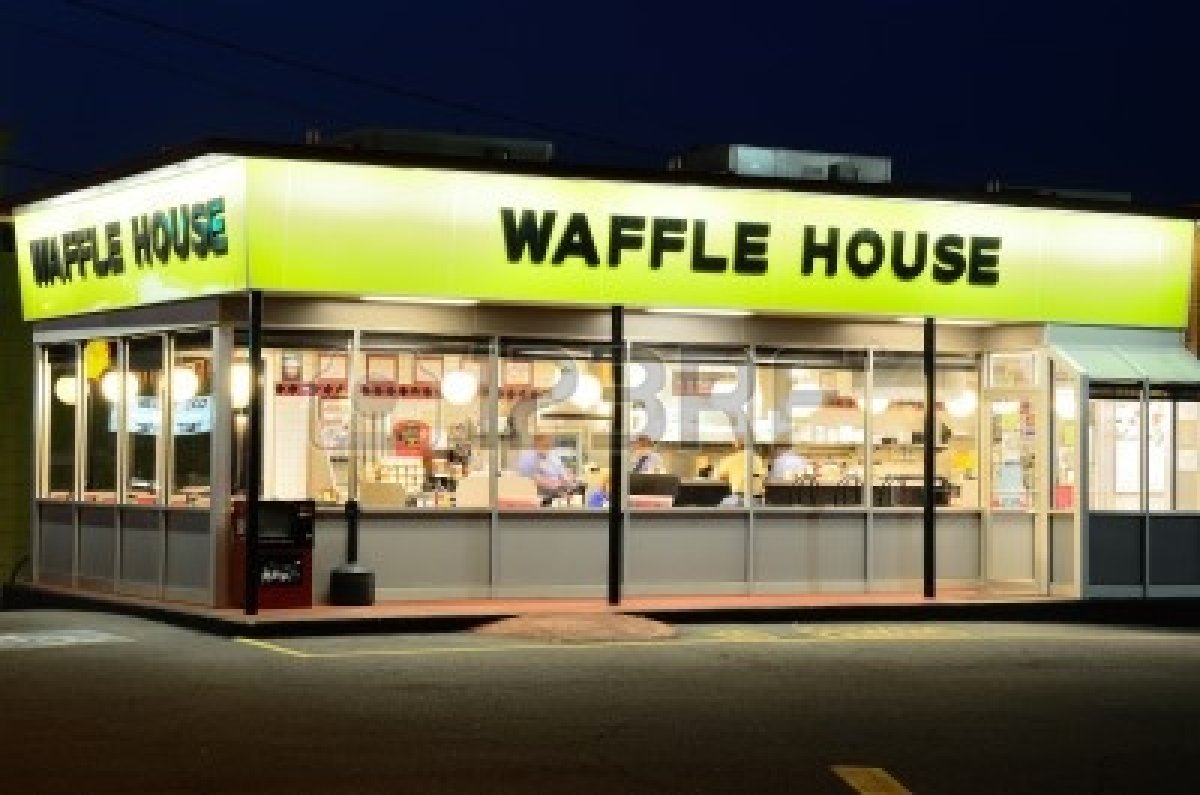
Waffle House, off UGA's main campus (and across street from seedy motel I stay in night before conference), Athens, GA, June 1, 2011. (http://www.123rf.com).

Waffle House, off UGA’s main campus (and across street from seedy motel I stay in night before conference), Athens, GA, June 1, 2011. (http://www.123rf.com).

He made a jambalaya dinner for us and his lady friend, all the while talking about each other’s work. My uncle’s son was bored to tears. Then, after dinner, and after his girlfriend had left and his son had gone to hang out with friends, my uncle took me out in his vintage Porsche 911 (it had been covered in the parking lot up to that point) to some high-class, late-night, members-only club somewhere in Gwinnett. Between him doing somewhere around eighty in a fifty-five and taking me to this place to “meet a girl,” I was in more shock. “I like looking for women on my own, thank you very much,” I yelled through the Mary J. Blige at one point.

I went off that Monday morning to Athens for the Brown Decision conference, and was gone for thirty hours. I did get a ride back from a presenter, and then a ride back my uncle’s place. That’s when I walked into the place to see my cousin on the black-leather living room couch, stripped down and on top of a young woman. He only stopped when I yelled for a second time, “I’m back!” Then, the proverbial scattering of two youngins’ caught up in lust occurred. They left, presumably to finish what they had started.

I left for New York that Wednesday morning, having enjoyed my time with my Uncle Paul, but also seeing some downside to a lifestyle that left him busy and his son without supervision. That some dumb thug killed my cousin four years later was still very much a surprise, as he wasn’t a violent person, at least the person I met in ’94. I felt so horrible for him and for my Uncle Paul, as I couldn’t imagine the totality of the pain of such a tragedy.

But good, bad or otherwise, it felt good to get to know my people, my family. I’d grown up with a family that was one in name only. Poverty, religion, abuse had all rendered the meaning of family useless for me growing up, and seeing more examples of the same thing in my time in Mount Vernon didn’t help. I knew that my Uncle Paul wasn’t perfect. Nor were my uncles in Houston. But I knew they loved each other, had dreams and plans for their lives, and had acted on many of these things in living their lives. I knew that I needed to keep doing the same.

Mothers’ Meeting Day, 1997

17 Saturday May 2014

Posted by decollins1969 in 1, Academia, Boy @ The Window, Carnegie Mellon University, Cleaning, culture, Eclectic, Jimme, Marriage, Mount Vernon High School, Mount Vernon New York, My Father, Pittsburgh, Pop Culture, race, University of Pittsburgh, Youth

≈ Leave a comment

Tags

Abuse, Alcoholism, Baggage, Betrayal, CMU, Insomnia, LaGuardia Airport, Laurell, Misogyny, Mother's Day, Mother-in-Law, Mother-Son Relationship, PhD Graduation, Pitt, US Air, US Airways


A Mother’s Revisions

A Mother’s Revisions

Normally I do a post every May 18th on a topic related to my PhD graduation ceremony at Carnegie Mellon. They usually revolve around two subjects: Joe Trotter and my Mom, betrayal and burnout. For once, I have no intention of doing a post on the seventeenth anniversary of officially becoming “Dr. Collins” and all of the baggage that I brought/came with that. Instead, today’s post is about the day before, Saturday, May 17 ’97. It was the day that my Mom and my future mother-in-law would meet each other for the first time, during my Mom’s one-and-only visit to Pittsburgh during my twelve years there.

I covered the cost of my Mom’s round-trip flight on US Air from LaGuardia to Pittsburgh, knowing that she wouldn’t have been able — or, as it turned out, willing — to see me graduate otherwise. That Friday evening, May 16th, was my Mom’s first time on an airplane since she was pregnant with me, the summer of ’69, when she visited her family in Arkansas. She’d already missed my ceremonies at Pitt for my bachelor’s and master’s in ’91 and ’92 respectively, and, as a result, I hadn’t gone to my graduations those years either.

So I made it easy for her this time around. Or rather, me and my then girlfriend Angelia made it easy for her. I gave up my studio apartment that weekend, because my Mom wasn’t comfortable with me putting her up in a hotel. Angelia cleaned my apartment from top to bottom — including the moulding at the bottom of my apartment’s walls. The place wasn’t this clean the day I’d moved in back in ’90!

But with so many other things that week, my Mom showed little appreciation for the significance of this trip, or for what we were doing to make this trip as convenient for her as possible. I went through Friday night and Saturday at Angelia’s apartment on the edge of East Liberty, about a twelve-minute walk away, where I hadn’t done an overnight before. I spent the first half of the next day going back and forth between my Mom, Angelia, my high school friend Laurell and her sister Naomi and unofficial surrogate (who were all staying at the Downtown Marriott).  I took my Mom to both Pitt and CMU, to show her the place of my ten years’ working toward something much more important than a second high school diploma. I might as well have been taking my son to both campuses when he was a newborn!

Around 2:30 pm, I realized we needed to get to Angelia’s mother’s place in Homewood for a mid-afternoon meal. That was next on the schedule. I think we took the bus, the 71D from a block off CMU to Homewood, and walked the three blocks up a steep hill to Monticello Street. There, Angelia’s mom extended a long greeting, a hug for which my Mom hardly seemed prepared. Angelia was also there, and had bought a KFC bucket meal for the four of us to share.

After a few pleasantries, it started. How my mother and eventual mother-in-law, in their first-ever meeting, spent three hours discussing their failed marriages and the horrible nature of Black men the day before my graduation, I really don’t know. I was in a fog, worn out from a week’s worth of insomnia and from the growing realization that my Mom didn’t really care about my journey or accomplishments.

I stayed and respected my elders, maybe too much. Three hours listening to stories I already knew, between my first-hand knowledge of my father Jimme and my idiot ex-stepfather Maurice, not to mention the stories Angelia had told me about her mother’s trials (luckily, Angelia never witnessed these, because her mother’s marriage was over by the time she’d turned two). A concussion here, a bruised lip there. A broken jaw, a fractured arm. Alcoholism and abuse, and men, working or unemployed, not paying any bills. “Men are no good,” my Mom said over and over again.

Of course, I didn’t count, for as far as my Mom was concerned, I wasn’t a man, because I’d spent the previous decade as a student. But that wasn’t the worst part. My Mom did a bunch of revisionist history in telling the story of “raisin’ six kids” and her doomed two marriages, somehow writing me and Darren and the decisions she had some degree of control over out of this story.

I’d never been part of a conversation like this as an adult. As a six or ten-year-old kid on The Avenue in Mount Vernon with my Mom and her hospital friends, yes, but not since those times. I felt as if I might as well found some stoop outside, sat down with a 40, and fallen into a deep sleep.

Even Angelia’s mom wanted to change the subject by the middle of hour number three. Instead, she used her elderly-ness as a excuse to beg off more conversation on the topic of misogyny, told me that she was proud of me, said that she was excited about going to the CMU ceremony, and retired for the evening. I wish I could’ve gone upstairs with her and done the same. I instead had the distinction of dropping my Mom off at my apartment, picking up Angelia and going down to Station Square to eat dinner with Laurell, Naomi and Archie. And that was all the day before the graduation ceremony!

What Can Brown Do For You (Now)?: 60 Years Come & Gone

16 Friday May 2014

Posted by decollins1969 in 1, Academia, Eclectic, Politics, race

≈ Leave a comment

Tags

Affirmative Action, Brown v. Board of Education (1954), Colorblind Racism, Coma, Desegregation, Diversity, DNR, Higher Education, Integration, K-16 Education, Life Support, Public Education, Racial Diversity, Racial Inequality, Racism, Re-segregation, Resegregation, Schuette v. Coalition (2014), Supreme Court, Supreme Court decisions, Whiteness


What can brown do for you?, Brown Squadron,  Relay for Life, 2007. (http://www.behance.net/).

What can brown do for you?, Brown Squadron, Relay for Life, 2007. (http://www.behance.net/).

Tomorrow marks the 60th anniversary of the great Brown v. Board of Education of Topeka, Kansas decision (1954), a Monday that lived in infamy among White supremacists in the South for decades, as the Supreme Court overturned the constitutional basis for Jim Crow segregation by a 9-0 vote. But six decades later, the Brown decision is in a coma and on life support, with a DNR order hanging over it, waiting for a close relative to sign. This after the Supreme Court ruled in Schuette v. Coalition to Defend Affirmative Action (2014) last month that states like Michigan can amend their constitutions via majority vote to ban affirmative action. With this 6-2 decision, the Roberts court effectively ended any serious efforts at racial inclusion and diversity in public institutions, especially public K-16 education.

While deliberate exclusion of people of color, women and other minorities from America’s public institutions remains unconstitutional (and illegal, by the way — see the Civil Rights Act of 1964), this last court decision has now made it possible for public institutions to refrain from making any effort to include anyone other than White males in admissions and hiring policies. Yet there has been a long road to travel for us to reach this point, as it has taken lobbyists, law makers and lawyers roughly forty years to wound, disable and incapacitate Brown.

Bill Schuette, (Michigan’s attorney general), with Jennifer Gratz (of Gratz v. Bollinger decision [2003] and the XIV Foundation, outside Supreme Court, Washington, DC October 2013. (Susan Walsh/AP via New York Times).

Bill Schuette, (Michigan’s attorney general), with Jennifer Gratz (of Gratz v. Bollinger decision [2003] and the XIV Foundation), outside Supreme Court, Washington, DC October 2013. (Susan Walsh/AP via New York Times).

If one were old enough to remember the Swann v. Charlotte-Mecklenburg decision (1971) — the one where the Supreme Court upheld widespread busing as a methodology for public school integration — it would have seemed that the matter was settled, at least legally. After all, in the seventeen years between Brown and Swann, the court had consistently ruled in favor of policies that made racial integration the centerpiece of a strategy to bring equal opportunity to America’s public institutions. And especially during President Lyndon Baines Johnson’s administration and with Congress, between the Civil Rights Act (now weeks away from turning fifty), the Voting Rights Act (1965), the Elementary and Secondary Education Act (1965) and the Higher Education Act (1965), it seemed that segregation was itself about to be dead and buried.

Well, segregation — and the structural and institutional racism that supports it — is alive, as much as the evil undead can be alive and unwell. And the forces and people who never wanted desegregation — or worse, integration — in the first place have worked my entire lifetime for this moment. They simply took the NAACP’s legal strategy to end Plessy with Brown, just so they could strangle it while sleeping, right through the Supreme Court. Including the:

– Milliken v. Bradley decision (1974). Limited desegregation efforts in Detroit to its city limits, making it possible for suburban areas to refuse to partake in school desegregation efforts across the country.

– Bakke v. University of California at Davis decision (1978). Racial quotas for seats at colleges via admission policies found unconstitutional – race can be accounted for as part of admissions decisions, but no actual numbers should be involved.

– Missouri v. Jenkins decision (1995). Forcing the Kansas City school district to spend $200 million per year since 1990 (after 13 years of court battles) for magnet schools and busing was too much (beyond court’s remedial authority) — and forced the lower court to accept a less expensive (and less effective) desegregation plan.

– Grutter v. Bollinger and Gratz v. Bollinger decisions (2003). The split decisions upheld race as one of a plethora of criteria public higher education institutions like the University of Michigan Law School and the University of Michigan (undergraduate division) could use in their admission process, as racial diversity and equity remained a laudable goal. But the court ruled that ranking race and other factors with a numbers system was the equivalent of a quota system, making this formula — but not the policy — unconstitutional.

Flatlining EKG, March 2010. (http://potashinvestingnews.com/).

Flatlining EKG, March 2010. (http://potashinvestingnews.com/).

Now Brown is truly hanging by a thread, and with it, the ideal of racial equality and equality of opportunity for visible minorities. I don’t want to hear about  the Texas state system’s socioeconomic admissions policies or Richard Kahlenberg’s tired argument about getting at racial diversity through the economic. Most poor students can’t afford even public institutions like the University of Texas at Austin, and Kahlenberg’s center-right argument disguises the issue of racial and economic inequality in K-12 public education.

Let’s face it while we’re still fighting — and yes, we need to keep fighting on this front. On this issue, the folks on the side of colorblind racism and segregation have all but won. Brown may well remain the most important Supreme Court decision in the history of the US. With the Schuette decision, though, we might as well find a priest to administer last rites.

Where 1 PhD = A Second High School Diploma

14 Wednesday May 2014

Posted by decollins1969 in 1, Academia, Boy @ The Window, Carnegie Mellon University, culture, Eclectic, Mount Vernon High School, Mount Vernon New York, New York City, Pittsburgh, Pop Culture, race, University of Pittsburgh, Youth

≈ Leave a comment

Tags

Associate's Degree, CMU, High School Diploma, Homelessness, Jealousy, job search, Lame Jokes, Mother-Son Relationship, PhD Graduation, Pitt, Subway, Teachers College, Westchester Business Institute, White Plains New York, Yonkers


Absurditty (or an Absurd Ditty, deliberately misspelled), where $100 = 2 quarters, May 14, 2014. (Donald Earl Collins).

Absurditty (or an Absurd Ditty, deliberately misspelled), where $100 = 2 quarters, May 14, 2014. (Donald Earl Collins).

I could’ve just as easily titled this post, “Road to Boy @ The Window, Part 5: My Mother and My Doctoral Graduation.” Precisely because any chance I had of immediately getting over the psychological and emotional hump of finishing a doctorate while dealing with the betrayals of an advisor and dissertation committee was gone by the end of my graduation day, the third Sunday in ’97 (anniversary number seventeen, just four days away). That process opened me up to looking at my past, to figuring out how someone like me could go on to do a PhD, to teach, to write, to learn, all well beyond the expectations of my parents and my classmates.

The process of feeling uneasy about my relationship with my Mom, though, had begun the day after my interview at Teachers College. That Tuesday, May 13th, I left the Hotel Beacon, made my way down to the 66th Street stop, and caught the 1 train to The Bronx and Van Cortlandt Park. I then caught a Westchester Bee-Line Bus up Broadway and crossed the Yonkers-Bronx border, where I got off to walk up a one-block-long hill.

I arrived at my Mom’s temporary place on Bruce Avenue. This was where she and my younger siblings had been living since the end of ’95, as a result of an electrical fire that swept through two floors of 616. Not to mention, an incompetent Mount Vernon Fire Department that did more damage by flooding two of the three buildings on the property in the process of putting the fire out. It was a sparse place that made 616 look like a luxury high-rise by comparison. There were holes in the walls because my younger siblings Yiscoc and especially Eri had punched through the cheap plaster and nonexistent sheet rock in their teenage anger and rage.

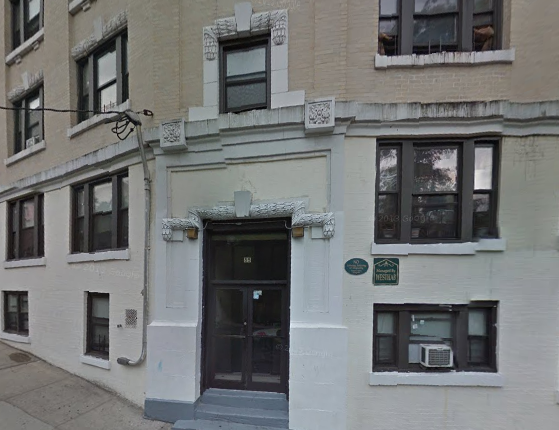
Front door of 85 Bruce Avenue, Yonkers, NY (screen shot), taken in October 2007. (Google Maps).

Front door of 85 Bruce Avenue, Yonkers, NY (screen shot), taken in October 2007. (Google Maps).

It was in the midst of all of this that my Mom was finally graduating from Westchester Business Institute with her associate’s. I was happy for her. The only thing that concerned me was the kind of work she could find with the degree. I was willing to help her in any way I could, including coming up and spending a few days in Yonkers to attend her ceremony in White Plains that Tuesday evening. I wanted to continue to provide my Mom the emotional support that I thought she wanted.

That began to change the morning after her graduation ceremony. We were sitting down at this cafeteria bench that served as the kitchen table, with her drinking cream-infused tea from a chipped white flower mug and eating a piece of toast while I contemplated walking down the hill for some yogurt. We’d been talking about looking for work, about her moving out and finding a place in White Plains, or even moving back to a fully renovated 616. I brought up the real possibility that if I got the Teachers College job, I would move back to the New York area (though not Mount Vernon — out of the question).

This was when my Mom said, “You know, you were in school so long, you could’ve had another high school diploma.” It was out of the blue, and caught me completely off guard. It was quiet for a moment, with me in a deep frown, and my Mom sitting there for a few seconds. Then she forced a laugh. “It’s a joke,” she said, as if I was supposed to be oblivious to the nonverbal displays of disdain for nearly a decade’s worth of my work. And, what was the joke? My degree, or the amount of time and energy I spent in earning it?

I sort of ignored what my Mom had said at first. But really, how could I? Mom had told the lamest of jokes over the years — like about how diarrhea “was like ‘dying in the rear’,”  she’d say as if she heard the joke from someone else. But no matter how I looked at it, comparing everything I went through from August ’87 up to that point to a diploma that I earned while living in two hells — 616 and Mount Vernon High School — wasn’t a joke. Not for either of us.

My Mother's Associate's Degree Photo, Westchester Business Institute, May 12, 1997.

My Mother’s Associate’s Degree Photo, Westchester Business Institute, May 12, 1997.

My Mom disappointed me a day later, as she said, “I don’t have to tell you that I’m proud of you. I tell other folks, just not you.” It was in response to me saying that I thought her joke wasn’t one at all. But she hadn’t sealed our fates as a mother and son in a long-term strained relationship, at least not yet. That would occur a few days later.

Even under the strictest of measures, comparing a PhD to a high school diploma is ridiculous. It’s like comparing the buying power of Oprah to an ant colony. But I figured out a long time ago, long before starting my master’s program in history at Pitt, that a degree is only worth anything if you use it to enhance your life, advance your career, or pursue your calling. Even with all my qualms. About academia, about the publish-or-perish model, about the not-for-profit profit world, even about myself as a writer. It was all worth it.

One thing I did learn, though, about my Mom, maybe for the first time. I’d always wondered about the saying, “I love you, but I don’t like you.” I hadn’t really understood what that meant until the week of my doctoral graduation.

← Older posts
Newer posts →

Boy @ The Window: A Memoir

Boy @ The Window: A Memoir

Places to Buy/Download Boy @ The Window

There's a few ways in which you can read excerpts of, borrow and/or purchase and download Boy @ The Window. There's the trade paperback edition of Boy @ The Window, available for purchase via Amazon.com at http://www.amazon.com/Boy-Window-Donald-Earl-Collins/dp/0989256138/

There's also a Kindle edition on Amazon.com. The enhanced edition can be read only with Kindle Fire, an iPad or a full-color tablet. The links to the enhanced edition through Apple's iBookstore and the Barnes & Noble NOOK edition are below. The link to the Amazon Kindle version is also immediately below:

scr2555-proj697-a-kindle-logo-rgb-lg

Boy @ The Window on Amazon.com: http://www.amazon.com/Boy-The-Window-Memoir-ebook/dp/B00CD95FBU/

iBookstore-logo-300x100

Boy @ The Window on Apple's iBookstore: https://itunes.apple.com/us/book/boy-the-window/id643768275?ls=1

Barnes & Noble (bn.com) logo, June 26, 2013. (http://www.logotypes101.com).

Boy @ The Window on Barnes & Noble: http://www.barnesandnoble.com/w/boy-the-window-donald-earl-collins/1115182183?ean=2940016741567

You can also add, read and review Boy @ The Window on Goodreads.com. Just click on the button below:

Boy @ The Window

Twitter Updates

Tweets by decollins1969
  • RSS - Posts
  • RSS - Comments

Archives

  • June 2025
  • April 2023
  • September 2022
  • August 2022
  • July 2022
  • June 2022
  • May 2022
  • April 2022
  • March 2022
  • January 2022
  • December 2021
  • November 2021
  • October 2021
  • September 2021
  • August 2021
  • July 2021
  • June 2021
  • April 2021
  • March 2021
  • February 2021
  • January 2021
  • December 2020
  • November 2020
  • October 2020
  • September 2020
  • August 2020
  • July 2020
  • May 2020
  • April 2020
  • March 2020
  • January 2020
  • December 2019
  • November 2019
  • August 2019
  • July 2019
  • June 2019
  • May 2019
  • April 2019
  • March 2019
  • February 2019
  • January 2019
  • December 2018
  • November 2018
  • October 2018
  • September 2018
  • August 2018
  • July 2018
  • June 2018
  • May 2018
  • March 2018
  • February 2018
  • January 2018
  • December 2017
  • November 2017
  • October 2017
  • September 2017
  • August 2017
  • July 2017
  • June 2017
  • May 2017
  • April 2017
  • March 2017
  • February 2017
  • January 2017
  • December 2016
  • November 2016
  • October 2016
  • September 2016
  • August 2016
  • July 2016
  • June 2016
  • May 2016
  • April 2016
  • March 2016
  • February 2016
  • January 2016
  • December 2015
  • November 2015
  • October 2015
  • September 2015
  • August 2015
  • July 2015
  • June 2015
  • May 2015
  • April 2015
  • March 2015
  • February 2015
  • January 2015
  • December 2014
  • November 2014
  • October 2014
  • September 2014
  • August 2014
  • July 2014
  • June 2014
  • May 2014
  • April 2014
  • March 2014
  • February 2014
  • January 2014
  • December 2013
  • November 2013
  • October 2013
  • September 2013
  • August 2013
  • July 2013
  • June 2013
  • May 2013
  • April 2013
  • March 2013
  • February 2013
  • January 2013
  • December 2012
  • November 2012
  • October 2012
  • September 2012
  • August 2012
  • July 2012
  • June 2012
  • May 2012
  • April 2012
  • March 2012
  • February 2012
  • January 2012
  • December 2011
  • November 2011
  • October 2011
  • September 2011
  • August 2011
  • July 2011
  • June 2011
  • May 2011
  • April 2011
  • March 2011
  • February 2011
  • January 2011
  • December 2010
  • November 2010
  • October 2010
  • September 2010
  • August 2010
  • July 2010
  • June 2010
  • May 2010
  • April 2010
  • March 2010
  • February 2010
  • January 2010
  • December 2009
  • November 2009
  • October 2009
  • September 2009
  • August 2009
  • July 2009
  • June 2009
  • May 2009
  • April 2009
  • March 2009
  • February 2009
  • January 2009
  • December 2008
  • November 2008
  • October 2008
  • September 2008
  • August 2008
  • July 2008
  • June 2008
  • May 2008
  • April 2008
  • March 2008
  • February 2008
  • January 2008
  • December 2007
  • November 2007
  • October 2007
  • September 2007
  • August 2007
  • July 2007
  • June 2007

Recent Comments

MaryPena's avatarMaryPena on My Day of Atonement/Bitter Hat…
decollins1969's avatardecollins1969 on No Good Teaching Deed Goes…
Mary Rose O’Connell's avatarMary Rose O’Connell on No Good Teaching Deed Goes…

NetworkedBlogs on Facebook

NetworkedBlogs
Blog:
Notes From a Boy @ The Window
Topics:
My Life, Culture & Education, Politics & Goofyness
 
Follow my blog

616 616 East Lincoln Avenue A.B. Davis Middle School Abuse Academia Academy for Educational Development AED Afrocentricity American Narcissism Authenticity Bigotry Blackness Boy @ The Window Carnegie Mellon University Child Abuse Class of 1987 CMU Coping Strategies Crush #1 Crush #2 Death Disillusionment Diversity Domestic Violence Economic Inequality Education Family Friendship Friendships Graduate School Hebrew-Israelites High-Stakes Testing Higher Education History Homelessness Humanities Humanities Program Hypocrisy Internalized Racism Jealousy Joe Trotter Joe William Trotter Jr. K-12 Education Love Manhood Maurice Eugene Washington Maurice Washington Misogyny Mother-Son Relationship Mount Vernon High School Mount Vernon New York Mount Vernon public schools Multiculturalism MVHS Narcissism NFL Pitt Pittsburgh Politics of Education Poverty President Barack Obama Race Racial Stereotypes Racism Relationships Self-Awareness Self-Discovery Self-Reflection Sexism Social Justice Teaching and Learning University of Pittsburgh Violence Whiteness Writing

Top Rated

Blog at WordPress.com.

  • Subscribe Subscribed
    • Notes from a Boy @ The Window
    • Join 103 other subscribers
    • Already have a WordPress.com account? Log in now.
    • Notes from a Boy @ The Window
    • Subscribe Subscribed
    • Sign up
    • Log in
    • Report this content
    • View site in Reader
    • Manage subscriptions
    • Collapse this bar
 

Loading Comments...