• About Me
  • Other Writings
  • Interview Clips
  • All About Me: American Racism, American Narcissism, and the Conversation America Can’t Have
  • Video Clips
  • Boy @ The Window Pictures
  • Boy @ The Window Theme Music

Notes from a Boy @ The Window

~

Notes from a Boy @ The Window

Category Archives: Academia

Where’s the Historical Documentary on W. E. B. Du Bois?

18 Sunday Jan 2015

Posted by decollins1969 in 1, Academia, culture, Eclectic, Marriage, Movies, Politics, Pop Culture, race, Work, Youth

≈ Leave a comment

Tags

Albert Einstein, Do The Right Thing (1989), Genius, Historical Documentaries, How We Got Here (2015), Racism, Selma, Selma (2014), The Men Who Built America (2014), W. E. B. Du Bois, Wernher von Braun, Whiteness


Or, "Sal, how come you ain't got no brothers up on the wall here?," Giancarlo Esposito as Buggin' Out from Do The Right Thing (1989). (http://www.theroot.com/).

Or, “Sal, how come you ain’t got no
brothers up on the wall here?,” Giancarlo Esposito as Buggin’ Out from Do The Right Thing (1989). (http://www.theroot.com/).

Or for that matter, where’s the documentary on Alain Locke, Anna Julia Cooper, John Hope Franklin, Horace Mann Bond, Richard Wright, Mary Church Terrell, and so many other Black intellectuals, writers and educators? If your answer is, “check out California Newsreel,” or PBS for a documentary on the Harlem Renaissance, then you obviously don’t watch TV for knowledge. Yes, California Newsreel and other independents have made documentaries on many of these important figures in American and African American history. But other than a handful of PBS documentaries done under the American Masters series, a few here and there on Zora Neale Hurston, Paul Robeson, Jack Johnson, and Marcus Garvey, and a 1993 documentary on the Harlem Renaissance, there isn’t much in the land of historical documentaries if you’re outside academia.

Still, I began with Du Bois for a reason. Given his influence on African American studies, American studies, American history, African American history, sociology, psychology, higher education, poetry, the Harlem Renaissance, the New Negro Movement, Whiteness studies, Transatlantic studies, civil rights activism, and the NAACP, it would seem a documentary for a broad audience is a bit overdue. He died in 1963 at the age of ninety-five, and February 23 marks 147 years since his original year of birth (1868). Most of us, though, can’t even pronounce his name correctly, assume that he’s French (read “White” here) or stereotype him as an egghead when we find out that his PhD in history’s from Harvard.
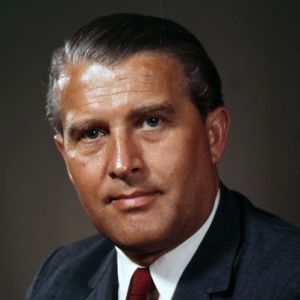
Wernher von Braun (1912-1977), a "reformed" Nazi, American citizen, and father of US space program (or WWIII, TBD). (http://biography.com).

Wernher von Braun (1912-1977), a “reformed” Nazi, American citizen, and father of US space program (or WWIII, TBD). (http://biography.com).

Yet, year in and year out, TV season after TV season, films and documentaries are made about White moguls and intellectuals, as if the only people with brains have been White males. Just in the past year alone, there have been at least three miniseries/documentaries on the great White male in history: Ancient Impossible: Ancient Einsteins, How We Got Here, and The Men Who Built America. Apparently the only smart ancients were Greeks who just happened to live in Egypt and master-race true believers like Henry Ford and Wernher von Braun built our modern world with their bare hands. Even ordinary White males ought to be insulted, no? Especially since Andrew Carnegie and J.D. Rockefeller apparently built the country without their forefathers’ muscle, sweat and blood.

But that’s just it, according to Du Bois (via Black Reconstruction, 1935). Even though many of these documentaries all but wipe ordinary people out of existence, ordinary Whites can glean a psychological wage from Whiteness just from seeing someone who looks like them represented in pixels, especially White males. Even if they can in no way become that person. That level of analysis alone would make Du Bois worthy of a well-financed documentary. That is, of course, if he were White and if we pronounced his name as ” Doo-Bwah.”

Why I am bringing this up on Martin Luther King, Jr.’s birthday holiday? Isn’t Black History Month and Du Bois’ birthday next month? Precisely because we need to reflect on what we want to see on screen and in other places in our lives. Every day, every month, every time. Selma‘s doing gangbusters, is well-written, and got great acting. What more can you ask for? Yet the Oscar committee all but shunned it because it’s a “Black film” that took a smidgen of poetic license.  And, because Selma showed what everyone knows from listening to the LBJ tapes — that one of the great presidents who pushed through the Civil Rights Act and Voting Right Act was also a racist — the awards folks have snubbed it.

W. E. B. Du Bois and his wife Nina with their son, Burghardt, 1897. (http://scua.library.umass.edu).

W. E. B. Du Bois and his wife Nina with their son, Burghardt, 1897. (http://scua.library.umass.edu).

Seriously, how many times do we need to hear how great it was for men who weren’t self-made and who benefited from government subsidies to become billionaires at a time when a $500 a year salary made the average American man affluent (1880, by the way)? Or how much more to I need to hear to know that Einstein spent far more time pondering the cosmos than he did working on his marriage or being there for his two kids?

Too often we put great people on a pedestal as if they never had diarrhea or had days where their best efforts just weren’t good enough. Even Du Bois wasn’t an exception in this regard. He lost his only son when the latter was only eighteen months old, cheated repeatedly on his wife, and almost singlehandedly got Marcus Garvey arrested. But, then again, shouldn’t this make Du Bois documentary-worthy, too? Du Bois was a quintessential American, after all.


The Comedy of a Tragic Upbringing

10 Saturday Jan 2015

Posted by decollins1969 in 1, Academia, Boy @ The Window, Christianity, culture, Eclectic, Hebrew-Israelite, Jimme, Mount Vernon High School, Mount Vernon New York, Movies, My Father, New York City, Politics, Pop Culture, race, Religion, Youth

≈ Leave a comment

Tags

616, 616 East Lincoln Avenue, Alchemy, Alcoholism, Autobiography, Child Abuse, Comedy, D.L. Hughley, Dave Chappelle, Domestic Violence, Eddie Murphy, Evangelical Christianity, Father-Son Relationships, Fatism, Ghetto Klown (2014), John Leguizamo, Lewis Black, Mother-Son Relationship, Neglect, Physical Violence, Playwright, Poverty, Psychological Abuse, Respectability Politics, Richard Pryor, Rodney Dangerfield, Routines, Stand-Up Comedy, Tragedy, Transmutation


John Leguizamo playing 'Abuelo' in Tales from a Ghetto Klown, PBS Arts Festival, July 2012. (http://www.pbs.org).

John Leguizamo playing ‘Abuelo’ in Tales from a Ghetto Klown, PBS Arts Festival, July 2012. (http://www.pbs.org).

Over New Year’s weekend, I watched John Leguizamo’s HBO comedy special Ghetto Klown (2014), based on one of his one-man autobiographical Broadway shows. I don’t think of Leguizamo as funny in the same way I think of Lewis Black or Dave Chappelle or Eddie Murphy. The sweet spot for me in terms of what is funny or not funny is a routine that makes me think for a second or two, not just laugh out of sheer expectations for a funny delivery or line. Otherwise, I’d think of D.L. Hughley as a great comedian, instead of as a vile one with equally vile opinions on race and culture.

Leguizamo’s hardly the funniest comedian. But then again, he’s always been more than one thing. He’s essentially a playwright, an actor, and comedian, which means Leguizamo’s a very elaborate storyteller. In most of his work, a nonfiction storyteller. I’ve seen some of his other one-man work before. With Ghetto Klown, though, I saw and felt the sense of tragedy and regret that I hadn’t seen in his other plays and specials. Especially when it came to his family — specifically his father — and his closest friends.

When Leguizamo went through his routine about how his mother and father were upset with him about he had portrayed them in his plays as somewhat selfish and oftentimes neglectful and abusive, I understood. I’ve only written one book about my life, and my Mom and dad have both been offended by the idea that I could write about them without their permission or blessings. Leguizamo used them as bits for his comedy and Broadway stage routines for years. That’s a lot of courage, and it’s a lot of tragedy to expose, too.

Transmutation of lead bars into gold, March 2013. (http://quazoo.com).

Transmutation of lead bars into gold, March 2013. (http://quazoo.com).

I’ve thought about it a few times over the past fifteen years. What if I decided to do a stand-up routine that included elements of my upbringing? How would I do that? How would I make domestic violence and child abuse and poverty funny?

I’d start with my father, who I’d call Jimme and my father interchangeably, since that’s been the nature of our relationship for forty-five years. I’ve been able to imitate his language, his drunken stupor, his evil meanness and off-kilter mannerisms since I was fifteen. It would be easy enough to do all of his “po’ ass muddafucka…” insults in bar scenes, all while getting robbed and beaten up by other alcoholics.

I could also do my now deceased ex-stepfather Maurice, especially his constant threats to put me in the hospital or kill me. “Watch dat base in yo’ voice, boy, ‘fore I cave yo’ chest in!,” he started saying to me once my voice changed with puberty. I could imitate Maurice when he weighed over 400 pounds and wore size-54 Fruit-of-the-Loom briefs around 616, with enough fat and dinginess to make me wanna puke.

I could even imitate my Mom, at least on the threatening front. If I argued with her too long about something important that she didn’t want to talk about (like paying bills, for instance), she’d tell me, “Shut up o’ I’ma gonna cut the piss out of you.” Or I could run around a stage singing at the top of my lungs to evangelical Christian music while also acting like my younger brothers, who’d get into knockdown fights in the living room while my Mom was in her spiritual zone.

The fact is, some of the best comedy grows out of tragedy. It may not be funny to the respectable middle class types or the respectability politics types. They both would prefer people “forget about” their pasts and “just move on,” as if these issues are taboo. But you can’t be a very good comedian or writer without confronting your upbringing in some way.

Richard Pryor doing stand up, posted August 11, 2014. (http://deadline.com).

Richard Pryor doing stand up, posted August 11, 2014. (http://deadline.com).

I attempted at times in Boy @ The Window to inject some sarcasm or comedy in many of the tragic scenes in the book. Because they reflecting my thinking in the moments in which they occurred, whether in ’82 or ’88. The few people who commented on this aspect of the memoir didn’t like the comedy or the language. It was because they couldn’t reconcile the mild-mannered version of myself that I presented to the world in high school or in academia with the way in which I grew up.

Watching Leguizamo in Ghetto Klown reminded me of what I learned in watching Rodney Dangerfield (who himself was sexually abused and neglected by his parents growing up) and Richard Pryor (the son of an active and neglectful prostitute) over the years. We all have baggage and demons to deal with every day of our lives. We ignore that past and those evils at risk to ourselves and every person we’ve ever loved. We must turn the tragedy of our upbringing into something that isn’t just a cancer of pain. Be it through storytelling, autobiography, even the kind of comedy that those whose lives were much more stable growing up can appreciate but can never fully understand.

Can There Ever Be Too Much Race In A US History Course?

05 Monday Jan 2015

Posted by decollins1969 in 1, Academia, culture, Eclectic, Politics, Pop Culture, race, University of Pittsburgh, Work, Youth

≈ Leave a comment

Tags

African Slaves, Capitalism, Carnegie Mellon, CMU, Course Evaluations, Critical Thinking, Democracry, Duquesne University College of Education, George Washington University, History as Trivia, Independent Thinking, Native Americans, Pitt, Racism, Slavery, US History


ODing on chocolate via a hypodermic needle, January 5, 2015. (http://buzzfeed.com).

ODing on chocolate via a hypodermic needle, January 5, 2015. (http://buzzfeed.com).

For nearly every semester in which I have taught a US history course — and I’ve been teaching them on and off since ’92 — one or two students have complained in their course evaluations that we “spent too much time on race.” Pitt, Carnegie Mellon, Duquesne, George Washington, UMUC, the refrain from this small but vocal minority has been the same. It was no different this past semester, as two students complained that there was too much about race in the course. But over the years, I’ve never seen any of these students ask themselves the question, “How do you define ‘too much race’ in a US history course?”

I guess I could look at it this way. That a small minority of my students like their US history the way most Americans like their churches — segregated and unequal. US history for them is supposed to be about the building of the greatest nation on Earth/in the history of humanity, preordained by God to dominate the world with its military, its capitalism and its brand of democracy. US history for them is the history of how Europeans escaped political persecution and religious oppression for the pristine wilderness of the New World, broke free of the chains of absolute monarchy and tyranny, and built this great country from the basement up.

John Gast's Spirit of the Frontier (aka American Progress), with American personified by Columbia in a toga, 1872. (Jeff G. via Wikipedia). In public domain.

John Gast’s Spirit of the Frontier (aka American Progress), with American personified by Columbia in a toga, 1872. (Jeff G. via Wikipedia). In public domain.

I guess I could teach a US history like this. A course that completely ignores the existence of Native Americans, numbering in the neighborhood of 10-15 million in what would become British North America (now the US and Canada) at the time of Jamestown settlement in 1607. A class that could gloss over the diseases, wars, starvation and constant encroachments that reduced this population by ninety percent within a century of the real British invasion. I could skip over the economic imperatives — really greed — that led to the use of White indentured servants and West Africans as indentured servants and slaves to make the colonies profitable through growing tobacco, rice and indigo. I could obfuscate the eventual creation of an institution that made permanent the connections between African skin and slavery in what would become the US, codified in law and in the US Constitution (albeit indirectly).

I guess this US history course could focus mostly on the genius of the great White men that made this a great nation, slave owners like George Washington, Thomas Jefferson, James Madison and Andrew Jackson. I could then focus less on the crucial reliance of the US economy on the profits and products of slavery that made industrialization possible. A system that supplied the US and the UK with the cotton that would make modern capitalism — with its multinational banks, international commerce and movements of large numbers of people to cities for work — a reality. A system that so contradicted American ideals that it led to a civil war that killed and maimed nearly 1.2 million people.

Original Trivial Pursuit, Master Game, Genus Edition, 1981, January 5, 2015.  (http://epicrapbattlesofhistory.wikia.com/).

Original Trivial Pursuit, Master Game, Genus Edition, 1981, January 5, 2015. (http://epicrapbattlesofhistory.wikia.com/).

And all this only gets us to 1865. There’s also Indian removal, Mexican-turned-Americans in the Southwest, Southern and Eastern European immigrants and Social Darwinism, Jim Crow segregation and lynchings, race riots, Black migration, Mexican migration, Whiteness and the assimilation of White ethnics, the early Civil Rights Movements, the Civil Rights Movement, the post-Civil Rights era. This is hardly an exhaustive list of the topics that are key ones in any US history course.

So short of deciding to only teach a US history that only focuses on great, rich White males, I have to discuss race. If only to teach this history properly and well enough to give all of my students food for thought and thought for food. Otherwise, I might as well be teaching Trivial Pursuit or change my name to Alex Trebek.

Back to My Future, Forward to the Past

01 Thursday Jan 2015

Posted by decollins1969 in 1, Academia, Boy @ The Window, culture, Eclectic, Marriage, Mount Vernon New York, Movies, music, Politics, Pop Culture, race, Work, Youth

≈ Leave a comment

Tags

Back To The Future (1985), Back To The Future Part II (1989), Capitalism, Clean Air, Climate Change, Coping Mechanisms, Coping Strategies, Food Security, Future, Hoverboards, Innovation, Invention, Luddites, Matter-Energy Converters, Michael J. Fox, Microchips, MRI Machine, Nuclear Fusion, Past, Present, Racism, Replicators, Settler Colonialism, Technology, What Ifs


Michael J. Fox as Marty McFly on a hoverboard in 2015 in Back To The Future Part II (1989), screen shot, January 1, 2015. (http://youtube.com).

Michael J. Fox as Marty McFly on a hoverboard in 2015 in Back To The Future Part II (1989), screen shot, January 1, 2015. (http://youtube.com).

Happy New Year, everyone! It’s 2015, and the fictional year from Back To The Future (1985) has become reality. Yeah, right! There are no hoverboards — at least, ones that actually work, anyway — we still drive with internal combustion engines, and Whites still only vote for folks of color when they are truly desperate for some elusive change.

For me, though, 2015 confirms the reality that time really is an illusion, as I’ve spent time over the past thirty years imagining what life would be like in 2015. That imagining started in ’85. At fifteen, I could barely wrap my head around the idea that I could live to thirty years of age, much less that I could make it to forty-five.

Truly, that’s what growing up poverty and with abuse did for me. It created the impression that life was cheap and short. Dating, marriage, a kid, being a father, working on a third career? Heck, I spent so much of my life at fifteen constructing a sound track and a reality beyond my everyday circumstances, just to get by! I lived vicariously through my Mets and Giants especially. My conscious mind provided little space for constructing a reality based on my circumstances or the natural progression of a modern American life.

Collage of me at 15, 30 (with my wife), 40 (with my son), and 45, January 1, 2015. (Donald Earl Collins).

Collage of me at 15, 30 (with my wife), 40 (with my son), and 45, January 1, 2015. (Donald Earl Collins).

Gradually, I had to let go of most of my coping strategies in order to at least live for a better future, not just imagine it full of new technologies. I had to begin to place myself there as a whole person. It helped that I spent most of the 1990s in grad school and as a freshly minted professor teaching graduate courses in education foundations. Both helped me in looking at the past in order to understand my present and push for the future I wanted. Despite the betrayals and my mistakes along the way, I made it to thirty, mostly as the person I wanted to be.

Still, like most people, I have baggage. I have the kind of baggage that’s actually easy to ignore, and even easier to bury so deep into one’s mind and spirit that it would take the power of a flux capacitor to unearth. In writing about portions of my past over the years, I’ve dug up all of those haunts and demons, some of which I wish I hadn’t known existed in the first place. Writing about myself has been painful. But having a clear and complete understanding of every layer of onion from my past going back to 1969, and 1974, and 1976? It clears the air, even as it has induced five-alarm-fire headaches.

Beyond me, myself, and I, it has been absolutely necessary to live in the present, to find joy in both small and big moments, especially around the people in my life so near and dear to me. From my son’s first steps to his discovery of sarcasm, from watching my wife’s labor to receiving my first royalty check for Fear of a “Black” America. All of it was more significant than a new car, a better cut of steak, a fragrant glass of wine, or the latest version of the iPhone.

A Philips MRI machine at Sahlgrenska University Hospital, Gothenburg, Sweden, February 12, 2008. (Jan Ainali via Wikipedia). Released to public domain via CC-SA-3.0.

A Philips MRI machine at Sahlgrenska University Hospital, Gothenburg, Sweden, February 12, 2008. (Jan Ainali via Wikipedia). Released to public domain via CC-SA-3.0.

Speaking of our devolving material culture, I can’t help but make this observation now that we’re in 2015. We spend so much time and effort exalting ourselves over the latest technological innovations, the next version of some new piece of gadgetry. Seriously, when was the last time a new invention came around that truly transformed our lives writ large for the better, that was transformative in every way possible? The iPhone? Please! Phones have been around since the 1870s, and mobile phones since the 1970s. And, I don’t think the tens of thousands of Chinese factory workers really enjoy making these gadgets for our benefit. Flat-screen HD TVs? Gimme a break! The TV’s been here since the 1920s, and adding clarity with hundreds of channels has just make the size of its “vast wasteland” that much bigger.

Face it folks. There hasn’t been a major technological breakthrough since the inventions of the MRI machine and the microchip in the late 1960s and early 1970s. Personal computers, Google Chromebooks, Fitbit trackers, electronic fuel injectors, the Internet and those millions of apps? They are all derivatives of technologies that are as old as I am.

Let’s credit Apple and Microsoft and Google for new innovations. But we haven’t had any major breakthroughs worthy of Back To The Future. Hydrogen-fuel-cell and nuclear fusion technologies? They remain somewhere between a limited experiment and a pipe dream. A matter-energy converter so that we can stop growing and killing our food? We’ve barely discovered 3D-printing, and that’s still years away from everyday usage. Technology that can scrub the air of greenhouse gases without killing every living thing on the planet at the same time? Someone’s buried it somewhere.

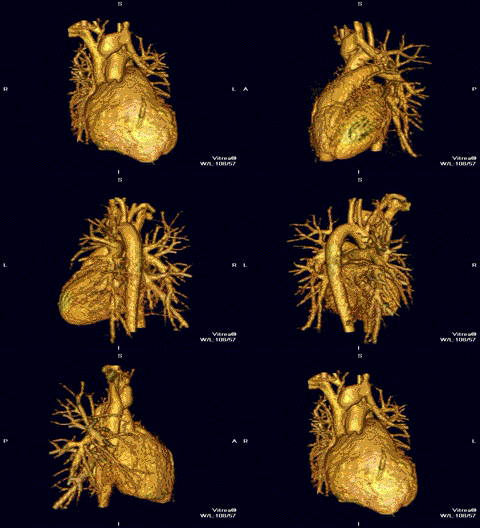
MR angiogram in congenital heart disease, technically known as Partial Anomalous Pulmonary Venous Drainage, February 22, 2011. (Jccmoon via Wikipedia). Released to public domain via CC-SA-3.0.

MR angiogram in congenital heart disease, technically known as Partial Anomalous Pulmonary Venous Drainage, February 22, 2011. (Jccmoon via Wikipedia). Released to public domain via CC-SA-3.0.

Perhaps that’s what has happened in my lifetime. That with the killing of millions from war, disease, settler colonialism, out-and-out racism practiced on a societal level, unbridled capitalism and the constant quest for the immediate big profit, we’ve killed those people. A Black kid who could’ve created a faster-than-light drive. A Palestinian girl who may have developed a food replicator. An affluent White boy steered toward Wall Street who may have once thought through the idea of carbon capture from the upper atmosphere. Apparently we have none of this, because we don’t want that future. We only want to imagine that future while wallowing in the -isms of our pasts and presents, minus any wisdom or understanding.

The “Are You Sure’s” and Doubting Sylvias

30 Tuesday Dec 2014

Posted by decollins1969 in 1, Academia, Boy @ The Window, culture, Eclectic, Mount Vernon High School, Mount Vernon New York, Pittsburgh, Pop Culture, race, University of Pittsburgh, Work

≈ Leave a comment

Tags

"Are You Sure?", Advising, Career Options, Cigarette Smoke, Doubters, Doubting Thomas, Doubts, Elitism, JD, MD, Mentoring, MVHS, PhD, Racism, Sylvia Fasulo, Tiki Barber, Vassar College


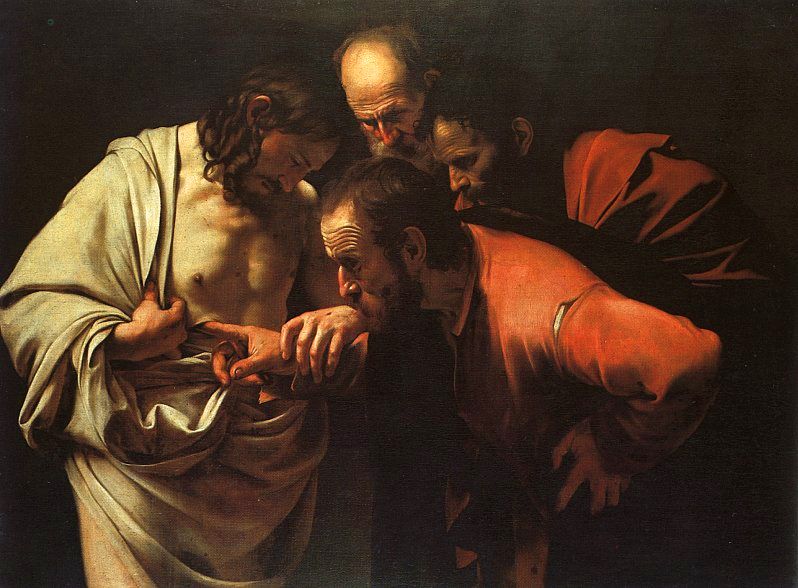
The Incredulity of Saint Thomas, by Caravaggio, c. 1601-02, uploaded April 13, 2005. (Dante Alighieri via Wikipedia). In public domain.

The Incredulity of Saint Thomas, by Caravaggio, c. 1601-02, uploaded April 13, 2005. (Dante Alighieri via Wikipedia). In public domain.

We all have doubters in our lives. Even if the only doubters turn out to be ourselves. As someone without much of a roadmap for any success, doubt has been a constant companion, one that I often had to ignore to experience any victories in my life. To have those with influence pretend to be on my side but add to those doubts, though. As a twenty-year-old, it was somewhere between bewildering and rage inducing. As a forty-five year-old who regularly advises students, love ones, friends and others about their futures, looking back at those doubters, it’s almost unforgivable the seeds they attempted to plant.

Of all the non-relatives in positions to advise me, few were worse than my high school guidance counselor Sylvia Fasulo. For four years, Fasulo forced me to listen to her “Are you sure…?” questions about difficult classes, the colleges I wanted to attend, the career paths I thought about taking. Her patrician Vassar arrogance toward me as the poor Black kid drove me up a wall every time I walked into her cigarette-filled office.

"Raleigh's First Pipe in England," an illustration in Frederick William Fairholt's Tobacco (1859), June 8, 2014. (Materialscientist via Wikipedia). In public domain.

“Raleigh’s First Pipe in England,” an illustration in Frederick William Fairholt’s Tobacco (1859), June 8, 2014. (Materialscientist via Wikipedia). In public domain.

I hated having Fasulo as my counselor especially once it was time for me to apply for college. She was condescending, demeaning and chain-smoked up my clothes for my troubles. Most of all, I hated having to reveal things about myself to her that I otherwise wouldn’t have shared. Like my family’s financial situation. Fasulo became only the second person I would tell that we were on welfare, that my father and mother had divorced and that he hadn’t made a child support payment since ’78. I had to talk to her about my role in my family as acting first-born child and my responsibilities. It was necessary and humiliating at the same time.

Despite and not because of Fasulo, things worked out for me in the end. Going to Pitt, meeting the people and the professors I’d become friends and colleagues with, was probably one of the best decisions I ever made. Still, I had one parting shot from her in the middle of my junior year at the University of Pittsburgh. It was the holiday season in ’89, and I took time while home in Mount Vernon to visit my favorite teacher, the late Harold Meltzer. I had just missed him, but bumped into Fasulo. It was about as fortuitous as having diarrhea and being nowhere near a toilet with toilet paper.

She asked me where I was in school, and I told her about my considerations for graduate school, law school and the world of work. It was a toss-off sentence, my attempt to end a conversation, not begin one. “Being a lawyer’s hard work,” Fasulo said in response. She then went on to tell me about 70-hour work weeks and billable hours and the bar exam, as if any of this was supposed to be surprising or would somehow scare me. I cut her off, saying “You know, you’re not my counselor anymore, so thanks but no thanks for your advice,” and left her office while she tried to explain her idiotic perspective.

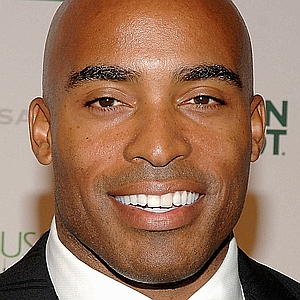
Tiki Barber, the personification of a doubter, at the American Museum of Natural History, October 16, 2008. (Jamie McCarthy/WireImage.com via http://thenypost.files.wordpress.com/).

Tiki Barber, the personification of a doubter, at the American Museum of Natural History, October 16, 2008. (Jamie McCarthy/WireImage.com via http://thenypost.files.wordpress.com/).

A quarter-century later, and though I am more than content with the fact that I opted for a PhD over a JD thirteen out of every fourteen days (people with law degrees do make more money on average), I sometimes question if the PhD in history was worth it. After all, a JD is far more portable. A JD would’ve served me better in my nonprofit and consulting careers than having to explain a doctorate. I wouldn’t want to think that I went in the direction of a graduate program for five and a half years simply because I had a conversation with a racial elitist.

It’s probably more likely that I didn’t go to medical school to earn an MD because my Mom and my idiot late-ex-stepfather both told me I couldn’t be a surgeon because I had “ten thumbs.” By more likely, I mean highly unlikely on both counts. I ultimately did what I wanted to do educationally speaking, despite own my doubts, despite the doubts of those who believed it was their job to advise me. But constantly asking, “Are you sure, Donald…?” isn’t exactly the best way to advise or mentor anyone, especially someone in their teens or a literal twenty-year-old. You lay out options, you ascertain what’s going on in their heart as well as their mind. You introduce them to other people who could provide better advice, based on direct expertise or experiences. Otherwise, you’re a doubter, not an advisor or a mentor.

The Art of Interviewing Killer Cops and Other Whites on the Prowl

04 Thursday Dec 2014

Posted by decollins1969 in 1, Academia, culture, Eclectic, New York City, Politics, Pop Culture, race, Youth

≈ Leave a comment

Tags

#BlackLivesMatter, Civil Rights, Daniel Pantaleo, Darren Wilson, Eric Garner, Grand Jury, Human Rights, Indictment, Interviewing, John Crawford, Jonathan Ferrell, Jordan Davis, Journalism, Media, Michael Brown, Murder, No Charges, NYPD, Police Brutality, Qualitative Research, Renisha McBride, Tamir Rice, Trayvon Martin, White Vigilantism


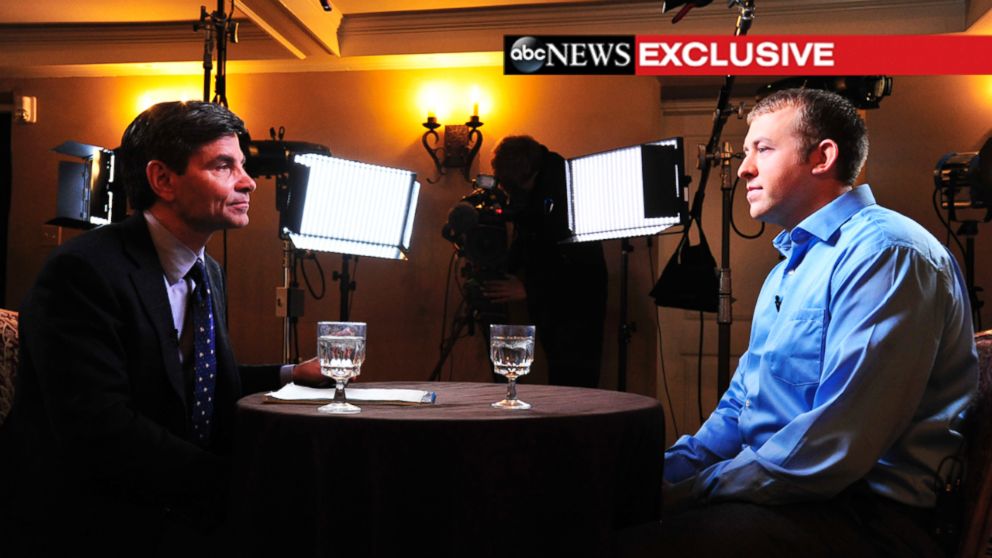
Dumb-assed George Stephanopoulos of ABC News interviewing Michael Brown murderer, former Officer Darren Wilson, November 25, 2014. (http://abcnews.go.com).

Dumb-assed George Stephanopoulos of ABC News interviewing Michael Brown murderer, former Officer Darren Wilson, November 25, 2014. (http://abcnews.go.com).

I think it would be interesting if I applied my qualitative research skills and did a sociohistorical study of the killer cops and White vigilantes who’ve gotten away or almost gotten away with murdering African Americans over the past few years. We know so much about Trayvon Martin, Eric Garner, Michael Brown, Renisha McBride, Jordan Davis, Tamir Rice, John Crawford and Jonathan Ferrell, including their arrest records, their blood-alcohol levels, their drug use, even their family members’ criminal records, if any. The media always performs a pseudo-social science-y qualitative research study on Black and Latino victims and their families and friends, in search for the perfect victim, someone to justify the outrage and anguish over state-sanctioned, cold-blooded murder.

It’s time to flip the script. I’d conduct a group interview process, bringing in the cabal of murderers, alleged and convicted, for a two-hour-long sit down. I’d ask questions about their upbringing, about the influence of popular culture in their lives, about facing down dangerous criminals carrying cigarettes, Skittles and broken toy guns. Only, my overeducated Black ass wouldn’t make it to my first question. I’d get choke-held or shot the moment I’d reach in my book bag for my digital tape recorder, even if we were conducting the interview in a public place, like the Children’s Room at New York Public Library on West 41st and Fifth Avenue. So I’d have to find one of my privileged White colleagues to interview these men on my behalf.

———————————————–

Overseer Daniel Pantaleo, 2014. (http://nydailynews.com).

Overseer Daniel Pantaleo, 2014. (http://nydailynews.com).

Narrator: Today we have George Zimmerman, Daniel Pantaleo, Darren Wilson, Theodore Wafer, Michael Dunn, Tim Loehmann, David Darkow, Sean Williams and Randall Kerrick here to talk about what it takes to be a White man fighting hard to protect the world from unarmed African Americans.

Pantaleo: Shut da [expletive] up, dumb ass! Where’d ya earn that PhD, Harlem?

Dunn: Yeah, that’s telling him! I respect the law, too. Even if it has me in chains.

Narrator: Okay, everyone. We’re taping here, so wait for me to ask my questions, please.

Loehmann: I’ll give you two seconds to ask your questions. After that, I’m not promising you anything.

Narrator: My first question is about your backgrounds. Can any of you tell me how your background impacted your decision to become either a police officer or vigilante?

Wafer: I’m deeply offended by the idea that you’re calling me a vigilante. I was defending myself. I live in a bad neighborhood. I mean, who bangs on my [expletive] door at three in the morning? You come to my door that late at night, I put you in a body bag!

Zimmerman: Dude, I couldn’t agree with you more. But I wouldn’t wait. I’d hunt these assholes down first!

(Laughter rises up from group)

Darkow: I’m feeling you there, dude!

Wilson: You asked about our background. I grew up as part of a hunting and fishing family. My old man took us out to take down elk and deer every year. It made me a good shot. I could shoot a doe in the head from fifty yards away.

(Group breaks out in laughter again)

Narrator: So, Mr. Wilson, are you saying that when you shot at Michael Brown, you saw him the same way you see a young female deer?

Wilson: Uh, absolutely not. As I said in my report, the perp was like Donkey Kong, like Hulk Hogan, angry, unresponsive and dangerous, more like a giant bear than a doe.

Pantaleo: Man, it’s all right to say it, because I’m thinking it, too. These [expletive] n—-s are dangerous — they all need to be put down!

Narrator: Why’s that, Mr. Pantaleo? Would you say–

Williams: Will you listen to this egghead? Questioning how we do our jobs. Like that guy in Godfather said, n—-s are animals! We have to control them, so that they only destroy themselves!

(Dunn and Wafer raise their hands to show their handcuffs)

Zimmerman (to Dunn and Wafer): Y’all were just stupid enough to get caught snorting and drinking after you defended yourselves!

(Group breaks out in laughter again)

Narrator: Mr. Pantaleo, what about your background?

Pantaleo: The best training I had for the NYPD was from Tarzan and Wild Kingdom. I learned my hand-to-hand fighting skills from them. Also, WWE prepared me good, too.

Narrator: So, when you put Eric Garner in a choke-hold—

Pantaleo: It was like taking down a bull or buffalo! My heart was pumping so hard, I could feel the blood flowing inside my head! That fool should had just fallen to the ground so I could cuff his Black ass!

Wilson: And that’s what these suspects don’t get. When they see us coming, don’t walk, don’t run, don’t grab for anything, don’t hold your hands up. Lay down like you’re dead, and we won’t have to put you down.

Narrator: Mr. Kerrick, you haven’t joined the conversation yet. Do you have anything to add?

Kerrick: Just that my case is still pending. I can’t talk about it much.

Narrator: You shot and killed Jonathan Ferrell, correct?

Kerrick: I can’t talk about that. I–

Zimmerman: Dude, you got a raw deal!

Pantaleo: You should work for the NYPD. Police never get indicted for going hunting here!

(Group breaks out in laughter again)

————————————————–

Bryan Cranston as Walter White, Breaking Bad, Season 4, 2013, "I am the danger!" (not the only White as danger, either). (http://www.giphy.com).

Bryan Cranston as Walter White, Breaking Bad, Season 4, 2013, “I am the danger!” (not the only White as danger, either). (http://www.giphy.com).

On second thought, maybe we don’t need to apply social science thinking to these White men (in thought, if not entirely in genetics). We have a century’s worth of studies of White supremacy and systemic racism already, showing that vile men grow out of a vile system.

Biting Off Too Much, And Almost Choking On It

03 Wednesday Dec 2014

Posted by decollins1969 in 1, Academia, Boy @ The Window, culture, Eclectic, Pittsburgh, Pop Culture, Sports, University of Pittsburgh, Work, Youth

≈ Leave a comment

Tags

Arrogance, Calculus, Differential Equations, Football Analogies, Grad School, Graduate School, Heimlich Maneuver, History Major, Humanities, Joe Montana, Lifelong Learning, Limitations, Multiple Integrals, Overachievers, Overachieving, Partial Derivaties, Pitt, Pride, Self-Discovery, Warren Moon


"Bush Gag" cartoon, Pat Bagley, Salt Lake Tribune, November 5, 2008. (http://dailykos.com). Qualifies as fair use under copyright laws -- low resolution picture.

“Bush Gag” cartoon, Pat Bagley, Salt Lake Tribune, November 5, 2008. (http://dailykos.com). Qualifies as fair use under copyright laws — low resolution picture.

I’m someone who’s in a state of constant learning, constantly wanting to challenge myself and others to be better, to do more and better. I don’t apologize for this. But I do need to acknowledge that too often, I exert so much pressure on myself to excel that I take on a Thanksgiving feast’s worth of challenges. More times than not, I come through on the other side, but frequently in need of the Heimlich maneuver to keep from suffocating on it all.

For those of you who are still in undergrad or have recently finished, or at least, still remember clearly the details of this part of your academic journey, this story is most poignant for you. After years of relying mostly on my great memory and very good writing skills to be the very good student I’d been over the previous decade, I wanted to do better, to not have to scramble in the last three weeks of a sixteen-week semester and look like a dog with a serious constipation problem trying to void, like almost two-thirds of the sickly, underdressed, raccoon-eyed students I’d seen on campus during my first two years at the University of Pittsburgh.

As I wrote at the end of my coming-of-age memoir Boy @ The Window:

I reasoned that I needed to have balance to my semesters so that I wouldn’t spend the last two or three weeks of them playing catch up. Starting with the fall of ’89, I took all my syllabi from all of my classes, grabbed a calendar, and crafted a table where I knew exactly what to read, when to study, and when to begin my research and writing projects for each class I had in a semester. That way, I could know when to slack off or party, when to buckle down and study, and when to just shift into academic cruise control.

Hall-of-Fame QB Warren Moon with Houston Oilers, throwing from within pocket on his 527-yd passing day against the Kansas City Chiefs, December 16, 1990. (http://spokeo.com).

Hall-of-Fame QB Warren Moon with Houston Oilers, throwing from within pocket on his 527-yd passing day against the Kansas City Chiefs, December 16, 1990. (http://spokeo.com).

Those were literally my words and thoughts from a quarter-century ago. I also decided to become more organized because, thinking back, I knew that I couldn’t be a scrambling student in grad school. At least one who could be consistent and successful, who could sit and step up in the pocket and deliver academic darts for touchdowns — to use one of the many football analogies I would’ve said in ’89 (and probably now, too). All I knew was that after the spring semester — with thirty-six-hour workweeks and five courses — that I wanted more time to hang out with friends, to even maybe date.

Only, I was dumb enough to take third-semester calculus a year and a half after my last math course, and I was now a history major taking writing intensive courses. But at the time, I had my very good reasons. I was only one course shy of a minor in mathematics, which I figured would look good on my academic resume when I did apply to grad schools. I wanted to learn the basics about differential equations, because I was just that kind of guy. I wanted, most of all, to challenge myself, because that part of my Humanities indoctrination had stayed with me well beyond my high school graduation.

That course was a struggle, mostly because my attention was split between writing papers and reading thick history texts, constitutional law books and African American literature on the one hand, and math equations on the other. Fourteen months away from derivates and integrals and volumes was too long for me. I couldn’t really adjust to being in a lecture hall with nearly 400 students, being in memorization mode, no longer with much in common with this huge group of STEM-inclined classmates. By the middle of October, I was miserable whenever it was time to march up that hill to Benedum Hall.

A simple first-order linear differential equation (nothing "simple" about it), December 2, 2014. (http://revisionworld.com/).

A simple first-order linear differential equation (nothing “simple” about it), December 2, 2014. (http://revisionworld.com/).

But it did get worse. About a month before the end of that semester, my friend Terri looped me into unwittingly setting up my friend Marc with our mutual friend Michele. And it worked! All too well, as I realized that I had a bit of a crush on Michele myself, but only after they’d started dating. It was a rocky last three weeks of ’89. I managed a 2.98 GPA that terrible semester, including a D+ in multiple integrals and differential equations. I missed a C- in that class by two-tenths of a point. Terrible by my own standards.

Lessons here, if any? Don’t bite off more than you can chew, maybe? I know that three admissions committees used that D+ against me in either rejecting me outright or in not offering me fellowship money to cover tuition when I applied to grad schools a year later. So, one other lesson could be to not take unnecessary risks, to not challenge myself. That would be the wrong lesson, though.

The real lesson would be to know our limitations, that we can’t be all things to ourselves and others and do well at all things all the time, that we have a finite amount of time and choices, in school and in life. With so much going on in my life these days, it’s still a lesson of which I have to keep reminding myself, practically every single day.

← Older posts
Newer posts →

Boy @ The Window: A Memoir

Boy @ The Window: A Memoir

Places to Buy/Download Boy @ The Window

There's a few ways in which you can read excerpts of, borrow and/or purchase and download Boy @ The Window. There's the trade paperback edition of Boy @ The Window, available for purchase via Amazon.com at http://www.amazon.com/Boy-Window-Donald-Earl-Collins/dp/0989256138/

There's also a Kindle edition on Amazon.com. The enhanced edition can be read only with Kindle Fire, an iPad or a full-color tablet. The links to the enhanced edition through Apple's iBookstore and the Barnes & Noble NOOK edition are below. The link to the Amazon Kindle version is also immediately below:

scr2555-proj697-a-kindle-logo-rgb-lg

Boy @ The Window on Amazon.com: http://www.amazon.com/Boy-The-Window-Memoir-ebook/dp/B00CD95FBU/

iBookstore-logo-300x100

Boy @ The Window on Apple's iBookstore: https://itunes.apple.com/us/book/boy-the-window/id643768275?ls=1

Barnes & Noble (bn.com) logo, June 26, 2013. (http://www.logotypes101.com).

Boy @ The Window on Barnes & Noble: http://www.barnesandnoble.com/w/boy-the-window-donald-earl-collins/1115182183?ean=2940016741567

You can also add, read and review Boy @ The Window on Goodreads.com. Just click on the button below:

Boy @ The Window

Twitter Updates

Tweets by decollins1969
  • RSS - Posts
  • RSS - Comments

Archives

  • June 2025
  • April 2023
  • September 2022
  • August 2022
  • July 2022
  • June 2022
  • May 2022
  • April 2022
  • March 2022
  • January 2022
  • December 2021
  • November 2021
  • October 2021
  • September 2021
  • August 2021
  • July 2021
  • June 2021
  • April 2021
  • March 2021
  • February 2021
  • January 2021
  • December 2020
  • November 2020
  • October 2020
  • September 2020
  • August 2020
  • July 2020
  • May 2020
  • April 2020
  • March 2020
  • January 2020
  • December 2019
  • November 2019
  • August 2019
  • July 2019
  • June 2019
  • May 2019
  • April 2019
  • March 2019
  • February 2019
  • January 2019
  • December 2018
  • November 2018
  • October 2018
  • September 2018
  • August 2018
  • July 2018
  • June 2018
  • May 2018
  • March 2018
  • February 2018
  • January 2018
  • December 2017
  • November 2017
  • October 2017
  • September 2017
  • August 2017
  • July 2017
  • June 2017
  • May 2017
  • April 2017
  • March 2017
  • February 2017
  • January 2017
  • December 2016
  • November 2016
  • October 2016
  • September 2016
  • August 2016
  • July 2016
  • June 2016
  • May 2016
  • April 2016
  • March 2016
  • February 2016
  • January 2016
  • December 2015
  • November 2015
  • October 2015
  • September 2015
  • August 2015
  • July 2015
  • June 2015
  • May 2015
  • April 2015
  • March 2015
  • February 2015
  • January 2015
  • December 2014
  • November 2014
  • October 2014
  • September 2014
  • August 2014
  • July 2014
  • June 2014
  • May 2014
  • April 2014
  • March 2014
  • February 2014
  • January 2014
  • December 2013
  • November 2013
  • October 2013
  • September 2013
  • August 2013
  • July 2013
  • June 2013
  • May 2013
  • April 2013
  • March 2013
  • February 2013
  • January 2013
  • December 2012
  • November 2012
  • October 2012
  • September 2012
  • August 2012
  • July 2012
  • June 2012
  • May 2012
  • April 2012
  • March 2012
  • February 2012
  • January 2012
  • December 2011
  • November 2011
  • October 2011
  • September 2011
  • August 2011
  • July 2011
  • June 2011
  • May 2011
  • April 2011
  • March 2011
  • February 2011
  • January 2011
  • December 2010
  • November 2010
  • October 2010
  • September 2010
  • August 2010
  • July 2010
  • June 2010
  • May 2010
  • April 2010
  • March 2010
  • February 2010
  • January 2010
  • December 2009
  • November 2009
  • October 2009
  • September 2009
  • August 2009
  • July 2009
  • June 2009
  • May 2009
  • April 2009
  • March 2009
  • February 2009
  • January 2009
  • December 2008
  • November 2008
  • October 2008
  • September 2008
  • August 2008
  • July 2008
  • June 2008
  • May 2008
  • April 2008
  • March 2008
  • February 2008
  • January 2008
  • December 2007
  • November 2007
  • October 2007
  • September 2007
  • August 2007
  • July 2007
  • June 2007

Recent Comments

MaryPena's avatarMaryPena on My Day of Atonement/Bitter Hat…
decollins1969's avatardecollins1969 on No Good Teaching Deed Goes…
Mary Rose O’Connell's avatarMary Rose O’Connell on No Good Teaching Deed Goes…

NetworkedBlogs on Facebook

NetworkedBlogs
Blog:
Notes From a Boy @ The Window
Topics:
My Life, Culture & Education, Politics & Goofyness
 
Follow my blog

616 616 East Lincoln Avenue A.B. Davis Middle School Abuse Academia Academy for Educational Development AED Afrocentricity American Narcissism Authenticity Bigotry Blackness Boy @ The Window Carnegie Mellon University Child Abuse Class of 1987 CMU Coping Strategies Crush #1 Crush #2 Death Disillusionment Diversity Domestic Violence Economic Inequality Education Family Friendship Friendships Graduate School Hebrew-Israelites High-Stakes Testing Higher Education History Homelessness Humanities Humanities Program Hypocrisy Internalized Racism Jealousy Joe Trotter Joe William Trotter Jr. K-12 Education Love Manhood Maurice Eugene Washington Maurice Washington Misogyny Mother-Son Relationship Mount Vernon High School Mount Vernon New York Mount Vernon public schools Multiculturalism MVHS Narcissism NFL Pitt Pittsburgh Politics of Education Poverty President Barack Obama Race Racial Stereotypes Racism Relationships Self-Awareness Self-Discovery Self-Reflection Sexism Social Justice Teaching and Learning University of Pittsburgh Violence Whiteness Writing

Top Rated

Blog at WordPress.com.

  • Subscribe Subscribed
    • Notes from a Boy @ The Window
    • Join 103 other subscribers
    • Already have a WordPress.com account? Log in now.
    • Notes from a Boy @ The Window
    • Subscribe Subscribed
    • Sign up
    • Log in
    • Report this content
    • View site in Reader
    • Manage subscriptions
    • Collapse this bar
 

Loading Comments...