• About Me
  • Other Writings
  • Interview Clips
  • All About Me: American Racism, American Narcissism, and the Conversation America Can’t Have
  • Video Clips
  • Boy @ The Window Pictures
  • Boy @ The Window Theme Music

Notes from a Boy @ The Window

~

Notes from a Boy @ The Window

Tag Archives: Writing

Afrocentricity and the Writing Bug

15 Wednesday May 2013

Posted by decollins1969 in 1, Academia, Boy @ The Window, Carnegie Mellon University, Christianity, culture, eclectic music, Hebrew-Israelite, Mount Vernon High School, Mount Vernon New York, music, Pittsburgh, Politics, Pop Culture, race, Religion, University of Pittsburgh, Youth

≈ Leave a comment

Tags

Africana Studies, Afrocentric Education, Afrocentric Idea (1987), Afrocentricity, Authentic Blackness, Authenticity, Black Action Society, Black Issues in Higher Education, Black Studies, Blackness, Cool, Coolness, Litmus Test, Marc Hopkins, Maulana Karenga, Molefi Asante, Pitt, Temple University, Writing, Writing Bug


A ladybug, often a symbol for the writing “bug,” May 15, 2013. (http://flickr.com). In public domain.

This time two decades ago, I was already a bit desperate for work. In transferring from Pitt to Carnegie Mellon, I’d left myself without any financial coverage for the summer of ’93 (see my post “The Arrogance of Youth, Grad School Style” from June ’12). I had applied for several fellowships, summer teaching gigs, even some nonprofit work. But as of the middle of that May, nothing had come through. I’d already spent $200 on a root canal that occurred on the same day as my written PhD comps at CMU (see my post “Facing the Tooth” from May ’12).

Even before my comps and my surprise root canal, I had talked with my friend Marc about writing a joint article about the false litmus test of Blackness that Afrocentricity had come to represent in our minds. Between Molefi Asante’s students at Temple — not to mention the overtly Afrocentric turn of both the Black Action Society and the Black Studies department (which had changed its name to Africana Studies) in the previous eighteen months — both of us felt we needed to provide an alternate perspective.

On that third Saturday in May (and the day after my comps and root canal surgery), we worked for five hours in putting together what amounted to a 1,200-word opinion piece against the belief system and authenticity test that Afrocentricity (and Afrocentric education) had become. By some folks’ definition, we realized that jazz, Miles Davis and John Coltrane would fail the authentically Black test of a Molefi Asante’s wonderful Afrocentric Idea (1987) and of Maulana Karenga as well.

Frances Cress Welsing's The Isis Papers (1991), [about as authentic as auto-tunes], May 15, 2015. (http://amazon.com).

Frances Cress Welsing’s The Isis Papers (1991), [about as authentic as auto-tunes], May 15, 2015. (http://amazon.com).

Now I’m pretty sure why Marc had problems with Afrocentricity. As a Christian and a jazz aficionado, Marc likely saw Afrocentricity as something somewhere between a misguided way of thinking about Blackness and complete and utter bull crap. His goal was to “add to the debate” and “educate” those who weren’t Asante or Karenga apostles and disciples. A laudable — if somewhat naive about the politics of academia and race — goal.

As for me, beyond the academic superficiality of having a litmus test on what is and isn’t Black, I had at least two unconscious reasons for writing my first crossover piece. One had to do with my sense that too many young folks were all too interested in doing the cool thing and not the right thing. Afrocentricity was cool, just like all rap and hip-hop was cool, just like giving libations to ancestors was cool.

Being cool had always meant following a crowd and seldom saying anything that would dig more than a nanometer beyond the surface. Or saying a critical thing about the cool thing that everyone in the same crowd otherwise takes in without a critical thought. I went to a high school full of people like that, and loathed being around people like that when I’d been a part of the Black Action Society at Pitt.

Unconscious reason number two had something to do with my Hebrew-Israelite days. Again, I gave this zero direct thought during my grad school days. But the given the trauma I’d suffered through during my three years of kufi-dom, it had to affect my thinking about Afrocentricity. The Black folk I knew who were part of the Hebrew-Israelite religion were much more obvious about what they did and didn’t consider Black or kosher. Yet, it was so obvious that they constantly contradicted themselves, in terms of food or music, how they treated their wives or children. Most important for me, though, was the fact that they tried to live separate and apart from other Blacks, yet seemed no more different beyond the kufis, veils and kosher meats from other Blacks (or Jews, for that matter).

I saw Afrocentricity as bullshit, and still see the fact that so many folks who get caught up in this sense of authenticity around Blackness as folks falling for bullshit. If I hadn’t lived as a Hebrew-Israelite between the ages of eleven and fifteen, perhaps I wouldn’t see Afrocentricity this way. If I hadn’t been around the “Party All The Time” folks in high school and the “Black Panther Party” posers at Pitt, maybe Afrocentricity would’ve been more appealing to me.
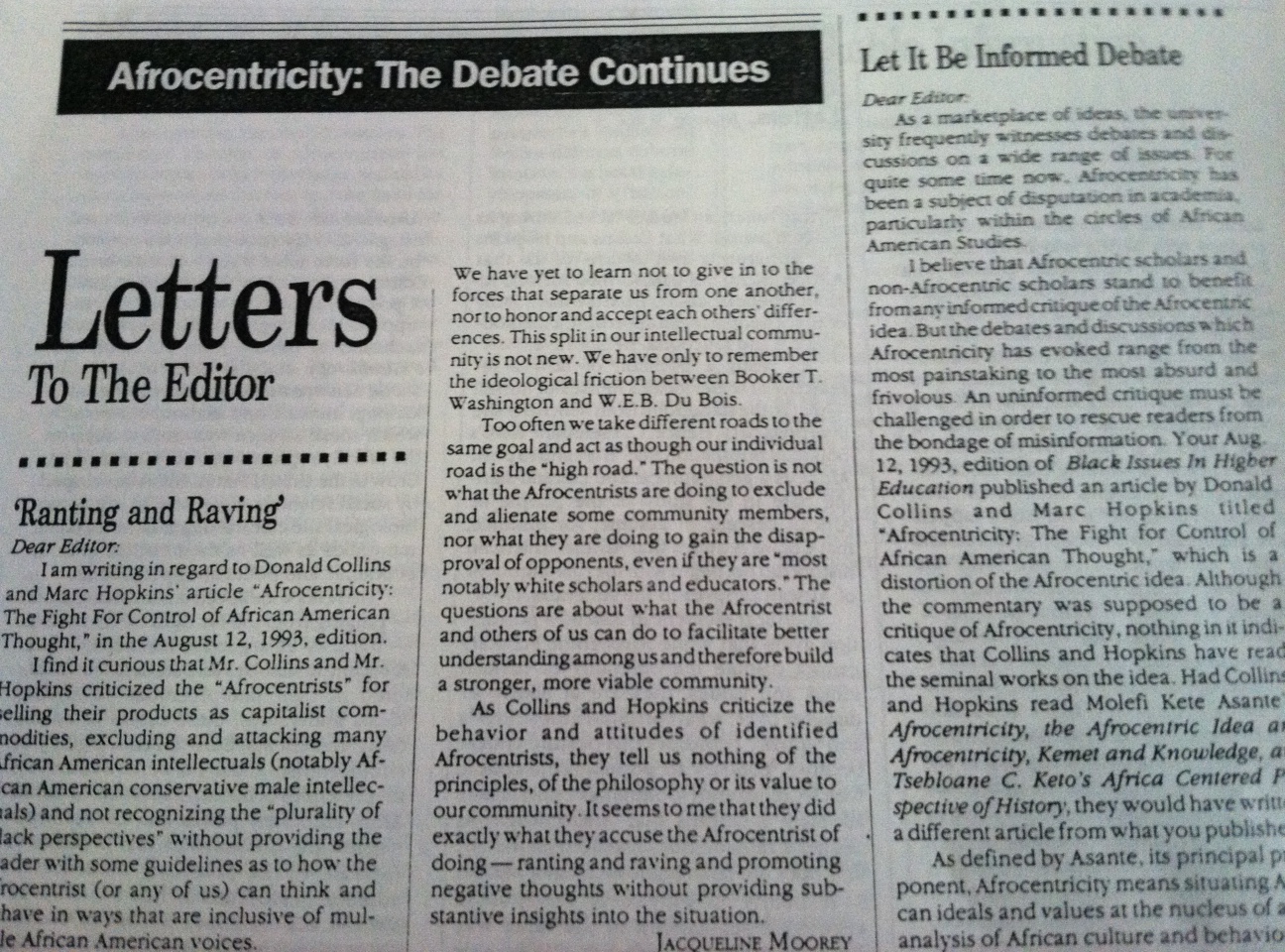
Letters to the Editor, Black Issues in Higher Education, September 9, 1993. (Donald Earl Collins).

Letters to the Editor, Black Issues in Higher Education, September 9, 1993. (Donald Earl Collins).

But at twenty-three years old, I was already tired of the pursuit of coolness and authenticity. That hasn’t changed in the past two decades. I’m sure the letters that called Marc and I “Uncle Toms” after our piece was published in Black Issues in Higher Education were from folks who thought we weren’t cool, and thought they had the answers to life itself.

I wonder how those folks back then would see the academics who believe that hip-hop can explain everything in the social sciences and humanities who are prominent today. Perhaps some of these people today were the Afrocentric followers of twenty years ago. Perhaps not. All I know is, I haven’t stopped writing since that cloudy day in mid-May.

The Road to My Memoir, Part 1: Welfare

07 Tuesday May 2013

Posted by decollins1969 in 1, Academia, Boy @ The Window, culture, Eclectic, High Rise Buildings, Mount Vernon New York, Pittsburgh, Politics, Pop Culture, race, University of Pittsburgh, Youth

≈ Leave a comment

Tags

Academic Writing, Adrian Nicole LeBlanc, AFDC, Case Managers, Case Workers, Criminalization, Discrimination, Emotional Detachment, Irony, Journaling, Journals, Kaaryn Gustafson, Personal Vignettes, Pitt, Public Housing, Racial Stereotypes, Racial Stigmas, Research, Rhonda Y. Williams, Scholarship, Welfare, Writing, Writing Process


Adrian LeBlanc's Random Family (2002) and Rhonda Y. Williams' The Politics of Public Housing (2005), May 7, 2013. (Donald Earl Collins).

Adrian LeBlanc’s Random Family (2002) and Rhonda Y. Williams’ The Politics of Public Housing (2005), May 7, 2013. (Donald Earl Collins).

This isn’t a straight-forward post or series of posts. I didn’t come to Boy @ The Window quickly or easily. I didn’t intend it to be a memoir, even though I’d left myself bread crumbs to turn it into a memoir years ago.

The first time I’d thought about writing a book related to my experiences was at the beginning of my junior year of college, in September and October ’89. Not even three months after my idiot stepfather had left 616 for good, and I was thinking about writing up something about the experience? A bit ambitious I was!

What I did do, though, was somehow find my old scraps of journals about what happened to me when I was twelve before I came back to Pittsburgh and Pitt for the school year. I wrote up additional experiences, about running away from 616 in August ’85, about my Mom’s experience at the feet and fists of my now ex-stepfather, about my time on a drafty Pitt stairwell the year before.

That was painful to write about, so soon after finally being rid of Maurice, too soon, really, for me to fully process it without re-living the experience. So I wrote or rewrote four of these experiences in all, and put them away in one of my Pitt notebooks.

But there was one other experience I wanted to write about, to move from a personal story to one of academic scholarship. It was the experience of my being on welfare from ’83 to ’87, covering on-the-ground perspectives from people like me and my Mom, as well as those of case workers. I thought that it would fill a void in both media coverage and in historical scholarship about the topic of welfare, particularly how it became a racial stereotype and slur.

I thought that by juxtaposing (and that’s the word I used for this back in ’89) the plight of welfare recipients and case workers, that I could show some sense of irony. That so many of the case workers and managers were only a paycheck or two away from being on welfare — and that some of them had been on welfare themselves, at least based on my limited experience — would make for an interesting story. What I hoped to show, ultimately, was the inhumanity of the welfare system itself, pitting people from similar socioeconomic backgrounds against each other because of the mix of welfare as racial and as a form of the undeserving getting their government handouts, of crumbs from America’s table being turned into a political football.

I didn’t say this exactly when I had a conversation about this topic with my former TA Paul Riggs in October ’89. The ideas and many of the sentiments, particularly about “juxtaposing,” “irony,” and “inhumanity,” though, were all part of the conversation. Riggs told me I needed to slow down, that even if I somehow were able to make this topic historical, that I’d need to much more reading on the topic, to divorce myself from my emotions around this topic.

In some ways, my late-twenties mentor was right. It’s hard to do scholarly work on a topic in which you are heavily emotionally invested. The topic wasn’t historical, given that I had just lived it and my Mom and younger siblings were still living it. And I was nineteen after all, and after seven years of seldom writing for any purpose outside of the classroom except letters to former high school classmates and college friends, a book would’ve been a daunting, almost immeasurable task.

That started me on the path to learn how to write like an academic historian, instead of writing out of emotion and irony. One that would delay my writing on anything like Boy @ The Window for the better part of a decade, even as the academic process enabled me to do the interviews and research necessary to put the memoir together.

Luckily, there are three authors whose work over the past decade has covered this topic of welfare, racial stereotypes, inhumanity, criminality and irony. Mostly in ways I would’ve covered it had I had the words and research skills to do this work twenty-four years ago. Adrian LeBlanc‘s Random Family (2002), though a sensational accounting of a Latino family in the Bronx between ’88 and ’01, does provide a glimpse (still MacArthur “genius” Award winner). Rhonda Y. Williams‘ The Politics of Public Housing: Black Women’s Struggles Against Urban Inequality (2005) is her excellent collection of research and personal vignettes about public housing, welfare, Black women and empowerment despite the odds covering the period between the 1940s and the early 1980s (with a bit on the early 1990s). All just before crack cocaine, TANF and the gentrification of previously off-limit poor neighborhoods in a city like Baltimore became bigger themes.

And now there’s Kaaryn Gustafson‘s Cheating Welfare: Public Assistance and the Criminalization of Poverty (2012). She covers in so many ways what I’d once hoped to capture in emotion and storytelling about the stain of welfare as illustrated in policies and politics. Kaaryn’s (I know her from my New Voices days) written a great book, one that I wished I could’ve read or written when I was nineteen.

Kaaryn Gustafson's Cheating Welfare (2012), May 7, 2013. (http://nyupress.org).

Kaaryn Gustafson’s Cheating Welfare (2012), May 7, 2013. (http://nyupress.org).

That wasn’t my path, though I had interests that would include welfare. No, my path was about race, diversity, education and self-discovery, not just about my Mom and family.

K-12 Curriculum as a Mystery Novel

02 Thursday May 2013

Posted by decollins1969 in 1, Academia, culture, Eclectic, Pittsburgh, Politics, Pop Culture, race, Youth

≈ 3 Comments

Tags

4th Grade, Facts of Life, Head of the Class, High-Stakes Testing, History, Homework, Immigration, Jacob Lawrence, K-12 Curriculum, K-12 Education, K-12 Education Reform, MAP-M, MAP-R, Maryland, MCPS, Migration, Montgomery County Public Schools, MSA, Mystery Novels, Parenting, Phillips Collection, Sherlock Holmes, Silver Spring, Social Studies, Student Development, Teacher-Parent Relationship, Teaching and Learning, Textbooks, The Migration Series, Washington DC, Writing


Unsolved Mysteries, December 19, 2011. (http://news.discovery.com).

Unsolved Mysteries, December 19, 2011. (http://news.discovery.com).

This week, my son will complete a fourth-grade project in which he interviewed his Pittsburgh grandmother about her migration experience from rural Arkansas to Pittsburgh, Pennsylvania during the Depression decade. Sounds pretty good — and very advanced — on the surface of things. But the reality of how this school project evolved shows how much has changed — and not for the better — regarding schools and curriculum. For my son’s school in Silver Spring, Maryland, for Montgomery County Public Schools and for schools across the country.

You see, the bulk of testing season is over for MCPS’ elementary schools. So instead of practice tests, formative assessments (otherwise known as “formatives”) and the actual exams (MSA, MAP-M and MAP-R), the teachers now have to focus on lesson plans that aren’t test-driven. For April, the fourth-grade teachers at my son’s school decided to do a social studies project on immigration. They started with a wax museum project at school, as well as a field trip to the Phillips Collection in DC.

This was where things began to get interesting for me as a parent. The permission slip for the field trip presented this unit as immigration. Yet in my son’s trip to the Phillips Collection, him and his classmates would peruse a set of Jacob Lawrence’s paintings on migration. For those of you who don’t know, Lawrence’s most famous paintings were of the Great Migration of African Americans from the rural South to the urban North between roughly 1915 and 1930.

Jacob Lawrence: Migration Series, Phillips Collection, Washington, DC (1993), May 1, 2013. (Elizabeth Hutton Turner; http://ucdavis.libguides.com/).

Jacob Lawrence: Migration Series (Cover Art), Phillips Collection, Washington, DC (1993), May 1, 2013. (Elizabeth Hutton Turner; http://ucdavis.libguides.com/).

I could barely contain the historian side of me when I read such an obvious and unbelievable error. But I decided to not assume that the fourth-grade teachers made the decision to treat immigration the same as migration. So I hand-wrote a note that politely suggested that they make a correction on the permission slip and for the overall assignment, since immigration and migration aren’t the same at all.

This was the response I received by email on April 4:

“We have had this wonderful trip planned for the 4th grade for the past 4 years and we always make sure to front load the students with information about the migration process.”

When teachers go into placating-mode without actually addressing my concerns as a parent (and an educator, for that matter), it’s usually a sign of trouble where there otherwise shouldn’t have been any trouble.

Then, nearly two weeks ago, my son brought home his interview/presentation assignment based on the wax museum project and his Phillips Collection field trip. It was titled “Immigrants in Their Own Words.” The fourth-grade teachers had charged the students — including my son — with the task of finding a family member who had immigrated to the US, interviewing them and asking them questions like “In which year did you come to America?” and “What is the biggest difference between America and your country of origin?”

Flabbergasted is just the beginning of my deep sense of puzzlement over the assignment. It was an assignment straight out of a Facts of Life or Head of the Class episode from the 1980s, culturally and racial insensitive to the core. After all, the height of White immigration to the US ended nearly a century ago. For Blacks, well, if I have to explain it, then it may be worth the while of those of you who do teach to take my History of American Education course (that is, whenever I get to teach it again).

My wife wrote an email about this follow-up assignment, to which my son’s teacher replied, “[e]migration and [i]mmigration are almost splitting hairs.” Really? In what history or ed foundations course? With some prodding, we were given the opportunity to adapt the assignment so that my son could work on migration. Of course, even without that note, I would’ve insisted on him doing migration anyway.

Mysterious...the new Sherlock Holmes, January 17, 2011. (H. Armstrong, Roberts/Corbis; http://www.guardian.co.uk/).

Mysterious…the new Sherlock Holmes, January 17, 2011. (H. Armstrong, Roberts/Corbis; http://www.guardian.co.uk/).

That this process was poorly executed is only part of the story. For nearly five years, my son’s curriculum has been a mystery to me, as it jumped around from pre-algebra to basic addition, from writing letters in which he could write phonetically to having to write about beetles in grammatically correct but short sentences. After five years, my son has never brought a textbook home. The weekly emails from teachers and postings on the neighborhood school website and the MCPS website tell me a lot about nothing.

In sum, I know quite a bit about test dates, subject areas and sometimes subject matter in which the state of Maryland and the school district will test the students. What we don’t know from day one of any school year are the themes for each subject for the year or for any given marking period. Because of the priority of testing above all else, the amount of time in the curriculum on subjects like social studies has narrowed, and with it, a teacher’s ability to be autonomous and to think through curriculum in a critical manner. And without textbooks, I as a parent can’t truly anticipate how to help prepare my son for any new or potentially challenging materials.

It’s difficult, though, to anticipate that your son will come home with an assignment on immigration in the fourth marking period of fourth grade. Especially when I as a history professor know how complicated these processes are for undergraduate and graduate students to wrap their brains around. Especially since my son has yet to write a full-fledged book report on any any book he has read for school. Or spent significant time on history or other, non-test-related subjects. Education should always be a journey, but never a mystery.

Toto’s “Africa” & “Reading” Too Much Into It

02 Saturday Mar 2013

Posted by decollins1969 in 1, Boy @ The Window, culture, Eclectic, eclectic music, Hebrew-Israelite, Mount Vernon New York, music, Politics, Pop Culture, race, Religion, Sports, Youth

≈ Leave a comment

Tags

"Africa" (1982), "The Catch", A.B. Davis Middle School, Africa, C-Town, Dwight Clark, Fever, Football, Herschel Walker, Humanities, Imagination, Joe Montana, NFL, Pelham, Puberty, Racialism, Reading, Self-Discovery, Self-Reflection, Tarzan, The Jungle (1906), Toto, Toto IV, Upton Sinclair, USFL, Whiteness, Writing


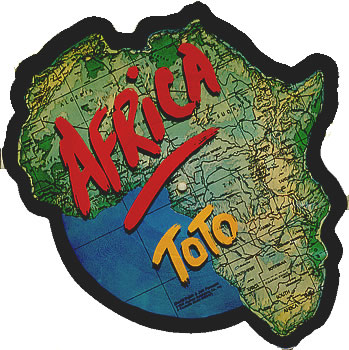
Toto's "Africa" (1982) Singles Sleeve, March 1, 2013. (http://eil.com).

Toto’s “Africa” (1982) Singles Sleeve, March 1, 2013. (http://eil.com).

There are as many reasons my musical tastes are eclectic as there are songs that I like and love. I can’t explain it. There’s no way I can explain why I think one song sounds as unimaginative and boring as Drake’s “Started From The Bottom,” while Nickleback’s “If Today Was Your Last Day” has been one of my favorite songs over the past three and a half years.

My imagination could take the corniest song and make it epic, a mantra, my theme music. Even a song like Toto’s “Africa” (’82-’83), a song that could be interpreted as reflecting White racialism as it related to Tarzan movies of a not-so-bygone era. Yet I’ve seen their video, and probably heard the song at least 3,000 times. It ain’t that deep, but it’s still a song I like.

So, a bit of context. My grades in the early Reagan years — especially in ’82-’83, when I was in eighth grade — didn’t at all reflect our family’s slide into welfare poverty, my ongoing issues with my idiot stepfather, my suicidal struggles or my search for a real relationship with God. What I had to lean on, more than my amazing memory or World Book Encyclopedia, my parents or even God, was my imagination.

The Spark of Imagination (via x-ray), March 1, 2013. (http://esquire.com).

The Spark of Imagination (via x-ray), March 1, 2013. (http://esquire.com).

With puberty and what would turn into a ten-inch growth spurt in a span of twenty months, I became enamored with sports. And the sport I became most interested in early on was football. The strike-shortened ’82 NFL season combined with the formation of the USFL and the coming-out party for soon-to-be draft pick Herschel Walker to get my attention. The vicious hits, the acrobatic catches, the powerful throws were things that I’d seen before. I saw them through the lens of an underdog now, a downtrodden member of an abandoned family who wanted to see folks who’d overcome impossible circumstances achieve great things.

The first person who represented that for me in sports was Joe Montana, quarterback for the San Francisco 49ers. The only ending to a football game I’d ever watched was the end of the NFC Championship Game the year before, with the play known as “The Catch.” I didn’t even know who Joe Montana was, even after watching Dwight Clark go up and catch a ball that was only meant for him.

He was the kind of person I wanted and needed to be in order to overcome what I thought was an impossible deficit. As far as I was concerned, I had to score about a hundred touchdowns to go from welfare to college, let alone anything after college. Yet it didn’t stop me from dreaming about rolling out right to the sidelines on fourth down, sucking in Dallas’ defense, and throwing a ball toward the right-side of end zone, toward the back line, just high enough for Clark to catch and Emerson Walls not to.

It was a dream that required some theme music, and luckily for me it was ’83. Michael Jackson’s Thriller had come out at the start of eighth grade, The Police were big, Toto and Rick Springfield were at their peak, and New Edition had put out there first hit, a Jackson 5 remake. All of it gave me something more modern to move forward with, to get silly about, to “march down field” to when I needed to gear up to get an important A. I’d accidentally found a way to escape my life without ever leaving Mount Vernon.

The Jungle (1906), by Upton Sinclair, 1st Edition, March 31, 2011. (GrahamHardy via Wikipedia). In public domain.

The Jungle (1906), by Upton Sinclair, 1st Edition, March 31, 2011. (GrahamHardy via Wikipedia). In public domain.

Demontravel’s and Carraccio’s classes were the first two places in which I applied this approach to my life and studies. In Carraccio’s case, it was the reading and essay assignment for Upton Sinclair’s The Jungle (1906) a muckraking tale of first-generation, Eastern European, Chicago meatpackers who worked and lived in grueling conditions and where some of them gave their lives — and livers — to Swift and other companies. I’d caught a cold, had a fever, was going to the store for Mom, and had just heard Toto’s “Africa” playing at C-Town in nearby Pelham.

The song served as my background music, giving me the energy and drive I needed to finish the book. I read The Jungle in one night, three hundred pages of it in four hours. I think Carraccio gave me a 95 on my essay. She pulled me aside to say, “You know, if you wanted, you could be a really good writer.” It might’ve been the only thing she said that I thought was right on the mark all year.

Yeah, you could say that I was seriously music deprived, didn’t understand the cultural symbolism or archetypes in the song or video, or simply had and have bad tastes. Y’all may be right, too. But for me, Toto’s “Africa” struck the right note, lifted my imagination, and found the goofball within.

The New Gameplan for Boy @ The Window

05 Saturday Jan 2013

Posted by decollins1969 in 1, Boy @ The Window, culture, Eclectic, Mount Vernon New York, Pop Culture, Youth

≈ 2 Comments

Tags

Book Publishing, Commercial Publishing, Editors, Fear of a "Black" America, Gameplan, Independent Publishers, Literary Agents, Manuscript Development, Marketing, Revising, self-publishing, Siege Mentality, Stubbornness, Writers, Writing


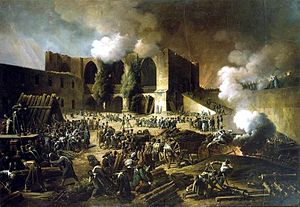
Siege of Burgos (Spain), 1813, by François Joseph Heim. Pic taken December 23, 2012. (1970gemini via Wikipedia). In public domain.

Siege of Burgos (Spain), 1813, by François Joseph Heim. Pic taken December 23, 2012. (1970gemini via Wikipedia). In public domain.

It’s a new year, and with the beginning of all years is a chance to execute new plans, or for most people, to make resolutions they often don’t keep. Such is the case for me regarding my coming-of-age memoir Boy @ The Window. Hopefully I’ll be in the first category of plans for my new year and not in the latter. After five years of beating my fists on the walls of literary agents, acquisition editors and commercial publishers, I have to do far more than hope.

And my fists have needed a few months to heal after the past few years. In all, I contacted somewhere around 140 agents, editors and publishers since the end of ’07 about Boy @ The Window. One in four asked to look at either the first few pages, the first couple of chapters or the entire manuscript. Only two of those agents agreed to represent the manuscript, and then, with major conditions. One went as far as to suggest that I only focus on my family life, as if my preteen and teenage years in Humanities had no impact on my development at all. The other thought I could sell Boy @ The Window better if I turned it into a work of commercial fiction.

I should’ve seen the writing on the proverbial commercial book industry wall long before today. Between the shifts in the commercial publishing marketplace since my experiences with Fear of a “Black” America between ’99 and ’04, the Great Recession’s impact on the industry since ’08, and the rise of the ebook in the past decade. All three pointed to one simple fact. If one wasn’t already a successful author prior to a decade ago, or famous, or with a significant connection to commercial publishing (e.g., a journalist, an editor, or even an editorial assistant), one would face a long, hard walk through the traditional route of publishing a book.

Boxer David Haye displays his bruised knuckles, January 12, 2011. (http://www.thesun.co.uk/)

Boxer David Haye displays his bruised knuckles (cropped), January 12, 2011. (http://www.thesun.co.uk/)

But I’d made up my mind the moment I began working on Boy @ The Window in earnest in the summer of ’06. I didn’t want to self-publish my second book, not after a year and four months of promoting Fear of a “Black” America. While on some level I successfully promoted my first book (I have receipts of my royalty checks to prove that), selling a thousand copies while spending $3,500 to do so for a semi-academic book on multiculturalism was nothing like I had envisioned the process back in ’99.

I persisted in the idea of traditional commercial publishing for the manuscript. I dutifully attended writers conferences, book fairs and other opportunities to meet other authors, potential agents and a few editors. I wrote and rewrote my query letter and proposal, with more revisions than I probably did on the Boy @ The Window manuscript itself. I sent out my letters, took phone calls when they came, reached out to folks for help. And all to end up concluding that I would be in need of dentures by the time a commercial publisher would lukewarmly pick up my manuscript for its list.

Now, even my harshest critics (myself included) consider Boy @ The Window a solid manuscript. So the issue has never really been the quality of the story or the writing. The issues come down to an industry in seismic flux and to me as a person. With my own career in transition and without the obvious examples of success (I’m not regularly booked for TV programs, I have yet to make my first $1 million), I can’t say that I’m in the public eye enough to sell 10,000 copies of my book per week for three weeks, and at least 5,000 a week for three months. That’s the industry threshold for groundbreaking nonfiction success these days.

So dreams of sugar plums or $100,000 advances aren’t exactly dancing in my head these days. But much has changed since I published Fear of a “Black” America in the past eight and a half years. For one, ebooks rule the book publishing marketplace, enabling any aspiring (if not talented) writer to self-publish or to publish independently. Add to this the mix social media, like my blog, Twitter, Facebook and other connections, and nontraditional publishing may well make as much sense as working with an agent.

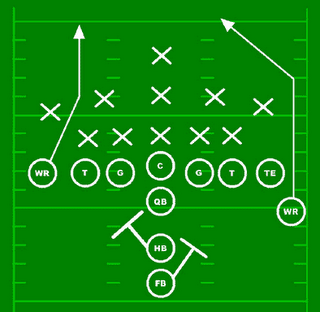
Intermediate pass route game plan (with at least one running back as blocker), November 2011. (http://www.npengage.com).

Intermediate pass route game plan (with at least one running back as blocker), November 2011. (http://www.npengage.com).

This means much more work — and money — on my part, though. I’ll need to hire a copy editor, figure out artwork, finalize pictures, implement my proposed marketing strategy, plan a date for publishing to coincide with marketing, and so on. But I also realize that few commercial publishers do this work for authors anymore, anyway, as they’ve slashed their promotion and marketing budgets. The advantage, then, goes to people like me, with some means for publication and enthusiasm for my book.

I realized all of this at least two years ago. Apparently, so did my wife. When I finally decided to go this route for Boy @ The Window a few weeks ago, she said “I thought you should’ve done it two years ago, but you weren’t ready.” Meaning that I wasn’t ready to dismantle my siege guns and remove my land minds around the commercial publishing castle. Now that I have, I can say with a high degree of certainty that I will publish Boy @ The Window this year, 2013, short of an apocalyptic event.

Tells In Telling The Tale

21 Saturday Jul 2012

Posted by decollins1969 in 1, culture, Eclectic, Movies, Politics, Pop Culture

≈ Leave a comment

Tags

Art Imitating Life, Battlestar Galactica (2004 series), Bones, DS9, Firefly, Fringe, Imagination, Phalanges, Sarcoidosis, Star Trek: Deep Space 9, Star Trek: Deep Space Nine, Star Trek: DS9, Stories, Tales, Telling, Tells, TV Shows, Writing


Adm. Adama hugging Starbuck scene (screen shot/cropped), Battlestar Galactica, 2009. (http://blazingangel.tumblr.com).

I guess that we as individuals each have tells in telling stories, including our life stories. Certainly all writers have a tell, a catch phrase or common set of words that use in telling a story or in setting a scene. All artists have a unique signature, a nuance within a particular style or genre that sets them apart from someone painting by numbers. Sometimes, at least for me, it takes heavy doses of a writer’s style or of someone’s art for me to see the unique tells in the telling.

Firefly series opening logo, July 21, 2012. (Adamwankenobi via Wikia.com).

That’s been so true for me in watching entire TV series through Netflix over the past two years, whether through DVD or online streaming. Since the spring of ’10, I’ve watched, in order and their entirety, Star Trek: DS9, Star Trek: Enterprise, Star Trek: Voyager, House, Firefly, Heroes, Breaking Bad, Dexter, Six Feet Under, Oz, Eureka, Warehouse 13, Battlestar Galactica, Bones and Fringe, mostly through Netflix. Now, some of these shows I’d seen plenty of when they were regular series, especially DS9, Six Feet Under, House and Oz, while I viewed most of these series for the first time.

There’s something different about watching a TV series all at once than watching it once a week in twelve, twenty-four or twenty-six episode blocks year by year. Especially with unlimited streaming. Earlier this year, I watched all seventy-six episodes of Battlestar Galactica over a six-day span in April, including the first two seasons between Saturday morning and Sunday evening Easter weekend (see my post “Battlescar Galactica” from June ’12).

In watching so many episodes, you quickly sense the rapport being actors, the plot and its direction, and the tells about a particular episode or season of a show. In watching DS9, I learned that whenever Quark would mention Dax’s relationship with a Gallamite (a race with a transparent skull) or a Tholian ambassador, I’d learn something revealing about one of the main characters, especially Dax or Quark. Only, there may’ve been only one scene in 176 episodes in which there was a Gallamite character, and none for a Tholian ambassador.

With House, if the “sarcoidosis” diagnosis came up before the last segment of an episode, it was always wrong, but if it came up in the last segment, it would occasionally be correct. The writers obviously knew that sarcoidosis was such a general diagnosis that it could mean nothing in nearly all the show’s mystery illnesses, revealing the desperation and pressure the characters felt in finding the right diagnosis to save someone’s life.

Bones in the human hand (from authentic human skeleton), March 25, 2004. (Raul654 via Wikipedia). Released to public domain via GNU Free Documentation License.

For other shows, it could be a word, a line, an appearance of a sign or character even. For the first five seasons of Bones, the tell for Brennan’s emotional state — or lack of one — was how she’d say “phalanges,” “distal phalanges,” or even “ungual phalanges.” Brennan wiggled her “phalanges” with delight for babies and kids, and examined microscopic details of dead peoples’ phalanges with scientific coldness otherwise. For the sci-fi western Firefly, lines like “the money was too good” and cursing in Mandarin Chinese illuminated the contrast between haves and have-nots of twenty-sixth century humans, between technological advances and moral devolution.

There’s also Fringe’s opening with changes in colors signifying alternate universes and timelines. Not to mention Breaking Bad’s opening scenes foreshadowing how a season would conclude, or the use of light-skinned or biracial actresses as either technically or ephemerally brilliant characters on Fringe, Warehouse 13 and Bones.

But my all-time favorite tell in any season these days is from Battlestar Galactica, when Adama asks,

“What do you hear, Starbuck?”

“Nothing but the rain, sir,” she says

“Then grab your gun and bring in the cat.”

No matter how the characters felt, how dire the situation, or how triumphant the moment, it was the line that showed how precious the connections we have and need to have with each other and with our humanity.

I think that the way I can — we can — watch movies, TV series, read books and articles, look at art, and listen to music through these tells can tell me a lot about a writer, a musician or an artist. But it also tells me a lot about me. Not just that I’m a little weird. I’m also a sucker for a good story, one that is a bit ironic, a tad asymmetrical, that is quirky and epic, unique and yet mundane. A story that mirrors my life is one that tells me about me, at least in part.

Paula Baker and the 4.0 Aftermath

01 Wednesday Feb 2012

Posted by decollins1969 in 1, Academia, Boy @ The Window, Eclectic, Politics

≈ 2 Comments

Tags

Academia, Department of HIstory, Graduate School, Mentoring, Paula Baker, Scholarship, Smoking, Teaching and Learning, University of Pittsburgh, Writing


Paula Baker speaking (screen shot) in response to Donald Crichlow's book, Phyllis Schlafly and Grassroots Conservatism at The New School, New York City, March 1, 2006. (http://fora.tv/2006/03/01/Women_and_Grassroots_Conservatism).

Of all the professors I worked with in grad school, there wasn’t a tougher one on me than Paula Baker. Or a better one. She wanted and expected more out of me than even my advisors, Larry Glasco and Joe Trotter. If it weren’t for her, I probably would’ve been content with earning all of my degrees at the University of Pittsburgh. But if it wasn’t for her, I wouldn’t have discovered my ambivalence about academia in the first place.

I took an upper level history course in US history since 1945 and an independent study with Paula the semester after earning straight-As, the one that made my master’s program a seven-and-a-half month one instead of two years (see “The 4.0 Of It All” from December 2011). It was her second semester as an assistant professor in our department, and given the demographics of the ol’ White boys club, I thought it a good idea to take a professor whose graduate studies were still going on while I was in high school. That, and learning of Paula rare feat (at least for ’84) of publishing an article in the Journal of American History while still a grad student herself at Rutgers University, appealed to the competitor in me.

Paula Baker, University of Virginia, Miller Center, December 2006. (http://millercenter.org).

I sat down for my first meeting with Paula in her small, windowless office (except for a glass partition that she had covered up so students couldn’t look in), just across from the grad student cubicles on the third floor of Forbes Quad. She said, “What are you doing here?” I didn’t understand her question at first. What I soon realized was that Paula was asking me the kinds of questions I should’ve asked myself two years earlier, when I first started applying to grad schools. She said that there were better options for a doctorate in American and African American history than Pitt, including the University of Michigan and UCLA.

There were two things that made Paula, though. One, she regularly broke the law while anyone was in her office, including pre-asthmatic me. Paula smoked as if her life depended on it. For me, it was the first time I thought that I might end up dead before I turned thirty for second-hand smoke and lung cancer. Mind you, my mother, my father and my idiot ex-stepfather all smoked, but not in a space unfit for a sardine.

Two, and more important in my second semester of grad school, was her uncompromising perfectionism when it came to my research and writing. Obviously my writing was already good. But it wasn’t scholarly, at least not as scholarly as it needed to be. In writing my paper on the influence of Marxist ideology (perceived and actual) on the early Civil Rights Movement, I must’ve done at least seven drafts for Paula.

She probably used up about three ball point pens editing my drafts, crossing out whole paragraphs at a time, demanding that I raise my level of analysis ever higher. And when it was all said and done, Paula assigned me a grade of B+ in my independent study with her, the lowest grade I’d receive in three years of master’s and doctoral work. Still, she turned me on to Adolph Reed, Jr. and Theda Skocpol.

What Paula didn’t know was that by the middle of February ’92, I was mentally exhausted, mostly from the previous semester’s work and the lack of a holiday break. I wasn’t at my best in her class and in her office. Somewhere in the midst of struggling to stay on task, I learned how to read for arguments, how to use book reviews to supplement my lack of historiographical knowledge, and to expand my thinking to include other fields, like philosophy and sociology.

I also learned that I really didn’t like writing in scholarly-speak. It felt fake, as if I had to learn French and German and high English in order to make an argument that would make old White farts stand at attention. I didn’t blame Paula for this. I fully understood what she was doing and why she was doing it. But I also knew that this wasn’t me, the scholarly world wasn’t quite an exact fit for me. C’est la vie!

After April ’92, I took one other independent study with Paula, the following year, to get ready for the comprehensive exams for my doctorate. I took it as a non-graded course, as I knew I was about to transfer to Carnegie Mellon. She eventually left Pitt — not exactly a surprise.

I bumped into her once in ’01 right outside Union Station in DC, while she was a fellow at Woodrow Wilson Center and I was in my assistant director job with the New Voices Fellowship Program. Paula didn’t seem happy to see me, but then again, sarcasm and irony always seemed to be the key to getting her smile. Like the irony of me not using my degree in academia.

← Older posts
Newer posts →

Boy @ The Window: A Memoir

Boy @ The Window: A Memoir

Places to Buy/Download Boy @ The Window

There's a few ways in which you can read excerpts of, borrow and/or purchase and download Boy @ The Window. There's the trade paperback edition of Boy @ The Window, available for purchase via Amazon.com at http://www.amazon.com/Boy-Window-Donald-Earl-Collins/dp/0989256138/

There's also a Kindle edition on Amazon.com. The enhanced edition can be read only with Kindle Fire, an iPad or a full-color tablet. The links to the enhanced edition through Apple's iBookstore and the Barnes & Noble NOOK edition are below. The link to the Amazon Kindle version is also immediately below:

scr2555-proj697-a-kindle-logo-rgb-lg

Boy @ The Window on Amazon.com: http://www.amazon.com/Boy-The-Window-Memoir-ebook/dp/B00CD95FBU/

iBookstore-logo-300x100

Boy @ The Window on Apple's iBookstore: https://itunes.apple.com/us/book/boy-the-window/id643768275?ls=1

Barnes & Noble (bn.com) logo, June 26, 2013. (http://www.logotypes101.com).

Boy @ The Window on Barnes & Noble: http://www.barnesandnoble.com/w/boy-the-window-donald-earl-collins/1115182183?ean=2940016741567

You can also add, read and review Boy @ The Window on Goodreads.com. Just click on the button below:

Boy @ The Window

Twitter Updates

Tweets by decollins1969
  • RSS - Posts
  • RSS - Comments

Archives

  • June 2025
  • April 2023
  • September 2022
  • August 2022
  • July 2022
  • June 2022
  • May 2022
  • April 2022
  • March 2022
  • January 2022
  • December 2021
  • November 2021
  • October 2021
  • September 2021
  • August 2021
  • July 2021
  • June 2021
  • April 2021
  • March 2021
  • February 2021
  • January 2021
  • December 2020
  • November 2020
  • October 2020
  • September 2020
  • August 2020
  • July 2020
  • May 2020
  • April 2020
  • March 2020
  • January 2020
  • December 2019
  • November 2019
  • August 2019
  • July 2019
  • June 2019
  • May 2019
  • April 2019
  • March 2019
  • February 2019
  • January 2019
  • December 2018
  • November 2018
  • October 2018
  • September 2018
  • August 2018
  • July 2018
  • June 2018
  • May 2018
  • March 2018
  • February 2018
  • January 2018
  • December 2017
  • November 2017
  • October 2017
  • September 2017
  • August 2017
  • July 2017
  • June 2017
  • May 2017
  • April 2017
  • March 2017
  • February 2017
  • January 2017
  • December 2016
  • November 2016
  • October 2016
  • September 2016
  • August 2016
  • July 2016
  • June 2016
  • May 2016
  • April 2016
  • March 2016
  • February 2016
  • January 2016
  • December 2015
  • November 2015
  • October 2015
  • September 2015
  • August 2015
  • July 2015
  • June 2015
  • May 2015
  • April 2015
  • March 2015
  • February 2015
  • January 2015
  • December 2014
  • November 2014
  • October 2014
  • September 2014
  • August 2014
  • July 2014
  • June 2014
  • May 2014
  • April 2014
  • March 2014
  • February 2014
  • January 2014
  • December 2013
  • November 2013
  • October 2013
  • September 2013
  • August 2013
  • July 2013
  • June 2013
  • May 2013
  • April 2013
  • March 2013
  • February 2013
  • January 2013
  • December 2012
  • November 2012
  • October 2012
  • September 2012
  • August 2012
  • July 2012
  • June 2012
  • May 2012
  • April 2012
  • March 2012
  • February 2012
  • January 2012
  • December 2011
  • November 2011
  • October 2011
  • September 2011
  • August 2011
  • July 2011
  • June 2011
  • May 2011
  • April 2011
  • March 2011
  • February 2011
  • January 2011
  • December 2010
  • November 2010
  • October 2010
  • September 2010
  • August 2010
  • July 2010
  • June 2010
  • May 2010
  • April 2010
  • March 2010
  • February 2010
  • January 2010
  • December 2009
  • November 2009
  • October 2009
  • September 2009
  • August 2009
  • July 2009
  • June 2009
  • May 2009
  • April 2009
  • March 2009
  • February 2009
  • January 2009
  • December 2008
  • November 2008
  • October 2008
  • September 2008
  • August 2008
  • July 2008
  • June 2008
  • May 2008
  • April 2008
  • March 2008
  • February 2008
  • January 2008
  • December 2007
  • November 2007
  • October 2007
  • September 2007
  • August 2007
  • July 2007
  • June 2007

Recent Comments

MaryPena's avatarMaryPena on My Day of Atonement/Bitter Hat…
decollins1969's avatardecollins1969 on No Good Teaching Deed Goes…
Mary Rose O’Connell's avatarMary Rose O’Connell on No Good Teaching Deed Goes…

NetworkedBlogs on Facebook

NetworkedBlogs
Blog:
Notes From a Boy @ The Window
Topics:
My Life, Culture & Education, Politics & Goofyness
 
Follow my blog

616 616 East Lincoln Avenue A.B. Davis Middle School Abuse Academia Academy for Educational Development AED Afrocentricity American Narcissism Authenticity Bigotry Blackness Boy @ The Window Carnegie Mellon University Child Abuse Class of 1987 CMU Coping Strategies Crush #1 Crush #2 Death Disillusionment Diversity Domestic Violence Economic Inequality Education Family Friendship Friendships Graduate School Hebrew-Israelites High-Stakes Testing Higher Education History Homelessness Humanities Humanities Program Hypocrisy Internalized Racism Jealousy Joe Trotter Joe William Trotter Jr. K-12 Education Love Manhood Maurice Eugene Washington Maurice Washington Misogyny Mother-Son Relationship Mount Vernon High School Mount Vernon New York Mount Vernon public schools Multiculturalism MVHS Narcissism NFL Pitt Pittsburgh Politics of Education Poverty President Barack Obama Race Racial Stereotypes Racism Relationships Self-Awareness Self-Discovery Self-Reflection Sexism Social Justice Teaching and Learning University of Pittsburgh Violence Whiteness Writing

Top Rated

Blog at WordPress.com.

  • Subscribe Subscribed
    • Notes from a Boy @ The Window
    • Join 103 other subscribers
    • Already have a WordPress.com account? Log in now.
    • Notes from a Boy @ The Window
    • Subscribe Subscribed
    • Sign up
    • Log in
    • Report this content
    • View site in Reader
    • Manage subscriptions
    • Collapse this bar
 

Loading Comments...