• About Me
  • Other Writings
  • Interview Clips
  • All About Me: American Racism, American Narcissism, and the Conversation America Can’t Have
  • Video Clips
  • Boy @ The Window Pictures
  • Boy @ The Window Theme Music

Notes from a Boy @ The Window

~

Notes from a Boy @ The Window

Tag Archives: Violence

On the Insignificance of Saggy Pants & Respectability

20 Friday Sep 2013

Posted by decollins1969 in Boy @ The Window, culture, Eclectic, eclectic music, Movies, music, Politics, Pop Culture, race, Youth

≈ Leave a comment

Tags

Birmingham Church Bombing, Black Elite, Boyz n the Hood (1991), Economic Inequality, Florida A&M University, Hip-Hop Culture, Institutional Racism, John L. Lewis, Jonathan Ferrell, March on Washington, NWA, Police Brutality, Racism, Respectability, Saggy Pants, Thug Life, TLC, Trayvon Martin, Tupac, Violence, White Supremacists
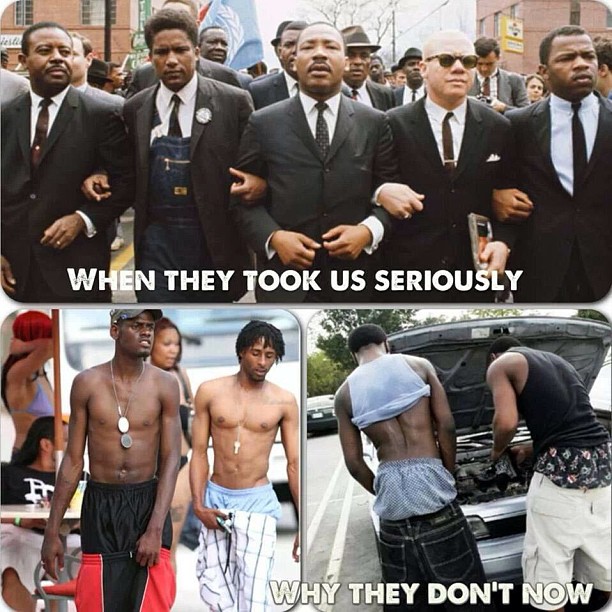

"When They Took Us Seriously/Why They Don't Now" poster, September 20, 2013. (Tim Brinkley/Google +).

“When They Took Us Seriously/Why They Don’t Now” poster, September 20, 2013. (Tim Brinkley/Google +).

In the past month of March on Washington and “I Have A Dream” speech commemorations and Birmingham church bombing dedications, a series of images lamenting rap culture and “thug life” have made their way around the Internet. The one that has stuck with me the most has been the image of the Selma March in 1965 juxtaposed with seemingly random photos of young Black males with saggy pants. The caption reads, “When they took us seriously/Why they don’t now.” Really? White supremacists took respectable Negroes seriously in the ’60s because they marched and wore suits, but don’t take Black males seriously now because of the saggy pants phenomenon? The truth is, they did and didn’t take us seriously then and now, and it has almost nothing to do with pulling our pants up above our boxers.

I have to say, though, that I hate saggy pants. It makes the people wearing them look somewhere between goofballs and idiots. It’s never mattered to me whether White guys or Black guys or college guys or hip-hop divas have worn saggy pants. I didn’t like it when it became a style in the early ’90s, thanks in large measure to NWA and Tupac, TLC and Snoop Dog and a host of other hip-hop/rap artists. I certainly don’t like it now, and would never buy a pair for my ten-year-old son to wear that way. The saggy pants style has been a sad twist on hand-me-downs and poverty as marketable clothes for the hip-hop cool.

But the saggy pants style has never translated for me as embracing a  “thug life” or some devolution of Black culture or American society. It wasn’t life imitating art, ala Boyz n the Hood (1991), Menace II Society (1993) or Clockers (1997). Nor have I ever seen it as something that meant that Whites or the new Black elite could say, “See. These Black folk don’t deserve respect, or health care, or a quality education, or good-paying jobs.” Over the past two decades, I’ve seen it as a style — a bad style, to be sure — but a style that some Blacks (and Whites, Latinos and Asians) have embraced.

Any young Black person who’s striving for higher education, or careers, or their own stereotypical success story in life, will tell you that they don’t wear saggy pants for every time or season. Even those who don’t know learn very quickly that saggy pants aren’t welcome in allegedly more respectable settings. If anything, the prevalence of saggy pants in 2013 has as much to do with the reality that opportunities for education, employment and prosperity remain so out of reach that it really doesn’t matter to many what they wear and where they wear it. There’s no need to code switch if everyone in your world knows the same exact code of cool.
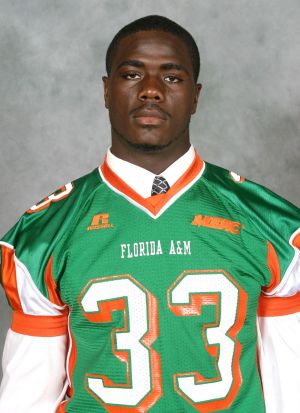
Jonathan Ferrell, Florida A&M football picture, September 20, 2013. (AP/Florida A&M University).

Jonathan Ferrell, Florida A&M football picture, September 20, 2013. (AP/Florida A&M University).

Recent events have made it pretty obvious that it really doesn’t matter what Black males wear. We remain targets for deeply ingrained stereotypes, institutional racism, and pre-emptive White violence. Whether it was Trayvon Martin wearing a hoodie in the rain, or John Lewis wearing a suit in Selma forty-eight years ago, it hasn’t mattered to Whites in fear of the Black boogie man. Florida A&M University graduate and former football player Jonathan Ferrell learned this deadly lesson in North Carolina just a week ago. It doesn’t matter what we wear, at least as far as many Whites and some Black elites are concerned.

Blacks all look the same to them, and looked the same to them in the ’60s. Suits, hoodies or baggy pants, we’re criminals and imbeciles from birth, thugs for life, and a drain on families and American society. This doesn’t mean that any one of us shouldn’t take responsibility for how we act, speak and look in public. I dare say, though, that structural economic issues like unemployment in deeply impoverished Black communities (or crank-infested White ones) won’t be solved with young folk pulling their pants up. We need to stop focusing on the insignificant, because saggy pants and respectability are the trees in this morphing forest of racism and economic inequality.

First Day of High School, Thirty Years Ago

05 Thursday Sep 2013

Posted by decollins1969 in 1, Boy @ The Window, culture, Eclectic, Mount Vernon High School, Mount Vernon New York, Politics, Pop Culture, race, Youth

≈ 1 Comment

Tags

Educational Inequality, Educational Leadership, MVHS, Paternalism, Principal Leadership, Principals, Racism, Richard Capozzola, School-to-Prison Pipeline, Tough-Love, Violence, White Paternalism


Oz (HBO) poster, September 5, 2013. (http://www.brain-dead-blog.blogspot.com).

Oz (HBO) poster, September 5, 2013. (http://www.brain-dead-blog.blogspot.com).

Our/my first day at Mount Vernon High School (New York) was the first Thursday after Labor Day thirty years ago, which means the exact date was September 8, ’83. It was mostly a very good day, except for our third period assembly with then Principal Richard Capozzola. He pronounced at least half of our class dead on arrival not quite two hours into ninth grade. Capozzola said, “There are 1,075 of you here today. Four years from now, only half of you will graduate” from MVHS. It turned out that he was wrong. Only 545 of us were eligible to march by September ’86, and 509 of us ended up doing so in June ’87. Even when accounting for the twenty or so Class of ’87 folks who decided to take their nineteen credits and graduate in ’86 instead of ’87, less than half of our original cohort graduated in years.

In Boy @ The Window and on the five or so occasions I’ve had to talk about the late Richard Capozzola and MVHS, I’ve attributed much of this to “the reality of self-fulfilling prophecies” and “the damage that low expectations can do.”  There isn’t a single word that I’d change in my description of Capozzola and in my thoughts about what he said, thirty years ago or right now. When you run a school as if the students are inmates and security act on your behalf as corrections officers, it is really a surprise when students drop out? When your security measures have the effect of increasing tensions so that more fights break out, shouldn’t it mean that the head school building administrator re-evaluate such measures? Apparently not.

That’s the principal and school that I remember outside of my Humanities days. Where girls ripped off each other’s earrings in the process of slugging each other. When witnessing one or two fights a week in building was a normal part of the process. When White potheads would sneak a smoke in between classes in the courtyard, but no security would intrude.

Mount Vernon High School main entrance, Mount Vernon, NY, November 22, 2006. (Donald Earl Collins).

Mount Vernon High School main entrance, Mount Vernon, NY, November 22, 2006. (Donald Earl Collins).

I have no doubt that trying to curtail this was a difficult job for any principal in ’83. But MVHS wasn’t Ft. Apache, or Jersey City, or South Central LA in this era. No MVHS student had brought a gun to school to shoot someone, at least in my time there. Short of a Swiss army knife, most students used their words to cut each other down, or in threatening to use a knife, maybe, off school grounds, after school.

Over the past couple of  years, I received comments about what I’ve written about my late principal from one of his children, who has repeatedly defended his father as a hero of sorts. He has disagreed, and rather bitterly, about what I’ve written, as if his experience with his father actually negates my experience with him as a principal. As part of my response to Capozzola’s son two years ago, I wrote:

Make no mistake, I for one, didn’t feel one iota safer in my four years at MVHS because of security sweeps, the closing of the courtyard to student use. Not to mention the general feeling I had that people who looked like me — regardless of my grades — weren’t welcome, whether that was intended or not. It’s a bit paternalistic to suggest that a heavy-handed approach to security “saved my life” or led to a national award for educational excellence in 1983 [It was actually a Blue Ribbon School in 1987]. As an educator myself, I know all too well the politics involved in such descriptions of schools like MVHS and with such awards.

Lion eating wildebeest - "animals" was what administrators & White classmates sometimes called MVHS students, but ironically referencing themselves, September 5, 2013. (YouTube).

Lion eating wildebeest – “animals” was what the White administrators & classmates sometimes called MVHS students, but ironically referencing themselves, September 5, 2013. (YouTube).

I’d add to this, though. I don’t really think that Capozzola actually cared about learning or the closing of achievement gap, either, not based on how he treated Humanities. And “tough love and a firm hand?” Really? That’s how you describe a father or an overseer — it should never be how you describe a principal. There was no love in his so-called toughness, and not enough firmness to prevent fights and slights that were a frequent part of my four-year experience at MVHS. And yes, many of MVHS’ students lived in poverty, but there was a sizable number of middle class Black students who attended as well. To forget that would be to, I don’t know, lump MVHS as a monolithic block of Black (and Latino) kids ready to start a riot. How is this different from a stop and frisk policy that targets poor neighborhoods and Black and Latinos between sixteen and thirty?

Which, in the end, is what both the late Capozzola and his son have done, thirty years ago and much more recently than that. To think that I put up with this for four years, at least one year too long. The embedded racial paternalism and institutional bigotry, in their words and deeds — it just takes my breath away.

Hatin’ the Player Over the Game – Repost (w/ On Ex-Gladiators)

04 Friday May 2012

Posted by decollins1969 in 1, culture, Eclectic, Pop Culture, Sports

≈ Leave a comment

Tags

Ben Roethlisberger, Brain Chemistry, Brian Cushing, Crafted Image, Culture, Entitlement, Football, Gladiators, Image, Junior Seau, Lawrence Taylor, Neurology, New England Patriots, NFL, Pro Football, San Diego Chargers, Sports, Suicide, Violence


Junior Seau (New England Patriots linebacker at the time) during a game against the Oakland Raiders, December 14, 2008. (JJ Hall via Wikipedia/Flickr.com). In public domain via cc.-Attribution 2.0 Generic license.

I originally wrote the post below in May ’10, with off-the-field incidents involving Ben Roethlisberger, my man Lawrence Taylor, and Brian Cushing in mind. Not to mention our secret (or not-so-secret) lust for violence in professional football in mind. I post it again, now shocked, saddened and even mortified over Junior Seau’s suicide on Wednesday. As Paul Daugherty wrote in his SI.com column yesterday, most of us “don’t know athletes. We like to think we do,” but “we just don’t know.”

The fact is, given all we can and should know about neuroscience and brain chemistry by now, it’s clear that not only is professional football right on par with hockey as the most brutal and violent sports on the planet. It’s that the sport itself can and does alter an individual’s brain chemistry, their long-term neurology, especially if played for a serious period of time. It’s the American empire’s equivalent of a gladiatorial sport, where the stars play for keeps, live hard (albeit in the most dark and secret of ways sometimes) off the field, and obviously die even harder as well. And like the gladiators of ancient Rome, there are substantial rewards that come with the life of the NFL, including the ability to craft an image that’s larger than oneself.
The problem for NFL stars is that the career does end, begrudgingly and relentlessly so. But the violence that the mind becomes accustomed to — along with the accolades — does not and cannot, at least, not without help. For whatever reason, Junior Seau didn’t have that kind of help in his life. Seau, like so many of us, couldn’t reconcile his image with his reality, and obviously took his life in no small part because of it. As a fan, I can’t allow this to continue without saying or doing something, hence this repost.
———————-

Lawrence Taylor

Let’s see now. Big Ben Roethlisberger, the great LT and Brian Cushing have all found themselves in trouble in recent weeks. With the law, with the NFL and with fans from all over Football Land. The Fourth Estate and the 4.5 Estate (bloggers) have gone on, and on, and on about how these guys lack discipline, are entitled whiners and complainers, and believe that they can get away with anything. These pop-psychology ruminations are much more pop than social psychology, with some being down-right idiotic. The bottom line is, at the bottom of their tax returns, where the IRS asks for your profession, these players (or their tax preparers) write or type “Football Player” in that spot. And that’s all the explanation you need when it comes to criminal behavior, criminal-esque behavior, and just plain bad behavior.

To be sure, many of these players — and not just in the NFL — are spoiled, entitled, whiny, and do think that they can get away with more than an ordinary American. Sure, some of our reaction to think is colored by race, as the majority of players of two of the three major team sports in this country are Black. But while race is a factor in perception and entitlement a factor in general, the real problem with professional football players is the nature of the game itself, especially in terms of violent crimes.

We somehow expect people who’ve spent a significant amount of their time playing a sport like football to somehow turn off all of the intensity, adrenaline and violence that comes with playing the game and then act like normal everyday people. Most players in the NFL have been playing the sport at least since the age of thirteen or fourteen, with many starting as early as six or eight. Then, with college and the pros, tack on at least eight years of play with hits that would put the average person in the ICU. Yet, once their career is over, or at least, during the off-season, these same players must then become model citizens. Are you kidding me?

For most Americans, few things in our lives are more violent than watching a football game. Police officers, soldiers in combat, and boxers are the only ones who may well experience more violence. And all available research shows how difficult it is for a human being to constantly engage in violent acts and then adjust to a normal life setting (whatever that means). So it should be obvious that a professional football player would have the same kind of troubles, as say, a retired boxer or an undercover detective in

Donte’ Stallworth Hit

transitioning between his world and ours.

In many ways, the most popular sport in our country gives us as much of a fix as it does for the players engaged in the sport. In this sense, there isn’t much of a difference between being an NFL player or being a gladiator during the times of the Roman Empire. Both celebrated, both reviled, both part of our societal hypocrisy over their criminal acts (alleged and actual). Ben will be forgiven once the Steelers start living again, while Cushing’s use of HCG will be forgotten by training camp. LT will at least be defended by many until actual proof is provided of guilt or innocent.

Brian Cushing (Houston Texans)

I’m hardly condoning anyone’s actions, on or off the field of play. But, as long as we keep buying the tickets, jerseys, cable packages, and the beer, all we’ll be doing is supporting the violent and sometimes bloody business of professional football. We can’t have our cake and then eat it too, especially in these cases, even though we’re trying to.

Stomping In Coffee Table Glass

30 Friday Dec 2011

Posted by decollins1969 in 1, Boy @ The Window, Eclectic, Jimme, Marriage, Mount Vernon New York, My Father, race, Youth

≈ Leave a comment

Tags

425 South Sixth Avenue, Alcoholism, Coffee Table, Jimme, Maurice, Mount Vernon Hospital, Mount Vernon New York, Neglect, Sam Gill Jr., Vindictiveness, Violence


Walking On Broken Glass Music Video screen shot, June 12, 2010. (Wikipedia). Qualifies as fair use under US Copyright laws because of low resolution and indirect reference.

Three days after my seventh birthday — which also happens to be thirty-five years ago on this date — I witnessed one of the most bizarre and frightening things a kid should ever see with two parents in the midst of a divorce. It involved infidelity, jealousy, vindictiveness and violence. But the incident itself was part of a domestic situation that had been spiraling out of control for at least two years.

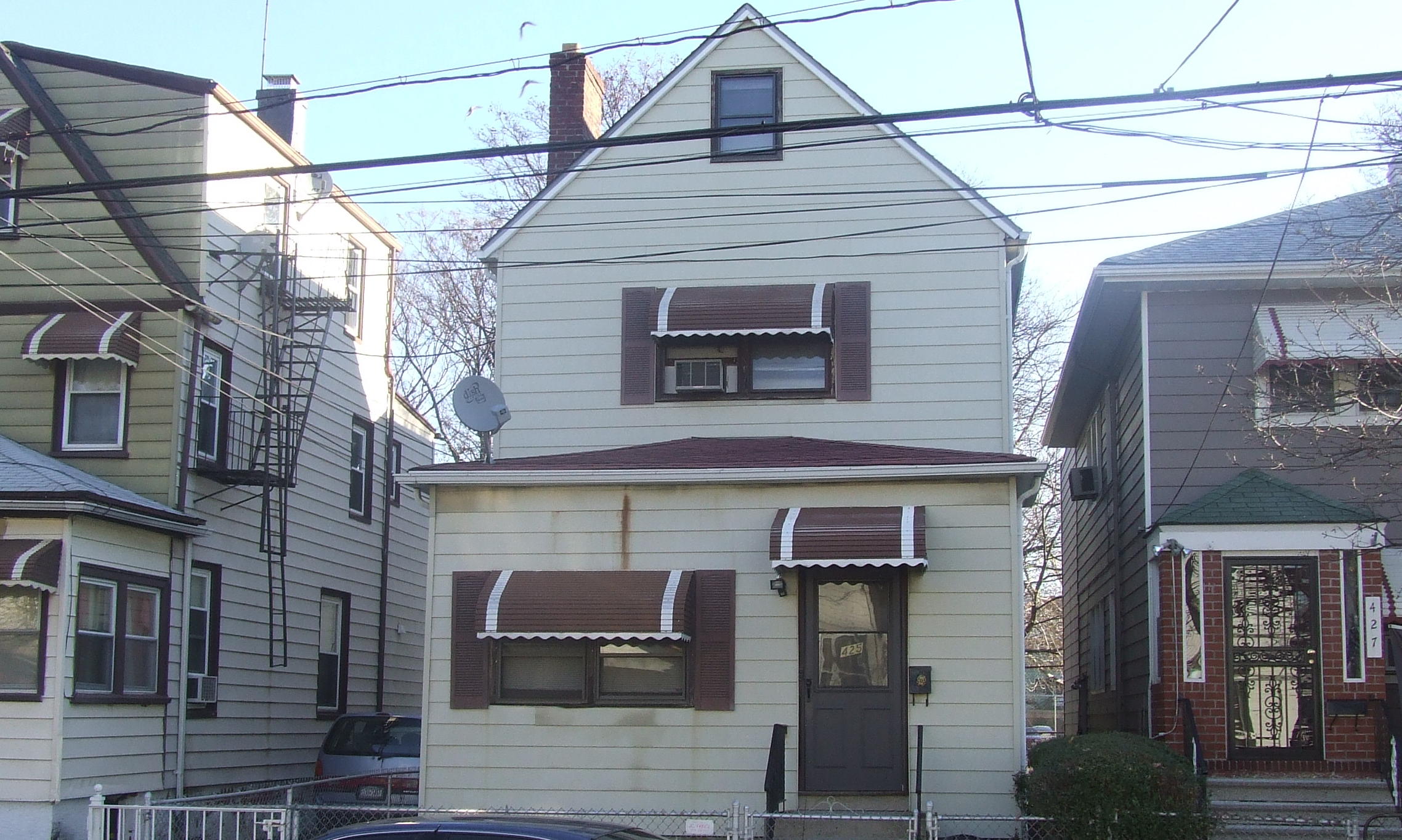
My mother officially filed for a divorce from my father Jimme in July ’76, after six years of putting up with his alcoholism and his threats of violence. In the two years since we’d moved to 425 South Sixth Avenue in Mount Vernon in August ’74, Jimme’s alcohol-laced threats had led to a stabbing (his own) and my own call

425 South 6th Avenue, Mount Vernon, NY, November 22, 2006. (Donald Earl Collins).

to the police (cut off by my folks mid-call). Things like finding him face-down in a pile of freshly cooked greens and chitlins and falling asleep on the Metro-North on Bicentennial Day with me and Darren in tow and ending up in New Haven, Connecticut didn’t help matters.

The fall after the divorce filing, me and my older brother Darren found ourselves in a strange limbo. Jimme hadn’t moved out, but was out drinking so much that seeing him at home was a random occurrence. My mother was home — sometimes — with Wednesday evenings reserved for bowling nights and occasional other nights out that weren’t easily explained except by my father’s accusations of cheating.

By October ’76, whenever Jimme was home, he found some way to get back at my mother. He put about $3,000 worth of my mother’s clothes and shoes into a bathtub full of hot water (about $10,000 in 2011 dollars). Me and my older brother Darren were there when he threw a brand-new thirteen-inch Sanyo color TV out of our second-floor window, this right around Halloween. Jimme also had repeatedly cut up the new furniture my mother had bought after filing for divorce.

My father’s drunken awareness of my mother’s new relationship with my eventual idiot stepfather Maurice led to a nasty incident that topped all of these, if only because I was wide awake for this one. My mother decided that it was time for us to finally meet the mystery man who had been in her life for the past several months, Maurice Washington. So for the first time in three days, we all gathered at 425, all to have a fried chicken dinner.

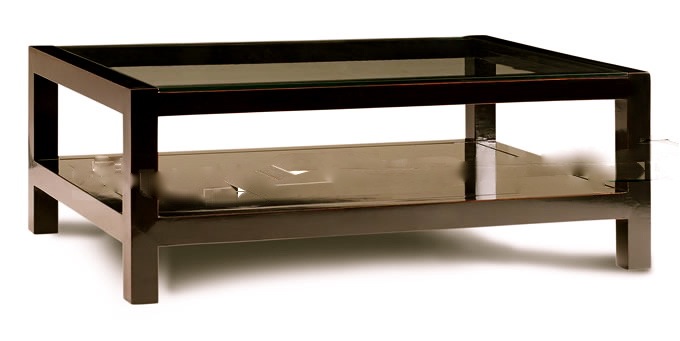
Two-layered tinted glass coffee table, similar to one my mother bought in 1976, December 30, 2011.

Jimme came home to bear witness to this gathering, and drunk as usual, flew into a rage. He started throwing food from the kitchen, then walked into the living room. There, with me and Darren sitting on the couch and Maurice and my mother watching, Jimme destroyed a glass-topped coffee table by stomping it in. Shards of glass were everywhere, including small bits in my father’s legs. He bled everywhere it seemed. I found myself hiding between the Christmas tree and the stairwell that led downstairs to the front door. Soon an ambulance and the police came — once again — to take Jimme to the hospital.

This was more than my mother could bear. She ended up in Mount Vernon Hospital for almost two months with a serious kidney ailment that turned out to be stress-induced. Darren and I stayed with our usual babysitter, one of my father’s drinking buddies in Ida. By the time my mother came out of the hospital, which was in April ’77, Maurice and my Uncle Sam had moved us into an apartment at 616 East Lincoln Avenue on Mount Vernon’s North Side.

But not before my Uncle Sam, a big man at six-foot-four and about 230 pounds, clotheslined Jimme over a fence in front of our old place as an act of vengeance. Me and Darren were there because my father had swept us up from our babysitter’s place on East Third Street and taken us to 425 to hang out for a few days, which meant us missing school as well. He’d managed not to drink for those two and a half days, and even made us lunch and dinner consisting of Kool-Aid, meatloaf, mac and cheese and string beans.

While Jimme went out to buy us some soda, my Uncle Sam and my soon-to-be-stepfather had come with the moving van. About a half-hour later, there was Jimme, about to walk through the gate into the front yard. The whole Deacon Jones-esque tackle seemed as if it were in slow motion, as I watched the 32-oz. glass bottle of Pepsi bounce twice on the sidewalk before landing in the grass, with only minor damage. The paper bag having landed right next to the front gate. And Jimme flipped backwards in the air, landing with a giant thud on the public sidewalk.

I was traumatized, to say the least. My grades throughout second grade reflected that, not that Ms. Hirsch and her low-expectations behind would’ve noticed. The fact that I no longer had any continuity in my life made it hard to want to be friends with anyone, a complete 180 degree turn from what I’d been like in first grade. Again, no one noticed. And Darren had also withdrawn, finding in The Clear View School something he didn’t have at home.

Cracking Skulls

10 Monday Jan 2011

Posted by decollins1969 in 1, Academia, Boy @ The Window, culture, race, University of Pittsburgh, Youth

≈ Leave a comment

Tags

Alcoholism, Binge Drinking, Bullying, Depression, Dorms, Dust Mop Handle, Harassment, Lothrop Hall, Pitt, Pranks, Security, Self-Defense, Stereotype Threat, Violence


Bighorn sheep in Silver Canyon near the town of Bishop, California, October 24, 2007. Rhalden (copyright holder of this work, has released it into the public domain).

Originally posted January 10, 2011:

I’ve written about this before, but not completely from the context of violence. Twenty-eight years ago today, I had a violent incident in my college dorm. It was never reported, thank goodness, since it really didn’t do damage to anyone per se. But it did involve striking two human beings out of anger, in response to a prank and violence on the part of two of my Lothrop Hall dorm mates at the University of Pittsburgh, “Mike” and “Aaron.”

I came back to Pitt after the holiday season in January ’88, determined not to make the same mistakes I’d made the semester before, since another 2.63 GPA performance would mean losing my academic scholarship. Whatever homesickness I felt for Mount Vernon and New York was crushed by the realities of home life at 616 and the sheer lack of friends in Mount Vernon in general. I knew I needed to channel the anger, bitterness, hurt and embarrassment I felt regarding my Crush #2 into my second semester at Pitt.

Lothrop Hall (we lived on the third floor in 1987-88), University of Pittsburgh, June 8, 2008. (TheZachMorrisExperience via Wikipedia). Released to the public domain via CC-SA-3.0.

Lothrop Hall (we lived on the fourth floor in 1987-88), University of Pittsburgh, June 8, 2008. (TheZachMorrisExperience via Wikipedia). Released to the public domain via CC-SA-3.0.

The answer as to how to begin involved my dorm mates on the third floor, half of whom were on Pitt’s basketball team, the other half the folks I usually hung around (geeks who would make most of my high school Humanities classmates look like socialites by comparison). The latter group had spent most of November and December binge drinking and occasionally taking me along for the ride. Aaron had begun to build a pyramid of Busch beer cans in their room, one nearly five feet tall by the time I returned from the holiday break. I needed to figure out how to co-exist with these dorm mates, as they had enabled my holiday blues and sheer lack of caring about my grades with their morbid, drinking ways.

The opportunity I needed happened a few days after I straightened out my Pitt bill. As usual, I left my door open and walked down the hall to the bathroom, took a leak, and went back to the room to call my mother. When I called, my mother kept saying “Hello . . . Hello . . . Who’s there?” She apparently couldn’t here me. After my third attempt, I checked my phone to see what was wrong. One of my idiot dorm mates had unscrewed the phone and taken the transmitter piece out, which was why my mother couldn’t hear me. I couldn’t even make a call to report what they did! I set out looking for Aaron and Mike in their room. When Mike saw me, he ran and immediately closed his door, almost breaking my hand and bruising my foot as I kept slamming my body into his door and put my foot between the door and the door jam.

The Breakfas Club Screen Shot, "Cracking Skulls" line, january 9, 2011. Donald Earl Collins.

The Breakfas Club Screen Shot, “Cracking Skulls” line, january 9, 2011. Donald Earl Collins.

I thought about telling our RA, who was too busy screwing his girlfriend to notice that he had no control over our floor. So I took matters in my own hands. The next day, the stupid asses were next door in a mutual dorm mate’s room, bouncing balls off my wall and laughing like there was something funny about it. My anger turned into a rage I hadn’t felt since my fight with one of my classmates six years before. I grabbed my dust mop and unscrewed the handle, walked next door, and proceeded to smash Aaron and Mike — both drunk — on top of their heads. “I don’t hear anyone laughing now!,” I yelled. “If I don’t get my phone piece back by this time tomorrow, there’s going to be a fight, and I don’t intend to lose! We can ALL get kicked out of school!”

I’d never seen three White guys so scared and quiet. I knew I had crossed a line, but so had they. To make sure they knew that I meant business, I smashed my dust mop handle against the wall as hard as I could and said, “That’s what’s gonna happen to your heads if I don’t get my phone piece back.” They sent Samir, another dorm mate — the only other person of color in our group — as an emissary with the transmitter by the end of the day.

I didn’t allow myself to feel bad about going psycho or, from their perspective, “Black” on my dorm mates. With only a couple of exceptions, I saw everyone on my floor as the enemy for a while. And for the next couple of weeks, whenever I left the room at night for the bathroom or for something else on my floor, I kept my door locked and took the dust mop handle with me. I wasn’t crazy. I was as sane as I’d been in a long, long time.

===================================================

Could I have been expelled from the University of Pittsburgh for that incident? Possibly, but not likely. Was I crazy? Hardly. Still, it wasn’t my best moment, if you define good moment by always taking the high road. I suppose I could’ve reported Mike and Aaron to security and gotten the transmitter back that way. But at eighteen, I had already begun to get used to the idea that I had to take life on directly. That included taking risks and not following rules and procedures. I had to learn how to stand up for myself and for what I knew, even if it meant being seen as the angry Black guy or as a troublemaker.

On this day/date twenty-eight years ago, it worked. If only because the dorm mates I confronted probably had no business being in college in the first place.

What A Fool Believes

23 Monday Aug 2010

Posted by decollins1969 in 1, Boy @ The Window, Cleaning, Mount Vernon High School, Religion, Youth

≈ Leave a comment

Tags

616 East Lincoln Avenue, Domestic Violence, Mount Vernon High School, Mount Vernon New York, Pittsburgh, Poverty, Race, University of Pittsburgh, Urban Decay, Violence


Wall Collapse Rattles Mount Vernon High School - wcbstv.com, April 13, 2010

Mount Vernon really has changed, and unfortunately, not for the better. I’m talking about in the past four years, and not just since I left for college and Pittsburgh twenty-three years ago this week. As some of you may know, I was threatened the week of my sister’s death and funeral by a young thug because I stopped him from choking his girlfriend in front of me and her three-year-old daughter.

That’s not a completely accurate description. I yelled “Hey! Stop!” as I ran toward the side gate of 616. I saw a short, nappy-headed, unkempt-corn-rowed-haired, light-skinned thug. At first, he was yelling, “Get out the godd**m car you B***H” at a young woman in a blue older-modeled Toyota Camry, punching his fists on the driver’s side window at the same time. Then, when she did get out, she grabbed her three or four-year-old daughter and attempted to get toward the side gate. The fool then pushed her up against the back right side of the car and proceeded to wrap his hands around the young woman’s neck, as if no one else was around.

I was on the telephone with my father, talking to him about the rough week it had been, standing outside to get away from folks for a moment or two, staring across the gates and driveway to the five-story red-brick sister complex 630 East Lincoln when I witnessed this episode of domestic violence. After I yelled and distracted the dumb ass, the young woman ran inside with her daughter. Then the short butt attempted to run up on me, telling me to “mind your own godd**m bisness, you stupid f**k!” He tried to get in my face, but at five-foot-four, he was much too short to intimidate me with rage. I told him if he took another step, that I’d call the cops. He did, and then I dialed 911.

“Oh, you think your life’s miserable now! It just got a whole lot worse for you and your family. And for what? You willing to risk your life for her? For a b***h?,” the stupid ass said as he gradually backed out of the yard and then outside the 616 gate. Apparently he wasn’t as stupid as he looked, as he kept moving farther away while yelling “I ain’t goin’ nowhere, you stupid f**k!” Finally, I said something. “Yeah, I’m a stupid f**k. You and your homies could beat me up, kill me, put me out of my misery. But I’m not the one walking away, you are!” Mr. Thuggish Ruggish Bone then disappeared.

There were numerous other reminders that what was once my hometown would never be again. The fact that neighborhoods that were once affluent White ones were now a mixture of White, African American and Latino, and weren’t so affluent anymore. The closings of Athena’s and Baskin-Robbins and other businesses in once ritzy Fleetwood, the rundown sense that I saw in faces Black and White and Brown all during that week.

Other parts of the city had long succumbed to poverty, crime and neglect, but with the middle class regardless of race in full flight, the uphill battle for a thriving bedroom suburb was now an unorganized retreat, with carnage all along the way. The newest thing I saw in Mount Vernon during my midsummer night and day-mare was the track behind Mount Vernon High School and the construction crew working on a new wall for the southwest corner of the building.

I know that a fair number of my Mount Vernon-based or nostalgic readers will think me biased, ungrateful even for having grown up in a town that they themselves found enriching and enjoyable. If that is the case, then that’s wonderful. Your Mount Vernon wasn’t the one I experienced, and “your blues ain’t like mine” (as the late Bebe Moore Campbell would say), sorry to say.

Aside from the atypical experience of dealing with the death of my sister, the Mount Vernon I grew up with and the one I witnessed last month were one and the same. My time growing up there included unpleasant moments with young punks and thugs, far too much rage and violence and poverty for me to stick around after high school. The difference now is, the city as a whole has become a reflection of my worst experiences, and not a “city on the move.” Silver linings like Ben Gordon or Denzel Washington or not, anyone who refuses to acknowledge that this is the reality for most living in Mount Vernon should tune into a 70s station and look up Michael McDonald for advice on foolishness and wisdom.

The Five Senses of Poverty

20 Tuesday Jul 2010

Posted by decollins1969 in 1, Eclectic, High Rise Buildings

≈ Leave a comment

Tags

crime, environmental pollution, five senses, garbage, Homelessness, hunger, impoverished, material lack, poor, Poverty, urban blight, urban noise pollution, Violence


Abandoned Building, November 2006

Being poor isn’t just a relative thing or simply a state of material lack. It can be measured by far more than the amount of money in someone’s savings account or by the gut-wrenching feeling at the bottom of one’s stomach when it’s time to choose between the telephone bill and the electric bill. Beyond the material and the emotional, the relative state between a lack of money and a lack of a spiritual center isn’t completely measurable. But, poverty, in its most general, community, and familial sense, can be experienced through all five of our physical senses.

1. Smell — This is perhaps the most powerful sense of poverty for any of us. Stairwell in project high-rises full of garbage. The tell-tale scent of overused cooking grease in an apartment or other impoverished living space. The odor of rotting animal flesh, of expelled farts, of roach spray and borax and cheap pine oil. The smell of clothes that have been exposed to all of these smells. Or,

Source: http://www.watchmojo.com/blogs/images/garbage.jpg

better still, a smell of lingering cooking oil from frying chicken the night before, combined with the body odor and sweat of numerous people, combined with basura and excrement. Not to mention the release of flatulence and the drawing in of exhaust fumes from the outside world by fans running on high because of the lack of air conditioning.  There isn’t enough Febreeze in the world to cover up the smell of poverty.

2. Sight — We can all be fooled by what we see with our own eyes. At least by all but the poorest of the poor in the world and in the US. But children and their faces tell the truth of their lot in life more than any pair of Jordans or dress clothes can hide. The tired, almost dead looks of children, whether in the Bronx or in Burkina Faso. Their eyes detail a sense of hopelessness, a momentary glance that gives away their suspicion that there is no future for which they should be ready for. Of course, there are more commonplace signs around us. Homeless folk in their old, wrinkled, tattered, oily, soiled clothes, with aluminum cans and liter soda bottles in beat-up shopping carts. Women and children looking a bit older than the few years they’ve spent in this world. Unkempt hair, chipped and worn fingernails, dirty faces in public places, can all be signs. But the eyes are the key window into someone else’s poverty.

3. Hearing — The sound of poverty is deafening. It cannot be hidden by clothes, nor covered up by an aerosol can. Take any urban community in which poverty has taken a firm grip. The sounds of living have been disrupted. Adults are out and about, conversing and cursing, foaming and fighting in the middle of the day, the time in which they should be hard at work, in an office or factory or somewhere else. The cries of children out with their mothers at all hours of the night. The constant beeping of cars, the sirens of ambulances and police cars, the screams of mothers, fathers and siblings at hours well past club-closing times. Poverty disables the need for a schedule, the need for a bedtime and a wake-up time, for a rhythm that requires sleep and renewal.

4. Taste & Touch — Though underappreciated, these senses can also be used to deduce poverty, or at least, the lack of things. Taste and smell go together, so many of the smells of poverty find their way to the taste buds on our tongues. The taste of bile, of acid reflux, even of blood usually come with the violent smells of being in an impoverished environment. The rough touch of clothes unwashed, or at least, washed in hard water and without fabric softener, is another indication.

But there’s also the lack of variety that’s typical of being poor that are told to us by taste and touch. Eating almost nothing but processed foods, fast food, or aid food, and the tongue becomes as a dull knife, unable to appreciate the subtle differences between onion and garlic, or the more distinctive flavors of paprika, nutmeg or cinnamon. Wearing nothing but hand-me-downs or hip-hop gear makes one’s sense of touch as rough as a jagged boulder, as unfeeling as stainless steel. Even a close hug in this kind of environment can be jolting and disconcerting.

Through our five senses, it becomes easier to understand why fighting our way out of poverty is so difficult, why being poor can disable and debilitate so many. That so many don’t have to breathe, taste, hear or touch it is the very reason why so many of us don’t understand it.

← Older posts
Newer posts →

Boy @ The Window: A Memoir

Boy @ The Window: A Memoir

Places to Buy/Download Boy @ The Window

There's a few ways in which you can read excerpts of, borrow and/or purchase and download Boy @ The Window. There's the trade paperback edition of Boy @ The Window, available for purchase via Amazon.com at http://www.amazon.com/Boy-Window-Donald-Earl-Collins/dp/0989256138/

There's also a Kindle edition on Amazon.com. The enhanced edition can be read only with Kindle Fire, an iPad or a full-color tablet. The links to the enhanced edition through Apple's iBookstore and the Barnes & Noble NOOK edition are below. The link to the Amazon Kindle version is also immediately below:

scr2555-proj697-a-kindle-logo-rgb-lg

Boy @ The Window on Amazon.com: http://www.amazon.com/Boy-The-Window-Memoir-ebook/dp/B00CD95FBU/

iBookstore-logo-300x100

Boy @ The Window on Apple's iBookstore: https://itunes.apple.com/us/book/boy-the-window/id643768275?ls=1

Barnes & Noble (bn.com) logo, June 26, 2013. (http://www.logotypes101.com).

Boy @ The Window on Barnes & Noble: http://www.barnesandnoble.com/w/boy-the-window-donald-earl-collins/1115182183?ean=2940016741567

You can also add, read and review Boy @ The Window on Goodreads.com. Just click on the button below:

Boy @ The Window

Twitter Updates

Tweets by decollins1969
  • RSS - Posts
  • RSS - Comments

Archives

  • June 2025
  • April 2023
  • September 2022
  • August 2022
  • July 2022
  • June 2022
  • May 2022
  • April 2022
  • March 2022
  • January 2022
  • December 2021
  • November 2021
  • October 2021
  • September 2021
  • August 2021
  • July 2021
  • June 2021
  • April 2021
  • March 2021
  • February 2021
  • January 2021
  • December 2020
  • November 2020
  • October 2020
  • September 2020
  • August 2020
  • July 2020
  • May 2020
  • April 2020
  • March 2020
  • January 2020
  • December 2019
  • November 2019
  • August 2019
  • July 2019
  • June 2019
  • May 2019
  • April 2019
  • March 2019
  • February 2019
  • January 2019
  • December 2018
  • November 2018
  • October 2018
  • September 2018
  • August 2018
  • July 2018
  • June 2018
  • May 2018
  • March 2018
  • February 2018
  • January 2018
  • December 2017
  • November 2017
  • October 2017
  • September 2017
  • August 2017
  • July 2017
  • June 2017
  • May 2017
  • April 2017
  • March 2017
  • February 2017
  • January 2017
  • December 2016
  • November 2016
  • October 2016
  • September 2016
  • August 2016
  • July 2016
  • June 2016
  • May 2016
  • April 2016
  • March 2016
  • February 2016
  • January 2016
  • December 2015
  • November 2015
  • October 2015
  • September 2015
  • August 2015
  • July 2015
  • June 2015
  • May 2015
  • April 2015
  • March 2015
  • February 2015
  • January 2015
  • December 2014
  • November 2014
  • October 2014
  • September 2014
  • August 2014
  • July 2014
  • June 2014
  • May 2014
  • April 2014
  • March 2014
  • February 2014
  • January 2014
  • December 2013
  • November 2013
  • October 2013
  • September 2013
  • August 2013
  • July 2013
  • June 2013
  • May 2013
  • April 2013
  • March 2013
  • February 2013
  • January 2013
  • December 2012
  • November 2012
  • October 2012
  • September 2012
  • August 2012
  • July 2012
  • June 2012
  • May 2012
  • April 2012
  • March 2012
  • February 2012
  • January 2012
  • December 2011
  • November 2011
  • October 2011
  • September 2011
  • August 2011
  • July 2011
  • June 2011
  • May 2011
  • April 2011
  • March 2011
  • February 2011
  • January 2011
  • December 2010
  • November 2010
  • October 2010
  • September 2010
  • August 2010
  • July 2010
  • June 2010
  • May 2010
  • April 2010
  • March 2010
  • February 2010
  • January 2010
  • December 2009
  • November 2009
  • October 2009
  • September 2009
  • August 2009
  • July 2009
  • June 2009
  • May 2009
  • April 2009
  • March 2009
  • February 2009
  • January 2009
  • December 2008
  • November 2008
  • October 2008
  • September 2008
  • August 2008
  • July 2008
  • June 2008
  • May 2008
  • April 2008
  • March 2008
  • February 2008
  • January 2008
  • December 2007
  • November 2007
  • October 2007
  • September 2007
  • August 2007
  • July 2007
  • June 2007

Recent Comments

decollins1969's avatardecollins1969 on No Good Teaching Deed Goes…
Mary Rose O’Connell's avatarMary Rose O’Connell on No Good Teaching Deed Goes…
Lyndah McCaskill's avatarLyndah McCaskill on The Raunchiest of Them Al…

NetworkedBlogs on Facebook

NetworkedBlogs
Blog:
Notes From a Boy @ The Window
Topics:
My Life, Culture & Education, Politics & Goofyness
 
Follow my blog

616 616 East Lincoln Avenue A.B. Davis Middle School Abuse Academia Academy for Educational Development AED Afrocentricity American Narcissism Authenticity Bigotry Blackness Boy @ The Window Carnegie Mellon University Child Abuse Class of 1987 CMU Coping Strategies Crush #1 Crush #2 Death Disillusionment Diversity Domestic Violence Economic Inequality Education Family Friendship Friendships Graduate School Hebrew-Israelites High-Stakes Testing Higher Education History Homelessness Humanities Humanities Program Hypocrisy Internalized Racism Jealousy Joe Trotter Joe William Trotter Jr. K-12 Education Love Manhood Maurice Eugene Washington Maurice Washington Misogyny Mother-Son Relationship Mount Vernon High School Mount Vernon New York Mount Vernon public schools Multiculturalism MVHS Narcissism NFL Pitt Pittsburgh Politics of Education Poverty President Barack Obama Race Racial Stereotypes Racism Relationships Self-Awareness Self-Discovery Self-Reflection Sexism Social Justice Teaching and Learning University of Pittsburgh Violence Whiteness Writing

Top Rated

Blog at WordPress.com.

  • Subscribe Subscribed
    • Notes from a Boy @ The Window
    • Join 103 other subscribers
    • Already have a WordPress.com account? Log in now.
    • Notes from a Boy @ The Window
    • Subscribe Subscribed
    • Sign up
    • Log in
    • Report this content
    • View site in Reader
    • Manage subscriptions
    • Collapse this bar
 

Loading Comments...