
• About Me
  • Other Writings
  • Interview Clips
  • All About Me: American Racism, American Narcissism, and the Conversation America Can’t Have
  • Video Clips
  • Boy @ The Window Pictures
  • Boy @ The Window Theme Music

Notes from a Boy @ The Window

~

Notes from a Boy @ The Window

Tag Archives: Racism

We Were Never United

11 Sunday Sep 2016

Posted by decollins1969 in 1, culture, Eclectic, High Rise Buildings, New York City, Patriotism, Politics, Pop Culture, race, Religion

≈ Leave a comment

Tags

"Never Forget", #NeverForget, 9/11, Archetypes, Atlanta, Genocide, Greyhound Bus, Holocaust, Hyper-Patriotism, Ignorance, Islamophobia, Media, Navel Gazing, Racism, Sikhs, Stereotypes, Tropes, Xenophobia
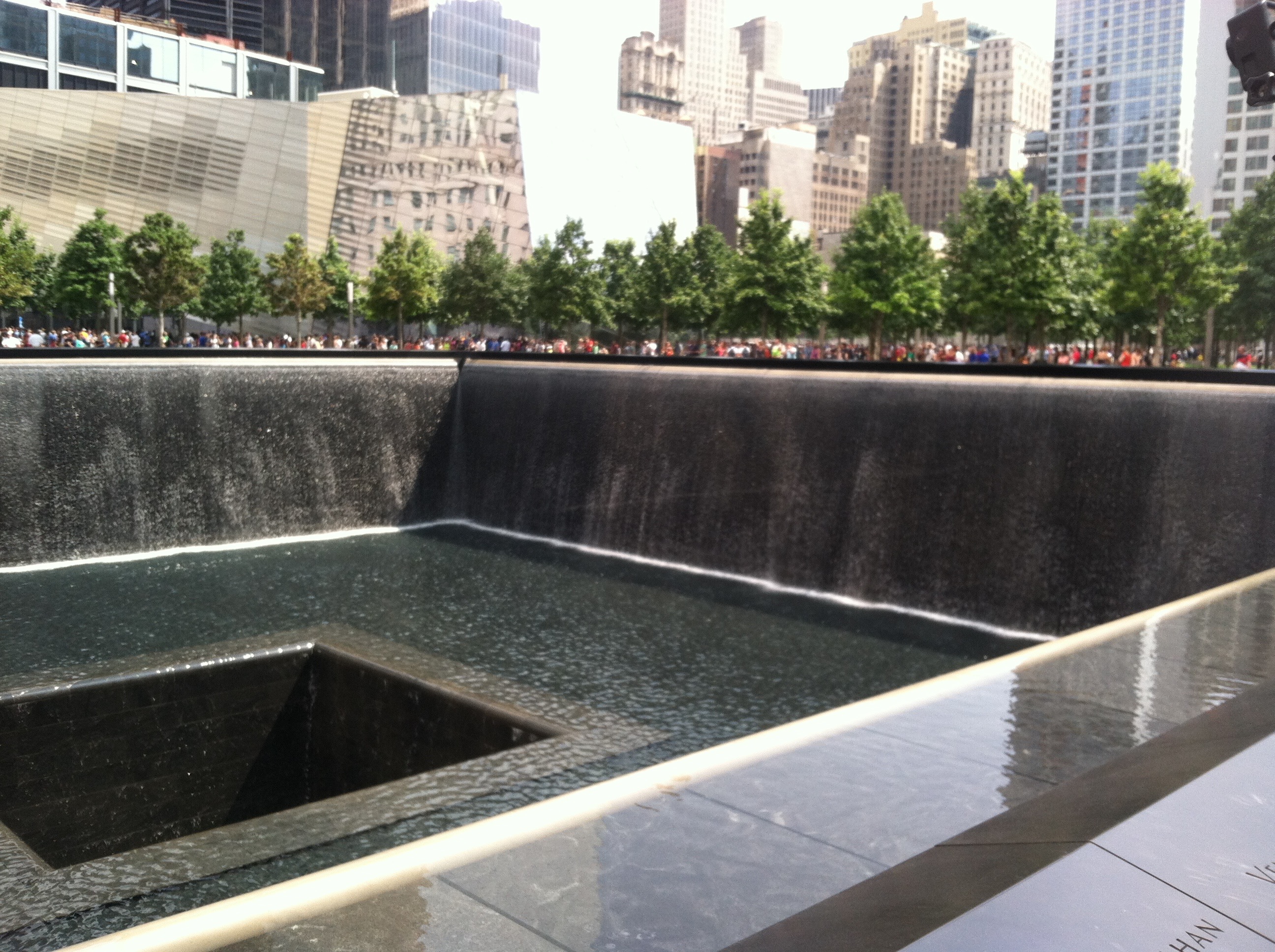

9/11 Memorial reflecting pool (w/ reflection of Freedom Tower off building straight ahead), August 5, 2014. (Donald Earl Collins).

9/11 Memorial reflecting pool (w/ reflection of Freedom Tower off building straight ahead), August 5, 2014. (Donald Earl Collins).

The media trades in archetypes, stereotypes, and tropes the way an alcoholic can become drunk by just smelling ethanol from a block away. It’s been so true around every 9/11 anniversary that it’s somewhat sickening.

There are two tropes the mainstream media has used to keep Americans in a perpetual state of fear and hyper-patriotism since that gruesome second September Tuesday in 2001. One is the theme of “Never Forget” (and the most obvious Twitter hashtag ever). The only other times the mantra of “Never Forget” normally comes up is either in reference to Jews and the Holocaust or to the systematic genocide Native Americans experienced. It should also come up for Blacks and Africans regarding the Middle Passage and slavery, Aborigines in Australia, and other groups who’ve experienced the wanton destruction of their lives and culture in the relatively recent past. Of course Americans shouldn’t forget what happened on 9/11. Nearly 3,000 people died on that tragic day. But 5.9 million Jews, 8-10 million Native Americans, untold millions of Africans, Aborigines, and other groups? Not exactly a fair comparison. If we cannot consistently have empathy and sympathy for the plight of others who suffer and die in the thousands or millions — like with Syrians, Iraqis, South Sudanese — then what does “Never Forget” really mean beyond an extravagant display of navel-gazing?

The second trope the media sells Americans every year is the idea that we “came together” in the weeks after 9/11 like never before. This is some high-grade bull crap. Maybe White Americans did. Maybe Americans who saw Arab Americans, Sikhs, Black and Latinos who looked like they could be Arabs united. But to say that the US “united” in a common bond to bring each other peace in a grand display of patriotism belies the reality of what happened in the six weeks between the attacks and the passage of the USA Patriot Act.

The most poignant moment of my own 9/11 experience was on a fifteen-hour Greyhound bus trip I took from Atlanta to DC after the government grounded commercial airplanes. There was a Sikh man on our bus, who got on somewhere between Atlanta and Charlotte, North Carolina. Two men, one White and one Black, tried to get in the face of this man and blame him for what happened in New York, in DC, and in Western Pennsylvania. I literally had to get in between these dumb asses to keep them from doing worse than their ridiculous name-calling. If this is what the media meant/means by Americans “uniting” after 9/11, then, yes, we did, if only to show our religious and ethnic ignorance, to vent our not-so-subtle hatred and intolerance.

This was some of what I wrote in the days after 9/11 and my wonderful bus trip up I-85/75.

If we as Americans continue to commit and condone through our silence acts of hatred against Arab Americans, are we much better than the tortured souls who flew four Boeing jets as weapons of mass destruction, all in the name of Allah? If we are to defeat terrorism as a nation and a world, we must also defeat its roots, fear and hatred. If we are to be one undivided and multicultural nation united against terrorism, we can no longer tolerate incidents of terrorism against one another, no matter how much we hurt.

Welp, I was wrong. We would “Never Again” condone acts of terror against our own citizens, right? Whether through the systemic use of law enforcement as death squads against Blacks or Latinos, or the occasional White vigilante dispensing their own form of racist justice? We would unite to stop White supremacists from blowing up mosques, synagogues, and temples, to stop other Americans from harassing Arab American citizens and Sikhs for their open display of their First Amendment religious freedoms, no? We Americans would stand up for the rights of those who protest in opposition to existing examples of lethal oppression, because the American flag is about much more than the US military? Yeah, right!

Americans have proven that “united” and “never forget” are proxies for our societal narcissism. It runs as deep as anything that has taken root in American culture, including racism, individualism, and xenophobia. For me, at least, it is why media mantras like “united” and “never forget” ring hollow, despite my memories of the week that was 9/11.

 

Shut Up and Play

30 Tuesday Aug 2016

Posted by decollins1969 in 1, culture, Eclectic, eclectic music, music, Patriotism, Politics, Pop Culture, race, Sports

≈ Leave a comment

Tags

"Shut Up and Play!", "White Discussion", American Exceptionalism, American Narcissism, Colin Kaepernick, Colorblind Racism, Derrick A. Bell, Freedom, Hyper-Patriotism, Live, NFL, Racism, Rules of Racial Standing, White Male Angst


“Shut up play!” That’s what the average White-bred American wants. Not just from Colin Kaepernick. They want that from all vulnerable Americans, especially those of us Black, Brown, and female. Like the chain-smoking, beer-drinking, and buffalo-wing-eating archetypes many are, these average Joes have been going after Kaepernick since Saturday afternoon, attempting to do to him virtually what their great-grandfathers would’ve done to him in the town square. These folk should know that they know nothing of the flag, the national anthem, or the Constitution they claim to believe in so forthrightly. They have proven beyond any shadow of a doubt that the racism and oppression that motivated Kaepernick to take his stand by sitting is alive and well, both in American institutions and in the hearts and minds of average Joes.

But so are the rules of racial standing, or race rules, for that matter (to quote both Derrick Bell and Michael Eric Dyson). In the past two days, eloquent Black ex-NFL players Hines Ward, Jerry Rice, Rodney Harrison, and Tiki Barber have all weighed in, saying dumb and racist crap in the process. “All lives matter?” “Can’t we just all get along?” Kaepernick “isn’t Black?” Who are these dumb asses? And why is the media searching for anti-Kaepernick perspectives harder than Shell is searching for Arctic oil?

Because Americans demand it. Americans want a society with a permanent underclass, where even the few who somehow “make it” swear their allegiance to the status quo. Americans want to believe that racism is a mere boogieman that can be kept in the closet and will rarely see the light of day. And, most of all, Americans want their Black and Brown athletes, especially in football, to not have brains, mouths, or a conscious. Americans wants to be entertained, not educated.

As a couple of lines from Live’s “White, Discussion” (1994) go,

I talk of freedom
You talk of the flag
I talk of revolution
You’d much rather brag

That is America in a nutshell. Nothing’s wrong with the country, but everything is wrong with those Black and Brown who are willing to say that there is. The flag and the national anthem are sacred, but the lives of those Black, Brown, and female are cheaper than sewer water. Any sweeping changes to policing, foreign and economic policies, or other aspects of American culture are met with “U-S-A! U-S-A! U-S-A!,” as if everyone Black and Brown must prove their patriotism in order to confront oppression.

So I say this. The only people who need to “shut up and play” are the ones with a Bud in one hand and three buffalo wings in the other. Shut up and play ball with America’s reality, and not with America’s symbols. Shut up and play the real game of understanding why Kaepernick is protesting and why the ideals of the flag and the anthem are daggers in the hearts of millions. Otherwise, you’re part of the problem. Period.

Splitting The Rail Between Nate Parker and His Work

26 Friday Aug 2016

Posted by decollins1969 in 1, culture, Eclectic, Movies, Politics, Pop Culture, race, Youth

≈ Leave a comment

Tags

Cultural Production, Faux Moralisms, Misogyny, Nate Parker, Racism, Rape Culture, Roman Polanski, Sexism, Systemic Misogyny, The Birth of a Nation (2016), Woody Allen


Splitting a log into rails, Arkansas, May 1983. (http://www.motherearthnews.com/).

Splitting a log into rails, Arkansas, May 1983. (http://www.motherearthnews.com/).

I wrote about this in the context of rap and popular music three years ago. Yet, most of us have not learned this lesson. That great artists and the works that they produce often do not equate in any way to the person they are outside of their artistry in their daily lives. It is so rare as to be almost a godsend when a wonderful cultural producer can also be a forthright and social justice-oriented person who has few blemishes on their record. It is so rare, in fact, that it is more likely I find a briefcase with a $2 million in $100-bills next to my car this morning than find successful cultural producers with deep waters’ worth of goodness and doing good as their record.

Twitter and Facebook folk have been up in arms about the discovery that actor/director/producer Nate Parker allegedly raped a women in ’99 along with one of his co-producers, was acquitted a year later, and the woman subsequently committed suicide in 2012. Keep in mind, this information has been out here about Parker for a number of years. Keep in mind, this act occurred when Parker was nineteen years old. Keep in mind, this vile act and the acquittal he received for it may well be the reason Parker had the opportunity to become an actor and a movie producer in the first place.

As a survivor of sexual assault myself (it still reads strange for me to write this), it makes me ill right down to my bowels, having read some of the details about what happened. Especially since I also know women to whom this happened and the impact it had on some for years afterward. I almost wish I didn’t know that Nate Parker might have gotten away with rape seventeen years ago.

But, as I also know all too well, if the idea is to not see his, et al’s The Birth of a Nation revamped to be about Nat Turner/Nat Turner’s Rebellion, good luck with that. Ultimately, to see or not to see the film is a choice that any of us can make. One can decide to see it and still feel like vomiting over Parker’s real-life rape case. One can decide not to see the film and claim that Parker is a reformed man. It is not as simple an equation as, “if you see The Birth of a Nation, you are pouring money into a rapist’s pockets.”

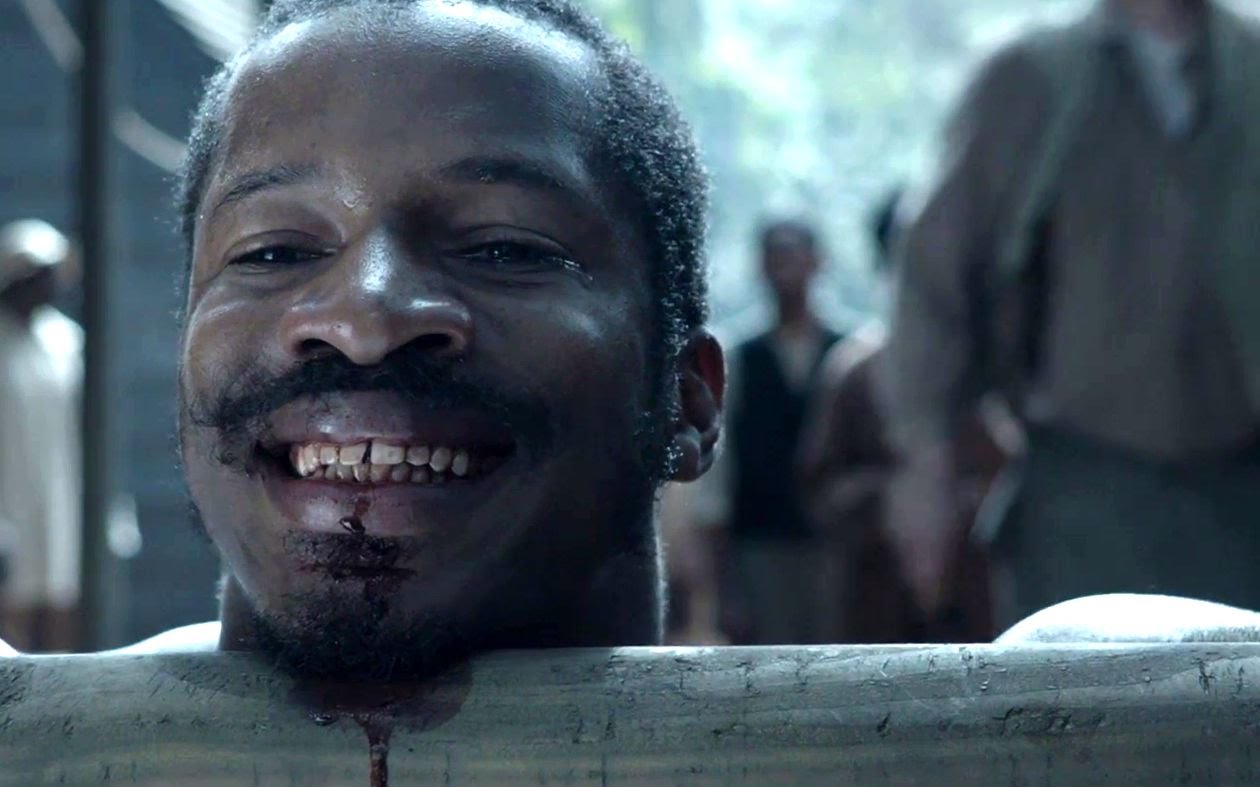
From The Birth of a Nation (2016) trailer, August 26, 2016. (http://youtube.com).

From The Birth of a Nation (2016) trailer, August 26, 2016. (http://youtube.com).

My biggest issue, though, is with all the outrage has come the American penchant for hypocritical moralizations, one that is in part based on race. That is, that we only have the choice of supporting Nate Parker and his revolutionary work or not, that the middle ground of seeing cultural production while reviling the man who helped produce it isn’t an available option. Sorry, but we Americans, we obese consumers and appropriators of all things cultural, do this every day. People have not stopped seeing Woody Allen or Roman Polanski films, though one is likely a child molester and the other one committed rape. We haven’t returned or burned Bill Withers’ tapes, albums, and CDs, though he’s had domestic violence issues in his past. Nor do we think about the poetry we read, the paintings and sculptures we peruse, the TV shows we watch, in which an artist of one kind or another has committed a crime, has killed, stolen from, and destroyed people’s lives along the way. The problem is, if one swings a stick at any cultural production, you will hit a thief, a mugger, an abuser, a rapist, a molester, maybe even a Nazi.

As for me, like with most movies, I will not go to see The Birth of a Nation in a movie theater. I will wait the six months or a year it takes for it to come out on premium cable. I wouldn’t have gone to see it before social media caught wind of Parker’s past. I certainly will not get sucked in to see it, to be part some moralistic wave of cultural immediacy, now.

This issue should not be about Nate Parker at all. It should be about the system that allows for rapists to get no jail time or to be acquitted. It should be about universities like Penn State that allow these crimes to go unpunished, places that punish the victims of sexual violence much more often than they do the perpetrators. It should be about a society where both fathers and mothers do nothing to teach their sons to not rape. Instead, we’re focused on one individual, as if the problem of American rape culture will be solved by going after alleged rapists years after their crimes.

“Fear of The Unknown” or “Other” = Inhumanity

09 Saturday Jul 2016

Posted by decollins1969 in 1, Academia, culture, Eclectic, Politics, Pop Culture, race, Religion, Work, Youth

≈ Leave a comment

Tags

"Fear of the Other", "Fear of the Unknown", #AltonSterling, #PhiladoCastile, American Narcissism, Black Box, Dallas, Duquesne University College of Education, Empathy, History of American Education, Humanity, Inhumanity, Islamophobia, Racism, Southern and Eastern European Immigrants, Teaching and Learning, Xenophobia


A black box with question mark, a certain "fear of the unknown," July 9, 2016. (http://socialcapitalmarkets.net).

A black box with question mark, a certain “fear of the unknown,” July 9, 2016. (http://socialcapitalmarkets.net).

The phrases “fear of the unknown” or “fear of the other” has been something that I’ve been familiar with as long as I’ve been in the classroom. So many essays, so many discussions, so many presentations where these stock phrases have greeted me in my capacity as instructor, professor, facilitator, administrator, and public speaker. Ultimately, the use of these all-too-often used phrases reflects the inability of the people who speak and write them to see other people as Homo sapiens, thus diminishing their humanity in the process.

The first time I seriously encountered either phrase, though, was in my second semester of teaching History of American Education in the College of Education at Duquesne University for MAT students. It was the fall of 1998, and I was teaching a required education foundations course (I was also doing Multicultural Education that semester). To be sure, there were a couple of veteran teachers who didn’t like having a twenty-eight year-old Black man telling them about the marbled history of their profession and the institutions for which they served as K-12 teachers. Some of their bigoted evaluation responses disclosed as much.

It was the week I lectured on the Southern and Eastern European immigrant experience in America’s emerging public school systems between roughly 1880 and 1930. In going through the efforts of educators to literally beat out of these children the language of their mother countries (e.g., Italian, Yiddish, Greek, Polish, etc.) while sorting them into lower intellectual tracks within public schools, I noted the anti-immigrant xenophobia among WASPs at that time. One of my students during discussion tried to explain it away as a WASP “fear of the unknown.” I asked, “What was the unknown? Were these immigrants aliens?” — in this case, I meant “extraterrestrials.”

Data Mining/Fear of the Unknown cartoon, Adam Zyglis, Buffalo News, July 6, 2013. (http://adamzyglis.buffalonews.com/2013/07/06/data-mining/).

Data Mining/Fear of the Unknown cartoon, Adam Zyglis, Buffalo News, July 6, 2013. (http://adamzyglis.buffalonews.com/2013/07/06/data-mining/).

The student didn’t really answer my question, as if “fear of the unknown” needed no explanation. But on the paper related to the experiences of the children of Southern and Eastern European immigrants, Black migrants, and working-class women, over and over again, the phrase “fear of the unknown” kept showing up. What made this use of phrase even more disappointing was an even more sobering Western Pennsylvanian reality. Most of my students were the descendants of Southern and Eastern European immigrants, some of whom were old enough to have had contact with grandparents who must have recounted their experiences with xenophobia in public education. That these students couldn’t possibly see the inhumanity of the phrase “fear of the unknown” made me question whether these current and future teachers should be in a classroom at all.

Luckily, I did manage to reach a few of my more skeptical students around these sorts of issues as this course progressed. After all, most teachers really do want to help their students. A couple even wrote me notes after slamming me in their evaluations about how my History of American Education course had opened their eyes to inequality and social reproduction in K-12 education.

Since then, I have remained keenly aware of when students, colleagues, public speakers, and fellow administrators (specifically in the context of the nonprofit world) have said or written the “fear of the unknown” or “fear of others” phrases. Mostly, it’s not in the context of White ethnics from an era in which “White” mostly meant “White Anglo-Saxon Protestants.” Over the past fifteen years, I’ve seen and heard “fear of the unknown” in reference to Blacks, Latinos viewed only as free-loading immigrants, and Arab-Muslim Americans as US-hating terrorists. There have been students who have justified the race riots of the not-so-recent past (the ones where White mobs stormed into Black neighborhoods and burned them out while maiming and killing Black men, women, and children) with the phrase “fear of the unknown.” Or co-workers who’ve explained away their xenophobia or homophobia as a natural “fear of the other.” Or public speakers who’ve explained Islam as if it were a magical black box that churns out terrorists the way Detroit used to turn out automobiles.

Caravaggio's Narcissus (1594-96) , May 15, 2011. (Masur via Wikipedia). In public domain.

Caravaggio’s Narcissus (1594-96) , May 15, 2011. (Masur via Wikipedia). In public domain.

Stop it. Just stop it. What does “fear of the unknown” really mean? That you didn’t know that Black Americans were human beings with a need for work, education, housing, sleep, air to breathe, and food to eat? That you couldn’t conceive of Latinos as a group of folks who’ve been part of the American landscape (specifically Texas and the southwestern US) for far longer than there has been a US? That you can’t contemplate the idea that Arab Muslims have just as much right to exercise their First Amendment rights to freedom of speech, religion, and assembly as any “red-blooded American?”

Using the phrase “fear of the unknown” says more about the people using it than it does about the “others” they attempt to describe as “unknowns.” All anyone really needs to know is that the so-called others are human beings. To say “unknown” or “other” means than you think you are superior to these “unknowns.” Or, conversely, that these “other” humans are not “normal,” that they are defective or not quite your equals. When groups of humans attempt to justify inequality or their fear with phrases like “fear of the unknown” or “fear of the other,” it means they have little or no empathy for the “unknown” or “other.” And when we as humans can cut ourselves off from other humans in this way, doesn’t that make us less humane, more “other” because we believe ourselves to be normal, even special, and therefore, better, than these “unknown others?”

Of course, there are tremendous psychological and material advantages to seeing other humans as “unknowns” and “others.” This week of #AltonSterling, #PhiladoCastile, and #Dallas has been proof positive of the value of some lives versus “unknown others.” The truth is, no Homo sapiens live in black holes. Unless those with the power to cut off empathy to their psychological and material advantage make a mental home for us there.

OJ: Microwaved in America

27 Monday Jun 2016

Posted by decollins1969 in 1, culture, Eclectic, Movies, Politics, Pop Culture, race, Youth

≈ Leave a comment

Tags

Colorblind Racism, ESPN, Ezra Edelman, Misogyny, Narcissism, O.J. Simpson, OJ: Made in America (2016), Questions Unanswered, Racism, Review, Viewers, Weaknesses


Ezra Edelman (sports documentarian and son of activist/Children's Defense Fund founder Marian Wright Edelman), 2015, June 26, 2016. (Deqrassi4 via Wikipedia). Released to public domain via CC-SA-4.0.

Ezra Edelman (sports documentarian and son of activist/Children’s Defense Fund founder Marian Wright Edelman), 2015, June 12, 2016. (Deqrassi4 via Wikipedia). Released to public domain via CC-SA-4.0.

Ezra Edelman is a pretty good documentarian. Period. Edelman is no Ken Burns, David Attenborough, or even Spike Lee. Although his O.J.: Made in America has gotten Edelman kudos and other critical accolades, for this viewer, it felt like an unedited draft long on O.J. Simpson’s post-football life and woefully short on the “made in America” theme. Like a McDonald’s or microwave meal, Edelman’s O.J.: Made in America tasted more like fake food than it did a carefully crafted work with a serious balance of protein, starches, fruits, and vegetables.

Mechanically processed chicken, the key ingredient in McDonald's Chicken McNuggets, pouring out into small tubs, October 5, 2010. (http://huffingtonpost.com).

Mechanically processed chicken, the key ingredient in McDonald’s Chicken McNuggets, pouring out into small tubs, October 5, 2010. (http://huffingtonpost.com).

Let’s start with the long. The five-part documentary was nearly eight hours in length, about three hours too long overall. Spending more than twenty minutes of Part 3 on the Bronco chase was an error that most directors would’ve left on the editing floor. Anyone with access to a TV and over the age of thirty has seen this chase at least once, and for people like me, at least one time too many. There were so many other places, though, where Edelman chose not to make editing choices. Thirty minutes of Part 3, all ninety-five minutes of Part 4 and the first fifteen minutes of Part 5 were on the O.J. trial. There wasn’t much “made in America” with this part of the documentary.

And how could there have been, really? Edelman’s idea was to let the audience make up their own minds about O.J. Even so, an occasional narration of events would’ve helped with the timeline of the five parts, especially Parts 2 and 3. When did O.J. break up with his first wife, Marguerite? How did O.J. go from dating to marriage with Nicole Brown? What was O.J.’s relationship with his first children, with the Brown family, prior to the 1994 slaying and subsequent trial? Why wasn’t a timeline consistently added to the documentary? Who refused to do interviews for the documentary? With so much information, Edelman expected viewers to draw inferences for all of the missing pieces. There was too much and not enough information at the same time.

Edelman’s expectations also meant the limited (really none, in this case) use of experts to draw out nuances in the story, to truly make this about O.J. and his relationship with America. Sure, references to the LAPD, Rodney King, and the L.A. Riots of 1992 were fine. What about O.J.’s internalized racism and obvious colorism? What about the toxic nature of O.J.’s -isms mixed with the racist fetishisms not only on the part of Nicole Brown Simpson, but also of nearly everyone in O.J.’s orbit? This would’ve been a great place to have some expert commentary. Instead, Edelman divided Americans into two neat racial camps: most Whites for a colorblind race transcendent in O.J. before falling into hatred, and most Blacks pretty much the opposite.

O.J.: Made in America (2016) poster board, June 26, 2016. (http://variety.com)

O.J.: Made in America (2016) poster board, June 26, 2016. (http://variety.com)

The last part of Edelman’s documentary came down to whether people believed O.J. “did it” or not. That question is no longer relevant. In fact, it may never have been relevant, even on June 12, 1994. Especially if the idea is that O.J. the misogynist, narcissist, and self-hating probable murderer is a representation of the American cultural psyche. This is where skill, expertise, and narration can subtly frame such an overarching theme, instead of taking us to the land of America in racial and gender stereotypes.

For this viewer, if I want a documentary that addresses societal issues like race through the lens of an individual’s experience, I’ve already learned whom not to watch again. At least, not until Edelman learns what I already know. Seasoning is as important in a documentary as cooking with gas. One ensures good flavor and a variety of perspectives. The other blandly reinforces people’s misjudgments and stereotypes.

My Busing Blues

25 Wednesday May 2016

Posted by decollins1969 in 1, Academia, Boy @ The Window, culture, Eclectic, Jimme, Marriage, Mount Vernon New York, My Father, Pittsburgh, Politics, Pop Culture, race, University of Pittsburgh, Youth

≈ Leave a comment

Tags

425 South Sixth Avenue, 616, 616 East Lincoln Avenue, Boston, Busing, Classism, Common Ground (1985), Community, Desegregation Orders, Divorce, Economic Inequality, Educational Equity, Friendships, J. Anthony Lukas, Ms. Hirsch, Nathan Hale Elementary, Ostracism, Racism, School Desegregation, Second Grade, William H. Holmes Elementary, Youth


TFD bus (they're still around?), South Side, Mount Vernon, NY, May 25, 2016. (http://zztalon.tripod.com/).

TFD bus (they’re still around?), May 25, 2016. (http://zztalon.tripod.com/).

Schooling and friendships have been the main theme of my posts this month. I find myself in deeper reflection about my years before the Boy @ The Window years these days. Maybe because I’ve come to realize that those years between ’74 and ’81 were far more influential in how I saw the world than I’d previously given credit.

One issue that I think I’ve had insight into for years before actually becoming an educator is busing. Maybe not so much in relation to school desegregation, though. As a seven-year-old, it would’ve been in terms of friendships and belonging. The only time I faced a no-choice busing situation was my last two and a half months of second grade, between April and late-June 1977. My Mom and Maurice had moved in together and moved me and my brother Darren to North Side Mount Vernon and 616, the house of horrors that would become the central locale of my memoir.

The Soiling of Old Glory, Boston, MA, April 5, 1976. (Stanley Forman/Boston Herald American via Wikipedia). Qualifies as fair use due to historical important of photo and low resolution.

The Soiling of Old Glory, Boston, MA, April 5, 1976. (Stanley Forman/Boston Herald American via Wikipedia). Qualifies as fair use due to historical important of photo and low resolution.

The only thing I knew of busing before the move from 425 South Sixth to 616 East Lincoln was that Darren had been taking a bus to Clear View School in Dobbs Ferry every school day since my first day of kindergarten in ’74. Also, the images in my head from national news on the three main networks about Boston Public Schools and protests in ’74 and ’75. I had no idea in the spring of ’77 that many White and more than a few Black parents were fighting a desegregation order that required widespread busing in Boston. All I knew at the time was that a lot of angry people with signs and bricks and bottles were on my TV screen at the beginning of September almost every year.

My spring of busing was one of misery. Not because Mount Vernon was under any desegregation order, which it was. Mom had made the decision to not disrupt second grade for me by keeping me at Nathan Hale Elementary, the school that we had lived two doors down from prior to our 616 move. The other option was for me to start at William H. Holmes Elementary five months sooner, so that my transition to third grade would’ve been easier. Thanks, Mom.

Even at the time, I wished she had. Mom had been sick for half that school year. She and my father Jimme were in the midst of a nasty divorce. We had already moved. It made no sense for me to continue to go to Nathan Hale Elementary. I couldn’t stand my teacher Ms. Hirsch. She was the only teacher prior to Humanities, and especially Humanities at Mount Vernon HS, who thought of me and other students as essentially kids without a future. Ms. Hirsch was the only teacher prior to my senior year at MVHS who told me that I wouldn’t “amount to anything.” I hated, hated being in her classroom. It was a feeling I wouldn’t have again until David Wolf and AP Physics my senior year, and even then, that feeling only lasted for forty-five minutes, and even then, it wasn’t with me every day.

By the end of second grade, I was without any friends. Not because I did anything weird, which I’m sure I did. The constant disruptions in our living arrangements meant that I no longer played in the playground next to Nathan Hale after school, where I could hang out with other first, second, and third graders. (I was scared to go there by myself otherwise, anyway — this issue, to be continued.) A bunch of my first grade friends from Ms. Griffin’s class had left during the summer of ’76, leaving Winston, a first grader, as my only friend at Nathan Hale. Yeah, I talked to Lauren and one other girl in Ms. Hirsch’s class, but that was pretty much it.

Now and Later candies, made by Farley's and Sathers, October 26, 2010. (Evan-Amos/Vanamo Media via Wikipedia). Released to public domain.

Now and Later candies, made by Farley’s and Sathers, October 26, 2010. (Evan-Amos/Vanamo Media via Wikipedia). Released to public domain.

Taking the bus to and from school for those last fifty days or so of school was torture. Not because kids make fun of me, which they didn’t, or because I was part of some experiment related to desegregation, which I wasn’t. I hated the smell, of bubblegum and Now-&-Laters, of sweat from recess and gym, of exhaust fumes from cars because our little TFD bus wasn’t air-conditioned. Mostly, I couldn’t stand the forty-five minutes or hour that it would take to go from 616 to Nathan Hale, picking up kids all through Mount Vernon along the way.

Fourteen years later, in an upper-level US urban history undergraduate course (my last history class before grad school) at the University of Pittsburgh, one of my required readings was J. Anthony Lukas‘ Common Ground (1985), his Pulitzer Prize-winning book on busing and school desegregation in Boston. There were so many powerful parts of Lukas’ book that piqued my interest. His coverage of parents from all sides of the busing controversy. The sense that school desegregation was a bit of a Pyrrhic victory legally, but not so much culturally, because of the “hearts and minds” issues around race. What struck me, though, was the limited perspective Lukas provided on kids who had to ride these buses between Black, White, and Puerto Rican neighborhoods to get to these schools throughout Boston.

Front cover of Common Ground (1985) by J. Anthony Lukas, September 3, 2014. (http://goodreads.com).

Front cover of Common Ground (1985) by J. Anthony Lukas, September 3, 2014. (http://goodreads.com).

I imagined what it would’ve been like to bus in Boston during my K-2 years. I had it hard enough as a child of abuse and divorce, with a move to an uncertain future, and with at least one teacher who saw me as little more than human garbage. Add screaming and spit-flying from White parents raging over school desegregation? I really could’ve been written off, never having a chance to become a good student, and more importantly, a lifelong learner. Maybe the only lesson I would’ve learned from busing was that Whites against busing have serious high-blood pressure issues. Or, more realistically, that White parents didn’t want me to become friends with their kids.

Either way, Lukas helped me realize, maybe for the first time, how twisted and evil American society would have to be to expose kids to blatant racism and not-so-blatant economic inequalities as demonstrated through busing.

Afrocentrists, Evangelicals, Hebrew-Israelites and the False Revolution

28 Monday Mar 2016

Posted by decollins1969 in 1, Academia, Boy @ The Window, Carnegie Mellon University, Christianity, culture, Eclectic, Hebrew-Israelite, Mount Vernon New York, Patriotism, Pittsburgh, Politics, Pop Culture, race, Religion, University of Pittsburgh, Youth

≈ Leave a comment

Tags

Afrocentric, Afrocentricity, Authentic Blackness, Authority Figures, Black Action Society, Child Abuse, Covenant Church of Pittsburgh, Cross of Gold (1896), Dick Oestriecher, Domestic Violence, Estelle Abel, Evangelical Christianity, Frances Cress Welsing, Frederick K.C. Price, Gospel of Prosperity, Hoteps, Jack Van Impe, Judah ben Israel, Karl Marx, Kenneth Copeland, Kufi, Marxism, Maurice Eugene Washington, Molefi Asante, Neo-Marxists, Ostracism, Prosperity Gospel, Racism, Rapture, Religion, Wendy Goldman, William Jennings Bryan


Kenneth and Gloria Copeland, Believer's Voice of Victory television broadcast, November 23, 2011. (Carpetsmoker via Wikipedia). Released to public domain via CC-SA-3.0.

Kenneth and Gloria Copeland, Believer’s Voice of Victory television broadcast, November 23, 2011. (Carpetsmoker via Wikipedia). Released to public domain via CC-SA-3.0.

For nearly all of my life folks with even a kernel of authority have tried to convince me that there was one right way to live, one true path to liberation. Mostly religion has been the means through which others have attempted to box me in, although ideologues around Marxism, Afrocentricity, and Capitalism have all been in my figurative kitchen over the years. And like any well-meaning human being, at times I tried real hard to adapt myself to these right ways of thinking, of living out the one correct way to live. Only to fail, or rather, to recognize that none of these ways are the one right way, unless you are a closet right-winger, a conservative (non-ideological) wearing revolution-esque clothing.

My introduction to this madness began with my years as a Hebrew-Israelite, from April ’81 to April ’84 (although I wore my kufi until September ’84). That any parent could suddenly impose a new religion on their kids without explanation is abusive enough. When combined with vague notions about the Lost Tribes of ancient Israel and the wearing of clothes that set us apart culturally while in the middle of puberty, it was a forced societal ostracism. Even still, I tried to live by these strictures. “Remember the Sabbath day and keep it holy.” Eat kosher food, don’t use Ivory soap, shop only at Black or Hebrew-Israelite stores, avoid “unclean issues of blood.” But the physical abuse and poverty that came with being a Hebrew-Israelite in the Judah ben Israel madhouse of contradictions at 616 made me despise anything involving Hebrew-Israelite pretty much for all time.

Molefi Asante speech, Philadelphia, PA, September 13, 2014. (AP photo/file).

Molefi Asante speech, Philadelphia, PA, September 13, 2014. (AP photo/file).

Fast-forward a few years to the early 1990s, to the rise of Afrocentricity and the Afrocentric ethos. After three and a half years of being around Hebrew-Israelites, these kente-cloth wearing fools made me weary more times than not of their exclusionary our-way-or-no-way Blackness. Molefi Asante and the late Frances Cress Welsing were just the tip of a much larger iceberg in search of revolutionary “authentic” Blackness. From the Afrocentric undergrads who hijacked the Black Action Society leadership at the University of Pittsburgh in 1991 to folks who picked arguments with me for “sounding White” while I was in grad school, I saw them the same way I saw my now idiot ex-stepfather and the obnoxious Estelle Abel from my high school days. They were well-meaning but stupid. As far as I was concerned, they thought that their words alone would foster a revolution, that being Black meant turning one’s back on the world while also indirectly embracing an ethnocentric capitalism. Or at least, a Black American collective individualism, otherwise known as an “Afrocentric cool.”  I could not, I would not, exchange one form of oppressive uplift in Hebrew-Israelites for the shiny fool’s gold that mostly represented the Afrocentrists.

The neo-Marxists I met in Pittsburgh throughout the 1990s were no better. For all their revolutionary rhetoric, theirs was a world of theoretical activism, of scholarly examples of past oppression. Most of them didn’t know poverty and didn’t comprehend oppression beyond their own limited experience. Most of all, they couldn’t find a connection between American racism and class oppression if I gave them an industrial strength magnet. The fact that most of them hadn’t read Franz Fanon, W. E. B. Du Bois, Eric Williams, C. L. R. James, Anna Julia Cooper, Zora Neale Hurston, Derrick Bell, Angela Davis — but could quote Karl Marx the way Hebrew-Israelites could quote the Torah and Afrocentrists could quote Asante and Welsing — I found troubling. That’s putting it nicely. I found it contemptuous that folks who didn’t know my experience or who would all but refuse to read folks who written about experiences like mine would expect my allegiance to an ideology that was never meant for people who look like me.

The evangelical Christian part of my life was literally the last of the major dogmas to go. It was the hardest for me because I literally had given my life to Jesus in the midst of the whole Hebrew-Israelite crisis, Easter Sunday ’84. With my Mom coming down the same path by the late-1980s, it made it easier to not interrogate my Christianity as thoroughly as I would excoriate Afrocentrists and Marxists in graduate classes and in articles and papers a decade later. But even at nineteen, I realized that the Van Impe’s weekly predictions of the Apocalypse were as ridiculous as Welsing’s exulting of the magical properties of melanin. Or, for that matter, a fake Balkis Makeda cautioning against the use of Ivory Soap among her Hebrew-Israelite flock because of a dream she had.

Grant Hamilton cartoon for Judge Magazine on William Jennings Bryan's "Cross of Gold" speech, Democratic National Convention, Chicago, July 9, 1896. (Wikipedia). In public domain.

Grant Hamilton cartoon for Judge Magazine on William Jennings Bryan’s “Cross of Gold” speech, Democratic National Convention, Chicago, July 9, 1896. (Wikipedia). In public domain.

I went along to get along for years, until the hypocrisy of evangelical Christianity’s Gospel of Prosperity became too much. They took the metaphor of William Jennings Bryan’s cross of gold and actually went literal and nuclear with it. Somehow being Christian now meant blind patriotic allegiance to anything US and fully supporting capitalism, and yet an exclusionary separation between “true” evangelical Christians and the rest of the world. Especially on Rapture Day.

The last time I sat comfortably in a pew was in January ’97, although I’ve been to churches of various denominations dozens of times since. I still believe in Jesus, the life and the death and even the resurrection. But I don’t believe in most who claim to represent him, yet turn around and ignore the vulnerable standing right in front of them, making weak claims around individualism and poverty in the process.

In so many ways, evangelicals, Marxists, Afrocentrists, and Hebrew-Israelites are more alike than different. They all insist on a singular path, a quintessential truth. While some aspects of their thinking are appealing, I find accepting their bullshit in entirety poisonous to my spirit, mind, and gastrointestinal tract. There still may well be a revolution or even a rapture, but it won’t be because of any of these groups.

← Older posts
Newer posts →

Boy @ The Window: A Memoir

Boy @ The Window: A Memoir

Places to Buy/Download Boy @ The Window

There's a few ways in which you can read excerpts of, borrow and/or purchase and download Boy @ The Window. There's the trade paperback edition of Boy @ The Window, available for purchase via Amazon.com at http://www.amazon.com/Boy-Window-Donald-Earl-Collins/dp/0989256138/

There's also a Kindle edition on Amazon.com. The enhanced edition can be read only with Kindle Fire, an iPad or a full-color tablet. The links to the enhanced edition through Apple's iBookstore and the Barnes & Noble NOOK edition are below. The link to the Amazon Kindle version is also immediately below:

scr2555-proj697-a-kindle-logo-rgb-lg

Boy @ The Window on Amazon.com: http://www.amazon.com/Boy-The-Window-Memoir-ebook/dp/B00CD95FBU/

iBookstore-logo-300x100

Boy @ The Window on Apple's iBookstore: https://itunes.apple.com/us/book/boy-the-window/id643768275?ls=1

Barnes & Noble (bn.com) logo, June 26, 2013. (http://www.logotypes101.com).

Boy @ The Window on Barnes & Noble: http://www.barnesandnoble.com/w/boy-the-window-donald-earl-collins/1115182183?ean=2940016741567

You can also add, read and review Boy @ The Window on Goodreads.com. Just click on the button below:

Boy @ The Window

Twitter Updates

Tweets by decollins1969
  • RSS - Posts
  • RSS - Comments

Archives

  • June 2025
  • April 2023
  • September 2022
  • August 2022
  • July 2022
  • June 2022
  • May 2022
  • April 2022
  • March 2022
  • January 2022
  • December 2021
  • November 2021
  • October 2021
  • September 2021
  • August 2021
  • July 2021
  • June 2021
  • April 2021
  • March 2021
  • February 2021
  • January 2021
  • December 2020
  • November 2020
  • October 2020
  • September 2020
  • August 2020
  • July 2020
  • May 2020
  • April 2020
  • March 2020
  • January 2020
  • December 2019
  • November 2019
  • August 2019
  • July 2019
  • June 2019
  • May 2019
  • April 2019
  • March 2019
  • February 2019
  • January 2019
  • December 2018
  • November 2018
  • October 2018
  • September 2018
  • August 2018
  • July 2018
  • June 2018
  • May 2018
  • March 2018
  • February 2018
  • January 2018
  • December 2017
  • November 2017
  • October 2017
  • September 2017
  • August 2017
  • July 2017
  • June 2017
  • May 2017
  • April 2017
  • March 2017
  • February 2017
  • January 2017
  • December 2016
  • November 2016
  • October 2016
  • September 2016
  • August 2016
  • July 2016
  • June 2016
  • May 2016
  • April 2016
  • March 2016
  • February 2016
  • January 2016
  • December 2015
  • November 2015
  • October 2015
  • September 2015
  • August 2015
  • July 2015
  • June 2015
  • May 2015
  • April 2015
  • March 2015
  • February 2015
  • January 2015
  • December 2014
  • November 2014
  • October 2014
  • September 2014
  • August 2014
  • July 2014
  • June 2014
  • May 2014
  • April 2014
  • March 2014
  • February 2014
  • January 2014
  • December 2013
  • November 2013
  • October 2013
  • September 2013
  • August 2013
  • July 2013
  • June 2013
  • May 2013
  • April 2013
  • March 2013
  • February 2013
  • January 2013
  • December 2012
  • November 2012
  • October 2012
  • September 2012
  • August 2012
  • July 2012
  • June 2012
  • May 2012
  • April 2012
  • March 2012
  • February 2012
  • January 2012
  • December 2011
  • November 2011
  • October 2011
  • September 2011
  • August 2011
  • July 2011
  • June 2011
  • May 2011
  • April 2011
  • March 2011
  • February 2011
  • January 2011
  • December 2010
  • November 2010
  • October 2010
  • September 2010
  • August 2010
  • July 2010
  • June 2010
  • May 2010
  • April 2010
  • March 2010
  • February 2010
  • January 2010
  • December 2009
  • November 2009
  • October 2009
  • September 2009
  • August 2009
  • July 2009
  • June 2009
  • May 2009
  • April 2009
  • March 2009
  • February 2009
  • January 2009
  • December 2008
  • November 2008
  • October 2008
  • September 2008
  • August 2008
  • July 2008
  • June 2008
  • May 2008
  • April 2008
  • March 2008
  • February 2008
  • January 2008
  • December 2007
  • November 2007
  • October 2007
  • September 2007
  • August 2007
  • July 2007
  • June 2007

Recent Comments

MaryPena's avatarMaryPena on My Day of Atonement/Bitter Hat…
decollins1969's avatardecollins1969 on No Good Teaching Deed Goes…
Mary Rose O’Connell's avatarMary Rose O’Connell on No Good Teaching Deed Goes…

NetworkedBlogs on Facebook

NetworkedBlogs
Blog:
Notes From a Boy @ The Window
Topics:
My Life, Culture & Education, Politics & Goofyness
 
Follow my blog

616 616 East Lincoln Avenue A.B. Davis Middle School Abuse Academia Academy for Educational Development AED Afrocentricity American Narcissism Authenticity Bigotry Blackness Boy @ The Window Carnegie Mellon University Child Abuse Class of 1987 CMU Coping Strategies Crush #1 Crush #2 Death Disillusionment Diversity Domestic Violence Economic Inequality Education Family Friendship Friendships Graduate School Hebrew-Israelites High-Stakes Testing Higher Education History Homelessness Humanities Humanities Program Hypocrisy Internalized Racism Jealousy Joe Trotter Joe William Trotter Jr. K-12 Education Love Manhood Maurice Eugene Washington Maurice Washington Misogyny Mother-Son Relationship Mount Vernon High School Mount Vernon New York Mount Vernon public schools Multiculturalism MVHS Narcissism NFL Pitt Pittsburgh Politics of Education Poverty President Barack Obama Race Racial Stereotypes Racism Relationships Self-Awareness Self-Discovery Self-Reflection Sexism Social Justice Teaching and Learning University of Pittsburgh Violence Whiteness Writing

Top Rated

Blog at WordPress.com.

  • Subscribe Subscribed
    • Notes from a Boy @ The Window
    • Join 103 other subscribers
    • Already have a WordPress.com account? Log in now.
    • Notes from a Boy @ The Window
    • Subscribe Subscribed
    • Sign up
    • Log in
    • Report this content
    • View site in Reader
    • Manage subscriptions
    • Collapse this bar
 

Loading Comments...