• About Me
  • Other Writings
  • Interview Clips
  • All About Me: American Racism, American Narcissism, and the Conversation America Can’t Have
  • Video Clips
  • Boy @ The Window Pictures
  • Boy @ The Window Theme Music

Notes from a Boy @ The Window

~

Notes from a Boy @ The Window

Tag Archives: Poverty

My First Mugging

03 Thursday Apr 2014

Posted by decollins1969 in 1, Boy @ The Window, culture, Eclectic, High Rise Buildings, Mount Vernon New York, Pop Culture, race, Youth

≈ 2 Comments

Tags

616 East Lincoln Avenue, Black Boys, Brotherhood, Bullying, Darren, Manhood, Mother-Son Relationship, Muggers, Mugging, Pearsall Drive, Poverty, Projects, Robbery, Street Smarts, Thugs, Vernon Woods, Wannabe


New York mugging, Granger (1857), April 3, 2014. (http://chroniclevitae.com).

New York mugging, Granger (1857), April 3, 2014. (http://chroniclevitae.com).

This is another story not in Boy @ The Window, though it could’ve been. It was thirty-five years ago this week that a group of my preteen neighbors from the Pearsall Drive projects (now the Vernon Woods co-op community) jumped me on my way home from the store, beat me up and stole a grand total of four dollars. It seems like such a small thing now, getting mugged for the first time, a block from 616 East Lincoln, our apartment building on the eastern edge of Mount Vernon, New York. Still, I learned a few things on that first Saturday in April ’79 about myself, my older brother, my mother and humans in general, things that haven’t changed in the three and a half decades since.

That particular day was definitely a crisp early spring one, windy, partly sunny and cloudy, just warm enough not to need a winter coat. I’d barely been out the house at all since attempting to run away from home some four months earlier. In the months in between, I’d been engrossed in reading everything I could, especially World Book Encyclopedia, not to mention what I hadn’t already read in Charles Schulz’ Peanuts series.

I hadn’t been out the apartment to do much of anything other than go to school or to the store. So little was my time outside that when I had to do a full food shop, I’d forgotten a few basic rules about protecting myself. Like making sure that a group of nine-to-fourteen-year-olds weren’t following us home from the local grocery store. And making sure to take the most direct route home when I could, or a circuitous route home when necessary. Going west on the north side of East Lincoln, making a left on Station Place, then a left on Lafayette Avenue, then a final left on Bradley, walking four short blocks that would’ve left us in front of 616.
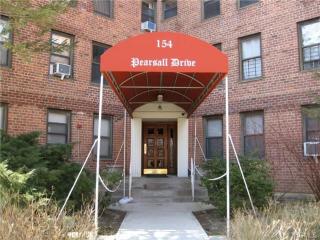
134 Pearsall Drive (now part of the Vernon Woods co-op complex), April 3, 2014. (http://trulia.com)

134 Pearsall Drive (now part of the Vernon Woods co-op complex), April 3, 2014. (http://trulia.com)

On this day, the circuitous route would’ve been better. But that would’ve meant me being better, too. I was already not feeling well when I left with Darren for the grocery store. I had a stomach ache, and the diarrhea that came with it. So my best bet was to go to the store at 671 East Lincoln with Darren, cross over to the south side of East Lincoln, and walk as quickly as we could back to 616.

Only, the half-dozen boys trailing me and Darren back home had crossed with us, and immediately tried to surround us near East Lincoln and Pearsall. Darren, to his credit, ran off for home, leaving me alone and holding two paper bags of groceries. Somewhere between “nigga” and “muthafucka” and “giv’ me the money,” I struggled and ran away with the groceries, where after a minute or two, I ended up in the bottom floor of one of the project buildings.

I was jumped again, punched in the face and the mouth until one of the wannabe thugs had busted my lip and left me bleeding down the side of my face. I somehow crapped on myself during the run, but hadn’t noticed because I was too busy trying to not get mugged. After they took the four dollars’ worth of change I had in my right pant pocket, another wannabe said, “Oh shit, the punk dukeyed on hisself!” They laughed and left me there, in this abandoned, junky apartment, garbage and groceries and two ripped grocery bags all over the room, bloodied and soiled.

I picked up all I could from what remained of the groceries and began the long one-block walk home. By the time I walked through the front door, there was my Mom, angry with me about the groceries. “What I’m gonna do with this!” she said. It was afterward that she noticed my condition. “You let them kids scare the shit out of you!,” she gasped with what seemed like a bit of laughter in her voice. I said, very angrily, “I told you before I left that I had diarrhea!,” then went into the bathroom and cried.

Oscar de la Hoya's face after his beat-down via Manny Pacquiao, December 6, 2008. (AP via http://boxingscene.com).

Oscar de la Hoya’s face after his beat-down via Manny Pacquiao, December 6, 2008. (AP via http://boxingscene.com).

My Mom came in later to help me wash myself down. In the meantime, I had a bruised left cheek, a busted lip, feces all over my lower body, and soreness all over my ribs and stomach. It took about twenty minutes in all, but by the time I was done and washed, I went into mine and Darren’s bedroom and fell asleep.

It was April 7, ’79, and I already knew that I couldn’t count on my older brother to help whenever there would be a crisis. I knew that my Mom cared about me, but apparently not enough to keep me protected. I knew that the assholes that lived around me wouldn’t have minded it if I’d been run over by a Mack truck, as long as they could get a dollar out of me. I knew, most of all, that I needed to look out for myself as much as I could, since there weren’t any cousins or other family around to look out for me.

So when at the end of ’83, the city had sold the projects at Pearsall Drive to a real estate developer, though I was sad for a few individuals, I wasn’t sad in general. Those wannabes had helped make one relatively small aspect of my life — going to the store, going outside and going to Wilson’s Woods — miserable. And with so much misery in my life already, I was glad to see many of those kids move away.


My and Diane Ravitch’s Path to Reign of Error

11 Tuesday Mar 2014

Posted by decollins1969 in 1, Academia, Boy @ The Window, Carnegie Mellon University, culture, Eclectic, Mount Vernon High School, Mount Vernon New York, New York City, Patriotism, Pittsburgh, Politics, Pop Culture, race, Upper East Side, Youth

≈ Leave a comment

Tags

Bill & Melinda Gates Foundation, Book Review, Corporate Education Reform, Diane Ravitch, Fear of a "Black" America (2004), High-Stakes Testing, Humanities Program, Institutional Racism, Michelle Rhee, Multiculturalism, Neoconservative Movement, Politics of Education, Poverty, Privatization, Racial Segregation, Racism, Reign of Error (2013), Social Injustice, Social Justice, Teach for America, Writing Passion


Reign of Error (2013) by Diane Ravitch, front cover. (http://bn.com).

Reign of Error (2013) by Diane Ravitch, front cover. (http://bn.com).

I first began reading Diane Ravitch in July 1990, the summer before my senior year at the University of Pittsburgh. It was the summer in which I became interested in understanding magnet programs and their relationship with desegregation and diversity efforts, courtesy of my own experience with Mount Vernon, New York public schools and its now defunct Humanities Program. I read both The Great School Wars: New York City, 1805-1973 (1974) and The Troubled Crusade: American Education, 1945-1980 (1985) that summer, with education scholar and Ford Foundation director Jeanne Oakes’ Keeping Track: How Schools Structure Inequality (1985) sandwiched in between.

It was the beginning of a twenty-year period of constantly intellectual disagreement between me and Ravitch. Oakes’ work captured inequality in terms of race and socioeconomics so much better than Ravitch, whose writings back then often treated these inequalities and distinctions as afterthoughts. When I shifted my research area to multicultural education and multiculturalism, though, that was when I found Ravitch’s absolutist defense of so-called traditional American democratic education and all things e pluribus unum unbelievably stifling. With all Ravitch knew about the politics of education, in New York and with the US Department of Education, how could she possibly defend a system that did as much to control and exclude students as it did to provide something akin to an equal opportunity?

I chalked Ravitch up to being another out-of-touch neoconservative, scared to death of race and diversity and multiculturalism. I said as much at conferences like the American Educational Research Association meeting and other conferences. I wrote as much in my dissertation and in my first book, Fear of a “Black” America: Multiculturalism and the African American Experience (2004). Through it all, I always found Ravitch’s writing compelling, but her conclusions wanting, because they lacked perspective and empathy in the context of public schools and diversity.

Then, Ravitch wrote Left Back: A Century of Battles Over School Reform in 2000. Though it contained some of her common themes — overemphasis on the mantra of reform, the need for more testing, support for school choice, denigration of a multicultural curriculum — Ravitch showed growth in this book. She was less hostile to a more progressive curriculum and seemed, for the first time, really, to understand how much race and poverty had shaped the direction and the harshness of school reform going back to 1900. I happily used Ravitch’s Left Back in my History of American Education Reform course at George Washington in 2002. For her book provided a comprehensive and even-handed overview of the politics of K-12 education in a way that any educator of any American ideological perspective could understand.

I’ve finally read Ravitch’s Reign of Error: The Hoax of the Privatization Movement and the Danger to America’s Public Schools (2013). Reign of Error is Ravitch at her most passionate and energized. If I hadn’t read a couple dozen of Ravitch’s articles from the 1980s and 1990s and four of her previous books, I would think that this was her first book, as there is sense of urgency in Reign of Error that can seldom be found outside of epic memoirs and epic fiction novels.

Ravitch’s argument in Reign of Error is a simple one. Corporate education reform, if allowed to continue unfettered, will destroy public education in the US, and in the process, American democracy. Privatizing public schools (i.e., turning them into “public” charter schools), destroying teacher’s unions, constant high-stakes testing, bypassing school boards and forgetting about racial segregation and poverty — that’s corporate education reform’s agenda. As Ravitch said in Chapter 12 on the fallacies of merit pay for teachers, “Merit pay is the idea that never works and never dies (p. 119).” She could have also substituted the words “school choice,” “creationism,” “standardized testing,” “closing schools,” and “privatization” for “merit pay.”

But Ravitch goes further in her 400-page treatise. That though public education in the US has had its share of problems — the need for more teacher training and time for professional development, racial segregation and high levels of poverty while underfunded — that corporate education reform has compounded these problems several times over. That with corporate education reform, teachers, parents and students will have no say in public education, at least the ones without their own personal foundation with which to endow their own public charter school.

From a writer’s standpoint, this wasn’t Ravitch’s best effort. Her argument is repetitive, one where she likely could’ve cut the main chapters by a quarter (about 100 pages) and made the same points. I likely could’ve become inebriated if I had a shot of vodka every time the words “poverty,” “Gates,” “Walton,” “Broad,” “high-stakes testing,” and “corporate education reform” come up. But given my history with reading Ravitch and with this topic, of course Reign of Error was repetitive — it was like reading my own words on this same topic.

Ultimately, Ravitch’s Reign of Error is a primer for anyone interested in averting the social injustice that is the corporate education reform tyranny of wealthy philanthropists, money-grubbing entrepreneurs and politicians across America’s limited ideological spectrum. For those whom up to now this issue has been of limited interest, or for those who’ve felt the change in public education but haven’t quite been able to articulate those feelings, Reign of Error is for you.

For educators, parents and even students already involved in writing about or protesting against corporate education reform, this book is still for you. Ravitch provides so much ammunition that Reign of Error can be applied in numerous ways to numerous situations. At school board meetings. With #AskMichelleRhee hash tags on Twitter. In job interviews with Teach for America and with the Bill & Melinda Gates Foundation. In letters to the editor of the mainstream newspapers and in comments to mainstream TV and radio newscasters. In arguments with neoconservative parents who send their kids to private schools.

“Protecting our public schools against privatization and saving them for generations of American children is the civil rights issue of our time (p. 325).” is how Ravitch ended her Reign of Error. It’s not an exaggeration. But it does beg a question. If we can successfully fend off corporate education reform — and assume that the country will continue to ignore the poverty and racial segregation that Ravitch desperately wants addressed — can she and I then spend five minutes discussing multiculturalism?

What I Didn’t Know Growing Up – It Still Hurts

27 Thursday Feb 2014

Posted by decollins1969 in 1, Boy @ The Window, Christianity, culture, Eclectic, Hebrew-Israelite, Jimme, Marriage, Mount Vernon New York, My Father, New York City, Politics, Pop Culture, race, Religion, Sports, Work, Youth

≈ Leave a comment

Tags

Achievements, Ancestors, Arkansas, Basketball, Black History Month, Collins Family, Family, Gill Family, Harrison Georgia, Houston Texas, Ignorance, Jim Crow, Knowledge, Lineage, Mom, Mother, Parenting, Poverty, Segregation, Tenant Farming, Universality, Wisdom


George Bernard Shaw and ignorance, June 2013. (http://www.irelandcalling.ie/).

George Bernard Shaw and ignorance, June 2013. (http://www.irelandcalling.ie/).

“My people perish for a lack of knowledge,” it seems, is something that anyone can find in almost any religion’s texts anywhere. Heck, depending on perspective, even atheists in general can agree with this statement (of course, the issue would be what constitutes “knowledge”). I read this verse (it’s in Hosea and Isaiah, and versions of it as well as in Jewish texts and the Qur’an) for the first time when I was fifteen in ’85, less than a year after I converted to Christianity. Boy, I had no idea how little I knew about myself, my family and my history when I first read that verse twenty-nine years ago.

In light of the end of Black History Month, I wouldn’t be me without noting how little any of us know about our families, our lineages and our ancestors. But it’s not just true of the millions of us descended from West and Central Africans kidnapped, bound, abused, raped and nearly worked to death to provide Europeans (and Arabs) wealth and comfort. Most of us don’t even know what we think we know about much more recent history and events than surviving the Middle Passage or overcoming Jim Crow.

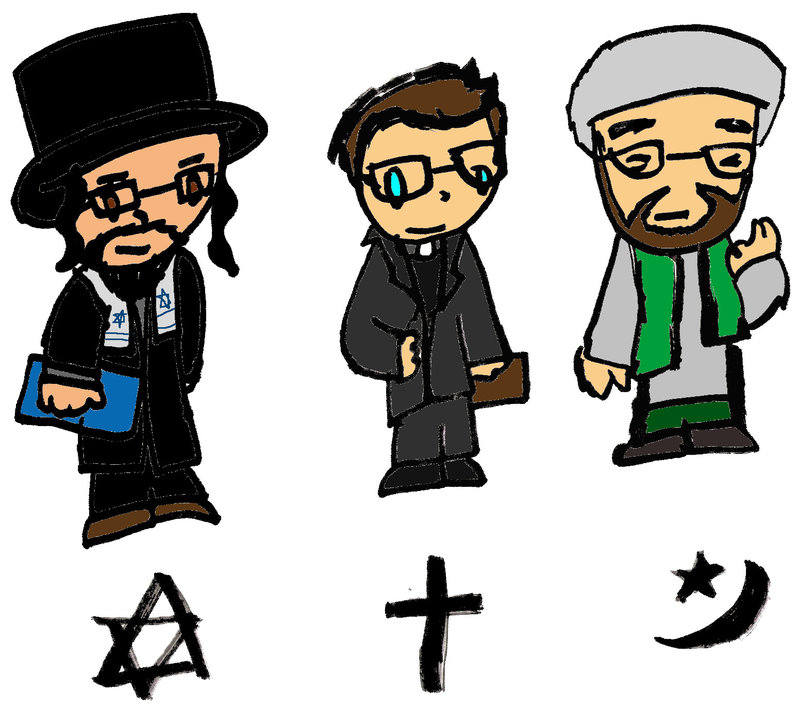
A rabbi, a priest and an imam, 2013-2014. (PizzaSpaghetti via http://www.deviantART.com).

A rabbi, a priest and an imam, 2013-2014. (PizzaSpaghetti via http://www.deviantART.com).

For me and my family, I knew so little about us that my Mom could’ve told me that Satan had thrown us out of Hell for being too brown to burn and I would’ve accepted it as an appropriate answer. All I really knew of my mother’s side of my family was that they were from Arkansas, that my Uncle Sam (I chuckled sometimes thinking of the irony) was my Mom’s closest sibling, and that they grew up as dirt poor as anyone could get without living in a thatched root hut on less than $1 a day.

I asked for more during those rare moments when my focus wasn’t on high school, getting into college and getting as far away from 616 and Mount Vernon, New York as possible. I ended up finding out about how my Mom’s mother once beat her with the back of a wooden brush for not being ready on time for church, that there were years where her father made only $200 total from cotton farming, and that she was the oldest of twelve kids. She had done some form of work either taking care of her siblings, cooking, cleaning, washing clothes by hand, and hoeing and picking cotton, since she was five or six. Oh yeah, and she played basketball in high school.

On my father’s side, I knew a bit more, if only because Darren and me went with my father to visit the Collins farm in Harrison, Georgia in August ’75. I was five and a half then, but I do remember the fresh smoked ham and bacon, the smell of my grandfather’s Maxwell House coffee, me being too scared to ride a horse, so they put me on a sow (my brother did ride the horse, though). But what people did, how a Black family owned their own land going back to the turn of the twentieth century, I wouldn’t have known to even ask about at not quite six years old.

What I didn’t know until after high school, college, even after earning a Ph.D. in knowing (that’s what a history degree ultimately is) was so much worse than I imagined. To find out at twenty-three that my Mom was a star basketball player in high school. She played center, and led her team to Arkansas’ segregated state quarterfinals in ’65. My Uncle Sam played four sports in high school (basketball, football, baseball and track and field) and was offered college scholarships, but didn’t have the grades to move forward. I learned a year later that my Uncle Paul followed in their footsteps, and played three years at the University of Houston, left early and played for the Houston Rockets in ’82-’83 (not a good year for them, or for me, for that matter) before blowing out a knee and moving into entertainment work.

My father’s family — at least the women of the family — boasted at least three college degrees. Two of my aunts became school teachers. My uncles started businesses in Atlanta and in parts of rural Georgia, working their way well beyond the farm to the work they wanted to do.

Unidentified tenant farmer, his home, automobile, and family, Lee Wilson & Company, rural Arkansas, 1940s. (http://libinfo.uark.edu/SpecialCollections/)

Unidentified tenant farmer, his home, automobile, and family, Lee Wilson & Company, rural Arkansas, 1940s. (http://libinfo.uark.edu/SpecialCollections/)

I learned all of this by the time I turned thirty-two, just a year and a half before my own son was born. How many different decisions I would’ve made about my life if I had known that one half of my family was full of athletes, and the other half was full of business owners, not to mention three aunts with a college education? I would’ve known to try out for any sport in high school — particularly basketball — and to not be afraid to fail. I would’ve known that I was only the first person in my immediate family to take a go at college beyond a certificate in dietary science (my Mom earned that in the summer of ’75), and not the first one on either side as I once thought.

Most of all, I would’ve known that though I was lonely and played the role of a loner my last years growing up, that I wasn’t alone. There were a whole bunch of people in my lineage, some of whom were alive and well, from whom I could’ve drawn strength, found kinship, felt pride and confidence in, where I wouldn’t have seen myself as an abandoned and abused underdog anymore.

If I’d known all this growing up, I wouldn’t have felt and sometimes feel robbed now, by poverty and parenting, abuse and alcoholism. This is why having knowledge to draw from is so important.

Muggers’ Delight and The Aftermath

05 Thursday Dec 2013

Posted by decollins1969 in 1, Boy @ The Window, culture, Eclectic, Jimme, Mount Vernon High School, Mount Vernon New York, Pop Culture, race, Youth

≈ 1 Comment

Tags

Abuse, Bullying, Channeling Emotions, Classmates, Depression, Disillusionment, Emotional Disconnect, Family, Friendships, Human Contact, Human Interaction, Muggers, Mugging, Poverty, Self-Awareness, Suicidal Thoughts, Suicide


Champagne popping, December 5, 2013. ( ).

Champagne popping, May 2011. (Brian Freedman via http://www.uncorklife.com).

I was mugged for the last time on this date thirty years ago, the first Monday in December ’83. I’ve talked about this before, the experience of being jumped by four teenagers, who in the end, made away with $13 and change, the dumb asses. It was the beginning of a long and emotional month for me, mostly because of how my classmates responded to finding out about it.

From Boy @ The Window:

The first person who came up to me to ask what happened was Craig. He saw me as I was leaving Carapella’s office, on my way to gym. We talked for several minutes about what had happened. He gave me a high-five, which completely surprised me. It was maybe the second or third time in three years that anyone cared to ask me about what was going on with me outside of school.

It wasn’t just Craig. From Phyllis and Wendy to Joe and Danny, they all seemed to care that I was all right. It was the first time in three years that I knew anyone actually cared about me even in the most basic sense. That whole twenty-four-hour period was overwhelming. Fighting off four muggers and chasing them for over a mile, Mom responding by taking me to the police and their tracking down of Corey, to my classmates’ genuine concern left me emotionally exhausted. I spent most of that evening at 616 asleep.

It was the last of four muggings and robberies in four years, at ages nine and twelve, and two at thirteen. People said that Harlem was rough, and from my trips on the Subway through and times in Harlem with Jimme, it was. It didn’t mean that Mount Vernon was soft or a place for only wannabe-thugs. Within a couple of months, Corey and his gang had all gone to juvenile detention for what they had done to me.

It would also be the last straw for me as far as my identifying myself as a Hebrew-Israelite. The fifth and sixth of December had taught me a lot about the human condition. My classmates had shown me their maturity upon learning about my mugging. Mom took more initiative on my behalf in taking me to the police than I’d seen her take in years. The police actually cared about my case and didn’t play around in tracking down my assailants. It took about three weeks, but I tracked Jimme down, and, after collecting some money for the holiday season, gave Maurice his thirteen dollars.

I guess I also learned a small lesson in redemption. The fact that I had even a teaspoonful of support was very different from the way my classmates might’ve treated me if Corey and company had gone after me two years before. I must’ve done something right in middle school and in ninth grade, enough to where I redeemed myself as a decent human being in the eyes of my classmates. Despite this, I didn’t trust it, not completely. I realized that things would get back to normal in a week or two, and I’d go back to my loner role. And while I was happy that Mom came to my aid, I knew that this was a rare event. Expecting Mom to be there to support me was really too much to ask.

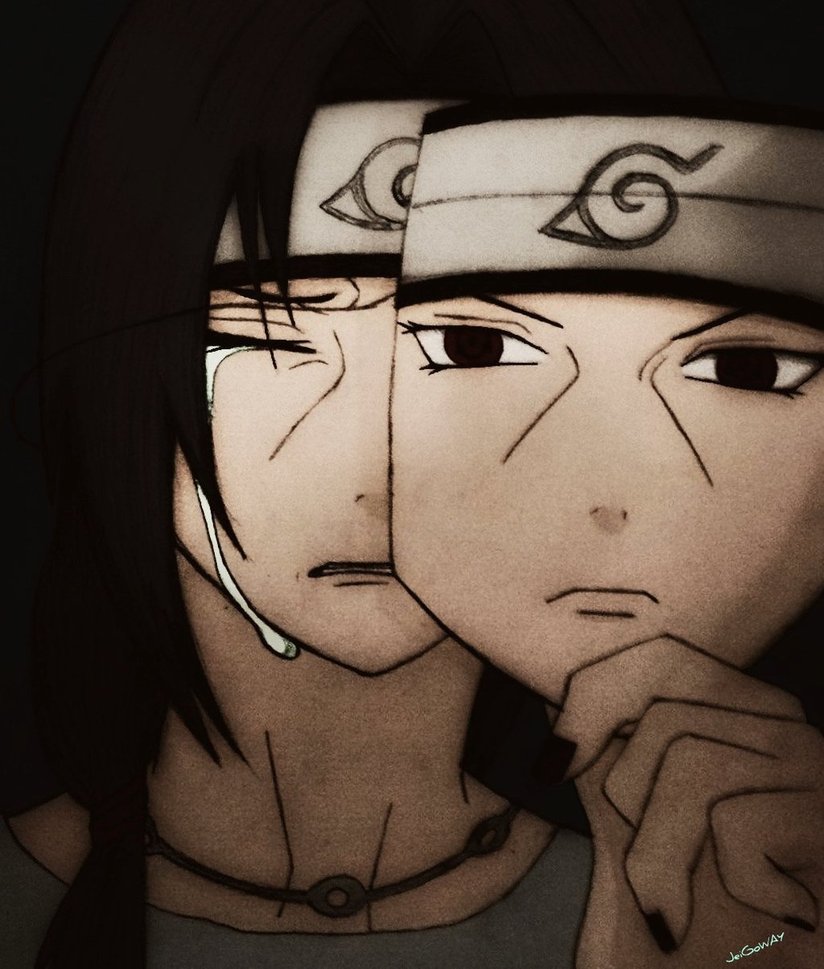
Behind the emotionless mask based on Itachi Uchiha, a ninja from the Village Hidden In The Leaves (Konohagure) of the anime, Naruto, January 25, 2013. (http://sites.psu.edu).

Behind the emotionless mask based on Itachi Uchiha, a ninja from the Village Hidden In The Leaves (Konohagure) of the anime, Naruto, January 25, 2013. (JeiGoWay via http://sites.psu.edu).

Emotionally, it was as if someone had uncorked a bottle half-filled with warm champagne. I had gotten used to my role as nerdy loner at school and blank, unemotional eldest child in resistance to my idiot stepfather’s abuse at home. My classmates’ positive expressions toward me caused a psychological systems error, one that meant I could no longer avoid a simple truth. That it had been more than two and a half years since the last time I’d felt any connections to any person in my life. I had no friends, no family with which I shared an emotional or psychological bond. I hadn’t had a hug in at least two years. At least, until the day after my mugging.

After years of being weird and odd, of being made fun of (luckily Facebook, Twitter and cyber-bullying didn’t exist in ’83) and beaten up (with the constant threat of abuse to boot), and our plunge into welfare poverty, I wasn’t sure if I wanted to make it to be fourteen, much less become a full-grown adult. I was approaching a crossroads, where my previously bottled-up emotions of the period between April ’81 and the mugging were coming directly into contact with my emotionless persona. It was an explosive mix, leaving me to question my very need to exist at all.

Major Change

18 Friday Oct 2013

Posted by decollins1969 in 1, Academia, Boy @ The Window, culture, Eclectic, Pittsburgh, Politics, race, University of Pittsburgh, Youth

≈ Leave a comment

Tags

Changing Majors, College Majors, Colleges & Universities, Computer Science, History, Mother-Son Relationship, Paul Riggs, Poverty, Psychology, University of Pittsburgh


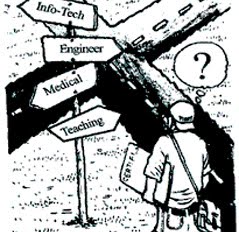
College Major Cartoon. Source: http://choctawsap.blogspot.com

Twenty-five years ago on this date, I made a most important educational decision. Despite my fears, my mother’s misgivings and my former Humanities classmates’ mockery, I changed my major from Computer Science to History. I’d been thinking about making this change since the middle of my first semester at Pitt, but decided against it at first because I knew that it wouldn’t be easy to make enough money to live on as someone with only a bachelor’s degree in History. Luckily my former TA Paul Riggs, a grad student in the History Department at Pitt, helped a lot in convincing me to “follow my heart,” as he put it. It was my third semester, my sophomore year, when I finally had the guts to come out of the closet academically.

The semester went well despite my five days of homelessness and the two months of financial strife that followed. It turned on another nail in my upbringing’s coffin. In addition to Biology, Psych 101, and General Writing, I was taking History of Art and Assembly Language, the last as part of my Computer Science major. Playing around with codes that related to “011000100101010000010” all the time drove me out of my mind with frustration. It was after our first major programming assignment that I recognized the problem. “I’m going to school for Mom and not for me,” I said to myself one late evening after running the debugger software at my CIS job. I had a major decision to make.

On the eighteenth of October, I went to the College of Arts and Sciences office on the eighth floor of Cathedral and changed my major to History. I then walked to Thackeray and withdrew from my Assembly Language course. Boy, did that feel good!

Then I called Mom from William Pitt Union to tell her my good news. She was completely quiet for a good ten seconds.

“What are you gonna do with a degree in history?,” she asked with shock in her voice.

“I don’t know yet, Mom, I don’t know. But I do know that I’ll graduate if I major in something I love.”

“All right, are you sure?,” Mom asked more directly. She already knew I was.

Choices Picture. Source: http://collegejolt.com

Choices Picture. Source: http://collegejolt.com

Looking back, it was probably the best academic decision I made while I was an undergrad at Pitt. My mood, my approach to life, my thinking of the future, all changed that semester. I could’ve easily majored in English writing or Psychology, given the way I see myself now.

But that’s what made majoring in History a wonderful experience. Studying history involved multiple disciplines for me. A great knowledge of history was much more than dates, names and events. It was about understanding the human condition, our attempts at greatness, our exhibition of behaviors that would be considered savage by savages. The ability to write about and analyze critical issues in American and other histories, including apartheid and slavery in South Africa, Latin American revolutions, and the resegregation of Pittsburgh Public Schools through magnet schools. Not to mention looking at the writings of other historians and other scholars in other fields. Most of all, I learned a lot about myself in the process of following a part of my passion.

Still, there were and are practical issues in pursuing a major that doesn’t have a direct relationship to jobs on the job market. I didn’t want to teach high school, and I needed to go to grad school if I wanted to be a professor or scholar. Having come through on the other side, I can say that I learned how to have fun while learning again. That’s what undergrad is for, after all, as the average student changes their major three times in five years. If I had figured out how I was a writer first and a historian second, I would’ve done something different for my master’s degree. But with my major in history, I wouldn’t change a thing.

It’s after finishing my history degree at Pitt in ’91 where, looking back, I’d make a few changes. A master’s degree in education or psychology — not so bad. A PhD in education policy & foundations would’ve likely been a better choice in terms of making my career transitions smoother. I would’ve figured out that I wanted to write Boy @ The Window much sooner than the end of ’02. This is what makes life interesting, though. So many twists and turns, so many times to embrace change, especially if it is for the better.

The Week The Lights Went Out In America

08 Tuesday Oct 2013

Posted by decollins1969 in 1, Boy @ The Window, culture, Eclectic, Mount Vernon New York, New York City, Politics, Pop Culture, race, Work, Youth

≈ Leave a comment

Tags

American Dominance, American Economy, Arab-Israeli War 1973, Best Days, Brighter Future, Economic Inequality, Gas Lines, Inflation, Job Discrimination, Low-Wage Jobs, OPEC Oil Crisis, OPEC Oil Embargo, Political Will, Politicians, Poverty, Prosperity, social mobility, Stagflation, Superpower, unemployment, Yom Kippur War


Gas station displayed a sign that explained the flag policy during the first OPEC oil embargo and crisis (Oregon), May 1974. March 26, 2013. (NARA via Wikipedia). In public domain.

Gas station displayed a sign that explained the flag policy during the first OPEC oil embargo and crisis (Oregon), May 1974. March 26, 2013. (NARA via Wikipedia). In public domain.

It wasn’t the middle of September of ’08, either. It was the beginning of October ’73, forty Yom Kippur holy days ago. There had been signs for any American who had cared to look at the cracks in the US dominance of the world economy ceiling. Rising unemployment, higher inflation, new monetary control measure, competition from a mostly rebuilt West Germany and Japan. The twenty-eight year-long run America had as the undisputed and undefeated leader of the capitalist world was on its way to a close, and ninety-nine percent of all Americans didn’t know or didn’t care enough to know.

No, the Yom Kippur War between Syria, Egypt and Israel didn’t cause the US to become more dependent on the rest of the world. But our support of Israel against countries from which we imported oil did lead to OPEC’s decision to deny us oil. Up to that point, our government had pretty much done whatever it wanted geopolitically, on behalf of containing Communism and American corporations. It was this week forty years ago, though, that truly began to teach ordinary Americans that there would be consequences for our foreign policy actions without regard for folks who lived at the blunt end of them.

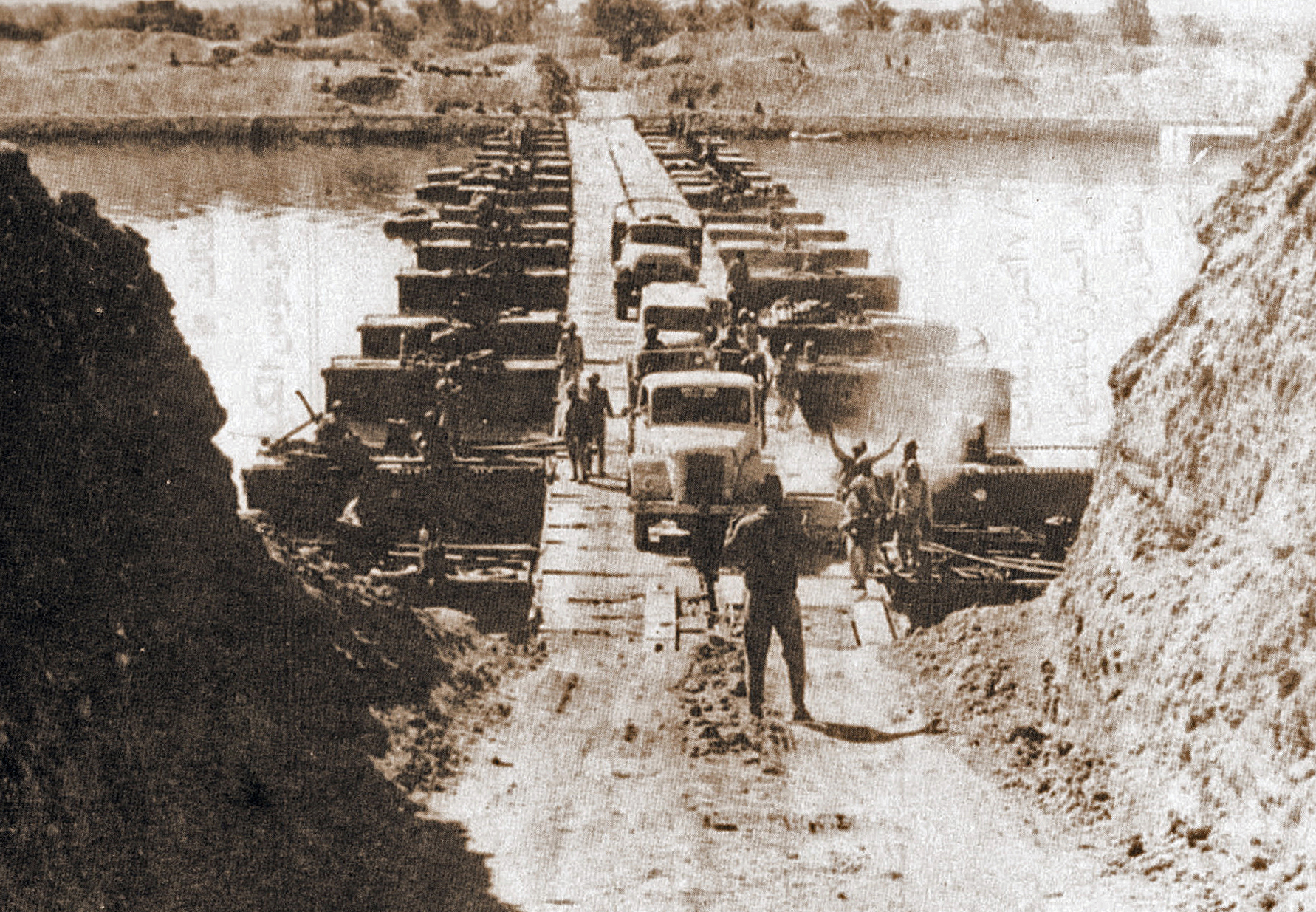
Egyptian forces cross on one of the bridges laid across the Suez Canal, October 7, 1973.   (CIA/Soerfm via Wikipedia). In public domain.

Egyptian forces cross on one of the bridges laid across the Suez Canal, October 7, 1973. (CIA/Soerfm via Wikipedia). In public domain.

I was just a couple of months away from turning four, but I do have vague memories of the week and month from four decades ago. Within a block of where my Mom worked, Mount Vernon Hospital, was a gas station, one that by the end of October had lines wrapped around the block as motorists in their six-miles-to-the-gallon guzzlers desperately waited for some petrol. It was loud and chaotic, from the little bit that I do remember. Fast forward to about a year later, when my Mom took me and my other brother Darren to the old Met grocery store on South Fulton in Mount Vernon. There, she complained about the $2.69 she had to spend on a five-pound bag of Domino’s Sugar ($14.53 in 2013 dollars). I remember her sighing about the high prices and the fact that her paycheck wouldn’t be able to keep up.

It would be years later still before I realized that the last of America’s easiest days as an economic and geopolitical superpower were during my years as a toddler. I did feel secure back then, not knowing about my father’s alcoholism, my mother’s insecurities about being a Black Southern girl living in and around New York City. I had yet to witness the violence embedded in my family, or in my neighborhoods, for that matter. I knew nothing of drug addiction or authentic Blackness, of racism and systemic job discrimination. I had yet to learn that the economic and educational opportunities that had been available to millions of Americans — almost regardless of race and gender — were about to become that much harder to attain and retain as I grew older.

Now, forty years later, as memories of the Reagan and Clinton years have faded, I think of America’s heady days, ones that now seem of lore. I realize that America could have even better days ahead. If we were to acknowledge human involvement in climate change and invest heavily in a green economy. If quality, well-funded universal pre-K to higher education became our reality, without creating one system for elites and another for everyone else. If we as a people finally said it was time to repair $3 trillion worth of infrastructural damage to our bridges and roads, to our sewer and water systems, and to our electrical grid. If we somehow decided to end our expensive wars on drugs and on Black men, on anyone whom we think (but do not know) may do our nation’s interests (if not our people) harm.

Collage of workers placing an F-Series bed onto frame at  Louisville Assembly Plant (Kentucky), 1973. (http://media.ford.com)and a woman carrying a sign past a McDonald's on East 125th Street during a protest by fast food workers and supporters, New York, NY, April 4, 2013. (Stan Honda/AFP/Getty Images via http//:financialpost.com).

Collage of workers placing an F-Series bed onto frame at Louisville Assembly Plant (Kentucky), 1973. (http://media.ford.com); a woman carrying a sign past a McDonald’s on East 125th Street during a protest by fast food workers and supporters, New York, NY, April 4, 2013. (Stan Honda/AFP/Getty Images via http://financialpost.com).

But I know that we won’t have those better days, at least not yet. Not with narcissistic politicians either lining their pockets with money or lining their minds with sugarplum hopes for the Rapture and Armageddon. Not with a media more interested in the political horserace and petty optics than in giving us the full story. And not with an American public more interested in Miley Cyrus than in funding for more psychologists in public schools.

It’s truly depressing to know how far our nation hasn’t come in four decades, virtually my entire lifetime. At least I know, though. For so many born after me — not to mention lacking self-reflection — they may never know what should’ve been.

Me The Little Runaway

25 Sunday Aug 2013

Posted by decollins1969 in 1, Boy @ The Window, Christianity, culture, Eclectic, Hebrew-Israelite, Jimme, Mount Vernon High School, Mount Vernon New York, music, My Father, Pop Culture, race, Religion, University of Pittsburgh, Youth

≈ 2 Comments

Tags

"Runnin'" (1995), 616, 616 East Lincoln Avenue, Abuse, Child Abuse, Father-Son Relationships, Maurice Eugene Washington, Maurice Washington, Poverty, Running Away, Self-Defense, Self-Discovery, Self-Reflection, The Pharcyde


Literally on this day and date, and at this time twenty-eight years ago, I was at the beginning of a twenty-three hour adventure away from 616, my idiot stepfather (no longer, of course, and recently deceased) Maurice Washington and his abuse, a trek that took me all over Mount Vernon and into both my dreams and fears. As I wrote in Boy @ The Window:

“We got into it over the ‘Dad’ issue again. He told me to do something, and I only said, ‘Okay.’ I didn’t say ‘Okay, Dad,’ and my ‘Okay’ wasn’t exactly enthusiastic. This was the one thing about Maurice that I refused to accept – him as anything other than the leech and bully that he was. He certainly wasn’t my dad, and he gave up the right to be called “stepfather” three years before. Yet he insisted on me calling him “Dad!” I usually walked a fine line between open defiance and acquiescence with him, not referring to him by anything at all. He had no name, no title, no label. Maurice was nothing and meant nothing to me other than the reason I’d eventually have to leave 616. Our incidents had become less frequent only because he worked nights as a security guard and slept during the day. And I stayed home as little as I could when he was around.

“So on the last Sunday of August ’85, we had another round.

“I’m your father, and the Bible says to ‘honor thy father and mother’. . .”

“You’ll never be my father. My father lives at 149 South Tenth Avenue.”

“As long as you live under my roof, you’re gonna call me ‘Dad’.”

“No, I’m not,” I said shaking my head at the same time.

“I’m gonna show you how to respect me, nigga!,” he said as he balled his fists.

“Luckily I had fast feet. He tried to grab me and then hit me at the same time, not a good tactic when you’re significantly overweight and off balance. I slithered past him, got out of his grasp, and dashed down our long hallway to the front door. I ran down the stairs that led to the back dirt courtyard area of 616 and didn’t stop running into I ran into the woods nearby, Wilson Woods. It was a mostly cloudy late summer day, thank God, because I wasn’t in any shape to be bothered with anybody.

“I wound my way through Wilson Woods on its serpentine path toward the southeast side of Mount Vernon. I saw a few folks who recognized me as I walked from the woods toward East Third and South Columbus, but the walk was mostly a blur. I made my way to Jimme’s place on West Third and South Tenth, all the while thinking about the reality of my long-lost childhood and quickly evaporating time as a teenager. Jimme wasn’t home, and I didn’t feel like going on a hunt for him at one of his watering hole after a meandering three-mile walk. So I waited there for a while, maybe an hour or so.

“I made my way past downtown Mount Vernon, up Gramatan Avenue, taking on the hill on which Davis Middle School sits. From there I reached Fleetwood and walked past homes and cars that I thought me and my family deserved but would never own. I likely walked by the homes of some of my classmates without even knowing it. Tudors and townhomes, beamers and Volvos populated this neighborhood. I turned right on Birch Street and headed east, eventually meandering past Pennington-Grimes Elementary. I noted that this was the place where the remaining affluent and most assertive Humanities classmates went to as kids. It made me think for a moment about the reality that when put together, Mom, Maurice and Jimme had no clue about what it was like for me to be in a program like this, with students whose parents owned their own homes or were able to take a vacation overseas. These compadres were more sophisticated than I was, even after four years in the program. Just thinking about it made me clinch my teeth.”

I eventually made my way to Mount Vernon High School, where I spent the night sleeping on the floor in the classroom next to the Humanities coordinator’s office (Joyce Flanagan’s office at the time). I had a morning of meandering, ended up at St. Ursula Catholic Church for three hours of prayer and contemplation about my future. All before going home to my worried (for once) Mom, my dispassionate dipshit of a stepfather, and my uncivilized siblings.

There, around 3 pm that Monday, I just collapsed, in my sometimes bed and bedroom, not knowing I was literally two years away from being on my way to Pitt and Pittsburgh. But I knew for sure that I couldn’t keep running away, either.

← Older posts
Newer posts →

Boy @ The Window: A Memoir

Boy @ The Window: A Memoir

Places to Buy/Download Boy @ The Window

There's a few ways in which you can read excerpts of, borrow and/or purchase and download Boy @ The Window. There's the trade paperback edition of Boy @ The Window, available for purchase via Amazon.com at http://www.amazon.com/Boy-Window-Donald-Earl-Collins/dp/0989256138/

There's also a Kindle edition on Amazon.com. The enhanced edition can be read only with Kindle Fire, an iPad or a full-color tablet. The links to the enhanced edition through Apple's iBookstore and the Barnes & Noble NOOK edition are below. The link to the Amazon Kindle version is also immediately below:

scr2555-proj697-a-kindle-logo-rgb-lg

Boy @ The Window on Amazon.com: http://www.amazon.com/Boy-The-Window-Memoir-ebook/dp/B00CD95FBU/

iBookstore-logo-300x100

Boy @ The Window on Apple's iBookstore: https://itunes.apple.com/us/book/boy-the-window/id643768275?ls=1

Barnes & Noble (bn.com) logo, June 26, 2013. (http://www.logotypes101.com).

Boy @ The Window on Barnes & Noble: http://www.barnesandnoble.com/w/boy-the-window-donald-earl-collins/1115182183?ean=2940016741567

You can also add, read and review Boy @ The Window on Goodreads.com. Just click on the button below:

Boy @ The Window

Twitter Updates

Tweets by decollins1969
  • RSS - Posts
  • RSS - Comments

Archives

  • June 2025
  • April 2023
  • September 2022
  • August 2022
  • July 2022
  • June 2022
  • May 2022
  • April 2022
  • March 2022
  • January 2022
  • December 2021
  • November 2021
  • October 2021
  • September 2021
  • August 2021
  • July 2021
  • June 2021
  • April 2021
  • March 2021
  • February 2021
  • January 2021
  • December 2020
  • November 2020
  • October 2020
  • September 2020
  • August 2020
  • July 2020
  • May 2020
  • April 2020
  • March 2020
  • January 2020
  • December 2019
  • November 2019
  • August 2019
  • July 2019
  • June 2019
  • May 2019
  • April 2019
  • March 2019
  • February 2019
  • January 2019
  • December 2018
  • November 2018
  • October 2018
  • September 2018
  • August 2018
  • July 2018
  • June 2018
  • May 2018
  • March 2018
  • February 2018
  • January 2018
  • December 2017
  • November 2017
  • October 2017
  • September 2017
  • August 2017
  • July 2017
  • June 2017
  • May 2017
  • April 2017
  • March 2017
  • February 2017
  • January 2017
  • December 2016
  • November 2016
  • October 2016
  • September 2016
  • August 2016
  • July 2016
  • June 2016
  • May 2016
  • April 2016
  • March 2016
  • February 2016
  • January 2016
  • December 2015
  • November 2015
  • October 2015
  • September 2015
  • August 2015
  • July 2015
  • June 2015
  • May 2015
  • April 2015
  • March 2015
  • February 2015
  • January 2015
  • December 2014
  • November 2014
  • October 2014
  • September 2014
  • August 2014
  • July 2014
  • June 2014
  • May 2014
  • April 2014
  • March 2014
  • February 2014
  • January 2014
  • December 2013
  • November 2013
  • October 2013
  • September 2013
  • August 2013
  • July 2013
  • June 2013
  • May 2013
  • April 2013
  • March 2013
  • February 2013
  • January 2013
  • December 2012
  • November 2012
  • October 2012
  • September 2012
  • August 2012
  • July 2012
  • June 2012
  • May 2012
  • April 2012
  • March 2012
  • February 2012
  • January 2012
  • December 2011
  • November 2011
  • October 2011
  • September 2011
  • August 2011
  • July 2011
  • June 2011
  • May 2011
  • April 2011
  • March 2011
  • February 2011
  • January 2011
  • December 2010
  • November 2010
  • October 2010
  • September 2010
  • August 2010
  • July 2010
  • June 2010
  • May 2010
  • April 2010
  • March 2010
  • February 2010
  • January 2010
  • December 2009
  • November 2009
  • October 2009
  • September 2009
  • August 2009
  • July 2009
  • June 2009
  • May 2009
  • April 2009
  • March 2009
  • February 2009
  • January 2009
  • December 2008
  • November 2008
  • October 2008
  • September 2008
  • August 2008
  • July 2008
  • June 2008
  • May 2008
  • April 2008
  • March 2008
  • February 2008
  • January 2008
  • December 2007
  • November 2007
  • October 2007
  • September 2007
  • August 2007
  • July 2007
  • June 2007

Recent Comments

MaryPena's avatarMaryPena on My Day of Atonement/Bitter Hat…
decollins1969's avatardecollins1969 on No Good Teaching Deed Goes…
Mary Rose O’Connell's avatarMary Rose O’Connell on No Good Teaching Deed Goes…

NetworkedBlogs on Facebook

NetworkedBlogs
Blog:
Notes From a Boy @ The Window
Topics:
My Life, Culture & Education, Politics & Goofyness
 
Follow my blog

616 616 East Lincoln Avenue A.B. Davis Middle School Abuse Academia Academy for Educational Development AED Afrocentricity American Narcissism Authenticity Bigotry Blackness Boy @ The Window Carnegie Mellon University Child Abuse Class of 1987 CMU Coping Strategies Crush #1 Crush #2 Death Disillusionment Diversity Domestic Violence Economic Inequality Education Family Friendship Friendships Graduate School Hebrew-Israelites High-Stakes Testing Higher Education History Homelessness Humanities Humanities Program Hypocrisy Internalized Racism Jealousy Joe Trotter Joe William Trotter Jr. K-12 Education Love Manhood Maurice Eugene Washington Maurice Washington Misogyny Mother-Son Relationship Mount Vernon High School Mount Vernon New York Mount Vernon public schools Multiculturalism MVHS Narcissism NFL Pitt Pittsburgh Politics of Education Poverty President Barack Obama Race Racial Stereotypes Racism Relationships Self-Awareness Self-Discovery Self-Reflection Sexism Social Justice Teaching and Learning University of Pittsburgh Violence Whiteness Writing

Top Rated

Blog at WordPress.com.

  • Subscribe Subscribed
    • Notes from a Boy @ The Window
    • Join 103 other subscribers
    • Already have a WordPress.com account? Log in now.
    • Notes from a Boy @ The Window
    • Subscribe Subscribed
    • Sign up
    • Log in
    • Report this content
    • View site in Reader
    • Manage subscriptions
    • Collapse this bar
 

Loading Comments...