• About Me
  • Other Writings
  • Interview Clips
  • All About Me: American Racism, American Narcissism, and the Conversation America Can’t Have
  • Video Clips
  • Boy @ The Window Pictures
  • Boy @ The Window Theme Music

Notes from a Boy @ The Window

~

Notes from a Boy @ The Window

Tag Archives: Internalized Racism

My One Drunk Moment, An Un-Sober Mind

21 Saturday Nov 2015

Posted by decollins1969 in 1, Academia, Boy @ The Window, culture, Eclectic, High Rise Buildings, Jimme, Mount Vernon High School, Mount Vernon New York, My Father, Pittsburgh, Politics, Pop Culture, race, University of Pittsburgh, Youth

≈ Leave a comment

Tags

Antisocial Behavior, Authentic Blackness, Black Masculinity, Blackness, Busch Beer, Coping Strategies, Crush #2, Disidentification Hypothesis, Drunk, Internalized Racism, Invisibility, Jealousy, Lothrop Hall, Misogyny, MVHS, Phyllis, Pitt, Self-Discovery, Self-Loathing, Self-Reflection, Sexism, Underage Drinking


16-ounce "Pounder" can of Busch Beer, November 19, 2012. (http://price2watch.com)

16-ounce “Pounder” can of Busch Beer, November 19, 2012. (http://price2watch.com)

As the son of an alcoholic father (the latter who’s been on the wagon for more than seventeen years now), I have almost always maintained control over my own alcohol intake. I’m always the designated driver, and rarely will I have three beers in one year, much less in one evening. My favorite drink is cranapple juice mixed with Disaronno, followed by Angry Orchard hard apple cider.

I have also always believed that I should be the same person, sober, buzzed, drunk and otherwise. If I’m generally a feminist on my best behavior in the classroom or at work, then I should be the same way at a dive bar on my second screwdriver. My low tolerance for bullshit — including and especially my own — should always be on display.

Both of these strands of how I’ve lived my life met a weekend of contradictions on this day/date twenty-eight years ago. In the wake of my Phyllis (Crush#2) crash-and-burn obsession and subsequent depression, I began hanging out with dorm mates at Lothrop Hall who were already dropping out of college socially by Week 11 of the Fall ’87 semester. That was a mistake of epic proportions.

Lothrop Hall (we lived on the fourth floor in 1987-88), University of Pittsburgh, June 8, 2008. (TheZachMorrisExperience via Wikipedia). Released to the public domain via CC-SA-3.0.

Lothrop Hall (we lived on the fourth floor in 1987-88), University of Pittsburgh, June 8, 2008. (TheZachMorrisExperience via Wikipedia). Released to the public domain via CC-SA-3.0.

My downward spiral was made worse a week earlier with a burglary on a Monday night at the end of October. While I took a bathroom break at the computer lab, someone stole my Calculus textbook. I felt violated, especially since it happened at work. It made me more distrustful of the people I worked with and of Pitt students in general. And after Phyllis’ wonderful response, I all but stopped going to class. I missed most of my classes the month of November, only showing up for exams or if my mood had let up long enough to allow me to function like normal. The weekend before Thanksgiving, I allowed my dorm mates to cheer me up by getting a couple of cases of Busch Beer. These were the Pounder type, sixteen-ounce cans. After getting Mike to get us the cases, we went back to Aaron’s room and started drinking. I downed four cans in fifteen minutes, and was drunk within a half hour. I started throwing around the word “bitch.” Anytime anyone mentioned Phyllis’ name — or any woman’s name for that matter — one of us said the B-word and we’d guzzle down some beer. I was drunk, but not so drunk I didn’t know what was going on around me. That night, my geeky acquaintances started calling me “Don” and “Don Ho,” since I was the life of that illegal party. I would’ve been better off smoking some cheap herb with Todd and Ollie. I recovered from my bender in time to go home for Thanksgiving, but I was in a fog for the rest of the semester.

This was how the end of my 2.63 first semester at Pitt unfolded. But that was hardly the only thing that came out of last weeks of ’87. For a long time, I was angry with myself. About Phyllis. About allowing Phyllis, my dorm mates — anyone, really — affect my emotions, my thinking, and actions over any significant period of time. So for about three months, I put everyone in my life into two categories. Men were “assholes, women were “bitches,” and I was done with humanity. And all by my eighteenth birthday.

I wasn’t just being sexist. I was being downright antisocial. I had internalized issues, about where I fit in this new world of college. I would never be man enough, Black enough, “White” enough, smart enough, athletic enough, or cool enough. At least that’s what I thought in late-November ’87.
Antisocial bumper sticker, November 21, 2015. (http://www.quotationof.com/).

Antisocial bumper sticker, November 21, 2015. (http://www.quotationof.com/).

I look back at that time and realize how stupid I was twenty-eight years ago. To think that I could go out in the world, attend a four-year institution, and not have my assumptions about the world, about people, and about myself challenged. That’s like going overseas to visit some ruins, but never meeting the people who live there (Or, in this case, like rich White Americans doing Sandals and other brown-skinned service-based vacations).

Phyllis and my dorm mates at Lothrop Hall weren’t even the first step of that process. They were the last step of a process of controlling and protecting myself from my years of living in the shadows in Mount Vernon, New York. The coping strategies I had honed for five years to survive 616 and Humanities and MVHS had barely worked. By the end of my first semester, they were completely useless. I came to realize that a strategy to seal myself up from all criticism and praise, to keep humanity out of my life, was doomed to fail. There was no way to keep the world from forming a first impression of me, no matter how many layers of invisibility I attempted to wear. But there was a way to reshape how I saw myself and the world.

Spring Valley HS, A Damn Shame

27 Tuesday Oct 2015

Posted by decollins1969 in 1, culture, Eclectic, Politics, race, Youth

≈ Leave a comment

Tags

Columbia South Carolina, Incident, Individual Racism, Institutional Racism, Internalized Racism, Misogyny, Narcissism, Police Brutality, Racism, Richland County School District Two, Spring Valley High School, Teacher Autonomy, Voyeurism


Ben Fields in midst of dragging student out of desk and throwing her across room, North Columbia, SC, October 26, 2015. (http://nydailynews.com).

Ben Fields in midst of dragging student out of desk and throwing her across room, North Columbia, SC, October 26, 2015. (http://nydailynews.com).

We all have in the past twenty-four hours either heard about the incident, read the details, or watched the video. Ben Fields, a White police officer (called a “resource officer” in the benignly dangerous language of public schools), brutally attacked a teenage Black girl in her classroom. The asshole with a badge flipped her over her desk and then threw her across the room like a piece of garbage. Arresting her for using a phone and refusing to get up, and threatening any other kid who came to her defense? This isn’t acceptable behavior. Period.

But this is more than the issue of an individual’s racism or even institutional racism in the case of this Richland County School District Two outside of Columbia, South Carolina. Yesterday’s incident speaks to, among other issues:

1. Lack of teacher autonomy. We now live in a place where a whole generation of teachers are risk averse, partly because of school shootings, but primarily because of corporate education reform. Many, if not most teachers are ill-equipped to deal with disciplinary issues in their own classrooms, and are too quick to turn to the violent hand of police and security because they have no idea how to do this aspect of their job.

2. Black misogyny. How could that teacher stand there, watch and condone that action? Aside from this Black teacher’s lack of autonomy, there may be a lack of empathy on his part as well. For all of the complaints about the police officer, this guy masquerading as a teacher was a coward, and implicit has condoned violence against a woman in an obviously nonviolent situation.

3. Voyeurism as racism. Even though a student recorded this incident and literally millions of people are now aware of what occurred, many respectable Negroes and a cacophony of Whites support the primal brutality captured in it. So much so that one could conclude that they embrace the idea that the police have the right to kill and brutalize kids without fear of reprisals. These narcissists may even love the idea of hurting kids of color, because that’s exactly what they would if they thought they could get away with it, too.

It hurts to watch the video or read about the incident, because if someone laid their hands on my kid with that level of brutality…

Aside

Brotherly Love

12 Wednesday Aug 2015

Posted by decollins1969 in 1, Boy @ The Window, culture, Eclectic, High Rise Buildings, Jimme, Mount Vernon High School, Mount Vernon New York, My Father, New York City, Pop Culture, race, Sports, Youth

≈ Leave a comment

Tags

Bronxville, Brother-Brother Relationship, Chester Heights, Competition, Darren, Eastchester, Internalized Racism, Jealousy, Jump Shot, Lessons, Mental Disability, Mental Retardation, Self-Discovery, Self-Loathing, Shyness, Sibling Relationship, Sibling Rivalry, The Clear View School


Not quite the courts at Chester Heights (aka, Bronxville/Mount Vernon border), but more or less what would've looked like 30 years ago, Eastchester Playground, Capitol Projects, Bronx, NY, August 11, 2015. (http://www.nycgovparks.org/).

Not quite the courts at Chester Heights (aka, Bronxville/Mount Vernon border), but more or less what they would’ve looked like 30 years ago, Eastchester Playground, Capitol Projects, Bronx, NY, August 11, 2015. (http://www.nycgovparks.org/).

This is a Boy @ The Window story, one that occurred a little more than thirty years ago, and so typical of my experiences growing up with my older brother Darren. Nothing I ever did to help my older brother seemed to help him overcome the trap of going to The Clear View School, a school for the mild to severely mentally retarded (of course, we say mentally disabled in 2015), although Darren was never such. He, in fact, had taught himself to read at the age of three, and taught me to read on my fifth birthday. Darren’s issue was severe shyness, and between my Mom, my father Jimme, and the good White liberals and moderates at The Clear View School, the trap for Darren’s potential genius had been set by the summer of ’74. By the time I was aware enough to say anything about Darren’s predicament, it was already too late.

But say and try I did anyway. Everything from sharing music to talking to Darren about our futures and my escape-Mount-Vernon-for-college plans. I shared books, and tutored him through algebra and geometry and US history.

I even tried playing sports with Darren, including basketball, which in the summer of ’85 was only my third favorite sport. As I wrote in the memoir

“Darren played at the center spot on Clear View’s basketball team, which made sense since he was already between six-three and six-four at seventeen. Of course they crushed every team they played. It was truly unfair. Darren towered over his classmates and his opponents, and being the only non-mentally retarded person on the floor, he could run rings around folks.

Still, Darren could knock down any jump shot within thirty feet of the hoop. His shot was smooth, like Isiah Thomas’ or Bernard King’s. It was the kind of shot no one on MVHS’ basketball team had at the time. Knowing this, I wanted to — no, I had to play my brother to see this shot up close. There were two well-maintained courts near 616, one in Pelham near its main street of Fifth Avenue, the other a longer walk in Chester Heights. We chose Chester Heights for most of these battles. Their court felt like a good outside court should, surrounded by trees, with level, quality-painted asphalt, and bright-white mesh nets.

The first few times we played that summer, Darren just killed me. Every time I left him open for a jumper, he buried it. It was obvious I hadn’t touched a basketball other than in gym class since I was ten. I didn’t have a jump shot, had never worked on my footwork, and could dribble only moderately well with my right hand. Forget about using my left hand! I was so afraid of hurting my two crooked fingers that the left hand’s role for me was to block shots, not to catch passes or take shots.

"Nothing but net" (in context of UPS/NCAA March Madness cross-promotional ad), March 2012. (http://compass.ups.com/).

“Nothing but net” (in context of UPS/NCAA March Madness cross-promotional ad), March 2012. (http://compass.ups.com/).

My semi-buried competitive nature got the better of me. I knew I couldn’t beat Darren in a shootout. But I knew I was quicker than my taller brother. So I decided after another embarrassing performance (I lost 23-2!) that it would be easier to play defense and try to steal a few balls to keep the next game close. Amazingly, the plan worked! It worked so well that I took Darren completely out of his game. After three blocked shots and a couple of steals, I discovered that Darren couldn’t play me one-on-one if I drove hard for the hoop, that I could beat him with my first step. So every time I got the ball I attacked the rim. The last two games we played I won by a combined score of 50-18. I started feeling bad when Darren started forcing long jumpers. After a while, he just gave up. I wanted to win, but I wanted it to be competitive, too.

Darren was so upset that we didn’t talk on our way back to 616. He then walked to the back of our apartment building and threw his basketball down the garbage chute. I wanted to continue to play because I thought it would make both of us better and give us something positive to build on in our relationship. Instead it just made Darren mad and made it even harder for me to talk to him about what was going on at 616.

Standard New York-area garbage chute door, June 2009. (http://theferrisfiles.com/).

Standard New York-area garbage chute door, June 2009. (http://theferrisfiles.com/).

I really did feel awful about how Darren felt after the game. I had shattered confidence in one of the few areas in his life in which he had any. I had humbled a star basketball player at his own game, a game I’d yet to learn. I’d given my older brother yet another reason to be jealous of me. It was shocking to watch him throw the basketball away. I really didn’t know what to say. “I’m sorry, Darren, for beating you two straight games, for making you look bad at your favorite sport?” I guess I could’ve said that. What fifteen-year-old with as much on my plate as me would, though, especially in an environment as competitive as ours when it came to basketball? It made me pity Darren for his situation at Clear View, but also left me angry with him. I was trying to help him, after all, not break his spirit. The incident left me shaking my head.”

I didn’t play basketball with Darren again until the spring of ’97, during my Teachers College interview/PhD graduation week. By that time, Darren’s jealousy and stubbornness had pretty much forced me to give up on my reclamation efforts. But, when left open, Darren could still nail a twenty-four-footer with ease.

Boy @ The Window Origins: Meltzer Conversations

14 Saturday Mar 2015

Posted by decollins1969 in 1, Academia, Boy @ The Window, Carnegie Mellon University, Christianity, culture, Eclectic, Hebrew-Israelite, Mount Vernon High School, Mount Vernon New York, Pittsburgh, Politics, Pop Culture, race, Religion, Youth

≈ Leave a comment

Tags

Benetton Group, Black Elites, Black Identity, Black Masculinity, Black Migration, Black Washington, CMU, Colorism, Dissertation, Doctoral Thesis, Harold Meltzer, Harper Stewart, Humanities, Hypermasculinity, Inequality, Internalized Racism, Logic, Manhood, Multiculturalism, Personal Insights, Race, Racial Identity, Rationalism, Self-Discovery, Social Injustice, Taye Diggs, The Best Man (1999), Washington DC, X-Men Origins: Wolverine (2009)


X-Men Origins: Wolverine (2009) scene, where Wolverine frees mutants kept as experiments by Colonel William Stryker , March 13, 2015. (http://cdn.collider.com/).

X-Men Origins: Wolverine (2009) scene, where Wolverine frees mutants kept as experiments by Colonel William Stryker , March 13, 2015. (http://cdn.collider.com/).

Of all the tangents I took related to writing Boy @ The Window, the most direct path that got me to write a memoir about the most painful period in my life was through several conversations with my dear teacher, friend and mentor in the late Harold Meltzer. I’ve discussed bits and pieces of some of those conversations here and in longer form in Boy @ The Window. It’s still worth rehashing some of those conversations, at least in terms of what was and wasn’t good advice, as well as in explaining how some of the main themes of the memoir developed over time.

As I wrote in Boy @ The Window, though my “first interview with him was in August ’02,” the first time “we discussed the possibility of me doing Boy @ The Window went back to February ’95.” Meltzer had been retired from teaching about a year and a half, while I was beginning the heavy lifting phase of my doctoral thesis, “living in DC for a couple of months while hitting the archives and libraries up for dusty information. In need of a writing break, I gave him a call on one cold and boring Saturday afternoon.”

It was in response to a letter he sent congratulating me. I’d recently published an op-ed in my hometown and county newspaper, “Solving African American Identity Crisis.” I was writing about issues like using the n-word, hypermasculinity, and internalized racism in the short and, for me at least, dummied down piece. Somehow our discussion of that piece led to a discussion of my classmate Sam. Did I really want to spend an hour and a half talking with Meltzer about Sam and some of my other Humanities classmates and their possible identity issues, considering some of my own serious growing pains — the Hebrew-Israelite years, my suicide attempt, my Black masculinity and manhood issues? Absolutely not!

But I learned quite a bit about how I might want to approach writing Boy @ The Window through that phone call. Not because Meltzer had given me any sage advice, which he didn’t, or because he revealed things to me that I shouldn’t have come to learn during our conversation, which he definitely did.

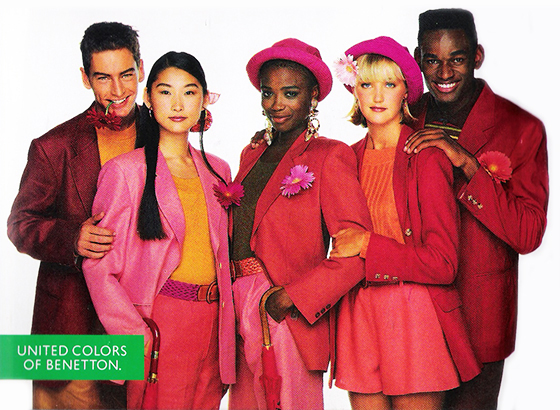
Benetton ad, 1980s, January 2013. (http://fashionfollower.com/).

Benetton ad, 1980s, January 2013. (http://fashionfollower.com/).

No, it was the idea that a lot of the things that I had pursued as a historian and researcher were things that came out of my experiences growing up. Multiculturalism as a historical phenomenon (at least if one linked it to cultural pluralism)? Can anyone say Humanities Program, or, what I used to call “Benetton Group” when we were at A.B. Davis Middle School? Writing about African American identity issues? Obviously related to living in Mount Vernon, the land where any hint of weakness translated into me being called a “faggot” or a “pussy.”

And what about any scholarly concerns with racial and socioeconomic inequality and Black migration? Anyone ever meet my Mom and my father Jimme, 1960s-era migrants from Arkansas and Georgia/Florida respectively? An examination of the Black Washingtonian elite and their looking down upon ordinary Blacks because of their own colorism or the latter’s lack of education? Come on down, Estelle Abel and any number of well-established Black Mount Vernon-ites who never gave me the time of day! As much as academia had been an escape for me, into a world of rationalism and logic, a place of dispassionate scholarship, it was all personal for me, without realizing it until that phone conversation with Meltzer.

Fast-forward to November ’02, the last interview I did with Meltzer before his death two months later. We spent the last couple of hours on that brisk fall Thursday discussing the book idea that would become Boy @ The Window. Meltzer thought that it should be a work of fiction, “based on the real flesh and blood folks in my life, but with different names of course to protect me from any potential lawsuits. He did make me rethink the project from a simple research study of my high school years into narrative nonfiction or a memoir.” 

Screen shot of fictional character Harper Stewart's bestselling novel nfinished Business, from The Best Man (1999), March 14, 2015. (hitchdied via http://s785.photobucket.com/).

Screen shot of fictional character Harper Stewart’s bestselling novel Unfinished Business, from The Best Man (1999), March 14, 2015. (hitchdied via http://s785.photobucket.com/).

Was Meltzer correct? Should I have done a Harper Stewart — played by actor Taye Diggs in The Best Man (1999)? Should I have fictionalized all of my experiences and those of my family, teachers, administrators and classmates? I’m not sure if it would’ve made a difference. Stories of fiction tend to have a tight symmetry to them. Or, the theme of “what goes around comes around” is usually a big one in any novel. You can’t leave too many loose threads or unresolved issues, even if the novel is part of a series. For my purposes, since my life remains a work in progress, a story of relative — not obvious or absolute — success, telling it as fiction would hardly ring true to me, much less to any group of readers.

Whatever else anyone wants to say about the late Harold Meltzer, the dude got me to think about difficult things until I was no longer comfortable in leaving my uncomfortable experiences and assumptions unchallenged. The very definition of a mentor, the very purpose of Boy @ The Window.

An “Acting White” Conversation

28 Monday Jul 2014

Posted by decollins1969 in 1, Academia, Boy @ The Window, culture, Eclectic, eclectic music, Mount Vernon High School, Mount Vernon New York, New York City, Pittsburgh, Politics, Pop Culture, race, University of Pittsburgh, Youth

≈ 1 Comment

Tags

"Not Black Enough", 616, 616 East Lincoln Avenue, Acting White, Authentic Blackness, Authenticity, Denial, Internalized Racism, Mother-Son Relationship, My Brother's Keeper Initiative, Nia-Malika Henderson, President Barack Obama, Racial Denial, Racial Stereotypes, Racism, Structural Racism, Whiteness


Two Oreo Cookies, February 6, 2011. (Evan-Amos via Wikipedia).

Two Oreo Cookies, February 6, 2011. (Evan-Amos via Wikipedia).

Two years ago, a conservative woman engaged me in what became an increasingly vitriolic conversation on “acting White,” blind loyalty and political ideology. The below only covers (for the most part) the “acting White” part of the conversation.

 Apologies for commenting here but the Star Trek one [my blog post Why Ferengi Are Jewish & The Maquis Are Latino from 2011] had comments closed. In light of your thoughts on positive or negative stereotypes, how do you feel about the cultural phenomena of “acting white” term in Black community? (in case it needs explaining, that’s a derogatory term – by Black community – for a minority child who studies hard. See http://en.wikipedia.org/wiki/Acting_white)

To which I responded:

Given how my life has evolved over the past four decades, I think I understand what “acting White” means. But the fact is, African Americans have a diversity of opinions on this issue. There are some Blacks, though, who believe in the idea of an authentic Blackness, which I’ve written about as an educator, historian and from a personal perspective over the years. Part of this is generational, and part of this is socioeconomic in nature. And this issue of authenticity has been around since the days of slavery, so it’s not new. What’s new is the increasing push-back from Blacks of various backgrounds about this issue of “acting White.” Bottom line: those who use this phrase tend to be anti-intellectual, distrustful of higher education and as bigoted as any other group in American society toward “others.”

But my visitor to my blog wasn’t done, not by a long shot:

Sorry, Wasn’t too clear in my question. Do you feel that the fact of how widespread it is in the culture (both the use and the lack of disapproval) has any *material* consequences to the socioeconomic outcomes for Blacks as a group in the 1990-2020 period? It’s clear that you disapprove of it, but do you feel it is a problem that **must** be fixed for Blacks to succeed (beyond mere “bigotry is bad” angle)?

In response, I broke down the assumptions embedded in the previous comment:

Is your head in the sand?, July 28, 2014. (http://www.thelifecoach.co.nz/).

Is your head in the sand?, July 28, 2014. (http://www.thelifecoach.co.nz/).

Your assumption here is troubling, as if 40 million African Americans all think alike on this topic. Sure, there’s a slice of Blacks who have a litmus test for “authentic” Blackness, and for them, those who can’t meet this test are considered “acting White.” But no, there’s no agreed upon definition for either in African America. Your premise supposes the sociological or psychological effect of this is a lower socioeconomic status for African Americans. Keep in mind that since the 1970s, more than 50 percent of Blacks have been middle or upper middle class, while the poverty rate for Blacks has varied between 25 and 33 percent over the past 40 years. Your question ignores other factors, including de-industrialization, expanding economic inequality, and structural racism as factors that have far more effect on social mobility than a cultural litmus test that a small slice of Blacks strictly adhere to.

There’s more, much more, and the comments section under About Me from the period August 30-September 3, 2012 has the rest. The assumption that I was protecting the race under a false sense of loyalty. The idea that Blacks who were otherwise equal in intelligence and from equally impoverished backgrounds were doing better than her because of affirmative action and other forms of alleged “reverse racism” (whatever this fiction is). My response was to treat her like one of my ideologically bull-headed student for whom facts and scholarly research matter about as much as ants inside an anthill.

President Barack Obama’s recent comments about the meaning and implications of “acting White”  has made me think about this issue — again. The fact is, there may well be individuals who decide to not go to college or medical school, take certain jobs or listen to Pearl Jam because of their notions of “acting White” and “authentic Blackness.” I know there are — including a friend of mine who committed suicide sixteen years ago after deciding to not go to medical school over this whole issue. But the idea that large groups of Blacks in poverty or as practicing Afrocentrists are avoiding success and education because it may be too White for them? Absolute bullshit! Period. Anything to come up with a simple-minded excuse to cover up structural racism, residential segregation and poverty as the factors for lack of Black social mobility when compared to Whites.

“Acting White,” or at least, being “not Black enough,” comes out of the following (between my experience and thirty years of research):

1. The idea that “acting White” = not cool. That’s all. Not about intellect per se, but more about the constant expression of high intellect in casual situations, or at least, lacking the ability to switch up from high-brow to colloquial language. I’ve been in this situation many times, with neighborhood kids in Mount Vernon, New York, at MVHS, at the University of Pittsburgh and even in my own classroom.

2. “Acting White” = doing things that Blacks have only seen Whites do. In this case, beyond language, it could include forms of dress, having eclectic music tastes, or eating fried chicken with a fork and knife. Or, more seriously, taking a political position that others can easily perceive as being against the interests of African Americans. I can attest to the comments I’ve gotten for embracing “White” music as part of my overall repertoire over the years.

The Fool’s Speech Part II

The Fool’s Speech Part II

3. “Acting White” = not wanting to be around or like other Blacks. In my experience, this applies even more within African American families than it does to Black neighbors, classmates or friends. My Mom wanted me to go to college, but she also wasn’t comfortable with the idea that college would change the way I saw her and the rest of the world. She was especially not happy when I decided to go to graduate school, because it meant that I might no longer be able to relate to her and my brother.

I can honestly say that even with all this, I’ve never met anyone who deliberately practiced self-sabotage in their education or in any other area of their lives to avoid “acting White.” That this is a topic of conversation at all confirms that Americans love living in denial of all things connected to racial inequality. Especially the structural racism from which they draw a benefit — material and/or psychological — every single day. Calling “acting White” a theory is an insult to the scientific method and to all Blacks, including those who’ve used the term over the years.

Race and The OJ Simpson Effect at 20

12 Thursday Jun 2014

Posted by decollins1969 in 1, Carnegie Mellon University, culture, Eclectic, Mount Vernon New York, Pittsburgh, Politics, Pop Culture, race, Sports, Work, Youth

≈ 2 Comments

Tags

1994 NBA Finals, Covenant Church of Pittsburgh, Dialogue on Race, Economic Inequality, Game 5, Houston Rockets, Internalized Racism, Men's Retreat, New York Knicks, Newsweek, Nicole Brown Simpson, O.J. Simpson, OJ Simpson, Pharrell Williams, Race Riots, Racial Stereotypes, Racial Stigma, Racism, Ron Goldman, Time Magazine, Trial, White Bronco


O.J. Simpson on the covers of Newsweek and Time Magazine, (the picture on right altered to make Simpson appear darker and caused an outcry), June 27, 1994. (Theo's Little Bot via Wikipedia). Qualifies as fair use due to low resolution of image and relevance to subject matter.

O.J. Simpson on the covers of Newsweek and Time Magazine, (the picture on right altered to make Simpson appear darker and caused an outcry), June 27, 1994. (Theo’s Little Bot via Wikipedia). Qualifies as fair use due to low resolution of image and relevance to subject matter.

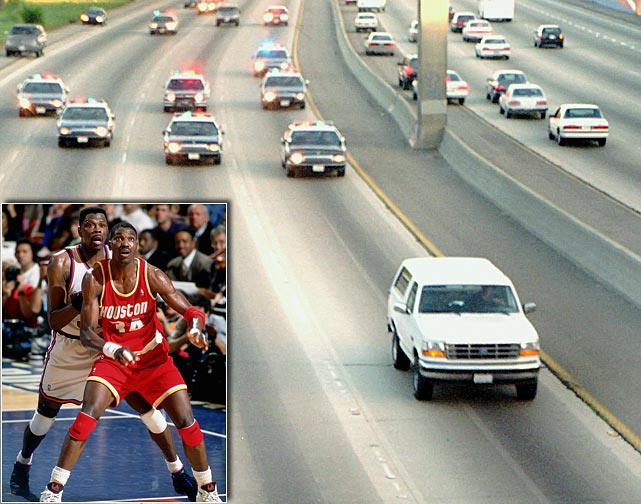
Today’s the twentieth anniversary of the deaths of Nicole Brown Simpson and Ron Goldman, still officially-allegedly murdered by the once great NFL Hall of Fame running back O.J. Simpson. In five days, it’ll be twenty years since the bizarre police chase of Simpson in a white Ford Bronco with his friend Al Cowlings on I-405 in the Los Angeles area. In the process, he took all of us — the media, the sports world, and anyone who cared about race and justice — on a ride that folks are still talking about two decades later. It had an impact on me in terms of how I saw Blacks and Whites and race. I shouldn’t have been, but I was mildly surprised that so many would become so emotionally caught up in a double-homicide case involving what at one time was one of the world’s most recognizable faces.

That week twenty years ago was my absolute commitment to two events. The NBA Finals between my New York Knicks and the Houston Rockets. And a church retreat for the male members (nearly 100 of us, almost all Black — talk about irony!) of Covenant Church of Pittsburgh. It was to be a week of watching my Knicks play at home and three days in the mountains of Western Pennsylvania at a retreat lodge, in a spirit of learning how to be godly men and of adult male bonding. The first full day of the retreat was June 17. After a day of workshops, prayer, praise, and singing (at least for me and the rest of the men’s choir), we all piled into the rec room to watch Game 5 of the Final. Only to see an overhead shot of a slow-moving white Bronco being trailed by an escort of L.A.’s finest instead of Patrick Ewing, John Starks, Doc Rivers, Charles Oakley, and the rest of the cast of characters from my favorite team.

Screen shot of NBA on NBA coverage of 1994 NBA Finals, Game 5, MSG, New York at Bronco chase of OJ Simpson, I-405 in L.A., June 1, 1994. (SI photos via Tumblr).

Screen shot of NBA on NBA coverage of 1994 NBA Finals, Game 5, MSG, New York at Bronco chase of OJ Simpson, I-405 in L.A., June 17, 1994. (SI photos via Tumblr).

The Knicks won, which was great, but I barely saw the game. They were up 3-2, but would lose the last two games in the next six days in Houston, turning Choke City into Clutch City overnight. But that wasn’t what I was thinking about when it first happen. I hoped that the police wouldn’t shoot Simpson before he had a chance to go to trial. The L.A. riots were just two years before. I feared that the issue of race would be front and center, with Simpson’s issues with his now dead White ex-wife.

What I saw within ten days of the Bronco chase was an artificially darkened Simpson on the cover of Time. I watched as the media condemned Simpson well before the trial. As Blacks were becoming angrier about the coverage. As Whites grew more confident about Simpson being convicted, losing his fortune and fame, and possibly getting the death penalty (or at least, life imprisonment). It was amazing how quickly folks took sides on the issue. My mother proclaimed that O.J. was innocent long before the prosecution botched the trial. Some of my grad school colleagues — all White, mind you — made all kinds of assumptions about where I stood on O.J. Simpson. They didn’t like the fact that I was willing to wait until the trial to make up my mind.

Many have benefitted from the O.J. Simpson effect over the last twenty years. From lawyers to journalists, TV stations and authors, many have reaped benefits and have built careers from the O.J. Simpson trial and verdict. Greta Van Susteren, Dan Abrams, Nancy Grace, Court TV (now TruTV), the late Johnnie Cochran, Alan Dershowitz, Christopher Darden and Robert Shapiro, among so many others. Even Mark Fuhrman got a book and a radio talk show (at least for a while) out of the trial. One could argue that Kim Kardashian, daughter of Simpson defense “Dream Team” lawyer Robert Kardashian, has benefited, albeit indirectly (it’s not as if her father’s a regular on her family’s reality shows, right?).

Conservative media in general received the greatest indirect residuals of all from the murders, trial, and acquittal involving Simpson. The events between June 12, ’94 and October 3, ’95 helped intensify an atmosphere of conservatism, a sense that our nation was out of control. With the acquittal, it made sense to millions for cable and talk radio to increase its coverage of news, especially news with a more “fair and balanced” slant.

National dialogue on race cartoon, July 21, 2010. (Bob Englehart/Hartford Courant).

National dialogue on race cartoon, July 21, 2010. (Bob Englehart/Hartford Courant).

Obviously Simpson hasn’t benefited. Our national dialogue on race hasn’t improved, either. Whites still seemingly want Blacks to be stereotypes and to shut up while entertaining them with our lives and our deaths. Some Black elites still make a point of divorcing themselves from other Blacks and from the world that’s race in America, Pharrell Williams most recently so. And with rapidly increasing economic inequality, it’s a wonder that thousands of Whites haven’t come in to Black and Latino neighborhoods to burn down businesses and beat up and lynch those of us unlucky to encounter their mobs, like they typically did this time a century ago.

All because of the multitude of examples of individual Black success, and occasions of Black-on-White (and especially blond)-woman-violence. Things change, but the cancer that is Whiteness and race remain the same, “a shame and a pitiful,” as my father would say.

When Those Close Put Up Roadblocks

07 Saturday Jun 2014

Posted by decollins1969 in 1, Academia, Boy @ The Window, Carnegie Mellon University, culture, Eclectic, Mount Vernon New York, New York City, Pittsburgh, Politics, Pop Culture, race, University of Pittsburgh, Youth

≈ Leave a comment

Tags

Coming-of-Age, Detours, Dr. Don, Dreams, Faith, Forgive and Forget, Forgiveness, History, Internalized Racism, Jealousy, Memoir, Past, PAT Transit, PhD, PhD process, Pitt, Roadblocks, Self-Discovery, Self-Loathing, Sellout, Writing


Detours vs. roadblocks, June 1, 2012. (http://www.ideaarchitects.org).

Detours vs. roadblocks, June 1, 2012. (http://www.ideaarchitects.org).

This was the best title I could come up with, since it’s about folks in my life with whom I’ve shared some affinity over the years, beyond family, and to a lesser extent, friendships. This isn’t about haters or crabs-in-the-barrel mentality per se. It’s simply the observation that as I pursue dreams and push through goals in life that some whom have the choice between being supportive or actively working against my interests, how more than a few have chosen to do the latter.

That this has occurred in my life mostly as I pursued my doctorate and pressed on as a writer isn’t a coincidence. The things I’ve worked the hardest for in life, the dreams most difficult to achieve, the amount of energy and pressing through needed to overcome my own doubts in the process — all came with an audience of detractors. A bit more than twenty years ago, some of my Pitt friends started falling by the wayside as I pursued my grad degrees, which is normal, but there were some pretty weird conversations I had with them as they did. One insisted on calling me “Dr. Don” about a dozen times during a PAT Transit bus ride one day in September ’92, laughing to the point of hilarity while doing it. I thought that he was going to choke on his own spit all the while, he was laughing so hard. Or that I was going to choke him myself if he said “Dr. Don” one more time!

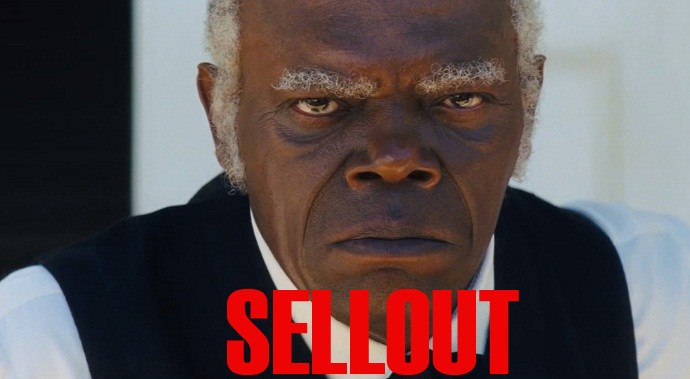
Screen shot of character played by Samuel L. Jackson in Django Unchained (2012) with "Sellout" addition (not an endorsement, by the way), October 31, 2013. (http://forwardtimesonline.com/2013/).

Screen shot of character played by Samuel L. Jackson in Django Unchained (2012) with “Sellout” addition (not an endorsement, by the way), October 31, 2013. (http://forwardtimesonline.com/2013/).

Another guy — who eventually committed suicide in ’98 — told me straight up that people like me were “sellouts,” that “The Man” wasn’t going to accept people like me or him “no matta how many degrees we get” or don’t get. That was six weeks before my committee approved my dissertation, in October ’96. Luckily, I learned not to bring up my education to folks unless it was for professional purposes or unless someone asked.

That these were Black acquaintances from my days as an undergrad at the University of Pittsburgh was a bit surprising, considering that my tendency is to always encourage folks to pursue their dreams. I’d always assumed the worst of the folks — Black, White, Afro-Caribbean and Latino — that I grew up with in Mount Vernon, New York, precisely because their encouragement literally made me suicidal by the time I turned fourteen. By the late-90s, I realized this was more than a New-York-area-social-etiquette-disorder.

With writing and books over the past decade — especially with Boy @ The Window — I’ve experienced some of those same headwinds from folks who seemed to think they had a better idea for the direction of my life than I. When I first started working on my memoir at the end of ’06, I had a conversation with my Pitt and AED colleague Stacey, whom I’d known for sixteen years. Upon telling her about my project, she said, “You need to wait on that,” that I should “publish a few more books,” be in my fifties, before “writin’ a biography.” So I knew that she wasn’t going to buy a copy when it came out. Oh well!

Last fall, at an African American Alumni Council event at Pitt, it was one of my first opportunities to discuss the now published Boy @ The Window, which was immediately followed by public criticism. Right after I talked about the book, an older alumna walked right up to me, and got within a foot or so of my face — close enough to hug. “You’re too young to have a memoir,” she said with a smile on her face, and then walked away as if her’s was the final say on the topic.

At the least, it showed that most don’t know the difference between a memoir (on one period or aspect of one’s life, often with a look at the world beyond) and an autobiography (the story of my entire life). Boy, understand the genre before criticizing it or my role in it already!

One foot in the grave (apparently), June 7, 2014. (http://www.virginmedia.com/).

One foot in the grave (apparently), June 7, 2014. (http://www.virginmedia.com/).

And, yes, I know. I see my Facebook friends especially posting other people’s sayings every single day. About letting go, moving on, forgetting the past, pushing past the haters, sitting in a lotus position, meditating and praying, and then drinking a wheat-grass smoothie. I do let go, I do forgive, and I don’t let the naysayers in my life have the final say. But letting go doesn’t mean I don’t get to highlight some truth, point out hypocrisy, and that I should just be quiet for the sake of being quiet.

It hasn’t been lost on me that most of these specific, potentially dream-destroying microaggressions have come from Black folk, male and female, well-off and immersed in poverty. Do I put these people in the same category as White literary agents who’ve said things to me like, “Oh no, not another abuse story!” or “There are too many black coming-of-age stories in the market?” Of course not. Gate keepers practicing ignorance in the midst of structural racism isn’t the same as people who may have internalized racism.

Or in the latter case, it could just be that my pursuit of what I’ve wanted and finally come to know for my life brought attention to dreams deferred, delayed and denied, by others and by their own fears of failure and success. If I’d let this stand in my way, I’d still be living in Mount Vernon, undoubtedly living in grinding poverty, wondering how could I let everything I wanted out of life get away from me.

← Older posts
Newer posts →

Boy @ The Window: A Memoir

Boy @ The Window: A Memoir

Places to Buy/Download Boy @ The Window

There's a few ways in which you can read excerpts of, borrow and/or purchase and download Boy @ The Window. There's the trade paperback edition of Boy @ The Window, available for purchase via Amazon.com at http://www.amazon.com/Boy-Window-Donald-Earl-Collins/dp/0989256138/

There's also a Kindle edition on Amazon.com. The enhanced edition can be read only with Kindle Fire, an iPad or a full-color tablet. The links to the enhanced edition through Apple's iBookstore and the Barnes & Noble NOOK edition are below. The link to the Amazon Kindle version is also immediately below:

scr2555-proj697-a-kindle-logo-rgb-lg

Boy @ The Window on Amazon.com: http://www.amazon.com/Boy-The-Window-Memoir-ebook/dp/B00CD95FBU/

iBookstore-logo-300x100

Boy @ The Window on Apple's iBookstore: https://itunes.apple.com/us/book/boy-the-window/id643768275?ls=1

Barnes & Noble (bn.com) logo, June 26, 2013. (http://www.logotypes101.com).

Boy @ The Window on Barnes & Noble: http://www.barnesandnoble.com/w/boy-the-window-donald-earl-collins/1115182183?ean=2940016741567

You can also add, read and review Boy @ The Window on Goodreads.com. Just click on the button below:

Boy @ The Window

Twitter Updates

Tweets by decollins1969
  • RSS - Posts
  • RSS - Comments

Archives

  • June 2025
  • April 2023
  • September 2022
  • August 2022
  • July 2022
  • June 2022
  • May 2022
  • April 2022
  • March 2022
  • January 2022
  • December 2021
  • November 2021
  • October 2021
  • September 2021
  • August 2021
  • July 2021
  • June 2021
  • April 2021
  • March 2021
  • February 2021
  • January 2021
  • December 2020
  • November 2020
  • October 2020
  • September 2020
  • August 2020
  • July 2020
  • May 2020
  • April 2020
  • March 2020
  • January 2020
  • December 2019
  • November 2019
  • August 2019
  • July 2019
  • June 2019
  • May 2019
  • April 2019
  • March 2019
  • February 2019
  • January 2019
  • December 2018
  • November 2018
  • October 2018
  • September 2018
  • August 2018
  • July 2018
  • June 2018
  • May 2018
  • March 2018
  • February 2018
  • January 2018
  • December 2017
  • November 2017
  • October 2017
  • September 2017
  • August 2017
  • July 2017
  • June 2017
  • May 2017
  • April 2017
  • March 2017
  • February 2017
  • January 2017
  • December 2016
  • November 2016
  • October 2016
  • September 2016
  • August 2016
  • July 2016
  • June 2016
  • May 2016
  • April 2016
  • March 2016
  • February 2016
  • January 2016
  • December 2015
  • November 2015
  • October 2015
  • September 2015
  • August 2015
  • July 2015
  • June 2015
  • May 2015
  • April 2015
  • March 2015
  • February 2015
  • January 2015
  • December 2014
  • November 2014
  • October 2014
  • September 2014
  • August 2014
  • July 2014
  • June 2014
  • May 2014
  • April 2014
  • March 2014
  • February 2014
  • January 2014
  • December 2013
  • November 2013
  • October 2013
  • September 2013
  • August 2013
  • July 2013
  • June 2013
  • May 2013
  • April 2013
  • March 2013
  • February 2013
  • January 2013
  • December 2012
  • November 2012
  • October 2012
  • September 2012
  • August 2012
  • July 2012
  • June 2012
  • May 2012
  • April 2012
  • March 2012
  • February 2012
  • January 2012
  • December 2011
  • November 2011
  • October 2011
  • September 2011
  • August 2011
  • July 2011
  • June 2011
  • May 2011
  • April 2011
  • March 2011
  • February 2011
  • January 2011
  • December 2010
  • November 2010
  • October 2010
  • September 2010
  • August 2010
  • July 2010
  • June 2010
  • May 2010
  • April 2010
  • March 2010
  • February 2010
  • January 2010
  • December 2009
  • November 2009
  • October 2009
  • September 2009
  • August 2009
  • July 2009
  • June 2009
  • May 2009
  • April 2009
  • March 2009
  • February 2009
  • January 2009
  • December 2008
  • November 2008
  • October 2008
  • September 2008
  • August 2008
  • July 2008
  • June 2008
  • May 2008
  • April 2008
  • March 2008
  • February 2008
  • January 2008
  • December 2007
  • November 2007
  • October 2007
  • September 2007
  • August 2007
  • July 2007
  • June 2007

Recent Comments

decollins1969's avatardecollins1969 on No Good Teaching Deed Goes…
Mary Rose O’Connell's avatarMary Rose O’Connell on No Good Teaching Deed Goes…
Lyndah McCaskill's avatarLyndah McCaskill on The Raunchiest of Them Al…

NetworkedBlogs on Facebook

NetworkedBlogs
Blog:
Notes From a Boy @ The Window
Topics:
My Life, Culture & Education, Politics & Goofyness
 
Follow my blog

616 616 East Lincoln Avenue A.B. Davis Middle School Abuse Academia Academy for Educational Development AED Afrocentricity American Narcissism Authenticity Bigotry Blackness Boy @ The Window Carnegie Mellon University Child Abuse Class of 1987 CMU Coping Strategies Crush #1 Crush #2 Death Disillusionment Diversity Domestic Violence Economic Inequality Education Family Friendship Friendships Graduate School Hebrew-Israelites High-Stakes Testing Higher Education History Homelessness Humanities Humanities Program Hypocrisy Internalized Racism Jealousy Joe Trotter Joe William Trotter Jr. K-12 Education Love Manhood Maurice Eugene Washington Maurice Washington Misogyny Mother-Son Relationship Mount Vernon High School Mount Vernon New York Mount Vernon public schools Multiculturalism MVHS Narcissism NFL Pitt Pittsburgh Politics of Education Poverty President Barack Obama Race Racial Stereotypes Racism Relationships Self-Awareness Self-Discovery Self-Reflection Sexism Social Justice Teaching and Learning University of Pittsburgh Violence Whiteness Writing

Top Rated

Blog at WordPress.com.

  • Subscribe Subscribed
    • Notes from a Boy @ The Window
    • Join 103 other subscribers
    • Already have a WordPress.com account? Log in now.
    • Notes from a Boy @ The Window
    • Subscribe Subscribed
    • Sign up
    • Log in
    • Report this content
    • View site in Reader
    • Manage subscriptions
    • Collapse this bar
 

Loading Comments...