• About Me
  • Other Writings
  • Interview Clips
  • All About Me: American Racism, American Narcissism, and the Conversation America Can’t Have
  • Video Clips
  • Boy @ The Window Pictures
  • Boy @ The Window Theme Music

Notes from a Boy @ The Window

~

Notes from a Boy @ The Window

Tag Archives: High-Stakes Testing

How High-Stakes Testing Strangles Motivation and Competition

31 Wednesday Jul 2013

Posted by decollins1969 in 1, Academia, Boy @ The Window, culture, Eclectic, Mount Vernon New York, Pop Culture, race, Youth

≈ Leave a comment

Tags

Ability Grouping, Competition, Education Reform, High-Stakes Testing, K-12 Education, MAP-M, MAP-R, Montgomery County Public Schools, Motivation, Mount Vernon public schools, MSA, SRA, Teacher Effectiveness, Teaching and Learning, Teaching Styles, Testing, Tracking


Homer strangles Bart (again), The Simpsons, February 2011. (http://www.goodwp.com/).

Homer strangling Bart (again), The Simpsons, February 2011. (http://www.goodwp.com/).

One of the biggest casualties in the current K-12 education reform effort — otherwise known as measuring teacher effectiveness through high-stakes testing — is the notion of competition, academic and otherwise. At least, students competing to make themselves better students, better athletes and even better people in the process of matriculating through elementary, middle and high school. Competition suffers when the teaching, motivational, psychological and financial resources necessary to level the K-12 playing field have gone instead to testing companies and psychometricians.

So much has been the emphasis on testing and raising test scores that most in education reform now think competition among students on the K-12 stage is an abomination that must be rooted out, and not part and parcel of the learning and human development process. This is really too bad. For what often makes school fun for children is a healthy dose of competition throughout the process.

To use myself and my ten-year-old son as but two examples of what has occurred in K-12 education reform over the past three and a half decades, it is apparent to most educators how much has changed as a result of the fear of competition and lack of autonomy to motivate students. Testing, of course, was part of my educational experience growing up. From third grade through sixth grade in Mount Vernon, New York’s public schools, the school district tested us with the SRA (Science Research Associates, Inc.) exam in reading comprehension and mathematics every spring. At the end of the school year, we’d learn how well or not so well we tested in these areas in terms of grade level.

Data mining (one of the hallmarks of reduced teacher autonomy), cropped and edited, September 2006. (http://www.qualitydigest.com).

Data mining (one of the hallmarks of reduced teacher autonomy), cropped and edited, September 2006. (http://www.qualitydigest.com).

The Mount Vernon Board of Education used the test for two purposes. One, it was a diagnostic exam, as it would show students with reading and math comprehension skills at, above or below grade level. When I took the SRA in third grade, for example, I read at the 3.9 grade level, or on par as a third marking period third-grader. When I took the fourth grade version of the SRA the following year, I had jumped up to a 7.4 in reading, or the equivalent of a mid-year seventh-grader.

The district used the SRA for a second purpose, though, at least by the end of sixth grade. It was part of a package that determined what academic track a student would take as they moved on to middle school. In my case, my straight A’s and my SRA scores (which put me at the 12th grade level in reading comprehension and 11th grade level in math) put me in the gifted-track magnet program called Humanities in 1981. For some of my elementary school classmates, it meant general education classes, or, in a couple of cases, remedial or special education classes.

Ability tracking through an examination and grades over four years has its own sinister flaws in terms of race and class — it has tended to disadvantage Black students, especially poor Black kids. But it at least wasn’t the constant mantra of testing that millions like my ten-year-old son has faced since he began kindergarten in August 2008. For nearly every year, my son has taken a school-level, county-district level, or state-level exam in Montgomery County (Maryland) Public Schools, including MAP-M and MAP-R, TerraNova and the MSA assessments. What’s more, teachers have administered practice versions of these exams (including unit guides and what they call formatives) about once every six weeks during the school year since my son began second grade.

The constant testing would be meaningful if teachers could get together and decide at the classroom level how best to address students’ needs in areas like reading comprehension and mathematics. These determinations now are tightly controlled at the state, district and school leadership levels, leaving teachers with little room to use their abilities to, well, teach. Really, motivating students — the most critical tool a teacher has in challenging students to become better learners — has become a secondary tool. Especially since these test scores only count in favor or against individual teachers and individual schools, and not specifically for or against students.

Robot teaching math 3d illustration, July 31, 2013. (http://www.123rf.com).

Robot teaching math 3d illustration, July 31, 2013. (http://www.123rf.com).

The last piece is a good thing. Most educators now agree that ability grouping or tracking has fostered too much competition for a school district’s resources among students, teachers, administrators and parents. K-12 education reform has leaned so far the other way, though, that teachers have virtually no say in the curriculum from which they teach, even in kindergarten, and have little from which to motivate their students as learners. In fact, teachers and school-level administrators are the only ones with some motivation and sense of competition, as dollars and jobs are at stake every spring as a result of annual testing. This motivation, though, is all about teaching students how to get better test scores, and not about actual learning, development or academic improvement, a poor way to reform K-12 education.

And it is the motivation to learn that sparks the competition necessary for students to improve themselves, to work with each other to become better students. Another student’s success can even encourage other students to work harder, to make themselves better academically, athletically or even socially. In the current K-12-as-laboratory-experiment-environment, this theme of motivation and healthy competition leading to student success is not only missing. For reformers, it’s been deliberately omitted, as if poor kids and students of color in urban environments don’t need motivation and competition to become better students and people.

Humanities: 26 Years On

18 Tuesday Jun 2013

Posted by decollins1969 in 1, Academia, Boy @ The Window, Carnegie Mellon University, culture, Eclectic, Mount Vernon High School, Mount Vernon New York, Pittsburgh, University of Pittsburgh, Youth

≈ 3 Comments

Tags

A.B. Davis Middle School, Academic Competition, College Access and Success, College Retention, Gifted, Graduating, High-Stakes Testing, Humanities, Humanities Program, Talented, Well-Rounded Students


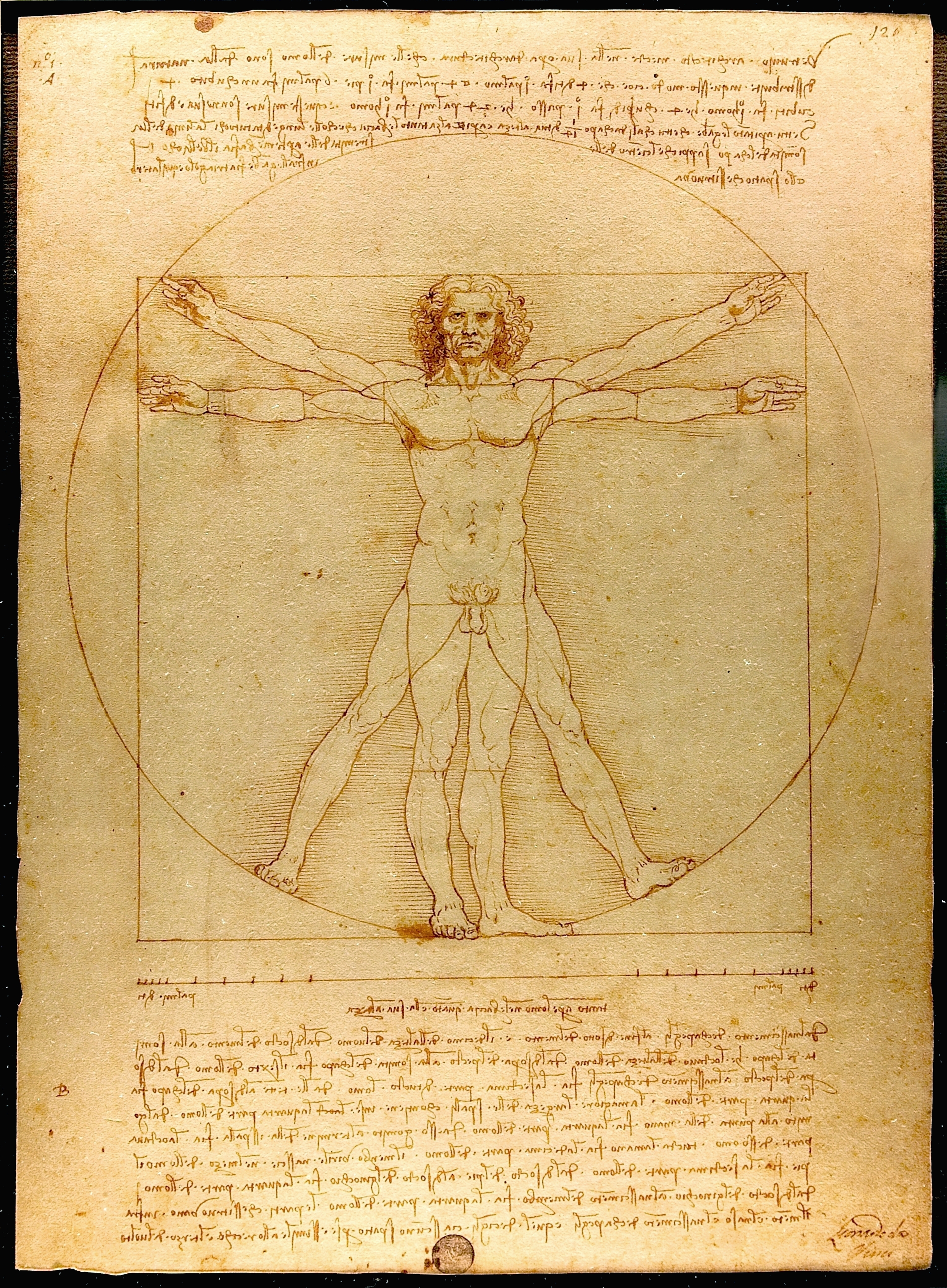
Leonardo di Vinci's Human Body sketch, June 18, 2013. (Wikipedia).

Leonardo di Vinci’s Vitruvian Man (human body sketch, 1485-90), June 18, 2013. (Flickr.com).

Today marks anniversary number twenty-six since the Class of ’87 spent two hours sweating in our polyester caps and gowns on a triple-H summer evening at Memorial Field in Mount Vernon, New York. Oh yeah – and graduated from Mount Vernon High School. Not a big year to mark an anniversary, for sure. But still important for me to remember. After all, I’ve just published a book in which I spend a significant amount of time talking about myself and my former classmates whom help comprise this Class of ’87.

Today I want to say a few positive things about this class, particularly the Humanities Program members of this class. Not that this isn’t in Boy @ The Window as well. But it does help me to reiterate both the obvious and the hidden. Without Humanities, I wouldn’t have taken the path that led me to become the writer, historian, thinker or man that I am today, good, bad and occasionally even ugly. Period.

Not that every high-achieving student in A.B. Davis Middle School or Mount Vernon High School was in Humanities. Some of the more creative and musically-talented folks I’d either met or knew of were in what what I call “gen pop” and not in Humanities. But being someone who on his best days can barely hold a baritone tune (in the same way that an experimental fusion reactor produces energy for only a few seconds), Humanities gave me a chance to do some of what I did best on a platform that could occasionally allow me to maximize my academic gifts.

After ten years of undergrad and grad school at the University of Pittsburgh and Carnegie Mellon, and years of teaching at places as different as Pitt, CMU, Duquesne University School of Education and George Washington University GSEHD, my former classmates remain among the highest academic achievers I’ve ever met. As a group, that is. I’ve met many super-talented and highly creative individuals since ’87. Some of whom were literal geniuses as musicians, actors, studio artists or writers. Students whose academic and athletic prowess would’ve made their peers think about how unfair life can be.

But the one boon (and one criticism too) of Humanities for me was the competition it inadvertently sanctioned. That competition made me a better student, one who could actually focus on the long-term implications for any course I took and how it would apply to what I’d need to do in college. Some of my classes I realized were bullshit (see Andy Butler’s eleventh grade “Higher Math” as prima facie evidence), but I found something useful in most of my courses for my years at Carnegie Mellon, if not at Pitt.

Mount Vernon High School graduation ceremony, June 24, 2009. (http//education.lohudblogs.com).

Mount Vernon High School graduation ceremony, June 24, 2009. (Carucha L. Meuse/The Journal News; http//education.lohudblogs.com).

I think that this competition made us all better students, even as it often didn’t make us better human beings. After all, out of my immediate circle of the top twenty students in the Class of ’87, three of us have doctorates (history, psychology and mathematics education), two have medical degrees, and seventeen of us have earned at least a bachelor’s degree. I’m sure that some of us would’ve done well in college, grad school and our careers even without Humanities. But I’m also sure that the poorest among us – yours truly included – would’ve struggled mightily in college (even if we found a way to graduate) without such a focus on the academic in the first place.

I’ve taught high school students whose skills readily approached my own and those of my classmates from a quarter-century ago, particularly in versions of the AP US History course I taught at Princeton in ’08 and ’09. I’ve also served on the curriculum committee at my son’s school here in Montgomery County, Maryland for the past three years. These students – some more talented than anyone I knew in Humanities – have one thing in common. For the most part, they aren’t challenged by their schools, teachers or curriculum to be competitive, to be well-rounded academically, to strive to be both better students and develop creative talent simultaneously.

Many of these students already feel a sense of academic fatigue, partly because of constant yet meaningless testing, and partly because of a concentration on STEM (Science, Technology, Engineering and Mathematics) fields. Both have led to the near-total exclusion of extensive work on reading and writing skills (even though picking apart STEM field problems requires good reading and analysis skills). Not to mention the slashing of budgets for physical education and art, music and chorus, theater and so many other things that would push them to be better students, to be competitive – in a healthy way, that is.

There are nearly 120,000 words in Boy @ The Window, about 60,000 of them dedicated to my years between the end of sixth grade and the beginning of my junior year at Pitt. Many of them describe all that I remember about being in Humanities. It’s not a pretty picture overall. Despite this, without the likes of Laurell and Sam, Brandie and Bobby, Alex and Allison, Dahlia and Dara, Phyllis and Wendy and JD, Joe and Danny, Suzanne and Denise and Mandume and Rhonda and Kim and so many others, I’d still be living in Mount Vernon right now. I’d be lucky to have a minimum-wage job and a one-room flat in someone’s dilapidated house on the South Side. It’s just that simple.

K-12 Curriculum as a Mystery Novel

02 Thursday May 2013

Posted by decollins1969 in 1, Academia, culture, Eclectic, Pittsburgh, Politics, Pop Culture, race, Youth

≈ 3 Comments

Tags

4th Grade, Facts of Life, Head of the Class, High-Stakes Testing, History, Homework, Immigration, Jacob Lawrence, K-12 Curriculum, K-12 Education, K-12 Education Reform, MAP-M, MAP-R, Maryland, MCPS, Migration, Montgomery County Public Schools, MSA, Mystery Novels, Parenting, Phillips Collection, Sherlock Holmes, Silver Spring, Social Studies, Student Development, Teacher-Parent Relationship, Teaching and Learning, Textbooks, The Migration Series, Washington DC, Writing


Unsolved Mysteries, December 19, 2011. (http://news.discovery.com).

Unsolved Mysteries, December 19, 2011. (http://news.discovery.com).

This week, my son will complete a fourth-grade project in which he interviewed his Pittsburgh grandmother about her migration experience from rural Arkansas to Pittsburgh, Pennsylvania during the Depression decade. Sounds pretty good — and very advanced — on the surface of things. But the reality of how this school project evolved shows how much has changed — and not for the better — regarding schools and curriculum. For my son’s school in Silver Spring, Maryland, for Montgomery County Public Schools and for schools across the country.

You see, the bulk of testing season is over for MCPS’ elementary schools. So instead of practice tests, formative assessments (otherwise known as “formatives”) and the actual exams (MSA, MAP-M and MAP-R), the teachers now have to focus on lesson plans that aren’t test-driven. For April, the fourth-grade teachers at my son’s school decided to do a social studies project on immigration. They started with a wax museum project at school, as well as a field trip to the Phillips Collection in DC.

This was where things began to get interesting for me as a parent. The permission slip for the field trip presented this unit as immigration. Yet in my son’s trip to the Phillips Collection, him and his classmates would peruse a set of Jacob Lawrence’s paintings on migration. For those of you who don’t know, Lawrence’s most famous paintings were of the Great Migration of African Americans from the rural South to the urban North between roughly 1915 and 1930.

Jacob Lawrence: Migration Series, Phillips Collection, Washington, DC (1993), May 1, 2013. (Elizabeth Hutton Turner; http://ucdavis.libguides.com/).

Jacob Lawrence: Migration Series (Cover Art), Phillips Collection, Washington, DC (1993), May 1, 2013. (Elizabeth Hutton Turner; http://ucdavis.libguides.com/).

I could barely contain the historian side of me when I read such an obvious and unbelievable error. But I decided to not assume that the fourth-grade teachers made the decision to treat immigration the same as migration. So I hand-wrote a note that politely suggested that they make a correction on the permission slip and for the overall assignment, since immigration and migration aren’t the same at all.

This was the response I received by email on April 4:

“We have had this wonderful trip planned for the 4th grade for the past 4 years and we always make sure to front load the students with information about the migration process.”

When teachers go into placating-mode without actually addressing my concerns as a parent (and an educator, for that matter), it’s usually a sign of trouble where there otherwise shouldn’t have been any trouble.

Then, nearly two weeks ago, my son brought home his interview/presentation assignment based on the wax museum project and his Phillips Collection field trip. It was titled “Immigrants in Their Own Words.” The fourth-grade teachers had charged the students — including my son — with the task of finding a family member who had immigrated to the US, interviewing them and asking them questions like “In which year did you come to America?” and “What is the biggest difference between America and your country of origin?”

Flabbergasted is just the beginning of my deep sense of puzzlement over the assignment. It was an assignment straight out of a Facts of Life or Head of the Class episode from the 1980s, culturally and racial insensitive to the core. After all, the height of White immigration to the US ended nearly a century ago. For Blacks, well, if I have to explain it, then it may be worth the while of those of you who do teach to take my History of American Education course (that is, whenever I get to teach it again).

My wife wrote an email about this follow-up assignment, to which my son’s teacher replied, “[e]migration and [i]mmigration are almost splitting hairs.” Really? In what history or ed foundations course? With some prodding, we were given the opportunity to adapt the assignment so that my son could work on migration. Of course, even without that note, I would’ve insisted on him doing migration anyway.

Mysterious...the new Sherlock Holmes, January 17, 2011. (H. Armstrong, Roberts/Corbis; http://www.guardian.co.uk/).

Mysterious…the new Sherlock Holmes, January 17, 2011. (H. Armstrong, Roberts/Corbis; http://www.guardian.co.uk/).

That this process was poorly executed is only part of the story. For nearly five years, my son’s curriculum has been a mystery to me, as it jumped around from pre-algebra to basic addition, from writing letters in which he could write phonetically to having to write about beetles in grammatically correct but short sentences. After five years, my son has never brought a textbook home. The weekly emails from teachers and postings on the neighborhood school website and the MCPS website tell me a lot about nothing.

In sum, I know quite a bit about test dates, subject areas and sometimes subject matter in which the state of Maryland and the school district will test the students. What we don’t know from day one of any school year are the themes for each subject for the year or for any given marking period. Because of the priority of testing above all else, the amount of time in the curriculum on subjects like social studies has narrowed, and with it, a teacher’s ability to be autonomous and to think through curriculum in a critical manner. And without textbooks, I as a parent can’t truly anticipate how to help prepare my son for any new or potentially challenging materials.

It’s difficult, though, to anticipate that your son will come home with an assignment on immigration in the fourth marking period of fourth grade. Especially when I as a history professor know how complicated these processes are for undergraduate and graduate students to wrap their brains around. Especially since my son has yet to write a full-fledged book report on any any book he has read for school. Or spent significant time on history or other, non-test-related subjects. Education should always be a journey, but never a mystery.

We Called Him Mr. Lewis

03 Monday Dec 2012

Posted by decollins1969 in 1, Academia, Boy @ The Window, culture, Eclectic, Jimme, Mount Vernon High School, Mount Vernon New York, My Father, Politics, Pop Culture, race, Youth

≈ Leave a comment

Tags

Arne Duncan, Bill & Melinda Gates Foundation, Chemistry, Cigarettes, Disllusionment, ExxonMobil, Family Income, High-Stakes Testing, Humanities, Low-Income Students, Michelle Rhee, New York State Regents Exam, Nicotine, Organic Chemistry, Politics of Education, Poverty, Steve Perry, Students of Color, Teacher Effectiveness, Tenth Grade, US Department of Education, Wendy Kopp


Screenshot from To Sir, with Love (1967), December 3, 2012. (http://movies.tvguide.com). Qualifies as fair use under US Copyright laws - pic's low resolution/subject matter for blog.

Screenshot from To Sir, with Love (1967), December 3, 2012. (http://movies.tvguide.com). Qualifies as fair use under US Copyright laws – pic’s low resolution/subject matter for blog.

The dumb technocratic class (Wendy Kopp, Michelle Rhee, Steve Perry, Arne Duncan) and the assholes who fund them (Bill & Melinda Gates Foundation, ExxonMobil, US Department of Education) continue to pump out the mantra that effective teachers are the single most important variable in student performance, retention and graduation. This despite a half-century’s worth of research showing that family income was the far more important piece of data.

But even if Kopp, Rhee and Perry’s snake oil somehow turned out to be true, the fact is, the high-stakes testing movement and No Child Left Behind (and now Race to the Top) has turned effective teachers into lab leaders teaching to state-wide tests. Our current K-12 regime makes it so that ineffective teachers can be seen as effective because they’re only concerned with higher test scores, not actual learning. And some of them, not even concerned with that.

About this time thirty years ago, I had a group of wholly ineffective teachers in my tenth grade Humanities classes at Mount Vernon High School (see my posts “Half-Baked Z and Christian Zeal” from September ’10 and “This…Is…Jeopardy” from March ’11). Mr. Lewis was but one example of an unimaginative instructor. He was our Level 1 Chemistry teacher. We started his class in a very tense situation. There were fifty-one students in our class to start the year because the school administrators had failed to hire a new Level 0 (the highest level for the highest of the high-performing students) teacher for Chemistry. Our future valedictorian and other Level 0 folks spent a month protesting to the head of the Science Department, Estelle Abel, about the overcrowding and the mixing of the two levels. It took nearly two months before the situation was resolved. By that time, November ’84, none of us wanted Lewis for a teacher.

His was a class that could be fun and entertaining, but not usually educational. Sometimes our chemistry education came with errors and miscalculations. Perhaps his mistakes piled up because it was seventh period and near the end of the school day. Or maybe we were tired and inattentive.

Marlboro cigarette butts, September 19, 2007. (bachmont via Wikipedia/Flickr.com). In public domain.

Marlboro cigarette butts, September 19, 2007. (bachmont via Wikipedia/Flickr.com). In public domain.

The truth was that Lewis was a teacher with a serious chemical addiction. His was a chain-smoking world. When he opened up the door to the storage room where the test tubes and Pyrex jars were, stale cigarette smoke entered the room. His teeth were a pasty yellow, and they had a film that seemed to build up on them and in his mouth by the time we had him at the end of the day. On more than one occasion, Lewis would get phlegm caught in his mouth while in the middle of one of his lectures. Then he’d pause as he gulped the phlegm, and then he kept going. It was absolutely disgusting.

One day I met with Mr. Lewis after class to discuss my struggles with the material. He was at the front lab table sitting on a stool. In front of him on the table were fifteen Marlboro cigarettes, all lit and neatly lined up in a row. During our ten minutes together, he smoked one cigarette after another, sucking them down so fast that he had to pause to clear his throat from time to time. By the time I left, he’d gone through twelve out of fifteen, and I smelled like I’d been at one of my father Jimme’s bars. I was more than sure that Lewis’ nicotine dependency was a factor in his inability to teach Chemistry to us well (Cigarettes And Coffee, by Otis Redding).

My grades for the year going into the last weeks of the school year had ranged between an unimpressive 70 and an 87. But with the New York State Regents Exam in Chemistry coming up, Lewis was nonchalant in his attempts to prepare us for the Regents. Lewis went as far as to say, “There’s nothing to worry about” on the subject of organic chemistry. “There will be hardly any organic chemistry on the exam, anyway,” he said. After eight months of listening to his blathering, I thought “That’s it!” The next time I got money from Jimme, I  bought the Barron’s Chemistry Regents exam prep book. It was just before Memorial Day, and I had a month before the exam.

Barron's Regents Exams & Answers Chemistry (2011), December 3, 2012 (http://barnesandnoble.com).

Barron’s Regents Exams & Answers Chemistry (2011), December 3, 2012 (http://barnesandnoble.com).

On my Chemistry Regents I scored a 95, the third or fourth highest grade in the school (the highest grades were a 99 and 97 that year). My score raised my final grade in Lewis’ class six points, from a 79 to an 85. My score left me feeling jaded and disillusioned. “Wow,” I thought. “My teachers really don’t know much more than I do!” I knew that a lot of my Level 1 Chemistry classmates didn’t fare so well on the exams, because they believed Lewis when he said that there wouldn’t be much organic chemistry on the exam. By my own count during the exam, between thirty-five and forty of the 100 questions were organic chemistry ones.

It took having Meltzer for AP US History in eleventh grade for me to trust teachers again. I didn’t need anyone to teach tests to me. I needed a teacher who could help me open up a door into myself and into a world I hadn’t explored before. And millions of students — especially of color and from impoverished backgrounds — need teachers free to do that, without the threat of high-stakes tests hanging over them like a boulder.

My Take On K-12 & Higher Education & Corporatism

08 Monday Oct 2012

Posted by decollins1969 in 1, Academia, Boy @ The Window, culture, Eclectic, Mount Vernon High School, Mount Vernon New York, Movies, New York City, Politics, Pop Culture, race, Youth

≈ Leave a comment

Tags

Adult Learners, Bill & Melinda Gates Foundation, Corporatized Education Reform, Education, For-Profit Colleges, Future of American Education, High-Stakes Testing, Higher Education, Higher Education Access and Success, K-12 Education, K-12 Education Reform, KIPP, Knowledge Is Power Program, Low-Income Students, Poverty, Privatization, Self-Discovery, Students of Color, Teach for America, Technocrats, The New Teacher Project, University of Phoenix


Pink Floyd–The Wall (1982), February 16, 2012. (http://free-education.info). Qualifies as fair use under US Copyright laws – low res and related to blog subject.

We often treat K-12 education and higher education as if they have nothing in common, as if they possess completely separate values and have developed in complete isolation from each other. But in this age where the American technocratic and the plutocratic elites want to privatize everything, there are clear connections behind and between emerging trends in corporatized K-12 education reform and with the rise of for-profit colleges and universities. These trends and connections aren’t good ones for the mass of American students, particularly for those who are poor and of color.

It’s pretty simply really. Both public education and postsecondary education have been under attack from profiteers and the politicians who do their bidding for at least a quarter century. In particular, the issues have been how to improve public schools so that poor Black and Latino kids can graduate high school on the one hand, and how to modify higher education so that the adult version of these kids can obtain a serviceable certificate or degree on the other. With these changes comes the theme of a watered-down education for the poorest twenty-five percent of Americans. It’s the new pathway to a sub-living wage job and tens of thousand of dollars of student loan debt.

A better way of presenting this reality, though, would be to overlay my own educational journey as a poor African American growing up in Mount Vernon, New York onto this corporatized educational insanity. I would’ve gone to public school to be sure. But instead of the SRA exam test that I took every year between third and sixth grade (not a high-stakes test evaluating teaching effectiveness, by the way), I would’ve seen some sort of comprehensive reading/mathematics test from at least second grade on.

Overcrowded classroom (with DOE Chancellor Joel Klein) with two teachers, PS 189, Brooklyn, NY, September 16, 2009. (Craig Warga/NY Daily News). Qualifies as fair use – blog subject with no comparable picture.

Given where I grew up, instead of having a group of veteran Black teachers for most of elementary schools, I would’ve ended up with some teachers from Teach for America or The New Teacher Project. For the technocrats surely would’ve held my teachers responsible for the sixty-percent poverty rate at my elementary schools, um, I mean, the low test scores. Teachers from these alternate certification programs tend to be well-meaning, perhaps even extremely smart, but not passionate or fully trained teachers. Certainly not like the highly dedicated African American teachers I had at Nathan Hale (now Cecil Cooper) and William H. Holmes Elementary, who held us all to high enough standards to prepare me for a gifted-talented magnet school program known as Humanities.

Of course, given the resources devoted to high-stakes testing, and the constant practice tests, there would’ve been the virtual elimination of music, art, PE, and creative writing. With that shift, there wouldn’t have been a Humanities Program, just a few classes for the best and brightest students. Instead, the option of a private charter school or a KIPP program may have been a possibility. With an average cost of $10,000, however, I doubt a $1,000 or $2,500 voucher would’ve made it possible for me to attend the one, and with KIPP schools being all about discipline, I would’ve thrived there about as much as fish thrive in the desert.

I would’ve moved on to middle school and high school, received algebra in ninth or tenth grade (if at all), struggled to enhance my reading, writing, science, math and other skills, and otherwise would’ve goofed my way to a high school diploma. Would I have taken an AP class, or had a Meltzer as a history teacher, or taken the PSAT or SAT? I’m not sure, but highly unlikely. Still, I would’ve graded with a diploma, with proof that my education was the equivalent of an average ninth or tenth grader’s, confirmed by a decade of standardized state tests!

Then, after three to five years of struggling to find full-time work above minimum wage, or after several years in the military, I’d make the choice between  a University of Phoenix, Kaplan University, DeVry University or some other for-profit college. I’d discover quite quickly that I was wholly unprepared for even the most watered-down online college curriculum, taking courses in a four, six or eight-week format (instead of the typical ten or sixteen-week semester format).

Romanian Army POWs from Battle of Stalingrad, February 3, 1943. (http://ww2incolor.com).

There would’ve been no agonizing choice between Columbia University and the University of Pittsburgh, no switch of majors from computer science to history, no big moment in my development as a person. All because I wouldn’t have had the kind of earth-shattering experience that attending college full-time and in-person often can be.

Somehow, if I’d somehow survived the first semester or first year, I might’ve eventually graduated, albeit with a degree that will be of limited use in obtaining a good living wage. And with $70,000 in student loan debt and a degree from a disreputable for-profit college, forget about me going to graduate school to be a professor.

That’s what this K-16 system will lead to. Money flowing into the hands of illegitimate technocrats, testing companies, charter schools and for-profit institutions. Money and influence flowing from entities like the Bill & Melinda Gates Foundation and Teach for America. A permanent, if slightly better educated, low-wage underclass. That’s the now and future construction of K-16 education if we allow these trends to continue.

The Endless Drivel of NBC’s Education Nation

22 Saturday Sep 2012

Posted by decollins1969 in 1, culture, Eclectic, Politics, Pop Culture, Work, Youth

≈ Leave a comment

Tags

"Casualties in the Education Reform Wars", Bill & Melinda Gates Foundation, Corporatized Education Reform, CTU Strike, Drivel, Education Nation, Education Nation Week, Education Policy, Education Politics, High-Stakes Testing, K-12 Education Reform, Low-Income Students, Melissa Harris-Perry, MSNBC, NBC, Parent Engagement, Prattle, Teacher Engagement, The Nation, University of Phoenix


NBC Nightly News/Rock Center anchor Brian Williams, host of Education Nation Week, September 4, 2012. (http://educationnews.org).

This weekend, for the third year in a row, NBC will kick off their Education Nation Week in New York City. It will involve MSNBC’s rising stars like Melissa Harris-Perry, Chuck Todd and Alex Wagner. It will include a two-day summit broken down into a series of case studies about the various issues in K-12 education and how to improve it for America’s children. It will also include a teacher town hall and a student town hall.

In the end, it will all be a staged pageant of concern about kids, a subliminal message of corporatized education reform, a series of half-baked ideas that wouldn’t have been good for schools a hundred years ago, much less now. I don’t normally trash events before they begin, but I’ve seen this movie before. It’s the one that’s been given a bad title, a poor script worked on by five writers, with poor character development, mediocre actors and a wholly implausible ending.

NBC News Education Nation logo, March 10, 2012. (http://mediabistro.com).

NBC’s Education Nation Week fits all of those because its hosts know about as much about the nuances of education as I do about the interactions of neutrinos with the Higgs boson particle. The week-long event is sponsored by University of Phoenix, the Bill & Melinda Gates Foundation, ExxonMobil, Target, Citi and the General Motors Foundation (the last one as a “Knowledge Partner”). Seriously? A for-profit institution with a ten (10) percent graduation rate? The biggest funder of ill-conceived education reform efforts, ones that have little chance of actually creating better conditions for teachers to effectively teach students of all stripes? Not to mention a bunch of corporations that have little incentive to reform public education for America’s low-income students in a way that would truly level the playing field? Are you kidding me?

In light of the recent Chicago Teachers Union strike and the serious issues that the union, Chicago’s parents and the local (not the national) media raised about the corporate-based assumptions behind education reform, NBC’s should (but won’t) call off this year’s Education Nation Week. High-stakes testing and a concentration on teacher effectiveness as reflected by test scores is the mantra of the mainstream education reform movement these days. Along with charter schools as “choice” for low-income families, battles to weaken teacher’s unions, an insistence on STEM fields as the content-based focus of reform, and the creation of a standard curriculum that is neither standard nor a full curriculum.

All in all, a prescription that would make the technocrats at the Gates Foundation and ExxonMobil feel better. But given the lack of funding at the state and federal level these days for everyday school needs — much less funding to implement such reforms — it simply cannot work. Without any concentration on critical thinking, writing comprehension skills, physical education, music, art, creativity, the leaders and hosts of Education Nation Week expect teachers and students to do more with less in a system that was never meant to work for most students in the first place.

Harris-Perry’s all-over-the-place commentary on the CTU strike in The Nation this week is an example of media ignorance of what reforms would actually look like in the long-term, even in the case of a prominent political science professor. Her piece “Casualties in the Education Reform Wars” is based on a suffer-the-little-children (and parents) premise that demonizes all sides of the education deform battles. It shows that she has little understanding of education history, policy and politics.

This is by far the most disappointing piece I’ve ever read by Harris-Perry. It’s a piece based purely on emotion, and not on the challenges that educational policy/politics have forced on teachers, administrators, students and parents. A system based on high-stakes testing and the corporatized education reform movement doesn’t work for anyone. Evaluating teachers based primarily on exams created by technocrats from afar and taken by their students means a watery gruel of education for all of our kids.

Striking Chicago teachers turn the West Side streets into a river of red, September 14, 2012. (David Rapkin/Socialist Worker)

Unlike Harris-Perry, cursing all sides isn’t an option for most of us. Engaging and engaged teachers, school leaders, and yes, being involved in our kids’ education is where we need to start. Holding our politicians’ feet to the fire on real education reform is another piece. And also, holding columnists’ feet to the fire when they write a piece short on facts and long on hand-wringing when writing on educational issues is something we as parents and educators must do. Especially since folks like Harris-Perry only write about these issues after a strike or a tragedy.

I can guarantee, sadly, that NBC’s Education Nation Week, with the vapid thinking of thinkers like Harris-Perry involved, will be yet another media event devoid of substance and full of style points. In other words, endless drivel.

School of Dreams (and Nightmares)

10 Monday Sep 2012

Posted by decollins1969 in 1, Academia, Boy @ The Window, culture, Eclectic, Mount Vernon High School, Mount Vernon New York, Politics, Pop Culture, race, Youth

≈ Leave a comment

Tags

A.B. Davis Middle School, Academic Competition, Advanced Placement, Cerritos California, Cheating, College Preparation, Edward Humes, High Ability Students, High Achieving Students, High-Stakes Testing, Humanities, Humanities Program, Magnet Programs, MVHS, Psychological Abuse, School of Dreams, Social and Psychological Development, Starbucks, Whitney High School, Zero-Sum Game


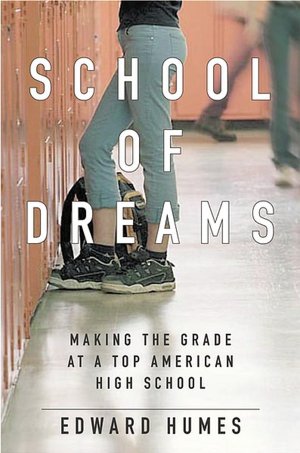
School of Dreams (2003), by Edward Humes, September 9, 2012. (Donald Earl Collins).

Yesterday was the thirty-first anniversary of my first day of seventh grade at A.B. Davis Middle School, my first day in a six-year slog in Mount Vernon public schools’ Humanities Program. The academic pressures that came with being part of a gifted-talented track magnet program were such that the lessons I learned during those years remain with me to this day. The unique lessons about who I was and whom I wanted and needed to become, though, are the kinds of lessons reserved for a memoir, like, say, Boy @ The Window.

But there are other lessons, other issues that anyone who has gone through such a program, is in one, or has kids in one, should heed. Perhaps the best book I’ve ever read about the experiences of high ability students in a gifted track middle or high school has been Edward Humes’ School of Dreams: Making the Grade at a Top American High School (2003). Despite some of the flaws in the Pulitzer-Prize winning journalist and author’s account covering a year in the life of Whitney High School in Cerritos, California, this is a book I’d use in many of my future graduate seminars in US educational history.

A particularly poignant passage was where Humes wrote, the “combination of a school built upon high expectations and a student population whose dominant culture elevates learning to a high priority—and hard work in school to an absolute necessity—makes for a kind of education echo chamber” (p. 340). Humes meant this as a positive comment on the academic culture of a public high school in Southern California.  But it also reflected a constant tension between learning and zero-sum competition.

Starbucks double chocolate chip frappucino, September 10, 2012. (htttp://wwwcoffeespitfire.blogspot.com).

Humes somehow doesn’t fully take stock of this tension beyond the context of the high school in which he embedded himself in 2000-01. There were stories, disheartening stories about seventh graders hitting up Starbucks for coffee before school, during lunch and after school to stay awake. Of parents who shunned their kids’ artistic talent and aspirations in their quest to ensure they earned a degree in a STEM (science, technology, engineering, mathematics) field. Of students taking as many as six AP (Advanced Placement) courses in a single school year, or colluding to cheat on a calculus or physics exam when the pace of study and testing proved to be too much.

Yes, despite this, Whitney has produced thousands of elite college-goers, and 4.0 is the standard, not the exception, that its students shoot for. But now, in an age in which high-stakes testing is the norm, what’s the social and psychological message that we’re communicating to the current crop of K-12 students in the US today?

For me, the best way to answer this question is to look back on my own experience and the experiences of my former Humanities classmates. Based on my own writings and findings, there’s plenty of evidence that intensive academic rigor and competition — like intensive athletic training and competition — will produce excellent students well prepared for college, but not necessarily well prepared for life. Many of my former Humanities classmates (and many of the students Humes tracked and interviewed for School of Dreams) were socially inept, put themselves under constant stress (not to mention experiencing psychological pressures from each other, their parents and teachers) and lacked the deeper critical reasoning skills necessary to make college a worthwhile experience.

The students had a “cram-and-exam” methodology to learning, spending hours learning techniques and concepts and little time in applying them beyond the classroom in the vast majority of their subjects. Often when students discovered a new talent, particularly in writing, the arts or in music, many of their parents pounced into action to admonish teachers for encouraging these developments or to force their kids into their way of thinking about their future. Bottom line: while many of these high-achievers were willing to slit each others’ throats for an A, an AP “5” or an SAT 1600, they hadn’t really made up their minds about who they wanted to be, the talents they wanted to explore, or the world in which they wanted to live.

“Nightmares & Daydreams” episode screen shot, Avatar: The Last Airbender, September 10, 2012. (Donald Earl Collins). Qualifies as fair use under US Copyright laws due to pic’s low resolution.

When I first read Humes’ School of Dreams nine years ago, it forced me to think about these parallels. I realized that if Starbucks was within a mile of either A.B. Davis Middle or Mount Vernon High School in the ’80s, our class alone would’ve spent about $160,000 a year there on coffee and pastries. That most of us were sane enough to only take three or four AP courses my senior year. That our standard for a minimally acceptable SAT score was a 1200. That, instead of kids crying or running away from home for two days over a B, attempted suicides or a turn to crystal meth would’ve been more common. I guess by Whitney’s standards, we would’ve been slackers.

Still, more than a quarter-century since my last Humanities course, with tighter budgets and far more high-stakes testing (see the correlation?), the crush of intense academic competition has made our public schools a poor place for polishing students into well-adjusted young adults. Yes, I know that this is primarily a parent’s responsibility. But then again, public schools are meant to be far more than an octagon ring with No. 2 pencils.

← Older posts
Newer posts →

Boy @ The Window: A Memoir

Boy @ The Window: A Memoir

Places to Buy/Download Boy @ The Window

There's a few ways in which you can read excerpts of, borrow and/or purchase and download Boy @ The Window. There's the trade paperback edition of Boy @ The Window, available for purchase via Amazon.com at http://www.amazon.com/Boy-Window-Donald-Earl-Collins/dp/0989256138/

There's also a Kindle edition on Amazon.com. The enhanced edition can be read only with Kindle Fire, an iPad or a full-color tablet. The links to the enhanced edition through Apple's iBookstore and the Barnes & Noble NOOK edition are below. The link to the Amazon Kindle version is also immediately below:

scr2555-proj697-a-kindle-logo-rgb-lg

Boy @ The Window on Amazon.com: http://www.amazon.com/Boy-The-Window-Memoir-ebook/dp/B00CD95FBU/

iBookstore-logo-300x100

Boy @ The Window on Apple's iBookstore: https://itunes.apple.com/us/book/boy-the-window/id643768275?ls=1

Barnes & Noble (bn.com) logo, June 26, 2013. (http://www.logotypes101.com).

Boy @ The Window on Barnes & Noble: http://www.barnesandnoble.com/w/boy-the-window-donald-earl-collins/1115182183?ean=2940016741567

You can also add, read and review Boy @ The Window on Goodreads.com. Just click on the button below:

Boy @ The Window

Twitter Updates

Tweets by decollins1969
  • RSS - Posts
  • RSS - Comments

Archives

  • June 2025
  • April 2023
  • September 2022
  • August 2022
  • July 2022
  • June 2022
  • May 2022
  • April 2022
  • March 2022
  • January 2022
  • December 2021
  • November 2021
  • October 2021
  • September 2021
  • August 2021
  • July 2021
  • June 2021
  • April 2021
  • March 2021
  • February 2021
  • January 2021
  • December 2020
  • November 2020
  • October 2020
  • September 2020
  • August 2020
  • July 2020
  • May 2020
  • April 2020
  • March 2020
  • January 2020
  • December 2019
  • November 2019
  • August 2019
  • July 2019
  • June 2019
  • May 2019
  • April 2019
  • March 2019
  • February 2019
  • January 2019
  • December 2018
  • November 2018
  • October 2018
  • September 2018
  • August 2018
  • July 2018
  • June 2018
  • May 2018
  • March 2018
  • February 2018
  • January 2018
  • December 2017
  • November 2017
  • October 2017
  • September 2017
  • August 2017
  • July 2017
  • June 2017
  • May 2017
  • April 2017
  • March 2017
  • February 2017
  • January 2017
  • December 2016
  • November 2016
  • October 2016
  • September 2016
  • August 2016
  • July 2016
  • June 2016
  • May 2016
  • April 2016
  • March 2016
  • February 2016
  • January 2016
  • December 2015
  • November 2015
  • October 2015
  • September 2015
  • August 2015
  • July 2015
  • June 2015
  • May 2015
  • April 2015
  • March 2015
  • February 2015
  • January 2015
  • December 2014
  • November 2014
  • October 2014
  • September 2014
  • August 2014
  • July 2014
  • June 2014
  • May 2014
  • April 2014
  • March 2014
  • February 2014
  • January 2014
  • December 2013
  • November 2013
  • October 2013
  • September 2013
  • August 2013
  • July 2013
  • June 2013
  • May 2013
  • April 2013
  • March 2013
  • February 2013
  • January 2013
  • December 2012
  • November 2012
  • October 2012
  • September 2012
  • August 2012
  • July 2012
  • June 2012
  • May 2012
  • April 2012
  • March 2012
  • February 2012
  • January 2012
  • December 2011
  • November 2011
  • October 2011
  • September 2011
  • August 2011
  • July 2011
  • June 2011
  • May 2011
  • April 2011
  • March 2011
  • February 2011
  • January 2011
  • December 2010
  • November 2010
  • October 2010
  • September 2010
  • August 2010
  • July 2010
  • June 2010
  • May 2010
  • April 2010
  • March 2010
  • February 2010
  • January 2010
  • December 2009
  • November 2009
  • October 2009
  • September 2009
  • August 2009
  • July 2009
  • June 2009
  • May 2009
  • April 2009
  • March 2009
  • February 2009
  • January 2009
  • December 2008
  • November 2008
  • October 2008
  • September 2008
  • August 2008
  • July 2008
  • June 2008
  • May 2008
  • April 2008
  • March 2008
  • February 2008
  • January 2008
  • December 2007
  • November 2007
  • October 2007
  • September 2007
  • August 2007
  • July 2007
  • June 2007

Recent Comments

decollins1969's avatardecollins1969 on No Good Teaching Deed Goes…
Mary Rose O’Connell's avatarMary Rose O’Connell on No Good Teaching Deed Goes…
Lyndah McCaskill's avatarLyndah McCaskill on The Raunchiest of Them Al…

NetworkedBlogs on Facebook

NetworkedBlogs
Blog:
Notes From a Boy @ The Window
Topics:
My Life, Culture & Education, Politics & Goofyness
 
Follow my blog

616 616 East Lincoln Avenue A.B. Davis Middle School Abuse Academia Academy for Educational Development AED Afrocentricity American Narcissism Authenticity Bigotry Blackness Boy @ The Window Carnegie Mellon University Child Abuse Class of 1987 CMU Coping Strategies Crush #1 Crush #2 Death Disillusionment Diversity Domestic Violence Economic Inequality Education Family Friendship Friendships Graduate School Hebrew-Israelites High-Stakes Testing Higher Education History Homelessness Humanities Humanities Program Hypocrisy Internalized Racism Jealousy Joe Trotter Joe William Trotter Jr. K-12 Education Love Manhood Maurice Eugene Washington Maurice Washington Misogyny Mother-Son Relationship Mount Vernon High School Mount Vernon New York Mount Vernon public schools Multiculturalism MVHS Narcissism NFL Pitt Pittsburgh Politics of Education Poverty President Barack Obama Race Racial Stereotypes Racism Relationships Self-Awareness Self-Discovery Self-Reflection Sexism Social Justice Teaching and Learning University of Pittsburgh Violence Whiteness Writing

Top Rated

Blog at WordPress.com.

  • Subscribe Subscribed
    • Notes from a Boy @ The Window
    • Join 103 other subscribers
    • Already have a WordPress.com account? Log in now.
    • Notes from a Boy @ The Window
    • Subscribe Subscribed
    • Sign up
    • Log in
    • Report this content
    • View site in Reader
    • Manage subscriptions
    • Collapse this bar
 

Loading Comments...