• About Me
  • Other Writings
  • Interview Clips
  • All About Me: American Racism, American Narcissism, and the Conversation America Can’t Have
  • Video Clips
  • Boy @ The Window Pictures
  • Boy @ The Window Theme Music

Notes from a Boy @ The Window

~

Notes from a Boy @ The Window

Tag Archives: Death

Aside

RIP Sister, Sarai Adar Washington (February 9, 1983-July 11, 2010)

11 Saturday Jul 2015

Posted by decollins1969 in 1, Boy @ The Window, Carnegie Mellon University, Christianity, culture, Eclectic, Mount Vernon High School, Mount Vernon New York, Pop Culture, race, Work, Youth

≈ Leave a comment

Tags

616, 616 East Lincoln Avenue, Brother-Sister Relationship, Death, Dread, Eri Washington, Father Figures, Growing Up, Independence, Life, Mazza Gallerie, Sarai Washington, Sickle Cell Anemia, The Matrix Revolutions (2003)


Sarai Washington, circa 2003.

Sarai Washington, circa 2009.

It’s been five years since I received my brother Eri’s call telling me what I had known and dreaded would come for nearly thirty years. That my only sister Sarai had died from complications stemming from sickle-cell anemia.

As soon as I picked up the phone five years ago, I knew. Sarai had been in and out the hospital for months since she had returned to New York at the tail end of ’09. Before then, she had lived either on her own or with two of her high school friends in Huntsville, Alabama since ’05. The skin and bone bruises, the constant blood transfusions, the always-there pain of sickled red blood cells circulating through her body. The average life expectancy for anyone with the disease is thirty-three years. That I had Sarai in my life for 82 percent of that life expectancy was still a minor miracle in the midst of what to me seemed completely unnecessary pain.

We weren’t as close in her later years, though. I mean, Sarai saw me as a bit of a father-figure when she was growing up. I had thirteen years and six weeks on her, so that’s how it goes. Between the 616 fire and homelessness for her and my other younger siblings in ’95, though — not to mention puberty — Sarai no longer treated me as her hero. That was fine by me. I already had too many people in my life who thought of me as some sort of hero or saint.

I think, though, that my sister enjoyed not really having to think about her future, about not feeling the need to grow up, since, what would be the point, really? I thought that because she knew more about her disease than anyone, it was her responsibility to grow up and find the best care possible to manage her disease, to bring some meaning to her life. That’s where our closeness became less so. I have a way of expecting more out of people than most people are willing to expect of themselves.

Sarai & Noah, November 2003. (Donald Earl Collins).

Sarai & Noah, November 2003. (Donald Earl Collins).

When Sarai came to live with me and my wife Angelia in ’03, to help us out with our then newborn son Noah, it was obvious that my sister was doing little to take care of herself. When I finally confronted her about her poor diet and unwillingness to watch over her disease, Sarai yelled, “You’re not my father!,” right in front of Mazza Gallerie, on the DC-Chevy Chase border (we had gone to see The Matrix Revolutions, much more for her than for me). Of course she was right. But of course, I was right also.

Sarai decided the next day to pack up her stuff and move back home to 616 and Mount Vernon, “where no one told her what to do,” she wrote as part of her going away letter. She also said that I “don’t know anything about the streets” as yet another familial “Just because you have a Ph.D…” coup de grace. I thought, “If I didn’t know anything about the streets, you and the rest of the younger siblings would’ve gotten your asses kicked through the early ’90s.”

But I knew Sarai’s letter wasn’t about the streets. It was about her living her life the way she wanted, without me or anyone else telling her how to take care of herself. That’s why she went away to Alabama for nearly four years.

Luckily I did get to talk to her a couple of times after that. Though we weren’t close, I loved her, and I know she loved me. The sad truth was, though, Sarai never had enough time to take charge over her life, and I couldn’t make her take that precious little time.

A Few Thoughts About Stuart Scott

05 Monday Jan 2015

Posted by decollins1969 in 1, Carnegie Mellon University, culture, Eclectic, Pittsburgh, Politics, Pop Culture, race, Sports, University of Pittsburgh, Youth

≈ Leave a comment

Tags

Cancer, Death, ESPN, Hip-Hop, Marc Hopkins, Sports Anchor, Sportscenter, Stuart Scott


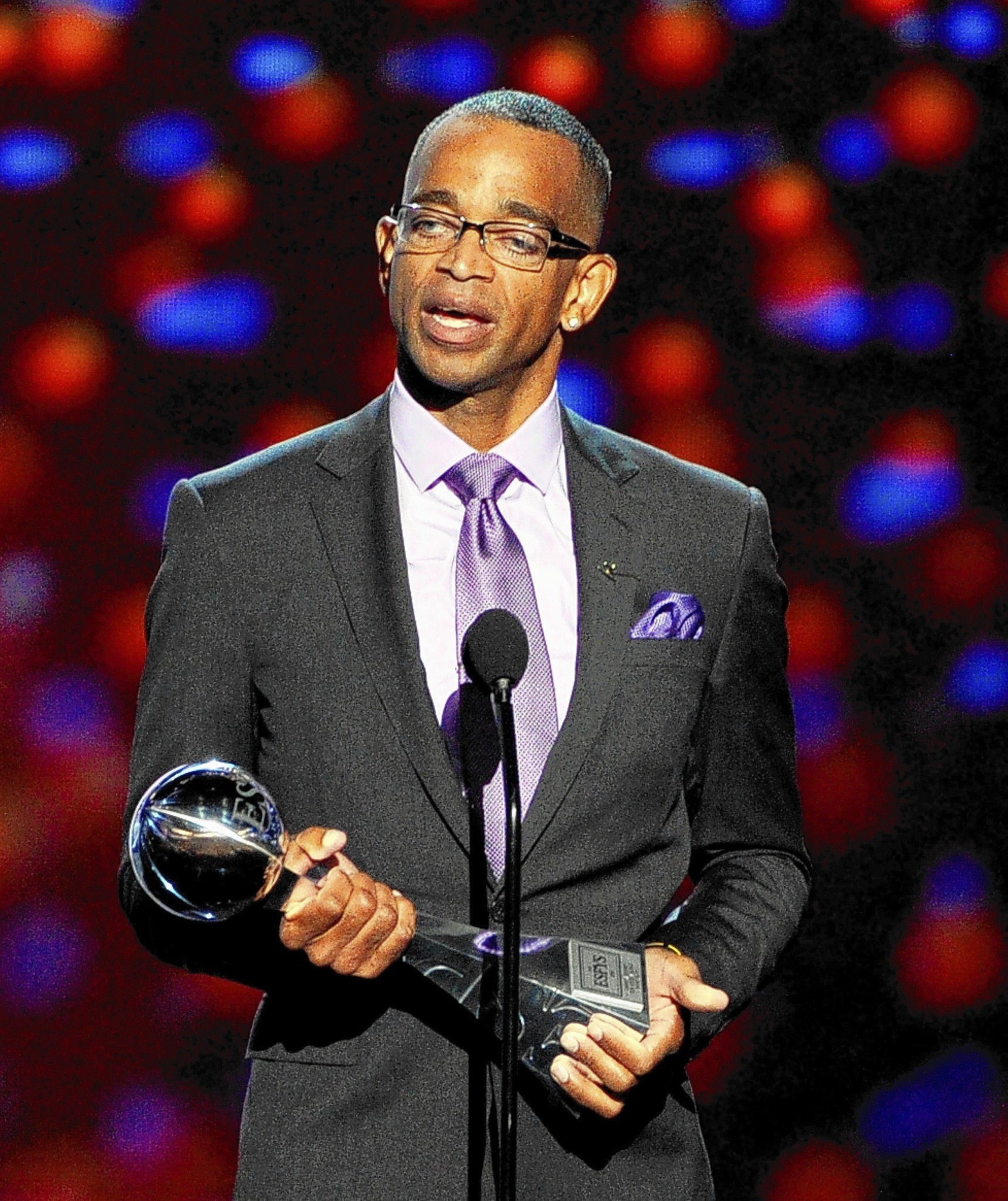
Stuart Scott accepting the 2014 Jimmy V Perseverance Award  during the 2014 ESPYS, Nokia Theatre, Los Angeles, CA, July 16, 2014. (Kevin Winter/Getty Images via http://plus.google.com)

Stuart Scott accepting the 2014 Jimmy V Perseverance Award during the 2014 ESPYS, Nokia Theatre, Los Angeles, CA, July 16, 2014. (Kevin Winter/Getty Images via http://plus.google.com)

A piece of my second childhood (i.e., graduate school, sports, and dating in the 1990s) died yesterday morning with Stuart Scott. He was the best that ESPN had to offer for a long time, a sports anchor who brought it with style every single broadcast. Or, as Scott would’ve put it, from day one, he “just called himself butter, ‘cuz he was on a roll.”

I could analyze his impact on sport and entertainment, on sports in and as pop culture, on Scott’s infusion of hip-hop and other forms of “being Black” on the Seinfeld-esque SportsCenter. I could also talk about race and sports and Scott more broadly, and how Scott’s style may have taken some of the edge off of the everyday racial undertones that are so clearly a part of college and professional sports in the US. I leave that for people who are more expert on sports and sports journalism in popular culture than me. At least for now.

I have an dear old friend whom Scott always reminded me of when I watched SportsCenter or when Scott hosted NFL or NBA shows on ESPN. My friend Marc, whom I’ve talked about before on my blog, whom I’ve known now for nearly twenty-seven years. I’ve often thought over the years, if Marc did TV instead of writing or print journalism, he’d be Stuart Scott. I’m not sure if Marc would take this as a compliment or a criticism, but for me, it’s definitely the former.

But so many bouts with cancer over the course of a decade would be dire for anyone. I feel for Scott’s daughters and girlfriend and ex-wife, for his extended family and friends, and for a sports world without someone that positive, someone on the presentation side with serious dap. Here’s to you, Mr. Scott, one more voice of “Boo-yah!” to add to the mix.

Contingent Faculty and the Cold Case of Rollo Turner

02 Thursday Oct 2014

Posted by decollins1969 in 1, Academia, culture, Eclectic, Pittsburgh, Politics, Pop Culture, race, University of Pittsburgh, Work

≈ 4 Comments

Tags

Adjunct Faculty, Africana Studies, Afrocentricity, Brenda Berrian, Buddhism, Clarence 'Rollo' Turner, Contingent Faculty, Death, Department of Black Studies, Diversity, Firing, Income Loss, J.D. O'Connor, Lawsuit, Rollo Turner, Steven Salaita, Termination, Unionization, University of Illinois Urbana-Champaign


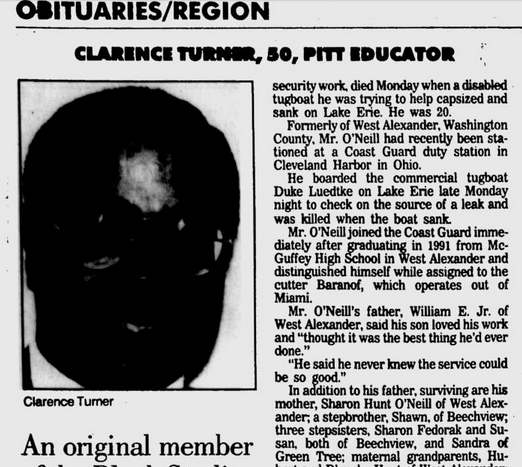
Clarence "Rollo" Turner, in Obituaries section, Pittsburgh Post-Gazette, September 24, 1993. (http://news.google.com).

Clarence “Rollo” Turner, in Obituaries section, Pittsburgh Post-Gazette, September 24, 1993. (http://news.google.com).

Two months ago, the University of Illinois Urbana-Champaign rescinded a job offer they had made to Steven Salaita (then an associate professor of English at Virginia Tech) for a tenured position in American Indian Studies over a bunch of his allegedly anti-Israel tweets. Between mainstream media and social media, the response against this attack on academic freedom and traditional hiring protocols has been tremendous. Thousands of academicians have signed petitions, penned articles and canceled speeches and events at UIUC over Chancellor Phyllis Wise and the Illinois board of trustees’ decision to take back their offer of employment. While the American Association of University Professors, the American Studies Association, the Foundation for Individual Rights in Education, and so many others have argued that Professor Salaita should be in the classroom teaching his courses this fall, this issue is about more than academic freedom and UIUC following job offer guidelines.

The fact is, non-tenure-stream faculty lack the protections and supportive outrage that academia has poured out for those in tenure-track and tenured positions like Professor Salaita. So many contingent faculty lose their jobs over far less than an impolite tweet or an excited utterance. Yet it doesn’t become a story in The New York Times or a petition letter with over 2,000 signatures. No, most contingent faculty, when they lose their jobs, often do so in obscurity, often over doing their jobs with the idea that they were free to teach as they saw fit.

The sadder fact, though, is that this isn’t a new phenomenon at all. Take the case of Clarence Rollo Turner, who passed away twenty-one years ago last month at the age of 50. He was once a veteran senior lecturer in the Department of Black Studies at the University of Pittsburgh, as well as my one-time professor for his History of Blacks in Sports course during the spring semester of 1990. I took Turner’s course in my junior year for an easy-A in the midst of taking a bunch of upper-level undergraduate (and one graduate) history courses that semester. Turner’s was a fun course, and he was a knowledgeable professor beyond its contents. Who knew that in three and a half years the politics of academia would cut short the life of a pioneer? It points to the reality that with half of all higher education instructors serving as contingent faculty, academic freedom is an oxymoron and job protections have become secondary to academic politics and fundraising efforts.

Rollo Turner’s Contingent Teaching Story:

If you’ve never heard of Rollo Turner, it’s mostly because he didn’t have the opportunity to turn himself into a household name in or out of academia, even in Pittsburgh. And, of course, because most non-tenured and non-tenure-stream faculty are seldom central figures at their universities or in their fields just because they’re very good instructors. Turner, though, was a founding member of the Black Studies Program-turned-department (now of Africana Studies) at the University of Pittsburgh. The university had hired Turner in the wake of a game-changing sit-in of Black undergraduate and graduate students in their takeover of an entire floor of the university’s central computer systems on Martin Luther King, Jr.’s birthday in 1969. It was a protest over the lack of student and faculty diversity at the University of Pittsburgh in general. But it was also a protest to demand a Black Studies program that would represent the research and experiences of Blacks on Blacks on an otherwise lily-White Campus, one engaged exclusively in research that almost always excluded Blacks.

In the process of starting this program, the university hired faculty who had yet to earn their doctorates, in some cases with barely a bachelor’s degree. This was 1969, though, when not having a PhD didn’t automatically disqualify candidates from a full-time academic position. Turner was one of several beneficiaries from this change of climate at the University of Pittsburgh, as he was finishing up a master’s degrees in Sociology at Indiana University when the University of Pittsburgh hired him (Turner, incidentally, had helped lead protests for more Black inclusion and a Black Studies program at Indiana in 1968).

Turner took on a joint appointment with the Department of Sociology and with the new Black Studies Program, teaching courses like the Sociology of the Black Family, Introduction to Black Studies and his History of Blacks in Sports along the way. Although the standard courseload for a full-time faculty member at the University of Pittsburgh was five over two semesters per year, Turner had been on a 2-2 schedule from September 1969 through December 1991. For more than twenty-two years, Turner had only taught four courses per year.

When the then-new department chair Brenda Berrian demanded that Turner take on a third course in January 1992, he refused, citing his twenty-two year history with the Black Studies Department and the last-minute nature of the request as reasons. Berrian then moved to terminate Turner. She and two Pitt police officers arrived in Turner’s classroom on the first Friday of the spring semester and had him removed from his classroom and escorted out of the building. Berrian fired him in the middle of his lecture, in front of a room full of students. This was how The Pitt News first reported the incident, and it was corroborated by everything that Rollo Turner told me a few weeks later.

The Politics of Academia:

But though it was that heavy-handed, it was hardly that simple. Turner had gotten himself caught up in a battle that involved his contingent employment status, degree completion, departmental reputation and petty ideological politics. More than twenty-two years as a non-tenured senior lecturer with only a master’s degree and a few publications that included two book-length bibliographies had caught up with Turner. As a contingent faculty member, even with over two decades put in, Turner lacked the protections afforded tenure-stream and tenured faculty members. Granted, at $37,000 a year and living in Pittsburgh at the time in 1992, Turner was a very well-paid senior lecturer. At least, that’s what many would argue today. This was also Berrian’s position as Turner’s termination turned into a $60,000 lawsuit.

Beyond the issue of compensation, contracts and contingent status was what Berrian and the other tenured faculty of the Department of Black Studies wanted for the department’s future. They wanted to bolster the department’s reputation within and outside the University of Pittsburgh. They wanted to be a full-fledged department in which students could major in Black Studies (students could only earn a minor in the subject until 1993), and perhaps, even offer a master’s degree in the field. Two things stood in the way of this progression. One was the fact that half of the department’s faculty didn’t have doctorates, now a much bigger deal in 1992 than it had ever been in 1969.

Two was that not everyone wanted to go in the ideological direction that Berrian had chosen for the Department of Black Studies. She wanted to move toward an Afrocentric approach in teaching and conducting research, something Turner openly rejected as “nonsense.” The idea of a litmus test for what was and wasn’t authentically “Black” or “African” was too extreme for Turner. As a tenured faculty member, Turner’s objections may well have cost him political clout within the department, but it wouldn’t have cost him his job.

Turner’s Final Months:

Turner sued Berrian and the University of Pittsburgh for wrongful termination – stemming in no small part from a hostile work environment – and breach of contract (his was a three-year contract with a year and a half left on it). The suit dragged on in the Civil Court division of Allegheny County Common Pleas Court well into 1993 as Turner – with two daughters in college and a son in the middle of high school – went over a year and a half without a paycheck. As late as August 1993, the month before he died, Turner told me that things on the lawsuit front had taken a turn for the better. Despite the stress of the situation, he hadn’t let Berrian or the University of Pittsburgh “steal his inner peace,” Turner said.

Yet even with years of Buddhism and meditation under his belt and a lifestyle that included biking through all parts of Pittsburgh, Turner died in late-September 1993. No doubt that between the stress of his lawsuit, the sense of betrayal, and the financial upheaval, it all caught up with him. Rollo Turner may well have become a mentor of mine because of the stand that he took, minus the strength of a union or support from a substantial number of tenured faculty. None of this was possible in the end. Precisely because contingent faculty seldom have rights that tenured faculty and university administrators are bound to respect.

Lessons, If Any:

There are so many lessons to be learned here, lessons that resonate with me more now as an adjunct professor than they did when I was a graduate student or when I worked in the nonprofit world. Contingent faculty shouldn’t rock the boat, take a controversial stance, or involve themselves in hot-button issues within their field or department. Or that anyone serving as non-tenured faculty without a doctorate should endeavor to write their dissertation at break-neck speed. Or really, if given the choice, why would anyone who could possibly do anything else with their lives in academia, especially anything that could provide more security and protection, choose a job as a contingent faculty member, whether in 1992 or 2014?

Mostly, it points to the reality that university leaders tend to see much of the talent in academia – non-tenured faculty among others – as expendable. That, and the fact that this expendability has grown with the rapid increase in contingent faculty (and graduate students, for that matter) teaching courses once reserved for tenure and tenure-stream instructors. Until contingent faculty, graduate student teaching assistants and tenured/tenure-stream professors unionize and take a collective stand on working conditions and job protections, cases like Turner’s will continue to go cold and remain tragic ones, with no end in sight.


The Lazarus Woman

22 Thursday Aug 2013

Posted by decollins1969 in 1, Academia, Boy @ The Window, Carnegie Mellon University, culture, Eclectic, Mount Vernon New York, Pittsburgh, Politics, Pop Culture, race, Religion, Youth

≈ Leave a comment

Tags

Barbara B. Lazarus, Barbara Lazarus, Brandie Weston, Carl Zimring, Death, Friendship, Graduate School, Harold Meltzer, Joe Trotter, John Hinshaw, Life and Death, Maurice Eugene Washington, Maurice Washington, Mentoring, Politics of Academia, Politics of Graduate School, Sarai Washington, Susan McElroy


Barbara B. Lazarus, obituary picture, July 17, 2003. (http://cmu.edu).

Barbara B. Lazarus, obituary picture, July 17, 2003. (http://cmu.edu).

Now that my book’s been out for a couple of months (between two and four months, depending on the e-book platform, actually), I’ve found that my thoughts sometimes drift toward those that are no longer around to read it.

Not so much my family or nemeses, though. Sarai, my only sister, who died in July ’10, would likely have never read a word of Boy @ The Window — it would be too honest an assessment of life at 616 for her. My late idiot ex-stepfather Maurice Washington was already unhappy with my numerous posts about his borderline personality issues and constant psychological and physical abuse of me and family when I picked up the phone one day that same week my sister passed.

As for my former classmate Brandie Weston — to whom I’ve dedicated my memoir (actually, a co-dedication that includes my son) — maybe, if she had been well enough. My favorite teacher, the late Harold Meltzer, though, would’ve begun reading  Boy @ The Window five minutes after it had gone live on Amazon.com!

But of all of those folks who are no longer a part of this corporeal world (or who have gone into some state of seclusion from it), one other person stands out today. My dear friend and mentor from my Carnegie Mellon years (and the six years after I finished), Barbara Lazarus. I’ve discussed her here before, but not lately. Probably because I do tear up sometimes when thinking about her support of me specifically and her work at CMU in general. Barbara helped make my otherwise rough and dehumanizing experience at CMU manageable and even career-affirming.

As I wrote about Barbara for the memorial service at CMU in September ’03:

I want to communicate to you that I am in complete solidarity with everyone who attends the gathering at CMU on October 17.  For me, Barbara’s work was more than about women’s equity in the engineering and science fields.  She was about ensuring that all (regardless of gender or race, and regardless of the degree) who attempted the grand enterprise of competing for a degree actually made it through the process … Barbara was a dear friend and mentor who truly believed in me, even in spite of myself.  I loved her, and I will surely miss her, as I am sure you will also.

That only approximated how much she meant to me during and after my four years of doctoral success and failures at CMU. The months immediately before my advisor Joe Trotter and my committee approved my dissertation were the worst, as is well documented on this blog. Barbara convinced me to not become hot-headed and drop-out of the program with a completed first-draft of my dissertation under my belt. She also managed to keep me from requesting a change of advisors so close to the finish line. She did offer to “step in” as her duties as Associate Provost would’ve allowed, but warned me that this political solution would delay my graduation. My connection with Barbara kept me from meeting Trotter in one of CMU’s parking lots late at night wearing a ski mask and dark leather gloves!

She became my best reference professionally and otherwise after those dark days ended with the end of ’96. She read my articles and my first book before they went to print. We swapped stories about family and life and religion. We stayed in touch even after I moved to Silver Spring, Maryland in ’99. Barbara died on July 14, ’03, just sixteen days before my son Noah was born. It’s been a decade, a month and eight days since she passed, nearly as long as I actually knew Barbara (roughly between October ’92 and July ’03). Boy, I wish I could’ve shared my first photos of my son with her!

There were a few people like Barbara at CMU during those years. Susan McElroy (now at UT-Dallas), John Hinshaw (at least prior to my Spencer Fellowship), Carl Zimring (before the O.J. verdict), the Gants and the other Black doctoral students I’d met there (all fourteen of us) were my CMU lifeline beyond multiculturalism and Trotter tired sense of migration studies.

But Barbara Lazarus and I had a friendship that went well beyond academia and career, and went undamaged by petty jealousies or sudden bursts of outrage from jury verdicts. I’d been to her home, met her husband and her kids, learned something about her as a person, and in the process, managed to be my better self even in the worst of circumstances. That is being a good mentor, friend and person. I just hope that I was the same to her, and that Boy @ The Window proves to be the same to others.

Sarai, 30 Years Old Today

09 Saturday Feb 2013

Posted by decollins1969 in 1, Boy @ The Window, culture, Eclectic, Hebrew-Israelite, Marriage, Mount Vernon New York, Pop Culture, race, Youth

≈ 2 Comments

Tags

616, 616 East Lincoln Avenue, Child Abuse, Death, Forgiveness, Genetics, God, Hatred, Health Care, Ignorance, Mount Vernon Hospital, Neglect, Racial Stereotypes, Sarai, Sarai Washington, Sickle Cell Anemia, Stereotype Threat, Trait, Welfare


Sarai (with Maurice) at 12 years old, Yonkers, NY, November 21, 1995. (Donald Earl Collins).

My sister Sarai (with Maurice) at 12 years old, Yonkers, NY, November 21, 1995. (Donald Earl Collins).

It’s another February 9, more than two and a half years since my sister Sarai Washington passed away from complications due to sickle-cell anemia at the age of twenty-seven. Today would mark her thirtieth birthday. But given how Sarai’s life began, given her disease and the average life expectancy of people with it, it’s just as well that she isn’t here to become thirty. Sarai would likely be in pain, with skin bruises and lesions, laying on a hospital bed, in the middle of yet another blood transfusion.

My sister’s life and death is a constant reminder to forgive. It especially reminds me that forgiveness for us simple, linear humans is a constant process. It’s one in which we overcome our own feelings with the determination to love and to seek wisdom and grace. That Sarai had to endure sickle-cell anemia for twenty-seven years, five months and two days — or 10,015 total days — could feel me with enough anger so that I’d spend the rest of my life in hatred and contempt.

Not so much toward God. Even in eighth grade, I knew enough to know that people often cause their own calamities, and yet choose to blame God for the perditious decisions they made. No, there was a time I blamed my Mom, from the time I learned that she was pregnant with Sarai and for years afterward. Why? Because I also knew about sickle cell anemia, how it was a genetic disorder, and how two people with the trait had a one-in-four chance of passing on the full-blown disease to one of their progeny. And I knew this because my Mom explained the basics of it to me when I was eight years old!

My mother worked at Mount Vernon Hospital, where they very well could’ve run a genetic test for the disease at the prenatal stage. Of course, that would’ve given my mother a rather difficult decision to make about my eventual sister’s viability. But then again, she knew before the birth of my other siblings Maurice and Yiscoc that my now deceased idiot stepfather also possessed the sickle-cell trait. That she didn’t have any of them tested was, well, lazy and shameful.

I could’ve easily blamed my now dead ex-stepfather Maurice. He was a walking disaster area, as everything he touched turned into crap. Maurice never did anything in his life that didn’t hurt someone at some point. He never once cared enough about Sarai (or any of his other kids, for that matter) to make sure they were born healthy and whole. Forget about what happened to them after they were born. Maurice’s only real interest was telling guys standing on corners about his latest sperm injection. He also liked to buy cigars after the women had to endure the pregnancy and labor, abandoned by him in all meaningful respects in the process.

And there’s the grudge I’ve held against myself. As I’ve said in Boy @ The Window and in various blog posts (including “Pregnant Pauses” from November ’12), I never wanted Sarai here in the first place. Not because I hated kids or her. I knew what her birth would mean, especially after a year in which we were without food at 616 one-third of the time and three weeks’ behind on rent every single month. With my mother’s hours cut at Mount Vernon Hospital, we were on the verge of going on welfare, and I’d been taught by my mom to hate that. We were about to become a racial cliché, living and breathing racial stereotypes, and that went against everything my mother and nearly two years of living as a Hebrew-Israelite had taught me.

So how do I forgive? It’s simple, really (well, maybe not so simple). Forgiveness for me is a WWJD (What Would Jesus Do?) moment. Jesus said on the cross, just before he died, “Forgive them, for they do not know what they do.” I realize that even when we think we know what we’re doing, we don’t really know — we’re not omniscient, after all. We’re never fully aware of the effects of our decisions and actions, of all the intricacies and long-term implications.

That’s why and how I forgave and forgive — my mom, Maurice and myself. It’s the one thing I can honestly say I learned from Sarai, especially today, on her thirtieth birthday.

Remembering Harold Meltzer

09 Wednesday Jan 2013

Posted by decollins1969 in 1, Academia, Boy @ The Window, culture, Eclectic, eclectic music, Mount Vernon High School, Mount Vernon New York, Politics, Pop Culture, race, Youth

≈ 5 Comments

Tags

AP US History, Bitterness, Confirmed Bachelor, Death, Dedication, Egalitarianism, Eulogy, Friendship, Harold I. Meltzer, Harold Meltzer, Homophobia, Humanities, Humanities Program, Learning, Life, Mentoring, Metropolitan Opera House, Morison & Commanger, Perseverance, Politics of Education, Self-Discovery, Teaching


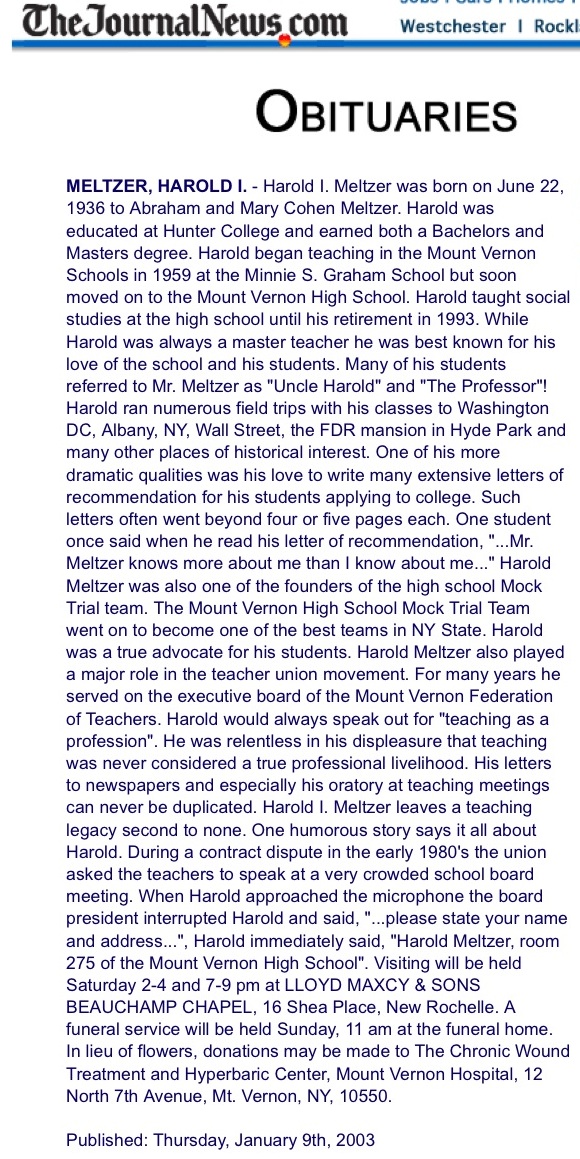
Harold Meltzer obituary (via Frank Pandolfo), January 9, 2003. (Westchester Journal News).

Harold Meltzer obituary (via Frank Pandolfo), January 9, 2003. (The Journal News).

Harold Meltzer, my favorite and best teacher of all, died on January 2, 2003 at the age of sixty-six, ten years ago last week. He was all too young and all too bitter about his years as a history teacher at Mount Vernon High School. But then, dealing with entitled parents and unrepentant administrators in Mount Vernon, New York for thirty-five years would do that to most people. Despite that, Meltzer was a rock, the first teacher since my elementary school years that I genuinely trusted with my family secrets and my inner self. He was the first and maybe only teacher I had in my six years of Humanities who actually seemed like he wanted to teach us (see my post “No Good Teaching Deed Goes Unpunished” from May ’11).

I met Meltzer on our last day of tenth grade, after three days of finals and Regents exams, on June 21, ’85. He had summoned fourteen of us to “Room 275 of Mount Vernon High School,” as the invitation read. We had all registered to take Meltzer’s AP American History class in eleventh grade, our first opportunity to earn college credit while in high school.

Meltzer started off talking to us about Morison and Commager — who I now know as the great consensus historians of the ’50s, until the social history revolution made their textbooks irrelevant by the ’80s — as we sat in this classroom of old history books and even older dust and chalk. Meltzer himself looked to be in his late-fifties (he was actually a day away from his forty-ninth birthday), tall and lanky except for the protruding pouch in the tummy section. His hair was a mutt-like mixture of silver, white and dull gray, and his beard was a long, tangled mess.

Met Logo and A full house, seen from rear of stage, at the Metropolitan Opera House (former bldg, 39th Street), for a concert by pianist Josef Hofmann, November 28, 1937. (National Archives via Wikimedia). In public domain.

Met Logo and A full house, seen from rear of stage, at the Metropolitan Opera House (former bldg, 39th Street), for a concert by pianist Josef Hofmann, November 28, 1937. (National Archives via Wikimedia). In public domain.

The way he spoke, and the way his eyes looked when he spoke made me see him as a yarmulke-wearing preteen on his way to temple. The force with which his words would leave his mouth hit me immediately. As much as I noticed how frequently spit would spew out of Meltzer’s mouth, the rhythm of his speech was slow and sing-song, like an elder or grandfather taking you on a long, winding, roller-coaster-ride of a story. Most of all, I knew that he cared — about history, about teaching, about us learning, about each of us as people. Maybe, just maybe, for some of us, he cared too much.

But for at least for me, Meltzer’s eccentric space in which he told Metropolitan Opera House stories and talked about egalitarianism extended beyond the historical. He was the first teacher I had since before Humanities who’d ask me if things at home were all right, and knew intuitively that things weren’t. He was the first to ask me about how poor my family was and about hunger. And he was the first teacher ever to ask if I had a girlfriend. Needless to say, these questions were unexpected. Yet through these questions, Meltzer had begun to crack my thin, hard wall of separation between school and family.

Because Meltzer cared deeply about reaching students — about reaching me — our student-teacher relationship because a friendship after high school and a mentoring one as well. I wasn’t looking for a mentor, and Meltzer was only being Meltzer. Still, his stories about his battles with MVHS administrators, Board of Education folk, and with upper-crust parents who believed their kids were entitled to A’s just for showing up, were filled with lessons of perseverance, patience, and looking beyond everyday headaches in order to reach people. While this wasn’t a factor in my going to graduate school and spending a significant part of my life as a history professor and educator, these stories have helped me over the years.

1972 Dodge Dart Dark Green (similar to '74 Dodge Dart Meltzer owned when I was at MVHS), December 25, 2009. (http://www.fotosdecarros.com).

1972 Dodge Dart Dark Green (similar to ’74 Dodge Dart Meltzer owned when I was at MVHS), December 25, 2009. (http://www.fotosdecarros.com).

But unfortunately, it was a factor in why Meltzer became embittered and took early retirement in June ’93. The end of the Humanities Program, the intolerance of some administrators toward Meltzer as a “confirmed bachelor,” the lack of decency — forget about gratitude — from many of his most successful students. Those changes, these things, all would take a toll on any teacher who’d stay after school day after day to run Mock Trial, to facilitate study groups, to work on letters of recommendation for students. But no, most of my former classmates who had Meltzer between ’85 and ’87, all they could say was that “Meltzer was weird” or that “I didn’t understand” his lessons.

I’m thankful that I did have Meltzer as a teacher, friend and mentor between ’85 and ’02. I’m thankful that I had a chance to interview him for what is now my Boy @ The Window manuscript in August and November ’02, just a couple of months before he passed (see my post “Mr. Meltzer” from June ’09). I’m glad that despite his physical and psychological pain, Meltzer welcomed me with open arms and answered my questions about his life and his career. I just wish that my former classmates and some of Meltzer’s more cut-throat colleagues had taken the time to really know the man.

Post-Mortem Post

12 Monday Nov 2012

Posted by decollins1969 in 1, Boy @ The Window, Christianity, culture, Eclectic, Hebrew-Israelite, Mount Vernon New York, music, Pop Culture, race, Religion, Youth

≈ Leave a comment

Tags

616, 616 East Lincoln Avenue, Child Abuse, Death, Declining Health, Domestic Violence, Eulogy, Ex-stepfather, Fatherhood, Forgiveness, Judah ben Israel, Kidney Failure, Maurice Eugene Washington, Maurice Washington, Mourning, The Wizard of Oz (1939), Type 2 Diabetes


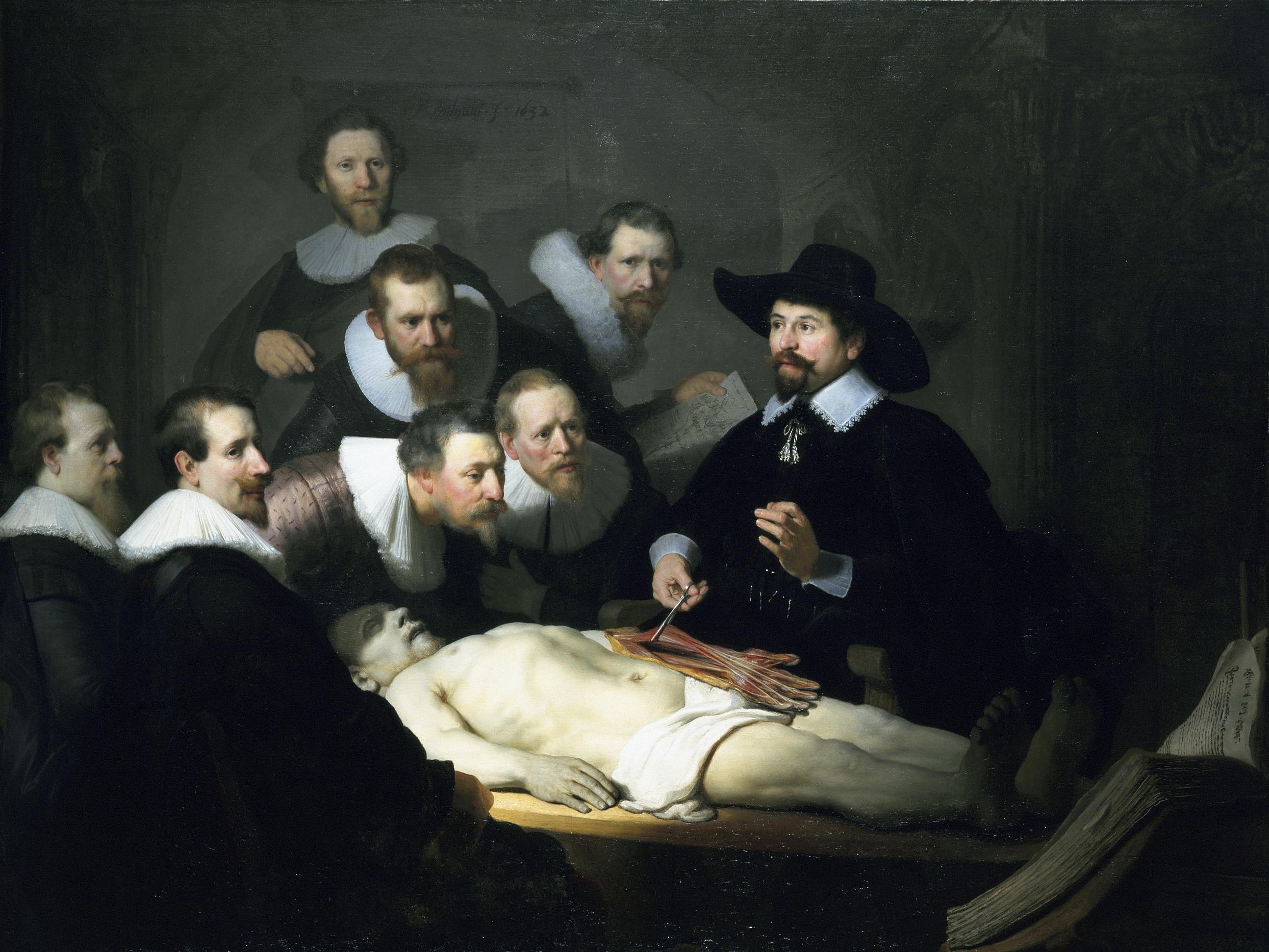
The Anatomy Lesson of Dr. Nicolaes Tulp (1632) by Rembrandt, November 12, 2012. In public domain.

My idiot ex-stepfather died over the weekend, sometime Saturday evening, November 10. He was three months past his sixty-second birthday. I learned of his death early Sunday morning, as two of my younger siblings (technically half-brothers, I suppose) had posted on Facebook their grief over their father’s death overnight. As I read their posts, I realized that I myself felt no particular emotion over the final physical demise of Maurice Eugene Washington.

For the longest time while I was in my teens and early twenties, the song “Ding Dong! The Witch Is Dead” from The Wizard of Oz (1939) would come to mind when I thought about how I’d feel if the man collapsed from his own obesity and died. As far as I was concerned, my ex-stepfather could die a horrible death every day for eternity, and it still wouldn’t have been enough. A steamroller crushing him one day, a stabbing the next, getting smashed into by a semi-tractor trailer doing eighty miles an hour the day after that. Thoughts like that in the ’80s and early ’90s were a regular part of my mindset on Maurice Washington, not to mention a part of my dreams once every six weeks.

But, as I learned to forgive him — for my sake, certainly not for his — I found myself still frequently angry, but also feeling sorry for such a lost person. Whether in exacting abuse on me or my mother, eating himself into kidney failure and Type 2 diabetes, having affairs and producing kids out of those affairs, or in his bouncing back and forth between a Christian and a Hebrew-Israelite life, he was in search of love and stability. None of which, though, he could find from within. A life with only kids from at least three women and damaged lives to show for it. Not to mention a two-decades-long physical decline, in which the man lost both of his legs.

The Cowardly Lion from The Wizard of Oz (1939), November 12, 2012. (http://time.com).

They say living your life to the fullest is the best revenge for survivors of abuse like myself. I suppose that’s true. But what they don’t say is that eight years’ of living in fear for yourself and your family leaves scars, physical, emotional, psychological, even spiritual. I’ve spent nearly a quarter-century recovering from those years, making sure to make myself a better person, and hoping that I don’t pass my scars on to my nine-year-old son in the process.

Two of my more popular posts over the past year have been “Ex-Stepfather’s Balance Sheet” (August ’10) and “Whipped and Beaten” (July ’12). I don’t think that this is random. There are millions of us who’ve grown up with physical, sexual and psychological abuse, and most of us have no one to talk to about these hellish experiences. And nearly as often as not, there are folks who will say, “It wasn’t really that bad, right?” Or, in the case of the very first comment I received on my blog back in July ’07, “you should be grateful, he was just trying to make you a man. Obviously he didn’t do enough.”

So, though I’m not gleeful that Maurice Washington is dead, I’m not exactly in mourning either. I had to kill him as an abuser in my heart and mind a long time ago in order to move on. I feel for my younger siblings, but they didn’t really know their father either. I did, mostly for the worse. May he — and a part of me — now rest in peace.

← Older posts
Newer posts →

Boy @ The Window: A Memoir

Boy @ The Window: A Memoir

Places to Buy/Download Boy @ The Window

There's a few ways in which you can read excerpts of, borrow and/or purchase and download Boy @ The Window. There's the trade paperback edition of Boy @ The Window, available for purchase via Amazon.com at http://www.amazon.com/Boy-Window-Donald-Earl-Collins/dp/0989256138/

There's also a Kindle edition on Amazon.com. The enhanced edition can be read only with Kindle Fire, an iPad or a full-color tablet. The links to the enhanced edition through Apple's iBookstore and the Barnes & Noble NOOK edition are below. The link to the Amazon Kindle version is also immediately below:

scr2555-proj697-a-kindle-logo-rgb-lg

Boy @ The Window on Amazon.com: http://www.amazon.com/Boy-The-Window-Memoir-ebook/dp/B00CD95FBU/

iBookstore-logo-300x100

Boy @ The Window on Apple's iBookstore: https://itunes.apple.com/us/book/boy-the-window/id643768275?ls=1

Barnes & Noble (bn.com) logo, June 26, 2013. (http://www.logotypes101.com).

Boy @ The Window on Barnes & Noble: http://www.barnesandnoble.com/w/boy-the-window-donald-earl-collins/1115182183?ean=2940016741567

You can also add, read and review Boy @ The Window on Goodreads.com. Just click on the button below:

Boy @ The Window

Twitter Updates

Tweets by decollins1969
  • RSS - Posts
  • RSS - Comments

Archives

  • June 2025
  • April 2023
  • September 2022
  • August 2022
  • July 2022
  • June 2022
  • May 2022
  • April 2022
  • March 2022
  • January 2022
  • December 2021
  • November 2021
  • October 2021
  • September 2021
  • August 2021
  • July 2021
  • June 2021
  • April 2021
  • March 2021
  • February 2021
  • January 2021
  • December 2020
  • November 2020
  • October 2020
  • September 2020
  • August 2020
  • July 2020
  • May 2020
  • April 2020
  • March 2020
  • January 2020
  • December 2019
  • November 2019
  • August 2019
  • July 2019
  • June 2019
  • May 2019
  • April 2019
  • March 2019
  • February 2019
  • January 2019
  • December 2018
  • November 2018
  • October 2018
  • September 2018
  • August 2018
  • July 2018
  • June 2018
  • May 2018
  • March 2018
  • February 2018
  • January 2018
  • December 2017
  • November 2017
  • October 2017
  • September 2017
  • August 2017
  • July 2017
  • June 2017
  • May 2017
  • April 2017
  • March 2017
  • February 2017
  • January 2017
  • December 2016
  • November 2016
  • October 2016
  • September 2016
  • August 2016
  • July 2016
  • June 2016
  • May 2016
  • April 2016
  • March 2016
  • February 2016
  • January 2016
  • December 2015
  • November 2015
  • October 2015
  • September 2015
  • August 2015
  • July 2015
  • June 2015
  • May 2015
  • April 2015
  • March 2015
  • February 2015
  • January 2015
  • December 2014
  • November 2014
  • October 2014
  • September 2014
  • August 2014
  • July 2014
  • June 2014
  • May 2014
  • April 2014
  • March 2014
  • February 2014
  • January 2014
  • December 2013
  • November 2013
  • October 2013
  • September 2013
  • August 2013
  • July 2013
  • June 2013
  • May 2013
  • April 2013
  • March 2013
  • February 2013
  • January 2013
  • December 2012
  • November 2012
  • October 2012
  • September 2012
  • August 2012
  • July 2012
  • June 2012
  • May 2012
  • April 2012
  • March 2012
  • February 2012
  • January 2012
  • December 2011
  • November 2011
  • October 2011
  • September 2011
  • August 2011
  • July 2011
  • June 2011
  • May 2011
  • April 2011
  • March 2011
  • February 2011
  • January 2011
  • December 2010
  • November 2010
  • October 2010
  • September 2010
  • August 2010
  • July 2010
  • June 2010
  • May 2010
  • April 2010
  • March 2010
  • February 2010
  • January 2010
  • December 2009
  • November 2009
  • October 2009
  • September 2009
  • August 2009
  • July 2009
  • June 2009
  • May 2009
  • April 2009
  • March 2009
  • February 2009
  • January 2009
  • December 2008
  • November 2008
  • October 2008
  • September 2008
  • August 2008
  • July 2008
  • June 2008
  • May 2008
  • April 2008
  • March 2008
  • February 2008
  • January 2008
  • December 2007
  • November 2007
  • October 2007
  • September 2007
  • August 2007
  • July 2007
  • June 2007

Recent Comments

decollins1969's avatardecollins1969 on No Good Teaching Deed Goes…
Mary Rose O’Connell's avatarMary Rose O’Connell on No Good Teaching Deed Goes…
Lyndah McCaskill's avatarLyndah McCaskill on The Raunchiest of Them Al…

NetworkedBlogs on Facebook

NetworkedBlogs
Blog:
Notes From a Boy @ The Window
Topics:
My Life, Culture & Education, Politics & Goofyness
 
Follow my blog

616 616 East Lincoln Avenue A.B. Davis Middle School Abuse Academia Academy for Educational Development AED Afrocentricity American Narcissism Authenticity Bigotry Blackness Boy @ The Window Carnegie Mellon University Child Abuse Class of 1987 CMU Coping Strategies Crush #1 Crush #2 Death Disillusionment Diversity Domestic Violence Economic Inequality Education Family Friendship Friendships Graduate School Hebrew-Israelites High-Stakes Testing Higher Education History Homelessness Humanities Humanities Program Hypocrisy Internalized Racism Jealousy Joe Trotter Joe William Trotter Jr. K-12 Education Love Manhood Maurice Eugene Washington Maurice Washington Misogyny Mother-Son Relationship Mount Vernon High School Mount Vernon New York Mount Vernon public schools Multiculturalism MVHS Narcissism NFL Pitt Pittsburgh Politics of Education Poverty President Barack Obama Race Racial Stereotypes Racism Relationships Self-Awareness Self-Discovery Self-Reflection Sexism Social Justice Teaching and Learning University of Pittsburgh Violence Whiteness Writing

Top Rated

Blog at WordPress.com.

  • Subscribe Subscribed
    • Notes from a Boy @ The Window
    • Join 103 other subscribers
    • Already have a WordPress.com account? Log in now.
    • Notes from a Boy @ The Window
    • Subscribe Subscribed
    • Sign up
    • Log in
    • Report this content
    • View site in Reader
    • Manage subscriptions
    • Collapse this bar
 

Loading Comments...