• About Me
  • Other Writings
  • Interview Clips
  • All About Me: American Racism, American Narcissism, and the Conversation America Can’t Have
  • Video Clips
  • Boy @ The Window Pictures
  • Boy @ The Window Theme Music

Notes from a Boy @ The Window

~

Notes from a Boy @ The Window

Tag Archives: CMU

Academia’s Racist Expectations

13 Thursday Oct 2016

Posted by decollins1969 in 1, Academia, Boy @ The Window, Carnegie Mellon University, culture, Eclectic, Mount Vernon High School, Pittsburgh, Politics, Pop Culture, race, University of Pittsburgh, Youth

≈ Leave a comment

Tags

Academic Job Market, CMU, Daniel P. Resnick, Hardship, Joe William Trotter Jr., Laurence Glasco, Pitt, Racism, Racism in Academia, Richard Oestreicher


The long wall that separates Morningside Park (and Harlem) from Columbia University, New York, circa 2008. (http://Biking-in-Manhattan.com).

The long wall that separates Morningside Park (and Harlem) from Columbia University, New York, circa 2008. (http://Biking-in-Manhattan.com).

I found myself back again. After reading Marybeth Gasman’s follow-up Washington Post article on her findings about academia’s hostility toward faculty diversity and the low expectations of the mostly White and male search committees in hiring faculty of color, I remembered. Seymour Drescher, George Reid Andrews, Van Beck Hall, Richard Smethurst, Dick Oestreicher, Larry Glasco, Paula Baker, Joe Trotter, John Modell, Steve Schlossman, Wendy Goldman, Kate Lynch, Dan Resnick, Bruce Anthony Jones, and Peter Stearns. Everyone on this list was either my advisor, a professor for a graduate course I took while in the history departments at Pitt and Carnegie Mellon, on my dissertation committee, the department chair, or someone I TA’d for between January 1990 (when I was a junior at Pitt) and May 1997. And nearly all of them either had super-high expectations of me — really, weight-of-the-world expectations — or expected me to choke on my own vomit intellectually while in grad school.

It wasn’t as if I hadn’t seen this before. With select folk while in Humanities in middle school or in high school, like Doris Mann in seventh and eighth grade art, Sylvia Fasulo as my guidance counselor while at Mount Vernon High School, and most notably, with David Wolf in AP Physics my senior year (more on him soon). At Pitt, I had an elderly White professor in a constitutional law class who regularly expressed his displeasure over affirmative action in his lectures and gave all four Black students in the course a C+ on every assignment. But generally, if faculty did have low expectations of me because of their racism, it was more of a feeling, a sense that creeped up on me but couldn’t quite grasp, and not obvious because of their statements and actions.

Headwinds, July 2011. (http://forbes.com).

Headwinds, July 2011. (http://forbes.com).

Until I decided to go for an MA in history in 1990. Everything from discouraging statements to half-baked letters of recommendation brought headwinds meant to slam me up against rocky shoals. Professors like Smethurst or Hall who assumed I didn’t work hard enough because I took time to recharge and hang out with friends. A couple like Oestreicher and Resnick who believed that I actually plagiarized material because the quality of my writing was higher than they had seen from a grad student in years. Some like Andrews, who couldn’t believe I was well into my dissertation, much less having made it into another PhD program at all. That doesn’t even count the assumptions about my basketball prowess, or about what I did in my spare time. Nor does it include the overlooking of alternative perspectives on Marxism, on Whiteness, on multiculturalism, on American poverty, on religion, on a host of historical issues I brought to one seminar after another. Because in my spare time, I read more than what was on a syllabus, and given my upbringing, I had already lived a good portion of what the privileged class had only studied.

Add to this the expectations from Baker and Glasco, or Trotter and Jones. All had high expectations of me. So high, in fact, that their expectations were about more than me. It was about what I should or could represent, a graduate student of color who could compete successfully with the so-called geniuses in the field. With Trotter as my dissertation advisor, of course, it became a balancing act between his paranoia born out of his own experiences with graduate school, the job market, and academic racism, and working with me to make me a better scholar. We never had a conversation about why Trotter was the way he was with me, but as I have noted here over the years, Head Negro In Charge syndrome (HNIC) was certainly part of this equation. It’s one thing to meet one’s own high expectations. It’s another when folks who are pulling for you expect you to outperform yourself because of race.

There were so many expectations of me because of my race and relatively young age that I rebelled, mostly unconsciously, my last two years of graduate school at Carnegie Mellon. I wasn’t sure I wanted a professorship of any kind by 1996. But I was so close to being done with the dissertation, with Trotter, and with my mixed-signals dissertation committee. So I finished, and put myself into a job market, hoping that it wasn’t going to be so bad to look for tenure-track positions.

I was wrong, of course. Search committees couldn’t even meet the minimal expectation of at least evaluating my applications based on my qualifications. I interviewed for seven academic jobs between 1997 and 2000 before my first full-time professorship offer from Howard University. In at least three cases — including Tufts and NYU — the search committee chair’s friend was the person whom ended up with the job. With Teacher’s College, who knows? Slippery Rock canceled their search altogether. I didn’t even care to find out what happened with UNC-Charlotte or Colgate. I can say with absolute certainty, based on yawns, stupid questions, racist comments, and strange looks, that racism played a role in the Slippery Rock cancelation, and in my interviews at NYU and Colgate. Those people simply did not want me there, period.

Israeli armored car patrolling barrier wall between it and Palestinian West Bank, June 17, 2016. (http://presstv.ir).

Israeli armored car patrolling barrier wall between it and Palestinian West Bank, June 17, 2016. (http://presstv.ir).

In all, I have applied for 350 academic positions over the past two decades (keep in mind, I applied for 250 of these between 1997 and 2001, and hardly any during my nonprofit work years between 2001 and 2011). Other than adjunct or term faculty work — sometimes, even well-paying positions — going for academic jobs has confirmed my worst expectations of an institution that prides itself on the myths of meritocracy, scholarship, and objectivity. If I had to do it all over again, I would have not pushed myself through two revisions of my dissertation to get this degree. It wasn’t worth the $24,000 in student loans, the thousands of hours of reading boring ass dense writers, all the stupid hypotheses and theories, and the half-assed people I sat in front of in classrooms who claimed the title professor.

That’s how I feel sometimes. But I’ve also had a full slate of courses at my current gig for the past eight years, worked with thousands of high school, undergraduate, and graduate students since 1996, written dozens of recommendation letters, and worked myself into a writer who has dropped nearly all the trappings of academe. Had I not faced the racist failings of academia head-on, I might have bought into this world’s hypocrisies and reproduced them for my students over the years. In this, at least, I can be thankful for academia’s low expectations of me.

Lifetimes of Hypocrisy

08 Wednesday Jun 2016

Posted by decollins1969 in 1, Academia, Carnegie Mellon University, culture, Eclectic, Pittsburgh, Politics, Pop Culture, race, University of Pittsburgh, Work, Youth

≈ Leave a comment

Tags

"Hard Habit to Break" (1984), Academia, Academy for Educational Development, AED, Capitalism, Chicago, CMU, Contradictions, Disillusionment, Hypocrisy, Illusions, Ironic, Irony, Leftists, Liberals, New Voices, Nonprofit Organizations, Nonprofit World, Pitt, Progressives, Social Justice, Worker Exploitation, Working-Class History Seminar


Twitter conversation on labor historian job and irony, May 26, 2016. (screen shot Donald Earl Collins).

Twitter conversation on labor historian job and irony, May 26, 2016. (screen shot Donald Earl Collins).

Irony/Ironic is a word that we in the West use a bit too often. It is ironic, for instance, that I left the job insecurity and financial instability of the nonprofit world after a decade, only to find myself part of the unstable world that is academia these days. But it isn’t ironic that nonprofit organizations working for a better world exist only because their leaders have the task of constantly raising money for their work. The best of these leaders make high-six-figure incomes and their nonprofits make billions, in organizations like Educational Testing Service, College Board, and my former organization, Academy for Educational Development. This isn’t an example of irony, at least not just. It’s maybe a contradiction, it’s maybe hypocrisy, it’s maybe even straight-up bullcrap.

A week and a half ago, a colleague became part of a Twitter conversation about a labor historian job at Rutgers University. (Full disclosure: I’d already seen the job a week earlier on Rutgers’ website, so no surprises for me). The job was for a non-tenure track position teaching a 4/3 load (four undergraduate courses one semester, three the other, with no summer courses, at least), the position potentially renewable after one year. The standard teaching load at most four-year institutions is between five and six courses (counting summers) per year. The ironic punch line was that it was the Labor Studies & Employment Relations Department that advertised this position, a department that ought to “know better.”

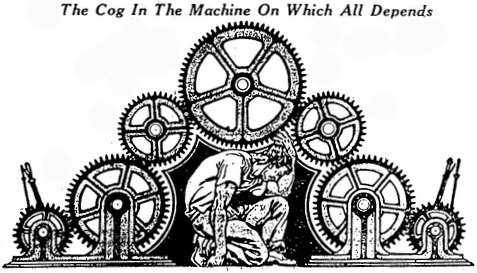
The Cog in the Machine, June 8, 2016. (http://catholicreadingproject.blogspot.com).

The Cog in the Machine, June 8, 2016. (http://catholicreadingproject.blogspot.com).

The problem for me is that this isn’t ironic at all. This department exists within the Rutgers School of Management and Labor Relations. These schools are not exactly incubators for “workers of the world unite” types, and would be most likely to take advantage of the weak job market to hire a labor historian desperately in need of a one-year or more gig. This is naked exploitation to be sure, but I find no irony in this job search at all. This is typical of the majority of jobs in higher education these days.

It is definitely hypocrisy, at least on the level of academia at large. Especially in considering that supposed bastions of liberal ideals (which universities really aren’t — they’re capitalist business enterprises which sometimes house some leftist leaning faculty) have turned the secure work of the professoriate into non-tenured service industry work. That this has coincided with the plunge in the number of full-time positions and in the number of living-wage positions in the US labor force in general is telling. It says that academia is nothing special beyond the expensive education, that it isn’t some sacred place for intellectual exchange and political mobilization. It is as firmly tied to capitalist pursuits as Wall Street and K Street.

I learned this lesson a quarter-century ago, thanks to the working-class history seminars at the University of Pittsburgh and Carnegie Mellon University. Between Dick Oestreicher, Bill Chase, Reid Andrews, Joe Trotter, and Joel Tarr (among others), the level of hypocrisy was enough to make me sick. The distance between what these people wrote regarding leftist movements, ideas, ideals, and exploited workers and how they treated students and colleagues sometimes was breathtaking. It was like the distance between the Terran system (Earth) and Alpha Centauri (roughly 25 trillion miles).

Hammer & Sickle & Pitt Flag [symbolic of Pitt's history department], December 13, 2012. (Donald Earl Collins).

Hammer & Sickle & Pitt Flag [symbolic of Pitt’s history department], December 13, 2012. (Donald Earl Collins).

Sure, it’s all “let’s start a communist revolution” when discussing the 180th nuanced on E. P. Thompson’s The Making of the English Working-Class. But when graduate students wanted to unionize to have their work recognized as workers, then these leftists suddenly became capitalists. “No, you’re not workers,” they said. “You’re students.” In the face of virulent racism, they said, “Get use to it. Shit happens.” Heck, some of these so-called bleeding-heart-liberals were themselves harassing students, exploiting their work for prestige and profit, and playing favorites to promote yes-men and yes-women while keeping others from pursuing their doctorates.

I saw the same distance between noble liberal ideals and center-right realities in my decade in the nonprofit world, mostly working in social justice. Yes, some of the very people who had made it their calling to ameliorate racism and combat injustices were also knee-deep in their own contradictions. Gender-based, race-based, and intersectional harassment wasn’t exactly uncommon. Exploitative labor practices like working two people full-time for the price of one, denying promotions based on gender or racial bias, even paranoia over power within a social justice organization. They all were the usual things I witnessed or experienced in the years between 1997 and 2008.

Wolf in sheep's clothing, a false prophet (a symbol of my ex-stepfather), November 2008. (Source/flickr.com)

Wolf in sheep’s clothing, a false prophet (a symbol of my ex-stepfather), November 2008. (Source/flickr.com)

There is nothing sacred and no safe space for those of us looking for such things. This belief in academia as being so different from the rest of the working world is an illusion cooked up by neo-conservatives who’ve made millions selling the idea that academia is a liberal bastion. We should all look for positions and places in which our work can thrive and we as individuals or even groups of people can grow. Those obviously still exist. But believe me, it’s been years since I thought that academia was a place where being far left-of-center was a good thing. It’s only good if you’re good at acting like this is so. It’s another illusion that others have chosen to create to cover up their hypocrisies. The irony is that people still believe in these ideals anyway.

My Nuanced History as a Historian

16 Monday May 2016

Posted by decollins1969 in 1, Academia, Boy @ The Window, Carnegie Mellon University, culture, Eclectic, Mount Vernon High School, Mount Vernon New York, Pittsburgh, Politics, Pop Culture, race, Youth

≈ Leave a comment

Tags

Ambivalence, AP US History, Career Decisions, Career Development, CMU, Commitment, Editors, Graduate School, Historian, History, Nonprofit World, Nuance, PhD, Self-Discovery, Self-Reflection, Teaching and Learning, UMUC, Writer, Writing


The Road Less Traveled quote, via Robert Frost (with me adding, "but it's not always good to get lost in the woods"), May 16, 2016. (http://www.chicagonow.com).

The Road Less Traveled quote, via Robert Frost (with me adding, “but it’s not always good to get lost in the woods”), May 16, 2016. (http://www.chicagonow.com).

Right now I sit between two important dates in my life. One was a few days ago, the thirtieth anniversary of my triumph on the AP US History exam in eleventh grade. Two will be in two days, the nineteenth anniversary me of graduating from Carnegie Mellon with my PhD in History. Both are signifiers of my achievements, my ambitions, and of my becoming a professional historian. But in the decade after earning my first college credits and the nearly two decades since earning my doctorate, I’ve still had a few lingering questions about where and who I am professionally.

One of those questions I’ve discussed ad nauseam here. Am I a writer who’s also an academically trained historian, or am I a historian first and a writer second? Or, can I be both at the same time? For better and worse, I am always both, but can emphasize one or the other at random, depending on context.

Sliced onion layers, May 7, 2015. (http://www.medicaldaily.com).

Sliced onion layers, May 7, 2015. (http://www.medicaldaily.com).

Other questions, though, have lingered even after spending more than a decade in the nonprofit world and another eight years teaching a full slate of undergraduate history courses. Do I still enjoy teaching history? Does my experience working on real world issues in civic education, social justice, and educational equity cloud how I see myself when I’m lecturing on the Agricultural Revolution or the Middle Passage? How is it possible for me to reconcile myself as a freelance writer who wants to take my academic historian experience, combine it with my other professional and personal experiences, and write about it for editors with little clue about the roads I’ve traveled? Is it even possible to un-layer the onion of my life and write about it to my or anyone else’s satisfaction? And if so, am I still a historian when doing so?

To that next to last question, I think that’s already a yes-no answer. Since 2013, I’ve written articles for publication with newspapers and magazines, and am working on my first new scholarly piece in six years. It’s difficult, to say the least, to explain to an editor what in academia or even among US or African American historians is a settled issue. Editors always believe that any story has two equal and opposing sides, because that’s how most ordinary people see most stories. As an academic historian, I’m trained to see nuance, to know when one side has a stockpile of evidence, while another one has a stockpile of bullshit.

Or, more often, to know that the no man’s land of gray present several or even multiple perspectives on issues like racism, poverty, college retention and graduation, American individualism, or the rigging of the federal election process. That no man’s land, I have found, more often than not scares away an editor, even ones working for intellectual magazines. They think their audience is incapable of getting nuance, when I think that they often reflect their own narrow and elitist view of the world.

Timeline of Europe and the US, March 2015. (http://www.worldhistorycharts.com).

Timeline of Europe and the US, March 2015. (http://www.worldhistorycharts.com).

As for teaching history, I find myself literally bored with the basic facts of any survey or even upper-level history course. To me, history is a panoramic lens through which students and experts can study human beliefs and behaviors in all its glory, ugliness, and ordinary-ness. Understanding how and why a person or a group of people did x, y, or z is much, much, much more important than knowing the exact date a specific event took place or coming up with some interesting but irrelevant fact in the process.

Which was why I began to teach my undergraduate courses with far more discussion and less lecturing than I did when I taught history as a grad student. (I taught a bunch of graduate-level education foundations courses in between my various nonprofit stints between 1997 and 2008.) I decided it didn’t matter if my students had done the readings, hated history, or were tired and ready to nap through three hours of lecture. I will facilitate discussion. I will make sure to make this process one about human interaction. Even when the lack of independent thinking among my students has me near ready to strangle a few of them. Why? Because understanding how people think and why they draw the conclusions they do can be as eye-opening as the knowledge they pull from one of my classes, maybe more so.

So, do I still see myself as a historian, or more as a psychologist or sociologist? Does it really matter how I see myself? Probably not. I just know that after years of teaching, writing, and all of my ups and downs professionally, that I remain two things most of all — a writer and a learner. Those two callings fuel my ability to raise my game, to want to be a better professor, a more expert historian, and an insightful writer. That, I hope, won’t change as I continue my long march toward fifty.

A Little Diddy About Madison Jack

08 Friday Apr 2016

Posted by decollins1969 in 1, Academia, Carnegie Mellon University, culture, Eclectic, New York City, Pittsburgh, Pop Culture, race, Youth

≈ Leave a comment

Tags

Academic Competition, Academic Conferences, AERA, American Educational Research Association, Burnout, CMU, Collegiality, Conferences, Harvey Kantor, Jack, Joe William Trotter Jr., Michael Fultz, Milford Plaza, Mom, Narcissism, Obsequious, Self-Awareness, Spencer Foundation, University of Wisconsin-Madison, Yonkers


Jack-In-The-Box 3D model, April 5, 2016. (http://turbosquid.com).

Jack-In-The-Box 3D model, April 5, 2016. (http://turbosquid.com).

Jack-o’-Lantern, Jack-in-the-Box, Monterey Jack, Colby Jack, and jackknife all have something in common with the Jack I’m writing about in this post. They’re all the kinds of Jacks that I’m not a fan of or outright dislike. They also tend to surprise me at precisely the wrong place and at precisely the wrong time. My Jack, the Jack who finished a doctorate in the School of Education at UWisconsin-Madison in the late-1990s, was one of the most competitive and obsequious humans I had ever met. What made my knowing him worse was that he never had to be cutthroat in the first place.

I first “met” Madison Jack the summer of ’95, via telephone and email. My favorite benefactor at the Spencer Foundation in Catherine Lacey had provided Jack my information. It made sense at the time. Both Jack’s dissertation and my own discussed the process of Black migration, White flight, and school desegregation, though his work involved Milwaukee and mine was on DC. Jack had gotten a small Spencer grant, and I had a Spencer Dissertation Fellowship.

Most importantly, Madison Jack wanted to put together a panel presentation for the April 1996 American Educational Research Association (AERA) Annual Meeting in New York. The panel would involve a group of Spencer-funded folk working on various angles of school desegregation, involving community control, racial discrimination, White anti-desegregation protests, and ideas like my own on multiculturalism and diversity. Over a three-week period between mid-July and early August ’95, we put together a panel of five presenters and a moderator. The moderator was none other than Jack’s dissertation advisor Michael Fultz. Two presenters were 1995 Spencer Dissertation Fellows (including me), and two others would become Dissertation Fellows in 1996 (including Madison Jack).

It could’ve been a powerful panel under the right set of conditions. But it was to be underwhelming by default. We had at least two too many people on the panel. Our panel’s presentation date and time in New York was on the last day of the conference, Friday, April 12th, at 8:15 am, both too early and too late at the same time. With my own troubles with my HNIC advisor in Joe Trotter — not to mention a dissertation nearly complete — AERA wasn’t exactly my primary focus. Plus, visiting my home area with my family living in temporary housing in Yonkers post-616 fire didn’t exactly help with my concentration.

A five-inch folding jackknife, perfect for ingratiating back-stabbers, April 5, 2016. (http://www.lifesupportintl.com/).

A five-inch folding jackknife, perfect for ingratiating back-stabbers, April 5, 2016. (http://www.lifesupportintl.com/).

But it was Madison Jack’s obsessive competition that reared its ugly head and left a raw horseradish taste in my mouth. It was that much more disgusting because I knew it would be my last conference presentation as a graduate student. Jack and I had agreed that all five of us would have twelve minutes apiece for our presentations, leaving time for audience questions. On that brisk spring morning after a rough night at the Milford Plaza, I began the panel with my talk timed for exactly twelve minutes. With my Mom having not yet arrived and only six people in the room to start, I muddled through as if I needed a cup of coffee just to know that I needed to wake up. Mom arrived five minutes into the second presentation, one by my fellow 1995 Spencer Dissertation Fellow, where she used the term “a cacophony of voices” in describing the different sides involved in the 1968 Ocean Hill-Brownsville (Queens) controversy over community control and racial inequality. Two scholars I knew well were in the audience — including one who was a one-time professor at Carnegie Mellon’s Heinz School (now Heinz College). She said to Harvey Kantor, “This presentation’s ‘caca’ all right” and they both laughed, loud enough for my sleep-deprived mind to notice.

Madison Jack was the last to present. My co-organizer broke our agreed-upon rules. He spoke for more than twenty minutes, all to garner more attention for his work over myself and the other three panelists. Jack also used a slide show, another thing that we had agreed we wouldn’t do, mostly because of the time constraints on the panel. It was a classic example of narcissistic behavior at the doctoral level. By the time Jack had finished — combined with his advisor’s ten minutes of droning commentary — there were only six minutes left for questions from an audience of nearly twenty people, most of whom had missed the first four presentations. Jack fielded all but one of the audience’s questions. If I’d been in my right frame of mind, I would’ve jammed a slide down Jack’s obsequious throat.

Fast-forward nearly a decade to the 2004 AERA conference in San Diego. It was my first time attending the conference since grad school. I decided to go to the Spencer-sponsored talk (an annual tradition), to see if any of my fellow Fellows from 1995 would also be there. A couple of them did show up, which was the good part about this gathering. But so did Madison Jack. He made a bee-line toward me. I made a point of not making eye contact until he was nearly in my face with his grizzly beard and outstretched hand. I shook it as hard as I could, feeling my right hand squeeze his knuckles into each other.

A block of Monterey Jack in all its bland whiteness, January 13, 2015. (Mitch Mandel via http://menshealth.com).

A block of Monterey Jack cheese in all its bland whiteness, January 13, 2015. (Mitch Mandel via http://menshealth.com).

After I let him talk for three minutes about his professorship at some small New England liberal arts college, about his first book, and after introducing me to his wife, he wanted to know how I was doing. Or rather, if I had bested him in my career up to that point. I didn’t take the bait. Knowing that a couple of big wigs had just walked into the room, I started with small talk about my wife and newborn son. I knew. Madison Jack being Madison Jack, I knew he would walk away, with me in mid-sentence, seeking to soak wisdom and advancement out of his next unknowing victims.

With colleagues and friends like Madison Jack, who needed enemies? What made his sycophantic displays and overt attempts at dominance so pitiful was that I never cared. I was too ambivalent about my place in academia and too much in turmoil about myself as a writer to ever care. Fighting over a job or a book with a scholarly publisher? To me in 1996 and in 2004, it was a waste of time and energy.

To me in 2016, it’s also a waste of potential friendships and connections beyond the “what’s in it for me?” perspective. I know lots of folks, but few I count as friends, and only a small number of those are in academia. While much of my work is independent of others, it isn’t work I do or think about alone. Madison Jack probably knows tons of folk in high places. But with an approach to career that is me first, me foremost, and me last, I’m pretty sure that he repels more true connections in his world than he attracts. Kind of like smelling week-old Monterey Jack that’s been left out in the sun too long.

My Private Aftermath of the O.J. Simpson Verdict 20 Years Ago

01 Thursday Oct 2015

Posted by decollins1969 in 1, Academia, Boy @ The Window, Carnegie Mellon University, culture, Eclectic, Pittsburgh, Politics, Pop Culture, race, University of Pittsburgh, Work, Youth

≈ Leave a comment

Tags

Carl, CMU, Drama, James, Media Coverage, Murder, O.J. Simpson, O.J. Simpson Trial, O.J. Simpson Verdict, OJ Simpson, Race Riots, Racial Divide, Racism, Trial, White Bronco, Whiteness


 O.J. Simpson with his attorneys F. Lee Bailey (left) and the late Johnnie Cochran (right) after being found not guilty, October 3 1995. (Myung J. Chun/Los Angeles Daily News/AP, via http://theguardian.com)

O.J. Simpson with his attorneys F. Lee Bailey (left) and the late Johnnie Cochran (right) after being found not guilty, October 3 1995. (Myung J. Chun/Los Angeles Daily News/AP, via http://theguardian.com)

To think that it’s only been two decades since the overhyped “Trial of the Century” came to a close with a clerk’s initial mispronunciation of Orenthal James Simpson’s first name. And of course, with O.J. Simpson’s acquittal. It’s amazing to think that so many would become so emotionally caught up in a double-homicide case involving what at one time was one of the world’s most recognizable faces. But it did happen, all of it in a sixteen-month span, and the reaction was as predictable as the sunrise, racial profiling, and police harassment.

During the Ford Bronco chase on I-5 on Friday, June 17 (during my Knicks’ Game 5 of the NBA Finals against the Houston Rockets), I hoped that the police wouldn’t shoot Simpson before he had a chance to go to trial. The L.A. riots were just two years before. I feared that the issue of race would be front and center, with Simpson’s issues with his now dead White ex-wife.

O.J. Simpson on the covers of Newsweek and Time Magazine, (the picture on right altered to make Simpson appear darker and caused an outcry), June 27, 1994. (Theo's Little Bot via Wikipedia). Qualifies as fair use due to low resolution of image and relevance to subject matter.

O.J. Simpson on the covers of Newsweek and Time Magazine, (the picture on right altered to make Simpson appear darker and caused an outcry), June 27, 1994. (Theo’s Little Bot via Wikipedia). Qualifies as fair use due to low resolution of image and relevance to subject matter.

I was naive, thinking that our world of ’94 would simply attempt to determine if Simpson was guilty or innocent. Instead what I saw within ten days of the Bronco chase was an artificially darkened Simpson on the cover of Time. I saw Blacks who became angrier about the coverage, even as Whites grew more confident about Simpson being convicted, losing his fortune and fame, and possibly getting the death penalty (or at least, life imprisonment). My Mom proclaimed that O.J. was innocent long before the prosecution botched the trial. Some of my grad school colleagues — all White, mind you — made all kinds of assumptions about where I stood on O.J. They didn’t like the fact that I was willing to wait until the trial to make up my mind.

When the verdict came down on Tuesday, October 3, 1995, it was stunning to watch ecstatic Blacks and angry, dejected Whites react to the “Not Guilty” verdict. And not just on TV, although it was obvious newsrooms were actively looking for a racial divide. My friend James (who’s Black, by the way) from my Pitt grad school days spent his lunch break in my apartment gritting his teeth in anger as the verdict was read. I was more shocked than anything else. I smiled, but it was one of bewilderment observing the reactions, as if we all had some deeply personal stake in the trial and verdict.

That smile disappeared as I went through my day editing and printing out chapter drafts of my dissertation. That was my real focus, not the soap opera enveloping the rest of the country. Late that afternoon, I went to Carnegie Mellon to drop off a draft of a couple of those chapters for my thesis advisor Joe Trotter. Carl, a colleague of mine, one who I had called a friend up to this point, immediately started in on me about the verdict when I reached the grad student cubicles in the History Department. He kept literally spewing the media’s line about an all-Black jury, about jury nullification, about Johnnie Cochran. Carl was in a rage, belligerent, possibly drunk, and seemingly ready to throw down. Seriously, aside from showing up to drop off dissertation chapters, what did I do?

I politely pointed out that the jury was mostly, but not all Black (at least three members were White or Latino), and that the prosecution led by Marcia Clark and Christopher Darden left the door wide open for an acquittal. Carl assumed wrongly that I wanted O.J. free regardless of his “obvious guilt.” I asked my colleague what else could the jury do, given the compelling defense put together by the late Johnnie Cochran, the mistakes with forensics, with the glove, with putting Mark Fuhrman on the stand? I said that “I don’t represent all thirty million African Americans in this country,” and that “our conversation is over.”

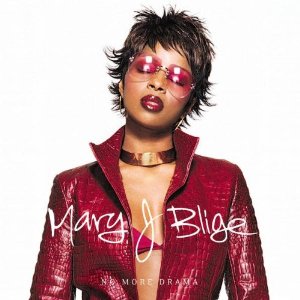
Mary J. Blige, No More Drama (with extra tracks) album cover, 2002. (http://amazon.com).

Mary J. Blige, No More Drama (with extra tracks) album cover, 2002. (http://amazon.com).

That reminded me of how irrational supposedly rational, forward-thinking Whites often are on race matters. They either ignore, deny, or when compelled by some betrayal or injustice, badger, threaten and retaliate in response. Carl that day was no exception. I found that incident unsettling because this supposed friend was one of the few folks at Carnegie Mellon who had earned my trust. It reminded me if I were to ever date or marry someone White (not exactly my plan), there would be hell to pay. I had a grand total of three conversations with Carl after that between October 3, 1995 and August 6, 1999, the latter the week before I left Pittsburgh to live in suburban DC/Maryland.

I’m sure that I wasn’t the only Black person who had to confront Whiteness in all of its angry, hurt and juvenile forms in those first two weeks of October ’95. I’m equally sure that if the O.J. Simpson trial’s verdict occurred in 2015, Carl and his like-minded ilk would’ve set off race riots the likes of which this country hasn’t seen since Detroit in 1943, Tulsa in 1921, and Chicago in 1919. You know, the kind where Whites go into segregated Black communities and rape, kill, steal and destroy as much as they can. To me, Carl just represented the White privilege and resentment of millions, smoldering yet ready to erupt at a moment’s notice. Not that many haven’t benefited from the O.J. Simpson effect in the years since.

Carl has a professorship somewhere in New York these days, and we are professional colleagues who maybe exchange an email one or twice a decade now. I’m sure, though, that he avoids the topic of race in US history like most would want to avoid catching Ebola. Especially given his reaction to one jury verdict twenty years ago.

Aside

Past Labor’s Opportunities Lost

07 Monday Sep 2015

Posted by decollins1969 in 1, Academia, Boy @ The Window, Carnegie Mellon University, culture, Eclectic, Pittsburgh, Politics, Pop Culture, race, Work, Youth

≈ Leave a comment

Tags

Advisor-Student Relationships, Anger, CMU, Dissertation Completion, Howard University, Jealousy, job search, Joe William Trotter Jr., Labor Day, Mentoring, NYU, Post-Docs, Rage, Running Interference, Spencer Foundation, Spencer Foundation Dissertation Fellowship Program, Steven Schlossman, University of Maryland, University of Wisconsin-Madison


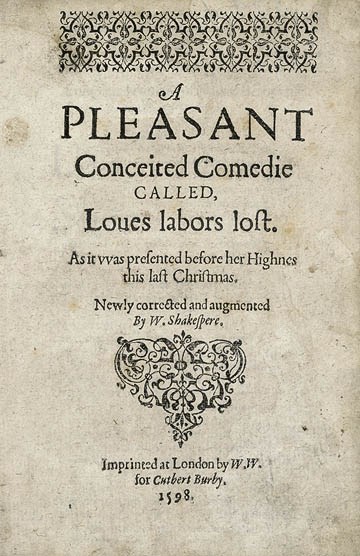
Title page of the first quarto of William Shakespeare's Love's Labour's Lost (1598), uploaded May 2, 2011 (Tom Reedy via Wikipedia). In public domain.

Title page of the first quarto of William Shakespeare’s Love’s Labour’s Lost (1598), uploaded May 2, 2011 (Tom Reedy via Wikipedia). In public domain.

One of the more gut-wrenching periods of my career began right after Labor Day 1995. In some respects, that period of my career has left a stain over the past two decades. Not so much in terms of what I have done or in what I’m doing now, as much as in setting limits on the range of possible outcomes with which I could’ve begun my career.

Right after Labor Day, I saw an ad in The Chronicle of Higher Education for an open-ranked (tenured or tenure-stream) position at NYU’s school of education in US education history. I hadn’t thought about teaching in a school of education before, but after meeting my friend Cath and having received my Spencer Foundation fellowship, I understood that this was likely a better choice for me than a history department. I wasn’t the only one who thought so. My department chair Steven Schlossman had received a letter and a telephone call from his equivalent peer at NYU asking if there were any graduate students in the pipeline who could apply for the position. Schlossman apparently told that department chair about me and my multiculturalism dissertation, and caught up with me that same week to give me a copy of the letter and encouraged me to apply for the job.

I was two-and-a-half chapters into my planned eight-chapter dissertation, and I still had some US Census data to look at and interviews to conduct as part of the process. I knew that my advisor Joe Trotter wouldn’t be happy about the idea of me applying for a job so soon into the process, but Schlossman and I also knew that the job — if I somehow got it — wouldn’t start for eleven months. That was more than enough time for me to write, revise, revise again, polish up and defend my dissertation. I was on a Spencer fellowship, after all!

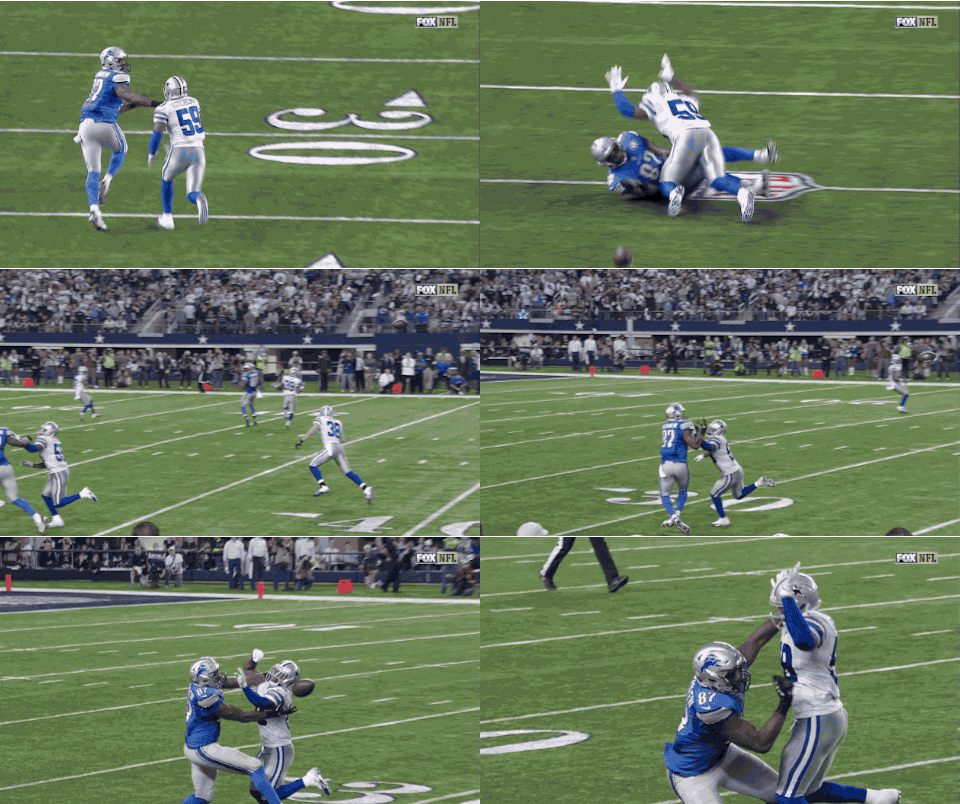
A defensive pass interference penalty not called, Detroit Lions v. Dallas Cowboys Wildcard Game, January 4, 2015. (http://bleacherreport.com/articles/2319198-refs-pick-up-flag-after-pass-interference-on-cowboys-in-4th-quarter; FOX Sports).

A defensive pass interference penalty not called, Detroit Lions v. Dallas Cowboys Wildcard Game, January 4, 2015. (http://bleacherreport.com/articles/2319198-refs-pick-up-flag-after-pass-interference-on-cowboys-in-4th-quarter; FOX Sports).

Of course Trotter thought otherwise. He was incensed that Schlossman had discussed the NYU job with me, that I hadn’t talked with him about the position first. Of course Trotter said that he needed to “run interference” on my behalf, to protect me and my career. By “running interference,” Trotter meant that he would not write a letter of recommendation on my behalf. He told me to put the job out of my mind, to focus on my dissertation, and that we could revisit the prospect of apply for jobs when I was much further along.

A few months later, in February ’96, I saw another job ad in the Chronicle, this one for a history of education assistant professorship at University of Wisconsin-Milwaukee. Schlossman saw that ad as well, but I was still the dutiful ABD student with Trotter as my patron. I decided this time to approach Trotter before meeting with Schlossman about the job. Trotter flipped out again, telling me, “you’re not ready,” that he had seen too many of his own peers not finish dissertations when taking jobs, only to end up unemployed. Keep in mind, I had written six of my eight chapters at this point, and had started working on number seven that month.

Trotter’s “you’re not ready” pronouncements rang even more hollow in March, when I requested a letter from him to apply for a post-doctoral fellowship in African American Studies at University of Maryland, College Park. He refused at first, then agreed, with the caveat that he would write in his letter his belief that  I wouldn’t complete my dissertation in time to begin the fellowship at the end of August ’96. With that kind of endorsement, of course I didn’t apply!

When we finally had our blow-out argument that April 4th, I was frustrated, he was actually angry, for reasons I didn’t put together until I considered my age and his HNIC status and age later on. Most of Trotter’s stonewalling occurred after he found out that I was still only about to turn twenty-six at the time of the NYU job prospect. Between that and the limited mileage remaining in his proletarianization hypothesis, I was working for and with an advisor who was giving me mixed signals and mediocre advice. Both were based in part on jealousy, and in part on Trotter’s own bad experiences at University of Minnesota and on the job front in the 1970s and early 1980s.

Danger Bad Advice Ahead fake sign, September 7, 2015. (http://wordspicturesweb.com).

Danger Bad Advice Ahead fake sign, September 7, 2015. (http://wordspicturesweb.com).

Trotter didn’t understand that in blocking my first attempts to begin my career, he had helped set up a struggle for me to have even a semblance of a career before I had completed the first draft of my dissertation. As it was, I finished the first draft in June ’96, the second at the end of July, and polished it up before Labor Day Weekend ’96. That fact that I was done with all major revisions to my dissertation in time for any job that year made ready to strangle Trotter at that point.

Still, it would be only fair to say that my career moves — good and bad, smart and stupid — have mainly been of my own making. It would also be unfair to blame Trotter for any moves that I have made or didn’t make that didn’t work out after 1996-97. But every career has a beginning. And in the beginning, Trotter was there, making a mess of my first steps. It took until the spring of 2000 before Howard University offered me a tenure-track position in Afro-American Studies, to which I did say no. I didn’t need any more Joe Trotter’s in my life at that point, and working in the nonprofit world paid my bills better than teaching at that time.

My overall advice would be to make damn sure that you choose an advisor who cares about your whole career and about you as a person. Don’t choose someone to advise and mentor you out of convenience, and make sure that your advisor isn’t someone who just wants to mold you into a mediocre version of themselves. After all, it’s not their career trajectory or reputation that’s on the line. It’s yours.

Kiss From A Rose – 20 Years On

20 Wednesday May 2015

Posted by decollins1969 in 1, Boy @ The Window, Carnegie Mellon University, culture, Eclectic, eclectic music, Marriage, Movies, music, Pittsburgh, Pop Culture, race, Work, Youth

≈ Leave a comment

Tags

"Kiss From A Rose" (1994/1995), 71B, Angelia, Angelia N. Levy, Batman Forever (1995), Bruce Willis, Carnegie Library of Pittsburgh, CMU, Dating, Die Hard With A Vengeance (1995), Friendships, PAT Transit, Romance, Samuel L. Jackson, Spencer Fellowship, Val Kilmer


Twenty years ago on this date, I re-met the woman who’s now my wife of fifteen years, Angelia on a PAT-Transit bus in Pittsburgh, the old 71B-Highland Park into Oakland. It was an eighty-five degree Saturday afternoon in the ‘Burgh. I decided to treat myself to a movie, Batman Forever (1995), mostly because I knew Val Kilmer was in it. After seeing him act as well as he did in Tombstone, I figured I needed to give it a try. I needed a break, between the euphoria of the Spencer Fellowship and the depression from the fire at 616 that had rendered my family homeless.

So here it was, 3:15 in the afternoon, with me dressed in a blue t-shirt with blue basketball shorts and sneaks. I was standing at the corner of Highland Avenue and Penn Circle South, across from my apartment building, waiting for a bus. The 71B showed up first. I jumped on, sat down on the right-hand side in a front-facing seat. As soon as I sat down, I saw her, sitting right in front of me. It was “Angela with an ‘i’,” Angelia, like that Richard Marx song from ’90.

Seal's second album/CD, Seal (1994): "Kiss From A Rose" re-released as part of Batman Forever (1995) soundtrack in June/July 1995. (http://www.allmusic.com).

Seal’s second album/CD, Seal (1994): “Kiss From A Rose” re-released as part of Batman Forever (1995) soundtrack in June/July 1995. (http://www.allmusic.com).

The thing was, I had a dream that she showed up in the Saturday before this one. I hadn’t seen Angelia in more than two years, hadn’t given her any thought. But it seemed weird that she would just show up a week later in the flesh.

So I said, “Hi Angelia!,” excitedly, wondering what she was doing on the bus. She paused, said “Hi” with the heaviest, stop-bothering-me sigh I’d heard since my high school days. That didn’t deter me. I coaxed out of her the fact that she was pissed off with Carnegie Library because a book she was looking for at the East Liberty branch wasn’t there, even though the catalog said it was. It was a conversation that was one-sided, with Angelia doing most of the complaining.

I listened, and thought, “Yep, same Angelia, same weird Angelia.” But since I was weird also, I kept listening. Finally, she asked me what I was up to. I told her about school, my Spencer Fellowship, my family’s homelessness situation. I kept it brief. I mean, I hadn’t seen her in two years.

By the time we reached Oakland — me to catch one of the 61s to Squirrel Hill to catch the movie, Angelia to walk over to the main branch of Carnegie Library — we exchanged numbers, with Angelia saying, “It was really good talking to you.” I wasn’t so sure about that myself, but at least, she didn’t seem as weird as the woman she was five years earlier.

Screen with Samuel L. Jackson and Bruce Willis from Die Hard With A Vengeance (1995), posted February 28, 2013. (http://chud.com).

Screen with Samuel L. Jackson and Bruce Willis from Die Hard With A Vengeance (1995), posted February 28, 2013. (http://chud.com).

I went to see the movie, but it turned out that it wasn’t out yet. It wasn’t due out for another month! I ended up seeing Die Hard With a Vengeance with Bruce Willis and Samuel L. Jackson. Though much better than Die Hard 2 (1990; one shouldn’t really watch any feature film with John Amos taking up significant screen time, it still sucked, because Willis and Jackson spent half the movie yelling, and Jeremy Irons’ performance didn’t have Alan Rickman’s sense of social irony. I walked home, got together some grub, and through all preconceptions out the window. I gave her a call to tell her about the film mix-up. We ended up talking for more than three hours! It was the first time in a long time I had talked to a woman who wanted to hear what I thought about, well, anything, at least anything outside of sex. It was the start of a beautiful friendship.

A month later, we went to see Batman Forever, and it sucked, just like Angelia said it would. But Seal’s “Kiss From A Rose” didn’t. I bought his CD, though, and not the movie soundtrack!

← Older posts
Newer posts →

Boy @ The Window: A Memoir

Boy @ The Window: A Memoir

Places to Buy/Download Boy @ The Window

There's a few ways in which you can read excerpts of, borrow and/or purchase and download Boy @ The Window. There's the trade paperback edition of Boy @ The Window, available for purchase via Amazon.com at http://www.amazon.com/Boy-Window-Donald-Earl-Collins/dp/0989256138/

There's also a Kindle edition on Amazon.com. The enhanced edition can be read only with Kindle Fire, an iPad or a full-color tablet. The links to the enhanced edition through Apple's iBookstore and the Barnes & Noble NOOK edition are below. The link to the Amazon Kindle version is also immediately below:

scr2555-proj697-a-kindle-logo-rgb-lg

Boy @ The Window on Amazon.com: http://www.amazon.com/Boy-The-Window-Memoir-ebook/dp/B00CD95FBU/

iBookstore-logo-300x100

Boy @ The Window on Apple's iBookstore: https://itunes.apple.com/us/book/boy-the-window/id643768275?ls=1

Barnes & Noble (bn.com) logo, June 26, 2013. (http://www.logotypes101.com).

Boy @ The Window on Barnes & Noble: http://www.barnesandnoble.com/w/boy-the-window-donald-earl-collins/1115182183?ean=2940016741567

You can also add, read and review Boy @ The Window on Goodreads.com. Just click on the button below:

Boy @ The Window

Twitter Updates

Tweets by decollins1969
  • RSS - Posts
  • RSS - Comments

Archives

  • June 2025
  • April 2023
  • September 2022
  • August 2022
  • July 2022
  • June 2022
  • May 2022
  • April 2022
  • March 2022
  • January 2022
  • December 2021
  • November 2021
  • October 2021
  • September 2021
  • August 2021
  • July 2021
  • June 2021
  • April 2021
  • March 2021
  • February 2021
  • January 2021
  • December 2020
  • November 2020
  • October 2020
  • September 2020
  • August 2020
  • July 2020
  • May 2020
  • April 2020
  • March 2020
  • January 2020
  • December 2019
  • November 2019
  • August 2019
  • July 2019
  • June 2019
  • May 2019
  • April 2019
  • March 2019
  • February 2019
  • January 2019
  • December 2018
  • November 2018
  • October 2018
  • September 2018
  • August 2018
  • July 2018
  • June 2018
  • May 2018
  • March 2018
  • February 2018
  • January 2018
  • December 2017
  • November 2017
  • October 2017
  • September 2017
  • August 2017
  • July 2017
  • June 2017
  • May 2017
  • April 2017
  • March 2017
  • February 2017
  • January 2017
  • December 2016
  • November 2016
  • October 2016
  • September 2016
  • August 2016
  • July 2016
  • June 2016
  • May 2016
  • April 2016
  • March 2016
  • February 2016
  • January 2016
  • December 2015
  • November 2015
  • October 2015
  • September 2015
  • August 2015
  • July 2015
  • June 2015
  • May 2015
  • April 2015
  • March 2015
  • February 2015
  • January 2015
  • December 2014
  • November 2014
  • October 2014
  • September 2014
  • August 2014
  • July 2014
  • June 2014
  • May 2014
  • April 2014
  • March 2014
  • February 2014
  • January 2014
  • December 2013
  • November 2013
  • October 2013
  • September 2013
  • August 2013
  • July 2013
  • June 2013
  • May 2013
  • April 2013
  • March 2013
  • February 2013
  • January 2013
  • December 2012
  • November 2012
  • October 2012
  • September 2012
  • August 2012
  • July 2012
  • June 2012
  • May 2012
  • April 2012
  • March 2012
  • February 2012
  • January 2012
  • December 2011
  • November 2011
  • October 2011
  • September 2011
  • August 2011
  • July 2011
  • June 2011
  • May 2011
  • April 2011
  • March 2011
  • February 2011
  • January 2011
  • December 2010
  • November 2010
  • October 2010
  • September 2010
  • August 2010
  • July 2010
  • June 2010
  • May 2010
  • April 2010
  • March 2010
  • February 2010
  • January 2010
  • December 2009
  • November 2009
  • October 2009
  • September 2009
  • August 2009
  • July 2009
  • June 2009
  • May 2009
  • April 2009
  • March 2009
  • February 2009
  • January 2009
  • December 2008
  • November 2008
  • October 2008
  • September 2008
  • August 2008
  • July 2008
  • June 2008
  • May 2008
  • April 2008
  • March 2008
  • February 2008
  • January 2008
  • December 2007
  • November 2007
  • October 2007
  • September 2007
  • August 2007
  • July 2007
  • June 2007

Recent Comments

MaryPena's avatarMaryPena on My Day of Atonement/Bitter Hat…
decollins1969's avatardecollins1969 on No Good Teaching Deed Goes…
Mary Rose O’Connell's avatarMary Rose O’Connell on No Good Teaching Deed Goes…

NetworkedBlogs on Facebook

NetworkedBlogs
Blog:
Notes From a Boy @ The Window
Topics:
My Life, Culture & Education, Politics & Goofyness
 
Follow my blog

616 616 East Lincoln Avenue A.B. Davis Middle School Abuse Academia Academy for Educational Development AED Afrocentricity American Narcissism Authenticity Bigotry Blackness Boy @ The Window Carnegie Mellon University Child Abuse Class of 1987 CMU Coping Strategies Crush #1 Crush #2 Death Disillusionment Diversity Domestic Violence Economic Inequality Education Family Friendship Friendships Graduate School Hebrew-Israelites High-Stakes Testing Higher Education History Homelessness Humanities Humanities Program Hypocrisy Internalized Racism Jealousy Joe Trotter Joe William Trotter Jr. K-12 Education Love Manhood Maurice Eugene Washington Maurice Washington Misogyny Mother-Son Relationship Mount Vernon High School Mount Vernon New York Mount Vernon public schools Multiculturalism MVHS Narcissism NFL Pitt Pittsburgh Politics of Education Poverty President Barack Obama Race Racial Stereotypes Racism Relationships Self-Awareness Self-Discovery Self-Reflection Sexism Social Justice Teaching and Learning University of Pittsburgh Violence Whiteness Writing

Top Rated

Blog at WordPress.com.

  • Subscribe Subscribed
    • Notes from a Boy @ The Window
    • Join 103 other subscribers
    • Already have a WordPress.com account? Log in now.
    • Notes from a Boy @ The Window
    • Subscribe Subscribed
    • Sign up
    • Log in
    • Report this content
    • View site in Reader
    • Manage subscriptions
    • Collapse this bar
 

Loading Comments...