Education, A Numbers Game Love Story

Tags

, , , , , , , , , , , , , , , , , , , ,


Craps dice, like the state of education reform via numbers crunching these days, August 6, 2006. (Source/Roland Scheicher via Wikipedia). In public domain.

This could just as easily be titled, “Why your multivariate regression analysis isn’t better than my chi-square test,” because that is the state of mainstream education research these days. I find it stifling, like being wrapped in Saran Wrap covered by a condom lined in sheep’s intestines.

Numbers have their place, but the field’s obsession with crunching numbers for trends that defy quantification has increased as a result of federal mandates like NCLB and philanthropy’s accountability movement over the past fifteen years. What’s the long-term impact of the thousands of studies and the deployment of thousands of psychometricians and research analysts in P-20 education reform (that’s early childhood education, K-12, undergraduate and graduate education combined)? Not much, because our politicians and philanthropists are staking themselves to trends almost regardless of numbers.

It all started for me about this time twenty years ago. I did an independent study with Bruce Anthony Jones,

Linear regression graph with over 200 data points, February 22, 2009. (Source/Michael Hardy via Wikipedia). In public domain.

then an assistant professor in the University of Pittsburgh School of Education’s ed policy and administration department. In that one semester, I quickly learned that folks in the education field defined research in only two ways: quantitative and qualitative. And by qualitative, they meant soft research, like Carvel’s soft-serve ice cream. What I didn’t know was that many in the field were working to make the qualitative — surveys, focus groups, oral interviews/transcripts — quantifiable.

Today, everything that can be tracked in American education usually has a number attached to it. It’s hardly grades and standardized test scores anymore. Homework hours, time to task on lesson plans to work on a single problem that may be part of a high-stakes state exam, teacher effectiveness, suspensions and disciplinary reports disaggregated by race and gender. It drives me nuts, and I’ve used SAS and SPSS before, during my grad school days. I can only imagine how a teacher who just wants their students to learn and do well must feel about this numbers game.

But if education has become a number game, it most resembles the game of craps. Take the issue of teacher

Michelle Rhee, former DCPS Chancellor, one of many who've taken advantage of education as craps game, Washington, DC, February 19, 2008. (Source/US Department of Labor). In public domain.

effectiveness, often tied to state-mandates around test scores and students meeting or exceeding a percentile at a given school on these tests. Let’s say if a school as a whole actually exceeds the proficiency percentile. They may well receive more money, and teachers may well get a bonus (depending on the state and school district and union contracts, which by the way, may also be part of a statistical formula). None of this actually proves that these students are better prepared for, say, thinking independently or critically, because critical reasoning isn’t tested by most of the high-stakes state tests.

Nor can they show the writing skills necessary for student success later on in their education, as most of these tests don’t test writing comprehension skills either. Most importantly, where does teacher effectiveness come in as a factor? Do we have to account for time to task in comparison to each exam item, like a psychometrician at the Educational Testing Service (ETS) would? Do we factor out home studying/ homework time, parents’ education, income and race, or whether they eat a hearty breakfast the morning of the exam? Or do we continue to simply say, if Teacher X gets Class A to raise its state test score by 25 percent, they get a raise and a pat on the head? Really?

What’s more, whether teacher effectiveness, student success, or free and reduced lunch programs, politicians, parents and pundits hardly look at any numbers beyond any report’s executive summary. We all insist that our school and community colleges and universities get better at graduating students ready for the real world of work. Fine. Then we insist on lower taxes, blaming teachers, destroying unions, complaining about the state of things but not doing anything to make education work for all of our students. Not fine.

It doesn’t take a two-year study from The Education Trust to realize that there’s no one-to-one correlation

Taco Bell's Gordita Supreme, September 22, 2011. (Source/TacoBell.com).

between an effective teacher and higher student test scores. Or a report from the Institute of Education Sciences at the US Department of Education to know that a lunch of murder burgers and suicide fries with ketchup as a vegetable is about as nutritious as a Taco Bell gordita. School districts and many a college have gone without even adequate resources for years. But instead of providing them, we make them kneel in begging for them, and yet expect them to perform Lazarus-type miracles in the process.

We waste time with numbers and spend little time on causes and solutions that make sense in education. I think about that weak +0.4 correlation number that ETS has put out for years regarding the SAT. It’s the likelihood of someone who does well on the exam beginning their freshman year in college with a 3.0 GPA. I scored an 1120 on the SAT in October ’86, not exactly the greatest score. But I did manage a 3.02 average my first year (and a 2.63 my first semester, by the way), and still came within a few days of dropping out because I was homeless at the beginning of my sophomore year.

I dare say the numbers crunchers at ETS didn’t factor that in their multivariate analysis. Or my homesickness or obsession with a former high school crush. Mark Twain is right about statistics — they can “a good walk spoiled (or lies, I think).”
The Audacity of Low Expectations/Jealousy

Tags

, , , , , , , , ,


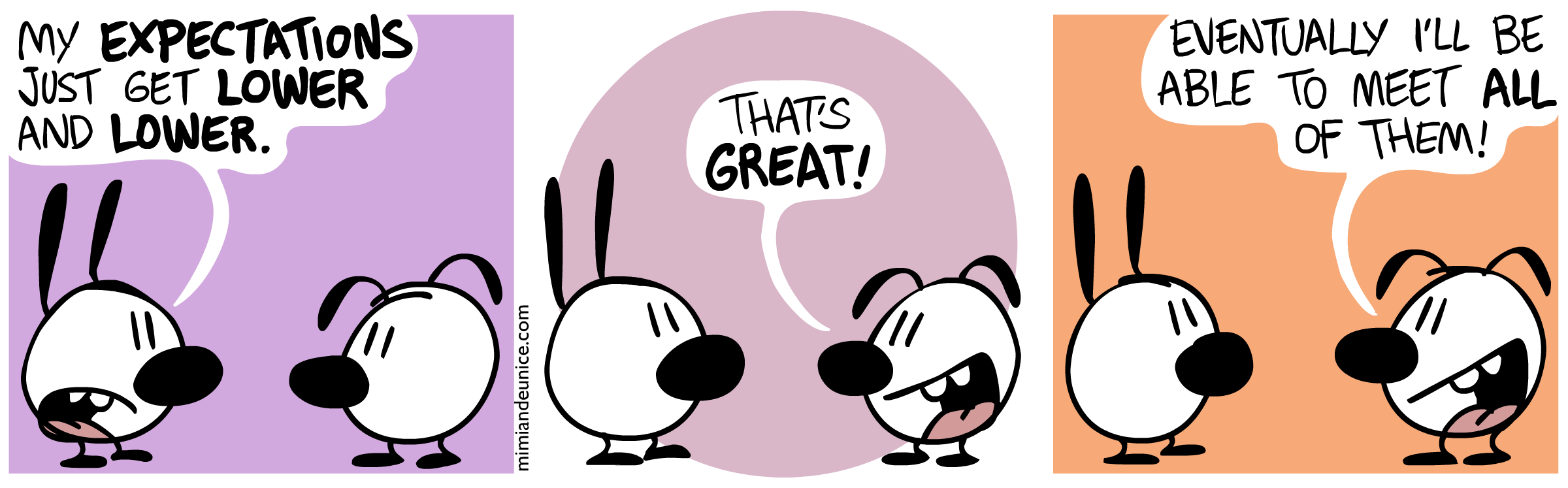
Mimi and Eunice, “Low Expectations,” September 19, 2011. (Source/http://mimiandeunice.com). Qualifies as fair use under US copyright laws because of image’s low resolution and without the intent to reproduce or distribute for profit.

It seems to me that I’ve spent a lot of time over the past three decades overcoming other people’s psychological issues. Regarding race, race and gender, race, gender and class, not to mention performance issues, success, jealousy and envy, and other psychoses that had little or nothing to do with me. It’s something that most folks who aren’t Black, male, grew up in poverty and had some success (however one defines that) really can’t understand unless they have parents who’ve told them every single day that they “weren’t good enough to live.”

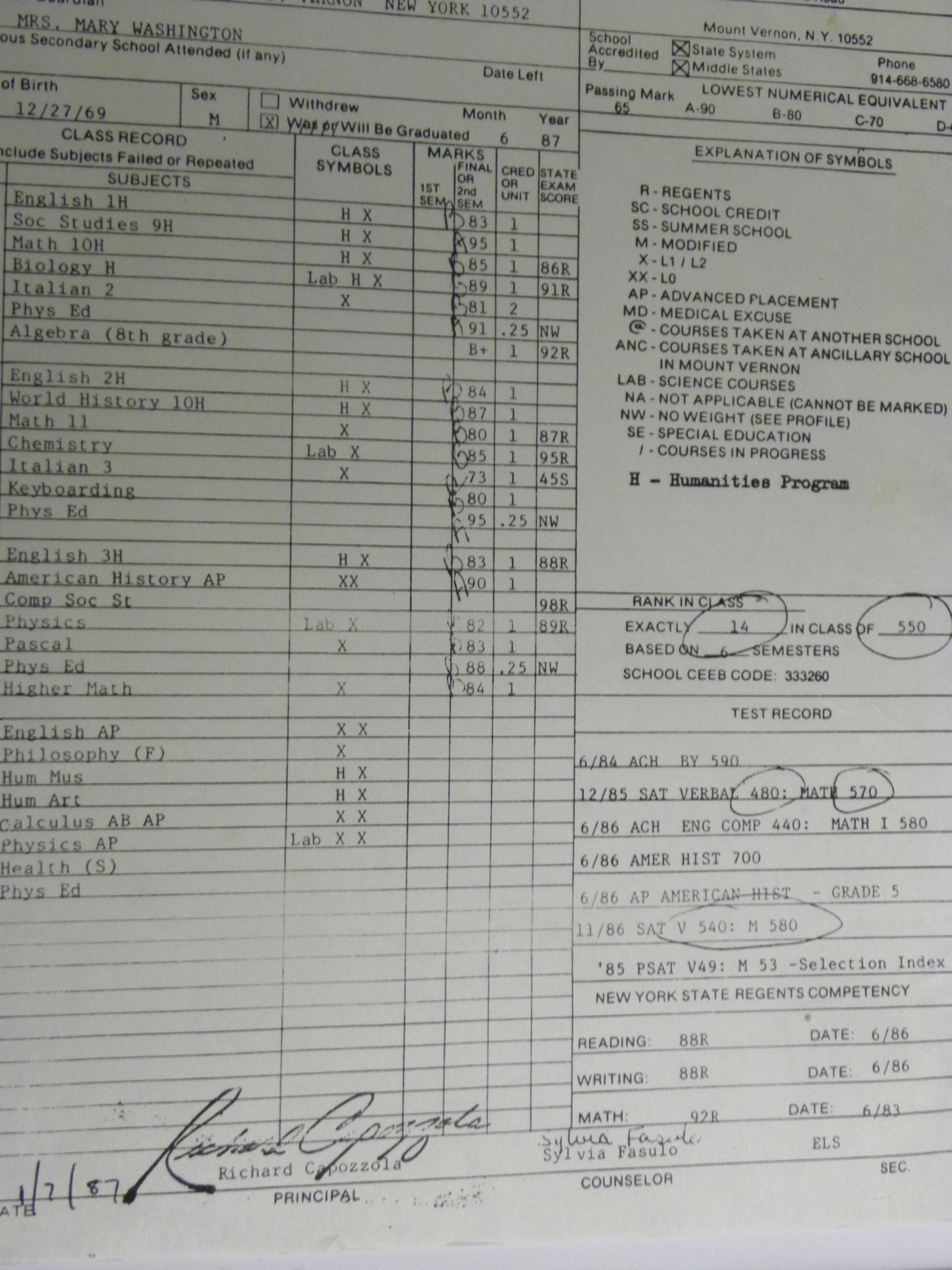
Still, these issues have mostly cropped up for me when I’ve experienced what most people would recognize as success, as if the only role I was ever supposed to play in life was that of a doormat. The first time I went through this process of blowing up other people’s low expectations of me was at the beginning of my senior year at Mount Vernon High School, about this time twenty-five years ago. A couple of weeks into the school year, MVHS released our class rankings. Out of the 545 or so students eligible to graduate as part of the Class of ’87, I was ranked fourteenth with a 3.83 average.

My MVHS trascript, courtesy of University of Pittsburgh Admissions Office, January 7, 1987. (Source/Donald Earl Collins). Note the circles from the admissions officer all over the transcript.

I understood that this was pretty good, but I was also disappointed that I hadn’t cracked the top ten. In fact, the top twelve students in our class all had GPAs above a 4.0, all because of our weighted Level 0 and Level 1 courses. Crush #1 finished just ahead of me, thirteenth in our rankings, something I saw as ironic. Despite this sign of academic success, I hoped and wished for more, and spent several late-night walks over the next few weeks second-guessing my work in tenth grade.

My classmates started to show their darker sides, some for the first time since the days of 7S. One came up to me after my AP Calculus class soon after the rankings were posted. “The only reason you’re in the top twenty’s because of history!,” implying that I was an average student in all of my other subjects. Another, much shorter and much more condescending classmate chimed in a few days later, saying that “the only thing you can do with history is play Jeopardy.” I wasn’t exactly walking around school celebrating my good fortune. I chalked it up to the stress of years of academic competition, the boiling over of senioritis and the rage associated with college preparations. The possibility that jealousy was involved didn’t cross my mind until much later. I didn’t think that anyone could be envious of my standing.

Fast-forward four years to the fall of ’90, as I prepared in earnest for grad school. Not only had I endured a short conversation at the beginning of that year with the great Sylvia Fasulo and her attempts to discourage me from pursuing grad school, law school or a career in law (see my “The Legend of Sylvia Fasulo” from September ’09). I had two professors from Pitt who told me that they weren’t sure about my chances for getting into grad school, and Reid Andrews, who flat-out told me that he didn’t think that I was “graduate school material.”

I have no doubt that if these yahoos were jealous of me at all, it was because of my age, and not my potential. They simply didn’t see how a 3.4 GPA and a 3.82 in my history major would be good enough to get me into a master’s — much less a doctoral — program. The fact that I completed my master’s degree in two semesters within twenty months of essentially being told that I was a fool left Andrews, at least, at a loss for words.

There are so many other instances in which a grad student, a professor, a supervisor, even my siblings, have expressed their low expectations and jealousy over my tiny little crumbs of success that it has left my head spinning on a broom handle. I mean, what did I really do to earn or deserve that kind of attention? I don’t own a house or have a million dollars in gold lying around. I have yet to publish an article in Rolling Stone or in The Atlantic Monthly. I don’t exactly have LeBron James or President Obama on speed dial.

So what is it about me, I’ve asked myself so many times? And then, I’ve reminded myself of something I figured out about twenty-one years ago. That the only expectations that I ultimately need to meet or exceed are my own. That what other people say about me, no matter how distasteful, really doesn’t matter, for those folks were never going to be there for me anyway.

Maybe it’s my refusal to live under someone else’s low expectations, to not allowing myself the luxury of envy, that irks those around me. Or maybe, just maybe, it’s as simple as misery loving company, and not loving mine. Either way, it’s ironic that we live in a time in which we prefer to tear each other down rather than help each other get going in our lives. Which makes my relationship with the rest of humanity so bittersweet. I guess I really am a writer!

American Denial & Fear, Courtesy of Family Feud

Tags

, , , , , , , , , , , , , , , , , , ,


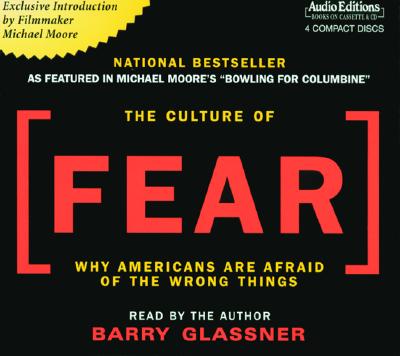
The Culture of Fear cover (audio edition), September 10, 2011. (Source/http://betterworldbooks.com).

It’s been a decade since the largest American tragedy since World War II in 9/11 in New York, Washington, DC and central Pennsylvania. And we’ve spent much of the past week in remembrance of this event, what we’ve gained and what we’ve lost as a society since that tragic Tuesday. Cutting through all of the chatter and bullcrap in the run-up to 9/11 the last few weeks has been a part-time job, especially since most of it is wrapped in one of our nation’s best-selling products — fear.

Second plane, Twin Towers, 9/11, 9:03 am, courtesy of Today Show. (Source/http://en.wikipedia.org).

But a few things are clear. One is that we as a nation have spent the past ten years in constant fear, as if the Cold War wasn’t enough for anyone born before ’74. We wasted trillions of dollars on wars that have done more harm than good for us at home and abroad, ruining the economy, shredding the social welfare state and leaving us with curtailed civil liberties. Most of all, we’ve left ourselves in constant denial of our own fear, xenophobia, racism and religious intolerance, making America look even more imperialistic — if that seemed at all possible in ’01 — then we did a decade ago.

Of all the half-truths and total lies we’ve been told — and told ourselves — over the past ten years is how “the nation came together” in the first few months after the attacks. Really? In a parallel universe, maybe. I had the unfortunate experience of riding a Greyhound bus from Atlanta to Washington, DC two days after the attacks. My one-day business trip became three days, with flights suspended, rental cars gone and trains booked ten days out. Two guys, one White, one Black, “came together” on the back of the bus to insult and threaten a Sikh, all because he had the nerve to wear a turban. I had to get between the two dumb asses and the poor Sikh man to tell them that he wasn’t Arab or Muslim. “What difference does it make,” one of the dumb asses said, implying that I didn’t love America because I wasn’t ready to kill the “m-fs,” as he put it.

We came together, alright. To persecute Arab Americans, Muslims, Sikhs and South Asians and anyone else

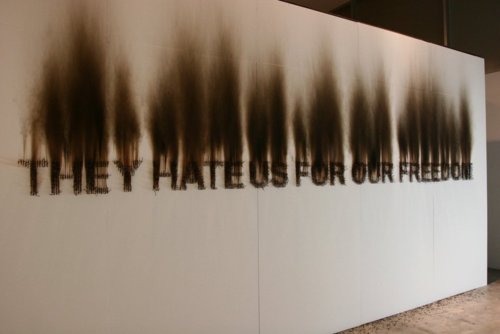
They Hate Us For Our Freedom (2008), Claire Fontaine, Contemporary Art Museum, St. Louis, December 11, 2008. (Source/http://language.cont3xt.net).

who looked like a potential terrorist. Even now, people like Bill Maher and Rush Limbaugh can agree that because some Arab Muslims are terrorists, that we should suspect the millions here in the US and the half a billion in the Middle East. This makes the Red Scare look like a high school lunchroom fight by comparison.

This is why the reference to Family Feud reference is so appropriate, especially with good-old Brit Richard “Dickie” Dawson as the host from ’76 to ’85. It was a show full of not-so-learned people giving rather folksy answers to questions big and small. I loved the part where one family would get together after a first or second strike, and someone would come up with an answer everyone in the group sounded like it was correct. Then they’d start clapping and yelling, “Good answer! Good answer!” before the buzzer would sound and the audience would say, “Uhhhhhhhh!”

That, and the hillbilly theme music for the show, and Dawson prancing around the set while kissing all of the female contestants, allegedly to wish them luck, were all things I enjoyed about Family Feud. The ’70s were so grand!

So in the spirit of Family Feud, I’ve spliced myself as various characters into an episode from ’81. The topic is about naming the people to blame for our current American mess, at home and abroad. I hope that it’s funny and goofy.

But I also hope that it’s food for thought. For in the end, we are all to blame. For being so entitled and privileged, for worshiping the US dollar and the people who have billions of them. For refusing to believe that America, as great a country as it is, screws up on the international stage, that our politicians have put our nation in a precarious position militarily and economically. For being so willing to buy the idea that the Rapture is upon us, but not the idea that climate change is real and that we can do something about it. For acting as if ours is a Christian nation, despite the fact that Christians, Jews, agnostics, atheists, and yes, Muslims were all part of America’s founding.

I hope that we can somehow find a way to outgrow our petty, stupid, idiotic differences around race, religion and politics and put down the class and corporate warfare against the average person. But our lust for wealth and constant feuding may be too much to overcome. Did those twenty Saudi terrorists win after all? Only if we let denial and fear — and those in power who rely on us voting out of both — lead us over a cliff.

Humanities: First Contact, Full Circle

Tags

, , , , , , , , , , , , , , , , , , , , , , , ,


Creme Anglaise in a pitcher next to a ladle, the closest thing I could find to represent my foodie image of "creme de la creme," the mantra of Humanities administrators during my six years of travails, September 9, 2011. (Source/http://recipetips.com).

It’s been thirty years exactly since I made the most horrible set of first impressions in my forty-one years of life. My first day of seventh grade at A.B. Davis Middle School in Mount Vernon, New York was also my first day in the Humanities Program, a magnet program for the gifted track (and also the way the powers that were decided to desegregate the school district in ’76).

But it was so much more than that, for better and certainly for worse, at least for me. It was the flip side of a coin that represented the worst six years of my life (the coin’s other side being my life at 616 with what can only be loosely called my family). But it was also the six years of my life that made the past three decades of success, struggle, more success, and more struggles possible.

After putting together Boy @ The Window — in which a large measure of text was devoted to what occurred with and around me during my time in Humanities, one question still remains. Did my time in Humanities, with my classmates, teachers, counselors and principals have to be as difficult as they were — and not just for me? There’s no real way to answer that question, because “of course” is a cold and callous answer, while “of course not” belies the important psychological changes that made me a better thinker, student, writer and person as a result. But if I could, I’d build a time machine, jump into my eleven-year-old version of myself, and make sure to have my dumb ass take my kufi off for my first day of school in 7S. At least then, I would’ve been normal-weird, instead of standoff-ish weird.

My main problem, though, was that I arrogantly believed I was the smartest person in the world. I paid dearly for having that kind of naiveté, to the point where certain classmates still see me as that idiotic preteen, and refuse to see me any other kind of way. Too bad for them, for I know I’ve long since changed.

That day, at least for the past decade, has also reminded me of another beautifully warm, powder-blue sky day that turned tragic. With two days before we reach ten years since 9/11, I think about the way I used to be, and see so many similarities to how we see ourselves as a nation. “We’re #1,” we love to say, even though we’ve long since stopped being #1 in so many respects. We have the largest economy and military, the largest debt, make the largest contribution to climate change and pollution, and complain the most about how the rest of the world isn’t like us.

Like me three decades ago, America is naive and arrogant. And unfortunately, it faces competitors — some as unfeeling as my more entitled or more unscrupulous classmates — who are clobbering us in education, economic growth, health care, social welfare, even in protecting their citizens and their citizen’s freedoms. It’s sad, because there are millions of people now experiencing the severe fall into poverty — and all of the pressures that places on marriages, parenting and children — that I faced, very unsuccessfully at first, thirty years ago.

I’ve come full circle. Between the struggle to find a home for Boy @ The Window and my struggle to continue to do meaningful work as a writer and educator, I find that even on my worst days, my best days thirty years ago were a thousand times worse.  My first contact with academic competition, Whiteness and diversity, racial strife, religious differences and straight-up elitism is what has given me a greater appreciation for who I’ve become since that sunny day so many years ago. As well as how much I’ve gained.

A Question of My Blackness, Sexuality and Masculinity

Tags

, , , , , , , , , , , , , , , ,


Boyz N The Hood (1991) Screen Shot, September 1, 2011. (Source/http://freeinfosociety.com). 20 years since this movie, and we still inquisition Black males about their masculinity. By the way, I was NEVER this cool growing up.

About this time a quarter-century ago, I received regular reminders from the people in my life as family and classmates that I didn’t fit their definition of how a heterosexual Black male should behave. At least in Mount Vernon, New York. You see, I didn’t have to be a young Barack Obama or Lenny Kravitz to learn at an early age that I wasn’t Black enough, man enough or heterosexual enough for many folks in my life. The fact that I didn’t run around with the other boys skipping school and sniffing skirts was evidence enough of how different I was.

One of the more subtle forms of interrogation I experienced occurred at the end of eleventh grade, going into the summer of ’86. That day I walked into English class, and Crush #2 asked me about that song of the day, which happened to be Level 42’s “Something About You” Something About You. When I told her who it was, she started snapping her fingers to it. LJ, an on-and-off again classmate since third grade at William H. Holmes Elementary, walked by as we were talked. “Are they Black?,” she asked. When I said “No,” LJ shook her head and walked away. The group was White and from the Isle of Wight, no less, a bunch of off-shore British White guys. Somehow I’d violated some kind of code in LJ’s eyes. It was the last conversation we had before we graduated a year later.

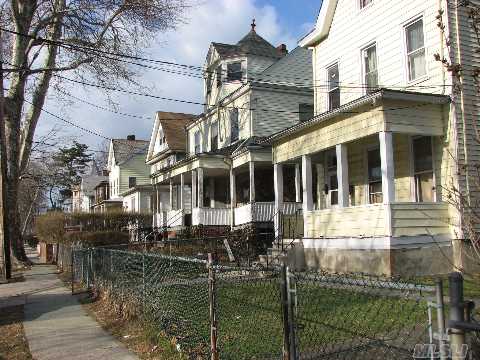
South 10th Avenue, Mount Vernon, New York, November 19, 2006. (Source/http://weichert.com). The egg-shell white house in the center of the photo is where my father Jimme lived in ’86, an attic room. Looks better now than it did then.

I received a far less subtle hint that made LJ’s disgust look like romance by comparison. It was an incident just a week before the start of my senior year at Mount Vernon High School, something I’ve posted about before. By the time I’d gotten a crush on Crush #2, my sexuality was no longer in question, although I’d never seriously questioned it before. My father, though, still had his doubts. I’d hardly seen Jimme most of the summer of ’86, only coming over occasionally to see how he was doing or to bum a few bucks off of him. I found Jimme that last Saturday morning in August, hanging out on the street around the corner from his place, having already drunk his fill.

His mood was especially foul that day, like his body odor. He refused to give me any money. “I don’ give my money to no faggats!” Jimme yelled at me as he came walking and stumbling down his block toward me. He’d seen me come out of the front yard of the house in which he rented a room. I wasn’t in the mood for his crap. “I’m not a faggot and I’m not gay,” I yelled back. When he got closer, I could see that he’d been out too long already. Jimme’s clothes were a mess, and his face was in a twisted rage. He grabbed me by my arm.

“Did you get yo’ dict wet?,” he asked as usual.

“Even if I did, I wouldn’t tell you,” I said.

“YOU’RE A FAGGAT,” he yelled again.  (see my “In the Closet, On the Down Low” from June 1, 2009 for the full conversation and incident)

As I saw it then, I was a year away from college, and I was still in the streets dealing with my drunk ass father, my jealous and institutionalized older brother, a sham of a marriage at 616 and four younger siblings who were high on sugar all of the time. I’d done so much to change my life and yet almost everything in my life was the same. Up to this point the only things that had kept my head from exploding were God and school. As my senior year approached, I wondered how much longer I could maintain emotional control before I finally just lost myself in years of growing pain, like a volcano about to super-erupt.

As I see it now, it remains a shame that we as Black males have to run a gauntlet in our communities in order

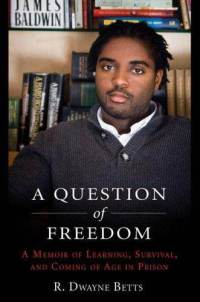
A Question of Freedom (2009) Hardcover Cover, September 1, 2011. (Source/Donald Earl Collins).

to become Black men, at least in the eyes of others. We can talk about the K-12-to-prison system that is public education in many a community of color. Or the drug trade. Or the sheer lack of quality public services and interventions in our communities or lives, other than police forces. Or even the daily images that tell so many of us that aspiring to be a rapper, football or basketball player, or just to be cool is so much better than knowing anything. The latest good memoir on this is R. Dwayne BettsA Question of Freedom (2009).

But we must also admit that the people who attempted to raise us — our families, relatives, neighbors and classmates — are just as often at fault for turning out Black males who aren’t ready to be Black men, human adult males with ideas and aspirations outside of the box. Until we get serious about the fact that those closest to us have put such idiotic notions of masculinity, heterosexuality and Black coolness in many a Black male’s head, we get nowhere in helping to transform the lives of people like me when I was a teenager.

For we can’t depend on people like me becoming homeless, embracing solitude, and leaving my community as the best way to learn how to be a man, an adult, a really serious yet compassionate (and goofy) human being.

No Bravery, But All Too Entitled

Tags

, , , , , , , , , , , , , , , , , , , , , , ,


Hurricane Irene, picture from International Space Station, August 24, 2011. (Source/NOAA). In public domain.

Dateline: Thursday, September 6, ’79. Hurricane — now Tropical Storm — David has hit the New York City area with wind speeds up to 70 mph and some heavy rains. A nine-year-old fifth-grader walks the half-mile from his apartment building on East Lincoln Avenue in Mount Vernon, New York to William H. Holmes Elementary School. In between, limbs and branches snap and fall and the wind breaks up a cheap umbrella as this boy hops over a downed power line and telephone wire on his way to and from school.

That boy, of course, was me. It was my second day of fifth grade with Mrs. O’Daniel. We’d all heard about Hurricane David for nearly a week as it tore through the Dominican Republic and Puerto Rico, Florida and the Appalachians on its way to New Jersey and good old New York. I certainly wasn’t the only one who jumped, hopped and literally ran through near-hurricane force winds to get to school that morning, and to get home that afternoon.

By the time I reached school, I didn’t feel wet so much as I felt blasted by the wind. I felt excited, mostly in a

Hurricane/Tropical Storm David, US Eastern Seaboard, September 6, 1979. (Source: NOAA). In public domain.

good way, seeing a power line spark within twenty feet of me near a drainage grate. Not to mention trees pummeled into submission, uprooted, pushed into sidewalks and houses, across streets and into traffic. I felt adventurous, fearless and really, really clean.

I don’t remember a whole lot of folks complaining that Frank Field, Chuck Scarborough and Sue Simmons of WNBC-4 TV in New York had over-hyped what at one point was a Category 5 hurricane as it went through the Dominican Republic the week before. I don’t remember — even though this apparently happened in South Florida — the two and a half million people in the NYC area without power accusing the National Hurricane Center experts of having some form of Munchausen Syndrome because the storm didn’t destroy the Twin Towers. I certainly didn’t hear about parents complaining when their schools were open or if their schools were closed despite or because of Hurricane/Tropical Storm David. After all, more than 2,000 people lost their lives in the Caribbean and the US to this system.

But here we are, thirty-two years later, as the pampered and spoiled Americans we are, complaining about having to prepare for what turned out to be a relatively minor hurricane event in Irene. If a Category One hurricane that only on its final day of blowing across the eastern seaboard (Sunday, August 28) became a tropical storm can be called minor.

Town lies in rubble after Hurricane David hit Dominica, September 1979. (Source/National Geographic Society/Joseph J. Scherschel).

Meanwhile, at least twenty-one people died. Millions in New York, Maryland, Vermont, New Jersey and the Carolinas were left without power. Several major river systems are cresting or will crest in the coming days, causing more flooding and damage. All adding to the damaged power lines that are part of our degraded national power grid. As well as the washed-out bridges and roads and towns from Vermont and upstate New York all the way to the Outer Banks of North Carolina.

For those asking the question of whether there was too much hype about Hurricane Irene, shame on you. For those parents who complained bitterly — like those in my Silver Spring, Maryland neighborhood — about the first day of school being delayed because our school didn’t have power, shame on you. For those who were too shortsighted to realize how much worse things could’ve been beyond waiting for Con Ed or Pepco, shame on you.

Life happens. And when life happens, our choices are to ride the waves of life, be drowned by them, or to sit on our entitled hands in judgment over whether life happens or not. Unfortunately, a few too many of my neighbors and fellow citizens too often choose the role of critical hand-sitting. It’s simply ridiculous.

Standing at the Crossroads

Tags

, , , , , , , , , , , , , , , , ,


Cast Away movie (2000) screen shot, August 27, 2011. (Source/Donald Earl Collins). Qualifies as fair use under US copyright laws because it is of low resolution and is in no way being used to reproduce the original film.

It’s funny how things in our lives happen in cycles. Sometimes it’s because we haven’t heeded the wisdom we’ve accumulated in our lives to keep us from following that same bad habits, ones that lead to serious problems for much of our lives. Relationships with men and women, addictions and other vices, behaviors that lead to indecision. That last one has been a big one for me to overcome in my life, and it still has the power to keep me for achieving all that I know I can do in life.

It has led to several crossroads in my life. They usually occur in August or December. August, because of the twenty-two years I spent as a student (not to mention fourteen off and on as a professor). And December, because of Christmas, Jesus and my birthday. But Augusts, especially the last five days in August, tend to stand out as times of contemplation and revelation. August ’91 was the start of grad school, while August ’93 made me rethink how to approach grad school. August ’97 left me with bitterness about being unemployed, while August ’99 gave me a new appreciation for having a job, any job.

But, aside from now, no August was more revealing about my character than the one in ’88. About two weeks before I needed to go back to Pittsburgh for my sophomore year, I went to search for Jimme. I was still steamed with him for not getting me the money I needed to secure a dorm room for the upcoming school year. I hardly swung by to see him that summer, too busy taking care of my siblings and recovering from my second roughest year in the decade, one of four months of unemployment. So on the next to last Friday before I needed to get back, I bummed ten dollars from Mom and took the Metro-North down from Pelham to the city. I got off, took the shuttle over to Times Square and the 2 to 72nd before walking over the Levi brothers’ office on West 64th. Jimme wasn’t there, but Glen was. “He’s over at my brother’s on East 59th,” he said. I’d forgotten that Bruce Levi had his own cleaners and business on the East Side.

I walked the dozen or so blocks there. And there Jimme was. I caught him just as he was getting paid for the week. “Bo’ whatcha doin’ up here?,” he said with complete disbelief. We talked for just a few minutes, with me mentioning more than once how I needed money to secure some sort of apartment at school. “Donal’, I done messed up too much money dis summer,” Jimme said. Apparently my father had spent most of Summer ’88 going through one of his drinking binges. The Levi’s had bailed him out several times, as his landlord Mrs. Smalls had toyed with the idea of evicting him. Jimme gave me $100 on the spot, and promised to get me more money before I left. When I went to see him at work the following week, he’d given me $300 more.

In rapid succession, I packed up my stuff in the five-suitcase set Mom had bought me the year before. Two suitcases, two duffel bags, and a garment bag, all of which she’d ordered from a catalog for a measly eighty bucks. I went down to a travel agency that was down the street from the Pelham Metro-North station and C-Town and found a cheap one-way ticket on USAir for $35. I couldn’t buy a good steak dinner in midtown Manhattan for $35! I got myself mentally ready for finding an apartment, ideally a one-bedroom.

By that last Sunday in August, everything was ready, and I had everything I needed. I played songs with my siblings for almost two hours before I left. I gave them my Michael Jackson tapes and my radio cassette player, taking my beat-up Walkman with me. We all hugged and cried, much more so than we had the year before. Part of me really didn’t want to leave, and part of me knew that I wouldn’t be whole again if I didn’t.

I had no idea how tough the next five days would be, between that Sunday evening, August 28 and that Friday, September 2. I was homeless for five days, and within three days of heading back to New York and Mount Vernon when I finally found a one-room death-trap in a row house in which to live.

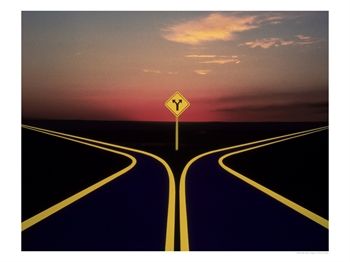
Fork in the road, August 27, 2011. (Source/http://optimumsportsperformance.com).

I was within three days of becoming a college dropout because I didn’t trust anybody. I was so close to losing something I’d dedicated seven years of my life to achieving because I had spent the previous year indecisive about whether what I wanted out of life was more important than helping out my mother and my younger siblings at 616. It made me think. What meaning could I draw from putting up with all the put-downs and disapprovals of classmates, teachers and families if things hadn’t worked out? The answer would’ve been, none at all.

Now, as then, I face a crossroads in many areas of my life. One where I have to decide, which part of me is most important in achieving my dreams, fulfilling my calling, providing for my son and family, possibly even in maintaining a marriage? Whatever decisions I do make, I need to stand firmly in them, to be decisive, to see them through. That formula has guided me for twenty-three years. And it has yet to let me down.