The Fight (Again)

Tags

, , , , , , , , , ,


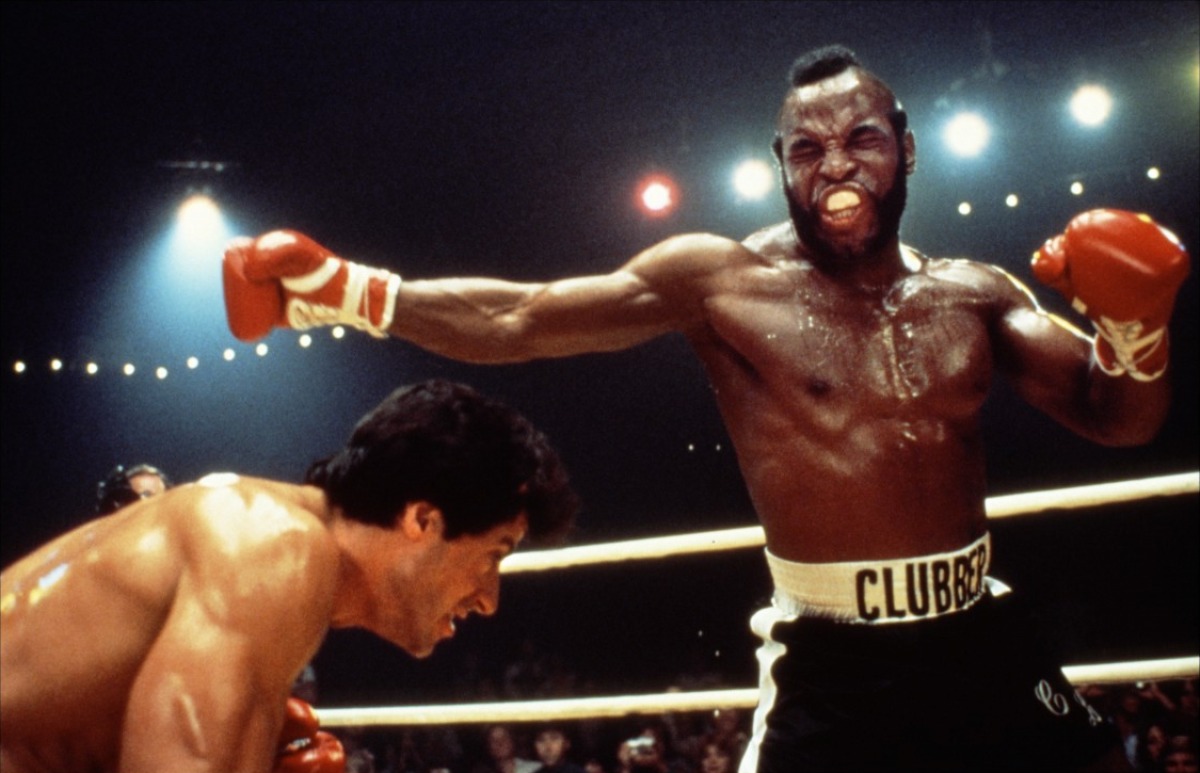
Clubber Lang vs. Rocky in Rocky III (screen shot), 1982, February 18, 2012. (http://media.comicvine.com).

The fight that changed my approach to Humanities and put me back in a determined frame academically happened on this date thirty years ago. After all of these years, I find it awfully strange to look back and find that some of my more poignant moments growing up were ones of rage, resistance and renewal. All either around abuse, muggings or fights with classmates.

Strange because I’d never seen my immature and thin-skinned self as much of a fighter before that day in February ’82 (see my post earlier this week, “Quitting Before a Fight“). Strange because it often takes something only indirectly related to my struggles to cause me to regroup and fight for what I want. Strange in the ways that all immature preteen boys and girls who get into fights always are.

It had gotten so bad that month that folks who wouldn’t have dared to mess with me at the beginning of the year — guys significantly shorter than me and guys who were so superior to me that they didn’t even notice me — started messing with and threatening me. JD (see my “The Contrarian One” post from February ’11) was one of those classmates. The week before the mid-February winter break, our homeroom/English teacher Mrs. Sesay was home with the flu. Our substitute’s idea of managing a classroom was reading a newspaper while the class engaged in verbal and physical combat. It seemed that no one was safe from strife that week, including me.

JD decided that it was his turn to give me a hard time. A ten-second scuffle took place on Tuesday over the usual tweener issues of communism versus capitalism, or to use more sophisticated language, neo-Marxism versus Keynesian economics. He also didn’t like that I had corrected him the month before about Australia’s official language, which he said was “Australian.” I learned that day that you should never correct a preteen contrarian when they think that they’re right.

When I walked into the boys’ locker room for gym class that Thursday afternoon thirty years ago, I was greeted with two punches to my chin and face. He walked away and went through the green double doors to his locker, arrogant enough to think I wouldn’t respond. He muttered “stupid” as he walked away. I think it was the combination of being caught by surprise and being called “stupid” by JD that got the better of me. Or maybe it was five months of enduring public humiliation combined with the sense that things at 616 were spinning out of control.

Whatever it was, I finally snapped. I stared blankly at the red lockers, green doors, and depleted beige-colored walls for a couple of seconds, and then my mind exploded in violent colors. I threw my entire being into JD as he had started to undress at his locker, knocking him to the floor.

I choked and punched him until I had bloodied his mouth and made his nose turn red. JD attempted to fight back to no avail, as I kept my weight on his legs while I head-locked him with my left arm and wailed away with my right hand. Just as I began to run out of energy, the gym teacher came in to break us up. He yelled at us and asked “Do you want to be suspended?” When I got off the floor to go my locker, I almost couldn’t believe that I had won that fight. I went into the break with an emotional boost, one that I hoped would lead to better things for me at school.

You could say that only a nerdy preteen boy like myself would find academic motivation in a fight. That’s definitely true. But, not just someone like me. Every kid who’s trying to find their way can only work with what he or she knows or what he or she is presented with. I could’ve either decided to keep being a punching bag — literally, figuratively and academically — or decided that whatever else I wanted to be, I needed to stand up for myself and fight.

So yes, winning that fight with JD sent me into that winter break as if I’d thrown a Hail Mary to Hakeem Nicks just before halftime for a touchdown. It provided the inspiration I needed that I wasn’t getting from Humanities, A.B. Davis Middle School or 616. Where else would I have found it in February ’82?

Obama Shifts Forward as Education Gap Widens


For more than 40 years, the research has shown that the single biggest factor in student success, high school graduation­, and college success and graduation is family income. Not great teachers, a new school, a principal as a strong leader. Family income. Any set of programs that are set up but do not attempt to level the playing field with increased funding for K-16 education, especially for those who are of lower income — and not just the shrinking middle class — has no chance of long-term success. Period.

I hope that all 50 states and DC will eventually be able to opt out of NCLB. It has turned K-12 public education into a grand teaching-f­or-the-tes­t scheme. Making billions of dollars for test developmen­t companies and for related test-prep service providers. And still, after a decade, we fall behind. It may well be better for my son to attend school in Syria right now than here in the US. I haven’t given up, but things are fairly bleak in terms of the achievemen­t gap these days.
Read the Article at HuffingtonPost

Quitting Before a Fight

Tags

, , , , , , , , , , , , , , , , ,


Mike Tyson-Michael Spinks Fight, Convention Hall, Atlantic City, NJ, June 27, 1988. (http://antekprizering.com).

As a writer, I can often see my past as if it happened within the past week. As a forty-two year-old, though, it sometimes seems like my failures and pitfalls are a long-lost memory, one of a very bad dream. To think that it’s been a full thirty years since my preteen struggles with identity, purpose, and the realization that I was in an intense academic competition that I was predestined to lose. It seems like I was playing a role, acting my way through my tweener and teenage years.

But this time thirty years ago, I seriously thought about quitting the Humanities Program. It was the beginning of the third marking period in seventh grade at A.B. Davis Middle School, early February ’82. My grades were unimpressive. I struggled in every subject except social studies, where three years of reading World Book Encyclopedia and forty books of all kinds on World War II made me a nerdy standout among my mostly nerdy peers. My social studies teacher Paul Court was so much fun and so inept that he played games with us to keep our class interesting. Anyone who could find factual errors in his teachings on American history would earn twenty-five cents. I’d already earned more than three dollars by the end of the second marking period.

I barely averaged a C+ in math. My Italian teacher Ms. Fleming told me that my “Italian sounded British.” And I was averaging a C+ in art. In Art! All because Doris Mann, who was about as good an art teacher as I was at making friends, said, “I don’t give A’s for effort. I give out grades based on your ability to create good art.” I couldn’t believe that she gave me C+’s while the art world fifteen miles away cheered folks who smeared blood, paint, and feces on canvasses!

I thought that I was the only one who felt like a failure. I was certain that I was more of a failure than my Holmes School classmates or other, non-Pennington-Grimes students in Humanities, at least. If other students appeared to have problems, especially my classmates who were alumni of the Pennington-Grimes program (Mount Vernon public schools’ K-6 Humanities Program), I believed that they were faking it.

The Crucible (play), date and location unknown. (http://reyvl.com).

I had good reason to. It was around this time that one of my White female classmates from Pennington-Grimes had become anxiety-ridden prior to a test in our English class. She began to sweat, her hands and face turned colors, like one of Arthur Miller’s female characters in The Crucible, his famous Salem-Witch-Trial play.

Within a few seconds, three of her friends joined this tortured soul in this expression of fear. The one girl kept saying, over and over, “I know I’m going to fail!” The other three huddled around her and joined in séance, as if they expected God to witness this physical expression of pressurized fear and take pity on them. That this involved the Pennington-Grimes group of Humanities girls was not lost on me. They loved their grades, almost as much as they loved Jordache Jeans, The Gap or Benetton.

We received our exam grades from Mrs. Sesay a few days later. My grade: a 78. The Fear Bunch’s lowest grade: a 92. Understanding how quickly fear can destroy your confidence: priceless. Their fears had left me thinking more about failure — theirs and mine — than it did about the task at hand.

Then it was my turn to act demon-possessed. I went to the back of the classroom at the end of that day and chanted, “I’m silly, I’m stupid. I’m silly, I’m stupid. I’m silly, I’m stupid.” over and over again while pounding the back of my head into the side wall. But I learned a valuable lesson that day. That doing well required me to ignore the worries and grades of other, to concentrate on me and my own emotions on test days.

So, I spent the first two weeks in February thinking about sliding into the general population of A.B. Davis Middle School. I couldn’t do much else other than think. With the growing problems of lack of food, late rent payments and three siblings at 616, my mother’s tiny Mount Vernon Hospital paycheck, and my idiot and long-term unemployed Hebrew-Israelite of a stepfather, I had no one to talk to about school (see “Humanities: First Contact, Full Circle” from September ’11).

What I didn’t realize was that I hadn’t yet begun to fight. My efforts up to that point in Humanities — from making friends to studying — were all half-hearted at best. I was the emotional equivalent of an eight-year-old in a preteen’s body, one right at the early stages of puberty at that. With life at 616 starting to fall apart and the isolation I felt at school, I was growing up, whether I wanted to or not. All it would take was an immature spark of inspiration to prove it….

My Wife, My Life

Tags

, , , , , , , , , , ,


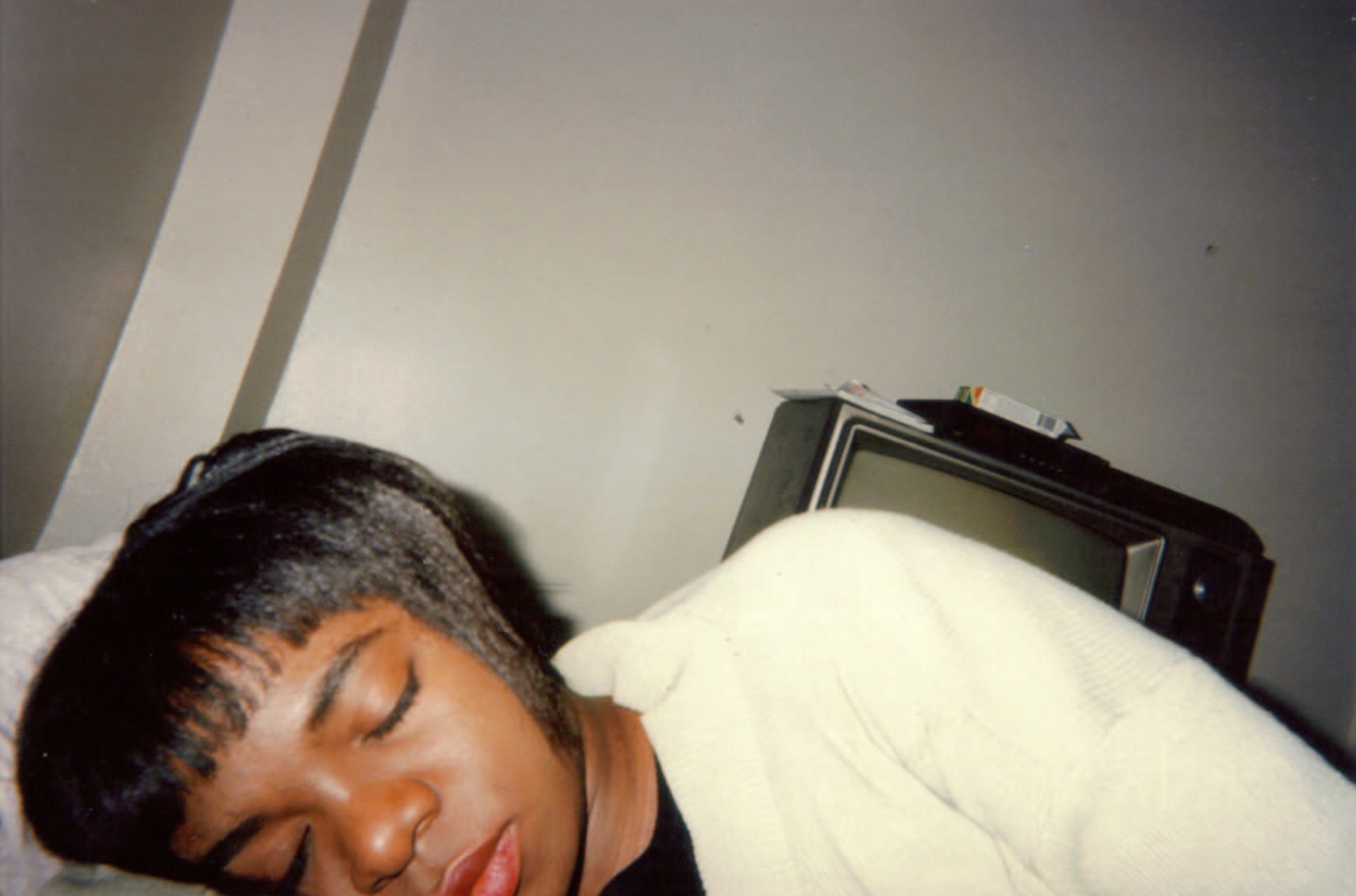
My wife (then girlfriend) sleeping, Pittsburgh, February 8, 1996. (Donald Earl Collins).

I don’t spend a lot of time talking about my wife and son on this blog. Not because I don’t want to. It’s mostly to protect them from my thoughts, my feelings, which can change from moment to moment and from context to context. But it’s also because our marriage and our family is a work in progress. Most of what I write about here has already occurred, and I’ve emotionally already moved on from those happenings. Or my posts are about educational policy, politics, race and racism, inequality and unfairness, places where I can tap into my past and present emotions and relate to events of my past.

My wife, April 2010. (Angelia N. Levy).

Today, if only for one post, I’ll talk about my wife. Today she officially passes into that grey area of life known as middle age. She doesn’t look it at all. Heck, about seventy percent of the time, she looks a good five or ten years younger than me. God knows, though, that our life over the last sixteen years (including nearly twelve years of marriage) has been anything but an opportunity to stay young.

The last four years have been especially stressful. Between my work on Boy @ The Window and piecing together teaching and consulting gigs, with feast and famine moments throughout. Between Noah growing up and reaching the full-blown kid stage (and a year or two away from being a preteen), her two years as a masters student in interactive journalism at American University, and living in the DC area. It hasn’t been easy for either of us.

There have been moments, days, even a couple of weeks like in October, where we haven’t been in sync emotionally and psychologically. I have habits that drive my wife to drink, literally. She has an attitude about her life that sometimes makes me feel like picking up a jagged rock and pounding myself in my right temple until I hit grey matter. And, for the past year, we’ve spent as much time sleeping alone as we do collapsing together after another day of school, Noah, teaching, writing, working, consulting and cringing at our finances.

But we do have a few things that remain in our favor. We do love each other, and we do talk to each other about the things we care about the most. In the latter case, about eighty percent of the time. It would be nice if it was 100 percent. But after a decade and a half, we both need our space. We also have an eight-and-a-half year-old who is a joy to be around and nurture, even if he’s way too nosy, knowledgeable and smart-mouthed for his own good.

Today, though, while the Giants celebrate in New York City and at City Hall their fourth Super Bowl win, I

Camera-shy/mean look from Angelia at The Balcony, Pittsburgh, February 7, 1996. (Donald Earl Collins).

must celebrate the fact that I’ve been together with my wife as boyfriend and husband since she was in her late-twenties. I think back to sixteen years ago today, when I threw a surprise birthday get-together for my new girlfriend at my cramped studio in Pittsburgh’s East Liberty section. I made her a lemon cake with vanilla icing, took her to The Balcony jazz club in Shadyside for dinner, and afterwards, she came to my place and fell asleep.

She looked so peaceful after such a simple evening that I took a picture of her in my bed. Sometimes I think that this is the most peaceful I’ve ever seen her, that night, that birthday, seven weeks into a decades-long relationship.

There are so many things that I want to see happen, for me, for Noah, for my wife. But one thing near the top of the list is for her to see herself the way I see her. A person who persists, who fails and is disappointed time and time again, until they achieve and exceed their goals. A person who, somewhere in that process, is at peace with themselves. Happy Birthday, my sweet duck of a love!

Promoting Fear of a “Black” America

Tags

, , , , , , , , , ,


Fear of a "Black" America front cover, July 2, 2004 (Donald Earl Collins).

It’s been seven years since my first radio interview and book signing for my first book, Fear of a “Black” America: Multiculturalism and the African American Experience (2004). In all, I spent sixteen months actively promoting the book, through PR releases, contacts at universities and through my work at the Academy for Educational Development, and a huge volume of email exchanges and phone conversations. Between this nearly full-time work, my full-time job, and being a full-time parent and husband, I was exhausted by the end of ’05.

It’s unbelievably hard work to promote a book. Especially a self-published one. Not to mention, one that I’d proclaimed as an in-depth response to the conservative movement’s “Culture Wars” on all things “multicultural.” One that was a combination of personal vignettes with interviews and historical research to tell the story of African Americans and other groups of color coming to grips with their notions of multiculturalism in education and in their everyday lives. Granted, it was immediately available via Amazon.com, Barnes & Noble/B&N.com and the now out-of-business Borders.com. But if I’d done nothing, I would’ve sold maybe one hundred copies in ten years.

My work to promote Fear of a “Black” America began about a year and half before it hit virtual and actual shelves in September ’04. I created a website for the manuscript (http://www.fearofablackamerica.com) in February ’03,  learning HTML in detail in three weeks’ time. Within a year, the number of unique visitors to the fledgling site varied between 500 and 1,000 a month. After three years of coming close — but still failing — to publish Fear through traditional publishers like Beacon Press, Random House and Verso, I politely moved on from my agent and decided to self-publish.

A couple of months into the process, I hadn’t much success beyond a couple of professors using copies of Fear in their African American studies courses (a completely random occurrence — they were in different parts of the country). My friend Marc took it upon himself to have me meet him and a friend of his for a long talk about how to organize a marketing campaign for the book at the end of November ’04. While they were certainly well-meaning, their advice provided no real insight into the process other than what I already knew. I just needed to be persistent.

That persistence paid off in early February ’05. In a span of three days, I did an evening drive interview with Howard University Radio (WHUR-FM) and a book signing at Karibu Books. Both, at least, gave me some momentum beyond Black History Month, as I continued doing book signings in the DC area and through my job up in New York that spring.

My promotions reached their height in April ’05, when I did an hour-long interview with Pacifica Radio DC (WPFW-FM) about Fear. There, I realized how much more interested caller were in my personal background and how that shaped my views of multiculturalism. I also learned that some of the callers — whom I didn’t know — had actually read my book. It made all of the groundwork I’d done to get to this point worth the effort. By then, I’d cracked the top 100,000 in the Barnes & Noble list (84,000), or roughly ten to fifteen sales per week, and the top 200,000 (161,000) on Amazon.com (another 10-15 sales per week).

WPFW 90.9 Interview (Part 1), Fear of a “Black” America, April 25, 2005

WPFW 90.9 Interview (Part 2), Fear of a “Black” America, April 25, 2005

During that summer and fall, I continued to promote Fear, with another interview on Pacifica Radio DC in August, and a book signing at Howard University Bookstore in October ’05. But I was running on empty. As fast as email was, it didn’t have the immediacy of what we now call social media. And in ’05, Facebook was in its infancy, Twitter didn’t exist, and Blogger was a relative novelty. Even with a website that received 4,000 hits and over 1,200 visitors a month, I couldn’t generate the cascade effect that I could right now.

My final act of promotion for Fear of a “Black” America came in August ’06, though John Kelly’s Washington Post Metro Column, “Getting Work Done – On the Way to Work,”  in which I talked about editing my book on Metro Rail for two years. By then, I’d pivoted to work on Boy @ The Window, knee-deep in reopening memories that hadn’t been well-considered when I was a teenager.

Between September ’04 and December ’05, I promoted Fear of a “Black” America using $3,500 of my resources, and made over $1,000 on the book, selling about 600 copies in sixteen months. Overall, I’ve sold over a 1,000 copies between ’04 and ’08. Those numbers are on par with most works published in academia.

But I was hardly satisfied. I knew by ’09 that with a social media apparatus, I could’ve sold ten times as many books. I knew that my memoir manuscript deserved more than the fate of self-publishing, that I’d want to find a path to a traditional publisher. Still, despite my moments of despair, I believe that my persistence in finding an agent and a publisher is the right way to go. It’ll make it easier to work hard in promoting Boy @ The Window. In that case, I’ll be doing it in the virtual light of day.

Paula Baker and the 4.0 Aftermath

Tags

, , , , , , , , ,


Paula Baker speaking (screen shot) in response to Donald Crichlow's book, Phyllis Schlafly and Grassroots Conservatism at The New School, New York City, March 1, 2006. (http://fora.tv/2006/03/01/Women_and_Grassroots_Conservatism).

Of all the professors I worked with in grad school, there wasn’t a tougher one on me than Paula Baker. Or a better one. She wanted and expected more out of me than even my advisors, Larry Glasco and Joe Trotter. If it weren’t for her, I probably would’ve been content with earning all of my degrees at the University of Pittsburgh. But if it wasn’t for her, I wouldn’t have discovered my ambivalence about academia in the first place.

I took an upper level history course in US history since 1945 and an independent study with Paula the semester after earning straight-As, the one that made my master’s program a seven-and-a-half month one instead of two years (see “The 4.0 Of It All” from December 2011). It was her second semester as an assistant professor in our department, and given the demographics of the ol’ White boys club, I thought it a good idea to take a professor whose graduate studies were still going on while I was in high school. That, and learning of Paula rare feat (at least for ’84) of publishing an article in the Journal of American History while still a grad student herself at Rutgers University, appealed to the competitor in me.

Paula Baker, University of Virginia, Miller Center, December 2006. (http://millercenter.org).

I sat down for my first meeting with Paula in her small, windowless office (except for a glass partition that she had covered up so students couldn’t look in), just across from the grad student cubicles on the third floor of Forbes Quad. She said, “What are you doing here?” I didn’t understand her question at first. What I soon realized was that Paula was asking me the kinds of questions I should’ve asked myself two years earlier, when I first started applying to grad schools. She said that there were better options for a doctorate in American and African American history than Pitt, including the University of Michigan and UCLA.

There were two things that made Paula, though. One, she regularly broke the law while anyone was in her office, including pre-asthmatic me. Paula smoked as if her life depended on it. For me, it was the first time I thought that I might end up dead before I turned thirty for second-hand smoke and lung cancer. Mind you, my mother, my father and my idiot ex-stepfather all smoked, but not in a space unfit for a sardine.

Two, and more important in my second semester of grad school, was her uncompromising perfectionism when it came to my research and writing. Obviously my writing was already good. But it wasn’t scholarly, at least not as scholarly as it needed to be. In writing my paper on the influence of Marxist ideology (perceived and actual) on the early Civil Rights Movement, I must’ve done at least seven drafts for Paula.

She probably used up about three ball point pens editing my drafts, crossing out whole paragraphs at a time, demanding that I raise my level of analysis ever higher. And when it was all said and done, Paula assigned me a grade of B+ in my independent study with her, the lowest grade I’d receive in three years of master’s and doctoral work. Still, she turned me on to Adolph Reed, Jr. and Theda Skocpol.

What Paula didn’t know was that by the middle of February ’92, I was mentally exhausted, mostly from the previous semester’s work and the lack of a holiday break. I wasn’t at my best in her class and in her office. Somewhere in the midst of struggling to stay on task, I learned how to read for arguments, how to use book reviews to supplement my lack of historiographical knowledge, and to expand my thinking to include other fields, like philosophy and sociology.

I also learned that I really didn’t like writing in scholarly-speak. It felt fake, as if I had to learn French and German and high English in order to make an argument that would make old White farts stand at attention. I didn’t blame Paula for this. I fully understood what she was doing and why she was doing it. But I also knew that this wasn’t me, the scholarly world wasn’t quite an exact fit for me. C’est la vie!

After April ’92, I took one other independent study with Paula, the following year, to get ready for the comprehensive exams for my doctorate. I took it as a non-graded course, as I knew I was about to transfer to Carnegie Mellon. She eventually left Pitt — not exactly a surprise.

I bumped into her once in ’01 right outside Union Station in DC, while she was a fellow at Woodrow Wilson Center and I was in my assistant director job with the New Voices Fellowship Program. Paula didn’t seem happy to see me, but then again, sarcasm and irony always seemed to be the key to getting her smile. Like the irony of me not using my degree in academia.

Super Bowl XXI and Vicarious Living

Tags

, , , , , , , ,


New York Giants as underdogs, January 26, 2012. (BlasBlasB via http://Flickr.com). In public domain.In little more than a week, my New York (football) Giants will play against the New England Patriots in Super Bowl XLVI, and hopefully win their fourth NFL championship. It’s good for me to watch this process unfold — again. Only without the significant emotional and psychological attachment I had to my Giants back in the days of Bill Parcells, Phil Simms, Mark Bavaro, Phil McConkey, Joe Morris, Lawrence Taylor, Leonard Marshall, Carl Banks, Elvis Patterson, and Harry Carson, among so many others.

It’s been twenty-five years and three days since my Giants won their first Super Bowl, against John Elway and the Denver Broncos in Super Bowl XXI. Or, as Dick Enberg put it over and over again, “the man with the golden arm,” who looked like Tim Tebow most of the game against the Giants pass rush. At times after that win on January 25, ’87, it seemed as if that was the only thing that went right for me that year.

Of course, that wasn’t true. After all, this was also my senior year at Mount Vernon High School, about to graduate and move on to the University of Pittsburgh that fall. But at seventeen years old, in the middle of my obsession with Crush #2, and feeling the pressures of life at 616, the ridicule of some classmates at MVHS, and the need to grasp my future, I needed many forms of escape.

The Giants had served as one major form of escape for me since the ’83 season. Yeah, their 3-12-1 season. I was neither a Giants nor a Jets fan, but after watching what had happened with both teams that year, I felt sorriest for the Giants. With a first-year coach like Bill Parcells not knowing yet how to coach his team, I just felt they had nowhere else to go but up. They hadn’t won a championship since ’56, and didn’t look like they were going to win one anytime soon.

Just like me. As an underdog in life, I already was rooting for teams that no one else would care to talk

Mark Bavaro after touchdown catch in Super Bowl XXI, January 25, 1987 (note the kneel down that people now attribute to Tebow). (Walter Iooss, Jr. via http://nypost.com).

about. The Jets just looked like a team that squandered talent, they had Richard Todd, and they never played as hard as the Giants. So by the end of the year I didn’t care to watch them anymore.

I watched or listened to my Giants play football virtually every Sunday from that point on, but that didn’t interfere with my studies. It often helped me remember obscure information, especially as my ability to study at 616 complete deteriorated. Through a visual cue, like Phil Simms throwing a touchdown pass on a crossing route or post pattern to Mark Bavaro, I could remember how to solve a specific function or recall a series of “if-then” statements for a Pascal program.

Then, after disappointment in the playoffs in ’84 and ’85 at the hands of the 49ers and the Bears, the Giants won Super Bowl XXI, blowing out and brutalizing each team they faced along the way. My underdog team had become a juggernaut in three seasons, meaning that there was hope for me yet.

But it would take me a bit longer to see myself as a winner, a champion, someone deserving of a victorious life. When I did, a couple of years before the Giants’ second Super Bowl victory in January ’91, I realized that I didn’t need to live and die with any team I was a fan of in order to validate the meaning of my own life. Rooting for the Giants, win or lose, has given me a small degree of joy over the years, like a kid just enjoying the excellence of his team. How it translates for my own life is immaterial. It’s up to me to decide how much victory in my life I’m willing to fight for, and how much success I can stand.