Where’s the Historical Documentary on W. E. B. Du Bois?

Tags

, , , , , , , , , , ,


Or, "Sal, how come you ain't got no brothers up on the wall here?," Giancarlo Esposito as Buggin' Out from Do The Right Thing (1989). (http://www.theroot.com/).

Or, “Sal, how come you ain’t got no
brothers up on the wall here?,” Giancarlo Esposito as Buggin’ Out from Do The Right Thing (1989). (http://www.theroot.com/).

Or for that matter, where’s the documentary on Alain Locke, Anna Julia Cooper, John Hope Franklin, Horace Mann Bond, Richard Wright, Mary Church Terrell, and so many other Black intellectuals, writers and educators? If your answer is, “check out California Newsreel,” or PBS for a documentary on the Harlem Renaissance, then you obviously don’t watch TV for knowledge. Yes, California Newsreel and other independents have made documentaries on many of these important figures in American and African American history. But other than a handful of PBS documentaries done under the American Masters series, a few here and there on Zora Neale Hurston, Paul Robeson, Jack Johnson, and Marcus Garvey, and a 1993 documentary on the Harlem Renaissance, there isn’t much in the land of historical documentaries if you’re outside academia.

Still, I began with Du Bois for a reason. Given his influence on African American studies, American studies, American history, African American history, sociology, psychology, higher education, poetry, the Harlem Renaissance, the New Negro Movement, Whiteness studies, Transatlantic studies, civil rights activism, and the NAACP, it would seem a documentary for a broad audience is a bit overdue. He died in 1963 at the age of ninety-five, and February 23 marks 147 years since his original year of birth (1868). Most of us, though, can’t even pronounce his name correctly, assume that he’s French (read “White” here) or stereotype him as an egghead when we find out that his PhD in history’s from Harvard.
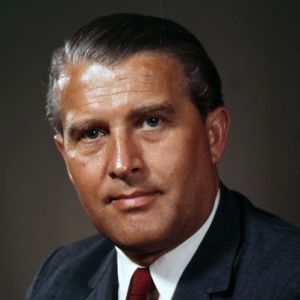
Wernher von Braun (1912-1977), a "reformed" Nazi, American citizen, and father of US space program (or WWIII, TBD). (http://biography.com).

Wernher von Braun (1912-1977), a “reformed” Nazi, American citizen, and father of US space program (or WWIII, TBD). (http://biography.com).

Yet, year in and year out, TV season after TV season, films and documentaries are made about White moguls and intellectuals, as if the only people with brains have been White males. Just in the past year alone, there have been at least three miniseries/documentaries on the great White male in history: Ancient Impossible: Ancient Einsteins, How We Got Here, and The Men Who Built America. Apparently the only smart ancients were Greeks who just happened to live in Egypt and master-race true believers like Henry Ford and Wernher von Braun built our modern world with their bare hands. Even ordinary White males ought to be insulted, no? Especially since Andrew Carnegie and J.D. Rockefeller apparently built the country without their forefathers’ muscle, sweat and blood.

But that’s just it, according to Du Bois (via Black Reconstruction, 1935). Even though many of these documentaries all but wipe ordinary people out of existence, ordinary Whites can glean a psychological wage from Whiteness just from seeing someone who looks like them represented in pixels, especially White males. Even if they can in no way become that person. That level of analysis alone would make Du Bois worthy of a well-financed documentary. That is, of course, if he were White and if we pronounced his name as ” Doo-Bwah.”

Why I am bringing this up on Martin Luther King, Jr.’s birthday holiday? Isn’t Black History Month and Du Bois’ birthday next month? Precisely because we need to reflect on what we want to see on screen and in other places in our lives. Every day, every month, every time. Selma‘s doing gangbusters, is well-written, and got great acting. What more can you ask for? Yet the Oscar committee all but shunned it because it’s a “Black film” that took a smidgen of poetic license.  And, because Selma showed what everyone knows from listening to the LBJ tapes — that one of the great presidents who pushed through the Civil Rights Act and Voting Right Act was also a racist — the awards folks have snubbed it.

W. E. B. Du Bois and his wife Nina with their son, Burghardt, 1897. (http://scua.library.umass.edu).

W. E. B. Du Bois and his wife Nina with their son, Burghardt, 1897. (http://scua.library.umass.edu).

Seriously, how many times do we need to hear how great it was for men who weren’t self-made and who benefited from government subsidies to become billionaires at a time when a $500 a year salary made the average American man affluent (1880, by the way)? Or how much more to I need to hear to know that Einstein spent far more time pondering the cosmos than he did working on his marriage or being there for his two kids?

Too often we put great people on a pedestal as if they never had diarrhea or had days where their best efforts just weren’t good enough. Even Du Bois wasn’t an exception in this regard. He lost his only son when the latter was only eighteen months old, cheated repeatedly on his wife, and almost singlehandedly got Marcus Garvey arrested. But, then again, shouldn’t this make Du Bois documentary-worthy, too? Du Bois was a quintessential American, after all.


Je Suis Charlie – Non!

Tags

, , , , , , , , , , , , , , , , , , , ,


An estimate 1.6 million were part of Sunday's unity march following the attack on Charlie Hebdo and the hostage situations in Paris last week, Paris, France, January 11, 2015. (Christopher Furlong/Getty Images, via http://nydailynews.com).

An estimate 1.6 million were part of Sunday’s unity march following the attack on Charlie Hebdo and the hostage situations in Paris last week, Paris, France, January 11, 2015. (Christopher Furlong/Getty Images, via http://nydailynews.com).

Okay. So my French is horrible. But nothing should be lost in translation. I’m not for Islamists and other similarly motivated people murdering in the name of a religion. I’m not for the suppression of free speech, or free expression, or religion, or atheism. Like millions all over the world, I find it unacceptable that anyone would murder a group of Charlie Hebdo staffers and editors because of their work.

I also think that Charlie Hebdo’s work is only a notch or two above disgusting, meaning it could easily be the organ for the KKK, a neo-Nazi party or some other organization whose motto is hatred and intolerance. It’s not just about the prophet Muhammad. They’ve portrayed African politicians as monkeys, being gay as deviant, and immigrants as the scourge of Europe. All in the name of satire. Except that irreverence and satire is actually supposed to be funny, not racist, anti-immigrant, anti-religion and homophobic. Well, at least the French arm of the Neo-Nazi Party’s laughing every week!

In a country of well over 60 million people, Charlie Hebdo‘s average weekly circulation was 160,000, on par with some newspapers in central Pennsylvania. Yet everyone who’s anyone has run to support them with “Je suis Charlie,” as if this is the equivalent of #BlackLivesMatter or something. The folks at Charlie Hebdo didn’t deserve murder, but they also shouldn’t be supported as if they were doing groundbreaking investigative journalism either.

Some of the 2,000 feared dead after Boko Haram massacred and burned down 16 villages, Baga, Borno State, Nigeria, January 8, 2015. (http://ww.w.mainstreamreports.com/)

Some of the 2,000 dead after Boko Haram massacred and burned down 16 villages, Baga, Borno State, Nigeria, January 8, 2015. (http://ww.w.mainstreamreports.com/)

So no, I am NOT Charlie. I am not Charlie because there have been close to a dozen other bombings and attacks all over the globe in the past week, in places like Pakistan and Syria and Nigeria, in Texas and Colorado and other places. I am not Charlie because I refuse to elevate the lives of a few French racists over the wholesale slaughtering of 2,000 in Nigeria by Boko Haram.

I am NOT Charlie because no Muslim should ever have to apologize for being Muslim, just because a small group of radicalized fanatics took their religion’s name in vain. I am NOT Charlie because I understand that anyone can commit a violent and senseless act based on any religion, any belief, and any philosophy. Including killing others based on the idea that there is no God at all.

I cannot nor will not be Charlie because while I believe in free speech and expression, I also believe in embracing a multicultural world. Something that these cretins — Cherif and Said Kouachi and the staff at Charlie Hebdo — obviously didn’t believe in at all. I cannot be Charlie because that would require me to live in a world without context, without understanding that there is a global economic and political context to radical Jihadists. A context that is as much about economic inequality, deliberate religious misinformation, and the political dominance of Europe and the US, that last one going back at least two centuries.

January 13, 2015. (http://www.dailymail.co.uk/).

January 13, 2015. (http://www.dailymail.co.uk/).

I refuse to be Charlie because though I believe we should defend even the most vile and incompetent forms of speech and expression, I also believe that we need to challenge such expression at every turn. I am NOT Charlie because I’m also NOT The Interview. I am also not a stereotype or a monkey or a caricature or someone whom Whites in Hollywood or White Frenchmen running a rag can easily define and pigeonhole. I am not Charlie because I’m not a commodity that can be bought or sold or taken advantage of. I am NOT Charlie because I refuse to support the idea that you should run three million copies of your weekly to take advantage of the deaths of colleagues because the eyes of the European world are on you this week.

I am NOT Charlie. I AM a man, though, who sees all sides of what many have all but oversimplified as a war between good and evil.

The Comedy of a Tragic Upbringing

Tags

, , , , , , , , , , , , , , , , , , , , , , , , , , , , ,


John Leguizamo playing 'Abuelo' in Tales from a Ghetto Klown, PBS Arts Festival, July 2012. (http://www.pbs.org).

John Leguizamo playing ‘Abuelo’ in Tales from a Ghetto Klown, PBS Arts Festival, July 2012. (http://www.pbs.org).

Over New Year’s weekend, I watched John Leguizamo’s HBO comedy special Ghetto Klown (2014), based on one of his one-man autobiographical Broadway shows. I don’t think of Leguizamo as funny in the same way I think of Lewis Black or Dave Chappelle or Eddie Murphy. The sweet spot for me in terms of what is funny or not funny is a routine that makes me think for a second or two, not just laugh out of sheer expectations for a funny delivery or line. Otherwise, I’d think of D.L. Hughley as a great comedian, instead of as a vile one with equally vile opinions on race and culture.

Leguizamo’s hardly the funniest comedian. But then again, he’s always been more than one thing. He’s essentially a playwright, an actor, and comedian, which means Leguizamo’s a very elaborate storyteller. In most of his work, a nonfiction storyteller. I’ve seen some of his other one-man work before. With Ghetto Klown, though, I saw and felt the sense of tragedy and regret that I hadn’t seen in his other plays and specials. Especially when it came to his family — specifically his father — and his closest friends.

When Leguizamo went through his routine about how his mother and father were upset with him about he had portrayed them in his plays as somewhat selfish and oftentimes neglectful and abusive, I understood. I’ve only written one book about my life, and my Mom and dad have both been offended by the idea that I could write about them without their permission or blessings. Leguizamo used them as bits for his comedy and Broadway stage routines for years. That’s a lot of courage, and it’s a lot of tragedy to expose, too.

Transmutation of lead bars into gold, March 2013. (http://quazoo.com).

Transmutation of lead bars into gold, March 2013. (http://quazoo.com).

I’ve thought about it a few times over the past fifteen years. What if I decided to do a stand-up routine that included elements of my upbringing? How would I do that? How would I make domestic violence and child abuse and poverty funny?

I’d start with my father, who I’d call Jimme and my father interchangeably, since that’s been the nature of our relationship for forty-five years. I’ve been able to imitate his language, his drunken stupor, his evil meanness and off-kilter mannerisms since I was fifteen. It would be easy enough to do all of his “po’ ass muddafucka…” insults in bar scenes, all while getting robbed and beaten up by other alcoholics.

I could also do my now deceased ex-stepfather Maurice, especially his constant threats to put me in the hospital or kill me. “Watch dat base in yo’ voice, boy, ‘fore I cave yo’ chest in!,” he started saying to me once my voice changed with puberty. I could imitate Maurice when he weighed over 400 pounds and wore size-54 Fruit-of-the-Loom briefs around 616, with enough fat and dinginess to make me wanna puke.

I could even imitate my Mom, at least on the threatening front. If I argued with her too long about something important that she didn’t want to talk about (like paying bills, for instance), she’d tell me, “Shut up o’ I’ma gonna cut the piss out of you.” Or I could run around a stage singing at the top of my lungs to evangelical Christian music while also acting like my younger brothers, who’d get into knockdown fights in the living room while my Mom was in her spiritual zone.

The fact is, some of the best comedy grows out of tragedy. It may not be funny to the respectable middle class types or the respectability politics types. They both would prefer people “forget about” their pasts and “just move on,” as if these issues are taboo. But you can’t be a very good comedian or writer without confronting your upbringing in some way.

Richard Pryor doing stand up, posted August 11, 2014. (http://deadline.com).

Richard Pryor doing stand up, posted August 11, 2014. (http://deadline.com).

I attempted at times in Boy @ The Window to inject some sarcasm or comedy in many of the tragic scenes in the book. Because they reflecting my thinking in the moments in which they occurred, whether in ’82 or ’88. The few people who commented on this aspect of the memoir didn’t like the comedy or the language. It was because they couldn’t reconcile the mild-mannered version of myself that I presented to the world in high school or in academia with the way in which I grew up.

Watching Leguizamo in Ghetto Klown reminded me of what I learned in watching Rodney Dangerfield (who himself was sexually abused and neglected by his parents growing up) and Richard Pryor (the son of an active and neglectful prostitute) over the years. We all have baggage and demons to deal with every day of our lives. We ignore that past and those evils at risk to ourselves and every person we’ve ever loved. We must turn the tragedy of our upbringing into something that isn’t just a cancer of pain. Be it through storytelling, autobiography, even the kind of comedy that those whose lives were much more stable growing up can appreciate but can never fully understand.

Can There Ever Be Too Much Race In A US History Course?

Tags

, , , , , , , , , , , , , , ,


ODing on chocolate via a hypodermic needle, January 5, 2015. (http://buzzfeed.com).

ODing on chocolate via a hypodermic needle, January 5, 2015. (http://buzzfeed.com).

For nearly every semester in which I have taught a US history course — and I’ve been teaching them on and off since ’92 — one or two students have complained in their course evaluations that we “spent too much time on race.” Pitt, Carnegie Mellon, Duquesne, George Washington, UMUC, the refrain from this small but vocal minority has been the same. It was no different this past semester, as two students complained that there was too much about race in the course. But over the years, I’ve never seen any of these students ask themselves the question, “How do you define ‘too much race’ in a US history course?”

I guess I could look at it this way. That a small minority of my students like their US history the way most Americans like their churches — segregated and unequal. US history for them is supposed to be about the building of the greatest nation on Earth/in the history of humanity, preordained by God to dominate the world with its military, its capitalism and its brand of democracy. US history for them is the history of how Europeans escaped political persecution and religious oppression for the pristine wilderness of the New World, broke free of the chains of absolute monarchy and tyranny, and built this great country from the basement up.

John Gast's Spirit of the Frontier (aka American Progress), with American personified by Columbia in a toga, 1872. (Jeff G. via Wikipedia). In public domain.

John Gast’s Spirit of the Frontier (aka American Progress), with American personified by Columbia in a toga, 1872. (Jeff G. via Wikipedia). In public domain.

I guess I could teach a US history like this. A course that completely ignores the existence of Native Americans, numbering in the neighborhood of 10-15 million in what would become British North America (now the US and Canada) at the time of Jamestown settlement in 1607. A class that could gloss over the diseases, wars, starvation and constant encroachments that reduced this population by ninety percent within a century of the real British invasion. I could skip over the economic imperatives — really greed — that led to the use of White indentured servants and West Africans as indentured servants and slaves to make the colonies profitable through growing tobacco, rice and indigo. I could obfuscate the eventual creation of an institution that made permanent the connections between African skin and slavery in what would become the US, codified in law and in the US Constitution (albeit indirectly).

I guess this US history course could focus mostly on the genius of the great White men that made this a great nation, slave owners like George Washington, Thomas Jefferson, James Madison and Andrew Jackson. I could then focus less on the crucial reliance of the US economy on the profits and products of slavery that made industrialization possible. A system that supplied the US and the UK with the cotton that would make modern capitalism — with its multinational banks, international commerce and movements of large numbers of people to cities for work — a reality. A system that so contradicted American ideals that it led to a civil war that killed and maimed nearly 1.2 million people.

Original Trivial Pursuit, Master Game, Genus Edition, 1981, January 5, 2015.  (http://epicrapbattlesofhistory.wikia.com/).

Original Trivial Pursuit, Master Game, Genus Edition, 1981, January 5, 2015. (http://epicrapbattlesofhistory.wikia.com/).

And all this only gets us to 1865. There’s also Indian removal, Mexican-turned-Americans in the Southwest, Southern and Eastern European immigrants and Social Darwinism, Jim Crow segregation and lynchings, race riots, Black migration, Mexican migration, Whiteness and the assimilation of White ethnics, the early Civil Rights Movements, the Civil Rights Movement, the post-Civil Rights era. This is hardly an exhaustive list of the topics that are key ones in any US history course.

So short of deciding to only teach a US history that only focuses on great, rich White males, I have to discuss race. If only to teach this history properly and well enough to give all of my students food for thought and thought for food. Otherwise, I might as well be teaching Trivial Pursuit or change my name to Alex Trebek.

A Few Thoughts About Stuart Scott

Tags

, , , , , , ,


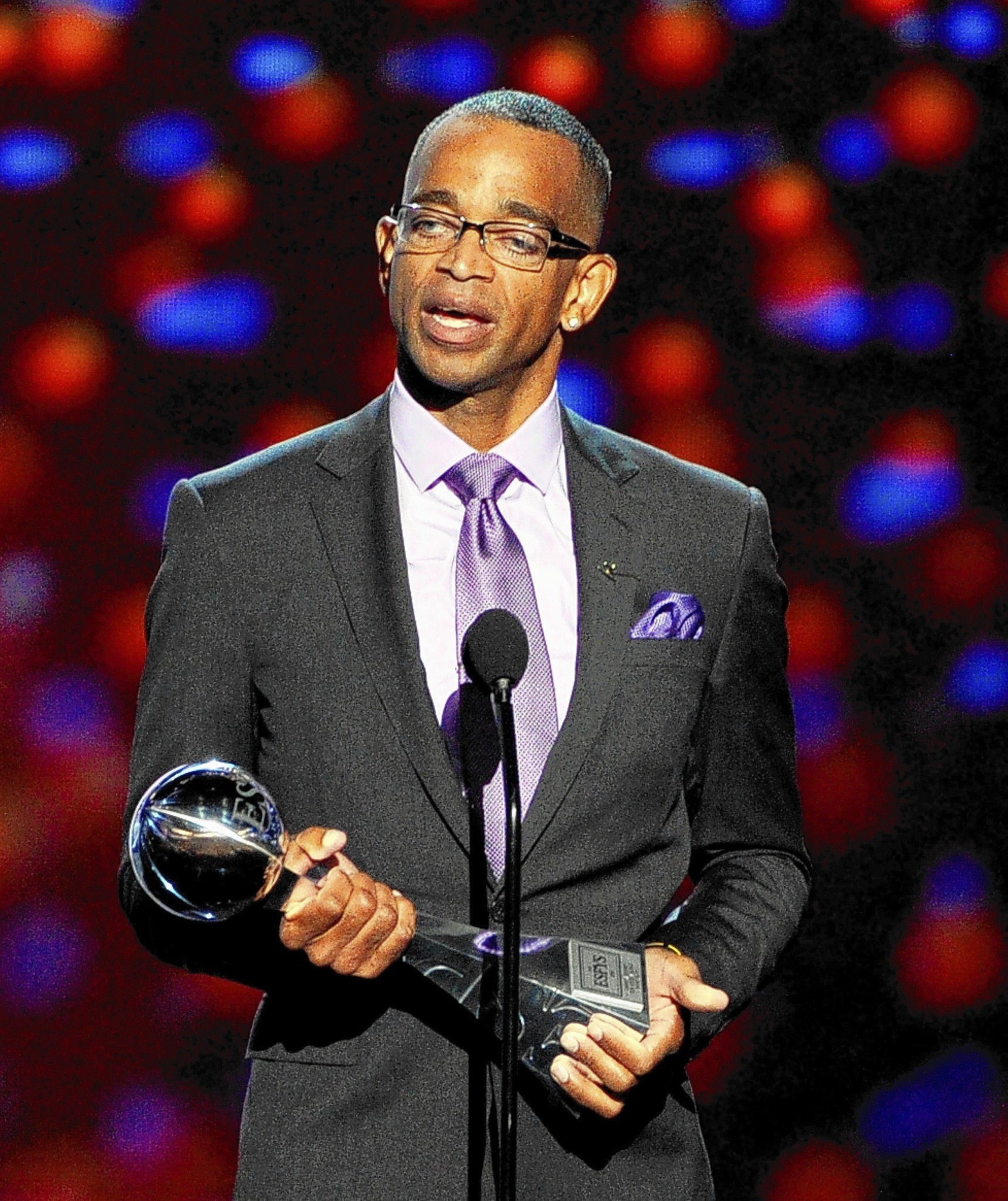
Stuart Scott accepting the 2014 Jimmy V Perseverance Award  during the 2014 ESPYS, Nokia Theatre, Los Angeles, CA, July 16, 2014. (Kevin Winter/Getty Images via http://plus.google.com)

Stuart Scott accepting the 2014 Jimmy V Perseverance Award during the 2014 ESPYS, Nokia Theatre, Los Angeles, CA, July 16, 2014. (Kevin Winter/Getty Images via http://plus.google.com)

A piece of my second childhood (i.e., graduate school, sports, and dating in the 1990s) died yesterday morning with Stuart Scott. He was the best that ESPN had to offer for a long time, a sports anchor who brought it with style every single broadcast. Or, as Scott would’ve put it, from day one, he “just called himself butter, ‘cuz he was on a roll.”

I could analyze his impact on sport and entertainment, on sports in and as pop culture, on Scott’s infusion of hip-hop and other forms of “being Black” on the Seinfeld-esque SportsCenter. I could also talk about race and sports and Scott more broadly, and how Scott’s style may have taken some of the edge off of the everyday racial undertones that are so clearly a part of college and professional sports in the US. I leave that for people who are more expert on sports and sports journalism in popular culture than me. At least for now.

I have an dear old friend whom Scott always reminded me of when I watched SportsCenter or when Scott hosted NFL or NBA shows on ESPN. My friend Marc, whom I’ve talked about before on my blog, whom I’ve known now for nearly twenty-seven years. I’ve often thought over the years, if Marc did TV instead of writing or print journalism, he’d be Stuart Scott. I’m not sure if Marc would take this as a compliment or a criticism, but for me, it’s definitely the former.

But so many bouts with cancer over the course of a decade would be dire for anyone. I feel for Scott’s daughters and girlfriend and ex-wife, for his extended family and friends, and for a sports world without someone that positive, someone on the presentation side with serious dap. Here’s to you, Mr. Scott, one more voice of “Boo-yah!” to add to the mix.

Back to My Future, Forward to the Past

Tags

, , , , , , , , , , , , , , , , , , , , , , , ,


Michael J. Fox as Marty McFly on a hoverboard in 2015 in Back To The Future Part II (1989), screen shot, January 1, 2015. (http://youtube.com).

Michael J. Fox as Marty McFly on a hoverboard in 2015 in Back To The Future Part II (1989), screen shot, January 1, 2015. (http://youtube.com).

Happy New Year, everyone! It’s 2015, and the fictional year from Back To The Future (1985) has become reality. Yeah, right! There are no hoverboards — at least, ones that actually work, anyway — we still drive with internal combustion engines, and Whites still only vote for folks of color when they are truly desperate for some elusive change.

For me, though, 2015 confirms the reality that time really is an illusion, as I’ve spent time over the past thirty years imagining what life would be like in 2015. That imagining started in ’85. At fifteen, I could barely wrap my head around the idea that I could live to thirty years of age, much less that I could make it to forty-five.

Truly, that’s what growing up poverty and with abuse did for me. It created the impression that life was cheap and short. Dating, marriage, a kid, being a father, working on a third career? Heck, I spent so much of my life at fifteen constructing a sound track and a reality beyond my everyday circumstances, just to get by! I lived vicariously through my Mets and Giants especially. My conscious mind provided little space for constructing a reality based on my circumstances or the natural progression of a modern American life.

Collage of me at 15, 30 (with my wife), 40 (with my son), and 45, January 1, 2015. (Donald Earl Collins).

Collage of me at 15, 30 (with my wife), 40 (with my son), and 45, January 1, 2015. (Donald Earl Collins).

Gradually, I had to let go of most of my coping strategies in order to at least live for a better future, not just imagine it full of new technologies. I had to begin to place myself there as a whole person. It helped that I spent most of the 1990s in grad school and as a freshly minted professor teaching graduate courses in education foundations. Both helped me in looking at the past in order to understand my present and push for the future I wanted. Despite the betrayals and my mistakes along the way, I made it to thirty, mostly as the person I wanted to be.

Still, like most people, I have baggage. I have the kind of baggage that’s actually easy to ignore, and even easier to bury so deep into one’s mind and spirit that it would take the power of a flux capacitor to unearth. In writing about portions of my past over the years, I’ve dug up all of those haunts and demons, some of which I wish I hadn’t known existed in the first place. Writing about myself has been painful. But having a clear and complete understanding of every layer of onion from my past going back to 1969, and 1974, and 1976? It clears the air, even as it has induced five-alarm-fire headaches.

Beyond me, myself, and I, it has been absolutely necessary to live in the present, to find joy in both small and big moments, especially around the people in my life so near and dear to me. From my son’s first steps to his discovery of sarcasm, from watching my wife’s labor to receiving my first royalty check for Fear of a “Black” America. All of it was more significant than a new car, a better cut of steak, a fragrant glass of wine, or the latest version of the iPhone.

A Philips MRI machine at Sahlgrenska University Hospital, Gothenburg, Sweden, February 12, 2008. (Jan Ainali via Wikipedia). Released to public domain via CC-SA-3.0.

A Philips MRI machine at Sahlgrenska University Hospital, Gothenburg, Sweden, February 12, 2008. (Jan Ainali via Wikipedia). Released to public domain via CC-SA-3.0.

Speaking of our devolving material culture, I can’t help but make this observation now that we’re in 2015. We spend so much time and effort exalting ourselves over the latest technological innovations, the next version of some new piece of gadgetry. Seriously, when was the last time a new invention came around that truly transformed our lives writ large for the better, that was transformative in every way possible? The iPhone? Please! Phones have been around since the 1870s, and mobile phones since the 1970s. And, I don’t think the tens of thousands of Chinese factory workers really enjoy making these gadgets for our benefit. Flat-screen HD TVs? Gimme a break! The TV’s been here since the 1920s, and adding clarity with hundreds of channels has just make the size of its “vast wasteland” that much bigger.

Face it folks. There hasn’t been a major technological breakthrough since the inventions of the MRI machine and the microchip in the late 1960s and early 1970s. Personal computers, Google Chromebooks, Fitbit trackers, electronic fuel injectors, the Internet and those millions of apps? They are all derivatives of technologies that are as old as I am.

Let’s credit Apple and Microsoft and Google for new innovations. But we haven’t had any major breakthroughs worthy of Back To The Future. Hydrogen-fuel-cell and nuclear fusion technologies? They remain somewhere between a limited experiment and a pipe dream. A matter-energy converter so that we can stop growing and killing our food? We’ve barely discovered 3D-printing, and that’s still years away from everyday usage. Technology that can scrub the air of greenhouse gases without killing every living thing on the planet at the same time? Someone’s buried it somewhere.

MR angiogram in congenital heart disease, technically known as Partial Anomalous Pulmonary Venous Drainage, February 22, 2011. (Jccmoon via Wikipedia). Released to public domain via CC-SA-3.0.

MR angiogram in congenital heart disease, technically known as Partial Anomalous Pulmonary Venous Drainage, February 22, 2011. (Jccmoon via Wikipedia). Released to public domain via CC-SA-3.0.

Perhaps that’s what has happened in my lifetime. That with the killing of millions from war, disease, settler colonialism, out-and-out racism practiced on a societal level, unbridled capitalism and the constant quest for the immediate big profit, we’ve killed those people. A Black kid who could’ve created a faster-than-light drive. A Palestinian girl who may have developed a food replicator. An affluent White boy steered toward Wall Street who may have once thought through the idea of carbon capture from the upper atmosphere. Apparently we have none of this, because we don’t want that future. We only want to imagine that future while wallowing in the -isms of our pasts and presents, minus any wisdom or understanding.

The “Are You Sure’s” and Doubting Sylvias

Tags

, , , , , , , , , , , , , , , ,


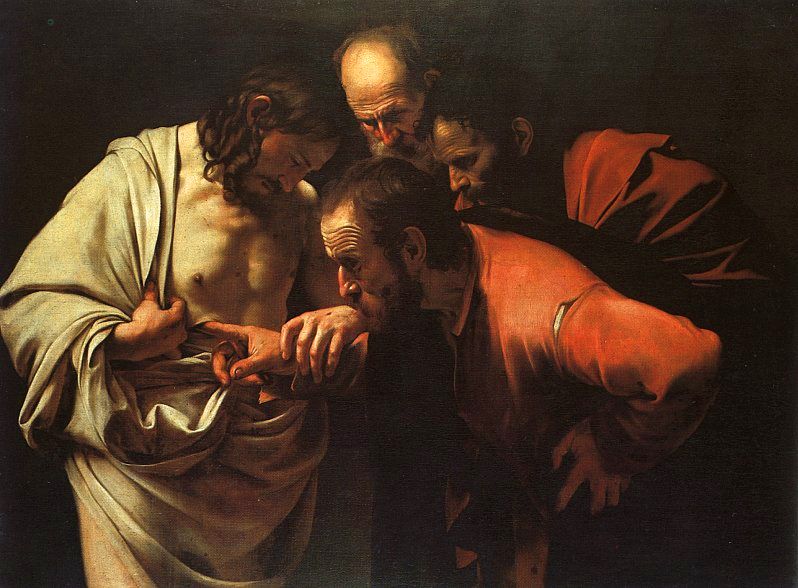
The Incredulity of Saint Thomas, by Caravaggio, c. 1601-02, uploaded April 13, 2005. (Dante Alighieri via Wikipedia). In public domain.

The Incredulity of Saint Thomas, by Caravaggio, c. 1601-02, uploaded April 13, 2005. (Dante Alighieri via Wikipedia). In public domain.

We all have doubters in our lives. Even if the only doubters turn out to be ourselves. As someone without much of a roadmap for any success, doubt has been a constant companion, one that I often had to ignore to experience any victories in my life. To have those with influence pretend to be on my side but add to those doubts, though. As a twenty-year-old, it was somewhere between bewildering and rage inducing. As a forty-five year-old who regularly advises students, love ones, friends and others about their futures, looking back at those doubters, it’s almost unforgivable the seeds they attempted to plant.

Of all the non-relatives in positions to advise me, few were worse than my high school guidance counselor Sylvia Fasulo. For four years, Fasulo forced me to listen to her “Are you sure…?” questions about difficult classes, the colleges I wanted to attend, the career paths I thought about taking. Her patrician Vassar arrogance toward me as the poor Black kid drove me up a wall every time I walked into her cigarette-filled office.

"Raleigh's First Pipe in England," an illustration in Frederick William Fairholt's Tobacco (1859), June 8, 2014. (Materialscientist via Wikipedia). In public domain.

“Raleigh’s First Pipe in England,” an illustration in Frederick William Fairholt’s Tobacco (1859), June 8, 2014. (Materialscientist via Wikipedia). In public domain.

I hated having Fasulo as my counselor especially once it was time for me to apply for college. She was condescending, demeaning and chain-smoked up my clothes for my troubles. Most of all, I hated having to reveal things about myself to her that I otherwise wouldn’t have shared. Like my family’s financial situation. Fasulo became only the second person I would tell that we were on welfare, that my father and mother had divorced and that he hadn’t made a child support payment since ’78. I had to talk to her about my role in my family as acting first-born child and my responsibilities. It was necessary and humiliating at the same time.

Despite and not because of Fasulo, things worked out for me in the end. Going to Pitt, meeting the people and the professors I’d become friends and colleagues with, was probably one of the best decisions I ever made. Still, I had one parting shot from her in the middle of my junior year at the University of Pittsburgh. It was the holiday season in ’89, and I took time while home in Mount Vernon to visit my favorite teacher, the late Harold Meltzer. I had just missed him, but bumped into Fasulo. It was about as fortuitous as having diarrhea and being nowhere near a toilet with toilet paper.

She asked me where I was in school, and I told her about my considerations for graduate school, law school and the world of work. It was a toss-off sentence, my attempt to end a conversation, not begin one. “Being a lawyer’s hard work,” Fasulo said in response. She then went on to tell me about 70-hour work weeks and billable hours and the bar exam, as if any of this was supposed to be surprising or would somehow scare me. I cut her off, saying “You know, you’re not my counselor anymore, so thanks but no thanks for your advice,” and left her office while she tried to explain her idiotic perspective.

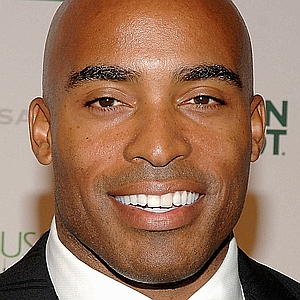
Tiki Barber, the personification of a doubter, at the American Museum of Natural History, October 16, 2008. (Jamie McCarthy/WireImage.com via http://thenypost.files.wordpress.com/).

Tiki Barber, the personification of a doubter, at the American Museum of Natural History, October 16, 2008. (Jamie McCarthy/WireImage.com via http://thenypost.files.wordpress.com/).

A quarter-century later, and though I am more than content with the fact that I opted for a PhD over a JD thirteen out of every fourteen days (people with law degrees do make more money on average), I sometimes question if the PhD in history was worth it. After all, a JD is far more portable. A JD would’ve served me better in my nonprofit and consulting careers than having to explain a doctorate. I wouldn’t want to think that I went in the direction of a graduate program for five and a half years simply because I had a conversation with a racial elitist.

It’s probably more likely that I didn’t go to medical school to earn an MD because my Mom and my idiot late-ex-stepfather both told me I couldn’t be a surgeon because I had “ten thumbs.” By more likely, I mean highly unlikely on both counts. I ultimately did what I wanted to do educationally speaking, despite own my doubts, despite the doubts of those who believed it was their job to advise me. But constantly asking, “Are you sure, Donald…?” isn’t exactly the best way to advise or mentor anyone, especially someone in their teens or a literal twenty-year-old. You lay out options, you ascertain what’s going on in their heart as well as their mind. You introduce them to other people who could provide better advice, based on direct expertise or experiences. Otherwise, you’re a doubter, not an advisor or a mentor.