Independence Day On The 6’s

Tags

, , , , , , , , , , , , , , , , , , , , , ,


Shea Stadium (taken from 7 Subway), Flushing Meadows, Queens, NY, September 10, 2008. (Gary Dunaier via http://farm4.static.flickr.com/). In public domain.

Shea Stadium (taken from 7 Subway), Flushing Meadows, Queens, NY, September 10, 2008. (Gary Dunaier via http://farm4.static.flickr.com/). In public domain.

For me, the 6’s are ’76, ’86, ’96, and ’06. For 2016, all I’ve done today is make BBQ chicken legs and thigh (after an hour of so of marinating), corn on the cob, mac and cheese, and New York Style blondies with chocolate chips and walnuts. It’s a rainy 240th anniversary of America’s independence from the United Kingdom of Great Britain, England, Wales, Scotland, and Northern Ireland. About as dreary the Mid-Atlantic and the nation, really, can be during an election cycle.

It wasn’t that way for most of my on-the-6 Independence Days. I’ve talked about my first one, the bicentennial of 1976, the summer of “baseball, hot dogs, apple pie, and Chevrolet.” That Saturday down in a ship and fireworks smoked filled New York Harbor, followed a train ride with my inebriated father to New Haven. I slept more peacefully on that train ride than I probably did at home. At least, until the conductor woke us up to let us know we were in Connecticut. We were lucky the trains in and out of New York were free that day.

Typical Pittsburgh fireworks show for Independence Day, Point State Park, Pittsburgh, PA, July 4, 2014. (http://davedicello.com/).

Typical Pittsburgh fireworks show for Independence Day, Point State Park, Pittsburgh, PA, July 4, 2014. (http://davedicello.com/).

Independence Day/Week 1996 was pretty good, if not as meandering. Me and my future spouse Angelia went to Point State Park in Downtown Pittsburgh to watch the fireworks. For all of the issues that po-dunk Pittsburgh has, bad fireworks shows weren’t one of them. I needed the break, after a spring of turmoil with my advisor Joe Trotter and weeks revised my then 430-page dissertation (I would end up writing seventy-five pages [net] that month while doing a second set of revisions). It rained that afternoon and early evening, but it cleared up at 8 pm, just in time for some excellent fireworks. We perched ourselves where we could see sparkles and artwork over the confluence of the Allegheny, Monongahela, and Ohio Rivers.

Tuesday, July 4th of ’06 wasn’t memorable. It was my first summer working on Boy @ The Window, and I had already began planning my escape from AED and the daily grind of nonprofit work and raising money. I think we had my sister-in-law over.  I made some ribs and chicken, bought dinner rolls and macaroni salad, and talked mostly about my then nearly three-year-old son and his potty training woes. Ah, the boring stability of a more typical middle-class American life!

Of all my Independence Days — on a “6” year or not — one stands out over all the rest. Friday, July 4, 1986. It was the grand re-opening of the Statue of Liberty, courtesy of one-time Chrysler head Lee Iacocca and The Statue of Liberty-Ellis Island Foundation, which had raised hundreds of millions to restore both symbols of American inclusion (via European immigrants, at least) and American freedom to museum-quality glory. My Mom, my idiot stepfather Maurice, and my younger siblings Sarai and Eri went down to Battery Park by Subway and Bee-Line bus to see the grand ships and fireworks for that celebration of the Statue of Liberty at 100 years old.

Dwight Gooden, aka, "Dr. K," Shea Stadium, 1986. (Source/http://itsonbroadway.wordpress.com/2011/05/16/dwight-gooden-aka-dr-k/).

Dwight Gooden, aka, “Dr. K,” Shea Stadium, 1986. (Source/http://itsonbroadway.wordpress.com/2011/05/16/dwight-gooden-aka-dr-k/).

Not so for me and the rest of us. I took me, my older brother Darren, and my then near-seven year-old brother Maurice and nearly five year-old brother Yiscoc to Shea Stadium to watch the Mets play. It was either a 1:05 pm or 1:35 pm start, I don’t remember. What I do remember, though, is that was a beautiful eighty-five degree afternoon, beautiful because it wasn’t particularly humid, and there were no storm clouds to be found that Friday. Dwight Gooden was on the mound for the Mets, starting against the all-time great Nolan Ryan. It was built up to be a duel, and it was.

Keith Hernandez drove in a run in the first, and that was it until the top of the seventh inning, when Dr. K gave up a home run to Kevin Bass. Other than that, fly balls, walks, double-plays, and strikeouts were the order of the day. Lenny Dykstra drove in the game-winning run with a double to right-center field at the bottom of the seventh inning off of a reliever, as Ryan was out after beginning the bottom of the sixth giving up a walk and a hit. Despite giving up five walks and only striking out four, Gooden got a complete-game win, and 30,000 saw the Mets go to 54-21, well on their way toward their World Series title for 1986.

That was already a good day. But it so much better with three of my brothers there, away from 616 and Mount Vernon, hanging out, without an adult to supervise, or rather, abuse us in some way. It was one of the first times I actually felt like a responsible adult. I took the four of us down to the city on Metro-North at the Pelham stop, rode into grimy Grand Central, took the Shuttle train to Times Square, and then the 7 Subway to Shea. Maurice and Yiscoc were so enamored with the trains and the city that it seemed all they did was stare at skyscrapers and out of train windows when we weren’t at the game. Darren, though mostly quiet, at least wasn’t staring off into space plotting some revenge on me for my “5” on the AP US History Exam while doing the Wave.

Shea Stadium, second level, behind visitors dugout, Flushing Meadow, Queens, NY, 2008. (http://www.bloggingmets.com/)

Shea Stadium, second level, behind visitors dugout, Flushing Meadow, Queens, NY, 2008. (http://www.bloggingmets.com/)

It was so cheap to do what we did that day. The four upper-deck, left-of-home plate tickets we bought cost $4 each, but each hot dog was $3, and the sodas were $2. apiece Given my $3.40-per-hour job with Technisort, though, the $50 excursion wasn’t so cheap that I wasn’t thinking about sneaking a Sabrett hot dog from a street vendor in before we got to the stadium. To be sure, the hot dogs at Shea were better than my usual fare on the street or at Gray’s Papaya.

It was probably the best day I had during my Boy @ The Window years. I was with innocent family members, watching my favorite team and one of my favorite players. I was lost in the humongous human mob of New York on a double-whammy of an Independence Day weekend. I slept well that evening, knowing that I’d drawn a 10 am-2 pm shift that Saturday. I planned on buying a new Walkman at the Cross County Mall that Saturday afternoon. A normal weekend for many sixteen-year-olds was a small eye-wall in the chaotic hurricane that was my life back then.

OJ: Microwaved in America

Tags

, , , , , , , , , , ,


Ezra Edelman (sports documentarian and son of activist/Children's Defense Fund founder Marian Wright Edelman), 2015, June 26, 2016. (Deqrassi4 via Wikipedia). Released to public domain via CC-SA-4.0.

Ezra Edelman (sports documentarian and son of activist/Children’s Defense Fund founder Marian Wright Edelman), 2015, June 12, 2016. (Deqrassi4 via Wikipedia). Released to public domain via CC-SA-4.0.

Ezra Edelman is a pretty good documentarian. Period. Edelman is no Ken Burns, David Attenborough, or even Spike Lee. Although his O.J.: Made in America has gotten Edelman kudos and other critical accolades, for this viewer, it felt like an unedited draft long on O.J. Simpson’s post-football life and woefully short on the “made in America” theme. Like a McDonald’s or microwave meal, Edelman’s O.J.: Made in America tasted more like fake food than it did a carefully crafted work with a serious balance of protein, starches, fruits, and vegetables.

Mechanically processed chicken, the key ingredient in McDonald's Chicken McNuggets, pouring out into small tubs, October 5, 2010. (http://huffingtonpost.com).

Mechanically processed chicken, the key ingredient in McDonald’s Chicken McNuggets, pouring out into small tubs, October 5, 2010. (http://huffingtonpost.com).

Let’s start with the long. The five-part documentary was nearly eight hours in length, about three hours too long overall. Spending more than twenty minutes of Part 3 on the Bronco chase was an error that most directors would’ve left on the editing floor. Anyone with access to a TV and over the age of thirty has seen this chase at least once, and for people like me, at least one time too many. There were so many other places, though, where Edelman chose not to make editing choices. Thirty minutes of Part 3, all ninety-five minutes of Part 4 and the first fifteen minutes of Part 5 were on the O.J. trial. There wasn’t much “made in America” with this part of the documentary.

And how could there have been, really? Edelman’s idea was to let the audience make up their own minds about O.J. Even so, an occasional narration of events would’ve helped with the timeline of the five parts, especially Parts 2 and 3. When did O.J. break up with his first wife, Marguerite? How did O.J. go from dating to marriage with Nicole Brown? What was O.J.’s relationship with his first children, with the Brown family, prior to the 1994 slaying and subsequent trial? Why wasn’t a timeline consistently added to the documentary? Who refused to do interviews for the documentary? With so much information, Edelman expected viewers to draw inferences for all of the missing pieces. There was too much and not enough information at the same time.

Edelman’s expectations also meant the limited (really none, in this case) use of experts to draw out nuances in the story, to truly make this about O.J. and his relationship with America. Sure, references to the LAPD, Rodney King, and the L.A. Riots of 1992 were fine. What about O.J.’s internalized racism and obvious colorism? What about the toxic nature of O.J.’s -isms mixed with the racist fetishisms not only on the part of Nicole Brown Simpson, but also of nearly everyone in O.J.’s orbit? This would’ve been a great place to have some expert commentary. Instead, Edelman divided Americans into two neat racial camps: most Whites for a colorblind race transcendent in O.J. before falling into hatred, and most Blacks pretty much the opposite.

O.J.: Made in America (2016) poster board, June 26, 2016. (http://variety.com)

O.J.: Made in America (2016) poster board, June 26, 2016. (http://variety.com)

The last part of Edelman’s documentary came down to whether people believed O.J. “did it” or not. That question is no longer relevant. In fact, it may never have been relevant, even on June 12, 1994. Especially if the idea is that O.J. the misogynist, narcissist, and self-hating probable murderer is a representation of the American cultural psyche. This is where skill, expertise, and narration can subtly frame such an overarching theme, instead of taking us to the land of America in racial and gender stereotypes.

For this viewer, if I want a documentary that addresses societal issues like race through the lens of an individual’s experience, I’ve already learned whom not to watch again. At least, not until Edelman learns what I already know. Seasoning is as important in a documentary as cooking with gas. One ensures good flavor and a variety of perspectives. The other blandly reinforces people’s misjudgments and stereotypes.

Mrs. Shannon

Tags

, , , , , , , , , , , , , ,


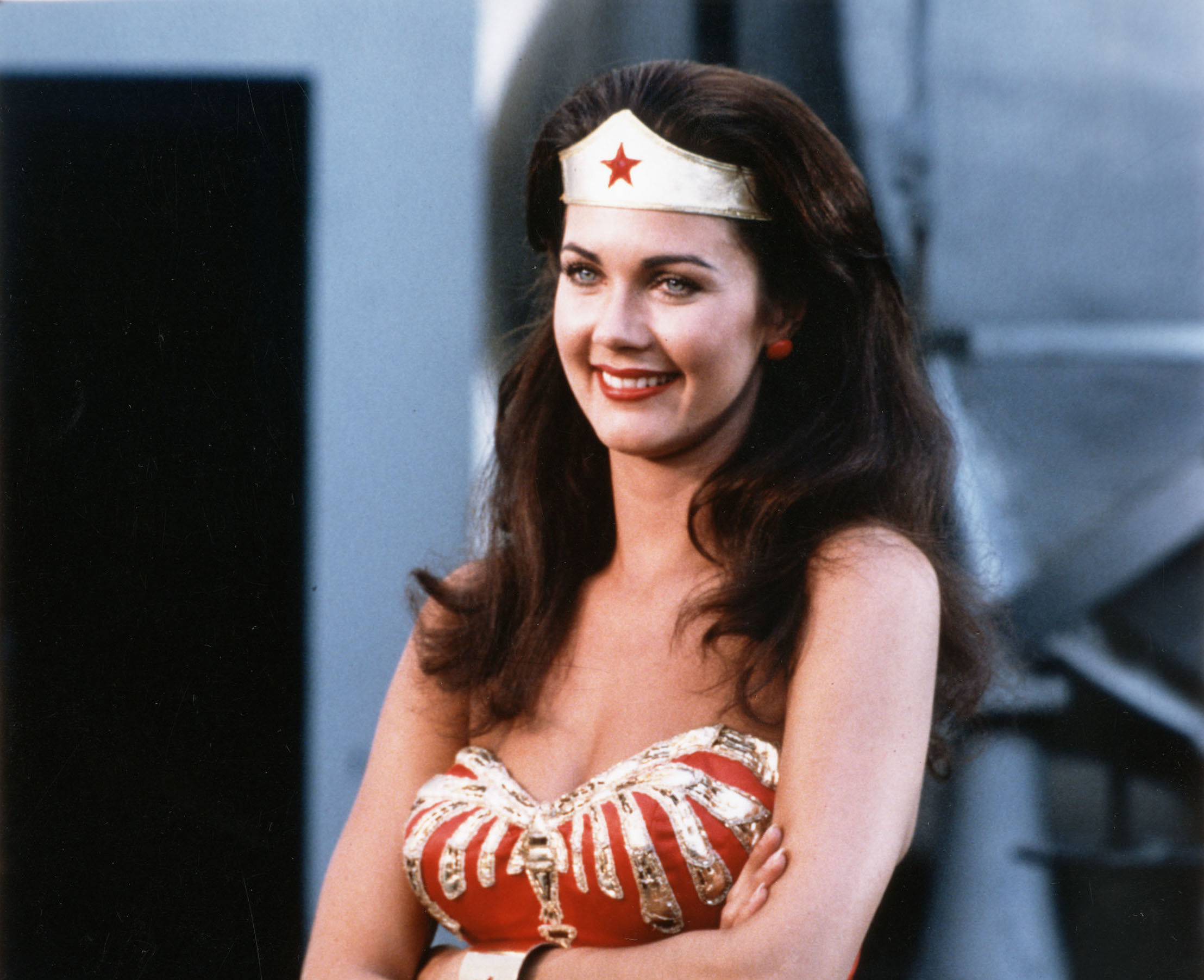
Lynda Carter as Wonder Woman, circa 1976, June 25, 2016. (http://www.moviepilot.com).

Lynda Carter as Wonder Woman, circa 1976, June 25, 2016. (http://www.moviepilot.com).

It’s been nearly four decades since my first teacher crush, maybe really, my only teacher crush. Of course there were a number of teachers I came to adore and love, but not in a child-like, puppy-love way. Ms. Griffin, Ms. Martino, Harold Meltzer, even that tough old bird in Mrs. O’Daniel (R.I.P.) were a few of my favorite teachers before college. (And as a professor, I do make the distinction between teachers and professors, since the former [mostly] work with students more closely, and at a more impressionable age.)

For me it was Mrs. Shannon and third grade at William H. Holmes Elementary, the 1977-78 school year. She was my real-life Wonder Woman, with none of the skills but all of the passion of that goofy ’70s show. Beyond that, she really set me on the path to make education my weapon, my equalizer, even though it would be years before I realized the untruth of this ideal for so many.

Third grade was my transition year from Nathan Hale to Holmes. The two elementary schools were at the opposite ends of Mount Vernon, with Nathan Hale on the predominantly Black and more impoverished South Side, and Holmes on the more middle class and Whiter North Side. Though one school veered toward Pelham and the other toward the Bronx, both were similarly composed of mostly Black and some Latino kids. Interestingly, Mostly White Traphagen ES was technically a closer walk than the seven blocks between 616 and Holmes, but the Board of Education cut off the neighborhood zone right at the northern corner of the East Lincoln-Sheridan Avenue intersection.

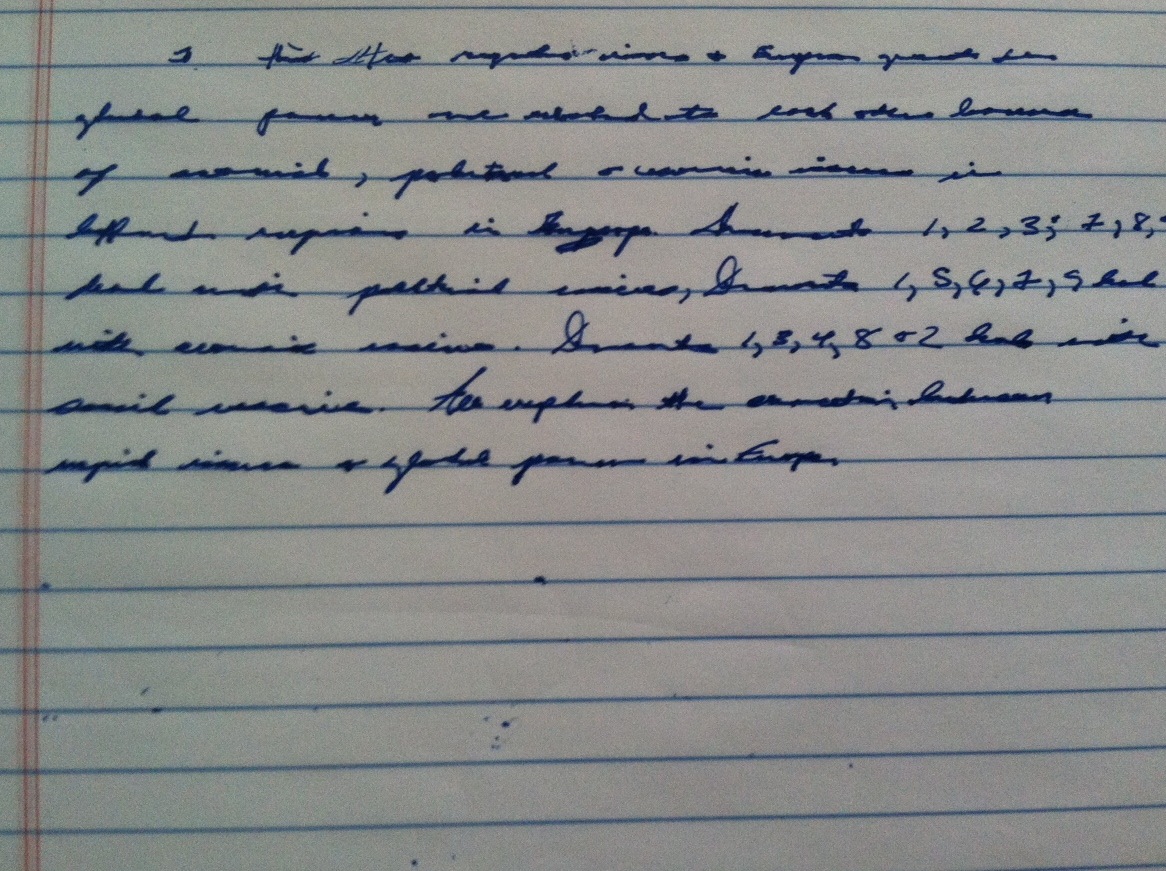
My pretend version of an introduction to a documents-based question essay for AP World History (in my best-worst handwriting), June 21, 2013. (Donald Earl Collins).

My pretend version of an introduction to a documents-based question essay for AP World History (in my best-worst handwriting), June 21, 2013. (Donald Earl Collins).

Despite this zoning, I lucked out. Mrs. Shannon was a young Black veteran teacher, probably between twenty-eight and thirty-three years old at the time. She was full of energy and ideas, and kept all of us on our toes. She even made my first grade teacher Ms. Griffin look lethargic by comparison (and Ms. Griffin was a bundle of energy herself!). She gave out tons of homework, drilled us on spelling, grammar, and all but beat my fingers with a ruler to improve my penmanship (my handwriting is still horrific).

In that year of learning about my new school, my new classmates, and my new neighborhood, I learned a lot from Mrs. Shannon. For one, I learned to read about more than Peanuts comic strips in short picture book form that year. I began to see books not as a burden, but as a window to new worlds, to worlds better than the one in which I lived. I learned, too, the power of multimedia. Mrs. Shannon used the latest in technology, the compact short film strip projector, to show us everything from current events to the rise and fall of ancient Mayan civilization. The screams that came from the tape recorder that came with the film strip made the fall of civilizations scary for me.

But really, after a year of unacknowledged abuse, Mom’s divorce from my dad, moving to 616, and a terrible teacher in Ms. Hirsch, I found myself healing a bit in Mrs. Shannon’s class. She actually hugged us, hugged me even, when it looked like we could use one. She was tough, though, too. I daydreamed so hard during one math lesson that I fell out of my desk chair. I ended up standing in the corner for fifteen minutes while balancing my textbook.

I daydreamed a lot in those days. I usually daydreamed about food, usually Hostess Suzy-Qs (back when they were made with lard) or what we’d have for dinner that evening. As the year progressed, a good portion of my daydreaming was about Mrs. Shannon. I was eight, so mostly it would have been about her face, her smile, her smell, maybe a kiss here, or a hug there. (Back then, I even loved the smell of her lunches, which mostly comprised of cans of tuna fish with the occasional crackers.) She would get frustrated with me, too, because I coasted for most of the year with B’s and C+’s. Mrs. Shannon asked me one, “What are you daydreaming about?” There was no way I could say, “Why, you of course!”

Ice Capades 1978 brochure (with Dorothy Hamill near middle right), June 22, 2016. (http://www.retrospace.org).

Ice Capades 1978 brochure (with Dorothy Hamill near middle right), June 22, 2016. (http://www.retrospace.org).

Still, without Mrs. Shannon, Mom doesn’t go out and spend $300 on the ’78 edition of the World Book Encyclopedia. It was the path that led to my cosmic leap of academic development and use of near photographic memory power. With Mrs. Shannon, I saw the world beyond Mount Vernon and 1978. I could see New York beyond subway and Metro-North rides with my drunk father. I went to the Statue of Liberty and to Madison Square Garden for Ice Capades with her. Without Mrs. Shannon, I wouldn’t have recognized that I had within me any intellectual capabilities to develop. Without Mrs. Shannon, the lessons I barely knew I learned — from Roots to multiplication tables — would have disappeared from my memories.

By the end of third grade, I didn’t want to go to fourth grade and Holmes’ second floor, where the fourth, fifth, and sixth grade classrooms were. I felt like I would never see Mrs. Shannon again. On my way out of her classroom, I gave her one last hug, while she reminded me that I could “always do better” academically. I went home that morning, went into the bedroom I shared with my older brother Darren, and walked into our small walk-in closet. Once there, I shut the door, and cried like a little baby for at least a half hour. The good news was, no one was home that Friday. I cried as if I’d never see Mrs. Shannon again, even though I knew I would. That was thirty-eight years ago this week.

The Mountaintop of Sixth Grade

Tags

, , , , , , , , ,


William H. Holmes Elementary, Mount Vernon, NY, November 23, 2006. Donald Earl Collins

Thirty-five years ago this week, I finished elementary school. Thirty-five years since I first felt that feeling of reaching the mountaintop, as if I’d accomplished something in my life. Three-and-a-half decades since the last time I was unknowingly naive and unnecessarily arrogant.

It was a finish with a flourish, though. Combined with having become a part of a bizarre religion, I had a new point of view on my life by the time graduation day on Friday, June 26 of ’81 rolled around. My family was now two months into our serving Yahweh, and I was six weeks removed from losing my best friend Starling because of this nutty religion. It was a time in which I felt overwhelmed about my present and immediate future. Yet I acted as if I’d published a book that was both a New York Times Bestseller and a Pulitzer Prize winner. I couldn’t have been more pumped up if I’d been on Walter White’s blue crystal meth from Breaking Bad.

The Sun setting behind the Statue of Liberty, New York, July 4, 2003. (http://science.nasa.gov/).

The Sun setting behind the Statue of Liberty (kind of how I saw my life back in 1981), New York, July 4, 2003. (http://science.nasa.gov/).

But I had some basis for seeing myself as great. As far as I was concerned, I was the unofficial valedictorian of my elementary school class at William H. Holmes Elementary, the ’50s structure next to the big Presbyterian church on North Columbus and East Lincoln Avenue. My teachers had chosen me out of all of my classmates to speak at our graduation ceremony. On that last Friday in June ’81, I served as the opening speaker, introducing the city councilman who served as our keynote. I even wrote the short introduction that I delivered on that wonderful day.

I firmly believed no one in the world was smarter than me. In the three years prior to graduation, I had straight A’s. Still, that paled in comparison to my performance my last year of elementary school. I figured out that I earned an A on forty-eight out of fifty-two quizzes and tests in sixth grade. The lowest grade I earned that year was an 88 on a spelling quiz. I’d won a Dental Awareness Month award for Best Poster and came in second in a city-wide writing contest that included essays from high school students. If anyone had known how big my head had grown that year, they would’ve stuck a pin in my temple just to let the air out.

It wouldn’t have been any funnier if I’d pretended I was Mr. October himself, Reggie Jackson, saying his words, “Sometimes I underestimate the magnitude of me.” I wanted so badly to see myself and to be seen by others as special that I forgot about the work it had taken to move my reading and writing skills up eight grade levels in a little more than two and a half years.

Yankees/Oakland A's/California Angels HOF Reggie Jackson at bat, 1980, accessed June 21, 2016. (AP Photo).

Yankees/Oakland A’s/California Angels HOF Reggie Jackson at bat, 1980, accessed June 21, 2016. (AP Photo).

It was a great day, sunny and low-eighties with cumulus clouds and low humidity. But knowing what life at 616, Mount Vernon and Humanities had in store for me over the next eight years, I should’ve smelled the ozone in the air. I should’ve looked more closely at my sky, to see the flocks of seagulls flying away from the shoreline. I should’ve sensed — and did, on a very low-frequency — the hurricane gaining strength in my life. I chose to ignore it, hoping that I could fake my way through it while resting on my laurels.

To think that it would’ve been another nine years before I felt like I could take on the world again. If someone had told me in June ’81 that I’d have to wait until my junior year at the University of Pittsburgh to have a straight-A semester, I would’ve grabbed a gun and shot myself through the temple with a Colt .45. And I would’ve made sure the bullet I used had a hollow tip. If I’d known that I’d have to wait a full decade to be comfortable with myself as myself in all of my goofiness again, I probably would’ve cried on the spot.

All I can hope these days is that my nearly teenage son can strike a balance between being cool and being cool with himself. I don’t want him spending a decade trying to figure himself out all by himself.

Everyone Needs A Ferris Bueller

Tags

, , , , , , , , , , , , , , ,


Mia Sara, Alan Ruck, and Matthew Broderick in Ferris Bueller's Day Off (1986) screen shot, June 16, 2016. (http://www.playbuzz.com).

Mia Sara, Alan Ruck, and Matthew Broderick in Ferris Bueller’s Day Off (1986) screen shot, June 16, 2016. (http://www.playbuzz.com).

This week mark thirty years since the release of the Hollywood hit Ferris Bueller’s Day Off (1986). The movie is mostly known for Matthew Broderick imbuing energy into the title character, taking his best friend Cameron Frye (Alan Ruck played him) and his girlfriend Sloane Peterson (Mia Sara played her) on a joy ride through North Side Chicago while embarrassing his high school principal and avoiding his parents. Going to a Cubs game, insinuating himself into a parade, and otherwise making Chicago pretty lily-White. For most watchers, Ferris Bueller’s Day Off was a John Hughes comedy. Period.

Not so for me. At least once I finally watched the film. Like with most movies made between ’81 and ’87, I didn’t see it when it first came out. With my high school classmates only quoting Ben Stein’s character saying “Bueller?” over and over again, or commenting on the ability of anyone to roam the streets of Chicago so easily between roughly 8 am and 6 pm in the middle of the work week, I had no interest in seeing it. I eventually caught bits and pieces of scenes from Ferris Bueller on cable, but by nearly a decade after the movie first came out, I’d seen maybe fifteen minutes of the film.

It took my eventual wife Angelia to get me to see the movie in ’96. By then, I’d seen other Matthew Broderick films, enough where I was willing to give a comedy on White teen Gen Xer angst a chance. For whatever reason, I realized for the first time Ferris Bueller really wasn’t a comedy. It had plenty of funny moments, but at best it was a dramedy. I even remember saying to Angelia after I watched it, “Are you sure this is a comedy?”

The movie’s not-so-hidden theme is friendship. In this case, how one friend in Ferris Bueller goes above and beyond as a high school senior to save his best friend from a quietly tragic future. In Cameron’s case, one in which he wouldn’t be in charge of the shape of his life. It would either be guided by his domineering father (whom we never see in the movie) or by some future domineering wife. Apparently that was the real reason behind all of Ferris Bueller’s days off from school in the final months of his senior year.

Cameron Frye (Alan Ruck) underwater in pool (literal and figurative), Ferris Bueller's Day Off (1986), June 16, 2016. (http://www.giphy.com).

Cameron Frye (Alan Ruck) underwater in pool (literal and figurative), Ferris Bueller’s Day Off (1986), June 16, 2016. (http://www.giphy.com).

By Bueller and his girlfriend colluding to permit Cameron his first look at a naked female body and performing an intervention through the use of Cameron’s father’s precious classic car, Cameron would somehow recognize the need to break free. That Bueller also got to thumb his nose at authority and hang out with his girlfriend was a bonus, of course. Otherwise, the movie is a zany comedy about playing hooky in the streets of Chicago on the most unlikely of school days in the middle of May.

I certainly didn’t have any Ferris Buellers in my life during my Humanities years. If there were classmates like him, they didn’t shine a light on me. Sure, there was White male angst, Black male angst, teenager angst, middle class angst, and Black and White female angst at Mount Vernon High School. I would assume now that this has been true as long as the concept of teenager and comprehensive high school has existed (about eighty years in all). But to deliberately perform an intervention on behalf of a friend to save them from themselves and their upbringing? I’m sure it happened, just not with me or any of my Humanities classmates.

This realization begs a question. Would a Ferris Bueller have emerged in my life in middle school or in high school if I were from a family of means? All issues aside, the reason why Bueller and Frye were friends probably had as much to do with location as anything else. And with residential segregation also comes income segregation. Money may not have been the reason the two teenagers were friends. Yet with both families firmly in the ranks of the affluent (not one percent, but certainly in the top 10-25 percent), their friendship is more unlikely than a Cubs game and a White ethnic pride parade on the same day. The answer to my question, of course, is no. Diversity without acknowledgement or discussion — whether by race, gender, and/or class — doesn’t exist, leaving the teenage angst that was my experience unresolved until college.

The rainbow flag waving in the wind at San Francisco's Castro District, San Francisco, CA, August 5, 2010. (Benson Kua via Wikipedia). Released to public domain via CC-SA-2.0.

The rainbow flag waving in the wind at San Francisco’s Castro District, San Francisco, CA, August 5, 2010. (Benson Kua via Wikipedia). Released to public domain via CC-SA-2.0.

As for the events in Orlando in the past week, aside from the obvious implications of misogyny, homophobia, racism, and hate/terror, there is another more subtle issue. That people who grow up with angst but minus interventions can easily become disaffected adults. Obviously most of these adults don’t become mass shooters or stalkers who kill. But it does mean that in a society geared toward narcissistic individualism and winning, there are millions out of touch with themselves and lacking empathy (forget about love) for other human beings.

Ferris Bueller’s Day Off is a sense that we all need one friend to intervene in our lives at least one time or for one day. We need that one day, to draw perspective, or maybe even, to find out that we truly need help and healing. My Ferris Buellers didn’t intervene until college at the University of Pittsburgh. They were gay and straight, Christian and Jewish and atheist, old and young, men and women, and Black, White, Brown, and Yellow. They came into my life later than I wanted, but not too late for me.

Where Everything Equals “Radical Islam” Terrorism

Tags

, , , , , , , , , , , , , ,


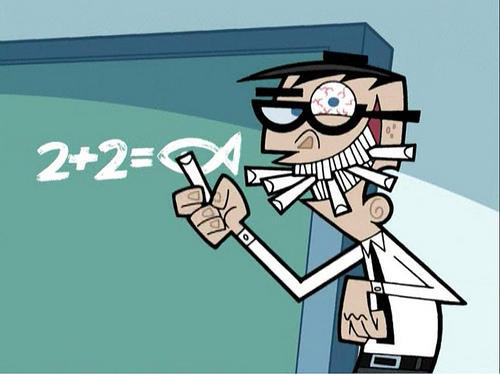
Mr. Crocker from The Fairly Odd Parents, June 14, 2016. (http://cdn.smosh.com/).

Mr. Crocker from The Fairly Odd Parents, June 14, 2016. (http://cdn.smosh.com/).

The tragic shame of fifty dead and fifty-three wounded because of one Omar Mateen’s anti-Black, anti-Puerto Rican, anti-gay, and anti-Islam hatred. The attack on an LGBT sanctuary in Orlando, Florida will continue to make news as the world learns more about the deceased attacker, his family and friends, as well as about the dozens of living and dead victims of Mateen’s venom.

While there is much to learn about all of this, there is one thing Americans and the world already know. That we as Americans — politicians, media, and ordinary citizens — are incredibly quick at jumping to conclusions before we have any facts at all. Declaring Omar Mateen an example of “radical Islamism” when he barely brushed an arm of anyone even remotely connected to terrorism in the name of Islam? Thanks a lot, Hillary (you’re supposed to be the sensible choice of the two presidential candidates, right?)!

Really, our reaction as a nation is no different from Mr. Crocker’s to unexplainable phenomenon on NickToon’s The Fairly Odd Parents – a play on the words “fairy godparents.” Until my son hit his preteens, I’d been subjected to six years of this ridiculous show about a permanent ten-year-old with fairies granting his every wish, all to his and the world’s detriment. Mr. Crocker, his permanent elementary school teacher, once had fairies when he himself was a kid. Upon suspecting that his charge has fairies of his own, Mr. Crocker became obsessed, building gadgets and devising plans to prove to himself and the world that fairies exist. Or, even more extreme, to steal the ten-year-old’s fairies and use their power to dominate the world.

But instead of yelling “FAIRIES!!! FAIRIES!!! FAIRIES!!!” every time a mass killing occurs in the US, we scream “TERRORISTS!!! TERRORISTS!!! TERRORISTS!!!” To be sure, what Mateen did was an act of terror. In our use of the term, though, Americans always mean terrorists who are of Arab descent, terrorists who claim Islam as their religion. We don’t do this for White “Christians” like Dylann Roof or, going back two decades, Timothy McVeigh. Why is that? Because we Americans are so obsessed with IS (Islamic State), that we never deal with our own -isms. Which ultimately may be why Mateen could take his internalized homophobia, racism, and misogyny and explode it into taking and harming the lives of so many innocents.

Addendum to “My Muhammad Ali:” Open Agendas

Tags

, , , , , , , , , , , , , , , , , , , , ,


Ambassador Attallach Shabazz (eldest daughter of Malcolm X) speaking at Muhammad Ali's public funeral, KFC Yum! Center, Louisville, KY, June 10, 2016. (http://www.odt.co.nz/).

Ambassador Attallah Shabazz (eldest daughter of Malcolm X) speaking at Muhammad Ali’s public funeral, KFC Yum! Center, Louisville, KY, June 10, 2016. (http://www.odt.co.nz/).

Public spectacles, if not properly processed and analyzed, are like champagne and wedding cake at a reception. Without a filter, a spectacle can easily become empty calories and shiny objects, lacking in context and devoid of implications.

The hours-long coverage of both Muhammad Ali’s ride to his grave and the public funeral service that followed the private one in Louisville, Kentucky on Friday had its moments. Ambasador Attallah Shabazz’s heartbreak, joy, and eloquence regarding her lifelong relationship with Ali and the connections between him, her, and her father, Malcolm X. Bryant Gumbel’s somber and bittersweet speech about Ali the man and athlete, so imperfect, so flawed, and yet, nearly as great as Ali said he himself was. Billy Crystal’s ability to mix comedy and sorrow, so typical of the great comedian when he was in his heyday. Rabbi Joe Rapport’s ability to keep his words and stories simple, to make his message plain. They were the highlight of the public interfaith spectacle that despite all objections to the contrary (including my own), was all that Ali wanted in the aftermath of his death.

"Ali Wins Decision" on 8-0 Supreme Court decision to "Kayo Draft Rap," June 29, 1971. (http://www.nydailynews.com).

“Ali Wins Decision” with SCOTUS decision to “Kayo Draft Rap,” June 29, 1971. (http://www.nydailynews.com).

If the service had only consisted of this group of men and women, the service would’ve been over in under an hour, and would have accomplished all Ali apparently wanted. Sadly, other people had the opportunity to speak for Ali and on his behalf, imbuing their own selfish and whitewashing stamps on the man and his public funeral. Valerie Jarrett, one of the powers behind President Barack Obama’s Oval Office chair, read Obama’s statement commemorating Ali at the funeral. Except that Valerie Jarrett’s reading of the president’s commemorative letter sounded more like a call to America as a great and exceptional nation.

He’d have everything stripped from him – his titles, his standing, his money, his passion, very nearly his freedom.  But Ali still chose America. I imagine he knew that only here, in this country, could he win it all back.

Where else was Ali going to go to continue his career? Ali was going through the courts in order to keep from going to prison for draft dodging, no? Running away would’ve made his predicament worse, not better. Ali may have chosen America between 1967 and 1970. But let’s not pretend as if Saudi Arabia, Australia, Sweden, and the USSR had invited him to live and fight heavyweight championship fights abroad as an alternative.

President 42, William Jefferson Clinton, ended the four (or was it five?) hour public funeral with his standard “I feel your pain” speech. Clinton had been crying for at least twenty minutes before he walked up the steps to the podium. His face was flush and a bright pink from grief. Clinton began with a few choked words as he stifled tears. Now, I am not saying that any of this was Clinton fakery. He has always been in the moment as long as he’s been in the public eye. And in that moment on Friday, the former president was as heartbroken as anyone in that 18,000-seat arena.

Still, Clinton managed a select choice of words that conjured up America the beautiful and the message of American individualism.

We have all seen the beautiful pictures of the humble Muhammad Ali with a boy and people visiting and driving by. I think he decided something I hope every young person here will decide. I think he decided very young, to write his own life story. I think he decided, before he could possibly have worked it all out, and before fate and time could work their will on him, he decided he would not be ever be disempowered. He decided that not his race nor his place, the expectations of others, positive negative or otherwise would strip from him the power to write his own story.

See how Clinton just slipped that in his eulogy, as if structural racism, economic inequality, the chaos of one’s family or community can be overcome by sheer force of will? (Or, as the researchers call it these days, “grit” and “resilience?”) Clinton snuck that American rugged individualism in there faster than a twenty-seven year-old Ali could turn out the lights and jump into bed. Or, rather, the way a sneaky teenager can spike a bowl of punch with whisky or rum.

How much grit does one need to overcome society's barriers?, June 11, 2016. (http://shop.takachpress.com).

How much grit does one need to overcome society’s barriers?, June 11, 2016. (http://shop.takachpress.com).

For Ali, it wasn’t just grit or determination that was critical. He had skills that only a handful of people on the entire planet have ever possessed in any generation. The kind of skills that made him a three-time heavyweight champion. His family was working-class in the Jim Crow South, a major achievement in the 1940s and 1950s. A Louisville police officer who also happened to train boxers “discovered” Ali in 1954, when the latter was twelve years old. Maybe Ali, like me at twelve, had discovered some sense of his calling and pursued it fully. But opportunities matter. Talent matters. A background that incubates and nurtures that talent matters. Sheer will alone only gets individuals so far. Thanks for continuing to spread the American mythology, Clinton.

Clinton also said

I have spent a lot of time now, as I get older and older, trying to figure out what makes people tick, how do they turn out the way they are, how do some people refuse to become victims and rise from every defeat.

The answer isn’t merely in individual struggle, but in dismantling structures that stifle the ability of individuals to overcome. Or really, dismantling structures so that there is no need to overcome racism and inequality in the first place. The idea that it’s just the individual’s fault that they do not overcome being victims. This could just as easily be the argument that rapist Brock Turner’s father made against “Emily Poe” after his son was sentenced to only six months in county jail for sexual assault in California.

The Trials of Muhammad Ali (2013) poster, June 11, 2016. (http://www.kartemquin.com).

The Trials of Muhammad Ali (2013) poster, June 11, 2016. (http://www.kartemquin.com).

Maybe President Obama’s right. “Muhammad Ali was America. He will always be America.” But what America was he? Was he a narcissistic megalomaniac who had no empathy for the plight of the poor and vulnerable and didn’t understand structural racism and religious intolerance as fundamental obstacles to freedom? Or was he the unapologetic Black man who stood for what America ought to be, rather than the hypocrisy that America often is? Or, perhaps, Ali represents both strands of this bipolar and narcissistic American identity after all?

What this means is that while Ali can forever rest in peace, for America, peace will remain elusive.