• About Me
  • Other Writings
  • Interview Clips
  • All About Me: American Racism, American Narcissism, and the Conversation America Can’t Have
  • Video Clips
  • Boy @ The Window Pictures
  • Boy @ The Window Theme Music

Notes from a Boy @ The Window

~

Notes from a Boy @ The Window

Category Archives: University of Pittsburgh

Me The Little Runaway

25 Sunday Aug 2013

Posted by decollins1969 in 1, Boy @ The Window, Christianity, culture, Eclectic, Hebrew-Israelite, Jimme, Mount Vernon High School, Mount Vernon New York, music, My Father, Pop Culture, race, Religion, University of Pittsburgh, Youth

≈ 2 Comments

Tags

"Runnin'" (1995), 616, 616 East Lincoln Avenue, Abuse, Child Abuse, Father-Son Relationships, Maurice Eugene Washington, Maurice Washington, Poverty, Running Away, Self-Defense, Self-Discovery, Self-Reflection, The Pharcyde


Literally on this day and date, and at this time twenty-eight years ago, I was at the beginning of a twenty-three hour adventure away from 616, my idiot stepfather (no longer, of course, and recently deceased) Maurice Washington and his abuse, a trek that took me all over Mount Vernon and into both my dreams and fears. As I wrote in Boy @ The Window:

“We got into it over the ‘Dad’ issue again. He told me to do something, and I only said, ‘Okay.’ I didn’t say ‘Okay, Dad,’ and my ‘Okay’ wasn’t exactly enthusiastic. This was the one thing about Maurice that I refused to accept – him as anything other than the leech and bully that he was. He certainly wasn’t my dad, and he gave up the right to be called “stepfather” three years before. Yet he insisted on me calling him “Dad!” I usually walked a fine line between open defiance and acquiescence with him, not referring to him by anything at all. He had no name, no title, no label. Maurice was nothing and meant nothing to me other than the reason I’d eventually have to leave 616. Our incidents had become less frequent only because he worked nights as a security guard and slept during the day. And I stayed home as little as I could when he was around.

“So on the last Sunday of August ’85, we had another round.

“I’m your father, and the Bible says to ‘honor thy father and mother’. . .”

“You’ll never be my father. My father lives at 149 South Tenth Avenue.”

“As long as you live under my roof, you’re gonna call me ‘Dad’.”

“No, I’m not,” I said shaking my head at the same time.

“I’m gonna show you how to respect me, nigga!,” he said as he balled his fists.

“Luckily I had fast feet. He tried to grab me and then hit me at the same time, not a good tactic when you’re significantly overweight and off balance. I slithered past him, got out of his grasp, and dashed down our long hallway to the front door. I ran down the stairs that led to the back dirt courtyard area of 616 and didn’t stop running into I ran into the woods nearby, Wilson Woods. It was a mostly cloudy late summer day, thank God, because I wasn’t in any shape to be bothered with anybody.

“I wound my way through Wilson Woods on its serpentine path toward the southeast side of Mount Vernon. I saw a few folks who recognized me as I walked from the woods toward East Third and South Columbus, but the walk was mostly a blur. I made my way to Jimme’s place on West Third and South Tenth, all the while thinking about the reality of my long-lost childhood and quickly evaporating time as a teenager. Jimme wasn’t home, and I didn’t feel like going on a hunt for him at one of his watering hole after a meandering three-mile walk. So I waited there for a while, maybe an hour or so.

“I made my way past downtown Mount Vernon, up Gramatan Avenue, taking on the hill on which Davis Middle School sits. From there I reached Fleetwood and walked past homes and cars that I thought me and my family deserved but would never own. I likely walked by the homes of some of my classmates without even knowing it. Tudors and townhomes, beamers and Volvos populated this neighborhood. I turned right on Birch Street and headed east, eventually meandering past Pennington-Grimes Elementary. I noted that this was the place where the remaining affluent and most assertive Humanities classmates went to as kids. It made me think for a moment about the reality that when put together, Mom, Maurice and Jimme had no clue about what it was like for me to be in a program like this, with students whose parents owned their own homes or were able to take a vacation overseas. These compadres were more sophisticated than I was, even after four years in the program. Just thinking about it made me clinch my teeth.”

I eventually made my way to Mount Vernon High School, where I spent the night sleeping on the floor in the classroom next to the Humanities coordinator’s office (Joyce Flanagan’s office at the time). I had a morning of meandering, ended up at St. Ursula Catholic Church for three hours of prayer and contemplation about my future. All before going home to my worried (for once) Mom, my dispassionate dipshit of a stepfather, and my uncivilized siblings.

There, around 3 pm that Monday, I just collapsed, in my sometimes bed and bedroom, not knowing I was literally two years away from being on my way to Pitt and Pittsburgh. But I knew for sure that I couldn’t keep running away, either.

Terri and Mr. Asexual

07 Wednesday Aug 2013

Posted by decollins1969 in 1, Boy @ The Window, culture, Eclectic, High Rise Buildings, Pittsburgh, Pop Culture, race, University of Pittsburgh, Work, Youth

≈ Leave a comment

Tags

Apartment Hunting, Asexuality, Bipolar Disorder, Biracial, Clubbing, Clubs, Dallas, Friendship, Friendships, Mother-Daughter Relationships, Night Life, Terri, Westchester County Department of Community Mental Health


Asexual pride flag, September 18, 2010. (Wikipedia). In public domain.

Asexual pride flag, September 18, 2010. (Wikipedia). In public domain.

One of my inner circle of friends during my undergraduate years at the University of Pittsburgh was Terri. She was one of the more interesting folks I met during all my years at Pitt and in Pittsburgh. She was so smart, so intriguing, so whimsical, so troubled, so much in fear of success and so flawed. I learned so much from Terri without ever really trying, because she herself was in search of something during all the years I knew her.

I first met Terri in January ’89 at Pitt’s William Pitt Student Union, in the TV room where a bunch of us were watching Dallas (the original series on CBS that Friday night).

William Pitt Union (as viewed from Cathedral of Learning), University of Pittsburgh, July 28, 2012. (Mackensen via Wikipedia).

William Pitt Union (as viewed from Cathedral of Learning), University of Pittsburgh, July 28, 2012. (Mackensen via Wikipedia).

(From Boy @ The Window) “At five-two, she had short dark-brown hair and also wore glasses. There was something about Terri that I knew was different, that she wasn’t just “Black,” whatever that meant. She was one of the first biracial women I’d come to know. It seemed like those were the first words out of her mouth. Maybe not. But Terri did tell us she was “half-Black and half-White” before the night was over….She immediately jumped into our growing conversation once they sat down and criticized Dallas as one of many examples of lily-Whiteness on TV. That launched a whole new discussion, with everything from The Cosby Show to 227.

“After about an hour of debates, jokes and wonderful conversation, we all went out into Oakland. We started at The O, the nickname for Original’s. It had already been a mainstay for students and steelworkers in need of cheap food and beer since ’60. The Pitt football team often drank and caroused there, often getting into fights with Pitt Police. This Friday it was overcrowded and dirty, and we wanted to talk. Terri had become the leader of our pack, and took us over to Hemingway’s as an alternative. The bar and restaurant was The O’s opposite, very quiet, very reserved, with a very much older and Whiter crowd. It was also the first time I’d been carded, so I couldn’t have a drink even if I wanted to.”

Terri was the one who could truly bring out my adventurous side, as she introduced me to Pittsburgh’s night life — Black and White. She didn’t seem to care that I was still only nineteen or twenty years old. Terri could talk herself — and me — into a private over-twenty-five club in Homewood or Penn Hills, or out of trouble with police like no one I knew back then. I met all kinds of Pittsburghers as a result. Gay and straight, older and younger, college educated and working-class stiff. Hanging out with her was a constant balance between a real social life and one when being out too late may have put her or us in danger.

Apartment building at corner of North Aiken & Centre Avenue in Shadyside, Pittsburgh, PA, August 7, 2013. (http://pittsburgh.olx.com).

Apartment building at corner of North Aiken & Centre Avenue in Shadyside, Pittsburgh, PA, August 7, 2013. (http://pittsburgh.olx.com).

My shift to a more regulated schedule with Terri began during the summer of ’90. I came back to the ‘Burgh the first week of August after nearly two months working at Westchester County Department of Community Mental Health. I wanted to find my first real apartment, not just a room in which I shared a kitchen and bathroom with six others in South Oakland (which I’d done in the two previous years). I stayed with Terri and her mother at their new place in Shadyside for a week, fairly close to all the neighborhoods in which I hoped to find a place.

At first, the late nights of talking and hanging out were fun. But by the third day, I was knee-deep in apartment listings and phone calls to landlords in Oakland, Shadyside, Squirrel Hill, Wilkinsburg, Bloomfield, Point Breeze, Homewood and East Liberty. Terri wasn’t exactly a happy camper, with me, her mother or her various suitors for that particular week. Terri and her mother had several arguments that week, about money, dating, even over her treatment of me. The most remarkable thing what hearing Terri call her mother a “bitch” over and over again one night, as if it was a period at the end of a sentence.

My problem, of course, was that I was “asexual” according to Terri. It wasn’t the first time someone had described me as such, and it certainly wasn’t the first time Terri had called me “asexual.” This time and week was different somehow. I guess that Terri thought that I’d look at a couple of places and then spend the rest of the week partying. But given my finances, I couldn’t just plop down money on a $400 a month one-bedroom with bay windows. I don’t think that she understood this, though, not the way Terri spent money back then.

I assumed, right or wrong, that she felt spurned by my lack of interest that week in spending my late nights out on the town with her.  For that week at least, I wasn’t into the Terri Show. As up and charming as she could be, Terri had a dark side, one in which her mother obviously faced much more than anyone else. I still considered her a friend, even a good friend. I just couldn’t be the kind of friend that could be what she wanted me to be on whim and demand. And over the next six years, I gradually also stopped being the friend that would listen to all of Terri’s gripes about life and race, identity and bad boyfriends.

We Have Syllogisms, But I Have Silly-isms

20 Saturday Jul 2013

Posted by decollins1969 in 1, Academia, Boy @ The Window, Carnegie Mellon University, culture, Eclectic, eclectic music, Movies, music, Pittsburgh, Pop Culture, University of Pittsburgh, Youth

≈ Leave a comment

Tags

"Once In A Lifetime" (1983), Anita Baker, Authors, Book Titles, Books, Chicago, Chicago 17, Christine Stansell, Derrick Bell, Graduate School, Leon Litwack, Memory, Otis Redding, Patricia Cooper, Sean Wilentz, Silly-isms, Syllogisms, The Commodores, The Police, Writing Craft


Bad Math (2+2=5) picture, July 20, 2013. (http://www.scenicreflections.com).

Bad Math (2+2=5) picture, July 20, 2013. (http://www.scenicreflections.com).

I’m far from done discussing issues of race, racism, civil rights and education this summer. Not by a long shot. Especially with the half-century anniversary of the March on Washington and W. E. B. Du Bois’ death just over five weeks away. But a one or two blog break is needed, if only because I need it today.

When it comes to so many things in my life, my memory is better than IBM’s Watson. You give me a date anytime in the previous seventy years, I can tell you within a day what day of the week it falls on. I can tell you what I had for dinner on many a given day twenty or thirty years ago, what 616 smelled like in the middle of a July heat wave in ’82, and which of my former Humanities classmates were dating in the summer of ’85. Yeah, and where I walked to clear my head on any given Saturday or Sunday between July ’85 and August ’87.

But I frequently forget people’s names, but never their faces. I forget to bring reuseable bags with me to the grocery store, but recall physics facts and figures I haven’t looked at since AP Physics my senior year of high school. And — most importantly for today’s post — I often forget book titles. But I almost always remember the book’s content, context, audience, writing tone and style, where it fits in the historical literature or in its genre (and even whether it gave me a headache or inspired me), or whether it forced me to truly change the way I thought about a given issue or topic.

When I was a grad student at Pitt and Carnegie Mellon, reading books the way Joey Chestnut and Takeru Kobayashi suck down hot dogs, I couldn’t keep the book titles in my head when I referred to them in seminars or in my papers. I just couldn’t. Maybe it was because the titles were boring, or because the books themselves were regurgitative snore-fests. Whatever the case, by the middle of my second year of grad school in late ’92, I needed a way to find a way back to a title and an author’s name, especially when in class refuting another student’s argument, in delivering a paper at a conference, or in answering questions from my professors about multiculturalism.

Otis Redding, The Dock of The Bay (posthumous album - 1968), July 20, 2013. (http://vibe.com; Atlantic Records).

Otis Redding, The Dock of The Bay (posthumous album – 1968), July 20, 2013. (http://vibe.com; Atlantic Records).

That’s when I inadvertently took my penchant for pop cultural references and began applying them liberally to the task of keeping book titles and authors’ names straight in my head. (I would’ve tried to memorize them otherwise). It started with the late Derrick Bell’s Faces at the Bottom of the Well (1992), which somehow bounced around a few neurons to conjure Otis Redding’s “Sittin’ On the Dock of the Bay” (1966). I didn’t need Redding to remind me of Bell or the title of his best-selling allegorical book. What it did, though, was free my mind to think of my massive amounts of reading on two levels, one scholarly, and one as reminders of my life and the lives of those suffering from inequality on the basis of race, class, gender and education.

So, when more boring book titles and/or books would come along, my mind would automatically go there. I turned David Tyack’s One Best System (1974) — a book about America’s K-12 system as a sorting out machine for the majority of the nation’s students — into Paul Carrick’s “One Good Reason,” a minor pop hit from ’88. My mind translated Patricia Cooper’s Once a Cigar Maker — all about gender and working-class issues in industrialization at the turn of the twentieth century — into Chicago’s “Once In A Lifetime” (not a hit, but on the Chicago 17 album). Or, even more often, I’d go, “You’re once, twiiiceee, three times a cigar maker, and I looooathe you” — a nod to Lionel Richie and The Commodores.

Anita Baker's Rapture (1986) album cover, July 20, 2013. (Donald Earl Collins).

Anita Baker’s Rapture (1986) album cover, July 20, 2013. (Donald Earl Collins).

I went further — and sillier — as I transferred from the University of Pittsburgh to CMU. Sean Wilentz’s Chants Democratic (1984) became Sean Wilentz “and the Pirates of Penzance” because of the rhyme scheme between “Wilentz” and “Chants.” Historian Christine Stansell was “don’t stand, don’t stand so, don’t Stansell close to me,” my homage to The Police. Leon Litwack’s Been in the Storm So Long (1979) became Anita Baker’s “Been So Long” (1986) from her Rapture album, while Michael Katz’s In the Shadow of the Poorhouse (1989) for me morphed into “Under The Poorhouse,” set to the tune of The Drifters’ “Under The Boardwalk” (1964).

It’s been nearly two decades since my last graduate seminar, yet I still find myself setting my book titles and authors to tunes and cinema. It makes reading an adventure for me, even as it helps me remember who wrote what. Silly, yes, it’s true. But don’t tell me I’m the only one who does this!

38.990666 -77.026088

The Road to Boy @ The Window, Part 3: Spencer Fellowship

01 Monday Jul 2013

Posted by decollins1969 in 1, Academia, Boy @ The Window, Carnegie Mellon University, culture, Eclectic, Pittsburgh, Politics, Pop Culture, race, Religion, University of Pittsburgh, Youth

≈ Leave a comment

Tags

Ambivalence, Berkeley California, Catherine Lacey, Chicago, Disillusionment, Dissertation Fellowship, Epiphany, George Boudreau, Oakland California, Personal Insights, Personal Stories, Revelations, Sandra Stein, Scholarship, Self-Discovery, Spencer Foundation, Writing, Writing Craft


Why Boy @ The Window, Part 3

Why Boy @ The Window, Part 3

I’ve written before about the epiphanies that came with my status as a Spencer Foundation Dissertation  Fellow during the 1995-96 year, particularly during our retreat in the Bay Area in February ’96. What that time as a fellow and at this retreat revealed was that I had pushed much of what I thought of as ambivalence toward academia into my mind’s subconscious. But that splinter in the back of my head driving me crazy was about much more than academia and my pursuit of a doctorate and a job as a history/education professor. No, it was as much about my purpose in life, my writing gift and the need to pursue this calling despite my being within a year of becoming “Dr. Collins.”

You see, there was a civil war of sorts going on in my soul and spirit over the very nature of who I was and wanted to be. I’d spent more than four years in resistance to the idea that every sentence I wrote in academia needed to be a compound sentence. I fought over the idea of making my writing more accessible to readers who weren’t history majors, graduate students or actual history professors. I wanted to write so that what I wrote wouldn’t be forgotten in five minutes because my writing required a cryptographer’s chart to decipher its meaning.

Whether Dan Resnick or Joe Trotter, Paula Baker and a few other professors, their overarching criticism of my writing was that it didn’t sound scholarly enough. It didn’t have the heft of words like “posits,” “tropes,” “archetypes,” “eschatology,” and a thousand other words that required a minimum of a master’s degree to fully understand their meaning. I tried in my dissertation to address those concerns. But after the first few chapters, I decided to write first, and then rewrite second, third and fourth to mold my language into scholar-speak.

Luckily I had the Spencer Foundation Dissertation Fellowship by then. It saved me at least a year — and possibly as many as three — in terms of completing my doctoral thesis and degree. I didn’t have to teach for a full year, do research or work for Joe Trotter or anyone else for a year.

And it gave me time to think about the kind of career and future I wanted. Maybe too much time. For the first time, I realized the question that had been on my mind for years was about my competing interests in academia and in writing. Was I a writer first? Was I an academic historian? Would it be possible to do both? And if it were, how would I do both?

The Spencer Fellows retreat in Berkeley/Oakland in February ’96 helped broaden my horizons. Some of my fellow Spencer Fellows were struggling with the issue of their career moves as well. I had only considered teaching in schools of education in passing prior to that retreat. I knew that with my interests in diversity in education, in educational equity, in the process of getting into and through college, a traditional history program would be an uncomfortable fit for my interests and talents. The retreat revealed that much to me, at least.

It revealed far more than that, though. I realized that out of the thirty-three Fellows, I was the only one who actually understood on a personal level how difficult issues of race, poverty and the politics of education made it for someone like me to go to college, graduate, get into a grad program, and eventually finish a doctorate. Oh, my fellow Fellows knew all too well the harassment and hazing and jealousies of their professors and dissertation advisors. Still, issues like welfare poverty and magnet school programs like the one I attended in Humanities were abstractions for them. Most of them hadn’t experienced what they were actually studying. The ones who had some experiences approximating my own became my favorite Spencer Fellows to be around, for those were the greatest of conversations.

So the seed of thinking about my work in more personal terms was planted on a conscious level by the time my Spencer Fellowship ended in June ’96. I hadn’t figured out yet that I was a writer first, an academic historian and educator second, but clearly both in the end. I was too invested in earning the degree and getting away from Joe Trotter as fast as I could back then.

I did think incorporating my experiences around the importance of education, of race, of poverty, of family dynamics in my writing would make what I wrote about much more meaningful. It wouldn’t diminish the scholarship, and would provide a creative outlet beyond the mundane world of academic writing.

Boy @ The Window Update: Barnes & Noble

26 Wednesday Jun 2013

Posted by decollins1969 in 1, Boy @ The Window, culture, Eclectic, Mount Vernon High School, Mount Vernon New York, New York City, Pittsburgh, race, Religion, University of Pittsburgh, Youth

≈ Leave a comment

Tags

Barnes & Noble, NOOK, NOOK Books, Promoting/Marketing Books, Writing


Barnes & Noble (bn.com) logo, June 26, 2013. (http://www.logotypes101.com).

Barnes & Noble (bn.com) logo, June 26, 2013. (http://www.logotypes101.com).

As of yesterday, Barnes & Noble now carries a NOOK book version of Boy @ The Window on its BN.com website. It was a difficult process, actually, converting the book for Barnes & Noble’s NOOK Books purposes. Will it be worth it? I have no idea.

Still, for those of you who haven’t found or bought a Kindle or iBooks version of Boy @ The Window, but have or prefer a NOOK version, this link is for you:

http://bit.ly/138gkne (translates as http://www.barnesandnoble.com/w/boy-the-window-donald-earl-collins/1115182183?ean=2940016741567).

On another note, the free PDF version of Boy @ The Window will come down next week. Plenty of you have downloaded it, and hopefully read it as well. I will let you all know of up and coming events and other news when plans become more definitive. In the meantime, happy reading!

Humanities: 26 Years On

18 Tuesday Jun 2013

Posted by decollins1969 in 1, Academia, Boy @ The Window, Carnegie Mellon University, culture, Eclectic, Mount Vernon High School, Mount Vernon New York, Pittsburgh, University of Pittsburgh, Youth

≈ 3 Comments

Tags

A.B. Davis Middle School, Academic Competition, College Access and Success, College Retention, Gifted, Graduating, High-Stakes Testing, Humanities, Humanities Program, Talented, Well-Rounded Students


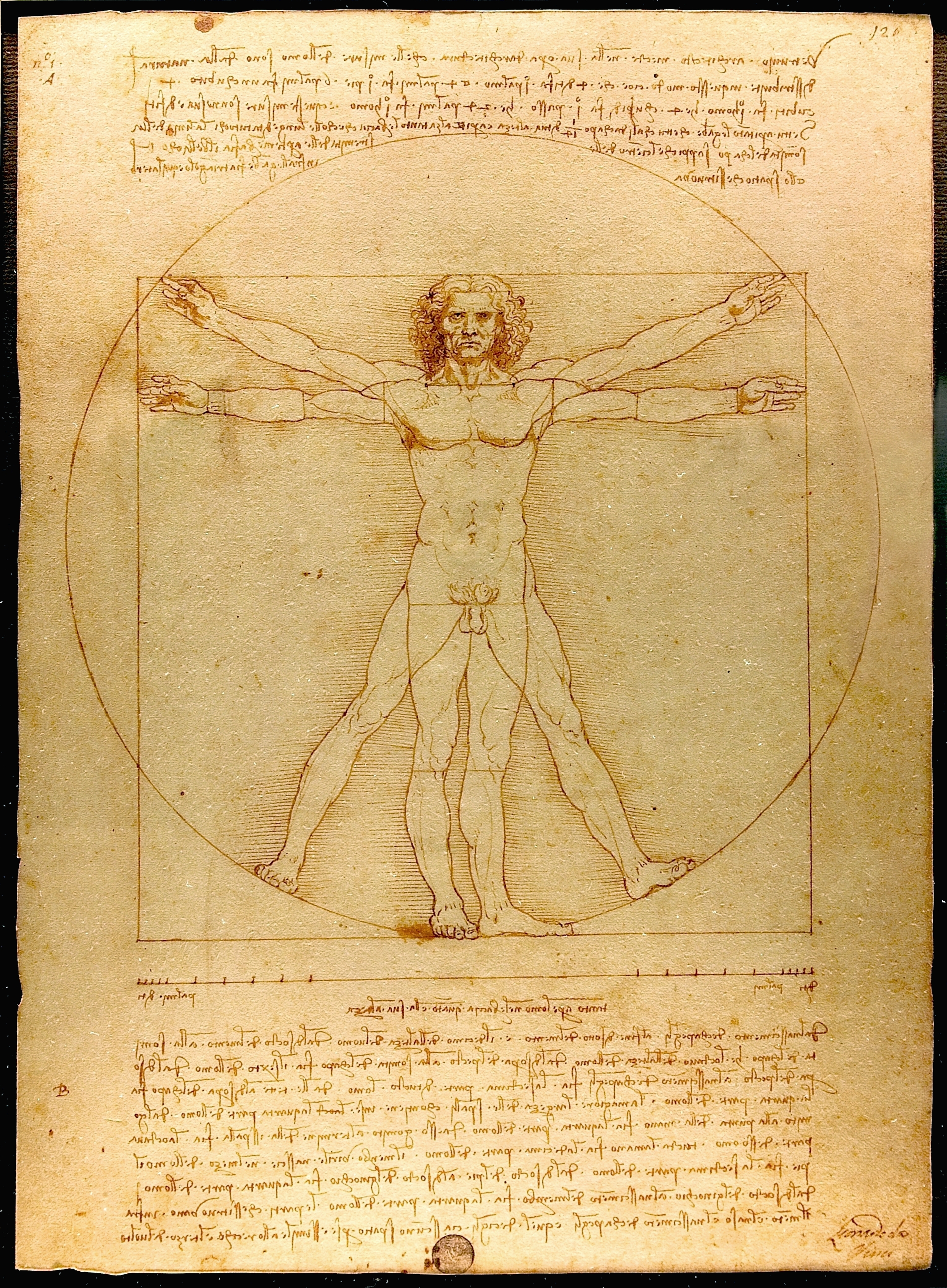
Leonardo di Vinci's Human Body sketch, June 18, 2013. (Wikipedia).

Leonardo di Vinci’s Vitruvian Man (human body sketch, 1485-90), June 18, 2013. (Flickr.com).

Today marks anniversary number twenty-six since the Class of ’87 spent two hours sweating in our polyester caps and gowns on a triple-H summer evening at Memorial Field in Mount Vernon, New York. Oh yeah – and graduated from Mount Vernon High School. Not a big year to mark an anniversary, for sure. But still important for me to remember. After all, I’ve just published a book in which I spend a significant amount of time talking about myself and my former classmates whom help comprise this Class of ’87.

Today I want to say a few positive things about this class, particularly the Humanities Program members of this class. Not that this isn’t in Boy @ The Window as well. But it does help me to reiterate both the obvious and the hidden. Without Humanities, I wouldn’t have taken the path that led me to become the writer, historian, thinker or man that I am today, good, bad and occasionally even ugly. Period.

Not that every high-achieving student in A.B. Davis Middle School or Mount Vernon High School was in Humanities. Some of the more creative and musically-talented folks I’d either met or knew of were in what what I call “gen pop” and not in Humanities. But being someone who on his best days can barely hold a baritone tune (in the same way that an experimental fusion reactor produces energy for only a few seconds), Humanities gave me a chance to do some of what I did best on a platform that could occasionally allow me to maximize my academic gifts.

After ten years of undergrad and grad school at the University of Pittsburgh and Carnegie Mellon, and years of teaching at places as different as Pitt, CMU, Duquesne University School of Education and George Washington University GSEHD, my former classmates remain among the highest academic achievers I’ve ever met. As a group, that is. I’ve met many super-talented and highly creative individuals since ’87. Some of whom were literal geniuses as musicians, actors, studio artists or writers. Students whose academic and athletic prowess would’ve made their peers think about how unfair life can be.

But the one boon (and one criticism too) of Humanities for me was the competition it inadvertently sanctioned. That competition made me a better student, one who could actually focus on the long-term implications for any course I took and how it would apply to what I’d need to do in college. Some of my classes I realized were bullshit (see Andy Butler’s eleventh grade “Higher Math” as prima facie evidence), but I found something useful in most of my courses for my years at Carnegie Mellon, if not at Pitt.

Mount Vernon High School graduation ceremony, June 24, 2009. (http//education.lohudblogs.com).

Mount Vernon High School graduation ceremony, June 24, 2009. (Carucha L. Meuse/The Journal News; http//education.lohudblogs.com).

I think that this competition made us all better students, even as it often didn’t make us better human beings. After all, out of my immediate circle of the top twenty students in the Class of ’87, three of us have doctorates (history, psychology and mathematics education), two have medical degrees, and seventeen of us have earned at least a bachelor’s degree. I’m sure that some of us would’ve done well in college, grad school and our careers even without Humanities. But I’m also sure that the poorest among us – yours truly included – would’ve struggled mightily in college (even if we found a way to graduate) without such a focus on the academic in the first place.

I’ve taught high school students whose skills readily approached my own and those of my classmates from a quarter-century ago, particularly in versions of the AP US History course I taught at Princeton in ’08 and ’09. I’ve also served on the curriculum committee at my son’s school here in Montgomery County, Maryland for the past three years. These students – some more talented than anyone I knew in Humanities – have one thing in common. For the most part, they aren’t challenged by their schools, teachers or curriculum to be competitive, to be well-rounded academically, to strive to be both better students and develop creative talent simultaneously.

Many of these students already feel a sense of academic fatigue, partly because of constant yet meaningless testing, and partly because of a concentration on STEM (Science, Technology, Engineering and Mathematics) fields. Both have led to the near-total exclusion of extensive work on reading and writing skills (even though picking apart STEM field problems requires good reading and analysis skills). Not to mention the slashing of budgets for physical education and art, music and chorus, theater and so many other things that would push them to be better students, to be competitive – in a healthy way, that is.

There are nearly 120,000 words in Boy @ The Window, about 60,000 of them dedicated to my years between the end of sixth grade and the beginning of my junior year at Pitt. Many of them describe all that I remember about being in Humanities. It’s not a pretty picture overall. Despite this, without the likes of Laurell and Sam, Brandie and Bobby, Alex and Allison, Dahlia and Dara, Phyllis and Wendy and JD, Joe and Danny, Suzanne and Denise and Mandume and Rhonda and Kim and so many others, I’d still be living in Mount Vernon right now. I’d be lucky to have a minimum-wage job and a one-room flat in someone’s dilapidated house on the South Side. It’s just that simple.

Road to My Memoir, Part 2: Multiculturalism

08 Saturday Jun 2013

Posted by decollins1969 in 1, Academia, Boy @ The Window, Carnegie Mellon University, culture, Eclectic, Mount Vernon High School, Mount Vernon New York, New York City, Pittsburgh, Politics, Pop Culture, race, University of Pittsburgh, Youth

≈ Leave a comment

Tags

Ability Grouping, Academic Historian, Academic Writing, Afrocentricity, Barbara Sizemore, Comparative Slavery, Elaine, Humanities, Jeannie Oakes, Joyce Harrington, Keeping Track (1985), Multicultural Education, Multiculturalism, Pitt, Pittsburgh Public Schools, Sociology, Tracking


Why Boy @ The Window, Part 2

Why Boy @ The Window, Part 2

When I wrote about this long path to Boy @ The Window last month, I figured that it would take three posts in all to discuss the path. But the road’s shown itself to be longer — and more convoluted — than I anticipated.

So I never did write my book about being on welfare, dehumanization and welfare policy. I found a much more interesting subject to take up the following year, in the summer of ’90. I decided to take the late Barbara Sizemore’s research methods course in Black Studies that fall, to move beyond my history courses, as I’d already taken enough of them to have fulfilled my major.

I wanted to look at the re-segregation of desegregated schools through tracking or ability grouping, specifically in Mount Vernon’s public schools. The book that brought me to this topic was Jeannie Oakes’ masterpiece Keeping Track: How School Structure Inequality (1985). It had begun to turn my mind away from slavery as a long-term history project (perhaps one I would’ve pursued in doing my master’s papers or doctoral research) and toward history of education and racial inequality.

Oakes’ main argument was that school desegregation was a mixed bag of success and failure precisely because of the fact that with tracking by academic “ability,”disadvantaged Black students and advantaged White students would seldom meet in the same classrooms. That made me think of my still recent experiences with the Humanities Program in middle school and high school. After all, a school district that was three-quarters Black, Afro-Caribbean and Hispanic had a magnet program that was about sixty percent White during my six years in Humanities.

I spent that summer — when I wasn’t working — at Mount Vernon Public Library, NYU’s Bobst Library, and New York Public Library giving myself a stronger background on this topic. I met with the former MVHS Humanities coordinator Joyce Flanagan (who had become Harrington by then) about getting more specific demographic data about the program by class year and school (Pennington-Grimes ES, A.B. Davis Middle School and MVHS). Much of the data had already been destroyed, Harrington confided. The data she did give me, while informative, wasn’t enough to do even a watered down version of what Oakes did for Keeping Track (she interviewed 14,000 students and teachers in all).

I ended up doing my research project on Pittsburgh Public Schools and their International Baccalaureate programs at Schenley and Allderdice HS. It was a solid paper, an easy A compared to my comparative slavery paper for Drescher’s graduate course the semester before. But it wasn’t enough for me.

In the course of building up my knowledge on segregation, suburban schools, urban school districts, and community control, I stumbled onto books about multicultural education. I wanted to learn more, so I took a sociology course my final undergraduate semester on the sociology of race and ethnicity (there weren’t any education courses that focused on either race or multiculturalism at Pitt in ’91).

The turning point came with my friend Elaine, who knew of my interest in the topic. She was the one who had informed me of a growing controversy with New York State’s newly proposed history curriculum, one in which the ideas of multicultural education had played a key role. That work the summer before grad school, that work to understand why there was any controversy at all, led me to finding out more about cultural pluralism and its history. This then led to the role of Black intellectuals and educators in applying cultural pluralism, the differences between multiculturalism, multicultural education and Afrocentricity.

I had my dissertation topic in broad strokes before I’d taken any courses as a master’s student (not counting the comparative slavery class). But in the process of moving from re-segregation and Jeannie Oakes to multiculturalism, I’d moved from a wide-eyed student of everything that related to my life at age twenty to an aspiring academician, a historian of educational and cultural ideas.

I’d taken the first steps to bury myself in academic writing and thinking, without fully understanding why I cared about multiculturalism in the first place. It took me a decade to figure out that the lack of understanding of diversity in Humanities was part of what made it a bittersweet experience for me, an experience that drove me toward multiculturalism as a research topic. It took ten years before I realized that my pursuit of multiculturalism in Black Washington, DC was my way of dealing with my own past without any emotion. Multiculturalism took me further away from the writer (and historian) I wanted to be, even as I earned my doctorate on the topic.

← Older posts
Newer posts →

Boy @ The Window: A Memoir

Boy @ The Window: A Memoir

Places to Buy/Download Boy @ The Window

There's a few ways in which you can read excerpts of, borrow and/or purchase and download Boy @ The Window. There's the trade paperback edition of Boy @ The Window, available for purchase via Amazon.com at http://www.amazon.com/Boy-Window-Donald-Earl-Collins/dp/0989256138/

There's also a Kindle edition on Amazon.com. The enhanced edition can be read only with Kindle Fire, an iPad or a full-color tablet. The links to the enhanced edition through Apple's iBookstore and the Barnes & Noble NOOK edition are below. The link to the Amazon Kindle version is also immediately below:

scr2555-proj697-a-kindle-logo-rgb-lg

Boy @ The Window on Amazon.com: http://www.amazon.com/Boy-The-Window-Memoir-ebook/dp/B00CD95FBU/

iBookstore-logo-300x100

Boy @ The Window on Apple's iBookstore: https://itunes.apple.com/us/book/boy-the-window/id643768275?ls=1

Barnes & Noble (bn.com) logo, June 26, 2013. (http://www.logotypes101.com).

Boy @ The Window on Barnes & Noble: http://www.barnesandnoble.com/w/boy-the-window-donald-earl-collins/1115182183?ean=2940016741567

You can also add, read and review Boy @ The Window on Goodreads.com. Just click on the button below:

Boy @ The Window

Twitter Updates

Tweets by decollins1969
  • RSS - Posts
  • RSS - Comments

Archives

  • June 2025
  • April 2023
  • September 2022
  • August 2022
  • July 2022
  • June 2022
  • May 2022
  • April 2022
  • March 2022
  • January 2022
  • December 2021
  • November 2021
  • October 2021
  • September 2021
  • August 2021
  • July 2021
  • June 2021
  • April 2021
  • March 2021
  • February 2021
  • January 2021
  • December 2020
  • November 2020
  • October 2020
  • September 2020
  • August 2020
  • July 2020
  • May 2020
  • April 2020
  • March 2020
  • January 2020
  • December 2019
  • November 2019
  • August 2019
  • July 2019
  • June 2019
  • May 2019
  • April 2019
  • March 2019
  • February 2019
  • January 2019
  • December 2018
  • November 2018
  • October 2018
  • September 2018
  • August 2018
  • July 2018
  • June 2018
  • May 2018
  • March 2018
  • February 2018
  • January 2018
  • December 2017
  • November 2017
  • October 2017
  • September 2017
  • August 2017
  • July 2017
  • June 2017
  • May 2017
  • April 2017
  • March 2017
  • February 2017
  • January 2017
  • December 2016
  • November 2016
  • October 2016
  • September 2016
  • August 2016
  • July 2016
  • June 2016
  • May 2016
  • April 2016
  • March 2016
  • February 2016
  • January 2016
  • December 2015
  • November 2015
  • October 2015
  • September 2015
  • August 2015
  • July 2015
  • June 2015
  • May 2015
  • April 2015
  • March 2015
  • February 2015
  • January 2015
  • December 2014
  • November 2014
  • October 2014
  • September 2014
  • August 2014
  • July 2014
  • June 2014
  • May 2014
  • April 2014
  • March 2014
  • February 2014
  • January 2014
  • December 2013
  • November 2013
  • October 2013
  • September 2013
  • August 2013
  • July 2013
  • June 2013
  • May 2013
  • April 2013
  • March 2013
  • February 2013
  • January 2013
  • December 2012
  • November 2012
  • October 2012
  • September 2012
  • August 2012
  • July 2012
  • June 2012
  • May 2012
  • April 2012
  • March 2012
  • February 2012
  • January 2012
  • December 2011
  • November 2011
  • October 2011
  • September 2011
  • August 2011
  • July 2011
  • June 2011
  • May 2011
  • April 2011
  • March 2011
  • February 2011
  • January 2011
  • December 2010
  • November 2010
  • October 2010
  • September 2010
  • August 2010
  • July 2010
  • June 2010
  • May 2010
  • April 2010
  • March 2010
  • February 2010
  • January 2010
  • December 2009
  • November 2009
  • October 2009
  • September 2009
  • August 2009
  • July 2009
  • June 2009
  • May 2009
  • April 2009
  • March 2009
  • February 2009
  • January 2009
  • December 2008
  • November 2008
  • October 2008
  • September 2008
  • August 2008
  • July 2008
  • June 2008
  • May 2008
  • April 2008
  • March 2008
  • February 2008
  • January 2008
  • December 2007
  • November 2007
  • October 2007
  • September 2007
  • August 2007
  • July 2007
  • June 2007

Recent Comments

MaryPena's avatarMaryPena on My Day of Atonement/Bitter Hat…
decollins1969's avatardecollins1969 on No Good Teaching Deed Goes…
Mary Rose O’Connell's avatarMary Rose O’Connell on No Good Teaching Deed Goes…

NetworkedBlogs on Facebook

NetworkedBlogs
Blog:
Notes From a Boy @ The Window
Topics:
My Life, Culture & Education, Politics & Goofyness
 
Follow my blog

616 616 East Lincoln Avenue A.B. Davis Middle School Abuse Academia Academy for Educational Development AED Afrocentricity American Narcissism Authenticity Bigotry Blackness Boy @ The Window Carnegie Mellon University Child Abuse Class of 1987 CMU Coping Strategies Crush #1 Crush #2 Death Disillusionment Diversity Domestic Violence Economic Inequality Education Family Friendship Friendships Graduate School Hebrew-Israelites High-Stakes Testing Higher Education History Homelessness Humanities Humanities Program Hypocrisy Internalized Racism Jealousy Joe Trotter Joe William Trotter Jr. K-12 Education Love Manhood Maurice Eugene Washington Maurice Washington Misogyny Mother-Son Relationship Mount Vernon High School Mount Vernon New York Mount Vernon public schools Multiculturalism MVHS Narcissism NFL Pitt Pittsburgh Politics of Education Poverty President Barack Obama Race Racial Stereotypes Racism Relationships Self-Awareness Self-Discovery Self-Reflection Sexism Social Justice Teaching and Learning University of Pittsburgh Violence Whiteness Writing

Top Rated

Blog at WordPress.com.

  • Subscribe Subscribed
    • Notes from a Boy @ The Window
    • Join 103 other subscribers
    • Already have a WordPress.com account? Log in now.
    • Notes from a Boy @ The Window
    • Subscribe Subscribed
    • Sign up
    • Log in
    • Report this content
    • View site in Reader
    • Manage subscriptions
    • Collapse this bar
 

Loading Comments...