• About Me
  • Other Writings
  • Interview Clips
  • All About Me: American Racism, American Narcissism, and the Conversation America Can’t Have
  • Video Clips
  • Boy @ The Window Pictures
  • Boy @ The Window Theme Music

Notes from a Boy @ The Window

~

Notes from a Boy @ The Window

Category Archives: Hebrew-Israelite

Toto’s “Africa” & “Reading” Too Much Into It

02 Saturday Mar 2013

Posted by decollins1969 in 1, Boy @ The Window, culture, Eclectic, eclectic music, Hebrew-Israelite, Mount Vernon New York, music, Politics, Pop Culture, race, Religion, Sports, Youth

≈ Leave a comment

Tags

"Africa" (1982), "The Catch", A.B. Davis Middle School, Africa, C-Town, Dwight Clark, Fever, Football, Herschel Walker, Humanities, Imagination, Joe Montana, NFL, Pelham, Puberty, Racialism, Reading, Self-Discovery, Self-Reflection, Tarzan, The Jungle (1906), Toto, Toto IV, Upton Sinclair, USFL, Whiteness, Writing


Toto's "Africa" (1982) Singles Sleeve, March 1, 2013. (http://eil.com).

Toto’s “Africa” (1982) Singles Sleeve, March 1, 2013. (http://eil.com).

There are as many reasons my musical tastes are eclectic as there are songs that I like and love. I can’t explain it. There’s no way I can explain why I think one song sounds as unimaginative and boring as Drake’s “Started From The Bottom,” while Nickleback’s “If Today Was Your Last Day” has been one of my favorite songs over the past three and a half years.

My imagination could take the corniest song and make it epic, a mantra, my theme music. Even a song like Toto’s “Africa” (’82-’83), a song that could be interpreted as reflecting White racialism as it related to Tarzan movies of a not-so-bygone era. Yet I’ve seen their video, and probably heard the song at least 3,000 times. It ain’t that deep, but it’s still a song I like.

So, a bit of context. My grades in the early Reagan years — especially in ’82-’83, when I was in eighth grade — didn’t at all reflect our family’s slide into welfare poverty, my ongoing issues with my idiot stepfather, my suicidal struggles or my search for a real relationship with God. What I had to lean on, more than my amazing memory or World Book Encyclopedia, my parents or even God, was my imagination.

The Spark of Imagination (via x-ray), March 1, 2013. (http://esquire.com).

The Spark of Imagination (via x-ray), March 1, 2013. (http://esquire.com).

With puberty and what would turn into a ten-inch growth spurt in a span of twenty months, I became enamored with sports. And the sport I became most interested in early on was football. The strike-shortened ’82 NFL season combined with the formation of the USFL and the coming-out party for soon-to-be draft pick Herschel Walker to get my attention. The vicious hits, the acrobatic catches, the powerful throws were things that I’d seen before. I saw them through the lens of an underdog now, a downtrodden member of an abandoned family who wanted to see folks who’d overcome impossible circumstances achieve great things.

The first person who represented that for me in sports was Joe Montana, quarterback for the San Francisco 49ers. The only ending to a football game I’d ever watched was the end of the NFC Championship Game the year before, with the play known as “The Catch.” I didn’t even know who Joe Montana was, even after watching Dwight Clark go up and catch a ball that was only meant for him.

He was the kind of person I wanted and needed to be in order to overcome what I thought was an impossible deficit. As far as I was concerned, I had to score about a hundred touchdowns to go from welfare to college, let alone anything after college. Yet it didn’t stop me from dreaming about rolling out right to the sidelines on fourth down, sucking in Dallas’ defense, and throwing a ball toward the right-side of end zone, toward the back line, just high enough for Clark to catch and Emerson Walls not to.

It was a dream that required some theme music, and luckily for me it was ’83. Michael Jackson’s Thriller had come out at the start of eighth grade, The Police were big, Toto and Rick Springfield were at their peak, and New Edition had put out there first hit, a Jackson 5 remake. All of it gave me something more modern to move forward with, to get silly about, to “march down field” to when I needed to gear up to get an important A. I’d accidentally found a way to escape my life without ever leaving Mount Vernon.

The Jungle (1906), by Upton Sinclair, 1st Edition, March 31, 2011. (GrahamHardy via Wikipedia). In public domain.

The Jungle (1906), by Upton Sinclair, 1st Edition, March 31, 2011. (GrahamHardy via Wikipedia). In public domain.

Demontravel’s and Carraccio’s classes were the first two places in which I applied this approach to my life and studies. In Carraccio’s case, it was the reading and essay assignment for Upton Sinclair’s The Jungle (1906) a muckraking tale of first-generation, Eastern European, Chicago meatpackers who worked and lived in grueling conditions and where some of them gave their lives — and livers — to Swift and other companies. I’d caught a cold, had a fever, was going to the store for Mom, and had just heard Toto’s “Africa” playing at C-Town in nearby Pelham.

The song served as my background music, giving me the energy and drive I needed to finish the book. I read The Jungle in one night, three hundred pages of it in four hours. I think Carraccio gave me a 95 on my essay. She pulled me aside to say, “You know, if you wanted, you could be a really good writer.” It might’ve been the only thing she said that I thought was right on the mark all year.

Yeah, you could say that I was seriously music deprived, didn’t understand the cultural symbolism or archetypes in the song or video, or simply had and have bad tastes. Y’all may be right, too. But for me, Toto’s “Africa” struck the right note, lifted my imagination, and found the goofball within.
Kufi Battles

15 Friday Feb 2013

Posted by decollins1969 in 1, Boy @ The Window, culture, Eclectic, Hebrew-Israelite, Mount Vernon High School, Mount Vernon New York, Movies, Pop Culture, race, Religion, Youth

≈ Leave a comment

Tags

"The Man In Black", A.B. Davis Middle School, Abuse, Bigotry, Bullying, Esau and Jacob, Fights, Geometry, Intimidation, Intolerance, Italian Club, Kufi, Lost (2004-10), Louis Cuglietto, Masculinity, Multicultural Education, Puberty, Rage, Tackles, The Matrix Revolutions (2003)


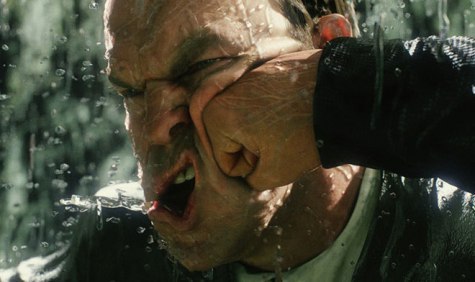
Slow-motion punch frame from Matrix Revolutions (2003), February 15, 2013. (http://theathleticnerd.com/).

Slow-motion punch frame from The Matrix Revolutions (2003), February 15, 2013. (http://theathleticnerd.com/).

My days as a kufi-wearing Hebrew-Israelite at school is one of those things I don’t spend much time on this blog talking about. Mostly because it involved defending myself to protect a piece of clothing and a religion in which I never fully believed, especially after early ’83. Plus, it involved fairly rare attempts in which dumb asses attempted to bully me. Compared to my now deceased idiot ex-stepfather’s abuse, no kid or wannabe thug after the summer of ’82 really stood a chance.

There were three incidents in eighth and ninth grade in which a kid got into a scuffled with me over my kufi, for whatever reason they’d invented in their head. The first was in February ’83, as one Black kid — probably about fifteen — snatched my kufi from my head and started to run up the basement hallway with it at Davis Middle School. The incident occurred as I, A and another member of A’s “Italian Club” entourage were in the middle of an errand for a teacher. I immediately ran the boy down, knocked him to the floor, dusted off my kufi, and put it back on my head. The boy got up and threatened to beat me up. It was at this point that A intervened, saying that he would “have to take us all on” if he wanted to fight me. A’s moment of support notwithstanding, I would’ve beaten the kid in the face as many times as it would’ve taken to get my kufi back.

Pittsburgh Steelers' James Harrison sacks Baltimore Ravens QB Joe Flacco, AFC Division Round, January 15, 2011. (http://espn.go.com).

Pittsburgh Steelers’ James Harrison sacks Baltimore Ravens QB Joe Flacco, AFC Division Round, January 15, 2011. (http://espn.go.com).

The second incident occurred a month later, prior to the opening morning bell at Davis. Out of the blue, “Little J” picked a fight with me, calling me a “dickweed” and a “shithead” for no reason at all. I hardly knew the Jewish kid, who immediately came at me to push, shove, throw punches, and grab at my kufi. It really was crazy for Little J to think that he had a shot at doing any damage. I was already five-eight. He was lucky if he was four-eleven and one hundred pounds after a potato latkes breakfast.

This wasn’t a fight. It was a pushing and shoving match, with me doing all of the pushing and shoving and Little J landing in bushes or on his ass. For seven minutes, he kept running at me, trying to throw a punch or kick me. I caught or blocked his attempts, grabbed him, and shoved him into the bushes near the boys’ entrance to Davis. By the sixth time, Little J was crying and his cheeks were fire truck-red, I was laughing and shaking my head, and the other Black boys at Davis were asking me what was going on. When I told them, they started laughing as well.

Beyond him grabbing at me and my kufi, I never knew what Little J wanting to fight me was all about. My guess then was that Little J was playing the role of Esau (the hairy brother of Jacob from the Bible, Torah and Qur’an) and didn’t like the fact that I claimed to be a descendant of the father of ancient Israel and his people.

The Man In Black (presumably Esau; played by Titus Welliver) with Jacob (Mark Pellegrino), from TV series Lost (2009-10), February 15, 2013. (http://magiclamp.org).

The Man In Black (presumably Esau; played by Titus Welliver) with Jacob (Mark Pellegrino), from TV series Lost (2009-10), February 15, 2013. (http://magiclamp.org).

Incident Three occurred on my second day at Mount Vernon High School. After a day of assignments and learning the names of our new teachers, I went to Louis Cuglietto’s eighth-period Geometry class. It was on the first floor of the school, just to the right of the front entrance and the cafeteria. As I milled around the classroom looking to take my seat, my Latino classmate “N” came out of nowhere and snatched my kufi off my head.

“Give it back now!,” I yelled.

“Make me!,” N responded with a bit of sarcasm.

Just as he was about to throw it to another classmate. I grabbed N and knocked him to the floor. There we were, on the floor by the dark green chalkboard, me on top of N, who was struggling to hold on to my kufi. I lay on top of him, punched him in the face a couple of times, and took my kufi back from him just before Cuglietto came into the room. By this time everyone in our class had formed a circle to watch the spectacle. I don’t remember all of what Cuglietto said, but he did ask, “Do you want to get suspended?” After we dusted ourselves off, we went to our desks and got back to work.

For me, the incident marked a transition point in my life at school. This would be the last fight I’d have in school. Some people continued to try to verbally intimidate me. But they left it at that, probably because my height and my face said “Don’t mess with me” before I’d say anything.

The more immediate result was that I began to question more consciously my motives for defending myself as a Hebrew-Israelite. “Why do I care if N snatches my kufi from me?,” I said to myself on the way home from school that day. It wasn’t as if I truly believed in any of the teachings anymore. I definitely didn’t want anyone messing with me at home or in school. At the same time, I didn’t want to use up energy defending something in which I didn’t believe.

Sarai, 30 Years Old Today

09 Saturday Feb 2013

Posted by decollins1969 in 1, Boy @ The Window, culture, Eclectic, Hebrew-Israelite, Marriage, Mount Vernon New York, Pop Culture, race, Youth

≈ 2 Comments

Tags

616, 616 East Lincoln Avenue, Child Abuse, Death, Forgiveness, Genetics, God, Hatred, Health Care, Ignorance, Mount Vernon Hospital, Neglect, Racial Stereotypes, Sarai, Sarai Washington, Sickle Cell Anemia, Stereotype Threat, Trait, Welfare


Sarai (with Maurice) at 12 years old, Yonkers, NY, November 21, 1995. (Donald Earl Collins).

My sister Sarai (with Maurice) at 12 years old, Yonkers, NY, November 21, 1995. (Donald Earl Collins).

It’s another February 9, more than two and a half years since my sister Sarai Washington passed away from complications due to sickle-cell anemia at the age of twenty-seven. Today would mark her thirtieth birthday. But given how Sarai’s life began, given her disease and the average life expectancy of people with it, it’s just as well that she isn’t here to become thirty. Sarai would likely be in pain, with skin bruises and lesions, laying on a hospital bed, in the middle of yet another blood transfusion.

My sister’s life and death is a constant reminder to forgive. It especially reminds me that forgiveness for us simple, linear humans is a constant process. It’s one in which we overcome our own feelings with the determination to love and to seek wisdom and grace. That Sarai had to endure sickle-cell anemia for twenty-seven years, five months and two days — or 10,015 total days — could feel me with enough anger so that I’d spend the rest of my life in hatred and contempt.

Not so much toward God. Even in eighth grade, I knew enough to know that people often cause their own calamities, and yet choose to blame God for the perditious decisions they made. No, there was a time I blamed my Mom, from the time I learned that she was pregnant with Sarai and for years afterward. Why? Because I also knew about sickle cell anemia, how it was a genetic disorder, and how two people with the trait had a one-in-four chance of passing on the full-blown disease to one of their progeny. And I knew this because my Mom explained the basics of it to me when I was eight years old!

My mother worked at Mount Vernon Hospital, where they very well could’ve run a genetic test for the disease at the prenatal stage. Of course, that would’ve given my mother a rather difficult decision to make about my eventual sister’s viability. But then again, she knew before the birth of my other siblings Maurice and Yiscoc that my now deceased idiot stepfather also possessed the sickle-cell trait. That she didn’t have any of them tested was, well, lazy and shameful.

I could’ve easily blamed my now dead ex-stepfather Maurice. He was a walking disaster area, as everything he touched turned into crap. Maurice never did anything in his life that didn’t hurt someone at some point. He never once cared enough about Sarai (or any of his other kids, for that matter) to make sure they were born healthy and whole. Forget about what happened to them after they were born. Maurice’s only real interest was telling guys standing on corners about his latest sperm injection. He also liked to buy cigars after the women had to endure the pregnancy and labor, abandoned by him in all meaningful respects in the process.

And there’s the grudge I’ve held against myself. As I’ve said in Boy @ The Window and in various blog posts (including “Pregnant Pauses” from November ’12), I never wanted Sarai here in the first place. Not because I hated kids or her. I knew what her birth would mean, especially after a year in which we were without food at 616 one-third of the time and three weeks’ behind on rent every single month. With my mother’s hours cut at Mount Vernon Hospital, we were on the verge of going on welfare, and I’d been taught by my mom to hate that. We were about to become a racial cliché, living and breathing racial stereotypes, and that went against everything my mother and nearly two years of living as a Hebrew-Israelite had taught me.

So how do I forgive? It’s simple, really (well, maybe not so simple). Forgiveness for me is a WWJD (What Would Jesus Do?) moment. Jesus said on the cross, just before he died, “Forgive them, for they do not know what they do.” I realize that even when we think we know what we’re doing, we don’t really know — we’re not omniscient, after all. We’re never fully aware of the effects of our decisions and actions, of all the intricacies and long-term implications.

That’s why and how I forgave and forgive — my mom, Maurice and myself. It’s the one thing I can honestly say I learned from Sarai, especially today, on her thirtieth birthday.

All Work and No Play

28 Monday Jan 2013

Posted by decollins1969 in 1, Academia, Boy @ The Window, Christianity, culture, Eclectic, Hebrew-Israelite, Mount Vernon New York, Pop Culture, race, Religion, Work, Youth

≈ Leave a comment

Tags

616, 616 East Lincoln Avenue, Acid, Acting, Atheism, Balance, CIS, Computer and Information System, Evolution, Falcon Crest, Fringe, History Major, Intolerance, John Noble, LSD, Neal Galpern, Pitt, Religion, Robert Foxworth, Sexual Harassment, University of Pittsburgh, Walter Bishop, Yin and Yang


Yin & Yang symbol from Taoism, good symbol for balance in life, January 28, 2013. (http://taoism.about.com).

Yin & Yang symbol from Taoism, good symbol for balance in life, January 28, 2013. (http://taoism.about.com).

As those high schools students I taught through JSA at Princeton in the summers of ’08 and ’09 either have come to realize or are realizing now, finding balance between school, full-time or part-time work, family and some semblance of a social life is just a tad difficult. Sometimes, it’s even impossible. So it was for me the spring of ’89, the last spring before I’d put together what I came to call my “16-week strategy for success and a social life.”

It was the semester where in which I worked 36 hours a week over a seven-week period and faced sexual harassment from a co-worker who was the BFF of my supervisor of Pitt’s Cathedral of Learning labs for Computer and Information Services (CIS) (see my post “On People and Stress” from February ’09). It was the last semester in which I had to worry about my mother and my younger siblings from afar because of the possibility of domestic violence, as my idiot stepfather Maurice still lived with them at 616.

This was my first set of classes as a History major, but I also had some general ed requirements to fulfill (see my post “Major Change” from October ’10). It would’ve been a tough semester even if I hadn’t worked, but with the CIS schedule the way it was, I was in for an interesting ride. For Macro, the chair of the Economics department was our professor. The class was at nine o’clock in the morning on Tuesdays and Thursdays, with a discussion section at 8 am on Tuesday to boot. It was almost as if he wanted folks to fail. With my schedule the way it was, I rarely made it to class on Tuesdays, and I only made it to one discussion section all semester long. To make up for that, I never missed the class on Thursdays, and often participated in the lecture discussions, such as they were.

Actor Robert Foxworth on Broadway in August: Osage County, August 2008. (Joan Marcus/Playbill).

Actor Robert Foxworth on Broadway in August: Osage County, August 2008. (Joan Marcus/Playbill).

Shakespeare was later in the day on Tuesdays and Thursdays, taught by Wion, who looked like the actor Robert Foxworth from the CBS show Falcon Crest, only not quite as handsome. He delivered lines from Taming of The Shrew and Othello like he’d been a wannabe actor in a previous career but realized teaching was more of his shtick. Wion often used Freudian pop psychology to explain the motives of characters in Shakespeare’s plays, and as he did, all of our eyes glazed over. This analysis for us was so ’70s, especially for the second-wave feminists in the class.

My Bio and Philosophy classes seemed to fit under the theme of “questioning God,” as there were students in both who had an ax to grind against “dumb Christians.” Bio in some ways was easier, at least because we had a professor who understood why some of us who were Christian might find evolution difficult to swallow. After several yelps from students during one of his lectures on evolution, mutation and reproduction, he said, “just because there’s evolution doesn’t mean that God doesn’t exist. Who’s to say that evolution isn’t a higher being’s method for the creation of life?” I appreciated that answer very much.

In existentialism class, especially the discussion section, no reconciliation was possible. My discussion section instructor was an Australian man in his late-twenties, with curly hair like the lead singer from Simply Red, except my instructor’s hair was a dirty blonde. He spent discussion after discussion railing on Christians as “people who refuse to believe that God doesn’t exist.” One of our discussions was so anti-anything other than atheism that I found it just as bigoted as anything I’d heard from Hebrew-Israelites or out of a televangelist’s mouth, and said as much. I was ignored.

No class that semester drove me nuts like my History majors writing seminar with Neal Galpern. We met on Monday and Wednesday afternoons for about an hour and a half, and it was the most boring hour and a half on my schedule. Galpern was an aging hippie complete with comb-over who graduated with doctorate in hand from Berkeley in ’75. He sometimes acted like he was still dropping acid. His stuttering starts and stops and numerous “Um”s could stop his lectures and our discussions cold. He wanted each of us to write a research-based paper of no less than twenty papers on any comparative topic in history that we could come up with, as vague as the man himself.

John Noble as Dr. Walter Bishop on Fringe, Season 5, after dropping acid, December 2012. (http://fringetelevision.com).

John Noble as Dr. Walter Bishop on Fringe, Season 5, after dropping acid, December 2012. (http://fringetelevision.com).

I couldn’t stand Galpern and his constant skipping over my hand in class and his snarky comments to all of us as if we were all dense and he was clearer than Antarctic ice melt. I didn’t challenge Galpern in class, at least not directly. I challenged him with my project. I decided to do a paper that compared the main features of the Civil Rights Movement in the US to the Anti-Apartheid Movement in South Africa. Admittedly it was too big a project, but it was Galpern’s job to help me narrow the topic into a doable chunk.

Instead all the advice he gave me consisted of “You need to find another topic, um . . . because, um . . . I’m afraid . . . I don’t, um . . . know much . . . about this.” I refused to budge. I wasn’t about to do a stupid paper on medieval Europe just because that happened to be his area of alleged expertise. After a meeting where Galpern finally gave in to me, I went across the hall to our classroom on the third floor of Forbes Quad and imitated my professor’s halting style of conversation. Galpern walked in, and I just kept going until I finished my, um, sentence. Yeah, it would be safe to say that he didn’t like me too much either!

I finished that semester with two A-‘s in my writing seminar and in existential philosophy, a B+ in Shakespeare, a B in Biology, and even pulled out a C+ in Macro, despite my lack of attendance. It was a difficult time. Yet it was also the start of my growth into early adulthood, and understanding that finding balance would be the key to sustained success.

Randomness & Faith

27 Thursday Dec 2012

Posted by decollins1969 in 1, Academia, Boy @ The Window, Christianity, culture, earth, wind & fire, Eclectic, Hebrew-Israelite, Politics, Pop Culture, Religion, Youth

≈ Leave a comment

Tags

Agnostic, Atheism, Atheist, Belief, Bible, Buddhism, Evolution, Faith, Forgiveness, God, Grace, Love, Mathematics, Mystery, Physics, Randomness, Reason, Religion, Science, Scientific Method, The Universe, Youth


Randomness equation, Schrage random number generator, December 27, 2012. (http://ops.fhwa.dot.gov).

Randomness equation, Schrage random number generator, December 27, 2012. (http://ops.fhwa.dot.gov).

Today’s my forty-third birthday (at least, as of 8:37 am EST). It means that I’ve been a spiritual believer of one sort or another for nearly thirty years. With so much that has happened in my life, there are many who wonder why I believe in God, or why I’m a Christian in particular. With my expertise as a historian, my background in math and science (and continuing study of such), there have been many who’ve mocked and questioned my faith in anything other than the randomness of the universe. With the world in seemingly endless turmoil, good people maimed and killed, and evil people able to get away with maiming and killing others, there are those who greet any profession of belief in a higher power with anger and bitterness.

To me, that’s too bad. I can see all sides of this argument. I’ve been a Christian for more than twenty-eight years, and before that, an unwilling, if outwardly obvious, Hebrew-Israelite. In that time, I’ve also been an atheist, agnostic and angry, a bit of a Buddhist and a Muslim to boot. I’ve gone years without prayed and prayed at least once every day for nearly twenty years. I’ve read the Bible cover to cover at least six times in three decades, but also the Torah and the Qur’an. I’ve gone to temple, to Roman Catholic mass, to church, sometimes every week for years, sometimes not at all for years. I’ve had crises of faith and been almost unquestioning in faith over the years.

An actual double-slit experiment (electrons or photons behaving as particles and waves, in two places at same time), December 27, 2012. (http://www.bbc.co.uk/bbcfour)

An actual double-slit experiment (electrons or photons behaving as particles and waves, in two places at same time), December 27, 2012. (http://www.bbc.co.uk/bbcfour)

I’m also a believer in science and the scientific method. I realize that even with all of the advances in biology, physics, chemistry and mathematics, that there is much more we don’t know versus all that we’ve learned in the past two centuries. But that doesn’t mean that I believe that the universe — that life itself — is some random event or a long-chain series of random events. I’m with evolution on everything except the random. I don’t think that the universe can be seen as random. Even as chaotic as our lives may seem, the choices that we make do provide order. It’s never been sheer dumb luck that has determined everything that has occurred in my life, as other people have made their own choices that can easily affect the range of choices in my own life.

Most of all, while I do believe that there are reasons behind the events that occur in our lives and in world, that these reason are neither random nor something that God somehow came down from on high to make possible. Whether it’s Hurricane Sandy or Sandy Hook Elementary School, the civil war in Syria or a tsunami in the Indian Ocean, somehow so many have it that either God’s angry with us or that God allows horrible things to happen to us. Or that there is no God, because a real God would prevent these seemingly random events from occurring at all.

All this proves one thing, and one thing only. That most of us have little understanding of faith, of God, or of the universe itself. Period. Even those of us who are experts in particle physics or theoretical mathematics don’t know enough to dismiss God or to prove their educated guess (otherwise known as belief) in the randomness of the universe. Most of us who do believe in God — at least, those of us who are Christian — treat God as if he were Zeus casting down lightning bolts to keep us in line.

Roman Seated Zeus, marble and bronze (restored), Hermitage Museum, St. Petersburg, Russia, January 4, 2006. (Sanne Smit via Wikipedia). In public domain.

Roman Seated Zeus, marble/ bronze, Hermitage Museum, St. Petersburg, Russia, January 4, 2006. (Sanne Smit via Wikipedia). In public domain.

I see God in the universe, in the creation and re-creation of life, and yes, even in the various tragic and apparently chaotic events that have occurred in my life and in this world. That I don’t think these events to be random doesn’t make me any less of a thinker. I just don’t accept the blind faith of scientists in the idea that maybe cosmic rays led to the mutations in the primordial soup of our ancient oceans that led to the spark of life and evolution. I also don’t believe that God is simply presiding over every event on our planet and in the universe, making life-and-death decisions that bring pain and anguish to our lives for enjoyment or as a form of punishment.

Rather, God for me has been about living life by principles like social justice, social and spiritual mobility, love, forgiveness, grace and wisdom. Explaining what may or may not be random, each and every conceivable mystery of the universe or of life? I know that this isn’t in the Bible. But I do know that the reasons behind why bad, ugly, even evil things have happened in my life don’t include the “random nature of the universe.” People made decisions, I’ve made decisions, institutions made decisions, that have had an impact on the course, speed and direction of my life over the last forty-three years.

So, even when I’ve found myself angry with God, I’ve also been cognizant of the role all and each of us play in the heaven and hell that tends to be our lives, separate and together, in this world of ours.

James and the PAGPSA

29 Thursday Nov 2012

Posted by decollins1969 in 1, Academia, Boy @ The Window, culture, Eclectic, eclectic music, Hebrew-Israelite, Politics, Pop Culture, race, Religion, Youth

≈ 1 Comment

Tags

Activism, Afrocentric, Afrocentricity, Authentic Blackness, Black Action Society, Campus Climate, Carnegie Mellon University, Community, Diversity, Friendships, Graduate School, GSPIA, Isolation, PAGPSA, Pan African Graduate and Professional Student Association, Pitt, Pittsburgh, Politics of Graduate School, Retention, Self-Discovery, University of Pittsburgh


James and the Giant Peach photo art (1996), November 29, 2012. (http://disneymania.com.br).

About this time twenty years ago, perhaps for the first time in my life, I found myself around like-minded individuals, folks who seemed to understand me on an intellectual level. The fact that these were fellow graduate students, all at Pitt and all willing to form an association that would enable us to develop real connections across the campus, was inspiring to me. After four years of off-and-on involvement in the Black Action Society, not to mention my first year in the History grad program, I’d almost given up on the idea that I could form good friendships and acquaintance-ships through any formal gatherings.

But this was especially true regarding my thinking about my fellow Black students and other students of color. For the most part, I’d been around two kinds of students of color during my first five years at the University of Pittsburgh. One group was the semi-nerdy set, folks who cared deeply about their academic performance, but were also late-bloomers socially — people like me in more than a few ways. They tended to care little, though, about campus activism around diversity, retention or campus climate issues.

The other group was the Afrocentric set, people who often reminded me of my one-time Hebrew-Israelite brethren, whose views of Blackness were so limiting that I would’ve been a traitor just for listening to Chicago or Phil Collins. Those folks had virtually taken over the Black Action Society by my senior year. Forget mentioning popular folks, like sorors, frat guys, football, basketball and track guys and gals, or those fully invested in Pitt’s Honors College. I mingled with them all, and found little in common with them, intellectually or economically.

Me with Mark James, PAGPSA meeting, GSPH building, University of Pittsburgh, February 26, 1993 (Lois Nembhard).

That changed a bit my first year of grad school. Often in my walking and running across campus, I’d bump into a Black grad student here or there. At Hillman Library, the Cathedral of Learning, William Pitt Union, the SLIS building or other places. We’d recognize each other, we said hello, we even exchanged our names. Two of them in particular — Ed and Hayley — reached out to me at the end of the Spring ’92 semester, because they wanted to put together an organization that would represent our interests as grad students of color.

In mid-August, the emails began to go back and forth in earnest to establish what we’d end up calling the Pan African Graduate and Professional Student Association (PAGPSA) that fall. Through Jack Daniel’s office (see my post “The Miracle of Dr. Jack Daniel” from May ’11), we obtained the start-up funds necessary to make the new association go.

At our founding meeting that September, there were eight of us, all highly motivated to be as inclusive as possible, all feeling suddenly less isolated than we had felt a week, month or semester earlier. We decided on the “Pan African” part of the association’s name because we wanted to welcome as many graduate students of color as possible, particularly African and Afro-Caribbean students. The terms “Black” and “African American,” we agreed, wouldn’t be inclusive enough.

We also decided that despite the political implications of our new name, that this association would primarily be about bringing students together for social gatherings, for additional information and education beyond their course work and dissertations, but not to be campus activists. So many of the Black, African and Afro-Caribbean grad students at Pitt were in fact working on master’s or other professional degrees, and wouldn’t be on campus long enough to make lasting changes through activism, strictly speaking. Plus, there was the risk that activism would be so all-consuming — especially on issues like campus climate, long-term support for research and retention rates — that folks would fail to complete the work they came to Pitt to do in the first place.

CMU-Pitt mug, from joint PAGPSA/BGSO meeting on diversity and grad school, October 1992, November 29, 2012. (Donald Earl Collins).

By the time that first meeting broke up, I was content to have met folks like Mark, Hayley, Lois, Errol, Ed, and a couple of others, to find us all on the same page about something as serious as starting a new association of a significant cross-section of Pitt’s graduate students of color. But in the process, I’d made a new friend that fall through our meetings and our joint gatherings with Carnegie Mellon’s Black Graduate Student Organization (BGSO).

James came along and challenged PAGPSA in October and November regarding our campus activism stance, arguing that being a part of any organization of students of color meant being active. Of course the leadership disagreed, but that’s how I met the man. He was a charismatic Black Iowan preacher’s son, and more politically active than anyone I’d known under the age of thirty. James had ideas about everything, from the future of hip-hop to the implications of my research on multiculturalism and Black Washington, DC.

Though he was a GSPIA (Graduate School of Public and International Affairs) master’s student and ultimately finished his degree in ’94, we would remain friends through the rest of the ’90s. Between him and Matt (see my post “My Friend Matt” from September) and PAGPSA, I remained grounded even as I became buried in the minutia of US, African American and educational policy historiography over the next half-decade. Thankfully, I no longer felt like a lone wolf. Thankfully, I knew that I wasn’t alone in a sea of graduate school and faculty White maleness after that fall.

Jimme To The Rescue

17 Saturday Nov 2012

Posted by decollins1969 in 1, Boy @ The Window, culture, Eclectic, Hebrew-Israelite, Jimme, Mount Vernon New York, My Father, New York City, Pop Culture, race, Religion, Work, Youth

≈ Leave a comment

Tags

241st Street Subway, 616, 616 East Lincoln Avenue, Abyss, Desperation, Family, Fatherhood, Felix Baumgartner, Financial Rescue, Fiscal Cliff, Manned Balloon Jump, Money, Red Bull Stratos, Relationships, Rescue, Welfare Poverty


United States Coast Guard rescue diver jumps from a helicopter (demonstration), 2004 Seafair, Seattle, WA, June 18, 2008. (Brandon Weeks via Wikipedia). Released to public domain via cc-Attribution 3.0 Unported license.

Thirty years ago this week was the beginning of my second relationship with my father Jimme, brought on by the desperate need for money and material support as the Hebrew-Israelite world of 616 was swirling down the proverbial toilet. Our “fiscal cliff” was more like Felix Baumgartner jumping off a balloon into Jupiter’s atmosphere without a parachute (see my posts “The Quest For Work, Past and Present” from August ’12 and “Pregnant Pauses” from earlier this month). This was the determined teenager me, one with a smart mouth and a firm adult sense of pragmatism, trumping any shame or embarrassment I would’ve felt even four months earlier. As I’ve written in Boy @ The Window:

“It was time to do something desperate. We needed money just to eat bread and water, and the water was free. We hadn’t done a full clothes wash since the beginning of September. Me and Darren both needed a new pair of sneakers about every other month. The ones I had were forming holes on the sides and bottoms.

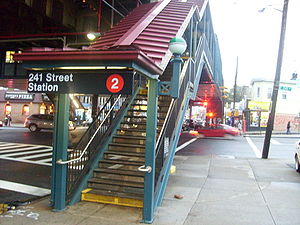
So I turned to Jimme. Mom was always complaining that he didn’t pay child support anyway. And I knew where he lived now. It was 153 South Tenth, not far from the East 241st Street station in the Bronx, the end of the line on the Subway’s 2 and 5 lines running from Brooklyn and Manhattan. There were a bunch of watering holes nearby.

Felix Baumgartner of Austria as he jumps out of the capsule during final manned flight, October 14, 2012. (AP Photo via Red Bull Stratos)

I’d actually started going over to Jimme’s in August, a consequence of my first long walks through Mount Vernon and Southern Westchester County. But this was different. I was going to Jimme’s for money and sneakers. I decided to wait for him at the 241st Street stop after school one Friday at the end of October, figuring I’d catch him just before he started his weekly drinking ritual.

Unbelievably, my first idea for tracking Jimme down worked! I caught Jimme coming down the rickety Subway steps, completely shocked by seeing me there.

“Bo’, whacha doin’ here?”

“We need money, and I need some sneakers.”

“Why don’ you aks Maurice for them?”

“’Cause you’re my father and you haven’t been paying any child support. If you had, I wouldn’t be here!”

With that, Jimme laughed and shook his head. Of course he was also mad. I was in the way of him gettin’ his “pep-up,” virtually anything with alcohol in it.

“Bo’, what I’m gonna do wit’ you? You got me,” he said. I negotiated fifty dollars from him. He promised to get me some sneaks.

The following Tuesday, I went over to his place. Not only did I get my sneakers, a pair of size eleven-and-a-half Nike walking sneaks. I got a brown Members Only jacket to boot. I could tell, though, that they once belonged to someone else. Still a bit hung over, Jimme said, “Man, lo’ at all dese suits! You gotta lo’ like a big shot when you work in the city.” The suits were too big and a bit mismatched. I was just relieved that Jimme cared enough about my feet to get me the right size.

241st Street-Wakefield Station entrance, Bronx, NY, January 18, 2010. (DanTD via Wikipedia). Released to public domain via cc-Attribution 3.0 Unported,

Darren would usually come with me on what gradually became our weekly hike from the land of 616 to the near Bronx and the city. Jimme being Jimme, he would grab me by one hand while giving me the money and put his left arm around my shoulder, whispering in my right ear, “Don’ give Darren nothin’,” or “You keep fitty for yo’self an’ give Darren ten.” “You a Collins, don’ be sharin’ nothin’ wit’ them Gills,” he’d often say.

I almost always broke with Jimme around this. Yes, Darren often was a selfish goofball and my 616 family was just a step or two above total chaos. Yet I couldn’t go to eat at a good pizza shop with Jimme and Darren and let them subsist on bread, water and milk. I couldn’t watch them run around in graying underwear and just wash my own clothes. Not as hard as Mom worked, not as long as I lived there. I wanted to help as much as I could and still take care of my needs.

Jimme knew I was helping out at 616 too. So he would say things like “Don’ be givin’ your motha my money. Those ain’t my kids. Dis jus’ for you and Darren.” Or “Don’ give them muddafuccas nothin’,” which would start a brief argument between me and him about the needs of innocent children. Even with that and his drunken ups and downs, Jimme helped save the day for us and me as we plunged into the watery abyss of welfare poverty.”

← Older posts
Newer posts →

Boy @ The Window: A Memoir

Boy @ The Window: A Memoir

Places to Buy/Download Boy @ The Window

There's a few ways in which you can read excerpts of, borrow and/or purchase and download Boy @ The Window. There's the trade paperback edition of Boy @ The Window, available for purchase via Amazon.com at http://www.amazon.com/Boy-Window-Donald-Earl-Collins/dp/0989256138/

There's also a Kindle edition on Amazon.com. The enhanced edition can be read only with Kindle Fire, an iPad or a full-color tablet. The links to the enhanced edition through Apple's iBookstore and the Barnes & Noble NOOK edition are below. The link to the Amazon Kindle version is also immediately below:

scr2555-proj697-a-kindle-logo-rgb-lg

Boy @ The Window on Amazon.com: http://www.amazon.com/Boy-The-Window-Memoir-ebook/dp/B00CD95FBU/

iBookstore-logo-300x100

Boy @ The Window on Apple's iBookstore: https://itunes.apple.com/us/book/boy-the-window/id643768275?ls=1

Barnes & Noble (bn.com) logo, June 26, 2013. (http://www.logotypes101.com).

Boy @ The Window on Barnes & Noble: http://www.barnesandnoble.com/w/boy-the-window-donald-earl-collins/1115182183?ean=2940016741567

You can also add, read and review Boy @ The Window on Goodreads.com. Just click on the button below:

Boy @ The Window

Twitter Updates

Tweets by decollins1969
  • RSS - Posts
  • RSS - Comments

Archives

  • June 2025
  • April 2023
  • September 2022
  • August 2022
  • July 2022
  • June 2022
  • May 2022
  • April 2022
  • March 2022
  • January 2022
  • December 2021
  • November 2021
  • October 2021
  • September 2021
  • August 2021
  • July 2021
  • June 2021
  • April 2021
  • March 2021
  • February 2021
  • January 2021
  • December 2020
  • November 2020
  • October 2020
  • September 2020
  • August 2020
  • July 2020
  • May 2020
  • April 2020
  • March 2020
  • January 2020
  • December 2019
  • November 2019
  • August 2019
  • July 2019
  • June 2019
  • May 2019
  • April 2019
  • March 2019
  • February 2019
  • January 2019
  • December 2018
  • November 2018
  • October 2018
  • September 2018
  • August 2018
  • July 2018
  • June 2018
  • May 2018
  • March 2018
  • February 2018
  • January 2018
  • December 2017
  • November 2017
  • October 2017
  • September 2017
  • August 2017
  • July 2017
  • June 2017
  • May 2017
  • April 2017
  • March 2017
  • February 2017
  • January 2017
  • December 2016
  • November 2016
  • October 2016
  • September 2016
  • August 2016
  • July 2016
  • June 2016
  • May 2016
  • April 2016
  • March 2016
  • February 2016
  • January 2016
  • December 2015
  • November 2015
  • October 2015
  • September 2015
  • August 2015
  • July 2015
  • June 2015
  • May 2015
  • April 2015
  • March 2015
  • February 2015
  • January 2015
  • December 2014
  • November 2014
  • October 2014
  • September 2014
  • August 2014
  • July 2014
  • June 2014
  • May 2014
  • April 2014
  • March 2014
  • February 2014
  • January 2014
  • December 2013
  • November 2013
  • October 2013
  • September 2013
  • August 2013
  • July 2013
  • June 2013
  • May 2013
  • April 2013
  • March 2013
  • February 2013
  • January 2013
  • December 2012
  • November 2012
  • October 2012
  • September 2012
  • August 2012
  • July 2012
  • June 2012
  • May 2012
  • April 2012
  • March 2012
  • February 2012
  • January 2012
  • December 2011
  • November 2011
  • October 2011
  • September 2011
  • August 2011
  • July 2011
  • June 2011
  • May 2011
  • April 2011
  • March 2011
  • February 2011
  • January 2011
  • December 2010
  • November 2010
  • October 2010
  • September 2010
  • August 2010
  • July 2010
  • June 2010
  • May 2010
  • April 2010
  • March 2010
  • February 2010
  • January 2010
  • December 2009
  • November 2009
  • October 2009
  • September 2009
  • August 2009
  • July 2009
  • June 2009
  • May 2009
  • April 2009
  • March 2009
  • February 2009
  • January 2009
  • December 2008
  • November 2008
  • October 2008
  • September 2008
  • August 2008
  • July 2008
  • June 2008
  • May 2008
  • April 2008
  • March 2008
  • February 2008
  • January 2008
  • December 2007
  • November 2007
  • October 2007
  • September 2007
  • August 2007
  • July 2007
  • June 2007

Recent Comments

MaryPena's avatarMaryPena on My Day of Atonement/Bitter Hat…
decollins1969's avatardecollins1969 on No Good Teaching Deed Goes…
Mary Rose O’Connell's avatarMary Rose O’Connell on No Good Teaching Deed Goes…

NetworkedBlogs on Facebook

NetworkedBlogs
Blog:
Notes From a Boy @ The Window
Topics:
My Life, Culture & Education, Politics & Goofyness
 
Follow my blog

616 616 East Lincoln Avenue A.B. Davis Middle School Abuse Academia Academy for Educational Development AED Afrocentricity American Narcissism Authenticity Bigotry Blackness Boy @ The Window Carnegie Mellon University Child Abuse Class of 1987 CMU Coping Strategies Crush #1 Crush #2 Death Disillusionment Diversity Domestic Violence Economic Inequality Education Family Friendship Friendships Graduate School Hebrew-Israelites High-Stakes Testing Higher Education History Homelessness Humanities Humanities Program Hypocrisy Internalized Racism Jealousy Joe Trotter Joe William Trotter Jr. K-12 Education Love Manhood Maurice Eugene Washington Maurice Washington Misogyny Mother-Son Relationship Mount Vernon High School Mount Vernon New York Mount Vernon public schools Multiculturalism MVHS Narcissism NFL Pitt Pittsburgh Politics of Education Poverty President Barack Obama Race Racial Stereotypes Racism Relationships Self-Awareness Self-Discovery Self-Reflection Sexism Social Justice Teaching and Learning University of Pittsburgh Violence Whiteness Writing

Top Rated

Blog at WordPress.com.

  • Subscribe Subscribed
    • Notes from a Boy @ The Window
    • Join 103 other subscribers
    • Already have a WordPress.com account? Log in now.
    • Notes from a Boy @ The Window
    • Subscribe Subscribed
    • Sign up
    • Log in
    • Report this content
    • View site in Reader
    • Manage subscriptions
    • Collapse this bar
 

Loading Comments...