• About Me
  • Other Writings
  • Interview Clips
  • All About Me: American Racism, American Narcissism, and the Conversation America Can’t Have
  • Video Clips
  • Boy @ The Window Pictures
  • Boy @ The Window Theme Music

Notes from a Boy @ The Window

~

Notes from a Boy @ The Window

Category Archives: race

Aside

Brotherly Love

12 Wednesday Aug 2015

Posted by decollins1969 in 1, Boy @ The Window, culture, Eclectic, High Rise Buildings, Jimme, Mount Vernon High School, Mount Vernon New York, My Father, New York City, Pop Culture, race, Sports, Youth

≈ Leave a comment

Tags

Bronxville, Brother-Brother Relationship, Chester Heights, Competition, Darren, Eastchester, Internalized Racism, Jealousy, Jump Shot, Lessons, Mental Disability, Mental Retardation, Self-Discovery, Self-Loathing, Shyness, Sibling Relationship, Sibling Rivalry, The Clear View School


Not quite the courts at Chester Heights (aka, Bronxville/Mount Vernon border), but more or less what would've looked like 30 years ago, Eastchester Playground, Capitol Projects, Bronx, NY, August 11, 2015. (http://www.nycgovparks.org/).

Not quite the courts at Chester Heights (aka, Bronxville/Mount Vernon border), but more or less what they would’ve looked like 30 years ago, Eastchester Playground, Capitol Projects, Bronx, NY, August 11, 2015. (http://www.nycgovparks.org/).

This is a Boy @ The Window story, one that occurred a little more than thirty years ago, and so typical of my experiences growing up with my older brother Darren. Nothing I ever did to help my older brother seemed to help him overcome the trap of going to The Clear View School, a school for the mild to severely mentally retarded (of course, we say mentally disabled in 2015), although Darren was never such. He, in fact, had taught himself to read at the age of three, and taught me to read on my fifth birthday. Darren’s issue was severe shyness, and between my Mom, my father Jimme, and the good White liberals and moderates at The Clear View School, the trap for Darren’s potential genius had been set by the summer of ’74. By the time I was aware enough to say anything about Darren’s predicament, it was already too late.

But say and try I did anyway. Everything from sharing music to talking to Darren about our futures and my escape-Mount-Vernon-for-college plans. I shared books, and tutored him through algebra and geometry and US history.

I even tried playing sports with Darren, including basketball, which in the summer of ’85 was only my third favorite sport. As I wrote in the memoir

“Darren played at the center spot on Clear View’s basketball team, which made sense since he was already between six-three and six-four at seventeen. Of course they crushed every team they played. It was truly unfair. Darren towered over his classmates and his opponents, and being the only non-mentally retarded person on the floor, he could run rings around folks.

Still, Darren could knock down any jump shot within thirty feet of the hoop. His shot was smooth, like Isiah Thomas’ or Bernard King’s. It was the kind of shot no one on MVHS’ basketball team had at the time. Knowing this, I wanted to — no, I had to play my brother to see this shot up close. There were two well-maintained courts near 616, one in Pelham near its main street of Fifth Avenue, the other a longer walk in Chester Heights. We chose Chester Heights for most of these battles. Their court felt like a good outside court should, surrounded by trees, with level, quality-painted asphalt, and bright-white mesh nets.

The first few times we played that summer, Darren just killed me. Every time I left him open for a jumper, he buried it. It was obvious I hadn’t touched a basketball other than in gym class since I was ten. I didn’t have a jump shot, had never worked on my footwork, and could dribble only moderately well with my right hand. Forget about using my left hand! I was so afraid of hurting my two crooked fingers that the left hand’s role for me was to block shots, not to catch passes or take shots.

"Nothing but net" (in context of UPS/NCAA March Madness cross-promotional ad), March 2012. (http://compass.ups.com/).

“Nothing but net” (in context of UPS/NCAA March Madness cross-promotional ad), March 2012. (http://compass.ups.com/).

My semi-buried competitive nature got the better of me. I knew I couldn’t beat Darren in a shootout. But I knew I was quicker than my taller brother. So I decided after another embarrassing performance (I lost 23-2!) that it would be easier to play defense and try to steal a few balls to keep the next game close. Amazingly, the plan worked! It worked so well that I took Darren completely out of his game. After three blocked shots and a couple of steals, I discovered that Darren couldn’t play me one-on-one if I drove hard for the hoop, that I could beat him with my first step. So every time I got the ball I attacked the rim. The last two games we played I won by a combined score of 50-18. I started feeling bad when Darren started forcing long jumpers. After a while, he just gave up. I wanted to win, but I wanted it to be competitive, too.

Darren was so upset that we didn’t talk on our way back to 616. He then walked to the back of our apartment building and threw his basketball down the garbage chute. I wanted to continue to play because I thought it would make both of us better and give us something positive to build on in our relationship. Instead it just made Darren mad and made it even harder for me to talk to him about what was going on at 616.

Standard New York-area garbage chute door, June 2009. (http://theferrisfiles.com/).

Standard New York-area garbage chute door, June 2009. (http://theferrisfiles.com/).

I really did feel awful about how Darren felt after the game. I had shattered confidence in one of the few areas in his life in which he had any. I had humbled a star basketball player at his own game, a game I’d yet to learn. I’d given my older brother yet another reason to be jealous of me. It was shocking to watch him throw the basketball away. I really didn’t know what to say. “I’m sorry, Darren, for beating you two straight games, for making you look bad at your favorite sport?” I guess I could’ve said that. What fifteen-year-old with as much on my plate as me would, though, especially in an environment as competitive as ours when it came to basketball? It made me pity Darren for his situation at Clear View, but also left me angry with him. I was trying to help him, after all, not break his spirit. The incident left me shaking my head.”

I didn’t play basketball with Darren again until the spring of ’97, during my Teachers College interview/PhD graduation week. By that time, Darren’s jealousy and stubbornness had pretty much forced me to give up on my reclamation efforts. But, when left open, Darren could still nail a twenty-four-footer with ease.

Aside

What’s Up With These Leftist Labels, Anyway?

05 Wednesday Aug 2015

Posted by decollins1969 in 1, Academia, Boy @ The Window, Christianity, culture, Eclectic, eclectic music, Hebrew-Israelite, Mount Vernon High School, Mount Vernon New York, Pittsburgh, Politics, Pop Culture, race, Religion, Youth

≈ Leave a comment

Tags

"I Am 32 Flavors" (1998), Alana Davis, Anti-Stereotype, Class Struggle, Critical Race Theory, Derrick A. Bell, Dick Oestreicher, Evangelical Christianity, Franz Fanon, Graduate School, Humanities, JD, Karl Marx, Labeling, Labels, Leftist, Liberal, Marxist, Neo-Marxist, Pitt, Rosemary Martino, Stereotypes, W. E. B. Du Bois


Asian woman in nude breaking through a barcode, September 2010. (unknown author/woman, http://www.willeyelisten.com).

Asian woman in nude breaking through a bar code, September 2010. (unknown author/woman, http://www.willeyelisten.com).

Over the years, I’ve grown tired of the idea that my social, cultural, economic and political beliefs could be summed up with one or two words. Like “progressive,” “Communist,” “neo-Marxist,” “leftist,” “liberal,” and/or “Marxist.” Why? Because like so many things American (or in this case, Western), ideologues and intellectuals take the easiest path and slap overgeneralized labels on groups of people without thought, without nuance, and certainly without an understanding of both people and history.

I’ve felt this way about these labels at least since my first year of grad school in the University of Pittsburgh’s MA and PhD programs (1991-92), and likely longer than that. But in that program, I was surrounded by professors and colleagues who were various shades of Marxism. At least that’s what they claimed. More to the point, they claimed that “the class struggle” was the defining feature of both human history and US history. “The class struggle” trumped slavery and America’s racial caste system, the near eradication of indigenous cultures in the US and around the world, it trumped the exploitation and exclusion of women in Western civilizations.

I admit it. It really, really, really pissed me off to be earning my MA and beginning my doctoral work around such ignorant thinkers. They would ask me about my Marxism, and I’d say, “I’m not a Marxist. I’m not a neo-Marxist. I’m not even a Groucho Marxist.” My Pitt grad school colleagues would laugh, sometimes a little too forcefully. My professors, for the most part, ignored me, since I was an African American history student who believed that race intertwined with class to be US history’s defining feature. How scandalous!

It wasn’t that I hadn’t read Karl Marx’s and Frederick Engels’ Communist Manifesto (1848). I read it via Rosemary Martino in twelfth grade, though I can’t remember if I read it for AP English or for her Humanities Philosophy class. I’d also read Marx’s much longer Das Kapital (1867), Frantz Fanon’s Black Skin, White Masks (1952) and The Wretched of the Earth (1961), Du Bois’ The Souls of Black Folk (1903), Ralph Ellison’s Invisible Man (1952), and so many other supposedly Marxist-leaning tombs by the time I’d taken my first full semester of grad-level courses (I took my first grad course my junior year at Pitt).

A basic world political spectrum chart (really, too simple), August 5, 2015. (http://www.endofprejudice.com/).

A basic world political spectrum chart (really, too simple), August 5, 2015. (http://www.endofprejudice.com/).

I just wasn’t that impressed on the Marxism part of things. I mean, I was well acquainted with oppression, exploitation and abuse long before I’d read anything by Marx and Engels, or George Orwell in ninth grade English, for that matter. I had a contrarian Humanities classmate in JD who espoused what I considered even at the time his version of Communist gibberish all through middle school and into our sophomore year at Mount Vernon High School. So how do you label someone a Marxist or Communist who both views it with disdain and didn’t grow up quoting from it? I’d like to know.

This last question, though, is bigger than just my own experience with poverty, race, racism, child abuse, sexual assault, domestic violence, homelessness, cultish religions, and sheer willful ignorance and neglect. Historically, labeling anyone who had radical ideas about the falsities of human civilizations as civilizing the human tendency to spread inequality and oppression to the most vulnerable as Communist is a bit ahistorical, no? So-called leftists or socialists do that with Jesus and Muhammad almost every day. Maybe we should call Karl Marx an original, Asiatic Christian or original Muslim, minus the spiritual component of kneeling before God in prayer.

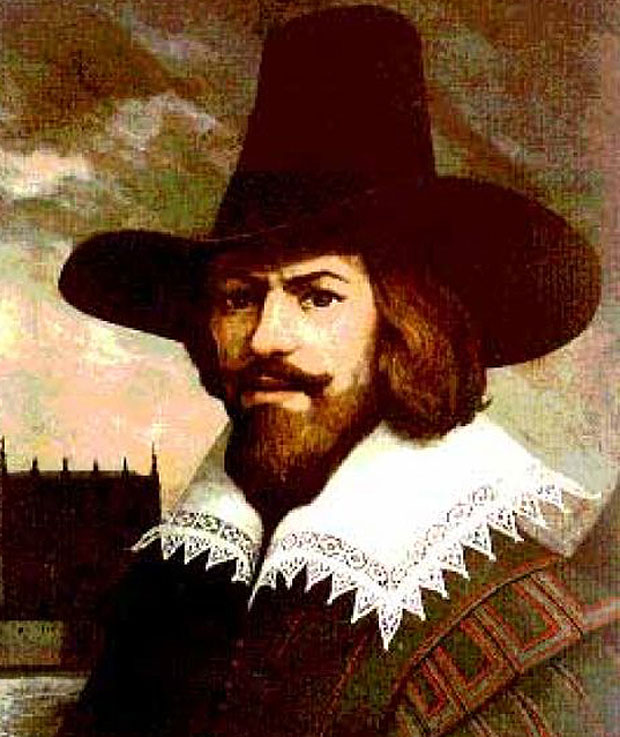
Portrait of Guy Fawkes (1570-1606), author/date unknown, August 5, 2015. (http://plus.google.com).

Portrait of Guy Fawkes (1570-1606), author/date unknown, August 5, 2015. (http://plus.google.com).

For me, growing up in a striving household that ended up in grinding welfare poverty didn’t make me a Communist. I went through several stages of belief, from my Mom and idiot stepfather Maurice hoisting the Hebrew-Israelite thing on me, to evangelical Christianity, to just plain Christianity, to critical race theorist adherent. I never completely gave up on capitalist democracy, because what would’ve been the point of that? By the time my son was born in 2003, I saw myself more in European terms, as either a Social Democrat or a Christian Democrats, believers in compromises and reforms from within that ameliorate the worst forms of racial, gender and other forms of oppression and poverty.

Yet even that is too big a label to hang on me or others, now and across history. What did people call those who wanted to rid the world of poverty and economic oppression prior to 1848? Or prior to the French Revolution, for that matter? Troublemakers? Radicals? Jacobites? Weird? Lunatics? To be honest, any of these terms fit me better than progressive, liberal, leftist or Marxist. Because ultimately, I don’t believe in any single economic or political belief system crafted by Homo sapiens. They’re all subject to corruption, all subject to be bent by those with the most power and resources.

So, who am I, ideologically speaking? To quote Alana Davis, “I am 32 flavors” and dim sum. Go ahead. Try to figure that out and come up with a label that fits!

Aside

“White Privilege,” “Privileged Whites,” and Other Clarifications

01 Saturday Aug 2015

Posted by decollins1969 in 1, culture, Eclectic, New York City, Patriotism, Politics, Pop Culture, race, Religion

≈ Leave a comment

Tags

American Exceptionalism, Bigotry, Black Reconstruction (1935), Central Park, Colorblindness, Egalitarianism, Homelessness, Privileged Whites, Psychological Wages, Public Wages, Race, Racism, Socioeconomic Status, W. E. B. Du Bois, Wages of Whiteness, White Privilege, Whiteness


"White Privilege-Amex," April 2014. (http://theblacksphere.net/).

“White Privilege-Amex,” in black and white, April 2014. (http://theblacksphere.net/).

It is hard to discuss race. It is definitely so in the US, where virtually everyone believes that their individual good intentions mean more than systemic oppression and ugly truths. And it is really hard on people of color when they/we discuss race with most Whites and some people of color (e.g., Black conservatives, the elite of color, those with internalized racism issues), as their belief in American exceptionalism and individualism is so strong that any evidence to the contrary must be wrong. Especially if the person providing the evidence is Black, Latino, Native American or Asian, and even more so if they are women of color.

One thing that’s been on my mind lately is the lazy use of terms by the media around race. And their laziness is our collective and individual laziness as well. So much so that most Americans use the terms for discussing race about the same way most Americans eat — they say “gimme lots of fat” while refusing the vegetables and healthy, but “put everything on it” at the same time.

Mr. Moneybags of Monopoly (1934) fame, July 31, 2015. (http://streetsmartbrazil.com/).

Mr. Moneybags of Monopoly (1934) fame, July 31, 2015. (http://streetsmartbrazil.com/).

For example, most Whites see the terms White privilege and privileged Whites and assume they mean the same thing. They don’t and can’t. White privilege refers to both systemic and individual racial discrimination and disparities that almost no one White would ever have to deal with in most circumstances. It has little to do with socioeconomic standing, level of education, social networks, or any other variable to which most Americans who play devil’s advocate often refer. Privileged Whites, though, refers to the fact that this socioeconomic group is either upper middle class or wealthy, often with high education levels. The latter can also refer to White privilege, but then again, that’s already assumed in America’s racial construction of itself.

Anyone who is White and poor and also assumes that White privilege (or, to use W.E.B. Du Bois’ term, Whiteness) is ascribing to them a socioeconomic status that they do not possess, that’s just incorrect. As Du Bois wrote in Black Reconstruction (1935), even the poorest Whites received societal compensation, at least in part, through a “public and psychological wage.” In Jim Crow times, it was one in which poor Whites “were given public deference…were admitted freely…to public functions and public parks.” At the same time, the “police were drawn from their ranks and the courts, dependent on their votes, treated them with leniency” (pp. 700-01). Come to think of it, much of this still applies in 2015, even though the Civil Rights Movement dismantled Jim Crow, no?

But it’s not just terms like White privilege and privileged Whites that throws off all but a small minority of Americans. Most use terms like race, racism and bigotry interchangeably, as if they work at an Apple factory in the Longhua Subdivision of Shenzhen, in Guangdong Province, China (it’s outside Hong Kong) making iPhones and iPads. Race is a construct and not a biological fact in the case of Homo sapiens, since humans are all part of one species, albeit with some rather interesting surface variations. Racism is the result of a construct to justify social and economic advantages in the US and all over the globe, as well as the systemic construction and maintenance of such advantages. Bigotry, though, is something we as individuals all possess, regardless of race, gender, ideology, religion, atheism, or any other variable. There’s more, but I’ve already written a post about this.

A clip from The Colbert Report in a segment about the end of stop and frisk in New York City, August 2013. (http://globalgrind.com via http://billmoyers.com).

A clip from The Colbert Report in a segment about the end of stop and frisk in New York City, August 2013. (http://globalgrind.com via http://billmoyers.com).

And there’s this whole notion of color blindness, the idea that millions of Americans who see everything in color can claim that they’re colorblind to race. “I don’t care if you’re white, black, red, green or purple. It doesn’t matter to me,” most Americans often say. There’s two problems with this statement and these phrases. One is that unless someone is actually, physically and neurologically colorblind, what one is doing is choosing to ignore differences, which is completely different from tolerating, accepting or embracing difference. One might as well say that they don’t see the homeless in the middle of Central Park in New York, that’s how ridiculous — maybe even tone-deaf and callous — this idea is.

Two is that there aren’t any green, purple, blue or other weird hues of humanity anywhere on this planet. Heck, technically, Whites are pink, Blacks are varying shades of brown, Native Americans have reddish undertones (and then only some), and so on. The point is, this idea of color blindness to race is straight horse manure, allowing many Americans to feel good about their views on race, racism and bigotry without any serious thought about their country or the people in it at all.

And that is why conversations on race in the US remain a pipe dream for some, and raise the fear of the specter of Judgment Day for others.

Aside

“Between the World and Me,” What I Don’t Get…

23 Thursday Jul 2015

Posted by decollins1969 in 1, culture, Eclectic, Politics, Pop Culture, race, Religion, Youth

≈ Leave a comment

Tags

"Listening to Ta-Nehisi Coates While White", "The Dream", American Dream, Between the World and Me (2015), Black Bodies, Black Women, Book Reviews, Britni Danielle, Cornel West, Critiques, David Brooks, Exclusion, Facebook, Homage, Intersectionality, Mabel Jones, Memoir, Narcissism, National Review, New York Times, Politico.com, Prince Jones, Race Matters, Rich Lowry, Samori Touré, Sidelined, Systemic Racism, The Root


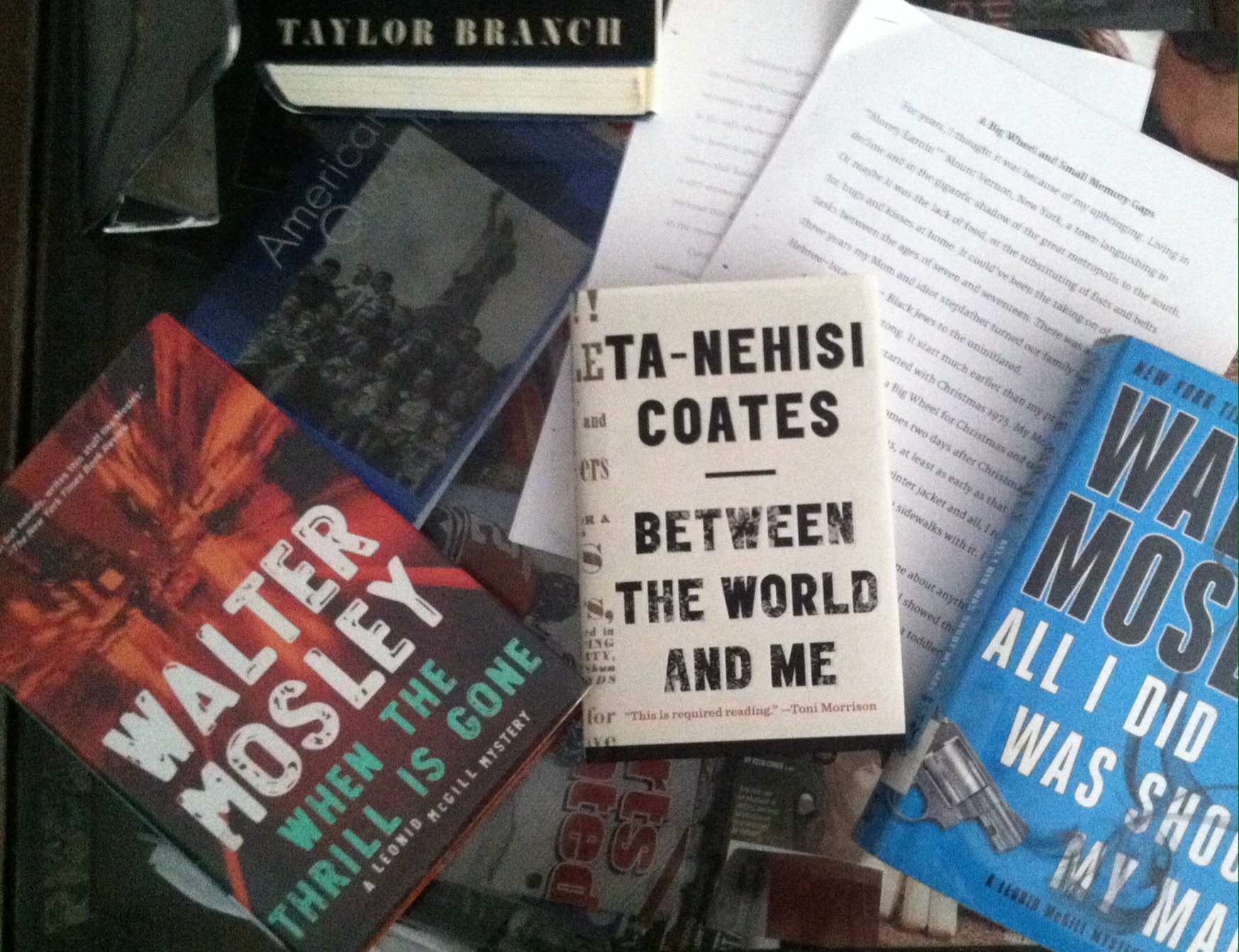
My reading (and writing) for Summer 2015, July 23, 2015. (Donald Earl Collins).

My reading (and writing) for Summer 2015, July 23, 2015. (Donald Earl Collins).

I don’t get most of the critiques of Ta-Nehisi Coates’ bestselling new book, Between the World and Me. It’s as if Coates had written Richard Herrnstein and Charles Murray’s The Bell Curve (1994), the way White reviewers allegedly liberal and conservative have reacted to its publication. I have read Between the World and Me, and there are more than a few things that any reader could criticize or even praise. But more than a fair share of the criticisms of Coates’ book are flat-out misreads, impositions of the critics’ own biases on Coates, or based purely on the book’s back cover.

“Go West, Young Man!”

Cornel West began this parade of badly handled critiques last week with his Facebook post. The title — “In Defense of James Baldwin – Why Tony (how West spelled it originally) Morrison (a literary genius) is Wrong about Ta-Nehisi Coates.” — says it all. One impressive blurb from a leading author of the last half-century, and West seems to have lost his mind. Aside from disagreeing with Morrison about the James Baldwin, West wrote, “Coates is a clever wordsmith with journalistic talent who avoids any critique of the Black president in power,” adding that

Coates can grow and mature, but without an analysis of capitalist wealth inequality, gender domination, homophobic degradation, Imperial occupation (all concrete forms of plunder) and collective fightback (not just personal struggle) Coates will remain a mere darling of White and Black Neo-liberals, paralyzed by their Obama worship…

Funny. I didn’t know that Coates’ 152-page letter to his fifteen-year-old son was supposed to be a damning critique of President Barack Obama. Ax-grind much, Dr. West? Especially since, in a structural sense, anyway, Coates’ book indirectly pays homage to West’s groundbreaking 101-page treatise, Race Matters (1994). For West, though, the world is not enough, because in his mind, “it’s all about me.”

Intersectionality vs. Exclusion

There have been a few reviews criticizing Coates’ for not dealing with the intersectionality between race and gender for Black women in the context of facing the same struggles as Black men. Britni Danielle wrote in her review of Between the World and Me in The Root last week, “[b]ut what of the women? In Between the World and Me, black women are footnotes to the men’s stories—baby mamas, lovers, mothers, classmates, around-the-way girls, grieving mothers.”

I don’t entirely disagree with Danielle’s assessment, especially in specific cases, like when Coates discussed his mother, talked about the first two women he fell in love with, and in his understanding of his slain friend Prince Jones’ mother, Dr. Mabel Jones. Then again, how could a late-bloomer like Coates really dig deep enough to discuss intersectionality with any depth for his fifteen-year-old son? My suspicion is that a more serious attempt on Coates’ part would’ve fallen flat.

Narcissistic White Men on “Race Matters”

The most explosive critiques of Between the World and Me — at least for most Americans (read “White Americans” here) — have come from two rather unimpressive high-brow intellectual narcissists. New York Times columnist David Brooks last Friday and National Review editor Rich Lowry on Wednesday (via Politico.com) both took it upon themselves to express personal outrage on the part of millions of other upstanding White Americans.

Brooks titled his column “Listening to Ta-Nehisi Coates While White,” though it really should’ve been titled, “Hearing Ta-Nehisi Coates While White.” Because based on what Brooks wrote, with sentences like “It [Coates’ book] is a mind-altering account of the black male experience. Every conscientious American should read it,” it becomes fairly obvious to the astute that Brooks wasn’t listening. As I’ve explained to my soon-to-be-twelve-year-old son and my students over the years, “there’s a difference between hearing and listening. One requires you to be look like you’re listening, the other requires you to think and act on what you read and hear.” I guess Brooks didn’t listen to Morpheus in The Matrix (1999) either. Like so many, he doesn’t want to understand that the American Dream is “the world that has been pulled over your eyes to blind you from the truth”

Brooks read Between the World and Me, and heard, “White people like me are bad, the American Dream is bad — how dare you say that about me, Mr. Coates!” This is even more evident later in the review, as Brooks wrote, “Is my job just to respect your experience and accept your conclusions? Does a white person have standing to respond?” Yes, Mr. Brooks, your White privilege matters, but doesn’t give you standing here. 

Lowry based his nullification of Between the World and Me on the very themes that Coates’ spun on their heads in his book — individualism and skin-color-based violations of the Black body. Lowry wrote, “He [Coates] argues — although that might be too generous a word; it’s more like assertion shrouded in a haze of lyricism — that all that other black people did to hurt or threaten him was ultimately the product of white racism.” As if racism is somehow self-contained, an individual choice or decision, and not something that is embedded in America’s institutions, with systematic effects throughout society, to the point of self-hatred and internalized racism. Wake up, Mr. Lowry, and smell what you’re shoveling!

Between Coates and Me

As for my read, I found the book powerful, self-important, compelling, pompous, and at times nihilistic and heart-rendering. Yet I also found some of Coates’ work weak and underdeveloped. Yet for almost none of the reasons that other reviewers have used to excoriate him and Between the World and Me. If Coates’ book is really just a letter from a near middle-aged Black man to his teenager son, I can tell you that at fifteen, my head would’ve been spinning for weeks after reading the letter. And not in a good way. My first reaction would be, “Thanks a lot, Dad! This burden you’ve given me could finish me before I have a serious chance to start!”

This book is far more than a mere letter. It’s part memoir and part treatise on the nature of the poisonous American Dream (one critique I read thought that Coates’ bought into the Dream — someone needs to learn how to comprehend what they read) and American racism. It is also partly journalistic commentary on the lives destroyed by “The Dream” and the structural racism that has supported it for centuries. Coates’ book is not just a nod to Baldwin, Langston Hughes or Malcolm X (whom he identifies in his book). There’s some influence, direct or not, between Martin Luther King, Zora Neale Hurston, Ralph Ellison, even the late Derrick Bell.

And that strength is perhaps Between the World and Me‘s great weakness. As strong as the writing is, and as personal and emotional the journey Coates tries to take us on, it is a journey with far too many destinations. Some of the people on Coates’ journey remain underdeveloped as characters, so to speak, and really serve as foils rather than as other bodies with the same hopes and fears that Coates’ had growing up. The appeal of The Mecca of the Howard University yard and Moorland-Spingarn would be difficult for some to appreciate without more of a sense of Coates’ lack of belonging, as there is so little about his relationship with his parents (especially his mother) and siblings beyond ass-whuppins. The repetitive declarations around the light-skinned kid with the gun, the notion of “twice as good” (which is mentioned several times over thirty pages before Coates provided a definition), and Coates’ cringing at all things Christianity, while understandable, probably do as much to exclude readers as they do to invite.

All in all, the book probably could have been thirty or even fifty pages shorter. But whether too repetitive, too long, too much rhetoric and not enough intersectionality, I still think Coates’ succeeded in his goal. If I’m understanding it correctly, that is. To remind his son (actual and the millions of proverbial sons and sidelined daughters, I guess) that the “Struggle is in your name, Samori–you were named for Samori Touré, who struggled against French colonizers for the right to his own black body” (p. 68). Imparting this wisdom may be perhaps the most important duty any Black parent has toward any of their children.

Aside

I Wish I Had Known Sandra Bland

22 Wednesday Jul 2015

Posted by decollins1969 in 1, culture, Eclectic, eclectic music, Politics, Pop Culture, race

≈ Leave a comment

Tags

#BlackLivesMatter, Brian Encinia, Death, Excuses, Hopes, Police Brutality, Policing, Sandra Bland, Texas DPS, White Guilt, Wishes


Sandra Bland, accessed July 16, 2015. (http://heavy.com).

Sandra Bland, accessed July 16, 2015. (http://heavy.com).

I truly wish I had known Sandra Bland. I wish I could’ve told her to fly out of Midway to Dallas-Fort Worth. I wish that I could’ve been in the car with her the moment Texas DPS Officer Brian Encinia made her pull over for an illegal lane change, to take the heat for any overt hostility on the officer’s part. I wish that I could’ve acted as a buffer against Encinia’s actions of escalation, to keep Bland from getting her head slammed into the ground. I definitely wish I could’ve been there in Bland’s final hours. To keep her calm, to wipe away her tears, to keep her safe, to give her more ammunition against this sham of justice that has been Texas DPS so far in this case.

But that’s just it. I could also wish I’d been there for Trayvon Martin in February 2012, or Renisha McBride in 2013, or Michael Brown and Tamir Rice in 2014, or seven-year-old Aiyana Stanley-Jones in 2010. I could wish that I’d known any number of the thousands of Blacks, Latinos and Native Americans wounded, killed or railroaded by police, White supremacists and vigilantes over the years. It won’t change the fact that these Americans are dead, mostly for the heinous crime of existing.

Sandra Bland deserved no more than a traffic ticket with a fine and maybe a mean look from Encinia. Anything that occurred after that is a result of a corrupt system and White fears and aggression. Period.

I don’t want to hear about “a few bad apples,” policing being a “dangerous job” or whether one’s individual “White guilt” is enough. Law enforcement’s system of racial and socioeconomic bias allows for the so-called bad apples, leading to constant abuse of authority. And while policing is a dangerous job, so is working at a chemical plant, a sewage treatment facility, and teaching in any classroom in the US. As for guilt, it translates only into an individual’s obsession with how everything relates to them, or basically a form a narcissism. It means nothing without a corresponding act, to protest, teach, persuade, strike, or otherwise speak out against what one knows is wrong.

I wish I had known Bland because like so many others handled senselessly and (perhaps) killed irresponsibly, she was smart, beautiful, and (as Whites often say about their not-so-perfect kids) had her whole life ahead of her. This injustice, like so many others, cannot stand. Here’s to hoping that Encinia and others responsible will actually face criminal charges and jail time. But really, here’s to hope, for really, without it, there’s no reason to live in a nation like this wickedly unjust one.

Aside

Ode to Tiger Woods

17 Friday Jul 2015

Posted by decollins1969 in 1, culture, Eclectic, eclectic music, My Father, Politics, Pop Culture, race, Sports, Youth

≈ Leave a comment

Tags

"Hangin' On A String" (1985), "Stuck In A Moment You Can't Get Out Of" (2000), Billy Idol, Faded Glory, Golf, Grace Jones, Loose Ends, Odes, PGA, The Open Championship, Tiger Woods, U2


Gray Tiger Woods "TW" cap 2014, July 17, 2015. (http://ebay.com).

Gray Nike Tiger Woods “TW” cap 2014, July 17, 2015. (http://ebay.com).

Okay. So my wife calls me “the last true Tiger Woods fan” in her tweets about me watching Tiger struggle mightily to find his authentic swing and rhythm again, a process that supposedly was over in 2013 (when Tiger won five tournaments). But since the calendar flipped to 2014, Tiger may well be angrily muttering to himself, “Where have you f**ing gone, Eldrick ‘Tiger’ Woods?” All as he spends yet another week looking for balls in bunkers and hazards, hooking and slicing driver and 3-wood like he’s working on differential mathematics for NASA’s next deep space probe.

The loop water near the 1st green at St. Andrews' Old Course, (where Tiger put his second shot of his 1st round), Scotland, UK, July 16, 2015. (http://golfdigest.com).

The loop water near the 1st green at St. Andrews’ Old Course, (where Tiger put his second shot of his 1st round), Scotland, UK, July 17, 2015. (http://golfdigest.com).

For years I have thoroughly enjoyed watching Tiger’s dominance in a sport dominated by Whites and Whiteness. I have used and sang stock phrases and songs whenever Tiger’s competitors (e.g., Phil Mickelson, Luke Donald, Bubba Watson, Sergio Garcia, ad infinitum) have found the drink, deep grass, impassable fescue, and have gotten the yips with two-and-a-half-foot putts to tie or take the lead at a major. Watching Tiger play like he’s fifteen years older and ready for the Champions Tour right now is like, well, watching any other professional golfer play.

I’m sure Tiger will find his swing and rhythm — eventually. I’m sure, though, that I’ll only see flashes of dominance even when he does. In the meantime, like every other golfer, Tiger gets the silly golfer treatments I’ve been giving to everyone else since 1989. Today’s cut day at The Open Championship, and Tiger’s got me “hangin’ on the cut line” (thanks, Loose Ends, for lending me your song in my thoughts) — “like waitin’ on the bus, I’m waitin’ on you.”

But that’s not all for musical silliness and golf. Here’s some other smash hits Tiger has become well acquainted with in the past five years:

Sade — “You gave me the hook and slice/Hook and slice” (really, “Kiss of Life”)

Pat Benatar — “Par is for Children” (in your case, exactly like “Hell is for Children”)

Billy Idol — “Bogey, bogey, double bogey, triple bogey…” (derivative of “Mony Mony,” but not the 1968 Tommy James and the Shondells’ version)

Grace Jones — “Pull up to the bunker, baby/with driver in between, ooh, ooh” (yeah, I went there)

U2 — “I still haven’t found (a good golf swing)” (self-explanatory)

The Supremes — “Ooh baby, baby, where is my ‘A-game’?” (self-explanatory)

Thompson Twins — “Driver! Driver!/Can’t you see I’m hurting, hurting…”

That’s the extent to which I’m willing to call Tiger “just another guy” (in reference to Isiah Thomas’ ill-conceived comments on Larry Bird in 1987). Because I’m still a fan after all. Seriously. I think that U2’s “Stuck In A Moment You Can’t Get Out Of” is most appropriate for breaking out of a slump, and not wallowing in one (I should know — I’ve faced a few slumps of my own). The last six lines are most appropriate:

And if the night runs over
And if the day won’t last
And if your way should falter
Along this stony pass

It’s just a moment
This time will pass


Aside

RIP Sister, Sarai Adar Washington (February 9, 1983-July 11, 2010)

11 Saturday Jul 2015

Posted by decollins1969 in 1, Boy @ The Window, Carnegie Mellon University, Christianity, culture, Eclectic, Mount Vernon High School, Mount Vernon New York, Pop Culture, race, Work, Youth

≈ Leave a comment

Tags

616, 616 East Lincoln Avenue, Brother-Sister Relationship, Death, Dread, Eri Washington, Father Figures, Growing Up, Independence, Life, Mazza Gallerie, Sarai Washington, Sickle Cell Anemia, The Matrix Revolutions (2003)


Sarai Washington, circa 2003.

Sarai Washington, circa 2009.

It’s been five years since I received my brother Eri’s call telling me what I had known and dreaded would come for nearly thirty years. That my only sister Sarai had died from complications stemming from sickle-cell anemia.

As soon as I picked up the phone five years ago, I knew. Sarai had been in and out the hospital for months since she had returned to New York at the tail end of ’09. Before then, she had lived either on her own or with two of her high school friends in Huntsville, Alabama since ’05. The skin and bone bruises, the constant blood transfusions, the always-there pain of sickled red blood cells circulating through her body. The average life expectancy for anyone with the disease is thirty-three years. That I had Sarai in my life for 82 percent of that life expectancy was still a minor miracle in the midst of what to me seemed completely unnecessary pain.

We weren’t as close in her later years, though. I mean, Sarai saw me as a bit of a father-figure when she was growing up. I had thirteen years and six weeks on her, so that’s how it goes. Between the 616 fire and homelessness for her and my other younger siblings in ’95, though — not to mention puberty — Sarai no longer treated me as her hero. That was fine by me. I already had too many people in my life who thought of me as some sort of hero or saint.

I think, though, that my sister enjoyed not really having to think about her future, about not feeling the need to grow up, since, what would be the point, really? I thought that because she knew more about her disease than anyone, it was her responsibility to grow up and find the best care possible to manage her disease, to bring some meaning to her life. That’s where our closeness became less so. I have a way of expecting more out of people than most people are willing to expect of themselves.

Sarai & Noah, November 2003. (Donald Earl Collins).

Sarai & Noah, November 2003. (Donald Earl Collins).

When Sarai came to live with me and my wife Angelia in ’03, to help us out with our then newborn son Noah, it was obvious that my sister was doing little to take care of herself. When I finally confronted her about her poor diet and unwillingness to watch over her disease, Sarai yelled, “You’re not my father!,” right in front of Mazza Gallerie, on the DC-Chevy Chase border (we had gone to see The Matrix Revolutions, much more for her than for me). Of course she was right. But of course, I was right also.

Sarai decided the next day to pack up her stuff and move back home to 616 and Mount Vernon, “where no one told her what to do,” she wrote as part of her going away letter. She also said that I “don’t know anything about the streets” as yet another familial “Just because you have a Ph.D…” coup de grace. I thought, “If I didn’t know anything about the streets, you and the rest of the younger siblings would’ve gotten your asses kicked through the early ’90s.”

But I knew Sarai’s letter wasn’t about the streets. It was about her living her life the way she wanted, without me or anyone else telling her how to take care of herself. That’s why she went away to Alabama for nearly four years.

Luckily I did get to talk to her a couple of times after that. Though we weren’t close, I loved her, and I know she loved me. The sad truth was, though, Sarai never had enough time to take charge over her life, and I couldn’t make her take that precious little time.

← Older posts
Newer posts →

Boy @ The Window: A Memoir

Boy @ The Window: A Memoir

Places to Buy/Download Boy @ The Window

There's a few ways in which you can read excerpts of, borrow and/or purchase and download Boy @ The Window. There's the trade paperback edition of Boy @ The Window, available for purchase via Amazon.com at http://www.amazon.com/Boy-Window-Donald-Earl-Collins/dp/0989256138/

There's also a Kindle edition on Amazon.com. The enhanced edition can be read only with Kindle Fire, an iPad or a full-color tablet. The links to the enhanced edition through Apple's iBookstore and the Barnes & Noble NOOK edition are below. The link to the Amazon Kindle version is also immediately below:

scr2555-proj697-a-kindle-logo-rgb-lg

Boy @ The Window on Amazon.com: http://www.amazon.com/Boy-The-Window-Memoir-ebook/dp/B00CD95FBU/

iBookstore-logo-300x100

Boy @ The Window on Apple's iBookstore: https://itunes.apple.com/us/book/boy-the-window/id643768275?ls=1

Barnes & Noble (bn.com) logo, June 26, 2013. (http://www.logotypes101.com).

Boy @ The Window on Barnes & Noble: http://www.barnesandnoble.com/w/boy-the-window-donald-earl-collins/1115182183?ean=2940016741567

You can also add, read and review Boy @ The Window on Goodreads.com. Just click on the button below:

Boy @ The Window

Twitter Updates

Tweets by decollins1969
  • RSS - Posts
  • RSS - Comments

Archives

  • June 2025
  • April 2023
  • September 2022
  • August 2022
  • July 2022
  • June 2022
  • May 2022
  • April 2022
  • March 2022
  • January 2022
  • December 2021
  • November 2021
  • October 2021
  • September 2021
  • August 2021
  • July 2021
  • June 2021
  • April 2021
  • March 2021
  • February 2021
  • January 2021
  • December 2020
  • November 2020
  • October 2020
  • September 2020
  • August 2020
  • July 2020
  • May 2020
  • April 2020
  • March 2020
  • January 2020
  • December 2019
  • November 2019
  • August 2019
  • July 2019
  • June 2019
  • May 2019
  • April 2019
  • March 2019
  • February 2019
  • January 2019
  • December 2018
  • November 2018
  • October 2018
  • September 2018
  • August 2018
  • July 2018
  • June 2018
  • May 2018
  • March 2018
  • February 2018
  • January 2018
  • December 2017
  • November 2017
  • October 2017
  • September 2017
  • August 2017
  • July 2017
  • June 2017
  • May 2017
  • April 2017
  • March 2017
  • February 2017
  • January 2017
  • December 2016
  • November 2016
  • October 2016
  • September 2016
  • August 2016
  • July 2016
  • June 2016
  • May 2016
  • April 2016
  • March 2016
  • February 2016
  • January 2016
  • December 2015
  • November 2015
  • October 2015
  • September 2015
  • August 2015
  • July 2015
  • June 2015
  • May 2015
  • April 2015
  • March 2015
  • February 2015
  • January 2015
  • December 2014
  • November 2014
  • October 2014
  • September 2014
  • August 2014
  • July 2014
  • June 2014
  • May 2014
  • April 2014
  • March 2014
  • February 2014
  • January 2014
  • December 2013
  • November 2013
  • October 2013
  • September 2013
  • August 2013
  • July 2013
  • June 2013
  • May 2013
  • April 2013
  • March 2013
  • February 2013
  • January 2013
  • December 2012
  • November 2012
  • October 2012
  • September 2012
  • August 2012
  • July 2012
  • June 2012
  • May 2012
  • April 2012
  • March 2012
  • February 2012
  • January 2012
  • December 2011
  • November 2011
  • October 2011
  • September 2011
  • August 2011
  • July 2011
  • June 2011
  • May 2011
  • April 2011
  • March 2011
  • February 2011
  • January 2011
  • December 2010
  • November 2010
  • October 2010
  • September 2010
  • August 2010
  • July 2010
  • June 2010
  • May 2010
  • April 2010
  • March 2010
  • February 2010
  • January 2010
  • December 2009
  • November 2009
  • October 2009
  • September 2009
  • August 2009
  • July 2009
  • June 2009
  • May 2009
  • April 2009
  • March 2009
  • February 2009
  • January 2009
  • December 2008
  • November 2008
  • October 2008
  • September 2008
  • August 2008
  • July 2008
  • June 2008
  • May 2008
  • April 2008
  • March 2008
  • February 2008
  • January 2008
  • December 2007
  • November 2007
  • October 2007
  • September 2007
  • August 2007
  • July 2007
  • June 2007

Recent Comments

MaryPena's avatarMaryPena on My Day of Atonement/Bitter Hat…
decollins1969's avatardecollins1969 on No Good Teaching Deed Goes…
Mary Rose O’Connell's avatarMary Rose O’Connell on No Good Teaching Deed Goes…

NetworkedBlogs on Facebook

NetworkedBlogs
Blog:
Notes From a Boy @ The Window
Topics:
My Life, Culture & Education, Politics & Goofyness
 
Follow my blog

616 616 East Lincoln Avenue A.B. Davis Middle School Abuse Academia Academy for Educational Development AED Afrocentricity American Narcissism Authenticity Bigotry Blackness Boy @ The Window Carnegie Mellon University Child Abuse Class of 1987 CMU Coping Strategies Crush #1 Crush #2 Death Disillusionment Diversity Domestic Violence Economic Inequality Education Family Friendship Friendships Graduate School Hebrew-Israelites High-Stakes Testing Higher Education History Homelessness Humanities Humanities Program Hypocrisy Internalized Racism Jealousy Joe Trotter Joe William Trotter Jr. K-12 Education Love Manhood Maurice Eugene Washington Maurice Washington Misogyny Mother-Son Relationship Mount Vernon High School Mount Vernon New York Mount Vernon public schools Multiculturalism MVHS Narcissism NFL Pitt Pittsburgh Politics of Education Poverty President Barack Obama Race Racial Stereotypes Racism Relationships Self-Awareness Self-Discovery Self-Reflection Sexism Social Justice Teaching and Learning University of Pittsburgh Violence Whiteness Writing

Top Rated

Blog at WordPress.com.

  • Subscribe Subscribed
    • Notes from a Boy @ The Window
    • Join 103 other subscribers
    • Already have a WordPress.com account? Log in now.
    • Notes from a Boy @ The Window
    • Subscribe Subscribed
    • Sign up
    • Log in
    • Report this content
    • View site in Reader
    • Manage subscriptions
    • Collapse this bar
 

Loading Comments...