• About Me
  • Other Writings
  • Interview Clips
  • All About Me: American Racism, American Narcissism, and the Conversation America Can’t Have
  • Video Clips
  • Boy @ The Window Pictures
  • Boy @ The Window Theme Music

Notes from a Boy @ The Window

~

Notes from a Boy @ The Window

Category Archives: Politics

American Un-Exceptionalism

04 Wednesday Jul 2012

Posted by decollins1969 in 1, Academia, culture, Eclectic, Movies, Patriotism, Politics, Pop Culture, race

≈ 3 Comments

Tags

American Exceptionalism, American History, Capitalism, Chris Matthews, Democracy, Dorian Gray, Freedom, Imperialism, League of Extraordinary Gentlemen, Myths, Oppression, Patriotism, Representative Democracy, Superpower


Captain America and waving US flag, July 4, 2012. (http://http://www.vitaver.com).

One of the great myths of American history is that the US is an exceptional society with an exceptional history, earned as the shining light on the hill of democracy, the first modern republic in world history. Despite all the claims of such luminaries as Chris Matthews (of MSNBC lore) and presidential historian Doris Kerns Goodwin, America is hardly exceptional. What makes us exceptional is the frequency with which we claim to be so different and so unique from the rest of world. Beyond that, we’re about as exceptional as a C+ level college student.

Chris Matthews at 2011 Time 100 gala, April 27, 2011. (David Shankbone via Wikipedia). Released to public domain via cc-Attribution 3.0 Unported license.

Speaking of students, my US history students have laid claim to American exceptionalism almost as often as Chris Matthews. If it’s US history prior to the Civil War, then the claim has been about breaking free from Great Britain’s empire, the Founding Fathers and the writing of the US Constitution, and building the first modern representative democracy. If it’s the twentieth century, then it’s about the good ol’ US saving the world from the tyranny of communism — or at least, anything that wasn’t supportive of US-style capitalism (which isn’t the same as democracy, by the way). Both are hogwash, as full of half-truths as George Washington’s honesty, Abraham Lincoln believing in Black equality and Henry Longfellow’s portrayal of Paul Revere’s ride.

I’m sorry, but I don’t find it exceptional that the US formed a representative democracy that represented the interests of rich, landowning White males, many of whom were plantation slave owners too chicken to deal with the issue in the summer of 1787. Even the comparison to ancient Greece and Rome is specious on a power-blue cloudless day in New York in September. Whether it was direct or representative democracy, both were limited democracies that relied heavily on slavery, warfare, and eventually became empires. America was born out of an empire, and to this day, has imperialist notions about itself and its relationship to the world.

As far as American the Superpower since 1945, I find it laughable that people see us as this shining beacon of truth, justice and the American democratic way on the world stage. There are folks who really think that we were too generous and altruistic in our Marshall Plan largesse, in our dealings with nations whom became aligned with us in the quarter-century after the end of World War II. Hogwash! With the US controlling fifty percent of economic production and activity in the world in 1945, it needed trading partners to ensure its future prosperity and dominance. The Marshall Plan was as much about the creation of stable trading partners and economies as was about checking Soviet influence in Central and Southeastern Europe.

Besides this, for every West Germany, South Korea and Japan, there were also our CIA-sponsored coups in Guatemala, Iran, Chile, military disruptions in Vietnam, Cambodia and Laos, and protections of American corporate interests throughout sub-Saharan Africa, South America and the Middle East. But I’m sure that this was only about spreading our exceptional democracy and economic prowess to the rest of the world. At least, that’s what American exceptionalists keep telling us.

“Dorian Gray” as played by Stuart Townshend, The League of Extraordinary Gentlemen (2003), July 4, 2012. (http://empireonline.com).

There’s another perspective here, though. One that would describe America as an empire, or an empire in the making, at least. For American history is the stuff of imperialism, including the very justification we use for our actions on the world stage. Based on this point of view, America is unexceptional. As Dorian Gray of The League of Extraordinary Gentlemen (2003) would say, “Empires rise and fall. There are no exceptions.” The choice we as Americans have is whether we prefer the soft landing that Great Britain recently experienced, or a crash-and-burn.

Oligarchy: The Future Is Now

28 Thursday Jun 2012

Posted by decollins1969 in 1, Academia, Boy @ The Window, culture, Eclectic, New York City, Patriotism, Politics, race, Religion, Work

≈ Leave a comment

Tags

Affordable Care Act, Citizens United, Corporate Interests, Corruption, Divide & Conquer, Economic Inequality, Fascism, Neocons, Neoconservatives, Obamacare, Oligarchy, Plutocracy, President Barack Obama, President Bill Clinton, President Obama, Seeds of Discontent, Supreme Court


“History Repeats Itself: The Robber Barons of the Middle Ages and the Robber Barons of Today”, Puck, Samuel Ehrhardt (1889), June 28, 2012. (http://http://www.library.gsu.edu). In public domain.

Though many of us have been fighting this long war against neocon, reactionary, even fascist elements in American society over the course of the past four decades, it appears that, like the Fire Nation in the Avatar: The Last Airbender series (2004-08), that we’ve lost the war. I’m not predicting that Romney will beat Obama in November. But this election will be closer than it ought to be, thanks mostly to the SuperPAC maelstrom stirred up by the Supreme Court’s Citizens United decision (2010) and our own get-rich-quick apathy with politics and responsibility in this country.

More importantly, though, is the reality that this election, even with an Obama win, is merely a chink in the armor that is our American oligarchy, now firmly established. With so much in regulations, social welfare, education, unionization, and other protections for the ordinary American rolled back, it’ll take at least a generation to undo the damage done since the Nixon years to our society, economy and environment. With so much wrong, though, it may well be too late to make course corrections without significant consequences for our nation and for the world.

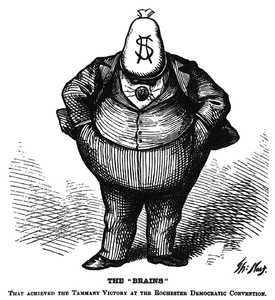
That only in the past couple of years folks who weren’t staunch progressive or true leftist liberals have come to realize that the neocon endgame was a powerful plutocracy is testimony to the long, successful war of identity politics, wedge issues and other distractions that they have fought since ’68. The funny thing is, though, that for most of American history, our government has been a representative democratic oligarchy, especially for the poor or those whom are of color. How can you explain the history of slavery, even the half-century it took for non-landowning White males to get the right to vote?

“The ‘Brains'” Boss Tweed, by Thomas Nast (1871), June 28, 2012. (Vizu via Wikipedia). In public domain.

There have only been brief periods in American history in which the federal government has been responsive to the ordinary American citizen, a protector of the rights of the many and the minority over the rights of rich individuals and powerful economic interests. One of them came as a result of the Great Depression, the start of a nearly forty-year run where our government, despite its flaws and lies, frequently erred on the side of ordinary citizens. People can talk about the Clinton years being an oasis in the middle of a neocon desert, but between the vast expansion of credit, the tearing down of Glass-Steagall, NAFTA and other corporation-friendly policies, we now know that much of what occurred in the ’90s was a mirage.

What is different now — but not so different from the turn of the twentieth century — is the brazenness with which the rich and powerful flaunt their control over our lives. It’s as if they’ve drugged us, tied us down, and occasionally even tortured us, expecting no response or retaliation. And the media has played its role in this, too. From Kim Kardashian to the Real Housewives of RichLandUSA, and from American Idol to Mad Men to Dancing With The Stars. The rest of us just live vicariously through the oligarchy, or become raging and jealous while laughing at the folly of the rich in the process.

Even the wars we fight and the Supreme Court decisions made are steeped in oligarchy and the privileges of the rich and the corporate. That’s why we spent a decade in Iraq, billions on a military fighter we don’t need (F-22), and think that decisions that treat corporations as people and lower taxes for the wealthiest Americans are good for the country.

That’s why today’s Supreme Court decision on the Affordable Care Act of 2010 — otherwise known as Obamacare — matters little in the larger scheme. Of course it matters that millions of Americans have access to healthcare. But even before the Supreme Court decision, the best most un- and under-insured Americans could hope for is a system in which they pay less for crappy health insurance. And health insurance isn’t same as healthcare, folks. Either way, the real winners long-term are private health insurance providers, and not ordinary Americans or the Obama Administration.

It is an unfortunate reality that over the past forty-five years, every aspect of government in this country has been infused with oligarchy. It takes tremendous and unyielding pressure for even a city government like New York (e.g., Rockefeller Laws, stop-and-frisk policy, decriminalization of marijuana) to bend to the demands of its own citizenry. Even then, protests, sit-in and petitions don’t always work (see Occupy Wall Street and the fifteen million protestors before the Second Gulf War as examples).

Mitt Romney Bain Capital “money shot,” October 13, 2011. (http://theatlantic.com via Boston Globe).

So, what to do? I haven’t given up hope, but I can’t spend the days I have left — whether it be moments or decades — waiting for the worm to turn. Next best thing is to hope that my son will drink of my wisdom and learn to fight against this kind of ruling class when he is old enough to do so.

In-Abel-ed

10 Sunday Jun 2012

Posted by decollins1969 in 1, Academia, Boy @ The Window, culture, Eclectic, Mount Vernon High School, Mount Vernon New York, Politics, Pop Culture, race, Youth

≈ Leave a comment

Tags

Being Black, Black Teachers, Blackness, Class of '87, Class of 1987, Diversity, Estelle Abel, Harold Meltzer, HBCUs, Intelligence, Lessons, Mentoring, MVHS, Oreo Cookies, Race, Teaching, Un-Black, Uncle Ruckus


“Murder of Cain by Abel,” Ghent Altarpiece painting (1432), Jan van Eyck, January 6, 2007. (Paunaro via Wikipedia). In public domain.

I’ve written about the infamous Estelle Abel in my blog on this date (or at least, this time of year) for each of the previous five years (see “My Last Day,” “The Last Class,” “AP Exam Blues,” “Honors Coronation,” and “Twenty Years in a Week” for the full scoop). She was the chair of Mount Vernon High School’s Science Department while I was a student there, and remain so for years afterward.

As anyone should be able to tell from my previous posts on Abel, I have a bit of an ax to grind. More like a samurai sword, actually. The woman and her ten or fifteen minutes of berating me as both a student and as an un-Black young adult Black male ruined my last day of high school. Forgive me, then, for not being completely objective when it comes to the subject of Estelle Abel and her methods of teaching, motivation, and guidance on issues of academic achievement and race.

Though I’ve also forgiven her, I’m not God, and with my memory, I can hardly forget. But if there had been any chance at forgetting, I lost that opportunity in a conversation I had with my late AP US History teacher Harold Meltzer back in the ’89-’90 school year. Estelle Abel came up as a topic because of something that had occurred with one of his AP students. Apparently, this particular student, a female basketball player, had made the decision to apply to some predominantly White institutions, and had left HBCUs off her application plate. And apparently, Abel had gone after this student for doing so, all but calling her a traitor to her race by taking the route that a majority of traditional African American students have been taking since the ’70s.

Two Oreo Cookies, February 7, 2011. (Evan-Amos via Wikipedia). In public domain.

In all, it took Meltzer about twenty minutes to tell what would’ve been a five or seven-minute-story for the long-winded. That’s how much he could meander in the forests of his stories sometimes. Then I told Meltzer my Estelle Abel story from my last day of school. It sparked a conversation that I wasn’t quite prepared to have. One not only about Estelle Abel, but about the African American faculty at Mount Vernon High School in general.

For most of the rest of the conversation, Meltzer was in full gossip mode, telling me things about individual teachers that I shouldn’t have known, and mostly have forgotten, thankfully. But I did say to him early on in this part of the conversation that I really didn’t know much about the Black teachers at MVHS. The reason was simple. I didn’t have a single Black teacher as my teacher in four years of high school. Humanities classes — particularly the Level 0 and Level 1 classes — had few, if any, Black teachers, much less any teachers of color.

I didn’t say that exactly, but it was the essence of what I said and thought about while Meltzer yammered on about the disunity among MVHS teachers. To think that from Ms. Simmons’ math class in seventh grade at A.B. Davis Middle School until my history and Black Studies classes my junior year at Pitt, I’d gone without a single African American teacher or professor. I knew that some of the blame fell squarely on the shoulders of my guidance counselor Sylvia Fasulo, Humanities coordinators, MVHS’ leadership and the Italian Civic Association.

But how much of this was my fault, being so myopically focused on grades, college and getting away from 616 and Mount Vernon, I didn’t know. After all, I learned in the middle of my senior year that Dr. Spruill taught a Black history class, that there had been efforts to bring in more Black teachers and other teachers of color at Mount Vernon High School dating back at least four years.

Uncle Ruckus screenshot, from Aaron McGruder’s animated TV series The Boondocks, July 4, 2011. (Grapesoda22 via Wikipedia). Qualifies as fair use under US Copyright laws because of picture’s low resolution.

Still, none of that really mattered to me that year. I had already and unsuccessfully attempted to thread the needle between a cushy senior year and a year that prepared me for the rigors of college. Anything else, whether it was Black history, a trip to West Africa or a visit to some HBCU campuses, was hardly on my radar.

Whatever my lack of focus could be construed as in ’86-’87, it wasn’t because I wasn’t Black enough, or ashamed of being Black, as folks like Estelle Abel implied or accused me of in their thoughts and words, and with their eyeballs that year. Sure, I was weird, and readily admit to being weird, aloof, and emotionless in my MVHS days. But given the hell that I lived with at home and in that community in my last years in Mount Vernon, weirdness and a focus on getting out through college should’ve been applauded, or at least tolerated, without teachers like Abel staring at me as if I was demon-possessed.

That it wasn’t tolerated was the real shame. It took me years to get over it, that uncomfortability of being judged by other Blacks as too smart, too weird, too un-Black in their eyes for my own good.

College Isn’t For Everyone

07 Thursday Jun 2012

Posted by decollins1969 in 1, Academia, Boy @ The Window, culture, Eclectic, Politics, race

≈ Leave a comment

Tags

Adult Learners, College Access, College Success, Economic Inequality, Education, Education News, Education Reporting, Educational Inequality, For-Profit Colleges, Ivy League Schools, Jay Mathews, K-16 Education, Parental Advantages, Parents, Politics of Education, Poverty, Public Education, Public Institutions, Taking Advantage, Washington Post


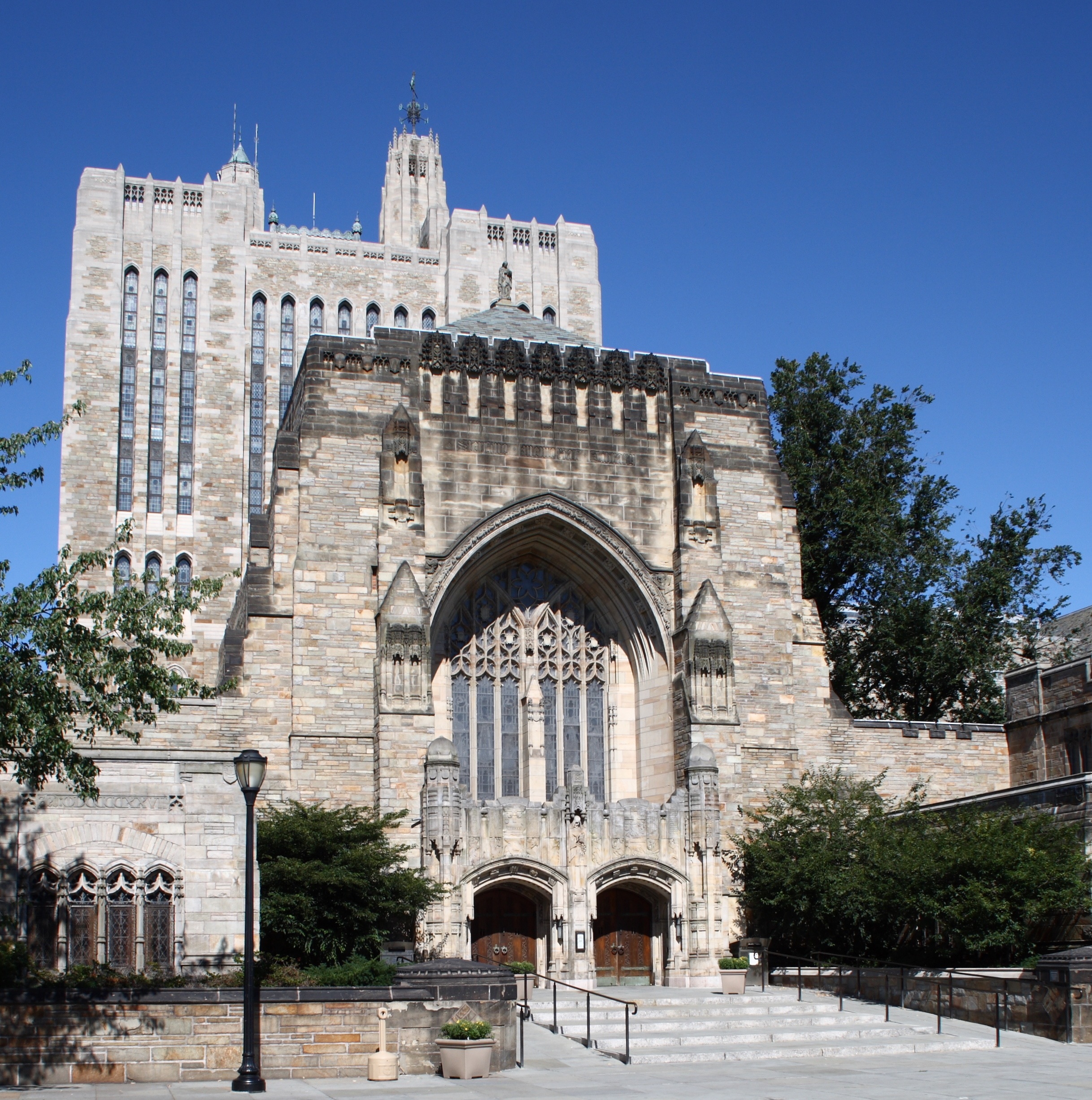
Sterling Memorial Library (cropped), Yale University, New Haven, CT, September 3, 2008. (Ragesoss via Wikipedia). Permission granted via licenses with GFDL and Creative Commons cc-by-sa-2.5.

In May ’05, I attended a conference in DC hosted by the Council for Opportunity in Education on college access and college success. Jay Mathews, an education columnist with The Washington Post, was a guest speaker. Mathews spent most of his talk telling educators that the public doesn’t care for our extensive analysis of what does and doesn’t work in K-16 education reform. “Readers only care about two things,” Matthew said — testing, and “how can I get my kid into Harvard, Yale or Princeton?”

I certainly didn’t like Mathews’ smug and dismissive talk, but he was right about one point, however inadvertent on his part. That most Americans don’t think about education news unless it either confirms their worst fears — that public education is a waste of taxpayer dollars — or confirms their highest hopes — that an Ivy League school (or the near equivalent) accepts Tyler or Courtney as students. Little else matters for most of the American reading public, because columnists, reporters and editors like Mathews have long since abandoned the idea that education is a playing-field leveler for most people. “College isn’t for everyone,” is the common refrain in Mathews’ world, and in the world of most right-thinking Americans.

What does go unreported and underreported, though, is that most Americans with the money and knowledge to give their kids every advantage possible, and do so in a rather ruthless fashion. All while denying other kids in their community similar opportunities, deliberately or otherwise. Over the past thirty-five years, property taxes and other taxes that cover the costs of a public education have been slashed, as taxpayers revolted in places like California and New York in the 1970s and 1980s.

That alone has meant two things: the contributions of the federal government to public education increased to make up for these long-term tax cuts, and the ability of most American school districts to provide all of the necessary resources for students has gone down. This opened the door for the politicized hammering of teachers unions as too powerful, and the growth of the testing mandate since the early 1990s, further weakening public education. Need I even mention public charter schools as the suggested alternative for Americans of lower-income?

Gated community, Houston, TX area [but virtual gates in education for years], February 13, 2012. (Chelsea Lameira via http://www.houstonagentmagazine.com)

But that’s only part of the story. There are plenty of parents who take even more advantage of loopholes based on money and knowledge. They hold their kids out of school a full year before kindergarten, giving them an extra twelve months to become proficient readers before they’ve ever stepped into a classroom. They pay for tutors and Kumon early on, but not because their kids are struggling with reading, writing and math. No, these parents pay for this extra help to give their students the ability to score in the top percentiles on tests that will label their children as “gifted.”

Some parents even transfer their children to different schools within a district with the “right” demographic mixtures to ensure their student’s success and their ability to be noticed. Some parents will begin the process of preparing their kids for the SATs and for AP courses via Kaplan or Princeton Review as early as fifth and sixth grade. And all to ensure that, in the end, their kids will have the post-high school choice of an Ivy League school, or at least, an equivalent elite school, like a Stanford or Georgetown.

These parents, the majority of Americans who would only readily agree with Mathews’ worldview on education news, aren’t evil. But, then again, we all know what the road to Hell is paved with. And in this case, these advantages on the one end point to the severe disadvantages on the other end, no matter how rare it is for the likes of Mathews to write about.

I’m not talking about poverty from birth to eighteen per se, although I could go there in detail. No, it’s the end result, the young adult or over-the-age-of-twenty-five person who finally decides after years of educational neglect to take advantage of the twenty-first century, to go to college after struggling to finish elementary, middle and high school. Most of these students never knew a tutor, never had a parent who understood the loopholes in public education of which to take advantage.

These adult students come into college — often a for-profit institution like University of Phoenix, a

University of Maryland University College administrative offices, Largo, MD, July 2, 2010. (Donald Earl Collins).

community college or a public institution like the one in which I teach now in University of Maryland University College — as raw and unpolished. These students are often long on enthusiasm, yet short on the skills and especially knowledge they need for success. And they have a sharp learning curve in order to get there. One in which these students have to learn in a year or what it took the most advantaged Americans eighteen or nineteen years to learn. The graduation rates of these institutions illustrate how difficult it is for most adult students to climb Mount Everest in their shorts, and all in the middle of a blizzard.

“College isn’t for everyone,” I hear Mathews and millions of other smug Americans say. Of course it isn’t. Especially when you make sure that it isn’t, through money, knowledge and cunning politics.

The Arrogance of Youth, Grad School Style

05 Tuesday Jun 2012

Posted by decollins1969 in 1, Academia, Boy @ The Window, culture, Eclectic, eclectic music, Mount Vernon New York, music, Politics, Pop Culture, race, Work, Youth

≈ 1 Comment

Tags

6007 Penn Circle South, 616, 616 East Lincoln Avenue, Academic Arrogance, Allegheny County Department of Federal Programs, Americn Arrogance, Arrogance, Assumptions, Carnegie Mellon University, East Liberty, Graduate Fellowships, Graduate School, Independence, Pitt, Self-Discovery, Self-Reflection, unemployment, University of Pittsburgh, Westchester County Department of Community Mental Health


Me taking the most thuggishly-goofy-arrogant picture I could, June 5, 2012. (Donald Earl Collins).

I’m sure that there are plenty of folks I’ve met and known over the past three decades who think that they could sum me up in one word – arrogant. I know beyond a doubt that’s what Crush #1 thought of me back in ’82. I know that some my grad school classmates and friends varied between seeing me as “aloof,” “arrogant,” “cocky,” and “focused” in my five and a half years of master’s and doctoral work. And I know that one person I worked with in the past fifteen years thought of me as arrogant, even though I doubt that he would know what arrogance looked like if he saw it in the mirror every day, which he did (see my post “The Messiah Complex At Work, Part 1” from November ’11).

Former Sen. John Edwards [and new symbol of arrogance], after acquittal/mistrial, Greensboro, NC, May 31, 2012. (AP/Chuck Burton via Salon.com).

But arrogance isn’t simply cockiness run amok, or people bragging about what they intend to do without doing it, or doing it and then showing off with a Tiger Woods’ fist pump or my occasional cross-kick. It’s making assumptions about the things of life as if the march to success is a given, as if victory is guaranteed, like taking the next breath or being able to stand upright.

I did that in the spring and summer of ’93, in the transition between my grad school days at the University of Pittsburgh and my more successful yet gloomy times at Carnegie Mellon. I was a year removed from my great first year of master’s work (see my post “The 4.0 Of It All” from December ’11), and a summer removed from working for Westchester Country Department of Community Mental Health in Mount Vernon for the last time (which I will discuss later this summer). The way I saw things, I knew that God was on my side, that my hard work would pay off, that everything I did led to more success, or more money in my pocket.

I acted on those beliefs that March, April and May. I wanted to move out of my crappy studio and drug-infested apartment building on Penn Circle South in East Liberty, to what I called grad student’s row — Stratford Avenue — off North Negley and Penn Avenue between East Liberty and Friendship. I even put a deposit down on a one-bedroom apartment at the beginning of March, anticipating that I’d find something work-wise for the summer. “Something would come up,” I often thought and said. So typically American of me!

Terrell Owens, somewhere between arrogant and suicidal, 2012. (http://queensofkings.com).

I had applied for three fellowships that year, including a summer fellowship through Pitt and the Ford Foundation’s Predoctoral Fellowship Program (via the National Academies). I just knew that I’d get at least one. But the least laid plans of the arrogant often lead to the land of losses. Throughout April and May, I received rejections for all of my well-received, coming-in-second or “Honorable Mention” applications. Not to mention that my soon-to-be former grad program wouldn’t allow me to teach a US history course, though they didn’t have anyone else to teach it other than me at the time.

I realized after my mid-May root canal (see my “Facing The Tooth” post from May ’12) that I was about to enter a tough summer financially. I managed to get back my deposit for my dream apartment two weeks before I was due to move in, paying my Penn Circle South studio rent in the process. Then, with $350 to work with until further notice, I waited.

It wasn’t until the end of the first week in June that, after some qualms about my over-qualifications, Randy Brockington and the Allegheny County Department of Federal Programs hired me to work on a report. They wanted me to assess the work of their staff on the Job Training Partnership Act portion of their department. And all to the tune of $6 an hour. My mother spent the next four years teasing me about it. As if I had another option, as if coming back to 616 for the summer would be less torturous than falling six weeks behind on my rent and receiving an eviction notice.

I made one minor adjustment in my halcyon days of grad school that in-between summer of ’93. To simply not assume anything to be a sure thing, even when it was, to make Richard Marx’s “Don’t Mean Nothing” my mantra when it came to anything around money. Who knew that a little more than two months later, me and my friend Marc would have a controversial article in Black Issues in Higher Education? Who knew that less than two years later, I’d have a Spencer Foundation Dissertation Fellowship, this despite my advisor? Life is a funny, ironic walk.

Battlescar Galactica

02 Saturday Jun 2012

Posted by decollins1969 in 1, Academia, Boy @ The Window, culture, Eclectic, eclectic music, music, Patriotism, Politics, Pop Culture, race, Religion, Youth

≈ 1 Comment

Tags

"All Along The Watchtower", Battlestar Galactica (2004 series), Cylon Attack, Cylons, Divine Hand, Divine Intervention, Entertainment, Epic Story, Epic Tale, Extinction, Fandom, Human Condition, Humanity, Jimi Hendrix, Late Bloomer, Miniseries, Nuclear Annihilation, Reimagining, Revisioning, Technology, TV Series


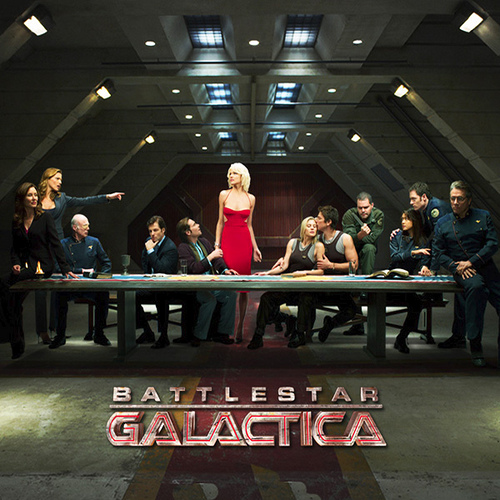
Battlestar Galactica artwork, Season 4, October 12, 2008. (Halil Gökdal via Flickr.com/iTunes TV). Battlestar Galactica Prologue (2003)

I’m a sucker for an epic story in any form. A book, a movie, a TV series, even the occasional epic poem. It really doesn’t matter. I’m also a late bloomer, one who discovers the stuff of life late, but probably enjoys the stuff I discover more because it’s on my own time, without necessarily being part of a crowd or trend.

That convergence has hit me once again, at the ripe old age of forty-two, in the form of the revisioned series Battlestar Galactica (2003, 2004-09). I had planned to watch the original miniseries for this drama when it came out in December ’03, but with so many things outside the realm of then newborn baby Noah, writing and work that year, my watching Battlestar Galactica fell to the side.

I already had a lineup of shows to watch — Six Feet Under, Queer As Folk, Law & Order, CSI. I didn’t need a new thing on my screen, especially something that was based on such an old and goofy series from the ’70s with Lorne Greene, Dirk Benedict and Richard Hatch. “What are they gonna do next, redo BJ & The Bear?,” I said to my wife when I first heard about the Battlestar Galactica miniseries in September ’03.

But as with so many events in my life, I stumbled on the miniseries, thanks in no small part to my wife. It was one late Friday night this past Easter weekend. I woke up about a quarter after three, having only been

Cylon Raider Scar screen shot, September 16, 2009. (Skier Dude via Wikipedia). Qualifies as fair use under US Copyright laws due to image’s poor resolution.

asleep about three hours, to my wife dosing off to the TV in our bedroom. I woke up to the sight of Cylon Raiders in flight, to a strange scientist seeing visions of either a skinny angel or his dead Cylon girlfriend, and Edward James Olmos playing the mercurial Commander Adama. I could tell in ten minutes that this series was way different from the Battlestar Galactica series of my ’70s youth.

The miniseries was on BBC America, so I watched it until 5 am, and then discovered that they had skipped two full seasons ahead to a random Battlestar Galactica episode. I was fully awake by then, so I went on Netflix to find the entire Battlestar Galactica series available on streaming video. I watched season one that day, and season two Easter Sunday and that Monday.

In fact, I watched all four seasons of Battlestar Galactica in six days. I found the story engrossing, the acting intense, and the series an in-depth exploration of the worst features of the human condition under the most difficult of stresses and circumstances. It was so unlike the original series that after a few episodes, I didn’t even think about the differences anymore. The story of a flawed, destructive race of humans fighting each other while fighting for their survival against their more destructive yet more rational creations. I couldn’t help but fall in love with the series.

After that week, I finally read and watched the reviews and the comments about the series. They fell into two categories. There were plenty of folks who refused to watch the new Battlestar Galactica on principle. They saw the recasting of Starbuck as a woman an insult, the ability to make Cylons as human-esque machines blasphemy, and the revisioning of these humans as ones with many of our worst features multipled by a factor of ancient Greece, Rome and Persia an abomination. Oh well! I never liked the original series, with its idealized version of humanity, with its archetype good and evil characters, and with its goofy atmosphere in the midst of potential extinction, the ultimate epic crisis (“All Along The Watchtower” notwithstanding).

The other group was just like me. Fascinated by the lengths to which the producers and writers for the show went to present humanity at its most monstrous, between violence, selfishness, lust, greed, avarice and strive. Mesmerized by the cast’s ability to explore our worst and deepest fears, to hold out hope against hope, to take us into the depths of despair again and again.

The battle-scarred Battlestar Galactica finally reaches Earth (orbiting over the horn of Africa, March 21, 2009. (http://graphic-engine.swarthmore.edu).

I had to watch Battlestar Galactica a second time, this time more slowly and deliberately. So, through the second half of April and first half of May, I watched again, to find something remarkable. Despite their deep flaws, many scars and scabs, and twisted minds, there was something noble and redeemable about these humans, about the Cylons. Even the fact that the Cylons were a human creation didn’t matter. And to top that all off with a divine hand, a guiding force as the prime mover for the 50,000 humans that survived the nuclear annihilation of their twelve planets by the Cylons.

That really is an epic journey. One that heals as much as it scars. The story of my life the past thirty years, not to mention a reference in three of my posts over the past month. A commentary on the state of humanity in the early twenty-first century. What more can a late-bloomer ask for?

Curriculum 2.0 – Been There, Done That

21 Monday May 2012

Posted by decollins1969 in 1, Academia, Boy @ The Window, culture, Eclectic, Mount Vernon New York, Politics, Pop Culture, race, Youth

≈ Leave a comment

Tags

Academic Excellence, Closing the Achievement Gap, Curriculum 2.0, Desegregation, Diane Ravitch, Grimes Center for Creative Education, High-Stakes Testing, Humanities Program, Integrated Curriculum, MCPS, Montgomery County Public Schools, Mount Vernon public schools, Pennington-Grimes ES, Politics of Education, Reinventing the Wheel, White Flight


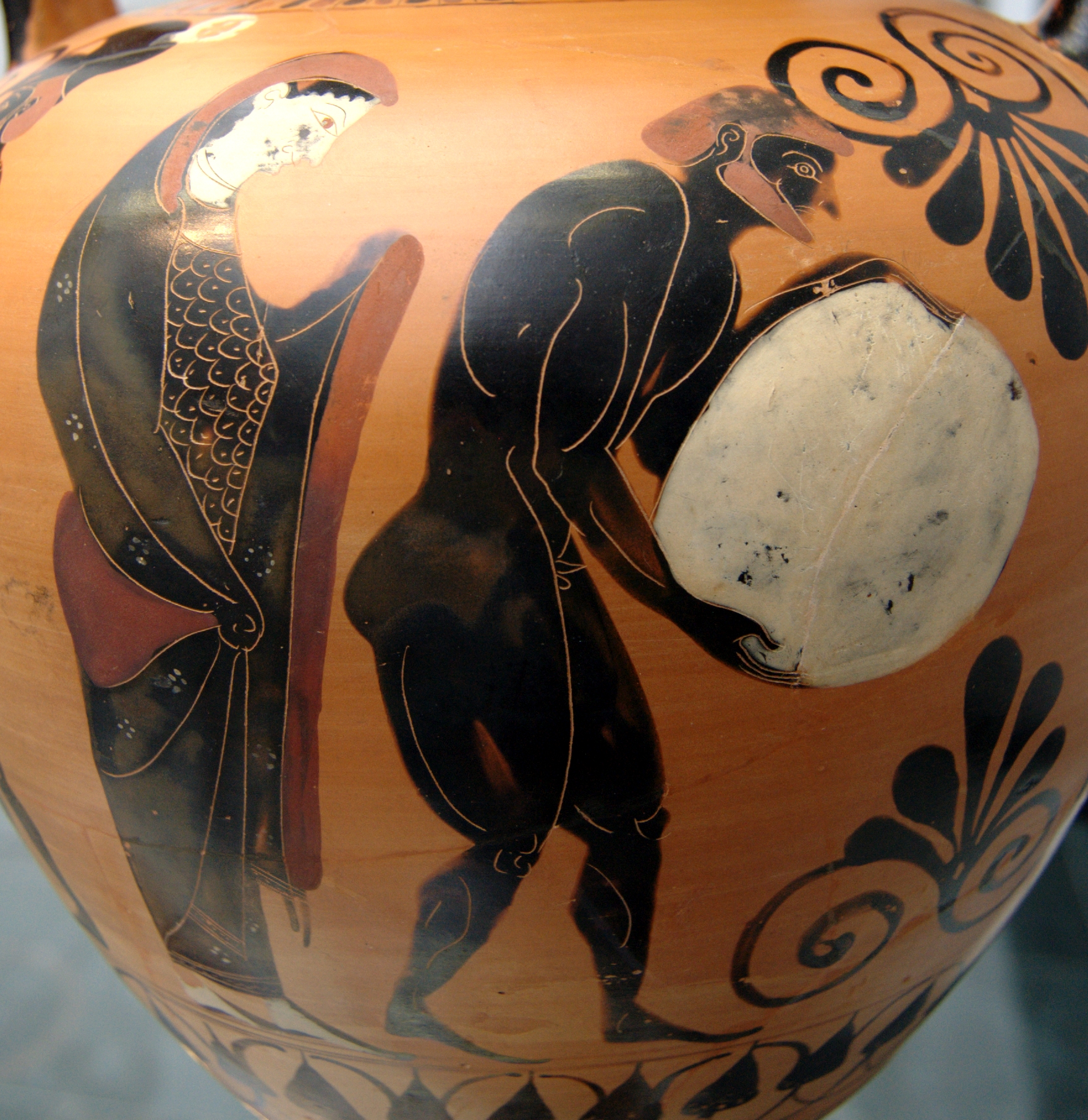
Nekyia: Persephone supervising Sisyphus pushing his rock in the Underworld. Side A of an Attic black-figure amphora, ca. 530 BCE, from Vulci, February 13, 2007. (Bibi Saint-Pol via Wikipedia). In public domain.

This school year, my son’s school district, Montgomery County Public Schools in Maryland, began implementation of what they call Curriculum 2.0. This new curriculum, formerly known as the Elementary Integrated Curriculum, has been in the works for the better part of a decade. As MCPS explained in a flyer to parents, Curriculum 2.o will be one that will “better engage students and teachers, and dedicate more learning time to subjects such as the arts, information literacy, science, social studies and physical education. By blending these subjects with the core content areas of reading, writing, and mathematics, students will receive robust, engaging instruction across all subjects in the early grades.”

Why is better engagement of teachers and students necessary, and how will an integrated curriculum make this possible? The answer to the first part of this question is much more obvious than the answer to the second part. In light of county-level and state-level testing (in the latter case, the MSA for third, fourth and fifth grades), an engaging and integrated curriculum will enable students to be better prepared for the heavy doses of critical reasoning and reading comprehension that this testing involves, at least theoretically.

What hasn’t made much sense has been the implementation process itself, as Curriculum 2.0 became the curriculum for kindergarten and first graders in this 2011-12 school year, with the option of having it for second graders at some schools (like my son’s school in Silver Spring). Meanwhile, third and fourth graders won’t become part of Curriculum 2.0 until 2012-13, and this year’s fifth graders won’t see Curriculum 2.0 at all. It seems as if the implementation process was about as well planned as the SS Minnow’s tour of the South Pacific.

But that’s not the only story here. For someone’s who’s spent a great deal of time attempting to understand

A One Thousand and One Night manuscript written in Arabic under the second half of the Abbasid Era (750-1258 CE), February 9, 2008 (Danieliness via Wikipedia). Released into public domain via cc-by-sa-3.0 license.

the circumstances under which I grew up, including my times in Mount Vernon, New York’s public schools in the ’70s and ’80s, MCPS’s Curriculum 2.0 is sort of like deja vu all over again. Except that in the period between ’76 and ’93, the kind of curriculum MCPS is implementing now was mostly for Mount Vernon’s gifted and talented students then, students who were part of the district’s Humanities Program, particularly those in the Grimes Center for Creative Education. The motivations for developing a similar curriculum three and half decades earlier came out of the need for racial integration and preventing White Flight, and in the process, a measure of academic excellence. Different circumstances in search of the same results, I guess.

A piece of evidence I uncovered a few years ago while working on Boy @ The Window shows how much educators reinvent the wheel in terms of curriculum development, a pitfall in education on which Diane Ravitch has been proven correct for the past thirty years. Charlotte Evans wrote in her April 1981 New York Times article on the Grimes Center that there “is a flowering of creativity at Pennington-Grimes [Grimes had combined with Pennington in the 1980-81 school year] that is evident in the hallways as well as in the classrooms.” Leroy L. Ramsey, New York State Department of Education Administrator of Intercultural Affairs and Educational Integration, when asked by Evans to comment, said that “the intent” of a school like Pennington-Grimes “was to break racial isolation and to stop white flight, and we have done that in Mount Vernon.”

As detailed by Evans in her April 1981 New York Times article, with the

[c]oordinating [of] language, math and science with social studies in the same way, first graders study the family and its roots, how people live and lived in different places. Second graders focus on prehistoric times – the old and new Stone Ages; third graders on the ancient Middle East, fourth graders on Greek and Roman civilization and sixth graders on the Renaissance, Reformation and the Age of Discovery.

This interdisciplinary approach to creating a magnet-style gifted track curriculum did not stop with a focuson other histories and cultures in social studies. “Fifth-graders, for example, specialize in studying the Middle Ages in Islamic nations and in Africa and Europe,” but they also “read Arabian Nights in connection with their Islamic study and went on to African folk tales,” according to fifth-grade teacher Mattie Lucadamo. In addition, there were other “flourishes,” such as “learning the foundation of Hindu-Arabic numbers” and “study[ing] astronomy, tracing it back to the Babylonians.”

It never ceases to amaze me how we as educators, education researchers, and governments spend time, money and human resources recreating what was already in existence, in this case, when I was my son’s age. But, like with the experiment that was the Grimes Center and Humanities, parents with resources will find a way to game the system. In one case, an innovative program was moved to Mount Vernon’s predominantly White North Side in May ’80, and tended to give more preferences to White students in general.

In the case of Curriculum 2.0, the more aware parents will send their kids to Kumon or Kaplan or other testing centers to give their kids every opportunity to do well in this new curriculum, score in the top percentiles on the MSA, and garner the gifted label in time for middle school.

← Older posts
Newer posts →

Boy @ The Window: A Memoir

Boy @ The Window: A Memoir

Places to Buy/Download Boy @ The Window

There's a few ways in which you can read excerpts of, borrow and/or purchase and download Boy @ The Window. There's the trade paperback edition of Boy @ The Window, available for purchase via Amazon.com at http://www.amazon.com/Boy-Window-Donald-Earl-Collins/dp/0989256138/

There's also a Kindle edition on Amazon.com. The enhanced edition can be read only with Kindle Fire, an iPad or a full-color tablet. The links to the enhanced edition through Apple's iBookstore and the Barnes & Noble NOOK edition are below. The link to the Amazon Kindle version is also immediately below:

scr2555-proj697-a-kindle-logo-rgb-lg

Boy @ The Window on Amazon.com: http://www.amazon.com/Boy-The-Window-Memoir-ebook/dp/B00CD95FBU/

iBookstore-logo-300x100

Boy @ The Window on Apple's iBookstore: https://itunes.apple.com/us/book/boy-the-window/id643768275?ls=1

Barnes & Noble (bn.com) logo, June 26, 2013. (http://www.logotypes101.com).

Boy @ The Window on Barnes & Noble: http://www.barnesandnoble.com/w/boy-the-window-donald-earl-collins/1115182183?ean=2940016741567

You can also add, read and review Boy @ The Window on Goodreads.com. Just click on the button below:

Boy @ The Window

Twitter Updates

Tweets by decollins1969
  • RSS - Posts
  • RSS - Comments

Archives

  • June 2025
  • April 2023
  • September 2022
  • August 2022
  • July 2022
  • June 2022
  • May 2022
  • April 2022
  • March 2022
  • January 2022
  • December 2021
  • November 2021
  • October 2021
  • September 2021
  • August 2021
  • July 2021
  • June 2021
  • April 2021
  • March 2021
  • February 2021
  • January 2021
  • December 2020
  • November 2020
  • October 2020
  • September 2020
  • August 2020
  • July 2020
  • May 2020
  • April 2020
  • March 2020
  • January 2020
  • December 2019
  • November 2019
  • August 2019
  • July 2019
  • June 2019
  • May 2019
  • April 2019
  • March 2019
  • February 2019
  • January 2019
  • December 2018
  • November 2018
  • October 2018
  • September 2018
  • August 2018
  • July 2018
  • June 2018
  • May 2018
  • March 2018
  • February 2018
  • January 2018
  • December 2017
  • November 2017
  • October 2017
  • September 2017
  • August 2017
  • July 2017
  • June 2017
  • May 2017
  • April 2017
  • March 2017
  • February 2017
  • January 2017
  • December 2016
  • November 2016
  • October 2016
  • September 2016
  • August 2016
  • July 2016
  • June 2016
  • May 2016
  • April 2016
  • March 2016
  • February 2016
  • January 2016
  • December 2015
  • November 2015
  • October 2015
  • September 2015
  • August 2015
  • July 2015
  • June 2015
  • May 2015
  • April 2015
  • March 2015
  • February 2015
  • January 2015
  • December 2014
  • November 2014
  • October 2014
  • September 2014
  • August 2014
  • July 2014
  • June 2014
  • May 2014
  • April 2014
  • March 2014
  • February 2014
  • January 2014
  • December 2013
  • November 2013
  • October 2013
  • September 2013
  • August 2013
  • July 2013
  • June 2013
  • May 2013
  • April 2013
  • March 2013
  • February 2013
  • January 2013
  • December 2012
  • November 2012
  • October 2012
  • September 2012
  • August 2012
  • July 2012
  • June 2012
  • May 2012
  • April 2012
  • March 2012
  • February 2012
  • January 2012
  • December 2011
  • November 2011
  • October 2011
  • September 2011
  • August 2011
  • July 2011
  • June 2011
  • May 2011
  • April 2011
  • March 2011
  • February 2011
  • January 2011
  • December 2010
  • November 2010
  • October 2010
  • September 2010
  • August 2010
  • July 2010
  • June 2010
  • May 2010
  • April 2010
  • March 2010
  • February 2010
  • January 2010
  • December 2009
  • November 2009
  • October 2009
  • September 2009
  • August 2009
  • July 2009
  • June 2009
  • May 2009
  • April 2009
  • March 2009
  • February 2009
  • January 2009
  • December 2008
  • November 2008
  • October 2008
  • September 2008
  • August 2008
  • July 2008
  • June 2008
  • May 2008
  • April 2008
  • March 2008
  • February 2008
  • January 2008
  • December 2007
  • November 2007
  • October 2007
  • September 2007
  • August 2007
  • July 2007
  • June 2007

Recent Comments

MaryPena's avatarMaryPena on My Day of Atonement/Bitter Hat…
decollins1969's avatardecollins1969 on No Good Teaching Deed Goes…
Mary Rose O’Connell's avatarMary Rose O’Connell on No Good Teaching Deed Goes…

NetworkedBlogs on Facebook

NetworkedBlogs
Blog:
Notes From a Boy @ The Window
Topics:
My Life, Culture & Education, Politics & Goofyness
 
Follow my blog

616 616 East Lincoln Avenue A.B. Davis Middle School Abuse Academia Academy for Educational Development AED Afrocentricity American Narcissism Authenticity Bigotry Blackness Boy @ The Window Carnegie Mellon University Child Abuse Class of 1987 CMU Coping Strategies Crush #1 Crush #2 Death Disillusionment Diversity Domestic Violence Economic Inequality Education Family Friendship Friendships Graduate School Hebrew-Israelites High-Stakes Testing Higher Education History Homelessness Humanities Humanities Program Hypocrisy Internalized Racism Jealousy Joe Trotter Joe William Trotter Jr. K-12 Education Love Manhood Maurice Eugene Washington Maurice Washington Misogyny Mother-Son Relationship Mount Vernon High School Mount Vernon New York Mount Vernon public schools Multiculturalism MVHS Narcissism NFL Pitt Pittsburgh Politics of Education Poverty President Barack Obama Race Racial Stereotypes Racism Relationships Self-Awareness Self-Discovery Self-Reflection Sexism Social Justice Teaching and Learning University of Pittsburgh Violence Whiteness Writing

Top Rated

Blog at WordPress.com.

  • Subscribe Subscribed
    • Notes from a Boy @ The Window
    • Join 103 other subscribers
    • Already have a WordPress.com account? Log in now.
    • Notes from a Boy @ The Window
    • Subscribe Subscribed
    • Sign up
    • Log in
    • Report this content
    • View site in Reader
    • Manage subscriptions
    • Collapse this bar
 

Loading Comments...