• About Me
  • Other Writings
  • Interview Clips
  • All About Me: American Racism, American Narcissism, and the Conversation America Can’t Have
  • Video Clips
  • Boy @ The Window Pictures
  • Boy @ The Window Theme Music

Notes from a Boy @ The Window

~

Notes from a Boy @ The Window

Category Archives: Politics

Du Bois Was a Marxist. Aye. So?

03 Saturday Feb 2018

Posted by decollins1969 in 1, Academia, culture, Eclectic, Patriotism, Politics, Pop Culture, race, Religion, Work

≈ 1 Comment

Tags

Biography, Black History, Contradictions, David Levering Lewis, E. Ethelbert Miller, Ideology, Marxism, The Crisis, W. E. B. Du Bois


W.E.B. Du Bois at 82 (cropped), New York, NY, 1950. (Keystone/Getty Images). Cropped photo qualifies as fair use under US copyright law.

In recent months, a few people I know have brought up the fact that at least since the mid-1930s, the great W. E. B. Du Bois had professed himself a Marxist. The poet E. Ethelbert Miller, one of my co-panelists at a talk a couple of months back, made a point of interrogating notions of Blackness with the idea that Black activists were/are afraid to identity Du Bois as a Marxist. Certainly by the time Du Bois broke free from the federal government’s McCarthy-era ban on his international travel in 1958, he was. Du Bois re-obtained his passport, traveled the world, and ended up in Ghana in 1961. There, at the age of 93, he renounced his US citizenship and declared himself a Communist. Two years later, on the eve of the March of Washington, Du Bois died. The end.

All the above is true, but not so fast! The thing I’ve known in all my years of reading Du Bois’ work, writing about Du Bois, and in reading others who’ve written about Du Bois, was that Du Bois wasn’t just one thing. Nearly every social science and humanities tradition in the US can claim influence from Du Bois’ work. Poetry, theology, philosophy, psychology, economics, and American literature would be one set of his influences, and that’s just with The Souls of Black Folk!
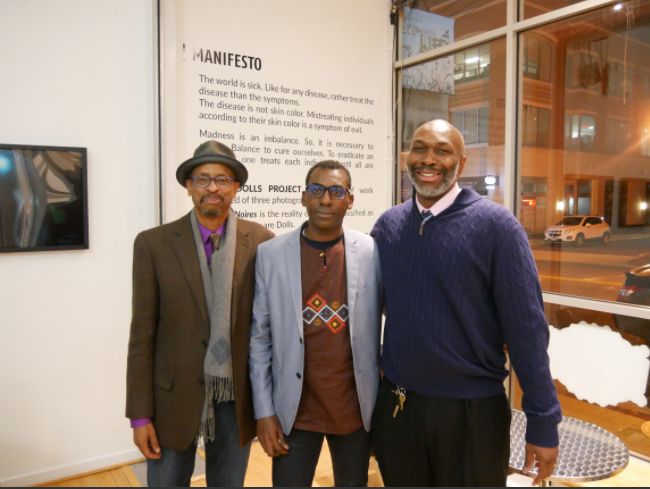
E. Ethelbert Miller, Mirtho Languet, and Me, Anacostia Arts Center, Washington, DC, November 18, 2017. (Keita Stephenson).

Though Du Bois’ Harvard doctorate was in history, he’s widely recognized as one of the founders (if not the actual founder) of American sociology. His 1898 study The Philadelphia Negro is really the first urban sociological study ever conducted in the US. His dissertation on the Trans-Atlantic slave trade was the only major work to cover the cost of the Middle Passage for kidnapped Africans (and estimate the total number of Africans stolen for slavery in the Western Hemisphere) for nearly seven decades. And there’s Black Reconstruction, probably Du Bois’ magnum opus of scholarly work.

With almost 70 years’ worth of Du Bois’ writings alone, anyone who’d think that Du Bois was just one thing would be guilty of a gross oversimplification of the man. Really, Du Bois was a mess of contradictions. He believed in elitist ideas like The Talented Tenth. Yet Du Bois also fought Booker T. Washington in books and in the press for more than a decade over the latter’s prominence as the “race man who Teddy Roosevelt and “liberal” White philanthropists talked to about uplifting Black folk.

He was a founder of both the NAACP and the Niagara Movement that preceded the organization. He befriended White philanthropists just as easily as Washington, though, and kept a personal war between himself and long-time NAACP president Walter White going for nearly two decades. On more than one occasion, Du Bois punned White’s last name as an insult, as the man was biracial, and could’ve easily passed for White.

Du Bois was also a Pan-Africanist. One, though, that used his editorialship at The Crisis to discredit Marcus Garvey and his ill-fated “Back-to-Africa” movement. David Levering Lewis in his Pulitzer Prize-winning, two-volume biography of Du Bois has even documented the likelihood that Du Bois helped the FBI (née BOI) in their mail fraud case against Garvey.

Du Bois was also a socialist. Though for most Americans, socialism and Marxism is a distinction, socialism in Du Bois’ mind meant alleviating the worst effects of market capitalism, not necessarily doing away with capitalism all together.

Du Bois was also a pacifist. But like so many of Du Bois’ positions, this one evolved over time. When the US became a military participant in World War I, Du Bois wrote essays where he argued that Black involvement could provide evidence of the need for full integration and citizenship rights for African Americans. By the Cold War, Du Bois was giving speeches about the threat of American imperialism and nuclear war.

Du Bois was also a multiculturalist. One of his more well-known extramarital affairs was with Rachel Davis DuBois (White, no relation), a key founder of the intercultural education movement, which had its heyday between the late-1920s and early 1940s. The idea of a diverse and inclusive curriculum was first fully demonstrated in DuBois’ work, which Du Bois endorsed in the mid-1930s. At the same time, how much can anyone believe from a man who at this point in his career was also serial adulterer?

Even saying Du Bois was a Marxist isn’t the full truth. “I mean by communism, a planned way of life in the production of wealth and work designed for building a state whose object is the highest welfare of its people and not merely the profit of a part.” This was what Du Bois wrote soon after renouncing his American citizenship in Ghana. Technically, this would be socialism more than communism. But more to the point, it’s anti-capitalism and anti-imperialism. It’s really Du Bois using Marxism to protest American imperialism and capitalism through his Pan-African affinity for Ghanian revolutionary and prime minister Kwame Nkrumah, not to mention, with America’s archenemy, the Soviet Union.

The one thing I wish those in the scholarly community would stop doing is taking the pyramid that was Du Bois’ life and reducing it to a two-dimensional square. Why can’t we just call an idea whose main source is Du Bois, well, Du Boisian? Like, Du Boisian sociology, or Du Boisian economics, or Du Boisian politics? Is this an example of Whiteness rearing its ugly head, where it’s too difficult to give Du Bois his own due without subsuming him under another White guy? It seems to me that so many are attempting to use Du Bois for their own ideological purposes, when it’s better to just let him be the so much that he was.

“Grace,” #MeToo, and Our Binary World

20 Saturday Jan 2018

Posted by decollins1969 in 1, Boy @ The Window, culture, Eclectic, Mount Vernon High School, Pittsburgh, Politics, Pop Culture, race

≈ Leave a comment

Tags

#MeToo, Alexander Pope, and Our Binary World, Babe.net, Binary Thinking, Context, Either-Or, Feminism, Gender, Grace, Hypermasculinity, Intersectionality, Jade Martin, Katie Way, Larry Nassar, Maturity, Misogyny, Mrs. Buckley, Privilege, Rohingya Crisis, Sexism, Sexual Assault, The Rape of the Lock (1715), Whiteness


Water buffaloes in mud, January 2017. (http://reddit.com).

Part of me knows that some of you will assume that I shouldn’t be discussing this on my blog at all. I’m a man, a Black man, a middle-aged Black man, so what do I know, really? I haven’t been on a date with anyone other than my wife since 1995. And my own history with hypermasculinity and sexism combined with my exposure to patriarchy and misogyny should disqualify me from making any comments on Babe.net’s “Grace” piece, right?

But I do have a few things to say. That is, after a week of reading tweets, articles, Facebook posts, as well as conversations with my wife and a couple of friends. Most of the divide has been between those adamant that “Grace” was a #MeToo victim of some form of sexual violation and those who believed that her evening with Aziz Ansari was little more than a bad date. This is yet another time in which the American penchant for seeing the world as white or black, or in computer code, as 0s or 1s, can literally blind most from the truth. Both sides are sort of right and sort of wrong. And like an electron (which can be in two places seemingly at once), this isn’t a binary issue. It’s a both-and situation.

Either-or thinking, December 2014. (http://survivingchurch.org).

Ansari was a doggish pig. Period. His intent with “Grace” was purely sexual. He saw her as a piece of meat (or, really, a “piece of ass”). That would explain both Ansari’s words and actions as Katie Way wrote them last week. Does that make his sexist? Of course!

Ansari also tried to persuade “Grace” into full-blown intercourse a couple of times after she had expressed her uncomfortability with moving beyond kissing, oral sex, and other fondling. Coercive behave is also doggish, venturing toward the misogynistic. All of this is true, and is certainly part of how entitlement and patriarchy can work together in sexual relationships.

Context, however, is always important in any situation. Especially one that isn’t as cut and dry as what Way described regarding “Grace” and her Ansari date. So many have harped on the idea that questioning “Grace’s” decision-making in any form is the equivalent of what misogynists do to rape victims. Not true. Not when the power dynamic is limited and diffuse at best. Not when Ansari never used physical coercion or the threat thereof to get the sex he obviously wanted.

And certainly not when “Grace’s” actions didn’t line up with her word. Some have argued about the inability of men to read the subliminal subtext of women when they are saying “No” or “I’m leaning toward no.” And for many men, this may well be the case. For so many women, being too direct may well lead to a verbal or physical confrontation with a misogynistic man. But that negates the context of Way’s piece. “Grace’s” physical responses and cues throughout the sexual encounter either belied her words, or her words were simply unclear.

Truth is, after their first try, Ansari should’ve not only just stopped, which he did. He should’ve also immediately called “Grace” a cab and sent her home. But in even writing this, isn’t this as much a form of ceding power to patriarchy as it would be a sign of sexual maturity, at least on Ansari’s part? 

Truth is, “Grace” should’ve also have been clearer with herself about what she wanted from her date. And should’ve just ended the date, rudely, discreetly, with clearer words and clearer actions, either at the restaurant or after the first sign of being uncomfortable. Because feminism is about taking charge of one’s own womanhood, and not just merely resisting patriarchy and misogyny with mealy-mouthed language.

Truth is, “Grace” had very different expectations of Ansari and that one-and-only date. The kind of expectations that are a bit immature, especially for a women who thinks that “[y]ou guys are all the same. You guys are all the fucking same.” That the main divide among women who’ve commented on “Grace” is age (with the over-under around 35 years old) is telling. Some will say that women (especially younger women) shouldn’t put up with legal yet boorish behavior, either. So don’t!

Truth is, “Grace’s” story via Way’s article is a hit piece, a sort of revenge for Ansari bursting her internalized image of him as one of the few “good guys.” “Grace” got to violate Ansari’s private life because she was enraged that Ansari saw her as little more than a piece of sexual meat. And while Ansari showed himself on this date with “Grace” to be a sexist pig, this isn’t a #MeToo moment.

Unless, of course, we distance ourselves from context, privilege, and intersectionality. Most assume that “Grace” was a 22-year-old White woman. Probably. But even if not, Way’s article about “Grace” is drowning in Whiteness. Especially when considering “Grace’s” relatively lofty expectations that Ansari would be different from other men. Especially when taking the approach that she wanted Ansari to calm her down after the awkwardness of their first sexual try. What made “Grace” think that he was so different? What made her actions as confusing as they were?

A lock of blonde hair (an allusion to Pope’s Rape of the Lock), June 18, 2013. (http://allure.com).

The Sturm und Drang over this hit piece reminds me of when I read Alexander Pope’s mock epic poem The Rape of the Lock in tenth grade. I might not remember much from Mrs. Buckley’s otherwise boring-ass English class in 1984-85, but I do remember the story of how a war started because a baron cut a lock of Belinda’s hair and kept it. It’s also typical of how race riots and lynchings of Black men often occurred, over perceived slights and embarrassing winks.

Speaking of intersectionality, where have all the “Grace” defenders been this week on serious #MeToo issues? Where have they been on Jade Martin for the past week, as a video of her assault at the hands of a Pizza Milano manager in Pittsburgh went viral, an instance of both racism and misogyny? Where have they been on the sentencing phase for Larry Nassar, a man who sexually assault over 100 young women and girls over decades? Where are they on the Rohingya, as the Myanmar security forces have admitted killing and raping women and children while driving them out of the country?

No, for so many privileged, younger, and White American women, a bad sexual encounter with a man whose sexual sexism was obvious is more important that the felony assault of a Black women for wanting to use the bathroom. The last week has shown yet again the racial, ethnic, class, and even age divide that has plagued #MeToo ever since it became more about White women and less about marginalized women and people.

Colson Whitehead’s a Genius, But What’s Slavery to Me?

06 Saturday Jan 2018

Posted by decollins1969 in 1, Boy @ The Window, culture, Eclectic, Politics, Pop Culture, race, Religion, University of Pittsburgh

≈ Leave a comment

Tags

Colson Whitehead, Cora, DNA, Emotional Detachment, Escape, John Blassingame, Joseph Heller, Pitt, Ralph Ellison Octavia Butler, Slavery, Slavery Studies, Sterling Stuckey, Teaching and Learning, The Underground Railroad (2016), Toni Morrison, UMUC


Colson Whitehead is a genius. I am absolutely convinced of this truth. I’ve read other things by him. But his novel The Underground Railroad is one part Joseph Heller’s Catch-22 and two parts Ralph Ellison’s Invisible Man mixed with the macabre and mystical in Octavia Butler and Toni Morrison. Every sentence in Underground Railroad was written with precision, especially the first 120 pages. It was as if Whitehead put every word through a metal acid bath, every phrase was pored over with an electron microscope. I was hooked by page 24, and didn’t stop to put the book down again until page 160. I finished the book in eight hours over two days, not a record, but pretty close.

The Underground Railroad is all about escape, of course, but not just the obvious, physical escape from slavery’s asphyxiating grasp. It was a need to escape the post-traumatic stress of having been a slave. It was finding ways to use the mind and spirit to cope with torture, whippings, rapes, mangled bodies, demonic rhythms of an existence in which humans are little more than broken toys. It was escaping inhumanity to find humanity and the divine, even in the most minuscule of proportions.

I loved the main character Cora. That Whitehead made his main character female, a third-generation slave from a plantation in Georgia during the antebellum period wasn’t lost on me. As with all of his characters, Whitehead developed Cora with a full sense of imperfection, making her a nearly perfect lens for me to view the novel. She and Mabel and Ajarry fully embodied kidnapping and slavery in all its horror. Folks, if you want anyone to come close to the actual experience of what slavery was for Africans in America, Whitehead got as close as any writer I’ve read in my lifetime.

I could nitpick about Whitehead a bit, too. That Cora’s femaleness wasn’t fully explored, with everything from not having periods to how she may have experienced her development as a woman prior to her first escapes or her one almost romantic moment. Or about the mystical mashup of the last twenty to thirty pages. Or about the railroad going on to infinity, in this case, Missouri, as Cora never really escapes.

My biggest criticism, though, isn’t really a criticism at all. It’s an admission. I really didn’t want to read The Underground Railroad. I made no plans to buy it or to check it out from a library. I would’ve been content in life to have never read this masterpiece.

Why? I’m sick and tired of talking about slavery, about the physical, mental, psychic, and spiritual torture of millions of Africans so that a few Whites could profit financially and many more could profit psychologically. It feels like I’ve been talking about slavery my whole life, even though I’ve only been aware of it since Roots and its television debut in February 1977, or for 41 of my forty-eight years.

I studied slavery with deliberate disembodiment in my teens and twenties. It might’ve been through reading books by Alice Walker or Morrison. But by the Fall Semester 1989 at Pitt, I was reading and writing about slavery and American racism in earnest. I wrote my undergraduate readings paper about the slavery studies literature for my professor Larry Glasco’s class. The next semester, I took a grad course in Comparative Slavery, reading about the differences between slave systems in Brazil, Cuba, the US, and for my 34-page paper, slavery in South Africa before 1838.

Having done that, nearly every course I took through my master’s program in 1991-92 had a slavery studies component. So I read White paternalists like Ulrich B. Phillips. Racist historians like him contended that Blacks in the US should be on their knees and thankful that Whites stole them, sold them, and slaughtered their ancestors during slavery, such was the civilizing effect. I read slavery studies by not-so-obscure authors like Sterling Stuckey and John Blassingame, who made the living hell that was slavery come alive in stories and statistics. I also read White apologists like Fogel and Engerman in their Time on the Cross. I remember saying in my US history grad seminar in 1991, “so they’re saying that slavery wasn’t so harsh because the average slave received 21 lashes per year versus the standard 39?.” It was my translation of their multiple regression analysis.

By the time I started my PhD work in September 1992, I was through with studying slavery. It was too painful to be in class with White students who at their best could never really understand slavery beyond statistics and ideology. Even if it was in their DNA via an unknown African ancestor (some estimate that as many as one in eight Southern Whites carry recent African DNA, and about four percent of Whites in the US overall). That any person could and did regularly argue that slavery was a “necessary evil” or “saved” Africans in the US from “savagery” helped me move into twentieth-century US and African American history as a field of study. Still brutal, still mind-destroying, but not the complete horror show of slavery.

Whenever I touch the subject of slavery in the courses I teach these days, I still get that sense of outrage and indignation when I see students unable to deal with the bitter, devastating truth. “C’mon, slavery wasn’t that bad. They were fed and clothed. And wasn’t there White slavery for the Irish, too?” That’s what one of my White students said in a world history course I taught a couple of years ago, in response to a discussion of the differences between the American, French, and Haitian Revolutions. The latter was the first fully successful slave revolt in the Western Hemisphere, leading to the founding of Haiti as an independent nation in 1804.

I don’t know how Whitehead could write this novel and not go through hours of emotional torment at the end of each day. In my own experience, writing about any trauma has left me dazed for minutes or even an hour or two at a time, unable to sleep, and wondering why I’ve never smoked weed. I’m thankful Whitehead did, and I hope that he’s healing.

I was so uncomfortable reading Whitehead’s The Underground Railroad because I knew that the horror and pain of slavery was literally encoded in my DNA. I was uncomfortable because I knew that people like this one UMUC student would never get it, even if he did read the novel. Whitehead didn’t write the novel for him, though. I think he wrote it for me, freeing me from my discomfort with the horrible.

“You Can Tell From The Lines On Her Face…”

01 Monday Jan 2018

Posted by decollins1969 in 1, Boy @ The Window, culture, Eclectic, eclectic music, Mount Vernon New York, music, New York City, Pittsburgh, Politics, Pop Culture, race, Religion, University of Pittsburgh, Youth

≈ Leave a comment

Tags

"Another Day In Paradise" (1989), American Narcissism, Homelessness, Humanity, Phil Collins, Pitt, Winners and Losers


One of the more haunting songs for me from the ’80s is Phil Collins’ “Another Day In Paradise.” It came out in the mid-fall of 1989, and ended the ’80s as a #1 hit. It was also #1 to start the ’90s. For those who were younger than ten in late ’89, “Another Day In Paradise” was a song about chronic homelessness and the callousness of folk toward the homeless, in the UK and in the US.

There were at least three million people living on the streets between Battery Park in New York and the Santa Monica Pier in Southern California when Collins released his admonishment for the world and God to do something about what was then considered a serious crisis. It’s not Phil Collins’ best song. But if you gave a damn about people you saw every day, leather-faced, wearing tatters, obviously sick in body and broken in mind, then this song may have touched you in some way.

It touched me. Just sixteen months removed from five days of worry about my future, sleeping on a concrete slab, and washing up in public bathrooms, I was going to be moved by “Another Day In Paradise” anyway. Unlike most Americans, I cannot walk by someone homeless and not have it register that this could be me. I don’t give change every time a panhandler asks me. I’m not made of money. Sometimes, though, I do tear up, because seeing families without a place or home sitting on a sidewalk in the rain should make anyone sad or angry. Especially on days like today, when much of the nation is around 10ºF (-11 or -12ºC).

America had as many as five million homeless people during the height of the Great Recession, and as few as about 600,000 as recently as a year or two ago. But as with most social statistics, this is likely an underestimate. There are plenty of well-washed, well-kempt, and somewhat healthy folk in this country who don’t have a place of permanent residence. They bounce from friend to friend or from extended family member to caring loved one. They may have access to a bed or some halfway house or temporary housing. Still, they aren’t guaranteed a place to sleep, sit, or rest from one day, week, or month to the next. And this takes a toll.

It took a toll on my own family between April 1995 and March 1998, especially the first seven months after the 616 fire. I’m convinced it’s why my younger siblings struggled for years afterward to earn a high school diploma or GED. The disruption in their lives, of their dreams, in their peace of mind. It can and does drive many people to drink, drugs, and madness. It drives those who are with mental illness to the grave, like my former classmate Brandie Weston.

Yet our nation homeless-proofs itself with jagged spikes on stone walls, covered steam grates, and patrol officers hell-bent on making sure homeless Americans will not see one moment of sleep and rest. We treat our most vulnerable Americans as if they’re some form of contagion, a diseased sort of garbage that we’d love to put on a barge and dump in the middle of the Pacific.

America in our policies and our people visits indignities, malignancies, and wrath upon our homeless, whether military veterans, impoverished families, or mentally ill individuals. It’s what we do to anyone in our nation who isn’t a so-called winner. And if you’re a person of color who’s homeless, the best you can hope for is being near a college campus, where a steady stream of the well-off exploit your stories for A’s and writing jobs.

America does “to the least of us” whatever it can to take advantage, ridicule, hide, and even eliminate their existence. Proving once again that while America is a great nation, we are a horrible people. Phil Collins was right. We “can tell from the lines on her face” that America has forever calloused itself, human but often devoid of humanity.

A Christmas Eve Night In 4.5 Parts

24 Sunday Dec 2017

Posted by decollins1969 in 1, Academia, Boy @ The Window, Carnegie Mellon University, culture, Eclectic, Jimme, Mount Vernon New York, My Father, New York City, Politics, Pop Culture, race, Youth

≈ Leave a comment

Tags

616, 616 East Lincoln, 7 Bus, Bee-Line Bus, Christmas Eve, CMU, Cross County Mall, Drunkeness, Eri, Jimme, Maurice, Mom, Sarai, Toys, Toys "R" Us, Yiscoc, Yonkers


Main entrance to the Cross County Mall, Yonkers, NY, January 2017. (Ernie Garcia/The Journal News).

For so many years before marriage and parenthood, my Christmas’ and Christmas Eves were about as memorable as having surgery while under general anesthesia. As in “wake me up when it’s either my birthday [two days after Christmas] or New Year’s Day.” But not Christmas Eve 1994, especially that dreary night. It wasn’t all bad. It definitely wasn’t good. It was ugly here and there. Mostly it was a confluence of my life before I became more of the person I am right now than it was of the person I had to be growing up.

I was in Mount Vernon and at 616 for my second-longest holiday break ever (my longest break had been the year before), one of the few benefits of attending Carnegie Mellon for my doctoral work. But unlike the previous year, I had money to work with. I had borrowed to cover my dissertation research trips to DC for that fall, and had money left over. God knows my CMU teaching stipend was barely enough to cover my basic expenses!

By now, my 616 visits were accompanied with my sister Sarai literally holding her hand out for extra dollars, of store trips to help Mom stock up on non-perishables, and to buy appliances that everyone needed. This Christmas season, it was obvious. The used TV I had bought for everyone in ’89 was done for. I bought a new 27-inch Toshiba for everyone just before Christmas Eve, along with some games for the kids to play. I was set for a relaxing Christmas Eve.

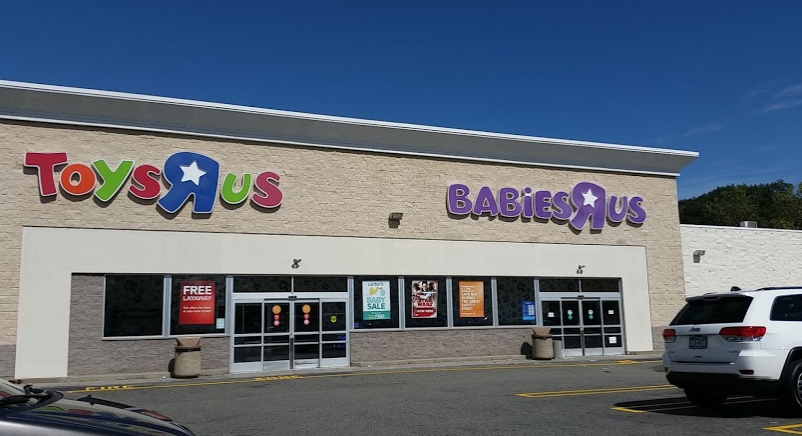
My father Jimme came over that night. I was the last person he expected to greet him at Mom’s apartment door. “Bo’, didn’t know you was here!,” he said, all surprised. As soon as I looked at my dad, I knew he was drunk. He was standing atilt, and his breath reeked of cheap alcohol and cheaper mints. Mom almost went off on him. Jimme, though, wasn’t there for me or Mom. He was there to impress my younger siblings. At first he was going to give them money. Then Eri and Sarai suggested the grand idea of going to Toys “R” Us to get more games and toys for Christmas. Jimme said yes, and they were all ready to leave within ten minutes, before Mom and I knew what was happening.

Mom agreed to go, but not without reservations. “If you mess up, I’m leaving yo’ ass in the street,” she said to my dad. I went with my four siblings and Mom because I knew my dad would mess up. He was already too far into his drinking routine to do anything other than act abnormal.

The 7 Bee-Line Bus from Yonkers to New Rochelle, via Mount Vernon, Yonkers, NY, September 11, 2007. (Adam E. Moreira via Wikimedia). Released to public domain via CC-BY-SA 3.0.

We made the last 7 Bee-Line bus to Yonkers, around 8 pm. It was packed with parents who were shopping late for toys and Christmas trees, along with a host of younger adults ready to find a club or some other partying spot. Some had been drinking too, so my dad wasn’t a complete oddball in this crowd. Jimme being Jimme, he started in on the diverse human sardine can of “Jamaicans” and “Spanish people” with his “po’ ass muddafuccas” and other favorite Jimme-isms. At one point I squeezed next to him and said, “You need to stop this, or I’m taking you off this bus myself.”

Jimme was so drunk that he fell over on some people on the bus once, and fell into the rear stairwell one other time. With so many on the bus in a partying mood, the group around us just laughed it off. I helped him up both times. I wasn’t embarrassed as much as I was disappointed and saddened to see my 54-year-old dad so old and so out of it. I’m sure Mom was embarrassed. This was her ex-husband, after all.

Toys “R” Us/Babies “R” Us, Yonkers, NY (the newest version), September 2017. (Sam Samsonov/Google Photos).

We got to Toys “R” Us and the Cross County Mall around 9:30, and it became a nearly two-hour free-for-all. My siblings went nuts, because Jimme said, “I buy you anythin’ you want. I buy the whole sto’!” I agreed with Mom to chip in if it turned out Jimme’s mouth was bigger than his cash wad. Maurice, Yiscoc, Sarai, and Eri found almost $200 worth of toys in the course of an hour. Kids and babies were screaming and hollering everywhere, along with their parents. At least two kids got ass-whuppins while we were in line. Eri and Yiscoc nearly had a fight while in the store. Jimme’s alcohol-fuel was on empty, and he was ready to fall asleep standing up. And, I had a headache.

We left the store at 11:30 pm, and walked out into cold, damp darkness. The drizzle that was the weather when we left 616 was now a full-on downpour, unusual for late December. It took us twenty minutes to get a taxi, and almost ten minutes to get our wet asses into the cab. My siblings were sitting on top of each other, with Jimme squished in between them. Me and Mom were up front with the cabbie, with my left butt cheek on the cigarette tray between the two bucket seats. We dropped Jimme off first, before cutting across Mount Vernon back to 616. It was 12:30 am Christmas Day by the time we walked through the apartment door, soaked, tired, and with me ready to start 1995.

It would be the last time I’d see my dad until I went to visit him sober and in Jacksonville in January 2002. It was my next to last trip to visit my younger siblings and Mom before the 616 fire of April 1995. It was the last time I came to Mount Vernon as someone who could so easily shed my persona as academic historian and single-minded professional for the loner and super-responsible eldest child I once was. But more than anything else, it was the last time I’d ever go shopping on the night before Christmas. That was just too crazy for me.

Dateline: Noriega

20 Wednesday Dec 2017

Posted by decollins1969 in 1, Academia, Boy @ The Window, culture, Eclectic, Mount Vernon New York, Patriotism, Pittsburgh, Politics, Pop Culture, University of Pittsburgh, Youth

≈ Leave a comment

Tags

#TaxCutScam, 616 East Lincoln Avenue, American Imperialism, George H. W. Bush, Invasion, Iraq, Kuwait, Manuel Noriega, Military, Panama, Paul Ryan, Pitt, Post-Cold War Era, Saddam Hussein


An army helicopter ferries reinforcements to the Vatican embassy in Panama City, where Gen. Manuel Noriega has taken refuge, Panama, December 21, 1989. (David Walters/Miami Herald).

It was on Wednesday, December 20, 1989 was the true beginning of the post-Cold War world, American style. It was on this date twenty-eight years ago that President George H. W. Bush sent in 20,000 soldiers and sailors to end Manuel Noriega’ dictatorial rule over Panama. It remains a date from which any student of history can infer as the beginning of blatant American aggressions abroad and increasingly craven governmental behaviors at home. At least without the counterweight of the Soviet Union to keep the US from running totally amok.

That week was part of my holiday semester break during my junior year at Pitt. I’d only been back in Mount Vernon and 616 for three full days, yet I was once again fully engrossed in my role as eldest child (in responsibility, if not in age). I was washing dishes post-breakfast that Wednesday morning between 11 am and 12 noon, as the national news of that day preempted The Price Is Right. It was no accident that within two months of the end of communist rule across most of Eastern Europe that the US hatches it first invasion of another nation. At least, that’s the thought I had in my head just before I cut the skin in between my middle finger and my ring finger on my right hand. This as I scrubbed out a glass that apparently had a chip around its rim. I bled profusely for a good ten minutes afterward, all while watching Dan Rather and company dig deep for analysis of what was happening in Panama and why.

It wasn’t even as complex as covering my second-level cut with a band-aid (which we didn’t have at 616). Noriega had become increasingly erratic and more difficult for Bush the puppet-master to control. It wasn’t as if his dictatorship and his running drugs through Panama had been any concern of either Bush or Reagan in the eight years before the invasion.

Drug trafficking and dictatorial crimes would be the excuses the Bush Administration would make for Operation Just Cause, an invasion that took 650 lives (150 or so Panamanian soldiers and more than 500 civilians), including 23 Americans. But it was essentially President Bush’s personal use of military forces to take down an asset that was the real reason for this incursion. Noriega was a man who Bush and other CIA officials had been using for the benefit of US interests in the Panama Canal and in Central America for nearly two decades. See? Much simpler than any justification over drugs and human rights violations Bush and Cheney (then Secretary of Defense) could muster.

Rep. Paul Ryan (R-WI) gaveling in ecstacy as House passed its $1.45-trillion tax cut bill, December 19, 2017 (http://twitter.com).

Both the UN and the European Parliament condemned the action. It didn’t matter. A year later, the US was part of the largest coalition of forces assembled since the end of World War II, this time to kick another former US asset in Saddam Hussein out of Kuwait. That Hussein invaded Kuwait after getting mixed signals from the Bush Administration is pretty well documented. That Hussein would no longer wear the leash the former head of the CIA had put on him was the ultimate cause for an counter-invasion that ultimately has destabilized the Middle East over the past three decades.

This week, Congress is doing for the US what the US has done to countries and regions with increasing levels of brazen and calloused bigotry since 1989 (and in cases like Batista and Cuba, Pinochet and Chile, far longer than 30 years). What’s another trillion dollars between friends, especially friends who can donate to your congressional campaign or stash hundreds of billions of dollars off-shore?

Who can Americans count on to stop this ride of greed-possessed, craven people who believe that the only Americans who count are the one’s who count suitcases full of cash to go asleep at night? Americans can’t invade themselves, after all. Of course, Americans can resist, elect more Democratic candidates, yada, yada. But dear world, we need your help, because America’s leaders are doing their level best to decay the US from within.

The Deadly Bliss of American Ignorance

17 Friday Nov 2017

Posted by decollins1969 in 1, culture, Eclectic, Patriotism, Politics, Pop Culture, race, Religion

≈ Leave a comment

Tags

"Drinking the Kool-Aid", American Narcissism, Balfour Declaration, Bolshevik Revolution, Devin Patrick Kelley, First World War, Gun Rights, Willful Ignorance


The US and its love for drinking poisonous Kool-Aid, June 21, 2016. (http://www.booksbytesblog.com/).

Events past and present have converged on the world stage in the past three weeks, all to remind the world of American ignorance. The 100th anniversary of the Russian Revolution, ushering in Soviet Russia for most of the 20th century. The Balfour Declaration, also of a century ago, in which the British leaned their imperialist weight into the idea of a Jewish homeland carved out of Ottoman Palestine. And, two Sundays ago, Devin Patrick Kelley’s rampage at First Baptist Church in Sutherland Springs, Texas, where he killed 26 worshippers and wounded another 20. The one thing these seemingly disparate events share in common is America’s ability to will ignorance out of learning moments.

Take the Bolshevik Revolution, for example. Nary a word has been printed about the spark that led to the Union of Soviet Socialist Republics in the US. Not about how the million-plus Russian dead during the First World War created an atmosphere of chaos within the tsarist empire. Not about how the calculations of German leadership led to them injecting Russian exile Vladimir Lenin back into his home country in order to get Russia out of the war. And certainly not about the role of US among the other world powers in attempting to overthrow the new Communist regime in the years after the war.

What little focus there has been on this event has been in assessing whether Russian oligarch Vladimir Putin is a 21st-century Russian tsar. That, and the case of author Simon Sebag Montefiore, who “what-if-ed” about the Russian Revolution in a New York Times op-ed earlier this month. Somehow, the Second World War, the Communist Revolution in China, the Cold War, the Vietnam conflict, and a nuclear-armed North Korea would’ve never happened. While it was a nice touch for Montefiore to write, “Hitler would likely have ended up painting postcards” if not for the Bolshevik Revolution, the lessons deriving from this event should be far more important than typical American navel-gazing. The revolution did happen, a consequence of World War I and the imperialist meddlings of Germany, the United Kingdom, and the US.

The ho-hum coverage around the Balfour Declaration a century on is yet another example of American ignorance, but in two ways. One, Americans have literally ignored the idea that the modern clashes between Jews and Arabs had an origin point straight out of the First World War. The modern conflict over Israel comes out of the European imperialism playbook, led by the UK. As a way to get the Ottoman Turks out of the war, the UK’s Foreign Secretary Arthur Balfour wrote a letter to Lord Walter Rothschild, an avid supporter of the Zionist movement. The promise of a “national home for the Jewish people” in Palestine made its way to the British newspapers a week later, November 9, 1917. The declaration set off a complex chain of events that led to the state of Israel, four Arab-Israeli wars between 1948 and 1973, and the oppression of Palestinian Arabs.

Instead of focusing on this complicated history, Americans often chalk this recent history up to a family squabble that happened 3,000 years ago, as if Jews and Arabs have been fighting since the Biblical days of Isaac and Ishmael. That, and the willingness to automatically blame Arab Muslim culture for inciting and inviting conflict. As conservative Middle East Forum fellow Philip Carl Salzman recently wrote, peace “is not possible in the Middle East because values and goals other than peace are more important to Middle Easterners,” carefully avoiding the word Arab in his article. Salzman’s is merely a more sophisticated version of the ignorant Christian belief that the Middle East represents the “world’s oldest family feud,” that every Muslim is primed for violence. Or, as my neighbor put it last week, in the aftermath of Sayfullo Saipov’s terrorism-by-truck-ramming in New York, “they read that Koran, and they’re radicalized.”

The other part of American ignorance regarding the Balfour Declaration was the American role in helping it evolve from the idea of a homeland to the nation-state of Israel. President Woodrow Wilson supported the declaration. Writers like Lawrence Haas have argued that the declaration was only about “empower[ing] Jews to return to their historic homeland.” Despite his and other’s claims, every US president since Wilson has understood the declaration to be the bedrock for building Israel as a Jewish nation-state, and not just an ancestral homeland for members of the Jewish diaspora. This ignorance of the past and present has cost hundreds of thousands of lives and trillions in dollars, and is likely as intractable as the century-old conflict itself.

Still, from an American perspective, none of this is as ignorant as the common refrain, “Guns don’t kill people. People kill people.” Or, as President Trump described the mass shooting at a church in suburban San Antonio, “I think that mental health is your problem here,” that this isn’t a “guns situation.” In the first few days, experts weighed in on this incident in which Devin Kelley killed and maimed dozens. They have added factors such as Kelley’s domestic violence history and the lack of communication between the Department of Defense and local law enforcement databases about Kelley’s record to the mix.

But in explaining the correlation between domestic violence and a person’s willingness to slaughter random humans, many Americans remain blissfully ignorant of one elephant in the room. Easy access to assault weapons. Americans often avoid the topic, as if the Second Amendment to the US Constitution is sacrosanct. Yet here too is the First World War and the development of hand-held assault guns a factor, as automatic weapons like the Tommy Gun became more readily available to both criminals and law enforcement in the US in the 1920. While some may kill regardless of the weapon, regulations state and federal have made it all too easy for ordinary Americans to murder in large numbers.

The most ignorant thing Americans do on gun regulation, though, is assume the only choices on the table are either full access for everyone or regulated access meant to keep guns out of the hands of criminals and potential mass shooters. Another choice would be to repeal the Second Amendment entirely and replace it with a law that keeps guns mostly out of the American public domain.

The ignorant American in me knows that the idea of a gun-free America is a pipe dream, no more realistic than any line in the Balfour Declaration about protecting the civil rights of “non-Jewish communities in Palestine.” And no more plausible than seeing Soviet Russia as not just an historical accident, but the result of imperial wheeling and dealing to end a deadly world war. Americans are simply too willing to be ignorant of history and the here-and-now.

← Older posts
Newer posts →

Boy @ The Window: A Memoir

Boy @ The Window: A Memoir

Places to Buy/Download Boy @ The Window

There's a few ways in which you can read excerpts of, borrow and/or purchase and download Boy @ The Window. There's the trade paperback edition of Boy @ The Window, available for purchase via Amazon.com at http://www.amazon.com/Boy-Window-Donald-Earl-Collins/dp/0989256138/

There's also a Kindle edition on Amazon.com. The enhanced edition can be read only with Kindle Fire, an iPad or a full-color tablet. The links to the enhanced edition through Apple's iBookstore and the Barnes & Noble NOOK edition are below. The link to the Amazon Kindle version is also immediately below:

scr2555-proj697-a-kindle-logo-rgb-lg

Boy @ The Window on Amazon.com: http://www.amazon.com/Boy-The-Window-Memoir-ebook/dp/B00CD95FBU/

iBookstore-logo-300x100

Boy @ The Window on Apple's iBookstore: https://itunes.apple.com/us/book/boy-the-window/id643768275?ls=1

Barnes & Noble (bn.com) logo, June 26, 2013. (http://www.logotypes101.com).

Boy @ The Window on Barnes & Noble: http://www.barnesandnoble.com/w/boy-the-window-donald-earl-collins/1115182183?ean=2940016741567

You can also add, read and review Boy @ The Window on Goodreads.com. Just click on the button below:

Boy @ The Window

Twitter Updates

Tweets by decollins1969
  • RSS - Posts
  • RSS - Comments

Archives

  • June 2025
  • April 2023
  • September 2022
  • August 2022
  • July 2022
  • June 2022
  • May 2022
  • April 2022
  • March 2022
  • January 2022
  • December 2021
  • November 2021
  • October 2021
  • September 2021
  • August 2021
  • July 2021
  • June 2021
  • April 2021
  • March 2021
  • February 2021
  • January 2021
  • December 2020
  • November 2020
  • October 2020
  • September 2020
  • August 2020
  • July 2020
  • May 2020
  • April 2020
  • March 2020
  • January 2020
  • December 2019
  • November 2019
  • August 2019
  • July 2019
  • June 2019
  • May 2019
  • April 2019
  • March 2019
  • February 2019
  • January 2019
  • December 2018
  • November 2018
  • October 2018
  • September 2018
  • August 2018
  • July 2018
  • June 2018
  • May 2018
  • March 2018
  • February 2018
  • January 2018
  • December 2017
  • November 2017
  • October 2017
  • September 2017
  • August 2017
  • July 2017
  • June 2017
  • May 2017
  • April 2017
  • March 2017
  • February 2017
  • January 2017
  • December 2016
  • November 2016
  • October 2016
  • September 2016
  • August 2016
  • July 2016
  • June 2016
  • May 2016
  • April 2016
  • March 2016
  • February 2016
  • January 2016
  • December 2015
  • November 2015
  • October 2015
  • September 2015
  • August 2015
  • July 2015
  • June 2015
  • May 2015
  • April 2015
  • March 2015
  • February 2015
  • January 2015
  • December 2014
  • November 2014
  • October 2014
  • September 2014
  • August 2014
  • July 2014
  • June 2014
  • May 2014
  • April 2014
  • March 2014
  • February 2014
  • January 2014
  • December 2013
  • November 2013
  • October 2013
  • September 2013
  • August 2013
  • July 2013
  • June 2013
  • May 2013
  • April 2013
  • March 2013
  • February 2013
  • January 2013
  • December 2012
  • November 2012
  • October 2012
  • September 2012
  • August 2012
  • July 2012
  • June 2012
  • May 2012
  • April 2012
  • March 2012
  • February 2012
  • January 2012
  • December 2011
  • November 2011
  • October 2011
  • September 2011
  • August 2011
  • July 2011
  • June 2011
  • May 2011
  • April 2011
  • March 2011
  • February 2011
  • January 2011
  • December 2010
  • November 2010
  • October 2010
  • September 2010
  • August 2010
  • July 2010
  • June 2010
  • May 2010
  • April 2010
  • March 2010
  • February 2010
  • January 2010
  • December 2009
  • November 2009
  • October 2009
  • September 2009
  • August 2009
  • July 2009
  • June 2009
  • May 2009
  • April 2009
  • March 2009
  • February 2009
  • January 2009
  • December 2008
  • November 2008
  • October 2008
  • September 2008
  • August 2008
  • July 2008
  • June 2008
  • May 2008
  • April 2008
  • March 2008
  • February 2008
  • January 2008
  • December 2007
  • November 2007
  • October 2007
  • September 2007
  • August 2007
  • July 2007
  • June 2007

Recent Comments

decollins1969's avatardecollins1969 on No Good Teaching Deed Goes…
Mary Rose O’Connell's avatarMary Rose O’Connell on No Good Teaching Deed Goes…
Lyndah McCaskill's avatarLyndah McCaskill on The Raunchiest of Them Al…

NetworkedBlogs on Facebook

NetworkedBlogs
Blog:
Notes From a Boy @ The Window
Topics:
My Life, Culture & Education, Politics & Goofyness
 
Follow my blog

616 616 East Lincoln Avenue A.B. Davis Middle School Abuse Academia Academy for Educational Development AED Afrocentricity American Narcissism Authenticity Bigotry Blackness Boy @ The Window Carnegie Mellon University Child Abuse Class of 1987 CMU Coping Strategies Crush #1 Crush #2 Death Disillusionment Diversity Domestic Violence Economic Inequality Education Family Friendship Friendships Graduate School Hebrew-Israelites High-Stakes Testing Higher Education History Homelessness Humanities Humanities Program Hypocrisy Internalized Racism Jealousy Joe Trotter Joe William Trotter Jr. K-12 Education Love Manhood Maurice Eugene Washington Maurice Washington Misogyny Mother-Son Relationship Mount Vernon High School Mount Vernon New York Mount Vernon public schools Multiculturalism MVHS Narcissism NFL Pitt Pittsburgh Politics of Education Poverty President Barack Obama Race Racial Stereotypes Racism Relationships Self-Awareness Self-Discovery Self-Reflection Sexism Social Justice Teaching and Learning University of Pittsburgh Violence Whiteness Writing

Top Rated

Blog at WordPress.com.

  • Subscribe Subscribed
    • Notes from a Boy @ The Window
    • Join 103 other subscribers
    • Already have a WordPress.com account? Log in now.
    • Notes from a Boy @ The Window
    • Subscribe Subscribed
    • Sign up
    • Log in
    • Report this content
    • View site in Reader
    • Manage subscriptions
    • Collapse this bar
 

Loading Comments...