• Spinning Sage’s Gold: Allegories on the Western-Dominated Present and a Possible Post-Western Future (2025)
  • About Me
  • Other Writings
  • Interview Clips
  • Video Clips
  • Boy @ The Window Pictures
  • Boy @ The Window Theme Music

Notes from a Boy @ The Window

~

Notes from a Boy @ The Window

Category Archives: Pittsburgh

Biting Off Too Much, And Almost Choking On It

03 Wednesday Dec 2014

Posted by decollins1969 in 1, Academia, Boy @ The Window, culture, Eclectic, Pittsburgh, Pop Culture, Sports, University of Pittsburgh, Work, Youth

≈ Leave a comment

Tags

Arrogance, Calculus, Differential Equations, Football Analogies, Grad School, Graduate School, Heimlich Maneuver, History Major, Humanities, Joe Montana, Lifelong Learning, Limitations, Multiple Integrals, Overachievers, Overachieving, Partial Derivaties, Pitt, Pride, Self-Discovery, Warren Moon


"Bush Gag" cartoon, Pat Bagley, Salt Lake Tribune, November 5, 2008. (http://dailykos.com). Qualifies as fair use under copyright laws -- low resolution picture.

“Bush Gag” cartoon, Pat Bagley, Salt Lake Tribune, November 5, 2008. (http://dailykos.com). Qualifies as fair use under copyright laws — low resolution picture.

I’m someone who’s in a state of constant learning, constantly wanting to challenge myself and others to be better, to do more and better. I don’t apologize for this. But I do need to acknowledge that too often, I exert so much pressure on myself to excel that I take on a Thanksgiving feast’s worth of challenges. More times than not, I come through on the other side, but frequently in need of the Heimlich maneuver to keep from suffocating on it all.

For those of you who are still in undergrad or have recently finished, or at least, still remember clearly the details of this part of your academic journey, this story is most poignant for you. After years of relying mostly on my great memory and very good writing skills to be the very good student I’d been over the previous decade, I wanted to do better, to not have to scramble in the last three weeks of a sixteen-week semester and look like a dog with a serious constipation problem trying to void, like almost two-thirds of the sickly, underdressed, raccoon-eyed students I’d seen on campus during my first two years at the University of Pittsburgh.

As I wrote at the end of my coming-of-age memoir Boy @ The Window:

I reasoned that I needed to have balance to my semesters so that I wouldn’t spend the last two or three weeks of them playing catch up. Starting with the fall of ’89, I took all my syllabi from all of my classes, grabbed a calendar, and crafted a table where I knew exactly what to read, when to study, and when to begin my research and writing projects for each class I had in a semester. That way, I could know when to slack off or party, when to buckle down and study, and when to just shift into academic cruise control.

Hall-of-Fame QB Warren Moon with Houston Oilers, throwing from within pocket on his 527-yd passing day against the Kansas City Chiefs, December 16, 1990. (http://spokeo.com).

Hall-of-Fame QB Warren Moon with Houston Oilers, throwing from within pocket on his 527-yd passing day against the Kansas City Chiefs, December 16, 1990. (http://spokeo.com).

Those were literally my words and thoughts from a quarter-century ago. I also decided to become more organized because, thinking back, I knew that I couldn’t be a scrambling student in grad school. At least one who could be consistent and successful, who could sit and step up in the pocket and deliver academic darts for touchdowns — to use one of the many football analogies I would’ve said in ’89 (and probably now, too). All I knew was that after the spring semester — with thirty-six-hour workweeks and five courses — that I wanted more time to hang out with friends, to even maybe date.

Only, I was dumb enough to take third-semester calculus a year and a half after my last math course, and I was now a history major taking writing intensive courses. But at the time, I had my very good reasons. I was only one course shy of a minor in mathematics, which I figured would look good on my academic resume when I did apply to grad schools. I wanted to learn the basics about differential equations, because I was just that kind of guy. I wanted, most of all, to challenge myself, because that part of my Humanities indoctrination had stayed with me well beyond my high school graduation.

That course was a struggle, mostly because my attention was split between writing papers and reading thick history texts, constitutional law books and African American literature on the one hand, and math equations on the other. Fourteen months away from derivates and integrals and volumes was too long for me. I couldn’t really adjust to being in a lecture hall with nearly 400 students, being in memorization mode, no longer with much in common with this huge group of STEM-inclined classmates. By the middle of October, I was miserable whenever it was time to march up that hill to Benedum Hall.

A simple first-order linear differential equation (nothing "simple" about it), December 2, 2014. (http://revisionworld.com/).

A simple first-order linear differential equation (nothing “simple” about it), December 2, 2014. (http://revisionworld.com/).

But it did get worse. About a month before the end of that semester, my friend Terri looped me into unwittingly setting up my friend Marc with our mutual friend Michele. And it worked! All too well, as I realized that I had a bit of a crush on Michele myself, but only after they’d started dating. It was a rocky last three weeks of ’89. I managed a 2.98 GPA that terrible semester, including a D+ in multiple integrals and differential equations. I missed a C- in that class by two-tenths of a point. Terrible by my own standards.

Lessons here, if any? Don’t bite off more than you can chew, maybe? I know that three admissions committees used that D+ against me in either rejecting me outright or in not offering me fellowship money to cover tuition when I applied to grad schools a year later. So, one other lesson could be to not take unnecessary risks, to not challenge myself. That would be the wrong lesson, though.

The real lesson would be to know our limitations, that we can’t be all things to ourselves and others and do well at all things all the time, that we have a finite amount of time and choices, in school and in life. With so much going on in my life these days, it’s still a lesson of which I have to keep reminding myself, practically every single day.
For What It’s Worth, My Life Matters, Our Lives Matter

27 Thursday Nov 2014

Posted by decollins1969 in 1, Boy @ The Window, Christianity, culture, Eclectic, eclectic music, Mount Vernon High School, Mount Vernon New York, music, New York City, Pittsburgh, Politics, Pop Culture, race, Religion, University of Pittsburgh, Youth

≈ Leave a comment

Tags

"For What It's Worth" (1970), Bob McCullough, Buffalo Springfield, Darren Wilson, Double-Consciousness, Faith, Ferguson, Michael Brown, Police Brutality, Police Harassment, Racism, Rudy Giuliani, Self-Awareness, Self-Worth, Souls of Black Folk (1903), Systemic Racism, W. E. B. Du Bois, White Vigilantism, White Violence


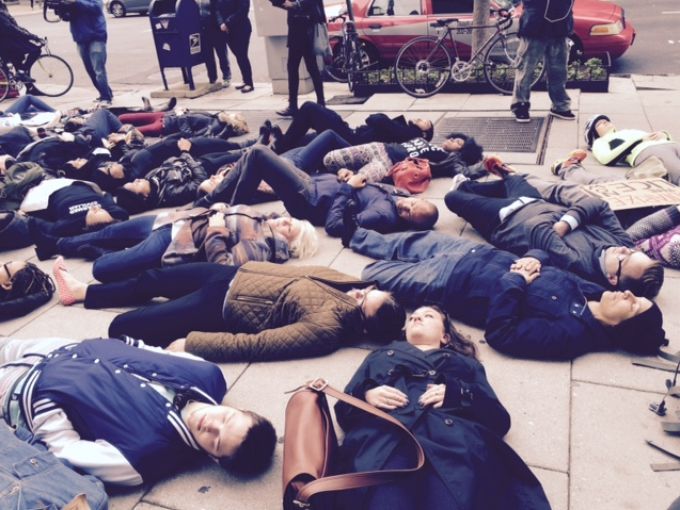
Protestors hold a die-in at 14th and I St NW, Washington, DC, November 25, 2014.  (Andrea McCarren/WUSA via http://www.wusa9.com)

(For What It’s Worth) Protestors hold a die-in at 14th and I St NW, Washington, DC, November 25, 2014. (Andrea McCarren/WUSA via http://www.wusa9.com)

Between Bob McCullough, Darren Wilson, the grand jury in Ferguson, Missouri, the NYPD, Rudy Giuliani, the Cleveland PD, and 100 million other sources, I could easily draw the conclusion that the lives of Americans of color are only worth as much as three cigarillos or a toy gun. Or, with it being 2014, that we’re just characters in a video game in which scared Whites get to kill us for sport or out of spite. Heck, I wouldn’t be surprised if the Ferguson PD allows Wilson to mount Michael Brown’s skull above his mantle after he returns from his long-delayed honeymoon, the poor racist!

But my life, your life, all of our lives are worth more than what any racist asshole or system places on us. I had to learn this lesson a long time ago. It’s the lesson that is the raison d’etre for my blog Notes from a Boy @ The Window, not to mention my book Boy @ The Window. There are literally millions of messages we as Americans of color take in over the course of our lives that for so many, our lives don’t matter. Counterintuitively, it means our lives really must matter. Why would anyone or any system expend so much time and effort excluding people on the basis of race and social status in the first place?

Café Crème cigarillos, Denmark, October 21, 2011.  (PeddderH via Wikipedia). Released to public domain via CC-SA-3.0.

Café Crème cigarillos, Denmark, October 21, 2011. (PeddderH via Wikipedia). Released to public domain via CC-SA-3.0.

Still, learning that I mattered began at home, in Mount Vernon, New York, from folks who treated me every day as if I mattered not at all. Between my Humanities and Mount Vernon High School experiences and the abuse I suffered at home, I didn’t need the additional dimension of police harassment or White vigilantism to remind me that those of us without standing, who refused to conform to acceptable ways of thinking and speaking, were discardable. Maybe that’s why I turned to nondenominational Christianity in the first place. To realize that despite it all, that I mattered to God, to a universe much bigger and much more mysterious and powerful than the fists of my stepfather or the denigration and ostracism I received at school. It all gave me reasons to live.

So when my first encounters with police harassment and White vigilantism did occur (beginning right after my seventeen birthday), I had faith in God, and with that, faith in myself as a foundation from which to draw strength. Whether at Tower Records or in Pittsburgh or in Los Angeles, and regardless of how scared I might have felt during those moments, I remained outwardly calm. I remained myself.

Yes, I was lucky. Maybe my weirdness, my proper speech, my faith, maybe even God and the universe, kept me from getting beat up or shot on sight by police, security guards or by groups of drunken White guys in pickup trucks. But really, by the time Whites (and some Black cops, to be sure) started profiling me in earnest, I had made the decision that I had worth, that my existence, creativity, analytical ability, critical reasoning, all mattered.

It helped that I had victories in my life, big and small and somewhere in between, to draw on, too. Not just my advanced education or my first publications. By the time I’d hit thirty, I’d learned how to love again, to feel again, to write again, to have fun again, to even feel pain and recover again. All of that made my life much sweeter, filled my world with color and sound and texture, with words and deeds that mattered to me and everyone who’d become important to me.

W.E.B. Du Bois in duality (double-consciousness), original picture circa 1903, November 26, 2014. (http://www.storify.com/ozunamartin).

W.E.B. Du Bois in duality (double-consciousness), original picture circa 1903, November 26, 2014. (http://www.storify.com/ozunamartin).

While there are moments that I can go there, because of the likes of Wilson, McCullough and Giuliani, the fact is, I refuse to allow dumb-assed racists to determine my life’s worth. That those folk who devalue the lives of other folk because of their -isms (racism, misogyny, homophobia, imperialism, capitalism) and ish are in fact making their own lives worth less and worthless.

While W.E.B. Du Bois was right about this “peculiar sensation…this sense of always looking at one’s self through the eyes of others,” I don’t think I live my life in a constant state of double-consciousness. If I did, I would’ve jumped off that bridge over the Hutchinson River Parkway long before adulthood. No, up or down, I know my life has meaning, my existence is worth more than a 9mm bullet, that every sentient life matters. And like Michelle Alexander’s talk with her son this week, I’ve made sure that my son knows that his life matters, and should matter, to him, his mother, and to me.

Last Gasps, Anita Baker’s “Sweet Love,” and My ’86 Mets

26 Sunday Oct 2014

Posted by decollins1969 in 1, Boy @ The Window, culture, Eclectic, eclectic music, Mount Vernon High School, Mount Vernon New York, music, My Father, New York City, Pittsburgh, Pop Culture, race, Sports, University of Pittsburgh, Youth

≈ 1 Comment

Tags

"Sweet Love" (1986), 1986 World Series, Alcoholism, Anita Baker, Bill Buckner, Billboard Pop Chart, Cameo, Child Abuse, Club Nouveau, Coping Strategies, Domestic Violence, Drug Abuse, Giants, Grammys, Hip-Hop, Joe Morris, Living Vicariously, Mets, Mookie Wilson, R&B, Rap, Rapture album, Singing, Super Bowl XXI, WFAN


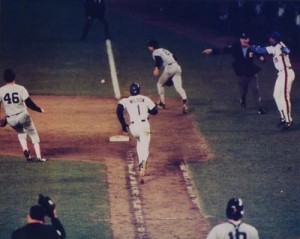
The Mookie Wilson-Bill Buckner connection, Game 6, 1986 World Series, Bottom 10th, Shea Stadium, Queens, NY, October 25, 1986. (http://halloffamememorabilia.net).

The Mookie Wilson-Bill Buckner connection, Game 6, 1986 World Series, Bottom 10th, Shea Stadium, Queens, NY, October 25, 1986. (http://halloffamememorabilia.net).

Sunday, October 26, 1986 was part of a great three days for me, perhaps the three best days during my Boy @ The Window years. My Mets had pulled off a miracle. They survived being within a strike of losing the ’86 World Series because Mookie Wilson put a ball between Boston Red Sox 1st baseman Bill Buckner’s rickety legs the night before. Anita Baker’s “Sweet Love” was #1 or #2 on the R&B charts and was near the top of Billboard’s Top 40 on this day twenty-eight years ago. Within the next thirty-eight hours, my Mets would complete the comeback, and win their second (and last, to this point anyway) World Series after falling behind 3-0 through the first six innings. Meanwhile, my Giants would run through the Deadskins at home in East Rutherford, NJ, as Joe Morris rushed for 185 yards in a 27-21 victory, on their own march to a championship title.

GoGurt, Yoplait's squeeze -in-mouth, portable yogurt, October 26, 2014. (http://freehotsamples.com).

GoGurt, Yoplait’s squeeze -in-mouth, portable yogurt, October 26, 2014. (http://freehotsamples.com).

My coping mechanisms were at their peaks, though, and had nothing else to do but crash down into the Earth. It was also my senior year in high school, a time of too many AP courses, too many college-going pressures, too many haters and doubters among my classmates, and too much of the grinding poverty and chaos that was living at 616. Within two weeks of my Mets, my Giants and Anita Baker’s first big hits, I’d discover my idiot stepfather’s pornography collection, nearly got set up with a prostitute because of my father, and face humiliation at the hands of my AP Physics teacher David Wolf and his boss Estelle Abel for the first time.

It took me almost two years to recover from the happenings of the mid-fall of ’86. In the process, I faced betrayal, ostracism, humiliation, broken-heartedness, and homelessness, but somehow managed to not make every song and every Mets and Giants (and Knicks and Rangers) victory a vicarious signpost for my own life. It helped that I started to think of Pitt — if not Pittsburgh — as my home, with concerns beyond living and dying with my New York teams and with relatively unknown but talented music artists.

Giants' RB Joe Morris running through Deadskins again, RFK Stadium, Washington, DC, December 7, 1986. (http://sikids.com).

Giants’ RB Joe Morris running through Deadskins again, RFK Stadium, Washington, DC, December 7, 1986. (http://sikids.com).

I learned other things along the way, too. That my Mets and Giants weren’t the perfect teams I thought they were. Between the alcohol and drug issues of Darryl Strawberry, Dwight Gooden, Len Dykstra, Lawrence Taylor, Kevin Mitchell, not to mention their and other teammates’ domestic violence issues, it was obvious to me that talent and winning were more important than living by a consistent code. Listening to the new 24/7 sports radio station WFAN when it began its run in the summer of ’87 showed me the hearts and minds of most fans. They obviously weren’t using sports as a coping strategy for dealing with the emotional grind of poverty and threats of abuse and domestic violence at home. Mostly White and male, their constant barrage of vitriol and disparaging racial commentary about my favorite athletes at that time — Mike Tyson in particular — actually made me wary of White sports fans for years afterward.

I also learned that with artists like Anita Baker and Luther was really the last gasp of R&B as I’d known it to be in the US. R&B was already too much like ’80s pop and a bit too mixed up with rock at times, but with Cameo’s “Word Up” and Club Nouveau’s cover of Bill Withers’ “Lean On Me,” R&B was already beginning its merge with hip-hop, and not in a good way, either. Yeah, there were some exceptions, like Levert, or Regina Belle, but the process of R&B devolving into some Yoplait GoGurt version of itself — with Autotunes, bad rap lyrics and worse rhyme spitters, and assembly-line hip-hop beats — had already begun.

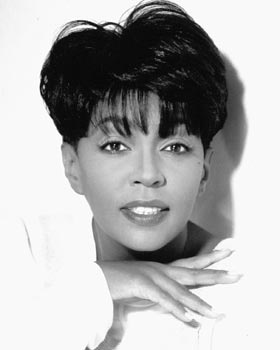
Anita Baker, Rapture phase, circa 1986. (http://projects.latimes.com).

Anita Baker, Rapture phase, circa 1986. (http://projects.latimes.com).

Some of you may say, R&B’s still alive in the US, specifically in our churches, but that’s not true, thanks in large measure to Kirk Franklin. His work in the ’90s made it so that it’s taken longer for jazz to catch on in bands and choirs than rap and hip-hop. No, if you want to find R&B with actual singers these days, try the United Kingdom of Great Britain, try France, try Senegal, try Nigeria. But don’t try the US. Nicki Minaj is no Aretha, no matter how imaginative her videos and her clothes. For that matter, Iggy Azalea’s no Teena Marie, as the former doesn’t understand the difference between cultural appropriation and authenticity. Hip-hop sprang in part from the roots and branches of R&B, but like a parasitic vine, it has cannibalized those roots.

Still, it’s good to remember days like the ones I lived through twenty-eight years ago, with Anita Baker in my ear, my Mets in victory formation, my Giants lined up right beside them. Those days are gone, like the coping strategies I used to get through every one of those days. Not to mention the R&B that was more a part of my life than the hip-hop that my contemporaries were supposedly raised on.

Contingent Faculty and the Cold Case of Rollo Turner

02 Thursday Oct 2014

Posted by decollins1969 in 1, Academia, culture, Eclectic, Pittsburgh, Politics, Pop Culture, race, University of Pittsburgh, Work

≈ 4 Comments

Tags

Adjunct Faculty, Africana Studies, Afrocentricity, Brenda Berrian, Buddhism, Clarence 'Rollo' Turner, Contingent Faculty, Death, Department of Black Studies, Diversity, Firing, Income Loss, J.D. O'Connor, Lawsuit, Rollo Turner, Steven Salaita, Termination, Unionization, University of Illinois Urbana-Champaign


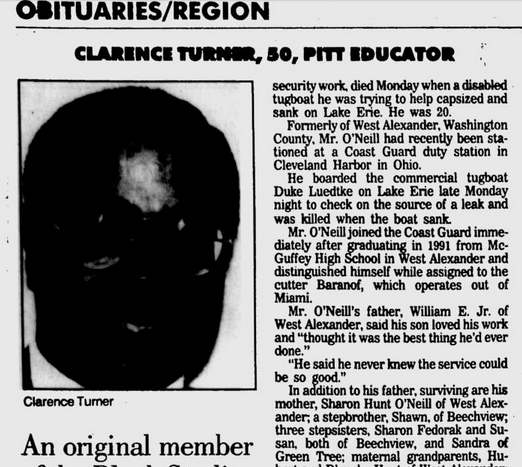
Clarence "Rollo" Turner, in Obituaries section, Pittsburgh Post-Gazette, September 24, 1993. (http://news.google.com).

Clarence “Rollo” Turner, in Obituaries section, Pittsburgh Post-Gazette, September 24, 1993. (http://news.google.com).

Two months ago, the University of Illinois Urbana-Champaign rescinded a job offer they had made to Steven Salaita (then an associate professor of English at Virginia Tech) for a tenured position in American Indian Studies over a bunch of his allegedly anti-Israel tweets. Between mainstream media and social media, the response against this attack on academic freedom and traditional hiring protocols has been tremendous. Thousands of academicians have signed petitions, penned articles and canceled speeches and events at UIUC over Chancellor Phyllis Wise and the Illinois board of trustees’ decision to take back their offer of employment. While the American Association of University Professors, the American Studies Association, the Foundation for Individual Rights in Education, and so many others have argued that Professor Salaita should be in the classroom teaching his courses this fall, this issue is about more than academic freedom and UIUC following job offer guidelines.

The fact is, non-tenure-stream faculty lack the protections and supportive outrage that academia has poured out for those in tenure-track and tenured positions like Professor Salaita. So many contingent faculty lose their jobs over far less than an impolite tweet or an excited utterance. Yet it doesn’t become a story in The New York Times or a petition letter with over 2,000 signatures. No, most contingent faculty, when they lose their jobs, often do so in obscurity, often over doing their jobs with the idea that they were free to teach as they saw fit.

The sadder fact, though, is that this isn’t a new phenomenon at all. Take the case of Clarence Rollo Turner, who passed away twenty-one years ago last month at the age of 50. He was once a veteran senior lecturer in the Department of Black Studies at the University of Pittsburgh, as well as my one-time professor for his History of Blacks in Sports course during the spring semester of 1990. I took Turner’s course in my junior year for an easy-A in the midst of taking a bunch of upper-level undergraduate (and one graduate) history courses that semester. Turner’s was a fun course, and he was a knowledgeable professor beyond its contents. Who knew that in three and a half years the politics of academia would cut short the life of a pioneer? It points to the reality that with half of all higher education instructors serving as contingent faculty, academic freedom is an oxymoron and job protections have become secondary to academic politics and fundraising efforts.

Rollo Turner’s Contingent Teaching Story:

If you’ve never heard of Rollo Turner, it’s mostly because he didn’t have the opportunity to turn himself into a household name in or out of academia, even in Pittsburgh. And, of course, because most non-tenured and non-tenure-stream faculty are seldom central figures at their universities or in their fields just because they’re very good instructors. Turner, though, was a founding member of the Black Studies Program-turned-department (now of Africana Studies) at the University of Pittsburgh. The university had hired Turner in the wake of a game-changing sit-in of Black undergraduate and graduate students in their takeover of an entire floor of the university’s central computer systems on Martin Luther King, Jr.’s birthday in 1969. It was a protest over the lack of student and faculty diversity at the University of Pittsburgh in general. But it was also a protest to demand a Black Studies program that would represent the research and experiences of Blacks on Blacks on an otherwise lily-White Campus, one engaged exclusively in research that almost always excluded Blacks.

In the process of starting this program, the university hired faculty who had yet to earn their doctorates, in some cases with barely a bachelor’s degree. This was 1969, though, when not having a PhD didn’t automatically disqualify candidates from a full-time academic position. Turner was one of several beneficiaries from this change of climate at the University of Pittsburgh, as he was finishing up a master’s degrees in Sociology at Indiana University when the University of Pittsburgh hired him (Turner, incidentally, had helped lead protests for more Black inclusion and a Black Studies program at Indiana in 1968).

Turner took on a joint appointment with the Department of Sociology and with the new Black Studies Program, teaching courses like the Sociology of the Black Family, Introduction to Black Studies and his History of Blacks in Sports along the way. Although the standard courseload for a full-time faculty member at the University of Pittsburgh was five over two semesters per year, Turner had been on a 2-2 schedule from September 1969 through December 1991. For more than twenty-two years, Turner had only taught four courses per year.

When the then-new department chair Brenda Berrian demanded that Turner take on a third course in January 1992, he refused, citing his twenty-two year history with the Black Studies Department and the last-minute nature of the request as reasons. Berrian then moved to terminate Turner. She and two Pitt police officers arrived in Turner’s classroom on the first Friday of the spring semester and had him removed from his classroom and escorted out of the building. Berrian fired him in the middle of his lecture, in front of a room full of students. This was how The Pitt News first reported the incident, and it was corroborated by everything that Rollo Turner told me a few weeks later.

The Politics of Academia:

But though it was that heavy-handed, it was hardly that simple. Turner had gotten himself caught up in a battle that involved his contingent employment status, degree completion, departmental reputation and petty ideological politics. More than twenty-two years as a non-tenured senior lecturer with only a master’s degree and a few publications that included two book-length bibliographies had caught up with Turner. As a contingent faculty member, even with over two decades put in, Turner lacked the protections afforded tenure-stream and tenured faculty members. Granted, at $37,000 a year and living in Pittsburgh at the time in 1992, Turner was a very well-paid senior lecturer. At least, that’s what many would argue today. This was also Berrian’s position as Turner’s termination turned into a $60,000 lawsuit.

Beyond the issue of compensation, contracts and contingent status was what Berrian and the other tenured faculty of the Department of Black Studies wanted for the department’s future. They wanted to bolster the department’s reputation within and outside the University of Pittsburgh. They wanted to be a full-fledged department in which students could major in Black Studies (students could only earn a minor in the subject until 1993), and perhaps, even offer a master’s degree in the field. Two things stood in the way of this progression. One was the fact that half of the department’s faculty didn’t have doctorates, now a much bigger deal in 1992 than it had ever been in 1969.

Two was that not everyone wanted to go in the ideological direction that Berrian had chosen for the Department of Black Studies. She wanted to move toward an Afrocentric approach in teaching and conducting research, something Turner openly rejected as “nonsense.” The idea of a litmus test for what was and wasn’t authentically “Black” or “African” was too extreme for Turner. As a tenured faculty member, Turner’s objections may well have cost him political clout within the department, but it wouldn’t have cost him his job.

Turner’s Final Months:

Turner sued Berrian and the University of Pittsburgh for wrongful termination – stemming in no small part from a hostile work environment – and breach of contract (his was a three-year contract with a year and a half left on it). The suit dragged on in the Civil Court division of Allegheny County Common Pleas Court well into 1993 as Turner – with two daughters in college and a son in the middle of high school – went over a year and a half without a paycheck. As late as August 1993, the month before he died, Turner told me that things on the lawsuit front had taken a turn for the better. Despite the stress of the situation, he hadn’t let Berrian or the University of Pittsburgh “steal his inner peace,” Turner said.

Yet even with years of Buddhism and meditation under his belt and a lifestyle that included biking through all parts of Pittsburgh, Turner died in late-September 1993. No doubt that between the stress of his lawsuit, the sense of betrayal, and the financial upheaval, it all caught up with him. Rollo Turner may well have become a mentor of mine because of the stand that he took, minus the strength of a union or support from a substantial number of tenured faculty. None of this was possible in the end. Precisely because contingent faculty seldom have rights that tenured faculty and university administrators are bound to respect.

Lessons, If Any:

There are so many lessons to be learned here, lessons that resonate with me more now as an adjunct professor than they did when I was a graduate student or when I worked in the nonprofit world. Contingent faculty shouldn’t rock the boat, take a controversial stance, or involve themselves in hot-button issues within their field or department. Or that anyone serving as non-tenured faculty without a doctorate should endeavor to write their dissertation at break-neck speed. Or really, if given the choice, why would anyone who could possibly do anything else with their lives in academia, especially anything that could provide more security and protection, choose a job as a contingent faculty member, whether in 1992 or 2014?

Mostly, it points to the reality that university leaders tend to see much of the talent in academia – non-tenured faculty among others – as expendable. That, and the fact that this expendability has grown with the rapid increase in contingent faculty (and graduate students, for that matter) teaching courses once reserved for tenure and tenure-stream instructors. Until contingent faculty, graduate student teaching assistants and tenured/tenure-stream professors unionize and take a collective stand on working conditions and job protections, cases like Turner’s will continue to go cold and remain tragic ones, with no end in sight.

First Day and Last Day of School This Week

03 Wednesday Sep 2014

Posted by decollins1969 in 1, Academia, Boy @ The Window, Carnegie Mellon University, culture, Eclectic, Mount Vernon High School, Mount Vernon New York, Pittsburgh, Politics, Pop Culture, race, Youth

≈ Leave a comment

Tags

ABD, Bruce Anthony Jones, Cecil Parker Elementary, CMU, Common Ground (1985), Dan Resnick, Daniel P. Resnick, Dick and Jane, Dissertation, Dissertation Overview Defense, Humanities, Humanities Program, J. Anthony Lukas, Joe Trotter, Kindergarten, Mrs. Shannon, Nathan Hale Elementary, PhD, World Book Encyclopedia


Cecil Parker Elementary School (formerly Nathan Hale ES), Mount Vernon, NY,  November 23, 2006. (Donald Earl Collins).

Cecil Parker Elementary School (formerly Nathan Hale ES), Mount Vernon, NY, November 23, 2006. (Donald Earl Collins).

I’ve written about parts of this before, back in my first days of blogging about my life and times as a student. But this week is especially poignant. Yesterday (September 2) marked twenty years since I sat through and passed my PhD dissertation overview defense at Carnegie Mellon in Pittsburgh, making me ABD (All But Dissertation, an official PhD candidate). Tomorrow (September 4) will be forty years since my first day of school, attending kindergarten at the Nathan Hale Elementary School (now Cecil Parker ES) in Mount Vernon, New York. It was a school two buildings and an asphalt playground down from our second-floor flat, 425 South Sixth Avenue. In between was nineteen years and 363 days of time as a formal student, going from learning how to read “Dick and Jane went to the store” to writing a “book” about multiculturalism and Black Washington, DC.

I’m sure most of us don’t remember so much of what occurred in between day one and day 7,303 of student-hood. I remember plenty, though. I remember the morning being unusually cold and having to wear a windbreaker or a raincoat (according to a weather website, the high that day was only 69F, and it actually rained at some point during the day). Kindergarten was only a half-day endeavor back then, so I remember getting released to come home for lunch and spending the rest of the day playing with my Tonka toys and watching Sesame Street and The Electric Company.

Second floor of Baker Hall, Carnegie Mellon University, Pittsburgh, PA, December 2, 2010. (Daderot via Wikimedia). In public domain.

Second floor of Baker Hall, Carnegie Mellon University, Pittsburgh, PA, December 2, 2010. (Daderot via Wikimedia). In public domain.

Contrast that with a warm first Friday in September ’94, at a time when I’d met some new first-year PhD students in the History program, Carl, Jeff, Susannah and a few others, who all seemed surprisingly interested in my dissertation work. I think it was just that I was one of their first points of contact, going through something they themselves hoped to do within a few years. Either way, I’d been preparing to defend my eighty-page dissertation overview for the previous six weeks, in between working on a migration studies research project for Joe Trotter and keeping an eye out for dissertation grants that I firmly believed were necessary for me to get out of grad school with my sanity intact.

As I walked up the sloped, dark, factory-mimicking hallway on the second floor of Baker Hall to what would be two hours of interrogation from Trotter, Dan Resnick, Bruce Anthony Jones and Department Chair Steve Schlossman (among others in the conference room that morning) with my “entourage,” I had this two-decade juxtaposition in mind. I actually started thinking about the long path from kindergarten to PhD, and all the bumps, bruises and breaks along the way. About how on a September 2nd morning six years before, I’d been homeless and came within days of dropping out of college. About how none of this would have been possible without my older brother Darren, who taught me how to read on Christmas Day ’74. Or, for that matter, without my third-grade teacher Mrs. Shannon encouraging my Mom to buy the entire set of the ’78 edition of The World Book Encyclopedia, which led to me reading through that set between December ’78 and April ’79.

Even J. Anthony Lukas‘ Common Ground: A Turbulent Decade in the Lives of Three American Families (1985) was in my head as I laid out my papers and dissertation overview as references for my overview defense. I’d only read the book in the previous year. This Pulitzer Prize-winning book for nonfiction lived up to the award it earned Lukas, as he went to excruciating lengths to make the process of desegregation by busing, White fears, and Boston’s racism and racial divide come alive.

Front cover of Common Ground (1985) by J. Anthony Lukas, September 3, 2014. (http://goodreads.com).

Front cover of Common Ground (1985) by J. Anthony Lukas, September 3, 2014. (http://goodreads.com).

In reading about what the White parents did to stop busing in September ’74, it forced up a memory of watching the evening news my first two days of school about Boston’s White community rioting over busing and desegregation. The picket signs, the bottles and rocks. I remembered asking my Mom about it then, but I don’t think she gave me a direct answer. Lukas, though, did, twenty years later.

Finally, I thought about my Humanities classmates as I sat down and had gone through all of the pleasantries with my dissertation committee and other professors and grad students in the room. I thought about how classmates like Josh and Danny ridiculed me as a savant, who told me that history essentially was only trivia, that I couldn’t do anything with it other than “go on Jeopardy.” In some ways, they were right. They just weren’t correct on September 2, ’94.

All of this gave me a place to start. So when Trotter asked me, “What in your life has prepared you for this moment?,” I knew from which parts of my life’s journey to pick. Only to realize that in starting at the beginning, I was nowhere near full circle.

An “Acting White” Conversation

28 Monday Jul 2014

Posted by decollins1969 in 1, Academia, Boy @ The Window, culture, Eclectic, eclectic music, Mount Vernon High School, Mount Vernon New York, New York City, Pittsburgh, Politics, Pop Culture, race, University of Pittsburgh, Youth

≈ 1 Comment

Tags

"Not Black Enough", 616, 616 East Lincoln Avenue, Acting White, Authentic Blackness, Authenticity, Denial, Internalized Racism, Mother-Son Relationship, My Brother's Keeper Initiative, Nia-Malika Henderson, President Barack Obama, Racial Denial, Racial Stereotypes, Racism, Structural Racism, Whiteness


Two Oreo Cookies, February 6, 2011. (Evan-Amos via Wikipedia).

Two Oreo Cookies, February 6, 2011. (Evan-Amos via Wikipedia).

Two years ago, a conservative woman engaged me in what became an increasingly vitriolic conversation on “acting White,” blind loyalty and political ideology. The below only covers (for the most part) the “acting White” part of the conversation.

 Apologies for commenting here but the Star Trek one [my blog post Why Ferengi Are Jewish & The Maquis Are Latino from 2011] had comments closed. In light of your thoughts on positive or negative stereotypes, how do you feel about the cultural phenomena of “acting white” term in Black community? (in case it needs explaining, that’s a derogatory term – by Black community – for a minority child who studies hard. See http://en.wikipedia.org/wiki/Acting_white)

To which I responded:

Given how my life has evolved over the past four decades, I think I understand what “acting White” means. But the fact is, African Americans have a diversity of opinions on this issue. There are some Blacks, though, who believe in the idea of an authentic Blackness, which I’ve written about as an educator, historian and from a personal perspective over the years. Part of this is generational, and part of this is socioeconomic in nature. And this issue of authenticity has been around since the days of slavery, so it’s not new. What’s new is the increasing push-back from Blacks of various backgrounds about this issue of “acting White.” Bottom line: those who use this phrase tend to be anti-intellectual, distrustful of higher education and as bigoted as any other group in American society toward “others.”

But my visitor to my blog wasn’t done, not by a long shot:

Sorry, Wasn’t too clear in my question. Do you feel that the fact of how widespread it is in the culture (both the use and the lack of disapproval) has any *material* consequences to the socioeconomic outcomes for Blacks as a group in the 1990-2020 period? It’s clear that you disapprove of it, but do you feel it is a problem that **must** be fixed for Blacks to succeed (beyond mere “bigotry is bad” angle)?

In response, I broke down the assumptions embedded in the previous comment:

Is your head in the sand?, July 28, 2014. (http://www.thelifecoach.co.nz/).

Is your head in the sand?, July 28, 2014. (http://www.thelifecoach.co.nz/).

Your assumption here is troubling, as if 40 million African Americans all think alike on this topic. Sure, there’s a slice of Blacks who have a litmus test for “authentic” Blackness, and for them, those who can’t meet this test are considered “acting White.” But no, there’s no agreed upon definition for either in African America. Your premise supposes the sociological or psychological effect of this is a lower socioeconomic status for African Americans. Keep in mind that since the 1970s, more than 50 percent of Blacks have been middle or upper middle class, while the poverty rate for Blacks has varied between 25 and 33 percent over the past 40 years. Your question ignores other factors, including de-industrialization, expanding economic inequality, and structural racism as factors that have far more effect on social mobility than a cultural litmus test that a small slice of Blacks strictly adhere to.

There’s more, much more, and the comments section under About Me from the period August 30-September 3, 2012 has the rest. The assumption that I was protecting the race under a false sense of loyalty. The idea that Blacks who were otherwise equal in intelligence and from equally impoverished backgrounds were doing better than her because of affirmative action and other forms of alleged “reverse racism” (whatever this fiction is). My response was to treat her like one of my ideologically bull-headed student for whom facts and scholarly research matter about as much as ants inside an anthill.

President Barack Obama’s recent comments about the meaning and implications of “acting White”  has made me think about this issue — again. The fact is, there may well be individuals who decide to not go to college or medical school, take certain jobs or listen to Pearl Jam because of their notions of “acting White” and “authentic Blackness.” I know there are — including a friend of mine who committed suicide sixteen years ago after deciding to not go to medical school over this whole issue. But the idea that large groups of Blacks in poverty or as practicing Afrocentrists are avoiding success and education because it may be too White for them? Absolute bullshit! Period. Anything to come up with a simple-minded excuse to cover up structural racism, residential segregation and poverty as the factors for lack of Black social mobility when compared to Whites.

“Acting White,” or at least, being “not Black enough,” comes out of the following (between my experience and thirty years of research):

1. The idea that “acting White” = not cool. That’s all. Not about intellect per se, but more about the constant expression of high intellect in casual situations, or at least, lacking the ability to switch up from high-brow to colloquial language. I’ve been in this situation many times, with neighborhood kids in Mount Vernon, New York, at MVHS, at the University of Pittsburgh and even in my own classroom.

2. “Acting White” = doing things that Blacks have only seen Whites do. In this case, beyond language, it could include forms of dress, having eclectic music tastes, or eating fried chicken with a fork and knife. Or, more seriously, taking a political position that others can easily perceive as being against the interests of African Americans. I can attest to the comments I’ve gotten for embracing “White” music as part of my overall repertoire over the years.

The Fool’s Speech Part II

The Fool’s Speech Part II

3. “Acting White” = not wanting to be around or like other Blacks. In my experience, this applies even more within African American families than it does to Black neighbors, classmates or friends. My Mom wanted me to go to college, but she also wasn’t comfortable with the idea that college would change the way I saw her and the rest of the world. She was especially not happy when I decided to go to graduate school, because it meant that I might no longer be able to relate to her and my brother.

I can honestly say that even with all this, I’ve never met anyone who deliberately practiced self-sabotage in their education or in any other area of their lives to avoid “acting White.” That this is a topic of conversation at all confirms that Americans love living in denial of all things connected to racial inequality. Especially the structural racism from which they draw a benefit — material and/or psychological — every single day. Calling “acting White” a theory is an insult to the scientific method and to all Blacks, including those who’ve used the term over the years.

Brother, Can You Spare Me A Job?

26 Saturday Jul 2014

Posted by decollins1969 in 1, Academia, Boy @ The Window, culture, Eclectic, eclectic music, Mount Vernon High School, Mount Vernon New York, music, Pittsburgh, Politics, Pop Culture, race, University of Pittsburgh, Work, Youth

≈ Leave a comment

Tags

"Brother Can You Spare a Dime" (1932), Al Jolson, Booker T. Washington, Corporate Responsibility, Gender Discrimination, General Foods, Hard Work Mythology, My Brother's Keeper, My Brother's Keeper Initiative, Operation Opportunity, Paternalism, Philanthropy, Poverty, President Barack Obama, Race, Racial Paternalism, White House


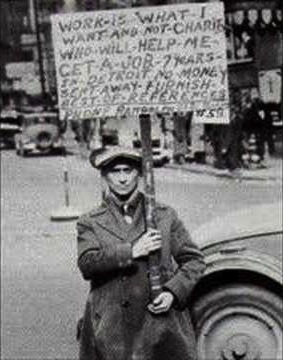
Screenshot from "Brother, Can You Spare Me a Dime" video/song (song originally recorded in 1932), July 26, 2014. (http://youtube.com).

Screenshot from “Brother, Can You Spare a Dime” video/song (song originally recorded in 1932), July 26, 2014. (http://youtube.com).

In the past five months, there’s been much debate and derision over the White House’s My Brother’s Keeper Task Force and Initiative. Most of it has centered around the exclusion of girls and young women of color from the initiative, as if the problems affecting Black and Latino males aren’t the same ones affecting Black and Latino females. Poverty, a resource-poor education, lack of entry-level jobs leading to careers, woeful access to higher education, lack of access to public services. These effects may lead to different responses from boys/young men of color and girls/young women of color, but the problems that effect vulnerable populations of color are no respecter of gender.

There’s other problems with the initiative, even if President Barack Obama and the White House were to ensure the inclusion of Black and Latino females in the My Brother’s Keeper Initiative tomorrow. It’s an extremely racially paternalistic initiative. On the face of things, it’s not much different from the work Booker T. Washington did a century ago via the William McKinley and Teddy Roosevelt administrations and with money from White philanthropists such as Henry Huttleston Rogers (Standard Oil), Julius Rosenwald (Sears), and George Eastman (Kodak).

Sure, in the case of Washington, The Rosenwald Fund built a few thousand schools, and the philanthropists contributed money to Washington that would build an endowment for Tuskegee. Still, that money came with strings attached. Most of the schools built weren’t high schools, were geared toward what we would call low-level vocational education today, and certainly weren’t part of any agenda to end Jim Crow. For all the good Washington was able to do through these robber-baron era philanthropists — especially in reducing Black illiteracy — it took Black migration out of the South to lead to lasting changes around notions of racial progress and the idea of segregation as the norm for a representative democracy.

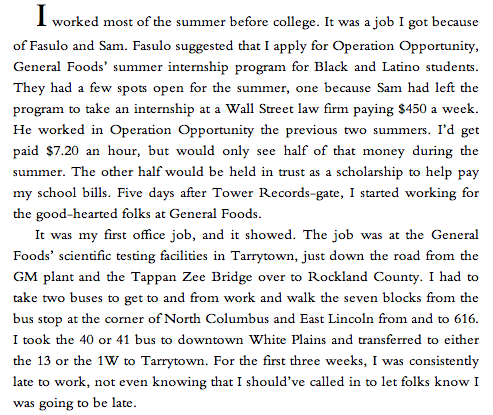
As for My Brother’s Keeper, I am reminded of a passage from my Boy @ The Window about my very first full-time “office” job in the summer of ’87, in between my graduation from Mount Vernon High School and my freshman year at the University of Pittsburgh. It’s about my working for General Foods (now Kraft Foods) in Tarrytown, New York as part of their Operation Opportunity program.

Screen shot 2014-07-26 at 11.10.49 AM

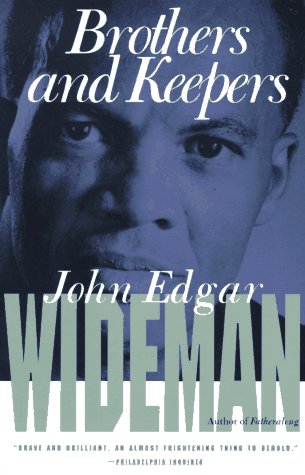
John Edgar Wideman, Brothers and Keepers (originally published in 1984), July 26, 2014. (http://goodreads.com).

John Edgar Wideman, Brothers and Keepers (originally published in 1984), July 26, 2014. (http://goodreads.com).

Beyond the $1,022 the program saved on my behalf — which would go toward room, board and two textbooks for my second semester at Pitt — there really wasn’t much about this program that was opportunity-inducing. Operation Opportunity seemed like it was a checkmark that General Foods could put in its “doing good” column. It provided an opportunity to observe others and do menial tasks without actually promising anything that would help me even a year later, as I went through the summer of ’88 unemployed, and the first week of my sophomore year at Pitt homeless. Not to mention, I picked up a terrible cold in the heat of a 98-degree-July day while spending two hours in a meat-locker-of-a-trailer doing measurements on Jell-O pudding pops!

Now I have no idea what the Annie E. Casey Foundation, the W.K. Kellogg Foundation or Magic Johnson Enterprises intends to do to be keepers of brothers, or brothas, for that matter. But all too frequently, these efforts turn into one-time experiments or corporate-responsibly checkmarks. As my friend and colleague Catherine Lugg has said more than once over the years (albeit, on education research, not specifically on this), social change and diversity efforts are far more than just “bringing a pet to class.” The idea that we need to learn how to work hard is yet another myth that this initiative will perpetuate, whether it’s a success or a failure.

It’s not hard to figure that poor children and young adults of color need more access to public health services, more resources in their formal education, more and better quality food to eat, and more nurturing. Whether any of these kids or young adults — male or female — can obtain these resources without racial paternalism, experimentation or other strings attached, I for one remain extremely skeptical.

← Older posts
Newer posts →

Boy @ The Window: A Memoir

Boy @ The Window: A Memoir

Places to Buy/Download Boy @ The Window

There's a few ways in which you can read excerpts of, borrow and/or purchase and download Boy @ The Window. There's the trade paperback edition of Boy @ The Window, available for purchase via Amazon.com at http://www.amazon.com/Boy-Window-Donald-Earl-Collins/dp/0989256138/

There's also a Kindle edition on Amazon.com. The enhanced edition can be read only with Kindle Fire, an iPad or a full-color tablet. The links to the enhanced edition through Apple's iBookstore and the Barnes & Noble NOOK edition are below. The link to the Amazon Kindle version is also immediately below:

scr2555-proj697-a-kindle-logo-rgb-lg

Boy @ The Window on Amazon.com: http://www.amazon.com/Boy-The-Window-Memoir-ebook/dp/B00CD95FBU/

iBookstore-logo-300x100

Boy @ The Window on Apple's iBookstore: https://itunes.apple.com/us/book/boy-the-window/id643768275?ls=1

Barnes & Noble (bn.com) logo, June 26, 2013. (http://www.logotypes101.com).

Boy @ The Window on Barnes & Noble: http://www.barnesandnoble.com/w/boy-the-window-donald-earl-collins/1115182183?ean=2940016741567

You can also add, read and review Boy @ The Window on Goodreads.com. Just click on the button below:

Boy @ The Window

Twitter Updates

Tweets by decollins1969
  • RSS - Posts
  • RSS - Comments

Archives

  • June 2025
  • April 2023
  • September 2022
  • August 2022
  • July 2022
  • June 2022
  • May 2022
  • April 2022
  • March 2022
  • January 2022
  • December 2021
  • November 2021
  • October 2021
  • September 2021
  • August 2021
  • July 2021
  • June 2021
  • April 2021
  • March 2021
  • February 2021
  • January 2021
  • December 2020
  • November 2020
  • October 2020
  • September 2020
  • August 2020
  • July 2020
  • May 2020
  • April 2020
  • March 2020
  • January 2020
  • December 2019
  • November 2019
  • August 2019
  • July 2019
  • June 2019
  • May 2019
  • April 2019
  • March 2019
  • February 2019
  • January 2019
  • December 2018
  • November 2018
  • October 2018
  • September 2018
  • August 2018
  • July 2018
  • June 2018
  • May 2018
  • March 2018
  • February 2018
  • January 2018
  • December 2017
  • November 2017
  • October 2017
  • September 2017
  • August 2017
  • July 2017
  • June 2017
  • May 2017
  • April 2017
  • March 2017
  • February 2017
  • January 2017
  • December 2016
  • November 2016
  • October 2016
  • September 2016
  • August 2016
  • July 2016
  • June 2016
  • May 2016
  • April 2016
  • March 2016
  • February 2016
  • January 2016
  • December 2015
  • November 2015
  • October 2015
  • September 2015
  • August 2015
  • July 2015
  • June 2015
  • May 2015
  • April 2015
  • March 2015
  • February 2015
  • January 2015
  • December 2014
  • November 2014
  • October 2014
  • September 2014
  • August 2014
  • July 2014
  • June 2014
  • May 2014
  • April 2014
  • March 2014
  • February 2014
  • January 2014
  • December 2013
  • November 2013
  • October 2013
  • September 2013
  • August 2013
  • July 2013
  • June 2013
  • May 2013
  • April 2013
  • March 2013
  • February 2013
  • January 2013
  • December 2012
  • November 2012
  • October 2012
  • September 2012
  • August 2012
  • July 2012
  • June 2012
  • May 2012
  • April 2012
  • March 2012
  • February 2012
  • January 2012
  • December 2011
  • November 2011
  • October 2011
  • September 2011
  • August 2011
  • July 2011
  • June 2011
  • May 2011
  • April 2011
  • March 2011
  • February 2011
  • January 2011
  • December 2010
  • November 2010
  • October 2010
  • September 2010
  • August 2010
  • July 2010
  • June 2010
  • May 2010
  • April 2010
  • March 2010
  • February 2010
  • January 2010
  • December 2009
  • November 2009
  • October 2009
  • September 2009
  • August 2009
  • July 2009
  • June 2009
  • May 2009
  • April 2009
  • March 2009
  • February 2009
  • January 2009
  • December 2008
  • November 2008
  • October 2008
  • September 2008
  • August 2008
  • July 2008
  • June 2008
  • May 2008
  • April 2008
  • March 2008
  • February 2008
  • January 2008
  • December 2007
  • November 2007
  • October 2007
  • September 2007
  • August 2007
  • July 2007
  • June 2007

Recent Comments

MaryPena's avatarMaryPena on My Day of Atonement/Bitter Hat…
decollins1969's avatardecollins1969 on No Good Teaching Deed Goes…
Mary Rose O’Connell's avatarMary Rose O’Connell on No Good Teaching Deed Goes…

NetworkedBlogs on Facebook

NetworkedBlogs
Blog:
Notes From a Boy @ The Window
Topics:
My Life, Culture & Education, Politics & Goofyness
 
Follow my blog

616 616 East Lincoln Avenue A.B. Davis Middle School Abuse Academia Academy for Educational Development AED Afrocentricity American Narcissism Authenticity Bigotry Blackness Boy @ The Window Carnegie Mellon University Child Abuse Class of 1987 CMU Coping Strategies Crush #1 Crush #2 Death Disillusionment Diversity Domestic Violence Economic Inequality Education Family Friendship Friendships Graduate School Hebrew-Israelites High-Stakes Testing Higher Education History Homelessness Humanities Humanities Program Hypocrisy Internalized Racism Jealousy Joe Trotter Joe William Trotter Jr. K-12 Education Love Manhood Maurice Eugene Washington Maurice Washington Misogyny Mother-Son Relationship Mount Vernon High School Mount Vernon New York Mount Vernon public schools Multiculturalism MVHS Narcissism NFL Pitt Pittsburgh Politics of Education Poverty President Barack Obama Race Racial Stereotypes Racism Relationships Self-Awareness Self-Discovery Self-Reflection Sexism Social Justice Teaching and Learning University of Pittsburgh Violence Whiteness Writing

Top Rated

Blog at WordPress.com.

  • Subscribe Subscribed
    • Notes from a Boy @ The Window
    • Join 103 other subscribers
    • Already have a WordPress.com account? Log in now.
    • Notes from a Boy @ The Window
    • Subscribe Subscribed
    • Sign up
    • Log in
    • Report this content
    • View site in Reader
    • Manage subscriptions
    • Collapse this bar
 

Loading Comments...